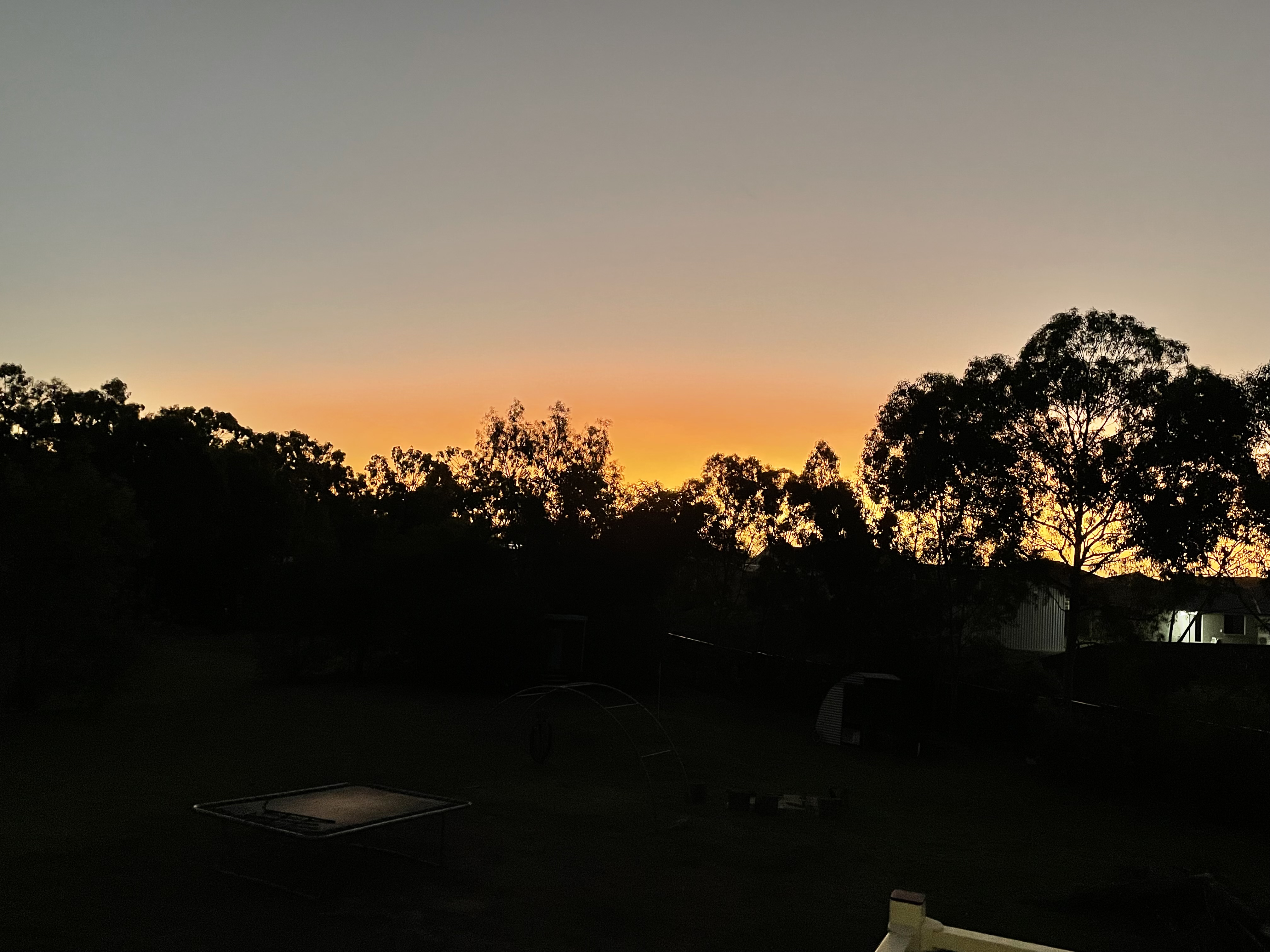
Emu Park

I wasn’t going to do a post for Emu Park as we considered it as our home…the intent of the blog was not to simply write about where we lived… but having spent almost a year here, I just had to write about this charming little place called Emu Park. To set things up my darling bride was given a short term job in Emu Park in the midst of all of the travel chaos that was created during COVID. Given that we could not really travel abroad she took the job while we waited for the world to open up again.

We had, for a long time, said that we were always planning to retire in Western Australia having fallen in love with the lifestyle and climate. Well Emu Park had us seriously questioning this thought.

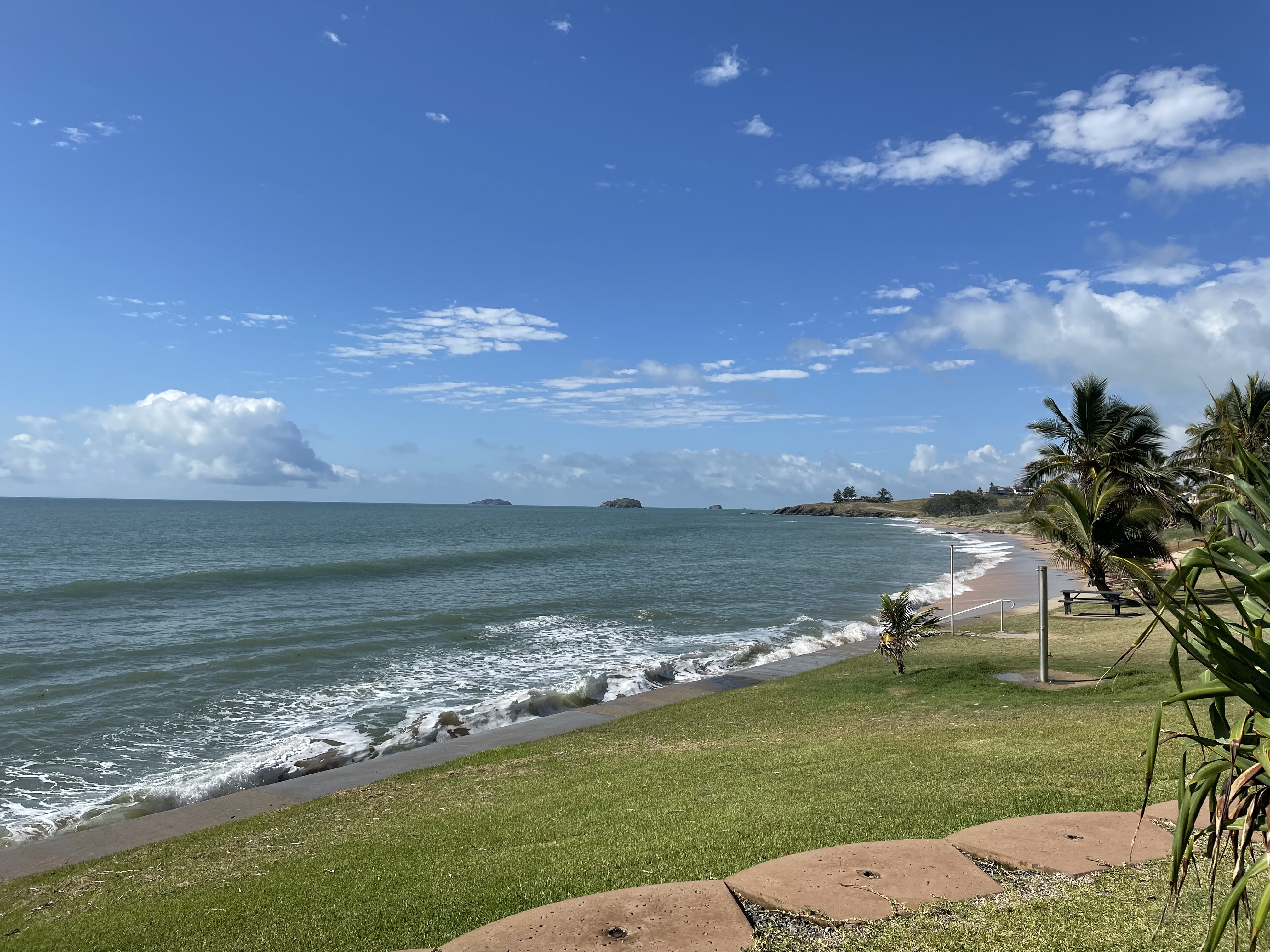
Lets get some context here because most people have never heard of the place. Emu park is a small coastal community of around 2000 people in central Queensland, situated in the middle of what they call the Capricorn Coast. This is a 75km stretch of coastline taking in dozens of small towns and numerous islands. The closest big town is Rockhampton which is about 30 mins away (west) and Yeppoon is a short 15 min drive (north). Between Yeppoon and Emu Park is Rosslyn Bay which is the launching place for travellers heading over to Great Keppel Island.
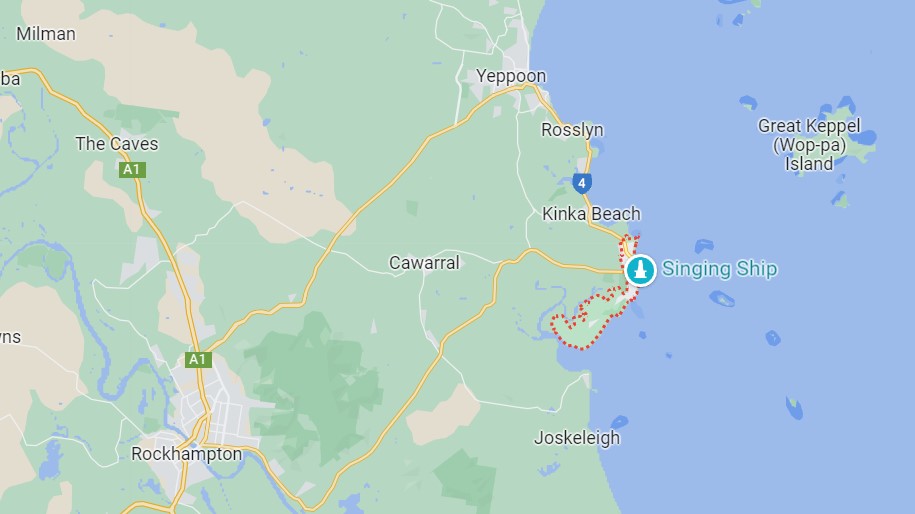
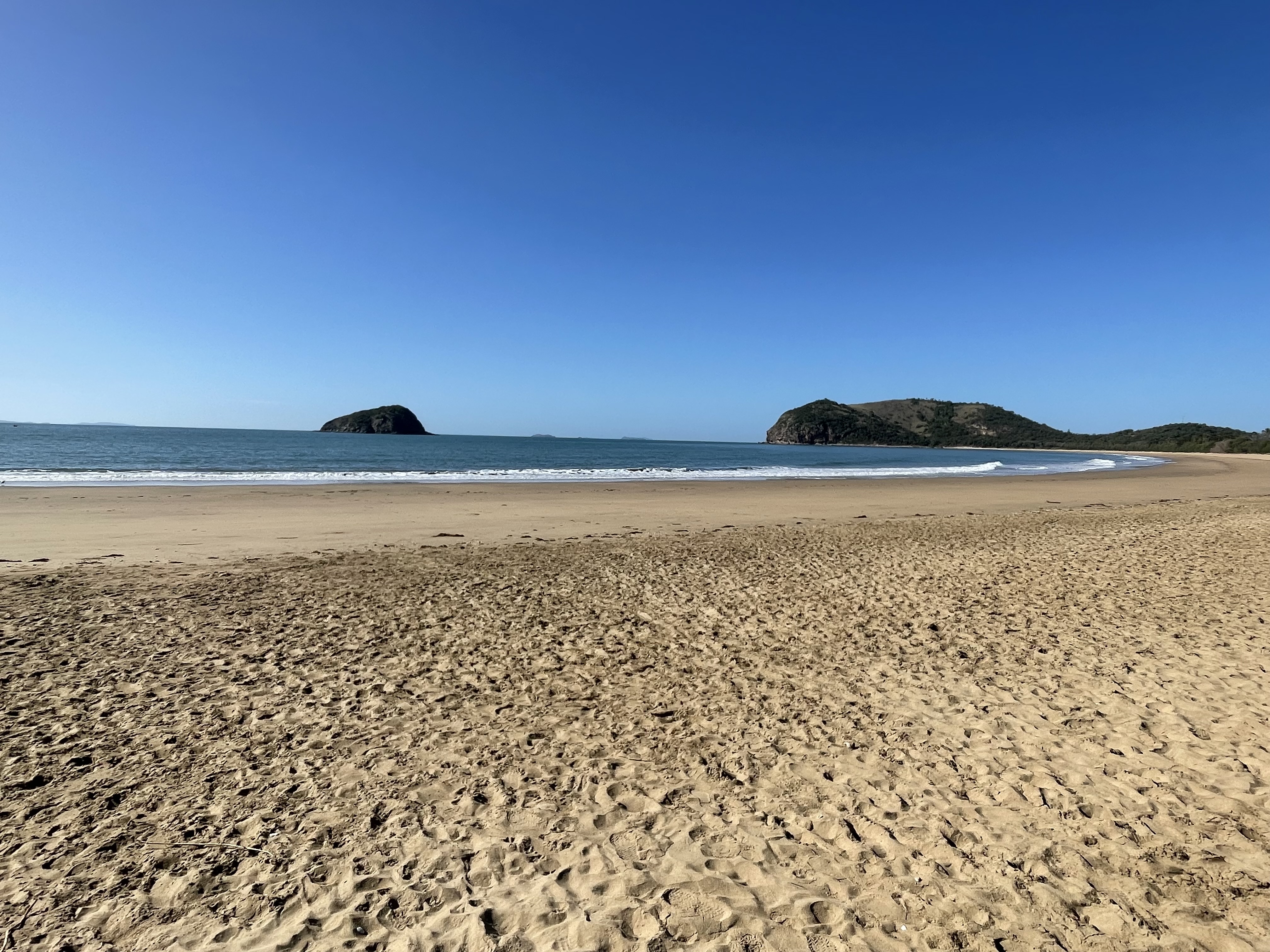
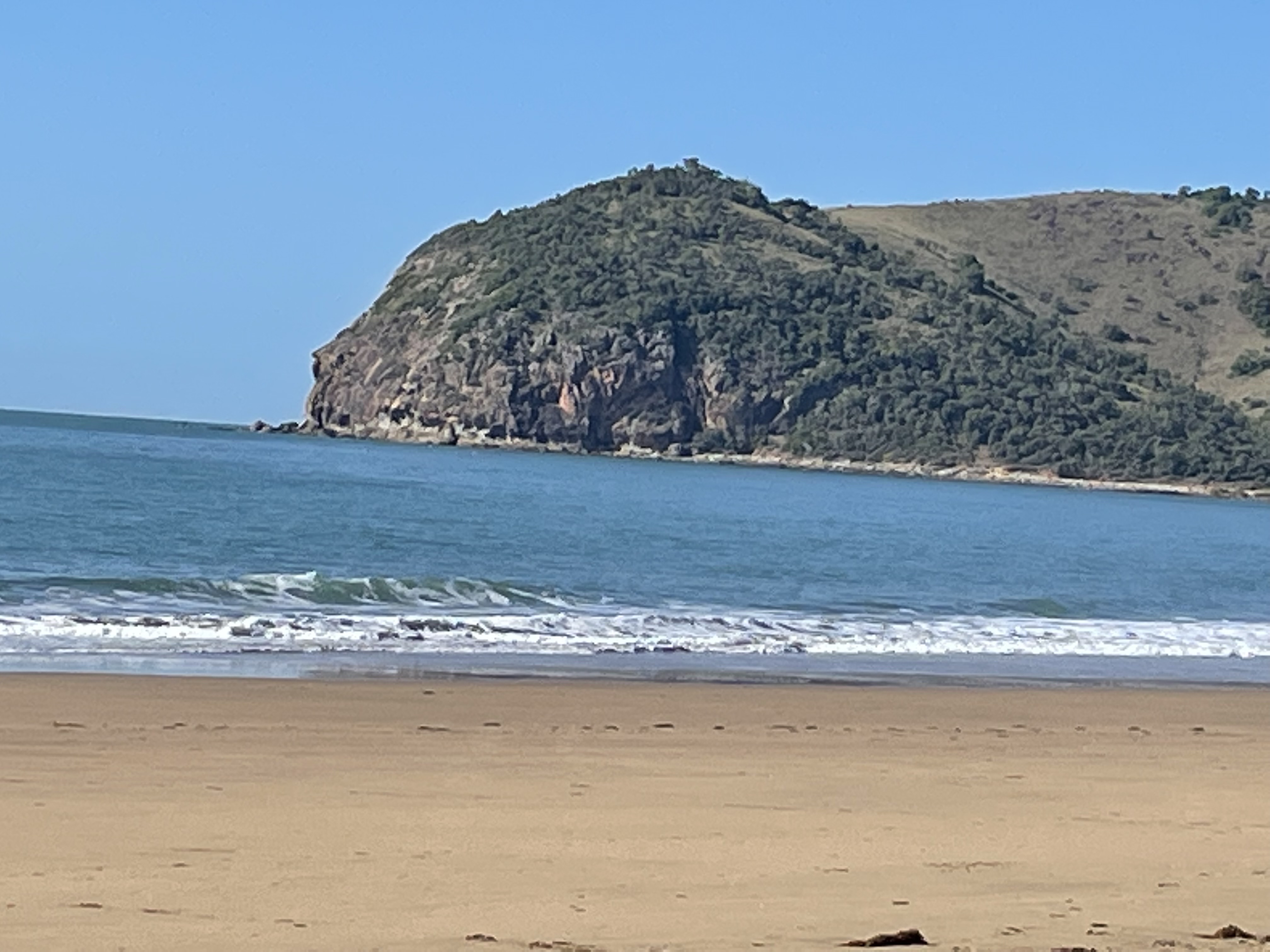
Context over…the place is stunning. The entire Capricorn coast is basically a series of long sweeping beaches and inlets, shallow blue water, with stunning views virtually everywhere you look. There are more caravan parks than you can poke a stick at (but they are also seriously popular) and holidaymakers regularly flood the place. If you are driving the coast road (heading south), virtually every corner will open you up to incredible coastal vistas overlooking the islands of the Capricorn Coast.
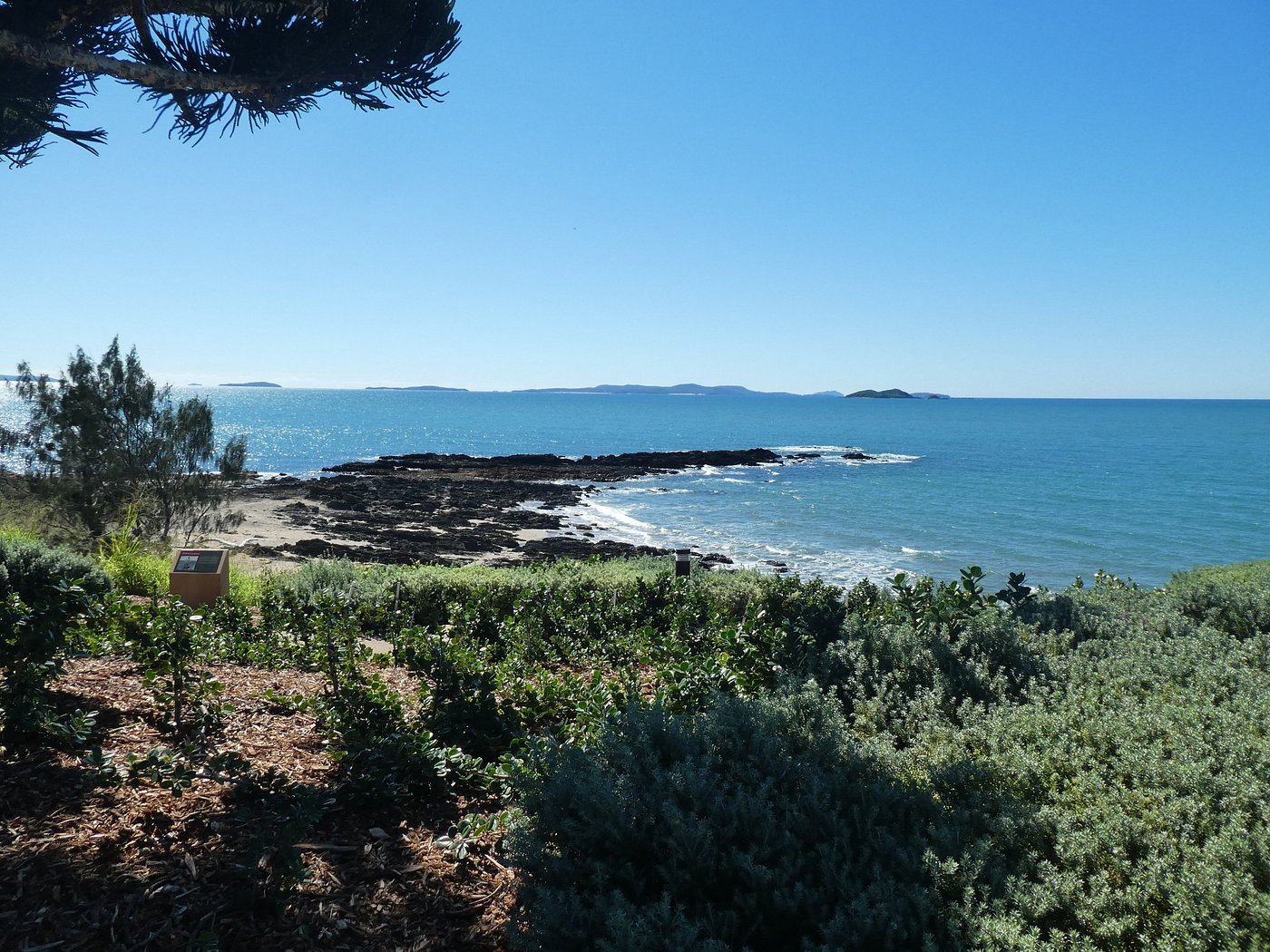
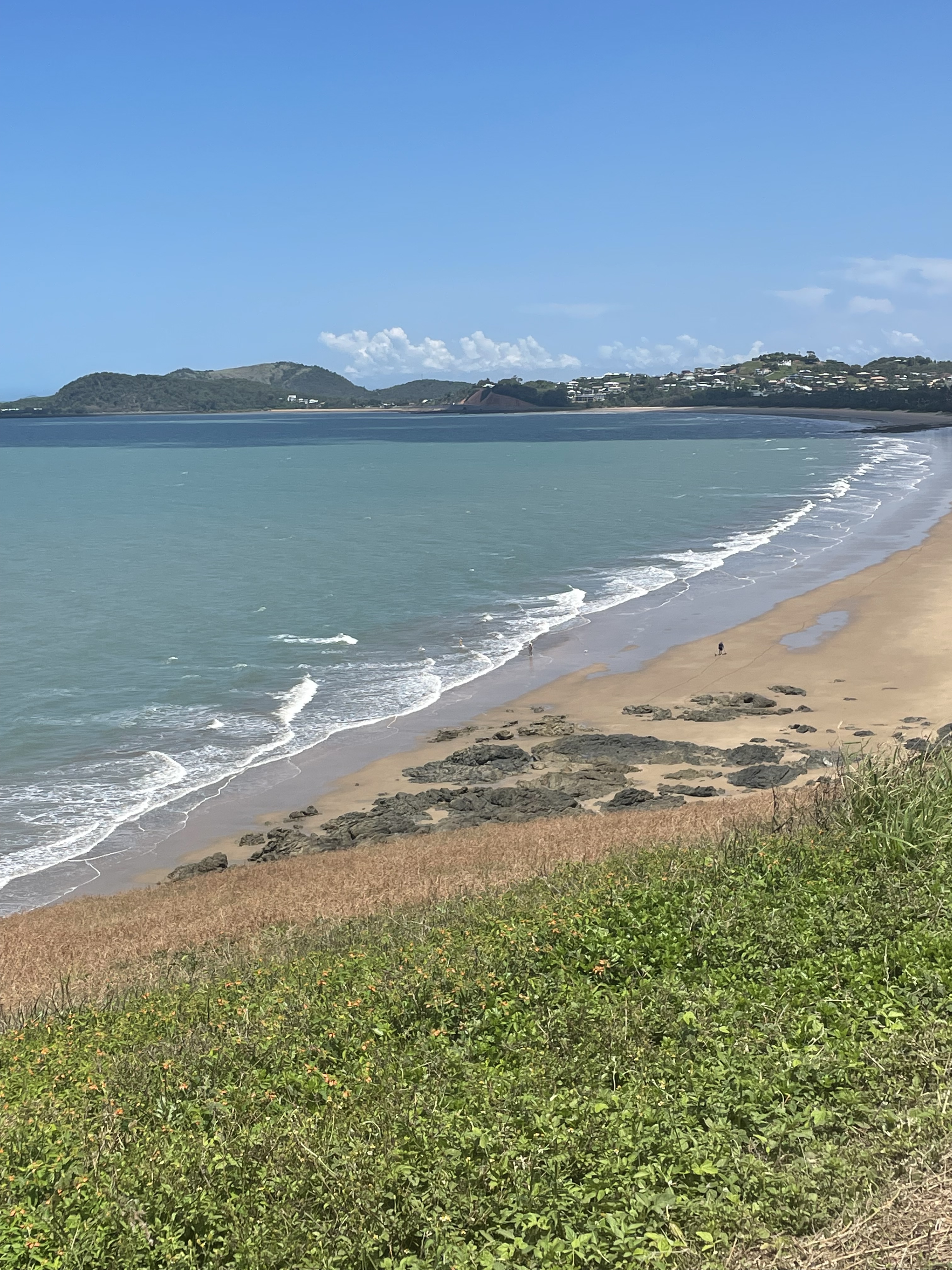
The town was originally established in the 1870’s when people from Rockhampton started setting up their holiday homes by the water. The current town itself is pretty small with most of the activity happening within a 2 block radius that revolves around the local grocery store (Drakes). That said, you can buy virtually anything you could want at the store and both the staff and service is efficient and friendly. Also in the main area is the post office, chemist, a couple of cafe’s and bakeries, a few hairdressers and real estates along with some specialty shops such as the butcher, hardware, clothing etc.

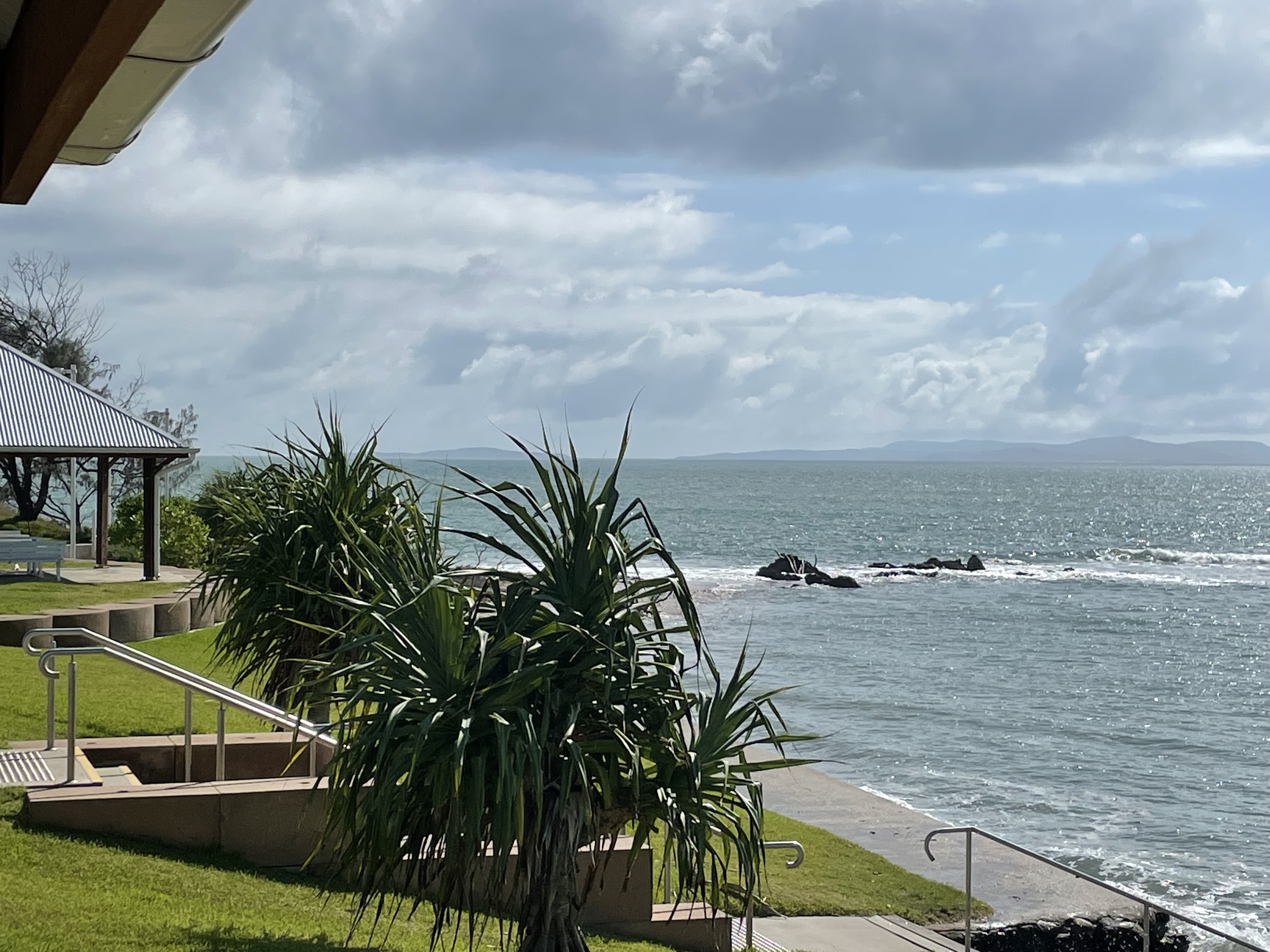
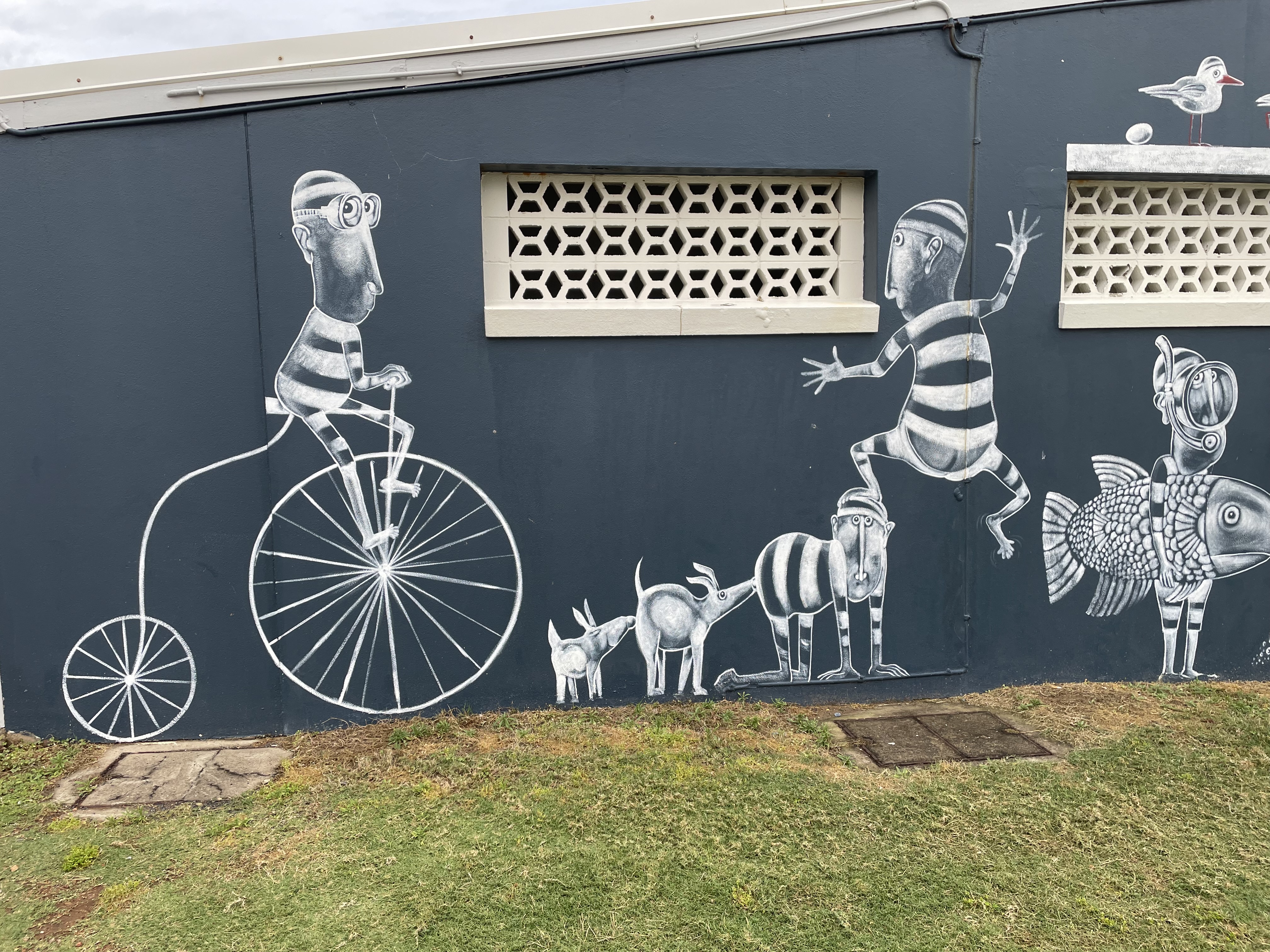
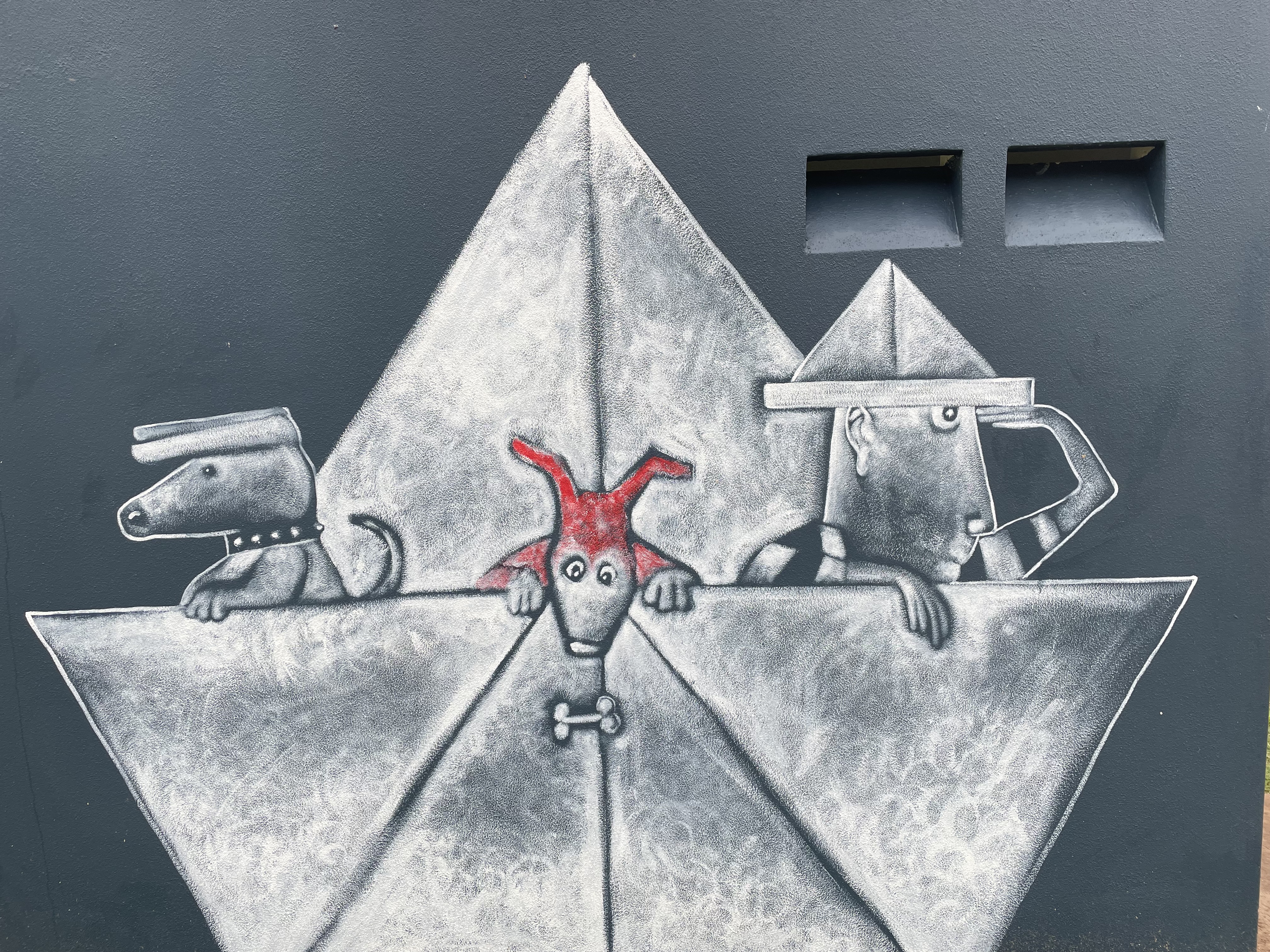
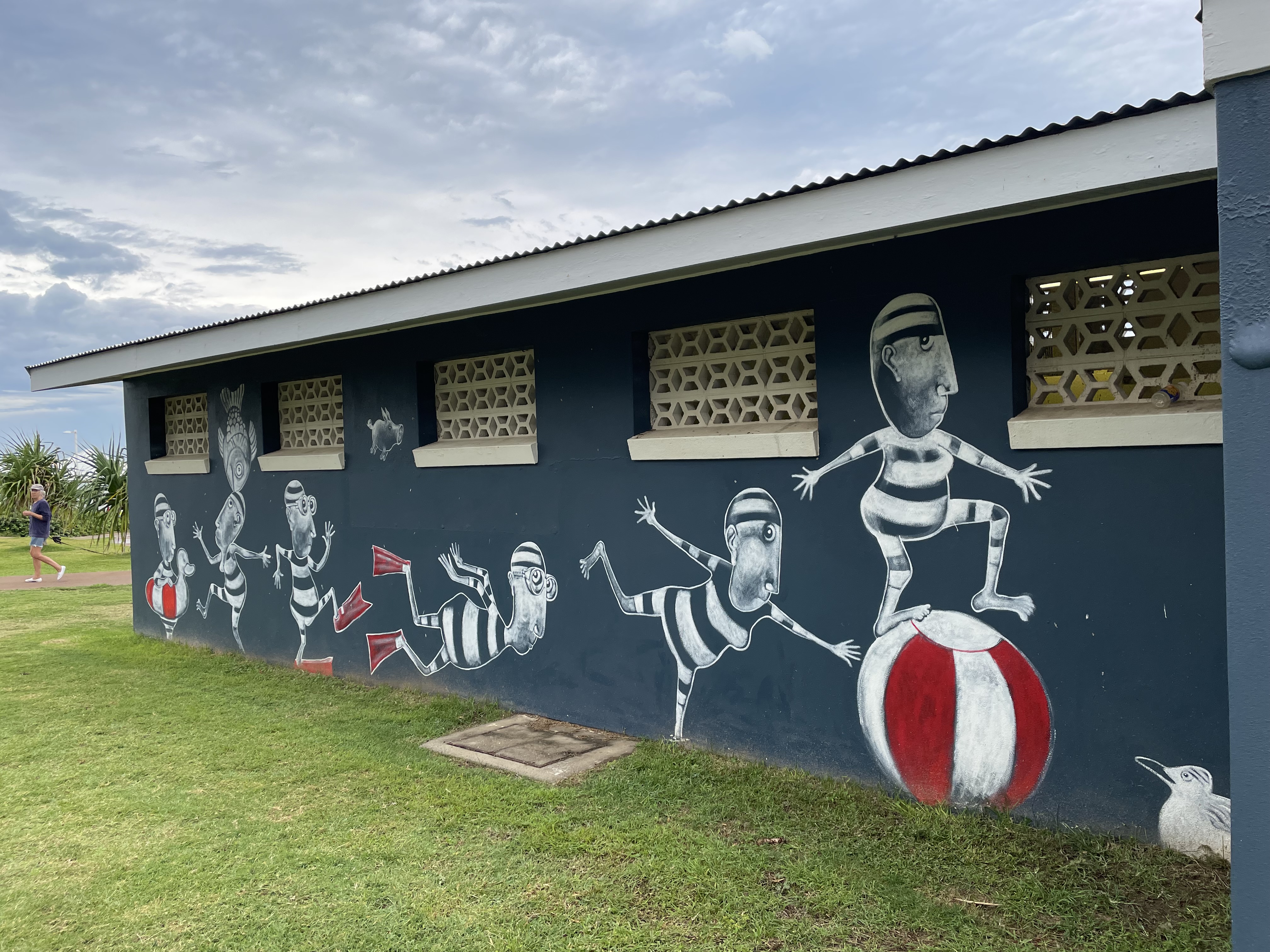
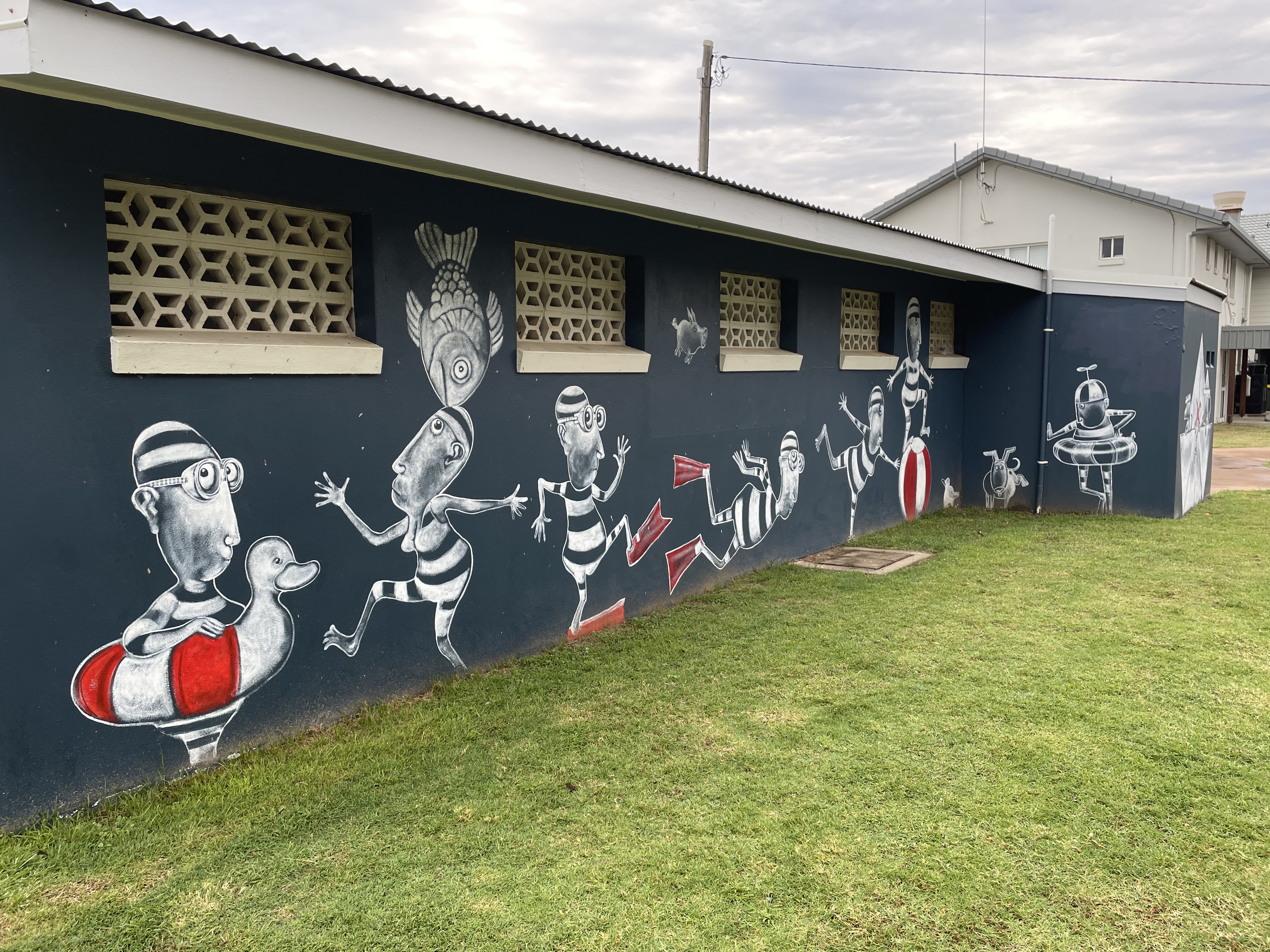
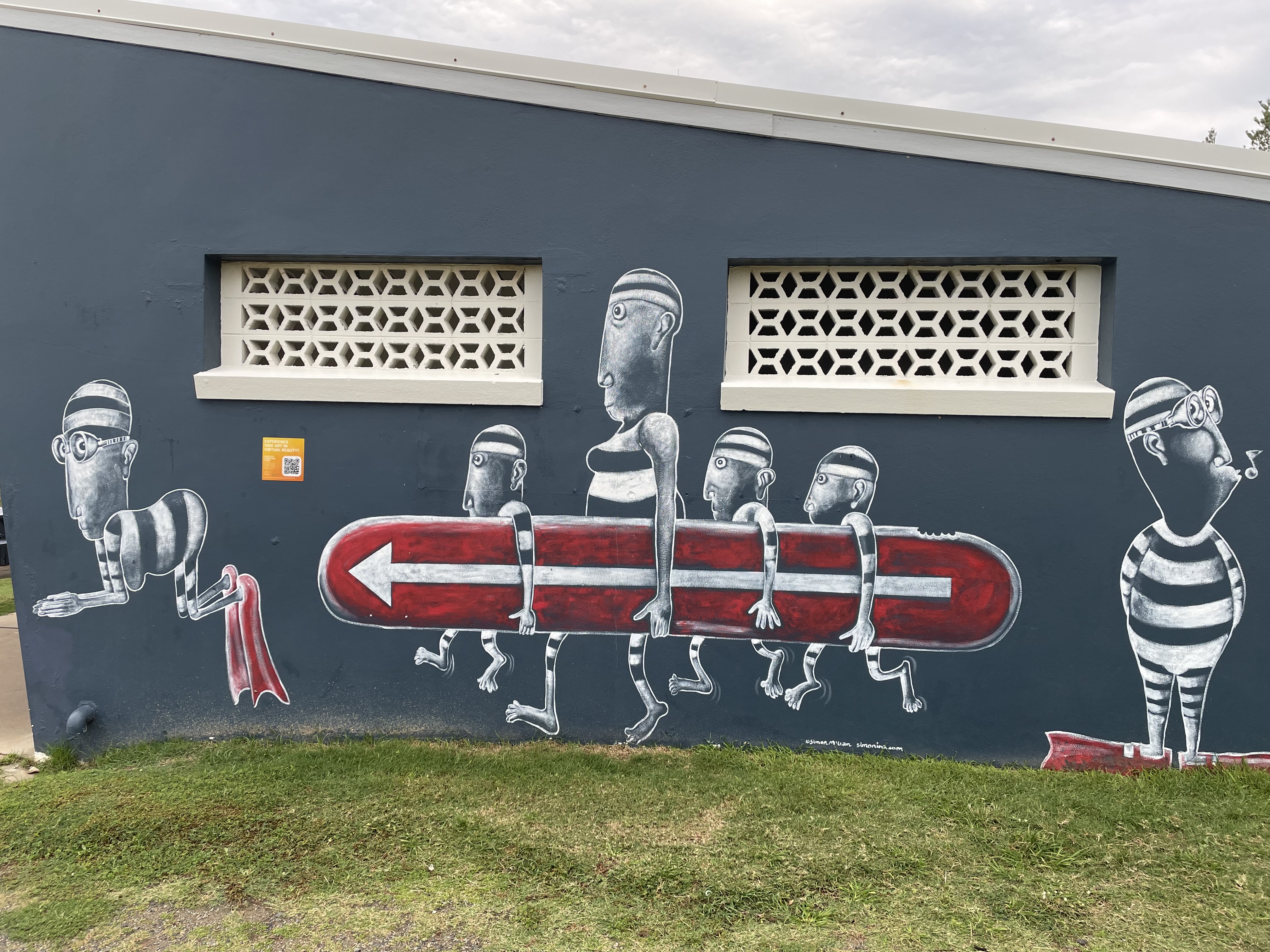
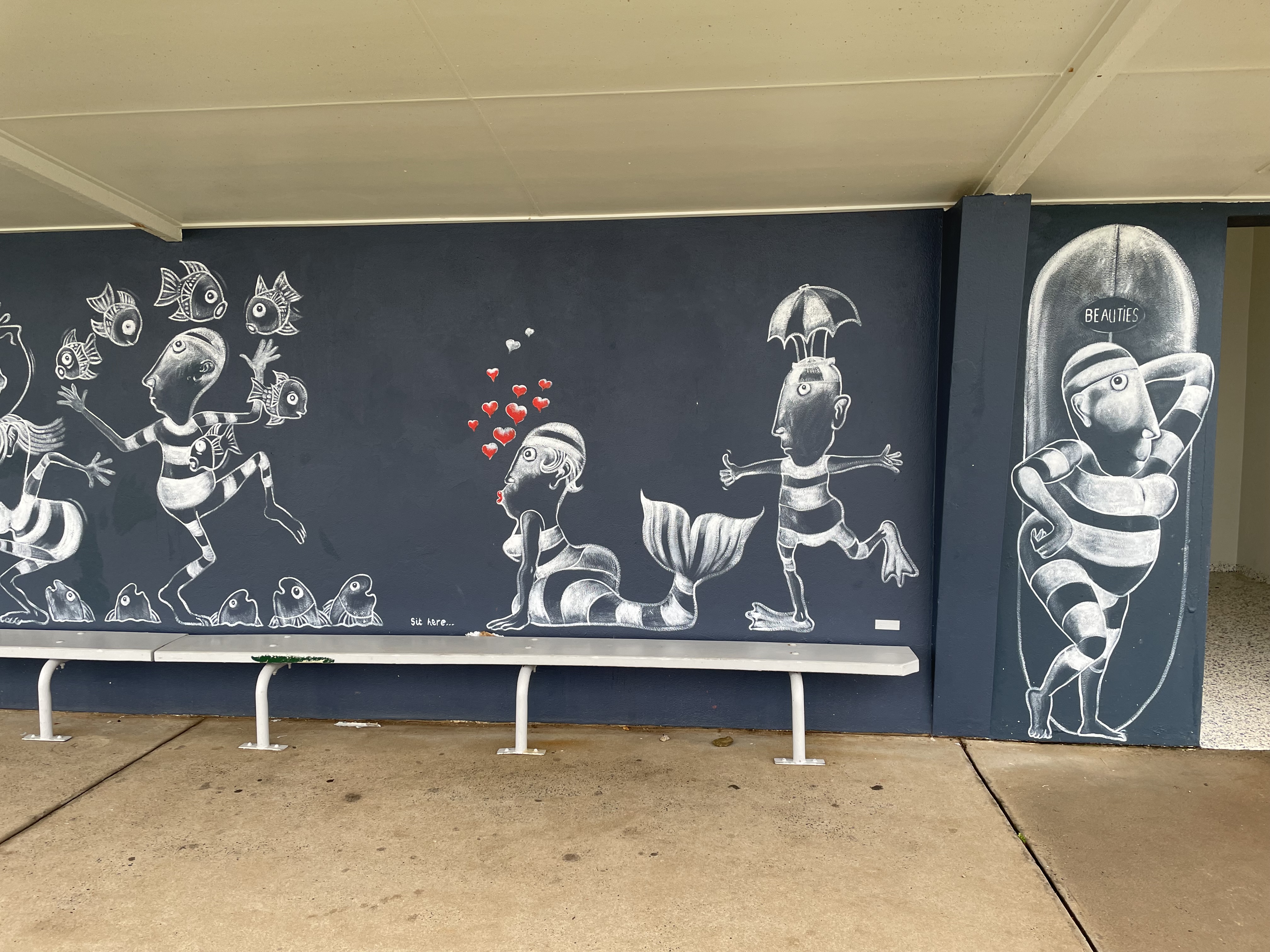
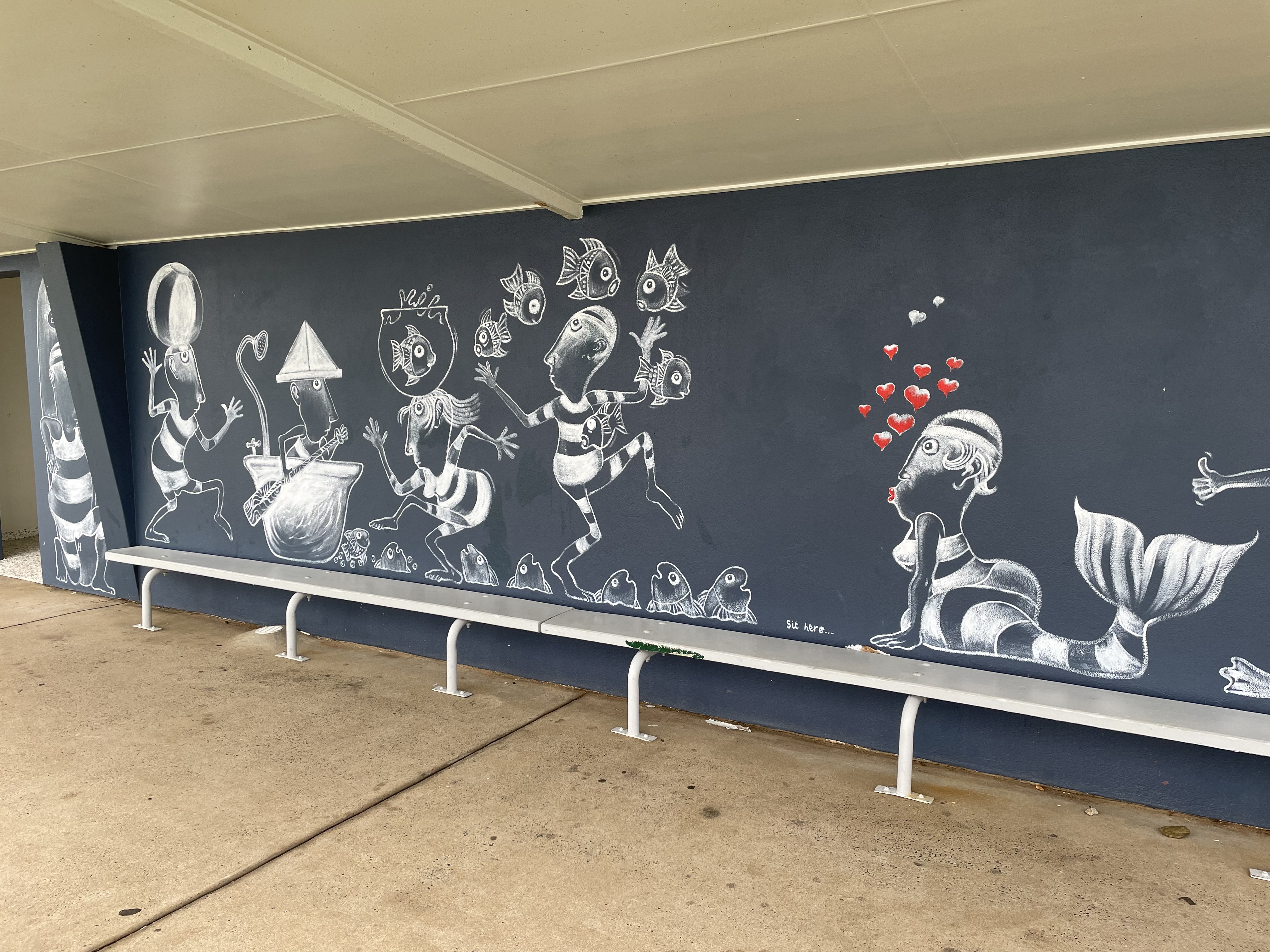
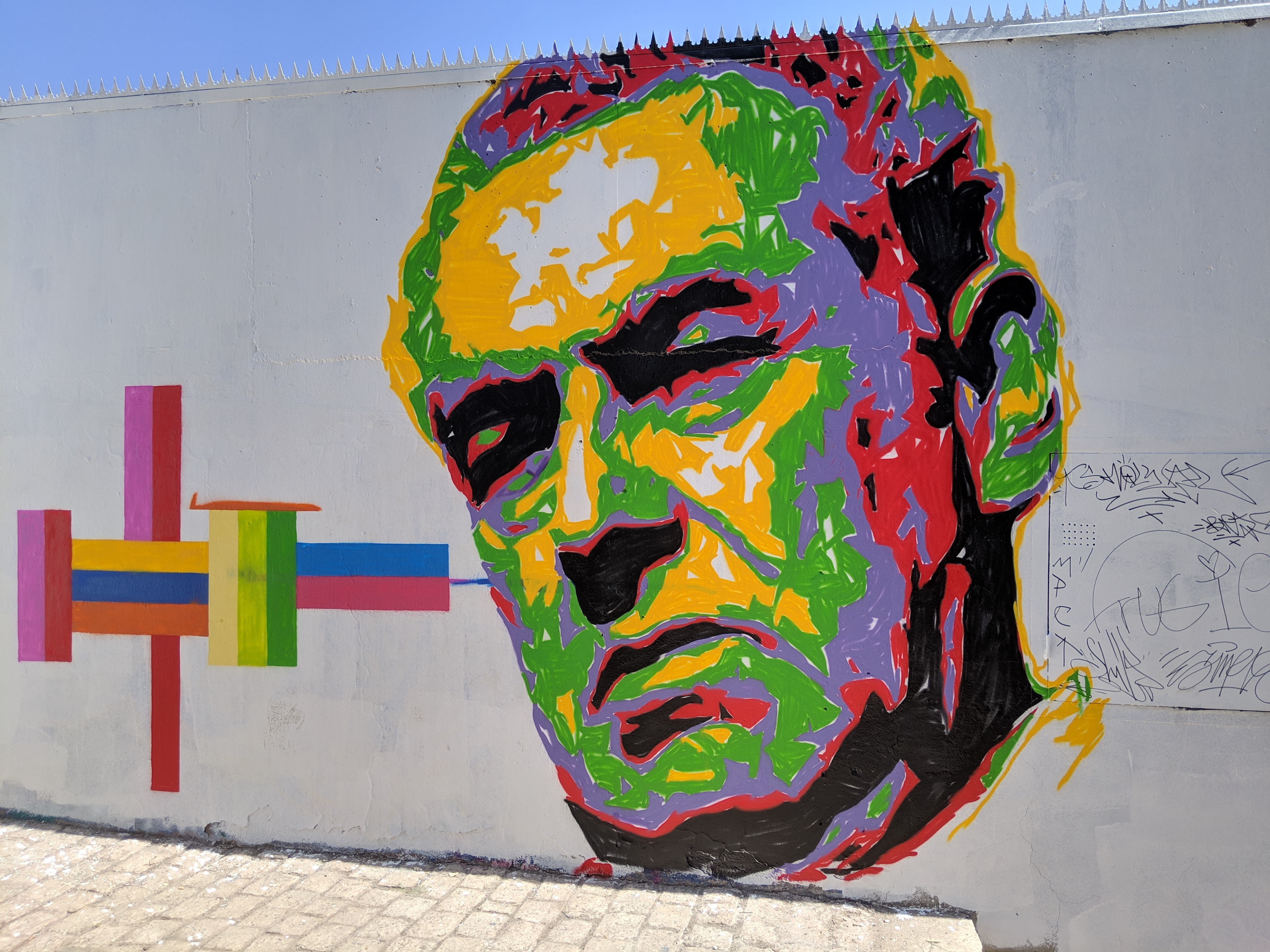
The remainder of the activities revolve around the park, beachside and foreshore. The first thing that you notice is the welcoming nature of the locality. The parks and open spaces are maintained meticulously. From the kid friendly parks, rides and attractions through to the more impressive and adult friendly Anzac Memorial the place is just pleasant to be. Even the toilet blocks at the local Surf Lifesaving Club have fun and entertaining murals adorning them.

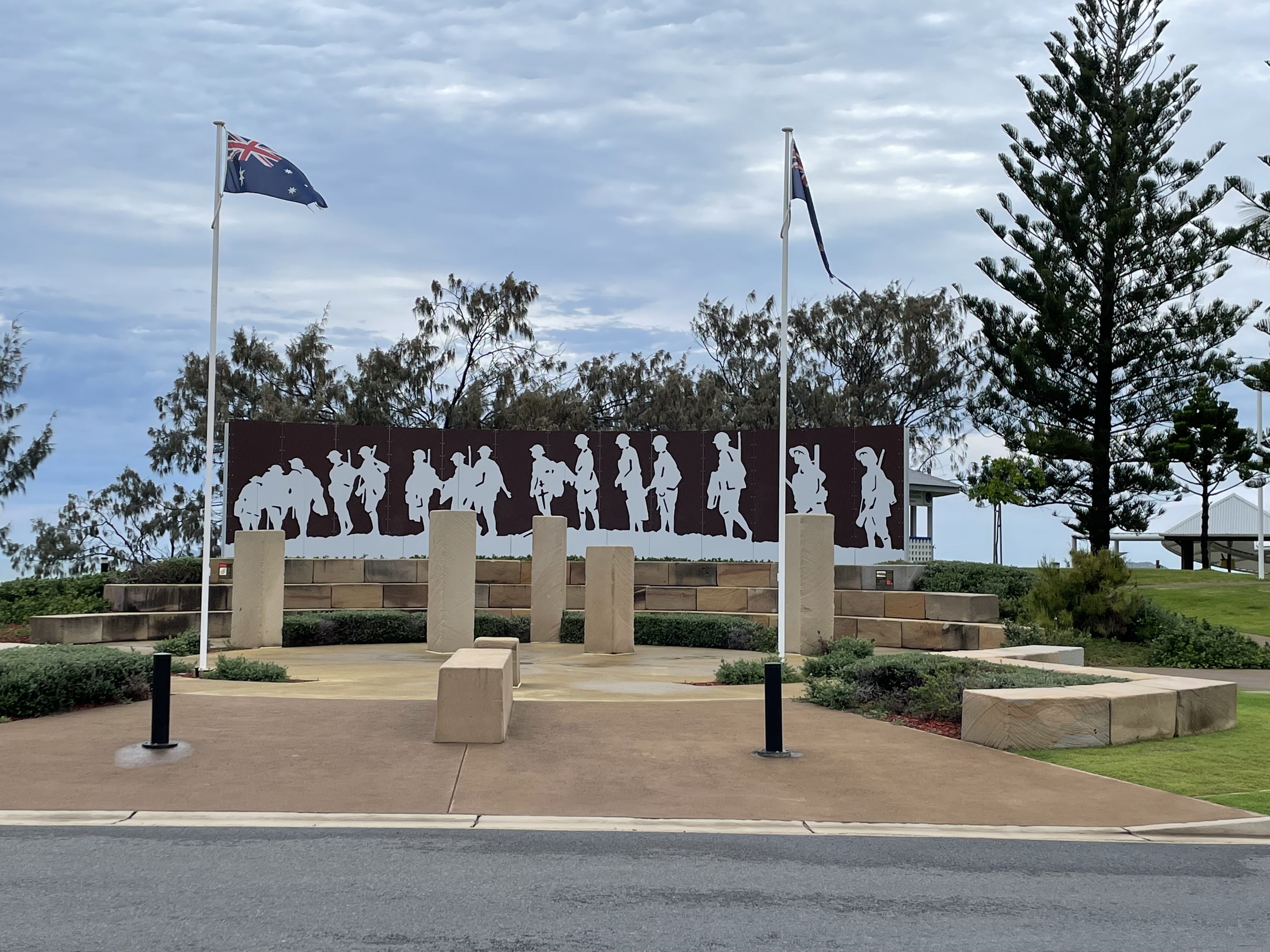
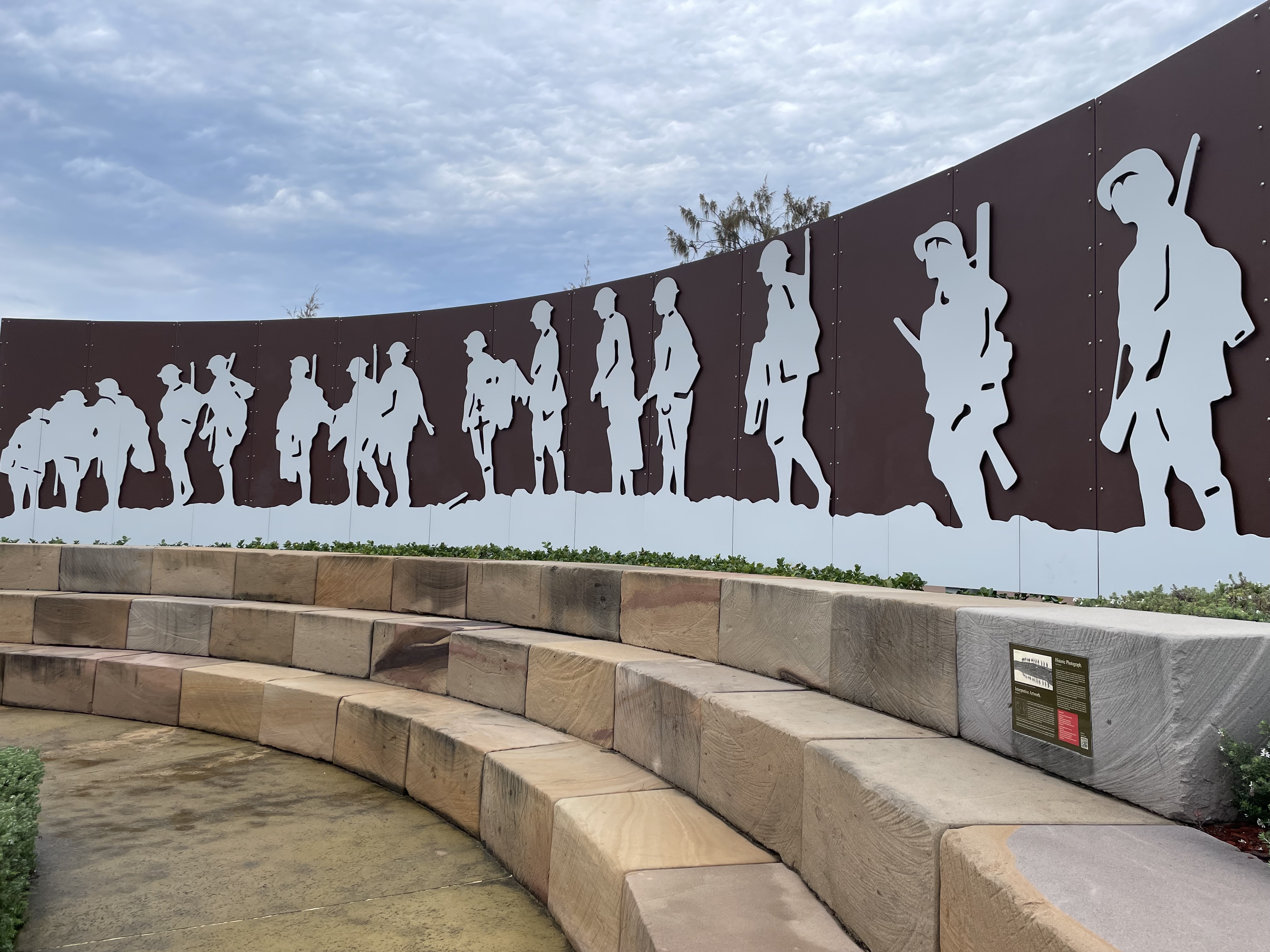
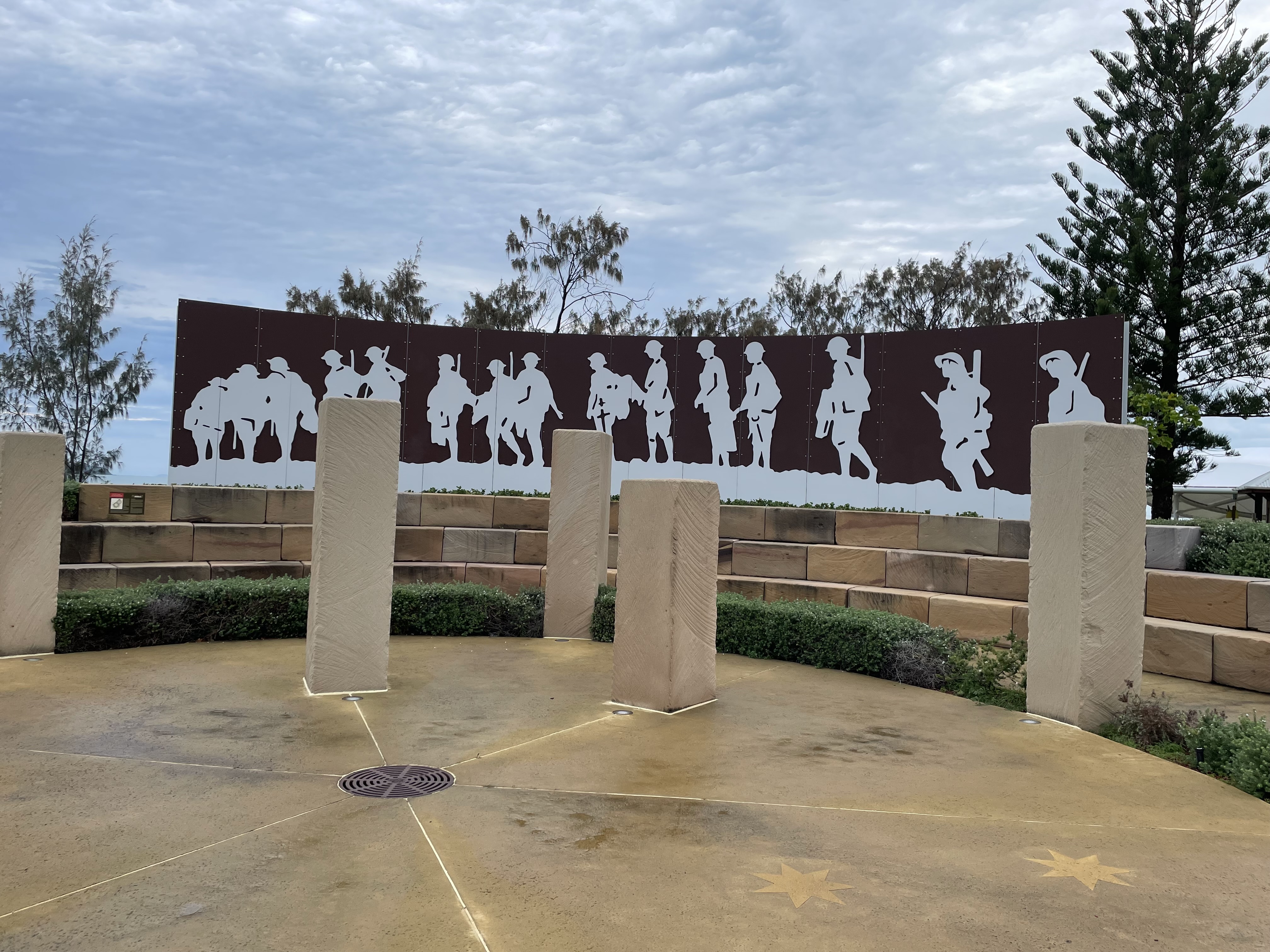
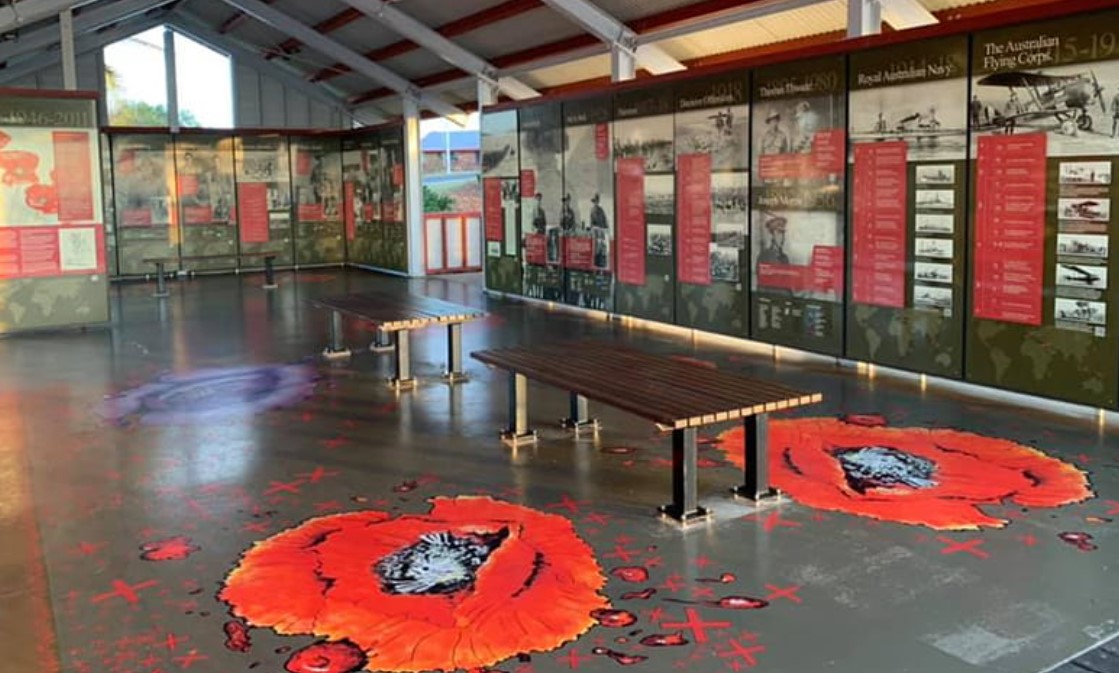
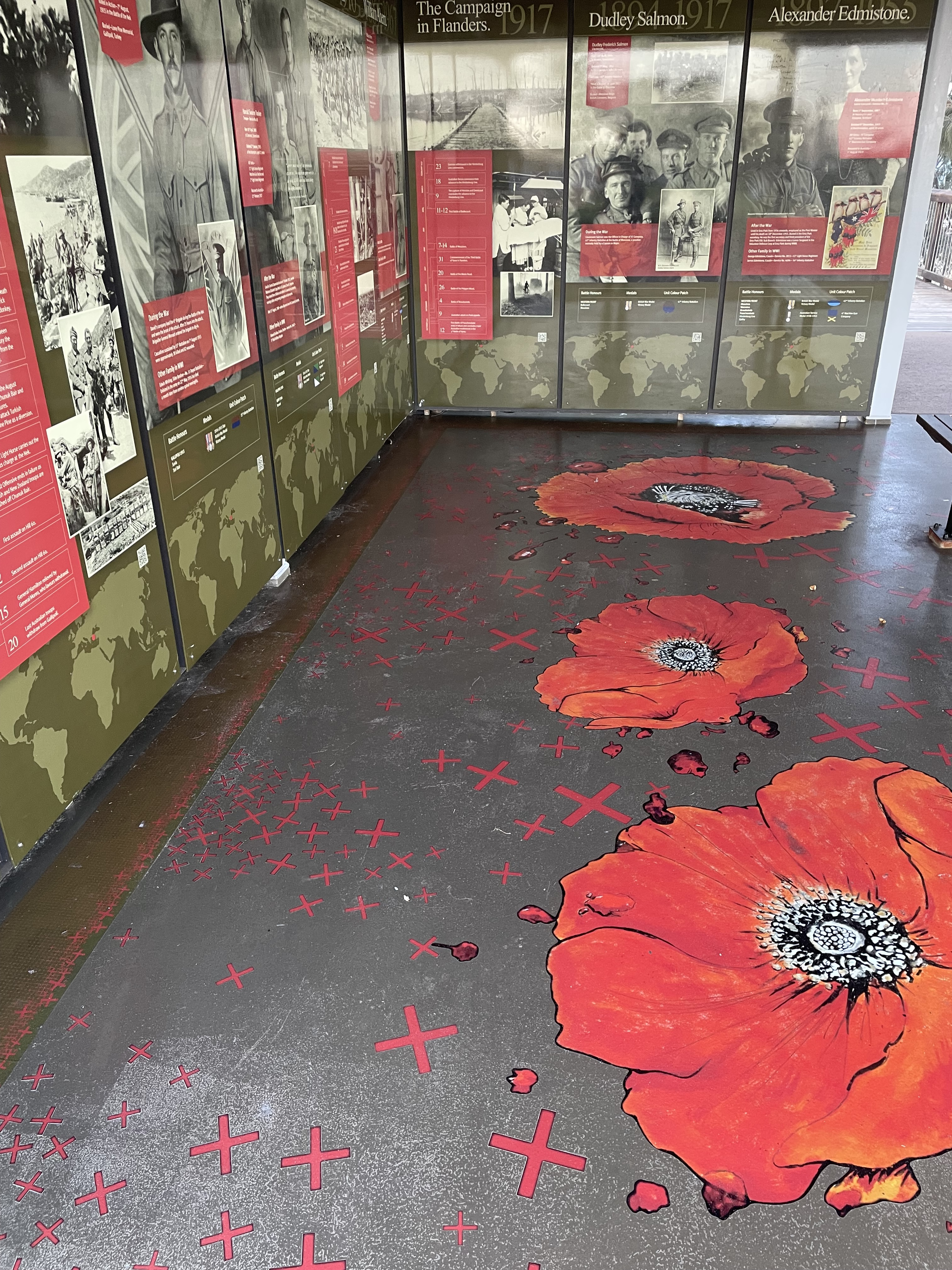
The Anzac Memorial was originally opened in 2015 to coincide with the Centenary of ANZAC and has continued to be built upon ever since. Memorial Court (pictured below) was the first part to come into existence with the Memorial walk and gatehouse to follow shortly thereafter. The Gatehouse provides a timeline of the major battles of World War I and focusses on the contributions made by a range of local veterans who were involved in WWI.

Memorial Court

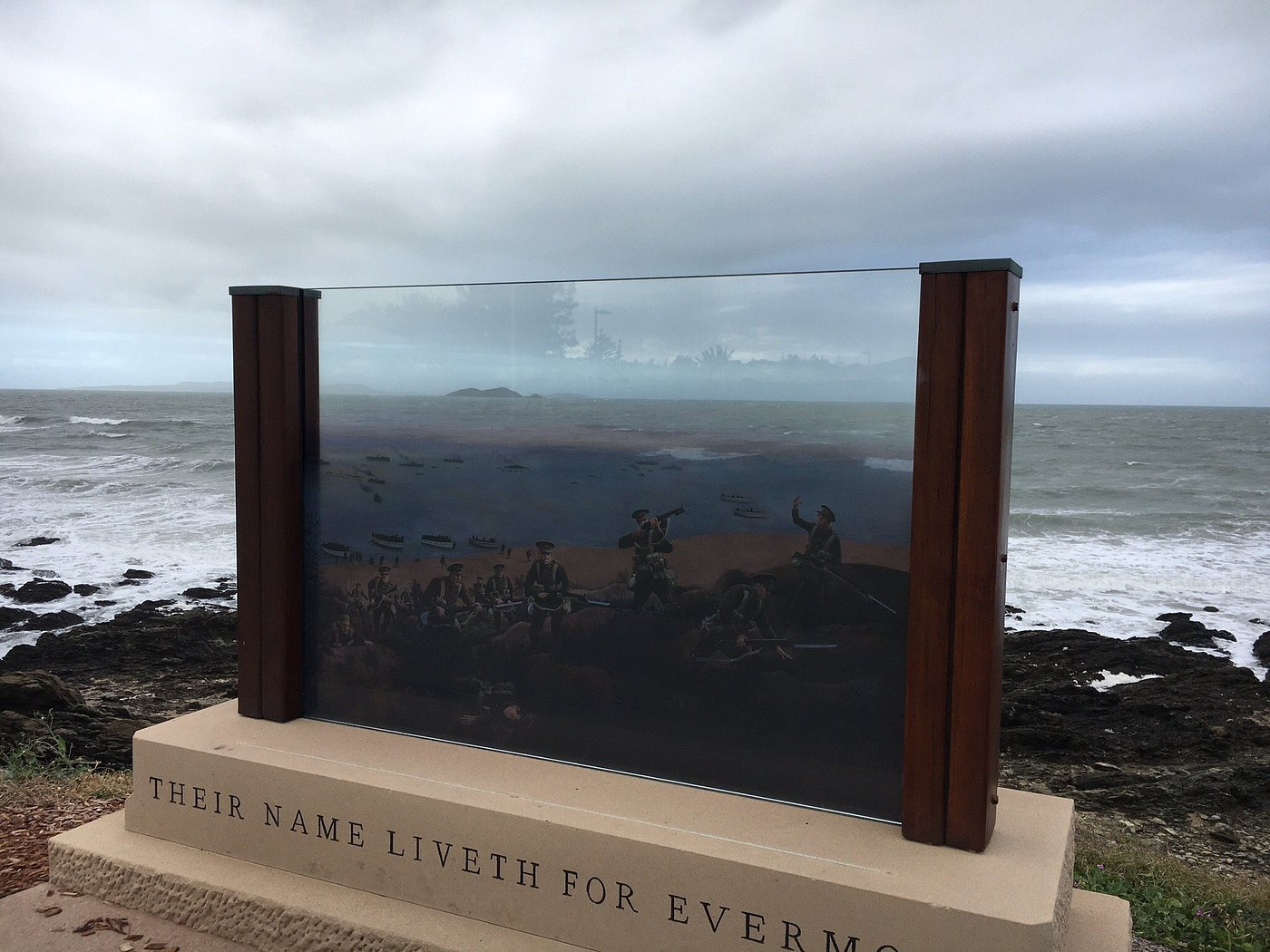
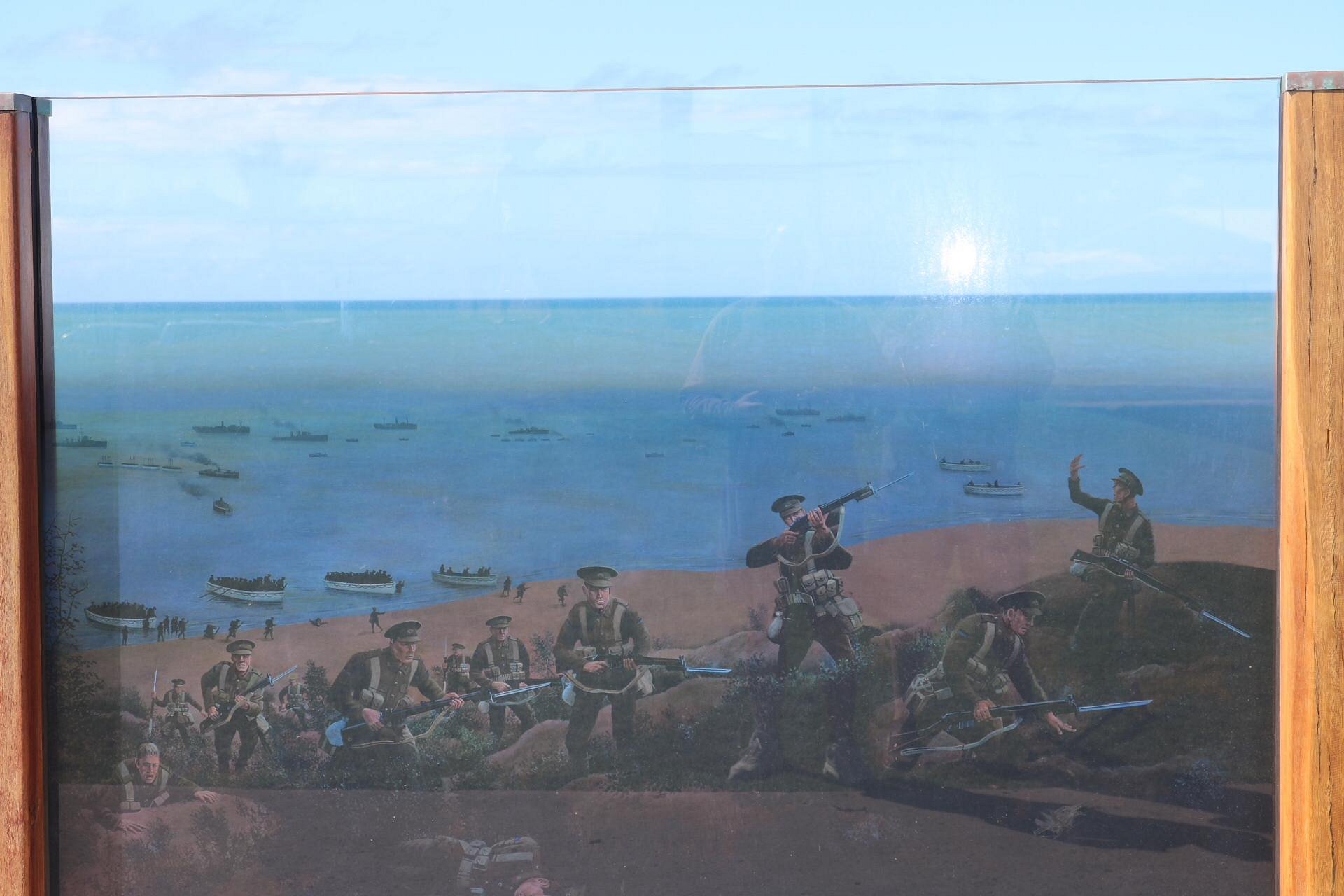
Queensland tourism tells me that the walkway was “intended as an emotional reflective experience that provides a timeline of WW1’s many major battles of war”. The walk itself starts at the Memorial Court and follows the coastline passing a range of sandstone blocks holding pictographs that highlight various aspects of WWI. There is a glass memorial that depicts the Australian soldiers landing at Gallipoli. The idea is to be there at dawn and line up the horizon to get a sense of the landing. From here you keep meandering up the hill to the Gatehouse which contains storyboards and pictures of locals.

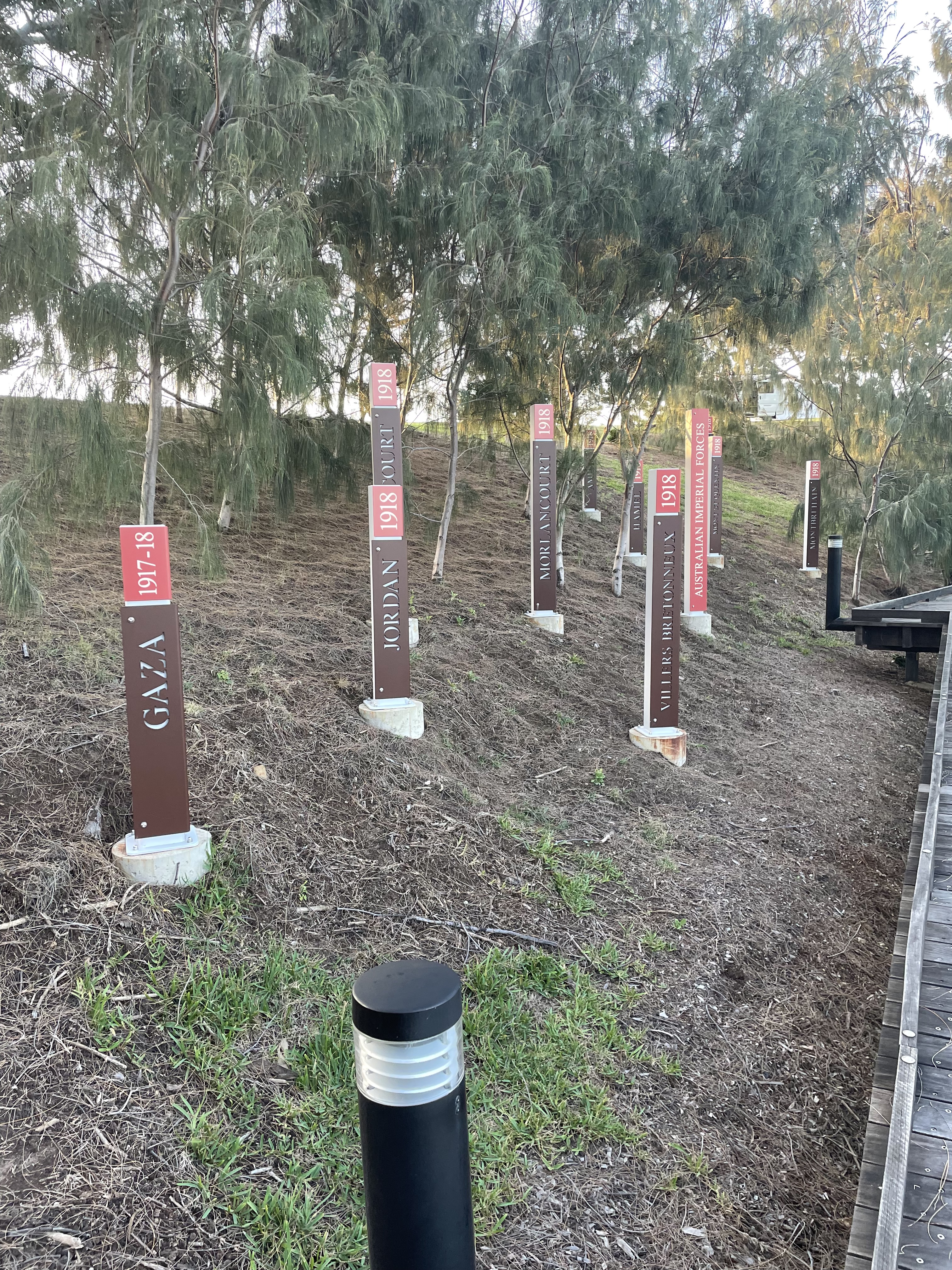
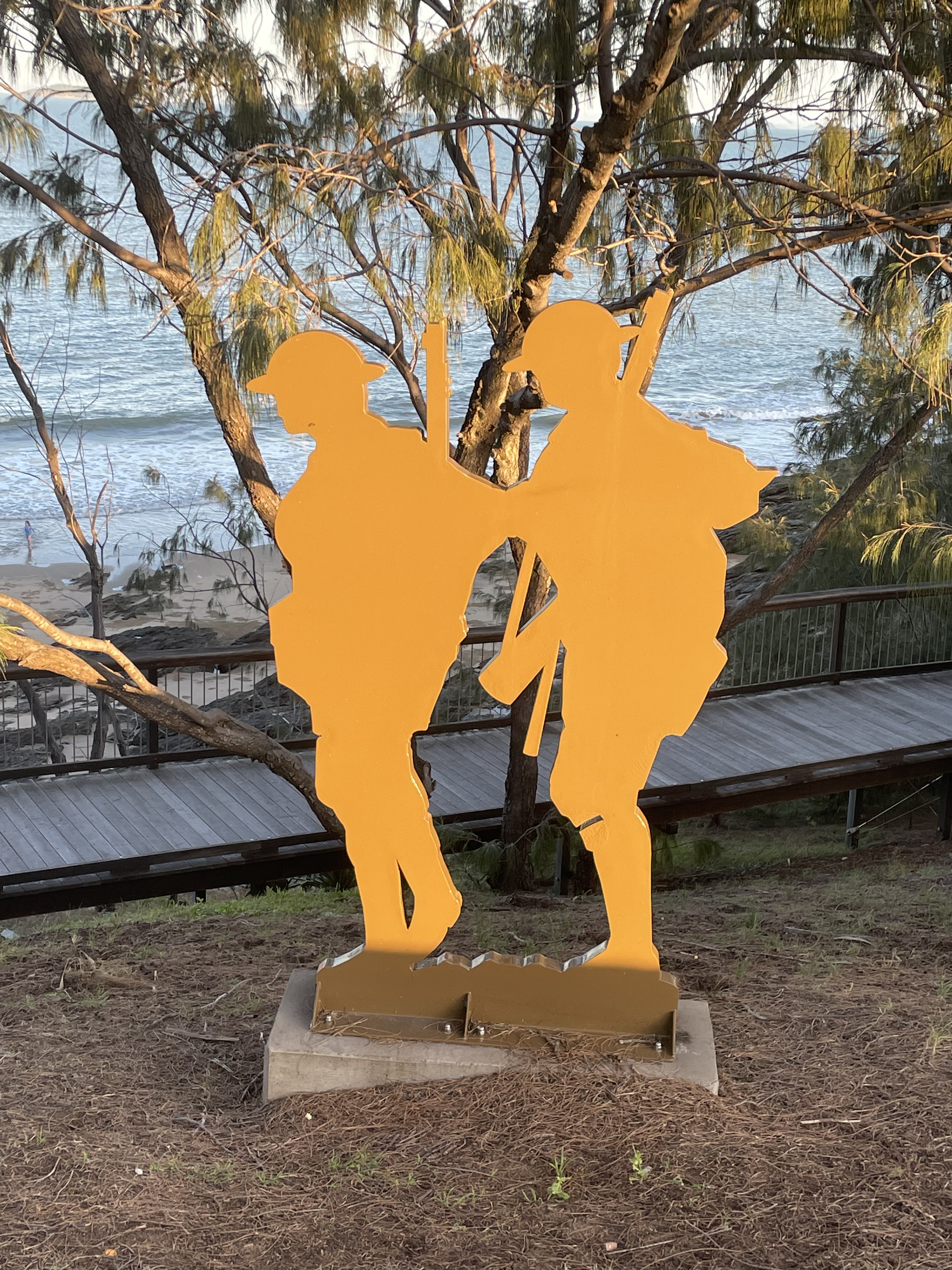
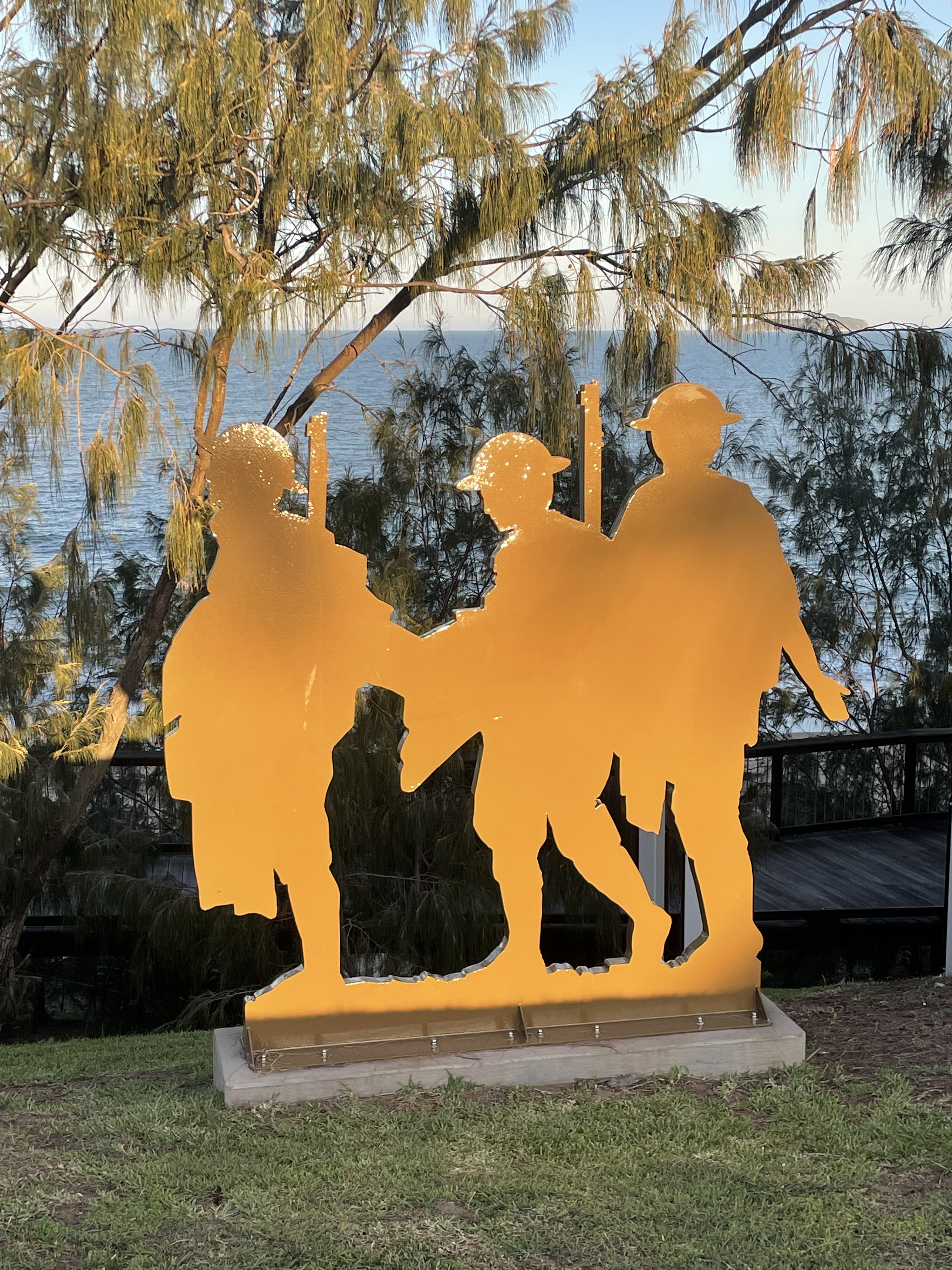
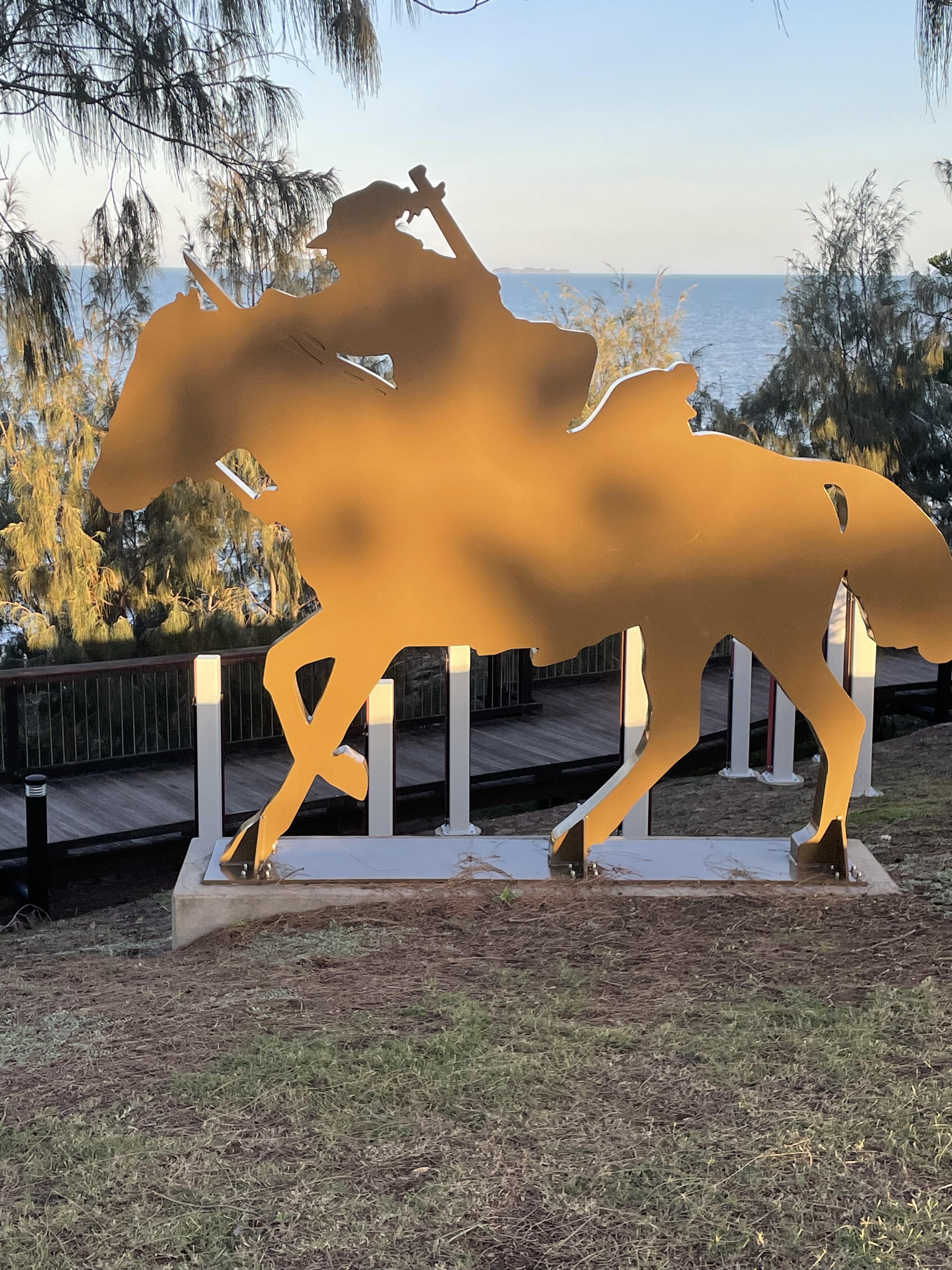
From the gatehouse a wooden boardwalk takes you past a series of battle markers that depict the various campaigns of WWI and some silhouettes, pausing at a lookout overlooking the islands of the Capricorn Coast. From here the walkway continues up the hill culminating at the Singing Ship. This whole walk is only around 400 meters and has been brilliantly done.
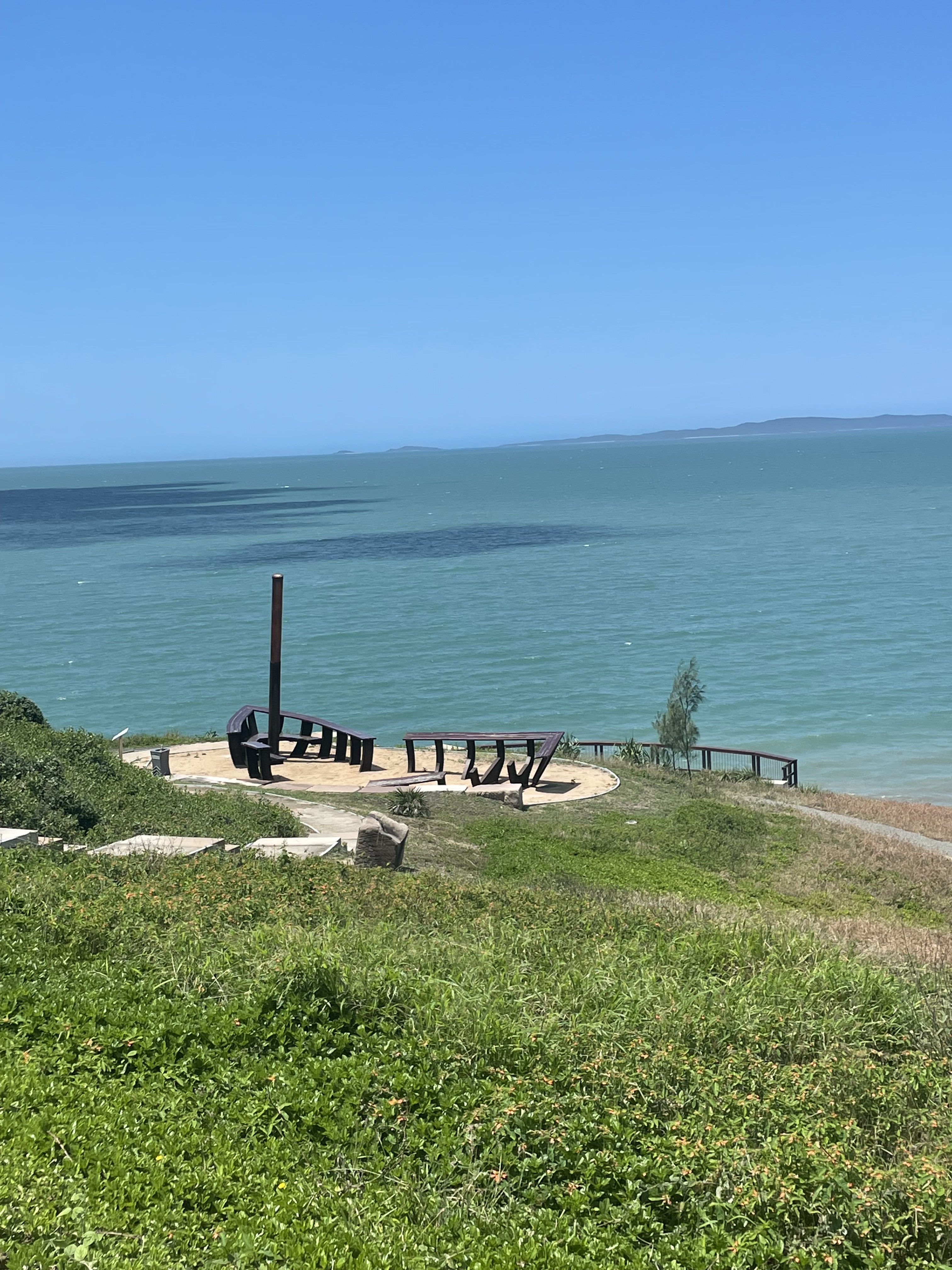
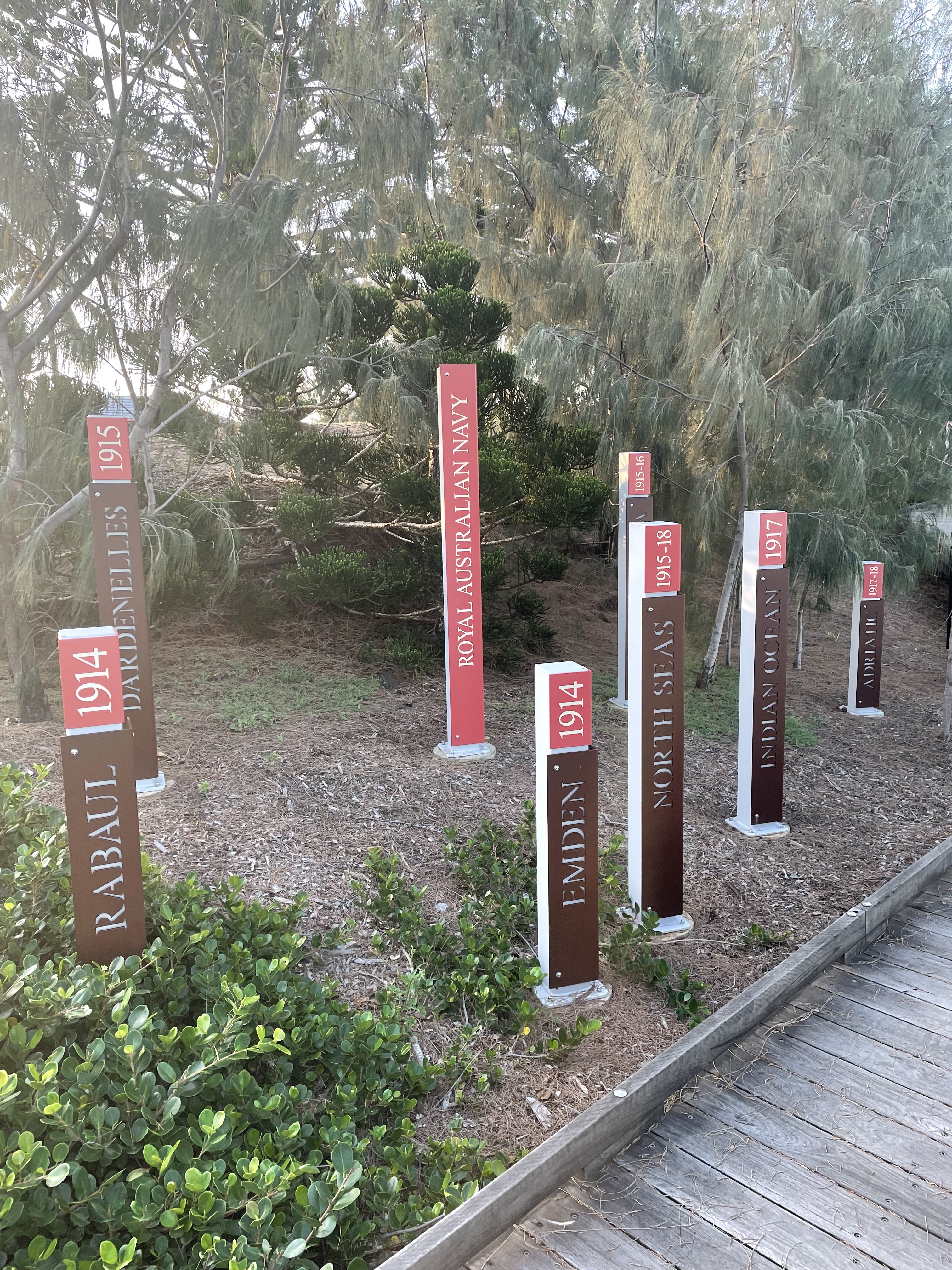
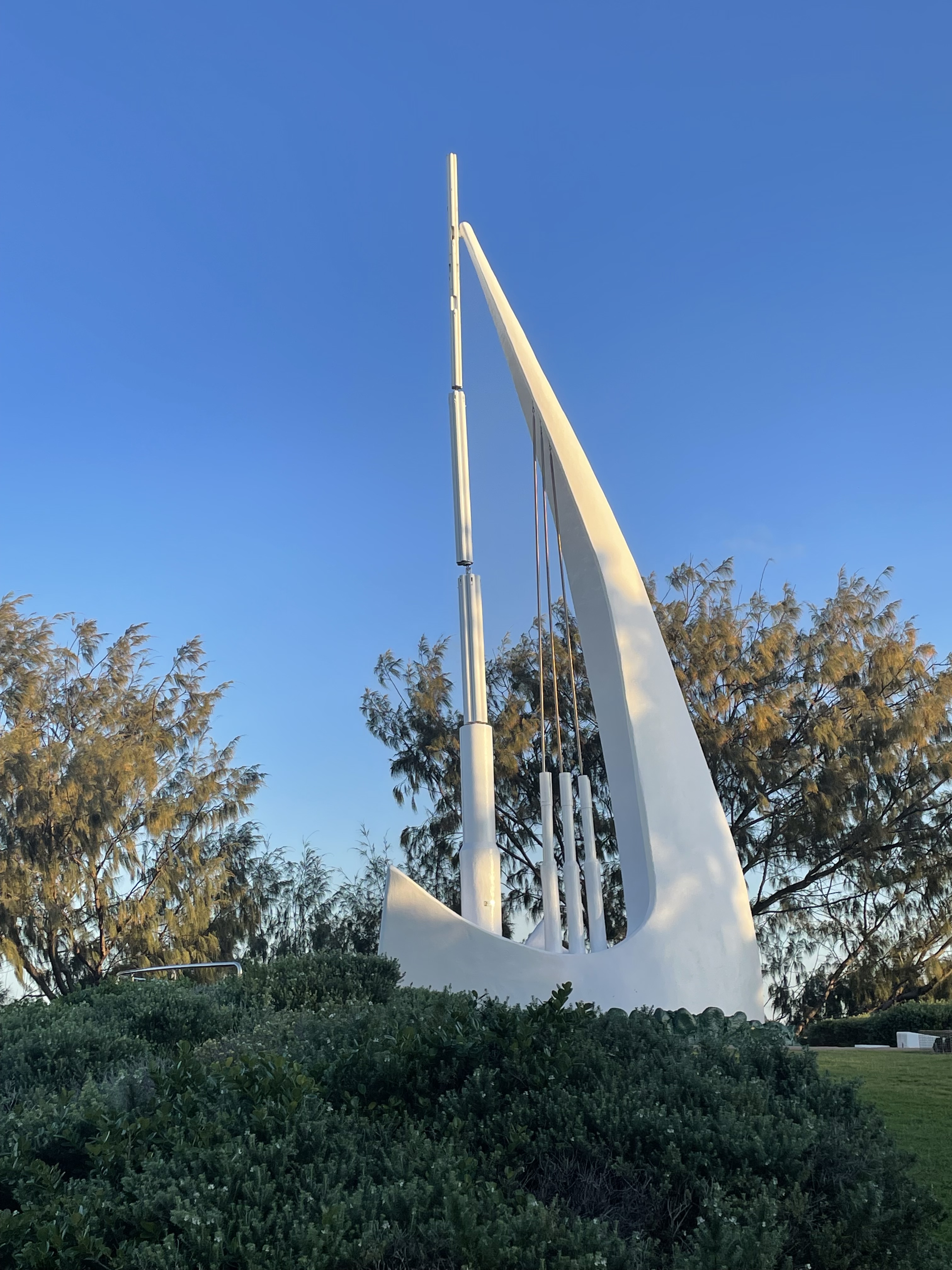
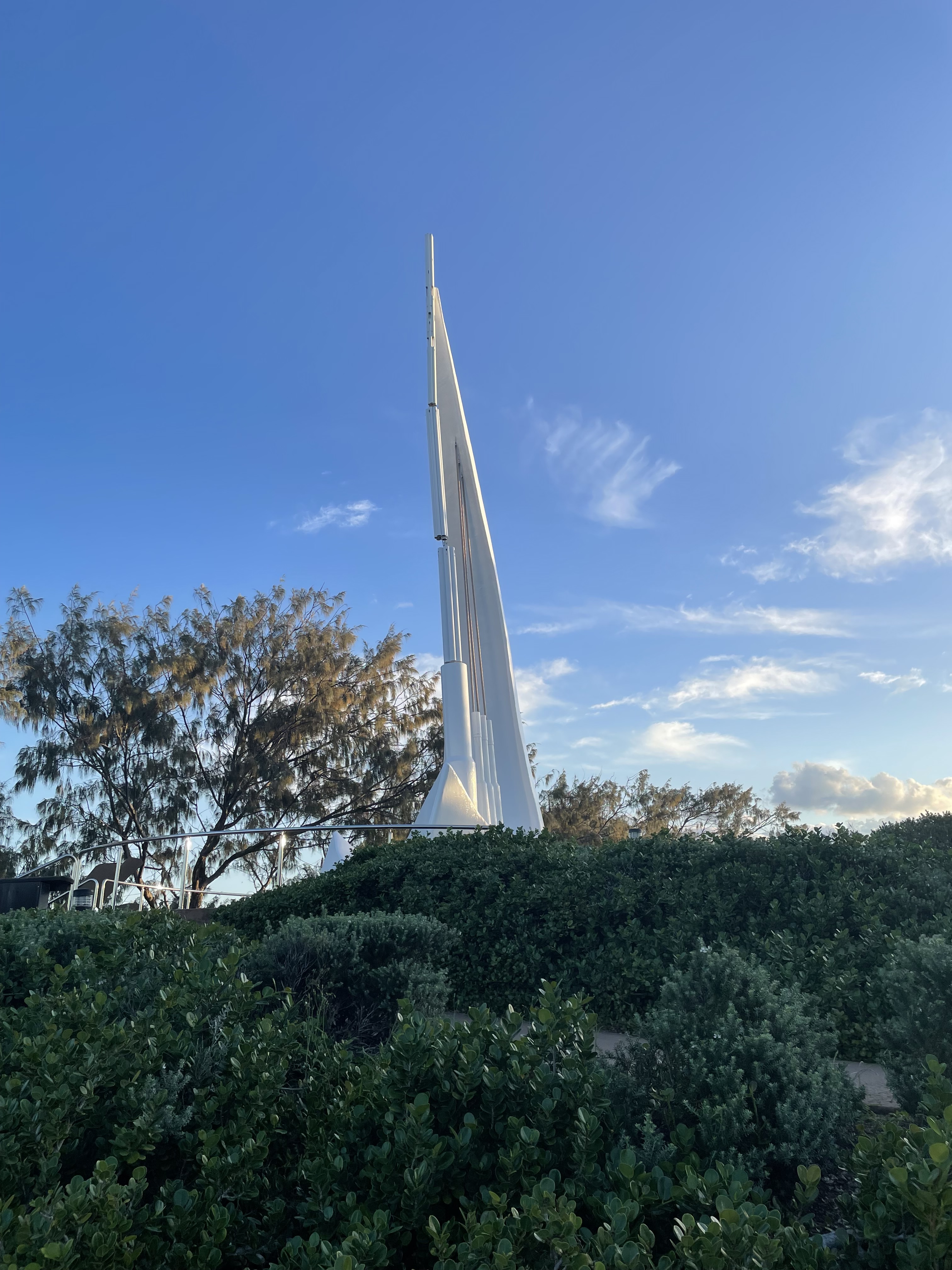
The Singing Ship is a monument that was established to commemorate the historical explorations of Captain James Cook, who discovered this bay in May 1770. It was designed to represent the mast, sail and rigging of the Endeavour. Concealed organ pipes within the sculpture pick up the sea breeze, creating music, hence the name.

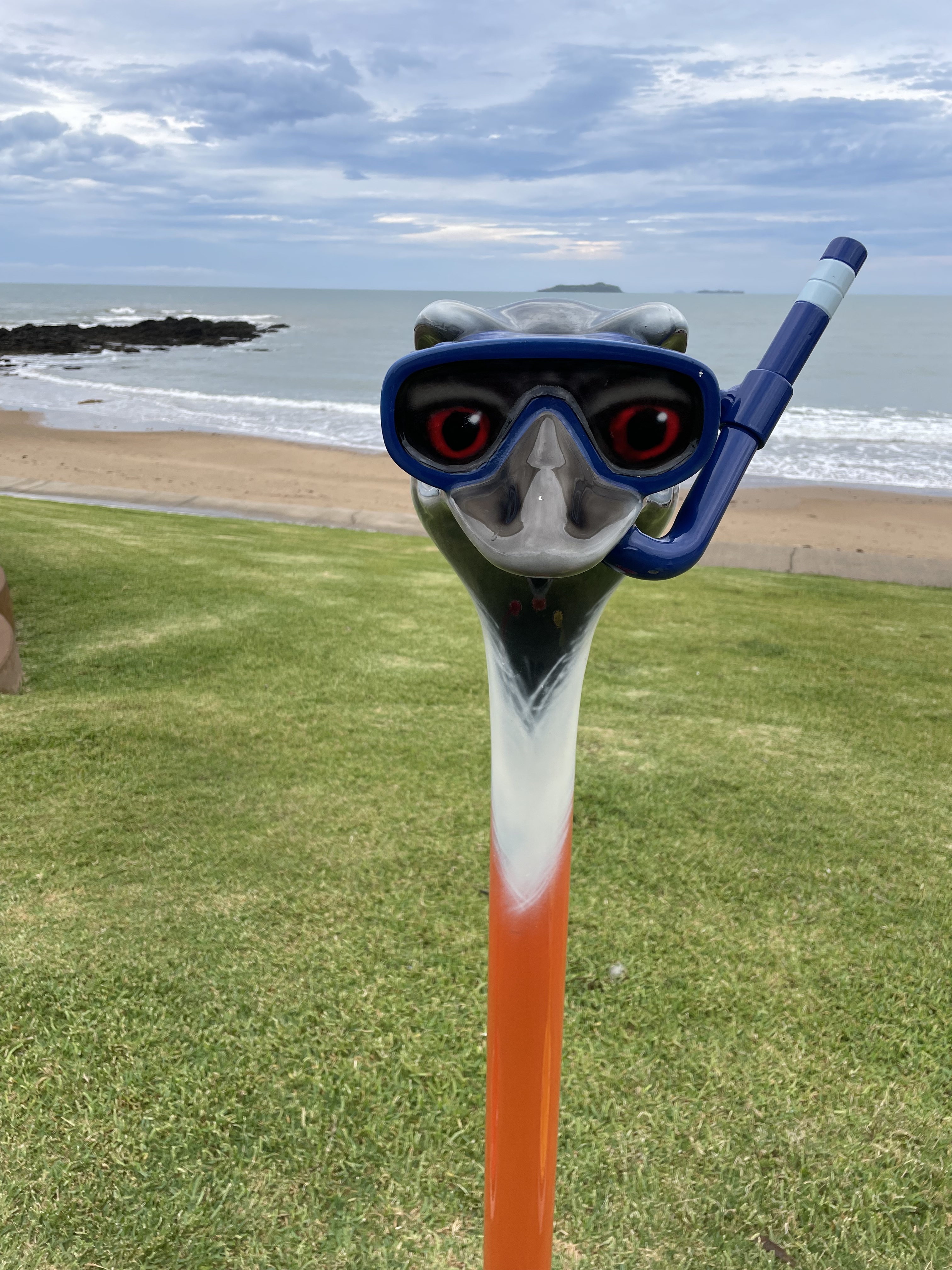
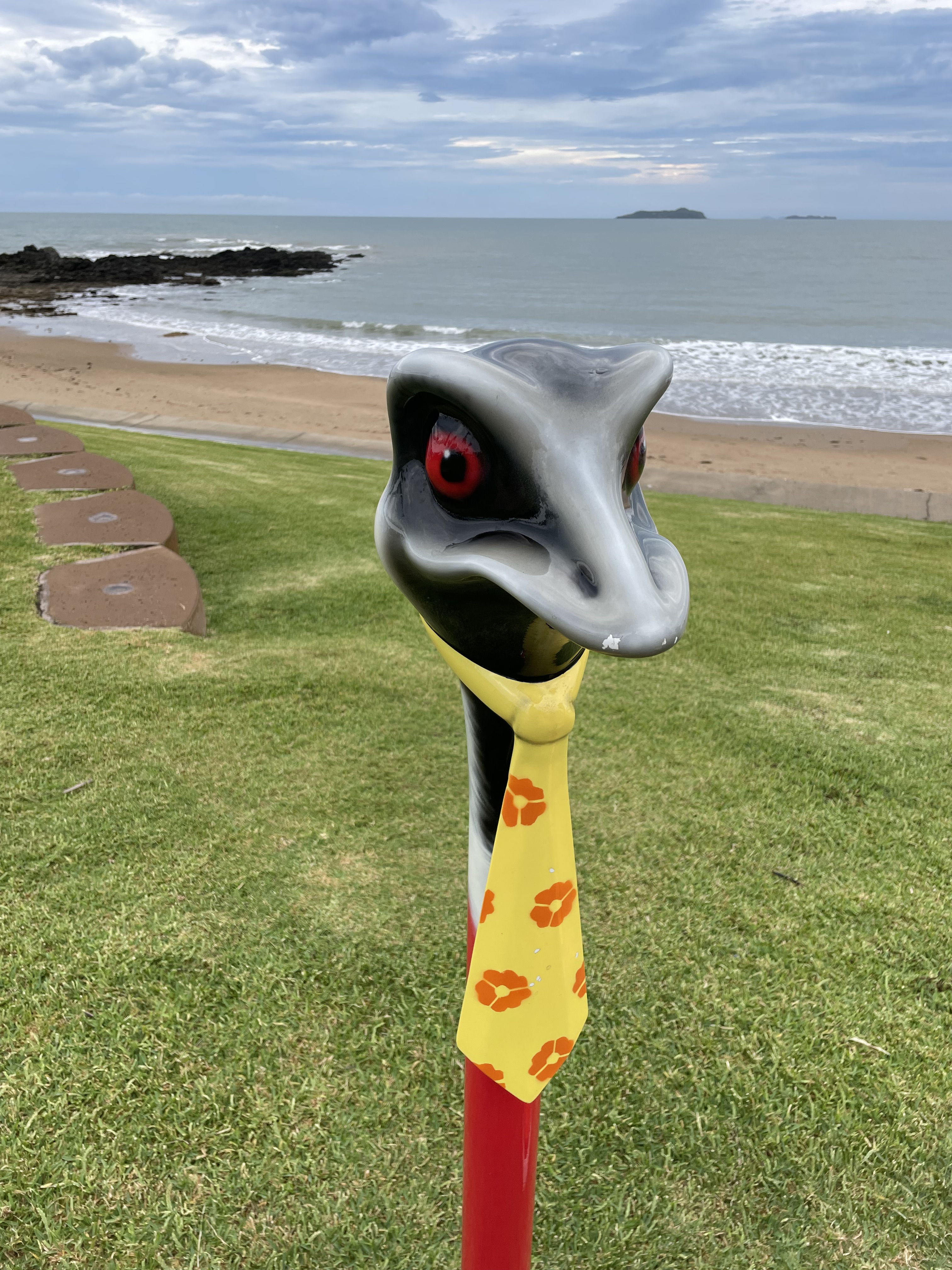
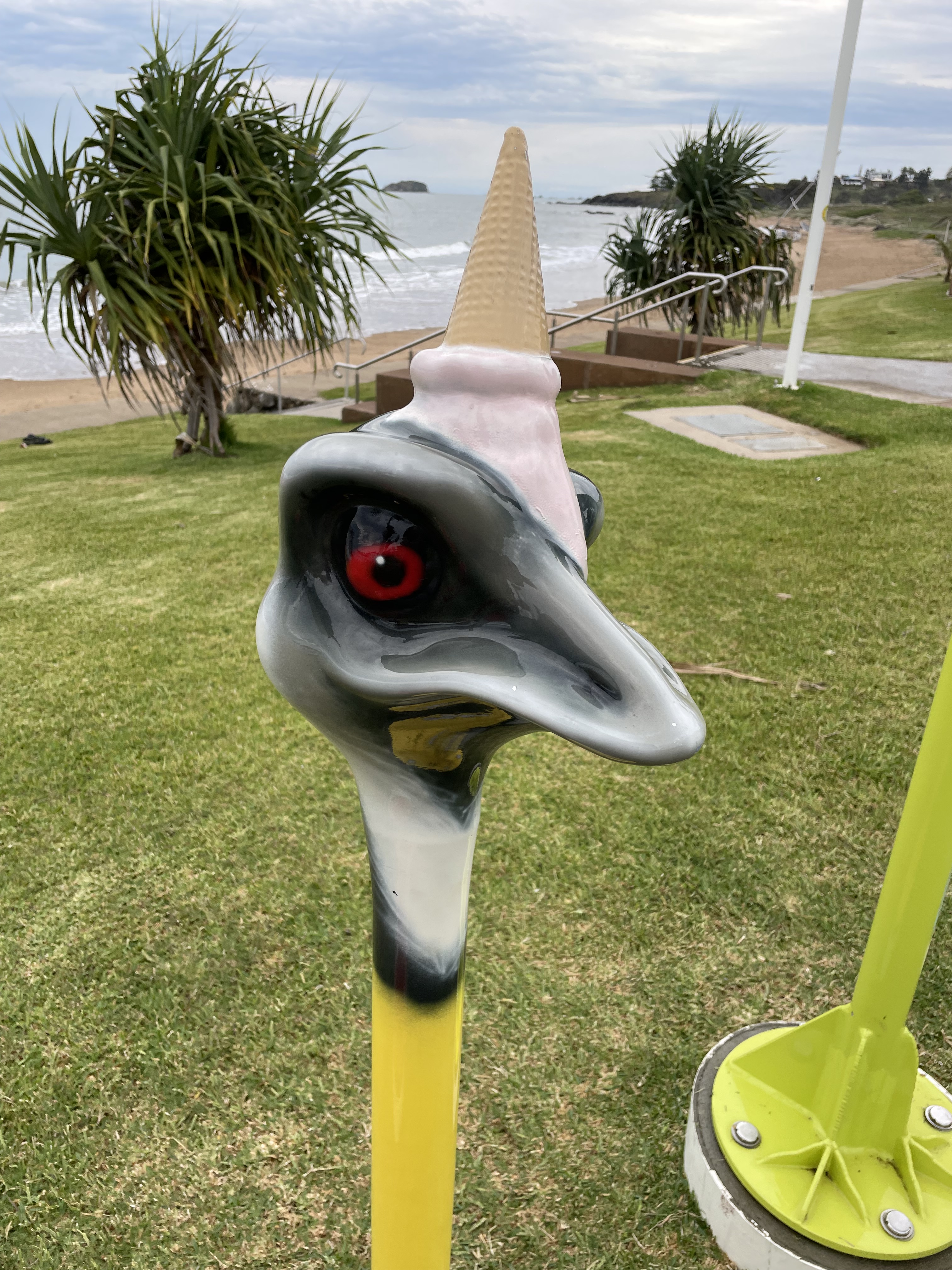
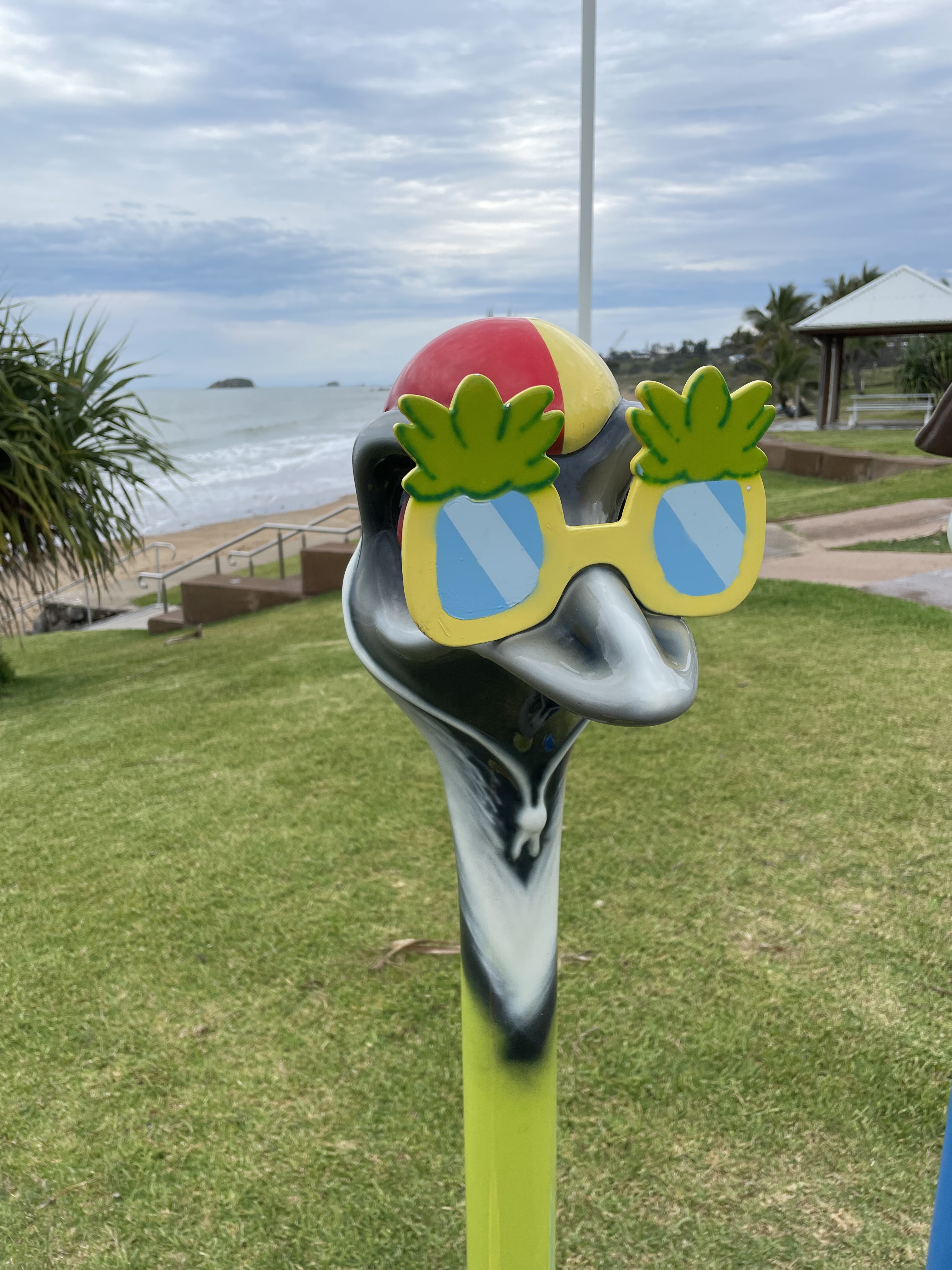
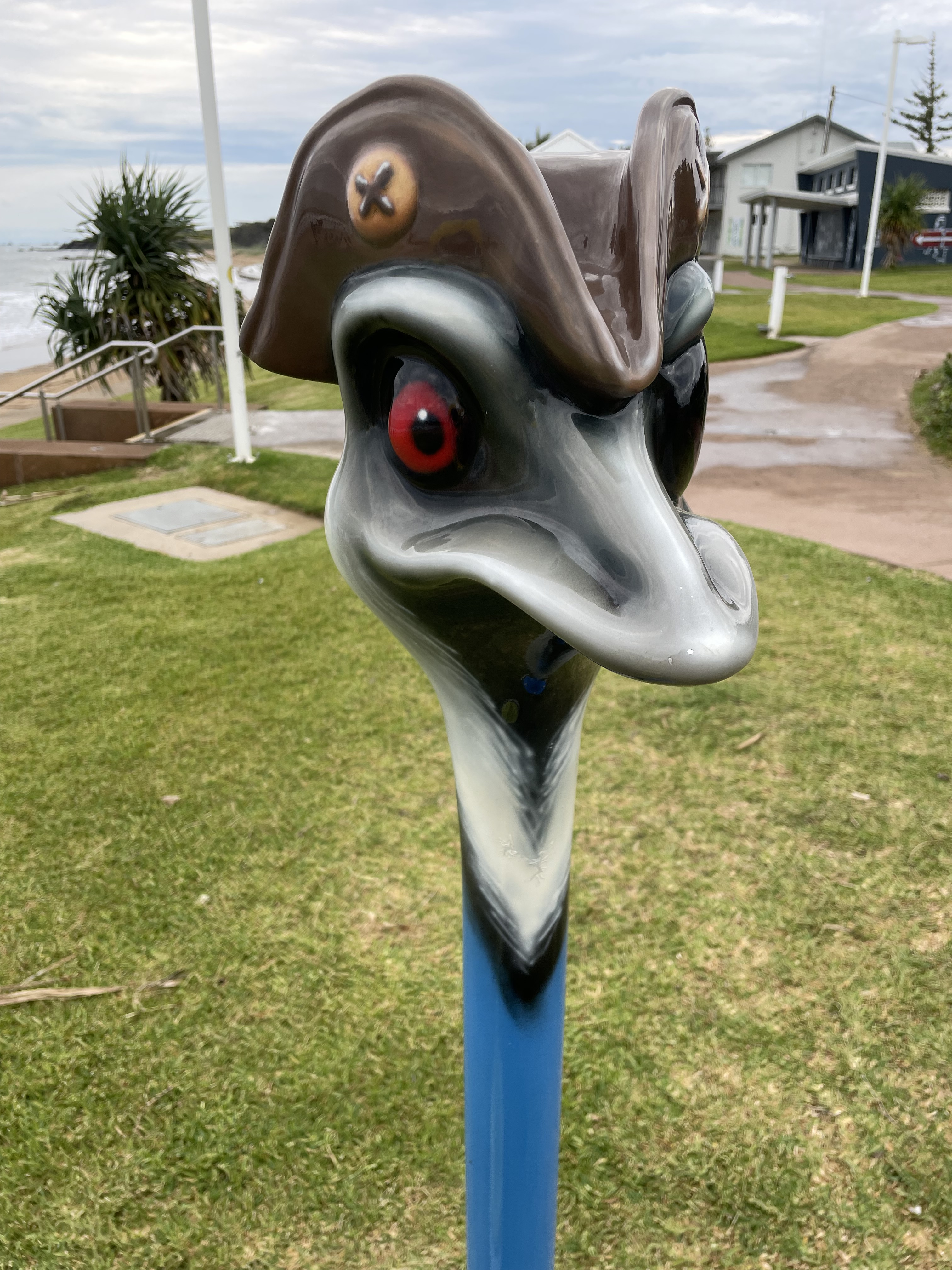
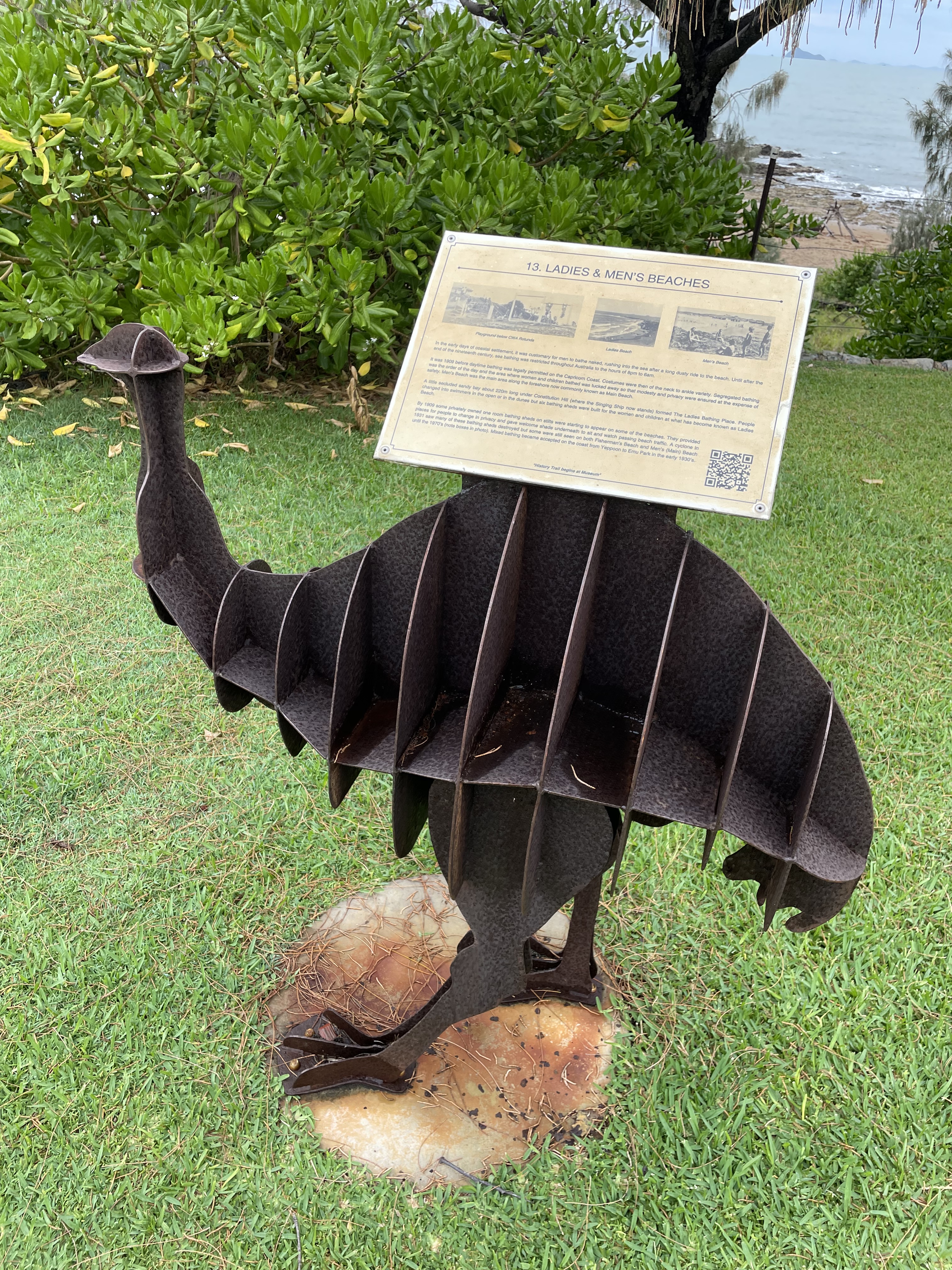
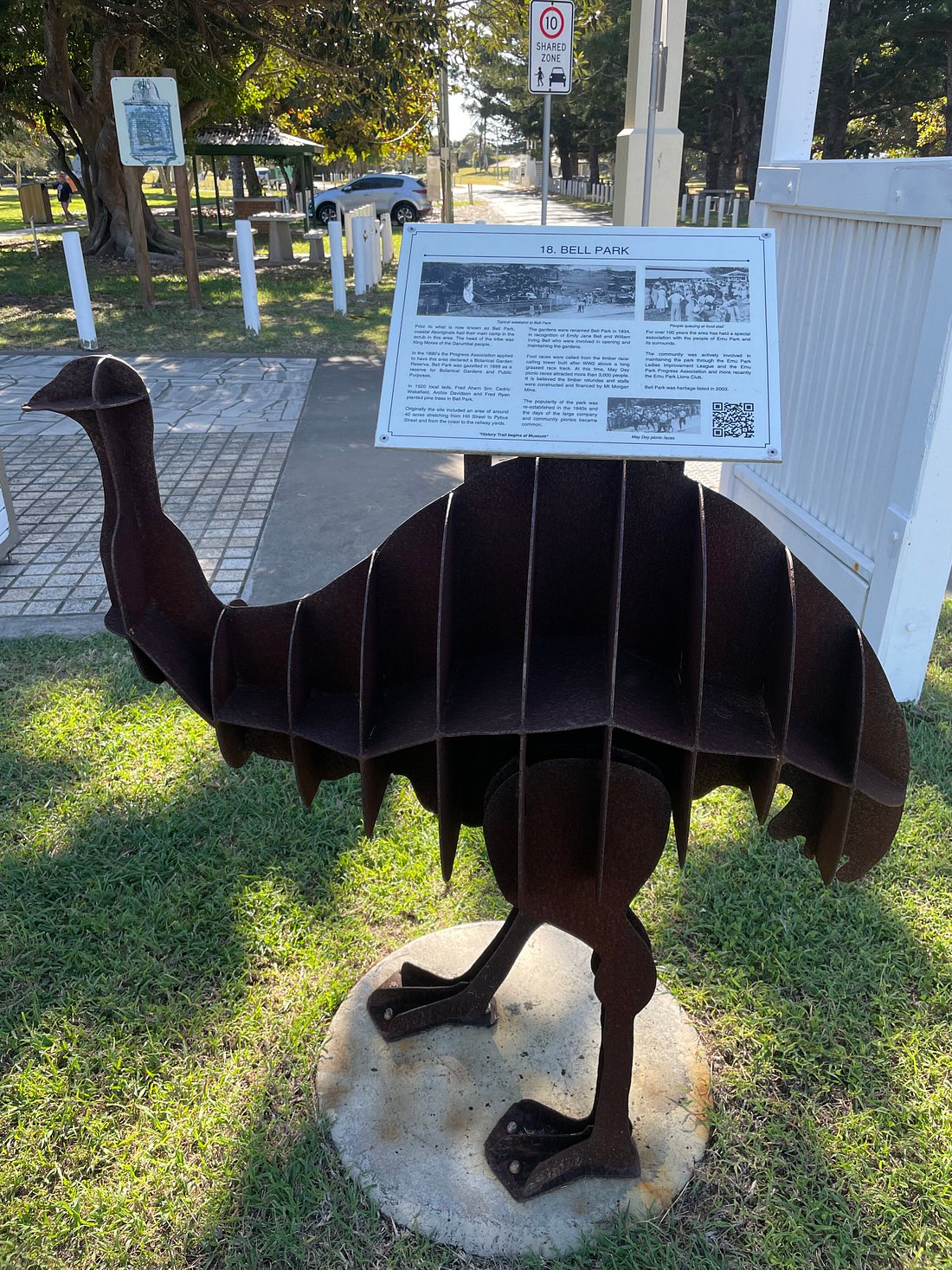
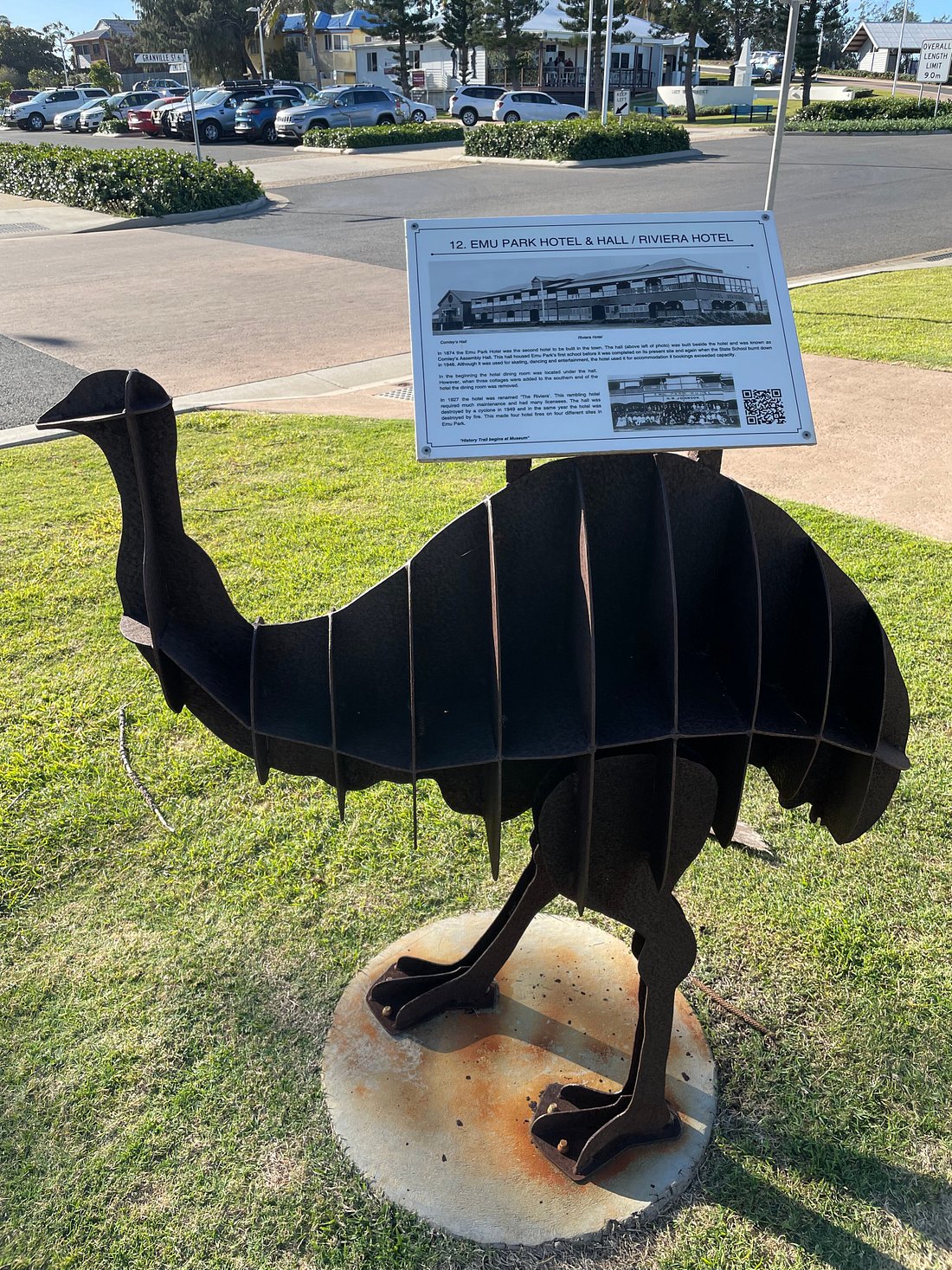
In addition to the ANZAC Memorial walk there is also the Emu Park Historical trail which walks you around the town and highlights and describes the historical nature of things. The signs even have QR codes on them to help with the experience. But possibly the best bit is the fact that the signs are made from iron emu sculptures.
Well that covers off on the touristy elements of the town but doesn’t touch upon the reason why we were thinking of changing our plans on the best place for retirement…the people. Admittedly we worked hard to meet and get to know as many people as we could as we were due to be here for a while. But almost without exception we were welcomed everywhere we went. My first move was to join the local footy tipping comp at the pub. Within weeks I had a wide range of people who knew me and we were chatting away. From here, Jill joined the bowls club (for meals…not bowling) and it took us a while but we worked out when the RSL was open and then we both joined in up there. Almost immediately we were welcomed at all places and by virtually all people.

If you are ever looking for a place to visit and kick back then this may be the place for you.

What is AI Code Governance?

AI code governance

It asks not just whether approval checkpoints exist but whether they’re designed so reviewers can actually make decisions rather than reflexively approve. As an implementation practice, retain the agent identity, task scope, commit, checks, and approval record. AI code review can investigate architectural fit and requirements using available context, then present findings for verification.

AI-generated code enters through many tools and IDEs, so a program built around one assistant misses the rest, and shadow AI usage slips past controls entirely. AI code governance works by embedding controls into the development lifecycle, so oversight happens as code is written and merged, catching problems before they ship. Follow the coding-agent policy implementation guide to turn the framework into repository settings. It handles the routine layer of https://event-miami24.com/software-development-for-energy-and-utility-asset-management.html review so senior engineers can spend their attention on decisions that actually require human judgment. CI checks and audit records provide evidence for that system; they do not cover the whole standard. Named owners, documented decisions, and review evidence can contribute to a team’s implementation.

The controls exist to protect that judgment and direct it where it counts. Developers feel governance as faster reviews and fewer surprises, while the audit trail builds itself in the background. Findings arrive with evidence and reasoning, and reading every line becomes the exception reserved for the changes where judgment genuinely matters. Standards get enforced by an automated first reviewer instead of a checklist, so most changes flow through without a human gatekeeper. Code review is one control inside governance rather than the whole of it.

Use the request changes workflow with repository protection to configure blocking behavior; retain deterministic tests and human approvals. CodeRabbit teams can add custom pre-merge checks with explicit criteria and inspect the evidence behind each result. https://pagemakers.net/the-benefits-of-outsourcing-for-small-businesses/ Configure required checks and approvals on the protected branch, and restrict bypass actors. Conftest evaluates structured configuration with policy rules. An agent that can open PRs across 200 repos but can’t touch infrastructure configs or push to protected branches is a governed agent. Without centralized governance, every team’s agent setup is its own policy island.

  • Centralized governance, applied through shared rules in CI and a consistent review layer on every PR, is what collapses those policy islands into a single enforceable standard
  • Use dedicated secret scanners, linters, and tests for the code properties they cover, and require human review for decisions needing product or architectural context.
  • The four risks above all collapse to the same gap, which is the absence of an enforcement layer that runs at the speed agents ship code.
  • Runtime enforcement sits between the agent and the systems it can touch, evaluating each file operation, API call, or shell command against this tiered policy before it executes.

Extend GitLab Duo Agent Platform into your business systems

Written instructions help communicate standards; reviewers and executable checks must still verify the output. Coding agents replicate the patterns they see in the codebase, including the inconsistent or suboptimal ones. Infrastructure changes need a separate authorization boundary. Each risk maps to a specific governance control that, if missing, lets the problem compound at the speed agents generate code. Without those limits enforced at runtime, the gap between policy and practice is exactly where the risks below take root.

AI code governance

A practical framework to implement

AI code governance

For authentication, infrastructure, and migration changes, the designated owner reviews test results and a rollback plan before authorizing release. For repository setup and a worked policy example, use AI governance for coding agents. See where AI tools generate code, correlate commits with risk signals, and maintain visibility across your AI software supply chain.

It’s also distinct from application security (AppSec), which catches vulnerability patterns in code that already exists. Inside the SDLC, that means governing coding agents that write PRs, modify configs, and ship code into production. The PR can still propose the change, but an infrastructure owner must review the plan and authorize the deployment through the release workflow. Its development credentials should prevent applying that policy.

AI-generated code introduces new risks around security vulnerabilities, licensing compliance, and architectural drift. A framework for establishing quality, security, and compliance checks to manage the risks of AI-assisted development without sacrificing velocity. This guide provides actionable steps to implement scanning, create audit trails, and define approval workflows.

Superblocks: best for governing AI-generated apps

Gain visibility into AI-generated code, correlate risk at commit, and govern AI-assisted development — so organizations can adopt AI coding with confidence. Introducing Citizen AI — AI literacy training for every employee, not just developers. How do I avoid creating governance that kills developer velocity?

How does AI code governance work?

It requires continuous measurement and improvement based on real-world data. Define clear rules for when human approval is required. Establishing governance for AI-generated code requires moving beyond traditional code review. Crucially, log all AI actions and model versions used to generate code, creating a digital provenance trail. Automate initial scans to catch common issues, routing only high-risk or anomalous outputs for human review. The goal is to create a Human-in-the-Loop (HITL) Governance System that provides oversight without becoming a bottleneck for developers.

Highlight elevated risk patterns and provide governance insights aligned with secure coding policies. Identify unsanctioned AI tools operating outside approved governance policies. Gain visibility into which AI tools contribute code — creating a verifiable AI SBOM. It connects AI usage visibility, risk intelligence, and developer capability insights across the software development lifecycle.

How AI code governance relates to neighboring practices

This policy becomes the foundation for all automated governance checks and team training, ensuring consistency and reducing risk from the outset. An AI code policy is a living document that defines the acceptable use, quality standards, and security requirements for all AI-assisted development. This document sets the rules of the road, aligning your team on quality, security, and compliance before a single line of code is generated. Establishing a formal policy is the critical first step in governing AI-generated code.

Cienfuegos, Trinidad and Varadero

Cienfuegos


Jill has two great loves in life…trains and chicken buses. On our last major foray travelling she could not go past a good train ride and when they aren’t available, enter the chicken bus. You have all seen the movies, dodgy little buses with some overly rural looking woman holding a live chicken (caged or uncaged). Well this is Jill’s idea of fun.

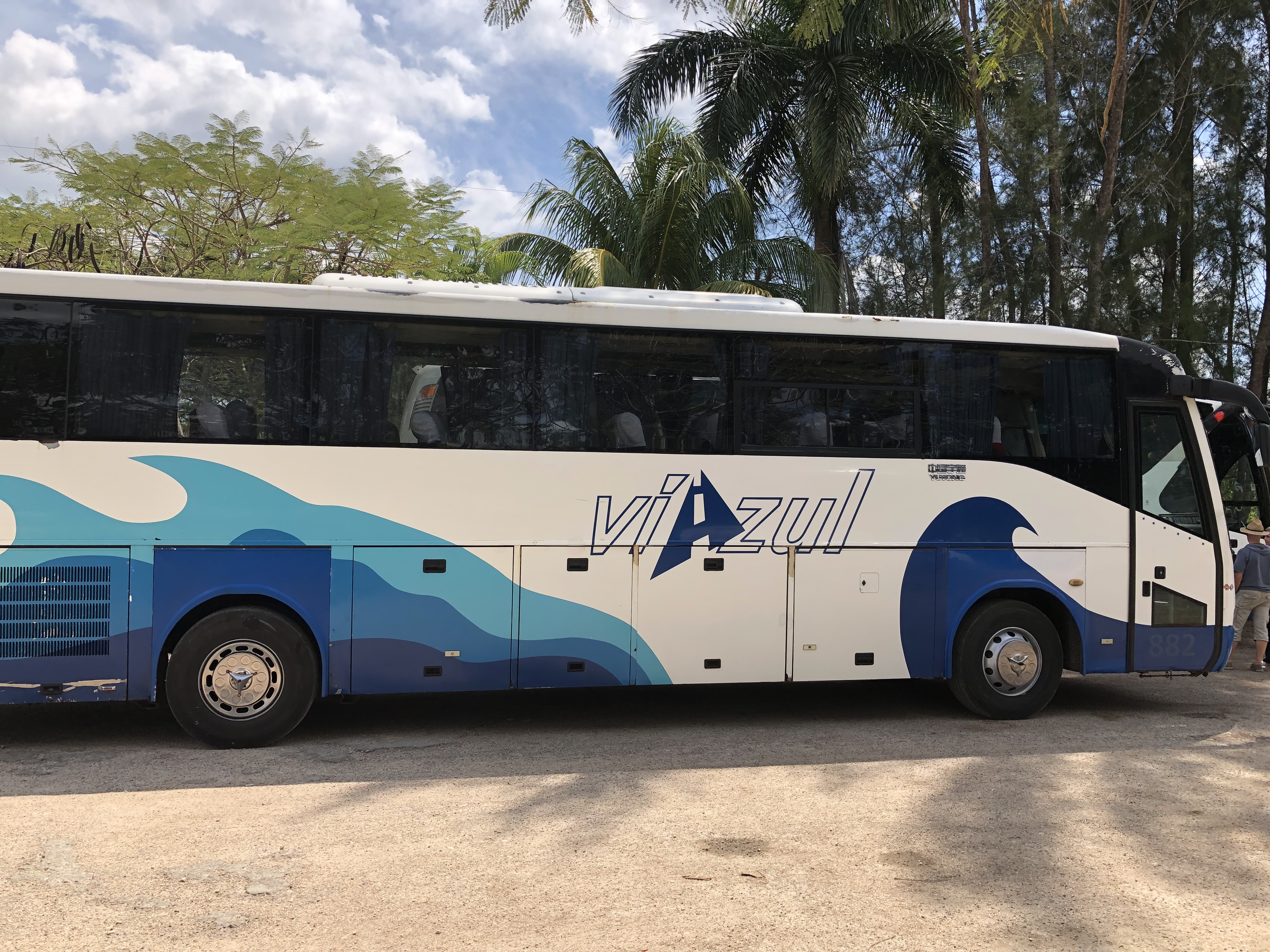
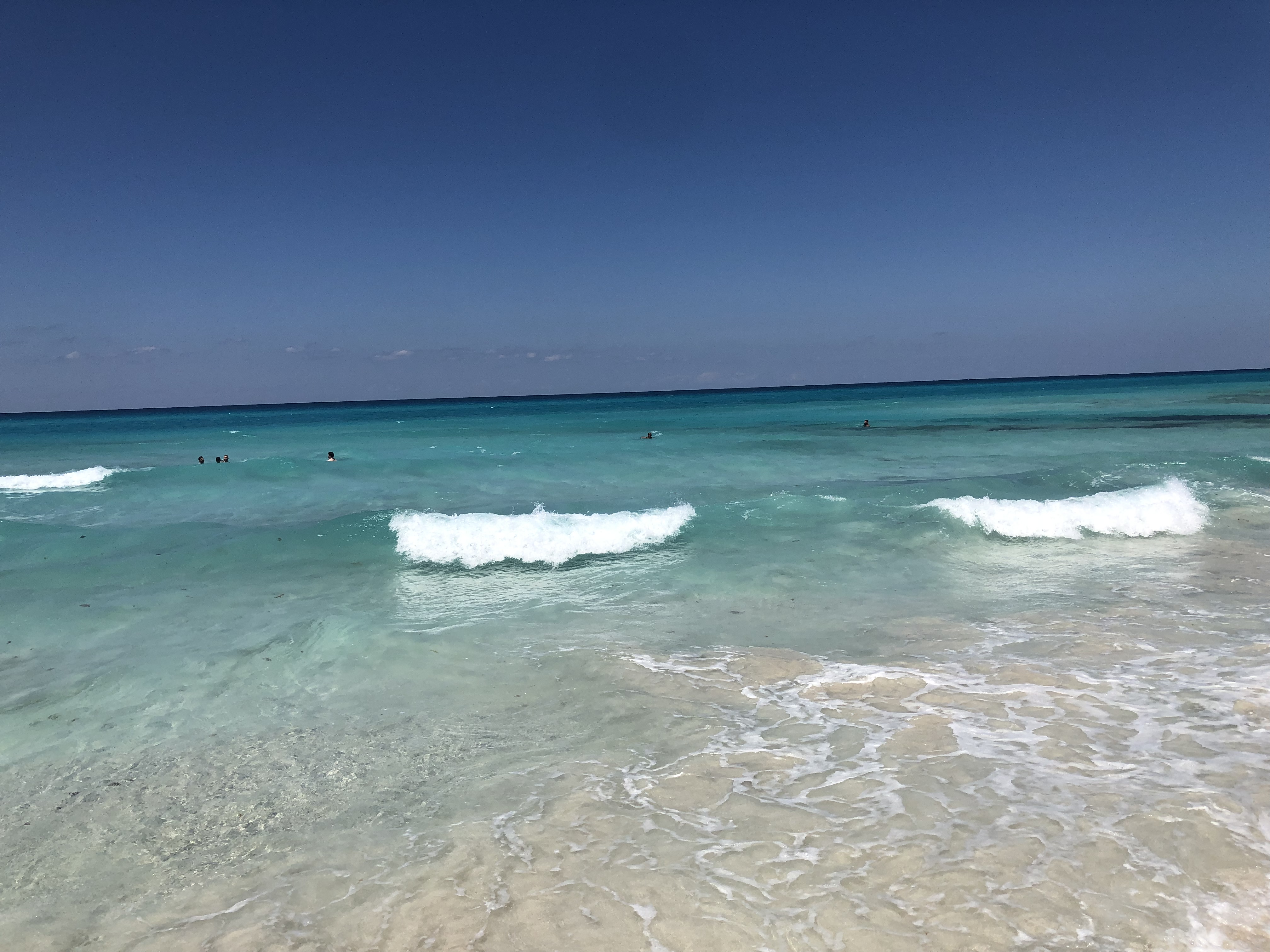
So for our 250 km journey from Havana to Cienfuegos, this was her choice. We hopped a cab to the bus station for me to be pleased that there was not a chicken anywhere in sight. In fact the long distance bus fleet was more modern than anything else on the road. We sat in a comfortable, air conditioned coach doing around 100km/h, on a well maintained 2-3 lane road almost the whole way. And when we got off that we got on a standard dual carriageway, in good repair, that ran through beautiful farmland. Later on, it ran parallel to the ocean throwing up some of the most stunning shades of blue imaginable. Playa Larga and Playa Giron were two of the stops along the way…while this may mean very little to most of you, Playa Giron is better known as the “Bay of Pigs”, where the Kennedy administration tried to invade and overthrow Cuba.

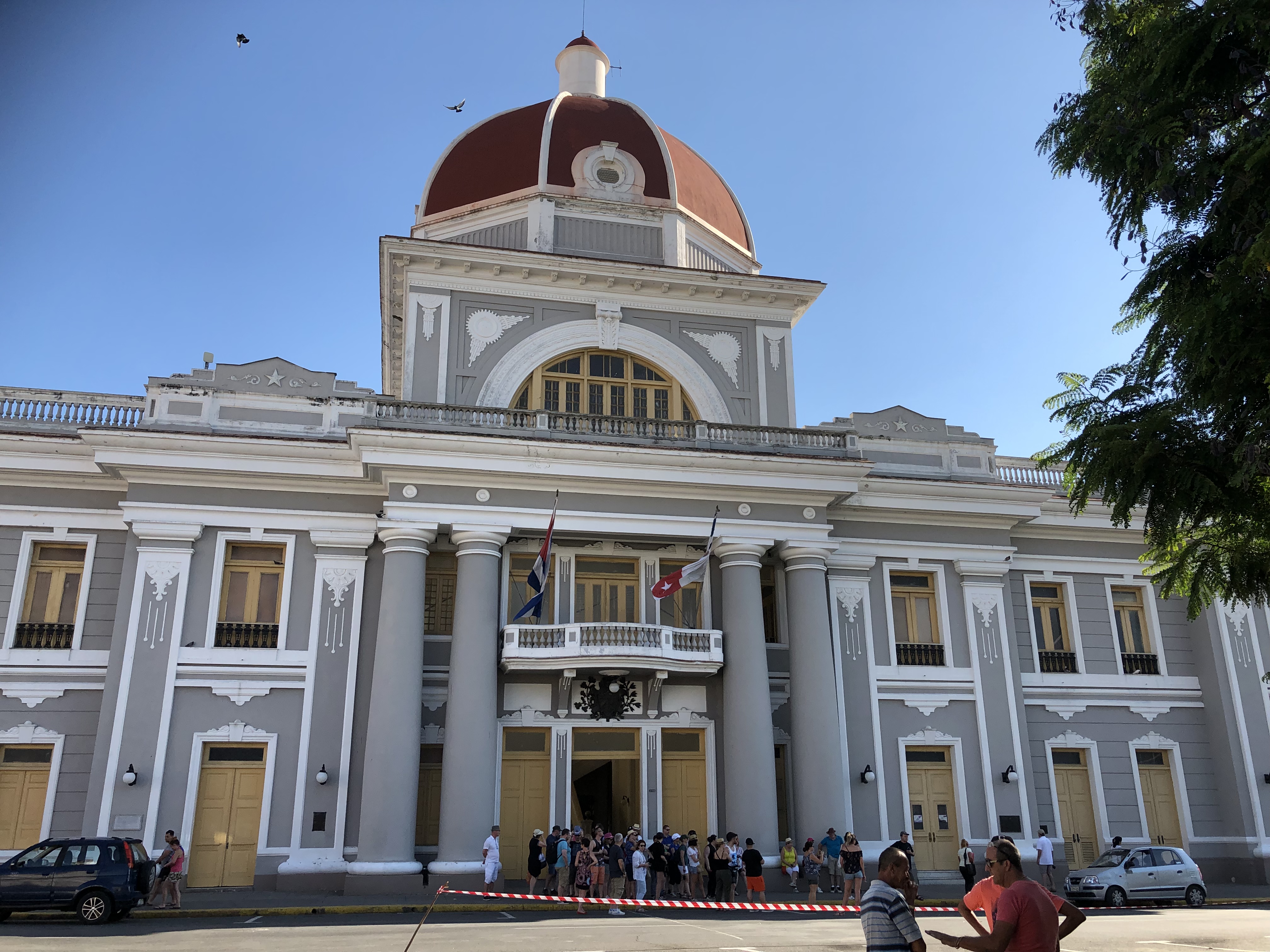
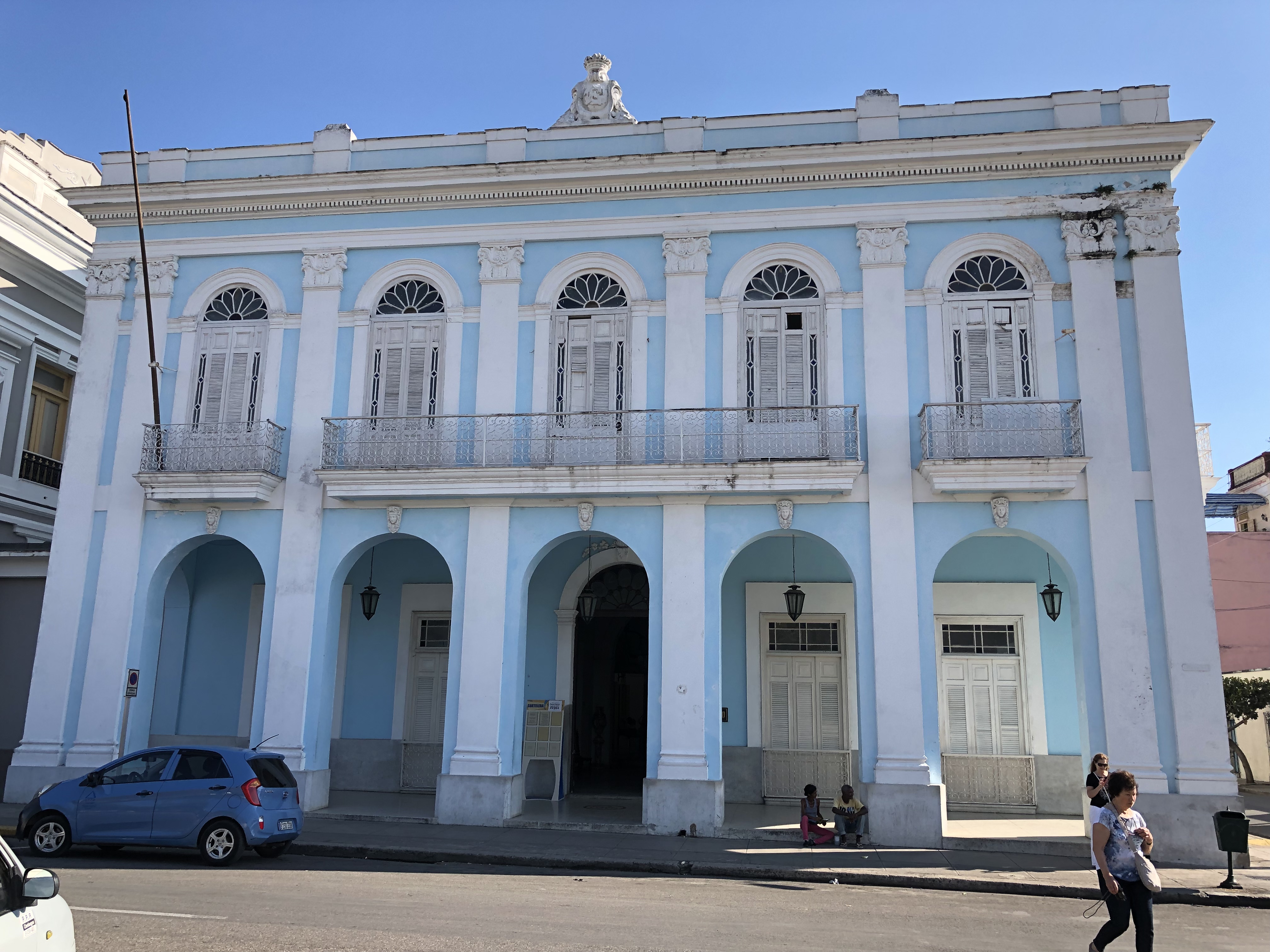
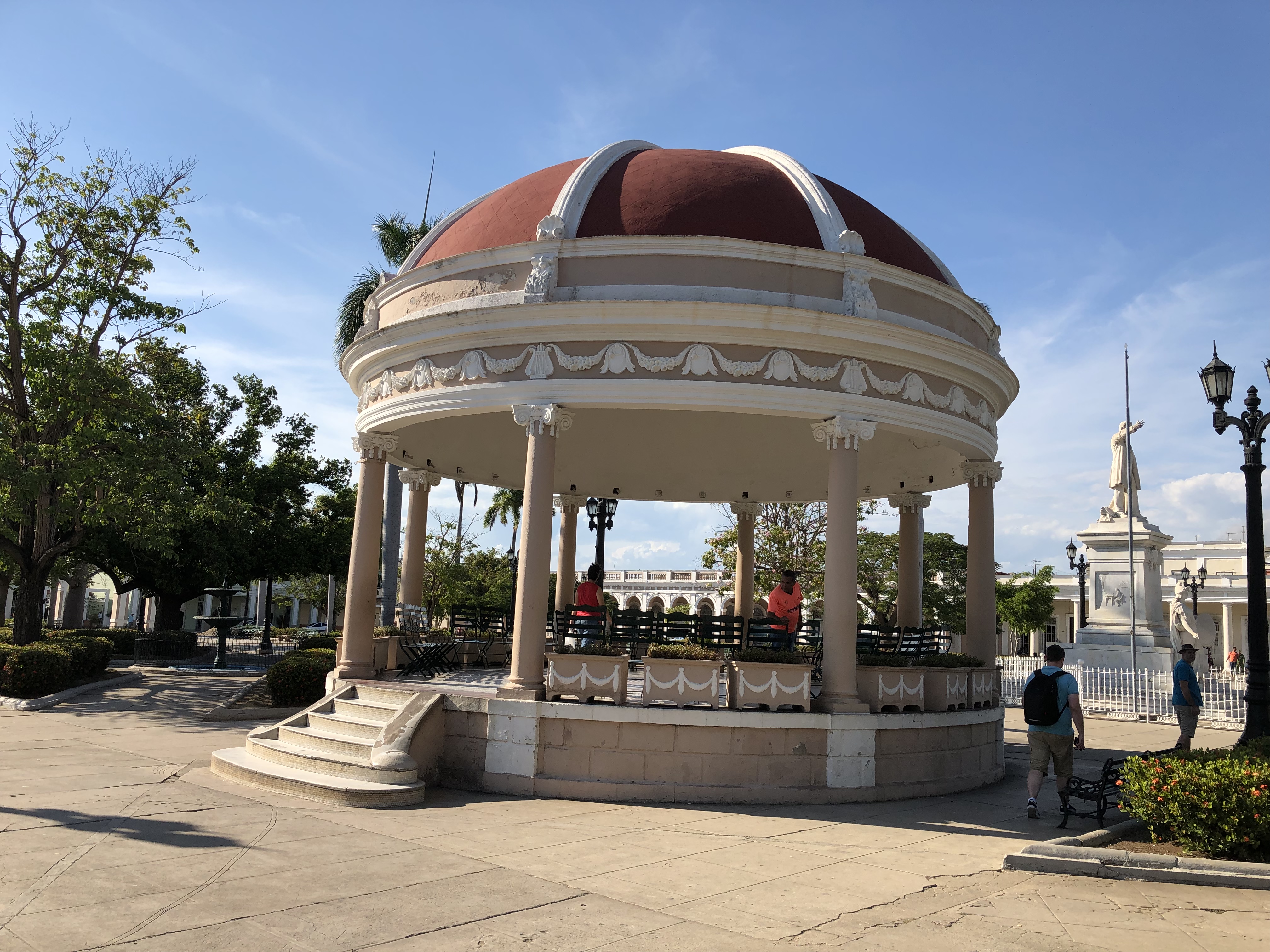
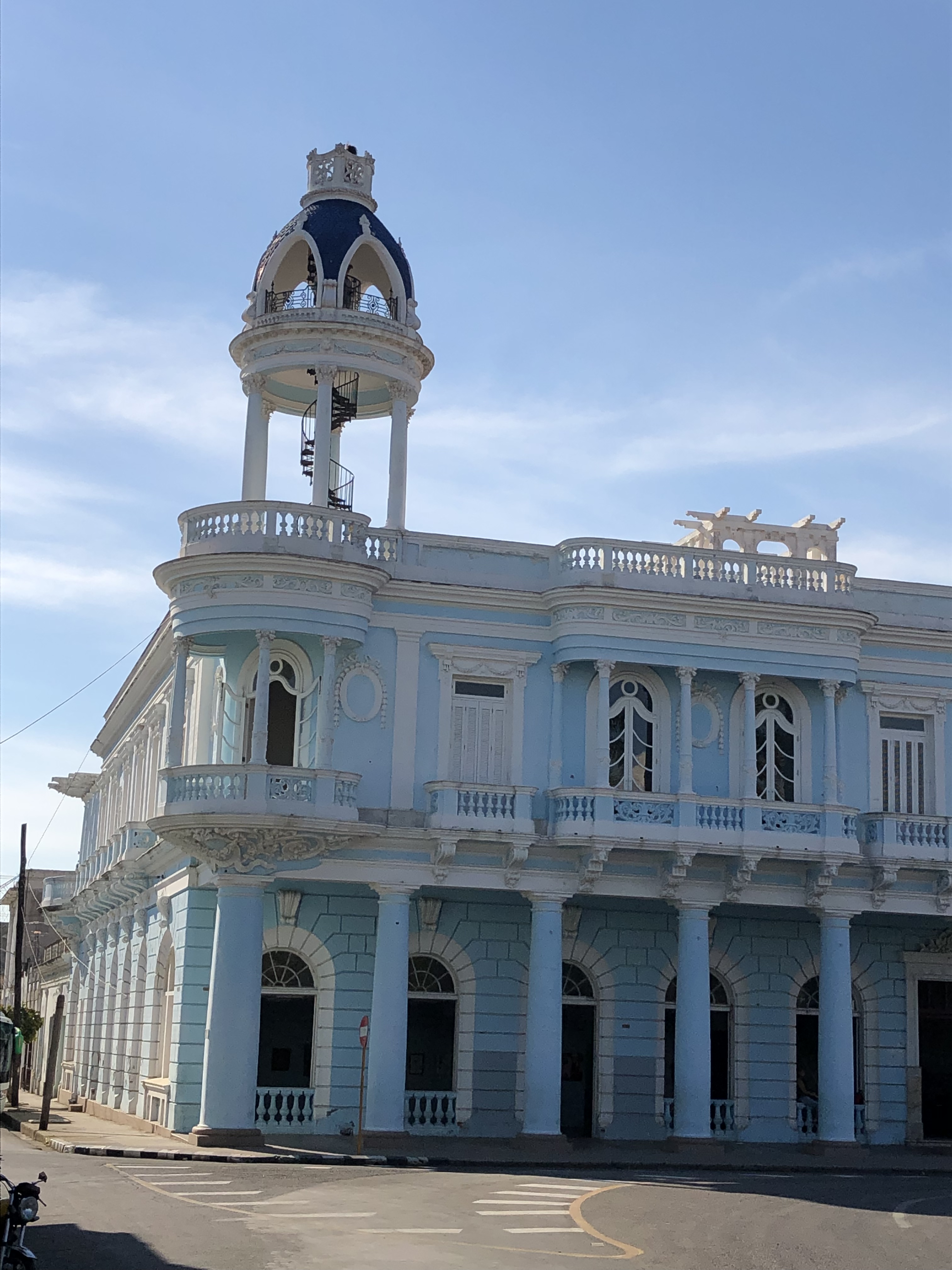
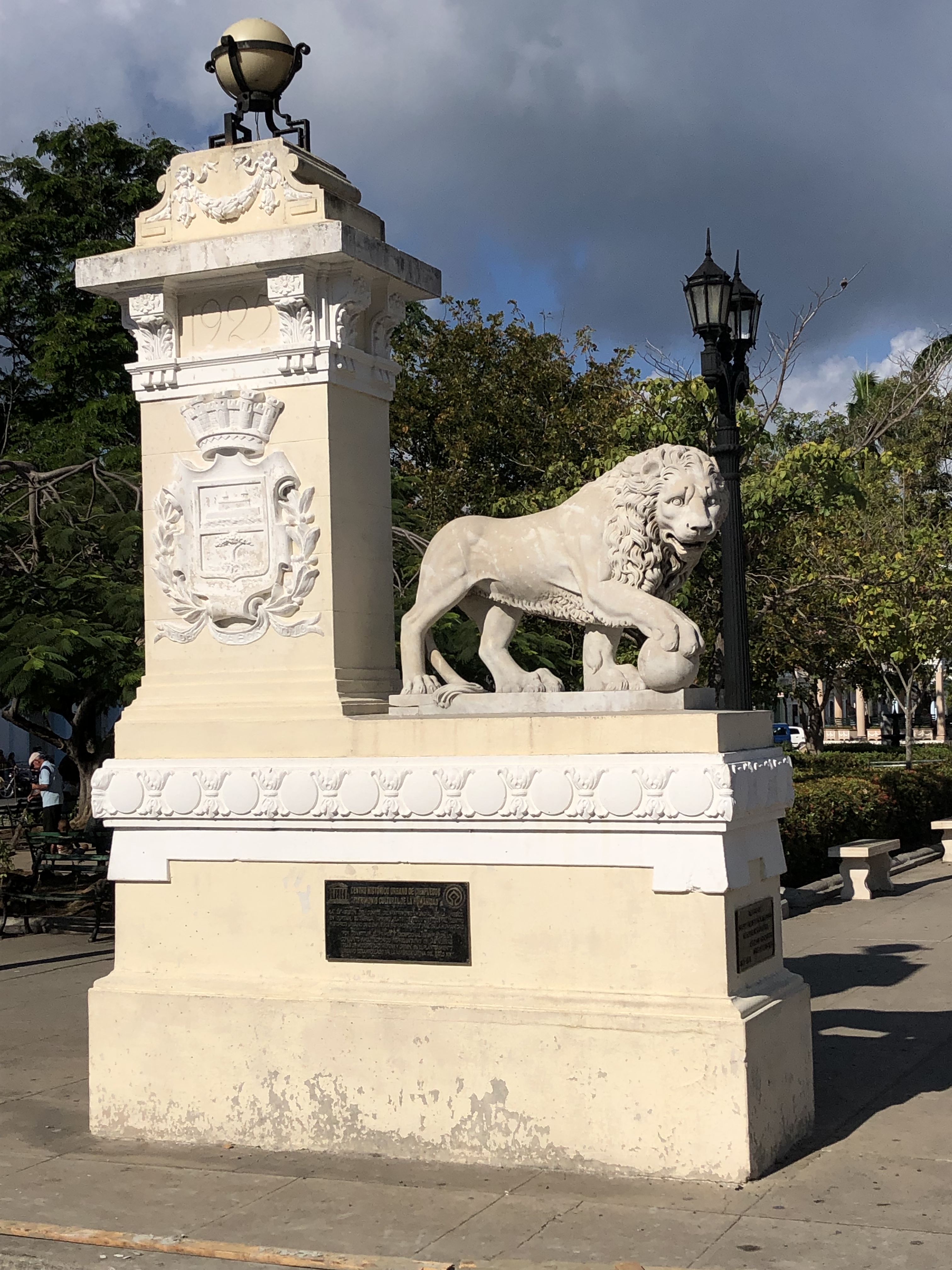
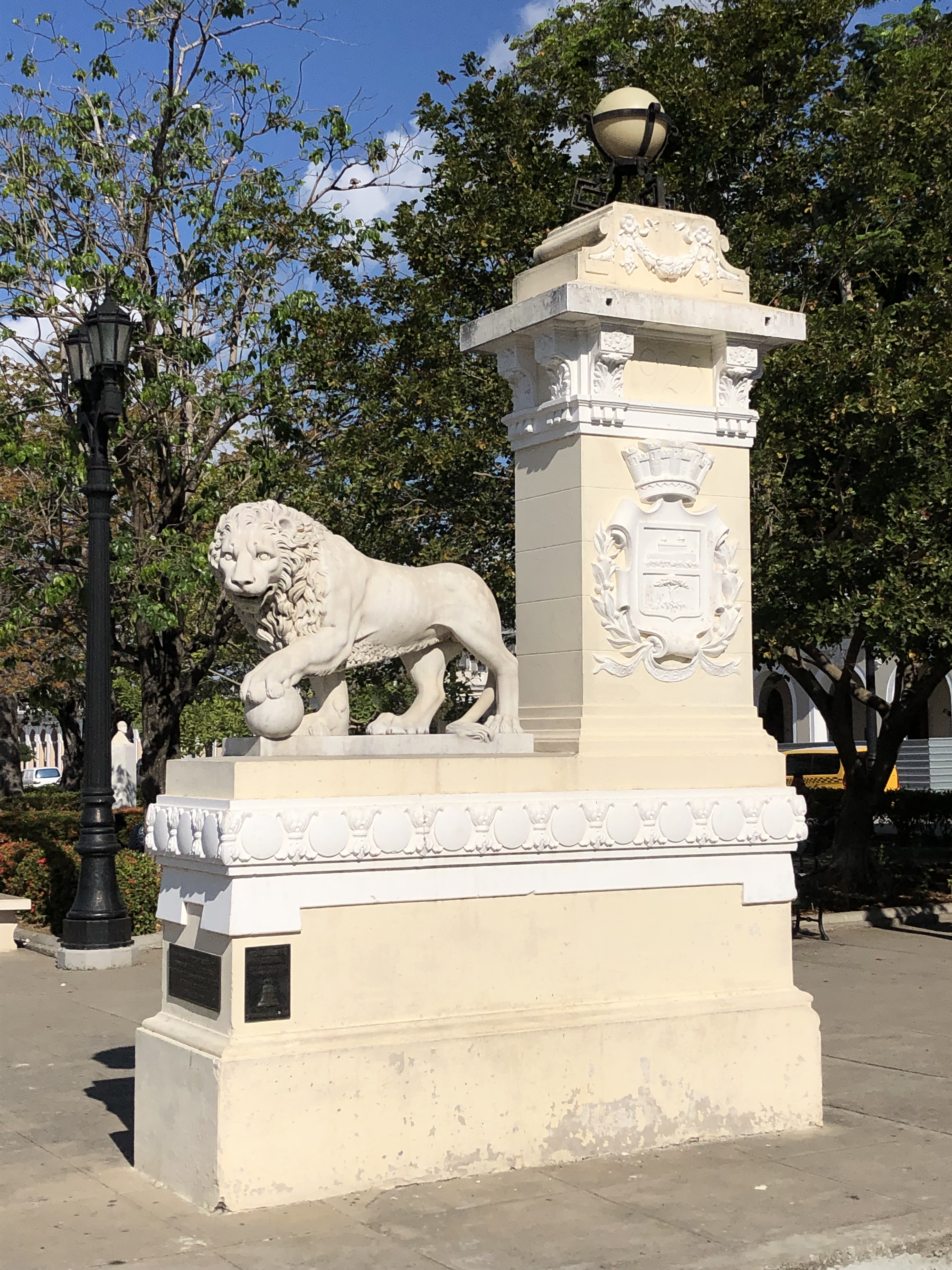
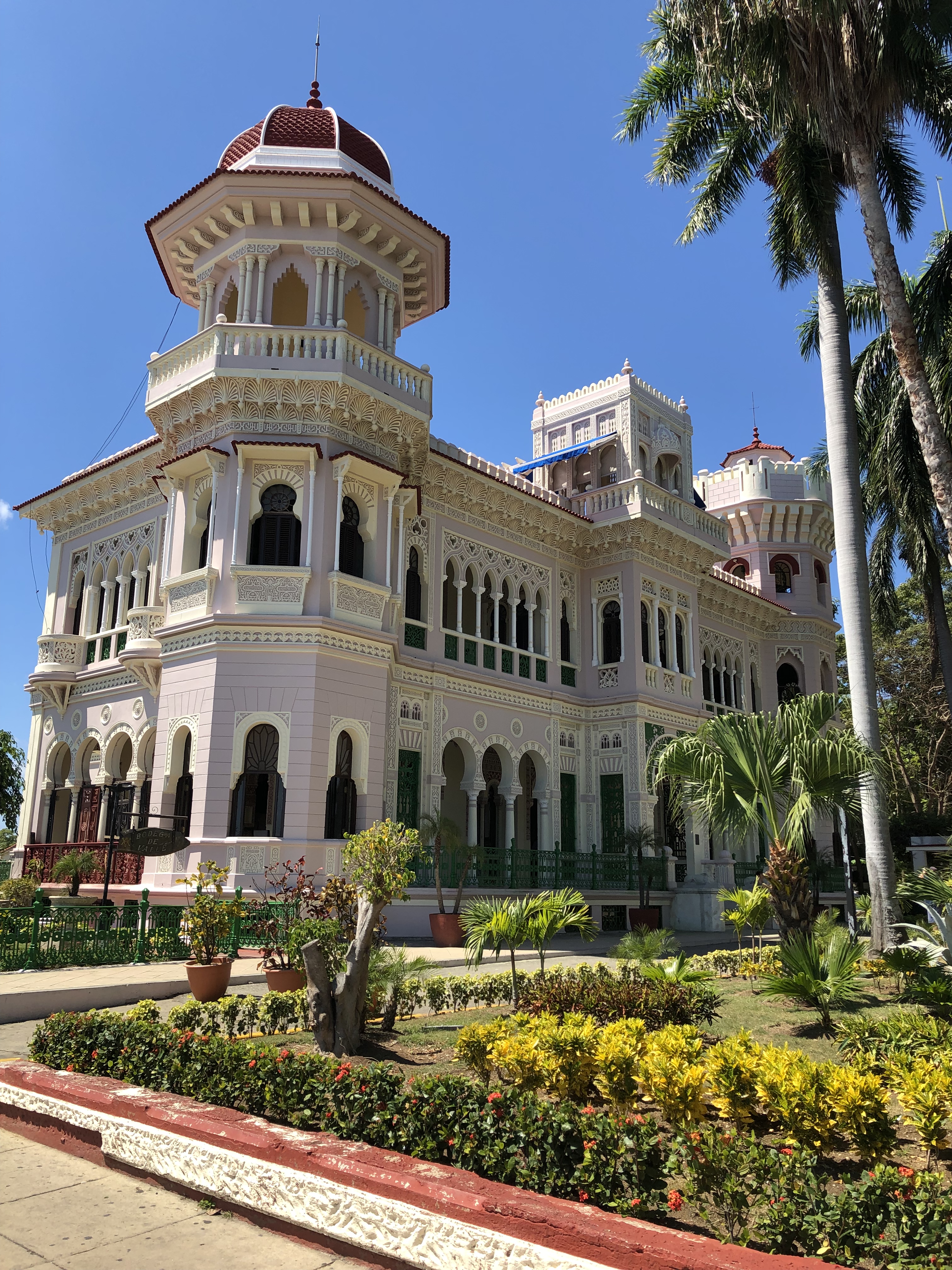
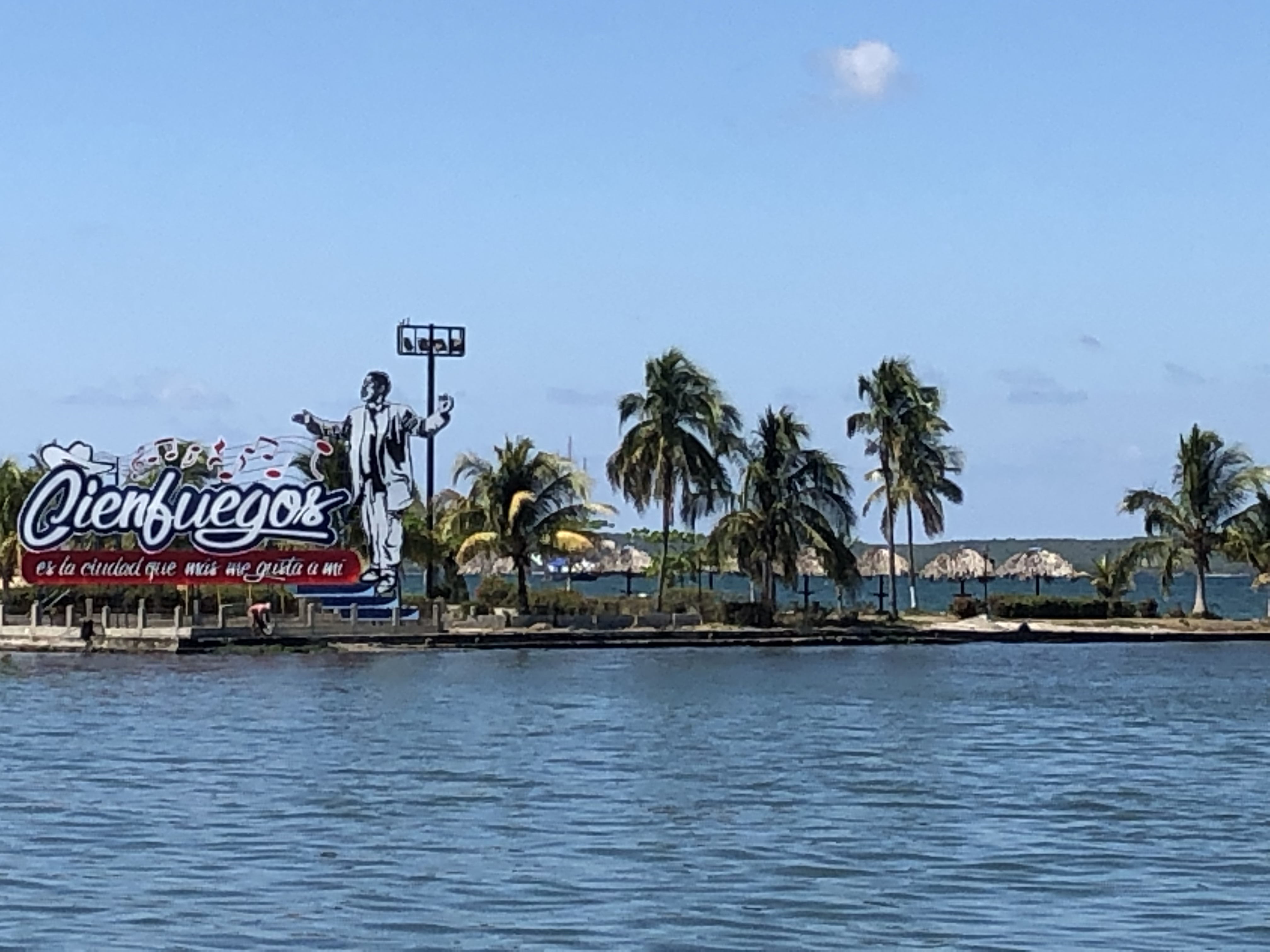
img_2214After a relaxing and pleasant journey we arrived in Cienfuegos mid afternoon and checked into the best of the home stays available (Bella Perla Marina) got the grand tour and headed out for our usual exploratory walk. As it happens, 2 hours is enough time to see all of the sights of Cienfuegos. We saw the town hall, theatre, cathedral (de la purisima concepcion), museum and a mock version of the Arch de Triomphe (Arco de triunfo).


What would we do with the next 36 hrs.

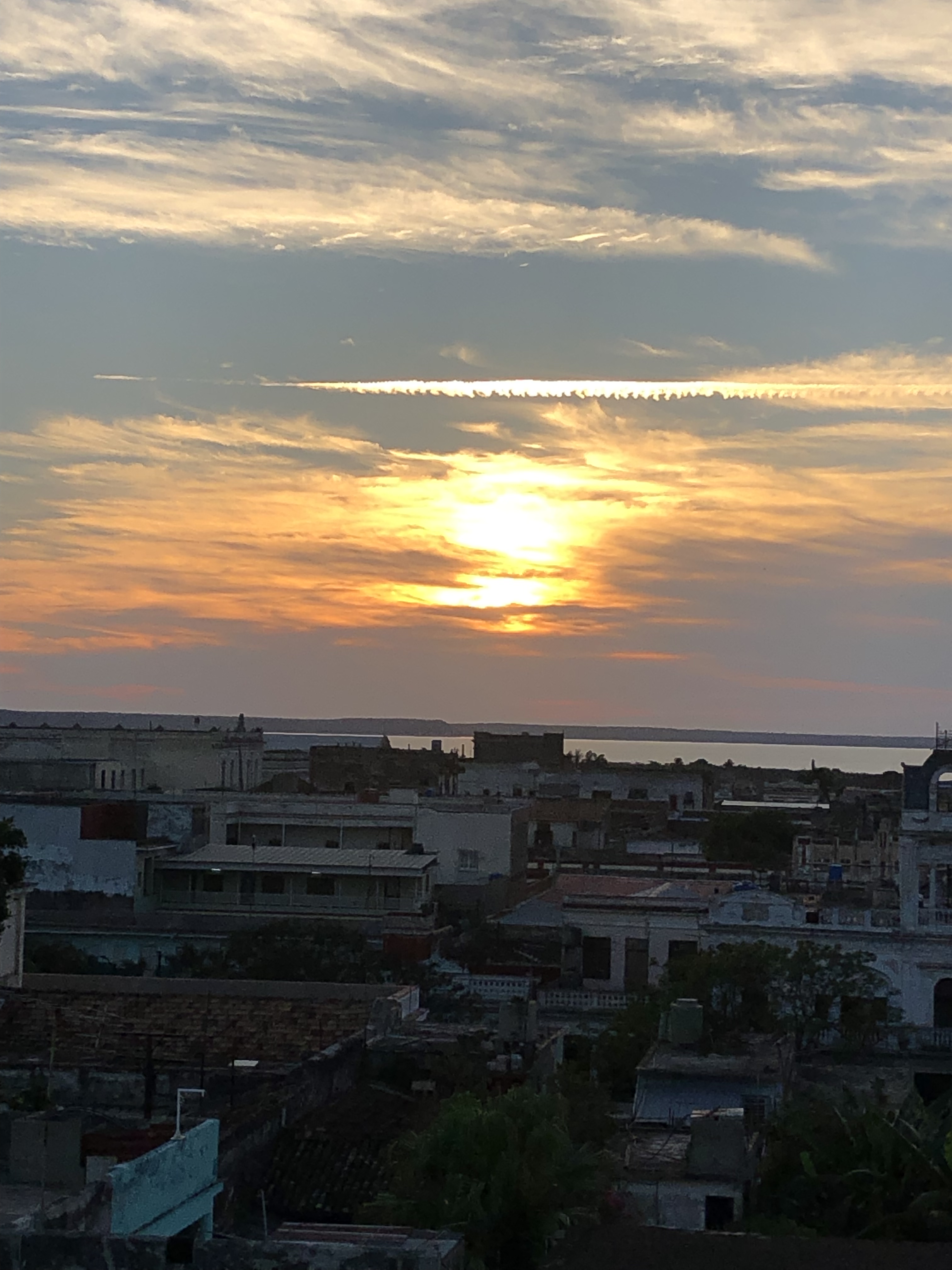
We headed back to the guesthouse for a fantastic meal and one hell of a sunset from the rooftop garden and viewing platform.

img_2225

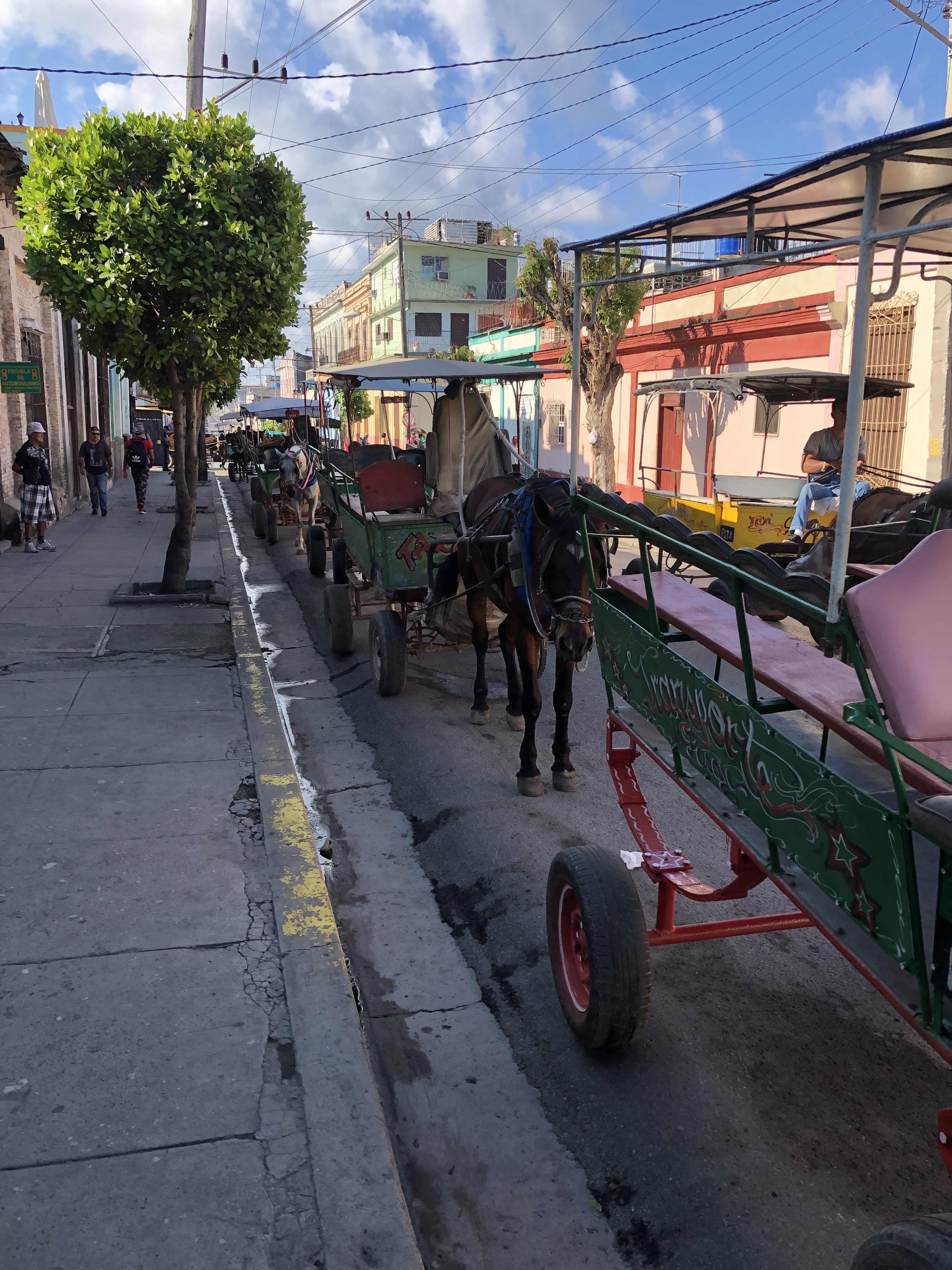
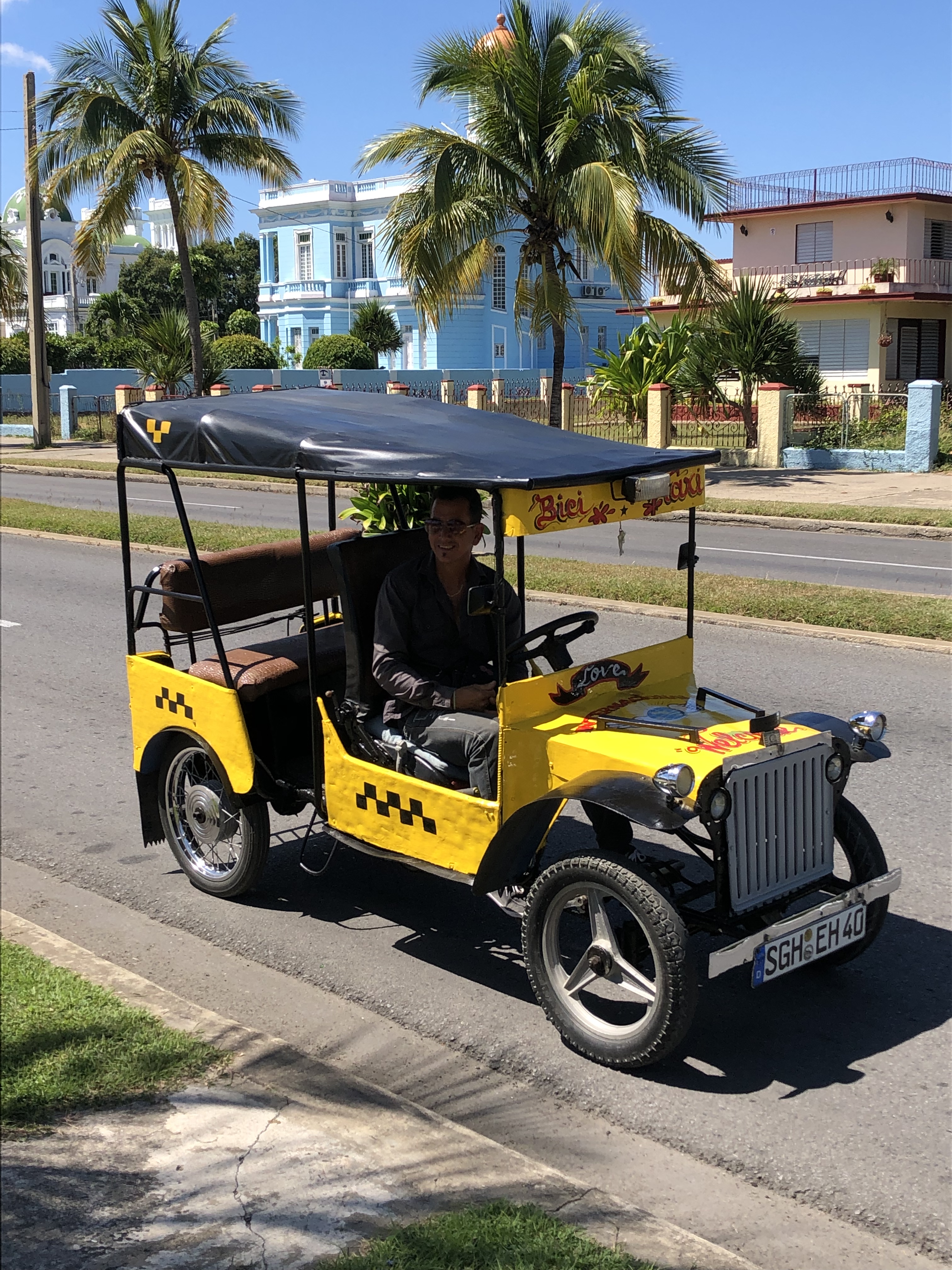
The vehicle fleet in Cienfuegos was quite different from that in Havana. The big flashy convertibles were non existent, but had been replaced with much better maintained versions of the Havana “B” fleet. Still lots of 1950’s vehicles but not as big and not as ostentatious. But the main type of taxi was the horse and cart and it seemed like around the corner from our joint was the local cab rank.


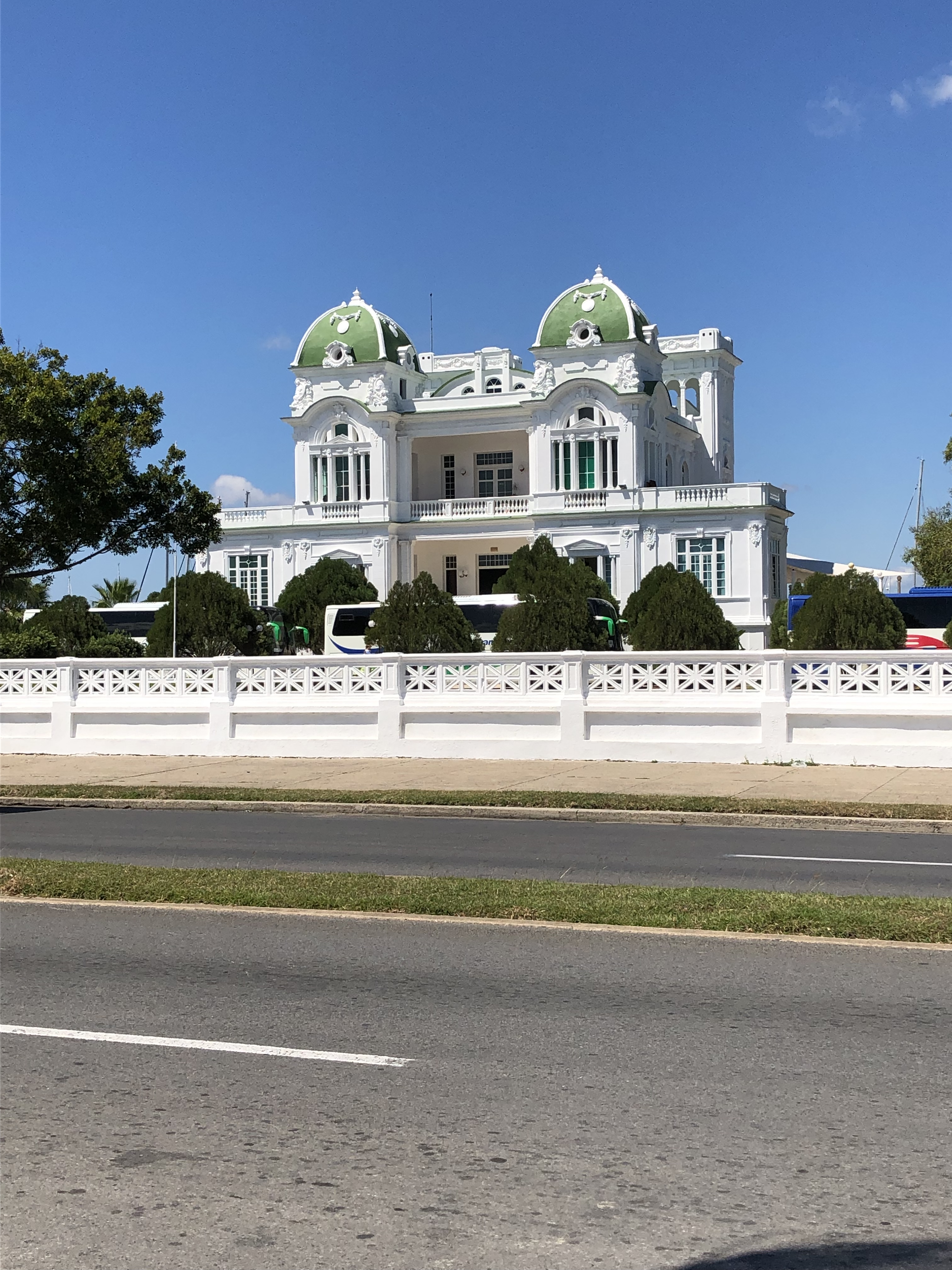
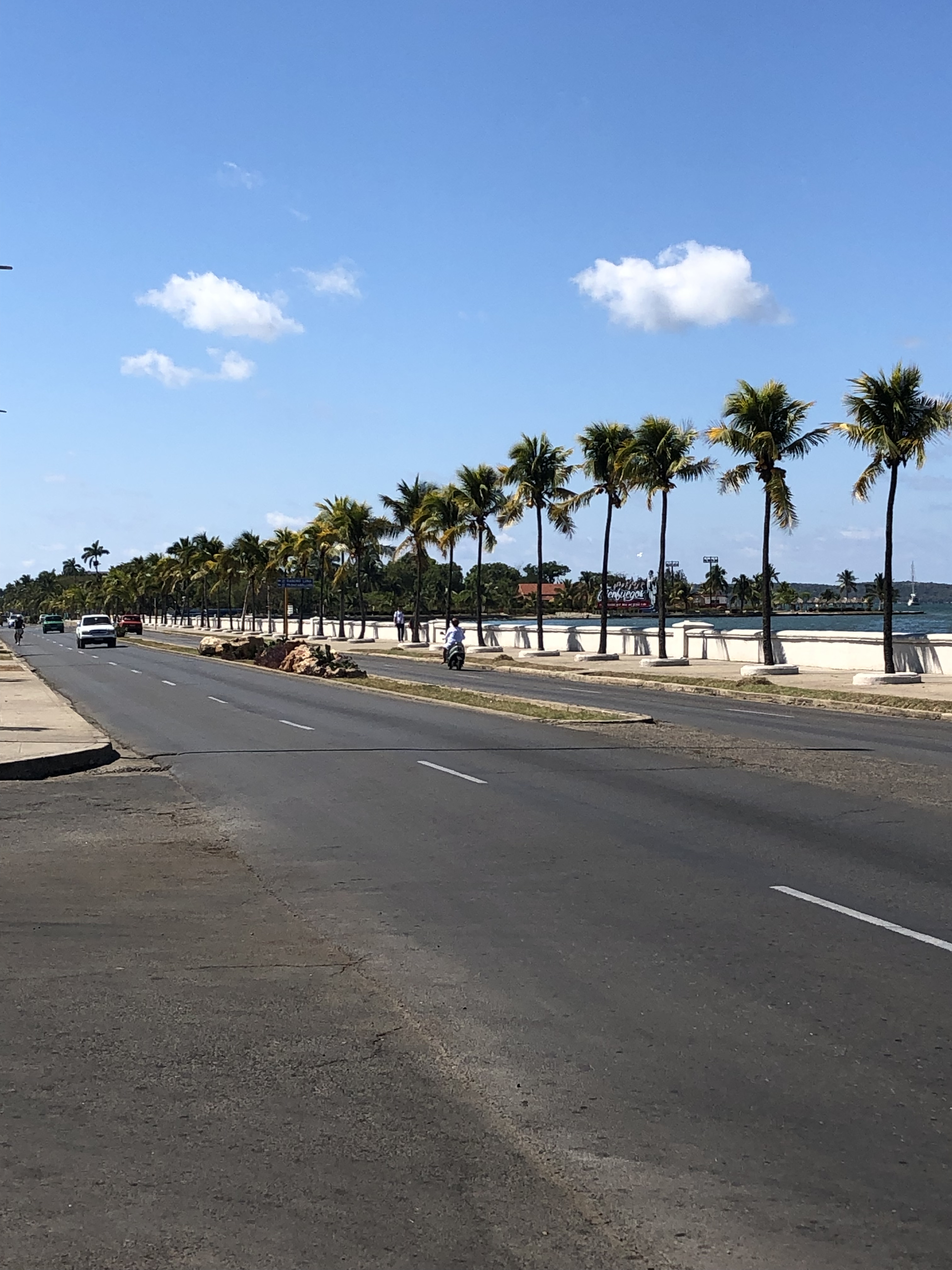
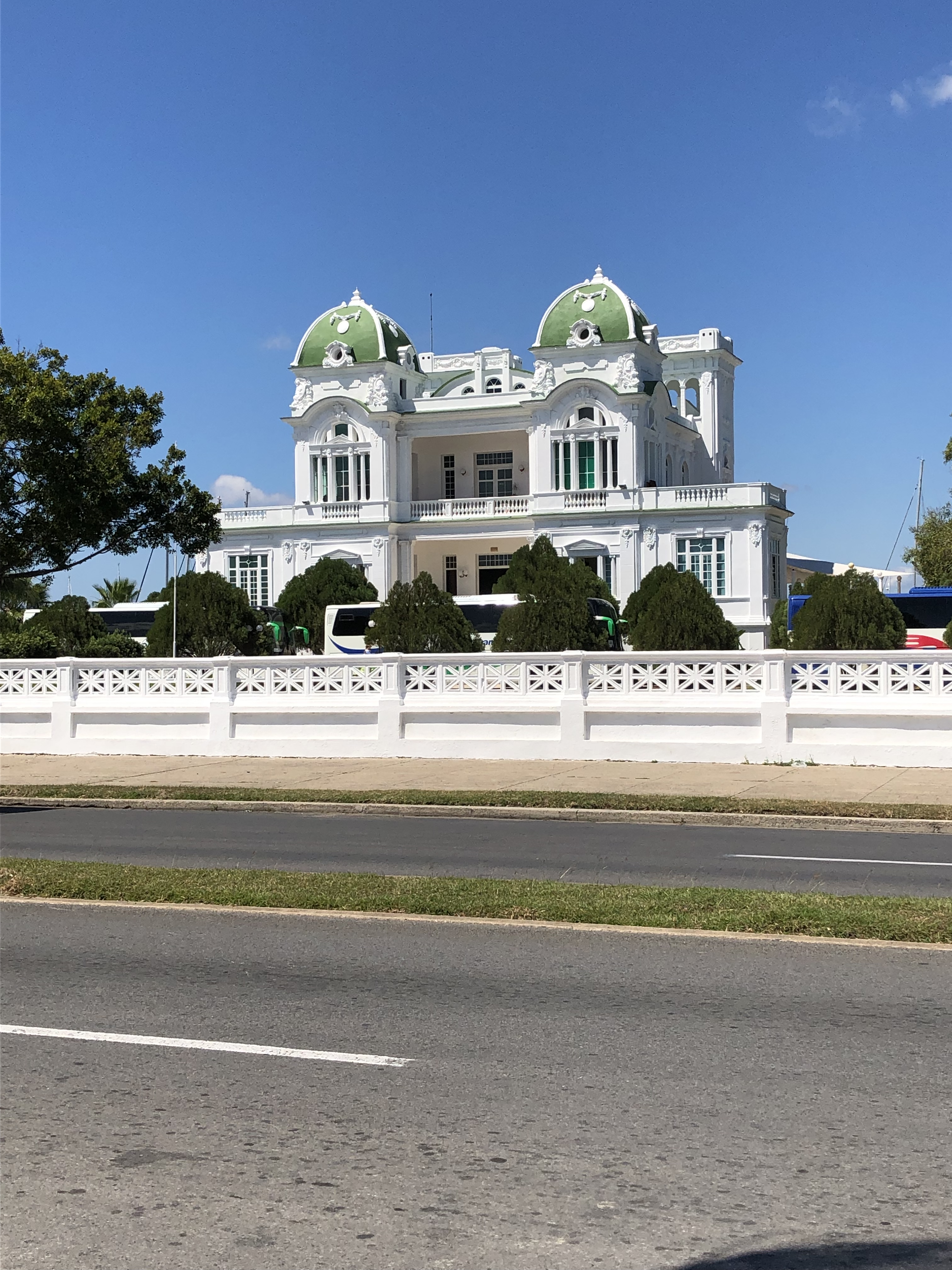
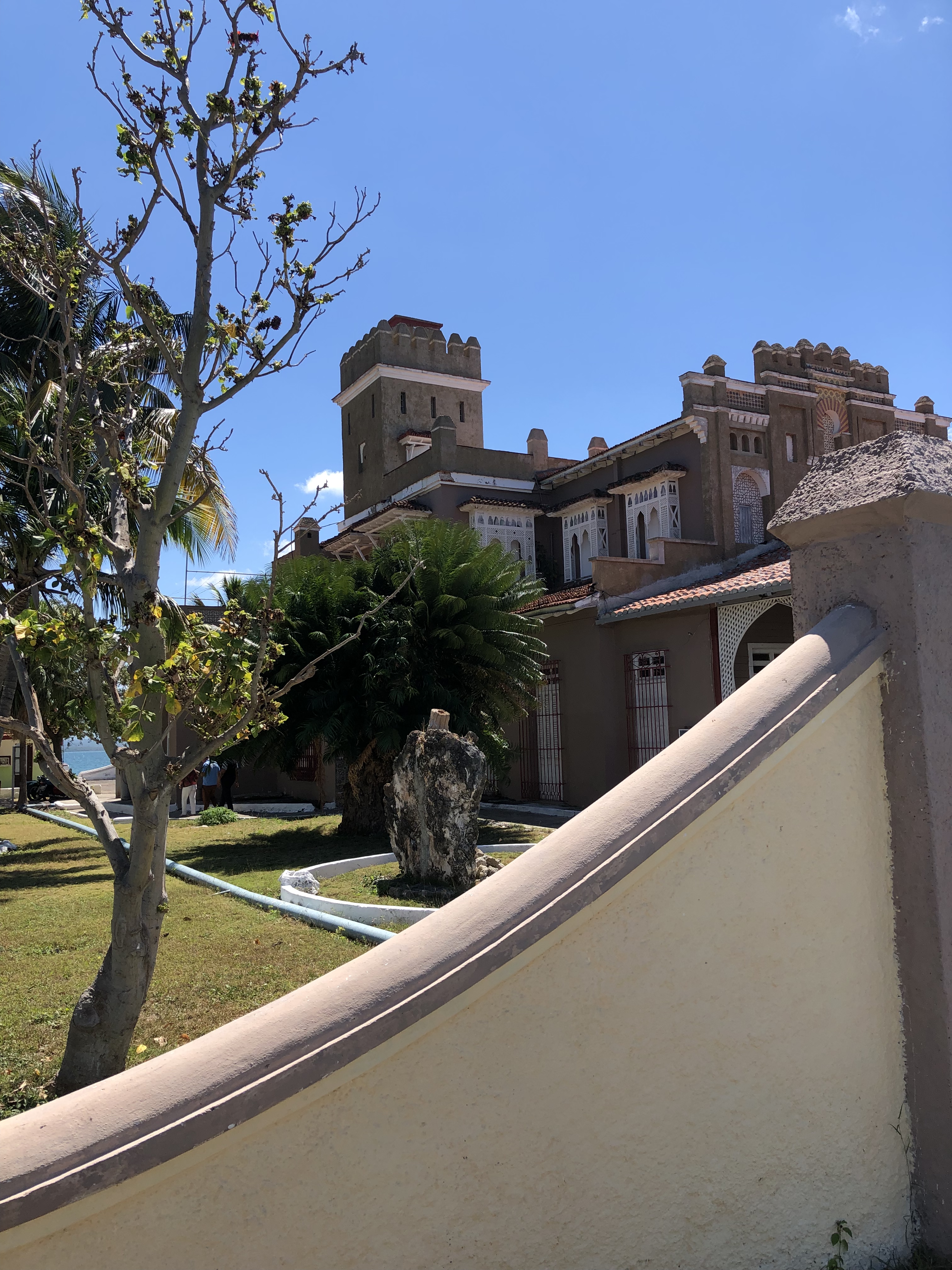
Day 2 of Cienfuegos saw us wandering along the malecon to the ritzy resort end of town. This part of the world is the home of 1960’s architecture and some of the homes are seriously cool, and immaculately maintained. We checked out the yacht club and some of the flashy hotels before catching a pedicab ride back to an expensive seafood restaurant and a lobster lunch (total bill under $40). Another great meal that night at the guest house and prepare for the next chicken bus.

      img_2238 

Trinidad

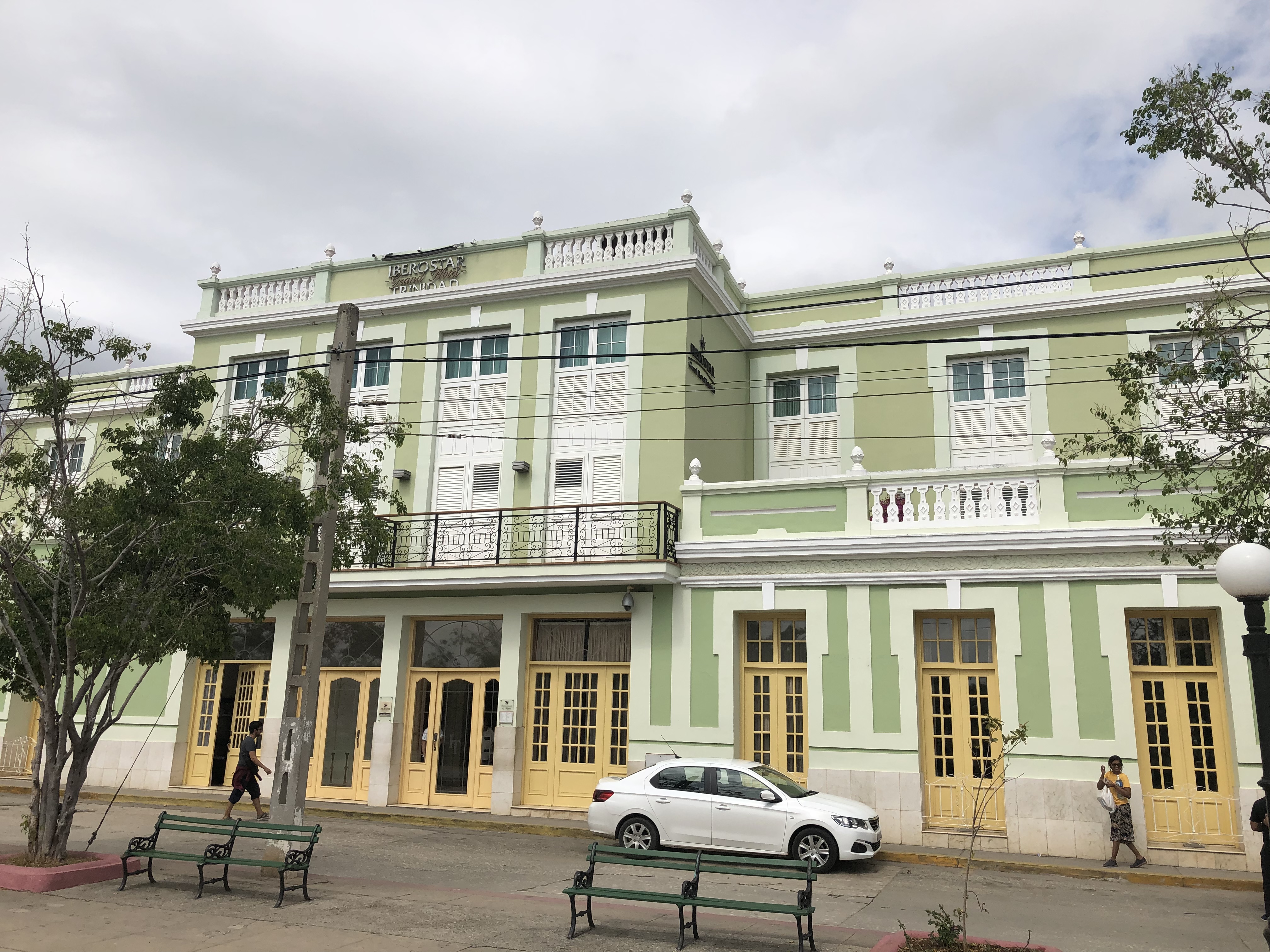
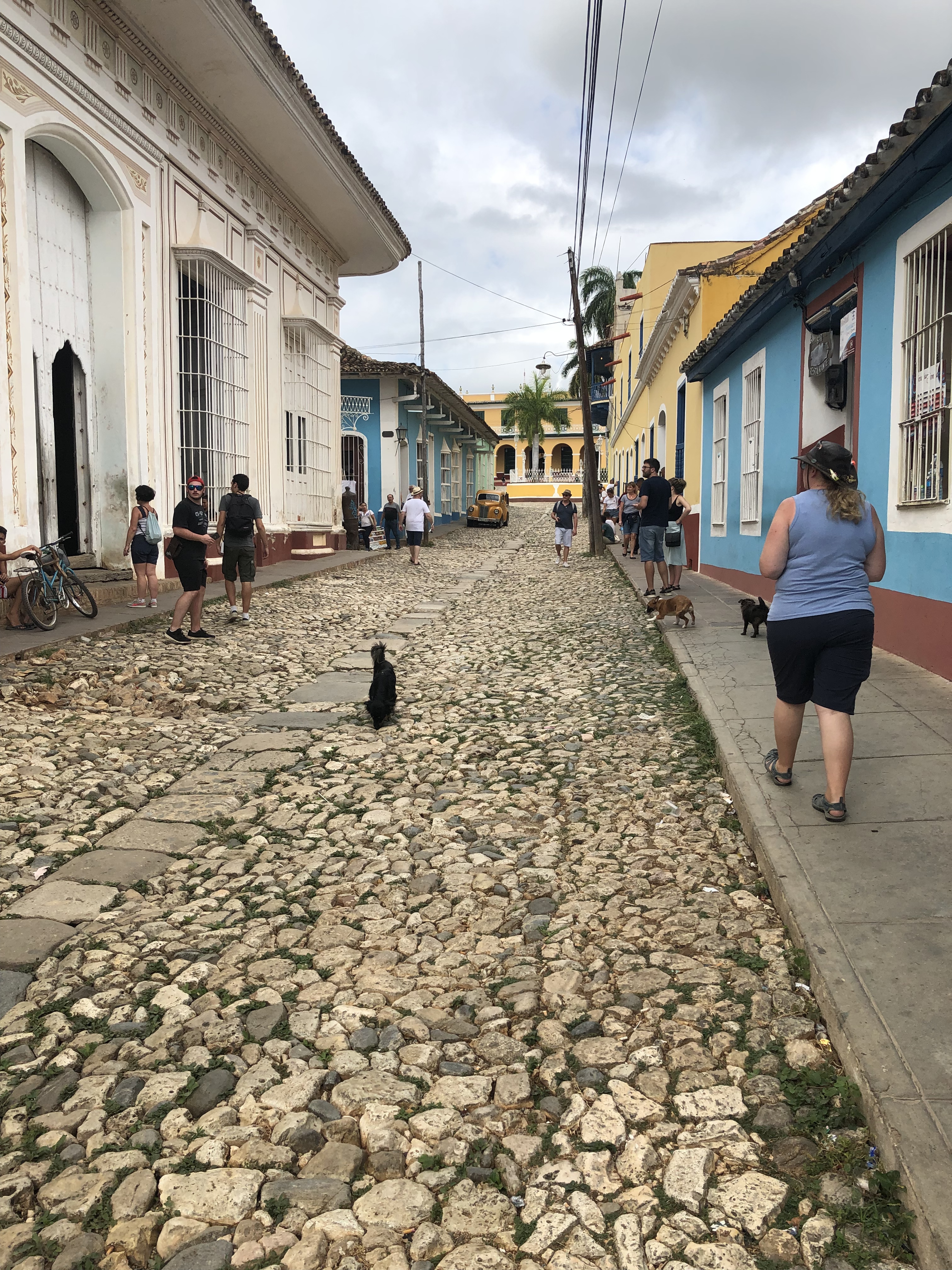
After a short 2 hr, chicken free, bus ride we arrived at the hilly town of Trinidad. Cobblestone streets meant that I had to use my bag as an actual backpack for the 4th time since owning it. Usually I can just use the wheelie bag option, but cobblestones make that a no go. So after trying to remember what happens when you unzip the straps, we did the 850 meter walk up and down hills lugging our packs on our backs. We were staying at yet another guest house (casa particular) and despite the $20 a night price tag, it was by far the best one we stayed in the whole time in Cuba.

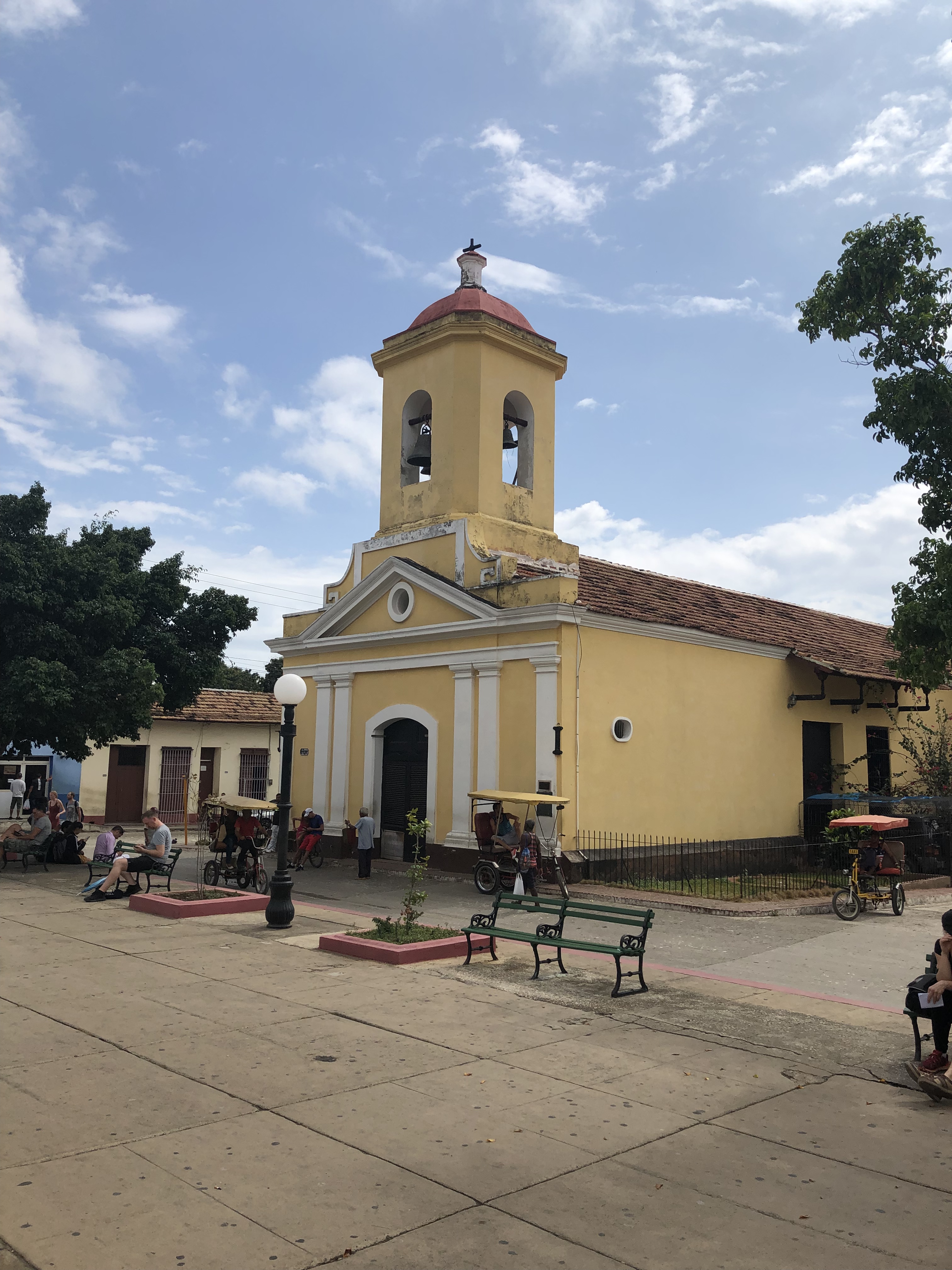
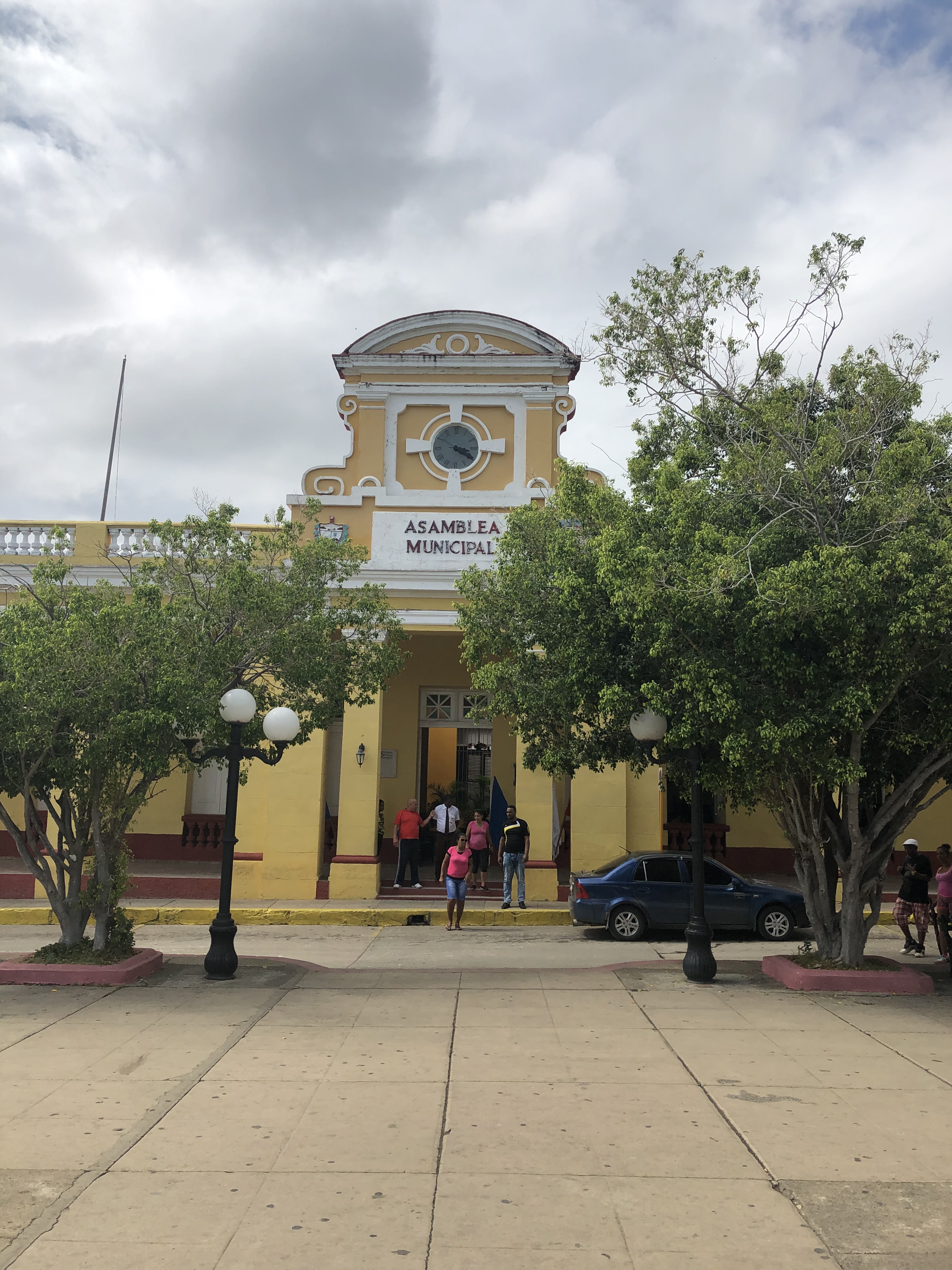
Trinidad is another of those see it in 2 hrs kind of towns. So after a cold shower, did I mention that it is hot and humid in the tropics, we did the schlep. Once again we hit all of the sights early: the museum (x2), cathedral, church, Plaza Santa Ana. And settled in to some Cuban music and drinks on the steps of plaza Mayor.

img_2258 img_2257 img_2259    

That is until a tropical downpour started. And it poured, for about an hour and a half it teemed. So we had cervezas and mojitos with a French couple until it finished.

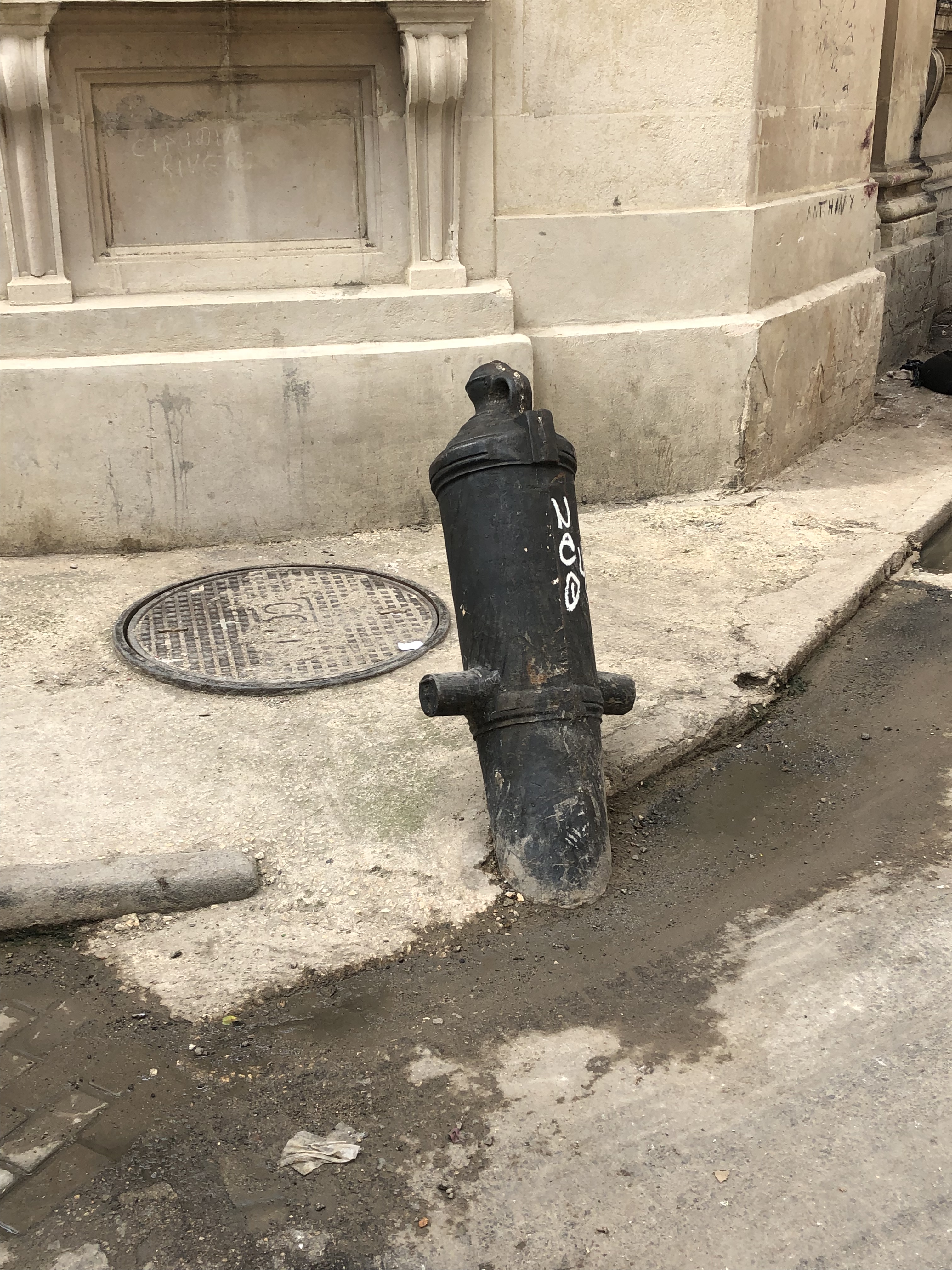
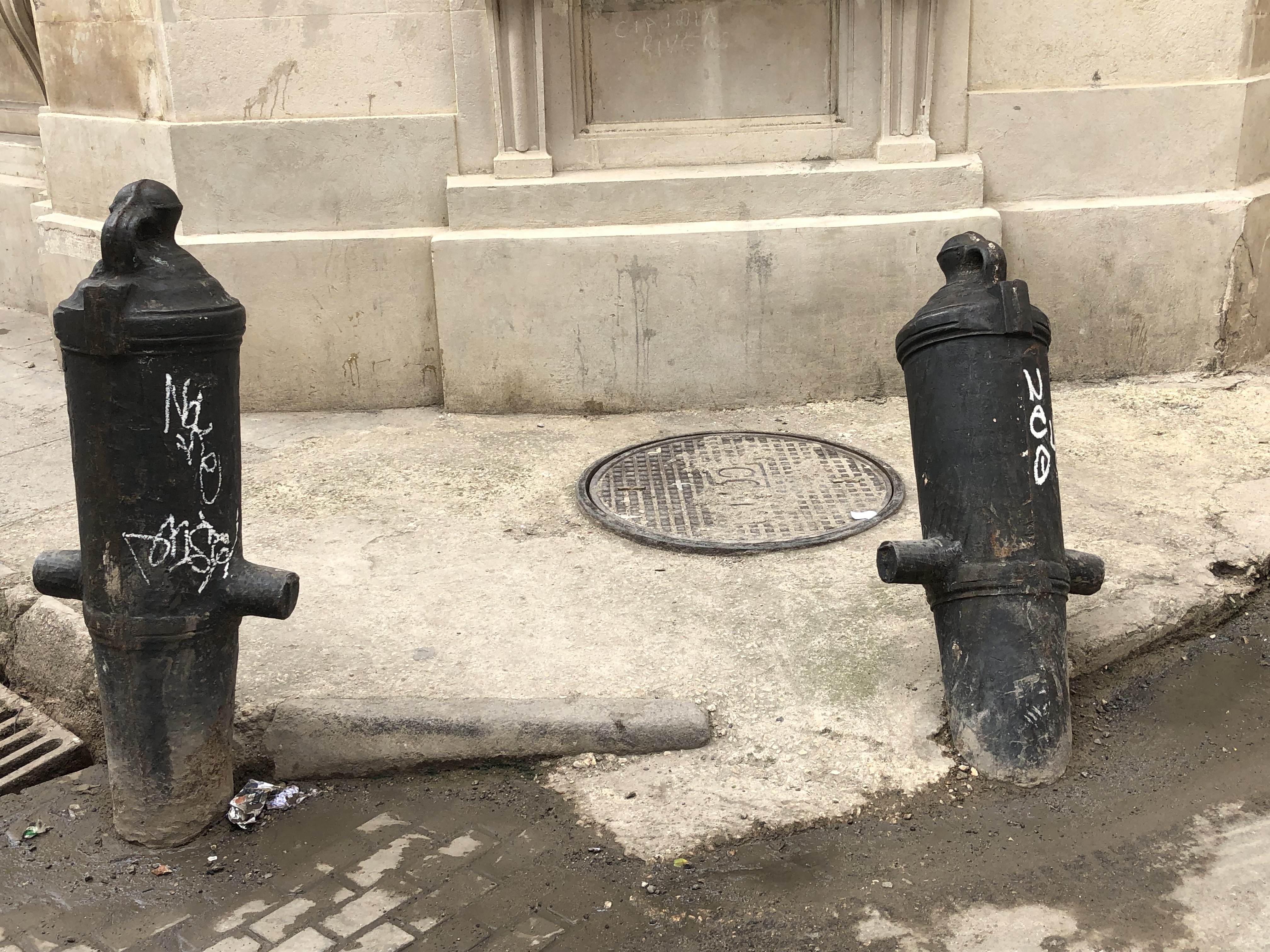
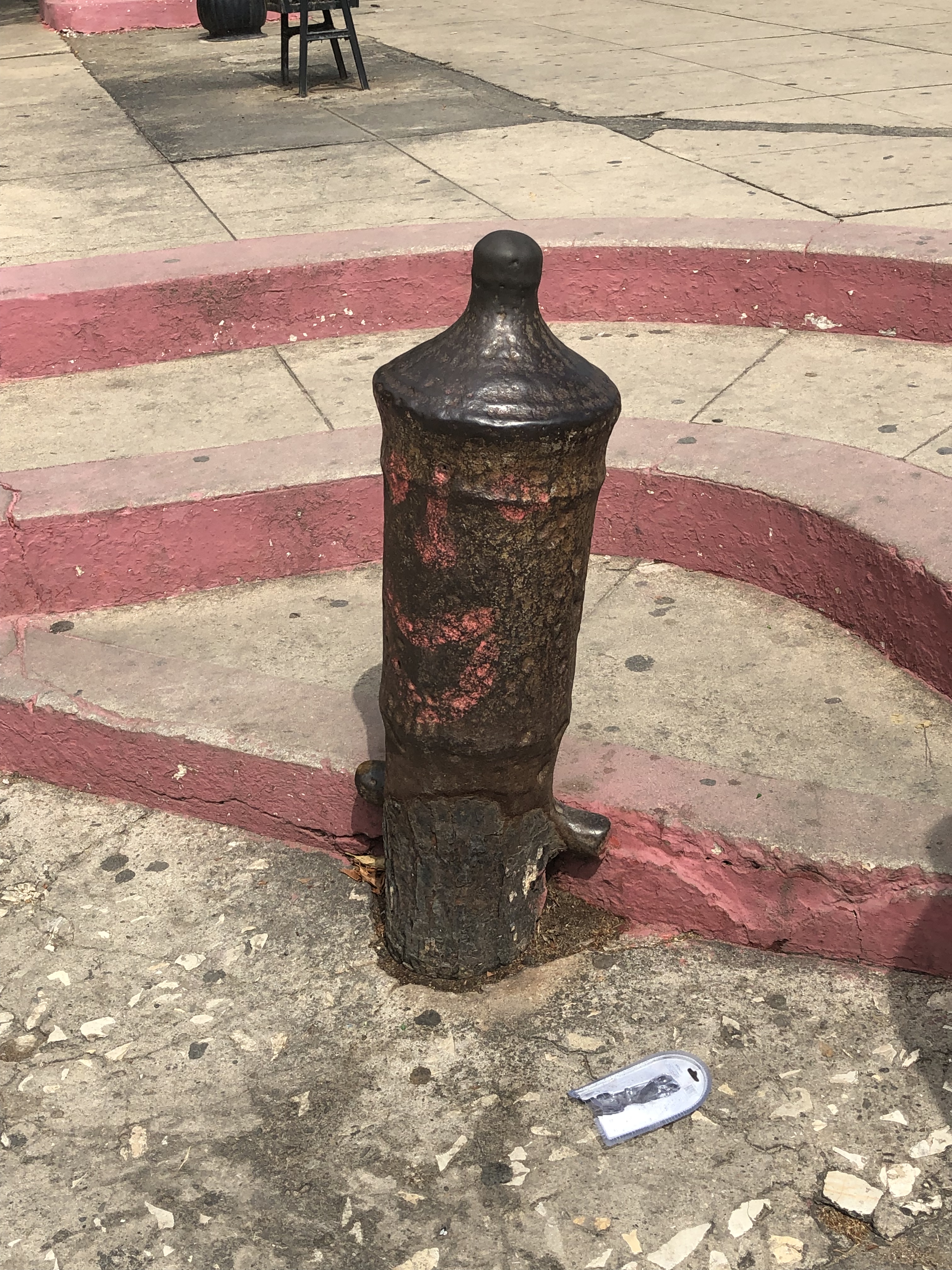
An interesting sideline that we came across in Havana and now again in Trinidad was the use of old cannons as bollards in the street. I guess with the Spanish and pirate heritage of the region, there were no shortages of cannons either laying about or contained within sunken vessels near the shore. Many of these have been salvaged, repurposed and buried to block traffic into pedestrian areas. It is nothing massively noteworthy but adds to the charm of the place.


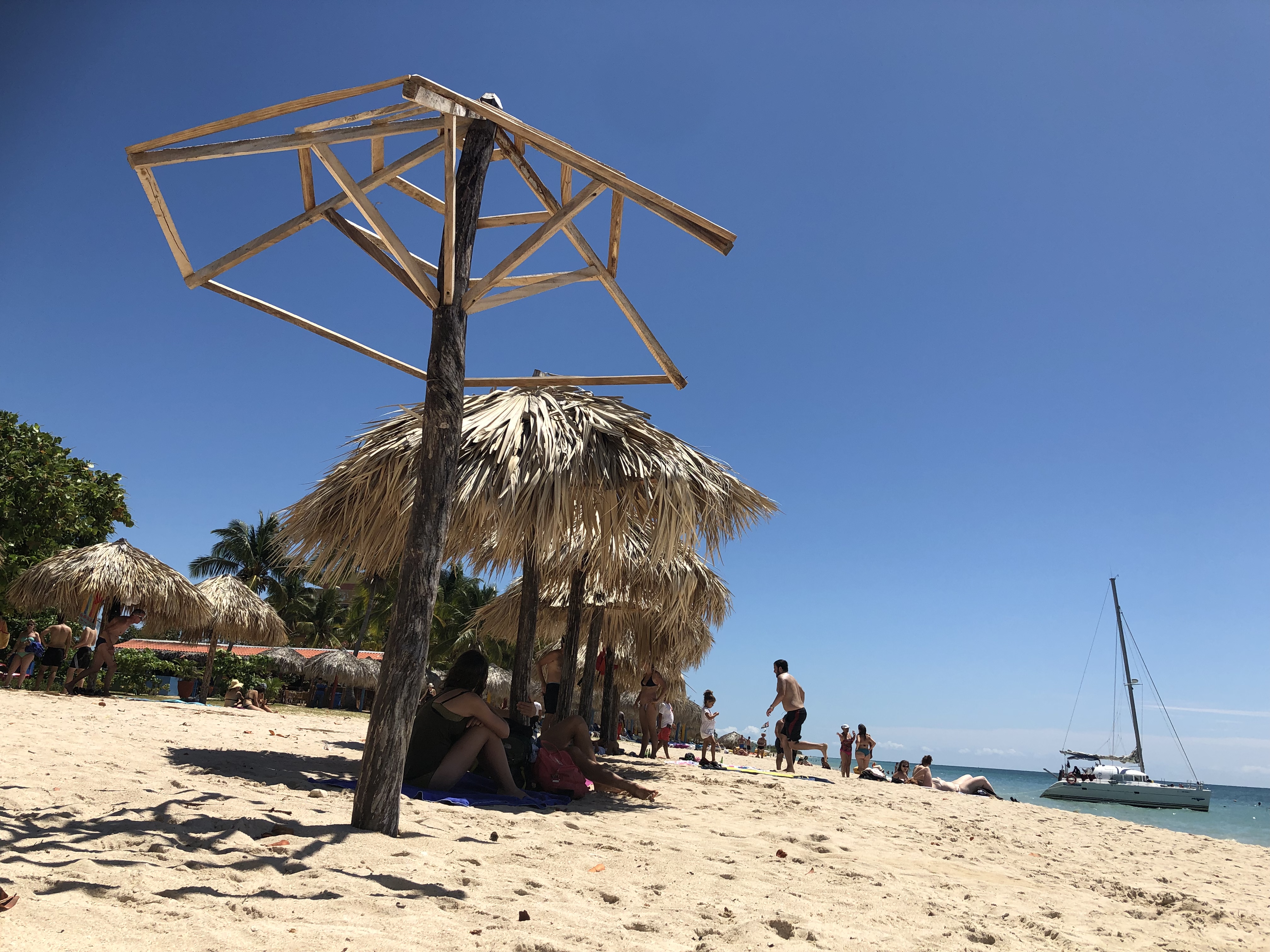
Fourteen kilometres down the road from Trinidad is Playa Ancon one of the best beaches in the country. So on day 2 we hopped a cab and spent 4 hours lazing on pristine white sand underneath palm frond umbrellas. I lolled about in the water while Jill worked on her Canberra tan.


You wouldn’t believe it…I got sunburnt…I haven’t been sunburnt in decades. Something about the tropical sun, breeze and water got me. I got red as a beetroot on my chest and a bit on my back. It is a shame it is about a week early otherwise I could have blamed it on the “April Sun in Cuba”.

Another early start for a 6 1/2 hour bus ride to one of the few beaches in the country reportedly better than Playa Ancon.

Varadero

Varadero is little more than a resort town, so very little in the way of tourist sights. No cool looking buildings, just rows of modern resorts, bars, trinket shops and restaurants. What the resorts do offer are all inclusive packages and many of them offer child free experiences. So for people like us who do not enjoy noisy rugrats messing up your holiday bliss, this could have been for you. But in reality it just a town full of drunk eurotrash.
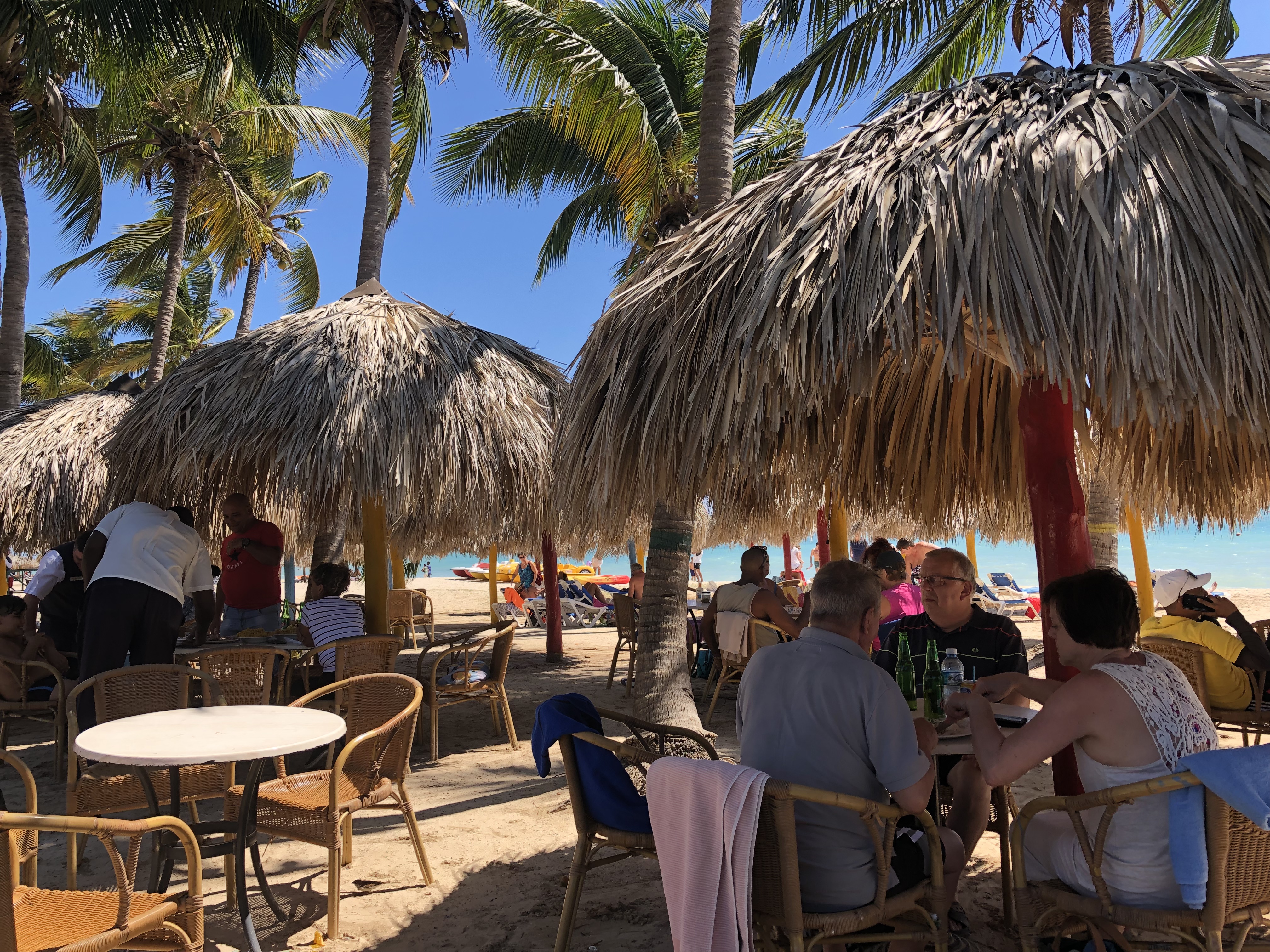
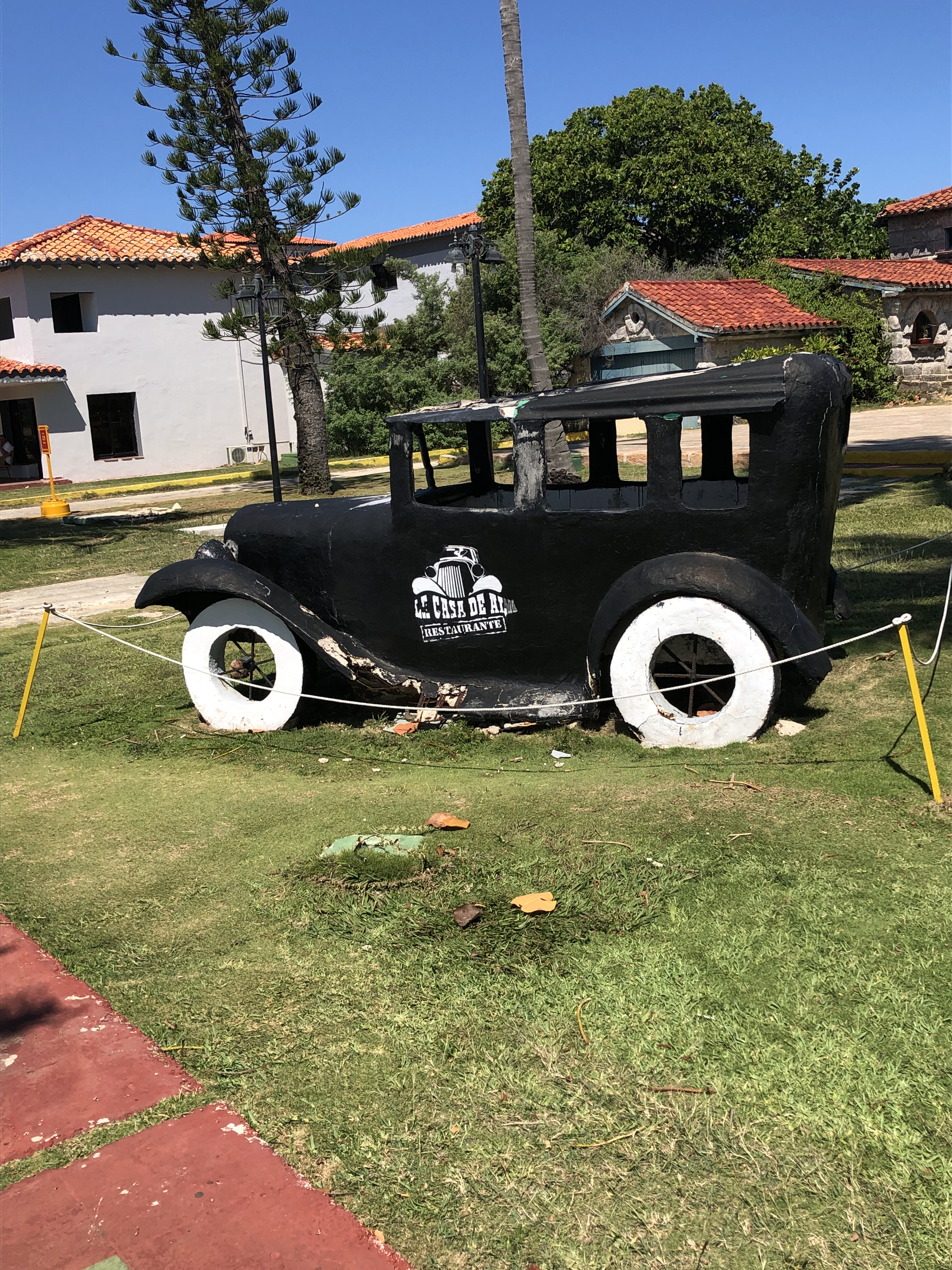
An interesting note that we learned was that Al Capone had a mansion here right on the ocean front. Of course it has now been turned into a guest house and restaurant.


The fact that most of the resorts offer all inclusive packages means that all of their food and drink is included. As such, there is very little need for them to leave. Which means that competition at the local restaurants is fierce. This we thought would be great news for us as we were not doing the package thing. But it was anything but, the restaurants tended to be more specialist or boutique. The prices were through the roof (by Cuba standards), the food was below par and according to Jill the mojitos were weak.

Don’t get me wrong, the beach was nice (if a little too much seaweed by Australian standards). You could get an ok meal cheaply. And Varadero could be considered a good holiday by some… just not us.

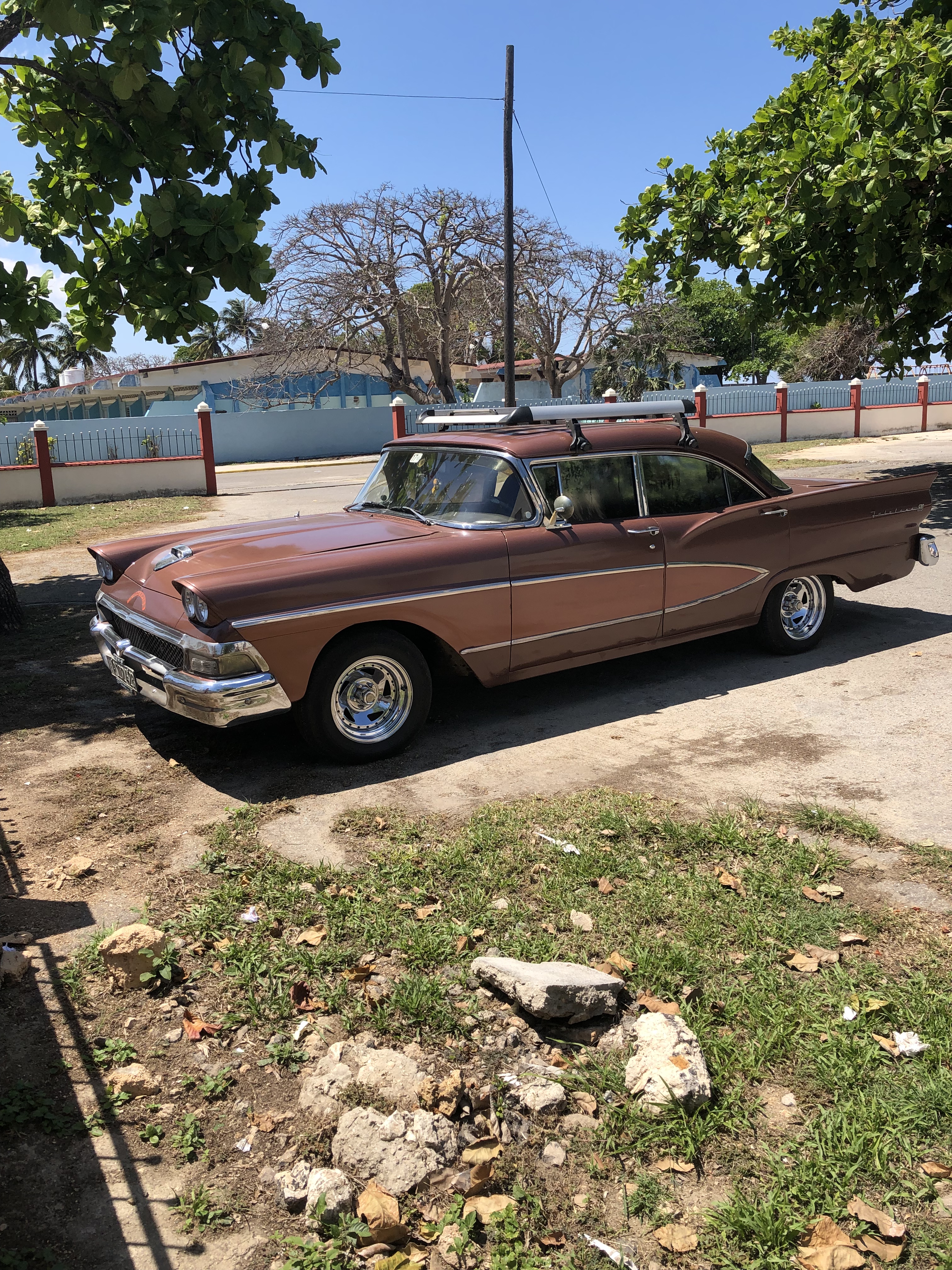
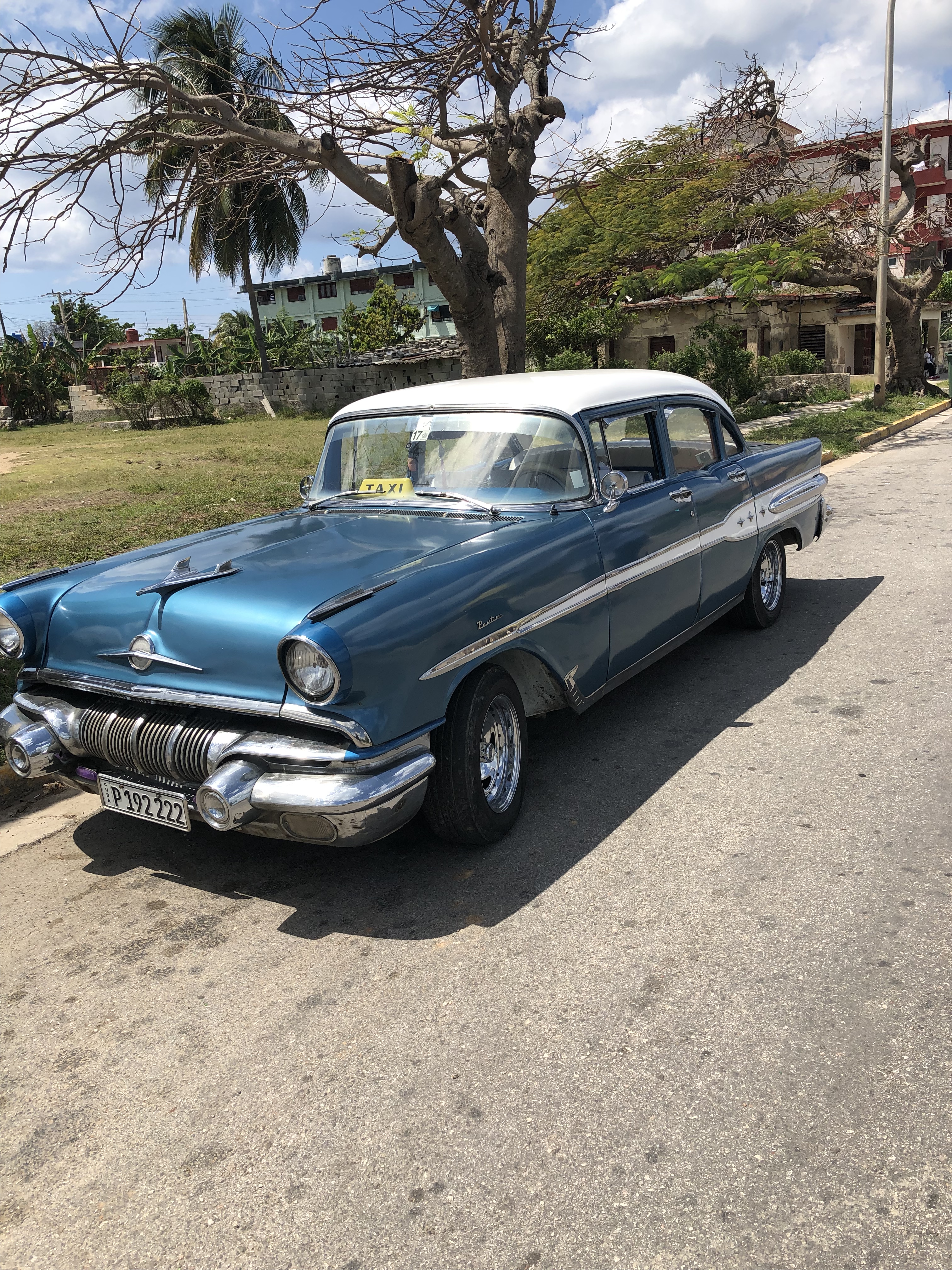
But as with all of Cuba, the classic cars were everywhere. We got a 1957 Plymouth as our standard cab from the bus station. We wandered the street to see gangs of drunken package tourists, clinging to their refillable booze jugs or kegs, being generally loud and obnoxious. And I am sunburnt, here I am an Aussie surrounded by Europeans and I am the one glowing red. I feel like I should hand back my Australian card…poor form.

In short Varadero was hellish, but it was insightful as an example of everything that we would never want to do on a holiday.

Cuba an overview

On the whole I loved Cuba and am so glad I got to experience it before the tourist hoards turned it into every other largely homogenous island nation. But it is an island of contradictions. Many of the things that give it its charm are also detractors to its effective operation.

Rubbish collection is a major issue in Cuba with many corners occupied by stinking, messy skip type bins awaiting removal. Dogs infest the streets during the day, rifling through the uncollected rubbish bins. Cats cannot be seen during daylight hours but come out in force at night and (yep you guessed it) raid the uncollected rubbish bins. This means that very little of the rubbish remains inside the original receptacle but rather is scattered in the vicinity. And when it does get collected, only that which remained in the bin gets removed, leaving piles of filth and stink on many corners.

The lack of internet was annoying but less of an issue than I thought it would be. The adoption of the French attitude to smoking (including at meal tables) was more of an issue than I thought it would be. But the people are wonderful. There is virtually no crime, no drugs, no guns just sunshine and sea breezes.

Propaganda (anti US) remains high to this day. Billboards are filled with images of Fidel Castro or Che Guevara and words like viva la revolution are commonplace, especially in the country areas.

And of course there are the cars…


Cuba

Havana

After less than a day…this place is everything that I had hoped it would be…I love it. You get an idea in your head of what a place will be like and are usually disappointed…but not here.

We arrived late afternoon and had an absolute nightmare at the airport trying to get our money changed over. They have unmanned money changing machines…not ATMs but rather you scan your passport place in euros and retrieve the local equivalents… and there are only 4 of them…this doesn’t work very well when you cannot get the local currency (the CUC) elsewhere and you have 3 plane loads of people trying to get cash…simultaneously.

It is probably timely to mention that Cuba has two currencies that operate in parallel. The one that tourists use is the CUC which is worth the same as a $US. But if you try and swap a $US for it, it will attract a 10% surcharge. Euros and Canadian $ are the currencies of choice and they attract no surcharge. The second currency is the CUP which is used by the locals and is the equivalent of about 4 cents. So one CUC will buy you 26.3 CUP. Obviously, this adds a degree of difficulty to getting change.

So back to the airport, we stood in line and waited…something that we are learning is also a very Cuban thing to do. We got to our accommodation to find that they were full so we would stay 2 doors down at the neighbour’s place…Cuba does not do much in the way of traditional hotels or hostels, it is more like a home stay, where you rent a room in someone’s home…it was all good and we finally met up with our intended host the next morning.

Our accommodation was in the middle of everything but nowhere near anything…we were relatively equidistant between Old Havana, New Havana and Chinatown…but still quite a walk from most things. On night one, after the airport, money and housing debacle, we headed out for a walk and a meal. We got to the water and wandered along the esplanade (Malecon) seemingly not having passed by any restaurants. Either this was wrong, we were unlucky or we just had yet to pick up on the rhythms of the place. Having eventually found a place for dinner and eating well (if expensively by Cuban standards) we called it a night.

For $5 a head the little home stays offer breakfast, and ours was no different. So our first full day in town started with fresh fruit, fruit juice, coffee, fresh rolls, egg, ham, cheese and a great chat with Charlie another houseguest (Canadian). We then got about the rest of our day. This started with a walk towards old town and the checking out of all of the old buildings.

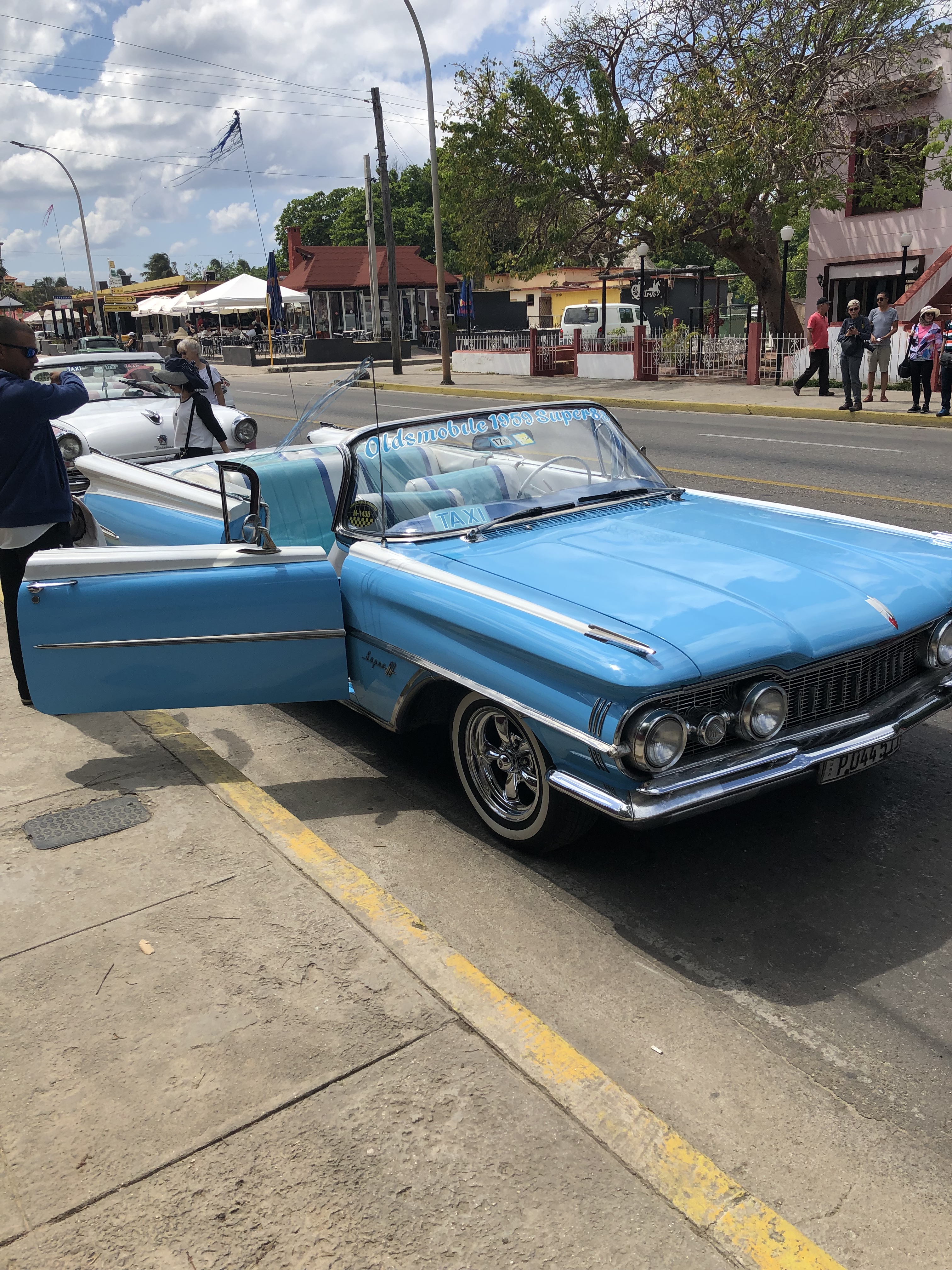
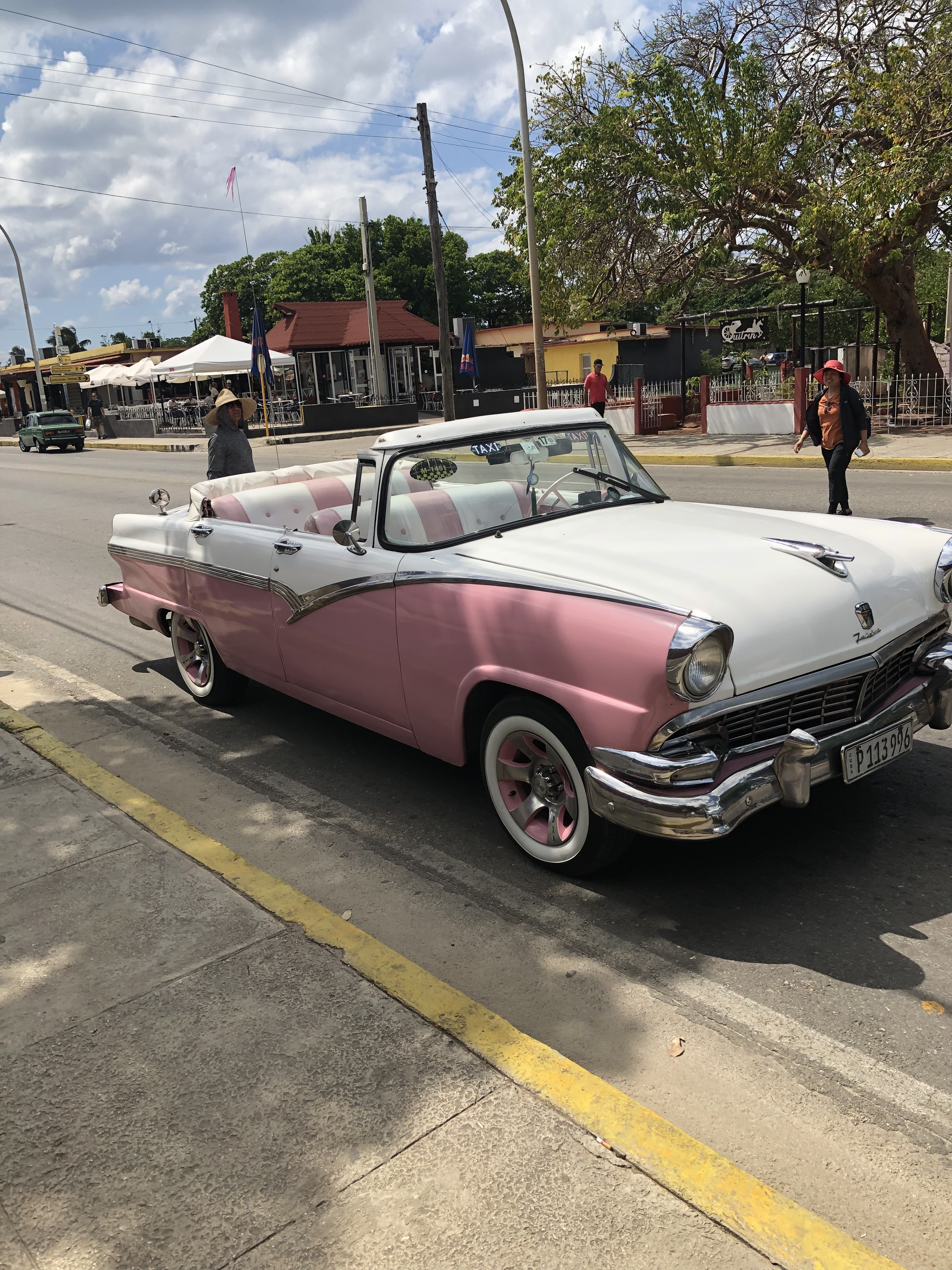
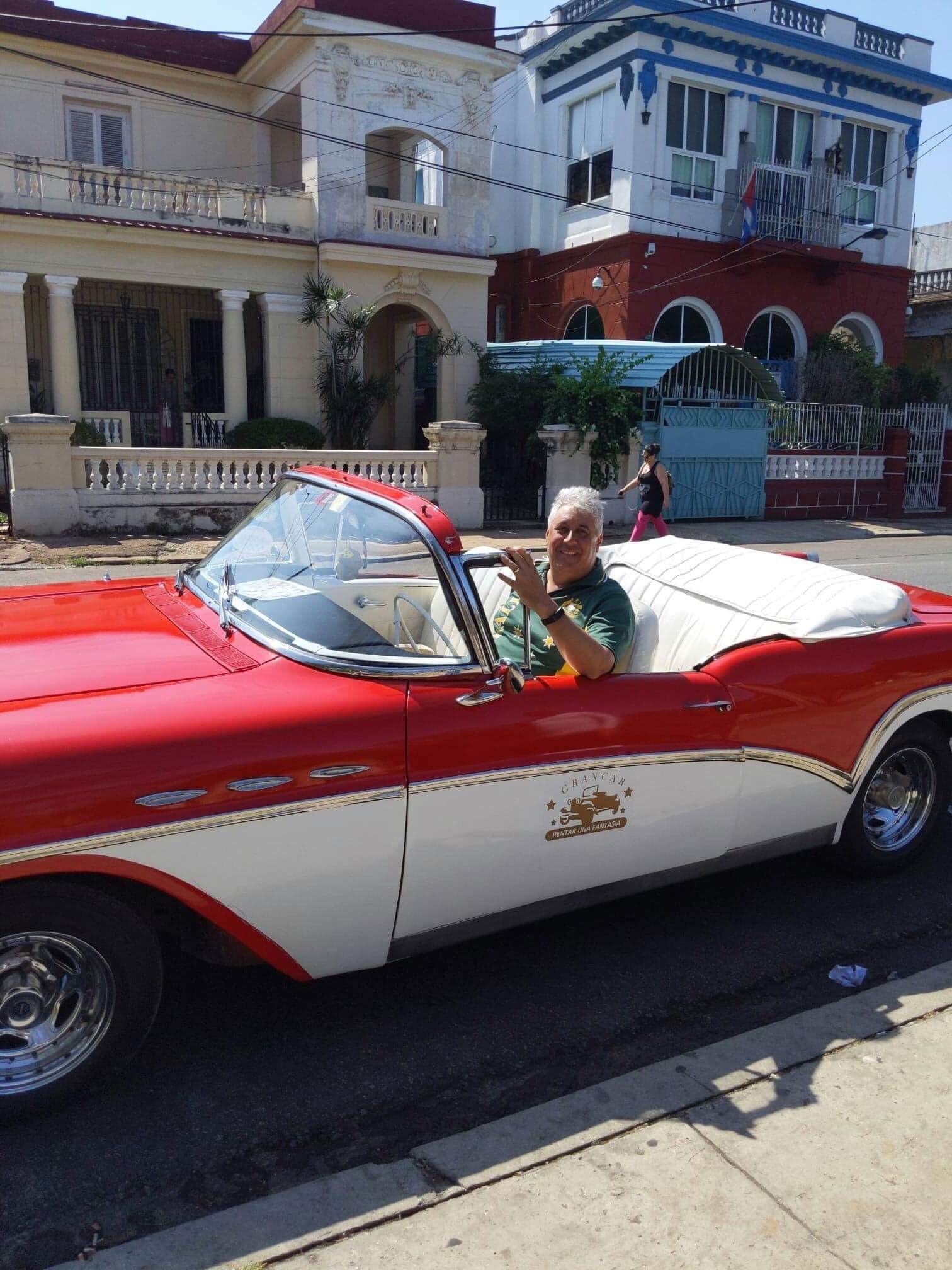
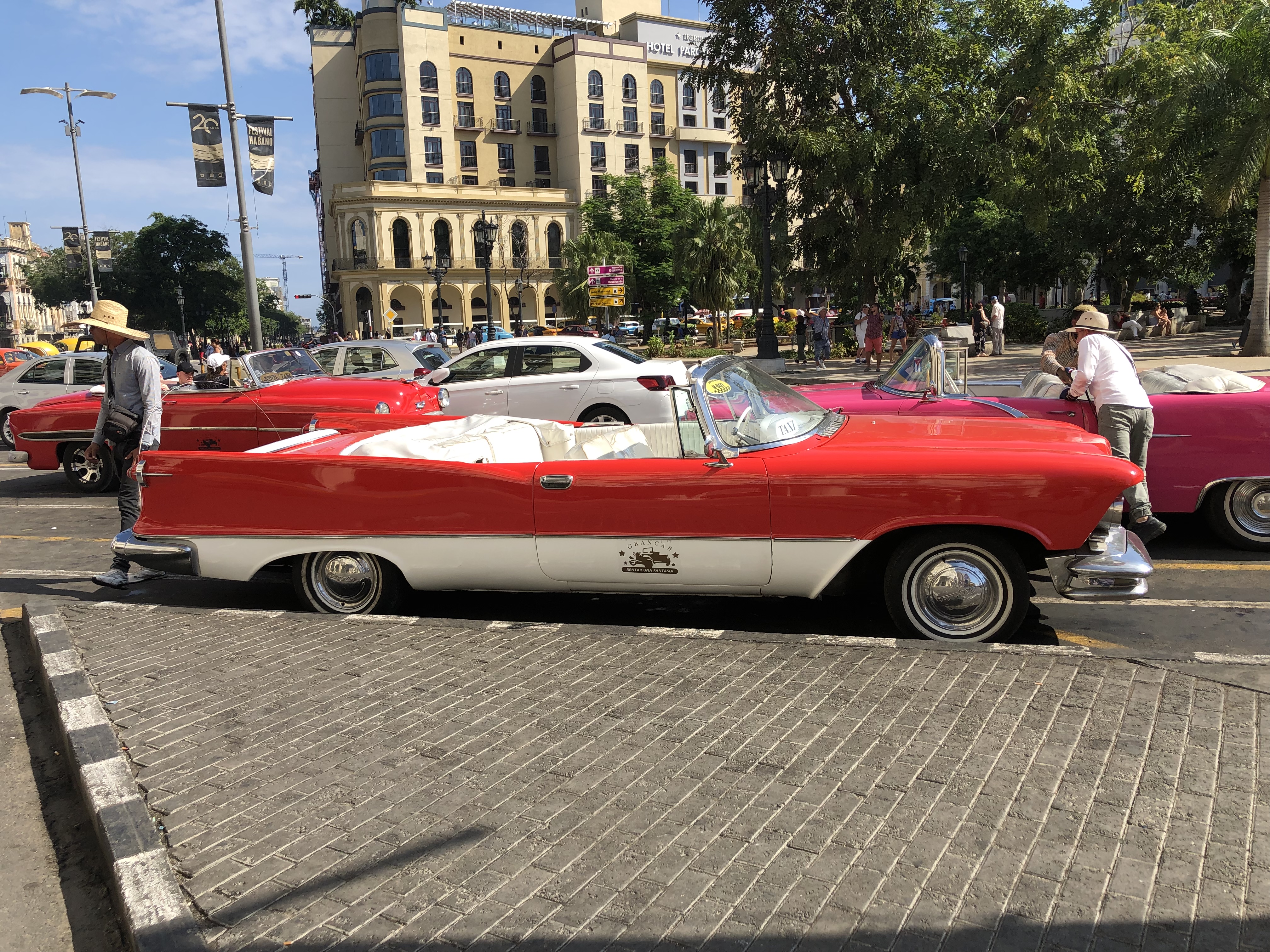
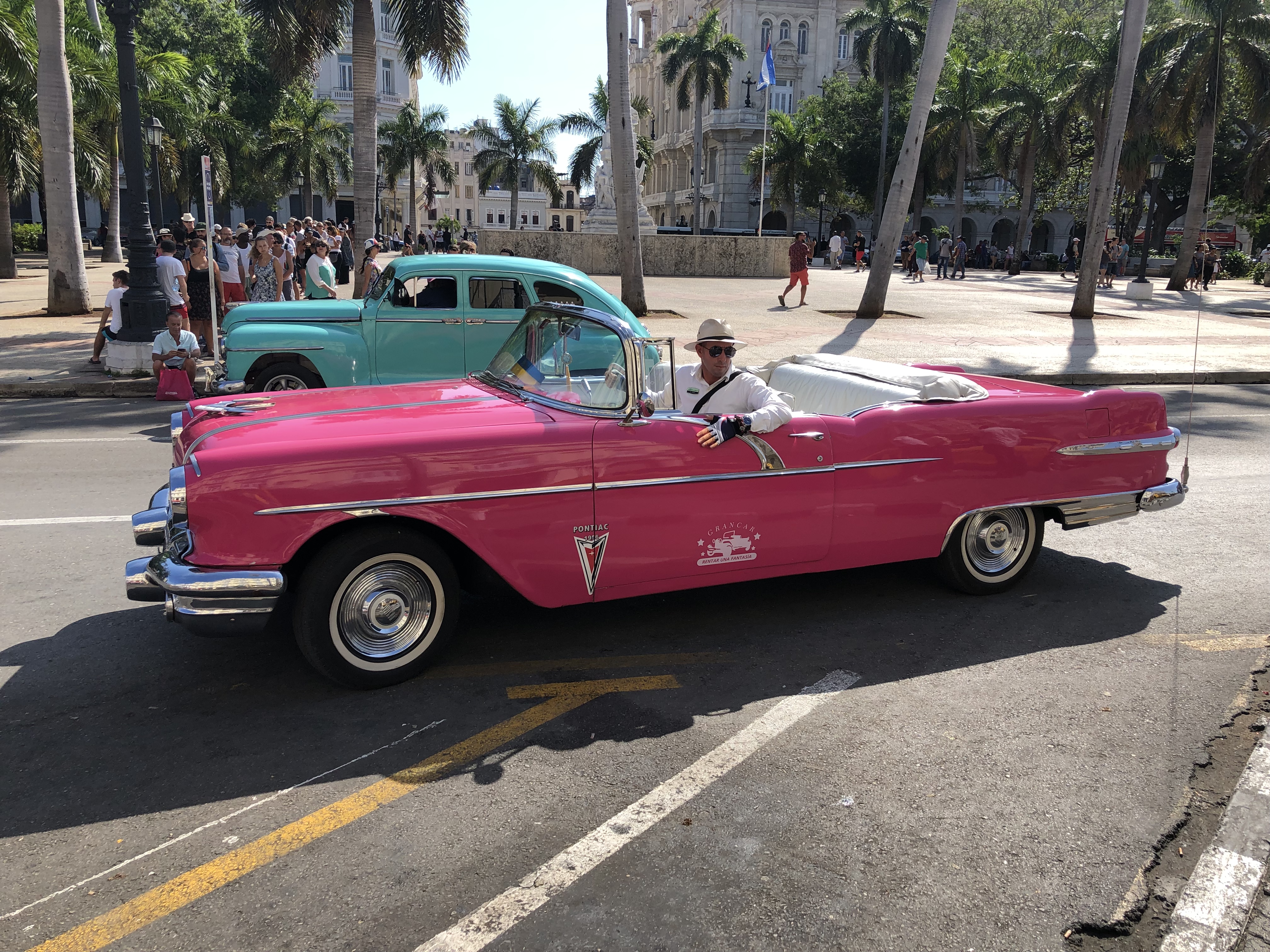
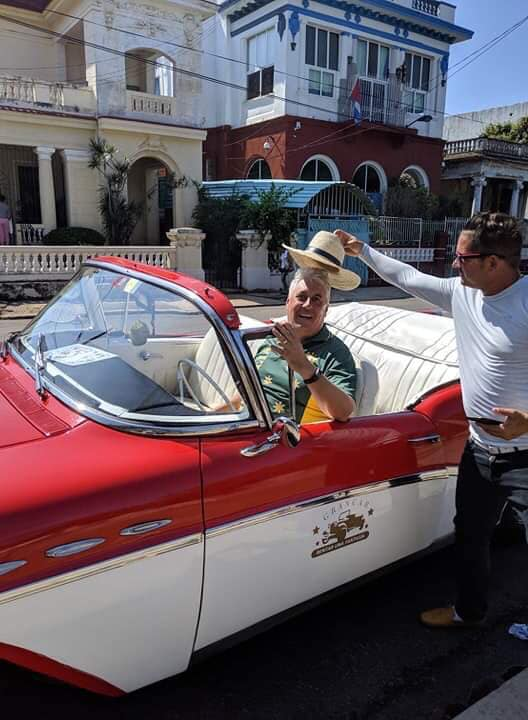
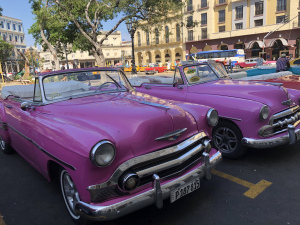
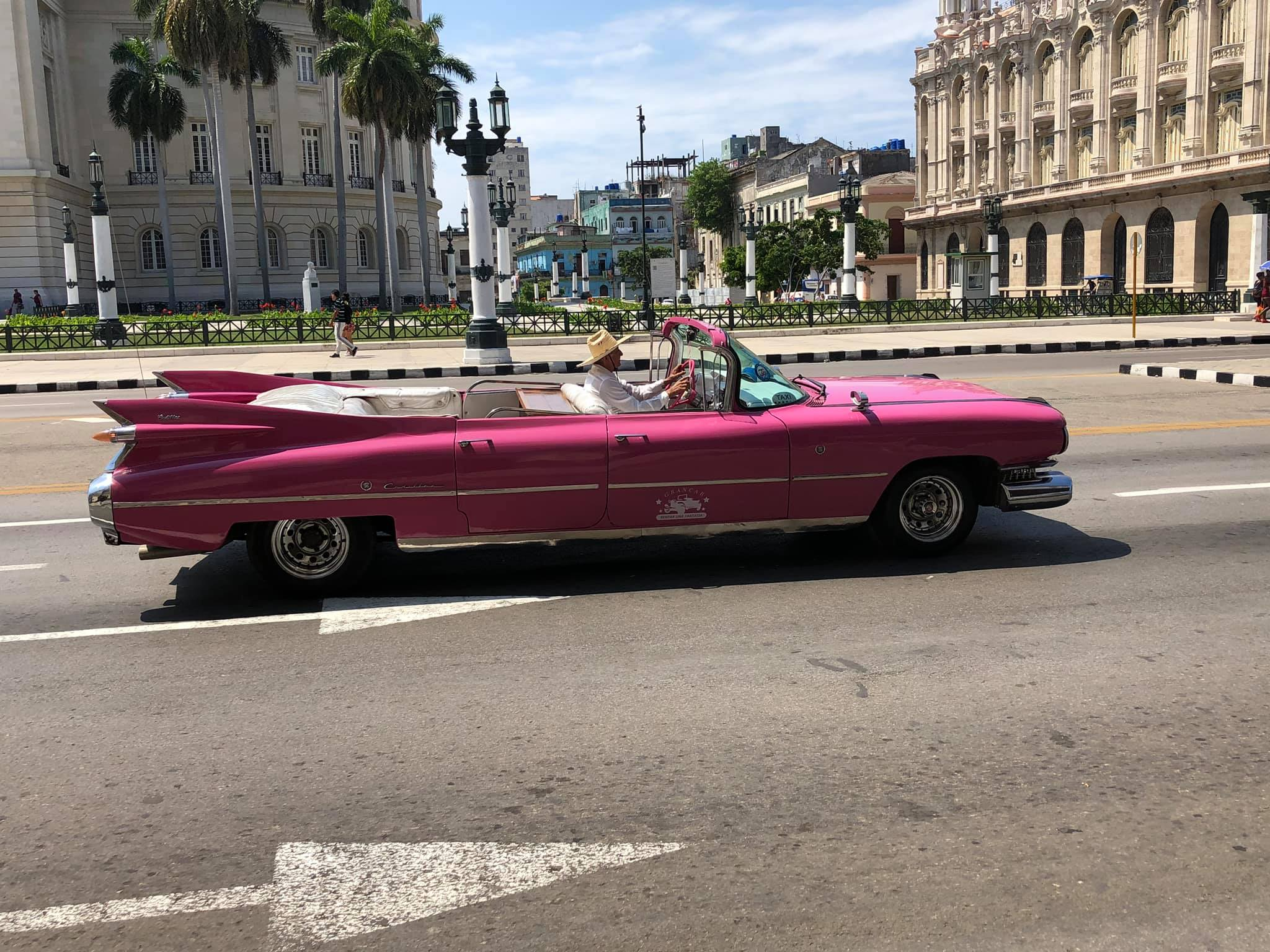
And here the real Cuba kicked in in true style. After bartering a bit (from 80 down to 40) we hopped into our huge 1950’s yank tank for a one hour tour of Havana. While this is incredibly touristy and stereotypical, it was exactly the experience that I had wanted. We sat in the back of our huge red and white convertible (Jill wanted pink but the guy with the pink one wouldn’t barter with me), being chauffeured by a dude wearing a Panama hat, while Cuban music blared through the stereo. I managed to get the dude to let me stage a photo with me in the drivers seat (he even put his Panama hat on me briefly).

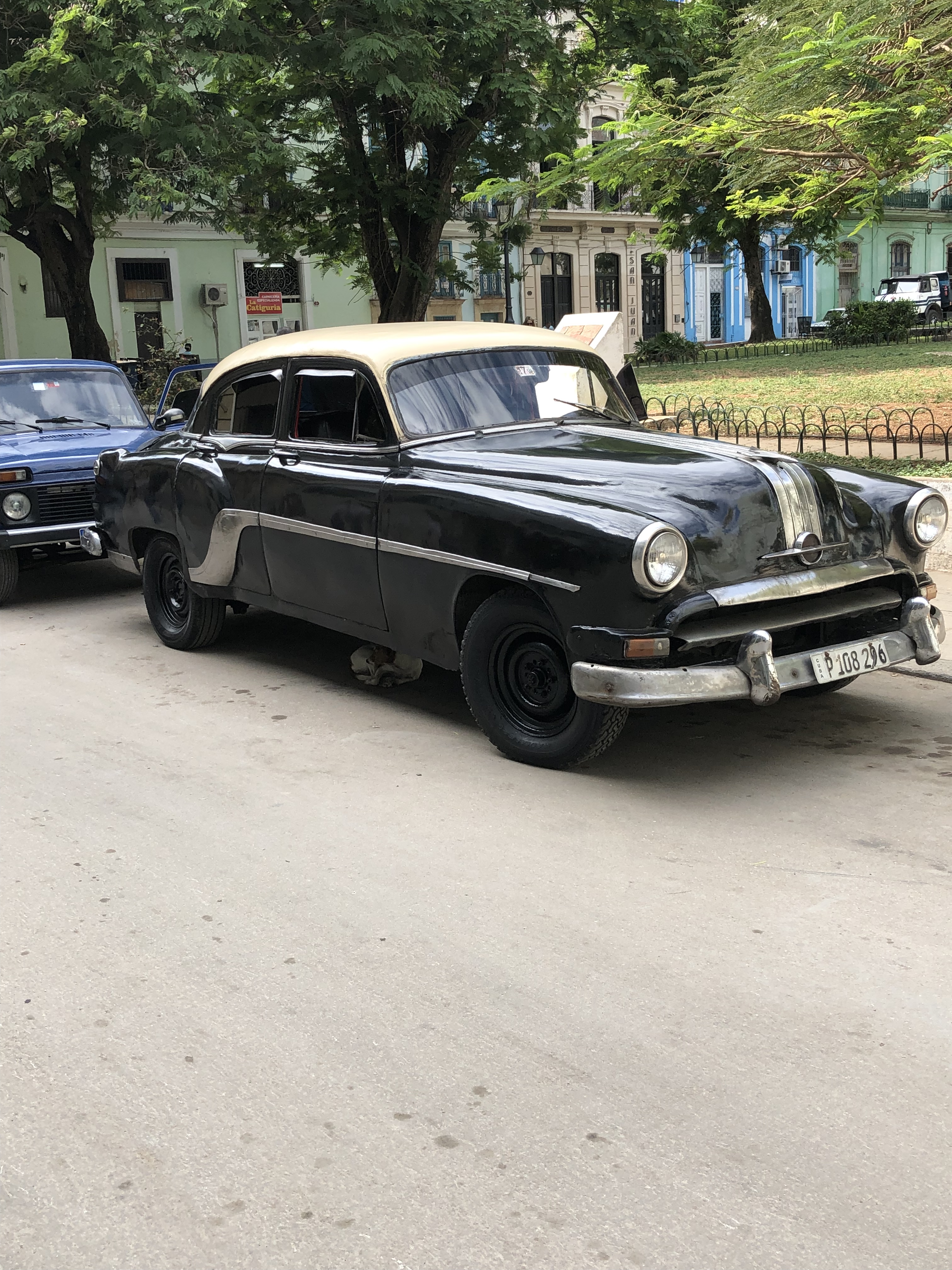
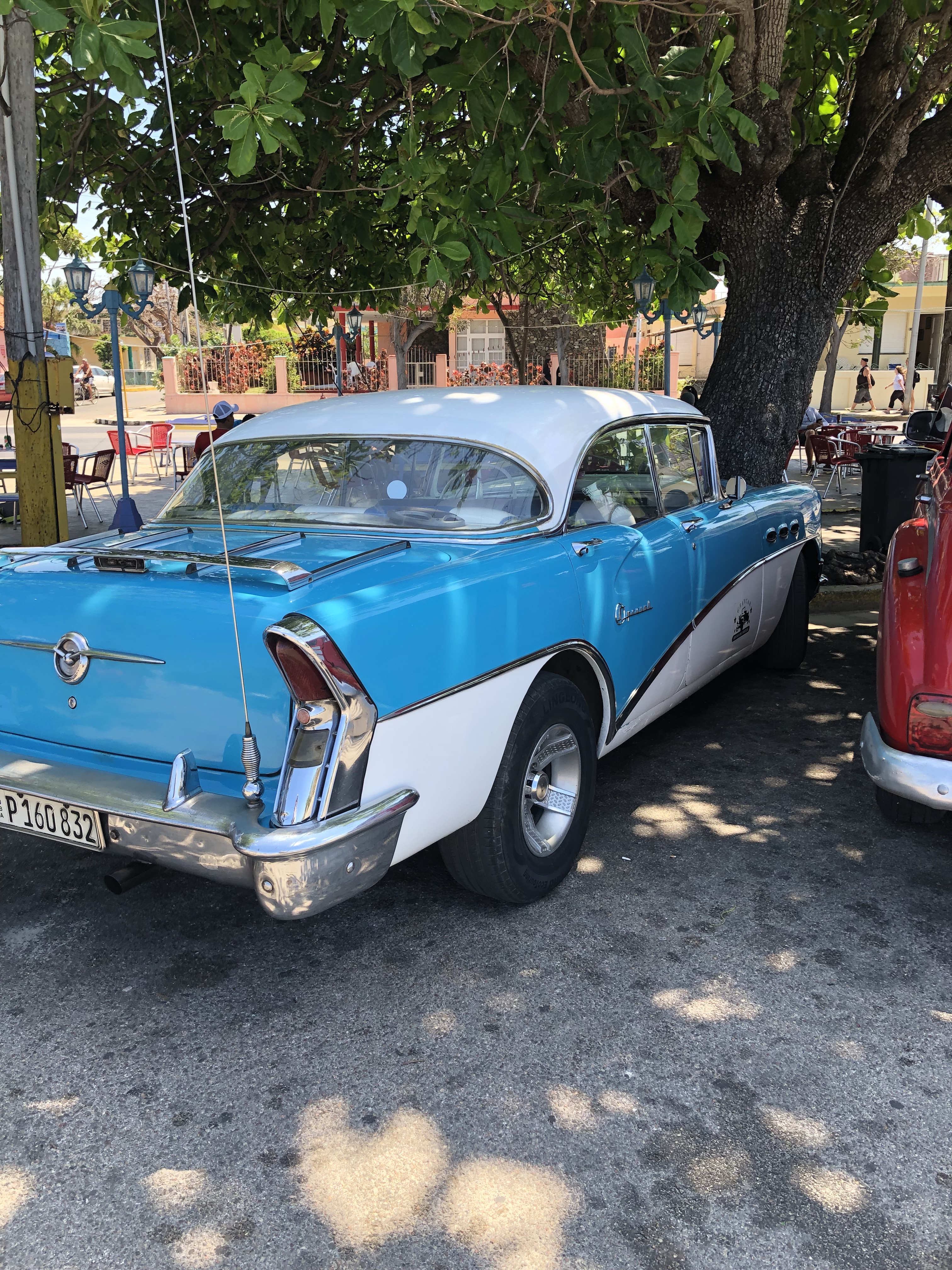
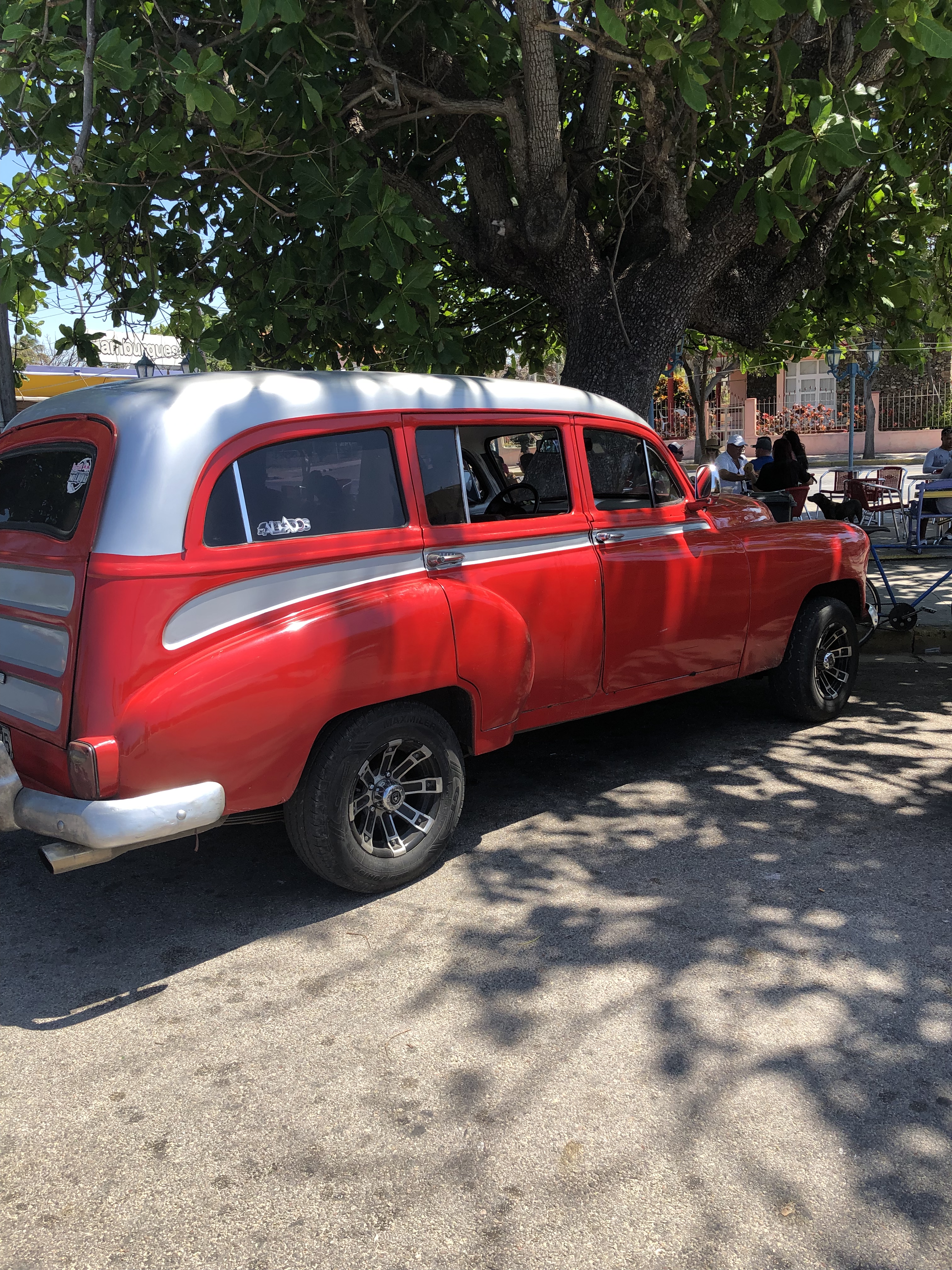
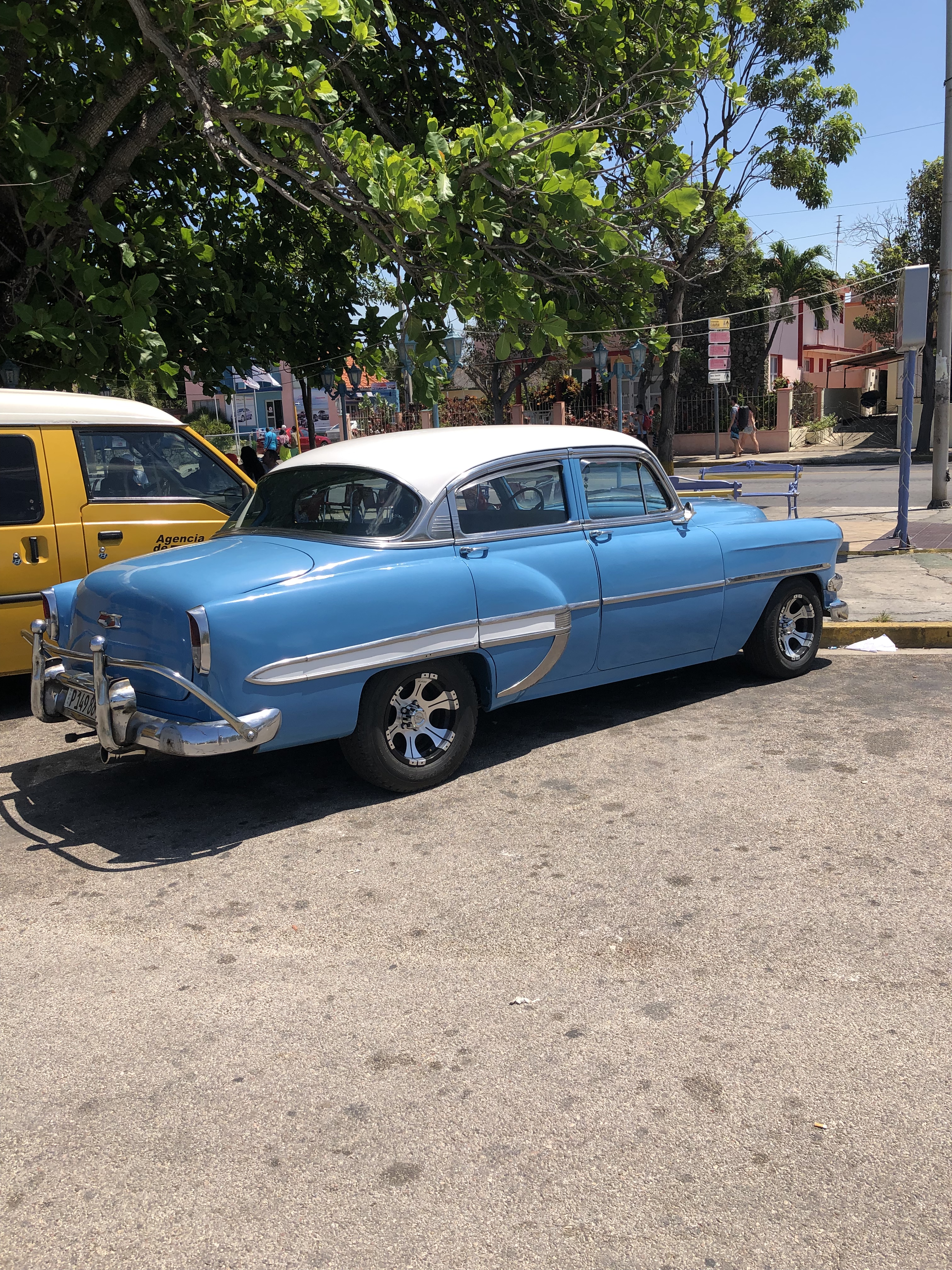
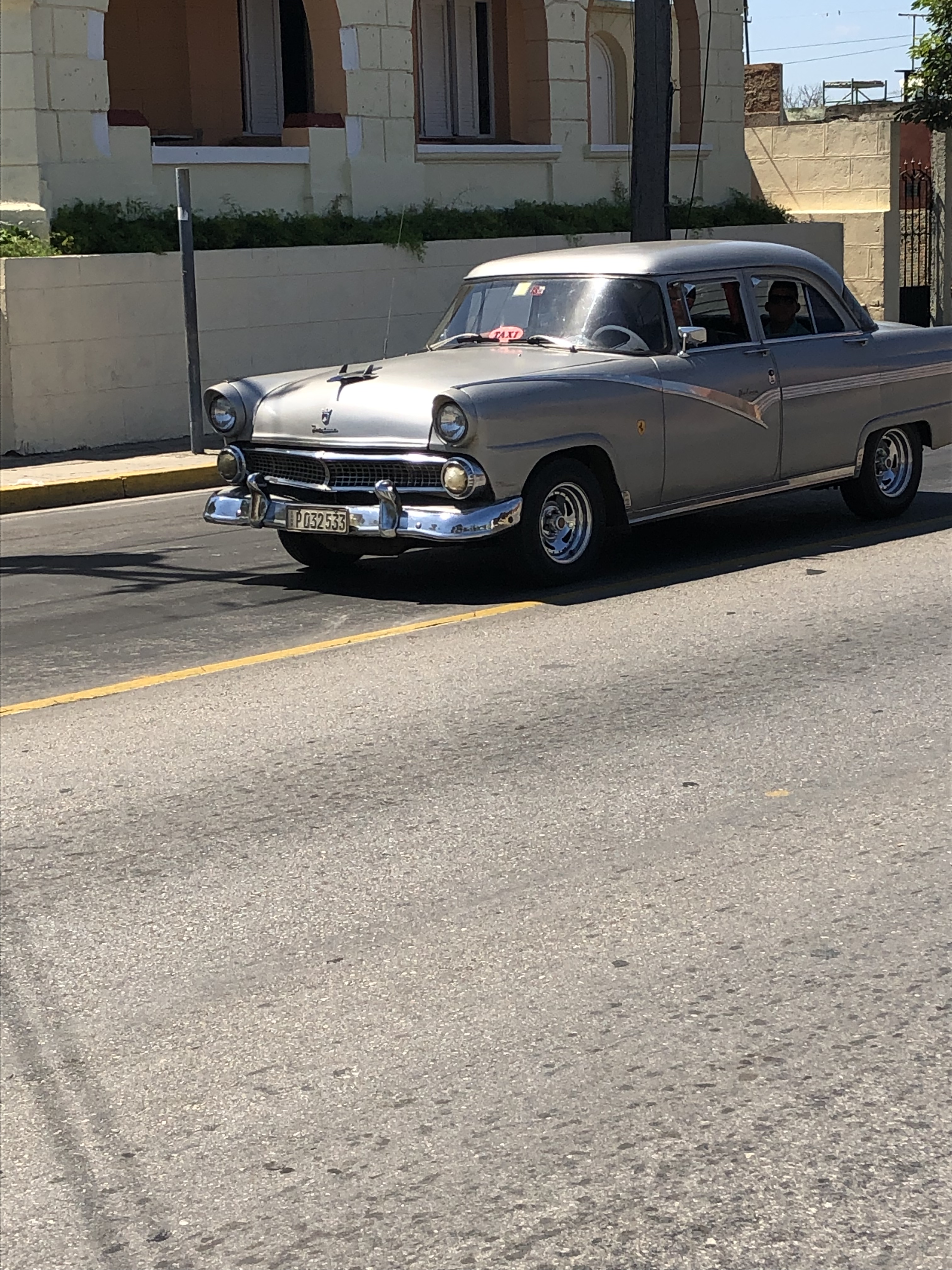
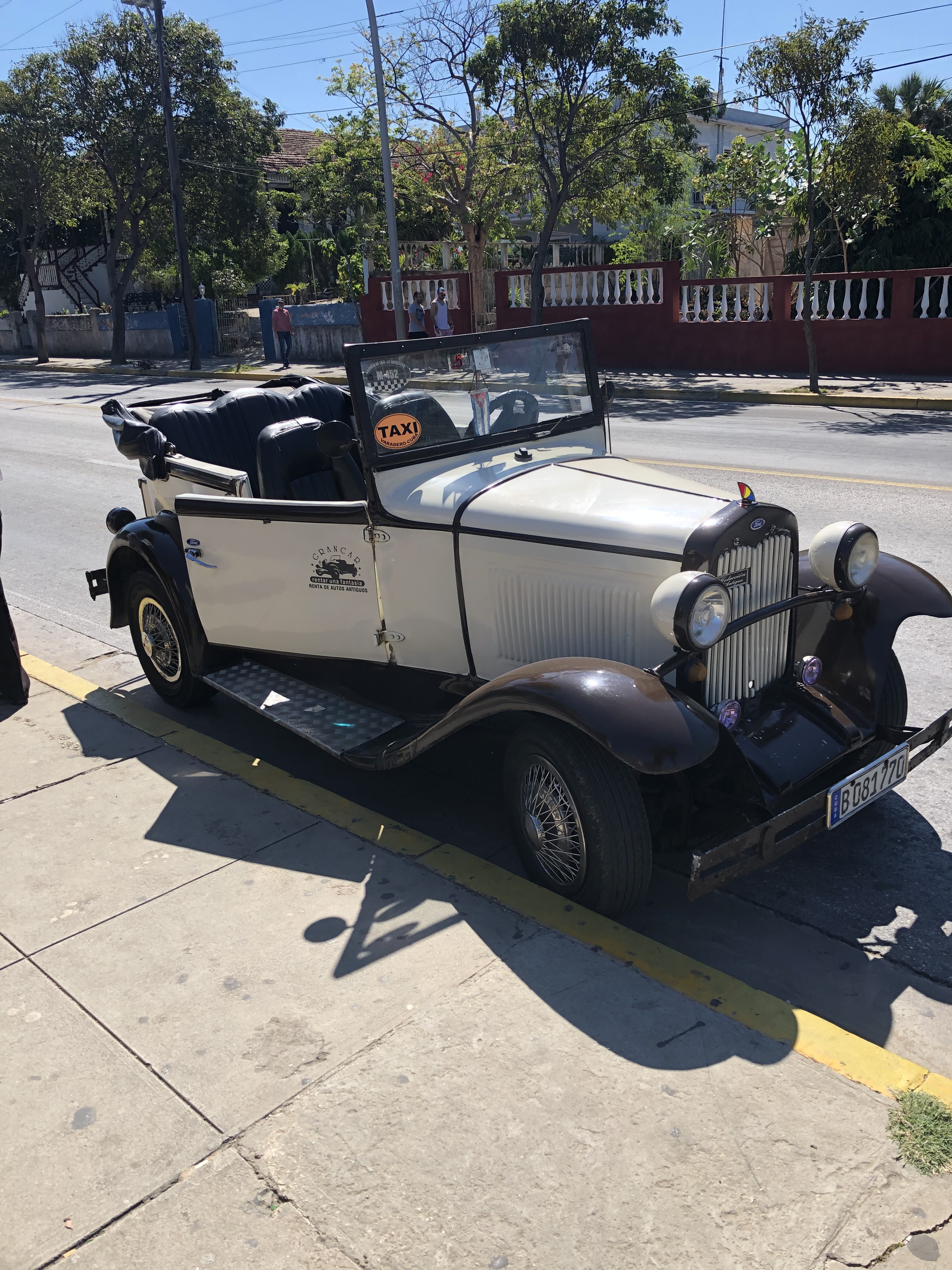
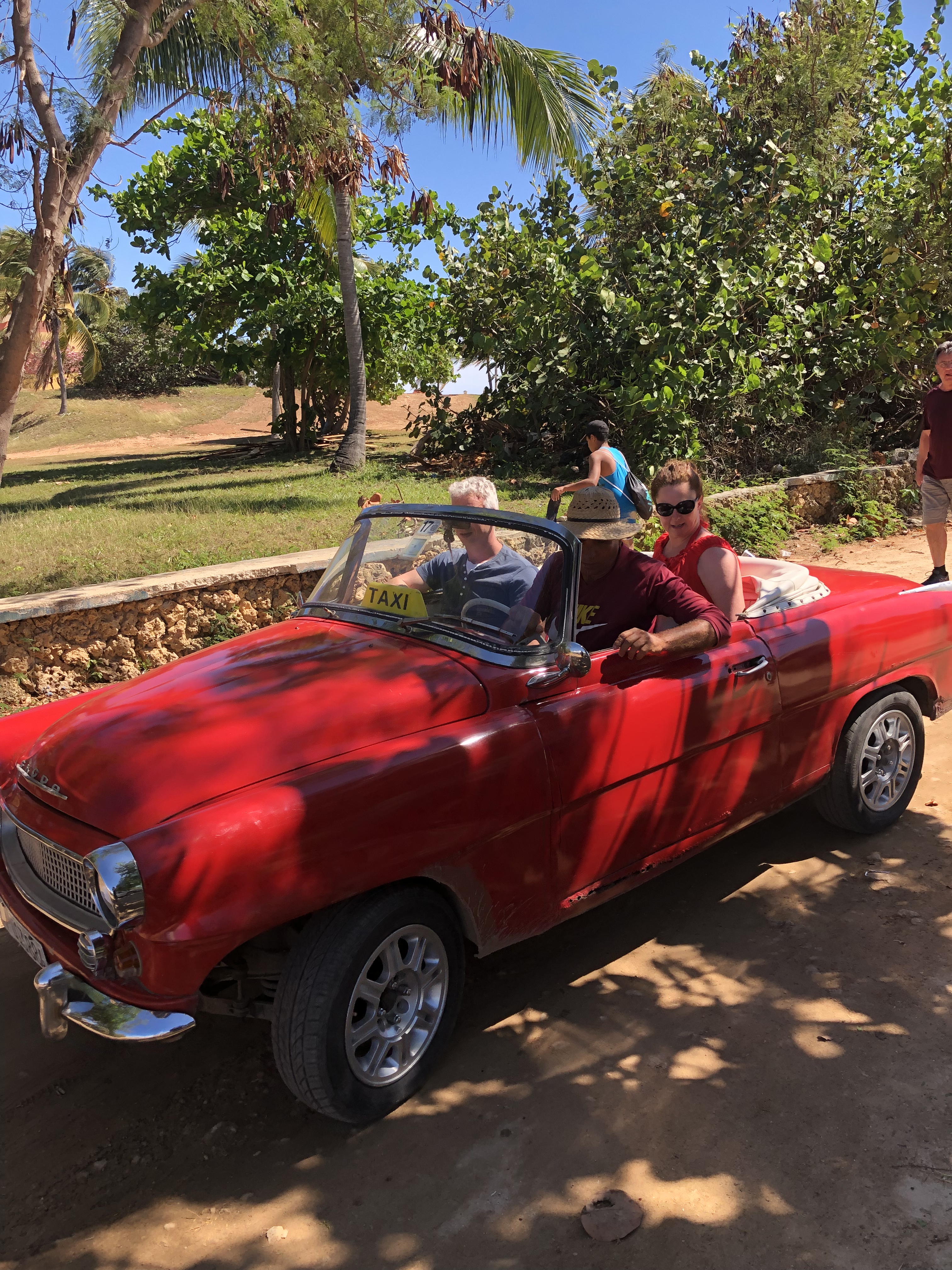
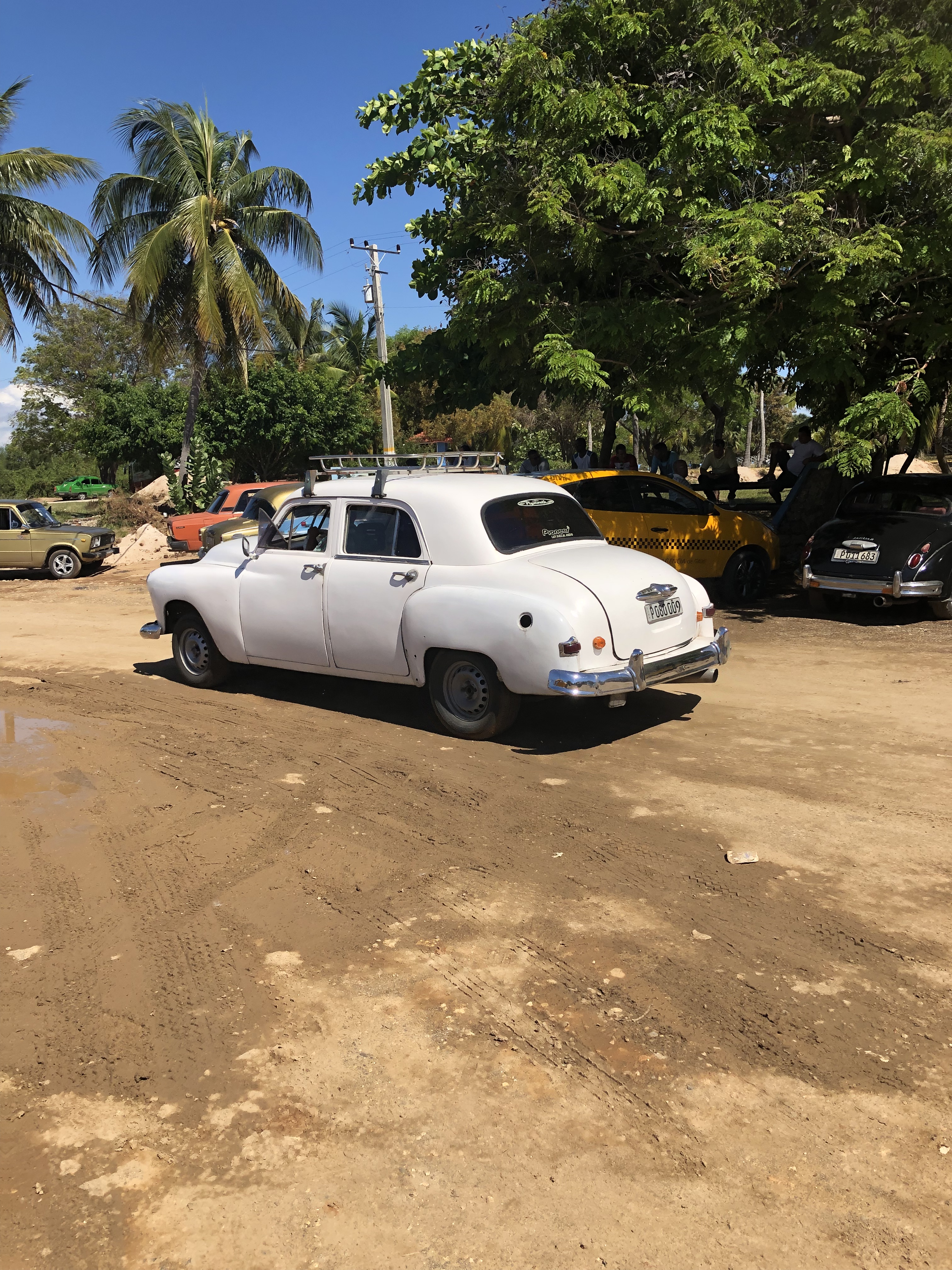
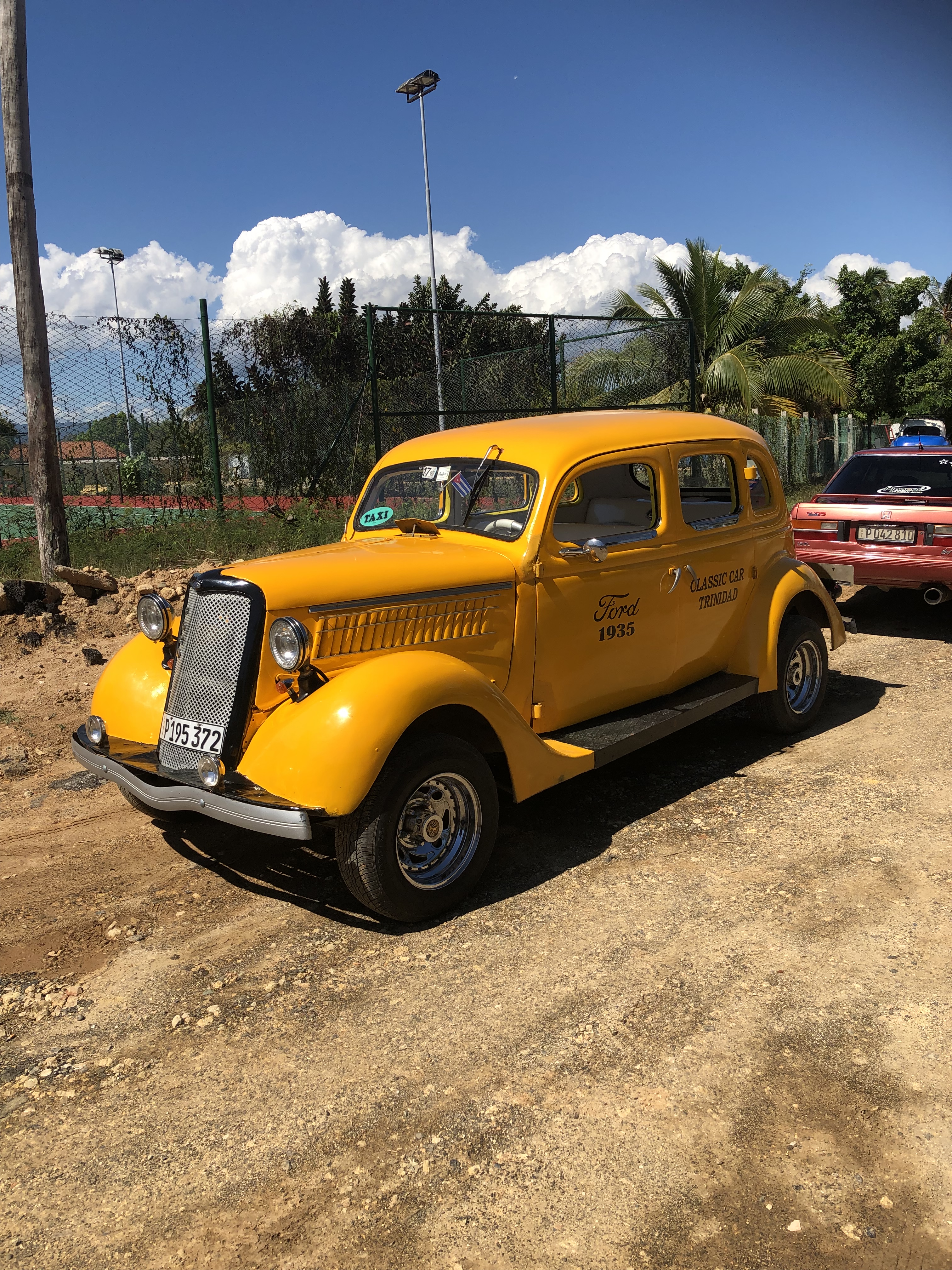
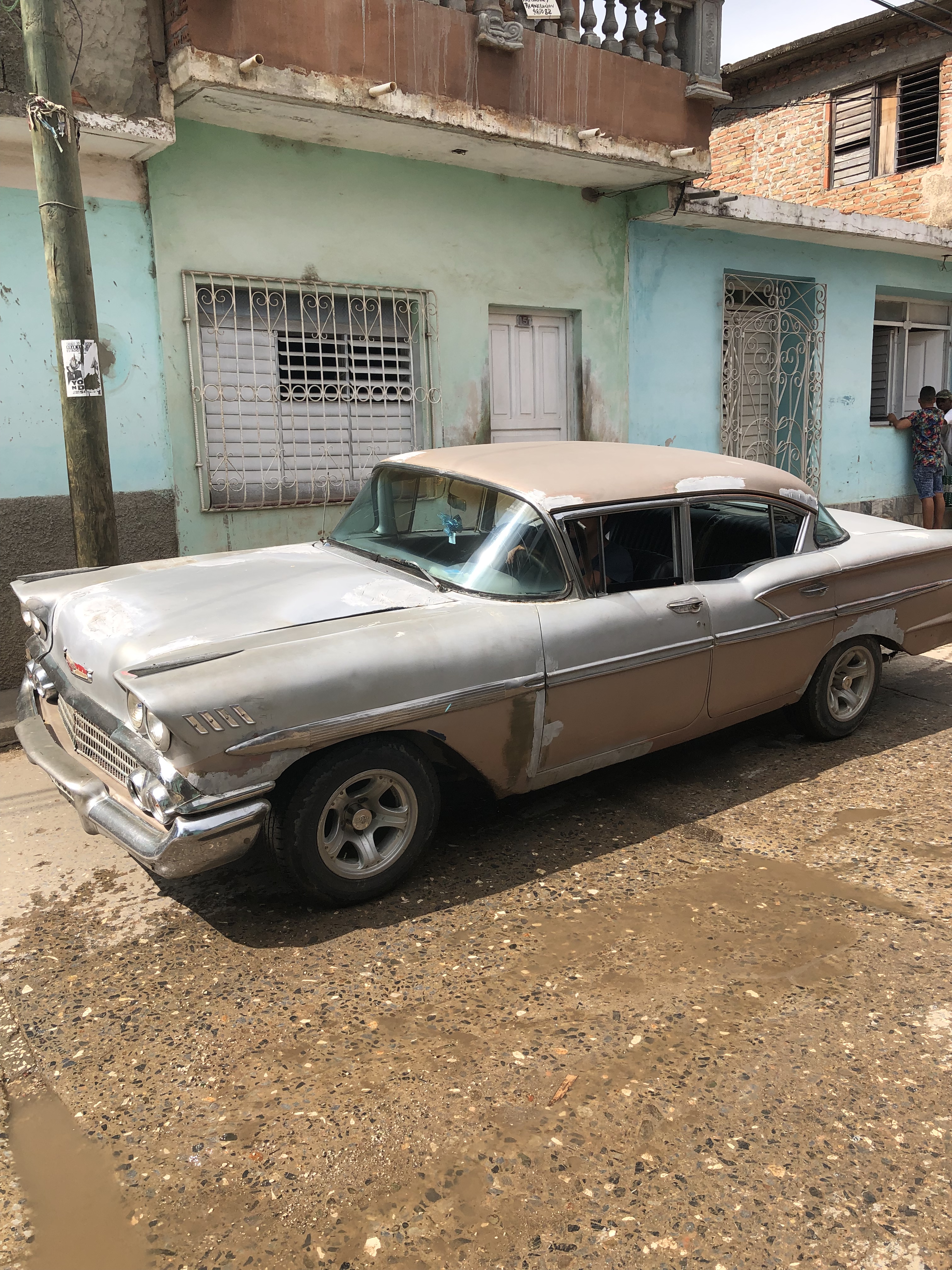
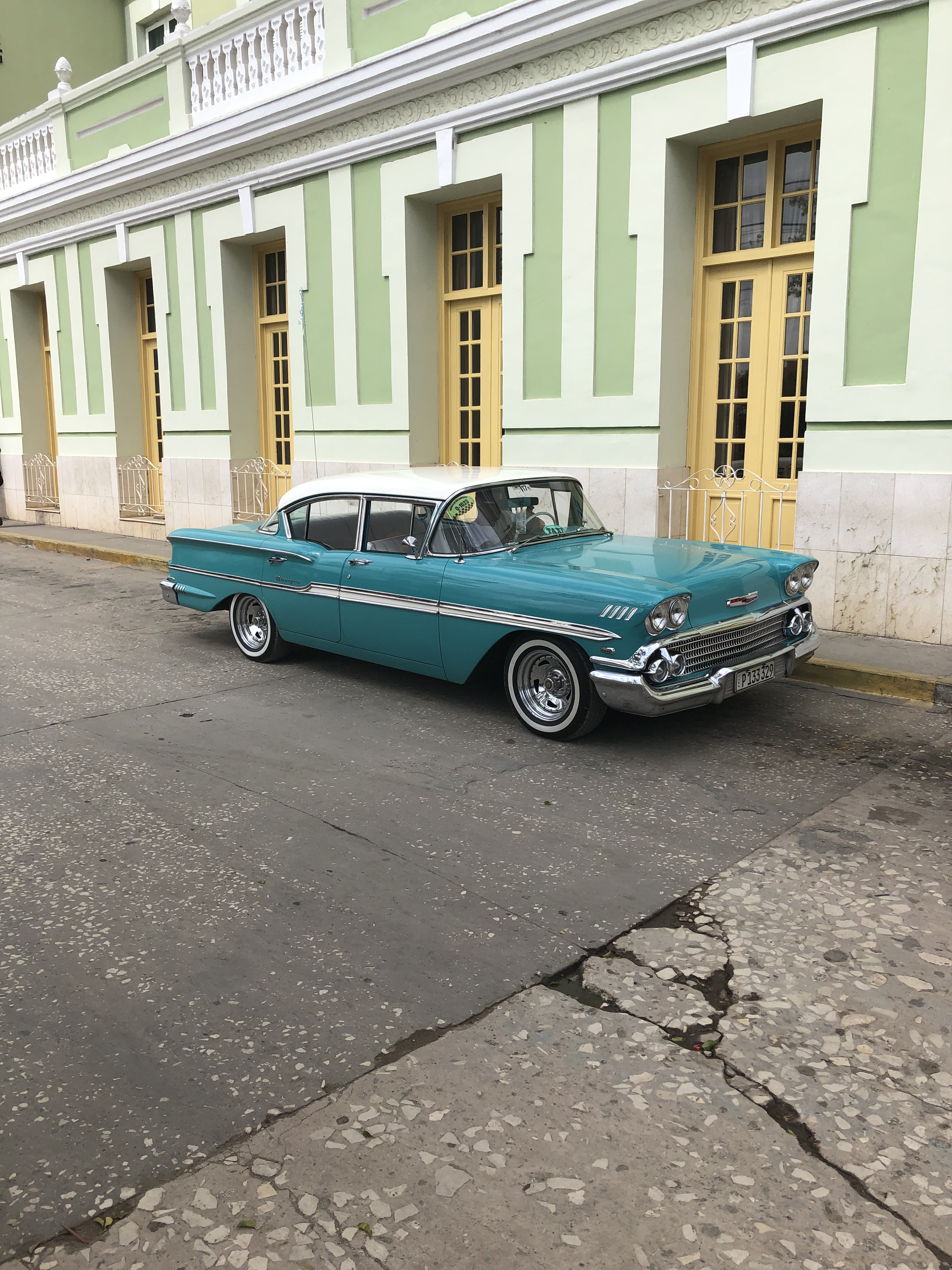
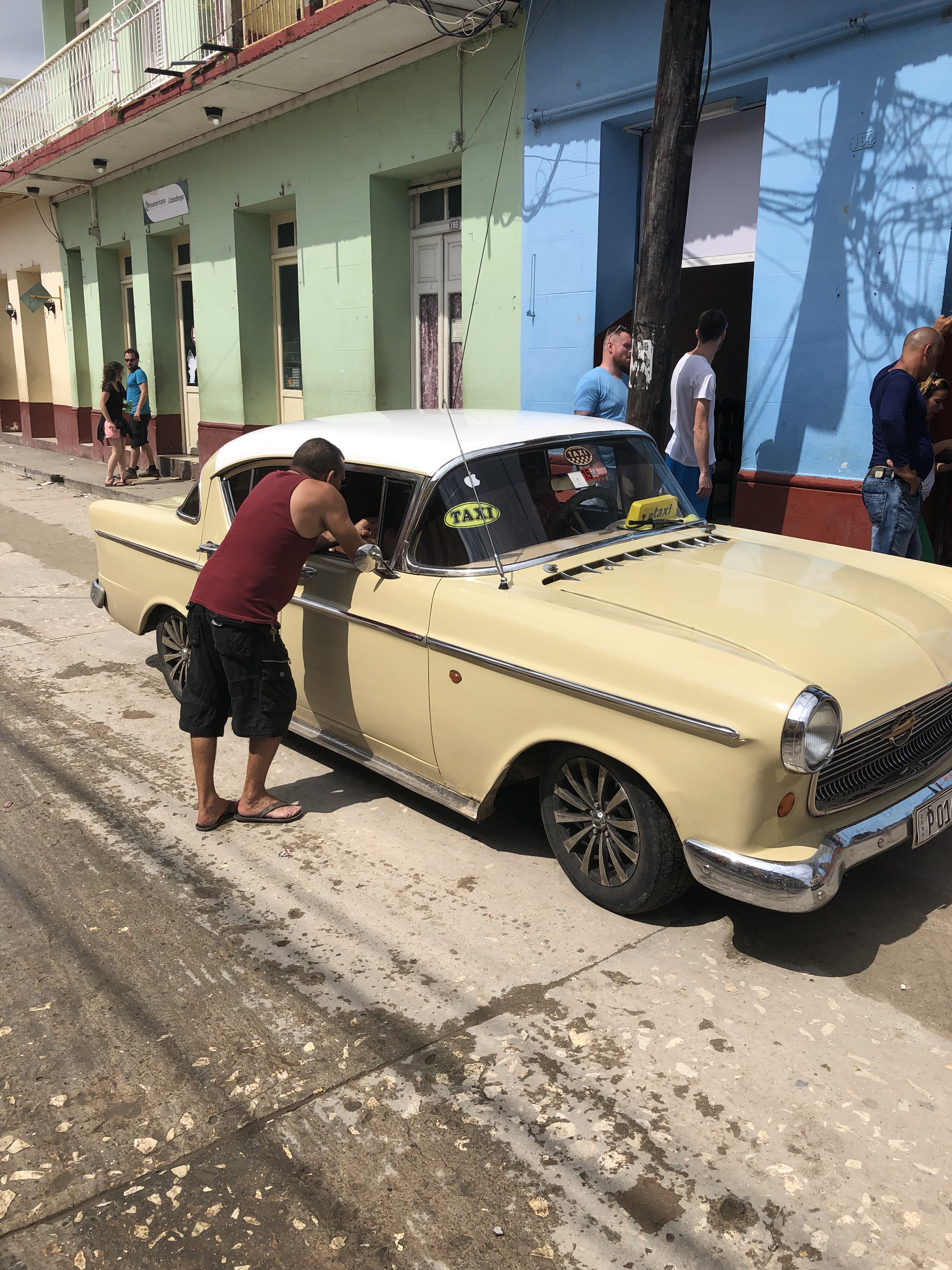
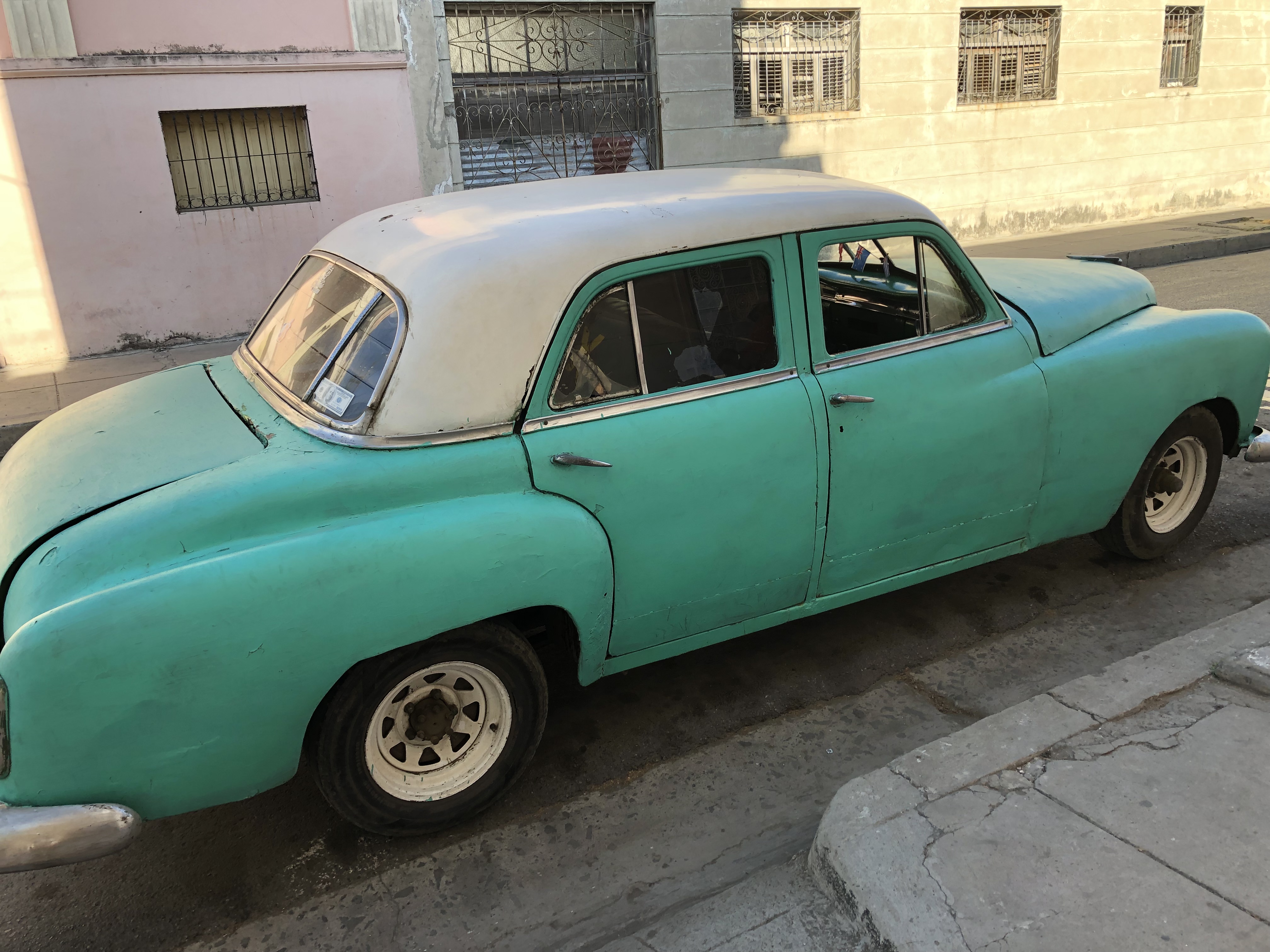
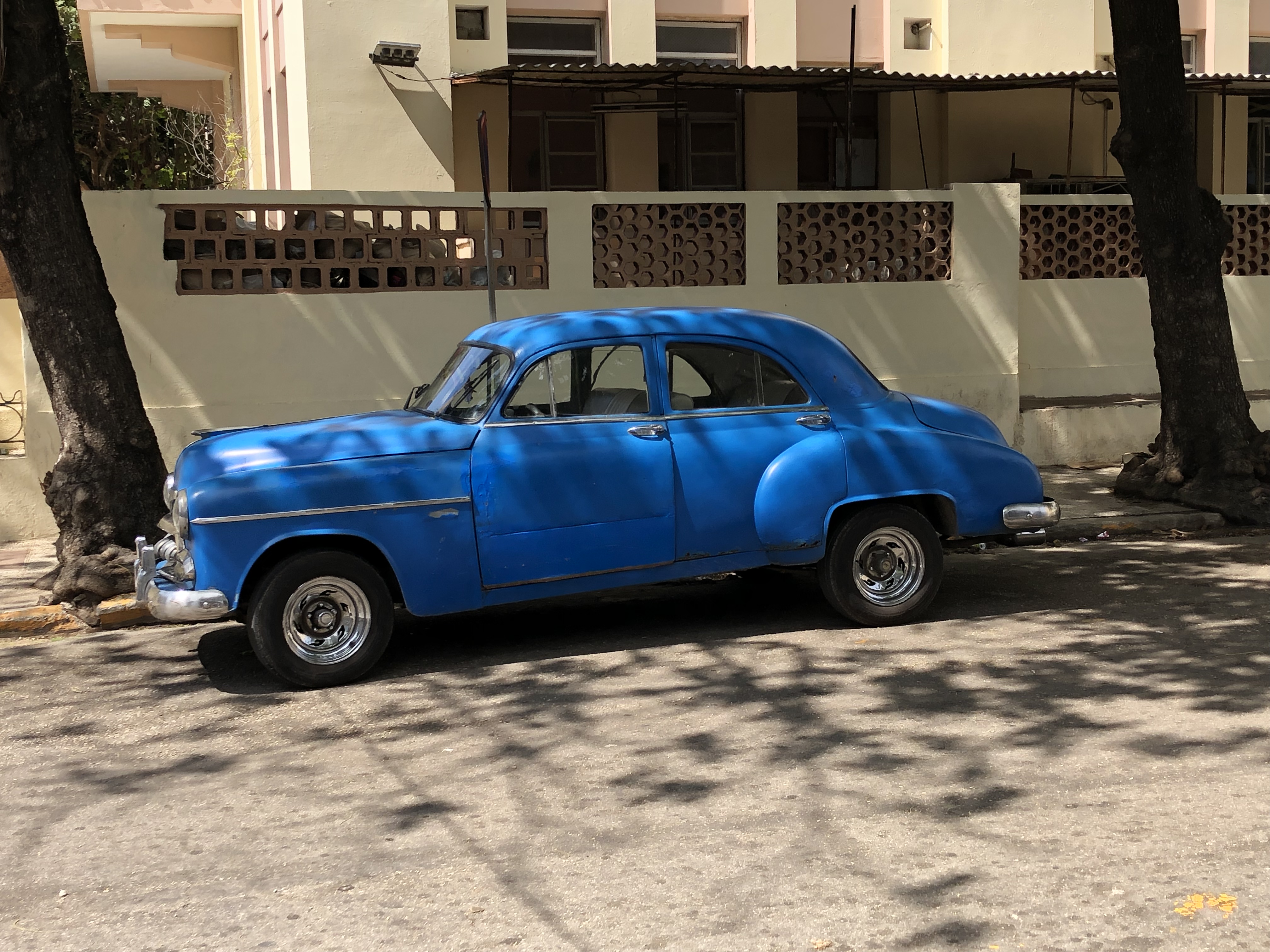
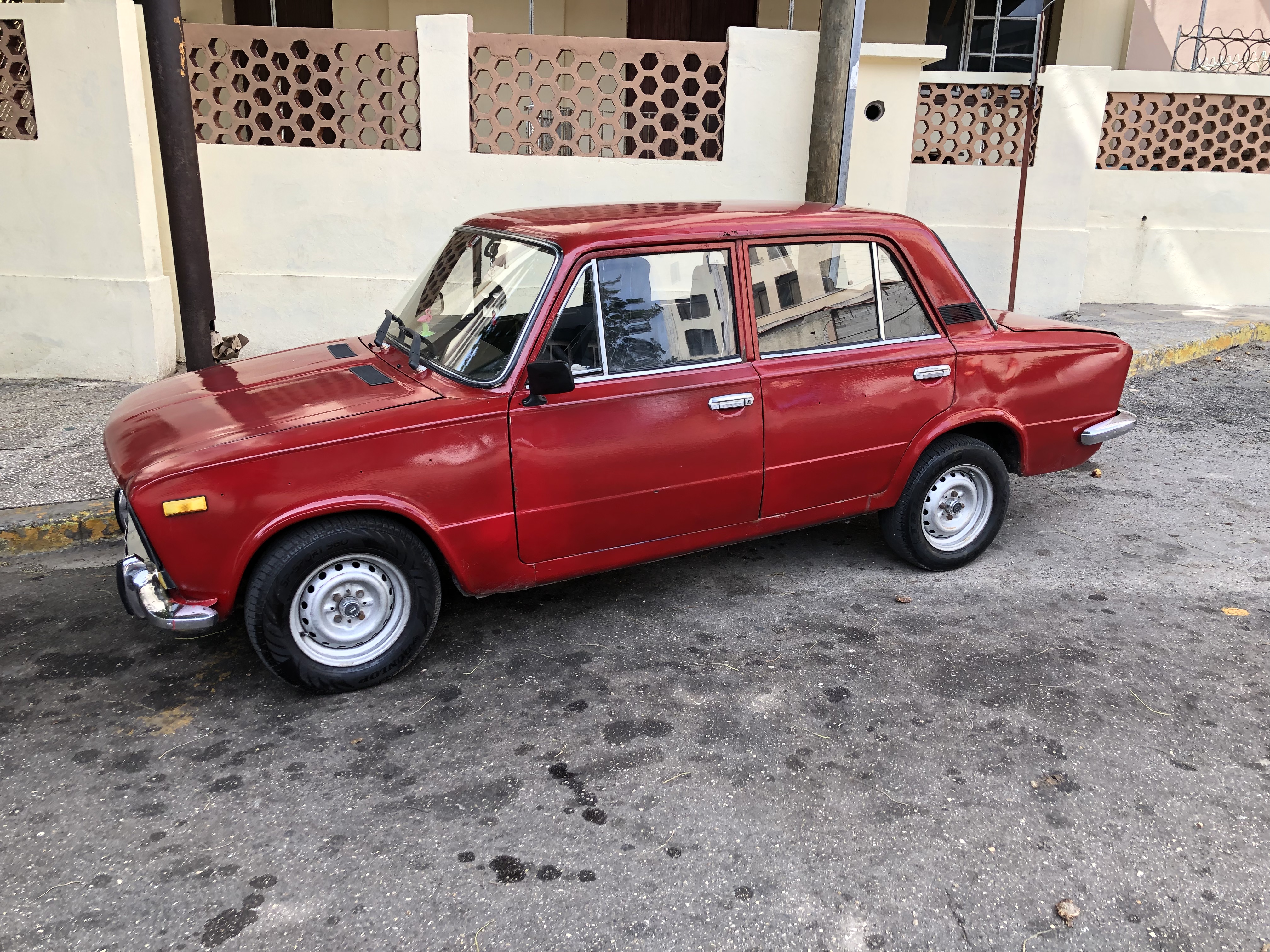
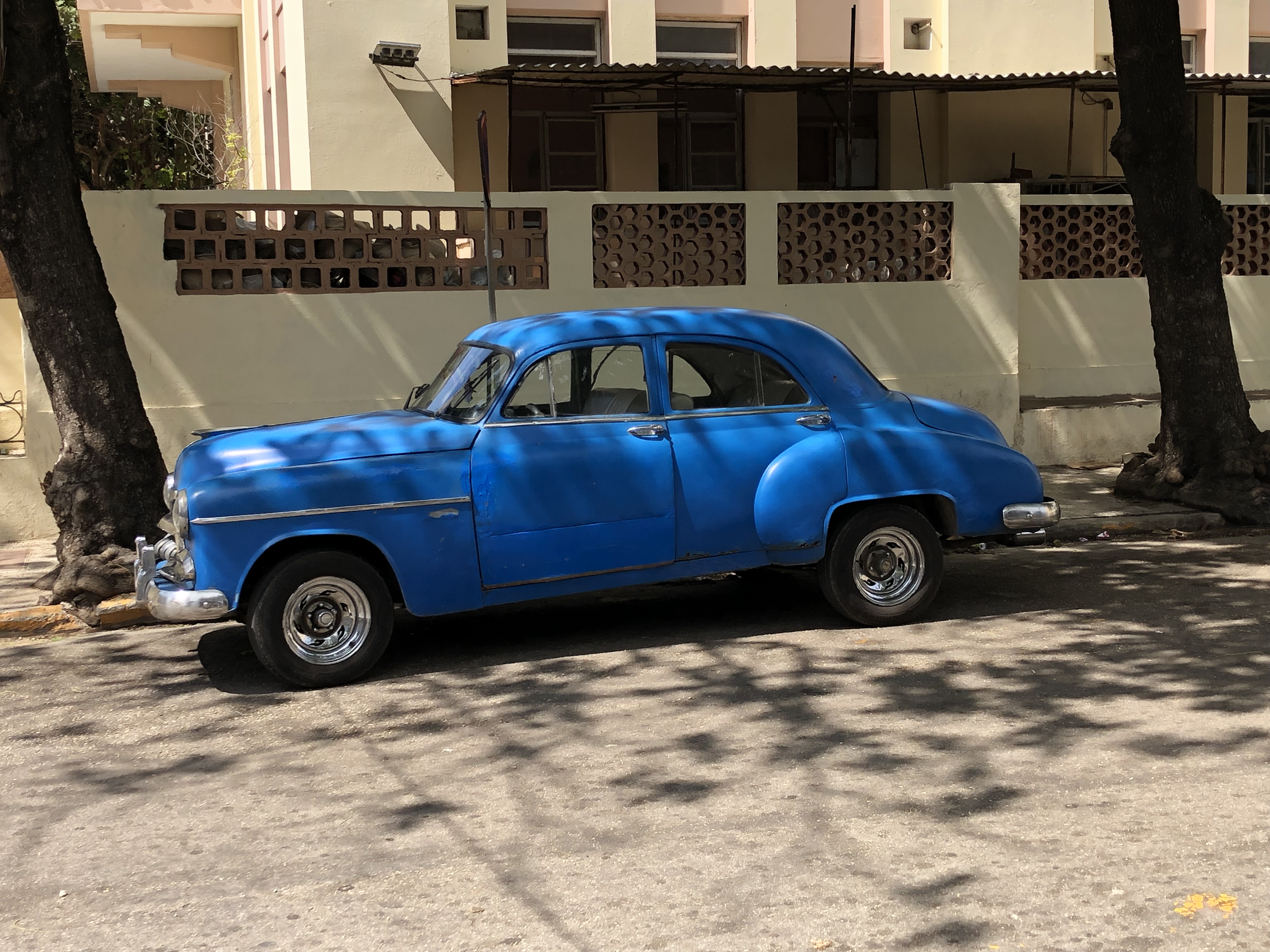
So it is probably time to talk about cars in Cuba. For the most part they are all pieces of shit. The most common vehicle that you will see is the Russian made Lada. They are ugly, loud, smoky, smelly and quite frankly it is mid blowing that they are still even running. The next is the classic yank tanks…the majority of these are clapped out, poorly maintained, bashed up, beaten and in sad need of either TLC or scrapping. Then there is the convertible tourist fleet that are shiny and pretty for us tourist types. And finally there is a combination of little taxi (type) options…these range from pedicabs, horse drawn carts, old motorbikes (with or without sidecars) and the freaky bubble looking tuk tuks.

So we cruised the streets (either in our car or just walking about) while we took in the sights, sounds and smells of Cuba. For the most part it was enchanting. The people of Cuba seemingly want for nothing, but at the same time they have very little. Education and healthcare is free. Food ration books ensure that everyone has enough of a broad range of food groups, but very few extras or luxuries. The system works but the wants of consumerism are pervasive.

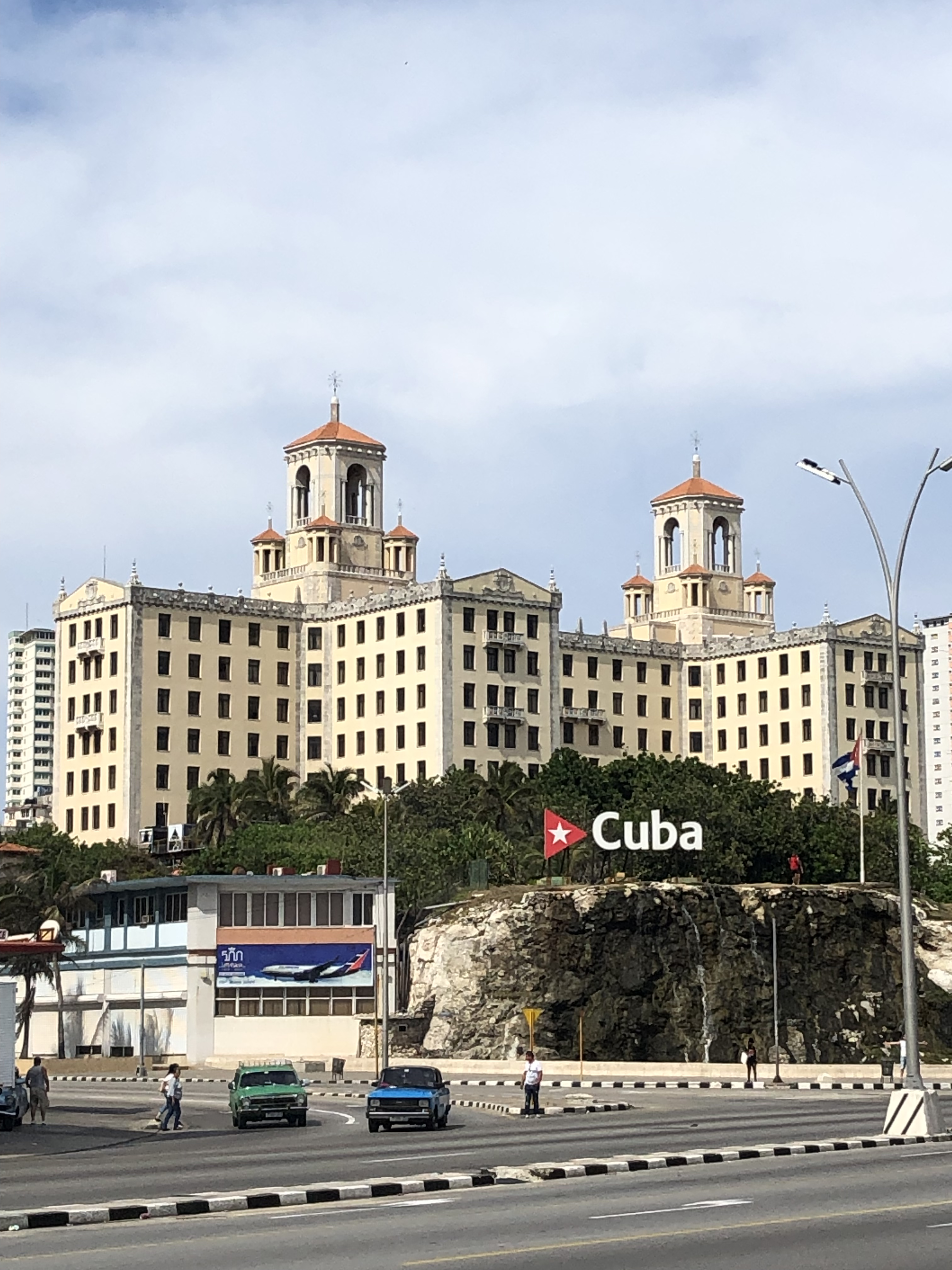
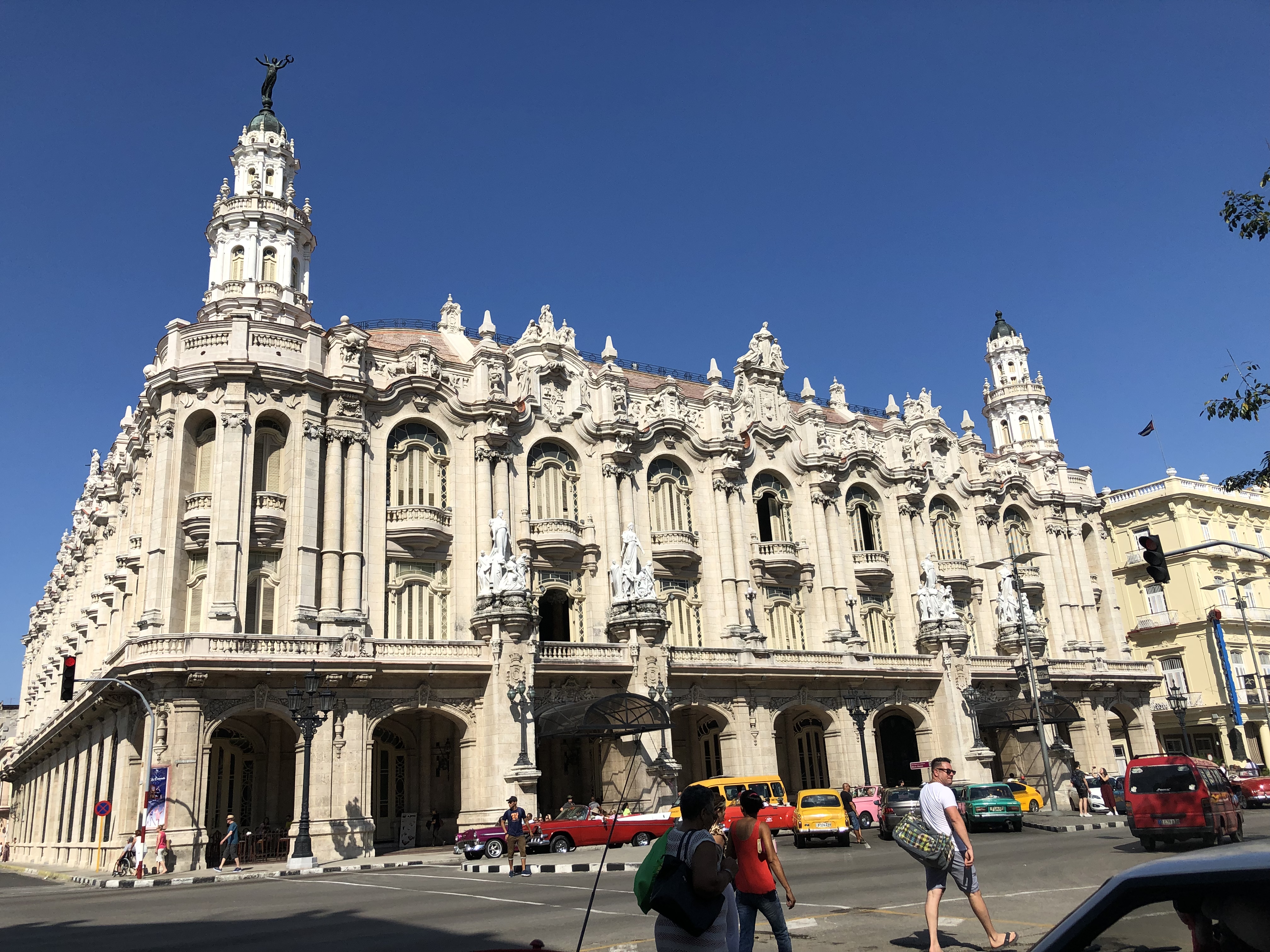
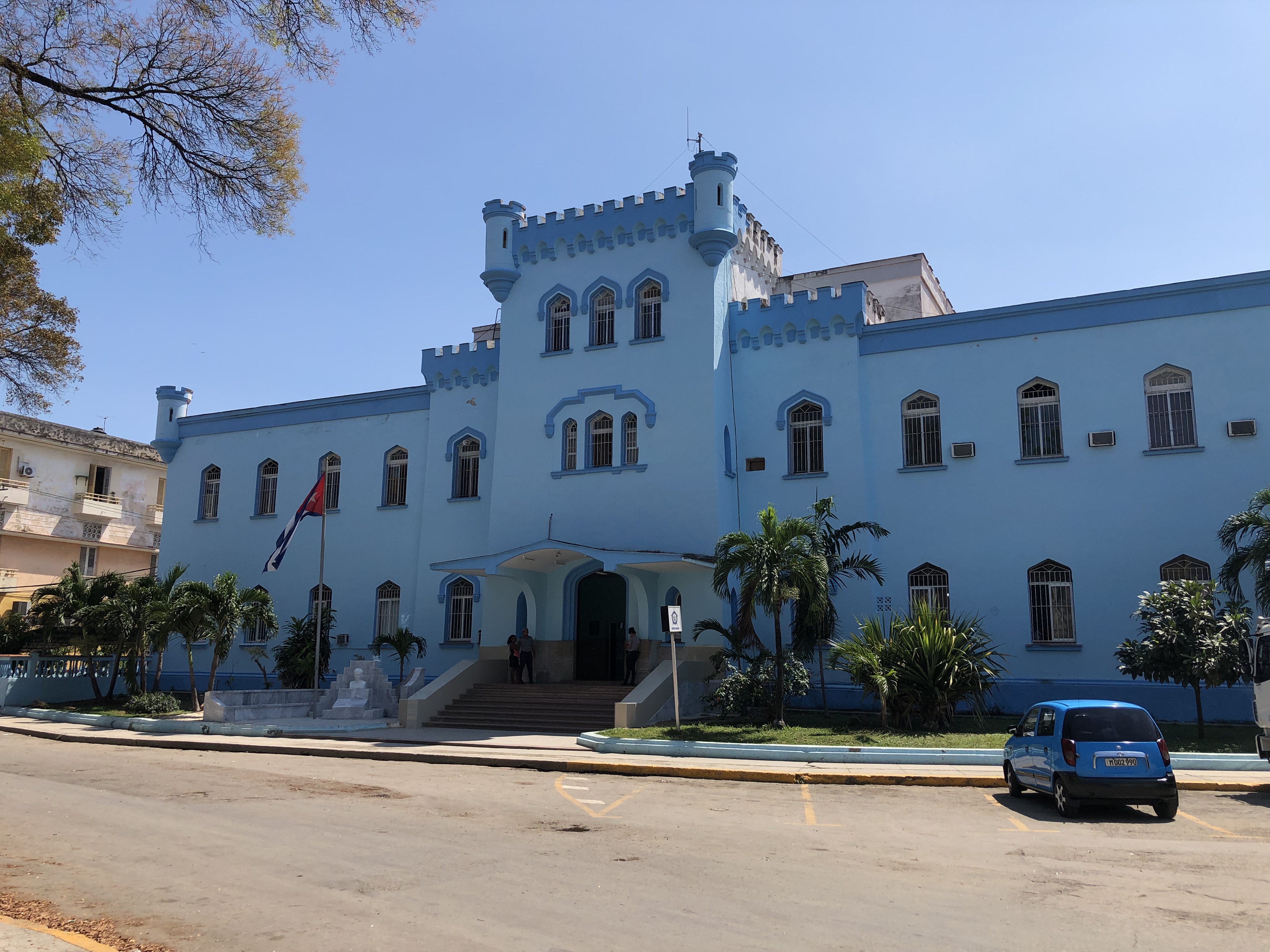
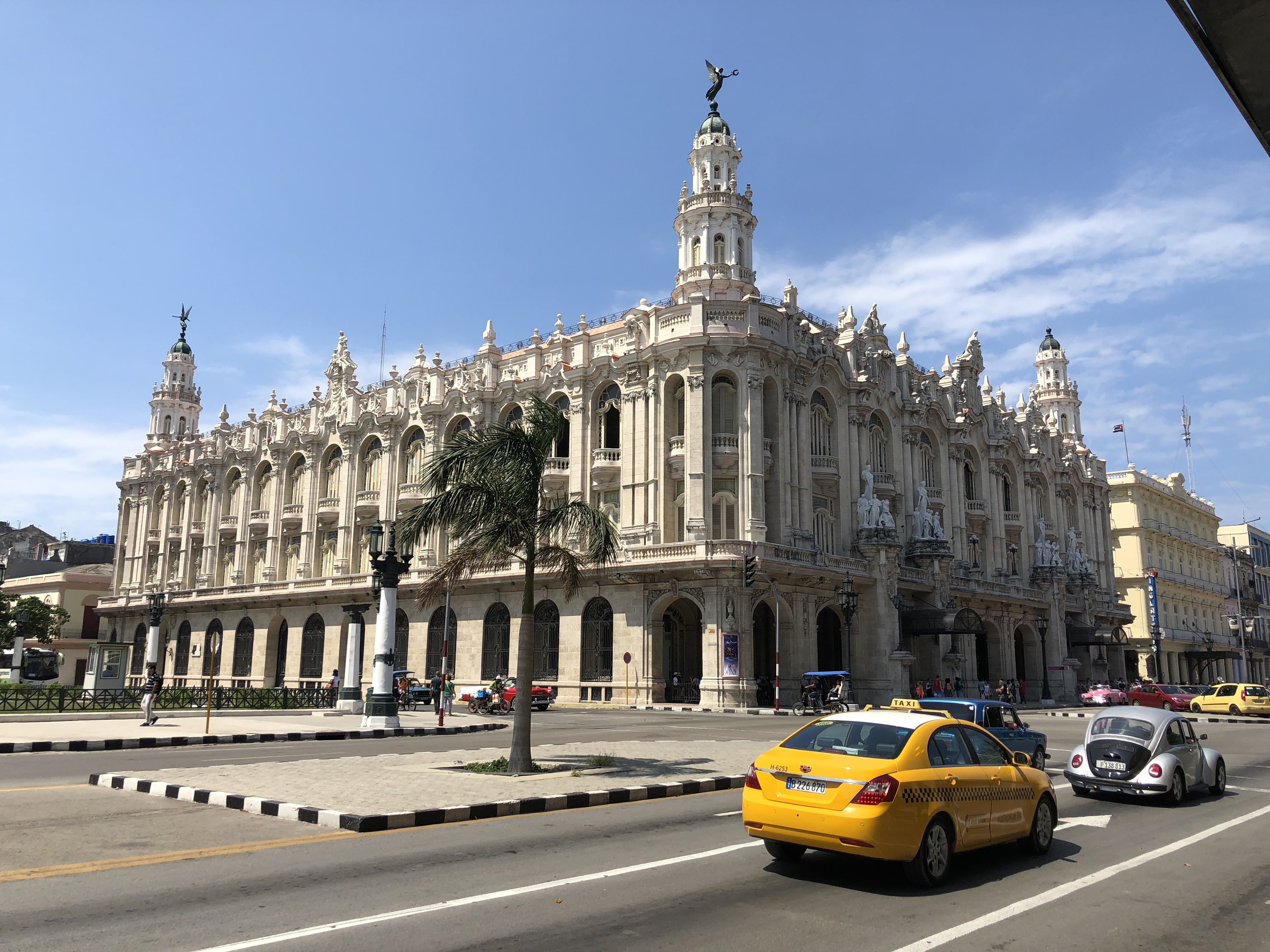
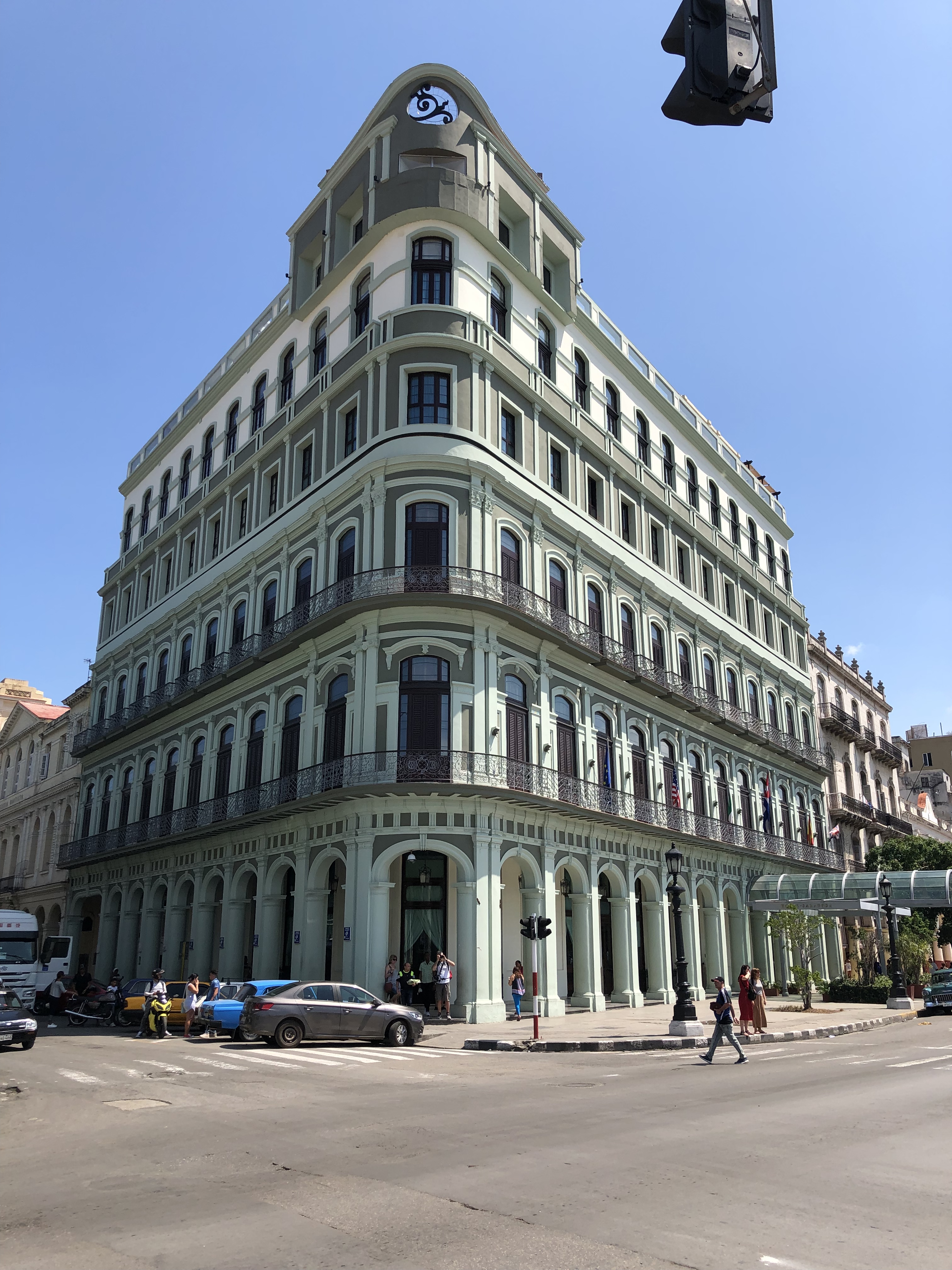
Some of the buildings around Havana are stunning. But for every beautiful building, there is about 20 in a state of disrepair. Added to this are the hidden gems, a virtual oasis enclosed behind a nondescript door on a dodgy looking street. I have never been in any city in the world where I have felt so safe or secure. Crime is virtually non existent and everyone is smiling, happy and willing to greet you with a grin and an “hola”.

On our last night in Havana we headed down to plaza Vieja where we stopped in to ‘La Vitrola’ and we had some small bar snacks, beverages and live Cuban music. I have entirely fallen in love with the jamon croquettes, while Jill cannot seem to be able to say no to a $3.50 mojito complete with a sugar cane swizzle stick. Add to this some bruschetta, cheese balls and fried chorizo and ice cold cerveza (beer) and life is good.

Oh and guess what… Cuba has a $3 bill.

Lima, Peru.
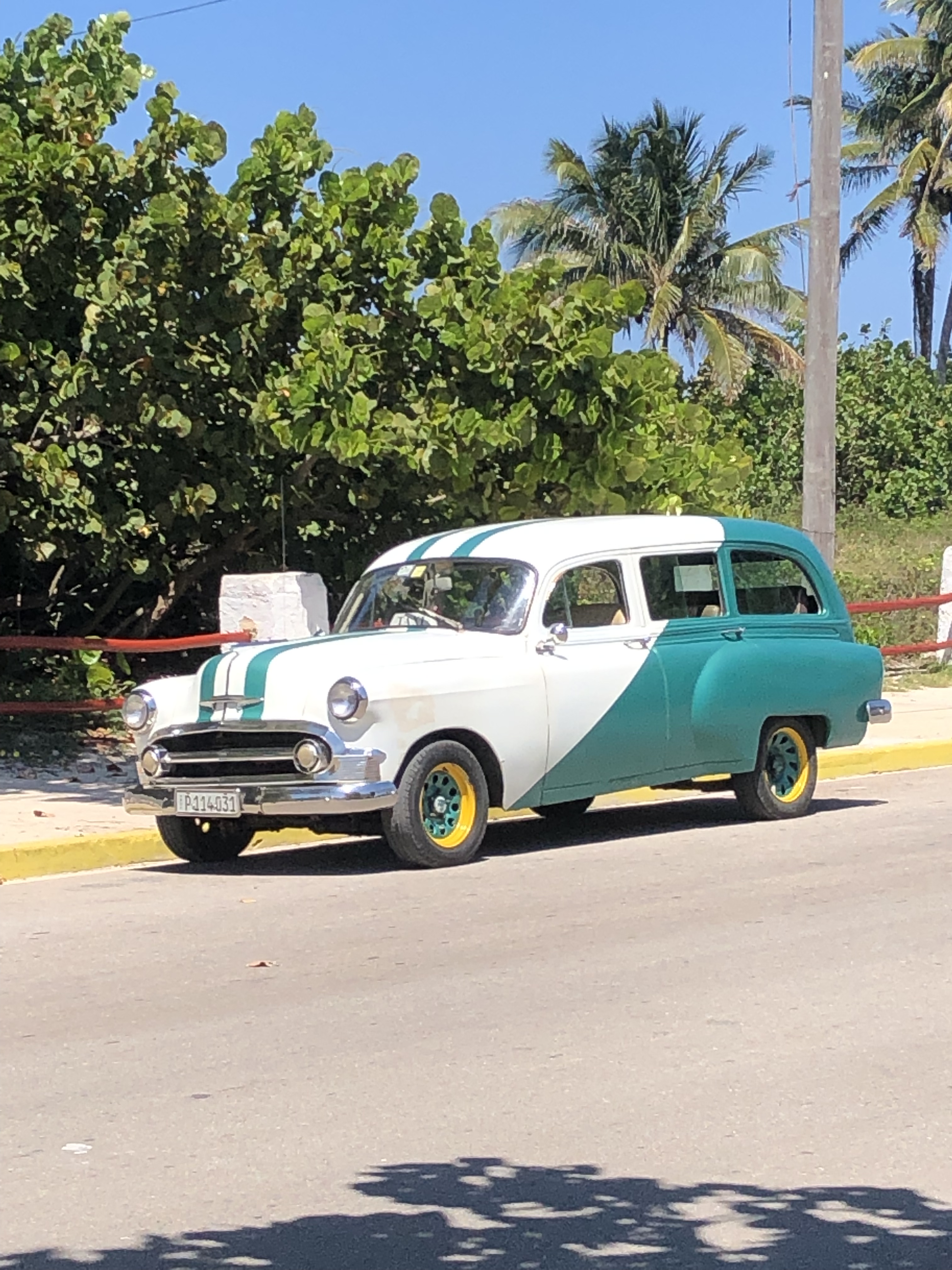
Well if first impressions count…I am going to hate this place.

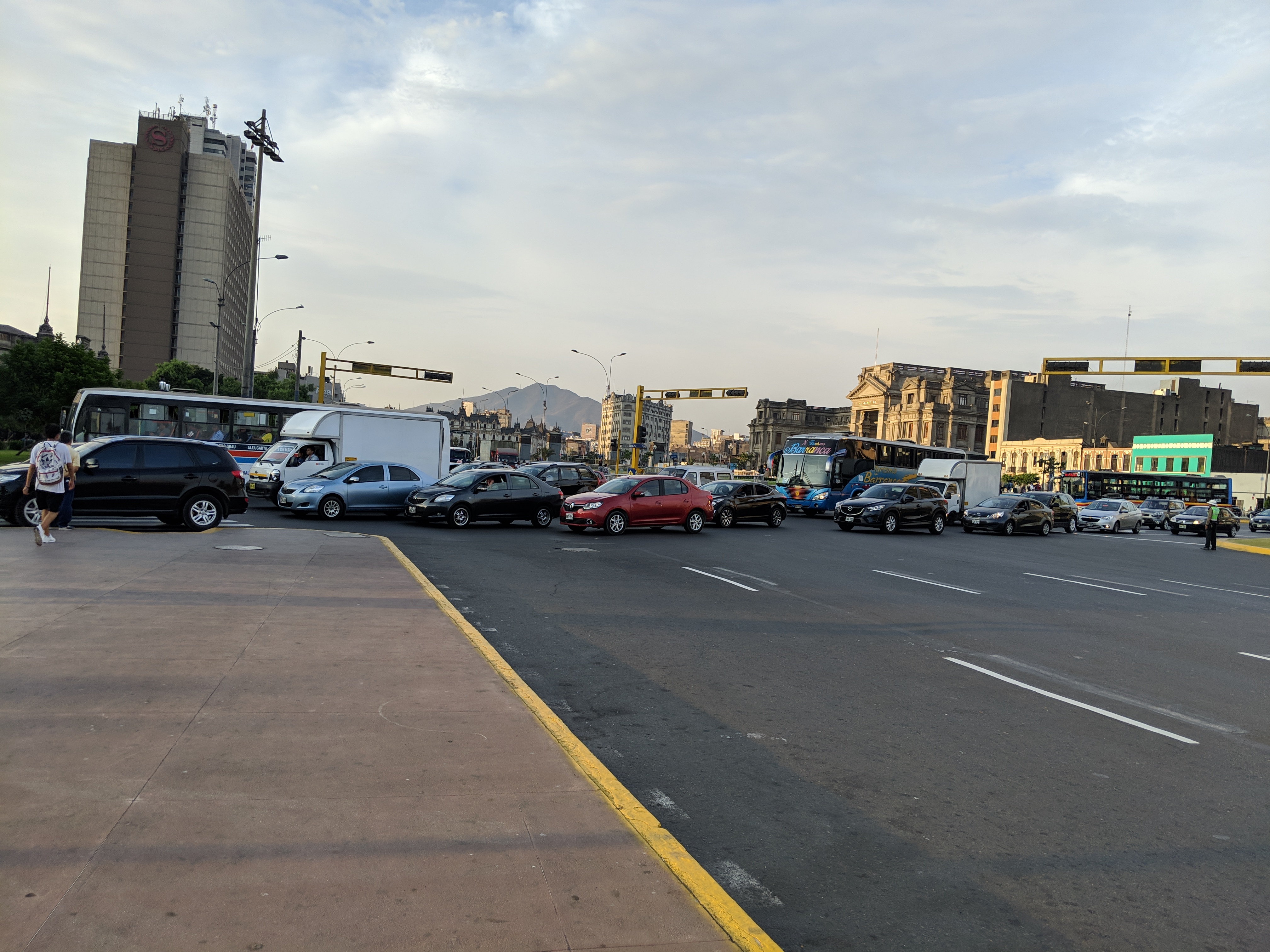
The traffic was horrendous. And this coming from two people who spent so much time in Asia. I have not seen traffic so bad in a very long time. The volume of cars was high, the honking and beeping was constant and the fact that lane markings were not even considered made this place a hellhole…and that was just getting from the airport. We turned right from the left hand lane, across 3 normal but 5 actual lanes of traffic, at speed. It was certainly a white knuckle ride and we both decided that perhaps it was better if we just didn’t look.

IMG_20190311_175525

But everyone I spoke to told me I would love Lima…so lets see…

After a nap (early morning flights and another 2hr time zone change) we headed out for a late afternoon stroll and a bite. While the traffic remained devilish there was some semblance of order to it…but not enough to trust. We wandered along the park in front of our hotel towards the centre of town

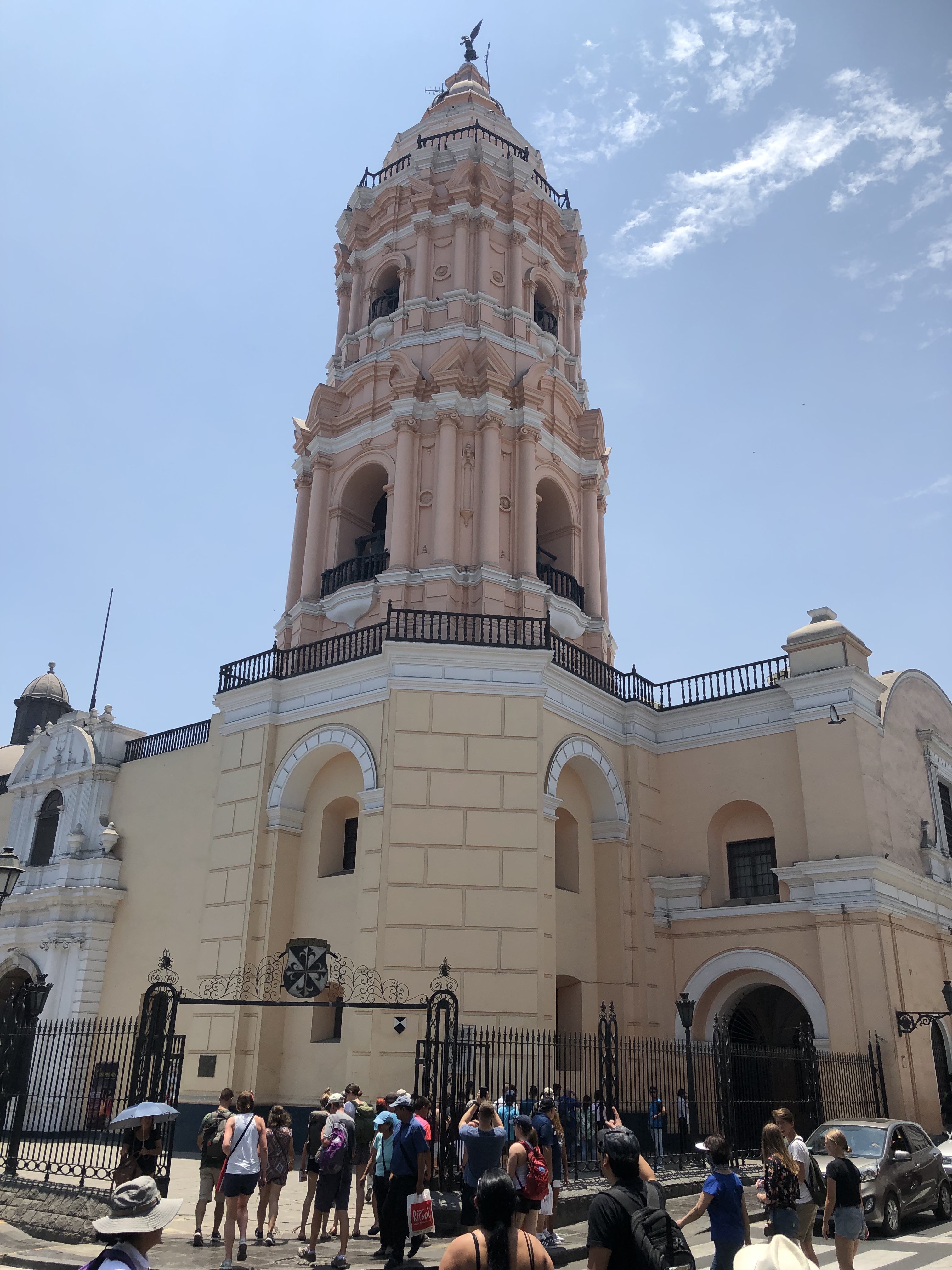
img_2041 img_2032 MVIMG_20190311_180059 IMG_20190311_180151

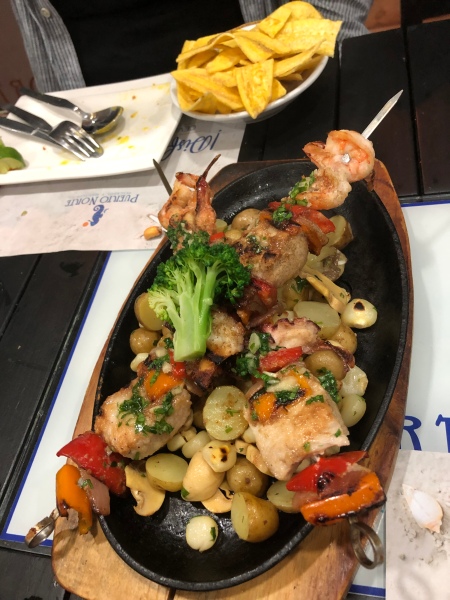
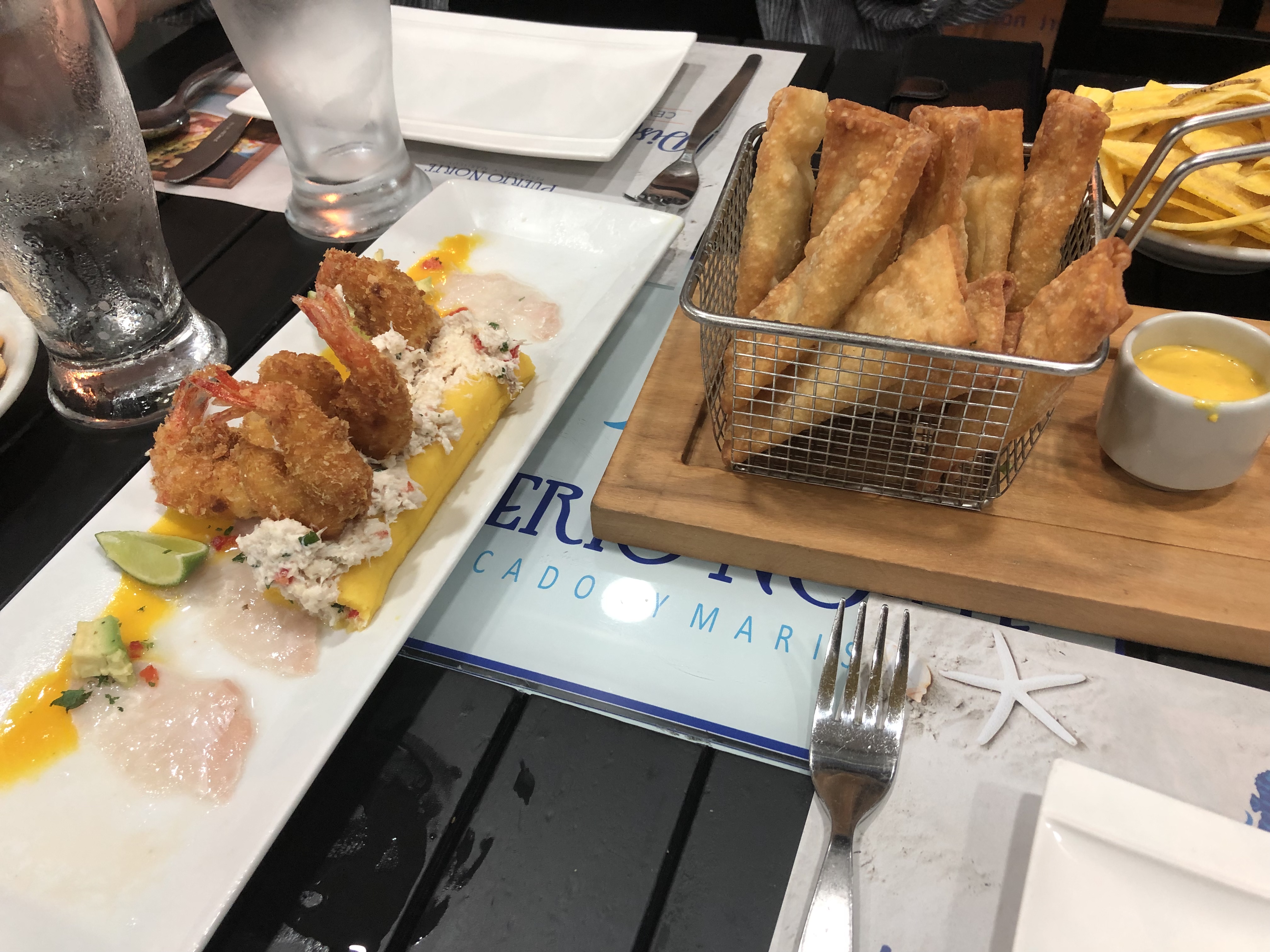
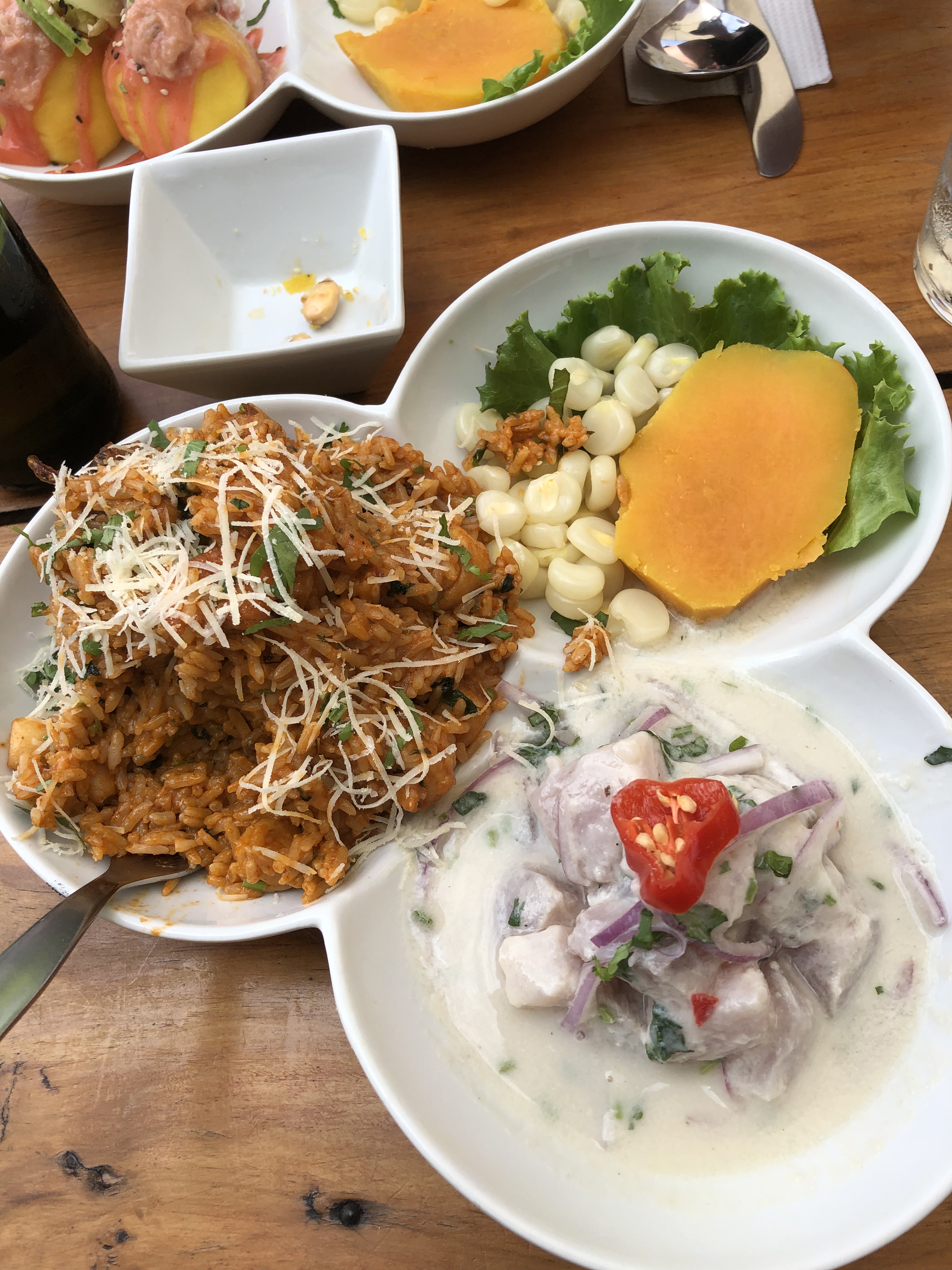
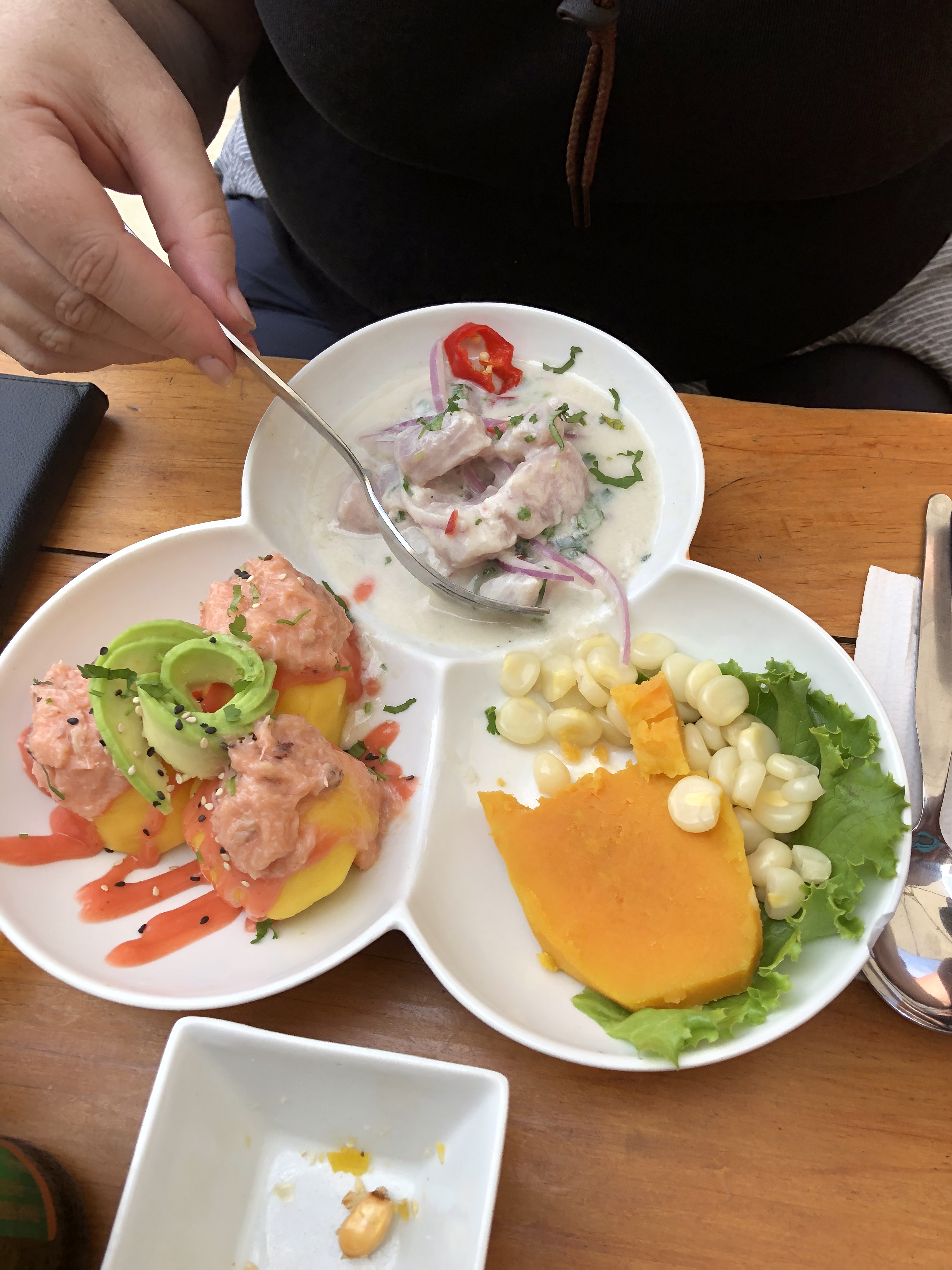
We came across a seafood restaurant that we had seen during our “what is nearby” searching that has become commonplace when we hit a new city…so we gave it a try. And wow…we picked well. The early bit was just basically bar snacks, corn kernels (concha) plantain chips and a mayo and a salsa type dip. All incredibly salty but perfect for ordering more cerveza (beer).

Then came the entrees…mine was (tequenos) a South American version of a wonton, usually made with cheese but this one replaced the cheese with crab, deep fried with an incredible dipping sauce…but despite this, Jill was the clear winner…she got some Panko covered prawns that were set on a tube of polenta, slathered in crab meat, with a sauce that I cannot describe and of course the obligatory cerviche (this one did not have “ass weed” (coriander/cilantro) on it). Then came two seafood skewers set on a bed of tiny potatoes and mushrooms. All this for under $40.

I may like this place after all…

img_2043 img_2046 img_2044

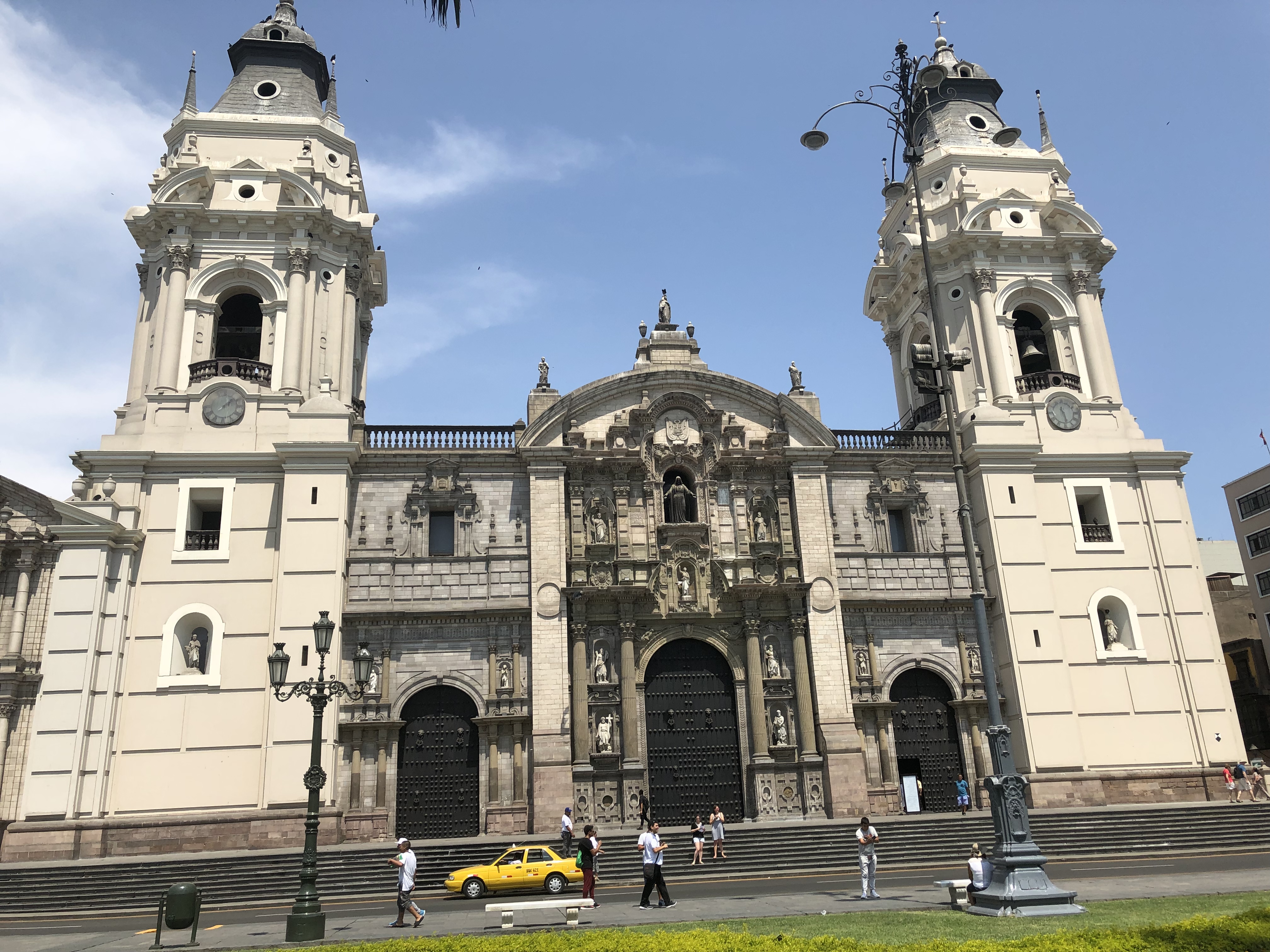
The next day we set off on the walking tour from the hotel. It was atrocious…the guide basically said “hello friends, follow me” and began to walk past everything that looks interesting (without a word)… about 2 kilometres later in the main square he handed us off to another guide and was never seen again. Despite his indifference, the city sights were good and my opinion of Lima softened once again.

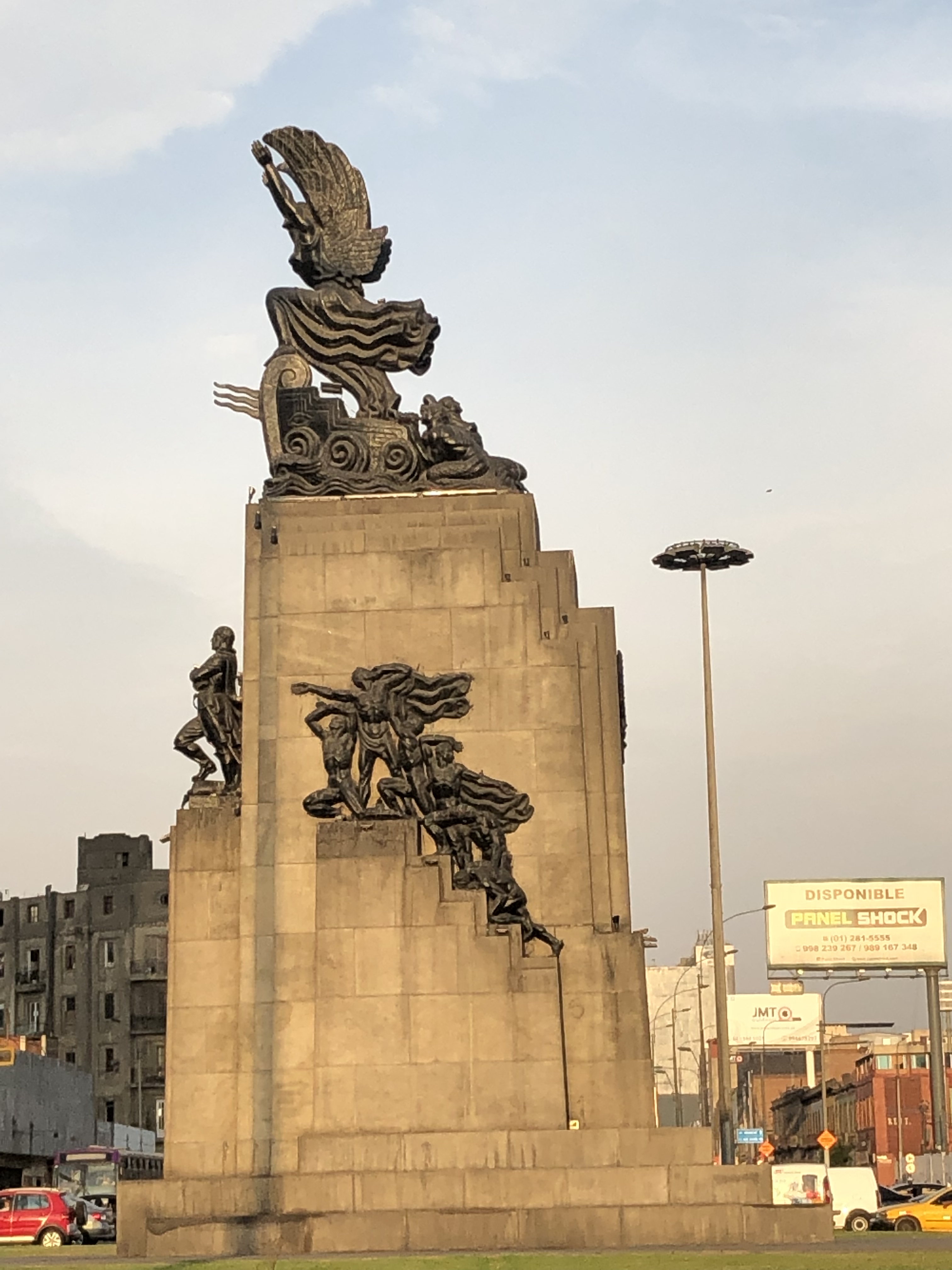
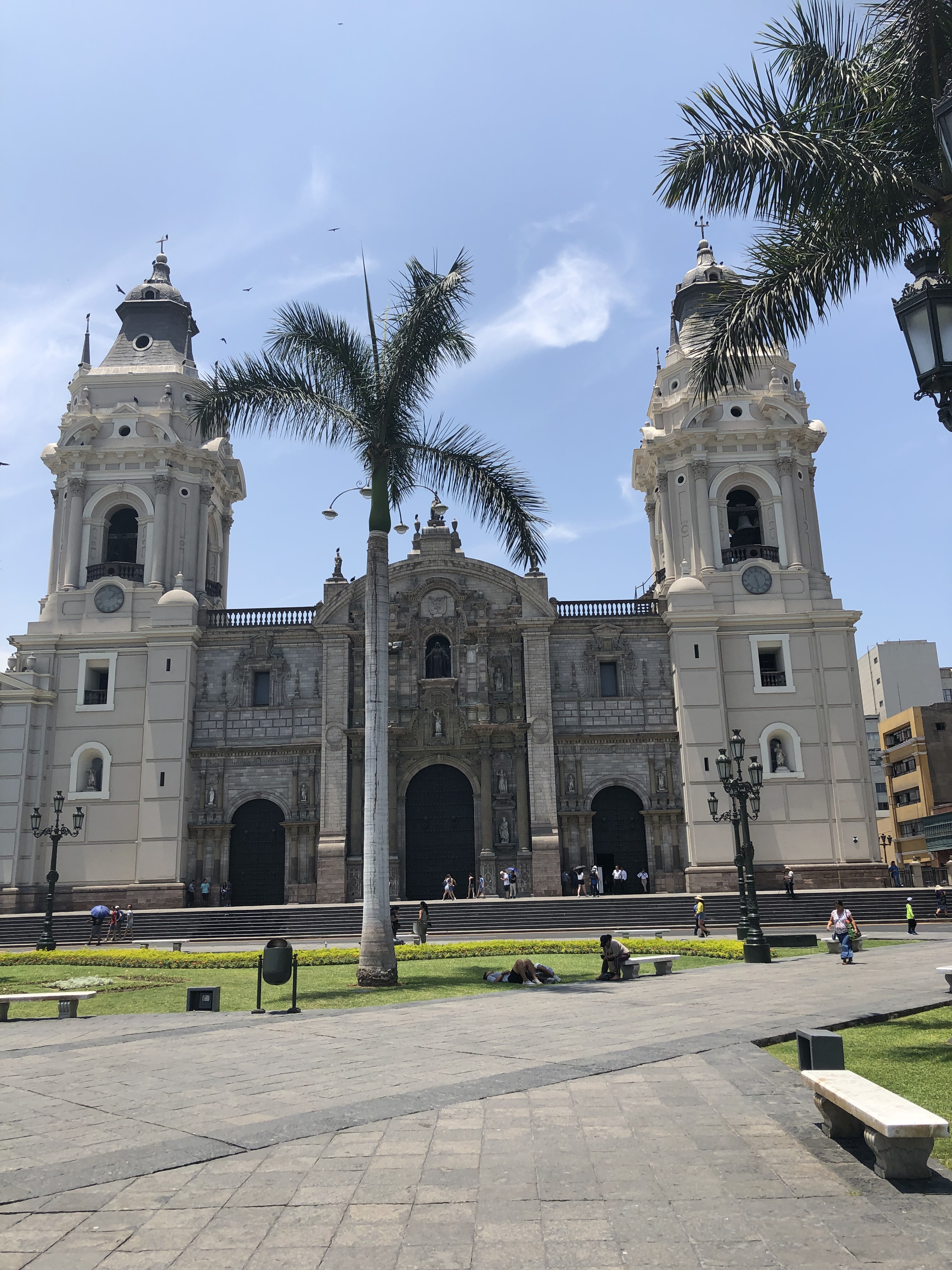
img_2073 img_2071 img_2069 img_2067 img_2066 img_2065 img_2064 img_2054 img_2057 IMG_20190313_114055 img_2051 IMG_20190313_102606 IMG_20190313_102447_1

The piece that I really want to do is the street food. I have heard so much about it and have coveted it as I walked past it, but am yet to dip my toe in the water. Hopefully, today will be the day. The key they tell me to Peruvian street food is that it must be 3B

  • Bueno (good)
  • Bonito (beautiful)
  • Barato (cheap)

I did, as it happens, get to try some street food from two of the many carts around but was mainly foiled by my wife who NEEDED to sit down to eat like a civilised person. And after one of the generous servings (generally with change from a $20) the need to eat any more is both unnecessary and virtually impossible.

Alright…I really quite like this place…

So today became a day all about culture. We went to two museums the National Museum of the Archaeology, Anthropology, and History of Peru and the Larco Museum. They were both excellent and we got a real sense of the history dating back around 12,000 years.

The Larco Museum was another level altogether. The first impression is stunning. It is housed in an 18th century vice-royal building that is covered in bougainvillea that are old and amazing. It is a private museum and was 3 times the price of the first one so we were highly skeptical. But we paid and entered. The intro was a 10 minute video and then the walk began. What immediately strikes you is the absolute quality of the pieces, they are virtually pristine. As you finish the tour through the actual display there is another room off to the side…this is the overflow. It is massive. A virtual warehouse of pre-Colombian artifacts that is seemingly endless. There was enough high quality pieces in the overflow area to stock another 10 museums. It is no wonder that the pieces on display were of such high quality, with such a massive range to choose from.

IMG_20190313_130604 IMG_20190313_134200 IMG_20190313_134210_1 IMG_20190313_134936

On our last day in Lima we finally bit the bullet and headed to Miraflores. It is the main tourist neighbourhood in town, that is described in the tourist blurbs as an upmarket suburb having a western feel. It is clean, safe, beautiful and is full of shops, restaurants and ritzy cafes…all those things that we try to actively avoid.

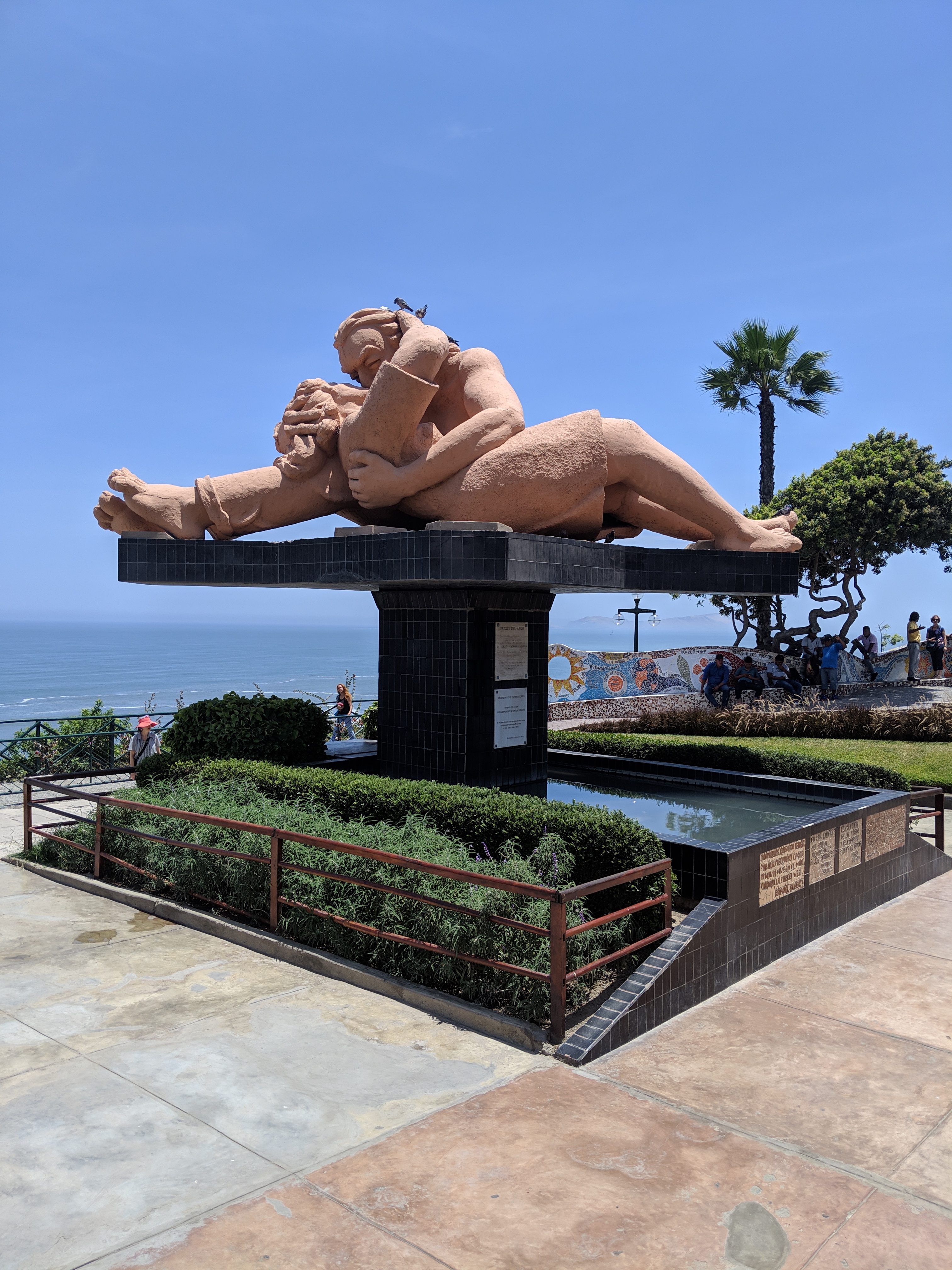
It has the ‘Malecon’ a 6 mile clifftop boardwalk starting at the marina and following the Pacific coastline. It hosts one of the world’s best paragliding spots as people launch themselves off the cliffs and for $US50 you can get strapped to one of the and launch yourself too…we did not do that.

IMG_20190314_125049 IMG_20190314_122729 IMG_20190314_122339 IMG_20190314_122231_1

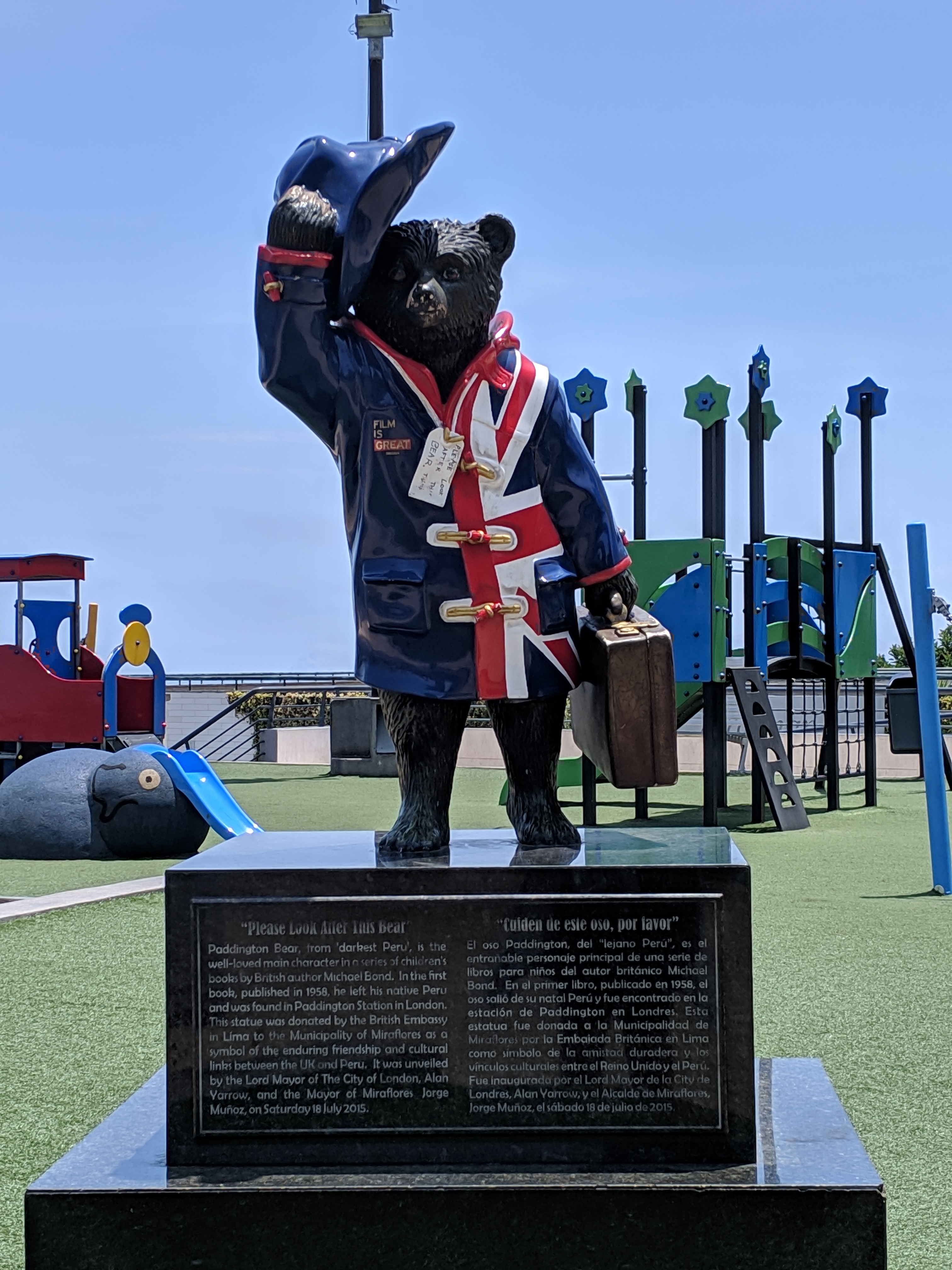
Miraflores was everything that it promised to be…it was just not for us. It was an expat enclave in the heart of Peru. All the usual chain stores and the culinary delights of McDonalds, KFC and Subway washed down by a Starbucks. And all of this for 4-5 times what you would pay in any other neighbourhood. It was pretty and the boardwalk was nice. but we were both so glad that we stayed in the centre of town rather than out here on the coast. On the up side, we did get to see the Pacific ocean from the other side. PS our side is bluer and cleaner. The one thing that surprised us was the sight of a Paddington Bear statue on the top of the cliffs at Miraflores. When you went to the plaque it said from deepest darkest Peru…and it all fell into place.
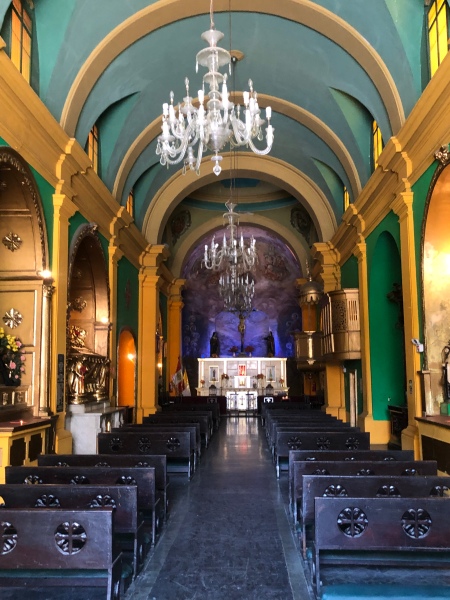
      IMG_20190314_124415

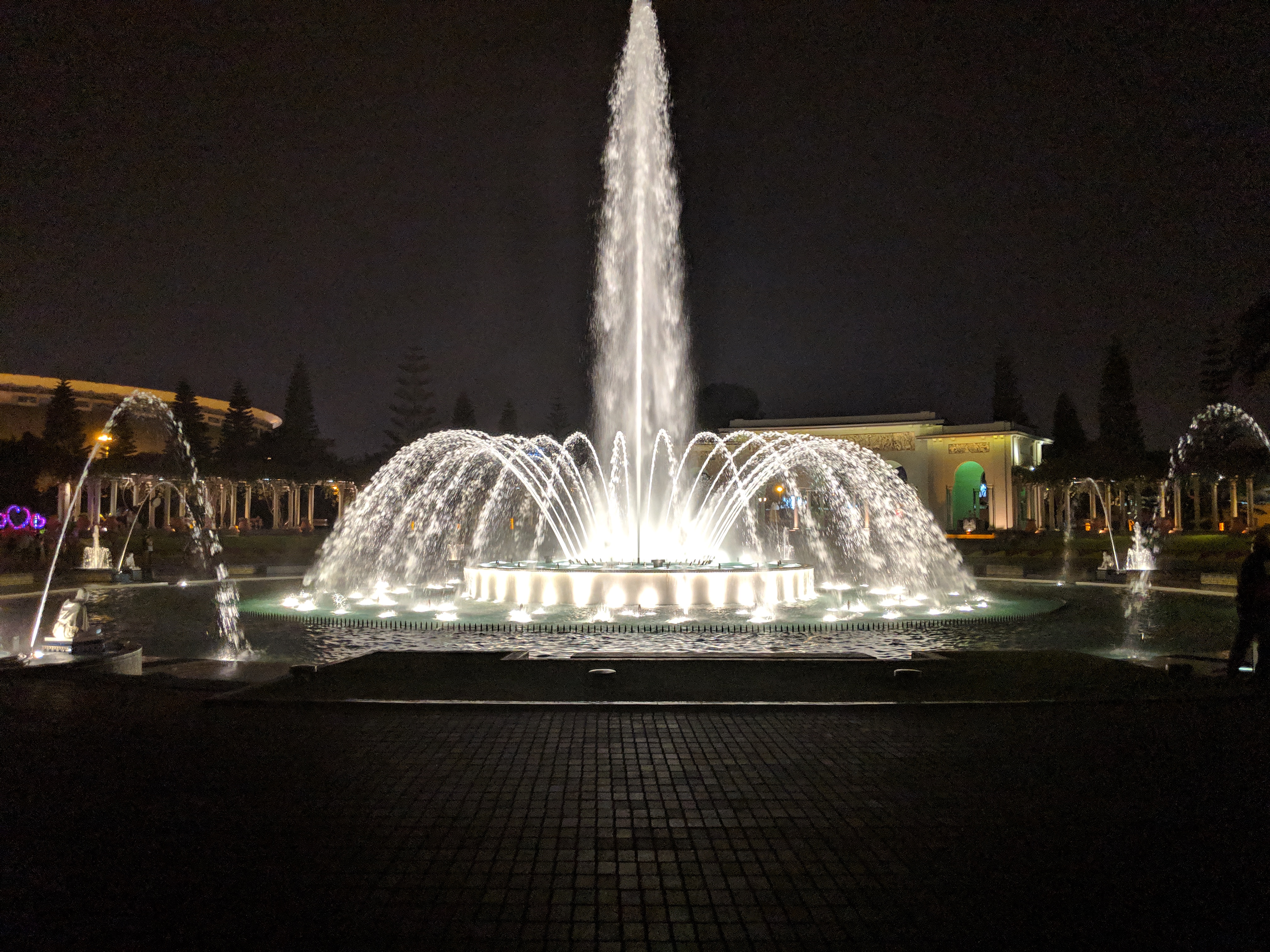
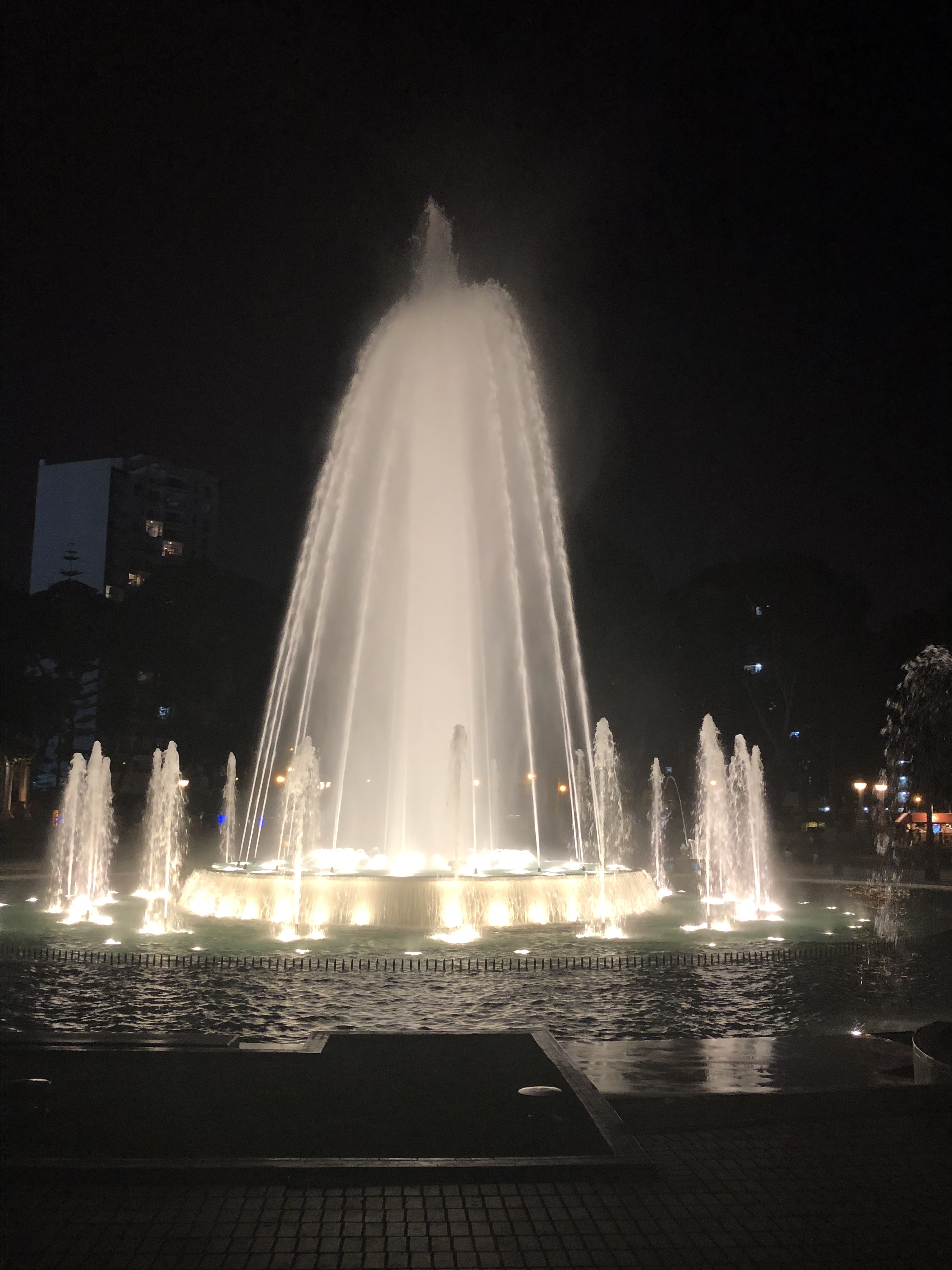
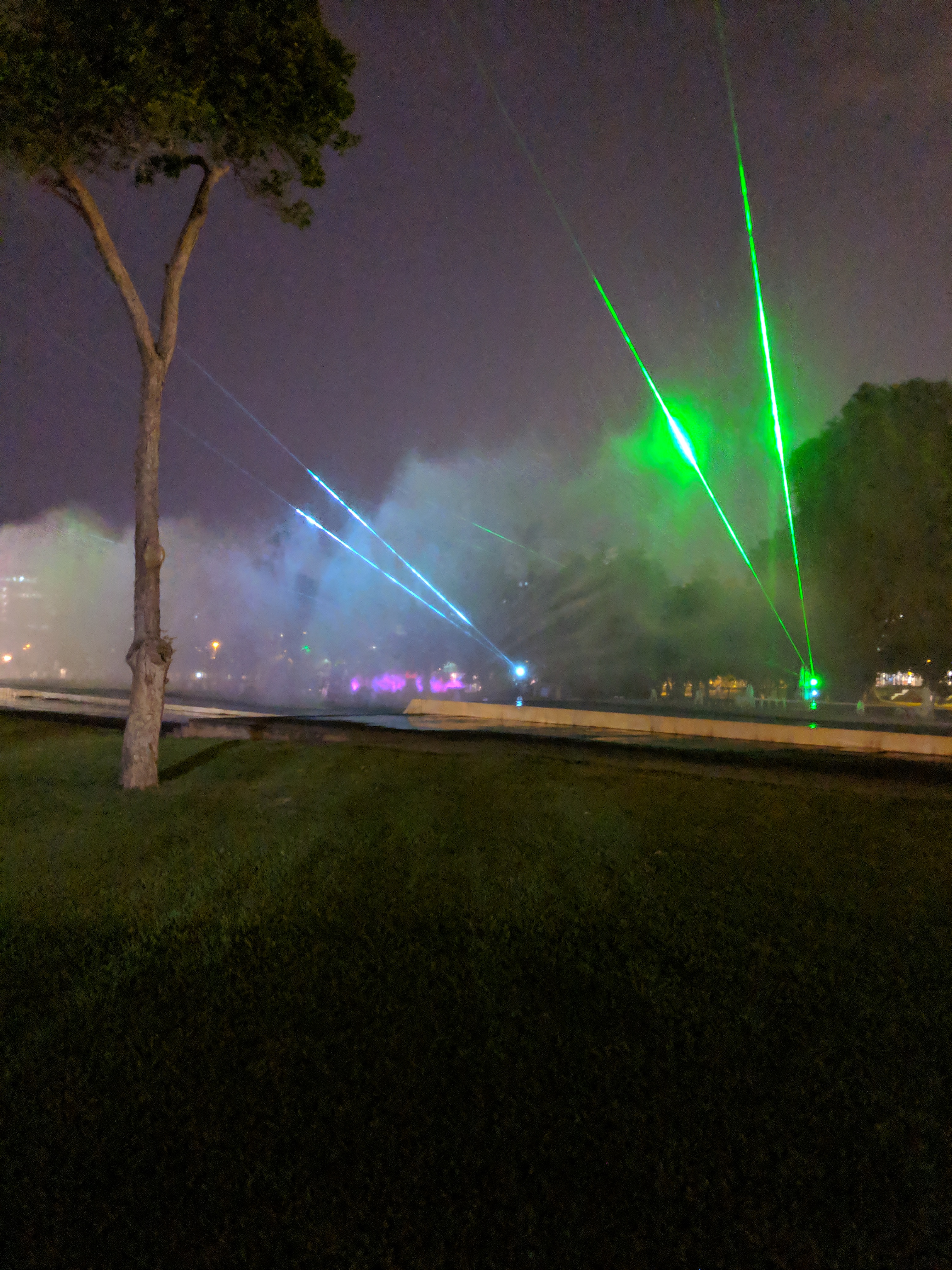
The final thing that we did on our last night was head across the road to the Circuito Magico Del Agua or the water fountain park. It is a light, laser and fountain show that runs almost every night and is quite the sight to see.

IMG_20190314_190740 IMG_20190314_191008 IMG_20190314_191036 img_2115 img_2109 img_2117 IMG_20190314_191755

[wpvideo aIh8Tw23 ]

And because this was only a teaser trip to see if we should comeback we missed the main reason that most people come to Peru…thankfully…Miraflores has big photographic murals on the walls so you can cheat and pretend that you went.

img_2097  img_2098  img_2100

Santiago, Chile

Well we left Sydney at around noon, flew sleeplessly for the next 12 hours to arrive in Chile a bit after noon on the day we left… in notional terms we left at 11:10am to arrive at 12:20 the same day. In actual terms… long haul flights seem tougher now than they did when we were younger.

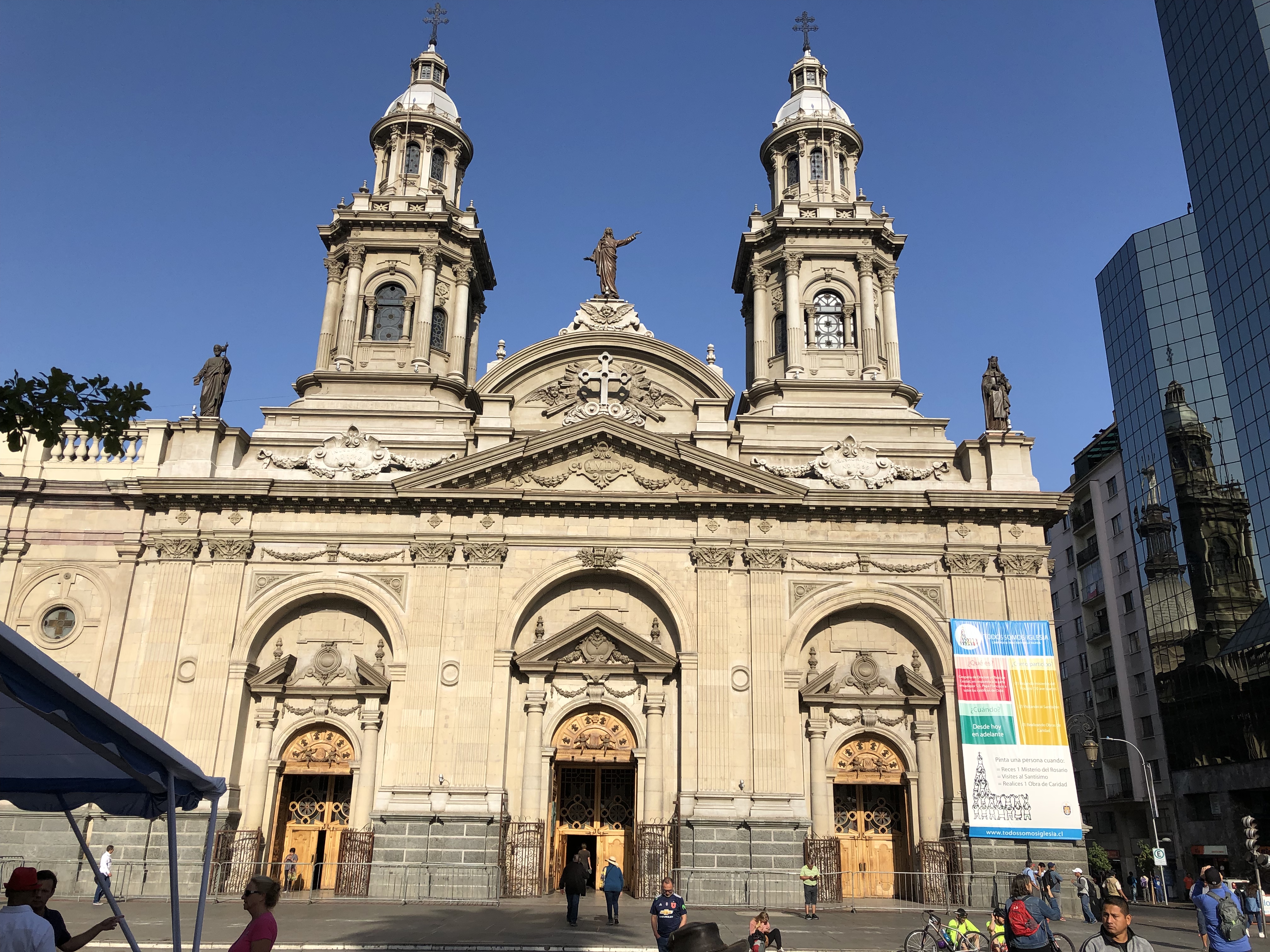
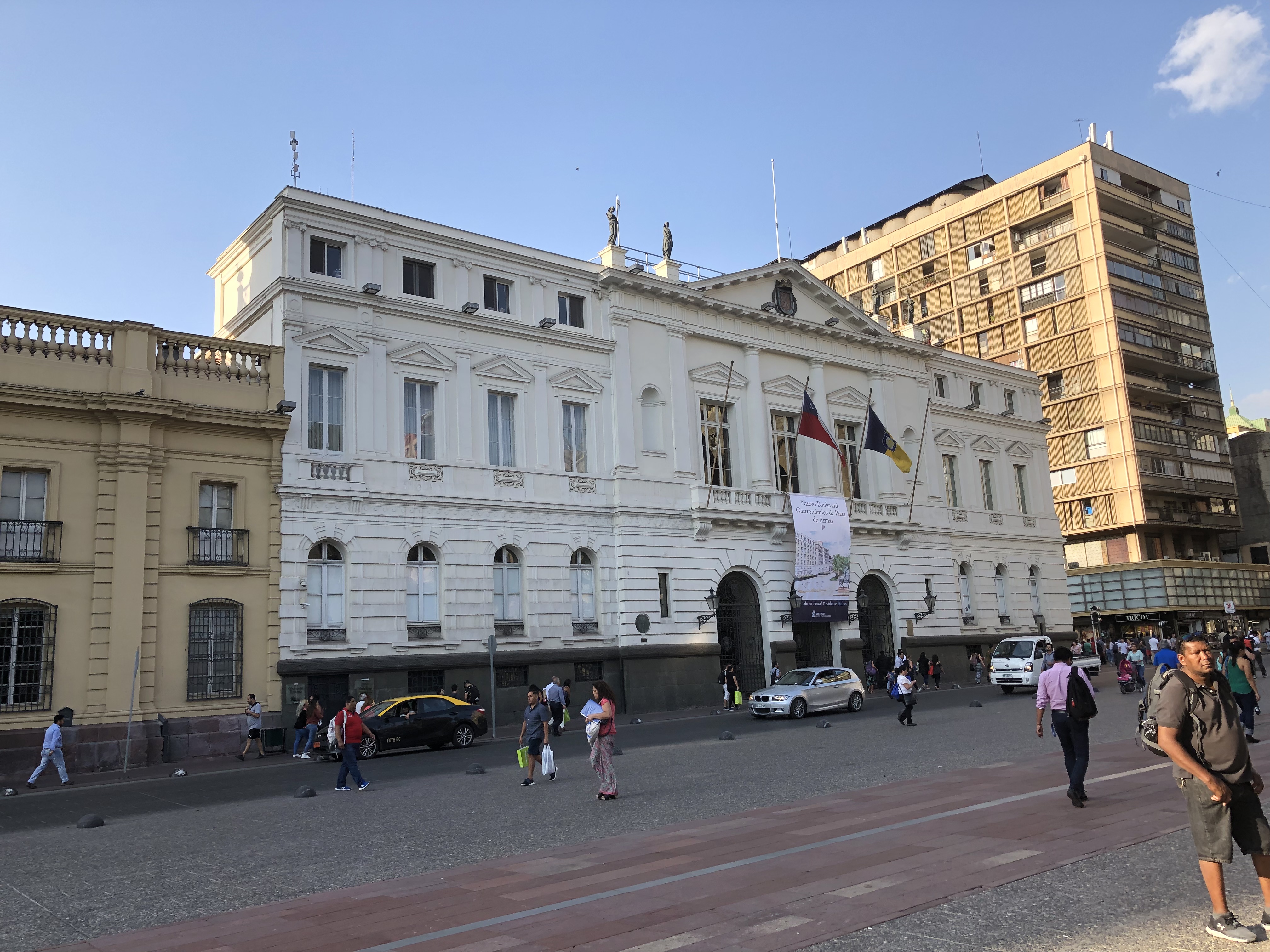
Being both sleep deprived, and in a Spanish country we were happy to have the siesta…so we asked the dude at the hotel who replied “we don’t have that custom here”…well we did…so we crashed for a couple of hours to try and cope with no sleep and a 14 hour time difference. Upon waking we headed along the road to reach Plaza de Armas…this is in essence a large square surrounded by some absolutely stunning buildings.

The town hall, the tourist office (now a museum), and the the post office lined the northern edge of the plaza. As you pan to the left the cathedral (of Santiago de Compostela) is a major feature before the square blurs into shops, cafes and restaurants.

Possibly the most stunning thing for us was the fact that the park was actually used…in fact it was packed at all times of the day. Coming from Australia there are many parks and green spaces but for the most part they are empty. Not in Chile…as we wandered around the city every park bench was full, and the lawns were also crowded. There were preachers, artists, activists, couples, people watchers and dogs…lots of dogs.


IMG_20190310_125204

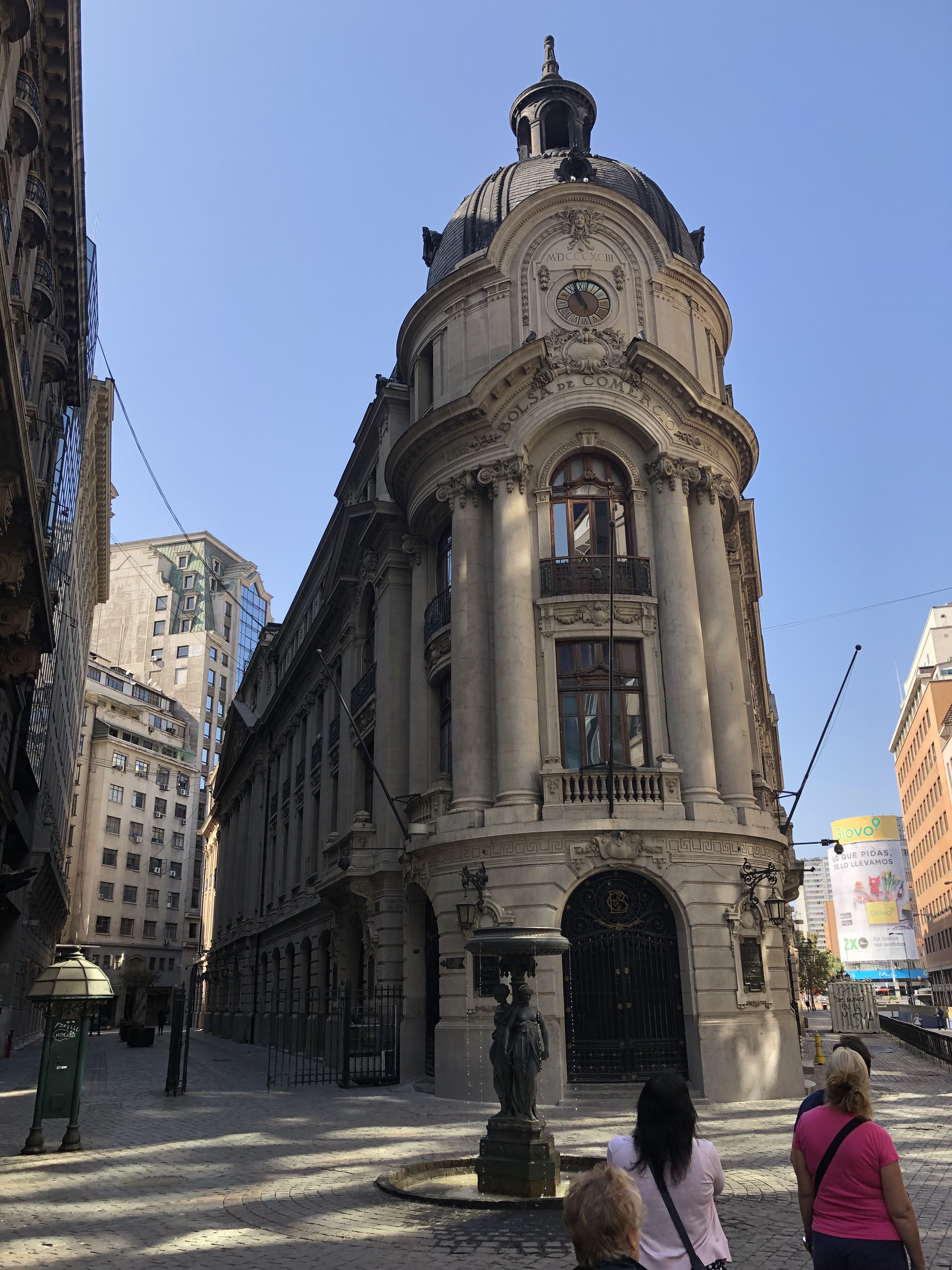
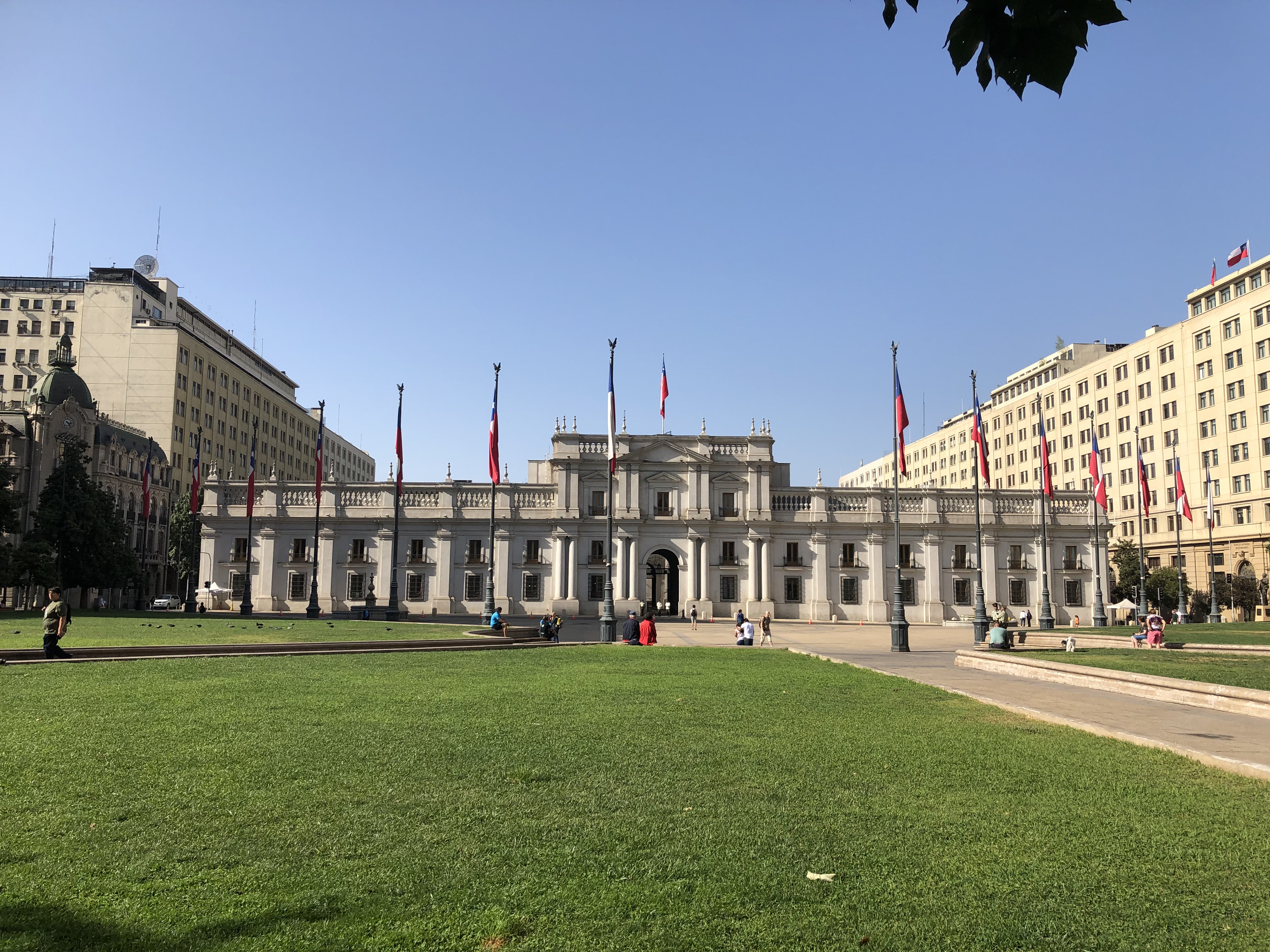
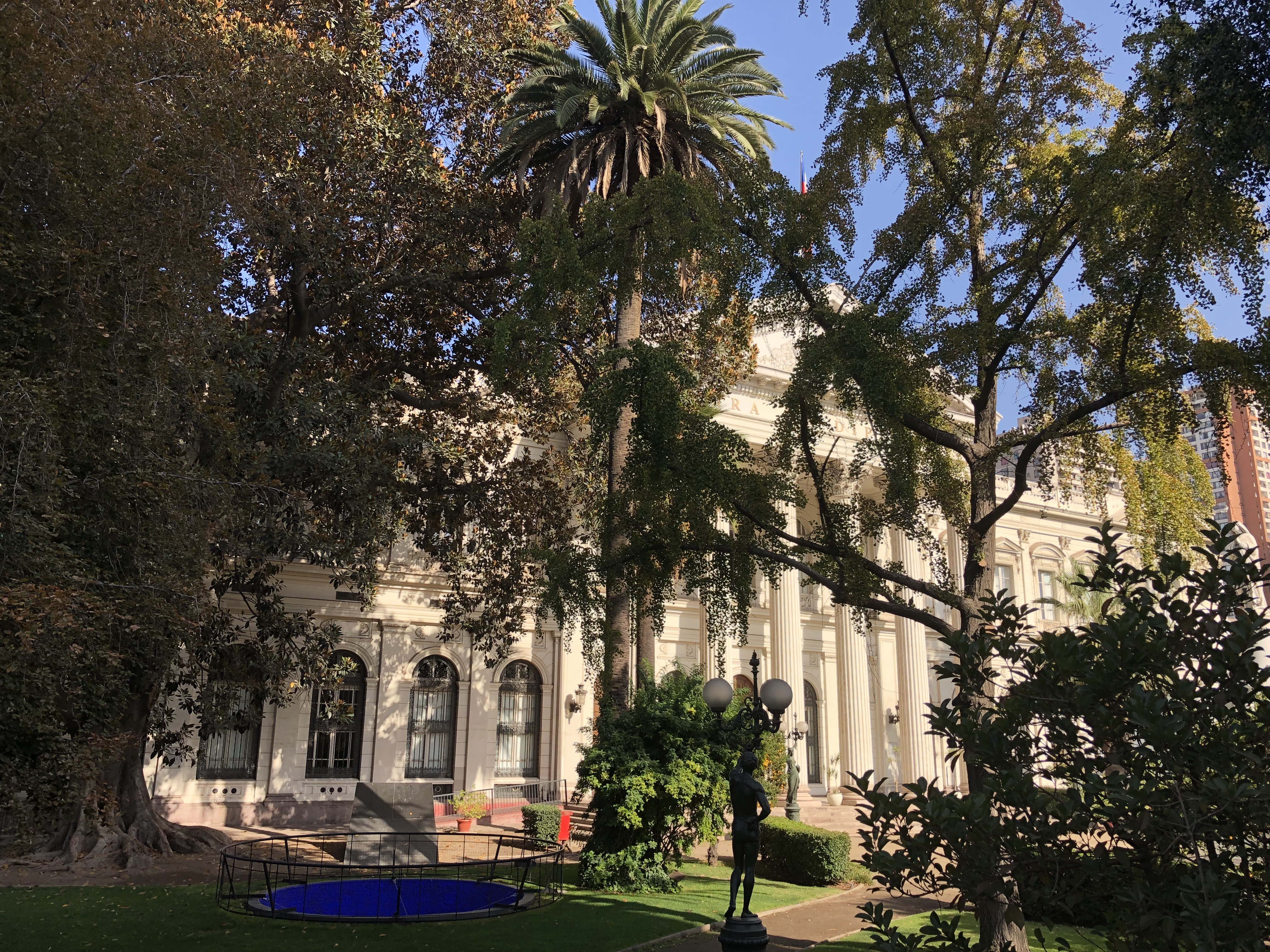
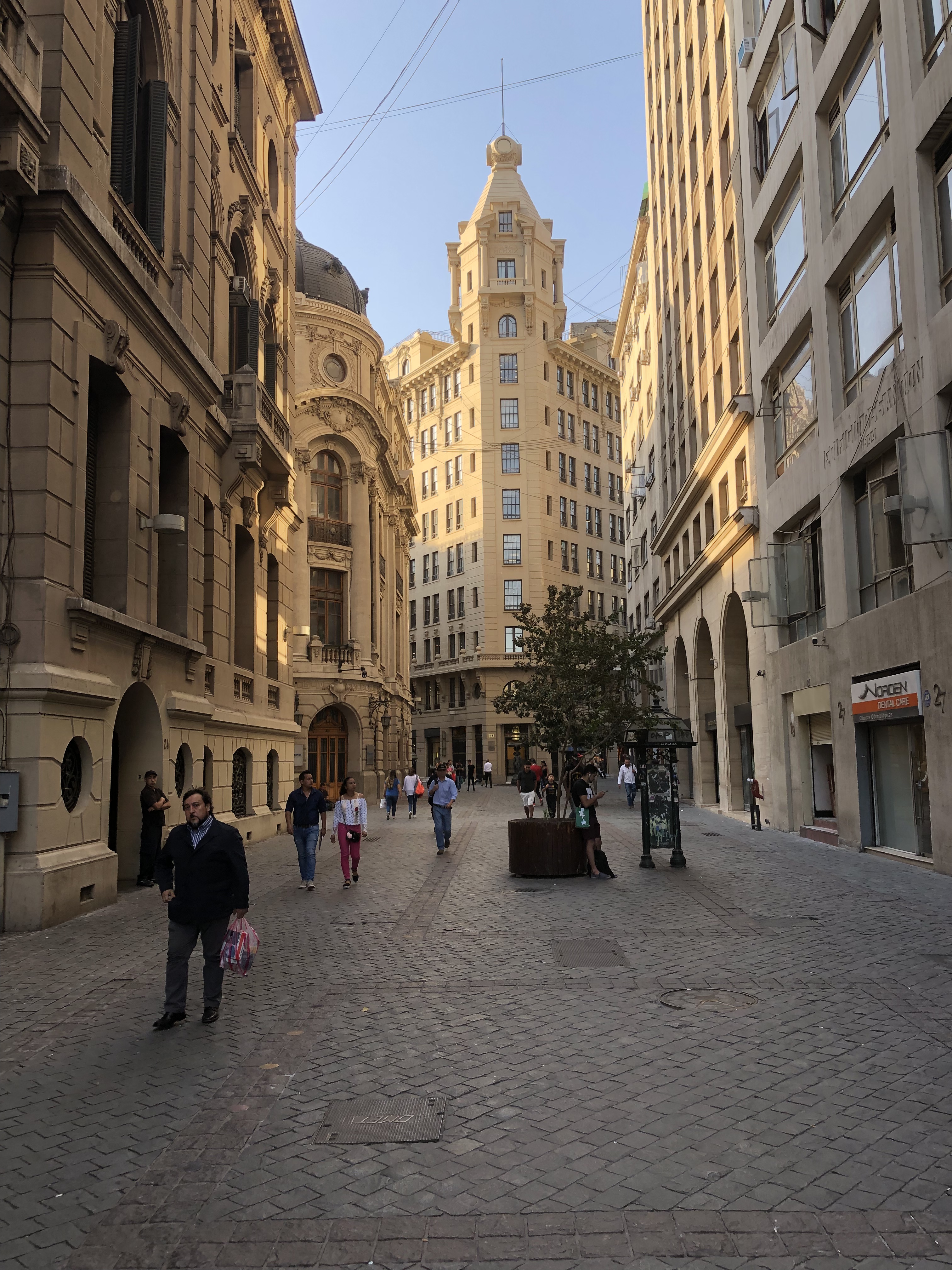
We took the “tip only” walking tour a few days later and got the history behind these and many more local sights of the city.  The walking tour saw us adding the High court, Pre-Colombian Museum, Congress (former), Presidential palace (which was once the mint and now bears the title La Moneda), the stock exchange / financial district and the opera house.

img_1975 MVIMG_20190309_125629_1 MVIMG_20190309_123216 IMG_20190310_132358_1 IMG_20190310_132212

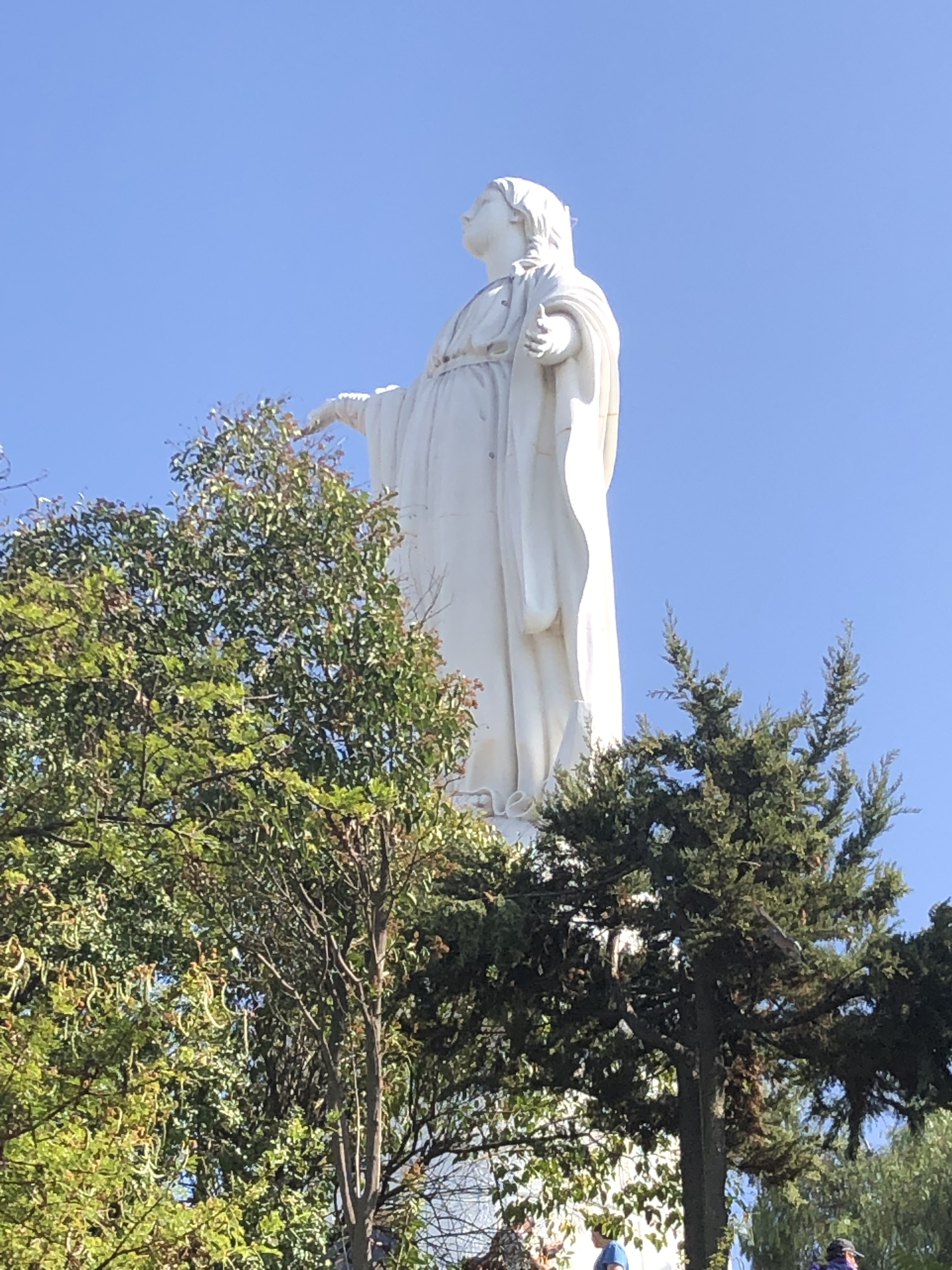
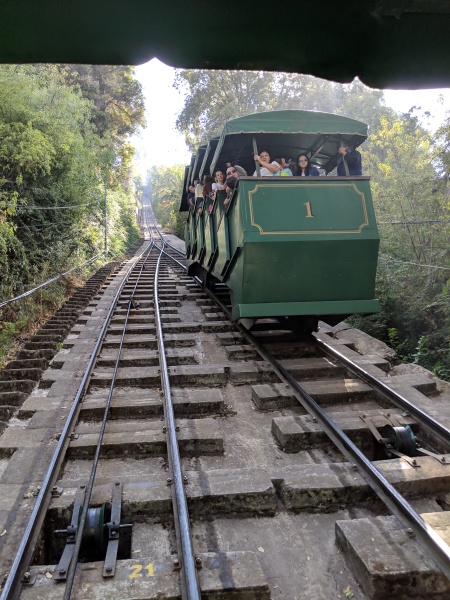
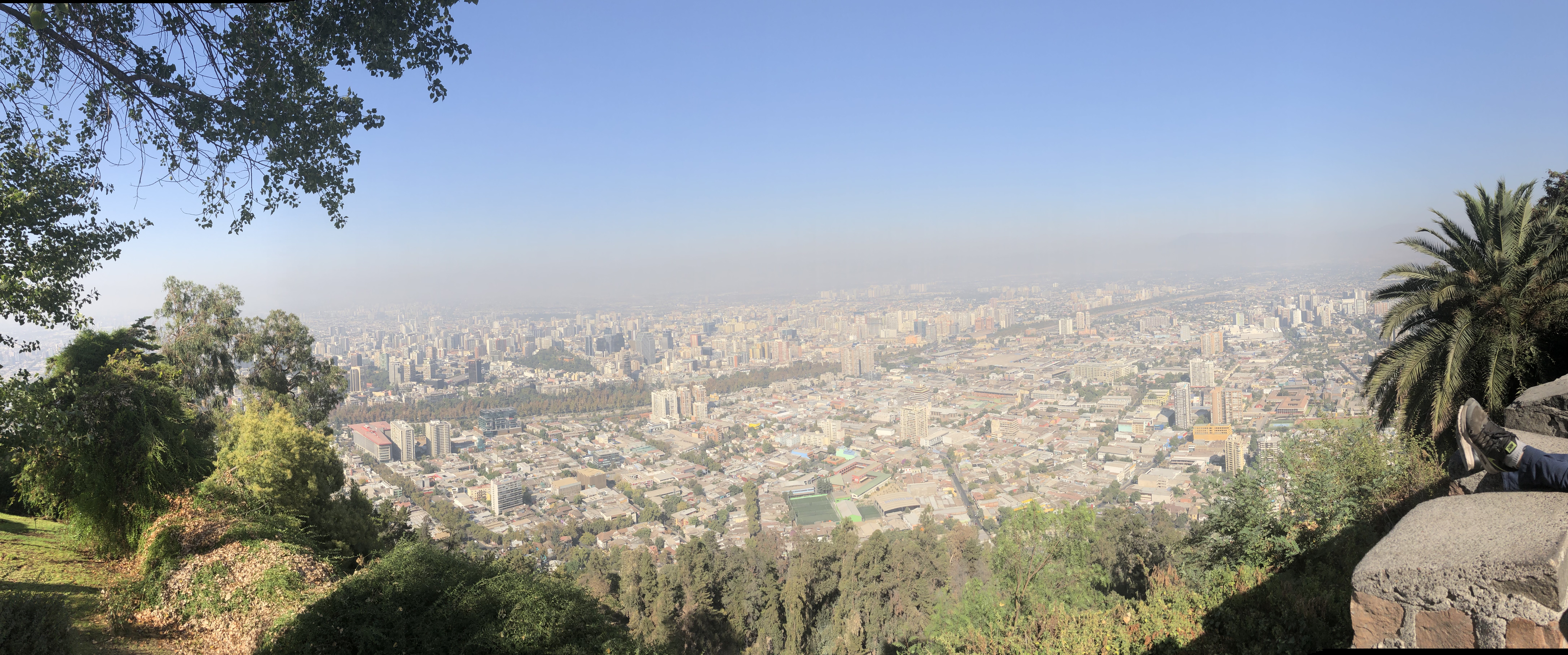
On day two we did the walk across the river to Barrio Bellavista, the bohemian quarter of the city. It is packed with bars, nightclubs and restaurants and the streets are adorned with street art and murals of all shapes and sizes. But we were here to visit San Cristóbal Hill. This is the hill that rises around 300m (984 ft) above the city and is the site a 22 meter statue of the Virgin Mary and the place to get almost panoramic views of the city as it lays nestled among the Andean Mountain Range.

IMG_20190309_112935 MVIMG_20190309_124600_1

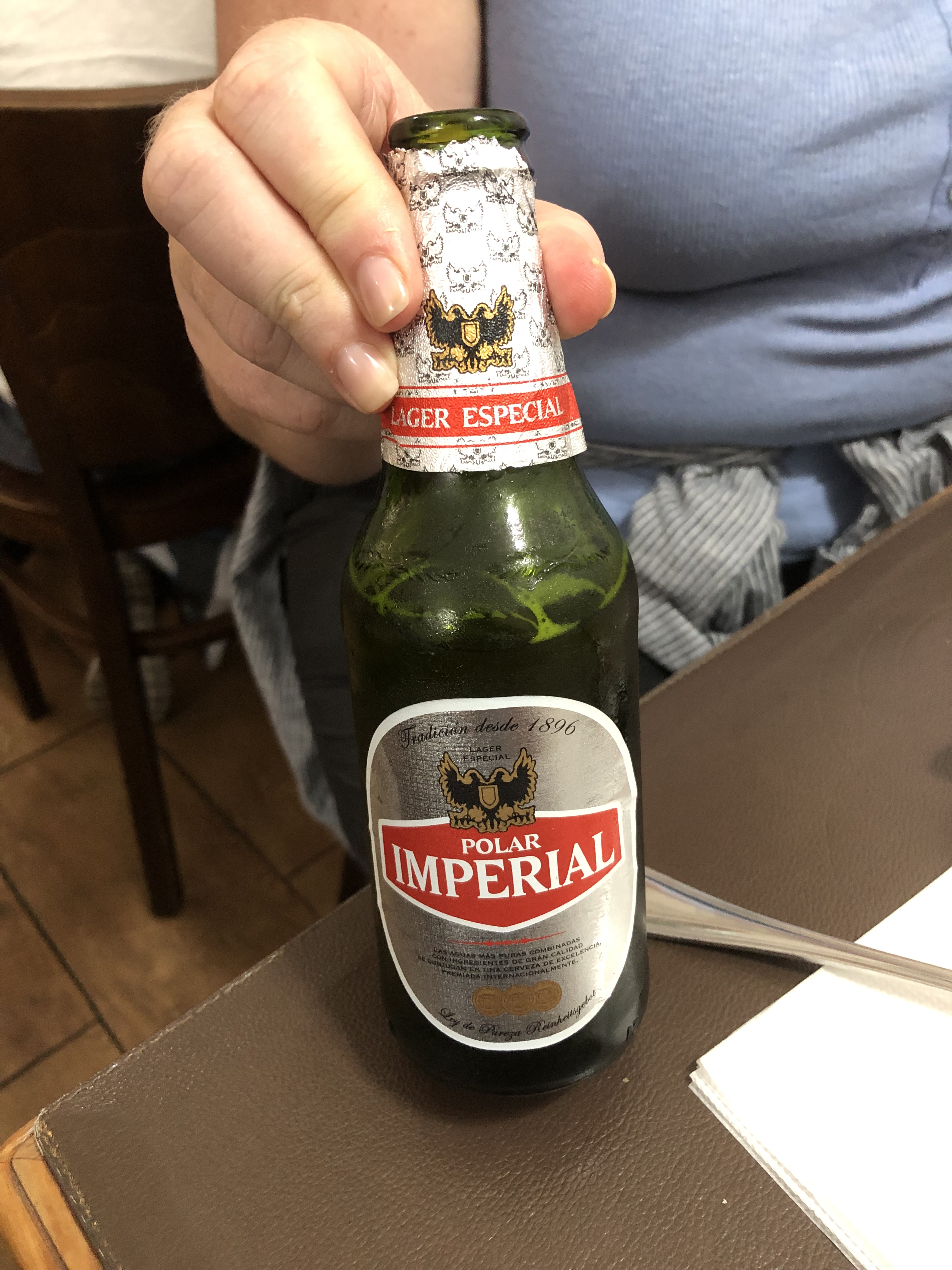
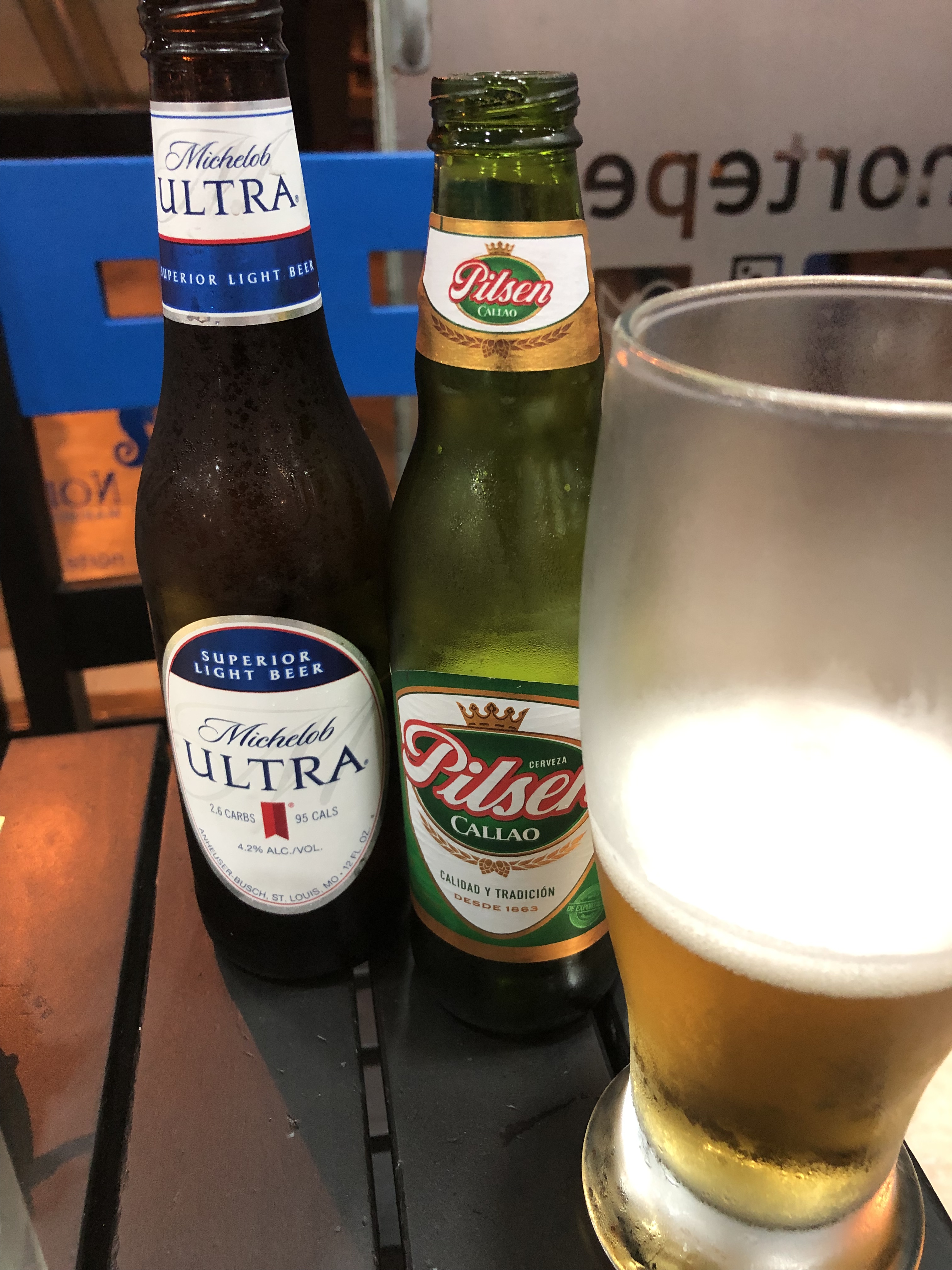
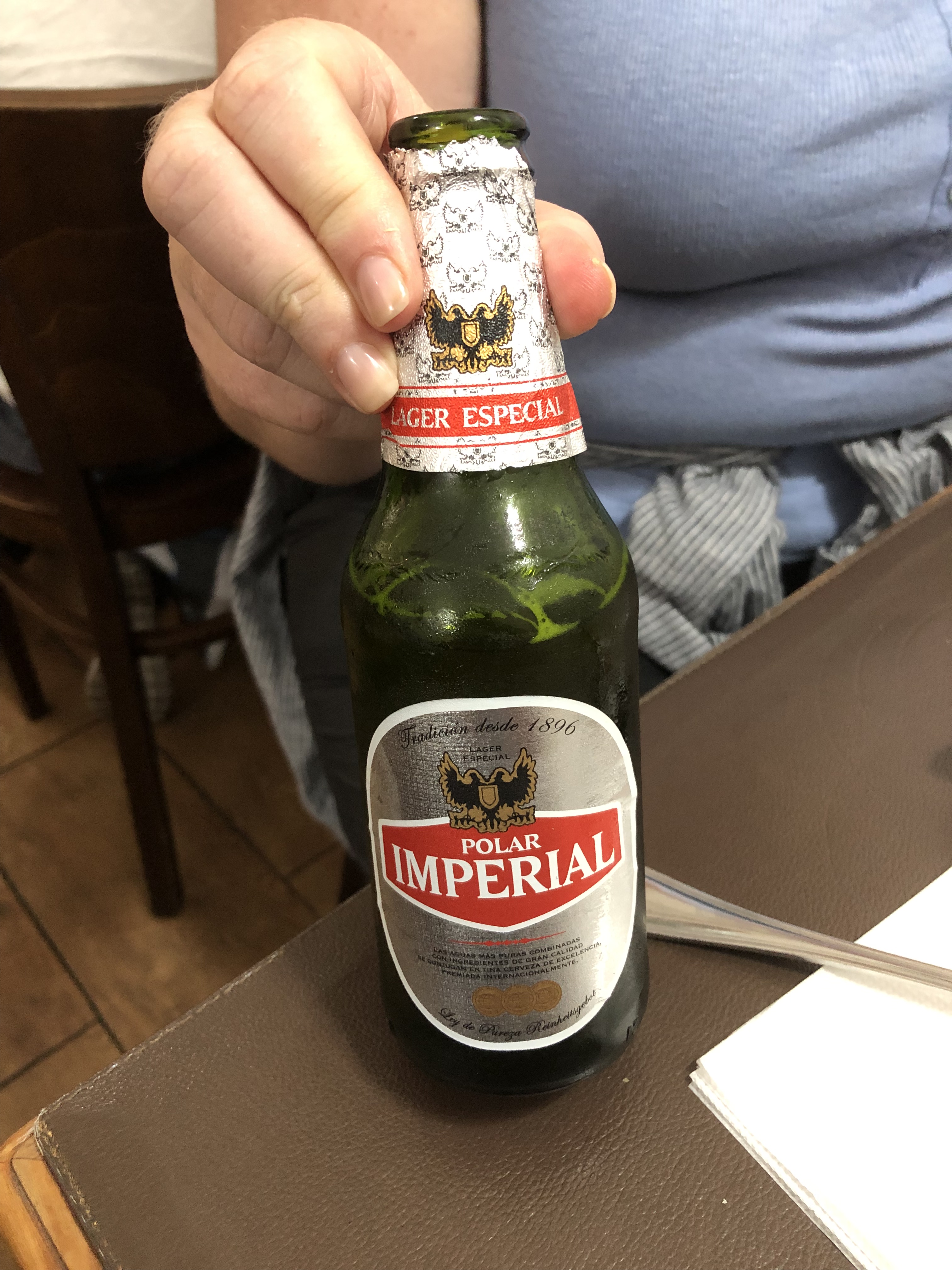
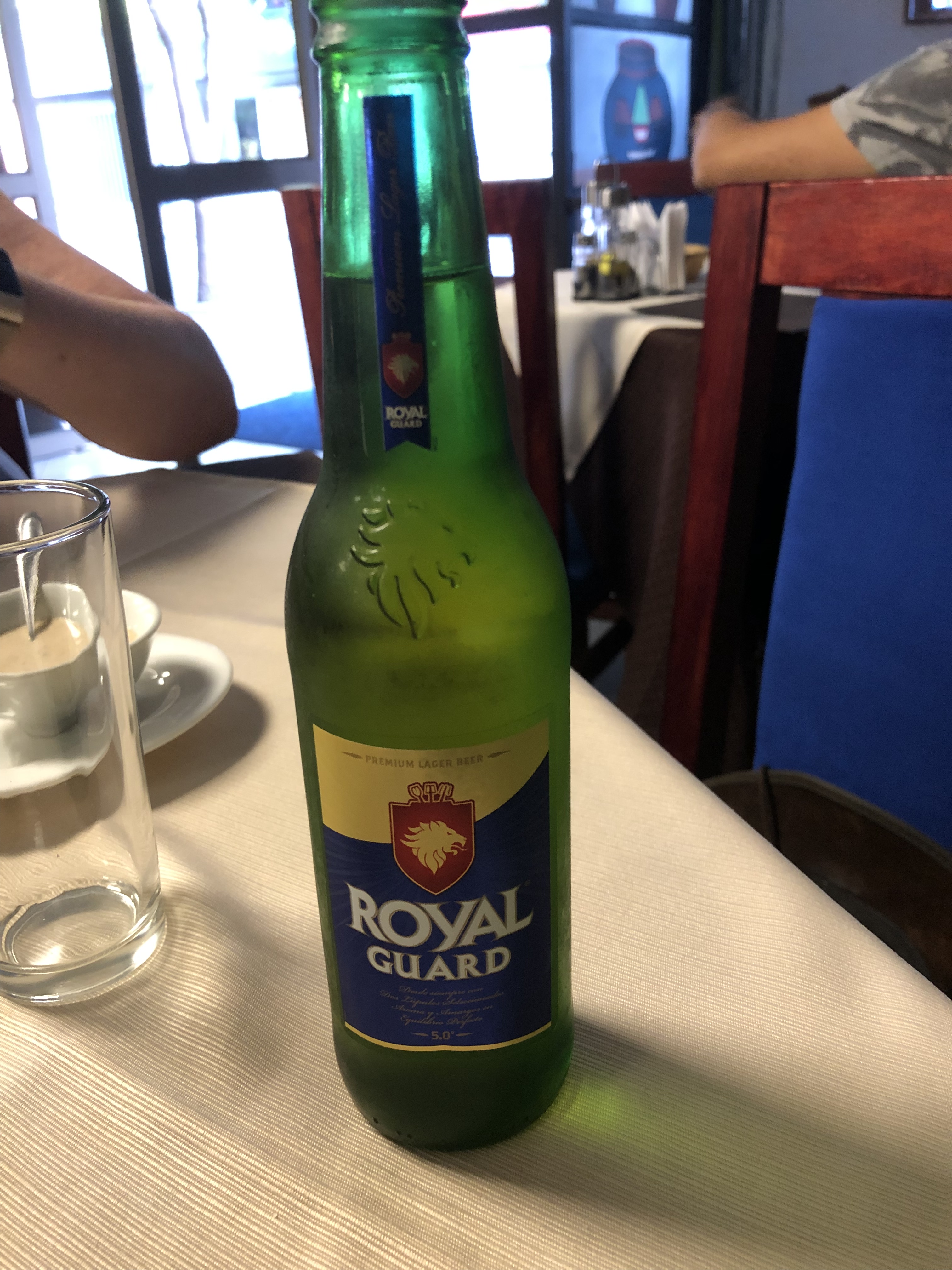
And of course my job was to sample some of the local ales. This is a task that has long since challenged me, but I endure. Add to this some of the fantastic scenery and even a view from the rooftop bar our accommodation.

IMG_20190309_201456 img_2030


Finally moving again…

Well it has been a long time between blogs. The world finally caught up with us and forced us to be adults again. Doing all of those things that you must do to fund the things that you want and need to do. This has seriously curtailed our travels, a fact that I am seriously unhappy about.

Life should not be about the job that you do or the items that you own…it is about the experiences that you have and the people that you share them with. On this front both Jill and I have been blessed.

We returned to Australia after our last big overseas jaunt in debt and jobless…this necessitated a consolidation and some pulling in of our ears. Alas along the way we both found jobs (in completely new industries) that we liked and that it seemed that we were both pretty good at. Add to this the fact that we fell in love with the lifestyle that Perth has to offer and we kind of landed and stayed put.

But things change, as they always do, and we found that life was pulling us in different directions. The beauty of this is that other things were going on in the world that were also fuelling the urgency for us to get back into the travel sooner rather than later. Not least of these was the opening of the borders between the US and Cuba. The thought of Cuba being ruined by hoards of US tourists homogenising the place to oblivion was the trigger to act.

Cuba is a place that has long interested us but the 35+ hour flights/transit to get there has meant that we had continually delayed that trip. Our timeline was extended thanks to the election of Donald Trump who proceeded to wind back all of the border opening moves that Obama tried to bring in. Combine that with my impending turning of 50 and it was time to act.

img_1973Enter into the equation two new players…Jeremy and Claudia. New for you, but long term friends of ours. Jeremy and I first met in our late teens when we played rugby against, and later with, each other. Decades of interactions has seen us both simultaneously and interchangeably embrace the title of “Jimmy Lau Lau”. This title started as some rubbish spoken in a bar has endured for over 30 years. So with our respective birthdays only a month apart…so began the notion of “Jimmy and Jimmy’s Caribbean vacation”.


The domestic legs

So the first leg of this journey began with me flying to the other side of the nation to join my wife. This is one of those understated “things that change”. Work opportunities and changes has seen us living on opposite sides of the country for the preceding 8 months. Still happily married with no intention of anything different, just separated by around 3718 kilometres.

Princess took up a position as the CEO of an aged care company reporting directly to the board of directors. This was a move that she needed to make. Frustrated by being a middle manager and unable to make the improvement changes that she wanted. So if those above you are resistant to change…then be the boss…and she now is.

For my sins I landed a job (primarily) as a writer. It is a government style gig that focuses on the Emergency Management Sector. Specifically…if the world went completely wrong tomorrow (cyclone, flood, fire, storm etc.)…how well would we (as a state) cope…would all of the pieces come together as they should or would we flounder…

And this became my job…and it was awesome…while my main task was to produce a summary document of how prepared we were…the real work was in developing what we actually needed to be able to consider ourselves capable in the face of an emergency. The complexity of this is mind blowingly interesting, and has contributed greatly to us delaying our travels.

Anyway, enough catchup…I flew to meet up with Jill and spent the next 3 days helping her get squared away and ready to travel. Did I mention that she was a CEO…I guess they actually have a lot of things that they are responsible for. So skipping out for a month took some scrambling and organisation.

Once that was done, it was off to Sydney for a few wind-down days with Jeremy and Claudia before things started in earnest.

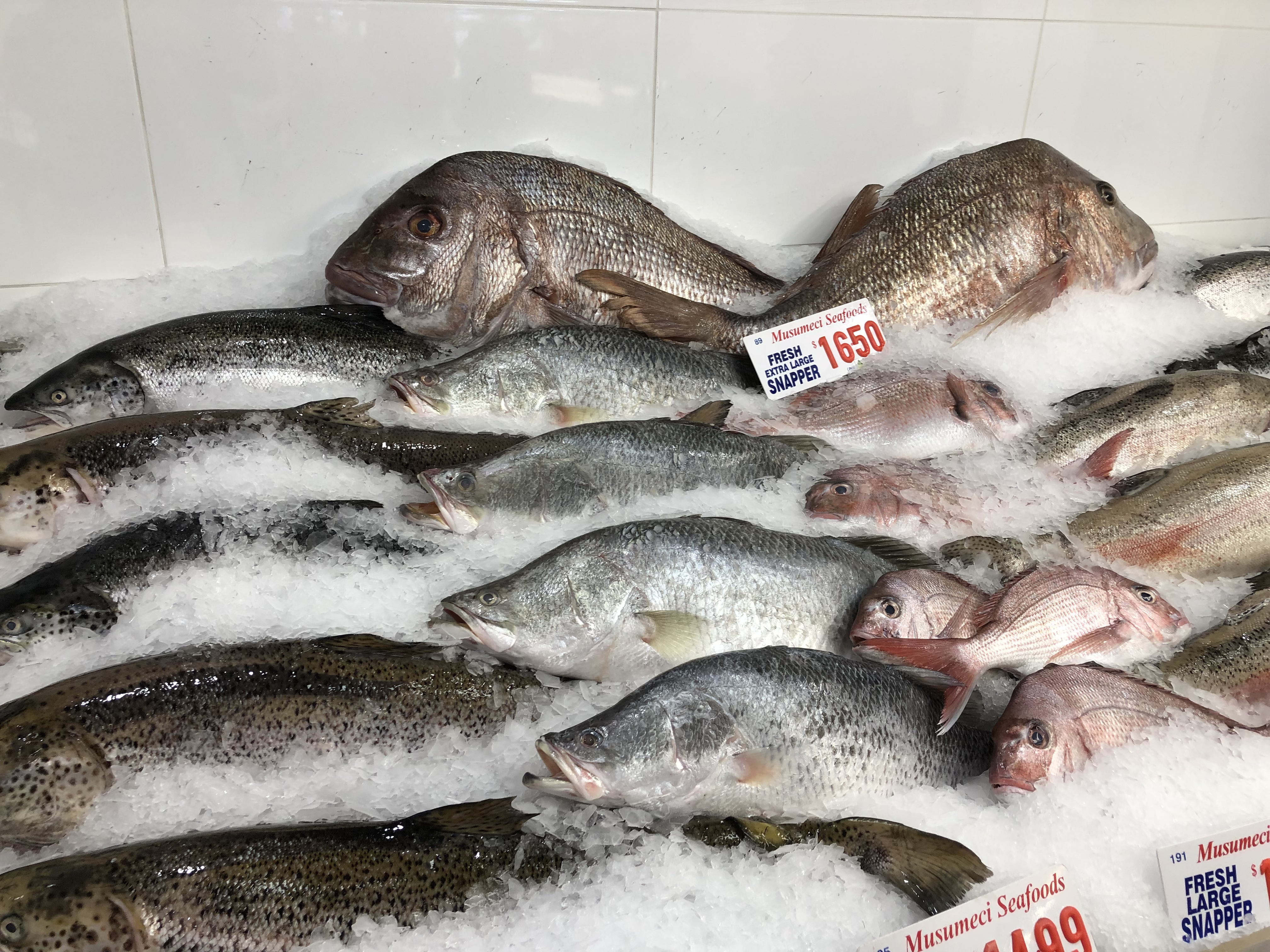
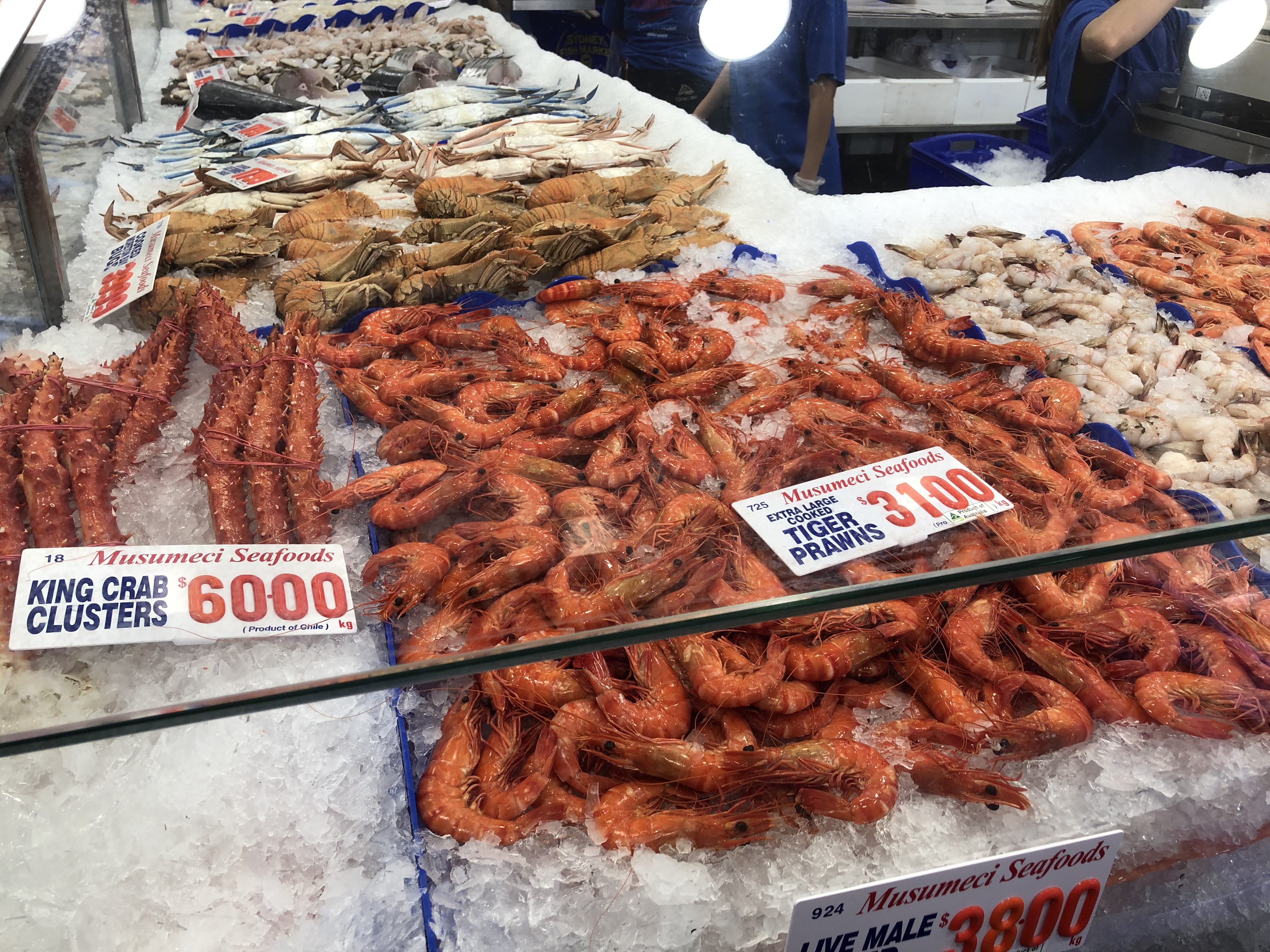
The usual routine kicked in the moment the 4 of us got together…a trip to the Sydney Seafood Markets. This necessitated loading up on tiger prawns, bugs, oysters, and sashimi quality fish. A quick trip to the bakery added fresh baked crusty sourdough. And the fruit shop gave us some avocado and seafood sauce. Jeremy added some homemade chilli sauce to the mix… and we were set.

img_1972-2

Another couple of relaxing days in Sydney and we were out of the work mindset and ready to travel.

Inle Lake

This is a 2017 post and not a 2014 post like most of the others. Having run out of money and going home to be adults and work for a while we saved our pennies and came back to Myanmar. This time to catch the bits we missed and see some of the things that were under construction or renovation on the first trip through. And the big ticket item that we missed was Inle Lake.

Jill was looking for a bit of pampering on this leg so the accommodation was significantly more extravagant than we normally use. We stayed at the Novotel and to be fair…it was both very nice and well priced for what it was. As usual in a western hotel in Asia…the food sucked. The buffet breakfast was good but the a-la-carte fusion thing just never works and this was no exception.  But it had (as I have been told) the bathtub to die for, a swim up pool and views across the lake that really shone at around sunset.

23131985_10157405592993084_3768830559614561937_n 23032587_10157405592433084_7471585188894579123_n IMG_1489[1] IMG_20171104_170638 IMG_20171103_165229 IMG_20171103_171537

The lake itself is about 26 km long and 10 km wide at the widest point. And Dr Google tells me that there are about thirty species of snails and fish that can be found nowhere else in the world. But for most of us it is just pretty. The commuting by longboat water taxis makes for an interesting time and there is so much to see and do around the area. That said, it will cost you a lot of money to do it (especially by Myanmar standards).

IMG_1483 IMG_1475  IMG_20171104_102941

Everything here is more expensive. The taxis, the boats, the food, the beer…everything. And this is without even factoring in the Novotel factor (which adds extra onto the bill if  they find out where you are staying). But it is pretty and is certainly worth the  trip.

A major factor of interest around Inle Lake is the rolling markets. The markets alternate on a five day cycle between the little townships and villages along the shore (Heho, Nyaungshwe, Taunggyi, Minethauk, Shwenyaung). This means that every morning you can head off by boat to a new township and see a different market. There is the obvious tourist junk that is at every one of the markets, but there is also a local flavour to each of them and each one is just a little bit different.

IMG_1432 IMG_20171104_112429 IMG_20171106_092143

The other thing of note with the rolling markets is the sheer beauty of taking  the boat rides to get to them. Needless to say over the years we have been to any number of floating villages. For the most part these have  been tourist traps designed to part you from your dollars. But here on Inle lake, they are almost all floating villages. It is not a gimmick it is the lifestyle…and it is charming. So the boat rides to the various markets see you riding along past ramshackle residences and shops all perched on stumps above the water.

[wpvideo ZQriB72C]

Another major attraction of coming to the lake is to meet with the Kayan people of Myanmar. For those  that do not know they are the group that place brass coils around their neck. Most often they have been seen on the Thailand border (having fled the former fighting) the Kayan people have largely migrated back closer to their original home base. They have been referred to in any number of ways, that not surprisingly they find  somewhat offensive. Names like giraffe women and long neck women are less than appreciated. They are however  more  than comfortable being referred to as the ladies with the long elegant necks.

23231664_10157409616198084_8572453547276053962_n 23032770_10157409617238084_1633870651981261245_n 23131675_10157409616043084_7614800796353443782_n

Another unique thing about the lake is the local fishermen and their rowing style. They perch on the edge of these insanely narrow and shallow boats while casting and retrieving  fishing nets and simultaneously rowing the boat using their legs. This is a sight not to be missed and for us mere mortals, a zen like demonstration of both concentration and balance. The fishermen come in two varieties…the actual fishermen who use modern nets and the touristy ones that use bamboo nets as perhaps was done once upon a time.  The second type just do it to pose for tourist photos and stage capturing fish by throwing them into their nets after the fact. Both types are highly entertaining.

IMG_20171104_103458 IMG_1357  IMG_20171104_103519

IMG_1481 IMG_1482 IMG_20171107_083919-ANIMATION

And lets not be silly…it is Myanmar so there is no shortage of stupas, pagodas, temples and monasteries to go to. The lake is littered with them. You can cruise the lake stopping at any one that you like.

IMG_20171104_135400 IMG_20171104_135628 IMG_20171104_113200 IMG_20171104_115059 IMG_1465 IMG_1428

And other than this…almost everything that you can imagine happens on the water. The weeds are harvested manually and are used for fertiliser for crops. The lake itself is turned into a massive hydroponic tomato cropping area.  The lake bed is dredged manually for dirt and building materials, the banks are used to distil rice down into what passes for the local hooch. In short there are so very many things to see and do on Inle Lake.

IMG_20171104_104107 IMG_20171106_115130 IMG_1450

But the most impressive of all…is the people. This is as true for Inle Lake as it has been throughout Myanmar. It is impossible to walk down the street without being met with a huge smile and somebody greeting you with the local “Mingalabar”.  This is even more evident with the little ones. Shy kids (generally) under the age of 4 will be beaming and waving as you go past. They will try a ‘hello’ if they are old enough or they will merely beam a huge smile and wave.

IMG_1386 IMG_1406 IMG_1389

And lastly, as we always do…we eat local. We ignore the hotels and we find dodgy little shacks to eat at.  Our options this time around were a little limited as we were in an out of the way location. But a short 2km walk away was the long jetty at Maing Thauk. This is the location that you could come to to get a boat for the day if you did not want to add  the ‘Novotel’ premium to your price. But it is also the location of some local fare that is just delicious. The jetty itself is quite the tourist  attraction and makes for some stunning sunset photographs along with some very tense moments in the dark as you wander along in the pitch blackness hoping not to hear a big splash meaning that Jill or I has hit the water.

IMG_20171108_174422 IMG_20171103_140310 IMG_20171108_174202

But we didn’t…and we found about 4 different restaurants along the jetty serving local food, cold beer and heapings of smiles and hospitality. Plates give way to lily leaves and the local salads come to the fore. The local avocados are the smoothest and creamiest that I have ever tasted and the other offerings that they put forward are tough to beat. And needless to say, for a village on the lake…they know how to cook a really good fish. We tried many incantations of the fish and they were magnificent.

IMG_1423 IMG_20171103_135921

So if you are a traveller looking for a place to come, Inle Lake should be high on a list. It is on the pricey side (activities) for those on a tight budget but it is definitely worth a look…if you can swing 5-6 days here you will get to sample each of the townships and the markets. The big hotels are well priced  by western standards (half to one third of back home) for the rooms but comparable on the food and drinks.


We live in WA now…

So we are here…in Perth…it has been a monster journey and we have seen and done so very much along the way.  Before we get into the world of Perth we will have a little summary of what it is we have done in the preceding 18 months…

We both left well paying jobs in Canberra to share our adventure together.

Overseas – We ran away offshore and spent 433 days backpacking through Asia. Hit 13 different countries, slept in 121 different cities and visited many more. We saw sights, climbed mountains, and sampled the local foods, beverages and culture at every step of the way.

IMG_0009

Australia – We bought a new car, drove almost the full height north to south and did drive the full width east to west. We saw family and friends and even tried living in a tiny remote town. All up we drove over 14,000 kms in a 8-9 week window and that included a 3-5 week block of time in the middle where we went nowhere.

normanton to perth

We got back to Australia with nothing but each other and debts… within a reasonably short period of time…we both found well paying jobs again, have cleared our debts and have racked up a wide variety of experiences along the way. I guess the moral of this story, for us at least, is that it is very possible to run away, give up all semblance of our former lives and careers and leave everything behind. Then once you have sampled sections of the globe you can come back, settle in a new place, both start new careers, in different industries, earning collectively as much if not more than you were before…and not miss a beat.

And now life continues…

We left the last post with us having driven into Perth and with me job and house hunting. Jill’s new job was working for an aged care company and as we rolled into town they gave us bridging accommodation within one of their facilities while we found a place to live. In short…we were living in a retirement village.

To be fair I had no concept, knowledge or experience of what a retirement village was like and my knowledge was limited to TV shows that depicted depressing, institutionalised looking places that looked like hell on earth. Jill had long been interested in this area as the boom area of the future and over the last decade we had embarked upon numerous conversations about the future of aged care.

These conversations led to the facts that with the retirement of the baby boomers and the first real generation of self funded retirees coming through that the industry focus has been shifting from the stereotypical versions I had imagined to an almost hospitality model where the client is used to levels of service and value for money.

Clubhouse 2And this is what we found… We stayed in a manager’s unit that was centrally located within a retirement village above “the clubhouse”. They are not called retirement villages but rather they are independent living units but for my purposes retirement village works just fine. In reality it was a suburb of about 160 townhouses surrounding a centralised community area. Each townhouse was freestanding, fully independent and spectacularly maintained and the communal area had the clubhouse that contained a gym, library, pool, bowling green, putt putt course, pool table, art and craft rooms, an industrial kitchen and heaps of dining and recreation space.

Being independent units, the cooking was generally conducted in your own home but each Saturday they would hold an optional communal event for those that wished to attend. This was organised by the residents and rotated each week. There were raffles, drinks and pleasant company and for about $5 they organised various food option nights…things like fish and chips, chicken, pizza etc. On the odd night about once a month they held a special night when some of the ‘menfolk’ took over the kitchen and prepared a monster feast.

193IMG_4817IMG_4650IMG_4641IMG_4625IMG_4636IMG_4638IMG_4635
Every afternoon at 3pm (just after the scratch lawn bowls game) the bar would open in the clubhouse and beer, wine and soft drink was available for the ridiculous prices of $1 for a wine and $2 for a beer can or bottle. Needless to say that after job and house hunting through the day, this became a regular home for me while Jill was still at work. And of course my beer sampling continued…including some uniquely  local brews.

While we were on average 15- 20 years younger than everyone else we found some great friends here and were inspired by what life in such a village was actually like. While having a beer one evening I casually inquired about golf. By noon the next day somebody had sourced a set of loaner clubs for me and a group of us headed out to the local course for 18 holes.

People there basically kept doing the things that they had done and enjoyed before moving in. But now they shared the activity for those that may be interested. We met a lady that was a fitness instructor before she retired and she became the host of water aerobic sessions each morning for those that wanted it. There was workshops and now men’s sheds for the wood and metal workers, sewing  and knitting rooms. It was all organised by the people there and they were all ‘opt in’.

In short it was great and led to the why wouldn’t you get into one of these joints as soon as you turn 55 (the eligibility for entry) conversations.

perth aerialAnyway…I found us a place to live a job for me. Our home is walking distance to everything the CBD has to offer and has a restaurant strip walking distance in the other direction. We are about 250 meters from the Swan River as the crow flies and half way across the the river is Heirisson Island (a landscaped nature reserve) that contains a mob of Western Grey Kangaroos. This is a favourite for tourists as it is a leisurely 2km circuit walk around the island and you are almost guaranteed to see the roos.

perth aerial4

Perth waterfront is lined with parkland and green space which means at most angles looking either in or out from the city the views are stunning.  On the city side is Langley Park, a 900m x 100m rectangular open park that was used as an airstrip in the 1920’s and is now used to host any number of riverside events. On the south Perth side is Sir James Mitchell Park which was named after the 13th Premier of WA and the park is similarly used. There are running and cycling tracks along the length of both sides and huge open areas that are full each weekend.

195

On the western end of the city atop mount Eliza is Kings Park. This is a 1000 acre park on the fringe of the city that is made up of grassed parkland, botanical gardens and 2/3 of the grounds are conserved native bushland. From here you can see some of the best views of Perth and for a short period I got the opportunity to work closely with the CEO of the park and set up my makeshift office out of the boardroom of the park…with magnificent views overlooking the city and the distractions of random backpackers stripping down to bikinis to soak up the WA sunshine…right outside my window.

perth aerial3

So we settled in…started bashing our debts over the head and in less than a year we were back in the black and saving for our next adventure…We will keep blogging as we go… we have fallen in love with the beauty and variety that the West of our country has to offer…and rightfully so.


Nullarbor to Perth

Well we left off the last post with us on the Nullarbor Plain doing the drive from east to west. We had just left South Australia and had entered what we found out was an entirely new time zone (The Central Western Time Zone) that we had never known existed. This differential messed with my mind more than anything before…I just could not work out what was going on. Having left the east coast during the end of summer daylight savings time applied in some states and had finished in others but none of this was the issue.

IMG_4656
Nullarbor Plain

The move to SA was a known 30 minutes difference and Perth was a known 2-3 hr time difference depending on the daylight savings component. We knew we were to be driving around 800kms, how long that would take and what time it would be in both SA where we had left and Perth where we were headed…we knew all times but in the middle there is this random 45 minute time zone… and none of the maths computed in my head.  Ignoring the time zone issues we kept heading west and eventually we found ourselves in a zone that allowed my tiny mind to operate again.

As you drive across the Nullarbor there are any number of random roads or dirt tracks that spill off to the left. These take you to the ocean and the Great Australian Bight which primarily is a really long cliff face around 60 meters tall ….randomly dotted along the road are surfing beaches and viewing platforms. These side roads are a good distraction to what can be a long drive and some of the scenery along the way is unrivaled.

The other major distraction on an almost 48 hour drive from east to west is The Nullarbor Links. This is an 18-hole par 72 golf course that exists between the WA town of Kalgoorlie and Ceduna in South Australia. This stretches a distance of 1,365 kilometres and the holes are located in the various towns and roadhouses that you hit along the way and equipment can be hired at each.

links
The Nullarbor Links golf course

The concept was developed to give travelers a reason to stop and spend more time and money at towns and roadhouses that they may otherwise just blast past at 110kph. Some of the holes are at actual golf courses at either end while others have been designed to show off the local landscapes and wildlife. Some of these also provide degrees of difficulty for the golf game. Some of the highlights include:
  •  Hole 4 – Nundroo (the wombat hole) has the biggest population of the Southern hairy-nosed wombat in Australia.
  • Hole 5 – Nullarbor Roadhouse (Dingo’s Den) reinforced with dingo traps and scrap iron.
  • Hole 8 – Mundrabilla one of the world’s largest meteorite sites
  • Hole 10 – Cocklebiddy Motel a series of interesting cave systems

When you hit the border of SA and WA you come across a compulsory agricultural checkpoint and a little joint called border village. Just south of Border village is the Bunda Cliffs which at the right time of year (between May and October) provides views of the Southern Right Whales and in between times gives views of 90 metre tall perpendicular limestone cliffs alongside the Southern Ocean.

Having crossed into WA we then passed through a range of towns such as Mundrabila, Madura, Cocklebiddy, Caiguna, Balladonia, Fraser Range and Norseman. At Norseman you get to make a choice…head north to Kalgoorlie-Boulder or head south to Esperance. Having seen enough desert and barren landscapes we chose to head south and do the scenic coastal route into Perth.

This is a straight steal from the WA tourist website but it is about as accurate as it gets for the area around Esperance.

  • A beach and nature-lover’s dream, Esperance is blessed with squeaky-clean beaches, turquoise waters, untouched islands and colour-filled wildflower country. Among its most famous beauty spots is Australia’s whitest beach, Lucky Bay – set against a stunning seascape of 110 islands of the Recherche Archipelago, even the kangaroos can’t resist lounging here.

Esperance Jetty
Esperance Jetty Sunset

In 1979, the space station skylab fell to earth with pieces of it landing across WA and in the vicinity of Esperance. In typical Australian style the mayor of Esperance issued a $400 fine to NASA for littering. Leaving Esperance we headed along the coastline taking a series of relatively similar photographs as we came across bay after bay of white sand, crystal clear water  and stunning scenery.

From here we headed to Albany stopping along the way at the the Valley of the Giants Treetop Walk. This is a 600m walkway 40m in the air meandering through the canopy of some of the largest tress around. The Karri trees and forests of the southwest of WA are truly amazing.Huge trees with massive circumferences and even though you may be 40m up… the trees soar above you for almost as much again. To be honest even the drive to get to these giants is wonderful but getting out and wandering along gives an entirely different perspective. From here we were an overnight stay and a short drive from the place that would be our home for the next few weeks.

So we had a sleep and did the last 400kms into Perth. This leg involved :

  • Madura to Esperance – 730kms
  • Esperance to Albany – 480kms and
  • Albany to Perth 417kms

SA to perth

So pulling into Perth we headed straight for the accommodation that Jill’s work had lined up for us during our transition. It was in the Southern suburbs 50km south of Perth. It hasn’t been mentioned yet but Jill’s new job was a high ranking position with an aged care company here in WA. So of course the accommodation provided was a manager’s unit at one of the facilities.

So for the next 3-4 weeks we became residents of an old folks home.

As Jill does she flew straight into work and I was tasked with the jobs of finding us a place to live and finding myself a job. So it started…we scoured the real estate websites and went to open homes…basically hunting for some semblance of area familiarity. We had a brunch with my cousin who has lived here her whole life. Met her husband and child and got some tips as to good areas to look.

Subiaco was the first port of call, close to town and full of cafes and restaurants…one attempt at finding a carpark and a wander down the street surrounded by wannabe hipsters and I decided that Subiaco would not be for us. If I continually saw  perfectly gelled hair, bowties, button up cardigans with skinny jeans, Ned Kelly beards and twirly moustaches…then I would likely as not punch one of them…martijn

The next port of call was Scarborough Beach…neither of us had lived by the beach and we thought it might be worth a try. So while Jill worked I bounced around the laziest and least interested real estate agents on the planet. Bearing in mind that we were 50km south in the suburbs…each day was quite the trek. As the mining boom had flooded the WA economy…prices were through the roof and demand had been so high that people were knocking each other over to pay over the asking price. As such the real estate agents got complacent and when the mining money dried up prices plummeted and the attitudes needed adjusting.

Perth Map1

We found a great place about 200 meters from the beach and put in our application…and waited…and waited…no word…so I rang and asked…no response…so we kept looking…we checked out other suburbs and got a sense of where would be good to live. We found a nice place, walking distance to town and signed up straight away…renting straight from the owners (more about this next post).

Three days later we got a phone call congratulating us that we had got the first place by the beach. This was almost 3 full weeks after we first saw the property. We declined and made comment about the lack of service provided. A month later on and this place was still on the market and the asking price for rent had dropped by about $25 a week. I wonder if the owner knows that if it had not been for the ineptitude and laziness of his estate agents that they would have had 12 months of guaranteed rent.


Travelling the world in a pre and post COVID state

2