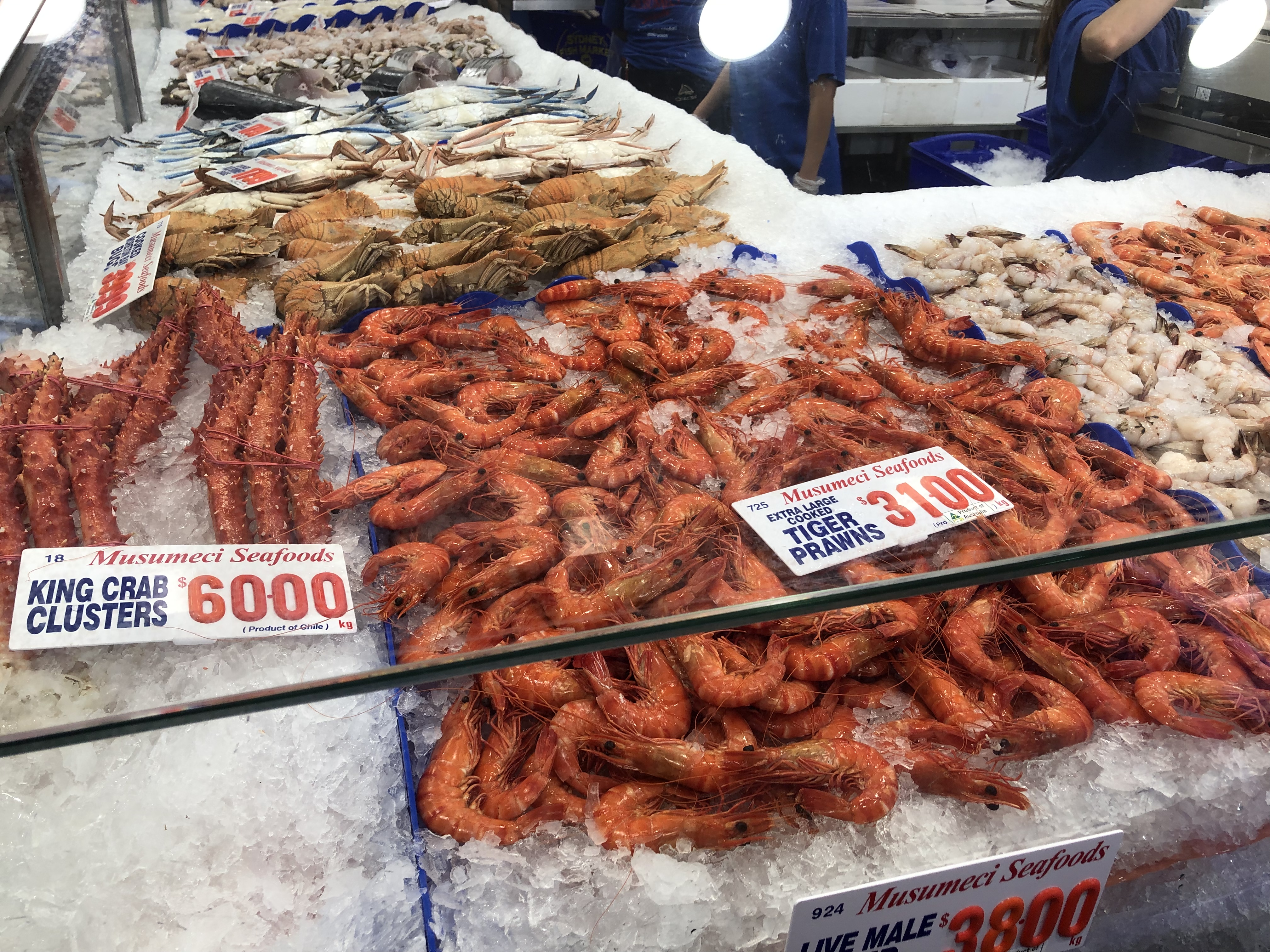
Cambodia the extra bits

Visiting the far away temples

Ignore my earlier advice about taking a tuk tuk when it comes to visiting the further out temples. The distance between them is far enough for air conditioning to be effective and much more importantly, the roads are so bad that you will relish having effective suspension in your vehicle.
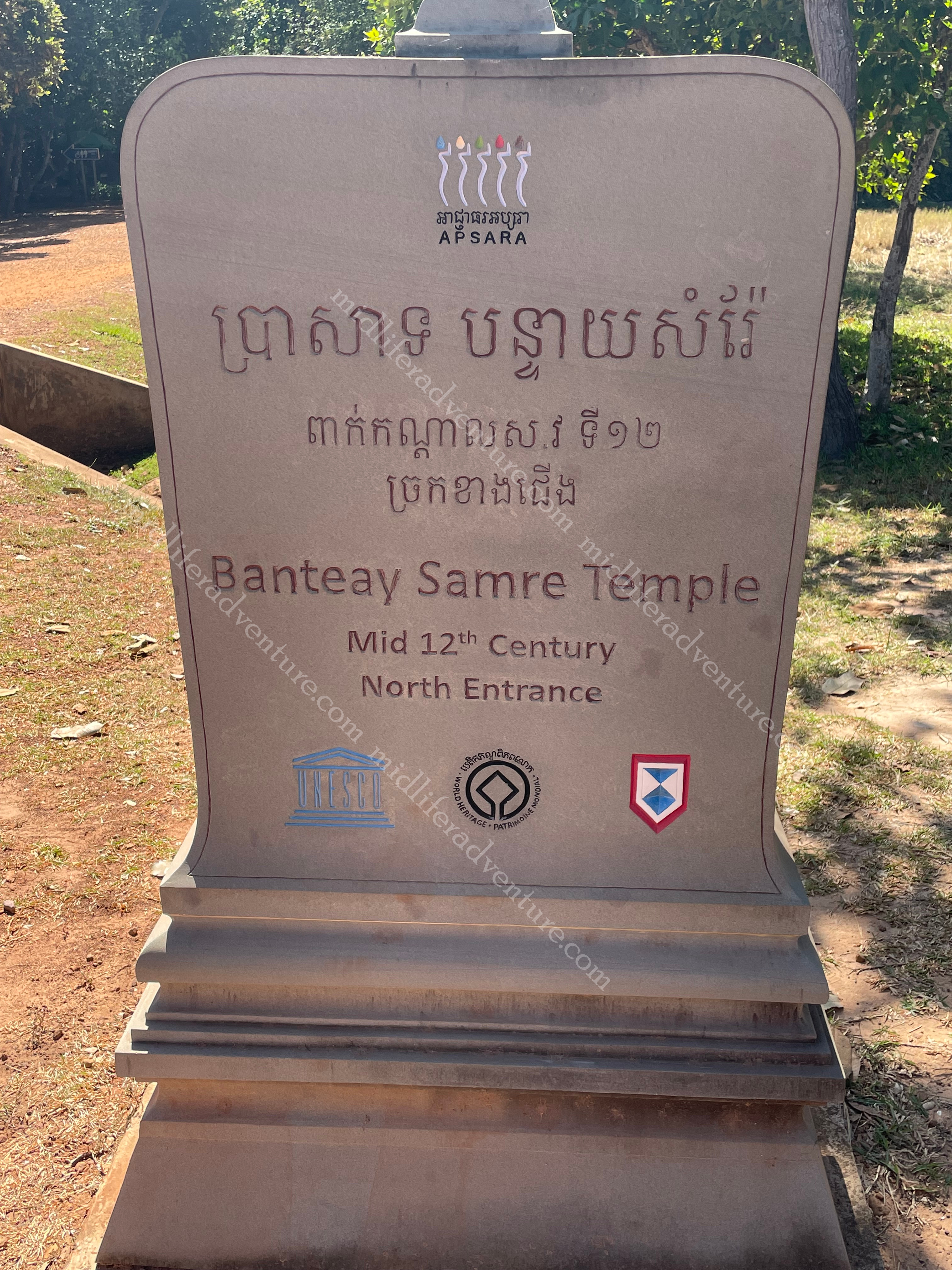
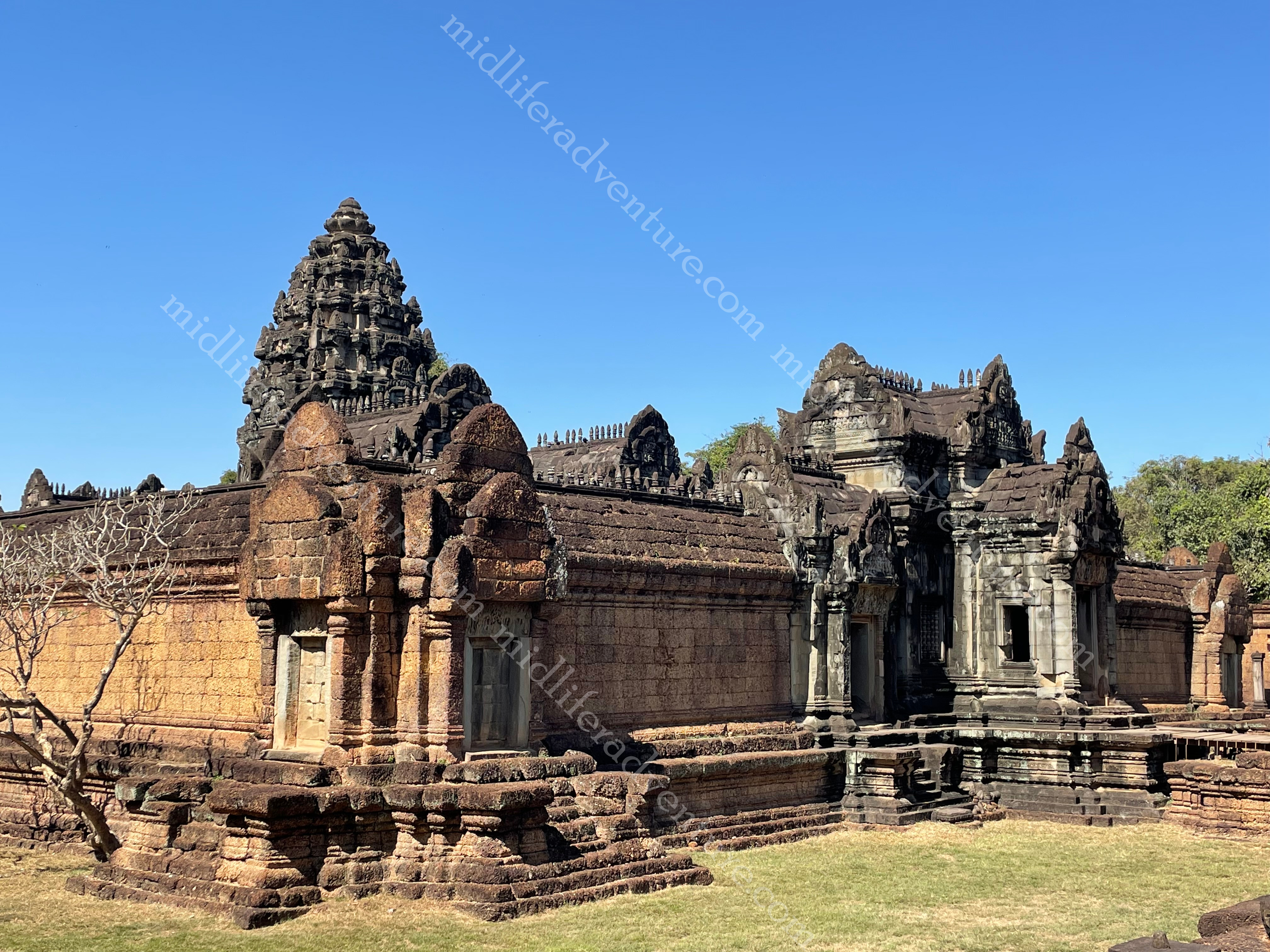
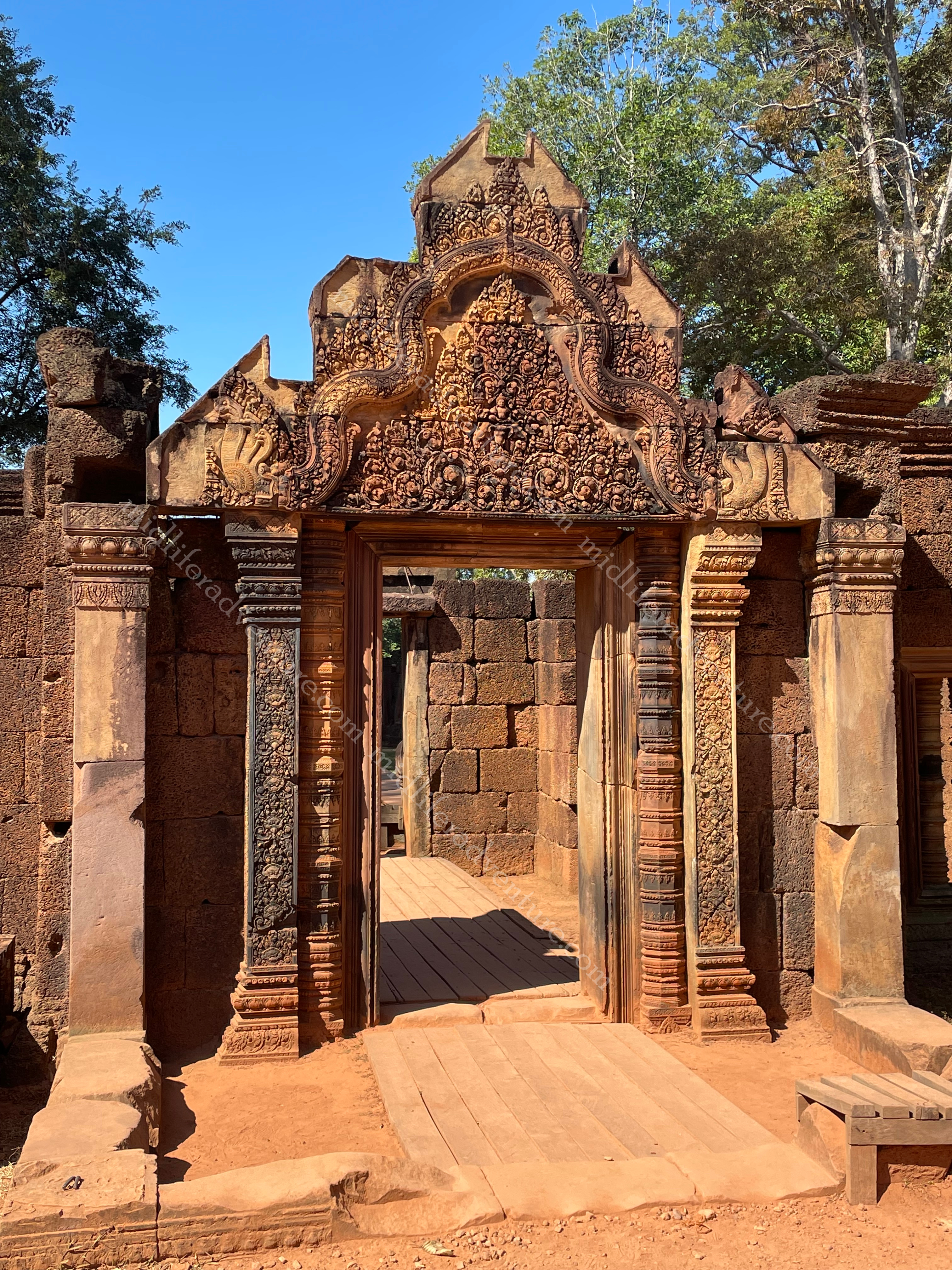
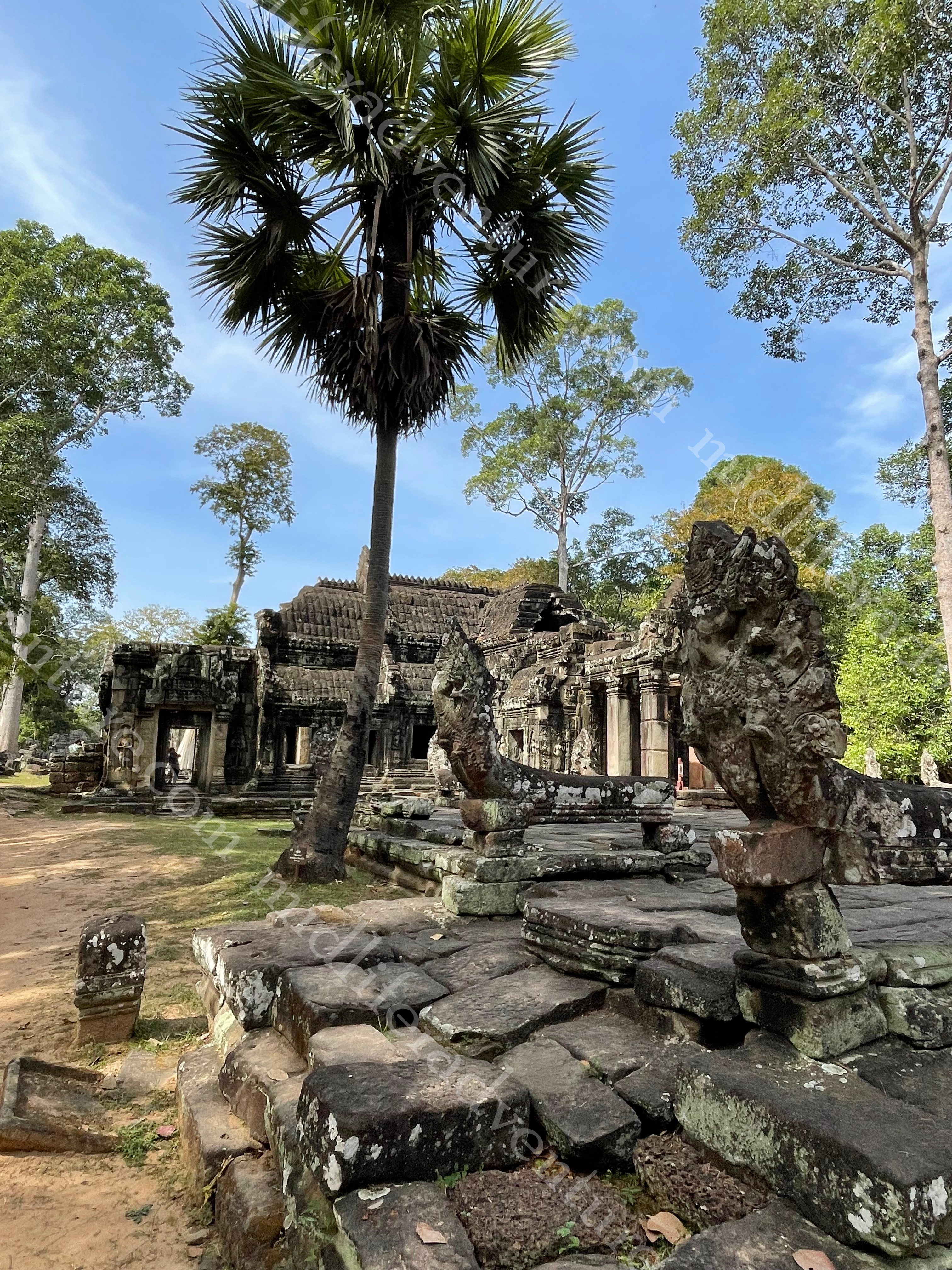
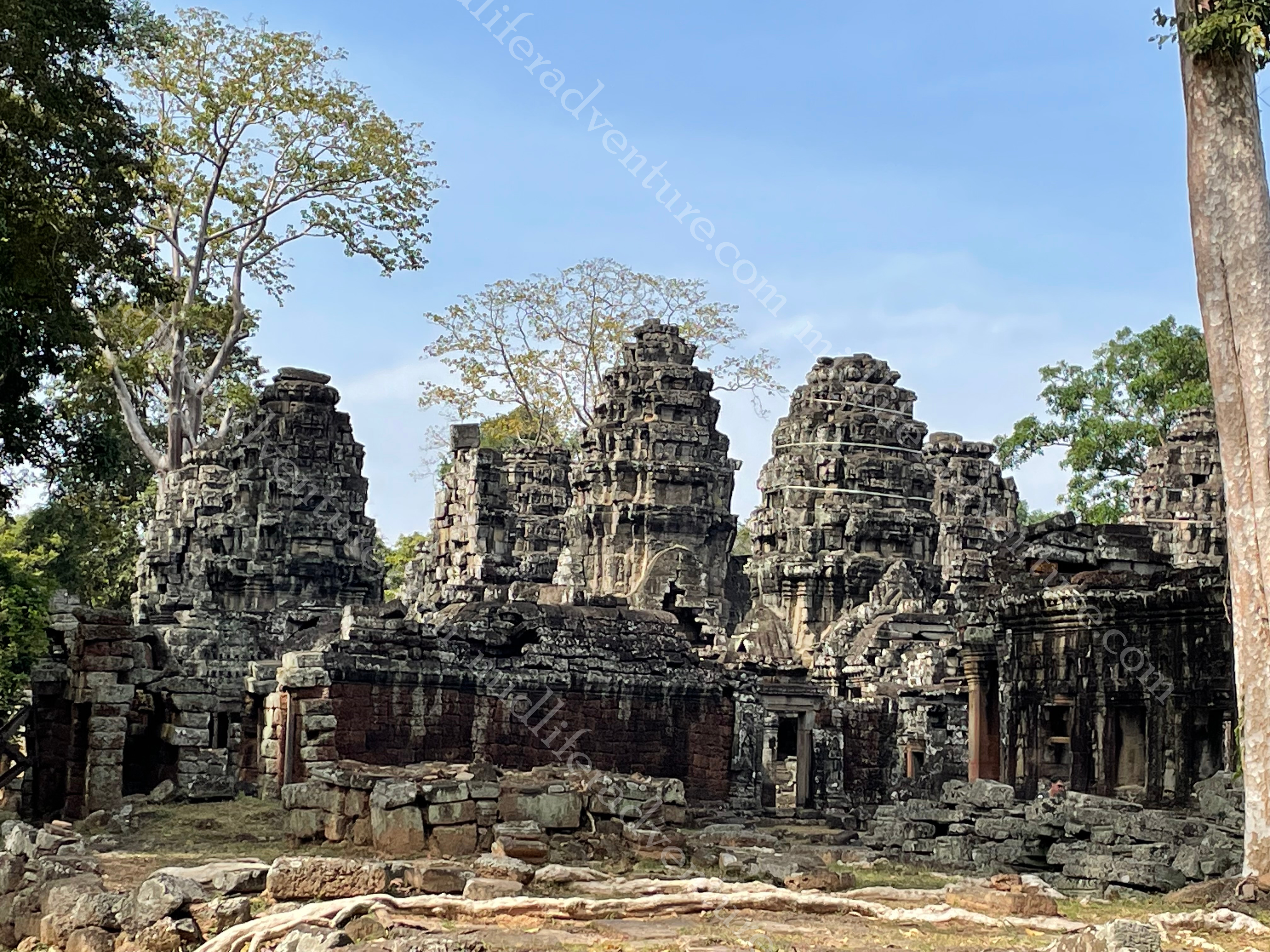
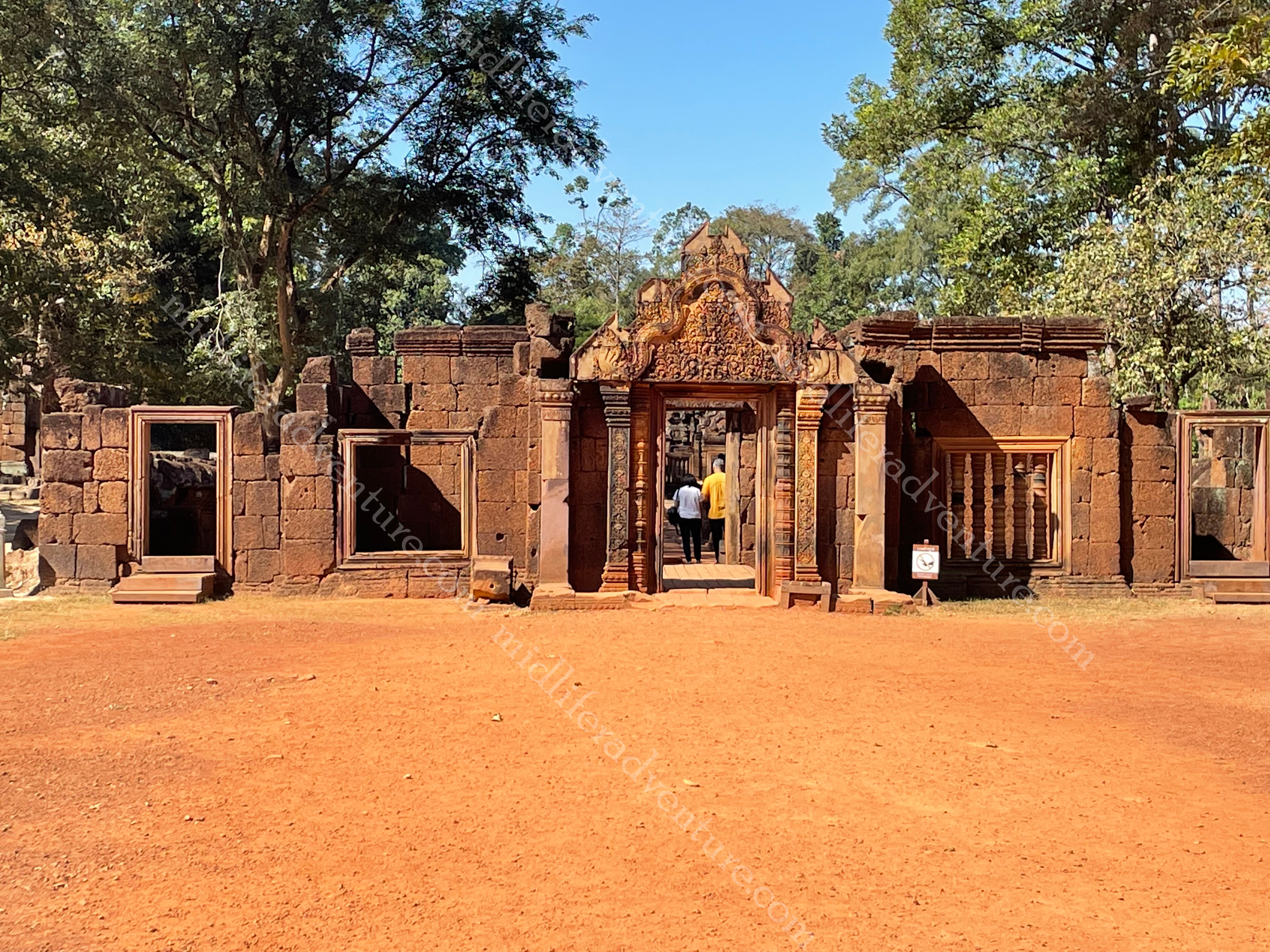
Banteay Srei

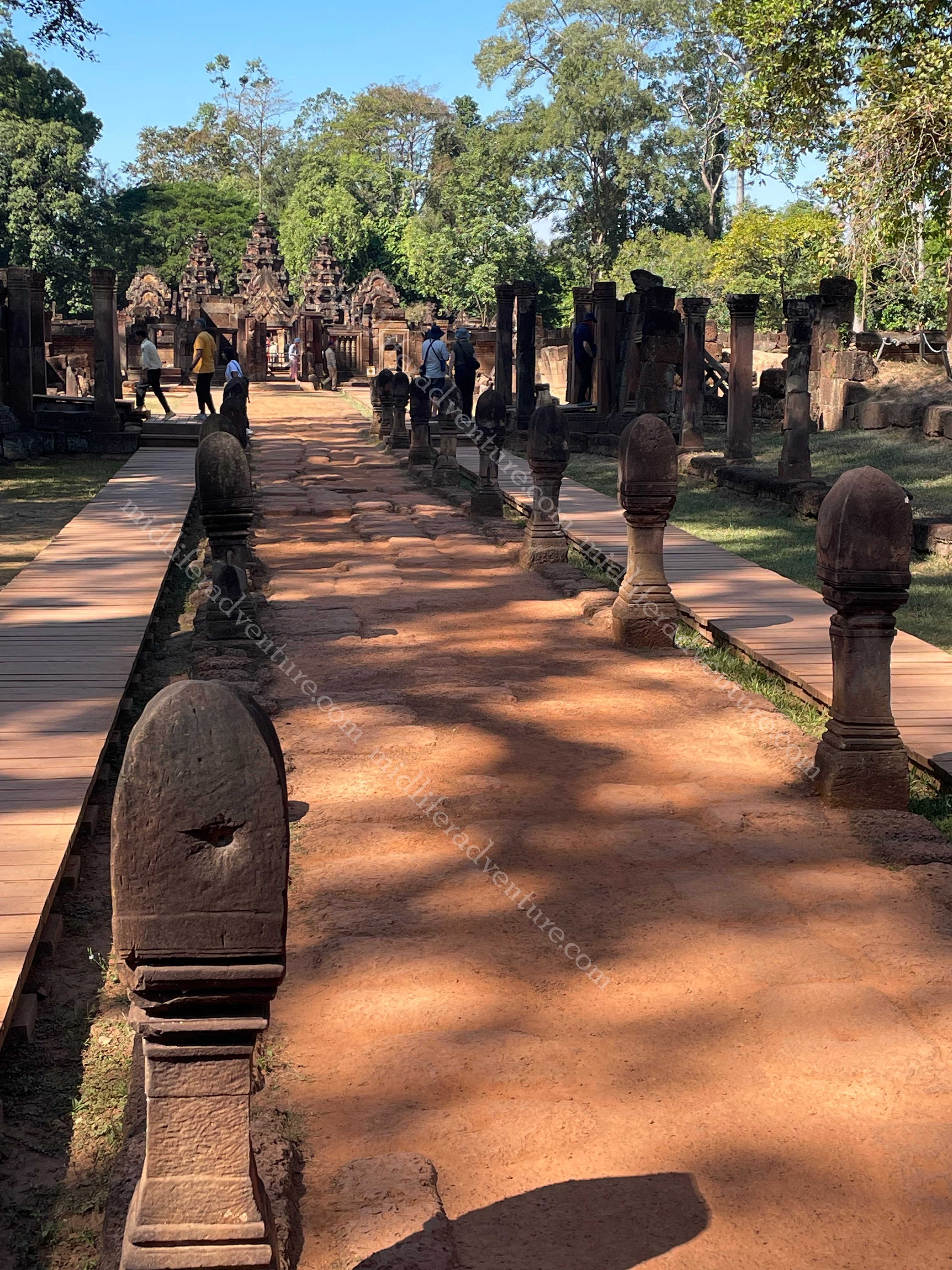
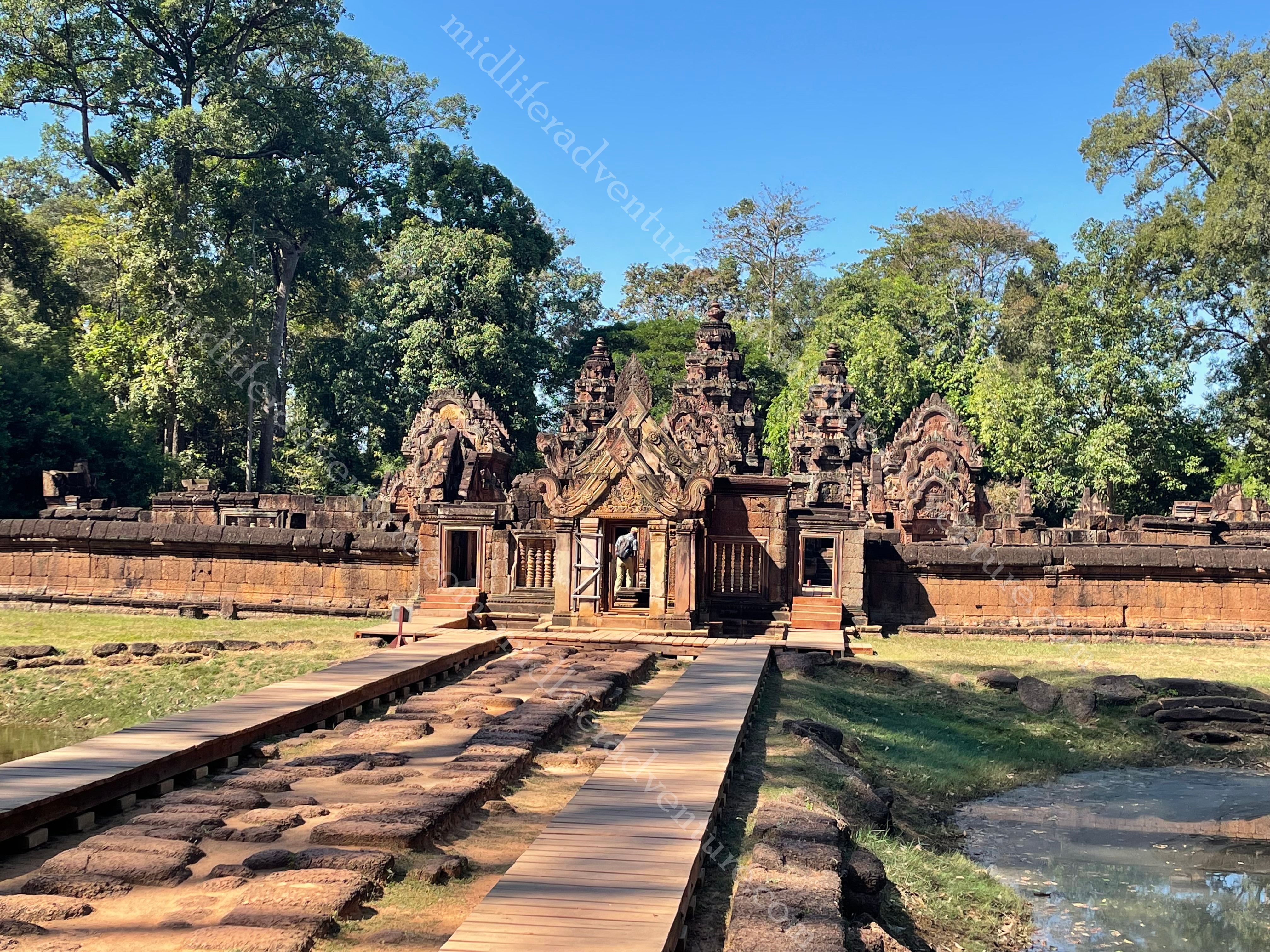
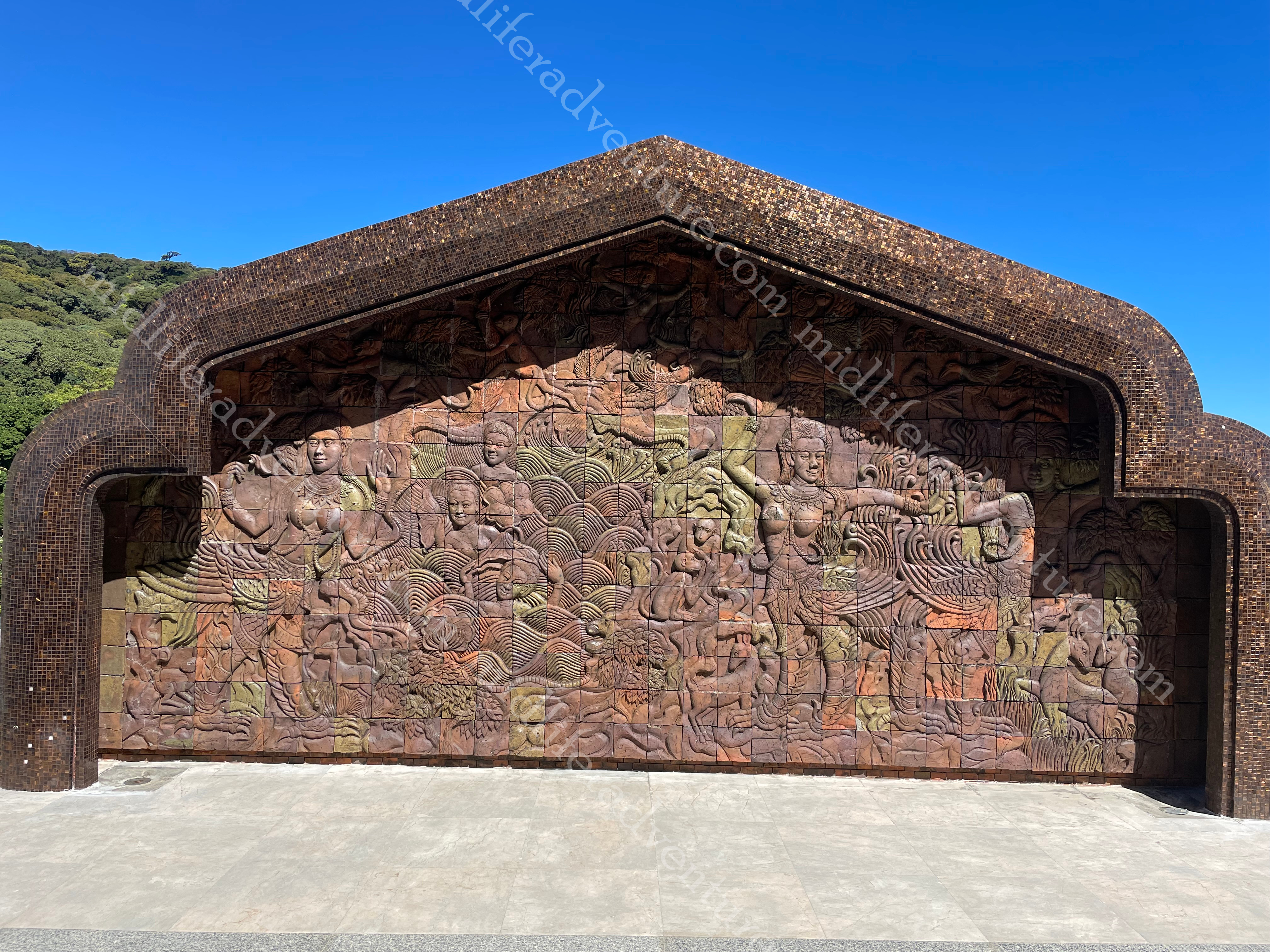
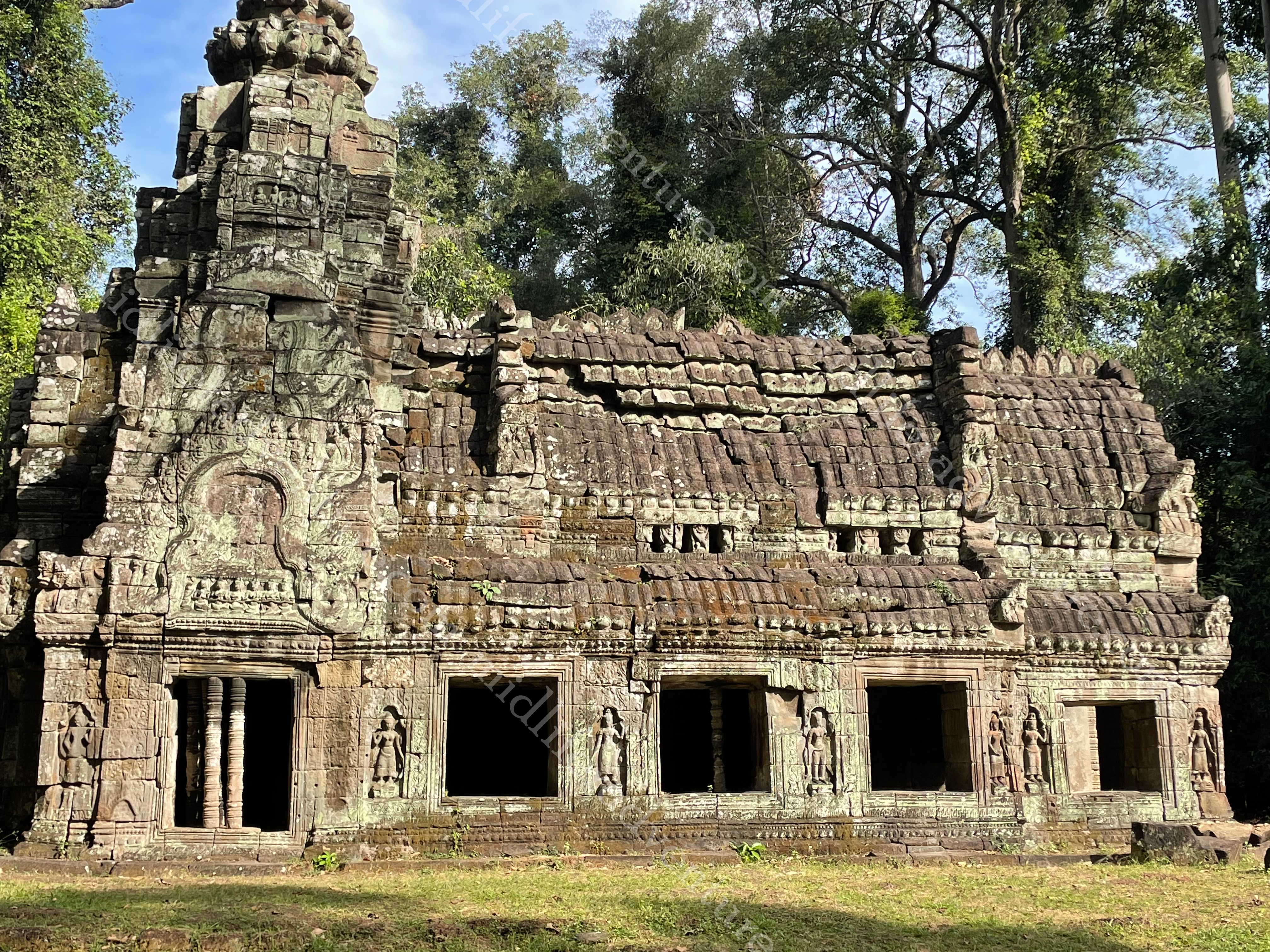
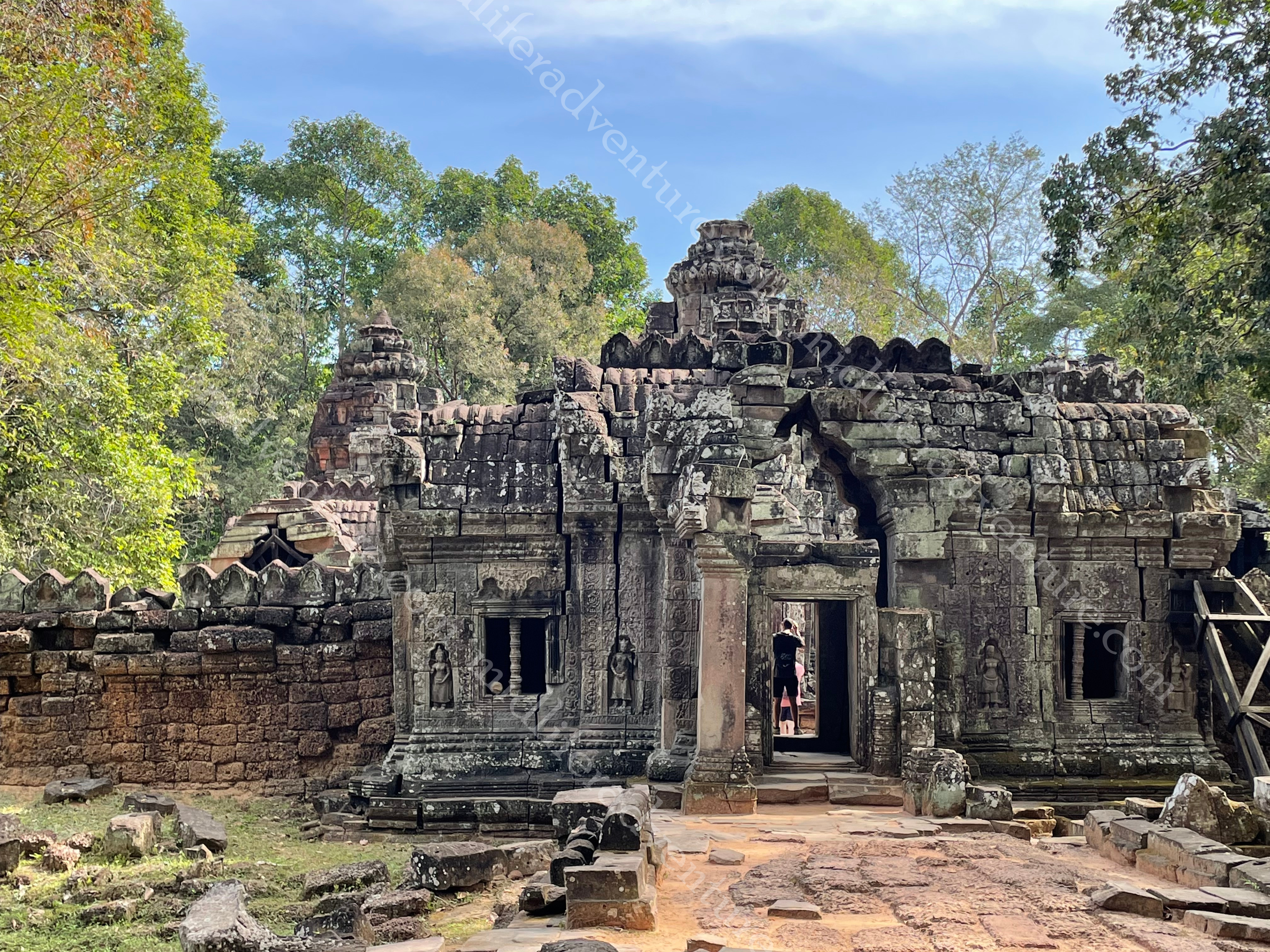
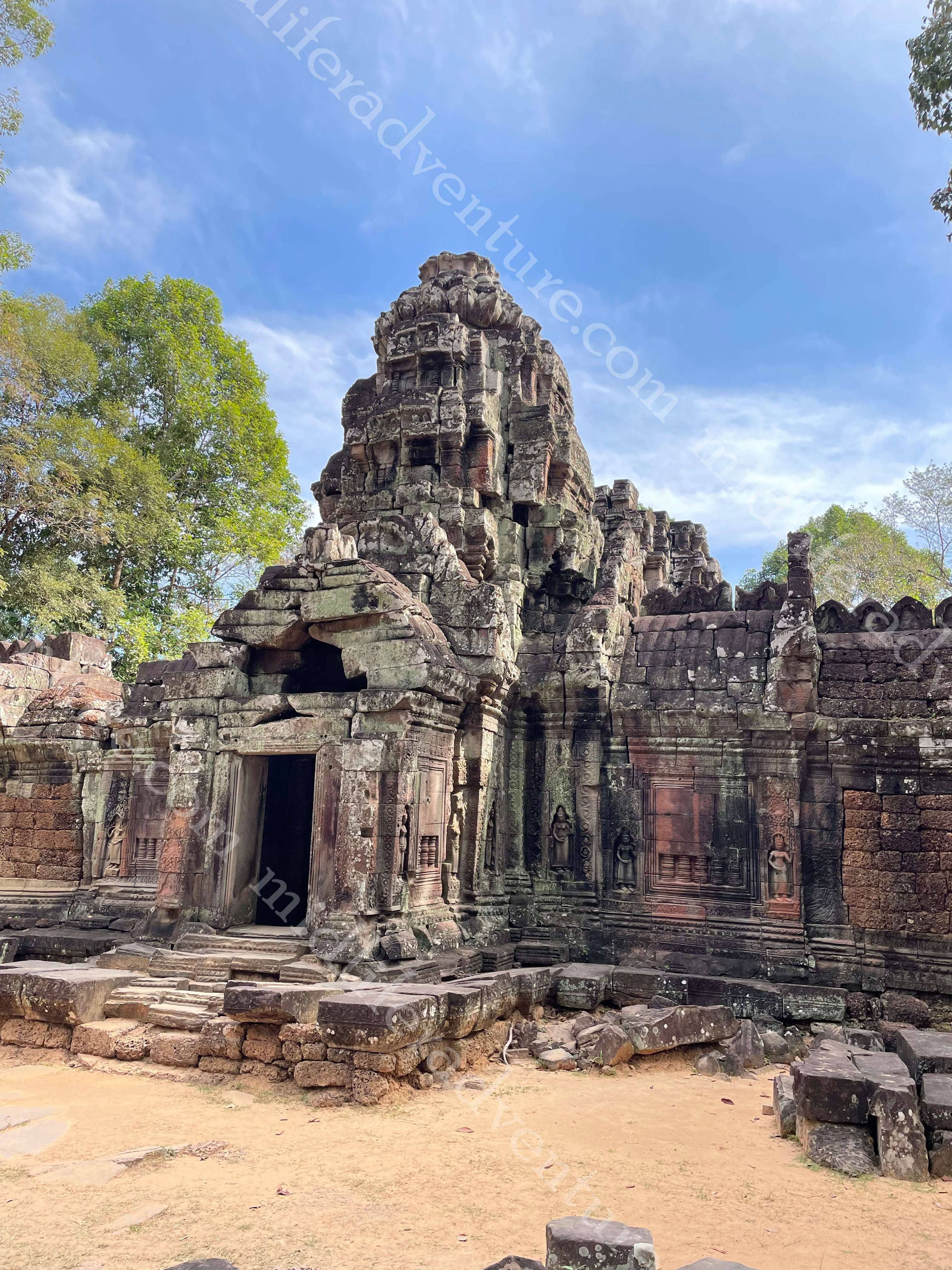
Is a 10th century temple that is considerably smaller that each of the ones in town. Because of this you can get around it a lot easier and the fact that it is made out of red sandstone means that some of the reliefs and carvings have held up a bit better making it a nice spot to visit.
The People

Firstly let me say that the Cambodian people are lovely. There is always a smile and a wave and as at early 2023 they seem not to know how to lie and cheat (YET). With the exception of the markets, there is no bartering, the price for something is the price. English is widely spoken and even more broadly understood. The usual dramas that you get throughout Asia you do not, yet, get here in Cambodia. As the disgusting hordes have not fully descended on the place, in many ways it remains (at least partially) untouched. Yes there are massage joints everywhere, and yes they are seriously cheap ($10-12/hr) but for the most part they are offering massages and not the special happy ending types that seem to abound in places like Bali, Vietnam and Thailand. Don’t get me wrong, I am not naive enough to think that if you asked for the extra service that it wouldn’t be available or easily found but it is not in your face like it is elsewhere in SE Asia. There also is not the preponderance of old fat white guys with young Asian women, holding hands and making smoochy faces. This fact alone is refreshing in this part of the world.

But it is still a poor country and the people are doing what they can to get by. You will be asked constantly “tuk tuk sir” or “you want souvenir” or in my case the less than flattering but sadly accurate “we have big sizes”. If you brave the markets you must expect to be besieged however if you are walking down the street a light wave of the hand is usually enough to dissuade the approaches. This is not the case in the markets surrounding the temples, especially later on in the day. These guys can be quite forceful and persistent. That said, it is possible that they have not made a sale yet that day and that these are desperate attempts to earn money to feed their family.

Begging…this is a new thing since last time we were here. Begging was not a thing in Cambodia in any of our other visits, however whether it is COVID, the downturn or simply desperation it is a feature that is creeping in – especially in the early evening at meal times. Gangs of wheelchairs traverse the street food stalls begging for change. In addition there are gangs of children stalking the tables. The children for the most part are looking for recyclables such as aluminium cans however on initial glance do pass off as beggars.

Siem Reap Food

First thing to know about food in foreign countries – eat local. Local food uses the local ingredients, techniques and has been tried and tested to be good and more often than not cheap. You will invariably see signs that offer you the sorts of food that you are used to, grew up with or are just your favourites. With very few exceptions…these will be terrible. I have been caught out in this regard so many times it is not funny. Pizza and pasta seem to be my personal main failure points. The longer you are away from home the more you will be tempted to order something familiar. But it will invariably be bad, expensive (comparatively), poorly executed and will leave you feeling disappointed.
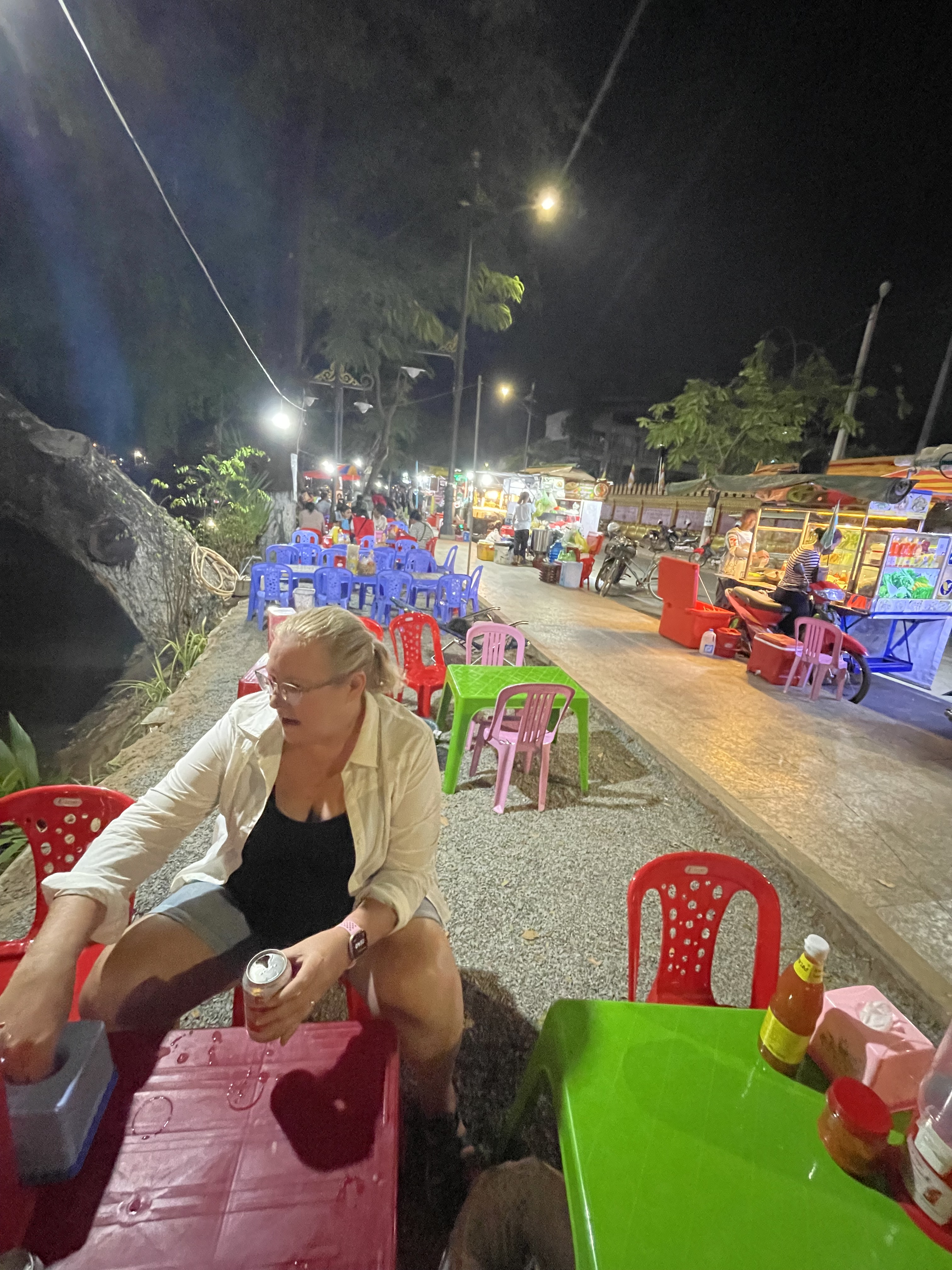
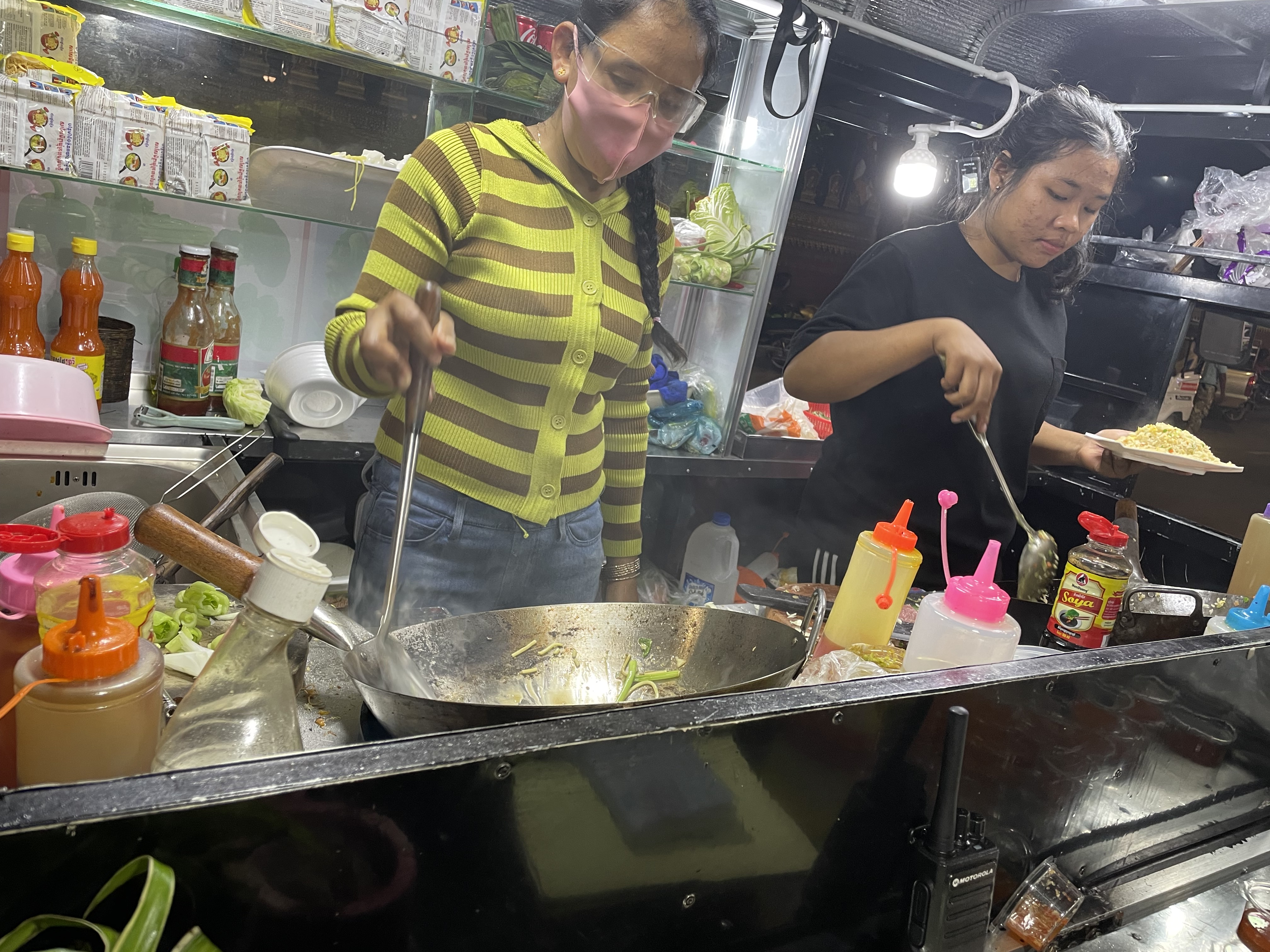
Second thing to know is that we are fairly adventurous eaters and are not (normally) afraid of the street food stalls. These tend to offer the best and most authentic foods at the cheapest prices. Lets be honest here, I am a little more likely than Jill to get into the weird and wonderful things but she is certainly not afraid and once she gets a taste for something there is no stopping her. That said, there are some things she will just not come at.

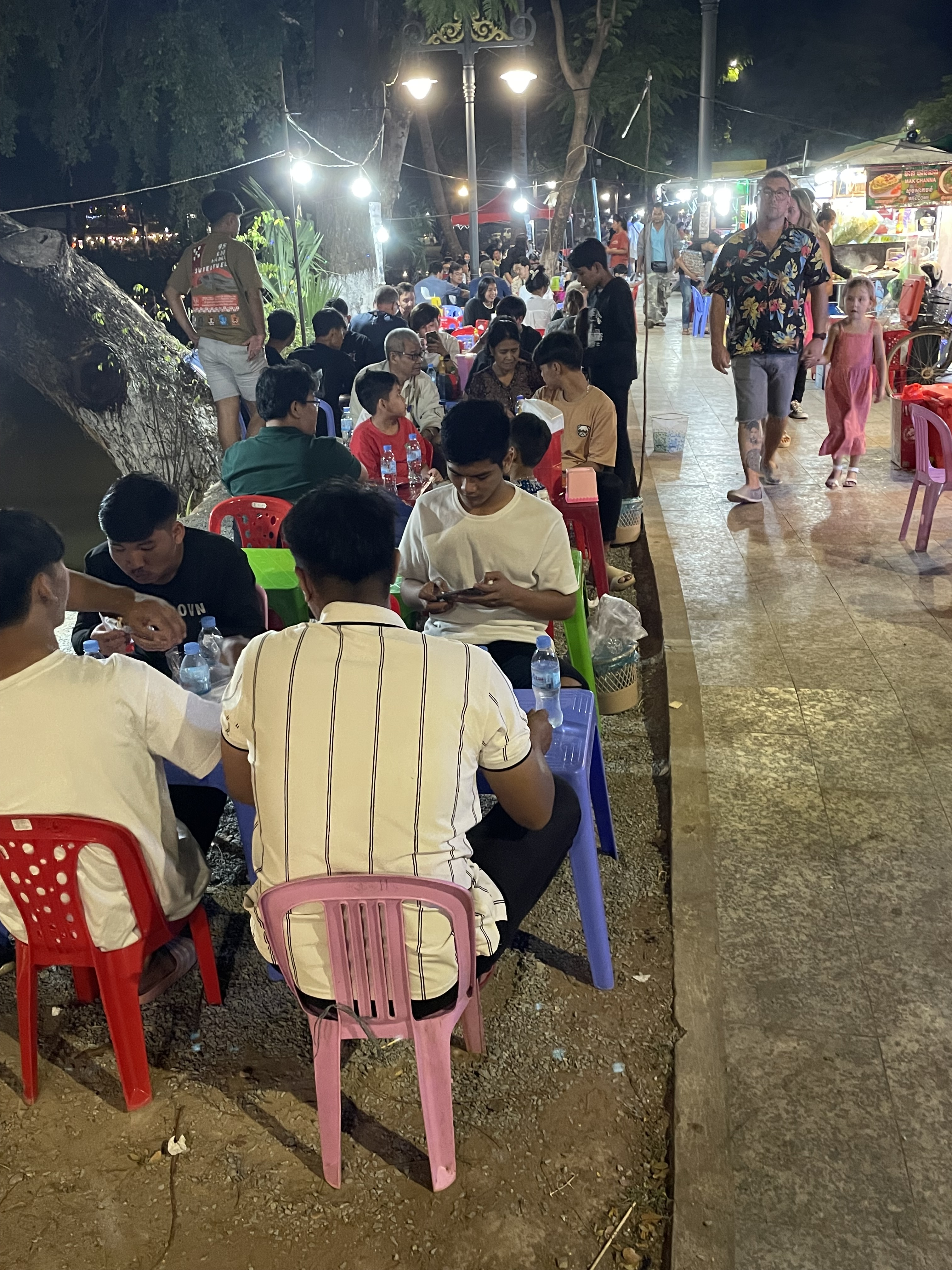
Albeit you do often end up eating on tiny tables while precariously perched on a plastic stool that was designed for toddlers.

Either way I am certain they are not rated for my XXL frame. So each time we go, I gently lower myself onto one of these plastic kindergarten chairs and hope and pray that I do not have the embarrassment of coming crashing down mid meal.

So far so good…

Cambodian Food

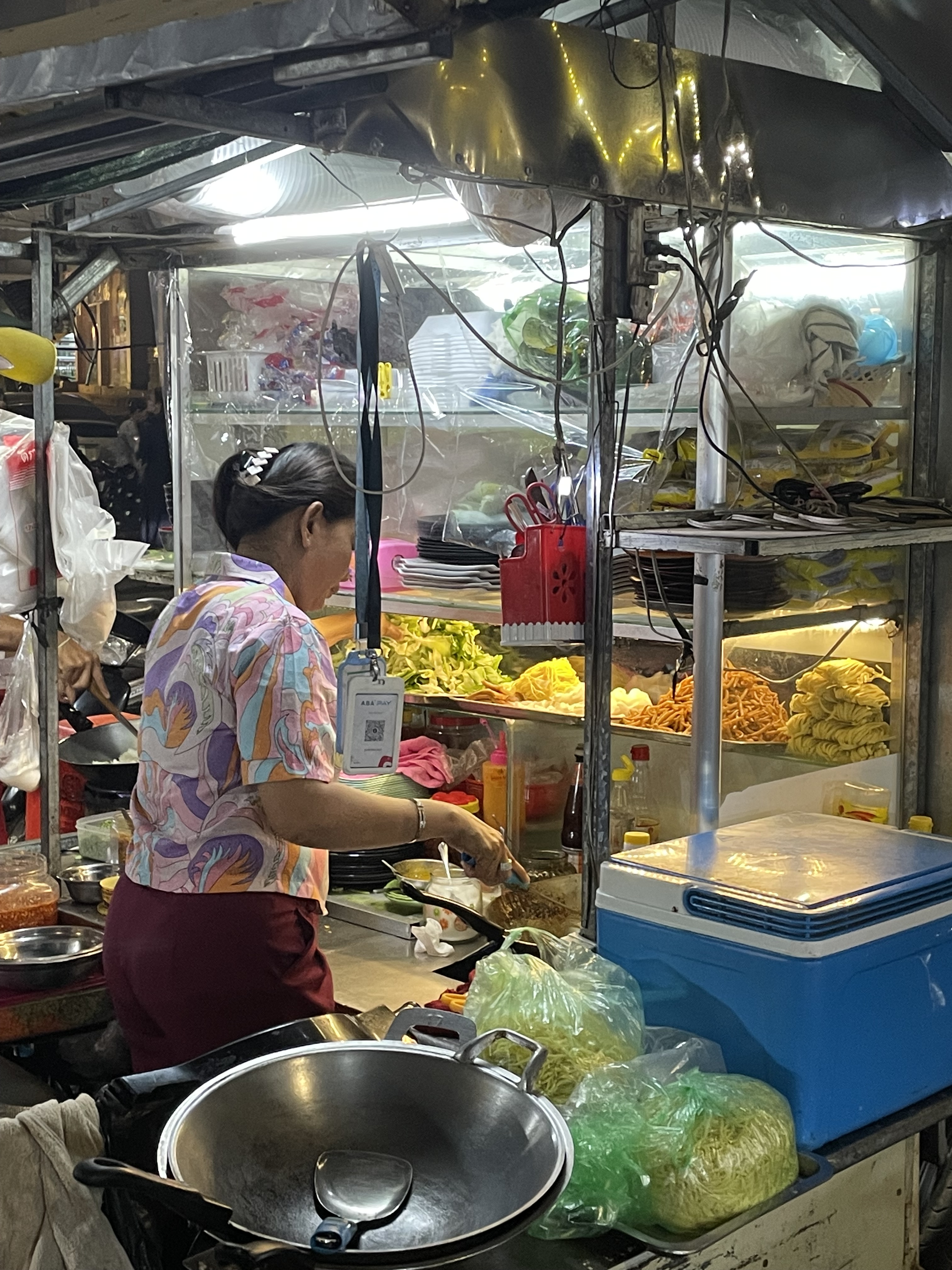
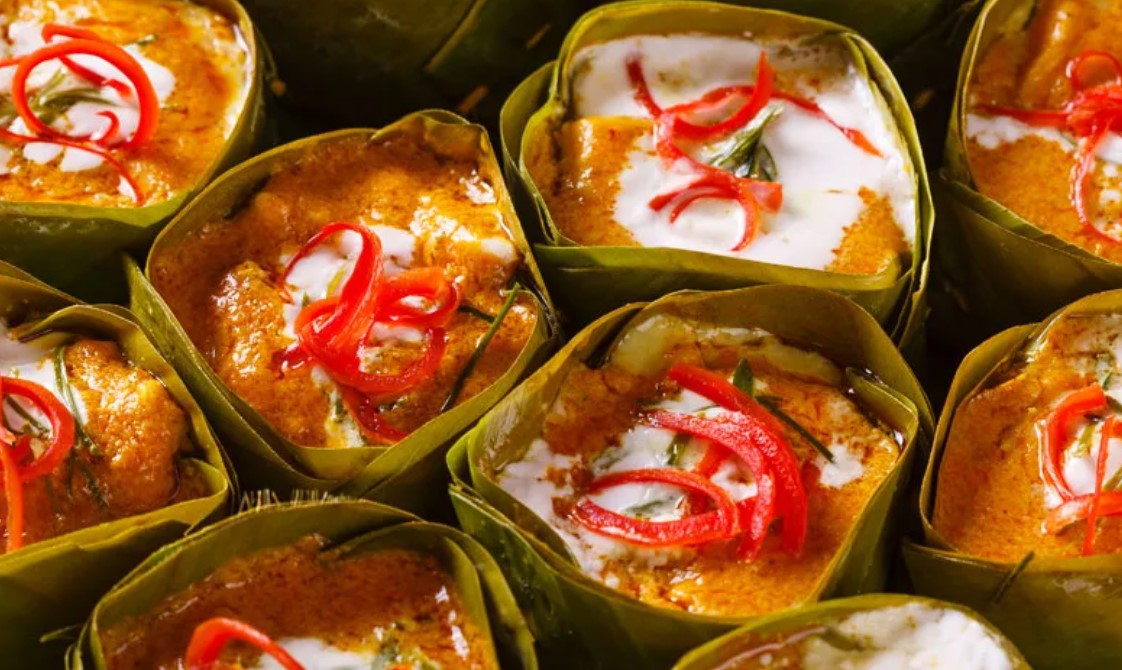
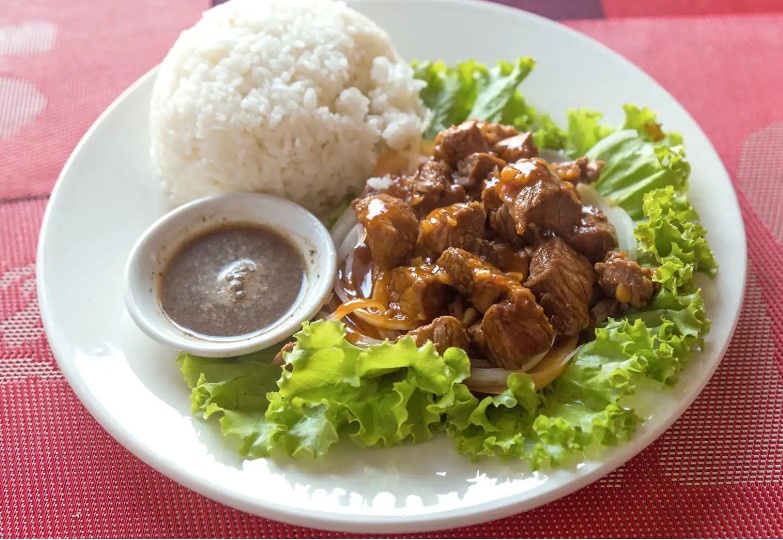
Cambodian food is simple but great. Typical of the region, soups, noodles, rice and BBQ sticks are the order of the day. There are the two most famous Beef Lok Lak and Fish Amok. Our first time here we did a cooking class and learnt how to make these along with some spring rolls. The fish amok is a mild coconut fish curry that is steamed in banana leaves, while the lok lak is a stir fried beef typically served with a dipping sauce of salt and pepper with fresh squeezed lime juice. Fried rice is of course available everywhere as is a range of noodle, meat and vegetable dishes.
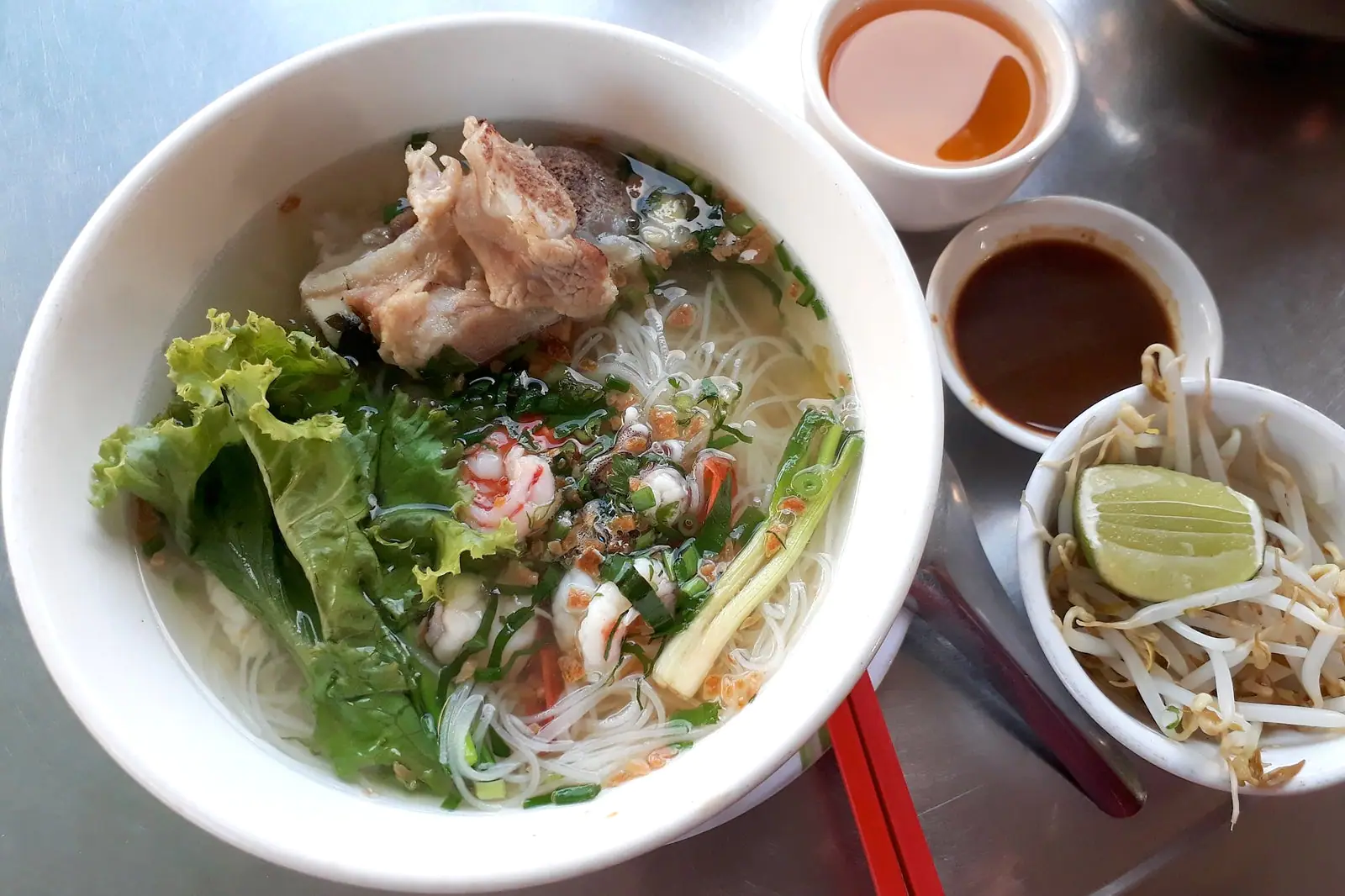
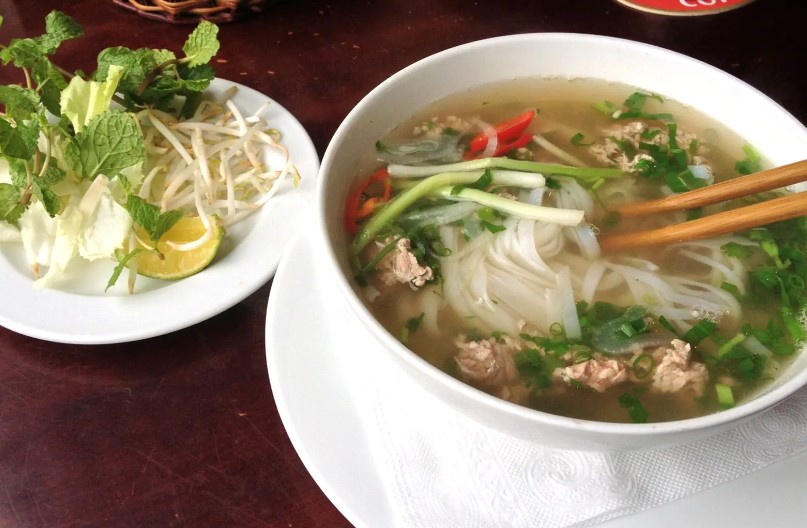
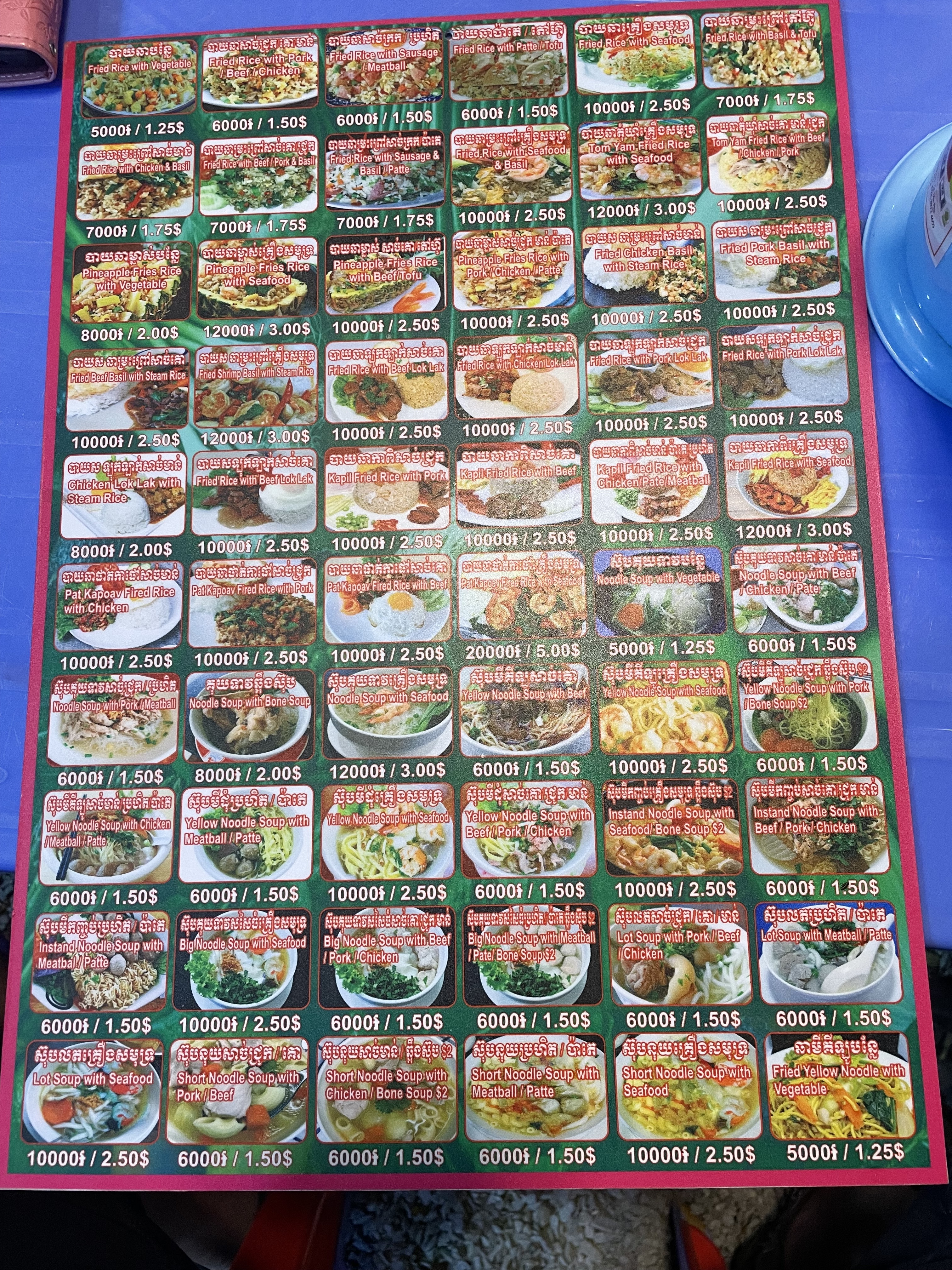
If you are anything like us when it comes to food in a foreign country you tend to pull up at small side of the road stand or restaurant and stare at the pictures on the menu pointing at things that seem vaguely recognisable or at least inoffensive. If this is the case Kuy Teav is the staple for both breakfast and lunch and you have probably had it without even knowing that you have. It is a kind of rice noodle soup with random acts of stuff thrown into it. Num Banh Chok is kinda the same but it usually uses a fermented noodle. These two are available virtually everywhere and is so common it is usually just referred to as Khmer noodles. If you didn’t have one then it would have been the other.
Num Pang is a local Cambodian version of the Vietnamese Bahn Mi or traditional Cambodian sandwich.
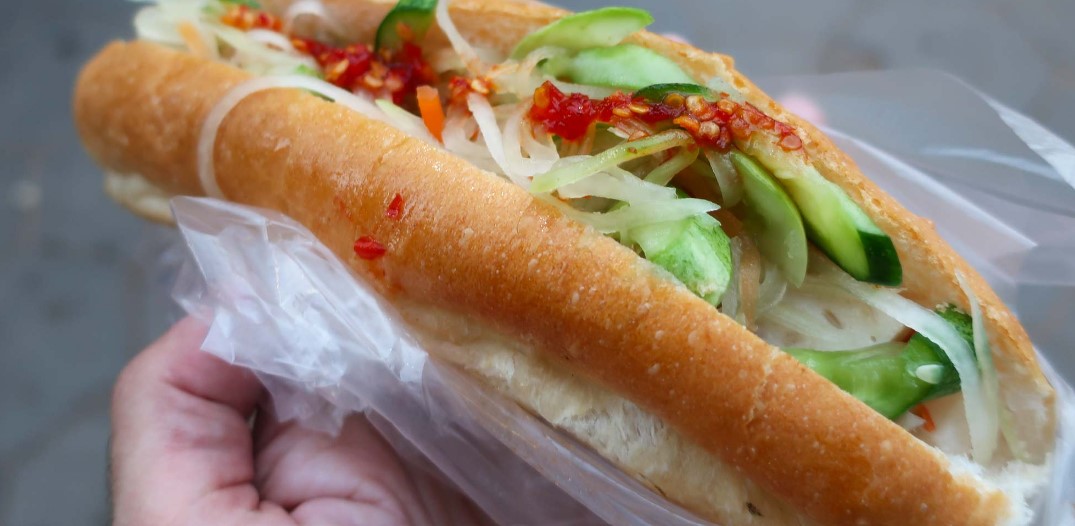
These usually involve a crispy bread roll (demi-baguette) that comes with pork and a pickle mix of carrot and daikon often added to by some local salad like cucumber, tomato, fresh herbs such as coriander, and an optional chilli sauce. This has become a quick lunch for us and for between $1.25-3 we get 2 rolls and our lunch is sorted. Jill dodges the chilli while I dodge the cucumber and coriander.

The interesting thing about ordering the Num Pang is that I have been to the same stall on 3 different days, I have been served by the same woman, and I have received the same item, but I have paid a different price every day. To be fair, if I were comparing a Banh Mi with a Num Pang the Vietnamese do a better version. But the Cambodian Num Pang is still very tasty and for about a buck, you cant do too much better for lunch.

Other lunch and dinner specials include: Bai Sach chrouk (pork and rice), Num Kachay (chive cakes), Nhoam svay kchai (green mango salad) and Lap Khmer (Beef salad). The food is simple and basic but also tasty and (as long as you avoid the tourist strip) cheap.
The bugs

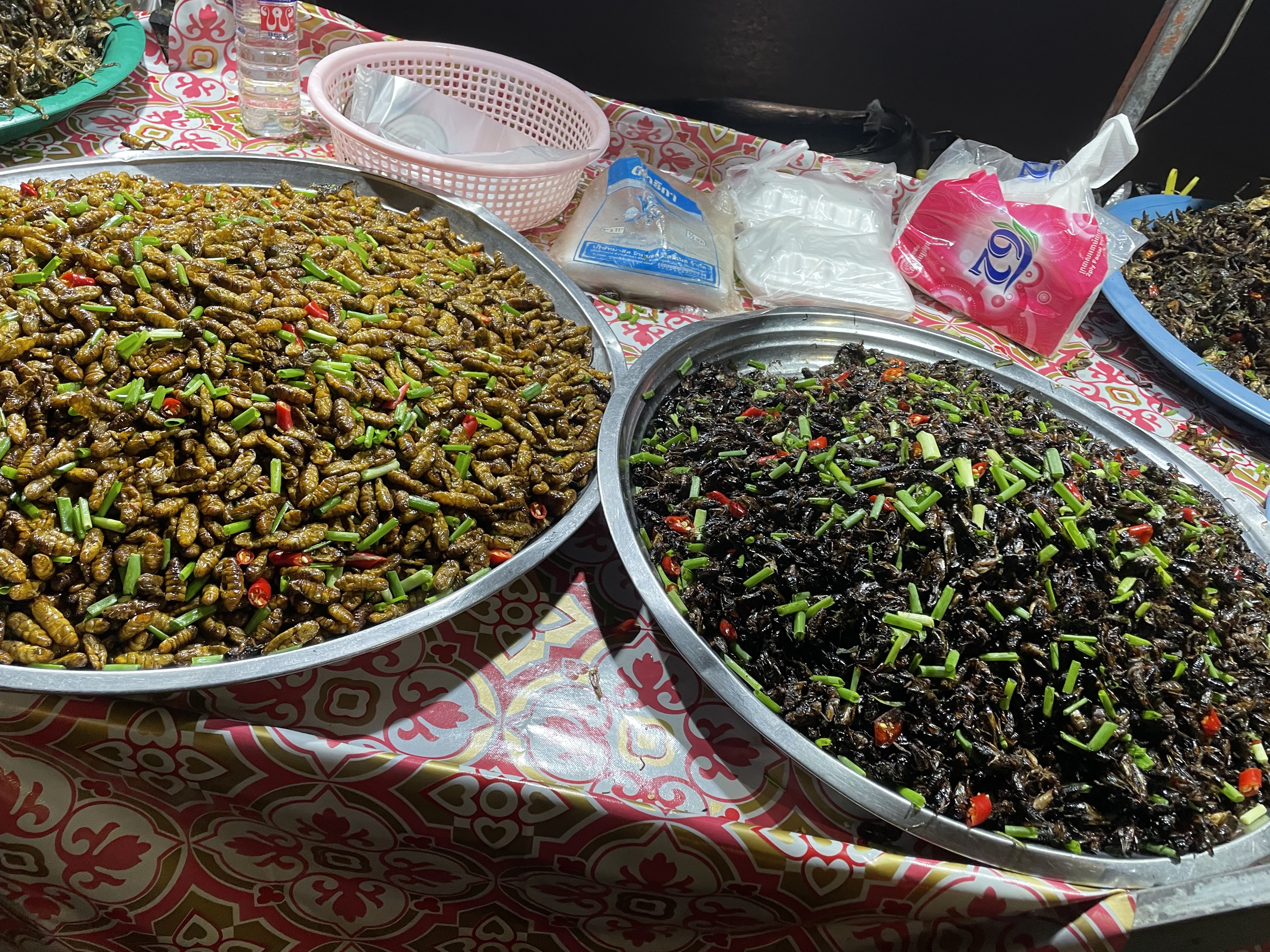
Cambodia, like other places in Asia, has a culture of eating the creepier, crawlier and slitherier types of protein sources. While I have taken great pleasure over the years of dipping my toes into these waters, for the most part it was to say that I have. They were not particularly pleasant culinary experiences and fit more into the category of bragging rights or interesting future dinner conversations. Very few of these I would choose to repeat.
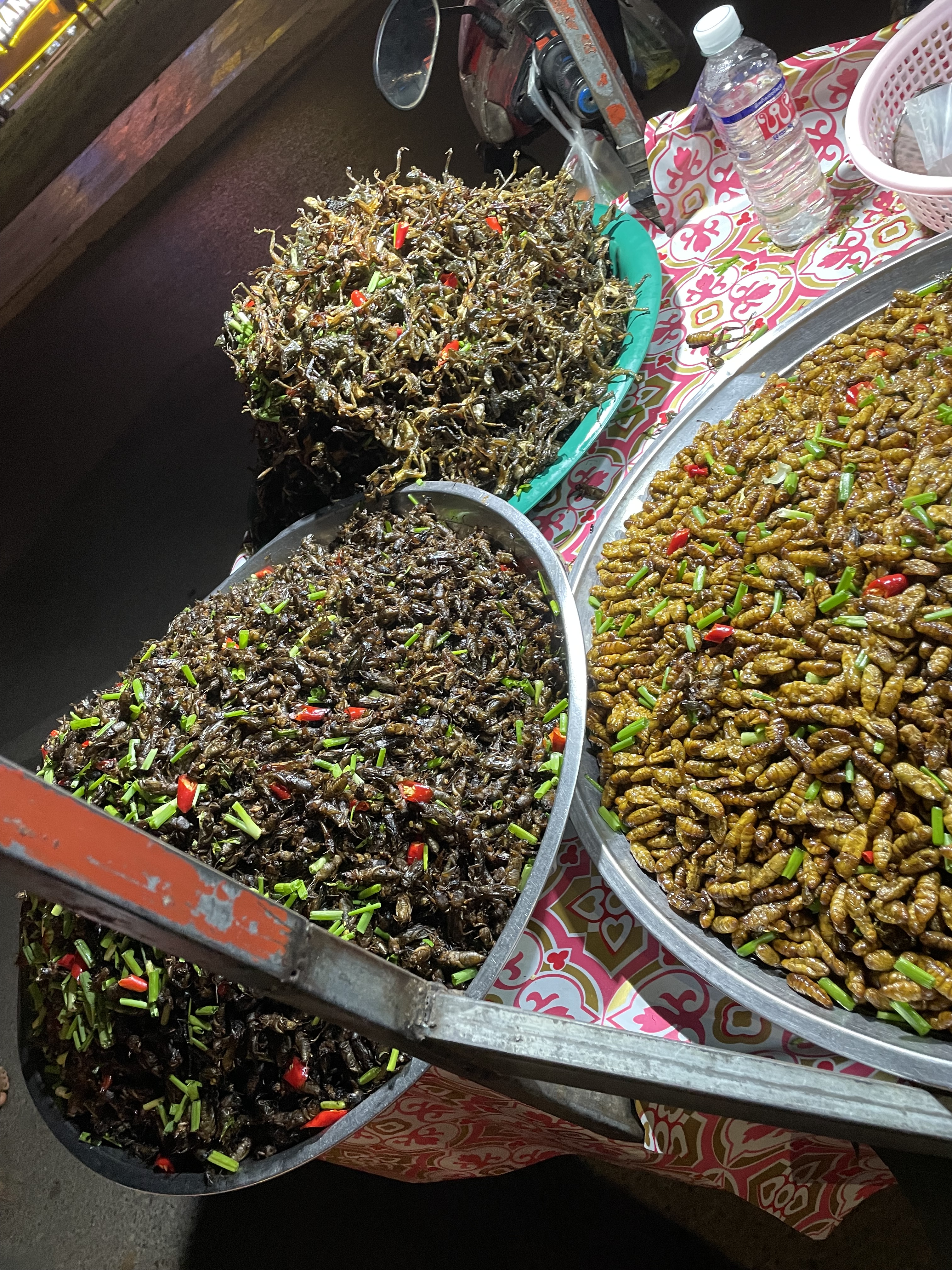
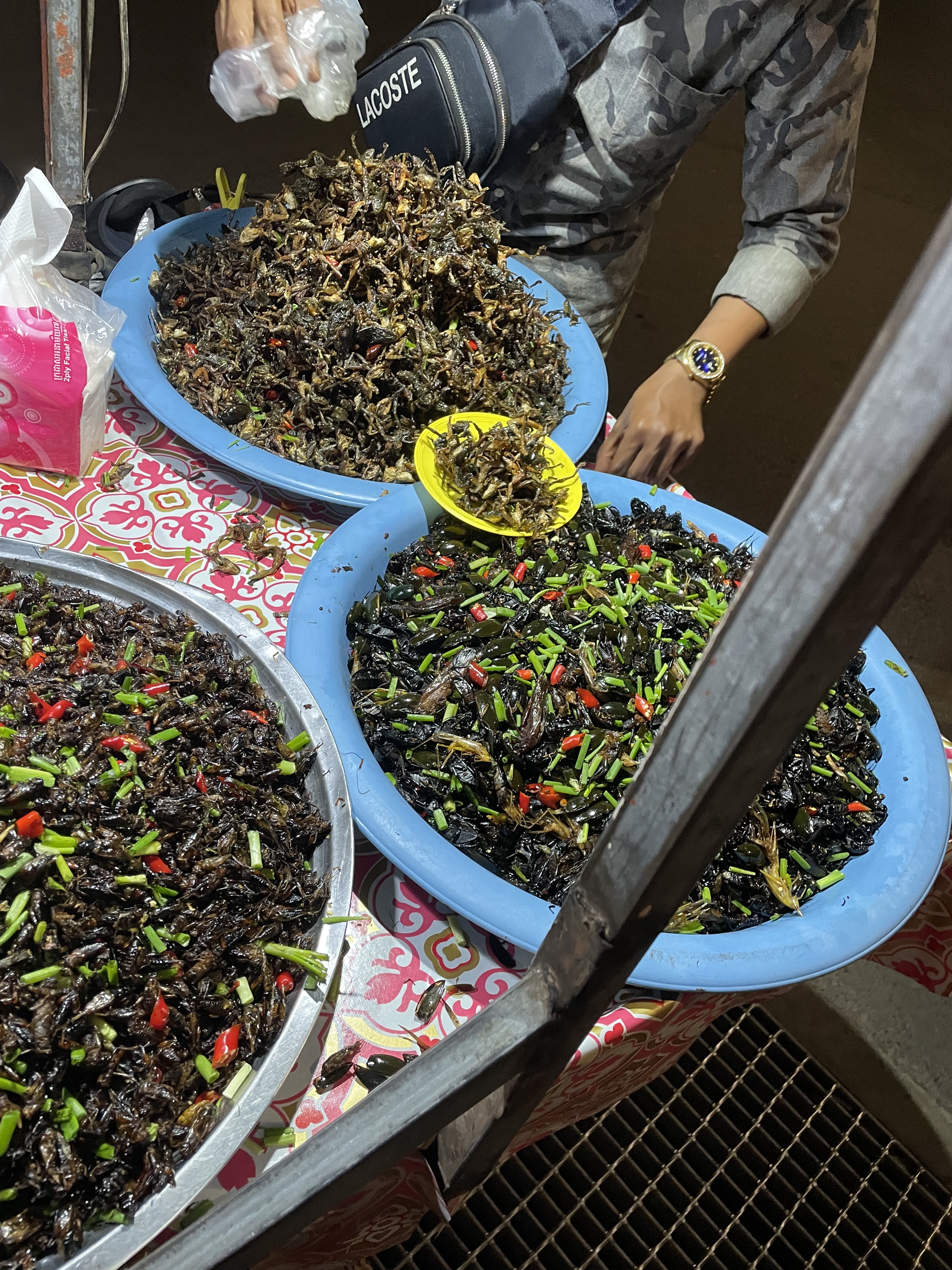
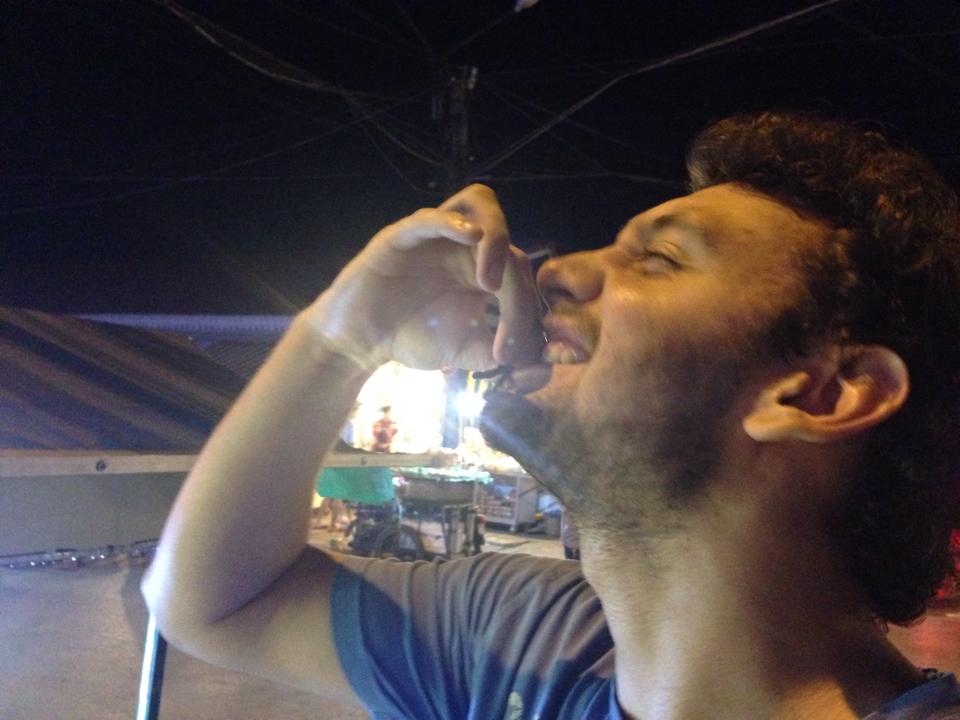
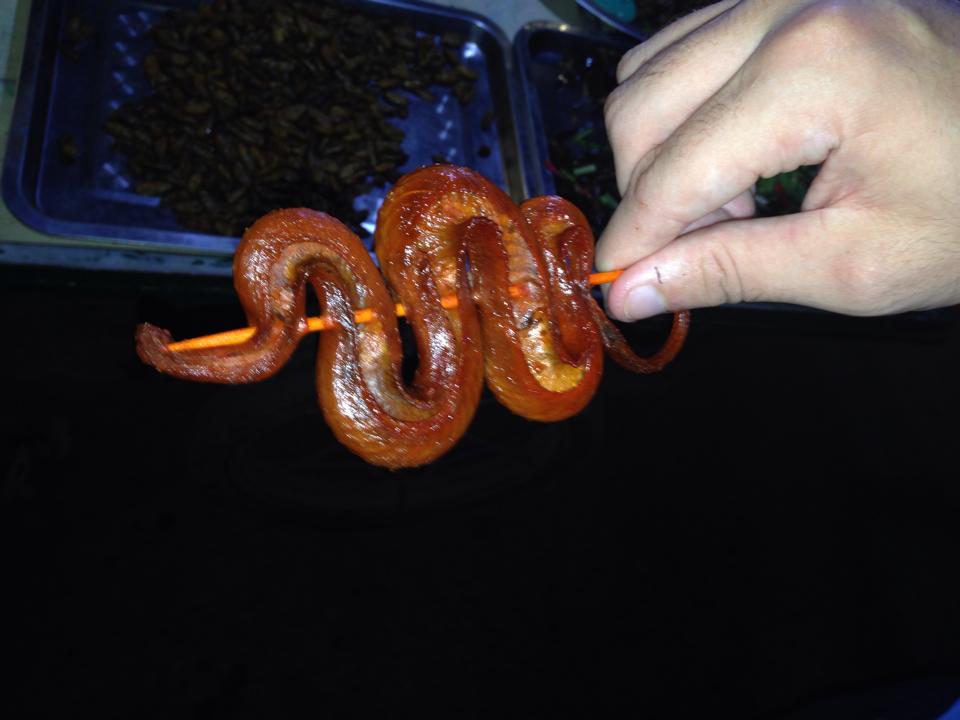
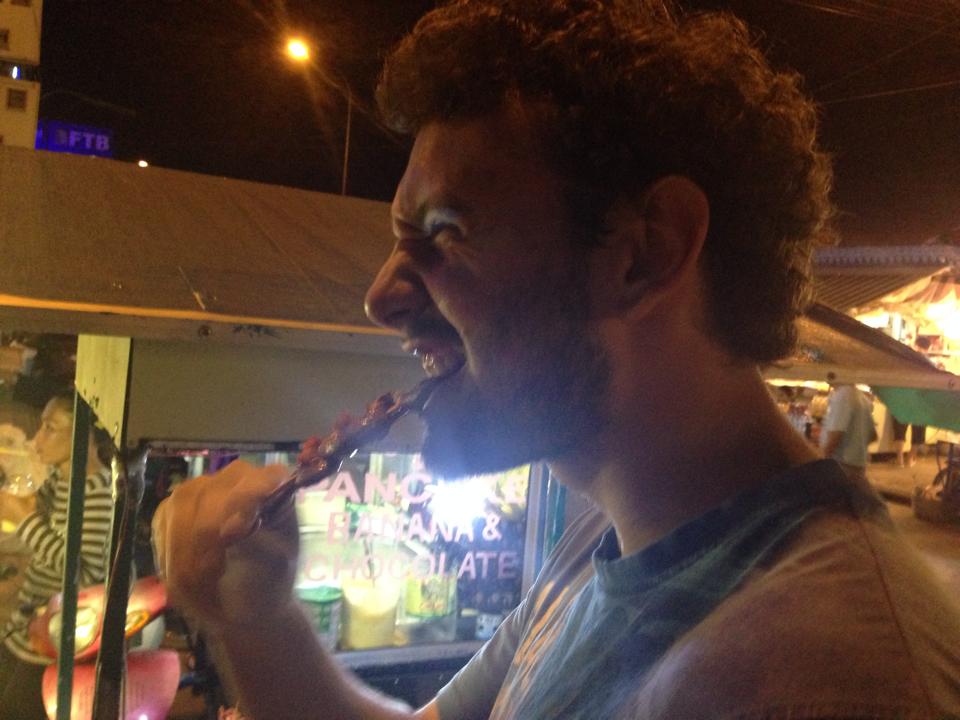
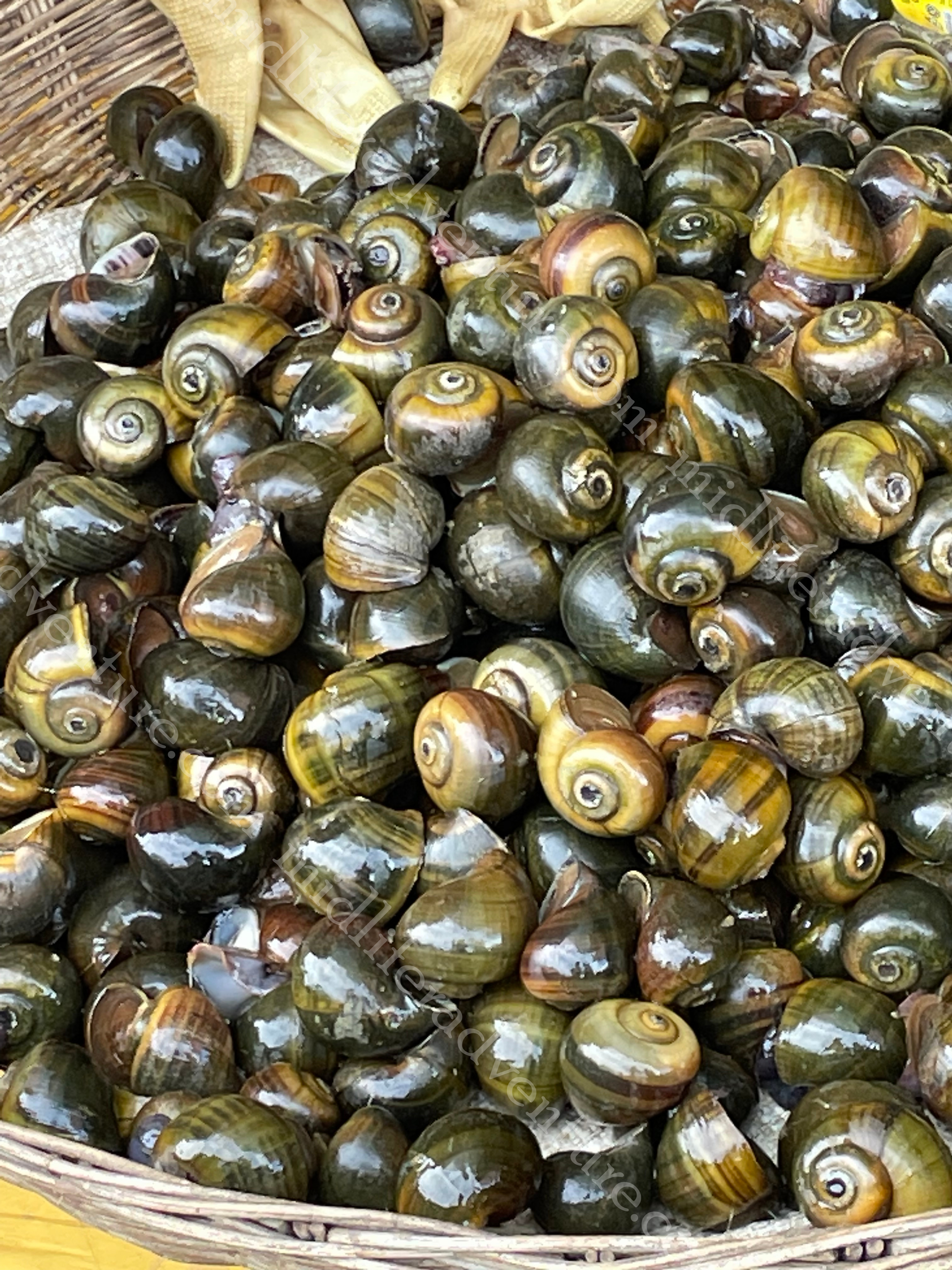
Cambodia has many dishes made from insects/bugs and roving tuk tuks will have trays of various such bugs for your culinary pleasure. Typical offerings are either laid out on trays or have been skewered for your convenience and can include: snakes, scorpions, crickets, silkworms, grasshoppers, cockroaches, ant eggs, spiders, beetles, and bamboo worms. On a previous trip to Cambodia the boy and I had an evening at the night market sampling the various weird collections of food on a stick. These included snakes and the particular Cambodian delicacy of deep fried Tarantulas.
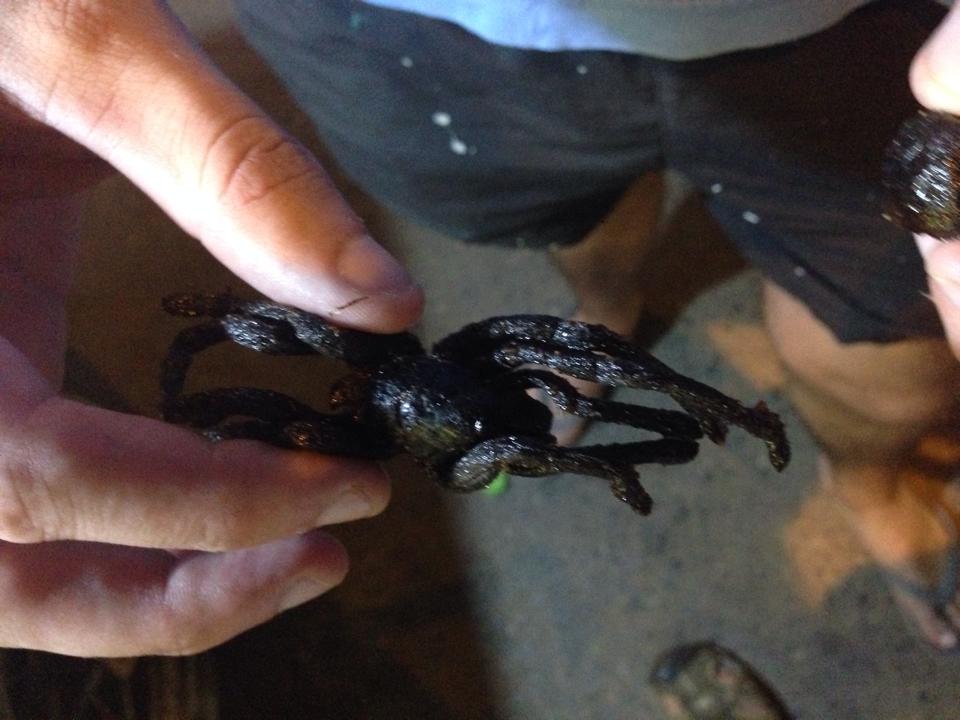
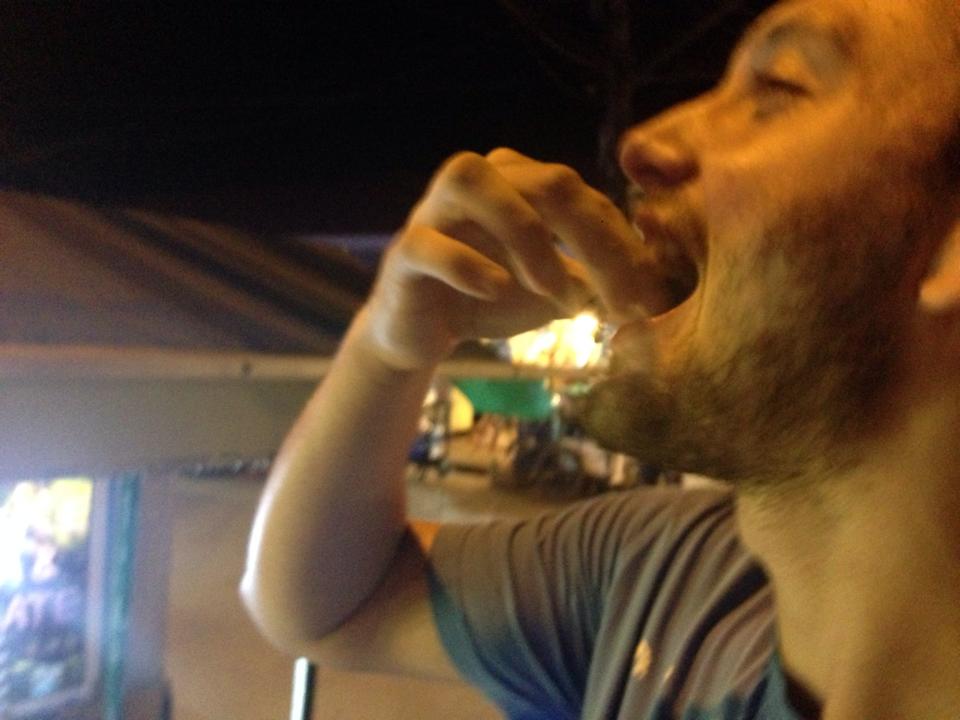
On other trips to other countries I have had virtually every type of bug that is available for sale (I really need to stop drinking before hitting the night markets). As I have grown older (and supposedly wiser) I tend to eat less of the freaky stuff and stick to tasty local delicacies. For the most part, once you have eaten a scorpion you don’t really need to keep eating them everywhere you go. As such, my current intake of bugs and creepy crawlies has dropped off significantly. I am still more than happy to try new things however do not intend to retrace ground already covered.

The BBQ

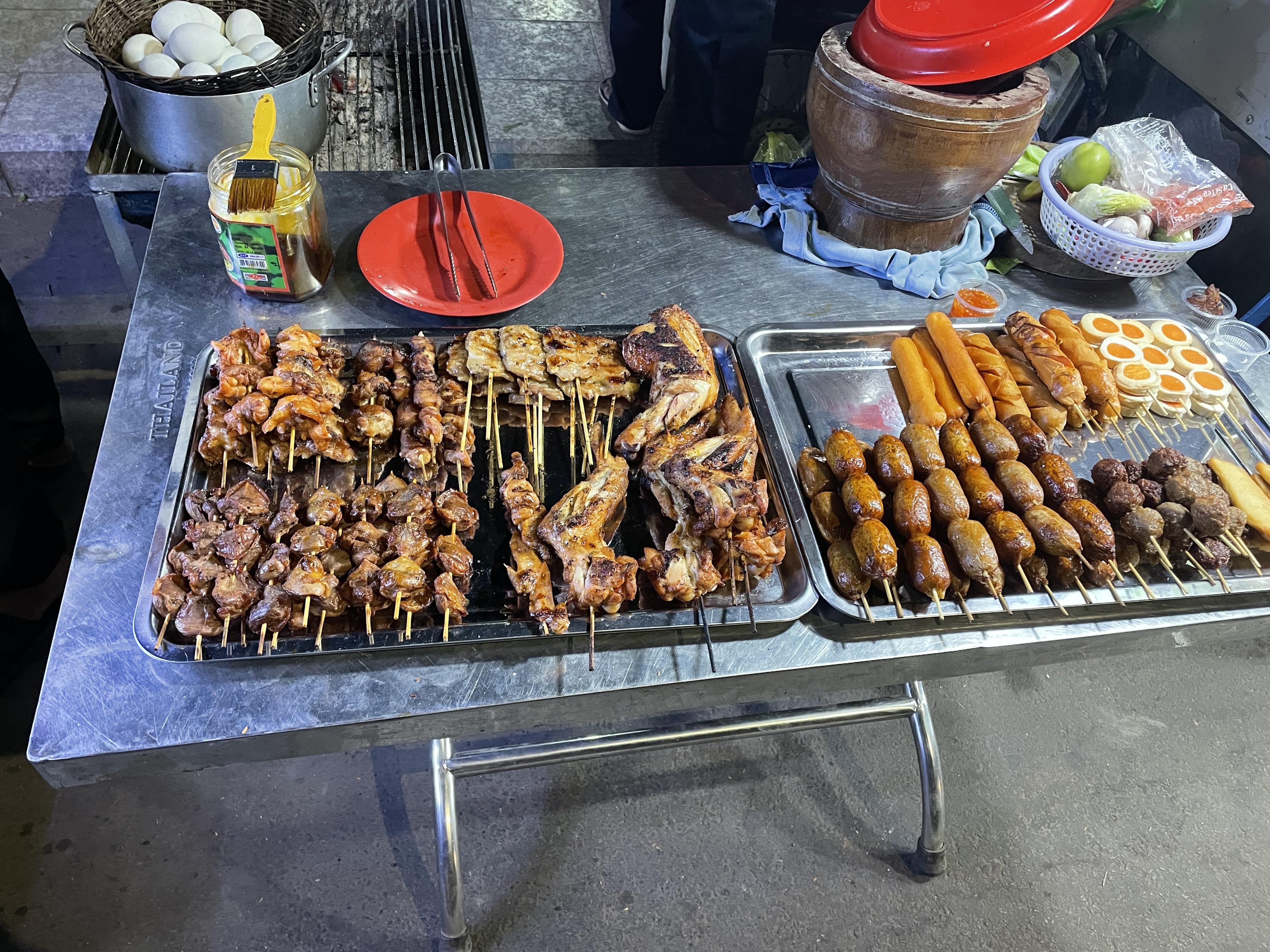
As with almost everywhere in Asia there will be drums with fire and there will be various meats and vegetables on sticks ready and waiting to be grilled. Some of these items will be identifiable while others will not. For the most part this is where flame meets meat and at this point very little really can go wrong. Stare at something that looks good, point at it, raise the number of fingers that you think will be enough, and wait. A few short minutes later you will be a couple of dollars poorer and have had a meal. Our most expensive foray into these BBQ’s this trip was the $2.50 for the quarter chicken.
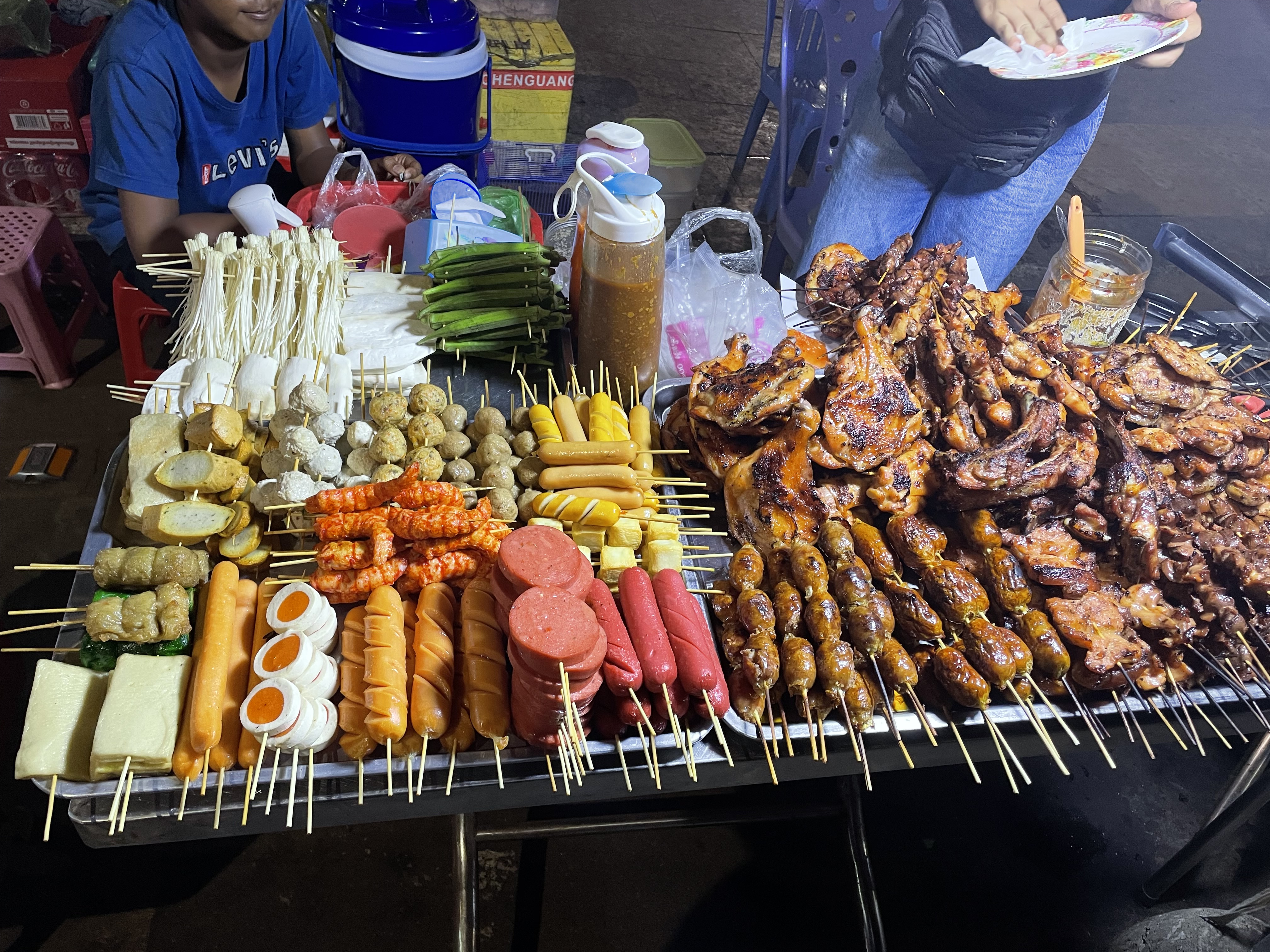
As can be seen from the photo above the options of things that can go on a grill are almost endless. Random sausage type things abound, mystery meats and odd looking balls are always regulars on the table as is a usual nod towards tofu and some vegetables. Pick the ones that work for you, point at it and then just dig in.

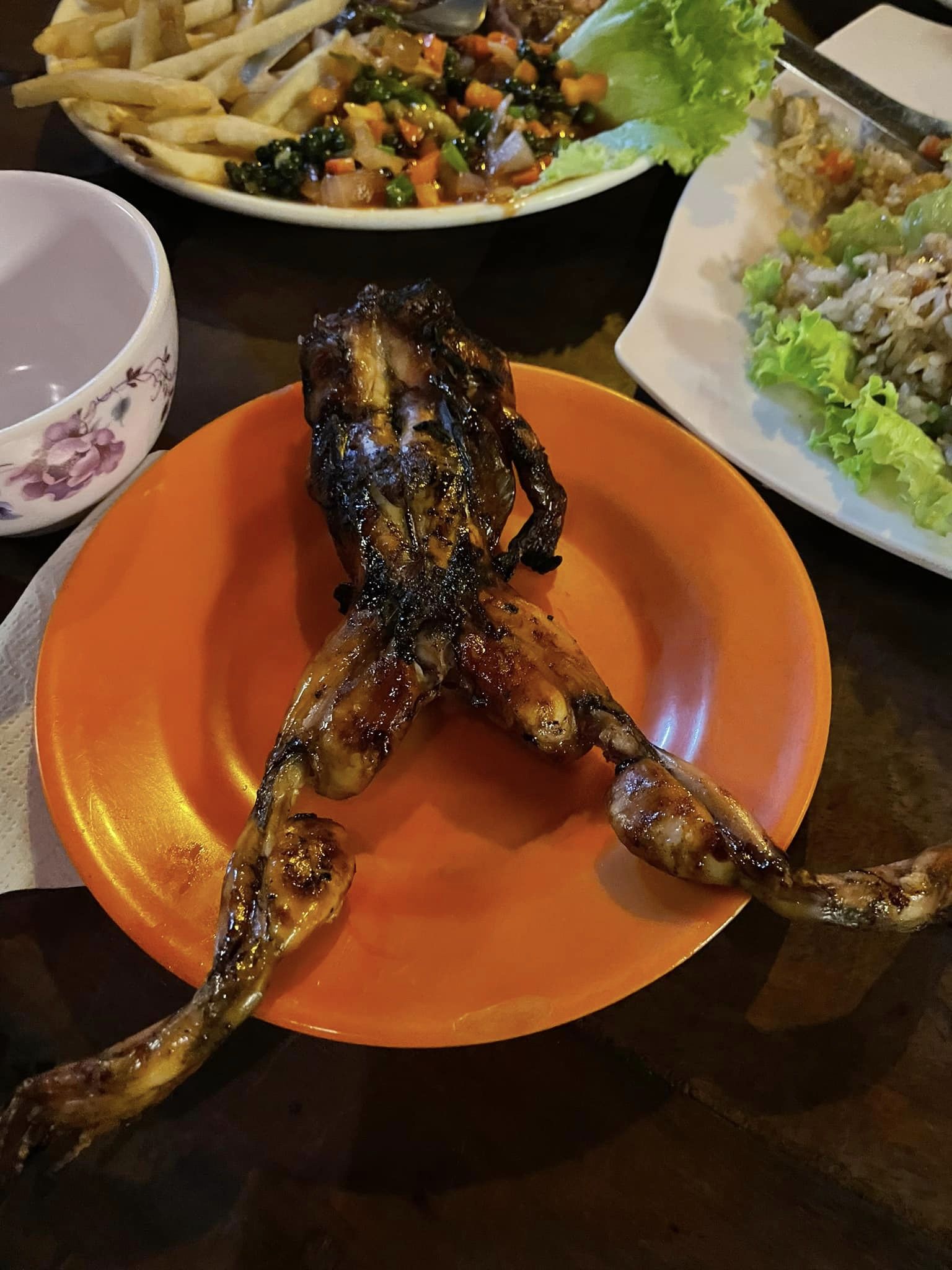
One of Jill’s personal favourites that fits both the weird and the BBQ categories is the barbeque bullfrog. I think the first time we had this was on a street food tour in Vietnam. We then found it again in Laos and have now also had it now here in Cambodia. The Cambodian version involves covering the bullfrog in a tamarind sauce before grilling over the ubiquitous charcoal drum. We got three bullfrogs for our serving size and tucked in accordingly.

This was neither difficult to find nor considered particularly unusual. It was just a normal item on the menu.

Desserts

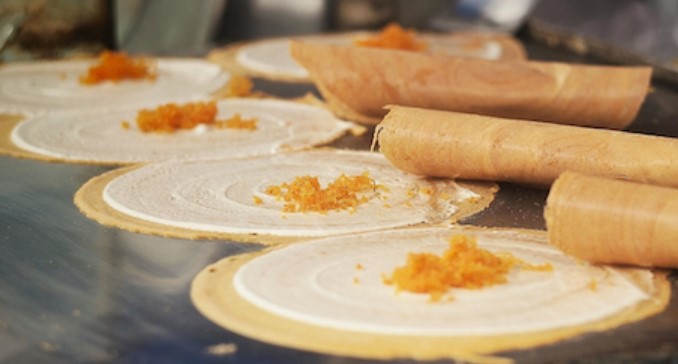
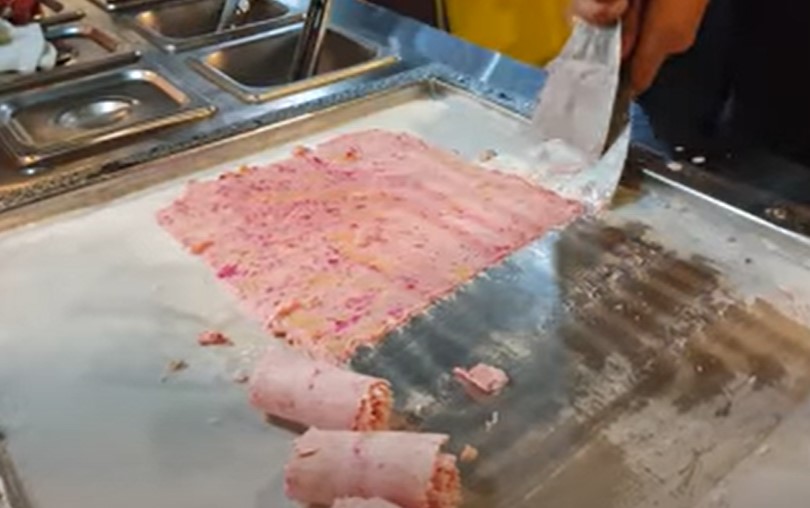
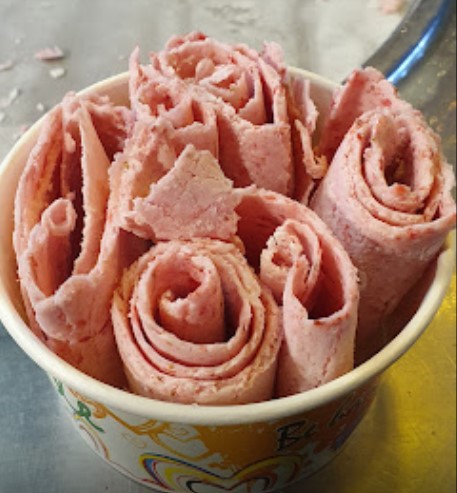
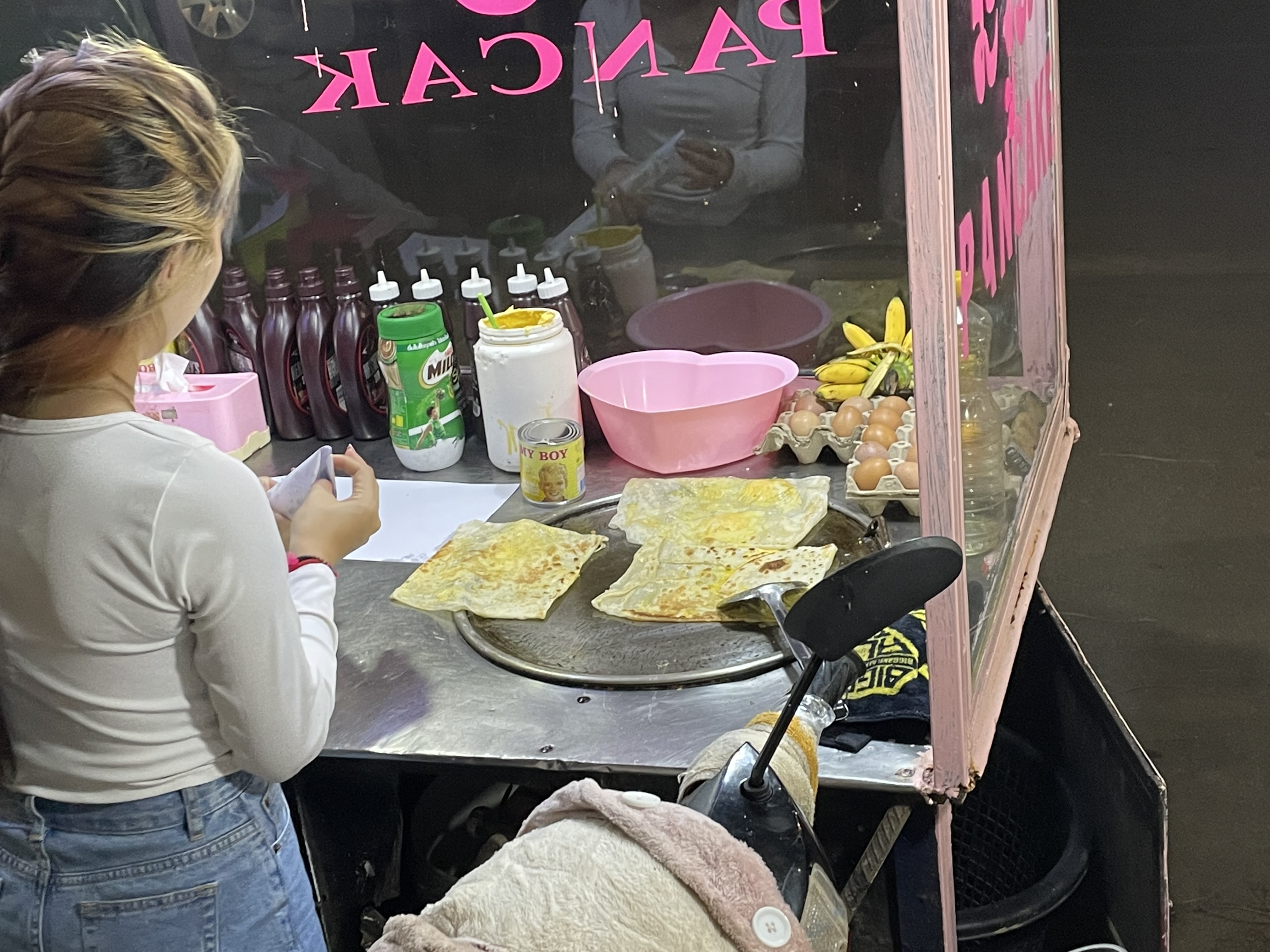
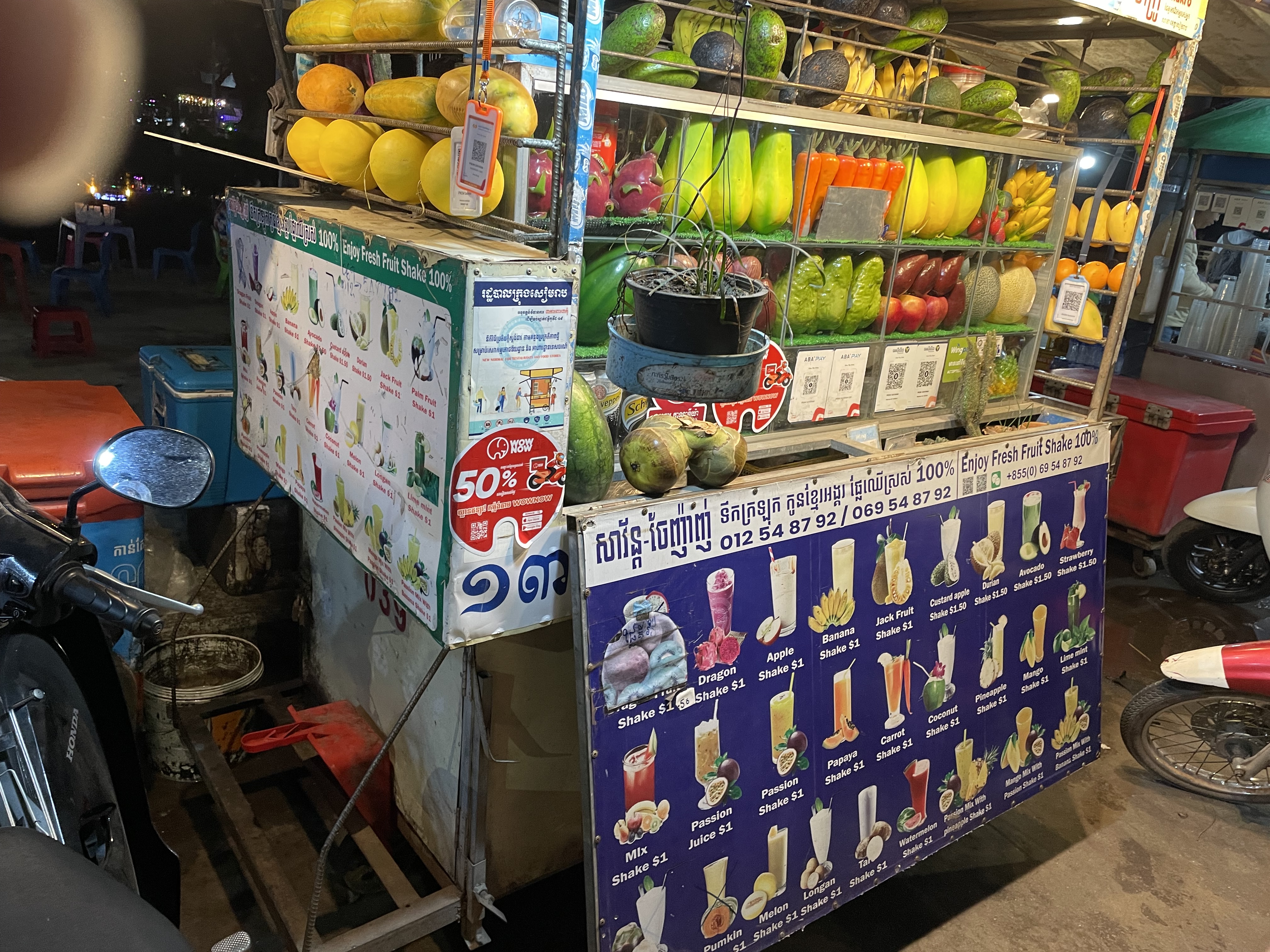
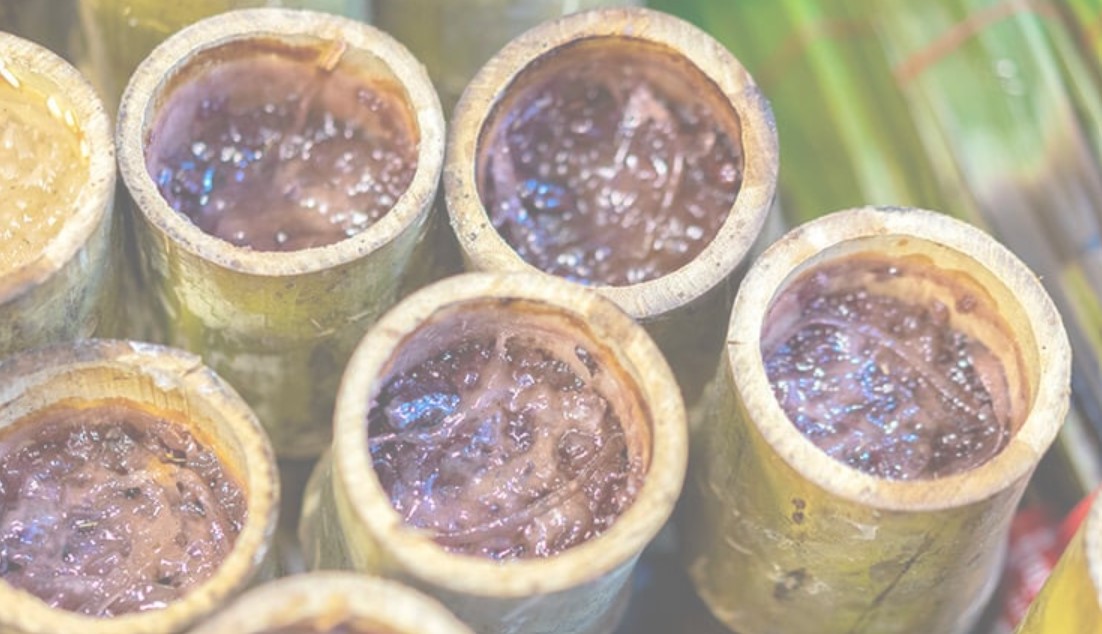
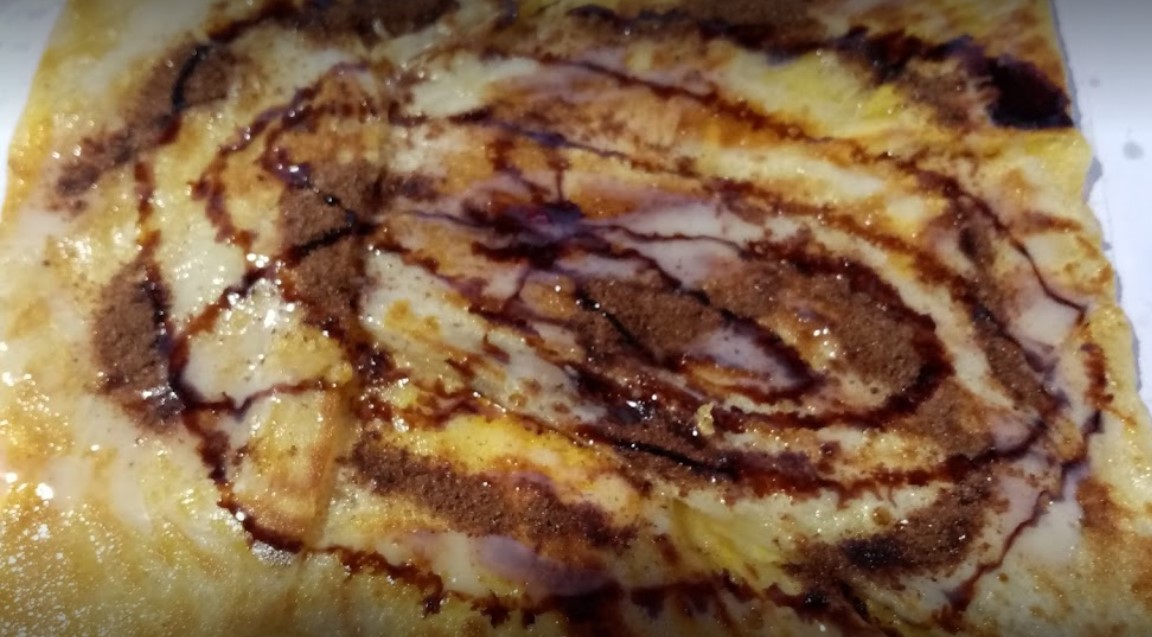
Desserts are an interesting concoction here in Cambodia, fruits and juices abound and a bunch of tuk tuk attached stalls have plenty of options for you to choose from. The first night we found the pancakes for a dollar. These involved the thin crepe type batter being stretched and folded and fried in front of you while any number of toppings were an option, the go to certainly seemed to be banana and chocolate. Cambodian bamboo sticky rice (Kralan) is traditional and is cooked with coconut milk and soybean in a bamboo tube, however these tended to be available as you travelled to the outer temples and I haven’t seen too many in town. The next one we tried was the Fried ice cream. This is not really fried and is only notionally ice cream. It is fruit and cream mixed together on a cold surface in front of the tourists to extract some ($2.50) of their money. And the winner is…coconut crepes, these thin crepes are made on the streets and are sold for 25 cents. These eclipse the others by so far it isn’t funny.
Motorbikes and Monster trucks

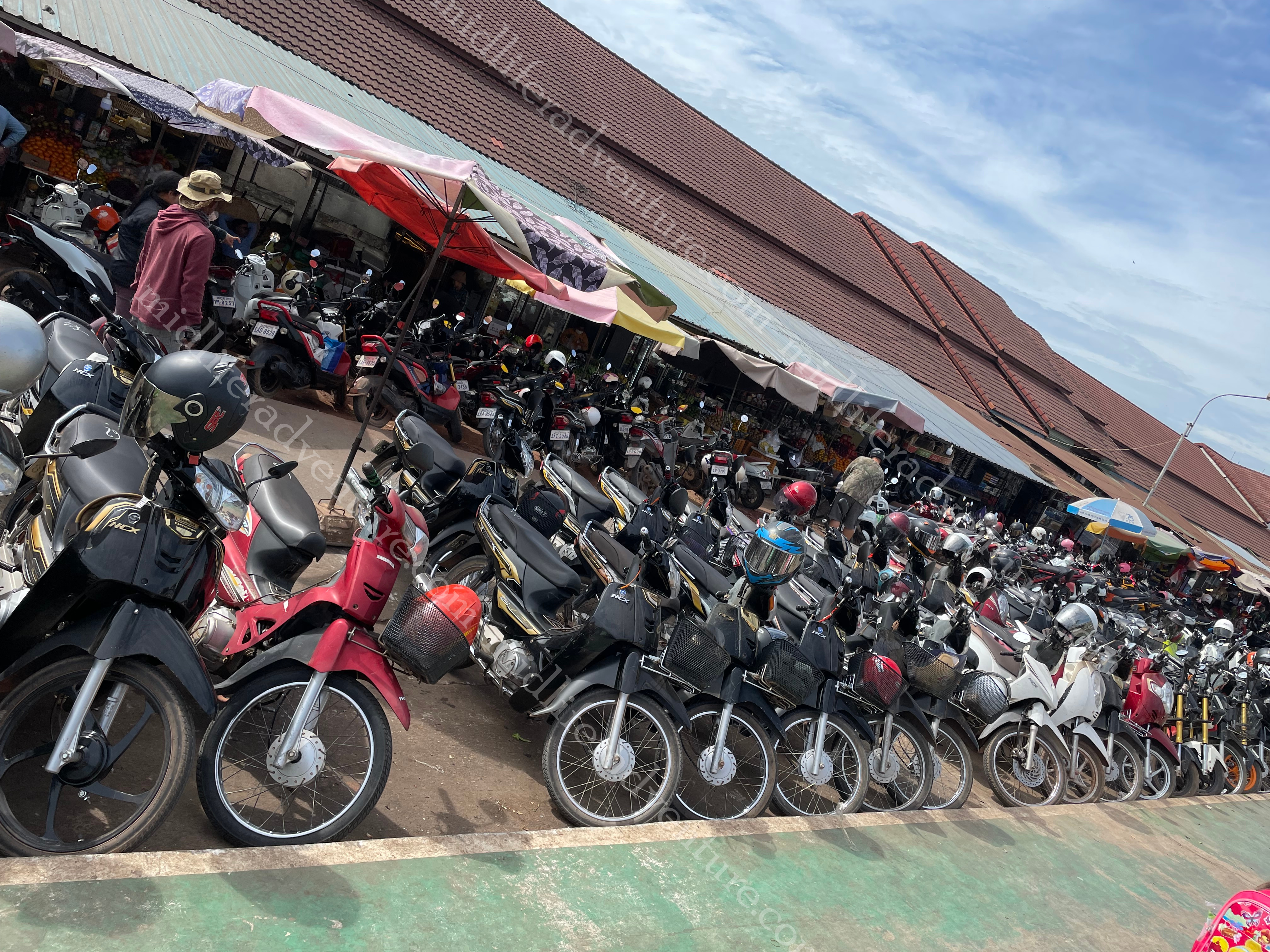
Motorbikes and tuk tuks are commonplace throughout Asia in fact motorbikes are so ubiquitous that it is virtually impossible to go a few seconds without seeing (or more likely dodging) one. Every evening the streets become choked with parked bikes making even the simplest of walks into an exercise in maze running.
But a new feature on the landscape within Cambodia is the introduction of monster trucks. It seems that almost every second vehicle (excluding bikes and tuk tuks) is a monster truck. It starts with the generally very big trucks like the Ford Rangers, Mazda BT50’s, Toyota Hilux’s and even the odd Nissan Navara. Now these are pretty big trucks to be driving around the narrow streets of Asia however from here things start getting ridiculous with the REALLY big trucks coming into play.
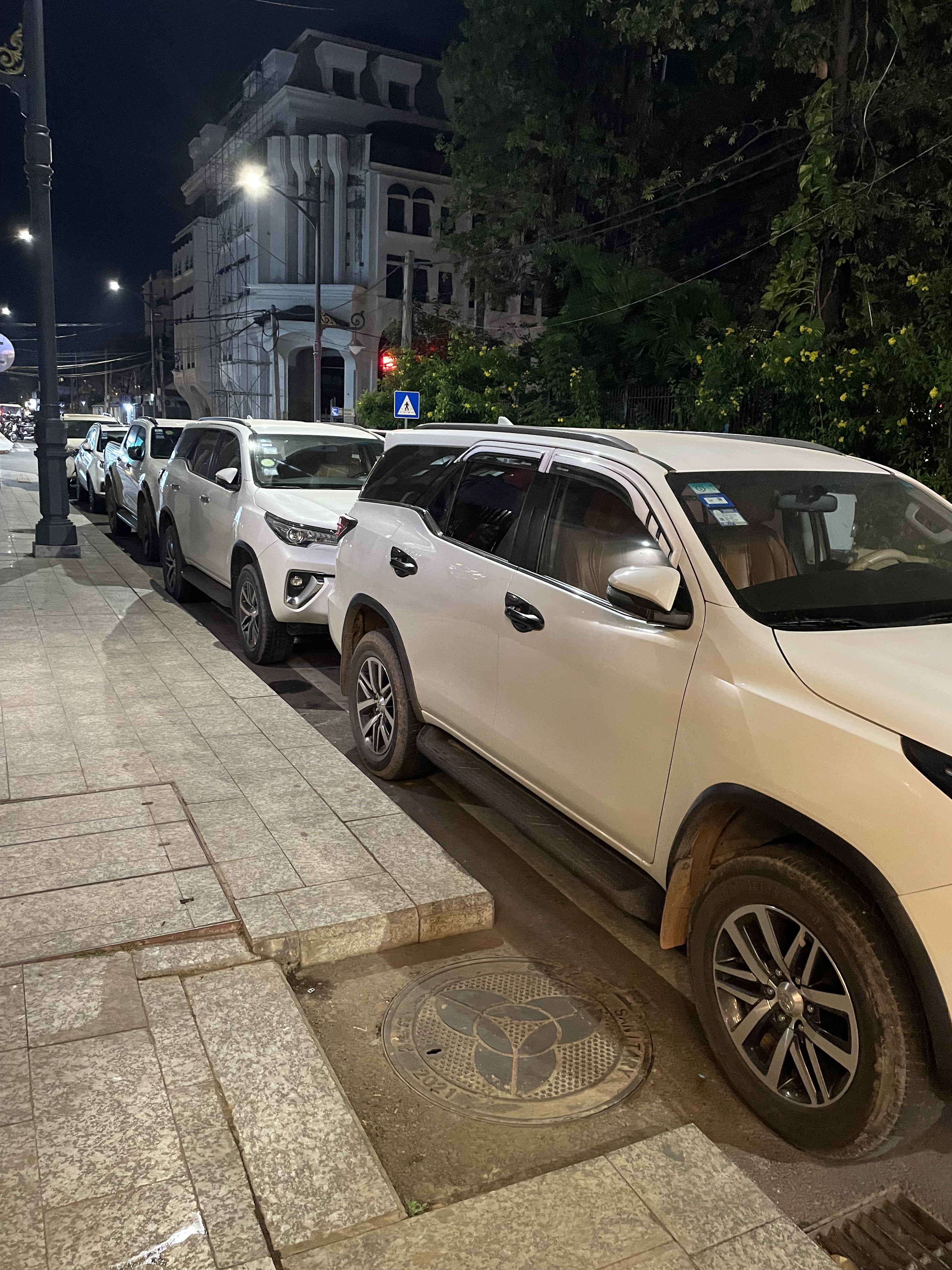
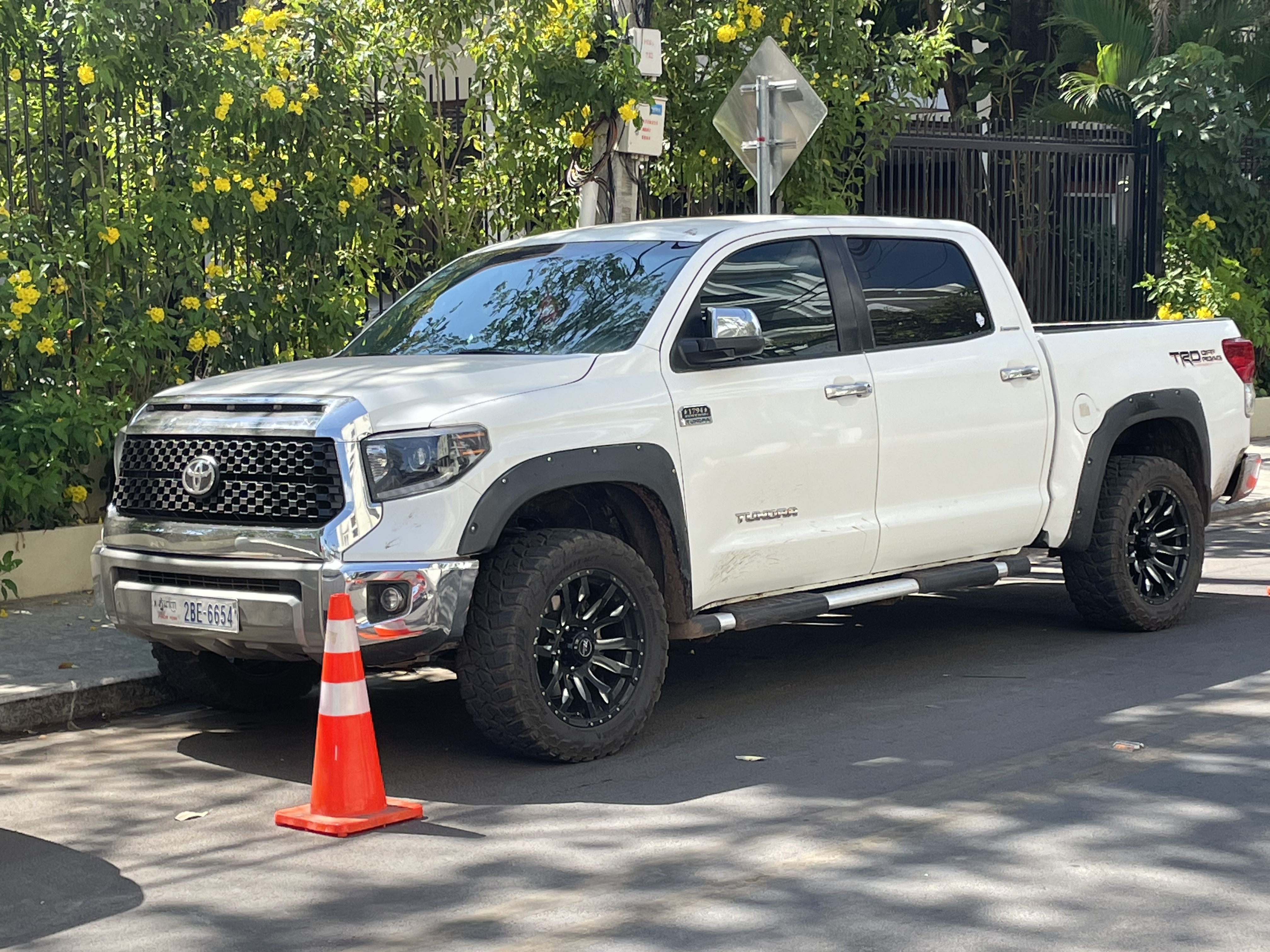
Things like the Toyota Tundra, Ford Raptor, Dodge Ram, and Chevrolet Silverado’s. These are truly massive vehicles and really seem out of place trying to park within the centre of Asian cities. But they are everywhere.

Markets in Siem Reap

Markets are the lifeblood throughout most of Asia. There are two main types of markets to be found the tourist markets and the local markets. The tourist markets are usually hellish spots as touts harass you to buy useless trinkets and souvenirs. For those on short stay trips these make for the perfect spots to buy things for those left at home in a feeble attempt to make them feel like you were thinking about them. In Siem Reap the old market along with the night markets (both noon and Angkor) cater to this type of thing perfectly. If you are looking for something a little more authentic then the Made in Cambodia market may be for you. Focussing on local products and artists things are a little less cheap and tacky and a little calmer.

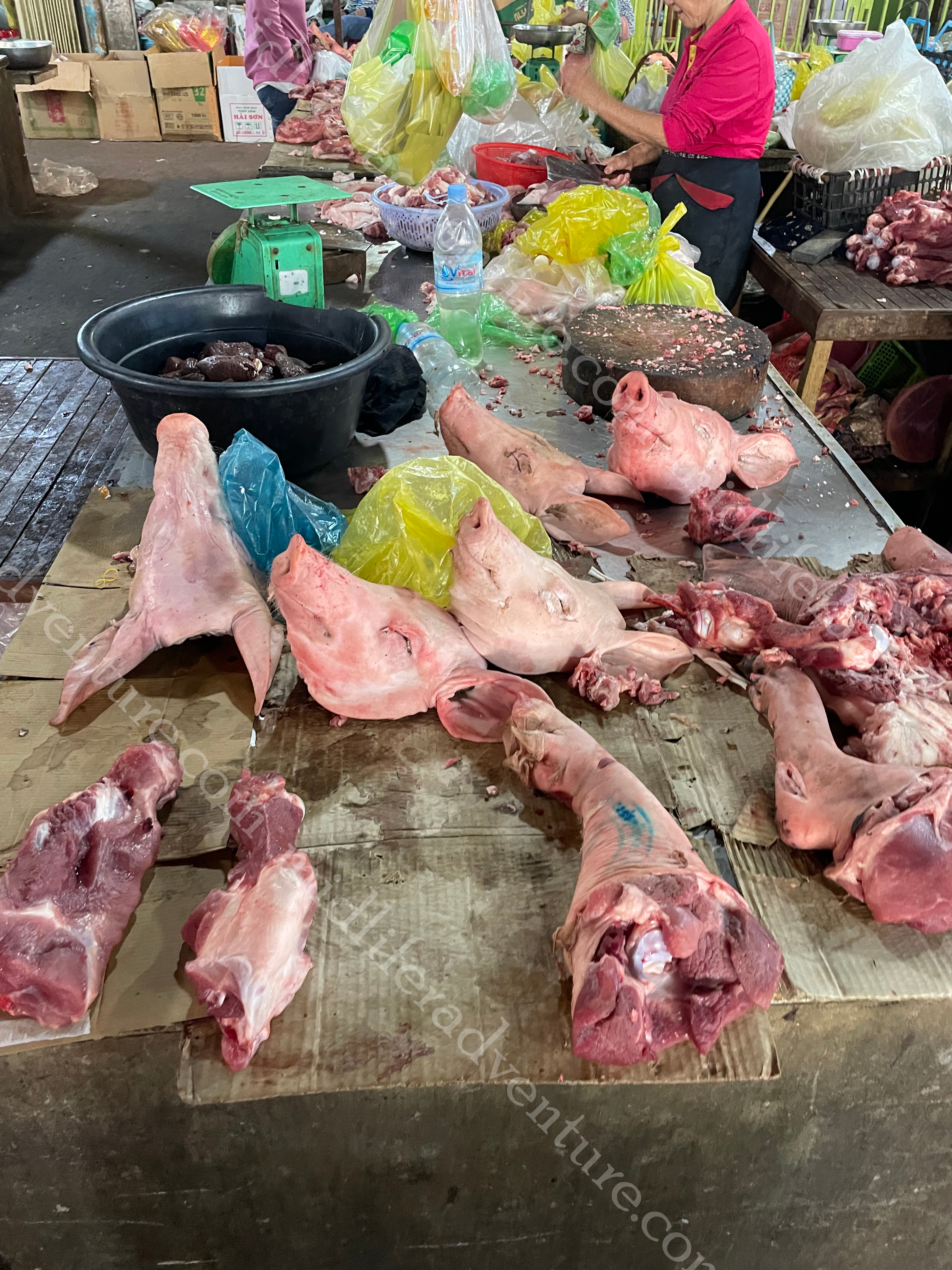
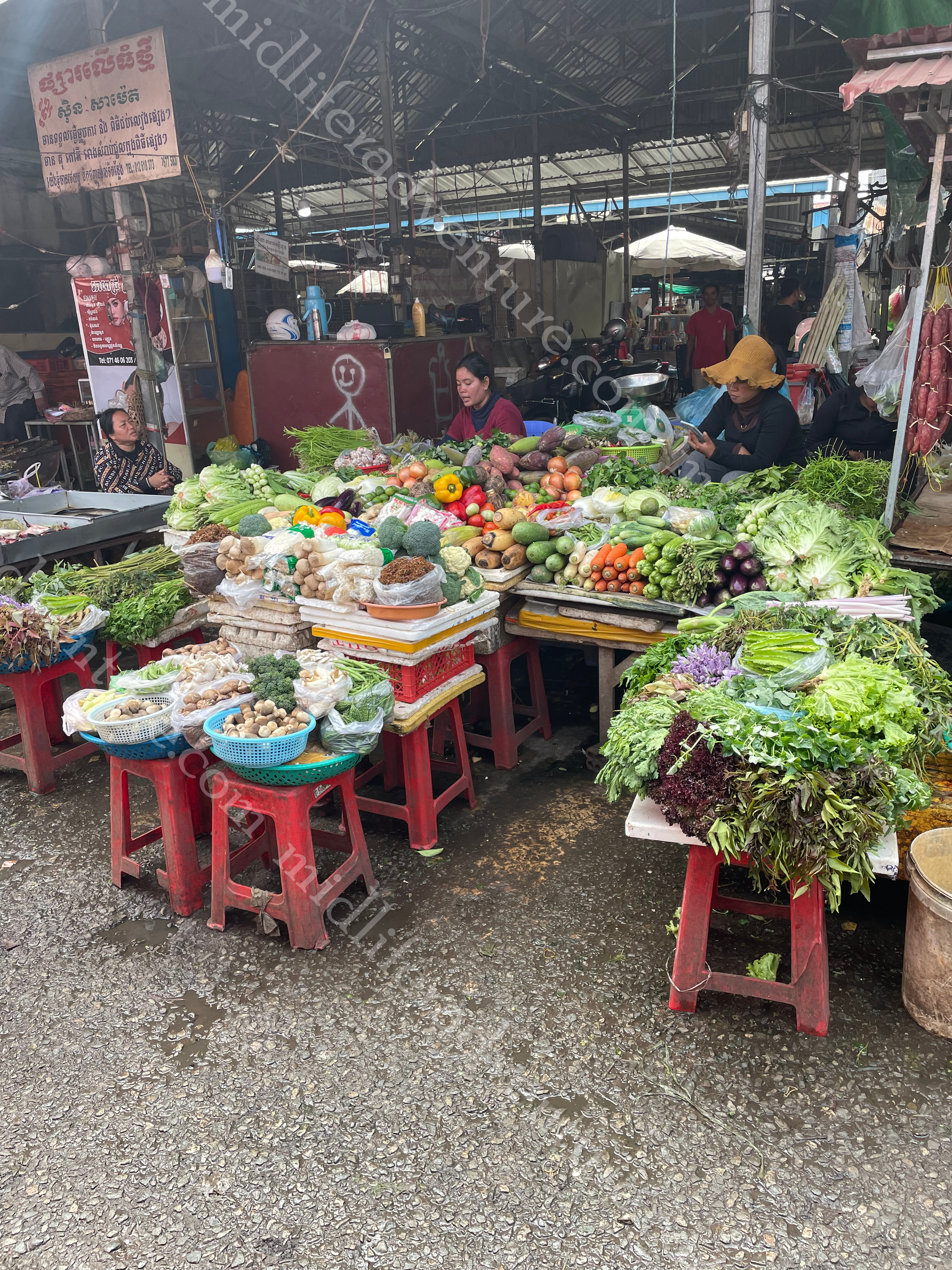
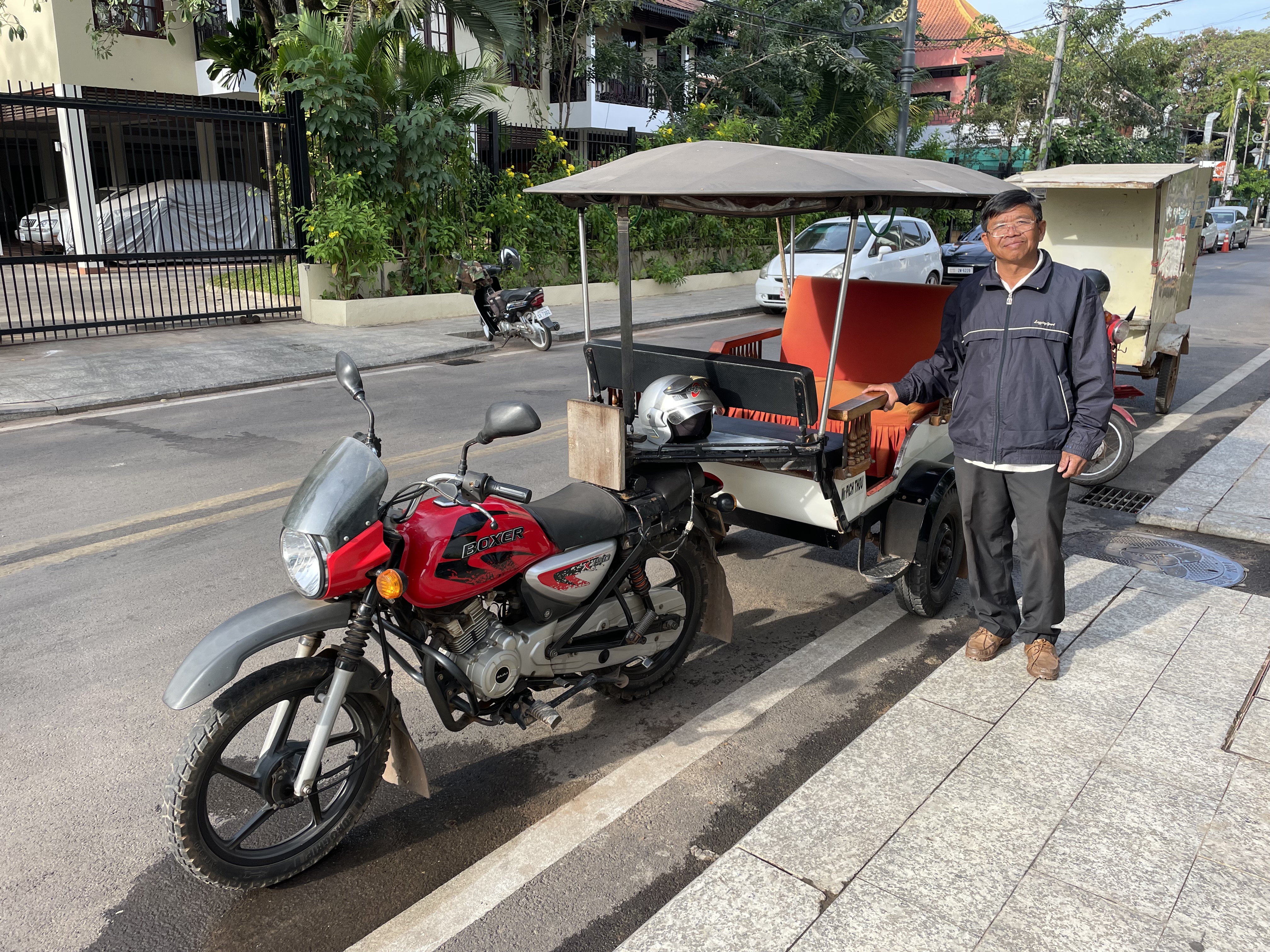
And then there are the markets for the locals. We saw the biggest one as we drove past it on our way to visit the Roulos Group of temples – Phsar Leu Thom Thmey. We tapped Mr Thou on the shoulder and asked what that market was and could we stop and visit it on the way back. He happily obliged. Phsar Leu sells real items for the local consumers – but be warned this place is both huge and a maze and once in you may never get out. Here there are huge number of stalls selling everything you could imagine. There are gold stalls, fresh fruits and vegetables, food, footwear, clothing by the acre and the ever present wet markets. Butchers and fish mongers abound as live fish flop about in shallow buckets. This place is truly an assault on the senses, but it is pretty commonplace for those who live here.
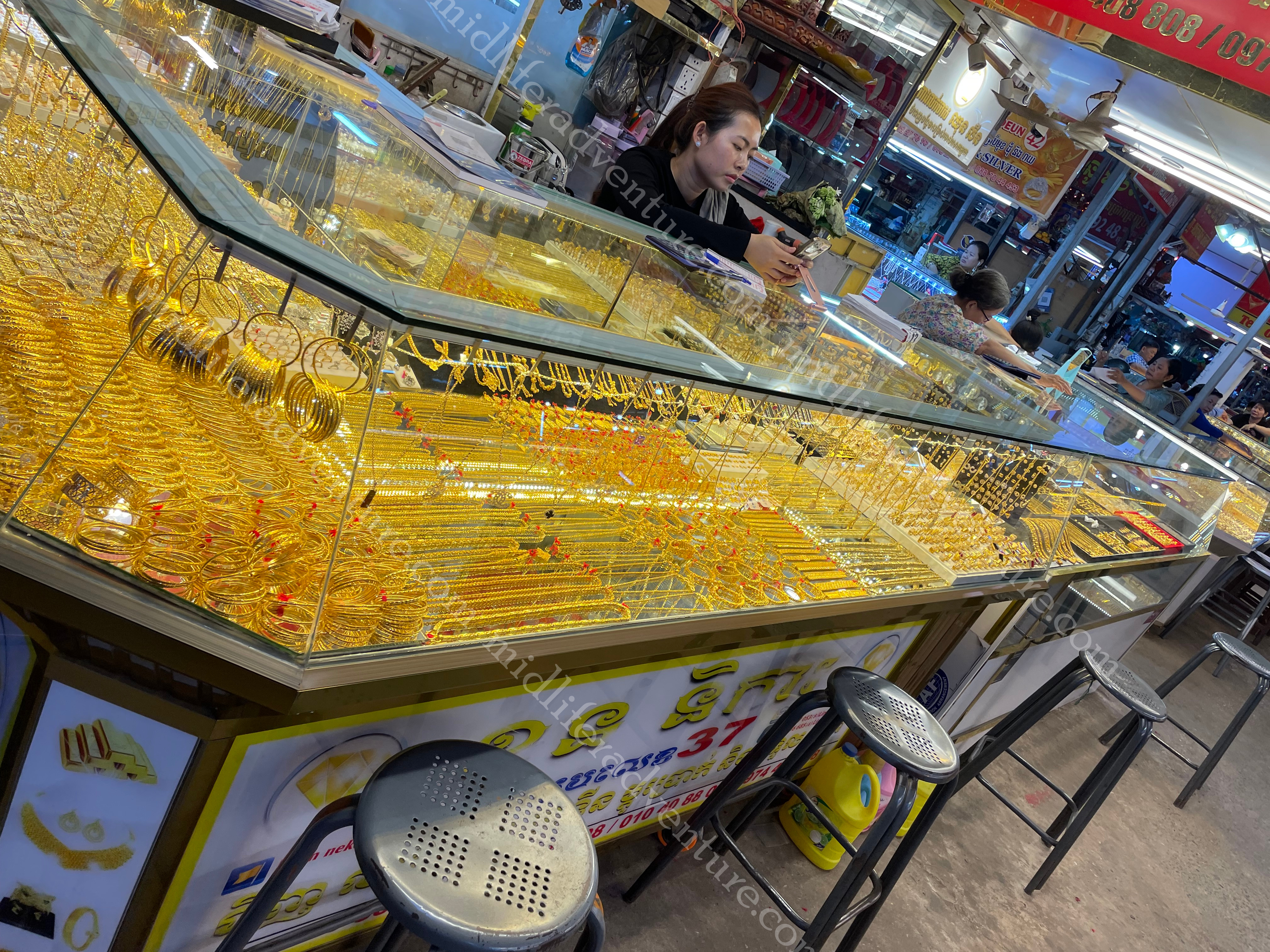
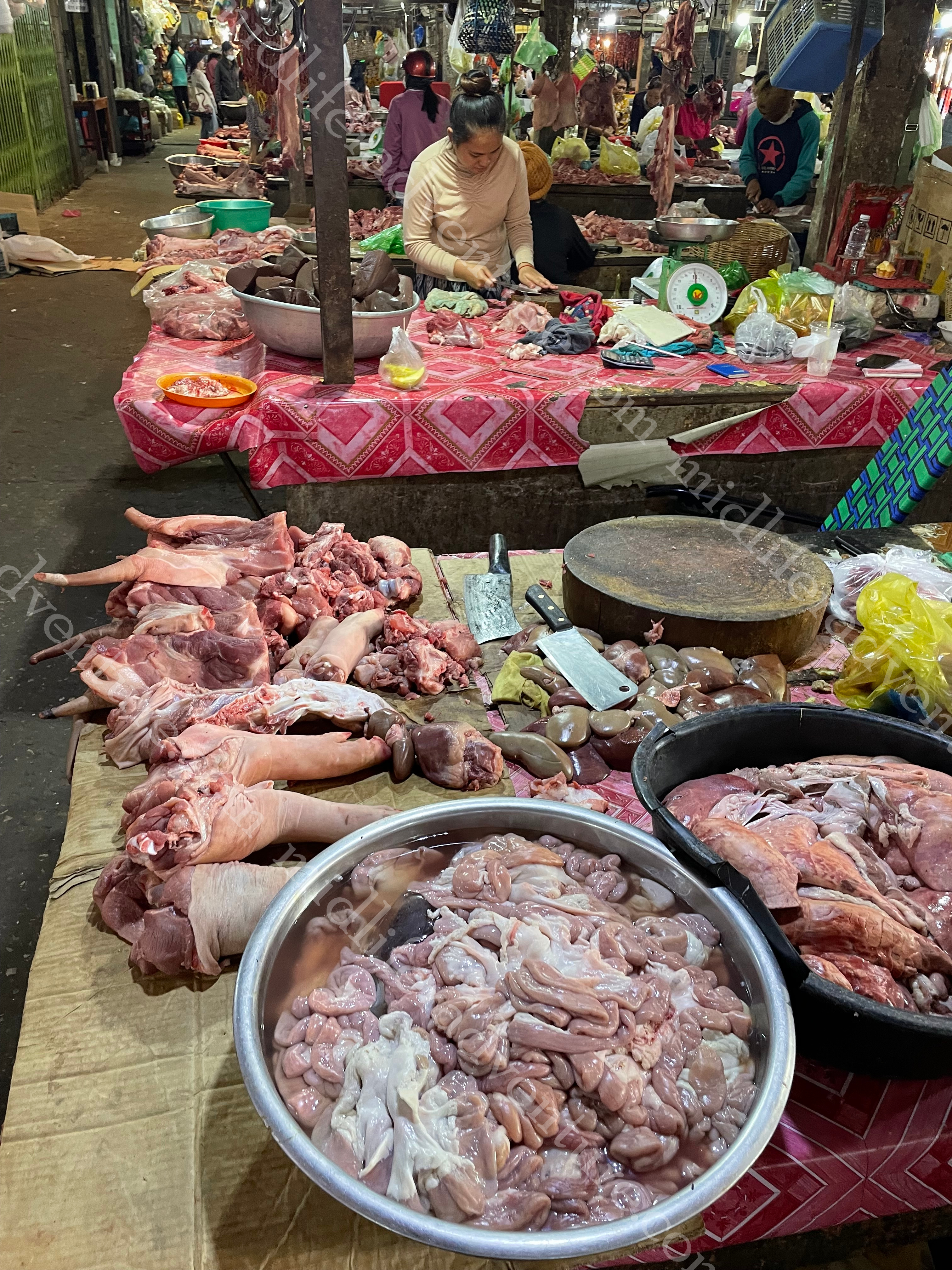
And importantly as a tourist you can walk through without getting harassed.

Chiang Mai

Our previous forays into Thailand saw us in Bangkok and in Phuket, neither of which really appealed to us at all. The food has always been good (with the exception of the coriander) however the general feel of these two areas have been too touristy and aggressively in your face for our liking.

So this trip we thought that we would head north, up into the mountains near the Laos and Myanmar borders. Another area with lots of old temples and hopefully some great food options. Myanmar was one of our favourite countries to visit, however, the current political situation has made it an international no-go zone, we figure we will be close enough to the border that some of the culinary offers may have leaked through the border.

About Chiang Mai

Chiang Mai was founded in the 13th century (1296) and is set high in the mountains. It was the capital of the Lanna Kingdom (18th and 19th century) where it was (and remains) the religious and cultural centre of the region. The old part is a walled city with 4 gates.

Within the walls of the old city, the narrow streets are filled with shops, bars, restaurants, markets and more temples than you count. In the centre of the Old Town are the temple ruins of several temples along with many brand new and functioning ones. In fact there are over 300 wats scattered throughout the city and surrounding countryside.

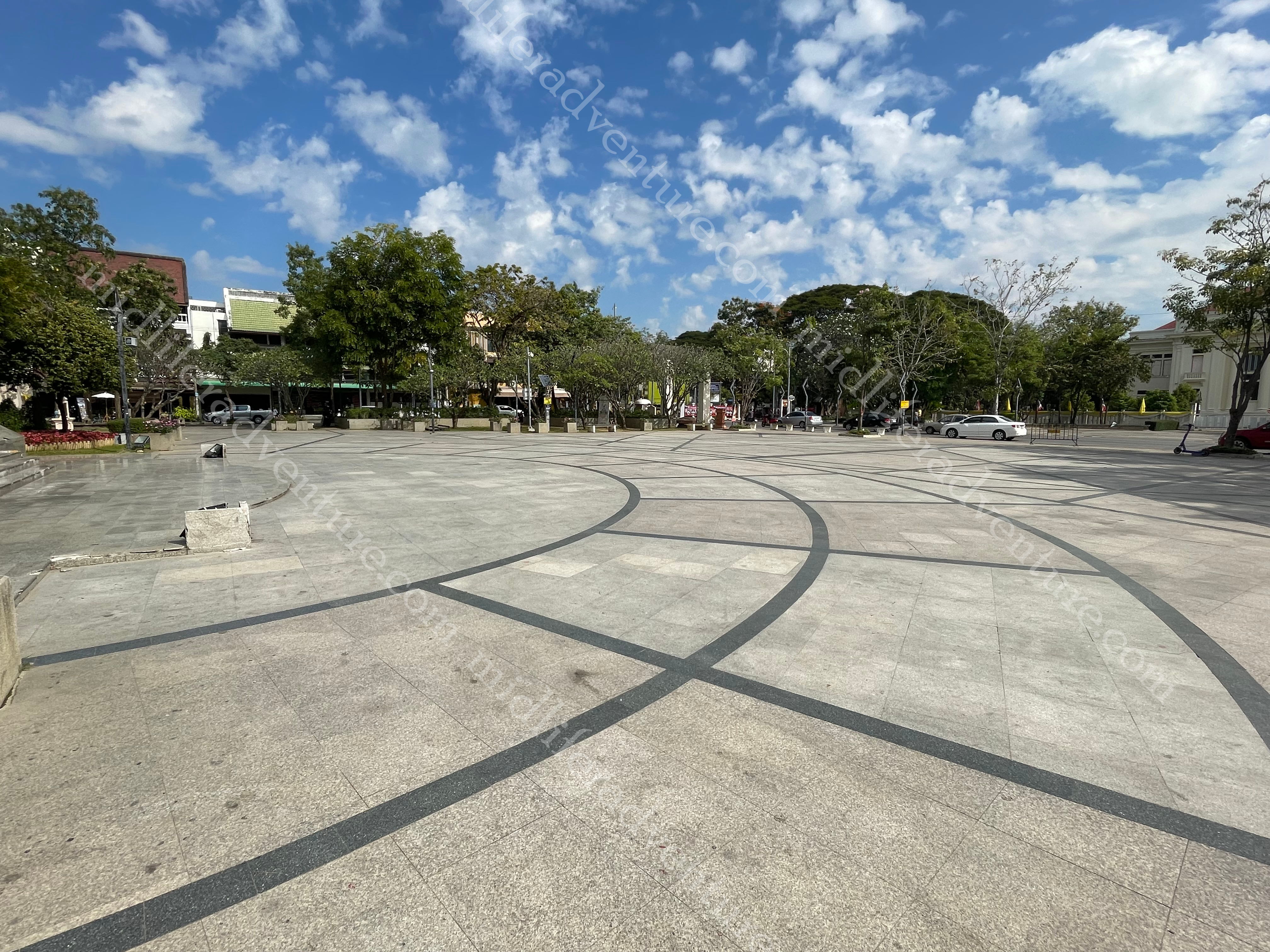
Dead centre is the Chiang Mai arts and cultural centre along with the Three Kings Monument with the Wat Inthakhin Sadue Muang Temple just to the left as you look at it.

The Temples (Wat)

The sheer number of temples (known as Wat) within the walled city is amazing, you virtually cannot walk a block without hitting at least one, often times more. The other thing that is fair to say is that one Thai temple is remarkably similar to the next and the one before.

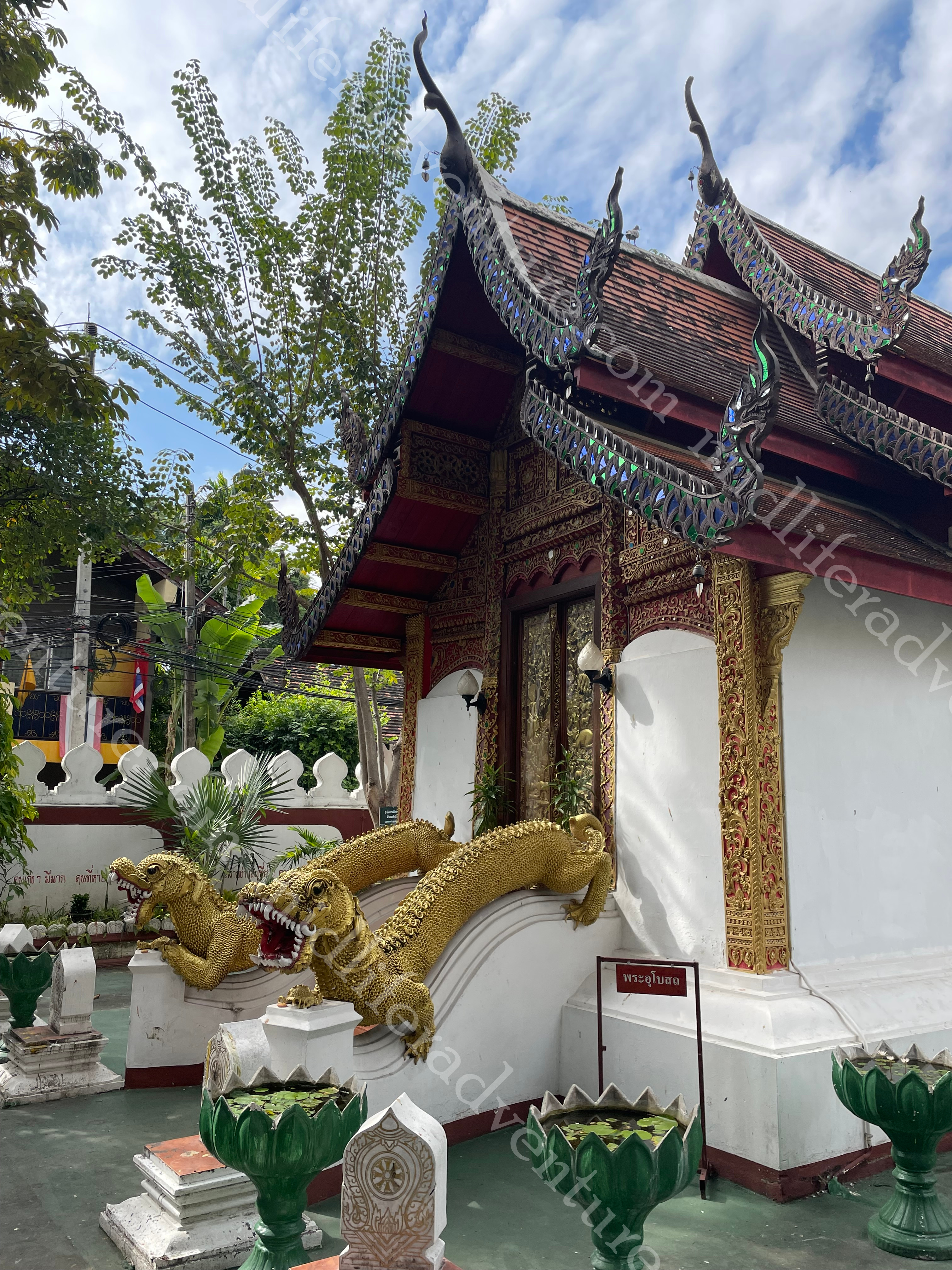
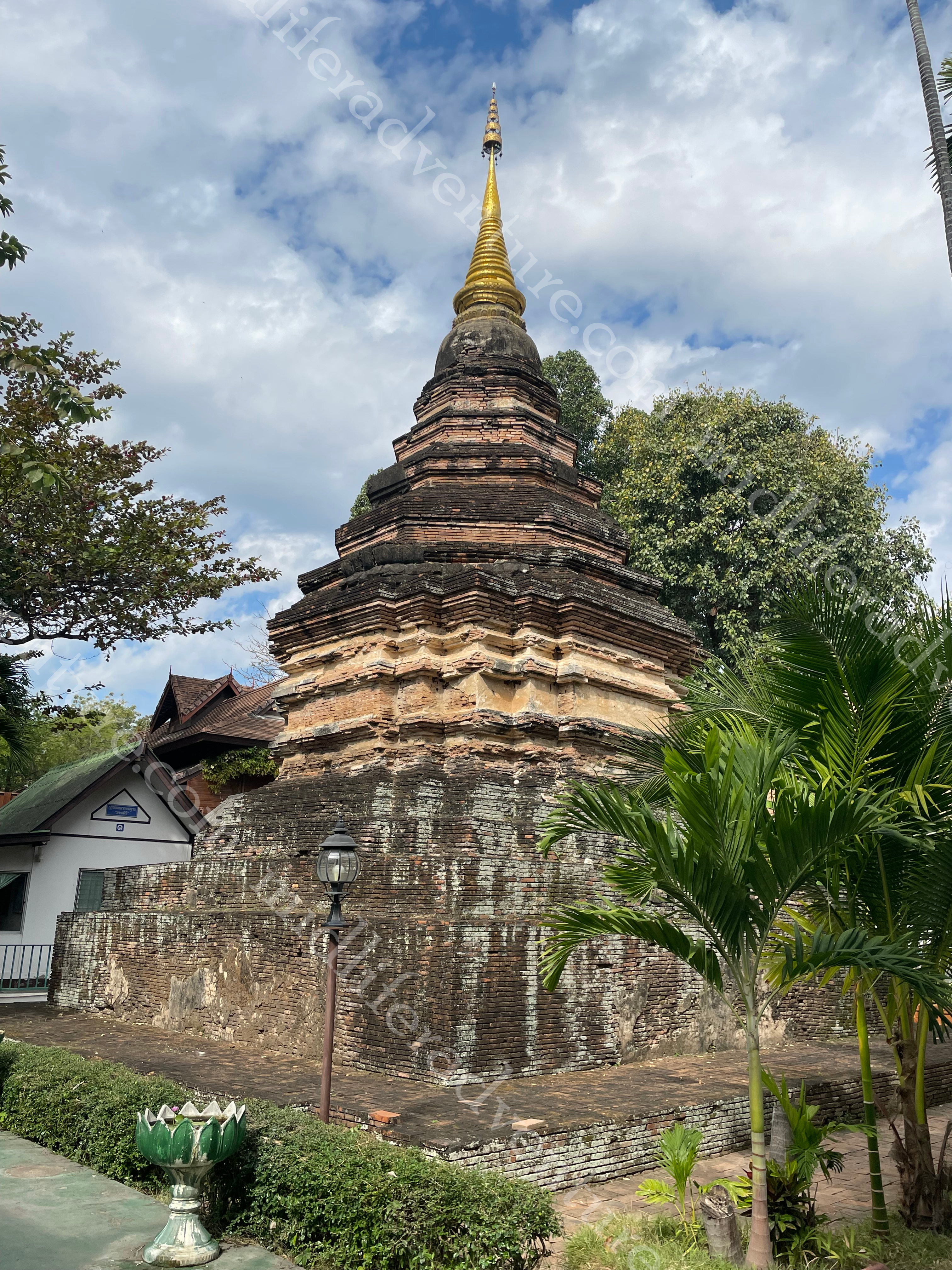
The anatomy of each Thai temple is pretty similar, there is the Phutthawat which is the area devoted to buddha. It can contain several buildings but would typically include a Stupa (Chedi) the bell shaped tower, prang (a tower), an ordination hall (bot), shrine/s (wihan), and several pavilions (sala) for receiving religious education or merely for shade.

The Sangkhawat contains the majority of the working parts of the temple including the kitchen and the monks living quarters, there may also be pavilions in the sangkhawat.

The roofs usually are split into 2-4 tiers and the bargeboards are ornately decorated with a serpent style carving known as a lamyong.

Things to do in Chiang Mai

Our early research showed the abundance of temples, bars and of course food. The Three Kings Monument is in the heart of Old City in front of the arts ad cultural centre. The statue portrays the three founders of Chiang Mai, in the 13th century – King Mengrai, King Ramkhamhaeng and King Ngam Muang.

The gates

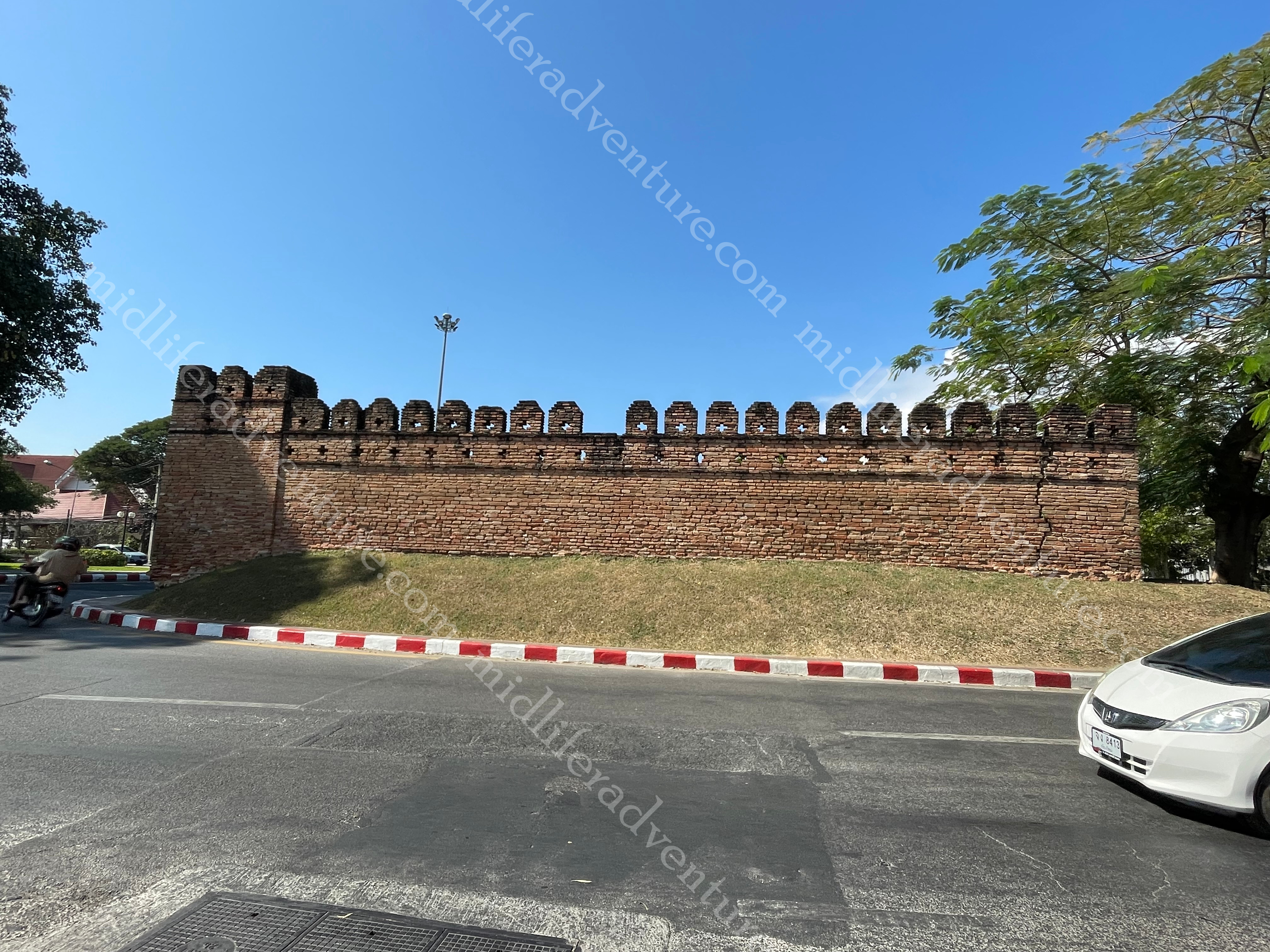
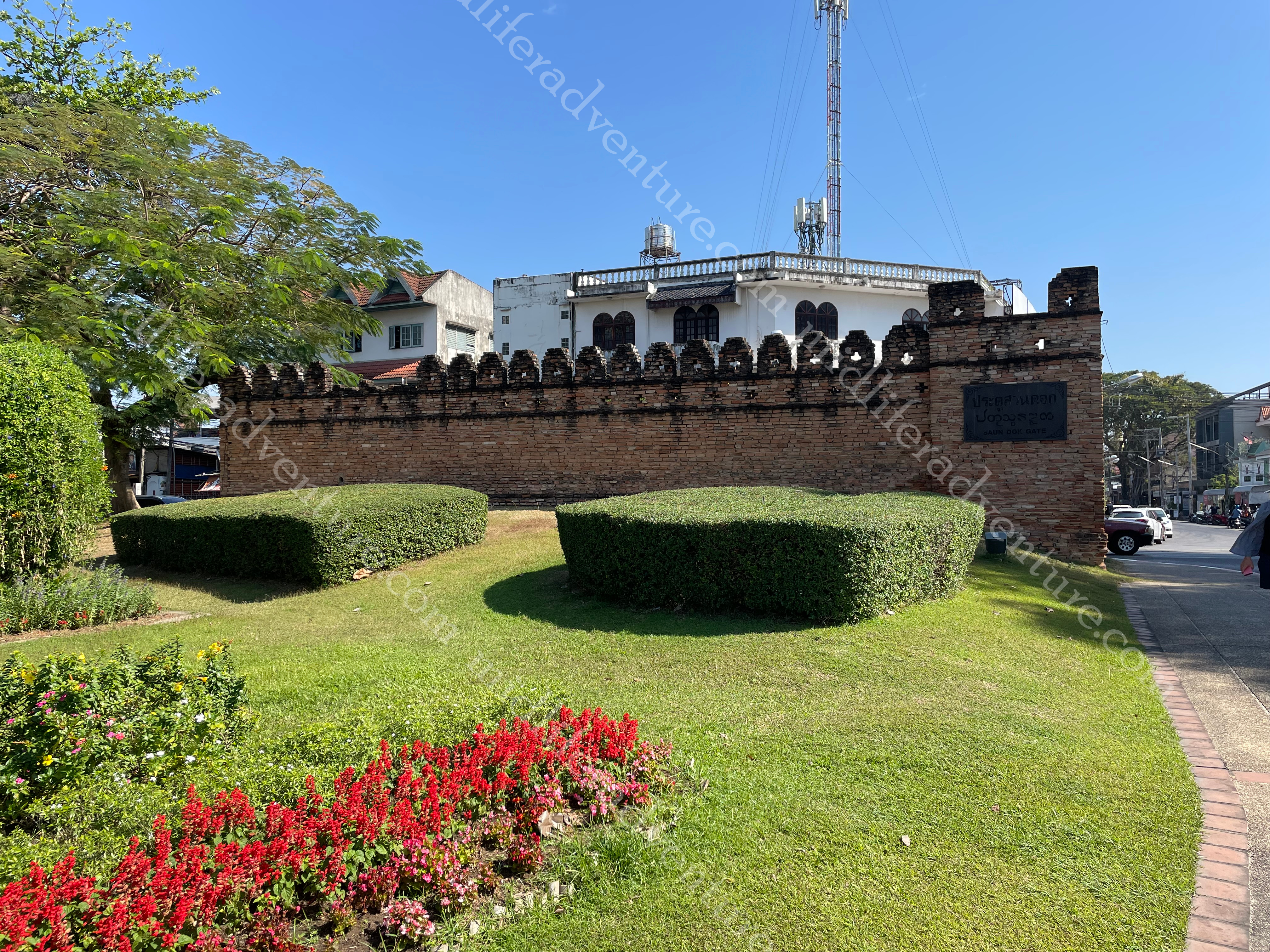
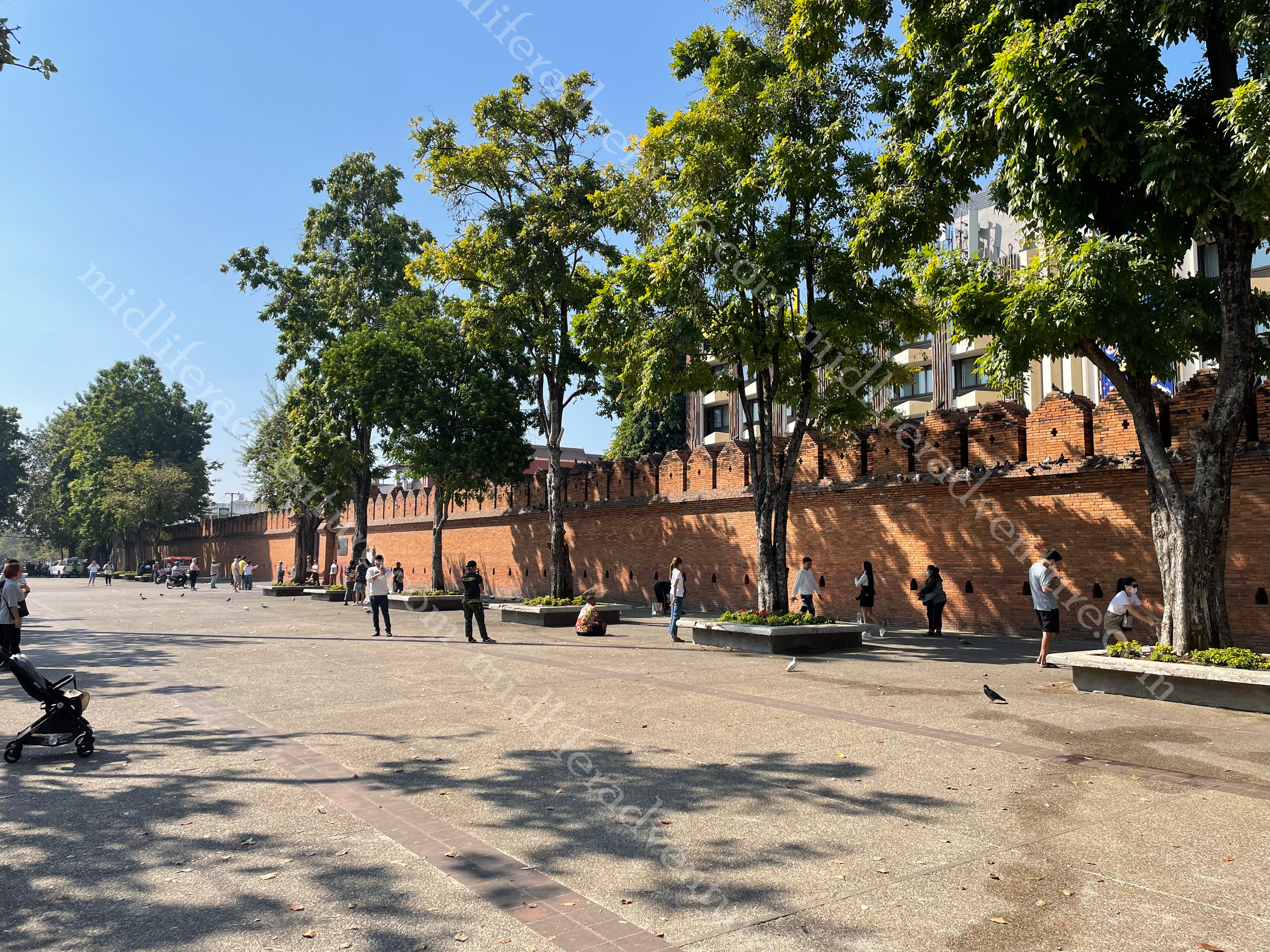
The Chang Phueak (Chang Puak) Gate faces north and is in very poor condition, however it is the site of the best street food markets virtually every night of the week. Head to the gate, take your life into your hands crossing the road and turn left. There are stall after stall selling almost anything you want for not very much…and it is all good.

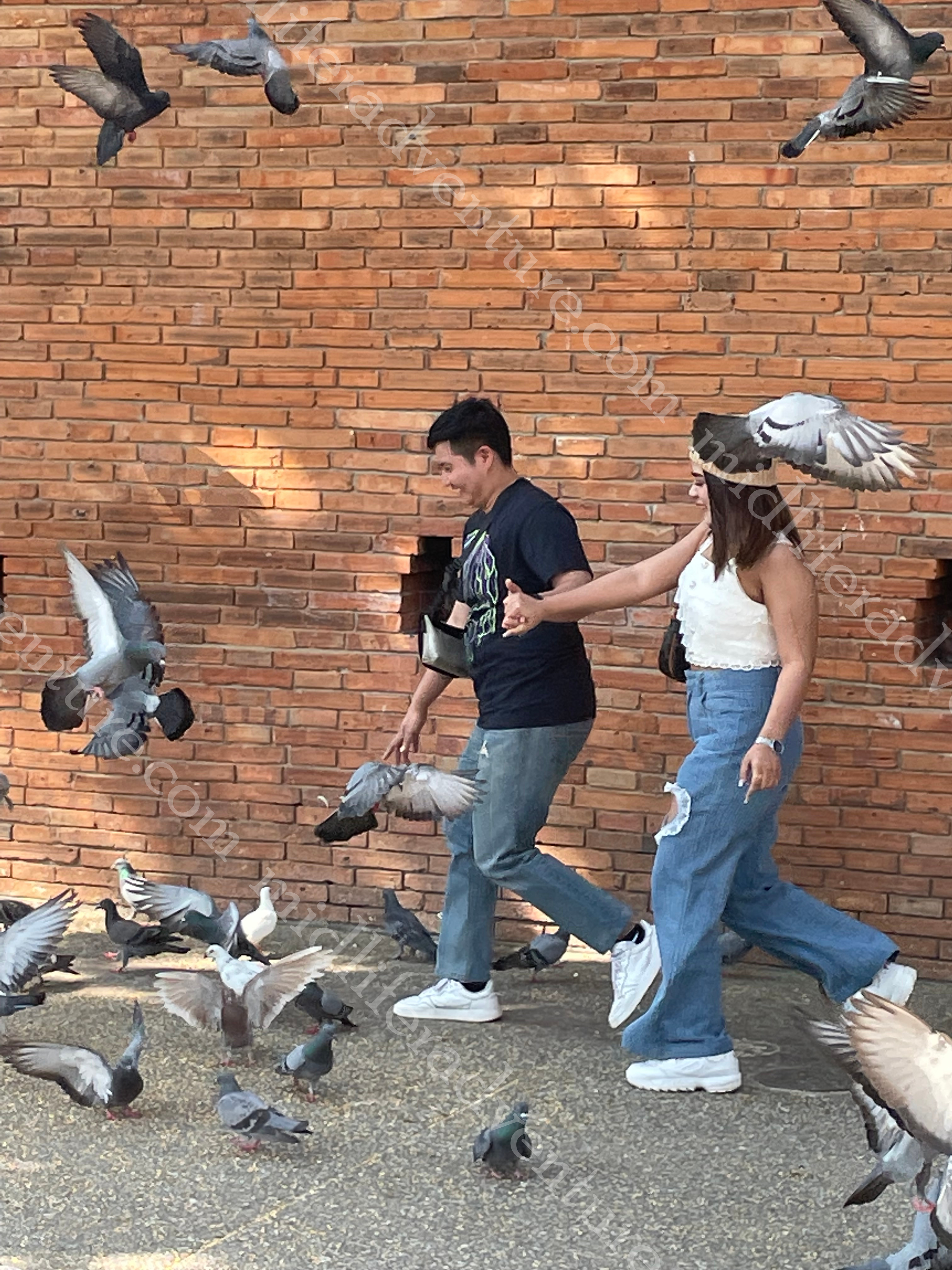
The tha phae gate faces east and is the best, most preserved (renovated) and most tourist friendly of all of the gates of the old city. Because of this it is always busy and has developed an unusual tourist attraction – the pigeons. Groups of roaming touts feed masses of pigeons to get them to cluster then charge tourists money to take photos of them after banging and yelling loudly to get the pigeons to fly. The end result is a lot of noise and some photos of people with birds fluttering about them.

The Chiang Mai gate faces south and is in a reasonable state however due to COVID many of the businesses in the vicinity are closed so many of the shops are not operating.

The Suan Dok gate is to the west and is possibly the second best preserved of the gates. However similar to the south gate many of the businesses are not currently operation (early 2023).

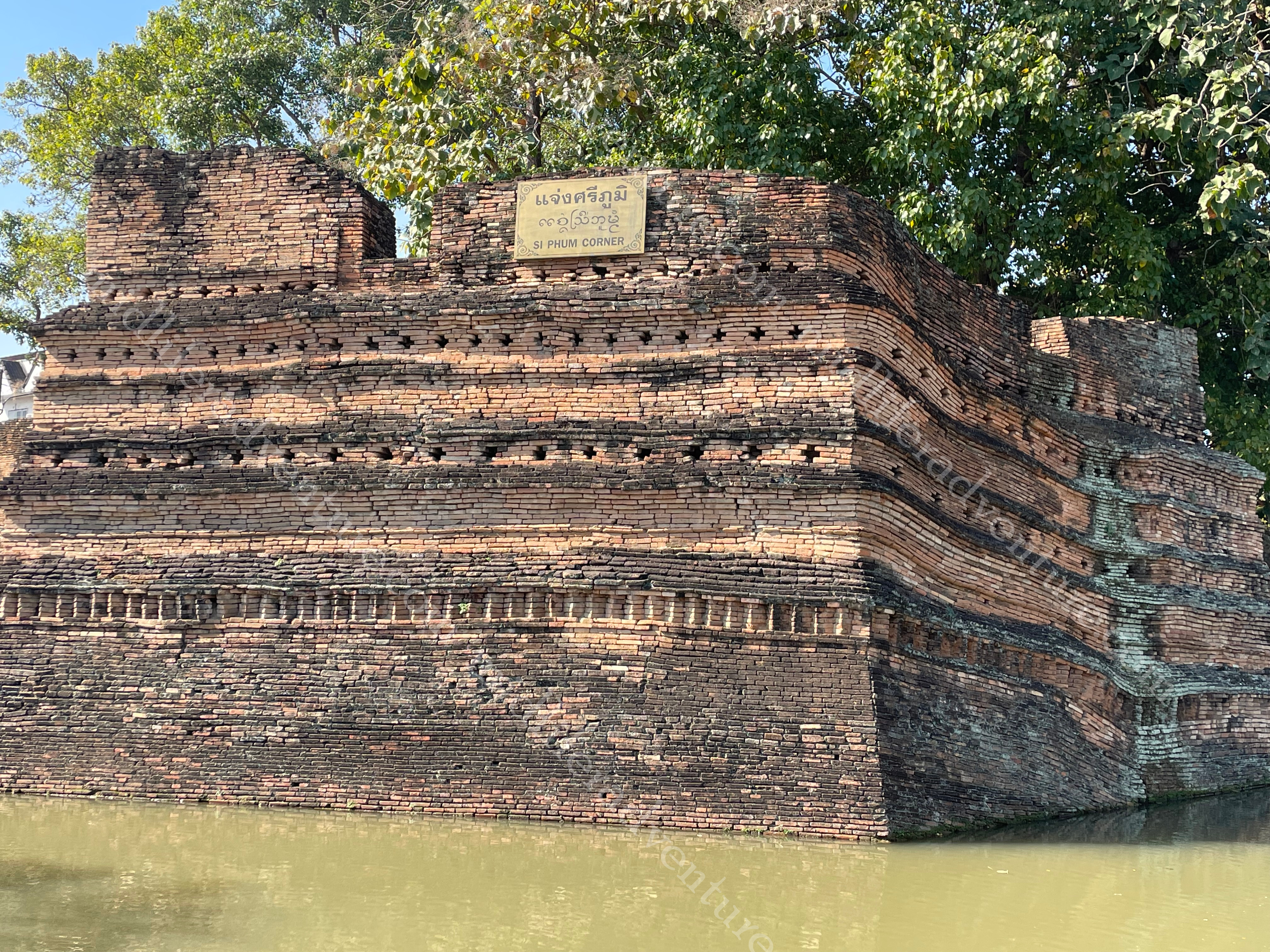
At the north-eastern corner of the city you will find the Si Phum Corner. This is the site of the original unrenovated wall that is slowly crumbling into the canal that surrounds the old city.

The temples around town

As mentioned before, the sheer number of temples in town is staggering and there is no way that I am going to list or visit them all. But here is a sample of some of them and a bit of an idea about each.

Wat Chedi Luang is at the centre of the city and is commonly known as the big temple. Wat Chian Man is the oldest of the temples in Chiang Mai built around 1296-97. Wat Saen Muang Ma Luang (also known as Wat Hua Khuang) is one of the most beautifully maintained and grand looking temples 

Wat Inthakhin Sadue Muang was built over 700 years ago and literally translates to “temple of the city navel”, due to its location in the center of old city. Wat Umong Mahathera Chan is not as ornate and is basically a collection of brick stupas for monks to meditate inside.

Night Markets

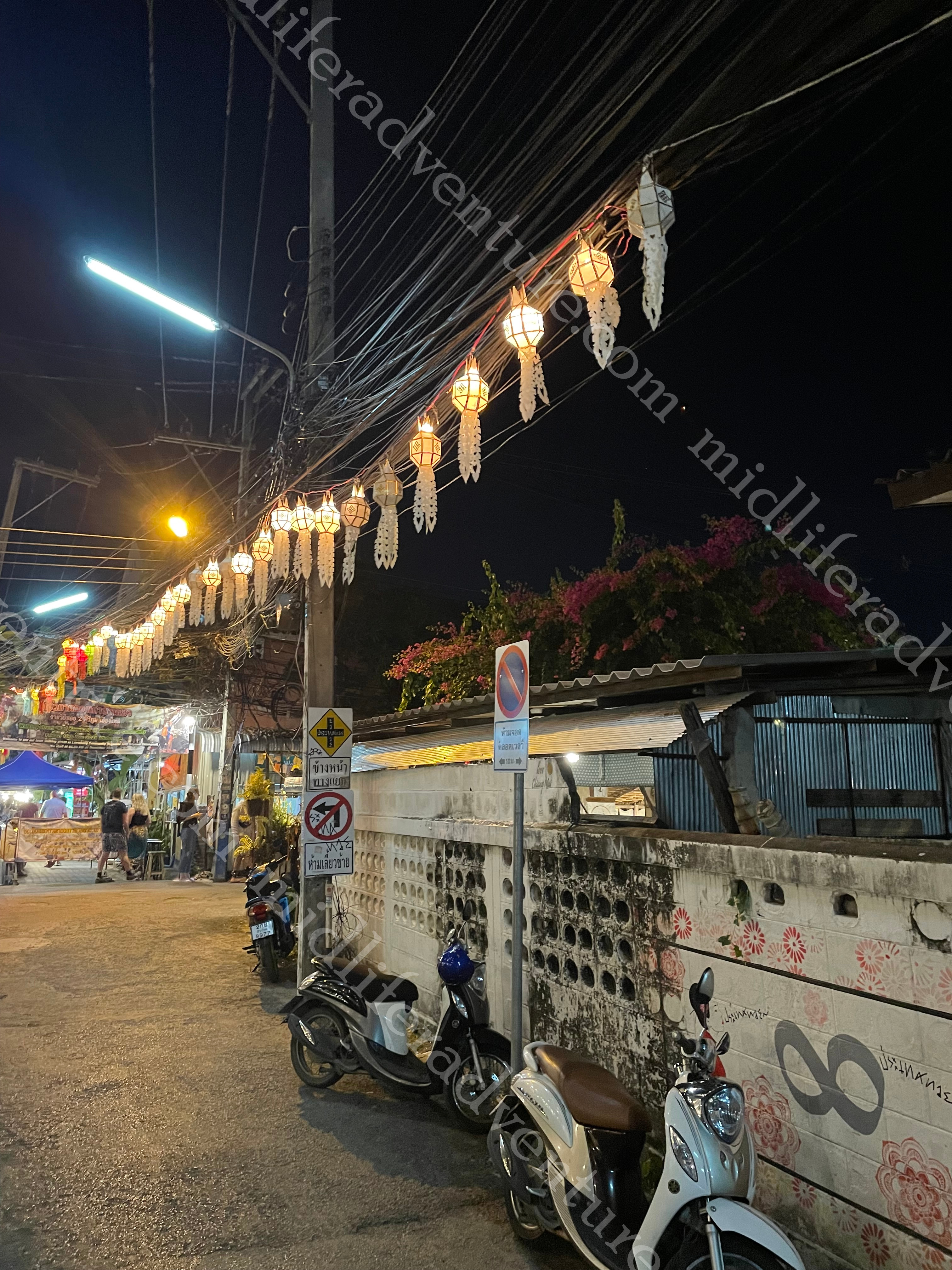
The Sunday night market (or Sunday walking market ) is the most famous and the most popular but there are night markets oevery day of the week if you care to look a little further afield. As mentioned above in the gates section we regularly hit the night food markets outside the northern gate but it was just for food and not really for shopping.

The Sunday walking market is essentially the one for the tourists and is the most popular with them. It has a wide variety of the expected local art, craft, music. The thing it does possibly better than the others is the incorporation of food stalls (and ore importantly somewhere to sit and eat them) in more than one location. In addition, the various massage vendors are there and on hand to offer a foot massage should it be needed.

Chiang Mai Night Bazaar is probably the largest of the markets with hundreds of shops in one place and it is open every day.

It is outside the old city on the eastern side. This night bazaar offers virtually everything including shoes, bags, clothes, handicrafts, artwork, sunglasses, and electronic items. The Anusarn Night Market, Ploen Ruedee Night Market and Kalare Night Markets are all in the same vicinity and as far as I could tell they would be indistinguishable as to where one stops and the next one starts. But they are all open each evening from 6pm.

The Wualai walking street and Gate markets are situated at or just outside the southern gate of old town while the Wororot markets can be found in the heart of Chinatown.

I got my shoes resewn here for the ridiculous price of $3 as I had a blowout – probably from all the stairs.

Getting Around in Chiang Mai

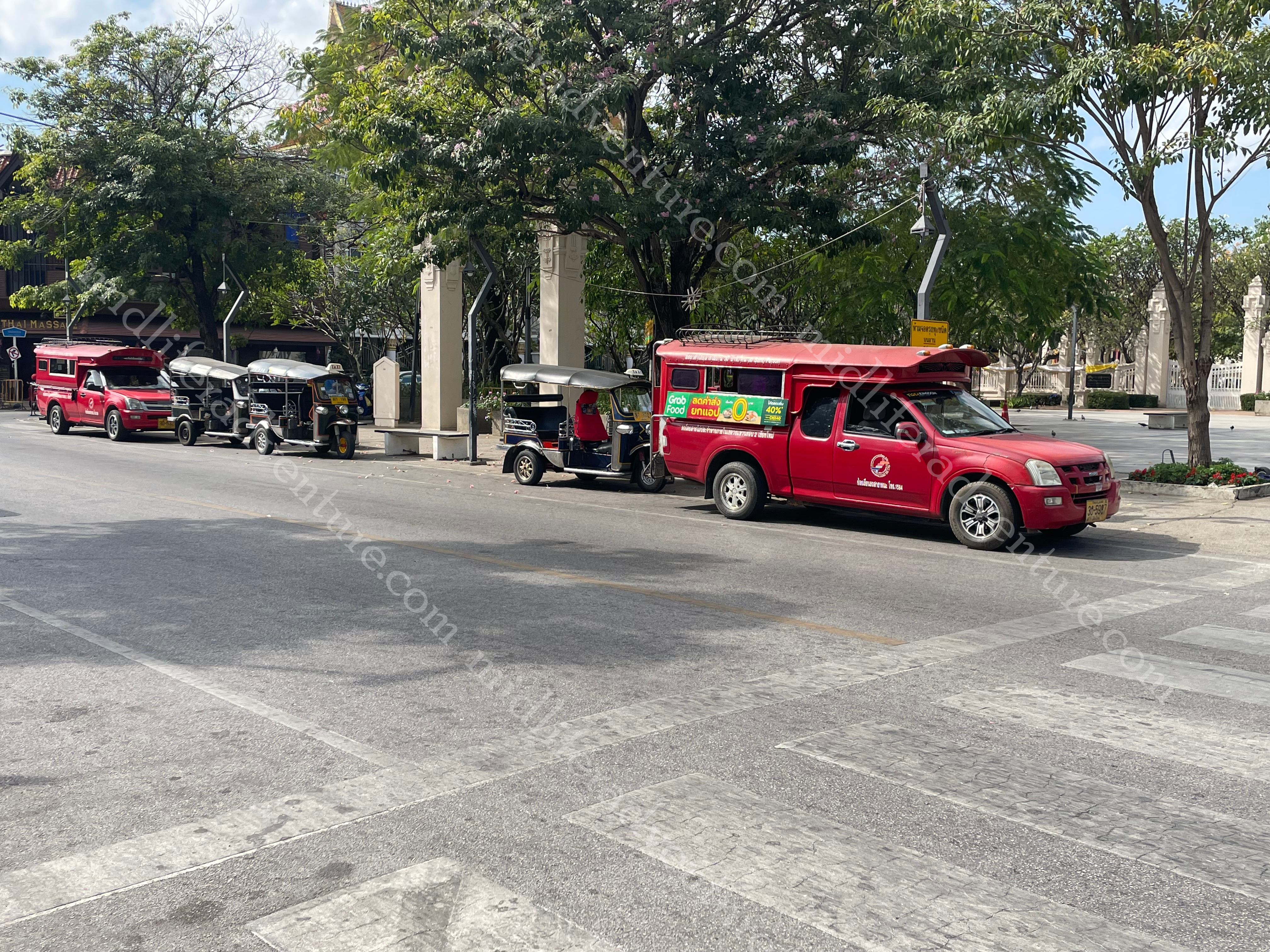
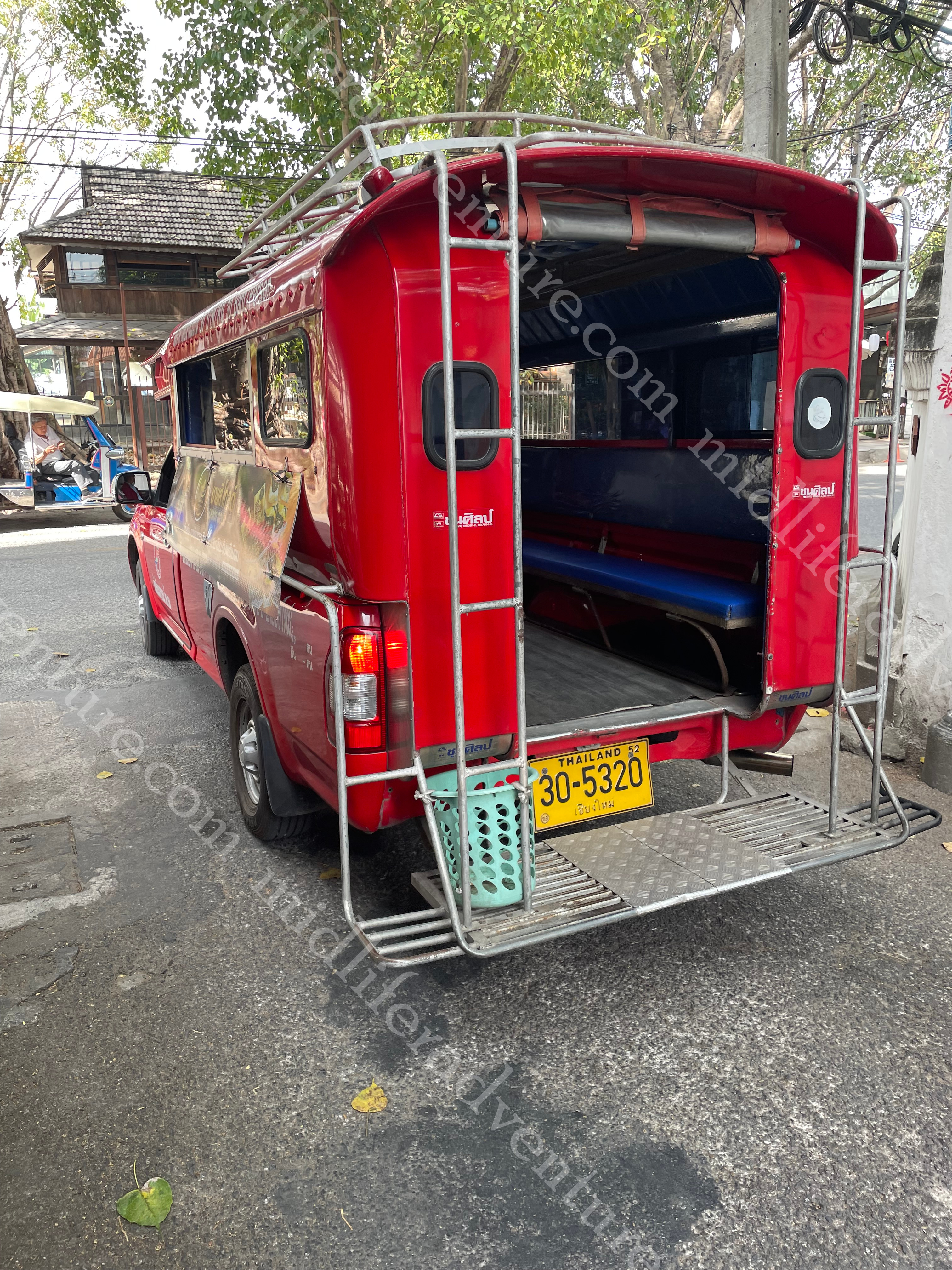
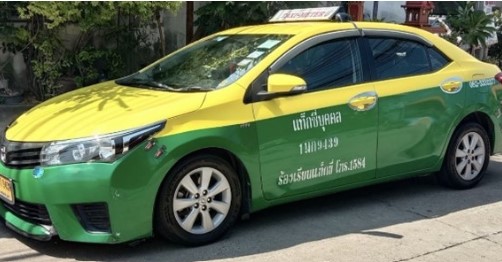
The local preference and probably easiest for getting around is the Songthaew – pronounced song tail (aka Road-Daeng, Red Taxi or Red Truck). It is basically a converted ute with two rows of seats in the back. The most common one used in Chiang Mai is red and all you need to do is hail one down, tell them where you want to go, ask the price and if it is in the general direction they are heading then they will take you. If not, try the next one. As a guide about 30 baht ($1-1.30) will get you almost anywhere in town. If you don’t want to share your ute with the locals then you can pay more and hire a private one (similar to a taxi).

Tuk Tuk – is the second most common transport however is more expensive than the Songthaew with the rates starting at 60 baht for a short trip and 100 to 150 baht for longer distance.

Taxis – There are actual taxis that exist however they tend to park up at the airport, railway station, bus station, malls, and hotels.

Ridesharing – is available and they generally use the apps either Uber or Grab. In fact if you are planning on spending any significant amount of time in SE Asia it is probably worth downloading the Grab app as it is widely used in Thailand, Vietnam, Malaysia, Singapore, Indonesia and the Philippines.

Bus – the Smart city bus was introduced in mid 2018 and for a flat rate of 30 baht you can get on and get around. Coins can be used as can the rabbit card that is used in Bangkok for use on the MRT or the BTS Metro Systems. Two tourist card options can be bought that will give you unlimited riding for 180 baht for one day or 400 for 3 days.

Samlor – this is the traditional Thai rickshaw – powered by some skinny old guy pedalling you around. I cannot tell you the prices as I can not bring myself to order one. The thought of a 70 year old, 40kg Asian dude struggling to peddle my fat ass around is something that I will just not do.

Rent a motorbike – this is very cheap at about 100-200 baht for 24 hours that will get you a 100cc motorbike and 2 helmets with the more powerful 110-125cc bikes with automatic transmissions costing more. Beware some places will want to keep your original passport as collateral. Also as a westerner you will be stopped frequently by police to check that you have your helmet, international licence and that the bike is not too powerful (read here that you will need to bribe your way out if you do get stopped).

And of course car rentals and tours are always available.

Things to do around Chiang Mai

Wat Phra That Doi Suthep

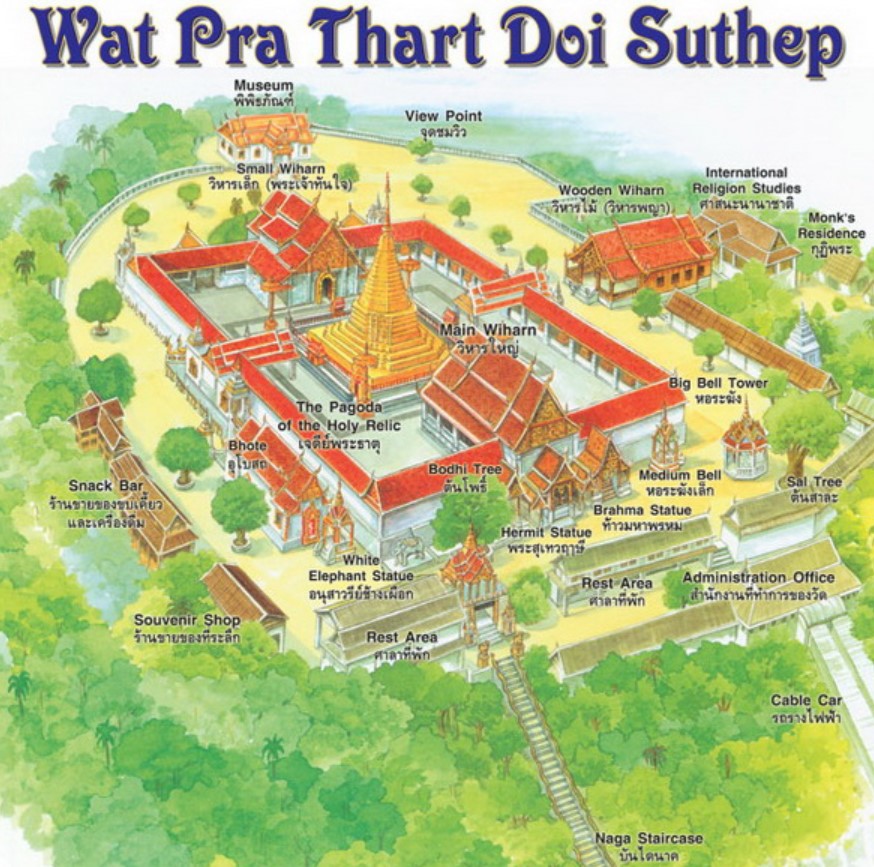
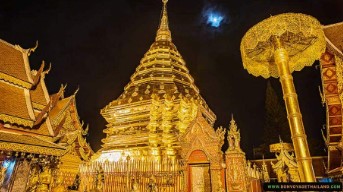
This is the most famous and most frequently visited of the temples in the region It is easy to get to (about 15 km from town) with most of the transport options (explained below) getting you there with very little fuss. It was built in the early 19th century and is set atop a hill with amazing views over Chiang Mai.

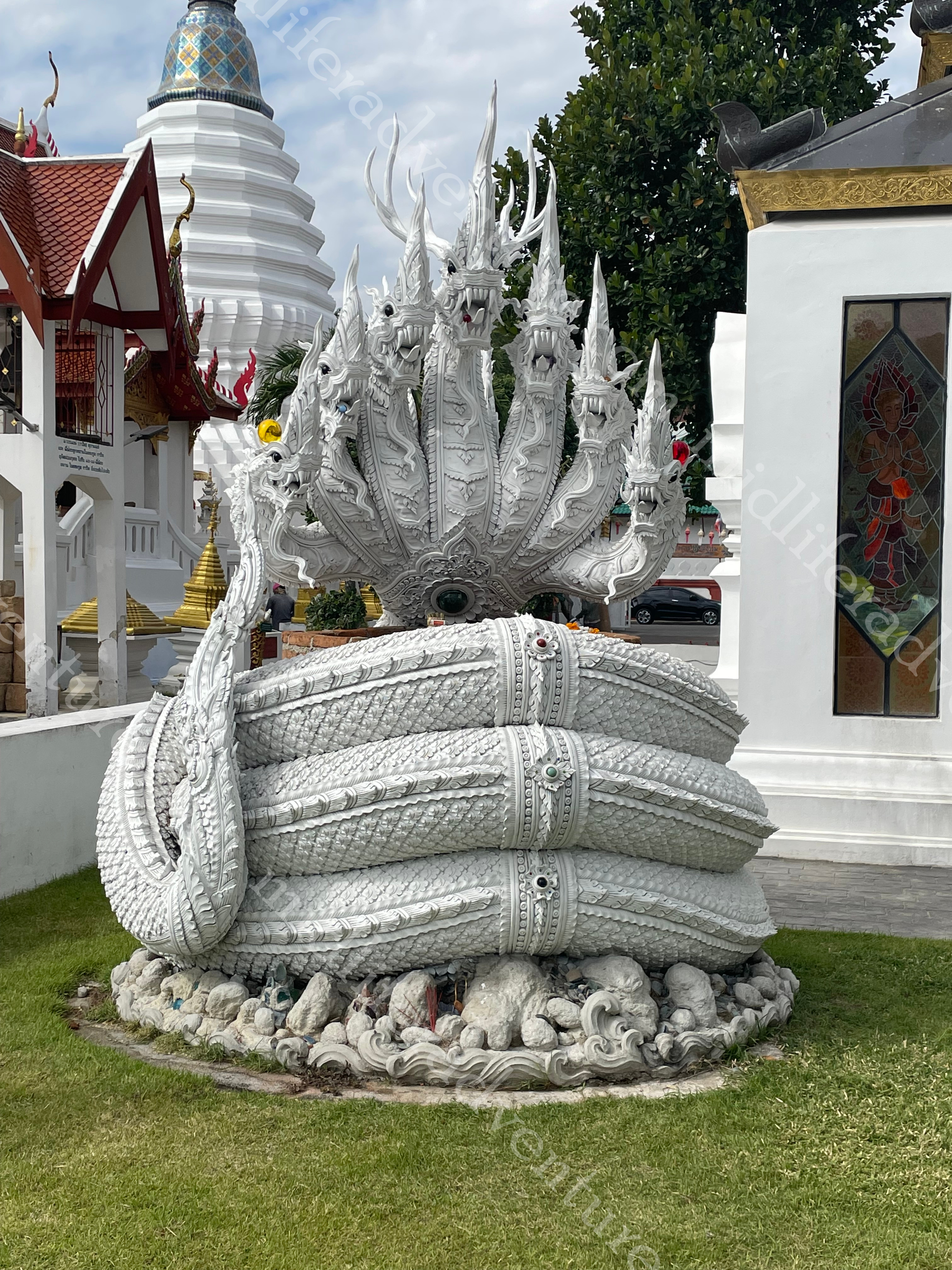
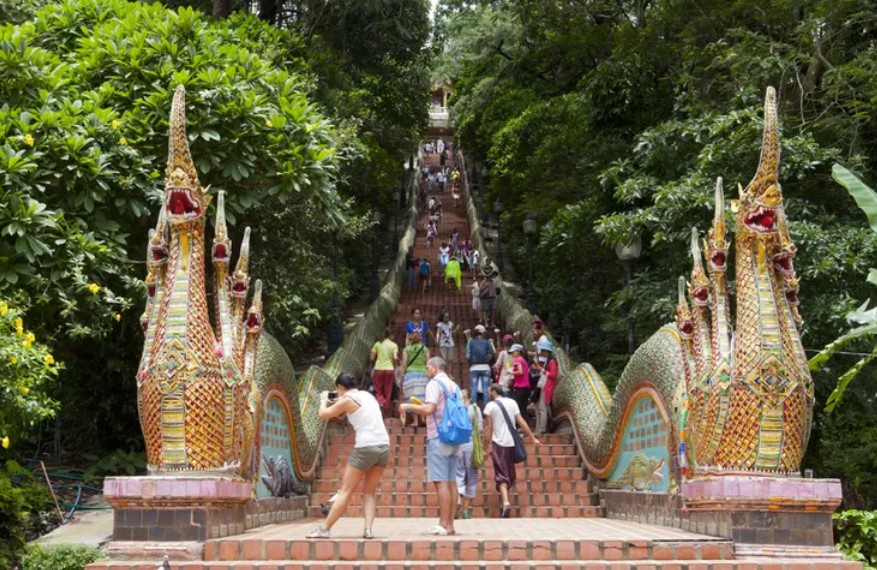
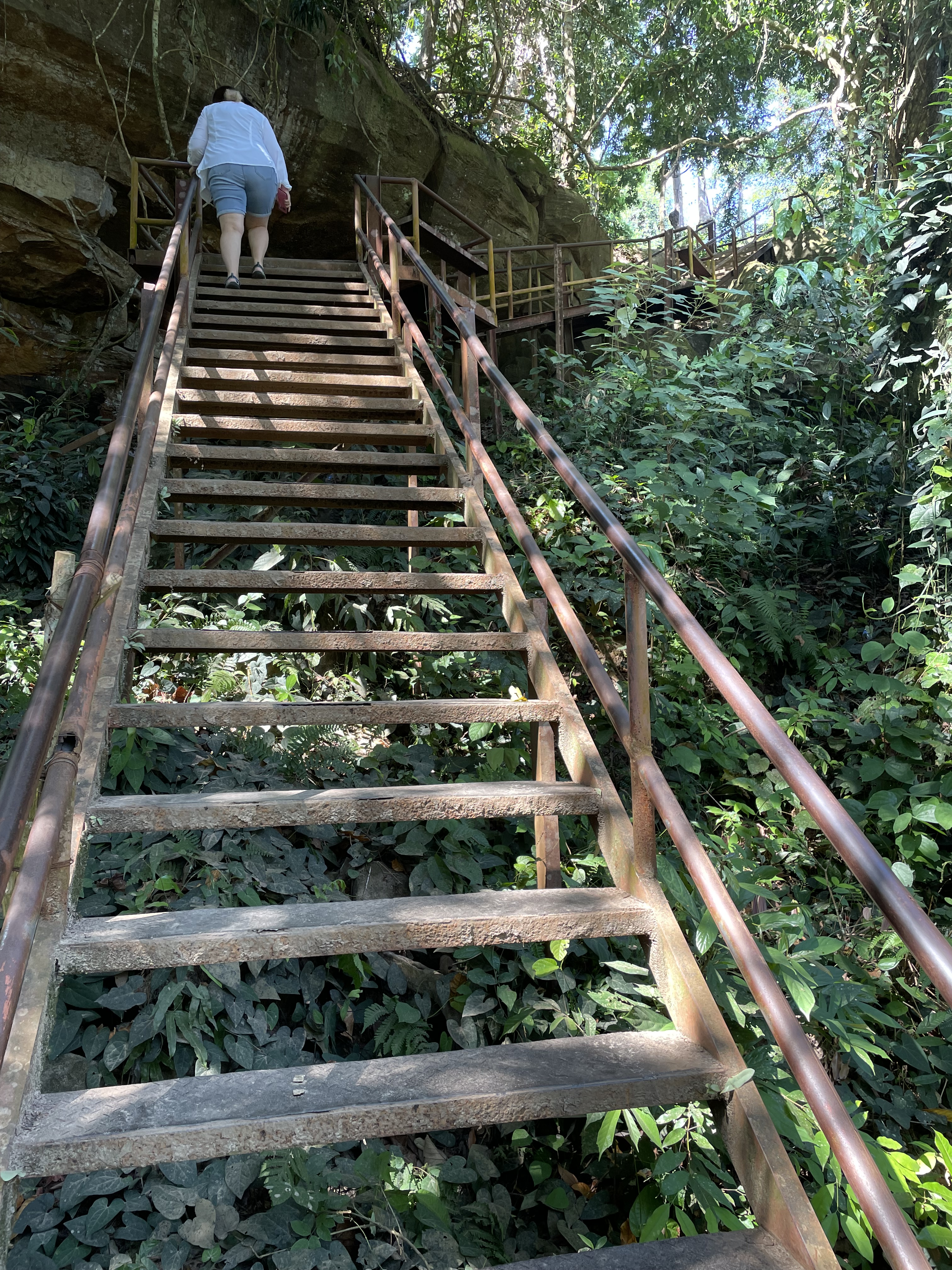
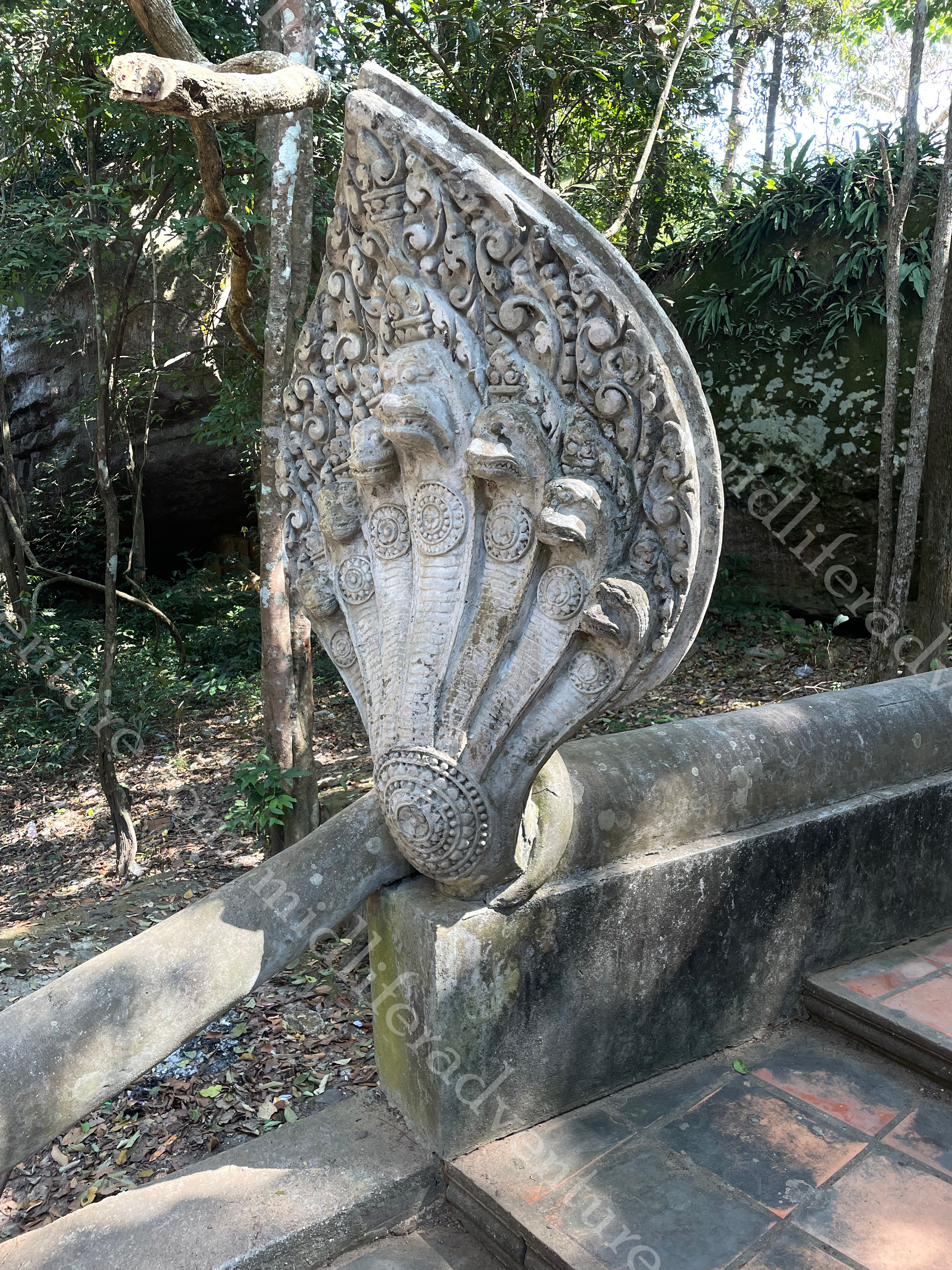
Upon arrival you are met with the usual tourist stalls before you find the stairs (306 of the buggers) to the temple. The stairs are lined by the seven-headed serpent statues (naga) – there is a funicular if you really are not up to the stairs.

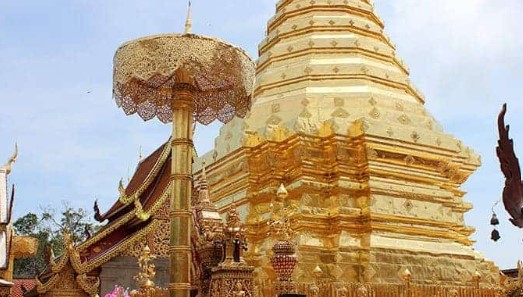
Once you have made it up the hill you will find the temple where a golden pagoda sits that is said to contain a bone from buddha’s shoulder. On the terrace you will find a statue of the white elephant that allegedly carried the bone to the temple. As usual for this sort of place you will also find the obligatory shrines and monuments. For those willing to pay the money there is also a night tour available.

If you are willing to pay a little more and take a private trip, there is a night tour available.

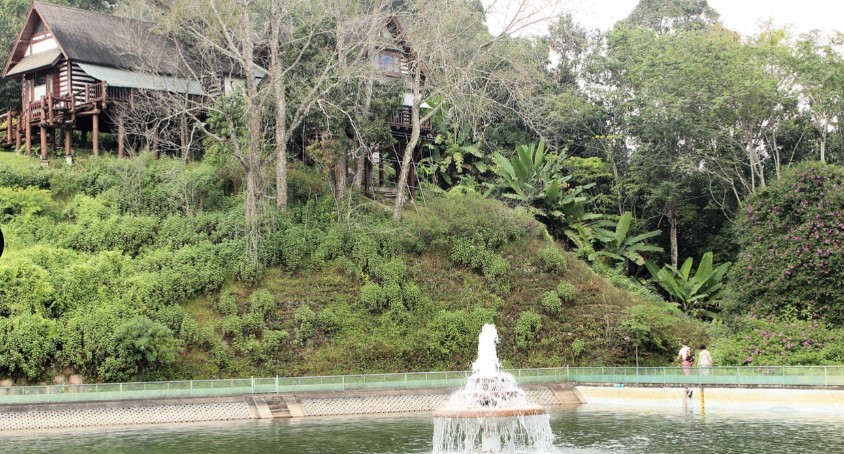
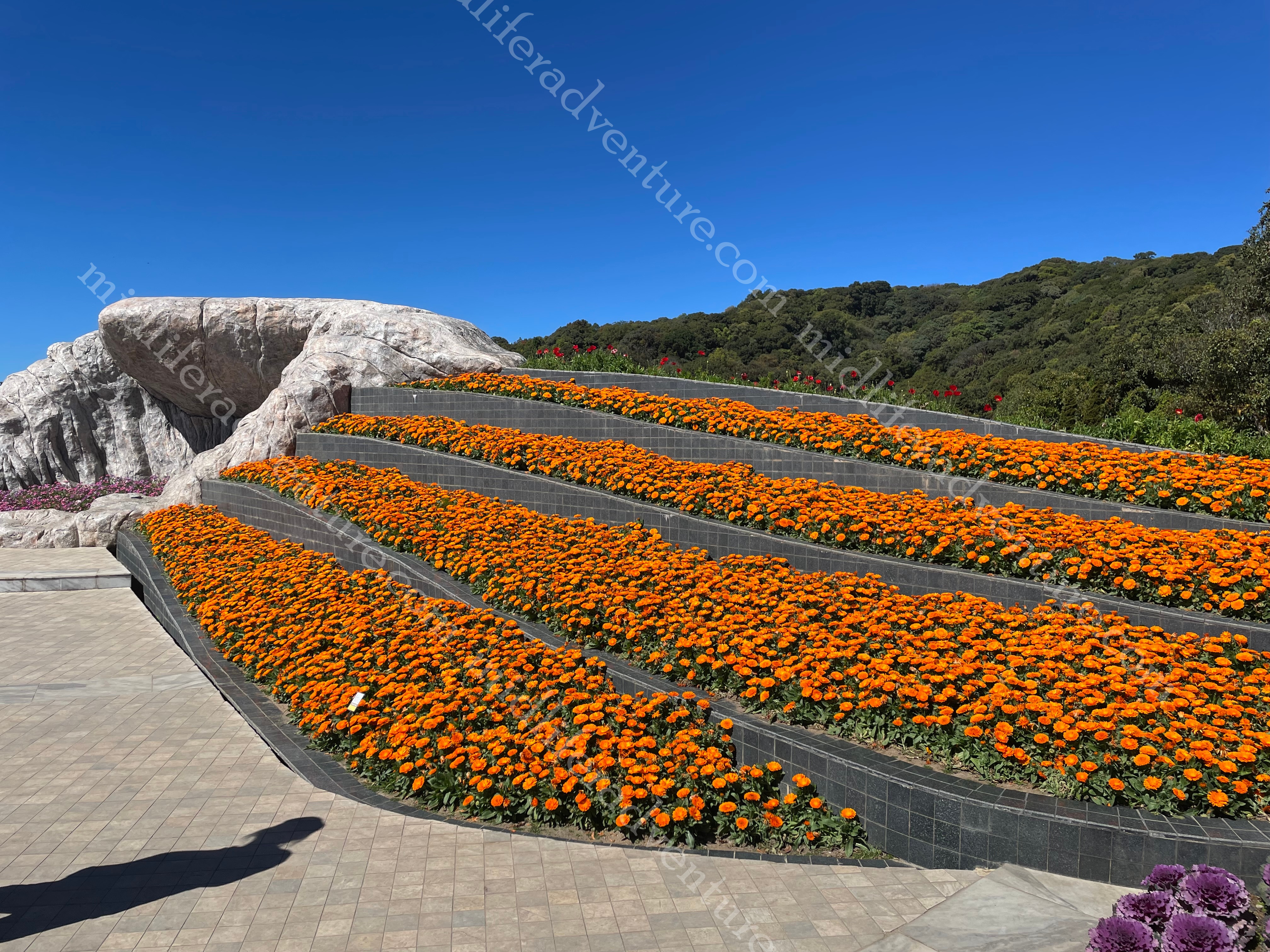
Bhubing Rajanives Palace was built in 1961 as the king’s residence when he came to stay in Chiang Mai.  It is about 22 kms from old town on Buak Ha Mountain. The gardens are perfectly manicured with extensive plantings that would send a gardening nut into fits of rapture. From my side…it was very pretty.

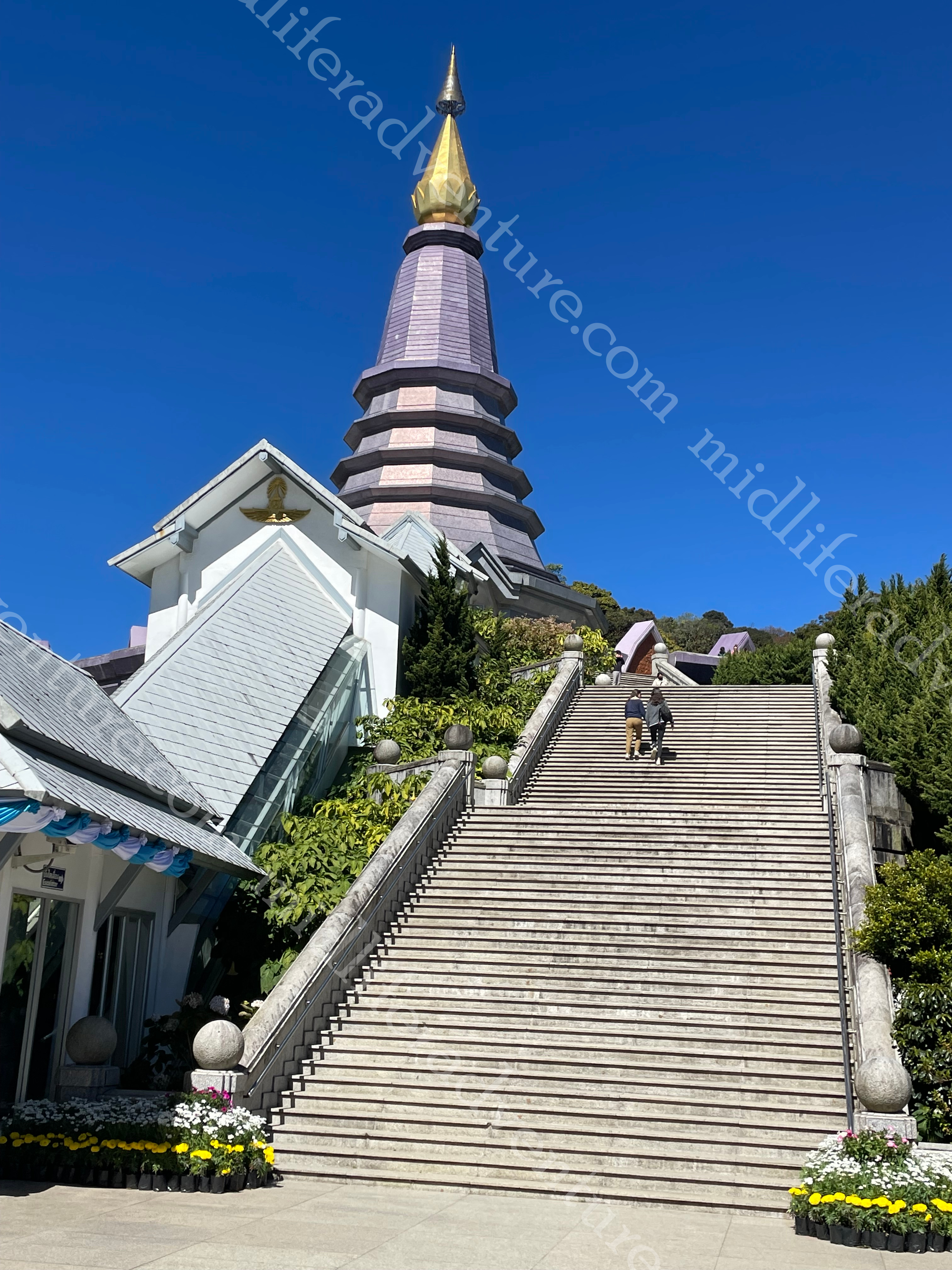
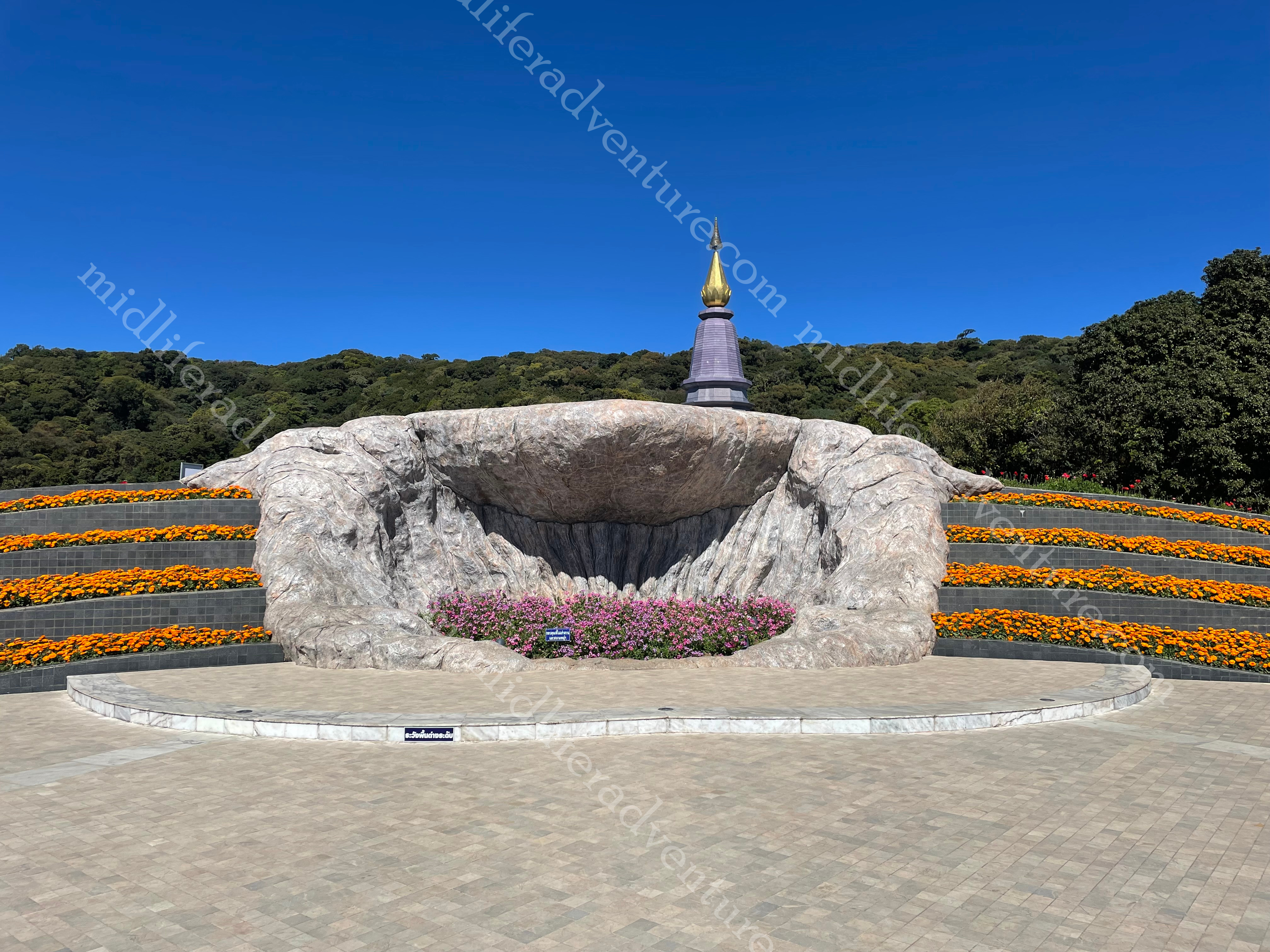
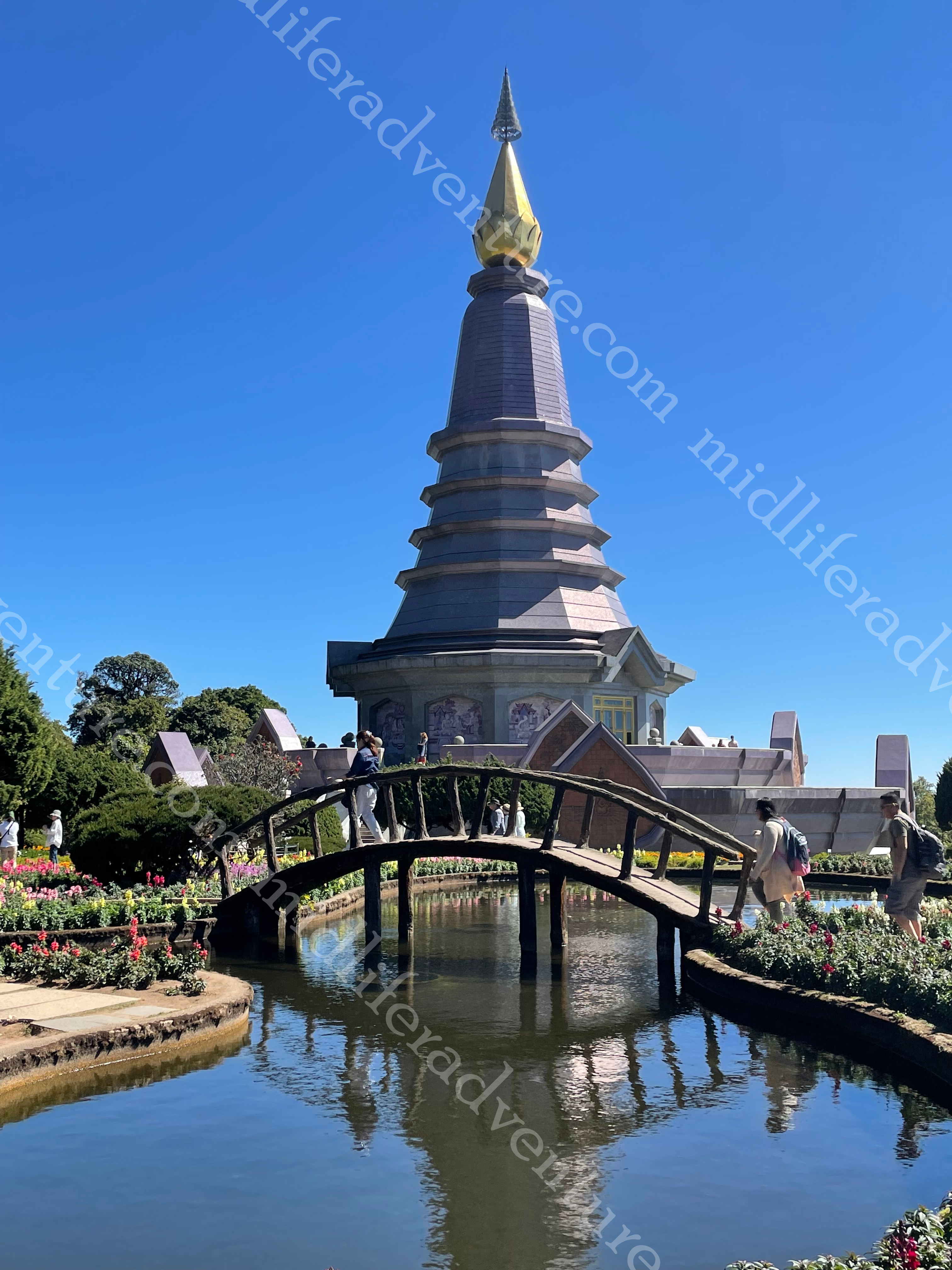
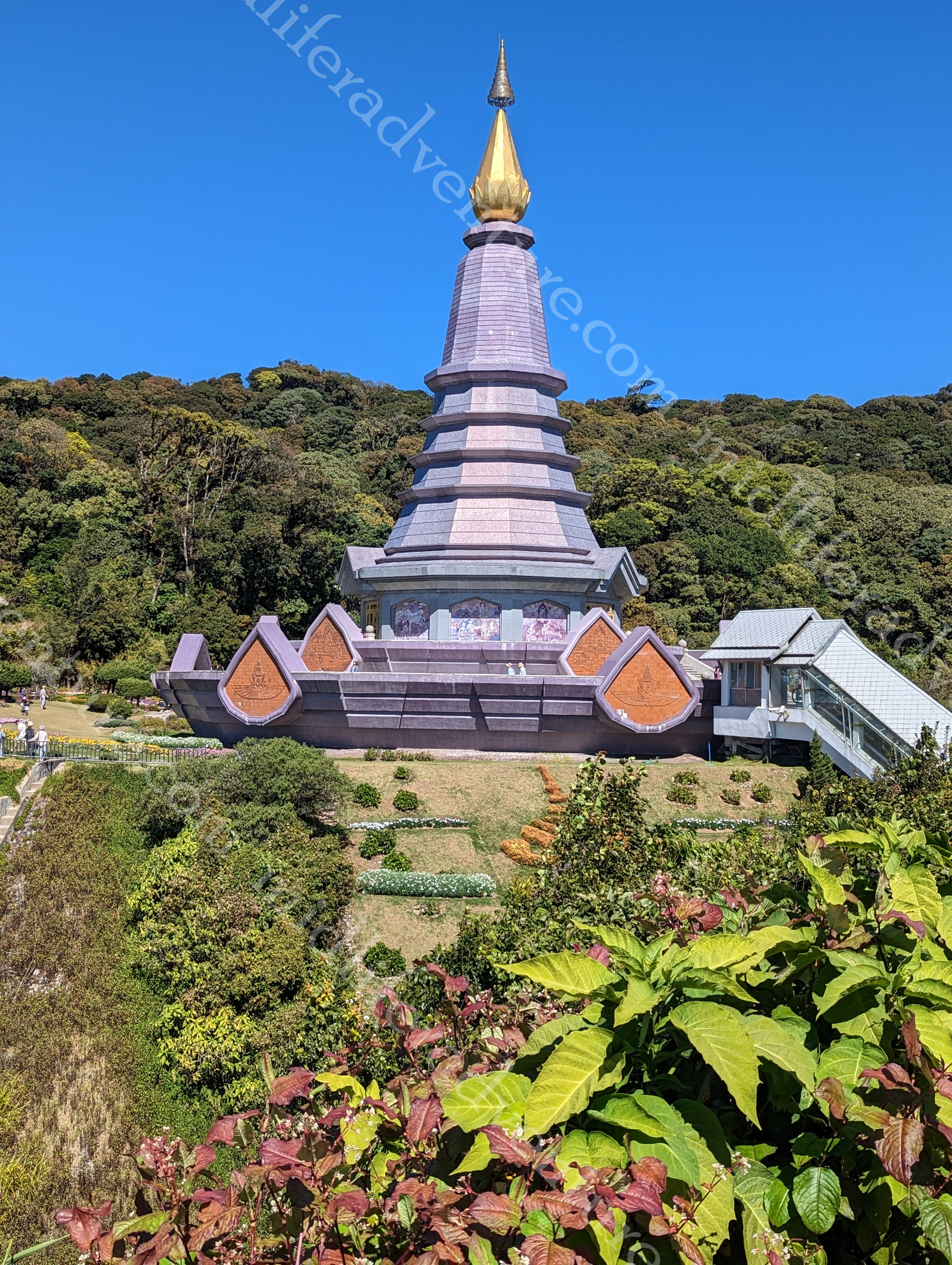
Doi Inthanon National Park is the highest point of Thailand and home of the beautiful King and Queen pagodas. There are tours heading here all the time and many of them will include some of the items listed below as well. This is a truly stunning spot and well worth the visit. While there are a ton of stairs to get to the Pagodas they have thoughtfully considered us old buggers and put an escalator (up only) to the top of each side…very civilised.

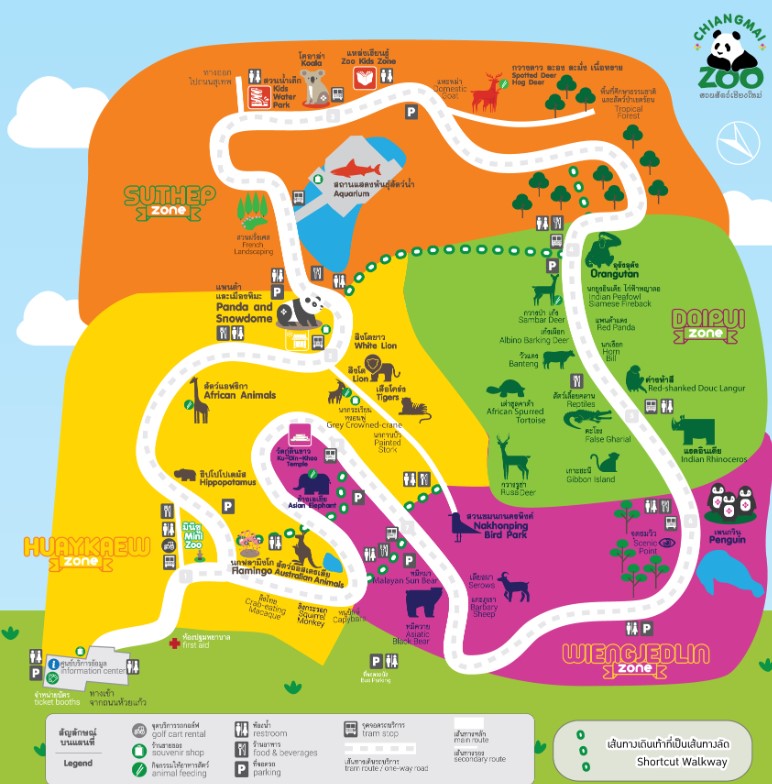
Chiang Mai Zoo and aquarium is a is a 200-acre zoo with over 400 species of animals that includes a 133m aquatic tunnel and they have a night safari. Oh Claudia, if you are reading along…they have pandas.

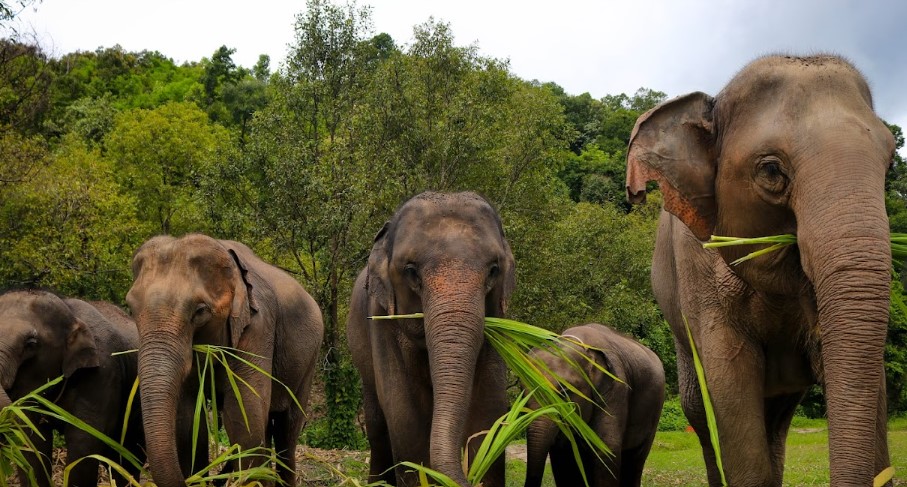
Elephant Sanctuary – The Meaklang Elephant Sky Camp is reported to be an ethical Elephant Sanctuary where the elephants are taken care of very well. The ads recommend that you bring spare clothes and a towel for if you join in to the elephant bathing.

As we have done numerous elephant sanctuaries in Sri Lanka and Laos we chose to skip this but those we met spoke highly of the experience.

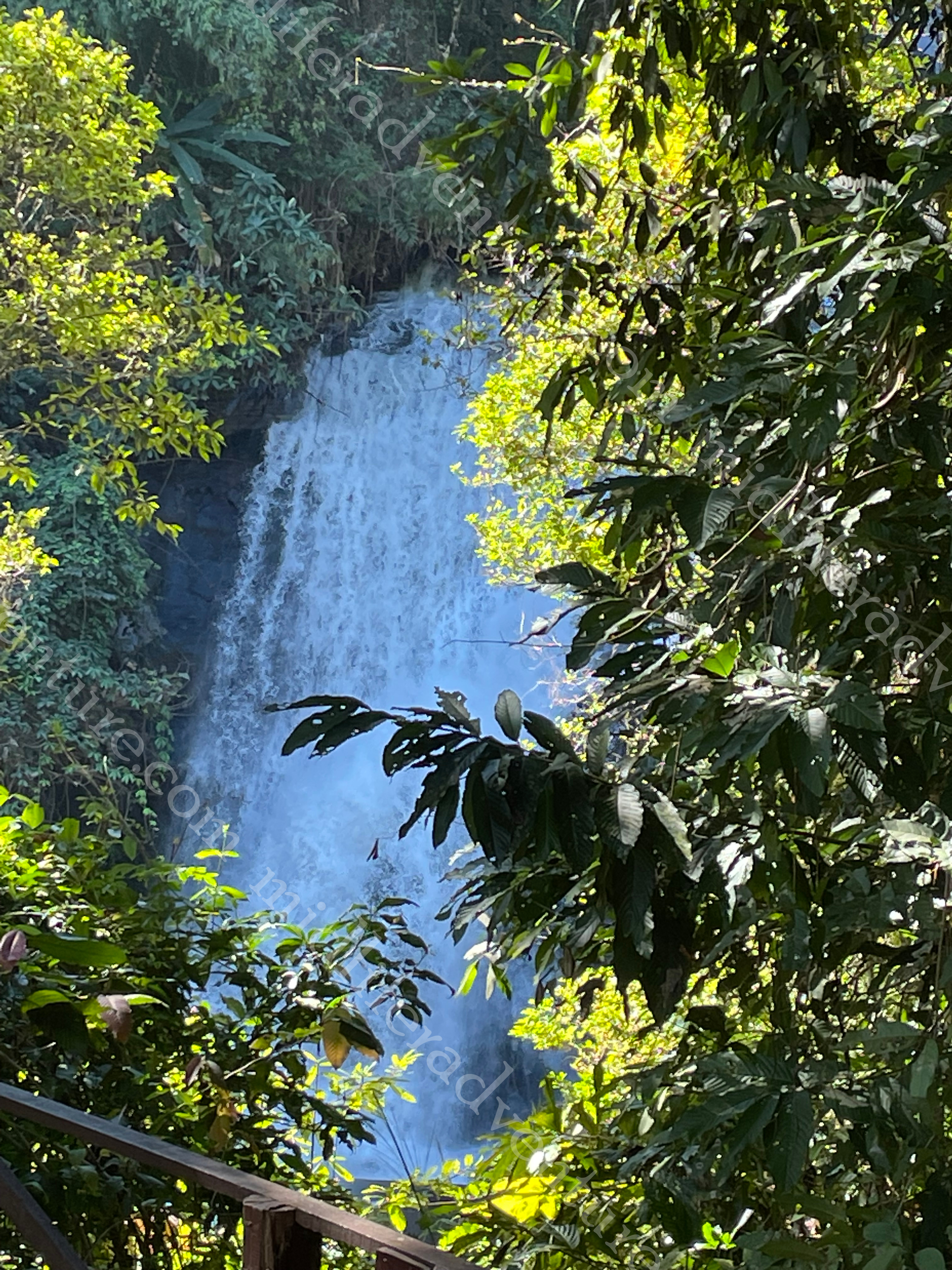
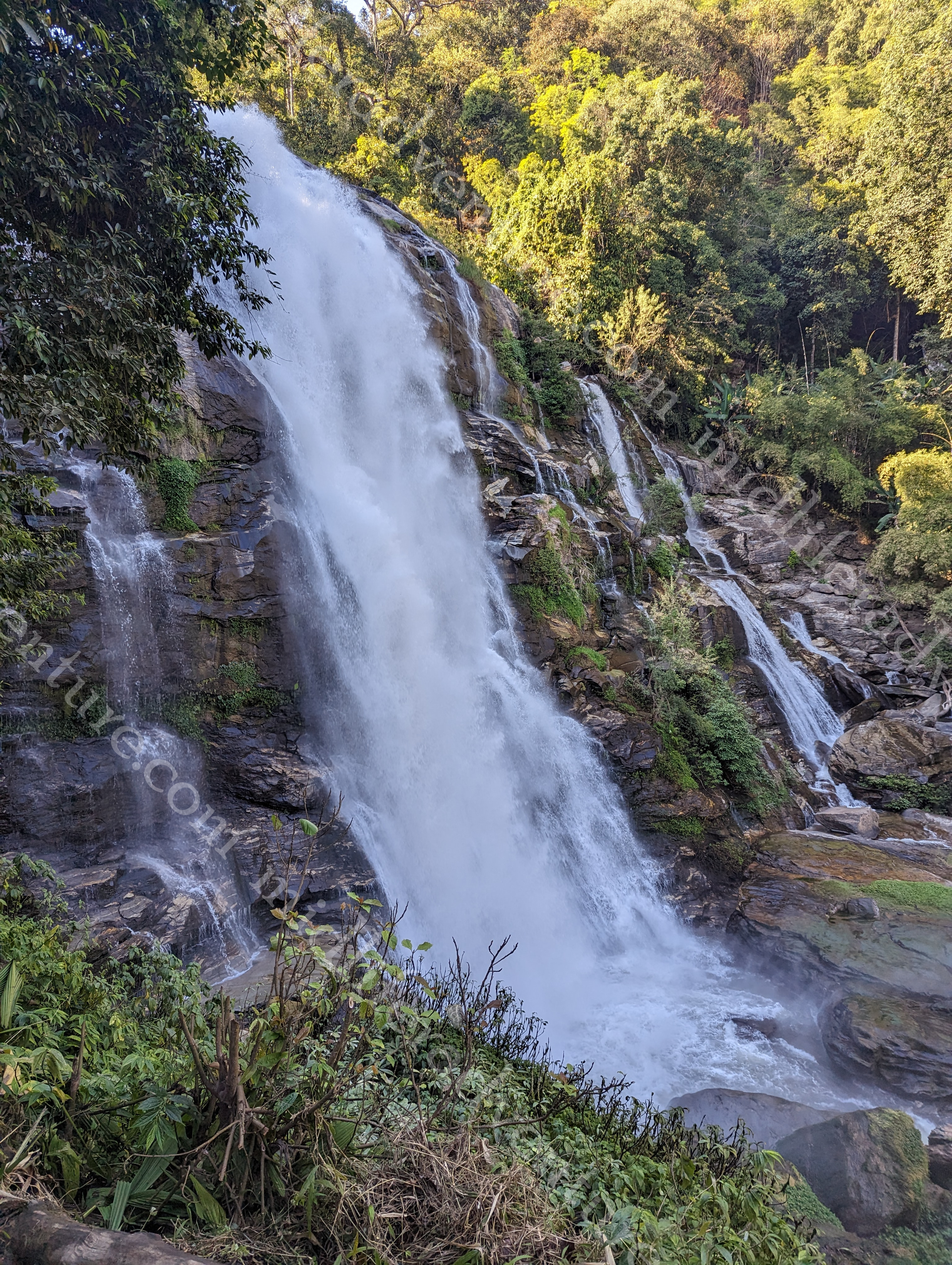
Wachirathan Falls is one of the largest and most beautiful waterfalls in the country at over 80 meters tall the waterfall creates a mist that feeds the surrounding vegetation. Sirithan Waterfall is a stunning 50-meter cascade, fed by the Mae Klan River. Paths all around this one gives you many angles and photo opportunities.

Chiang Mai Street Art

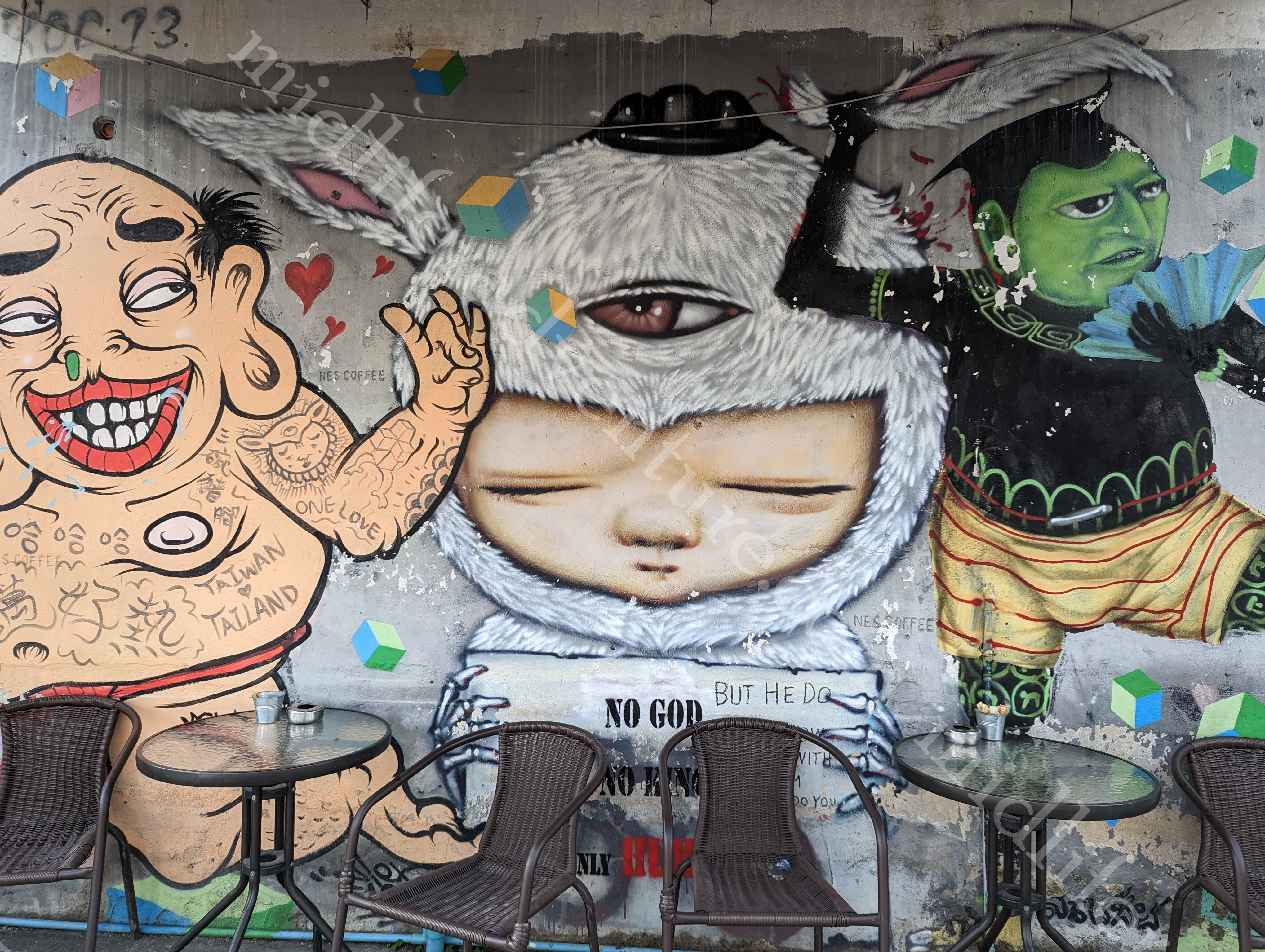
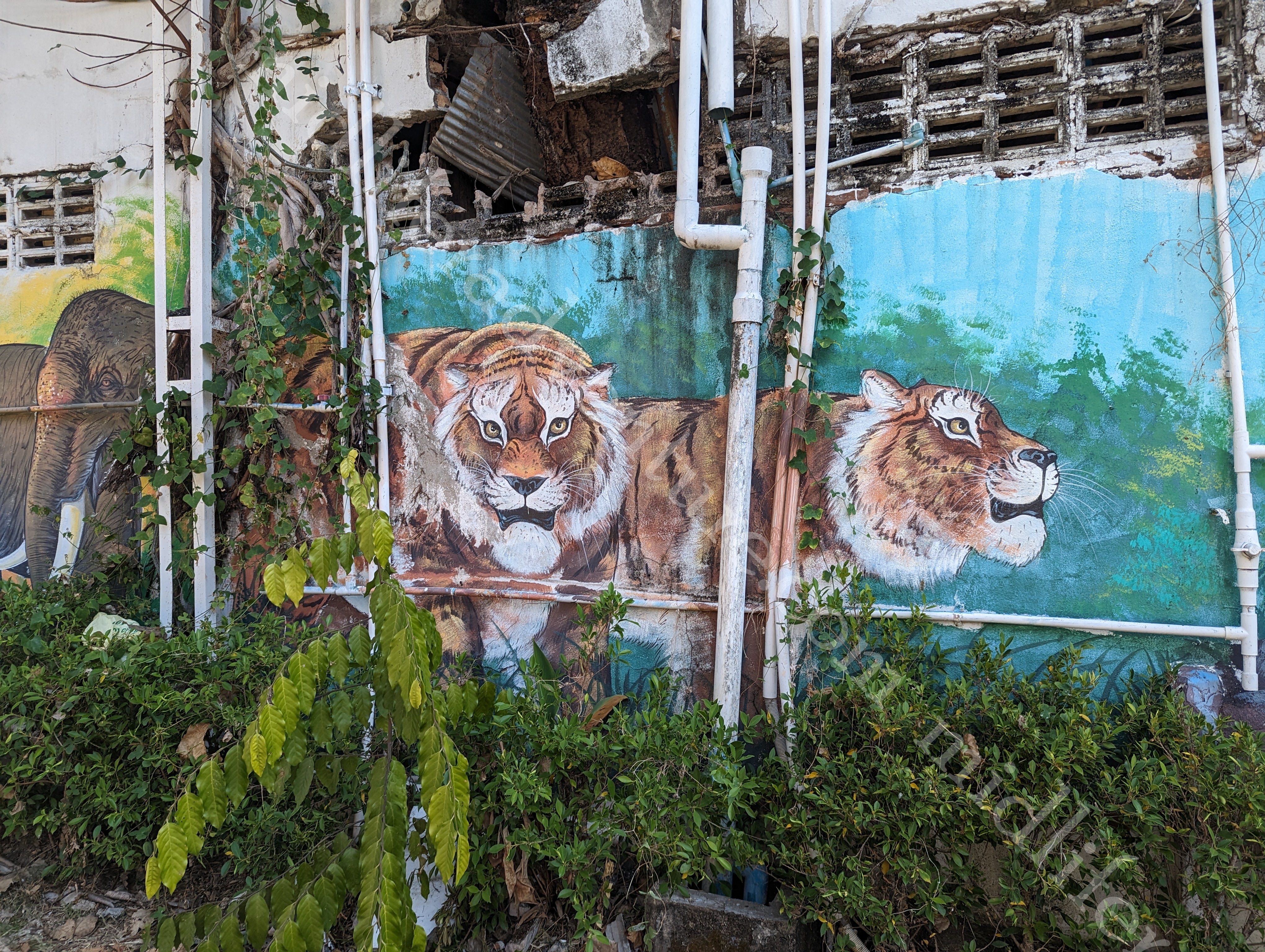
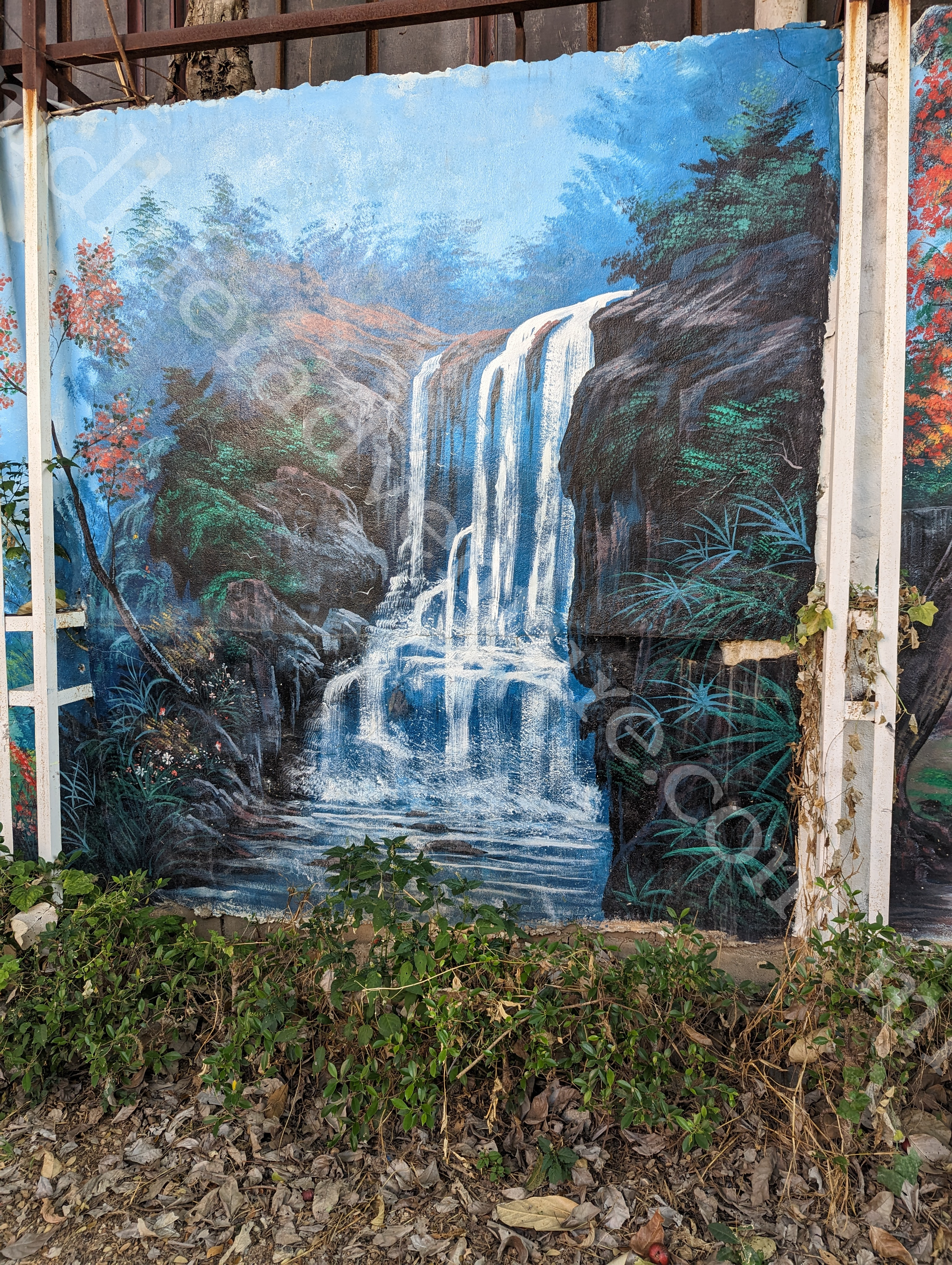
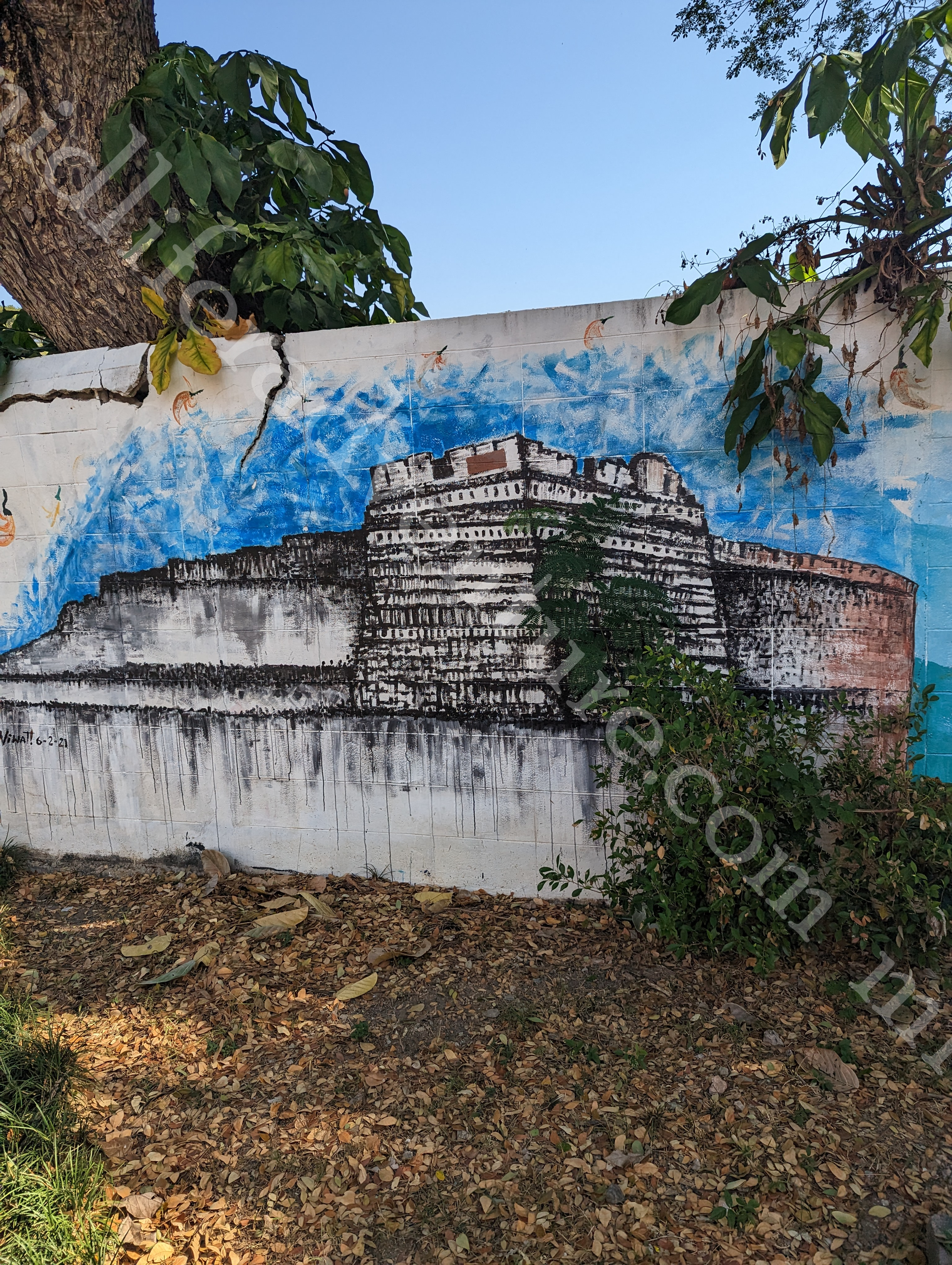
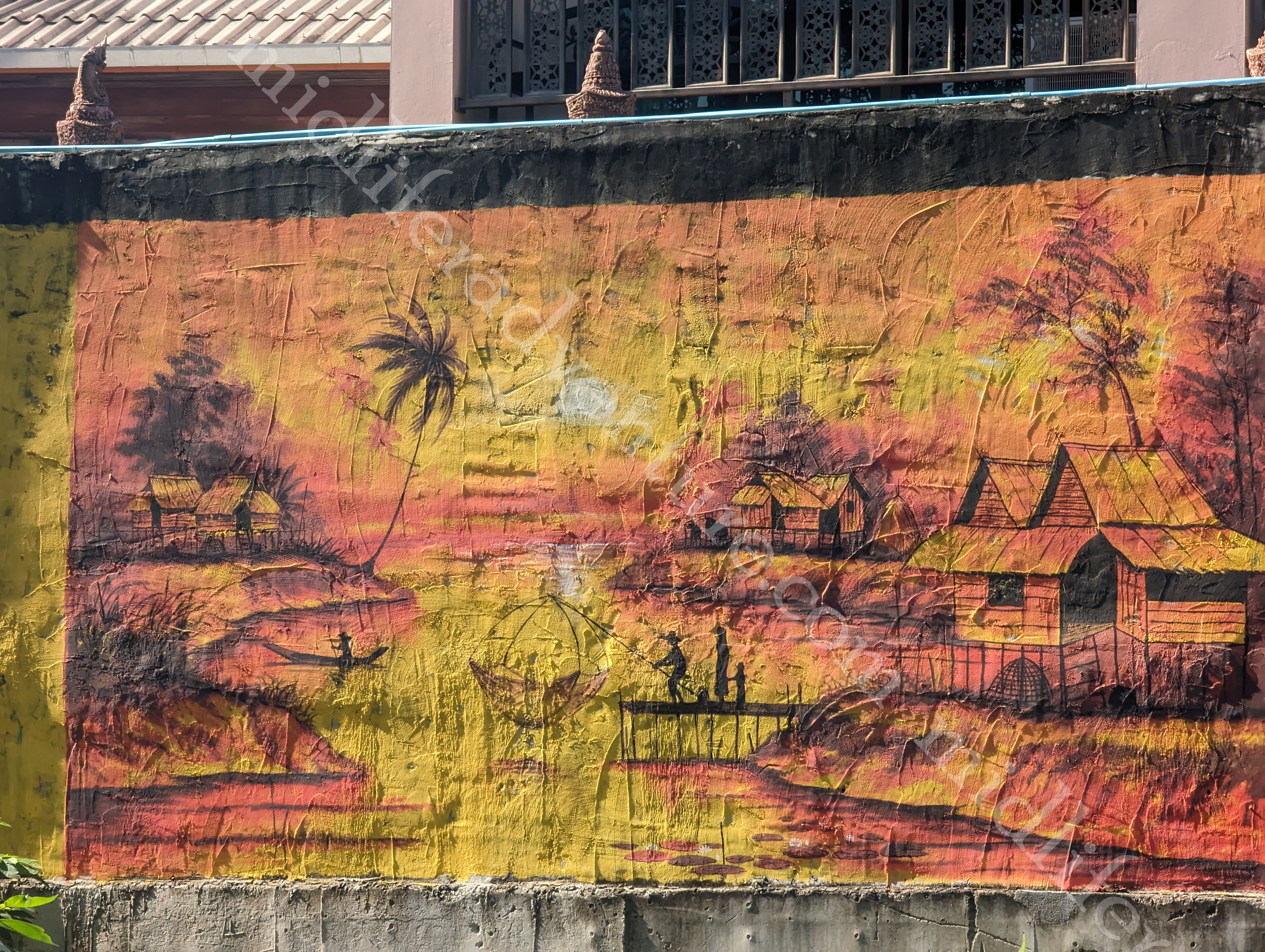
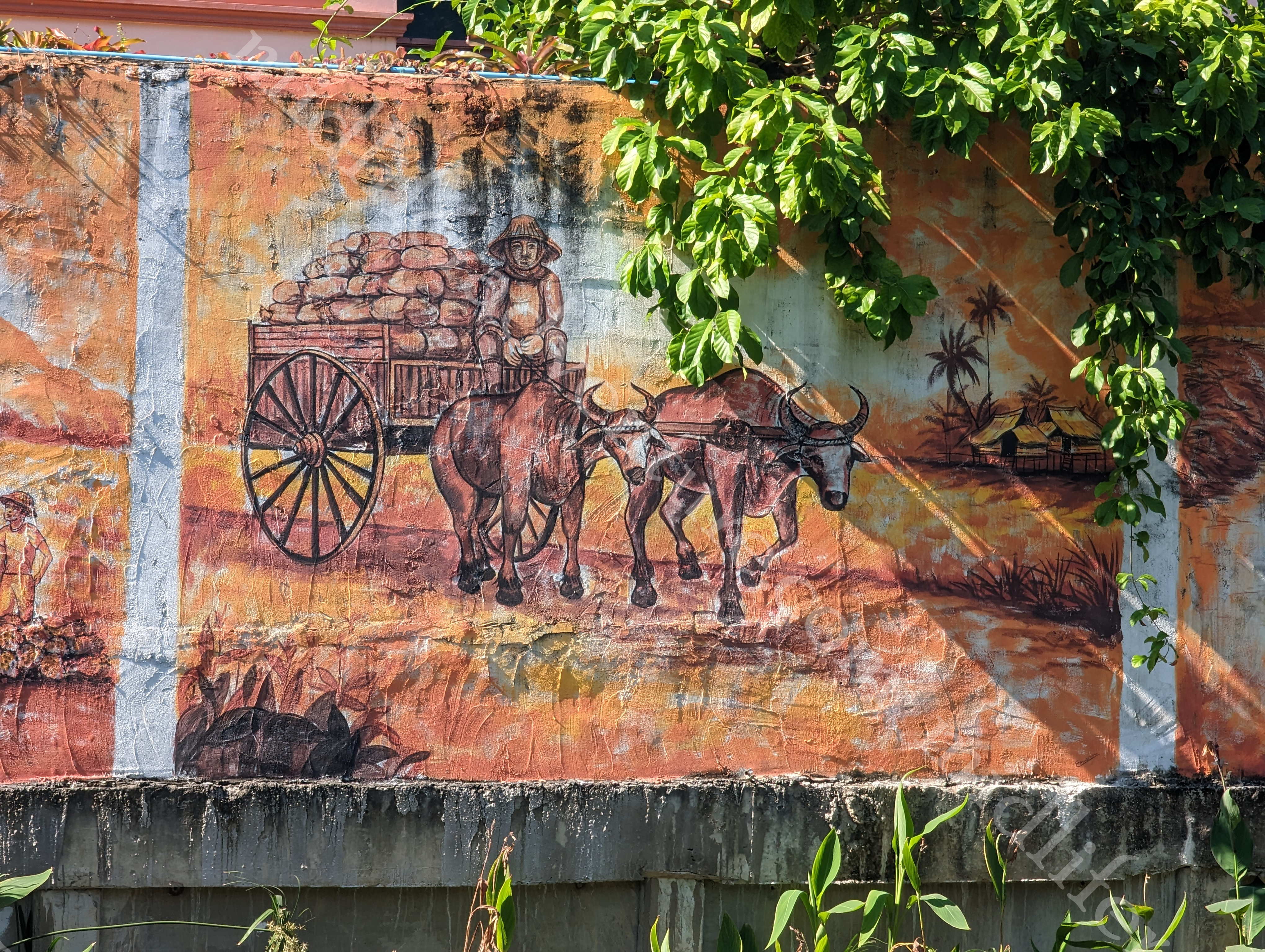
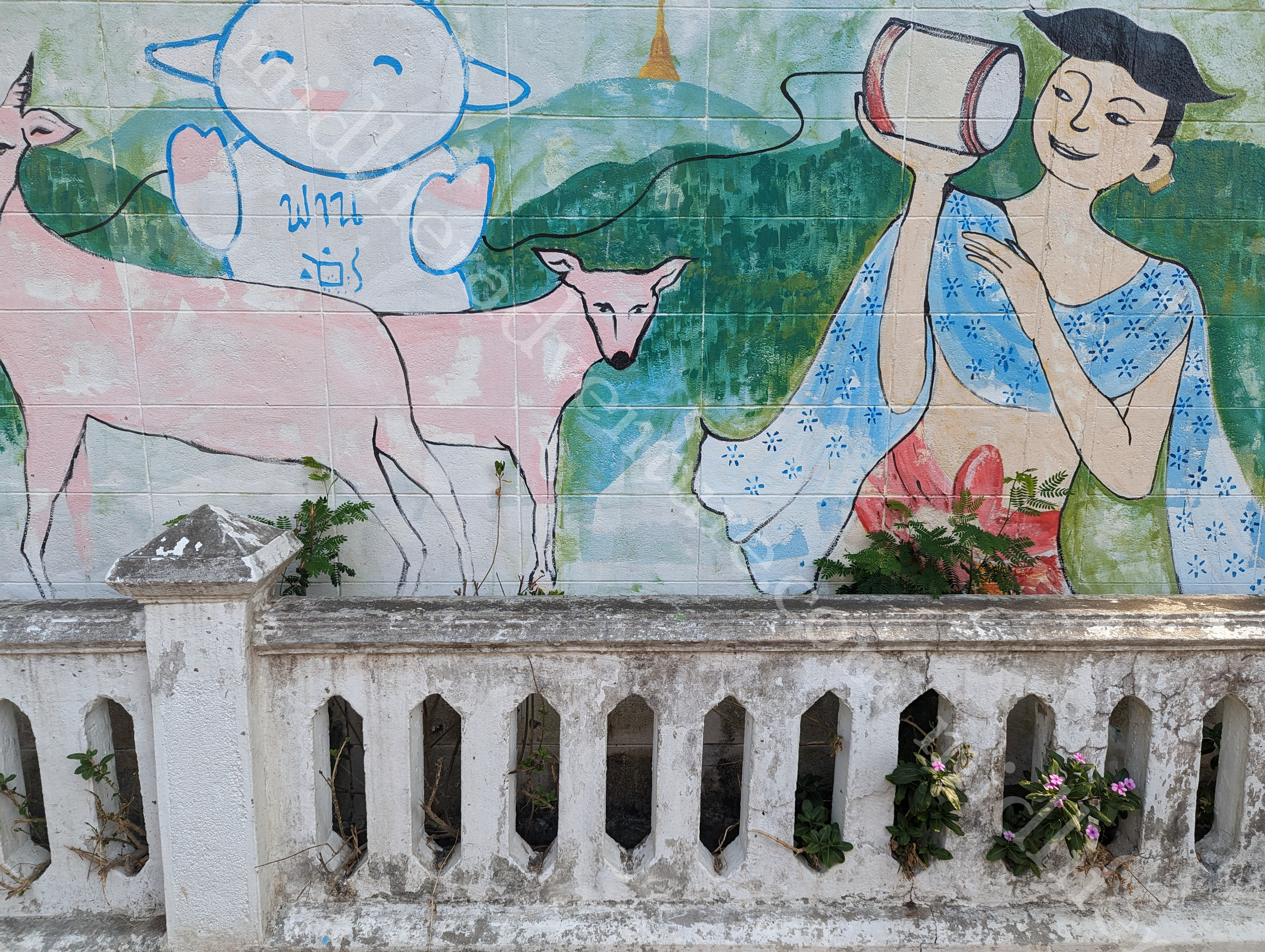
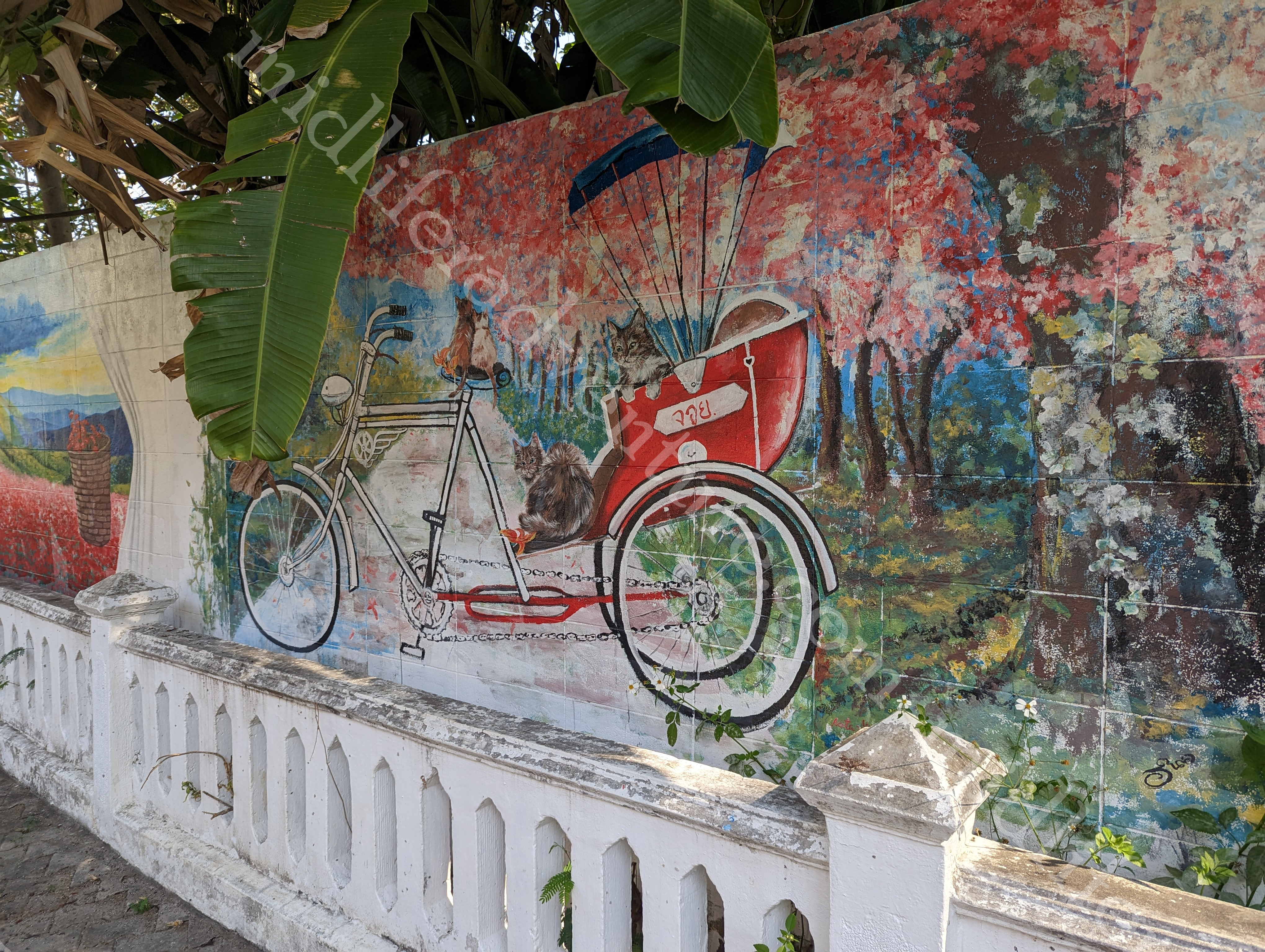
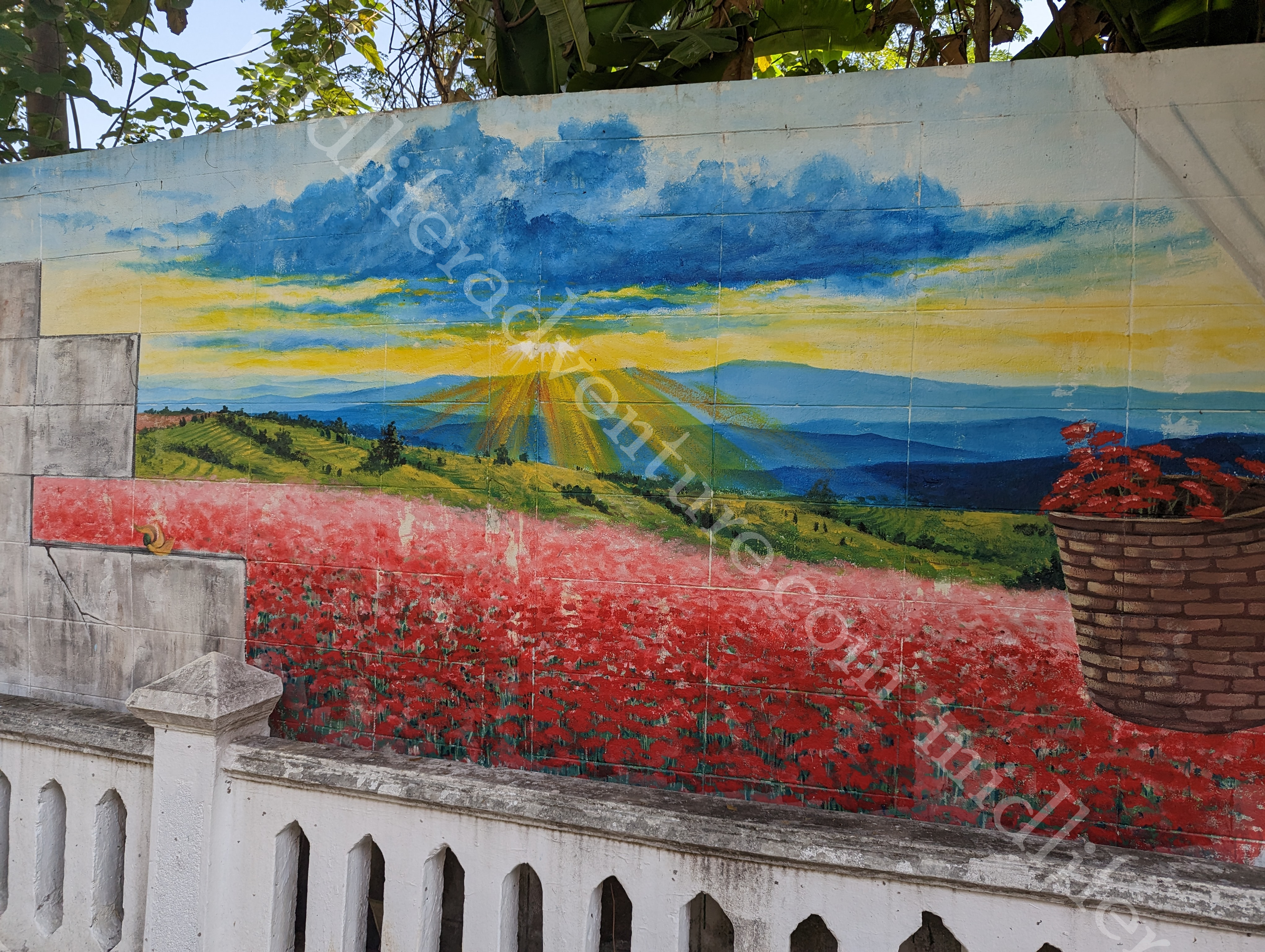
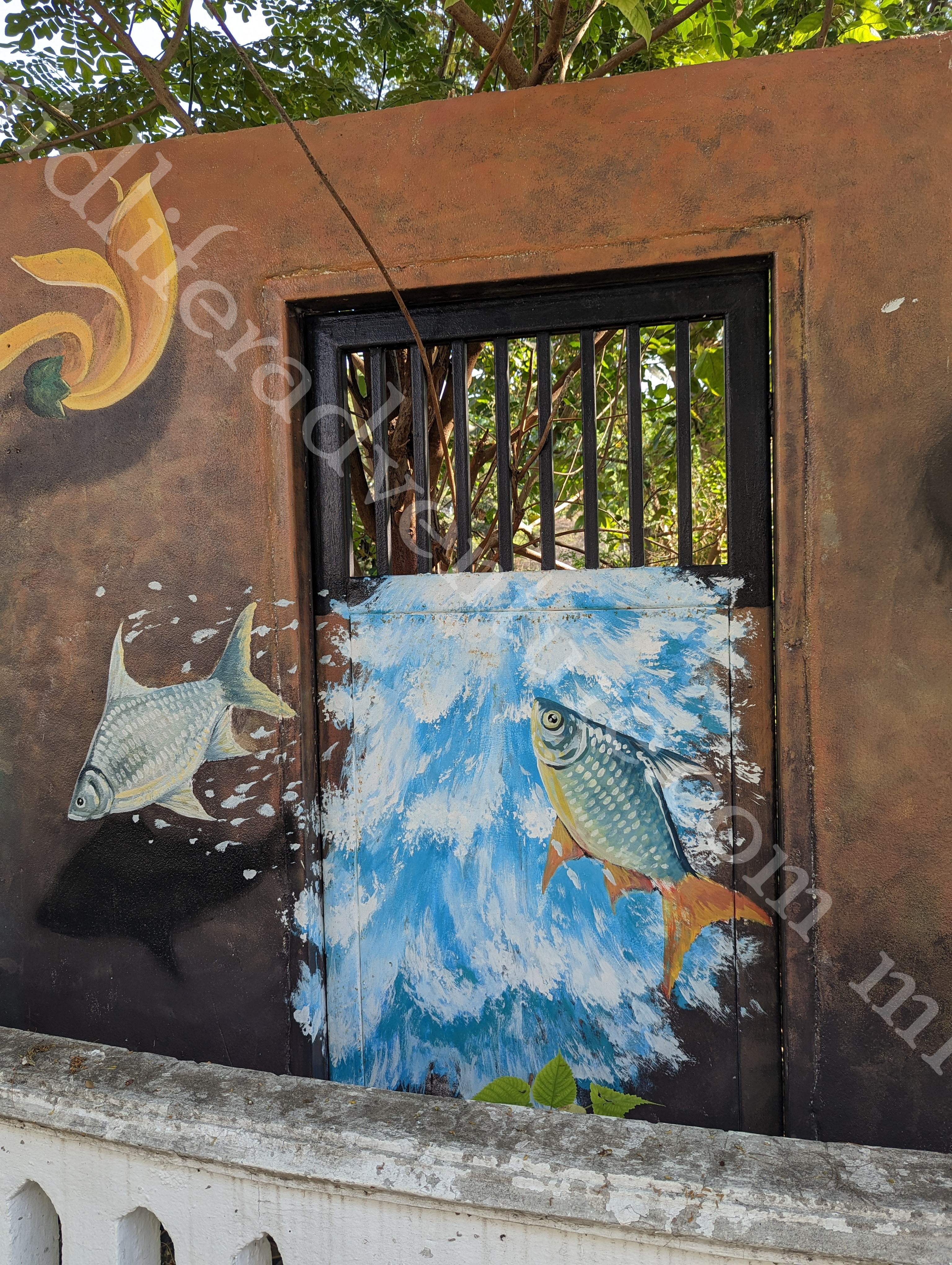
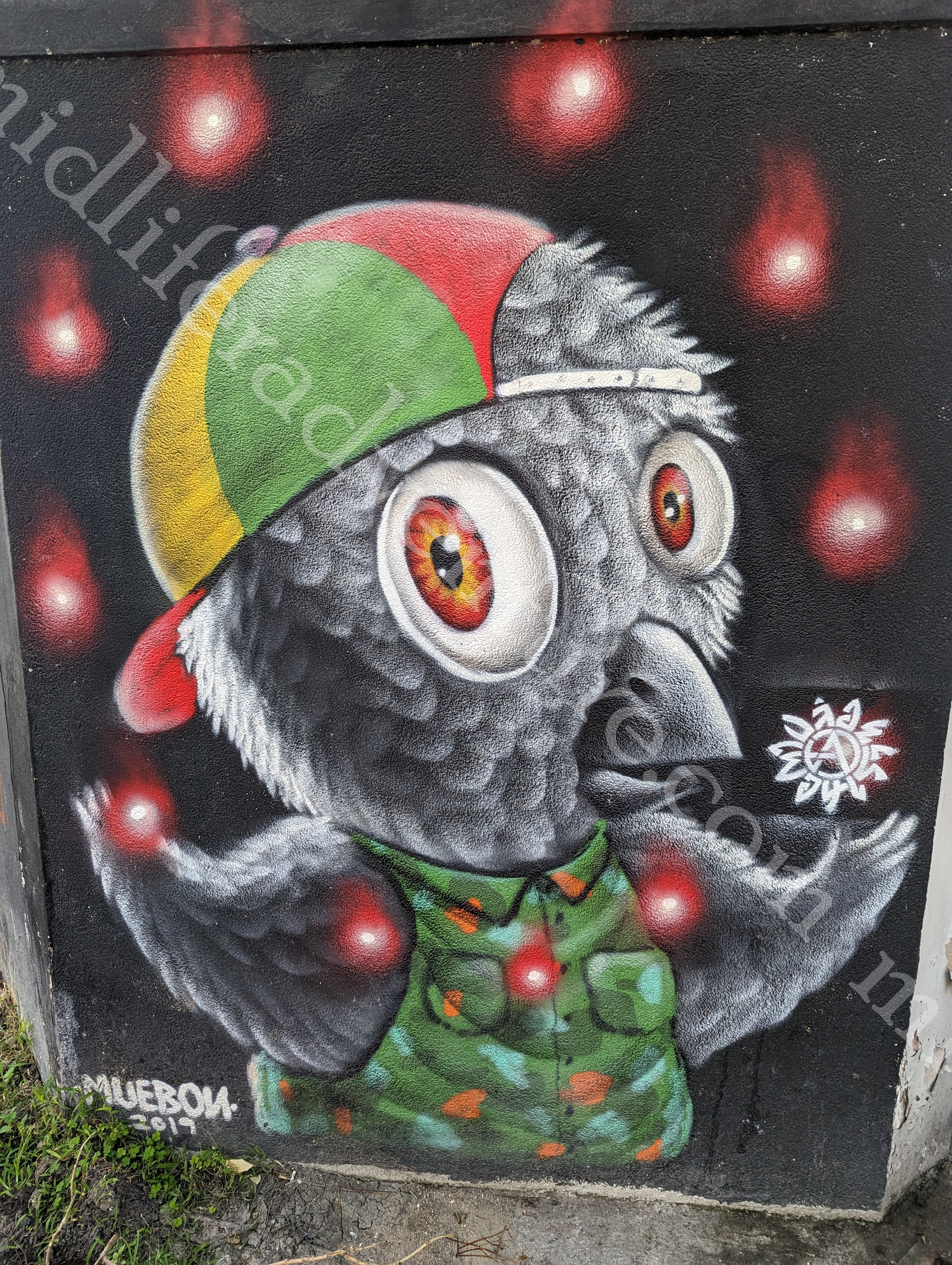
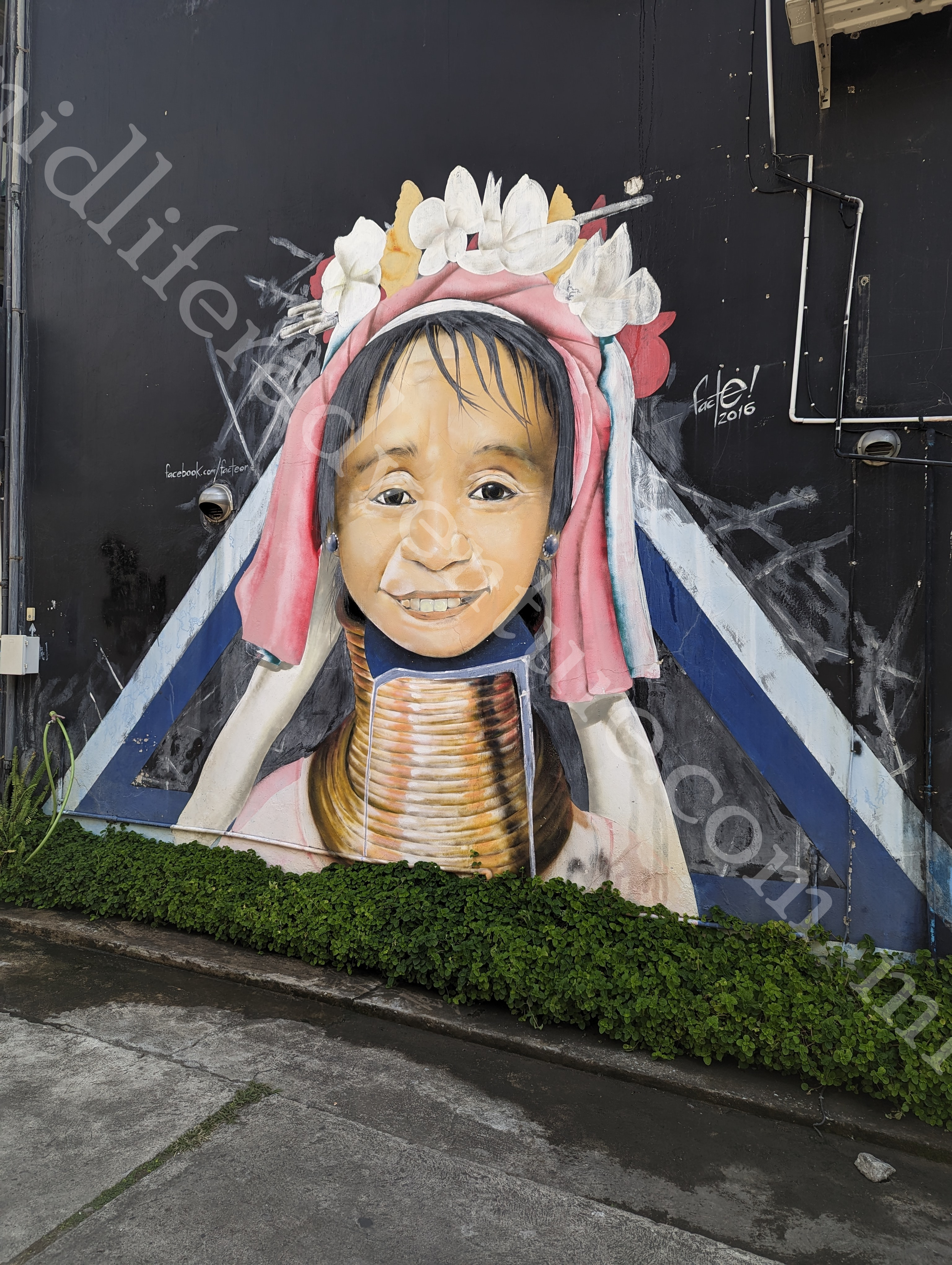
Similar to Penang, Chiang Mai has a thriving street art scene that has not been advertised and is rarely written about. So much so that we didn’t even know to look but Jill kept stopping and taking photos of these amazing scenes or funky pictures. The same sort of thing exists in Penang but somebody has put it together as a tourist attraction as a sort of hide and seek for the artworks.

The same thing could easily be done here. I am certain that we have missed a heap of these and a google images search assures us that we have, and we saw others but parked cars ruined photos. The bottom line is that if you care to look there are amazing artworks often hidden down tiny alleys or side streets and if you are willing to roam patience is required to find these hidden gems.

Long story short – here is a business opportunity for anyone willing to make a map and add it to the tourist agenda. A complete list of the artworks and a treasure map of where to find them would keep people amused for hours and would add greatly to the local tourism scene and things to do list.

Weed-Cannabis

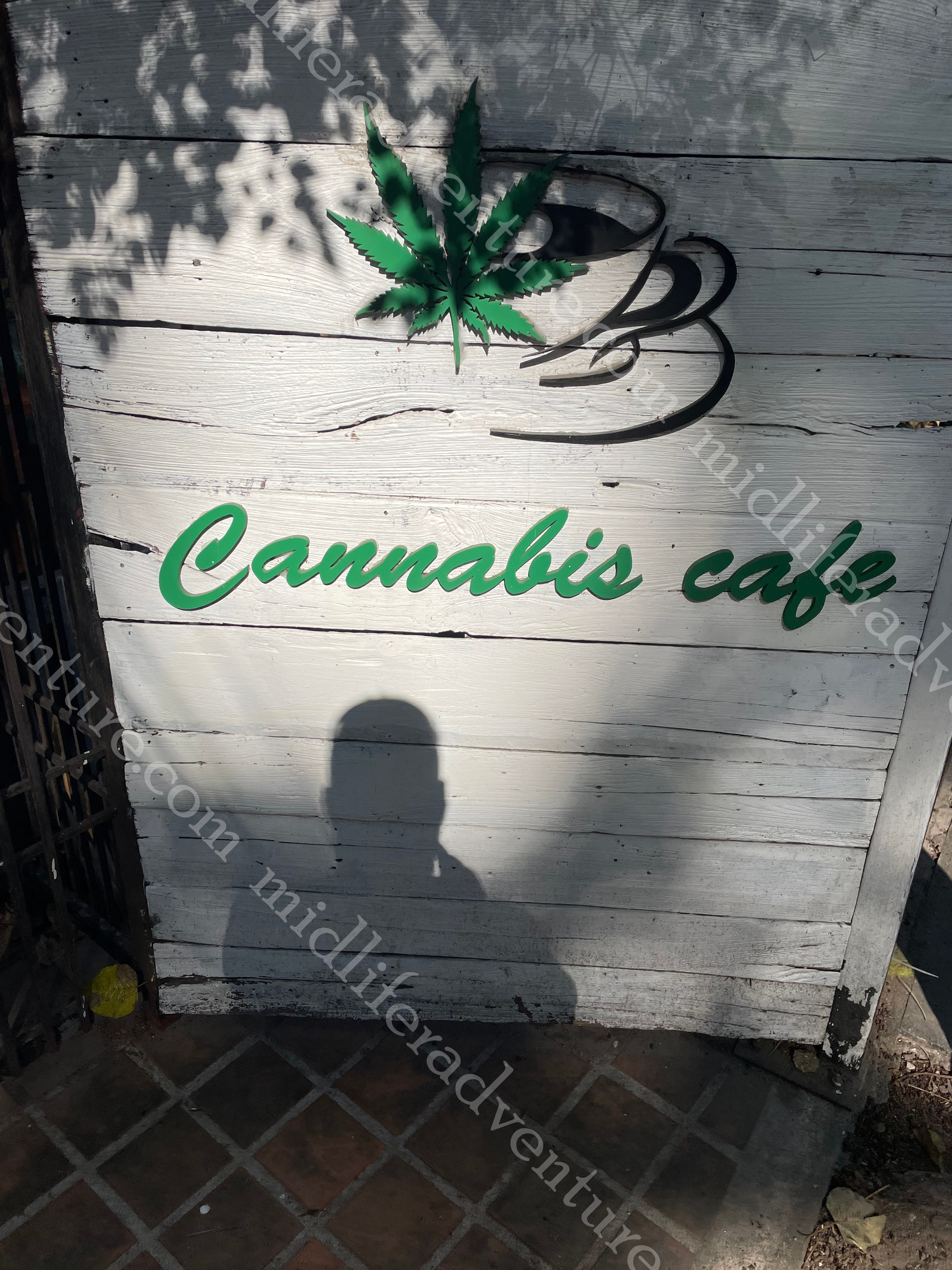
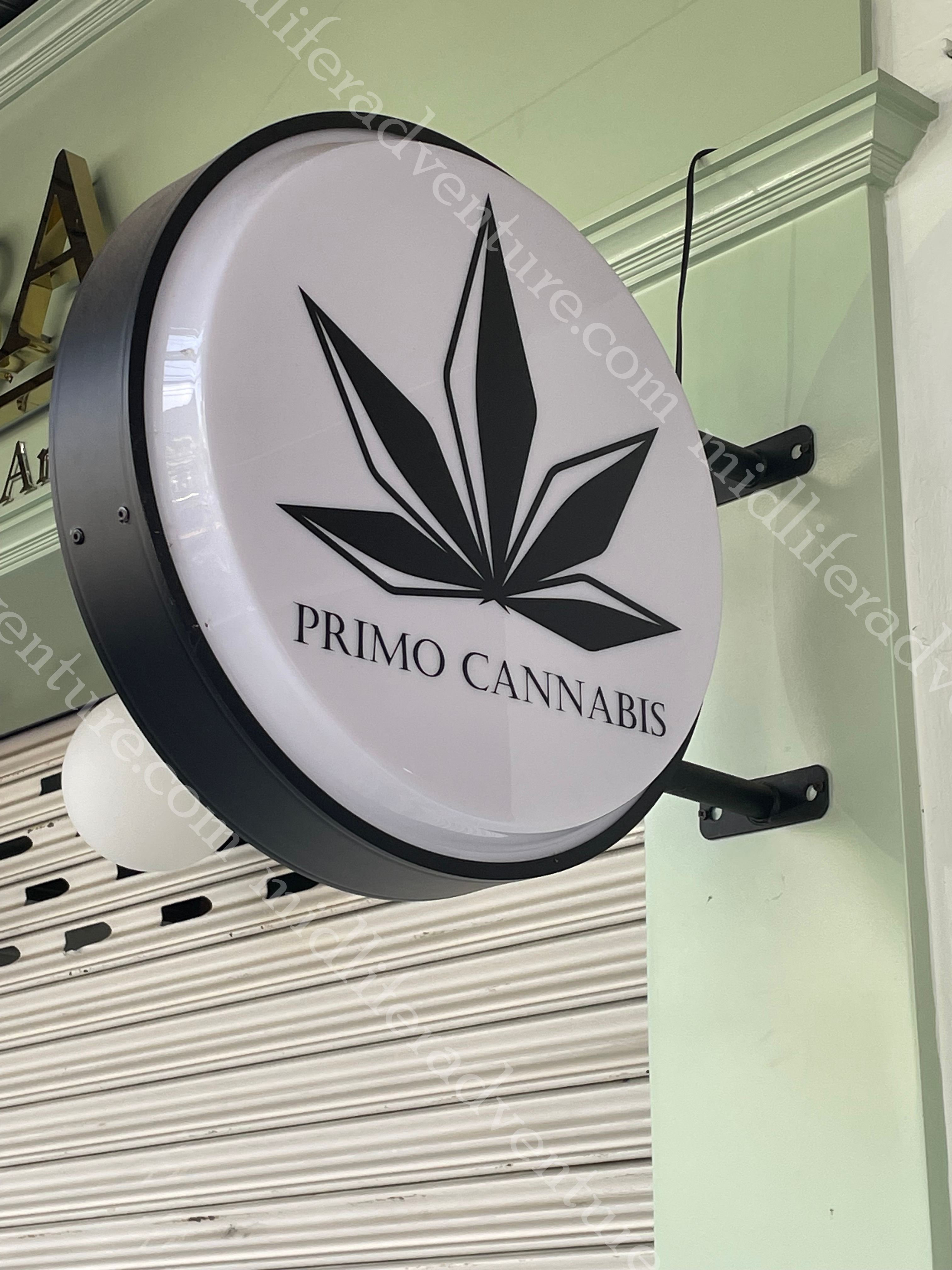
This bit surprised me a little given all that we Aussies have heard about Thailand’s tolerance of drugs – or lack thereof. Cannabis can be bought simply and easily almost everywhere through old town and beyond. The smoking of weed is totally legal at home or in private places but not in public.

WARNING – Fines for smoking weed in public are about $1000-1200 Australian and 3 months imprisonment.

This was either unknown to the backpackers or they just didn’t care as it didn’t seem to stop them smoking away as they walked down many of the streets and alleys late at night.

Siem Reap – Take 2

Well after several years of having our wings clipped, we finally got ourselves offshore again. The first major port of call was somewhere that we knew well and had enjoyed – Cambodia. More accurately Siem Reap. Our first foray here was back in November 2013 with a subsequent visit with the boys a year later in November 2014. The place and people are lovely, it is cheap and the food is great. A good way to ease ourselves back into the world of global nomadding again.

Khmer Empire

Before we get too carried away lets get some of the basics down to provide some context about what is going on here. Between the 9th and the 15th century Khmer or Ankorian Empire existed within SE Asia and at its peak was said to be larger than the Eastern Roman Empire (Byzantine) which existed around the same time. Kicking off in the early 800’s the empire the grew to be one of the largest going and satellite images show that at its peak it was the most extensive pre-industrial urban complex in the world. Long story short, there are about 50 Buddhist and Hindu temples dating back to the 8th-12th century in the vicinity of Siem Reap. Many of the structures have collapsed or been swallowed by the jungle but the structures that remain and the carvings in place make the are a must see and listed by UNESCO.

Touring the temples

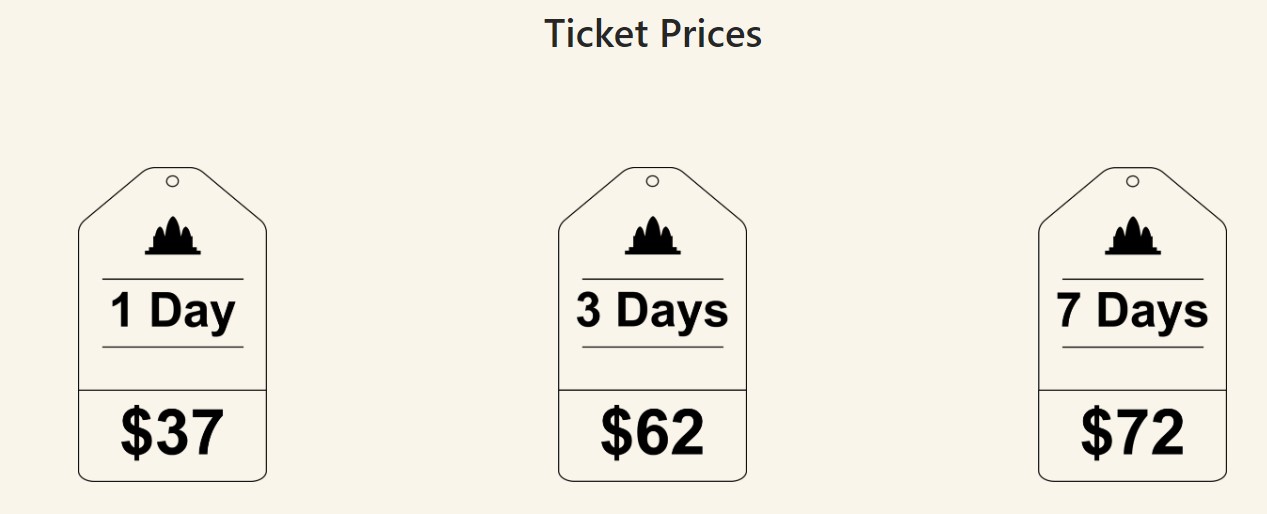
Step One – buy your ticket. The prices are in USD and they range as seen on the right (prices correct as at Nov 2023). Note that these tickets are for the main temples etc and they do not give you access to all things. If for example you wanted to go to the Kulen Waterfalls then another ticket would be required.

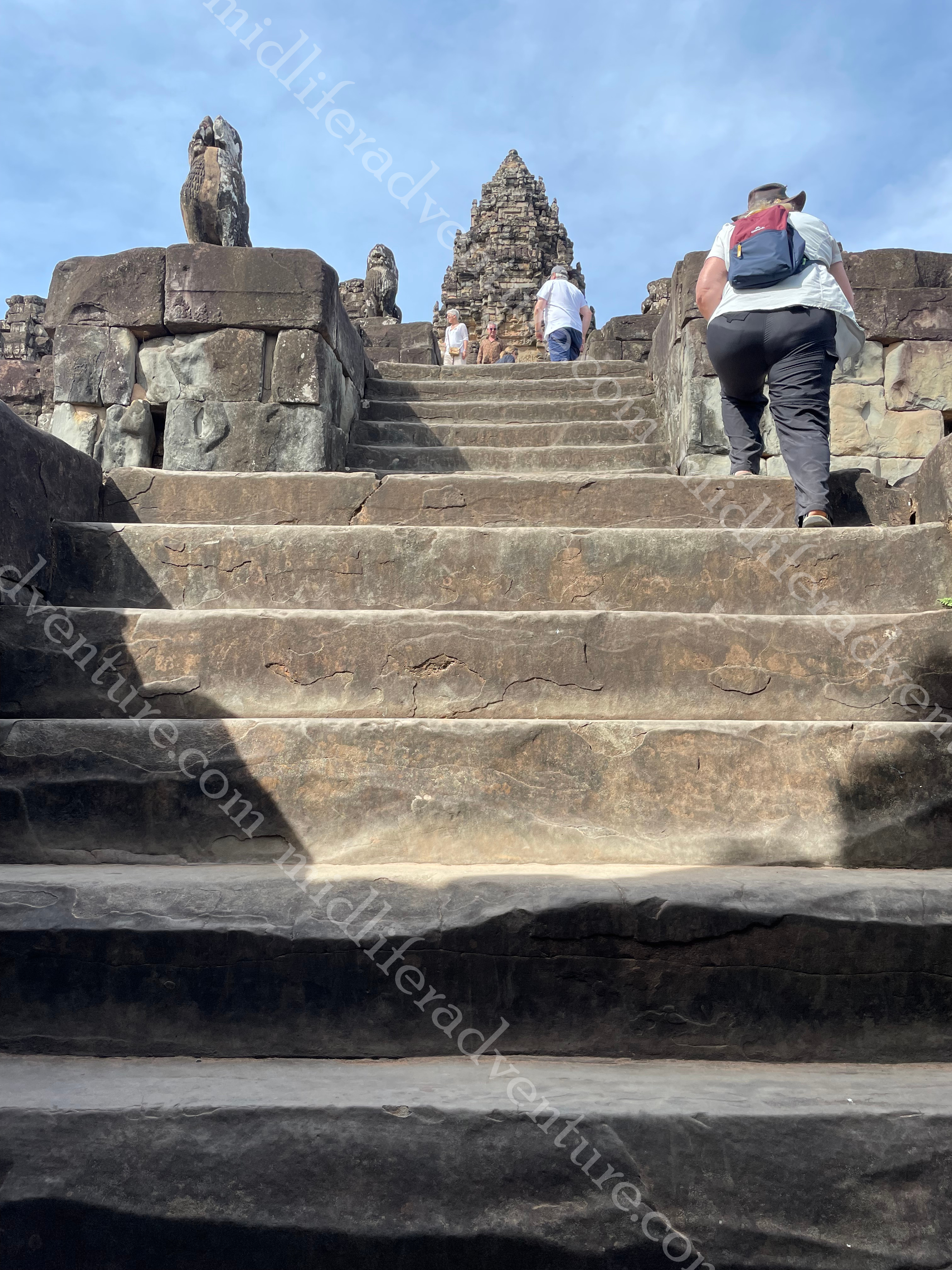
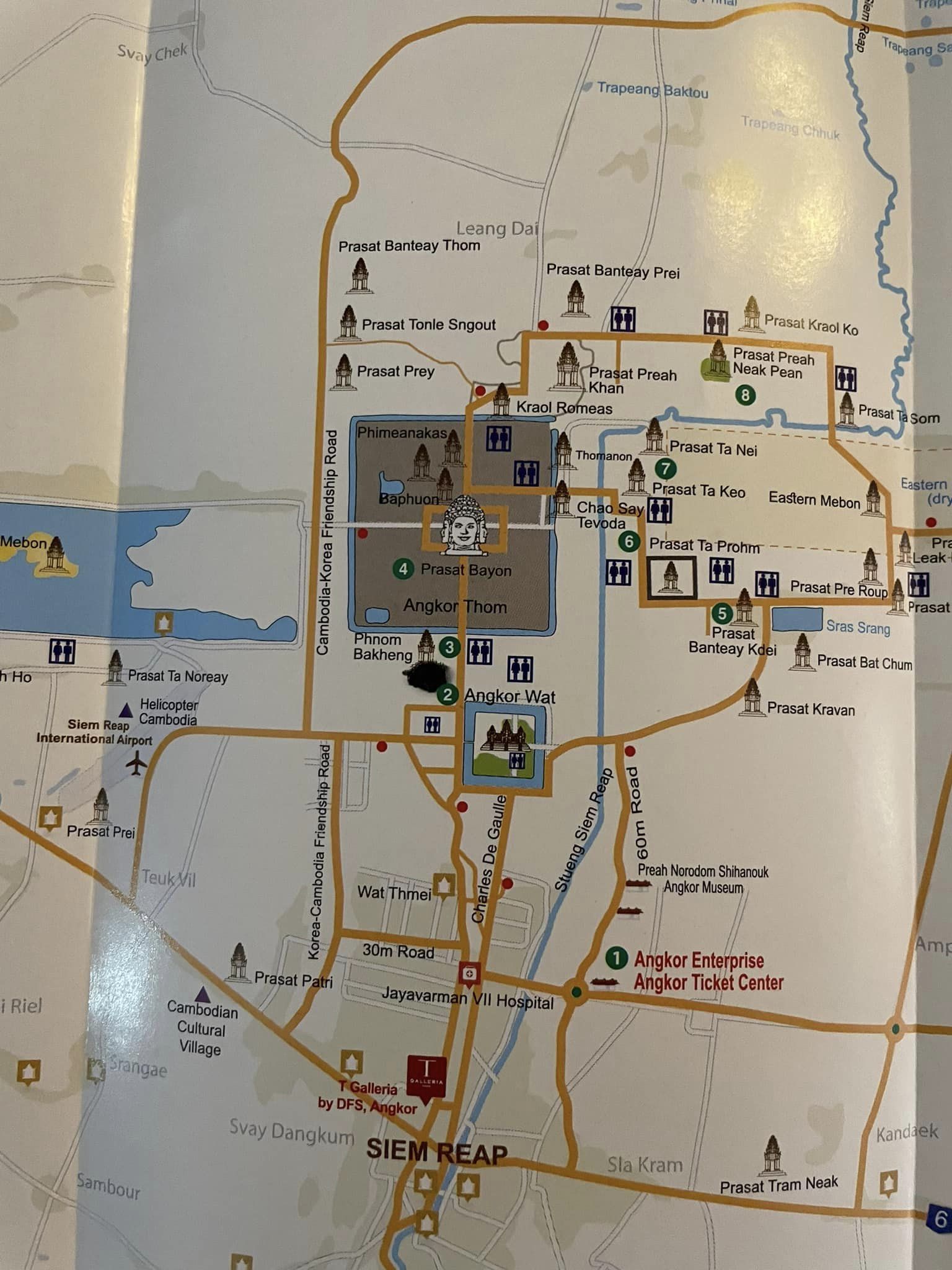
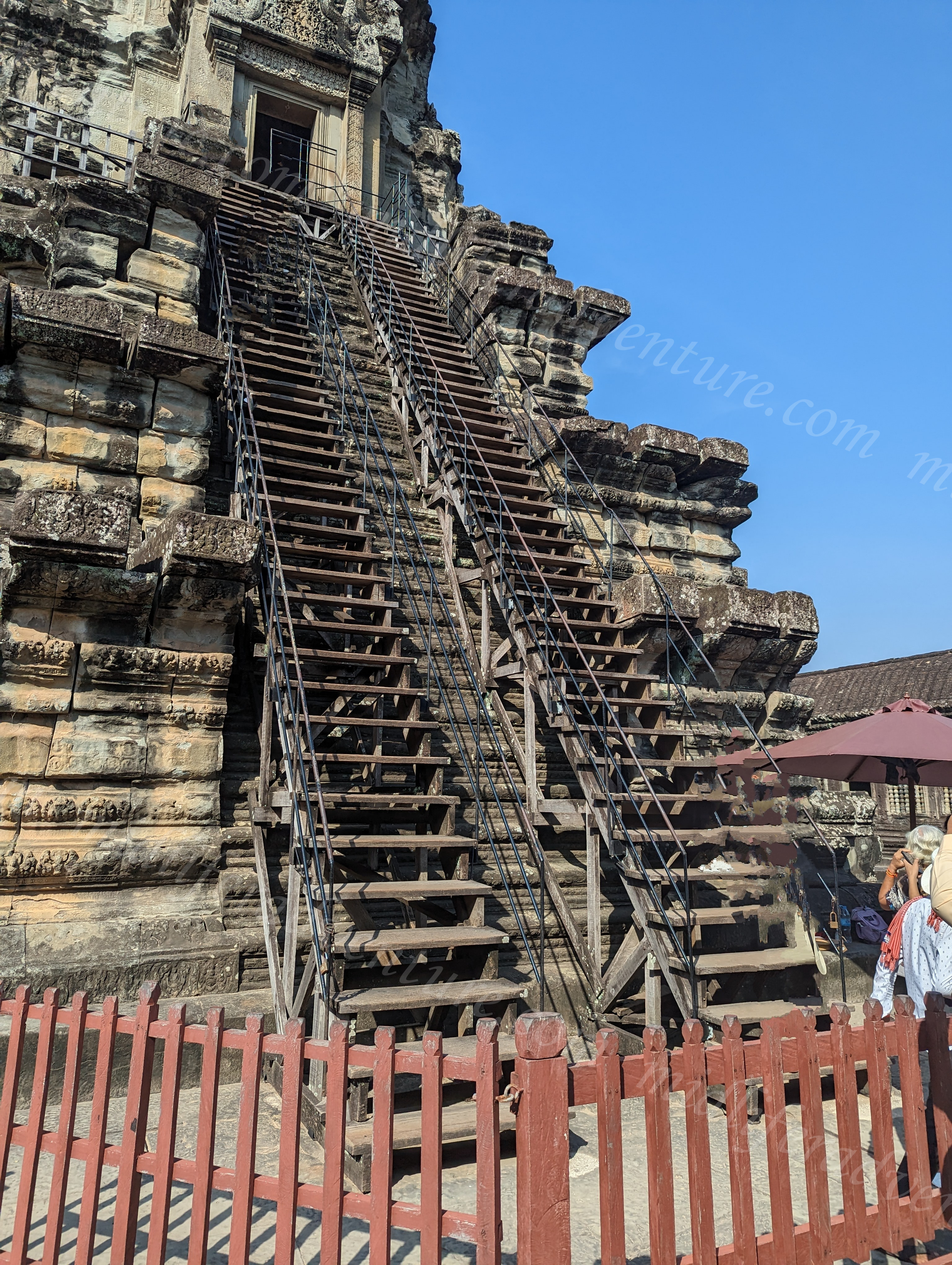
There is an inner loop (ie the ones close to town) and an outer loop of temples that can be done. The inner loop takes in the big ticket items of Angkor Watt, Angkor Thom, the Bayon temple and Ta Prohm Temple (which became famous in the tomb raider movie and game with its image of the tree growing out of the wall). The inner loop can be easily done in a day but does involve a lot of walking and a lot of stairs. The outer loop takes in the temples requiring a little more driving and are generally a little less impressive or less well preserved. These too can be done in a day but there is more tuk tuk time and fewer stairs. From here there are the far away temples. These are considerably further from town and individual negotiations would need to take place on both price and type of vehicle required.

What to wear when visiting the temples

Dress is simple. You are off to visit temples and holy sites so dress accordingly. This means that your legs and shoulders should be covered for the period when you are inside the temples. For such a simple concept this still continues to confuse the majority of the women that attend these sites. The innate need for short skirts and strappy tops is obvious…so too is the absolute requirement to show as much skin in your influencing photos and videos. However, the inability to throw an overshirt or the ubiquitous elephant pants on for the few minutes you are in a temple seems too impossible a task to muster. And guys the world will be able to survive for the few minutes it takes while you put away the gun show – especially those northern European (glow in the dark) biceps.

How to get to Siem Reap temples

You you can hire virtually any type of transport that you want to take you around and through the temples. You can have a bus all to yourself if you really like. There are private cars, motorcycles, bicycles and tuk tuks. If you take the private air-conditioned car or bus, you will find that the short distances between temples means that you have arrived at the next temple before the air conditioning has had a chance to kick in.

You can ride a bicycle, but that would mean that you would have to ride a bicycle. Motorcycles mean that you are either on the back of a local’s bike or that you have hired your own and would need to know your way around the various temples.

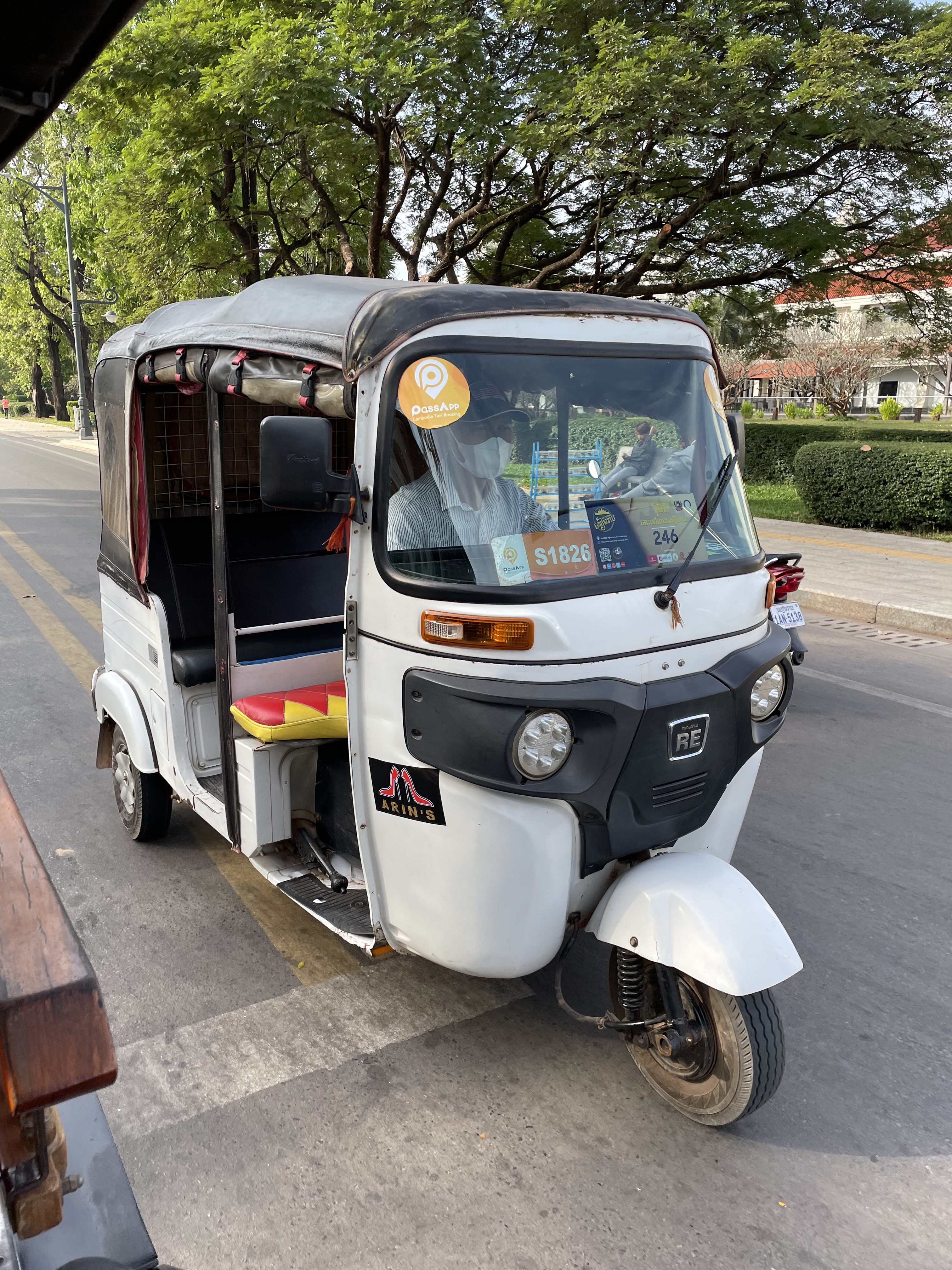
Tip Number One: Take a tuk tuk. The tuk tuk is cheap, easy and has great air flow, especially if you choose one of the more open types rather than the more enclosed versions. This means that you are cooling down immediately after having hiked up and down the temples, rather that sweltering looking for relief. We had the one on the left (below) driven by the lovely Mr Thou and it was fantastic.

Angkor Wat

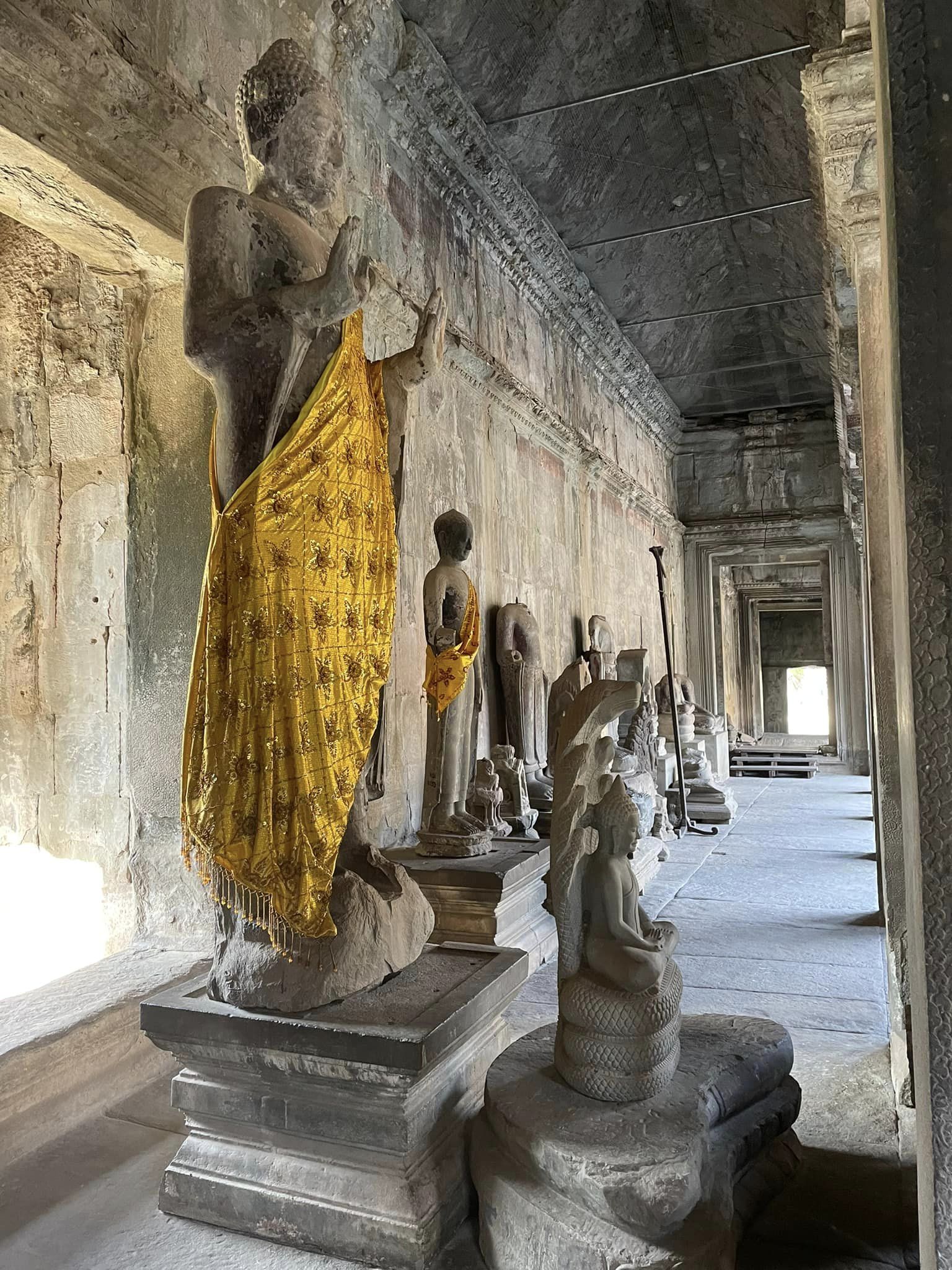
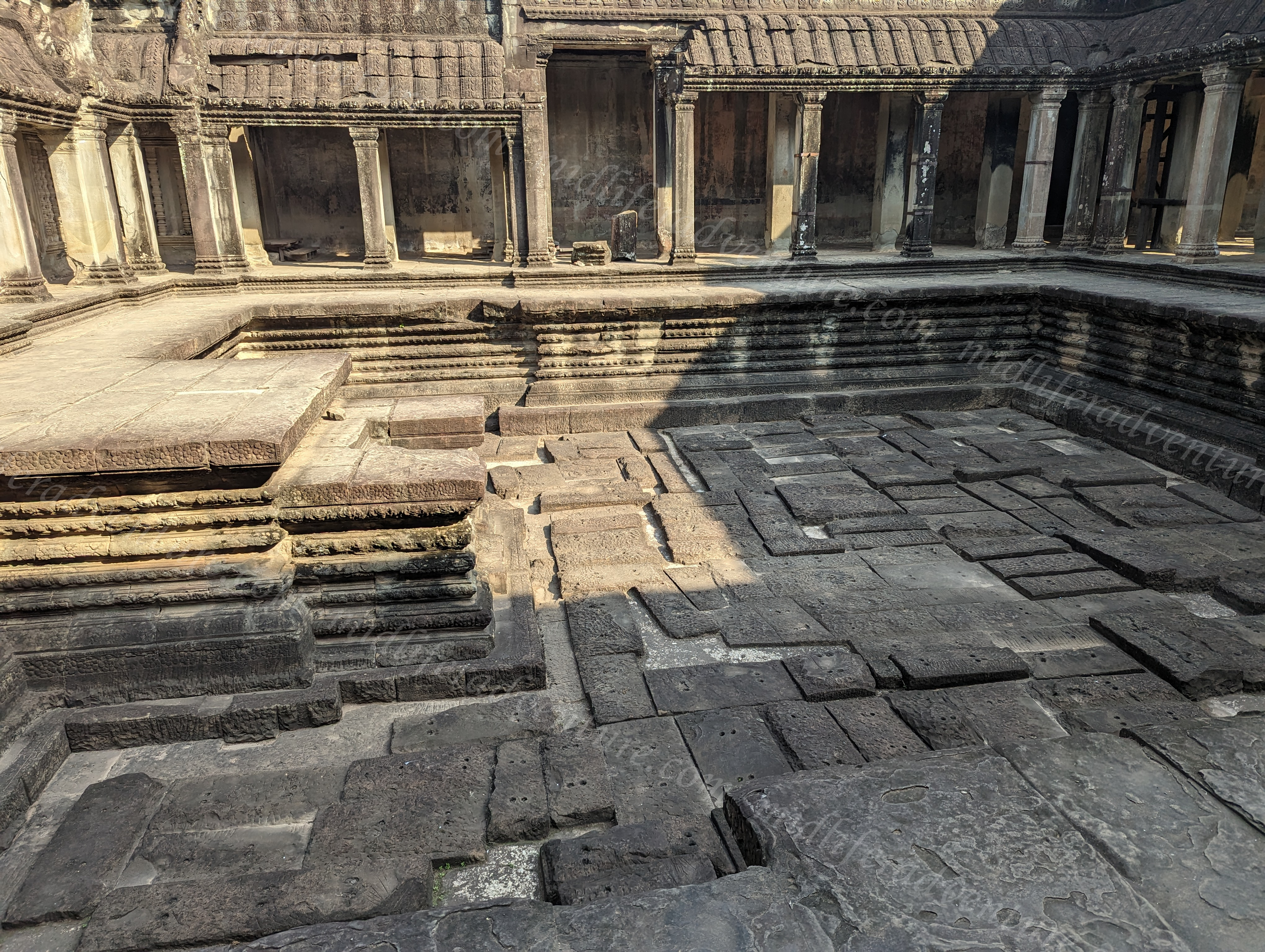
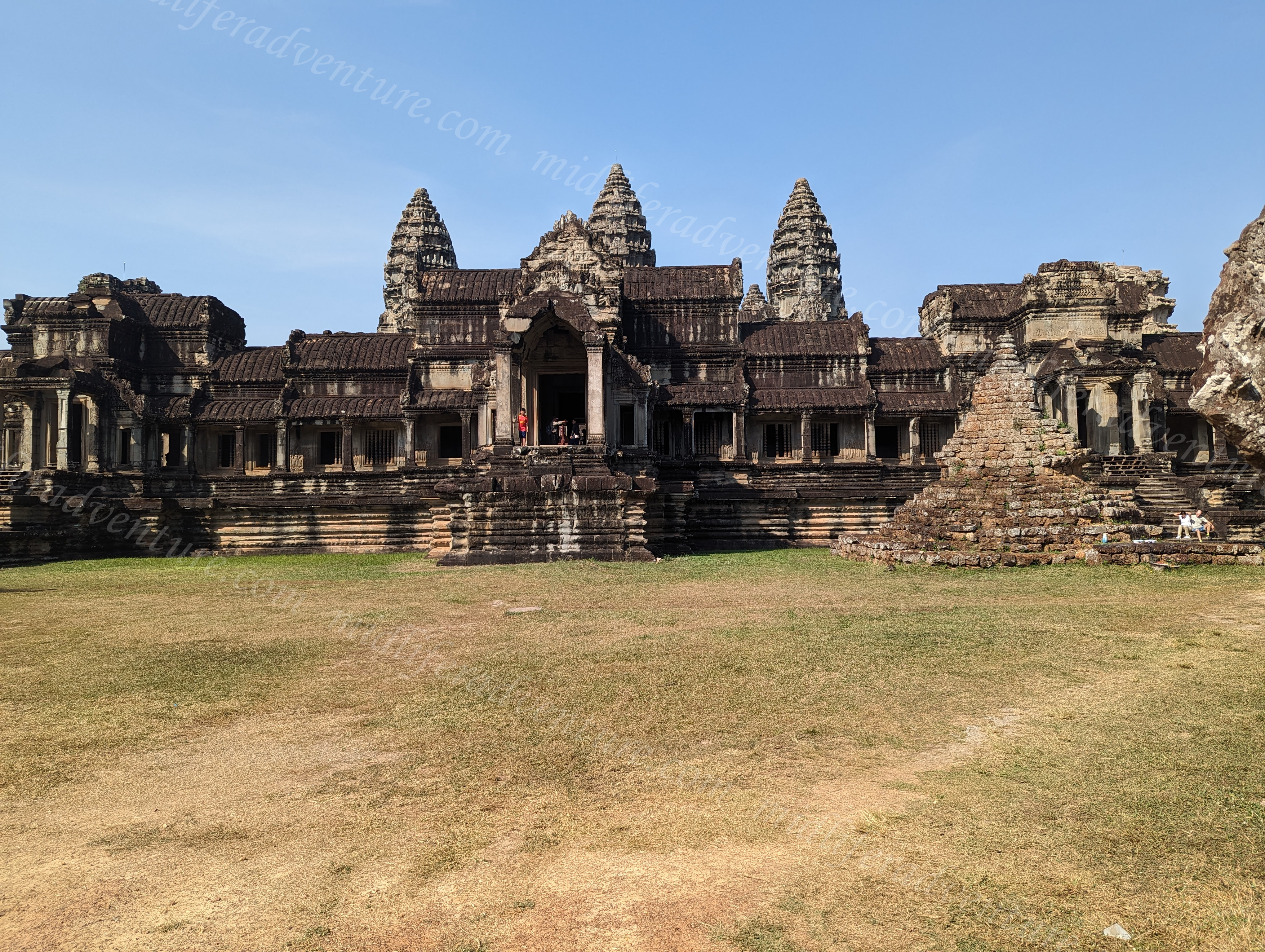
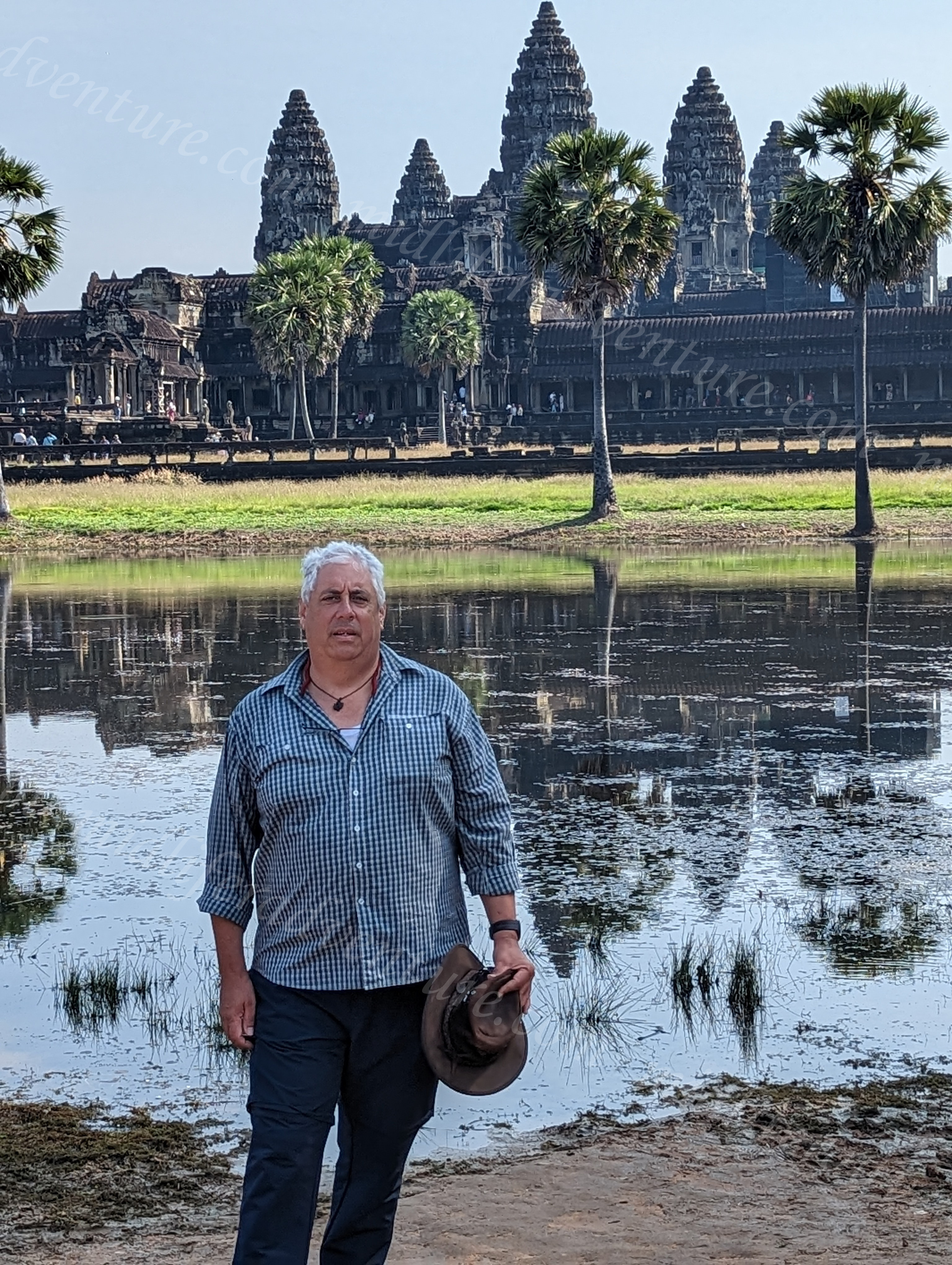
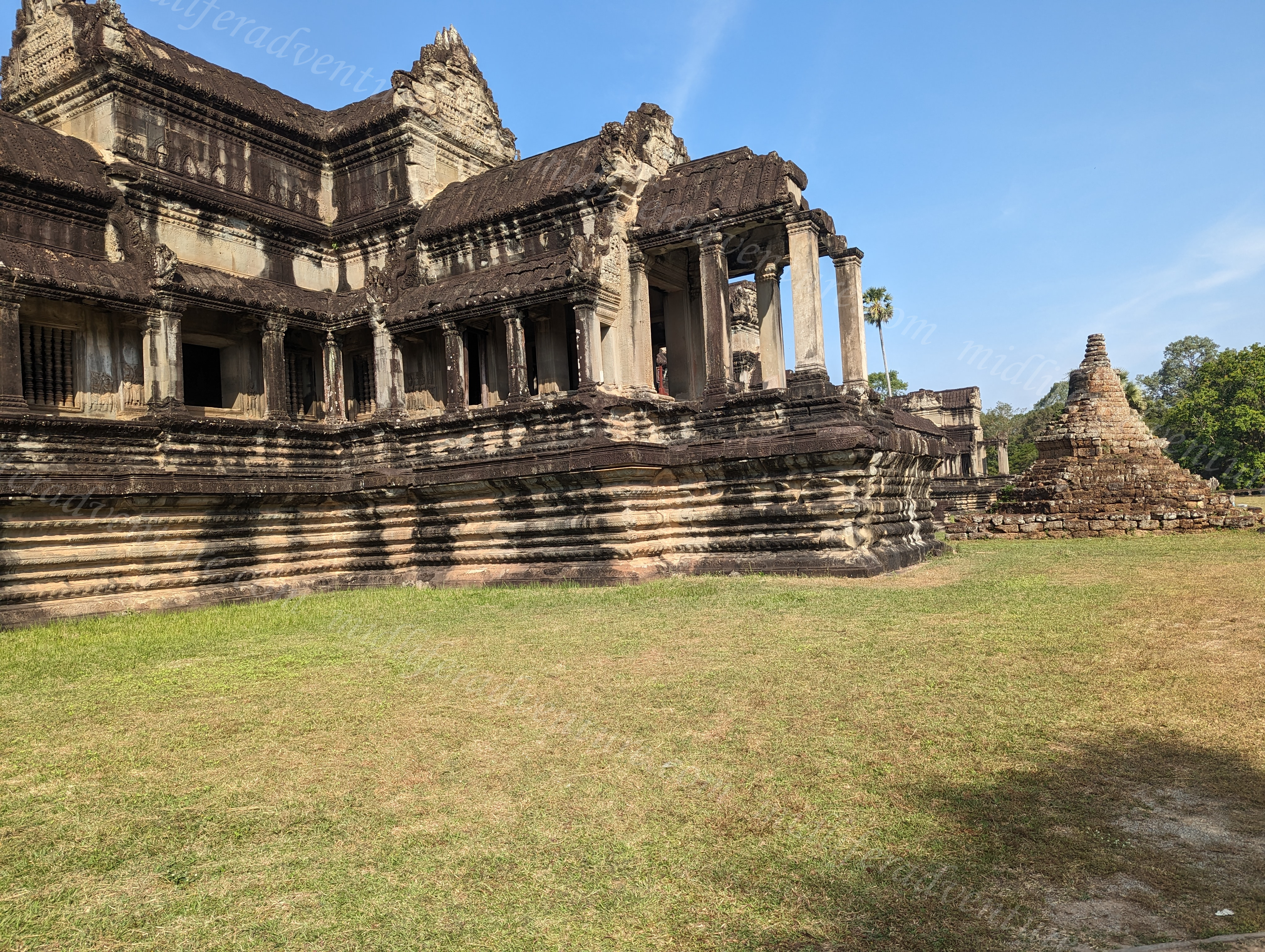
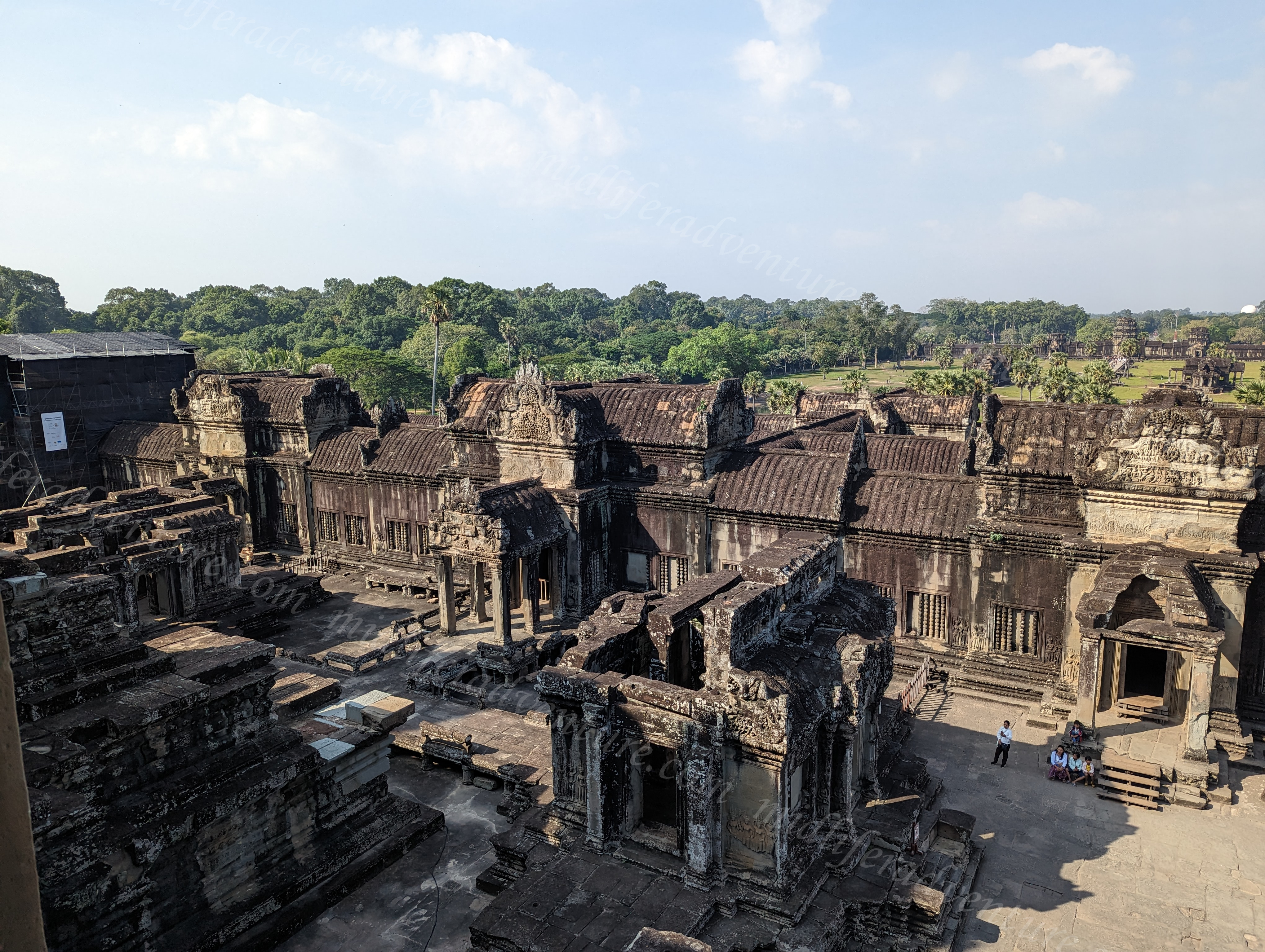
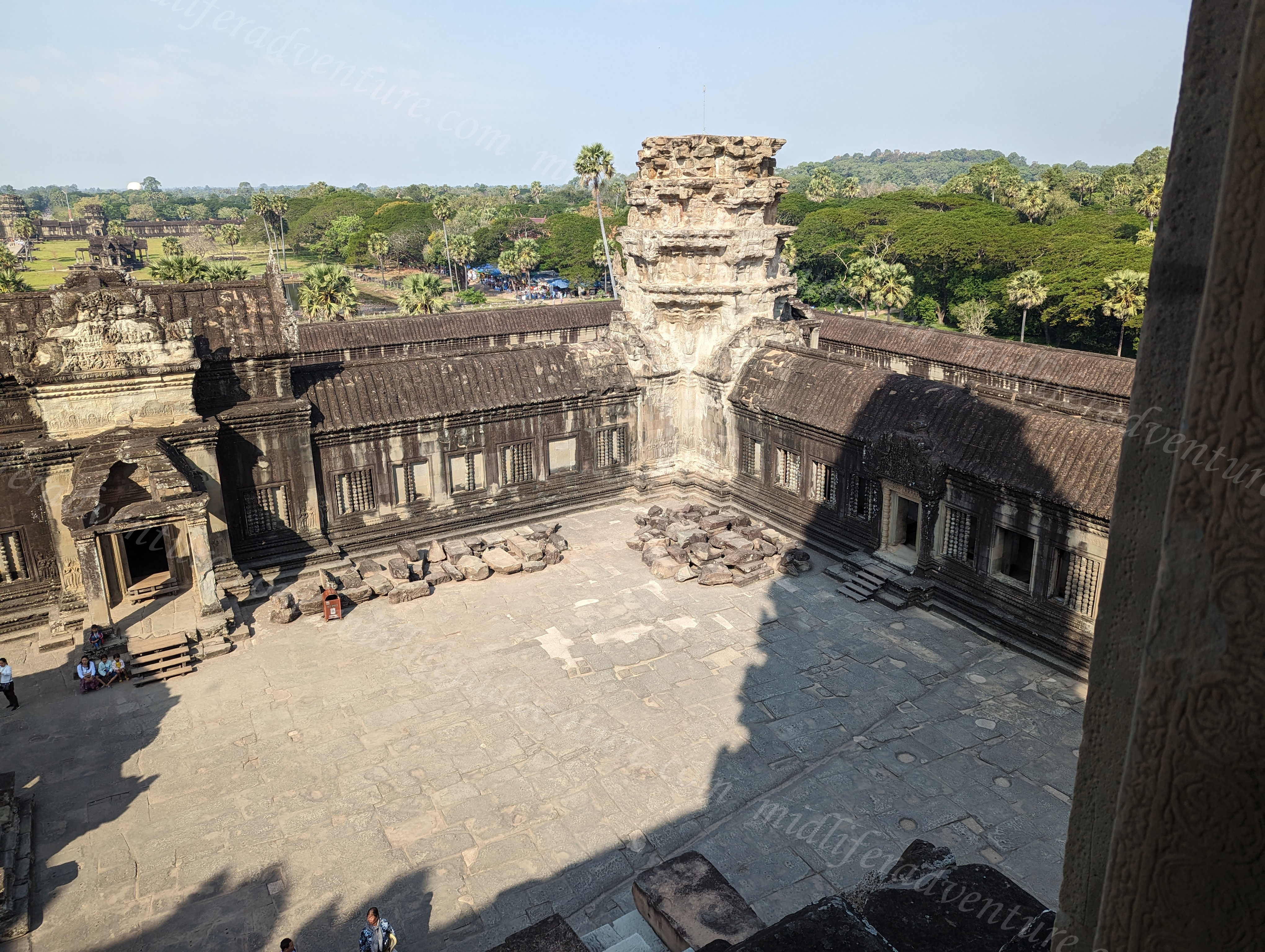
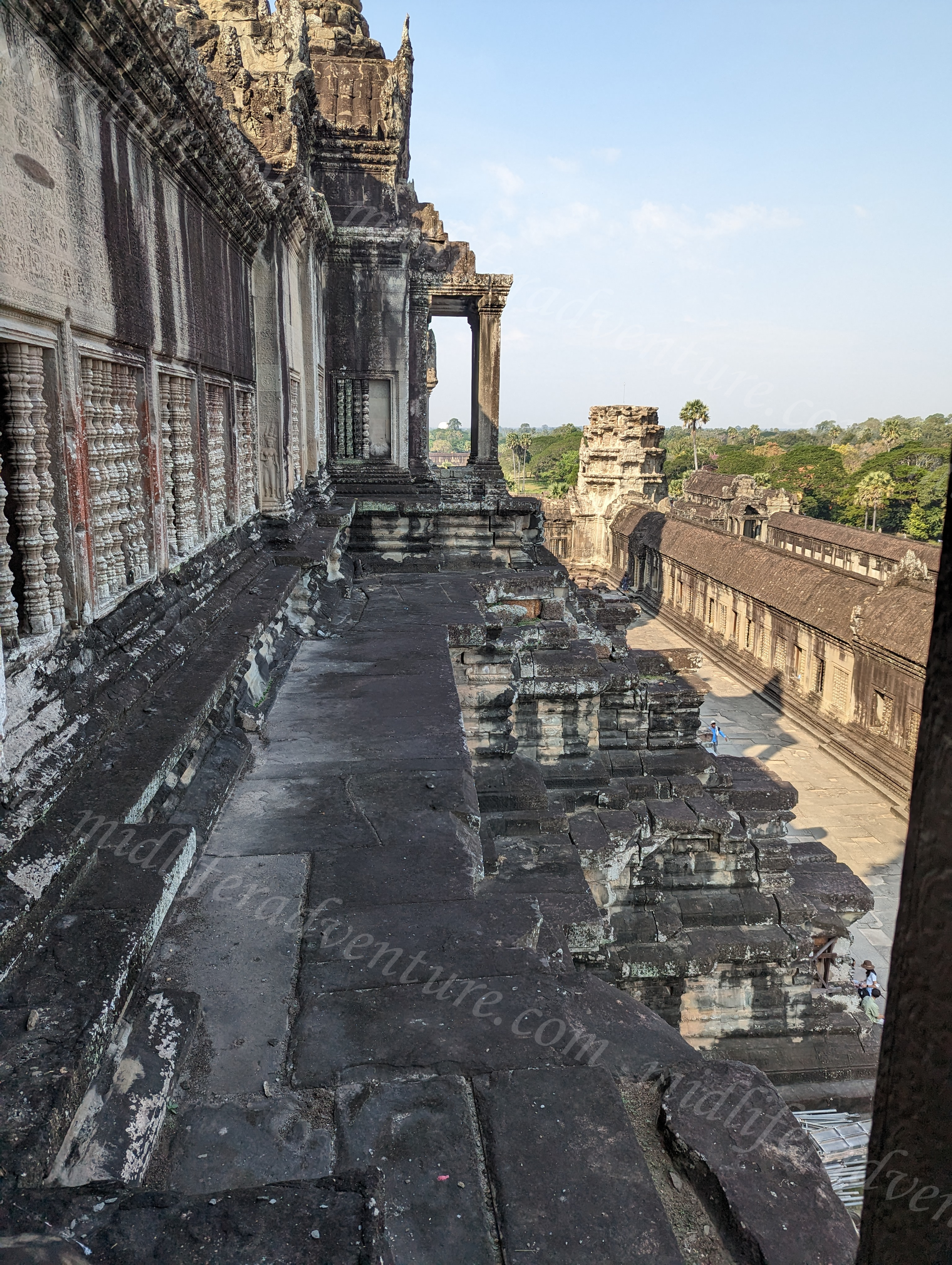
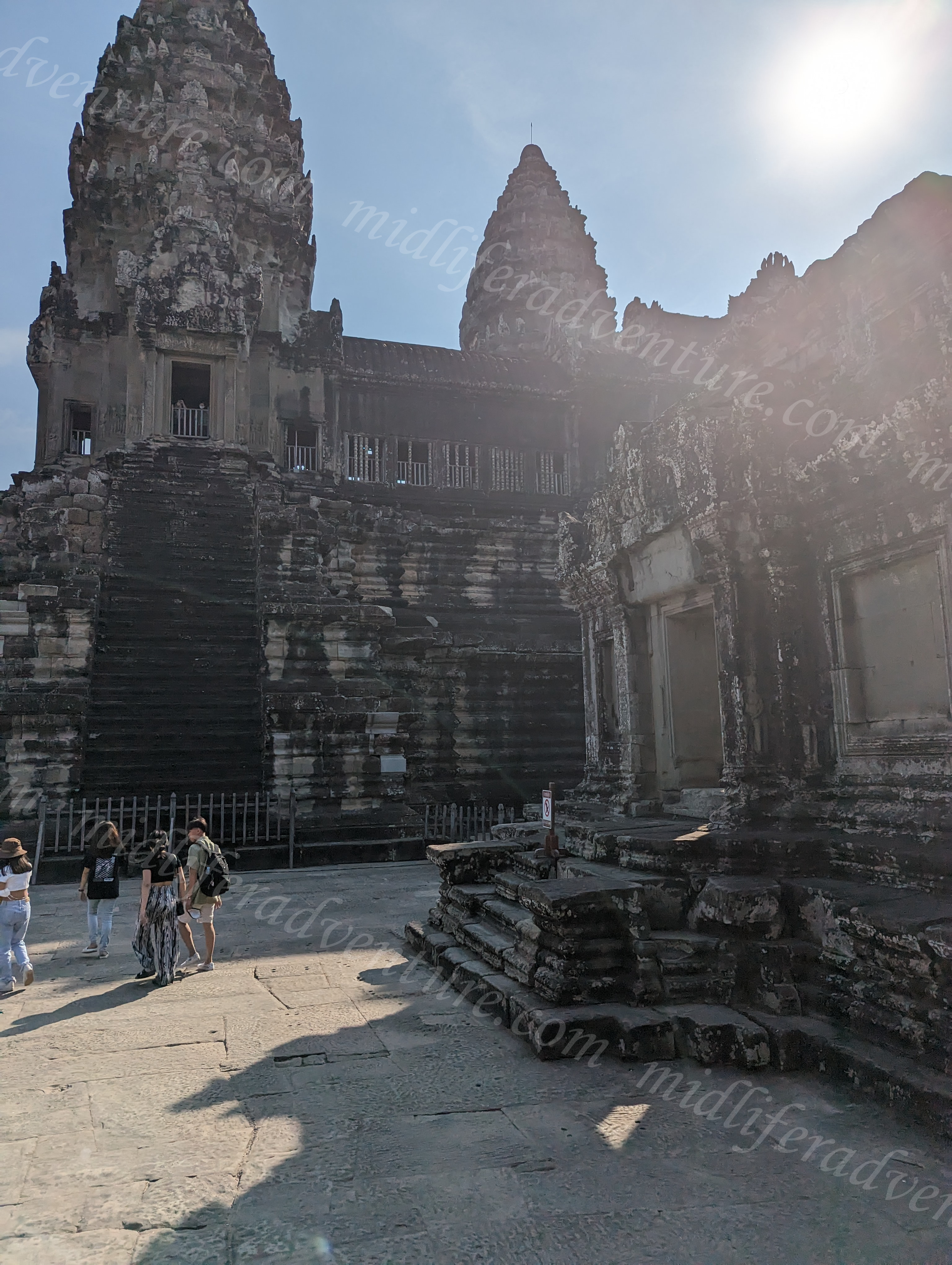
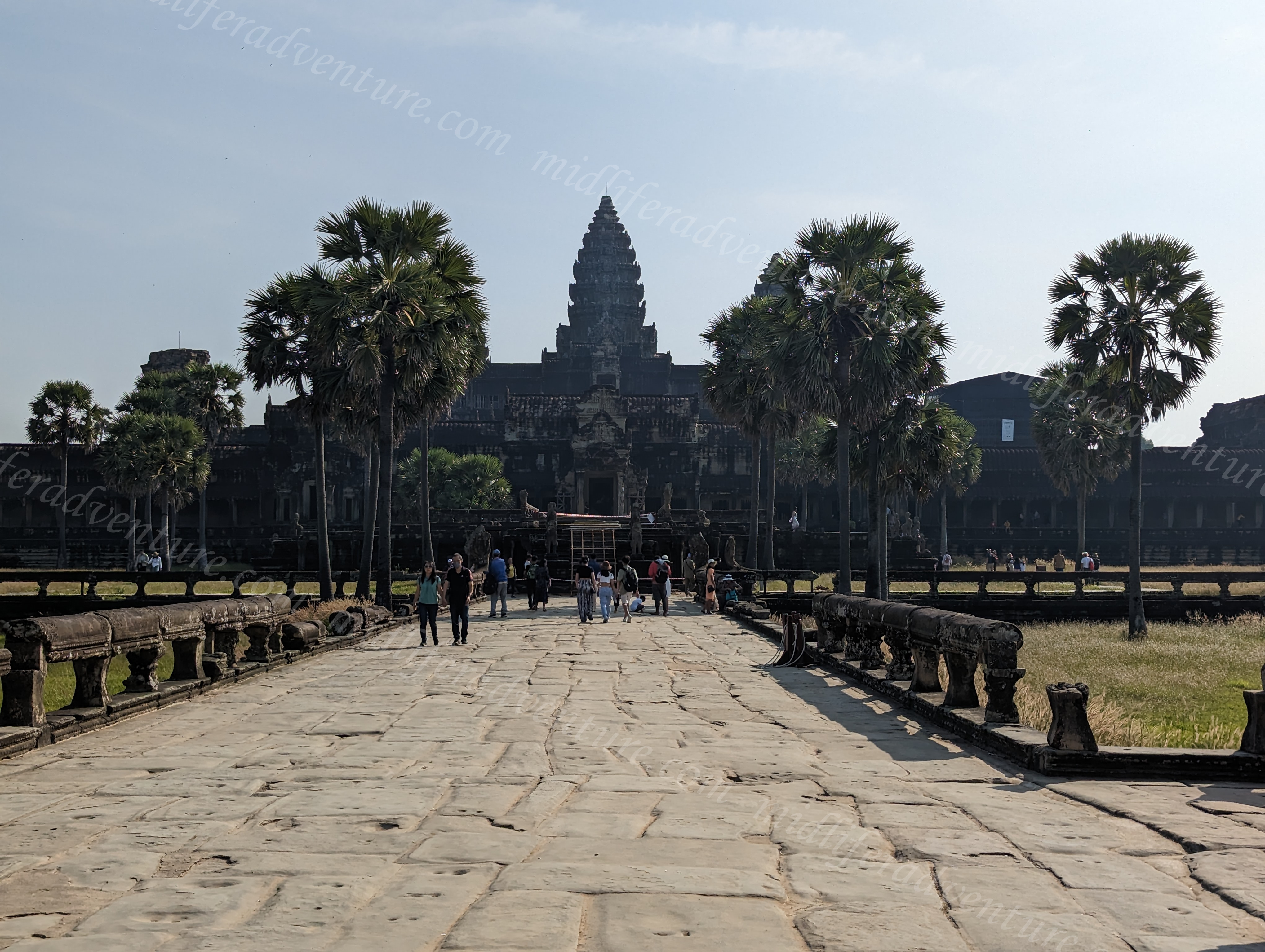
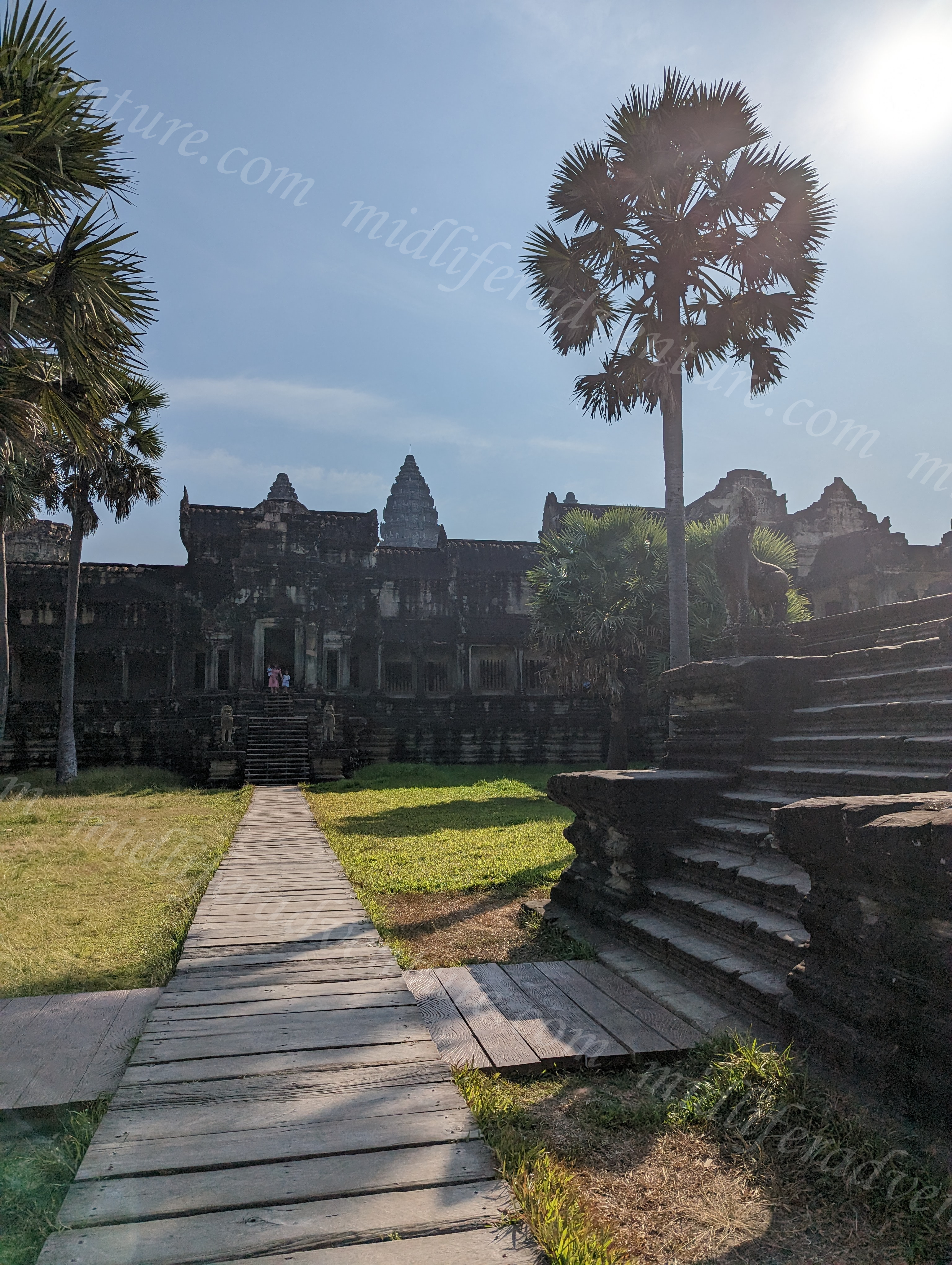
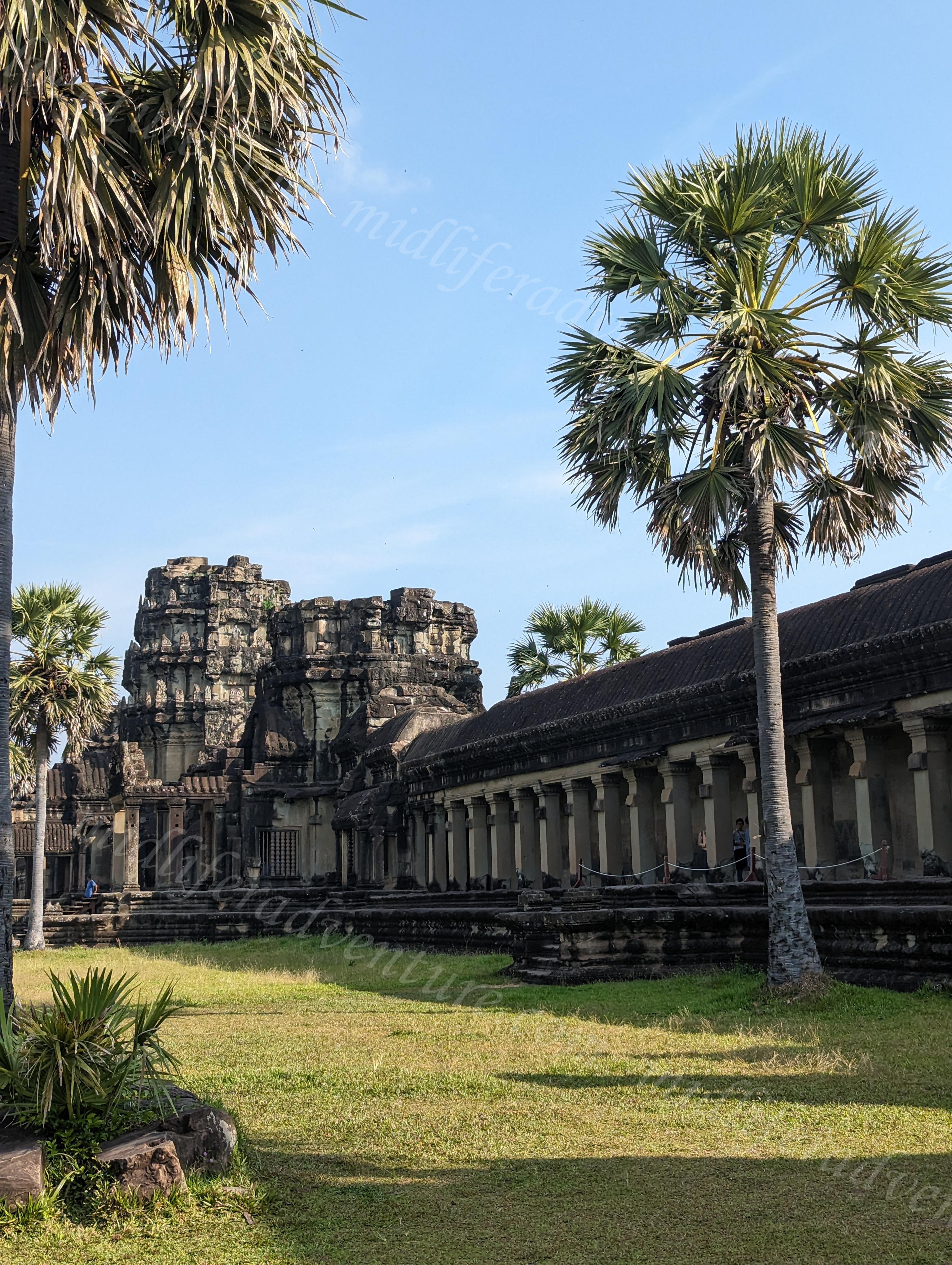
Angkor Wat is clearly the most famous of the temples and is the main attraction for the region. It was built in the 12th century to worship the Lord Vishnu (a Hindu deity) and allegedly served as the funerary temple for the bloke who commissioned it, King Suryavarman II. It is set on 402 acres and surrounded by a 5km moat which contains an outer wall of 3.6 kilometres. Once inside there are three rectangular galleries and the main building. At the centre of the temple stands the five towers (that google tells me is called a quincunx – not a word that typically lives in my vocabulary but hey lets go with it).  

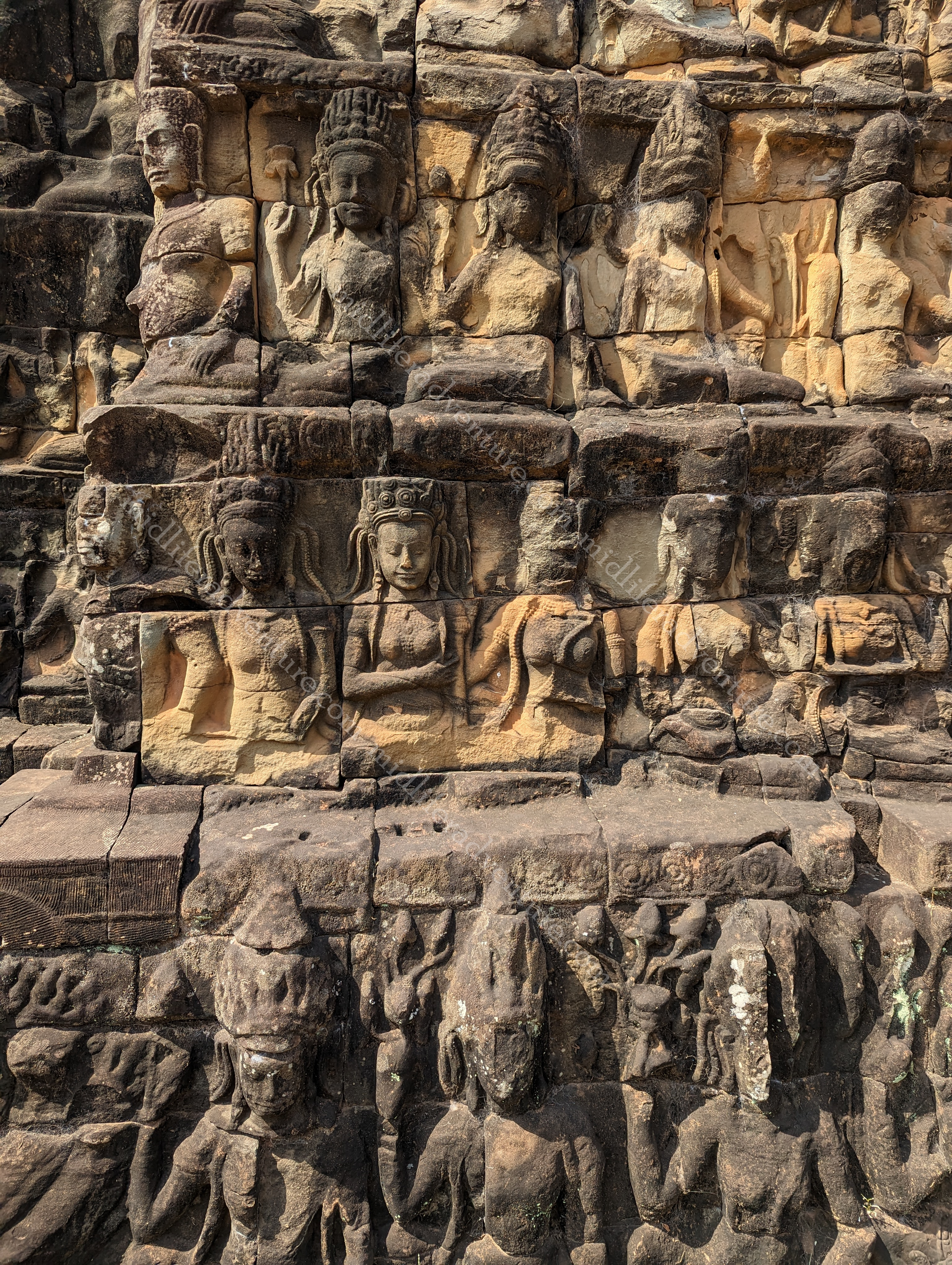
The five lotus towers are 65 metres tall and are decorated with around 2,000 stone carvings of Apsaras (celestial dancers). In all reality, virtually all of Angkor Wat’s surfaces are carved. There are kilometres of carvings that include battle scenes, fictional animals and all sorts of other things that give credence to the legend of the day.

Angkor Thom

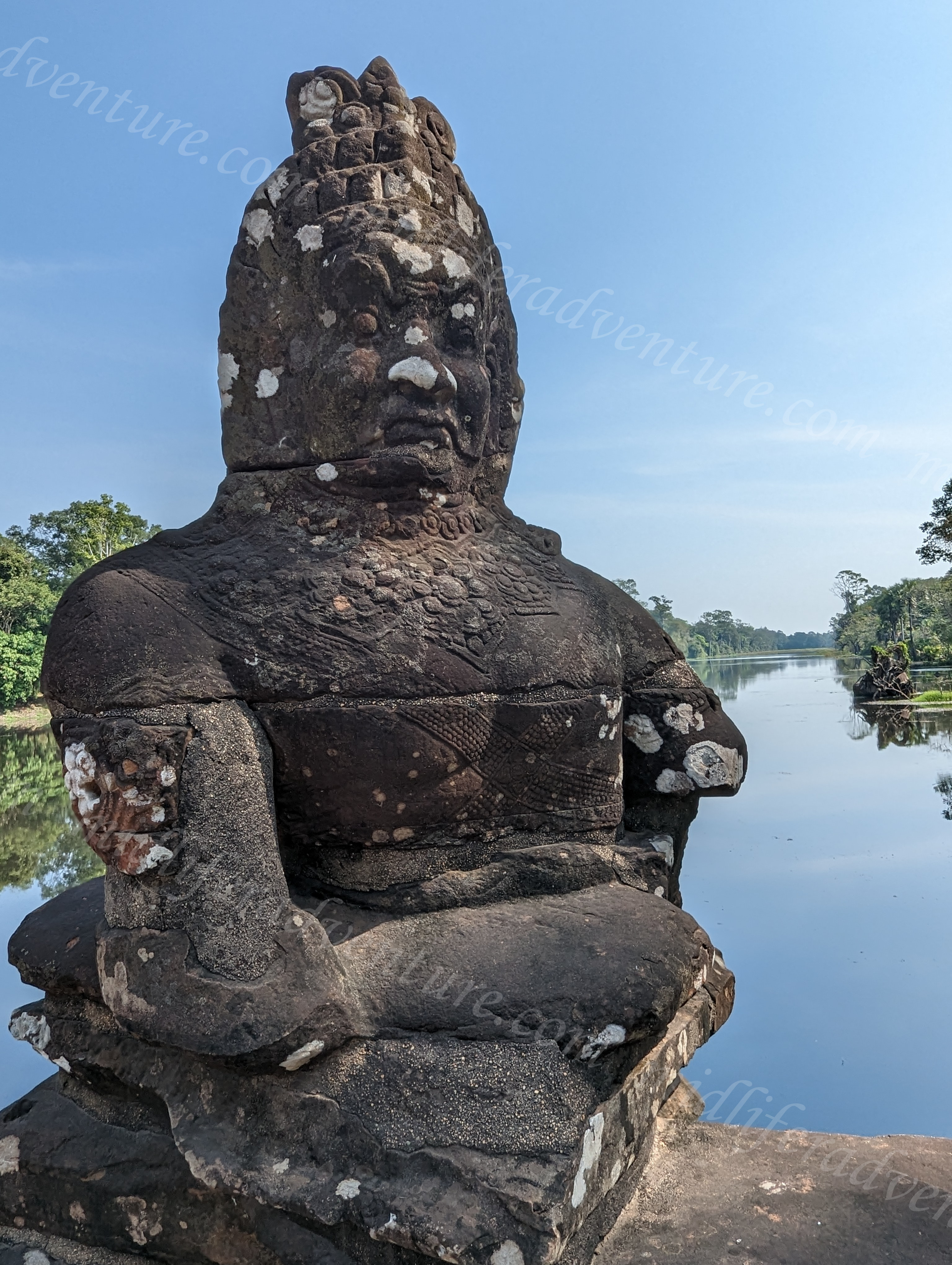
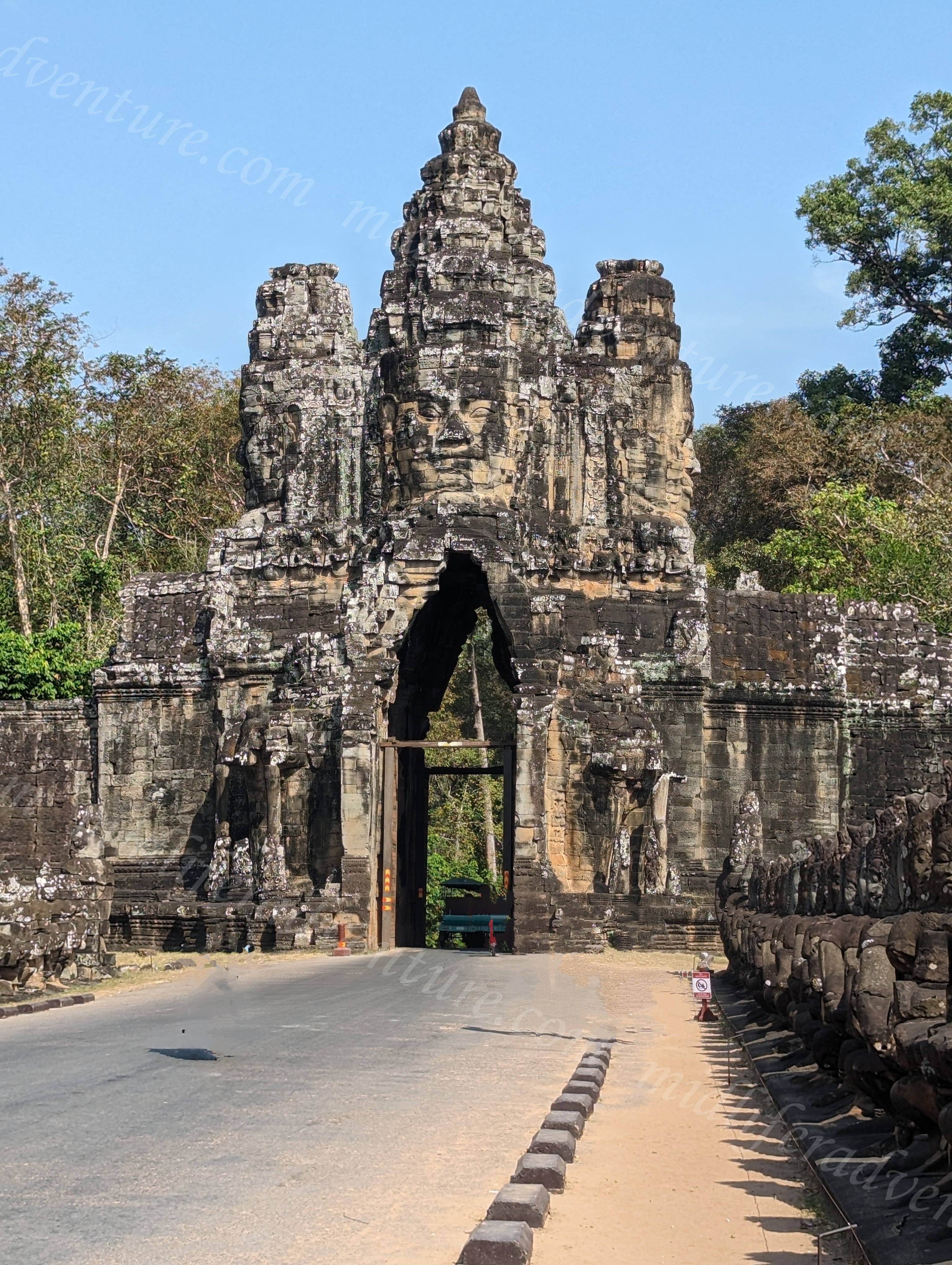
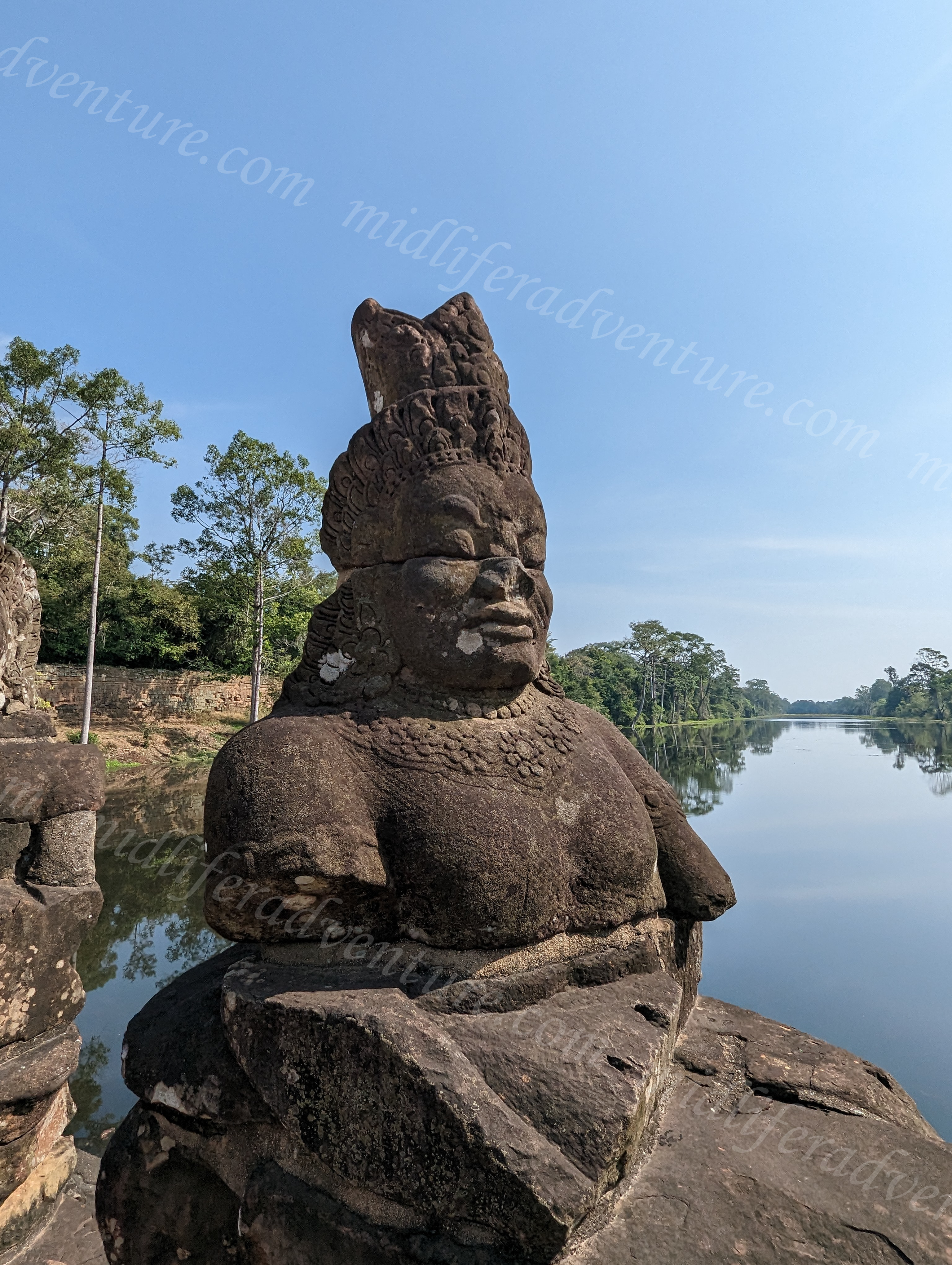
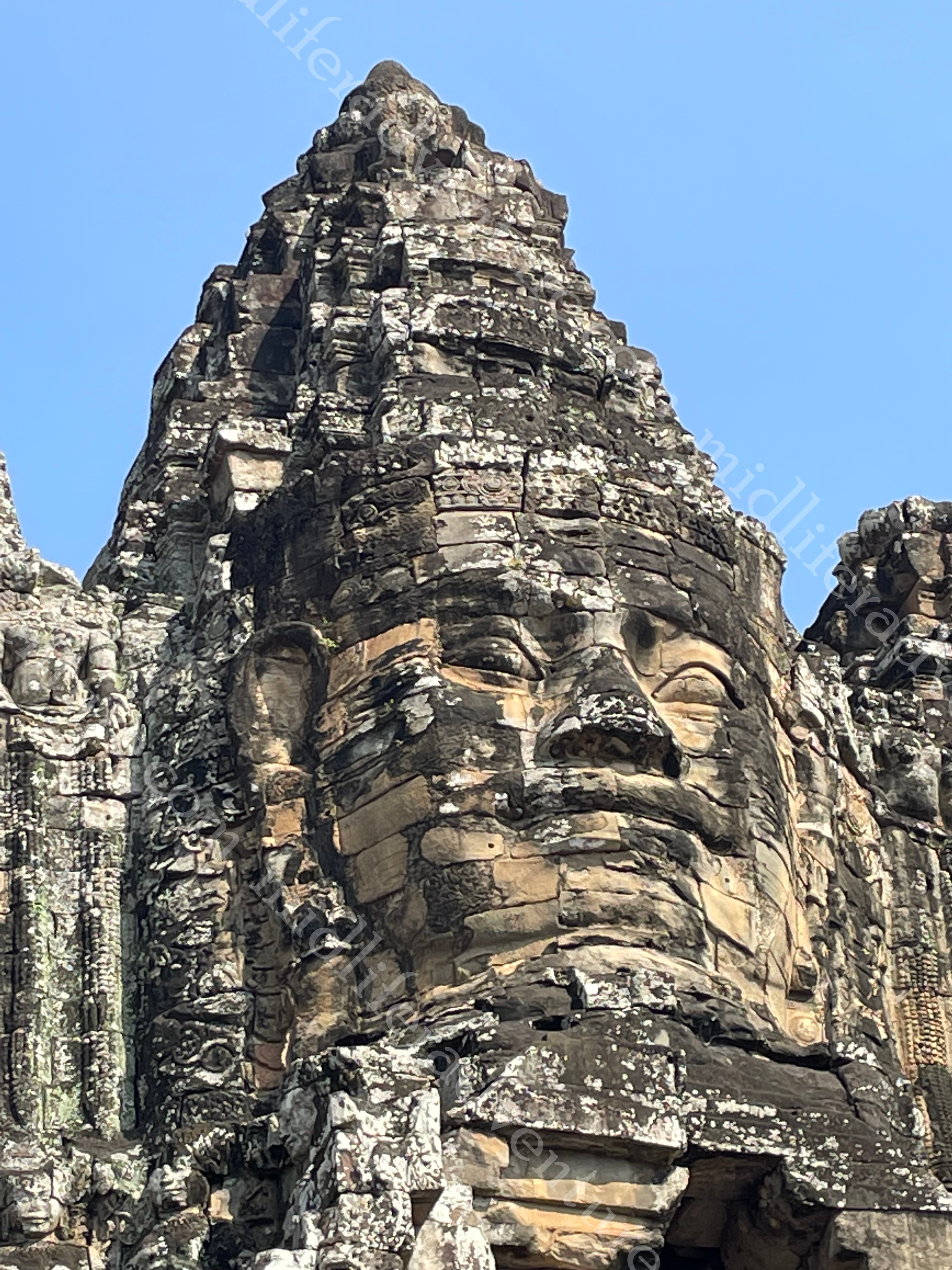
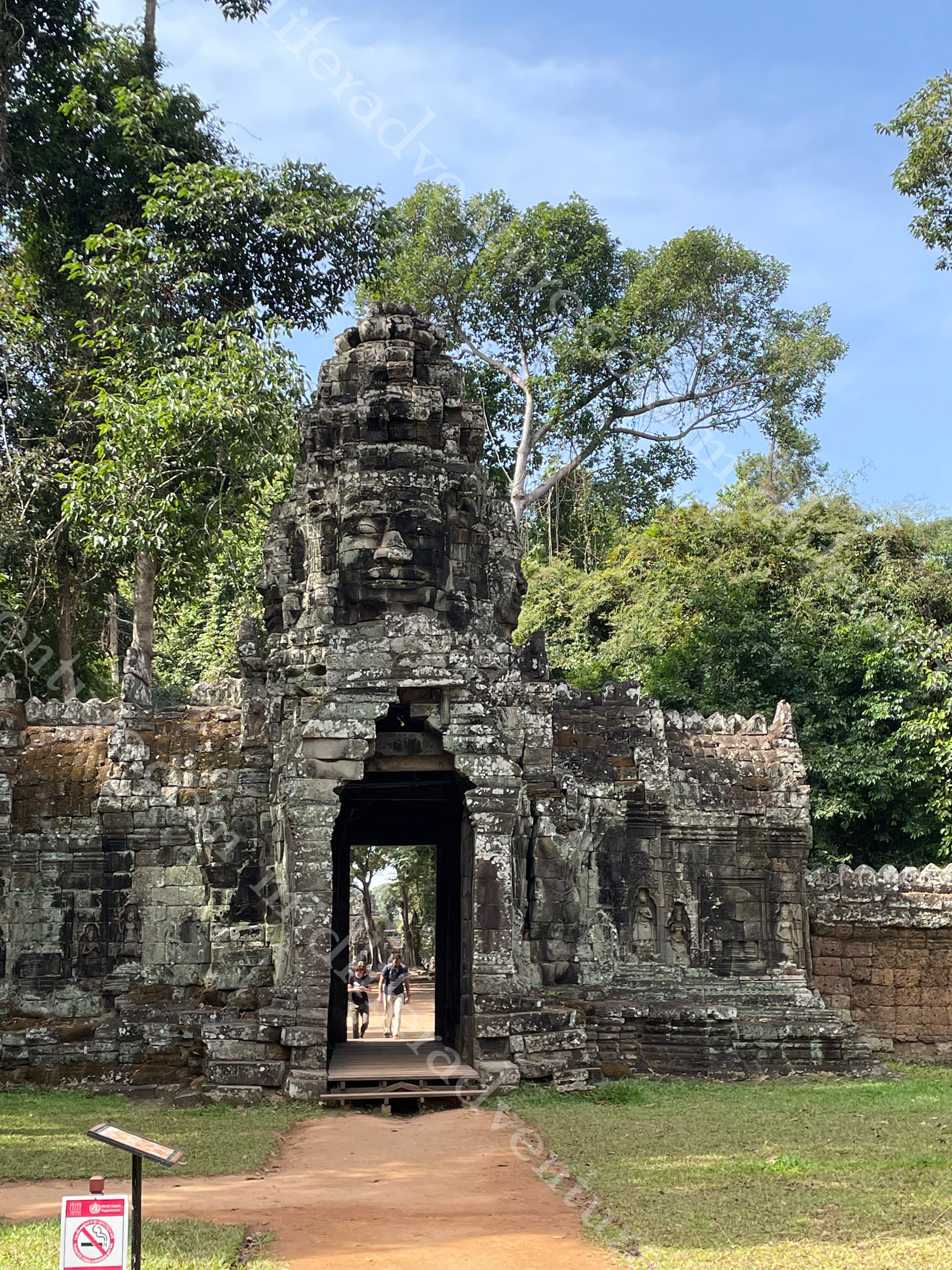
Once you leave Angkor Wat you (typically) head across for a bit to Angkor Thom or Big Angkor. It is the largest site in the Angkor Archaeological Park and contains a number of smaller temples and archaeological sites. Our first stop was the south gate (one of five 20-metre-tall gates that surround Angkor Thom). The gates have intricate stone carvings of elephants and the 4-faced Bodhisattva Avalokiteshvara, while the bridges leading up to the gates are lined with carvings of devas (gods) on the left and asuras (demons) on the right. Both the gods and the demons appear to be playing tug of war on a snake (Naga). You tend to come through the south gate as the vandals have stolen the heads off many of the statues on the other gates so they are considerably less impressive.

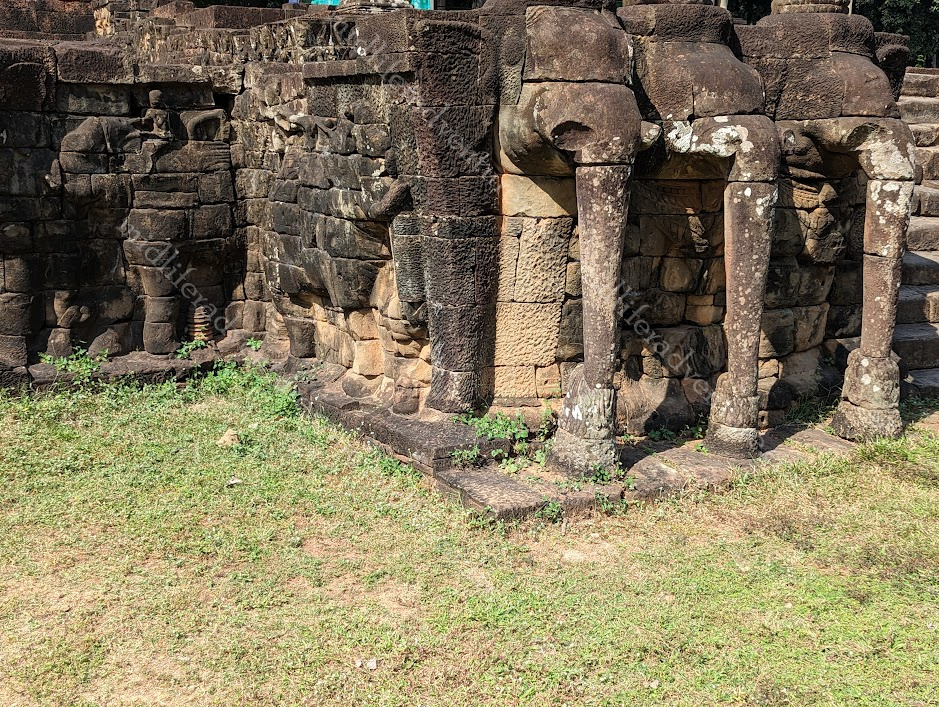
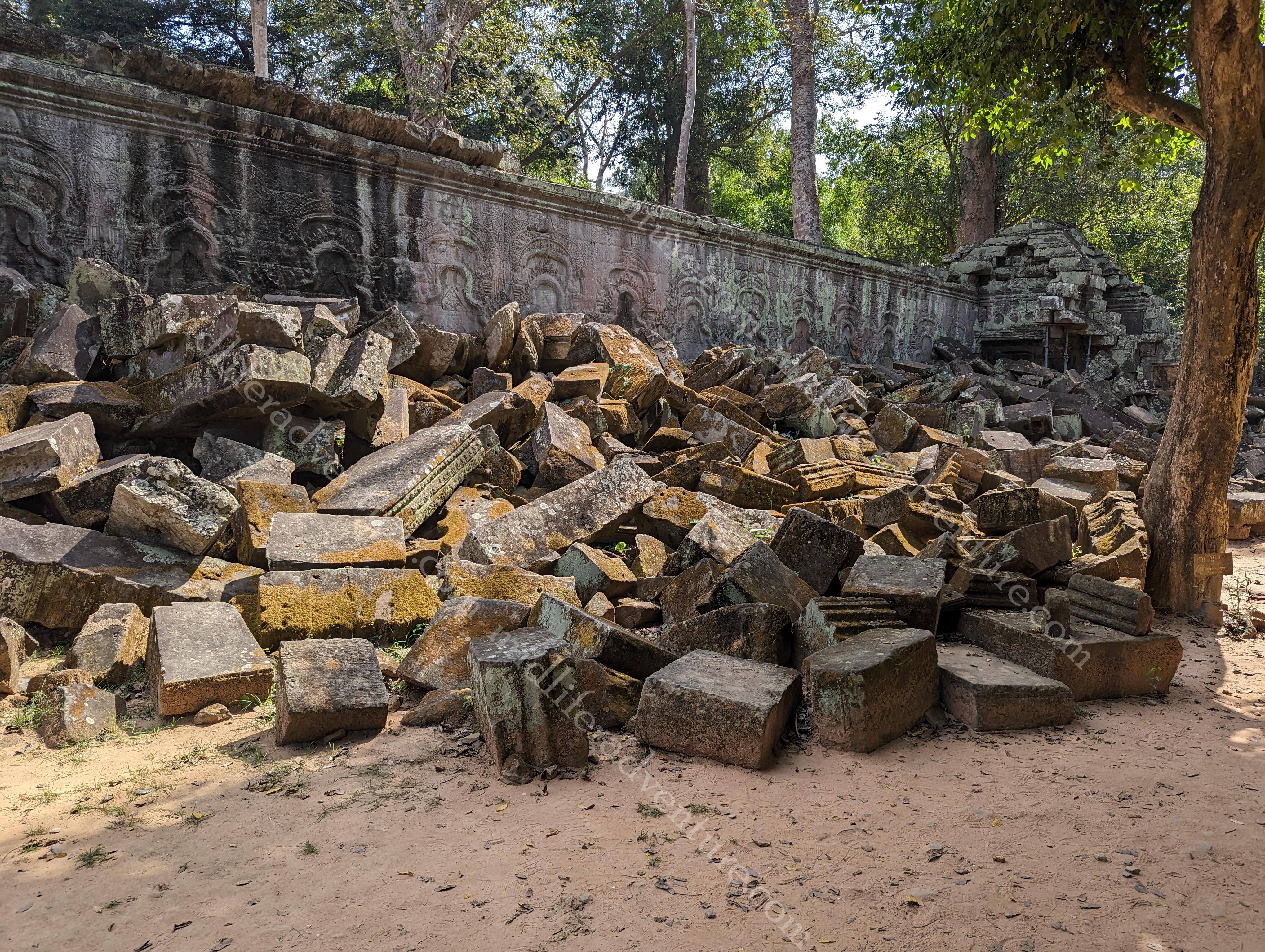
There are 8 metre high walls and a moat surrounding Angkor Thom. The faces on the entrance gates were added later than the original gates and they reflect the faces that can be found on the Bayon Temple (also contained within the walls of Angkor Thom). Within Angkor Thom is a range of smaller temples that include Baphuon, Phimeanakas, Prasat Suor Prat and many others however these have and are falling into great disrepair. Notably you will see the terrace of the Elephants and the terrace of the leper king that are prominent and are both currently undergoing considerable preservation and restoration works.

Bayon Temple

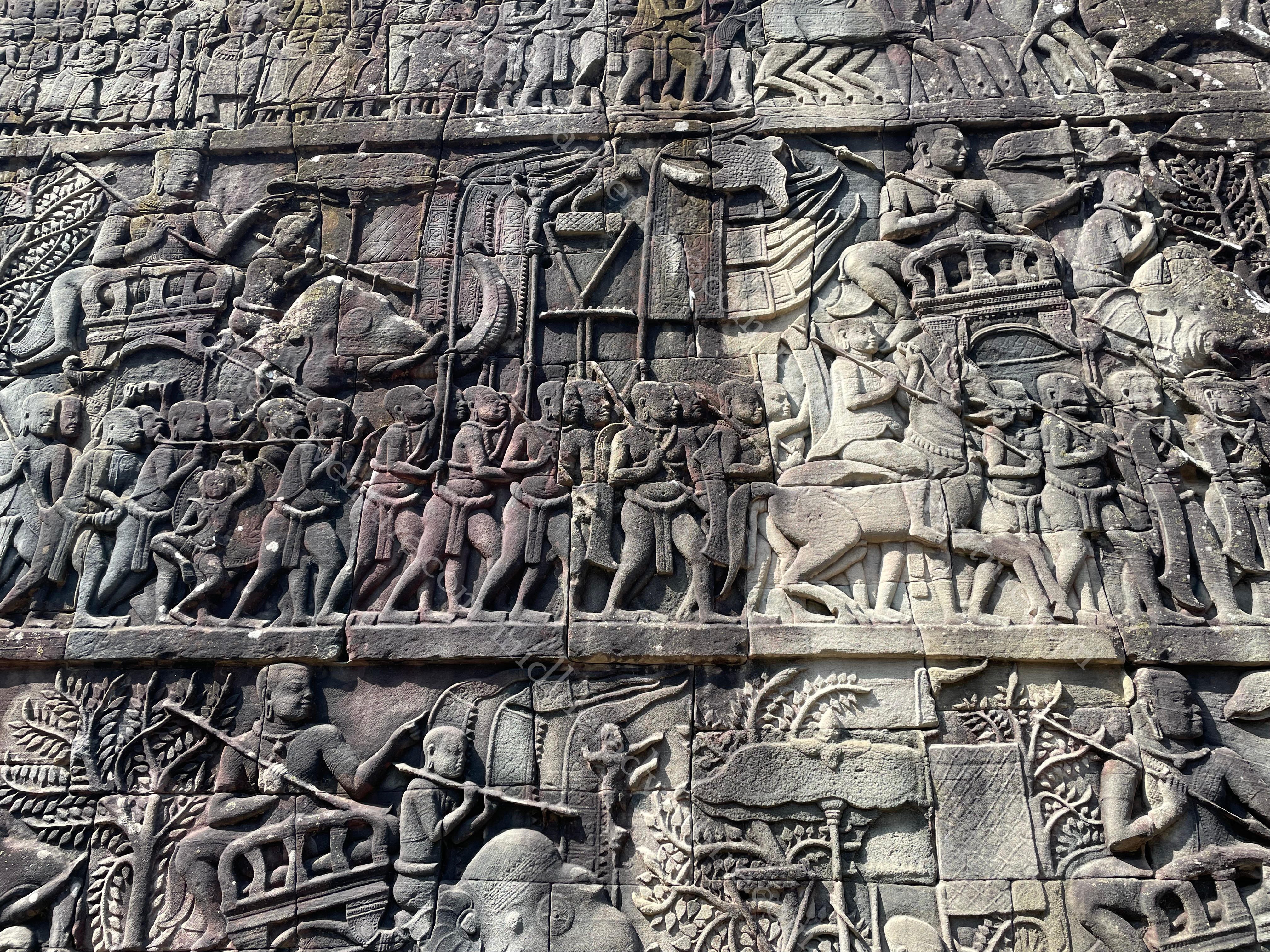
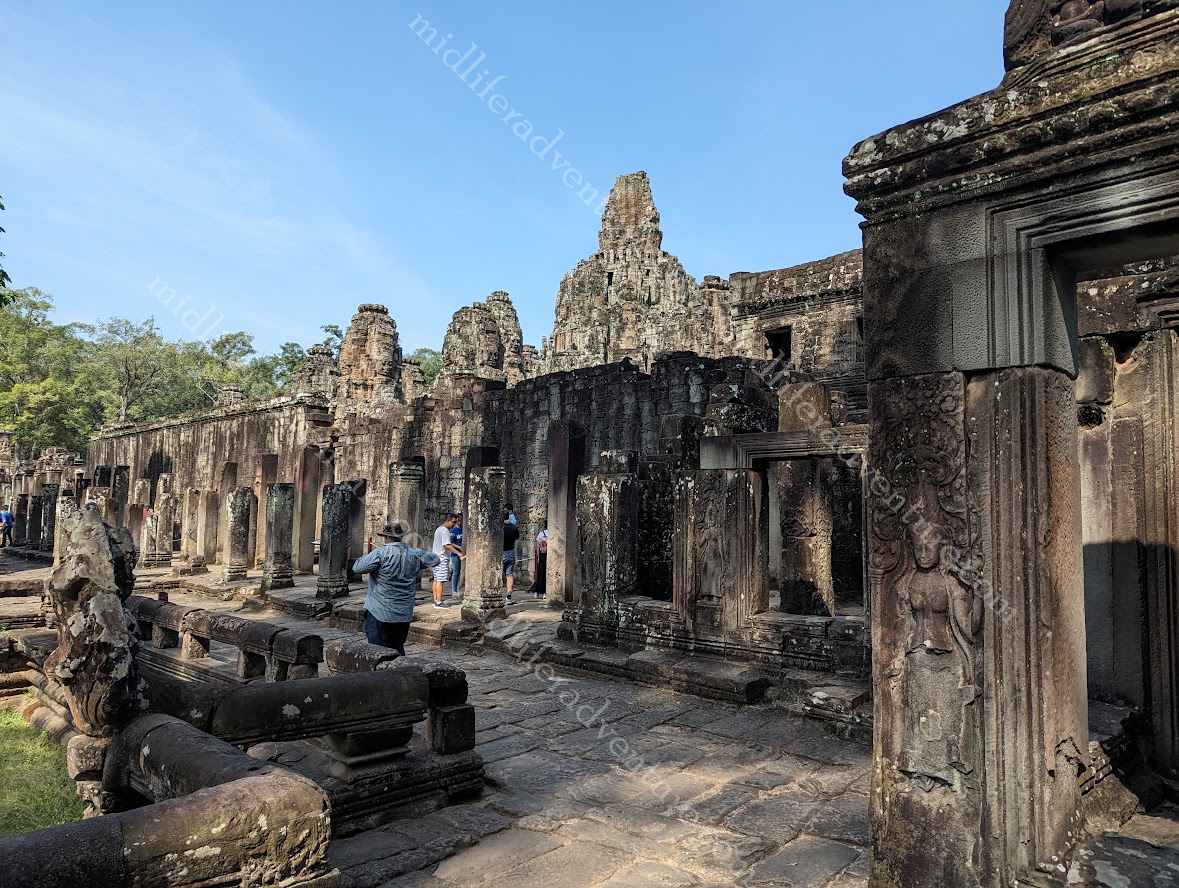
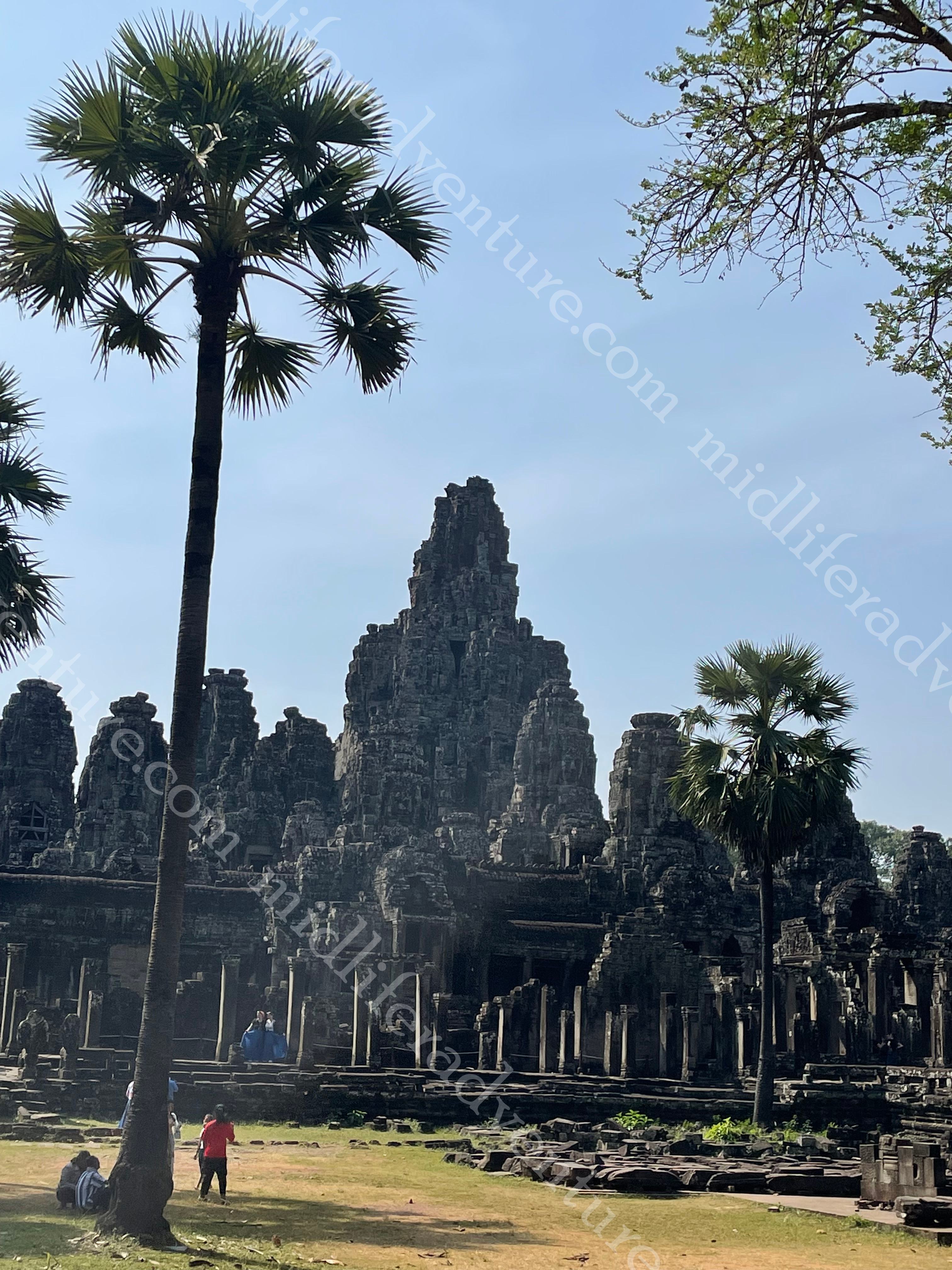
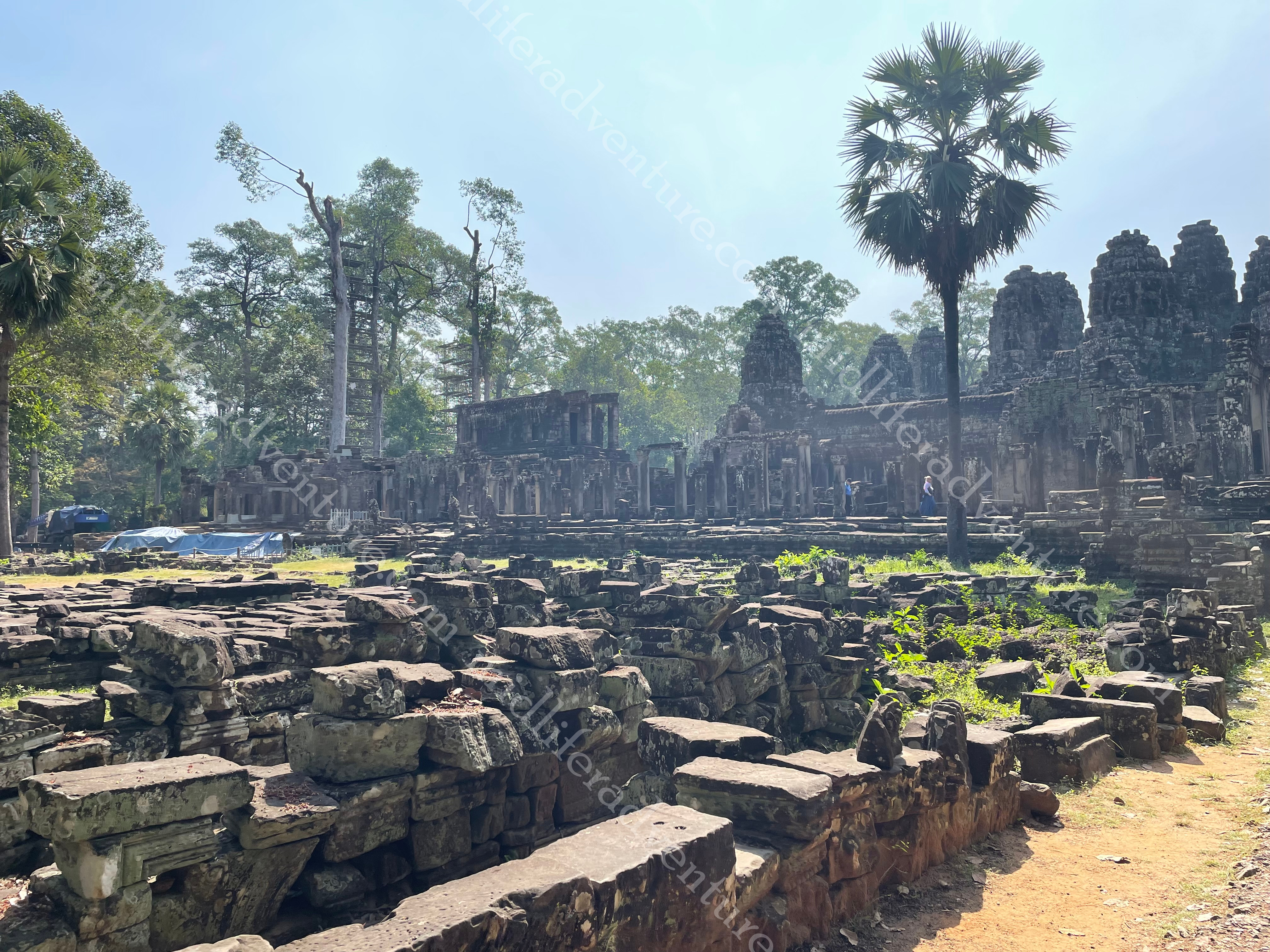
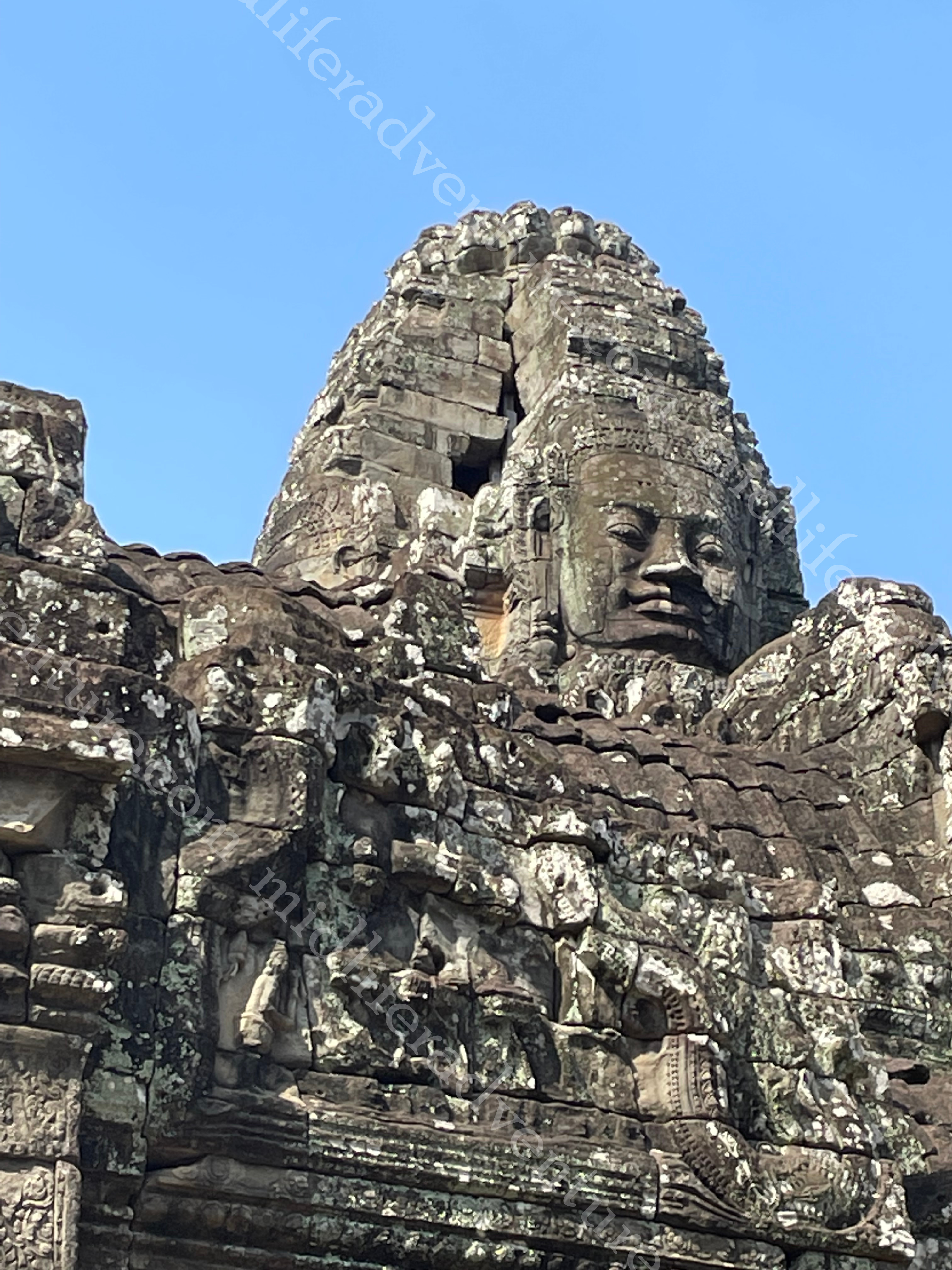
The Bayon Temple is probably the second most recognisable after Angkor Watt as it features approximately 50 stone towers with intricately carved faces. The blurb tells me that the faces are the 4 faces of Bodhisattva Avalokiteshvara (not really sure what that means but hey, I can go with that too). Bayon is in the midst of Angkor Thom and it too was built in the late 12th century. Each of the stone carvings of faces are 4 metres high and oriented toward the 4 cardinal points. It is surrounded by long walls that have some seriously intricate carvings of battlefields, markets, and religious rituals.

Ta Prohm

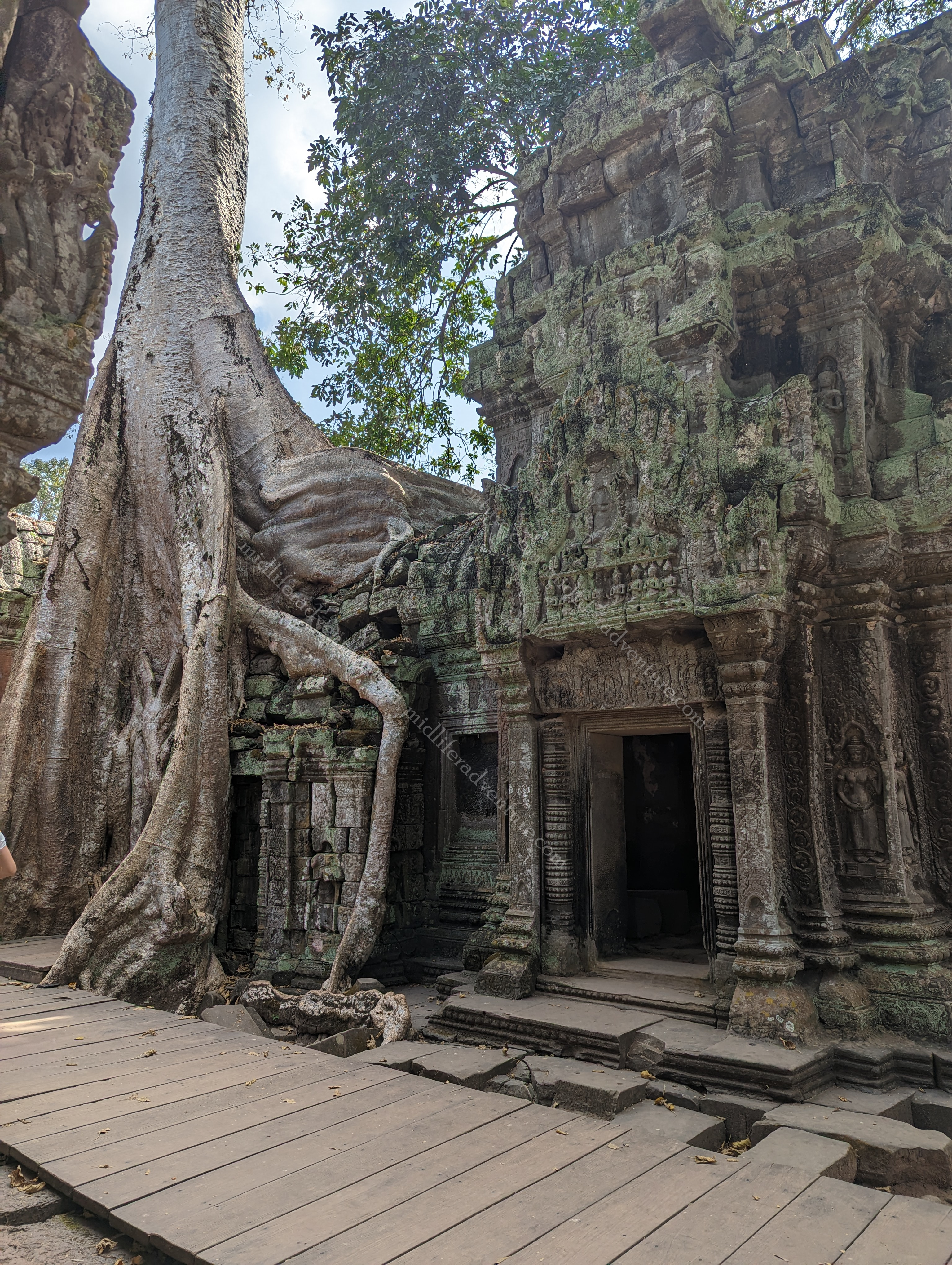
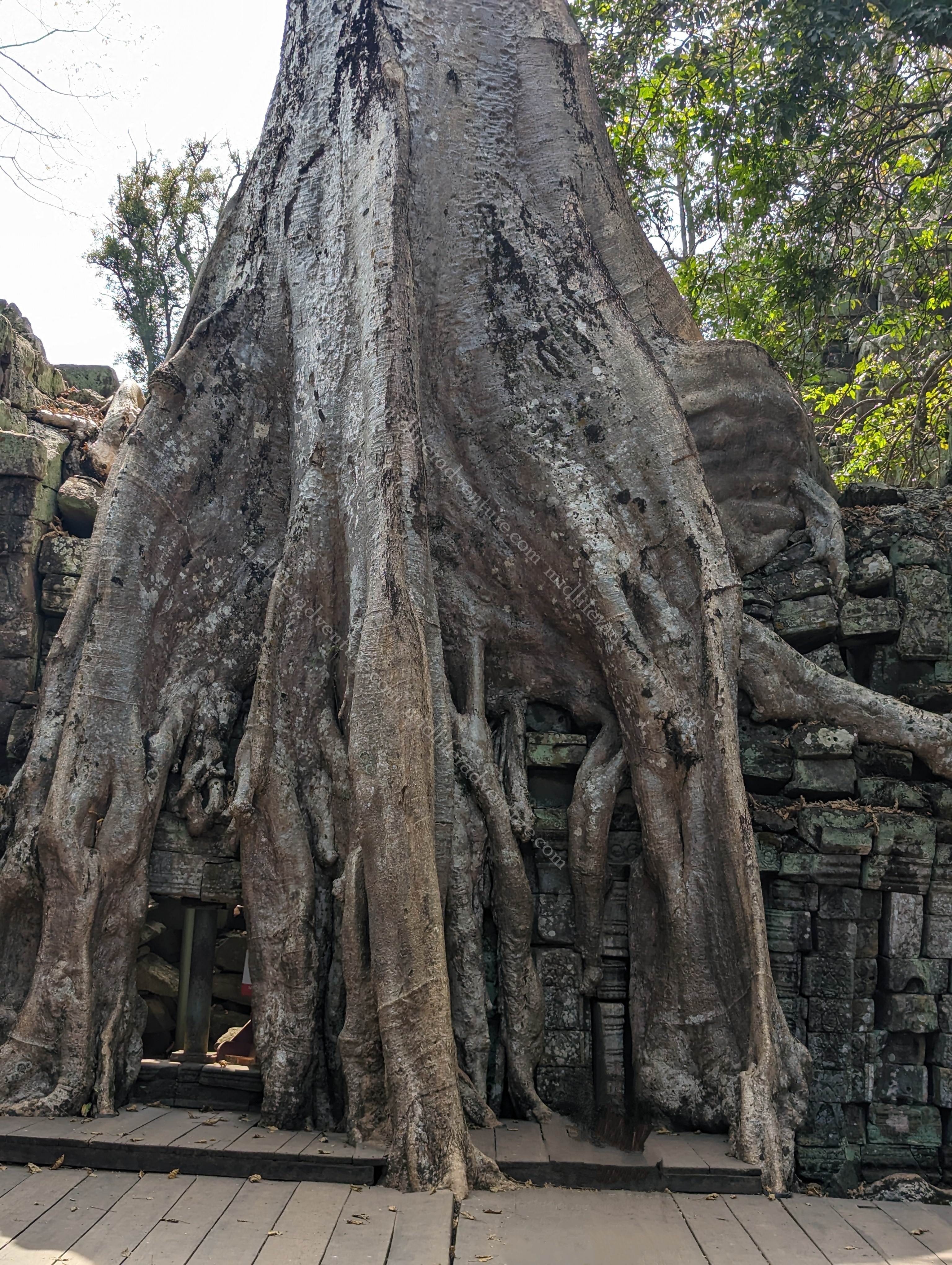
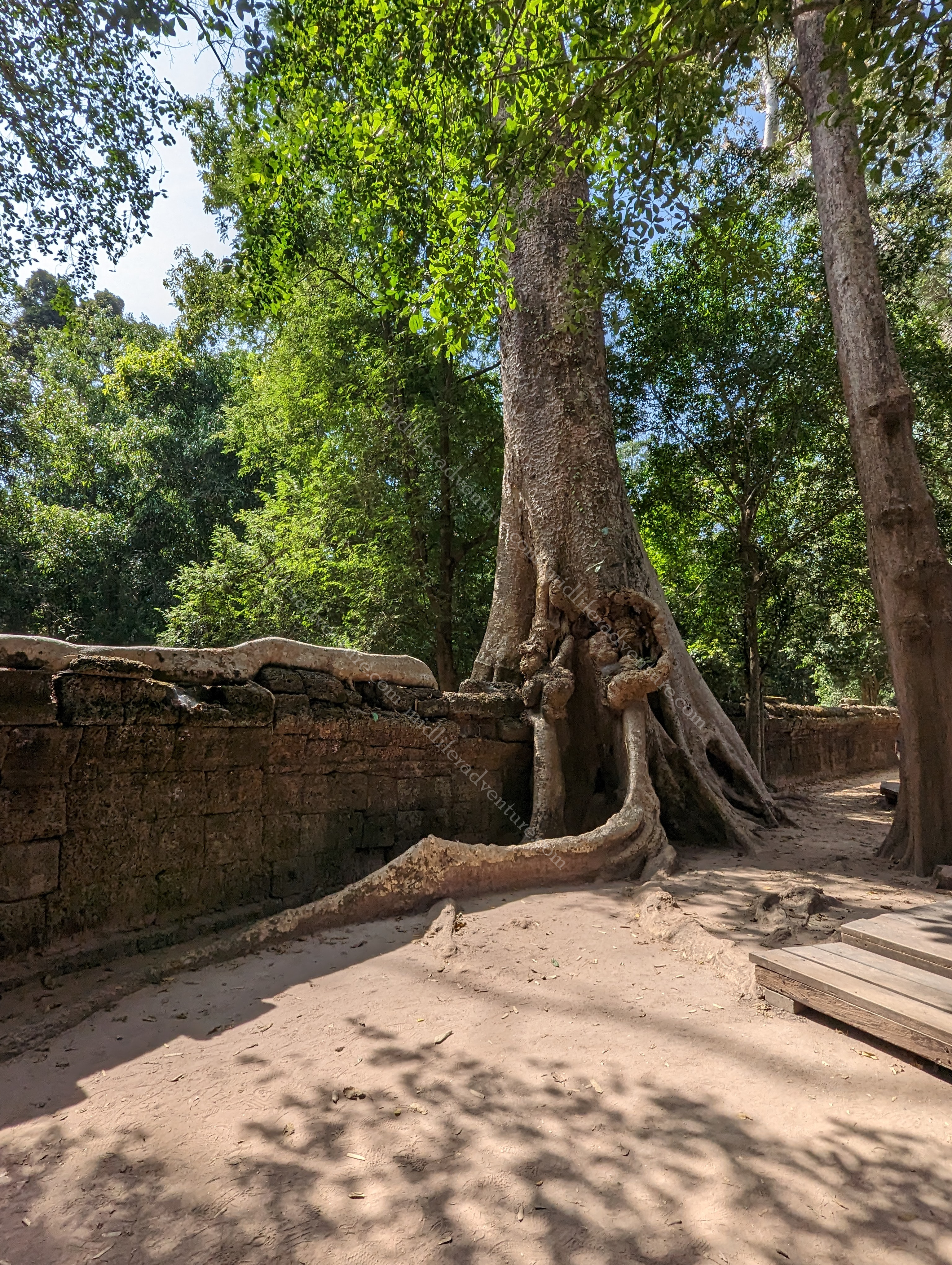
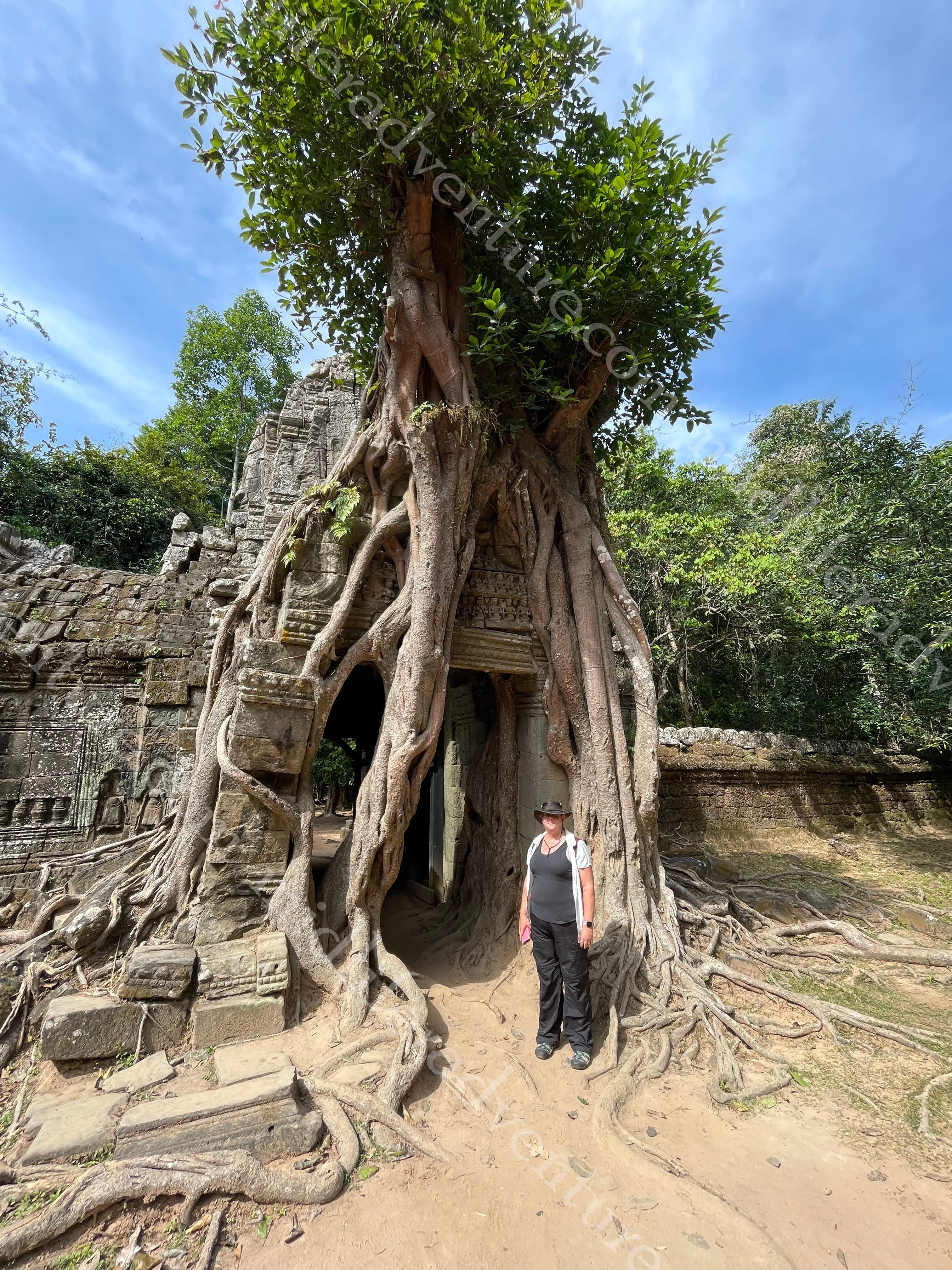
Ta Prohm is the famous a Tomb Raider temple. Very large trees with impressive roots have grown out of, through and amid the various walls and roofs of the temple.

The other temples

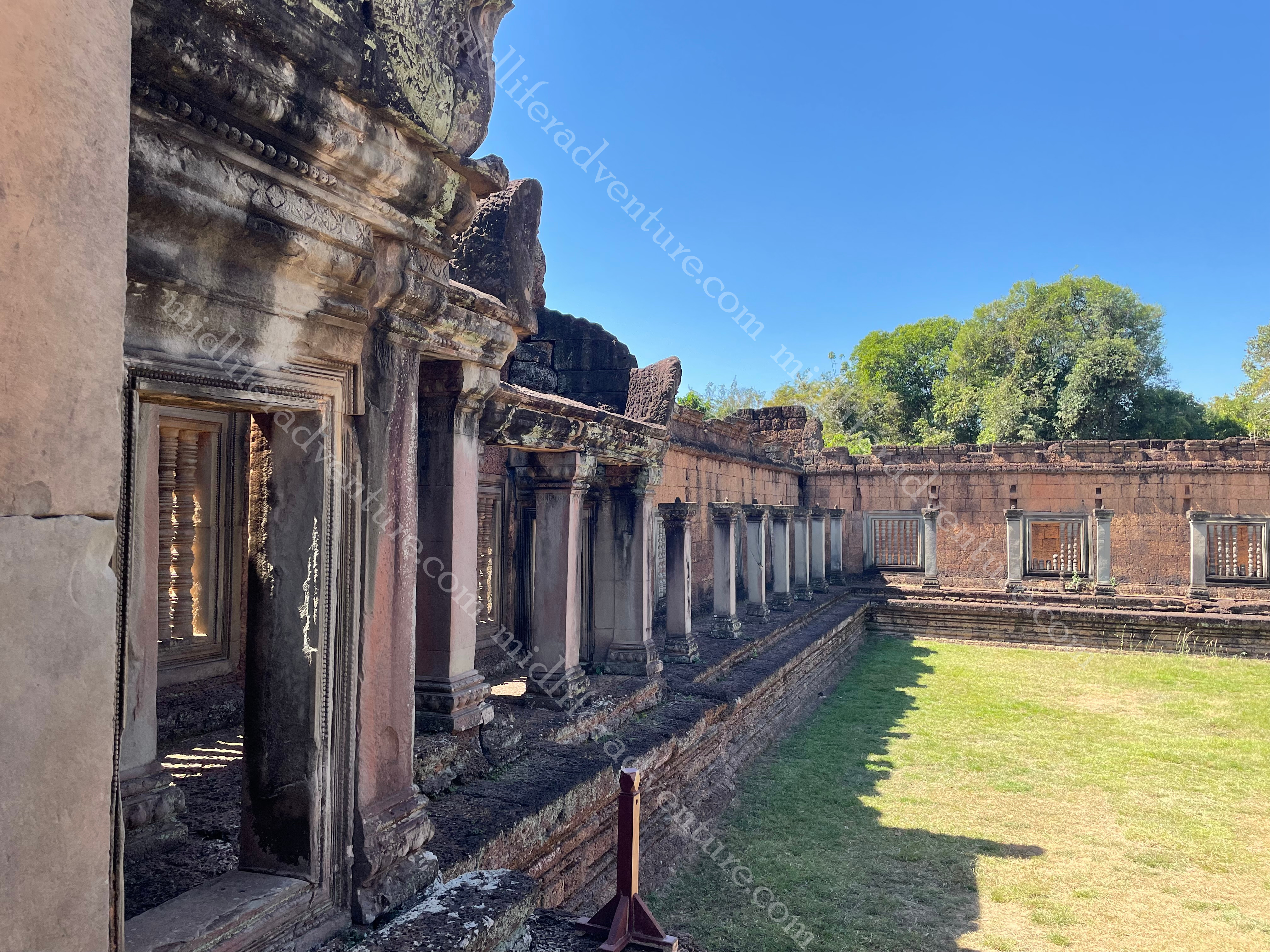
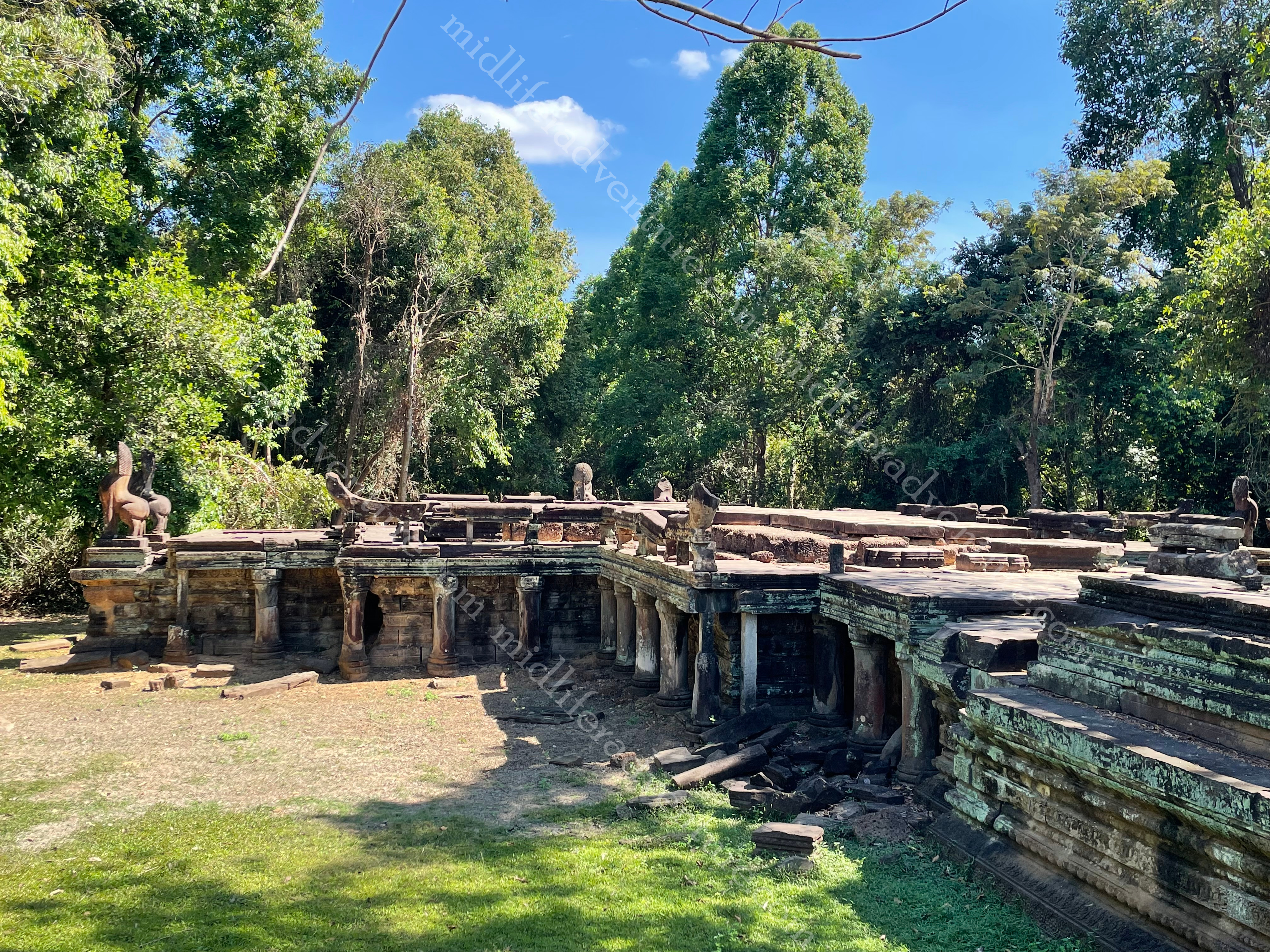
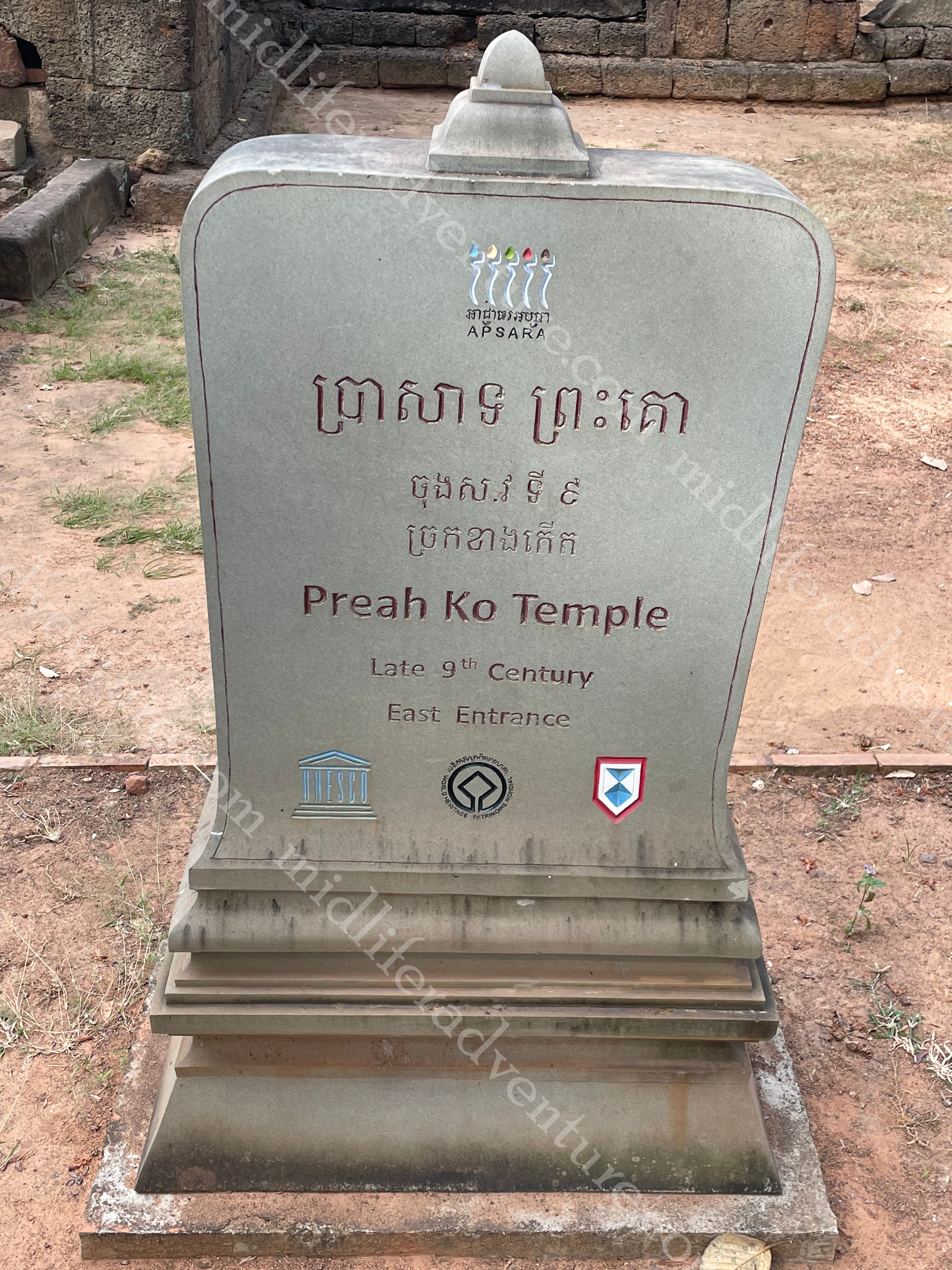
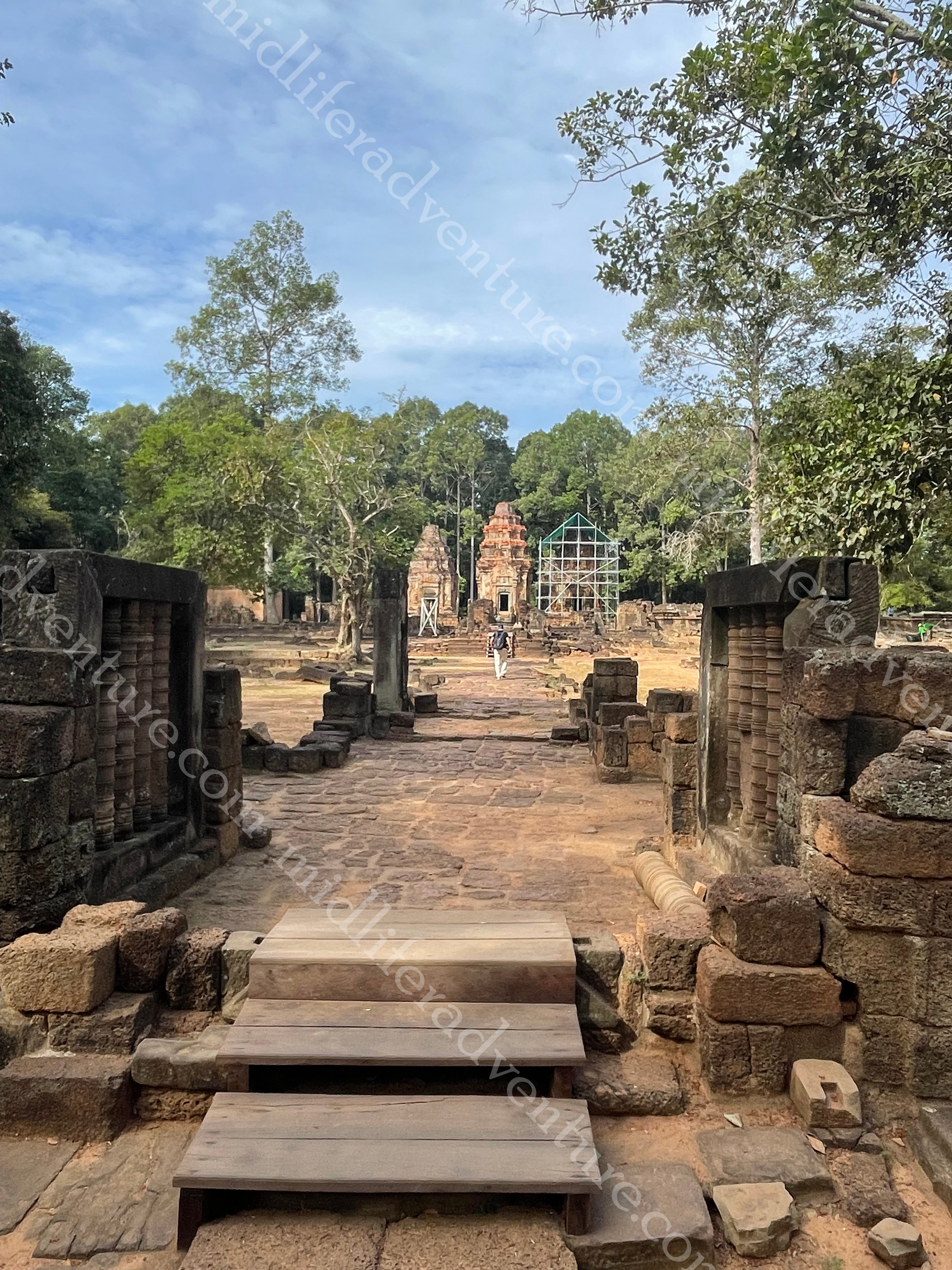
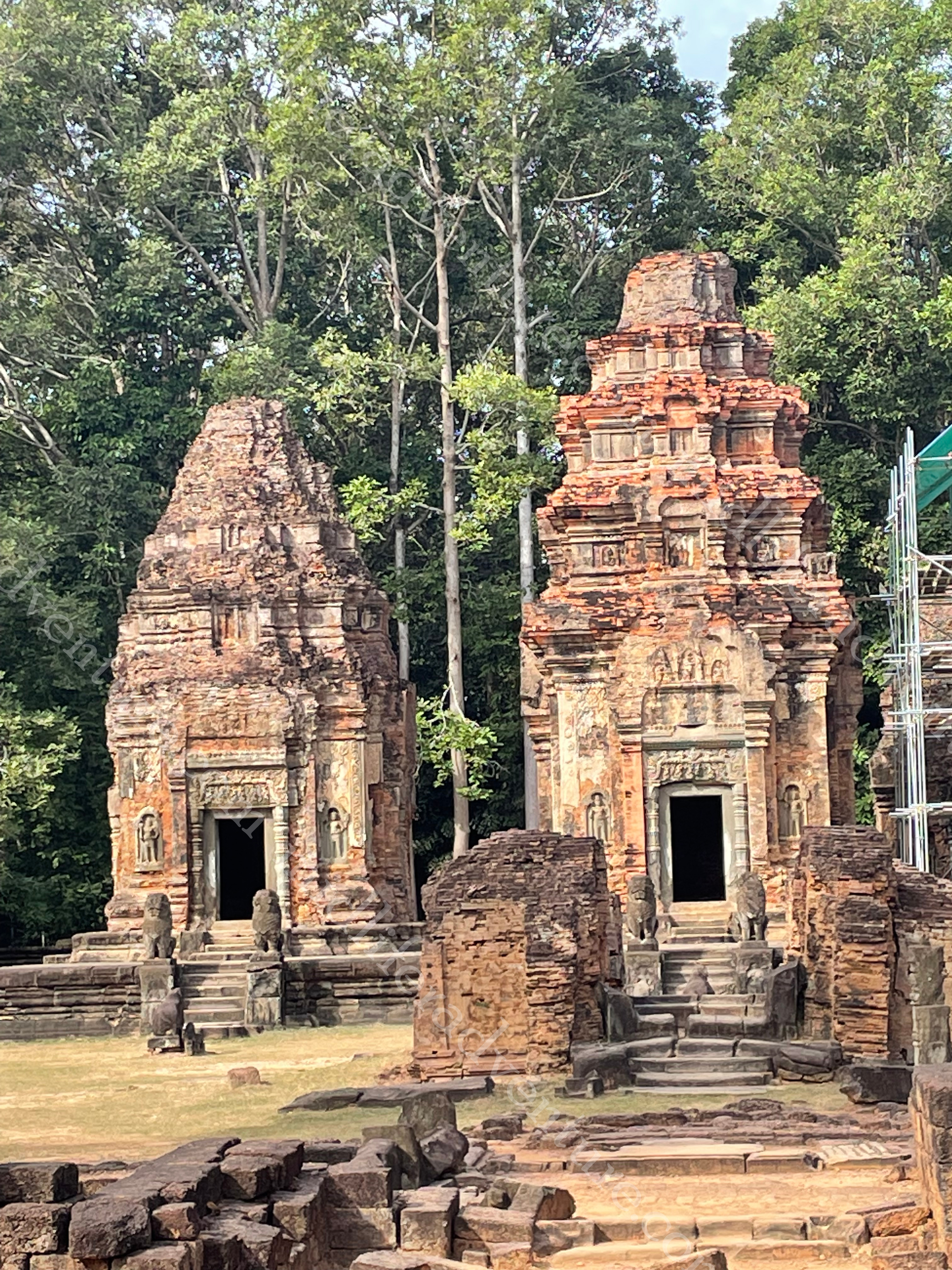
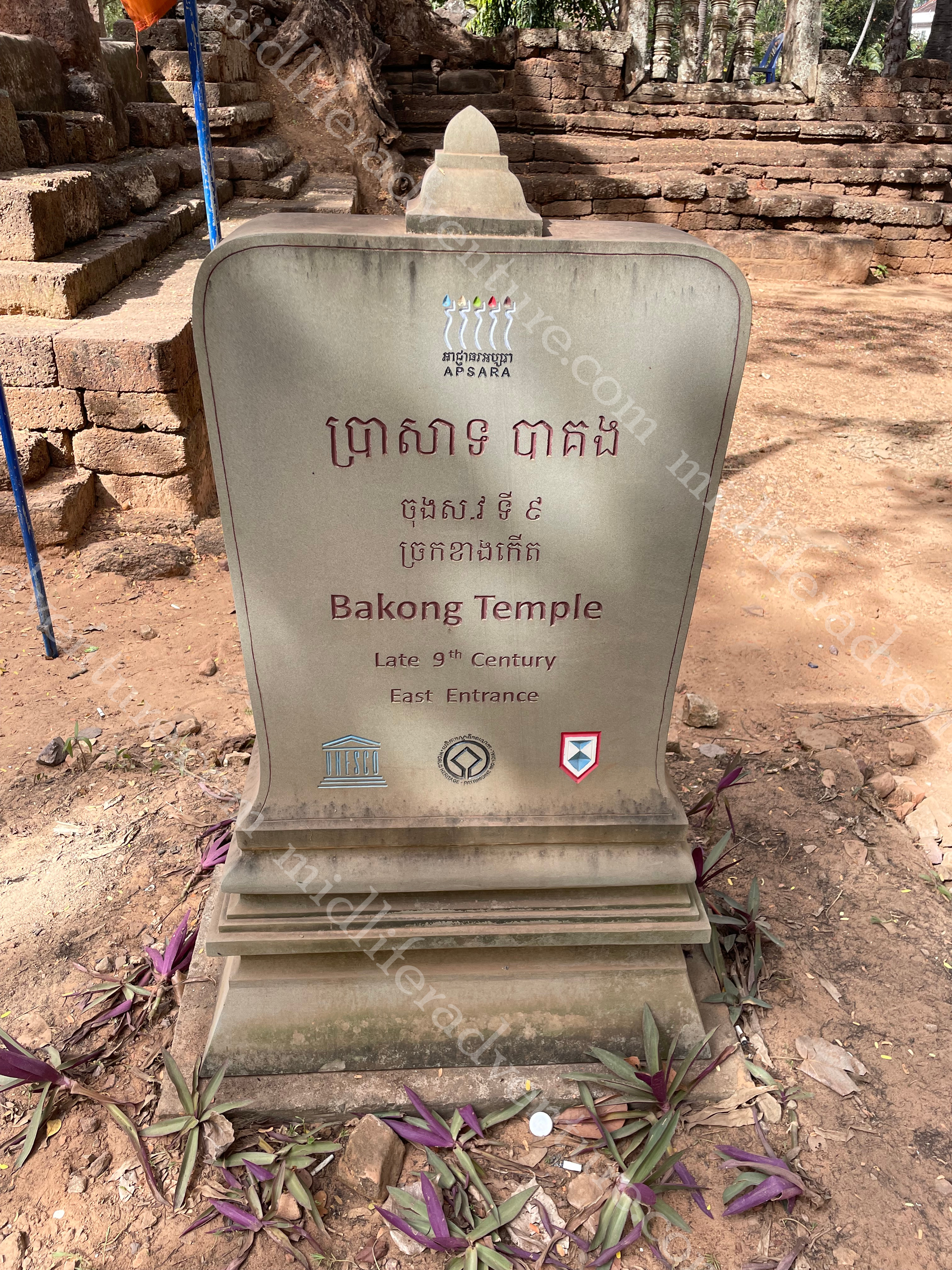
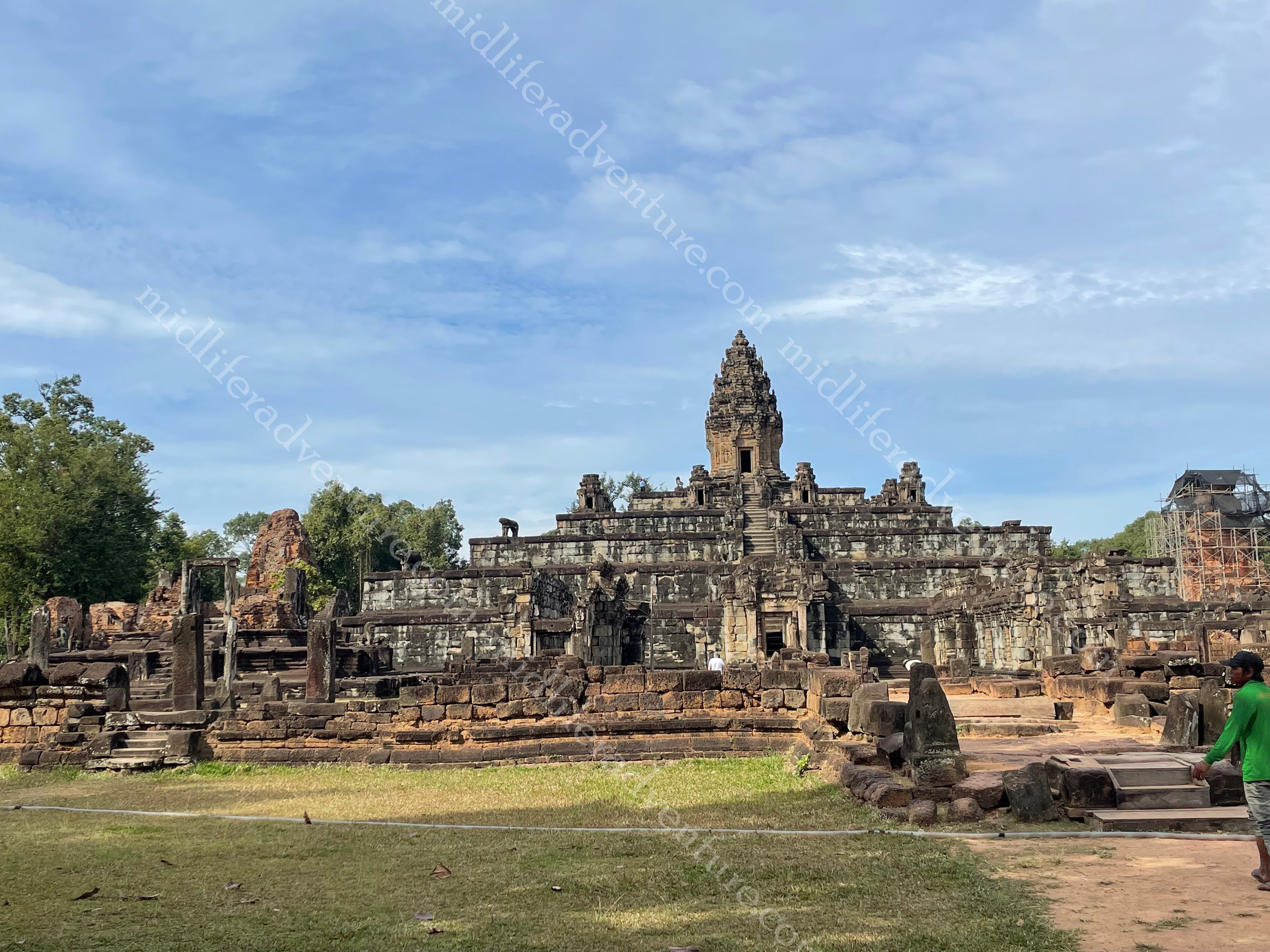
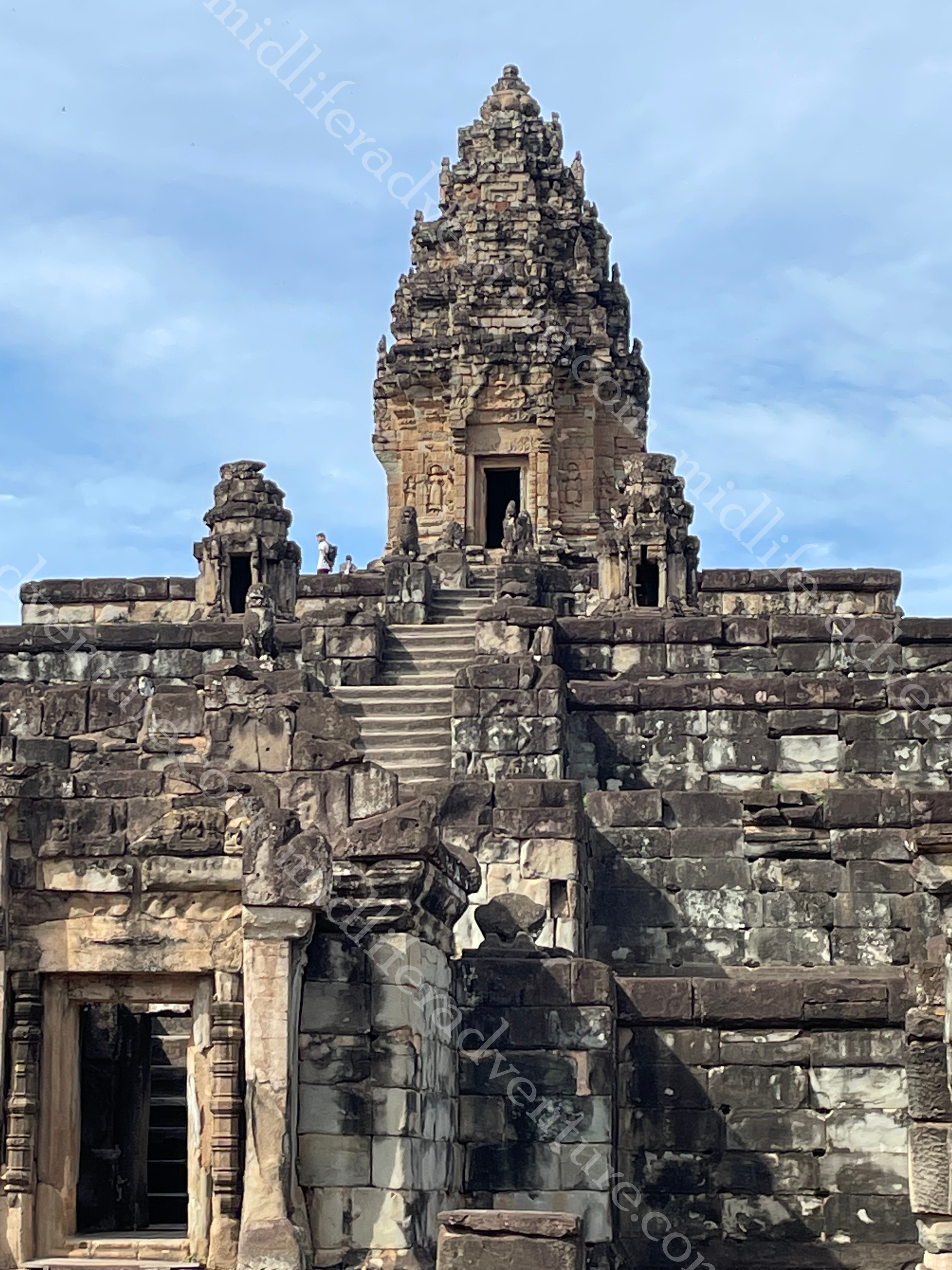
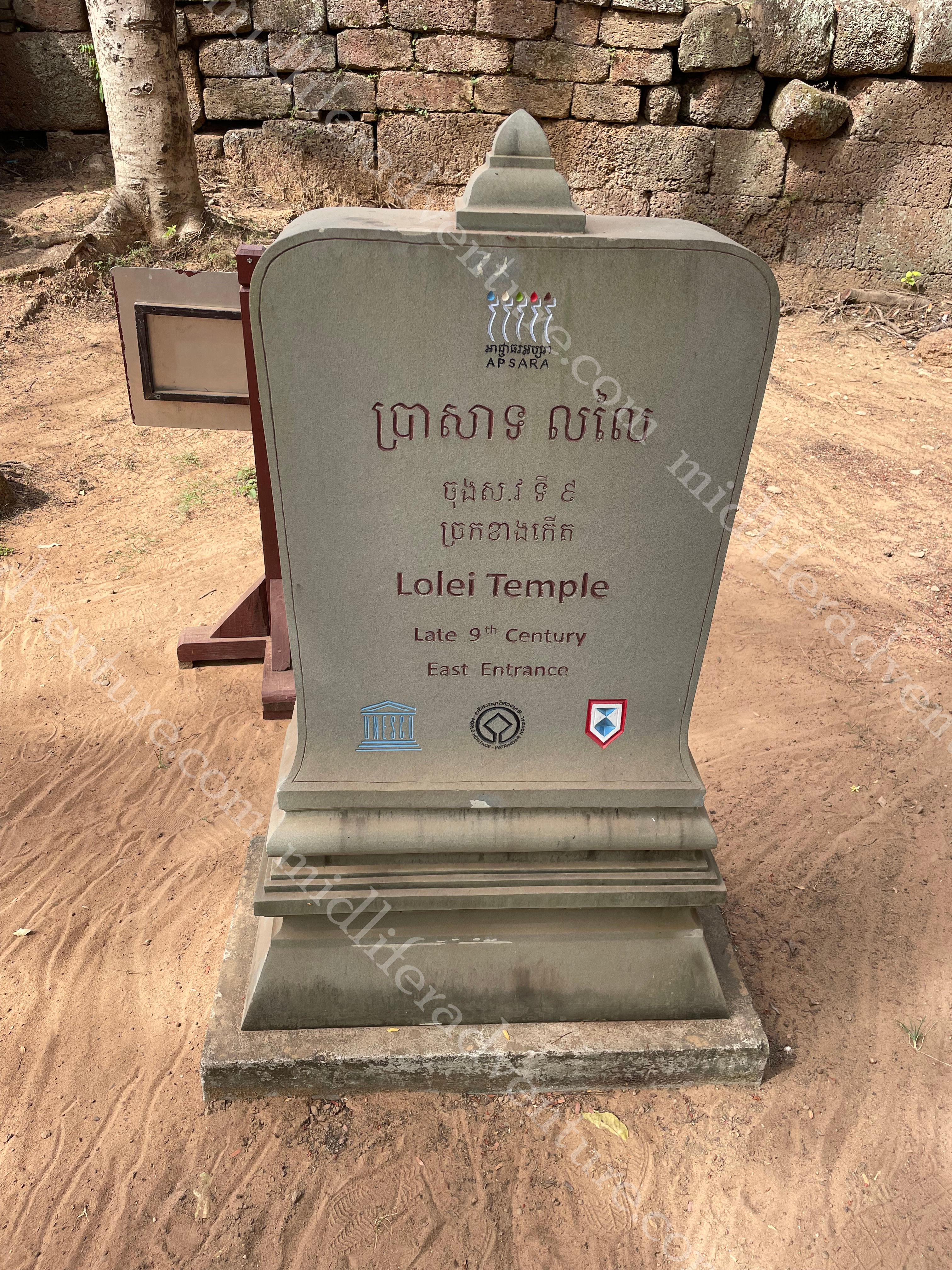
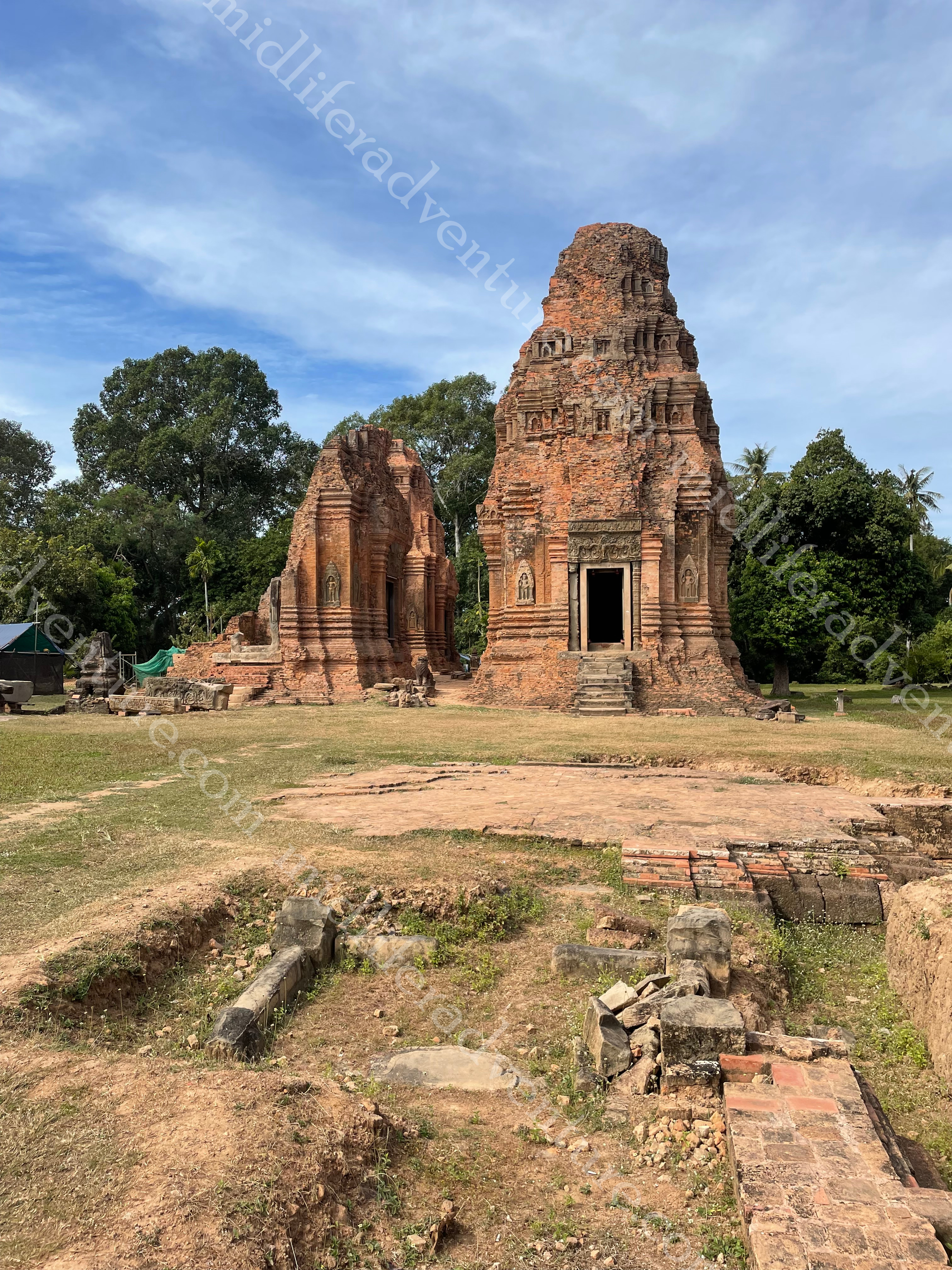
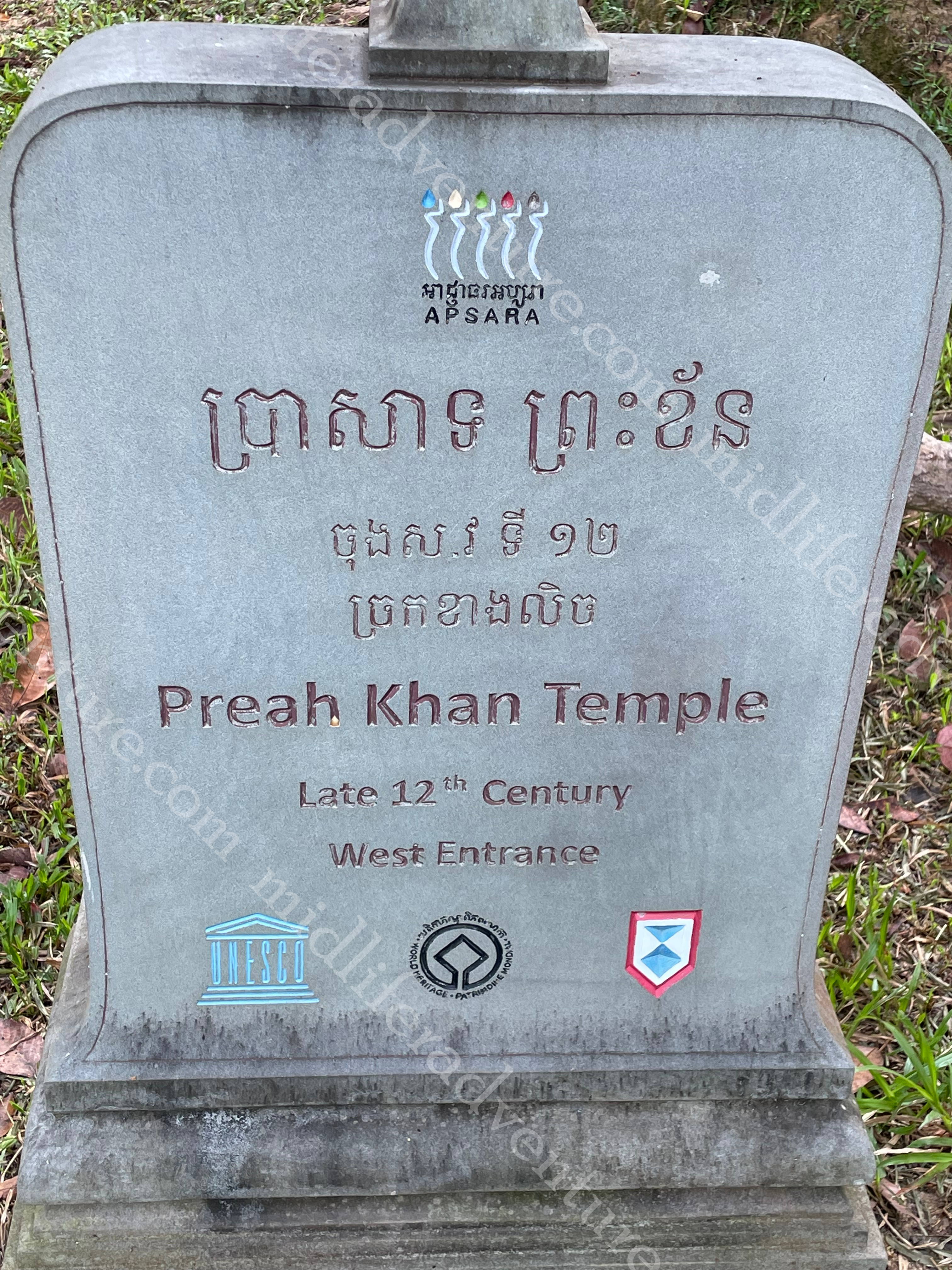
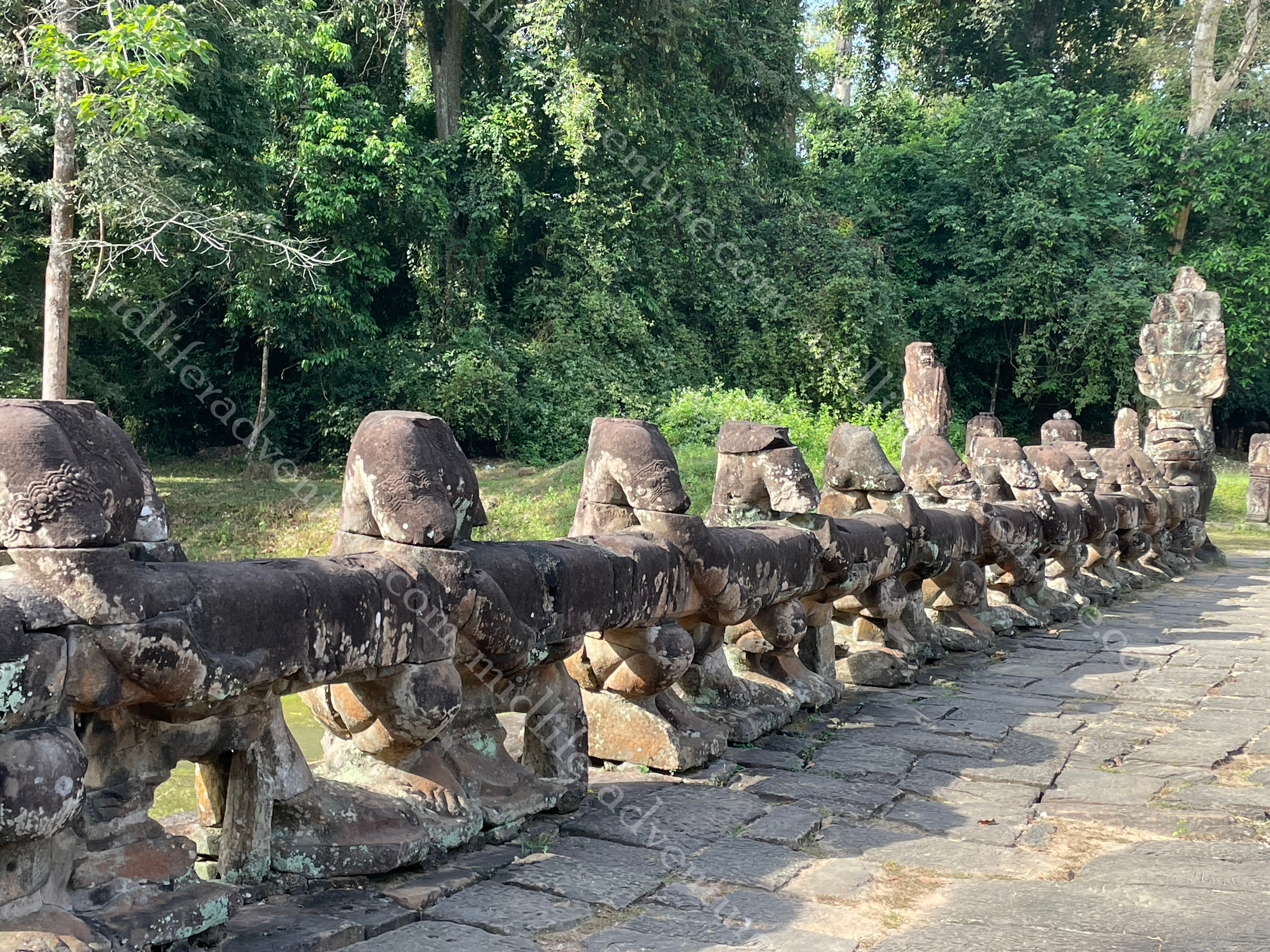
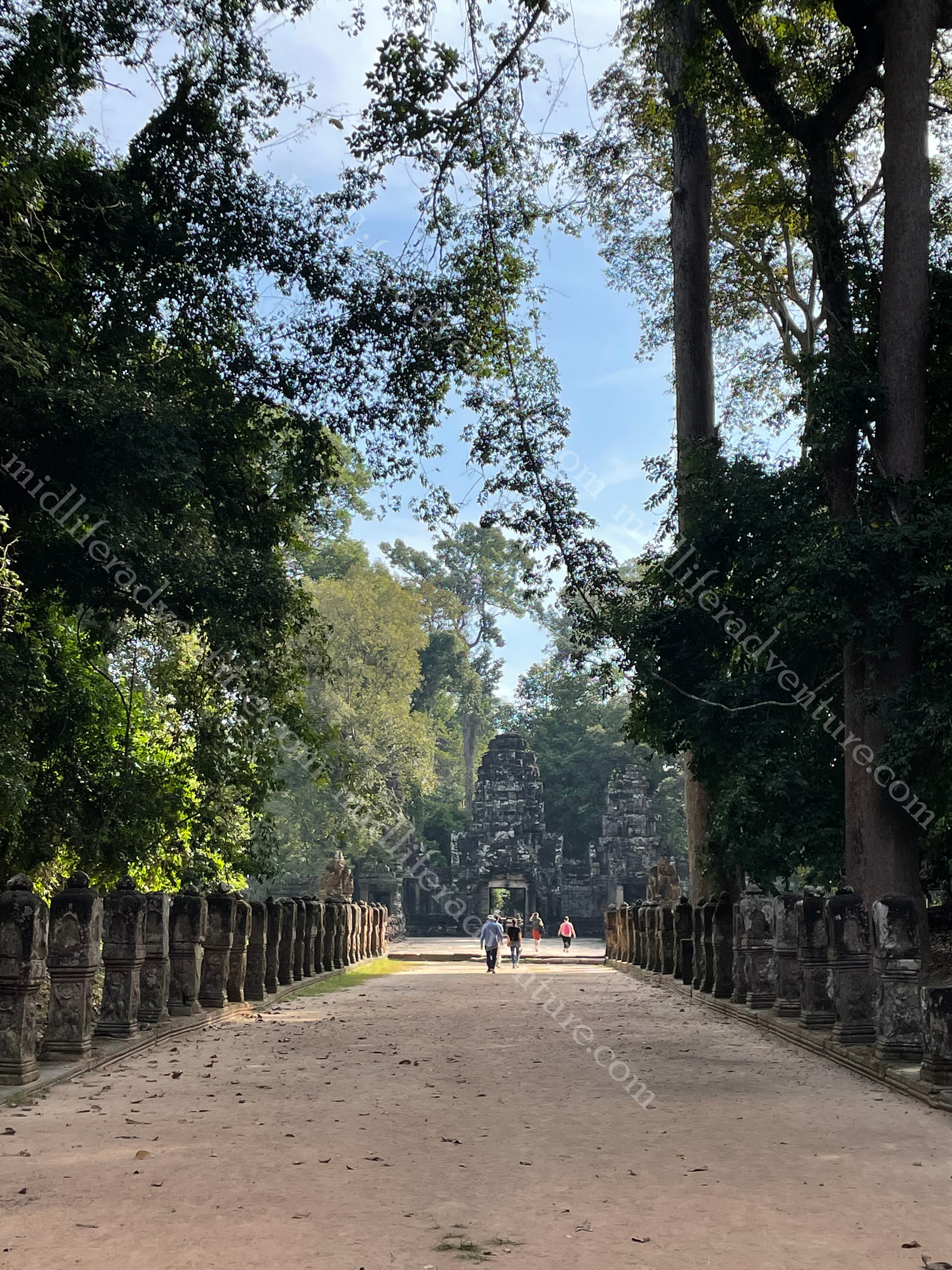
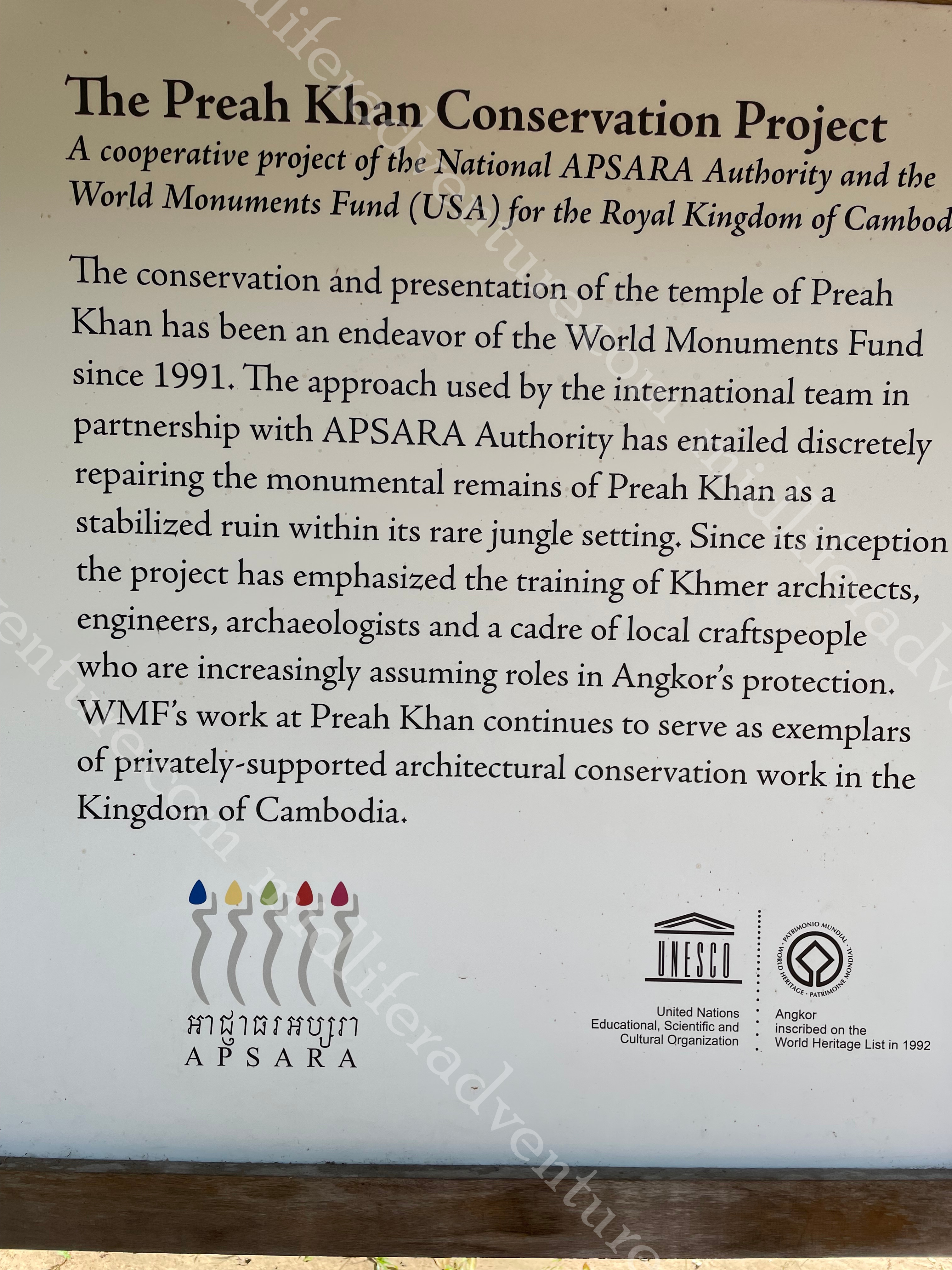
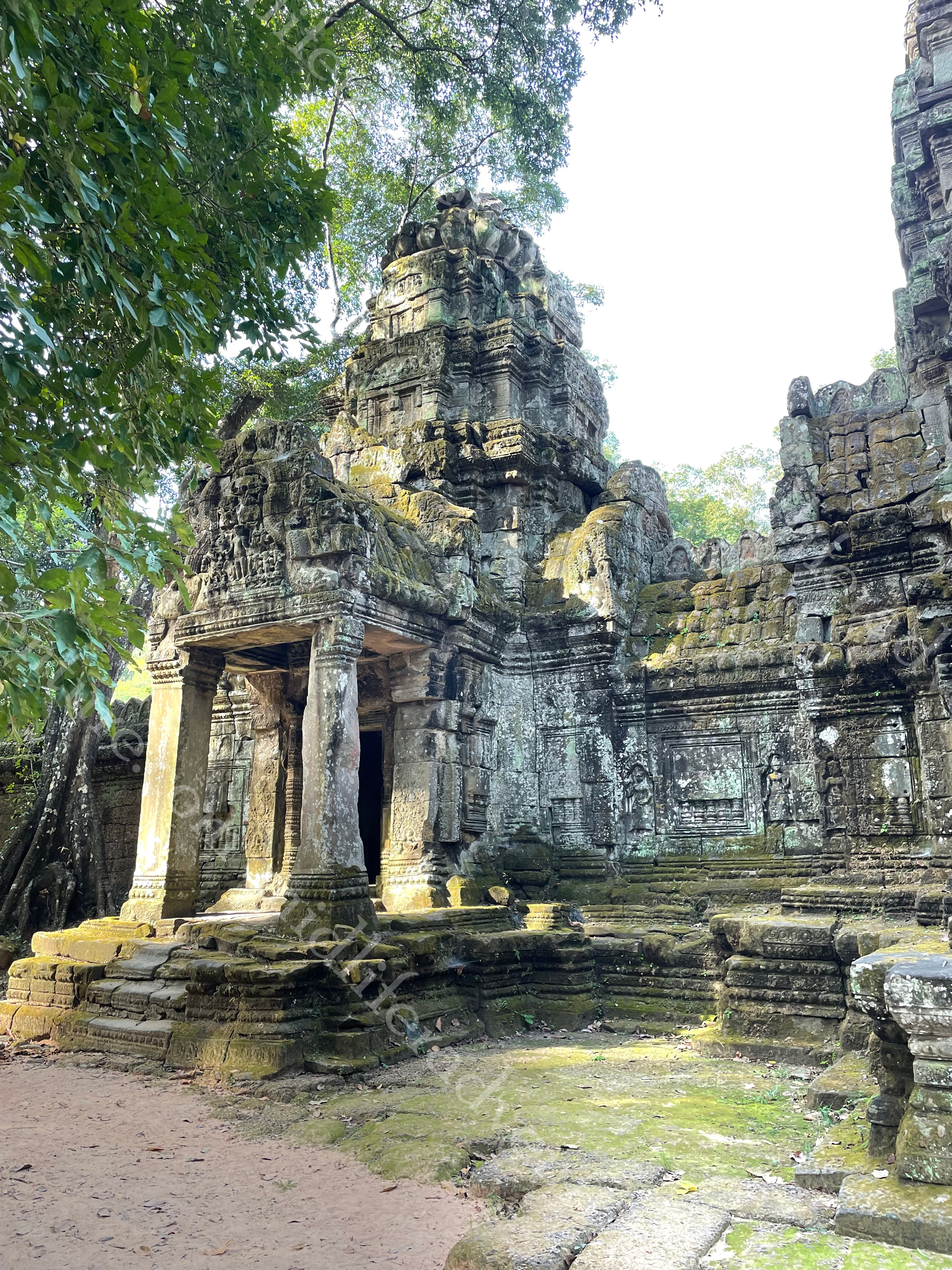
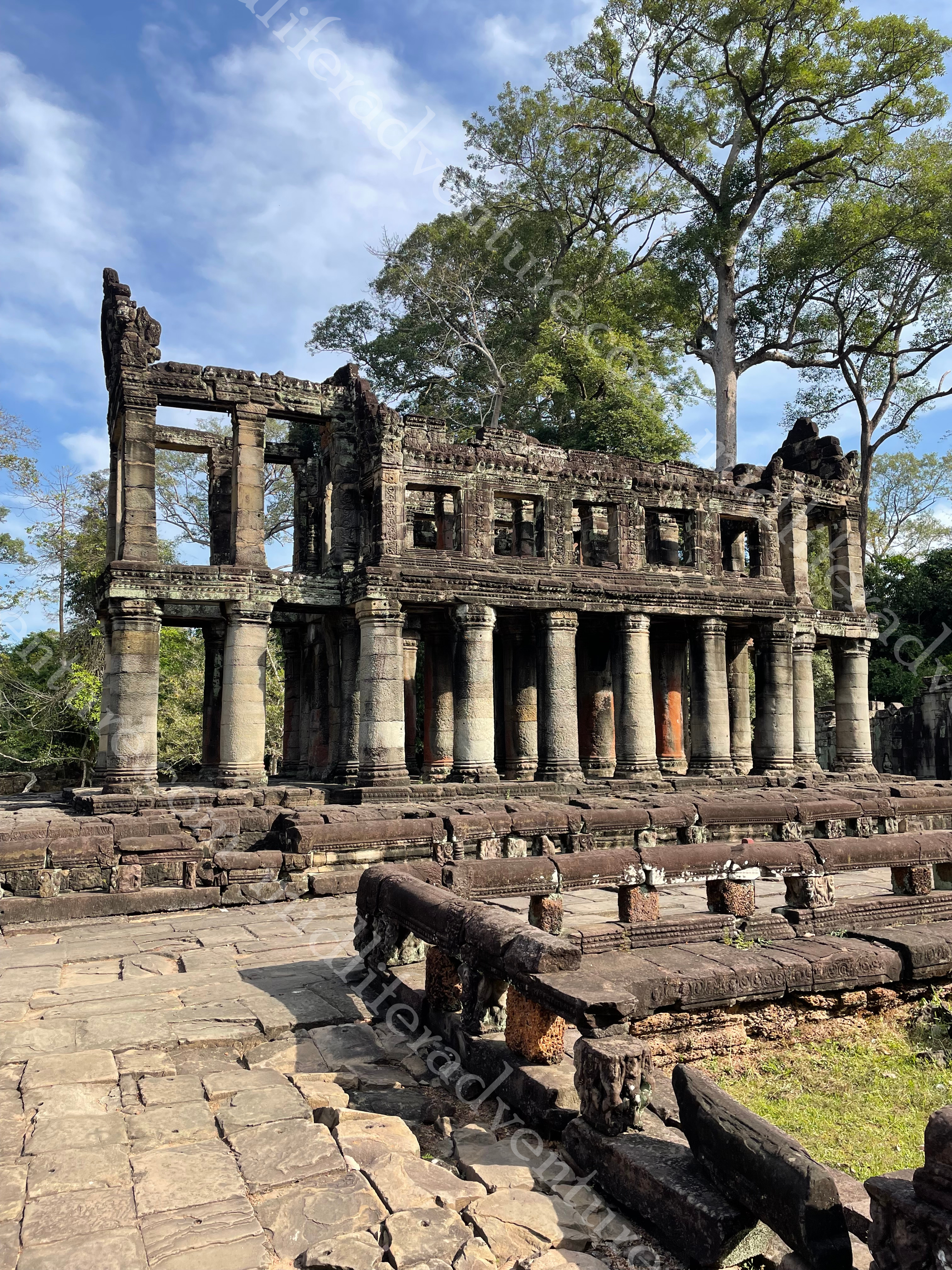
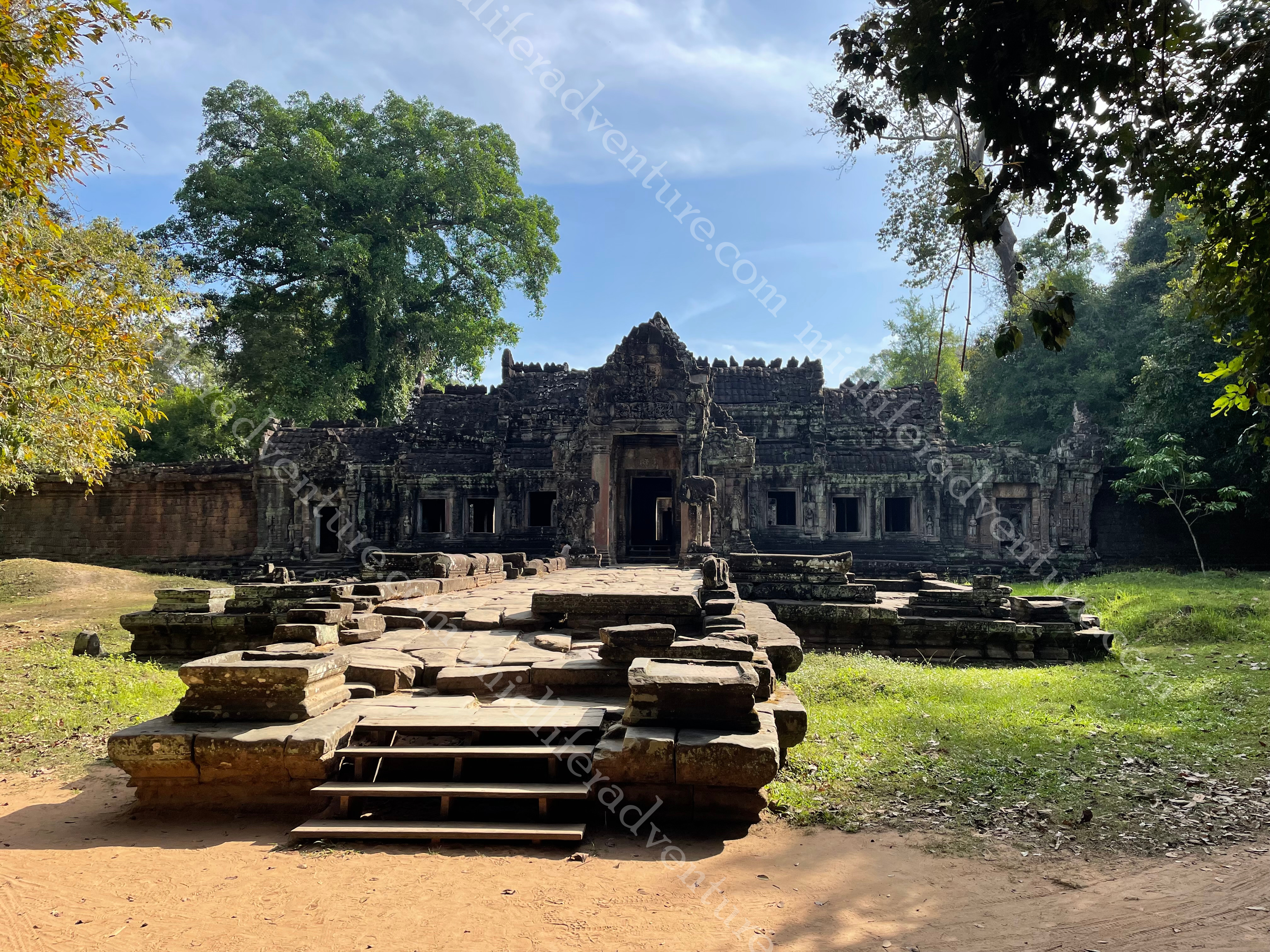
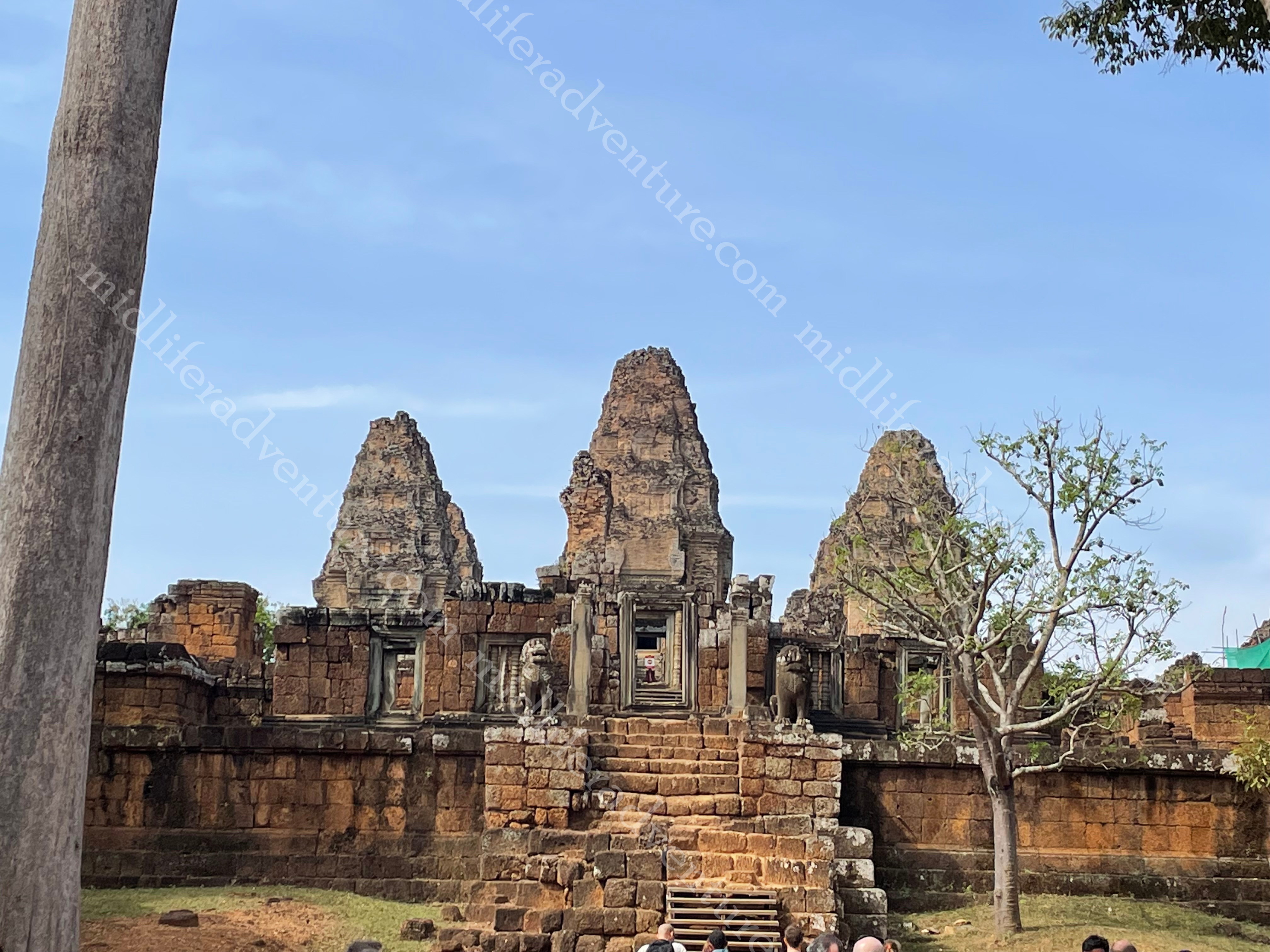
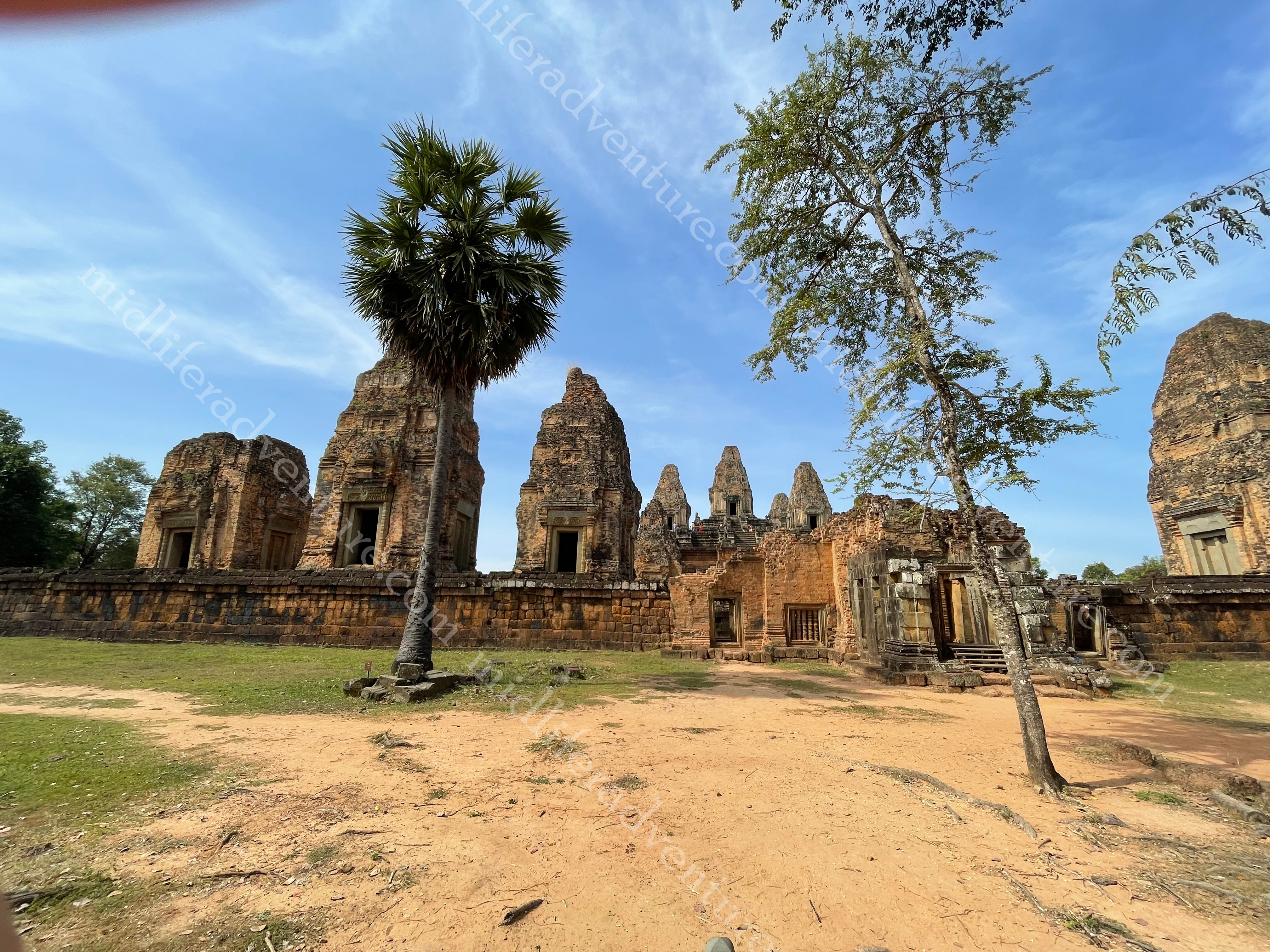
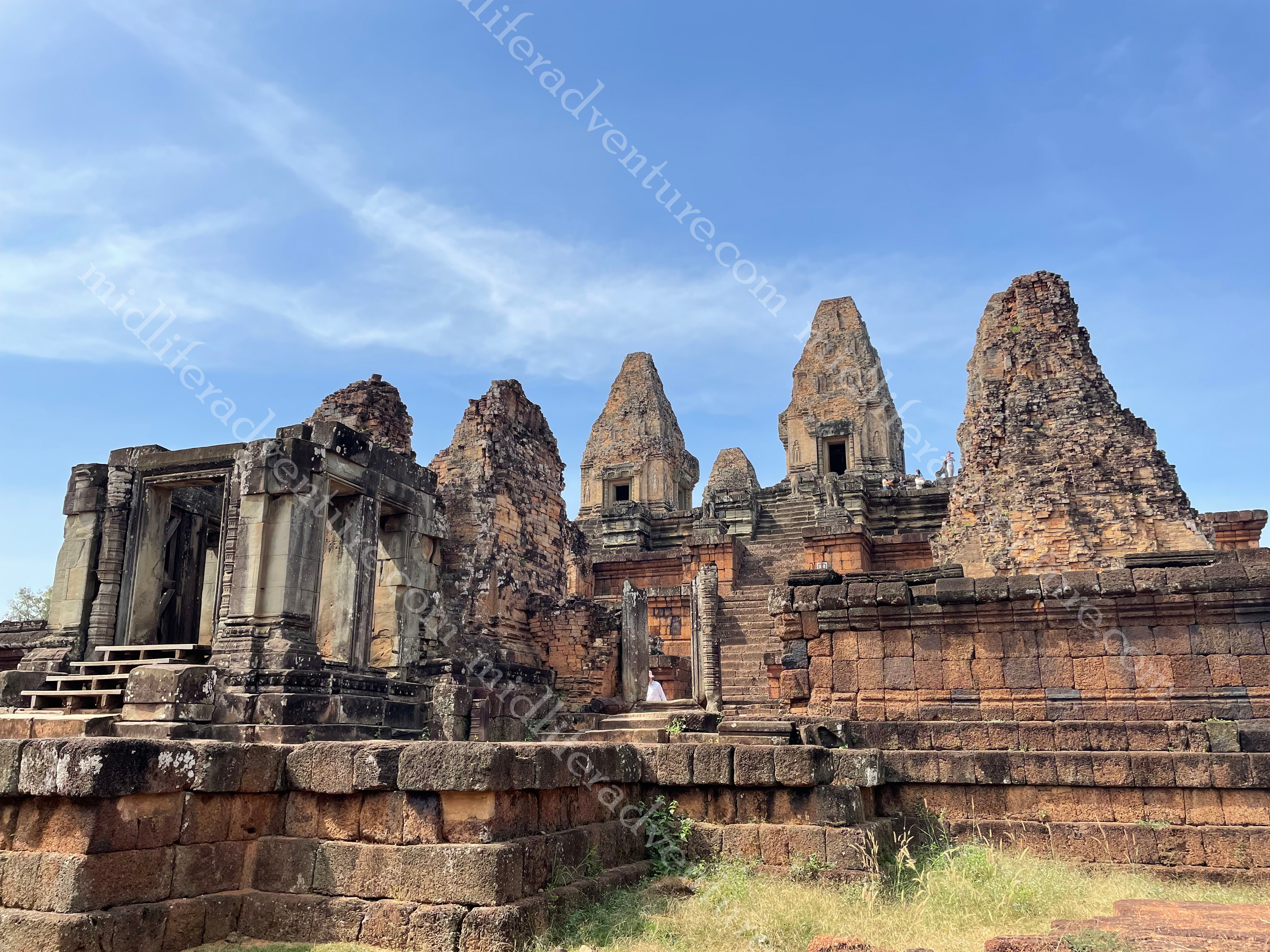
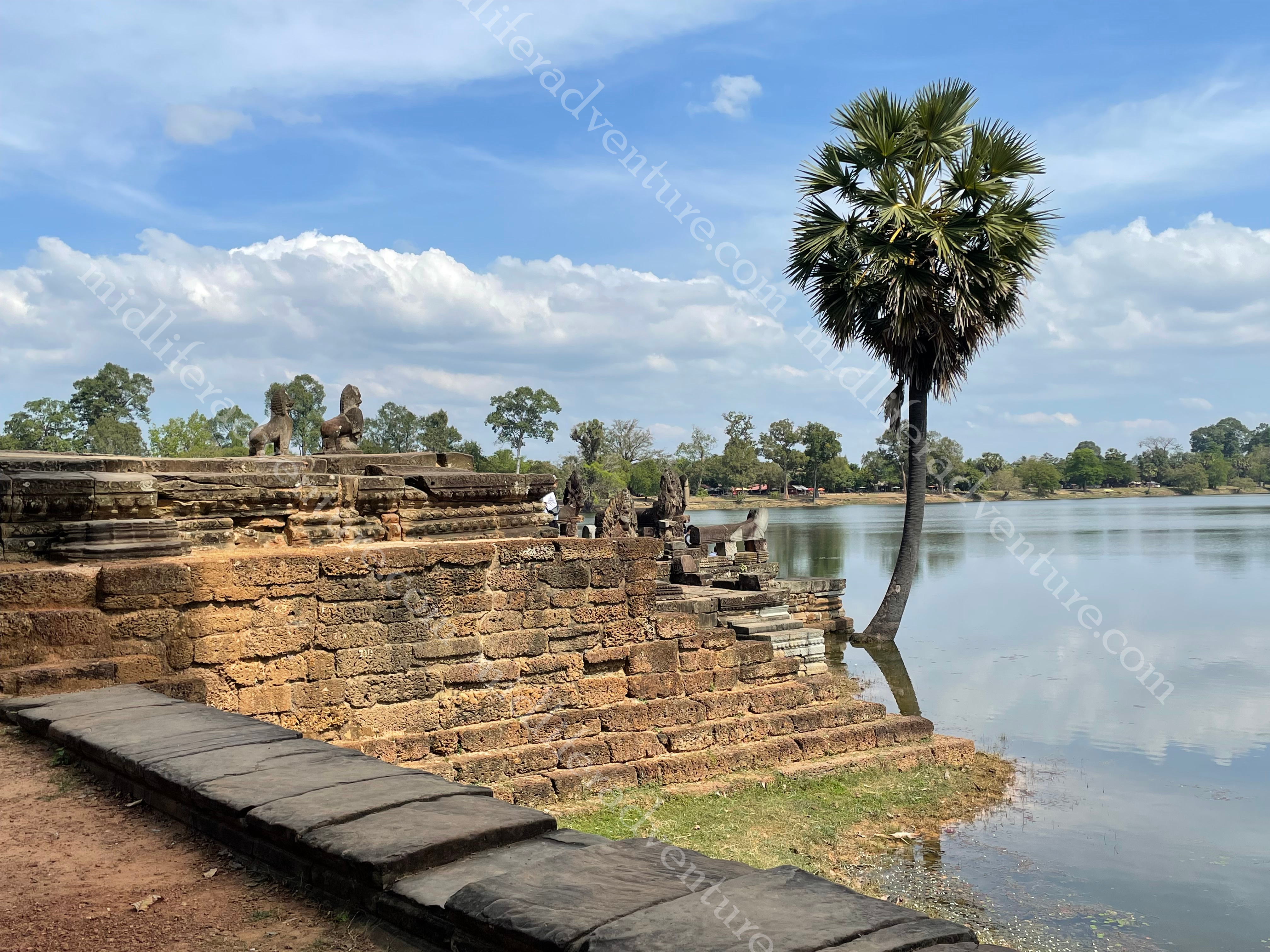
Needless to say, there are 50 of them. They are too numerous to mention and they are in varying states of disrepair but here are a few of the more common ones to look out for. The Preah Khan (Sacred Sword) temple complex is notable as it is surrounded by a moat and the roads are lined with sculptures on the way to the temple. The Roluos group of temples is about 13 km east of Siem Reap and was the original head of the Khmer empire from the 9th century before being taken over by the main ones in the 12th century. Thought to be the first capital the group of temples include Bakong (largest temple in the Roluos Group), Lolei, Preah Ko (temple of the cow) and the smaller Prasat Prei Monti.  

Ba Phuon (newly restored and reopened), Phnom Bakheng (sunset hill), Prasat Banteay Srey (citadel of women), Koh Ker (about 90 minutes away with around a dozen temples dating around the10th century), Baksei Chamkrong (Temple pyramid near the South Gate of Angkor Thom).

Kulen National Park

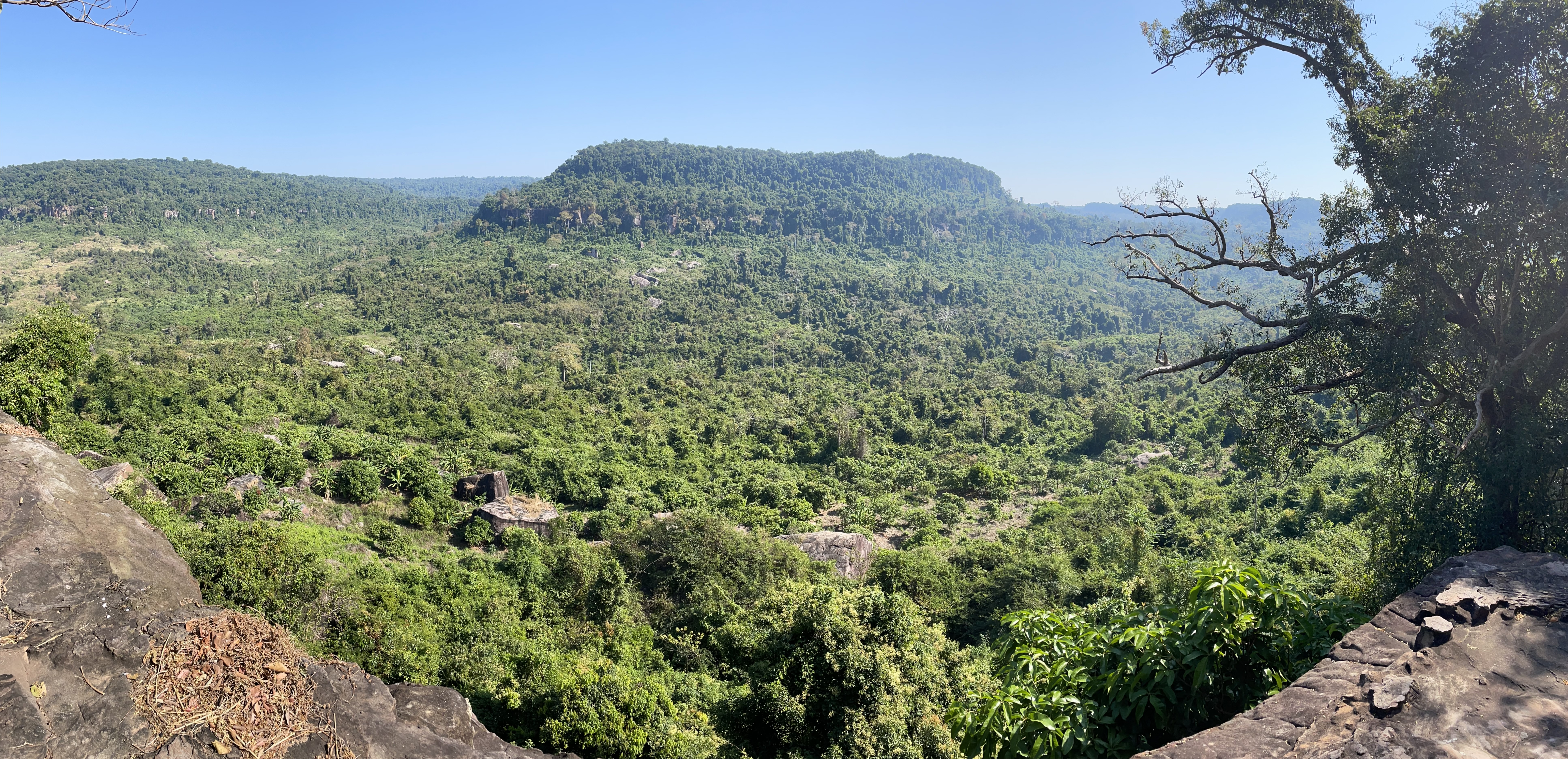
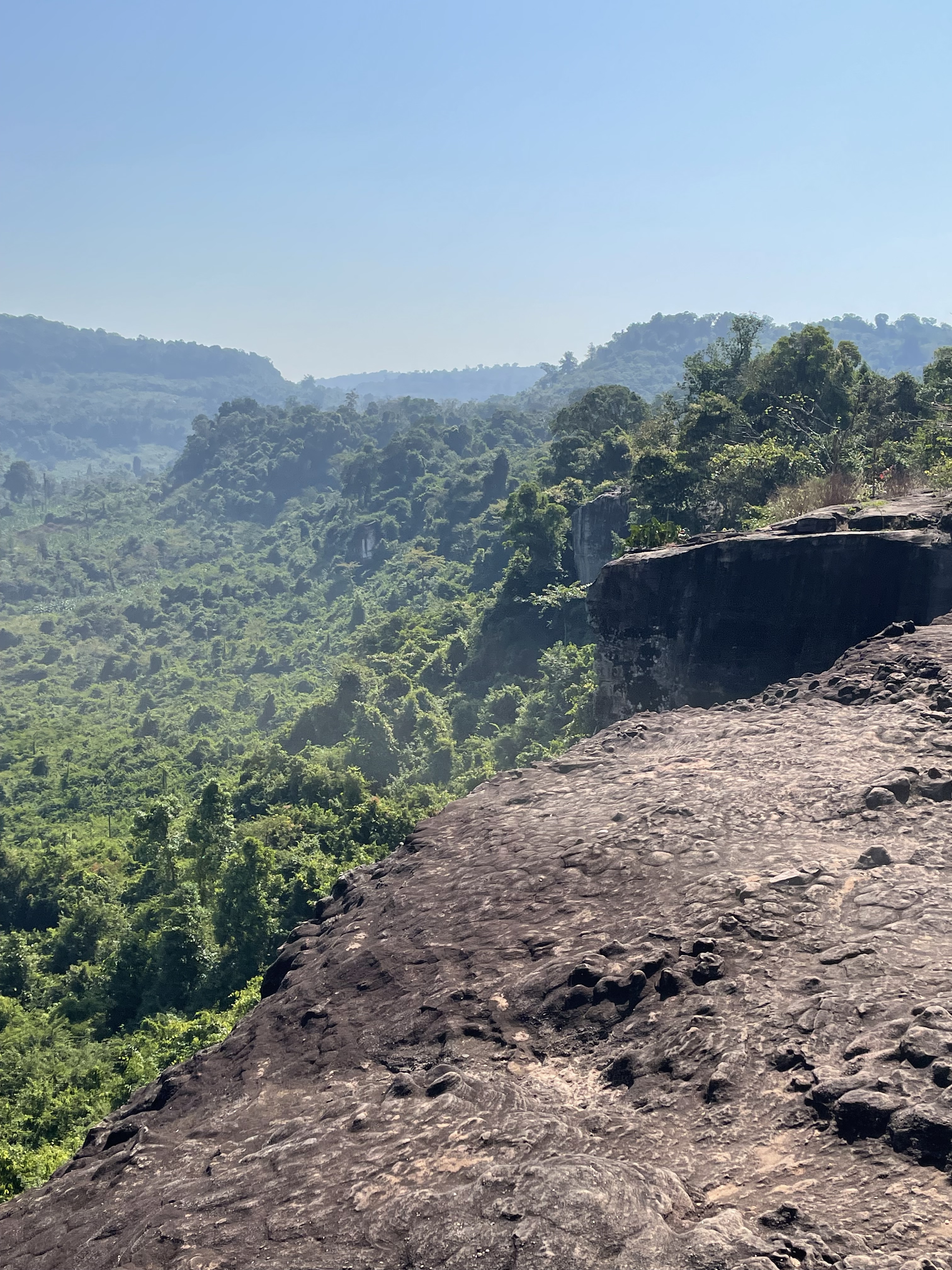
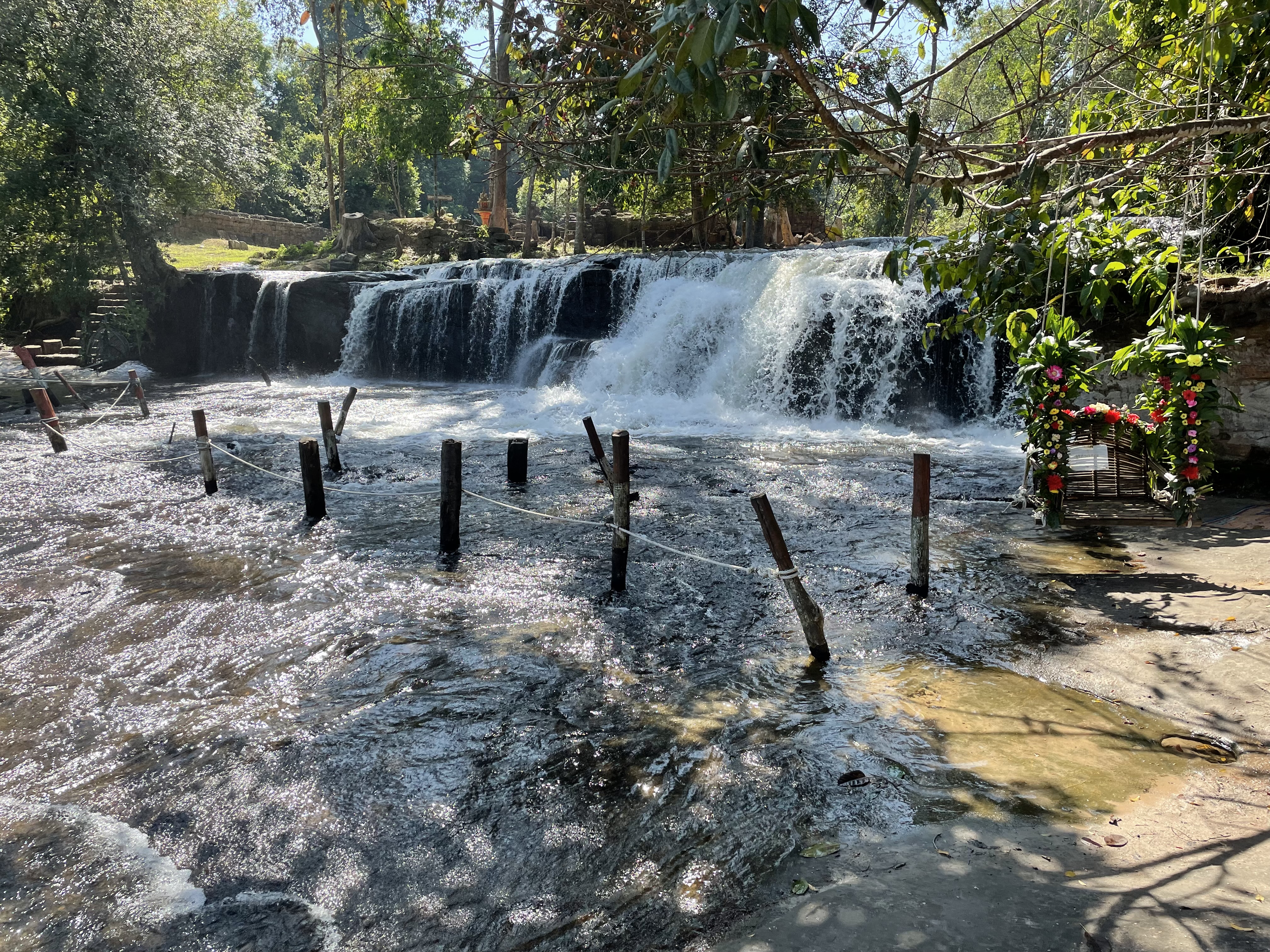
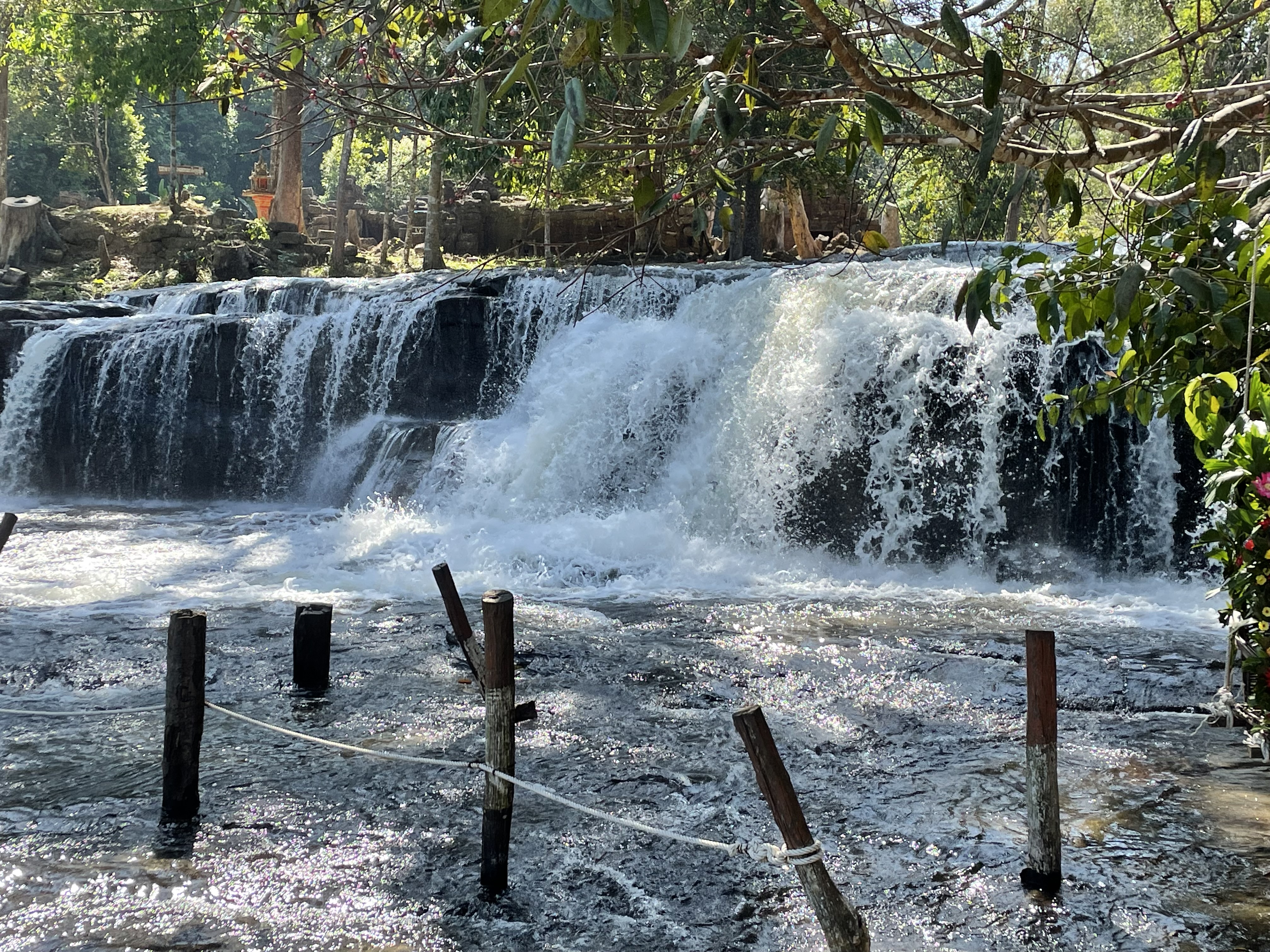
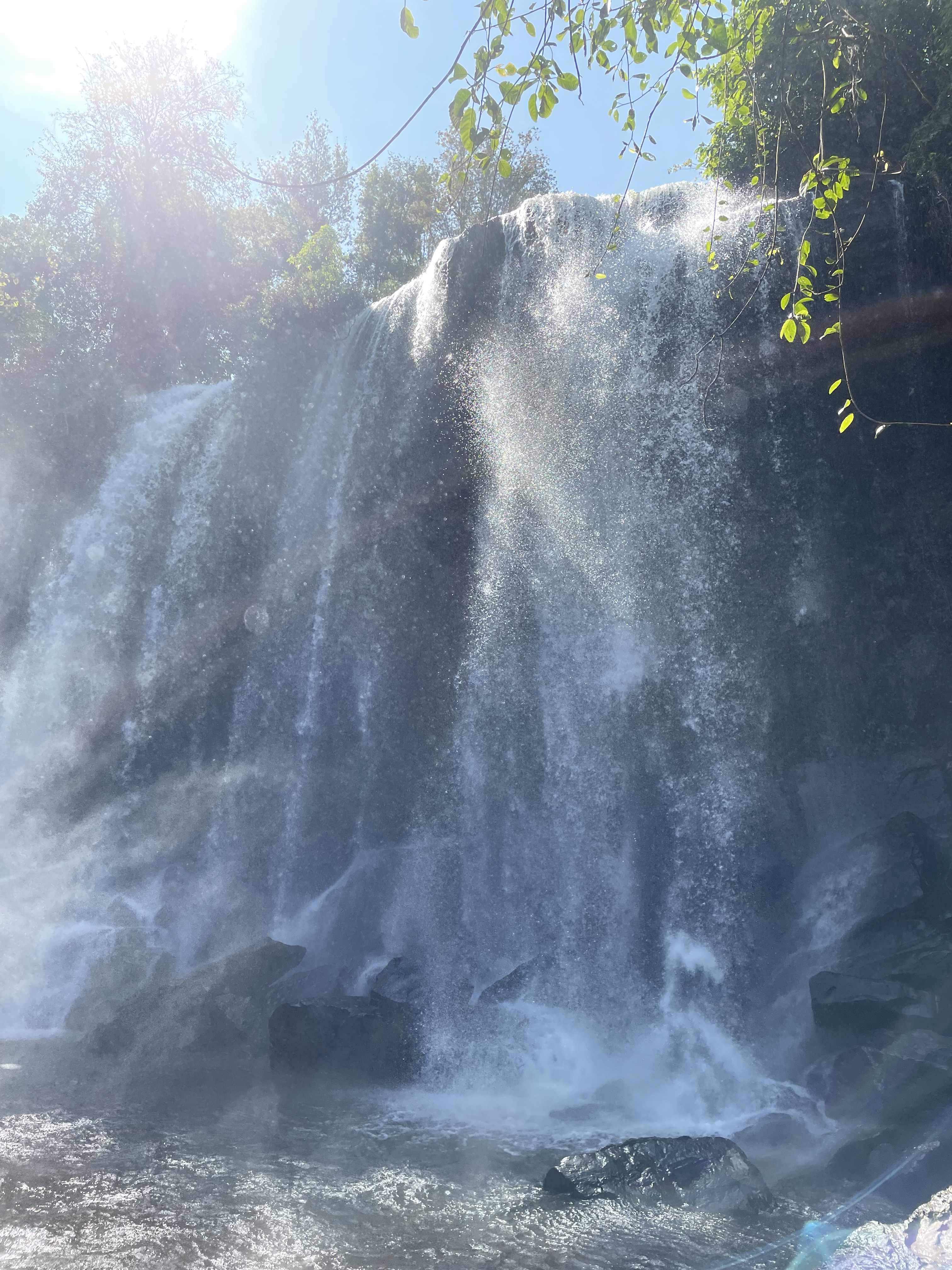
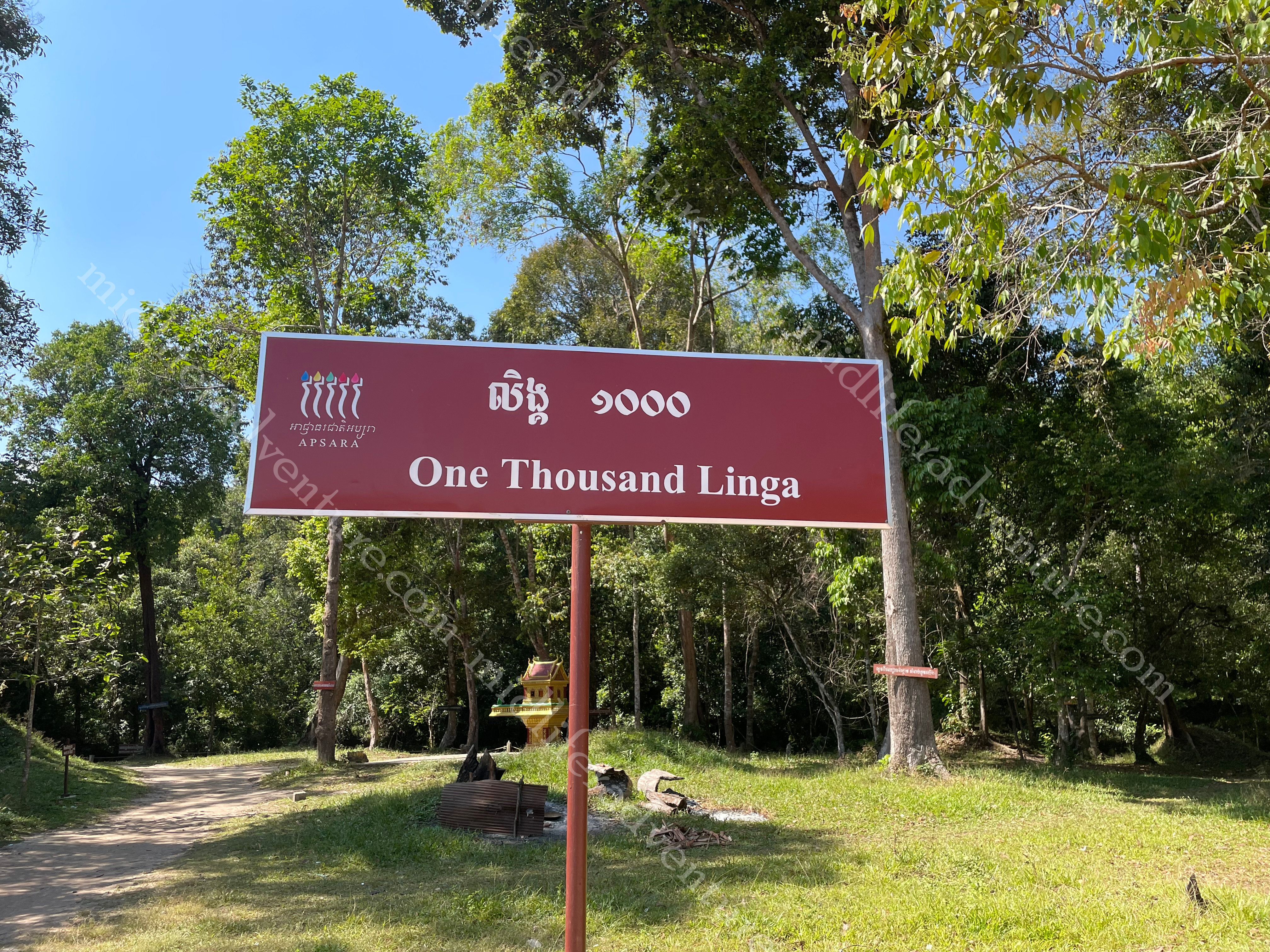
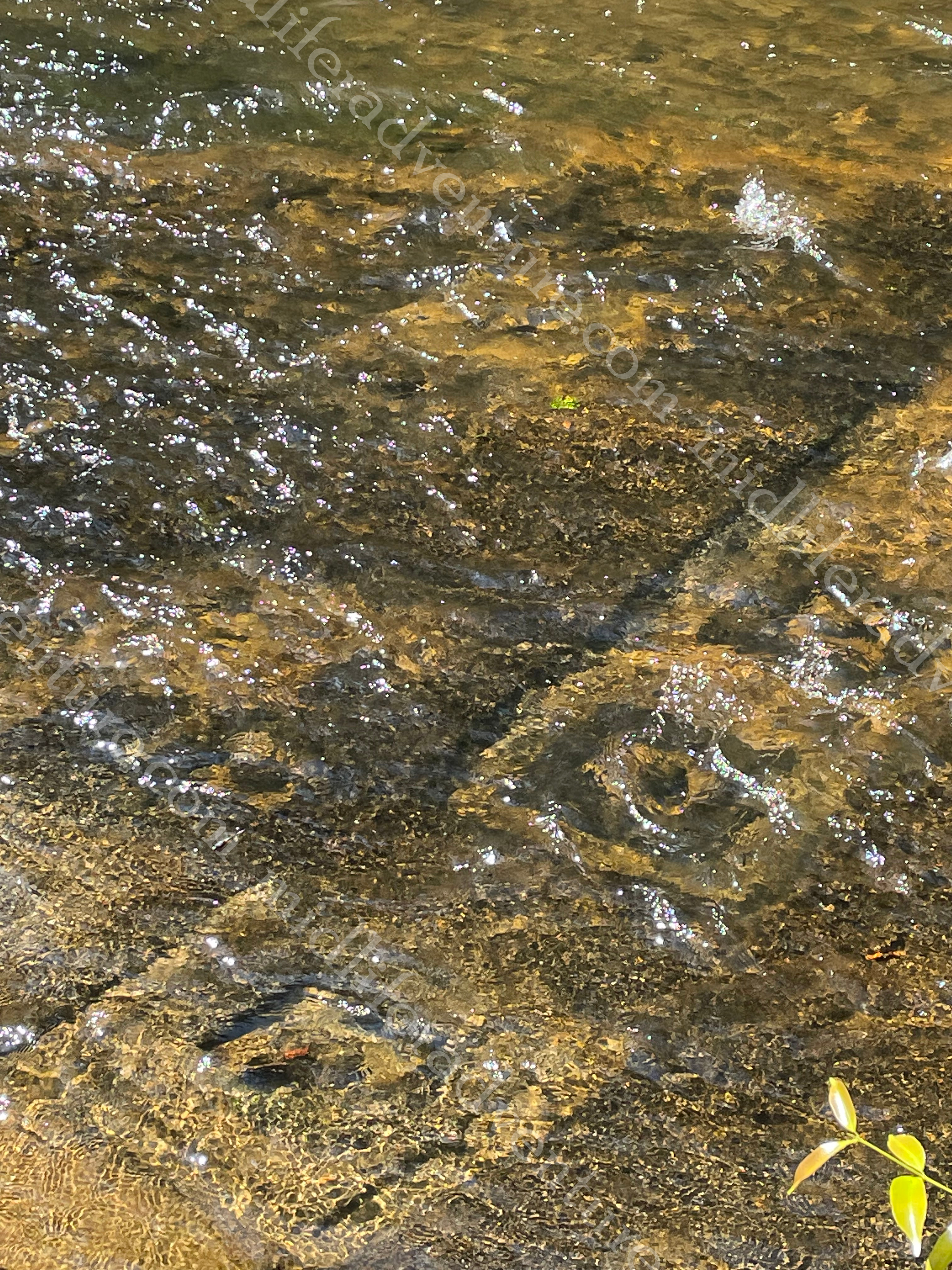
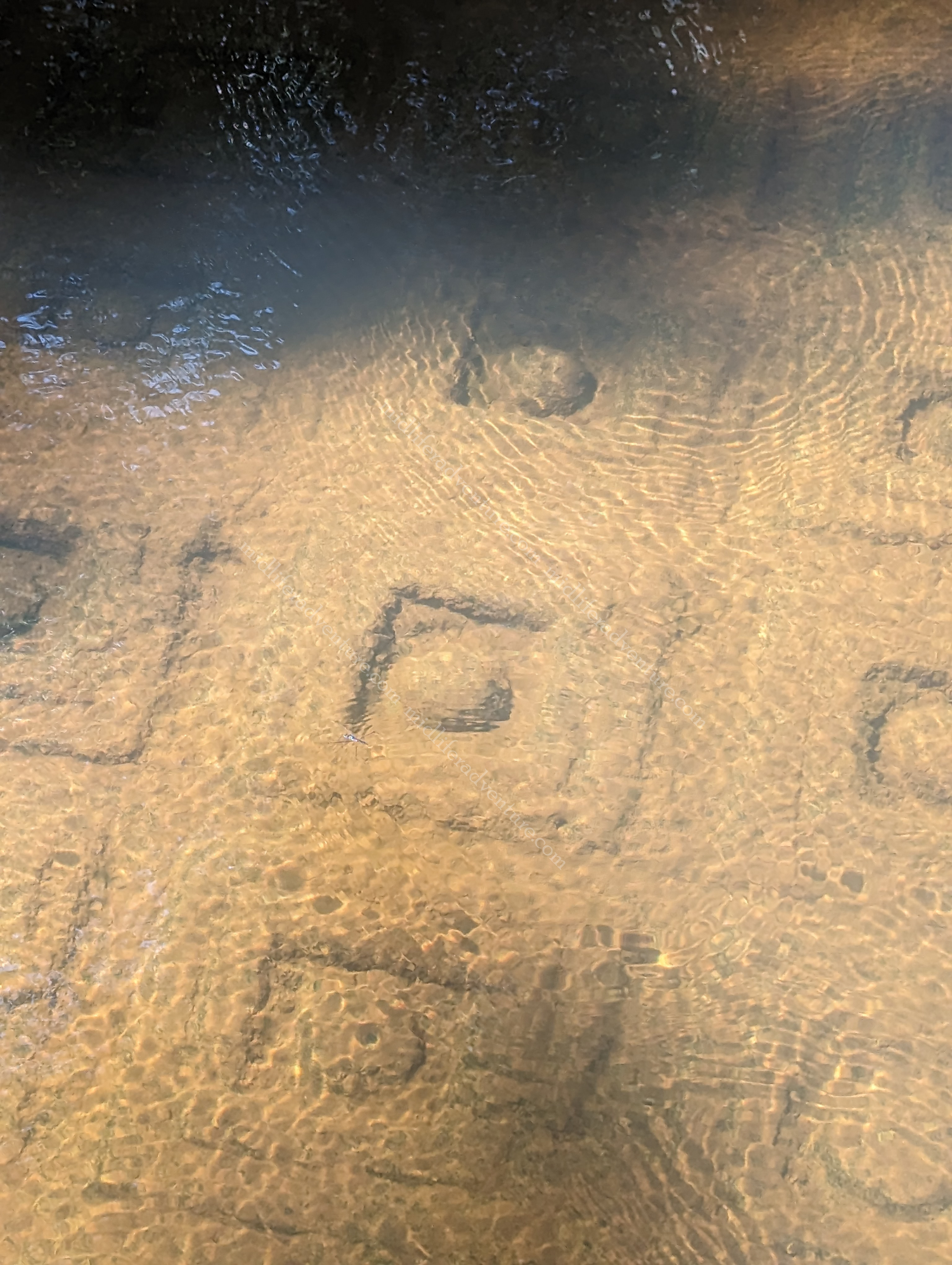
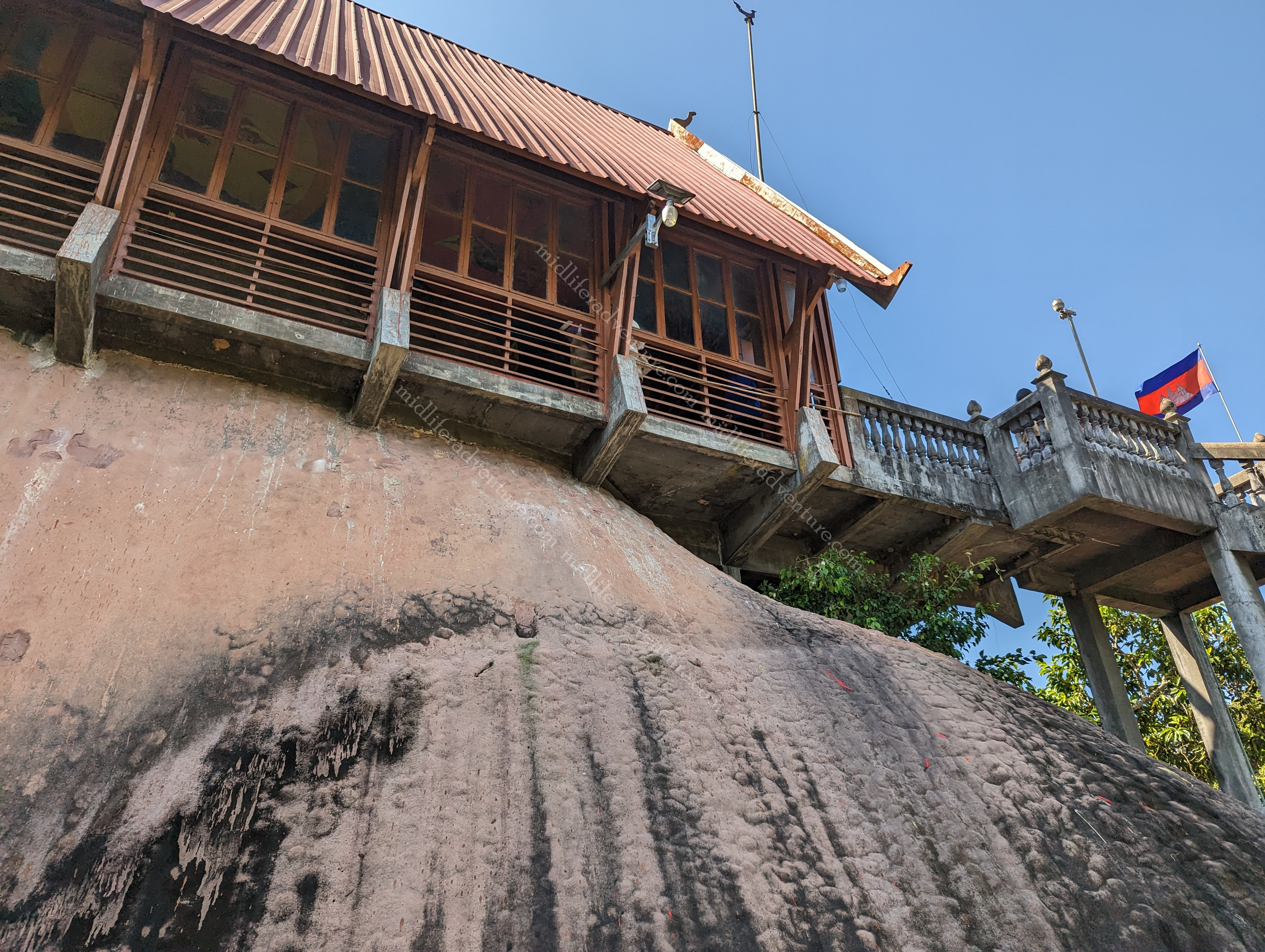
Phnom Kulen (Mountain of the Lychees) is a national park around 40 kilometers outside of Siem Reap. While it is not that far, the state of the roads make it a 90-120 minute trip and it must be done in a car or even a 4WD in the rainy season. It is said that Phnom Kulen is the birthplace of the Khmer empire and was even the site where King Jayavarman II declared independence (around the 9th century). Much of the stone used in the temples of Siem Reap was mined here and transported to the temples. But today it is the site of a couple of really nice waterfalls, a reclining buddha and the river of 1000 lingas (phallic symbol of the Hindu god Shiva – so I am going for the river of 1000 dicks).

The first thing to note is that the temple ticket that you have does not count for this area…so you have to pay for another one. We ended up travelling around 40 km out of town, we spent 3 times the price on transport to that paid for seeing the temples. In hindsight I don’t think it was worth it. The waterfalls were lovely and there was a nice outlook spot that we stopped at on the way that provided a different kind of view of the area. The buddha had seen better days but was still ok and the River of 1000 dicks was at best disappointing. If you have plenty of time then sure go ahead but on a limited time this one could be skipped.

Cambodia during covid

The Cambodian ticket site has some pretty amazing stats on exactly what the COVID pandemic did to tourism in the region. Prior to the pandemic the temples of Angkor were receiving 2.6 million visitors per year and generating nearly $5 billion in revenues. These revenues were employing people and paying for the renovations, restoration and upkeep of the various temples. However border closures and travel restrictions dropped visitor numbers down to about 300,000 and knocked Cambodia’s income from tourism down to just $184 million last year.,

It is clear that money was expended on the roads as these have been upgraded well and some of the major temples still saw some of the renovation and renewal budget. But some of the lesser temples (especially within Angkor Thom) have paid a significant price for the drop off in available funds. Recent months have seen a significant upturn and within 2 months there is expected to be easing of the Chinese travel restrictions that may see numbers and dollars flying back in.

Cruising

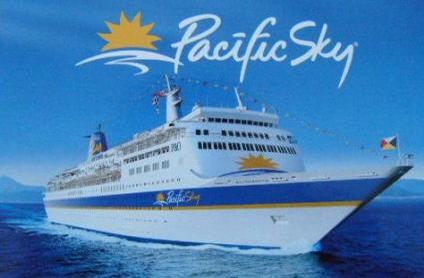
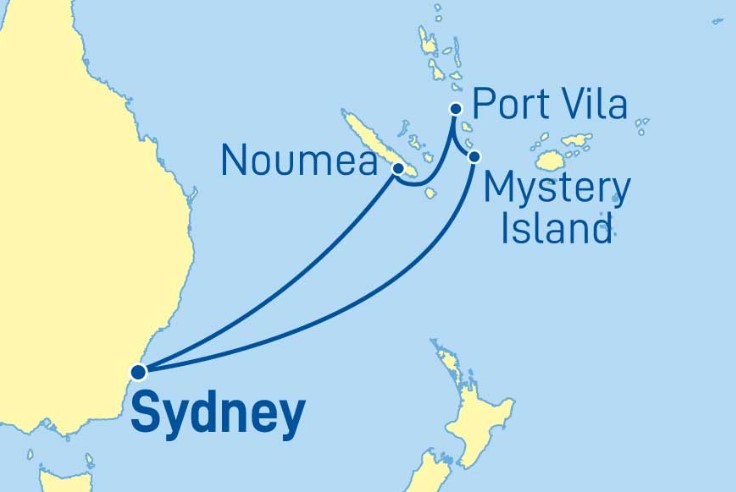
Over the years Jill and I have done a few cruises. The first was on P&O’s Pacific Sky way back when we were just barely dating. So long ago in fact, that the boat ceased operating in Australia back in 2006. And we were on it well before that. The cruise we did was fairly unremarkable and was pretty standard as far as east coast Australian Cruises go. We flew to Sydney and hopped on a 7-9 night cruise that took in Port Vila, Noumea and some of the smaller islands. Sometimes this is mystery island, as seen below, other times it may be Isle of Pines or Mare or any combination of those that may suit at the time. Over the years we had done a few of these types of things so have been to each of the islands in some way, shape or form.

As the years went on and our budget allowed we upgraded our cruising and were introduced to the Royal Caribbean Cruising Line. We have found this to be a really nice mid range cruising experience with a loyalty scheme that worked for us and as such we have stuck to this company. This is not a formal or paid endorsement of the company just a note that we are happy with it and it is the one we have chosen to have stuck with. That said, I would not hesitate to recommend it if asked.

A quick search of the internet shows that there are almost 1500 cruise ships operated by a myriad of companies that in turn own a number of ships and have bought out some of the smaller companies. Who owns what exactly, requires some serious digging. Digging that I am both unwilling and uninterested in doing. But there are cruise ships that take as few as 2 people and those that will cater to almost 7000. Suffice to say that there are so many cruises around, and they each cater to a different part of the market and a different price point. Find the one that works for you and give it a try.

Is cruising for me?

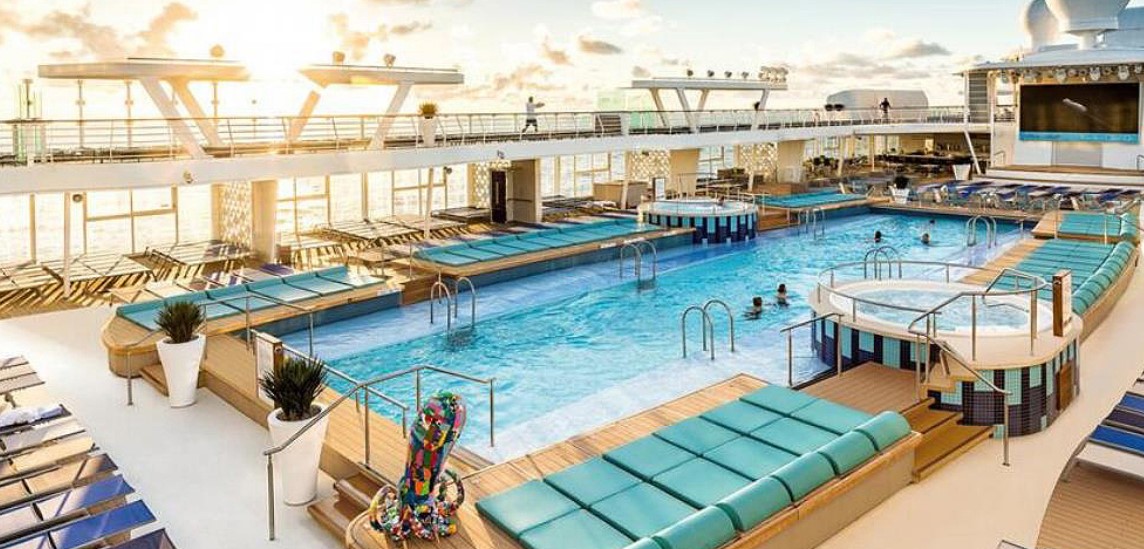
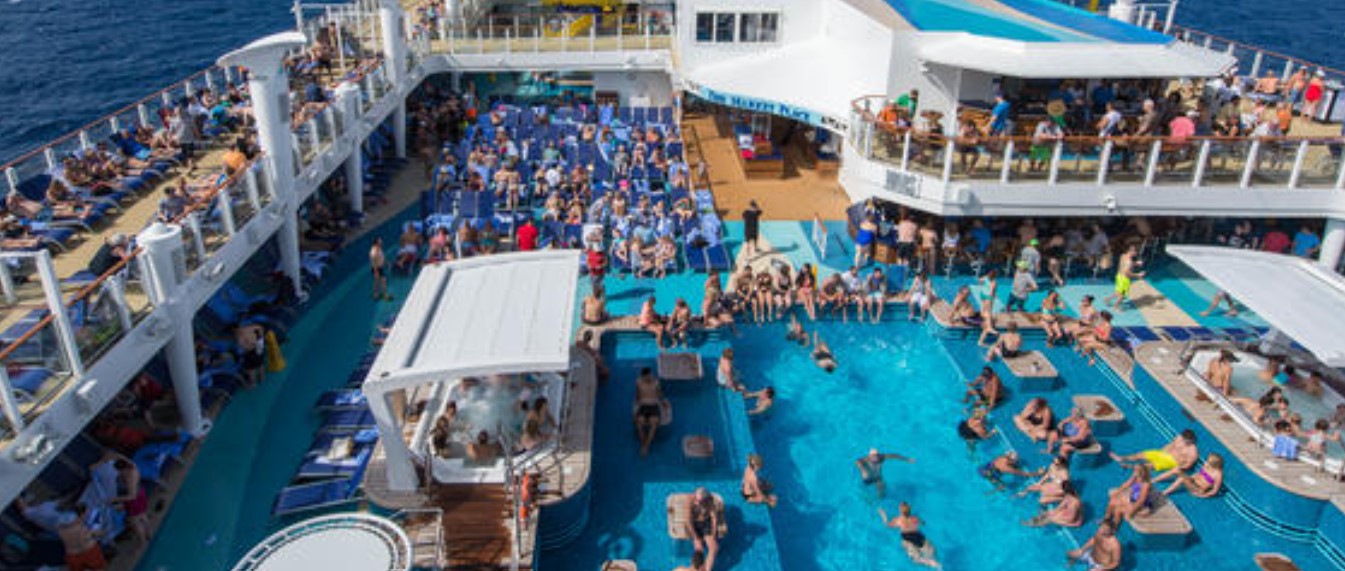
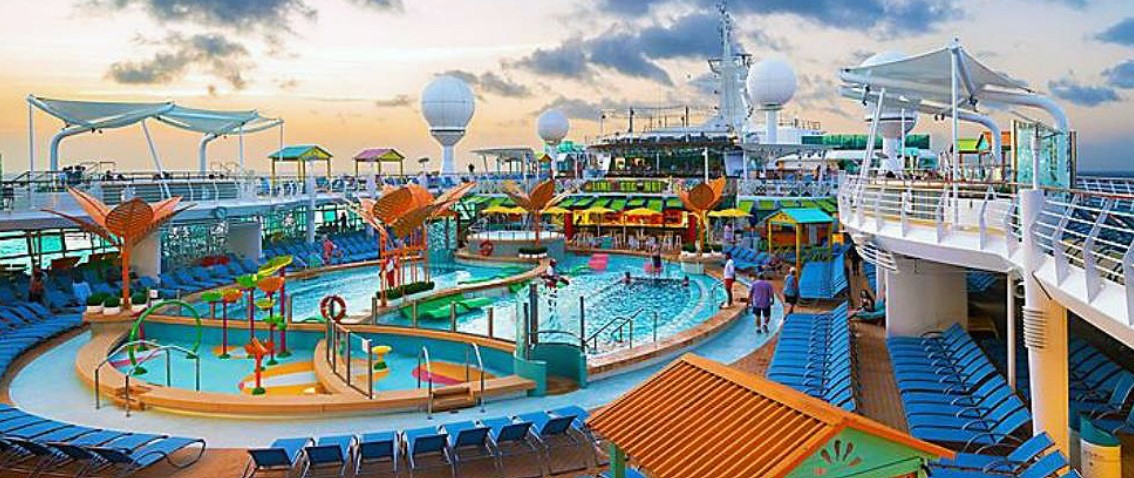
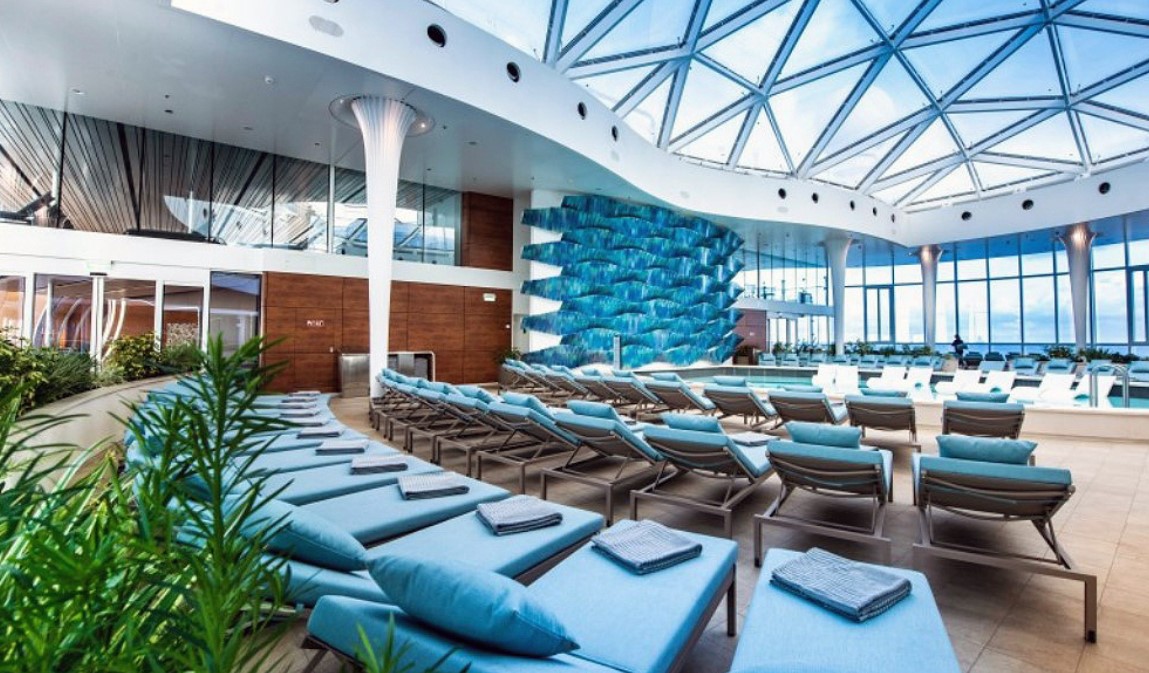
Some people hate the thought of cruising, and the idea of being trapped on a boat is their idea of horrible. And for them then that is OK. But I don’t see it that way. The modern cruise ship has something for everyone. You can opt in or opt out of the activities it is your choice. If you so choose you can fill your day fully with things to do or alternatively there is plenty of space available to find quiet time if you seek it. Obviously the main pool deck is bedlam in the middle of the day, as is the main buffet near the pool deck at lunch time (something that we have affectionately titled the Bali Bogan Buffet). So if you don’t like the crowds avoid these at peak times.

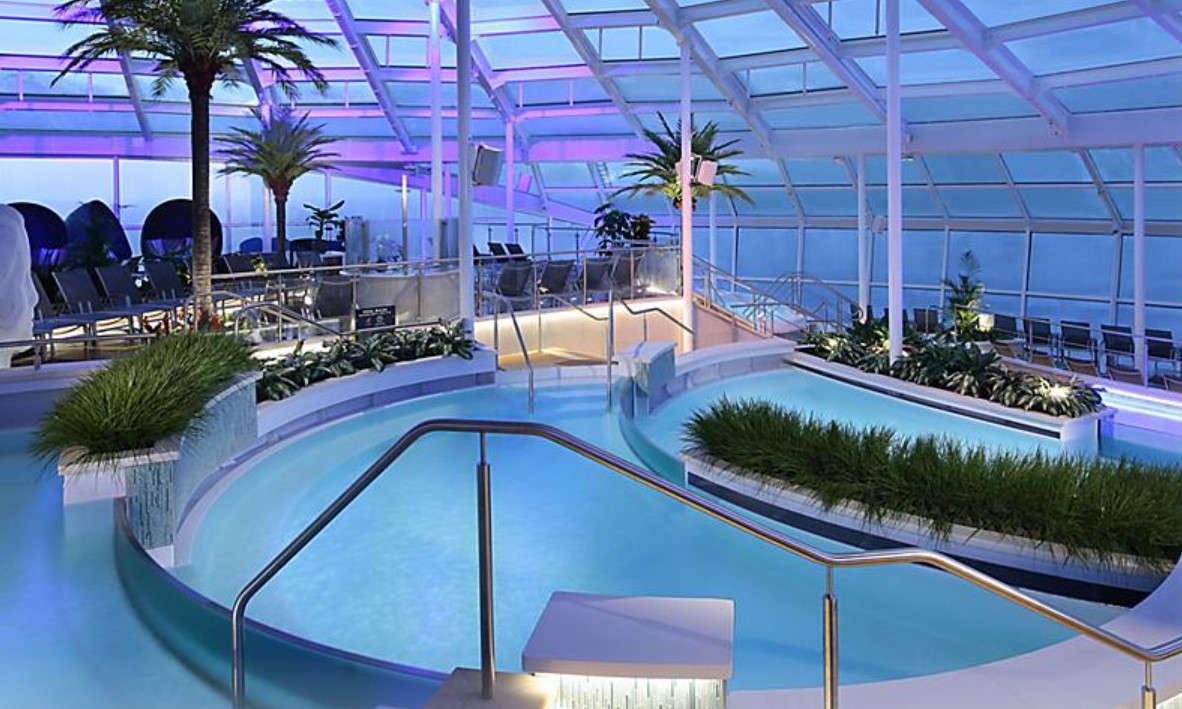
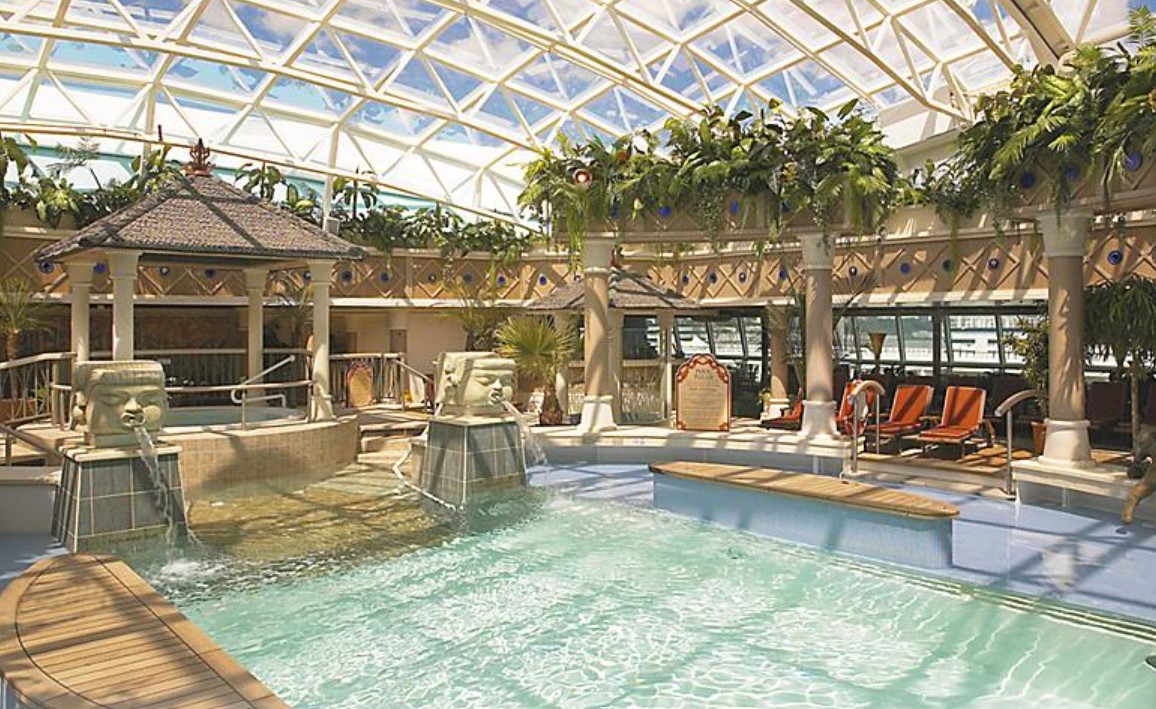
However, in the early evening the first dinner sitting is on and the kids are off being fed, so the pool deck can be serene and peaceful with beautiful sunset views that you can have almost to yourself. Similarly in the mornings the influencer crowds have yet to surface from their partying all night. So you can have a lovely stroll around the decks before they emerge from their alcohol and partying induced haze with their botox’d lips and other bits to flaunt their grotesquely altered bodies for the masses in an attempt to gain attention. The kids typically have kids club and for those like me who don’t particularly like the noise and screaming, there is usually an adults only area where children are not allowed on the Royal Caribbean it is the peace and quiet that is the Solarium. This is both quieter and much more pleasant for grumpy old buggers like me.

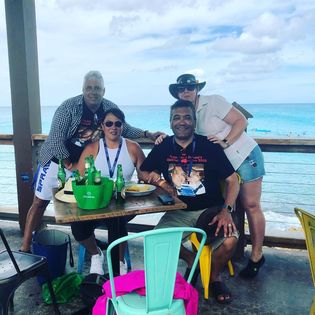
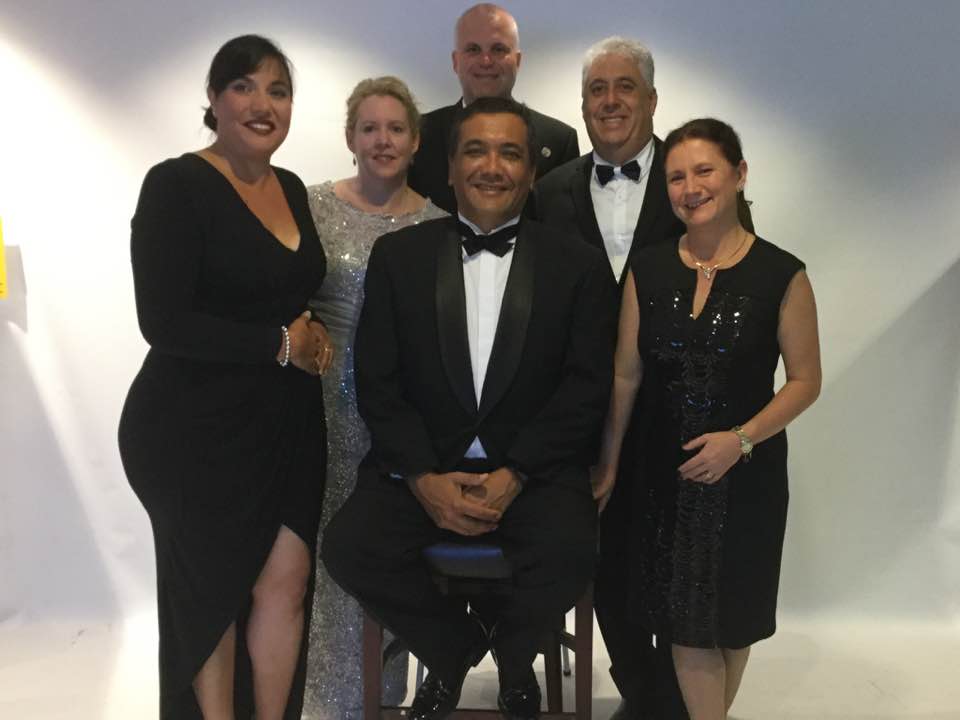
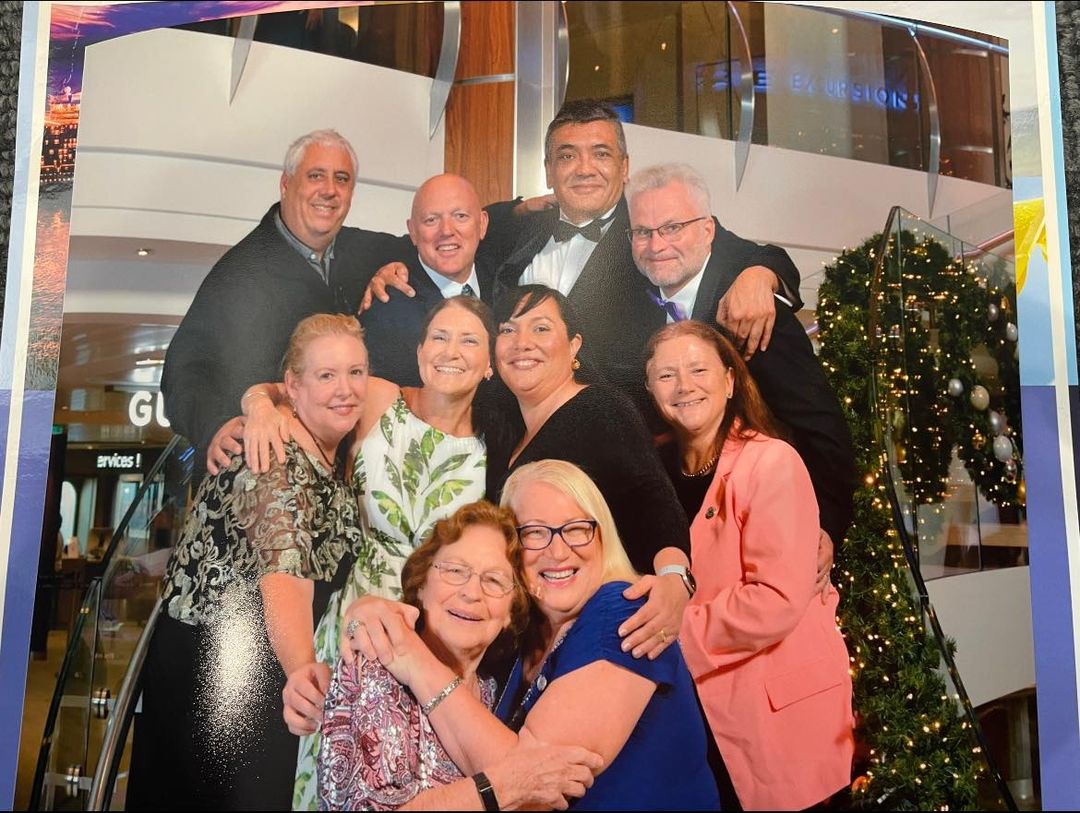
But the most important thing about cruising… is who you do it with. With the right people and the right attitude cruising is a dream. We have found ourselves the perfect little cruising group that fall in and out of cruises as it suits each of us. Jill and I are clearly on the less frequent end than many of the others, but the personalities when we get together just gel together nicely and a great time is had by all. The first two in the cruising group for us is Jeremy and Claudia. For those that have been reading along they have already featured on numerous occasions and are long term friends. This core is added to by some more hardcore cruisers with Wayne and Chrissy (Chrissy being Claudia’s sister).

From here the group widens to include Wayne’s sister (Karen) and mother (Marg). And then there is always the odd blow in that you will meet on a cruise or that will drop in and out of a cruise (I am sure that the more regular cruisers regard us this way but hey). So the next thing to know about cruising is that there are 2 types of people.

Type 1 – these are the people that see the boat as transport and abide the sailing bits to get to the destinations and get off to run around and see stuff.

Type 2 – this is me. We are the ones that see the cruise as the destination and that the stops are just there to keep the feeble minded amused.

Neither type is necessarily right or wrong but there does tend to be a never the twain shall meet with these two mindsets. For Type 1 short cruises with lots of stops are the best while for Type 2 long relocation style cruises (between one season and the next) are the go. We did a relocation cruise a few years ago from Sydney to Singapore and it was lovely. The boat had been operating in Australia the over summer and had finished the season and was off to Singapore to do the next few months there. The cruise was long periods of quiet time with some stops in Brisbane and Darwin and that was about it.

What can I expect on the cruise?

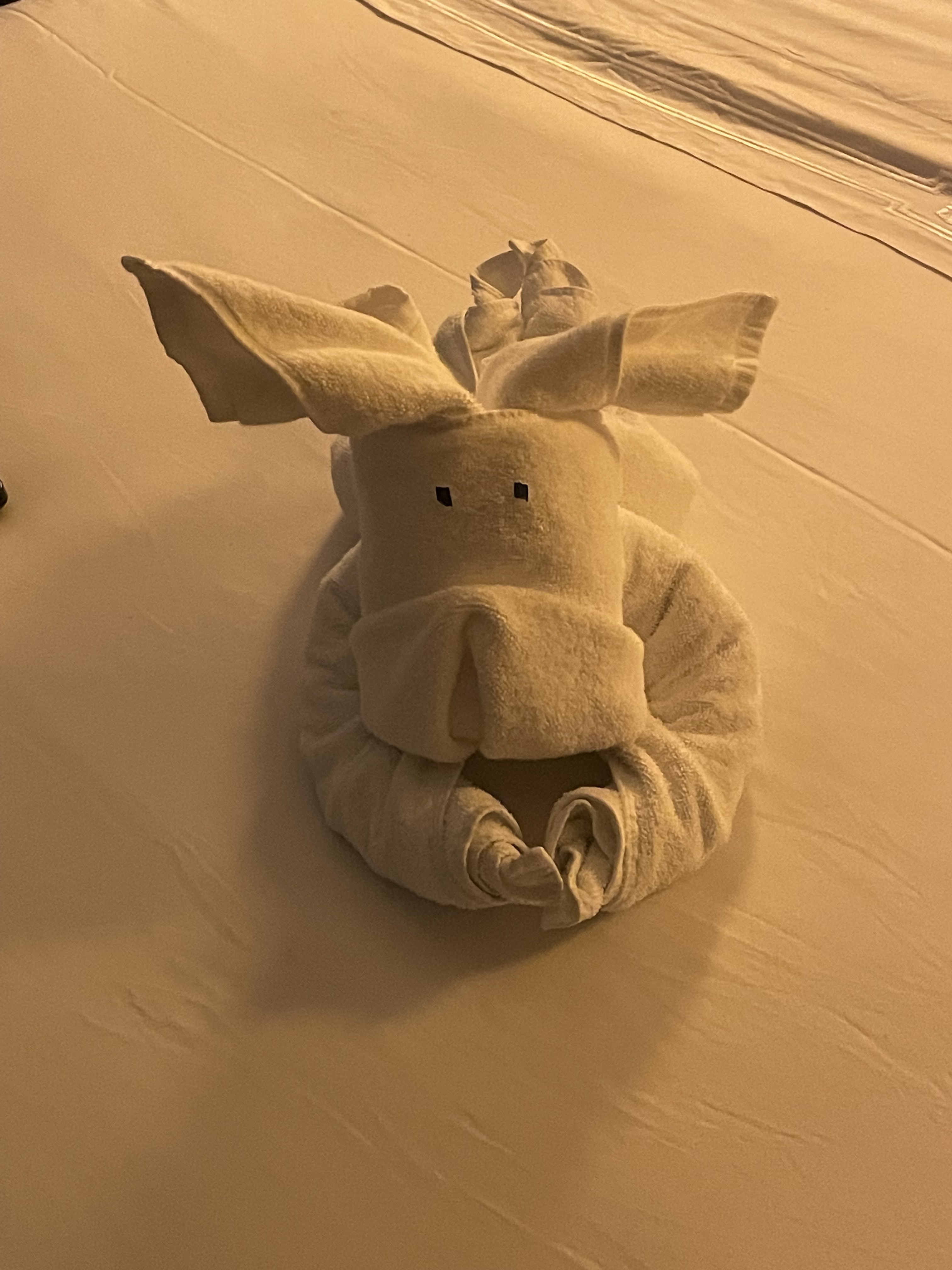
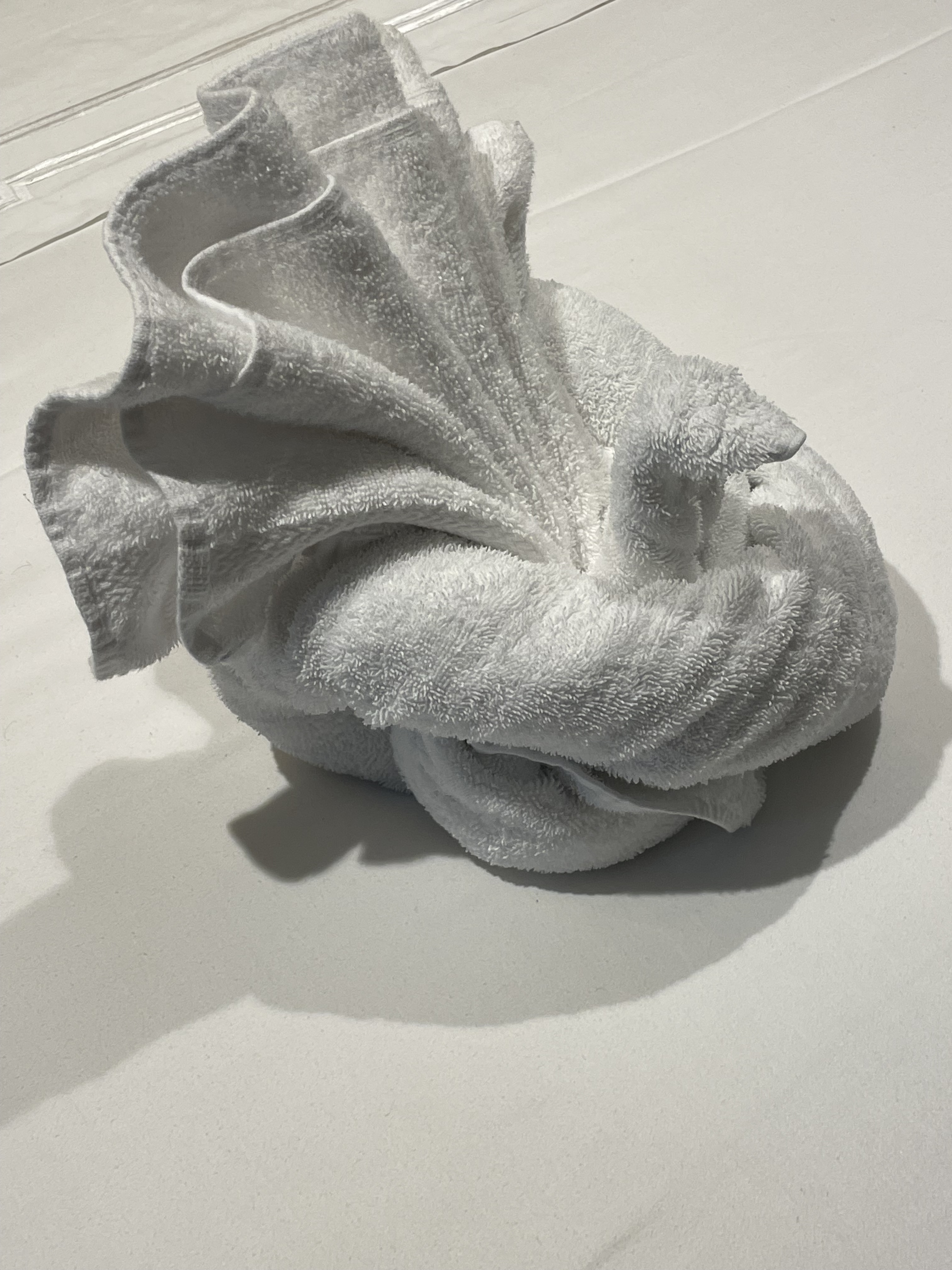
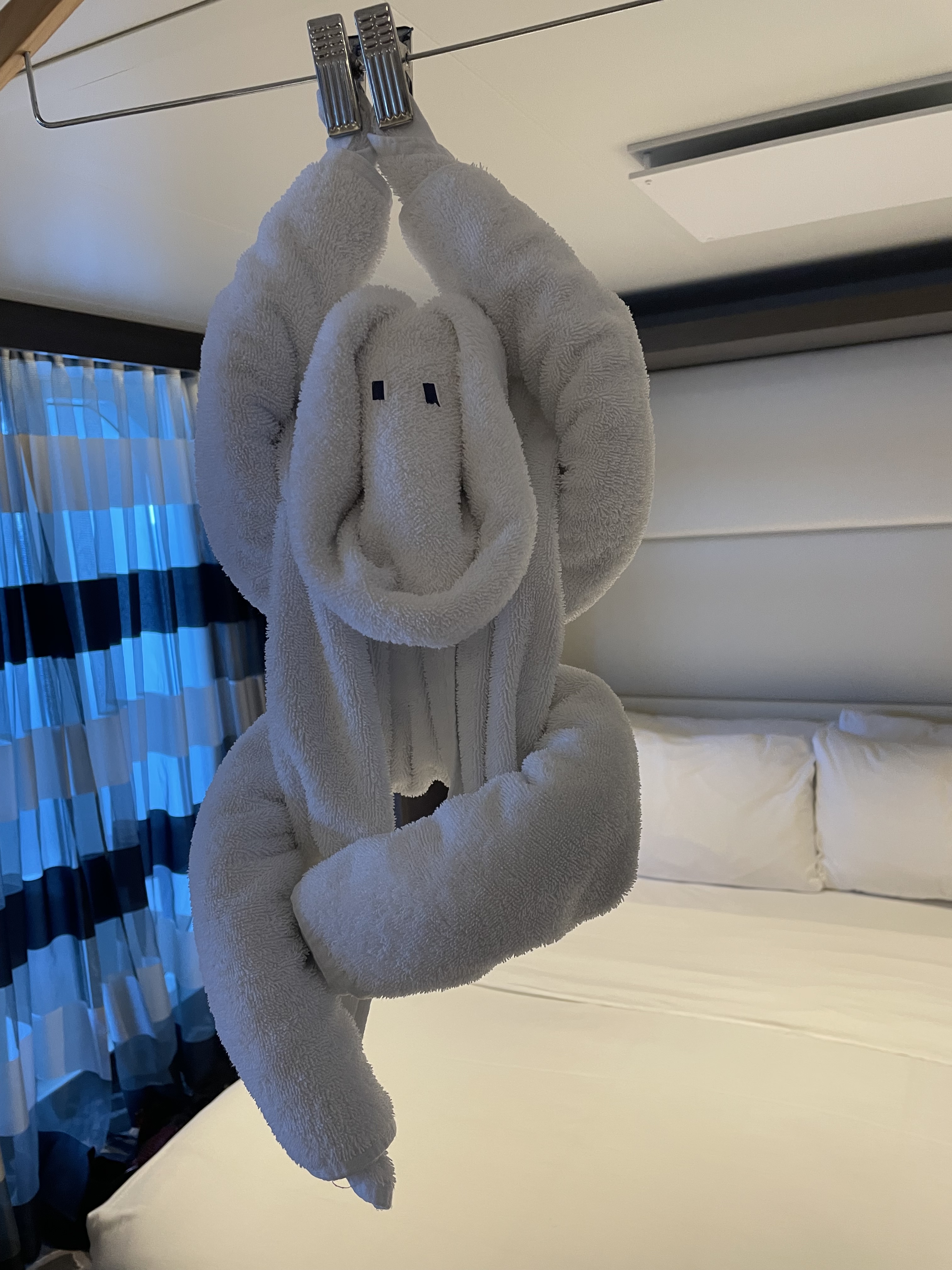
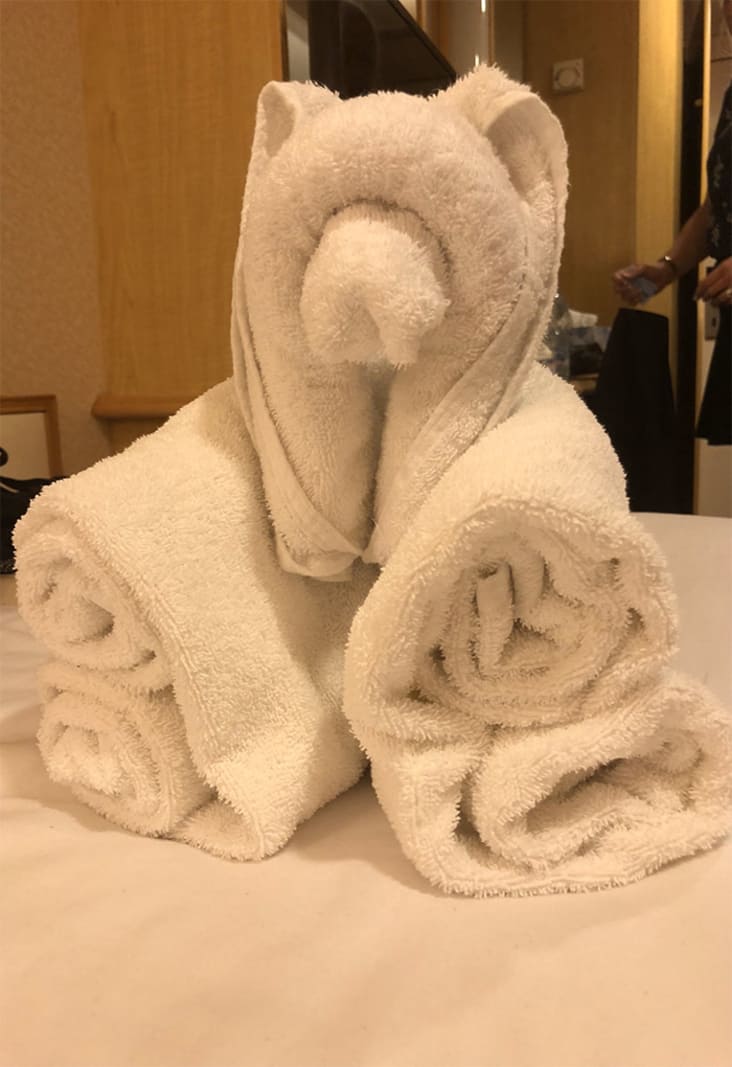
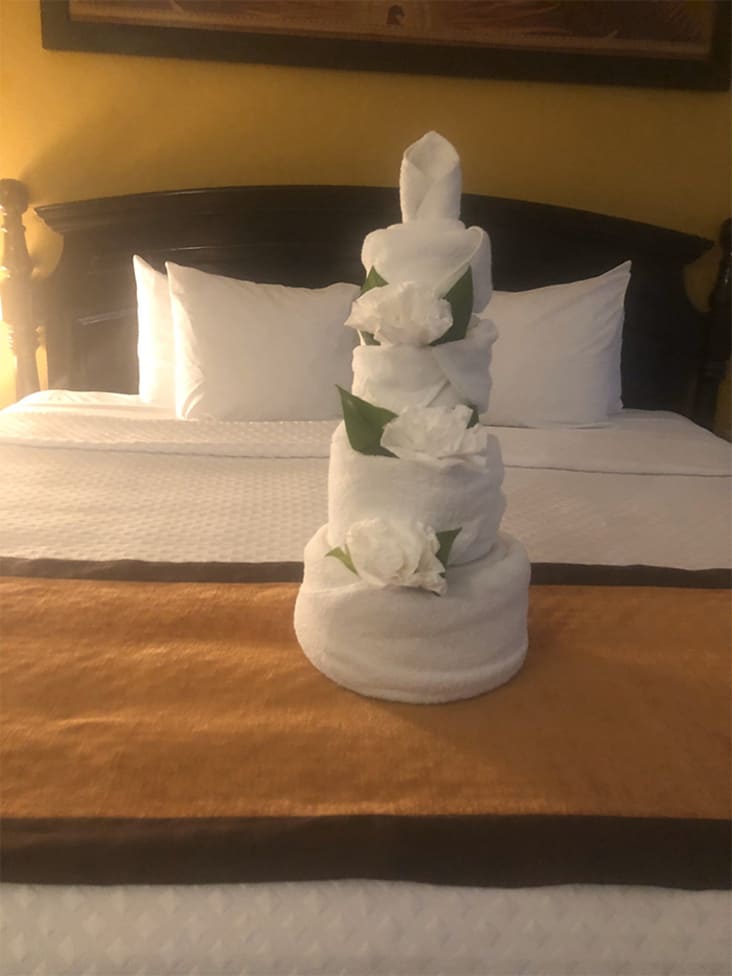
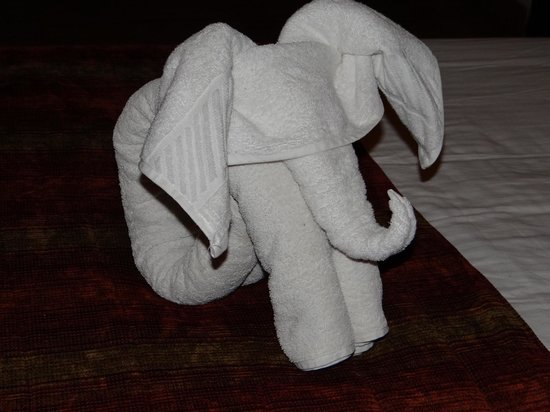
There will be towel art. Do not be surprised to find strange animals infesting your rooms throughout the journey. Often they will be wearing your hat or sunglasses or any other random item you may have left lying around your stateroom. But some of them are amazing and others reflect the personalities of your room attendants. Either way they tend to be a bit of fun – just go with it.

There will be quirks…

This one is the seemingly magical robot barman titled the Bionic Barman. Some ridiculously expensive robot arms will make you the cocktail (or mocktail) of your choice while providing entertainment in the process.

You still have a dude checking for ID and cleaning up after the robots (they are pretty messy at times) but the process is fairly entertaining to watch.

The staff will be amazing. Coming from Australia the customer service experience is typically pretty poor. We just are not a culture that is used to expecting (or even demanding) decent levels of service. We pay a fair wage so do not have a tipping culture, however if people do a great job we are not averse to leaving a tip. Cruise ships typically operate all over the world and service levels are higher than we are used to – meaning that they are super attentive, friendly and helpful. Don’t get me wrong – some people will still find reason to complain – but I think that this says more about the complainers than it does about the cruise ship staff or service.

So we have booked in 4 cruises over this part of our itinerary. The first is just a short 4 day number to get us to a level higher on our cruising status (kind of like frequent fliers within a cruising context). The second cruise is on the cards as we have always wanted to visit Iceland however

MonthDestinationDaysPorts
Mar/Apr 2023Singapore4Singapore, Penang, Phuket
June 2023Iceland13Amsterdam, Reykjavik, Isafjordur, Seydisfjordur, Belfast, Liverpool, Cork, Amsterdam
July 2023Alaska8Seward, Hubbard Glacier, Juneau, Skagway, Haines, Icy Straight, Ketchikan, Inside Passage, Vancouver.
January 2024Antarctica14Buenos Aires, Tierra del Fuego in Ushuaia, Cape Horn, Schollart Channel, a Paradise Bay, Gerlache Strait, Elephant Island, Falkland Islands, Puerto Madryn, Montevideo.
Upcoming Cruises – should anyone wish to join us along the journey.

30 March-3 April 2023 CRUISE – Singapore – Penang – Phuket

June 2023 – Cruise Iceland

1Amsterdam, Netherlands Departs at 5:00 PM
2 – 3Cruising Day at sea
4 – 5Reykjavik, Iceland From Day 4, 9:00 AM – Day 5, 7:00 PM
6Isafjordur, Iceland Tendered from 7:00 AM – 3:00 PM
7Seydisfjordur, Iceland Tendered from 9:00 AM – 7:00 PM
8Cruising Day at sea
9Belfast, Northern Ireland From 11:00 AM – 8:00 PM
10Liverpool, England From 8:00 AM – 5:00 PM
11Cork (Cobh), Ireland From 10:00 AM – 4:00 PM
12CruisingDay at sea
13Amsterdam, Netherlands Arrives at 6:00 AM

July 2023 – Cruise Alaska

1Seward, Alaska Departs at 7:00 PM
2Hubbard Glacier, Alaska Sightseeing from 2:00 PM – 5:00 PM
3Juneau, Alaska From 9:00 AM – 9:00 PM
4Skagway, Alaska From 7:00 AM – 5:00 PM
4Haines, Alaska From 7:00 PM – 11:00 PM
5Icy Strait Point, Alaska From 6:30 AM – 3:00 PM
6Ketchikan, Alaska From 10:00 AM – 7:00 PM
7Inside Passage, Canada Sightseeing
8Vancouver, British Columbia Arrives at 7:00 AM

January 2024 – Cruise Antarctica

Emu Park

I wasn’t going to do a post for Emu Park as we considered it as our home…the intent of the blog was not to simply write about where we lived… but having spent almost a year here, I just had to write about this charming little place called Emu Park. To set things up my darling bride was given a short term job in Emu Park in the midst of all of the travel chaos that was created during COVID. Given that we could not really travel abroad she took the job while we waited for the world to open up again.

We had, for a long time, said that we were always planning to retire in Western Australia having fallen in love with the lifestyle and climate. Well Emu Park had us seriously questioning this thought.

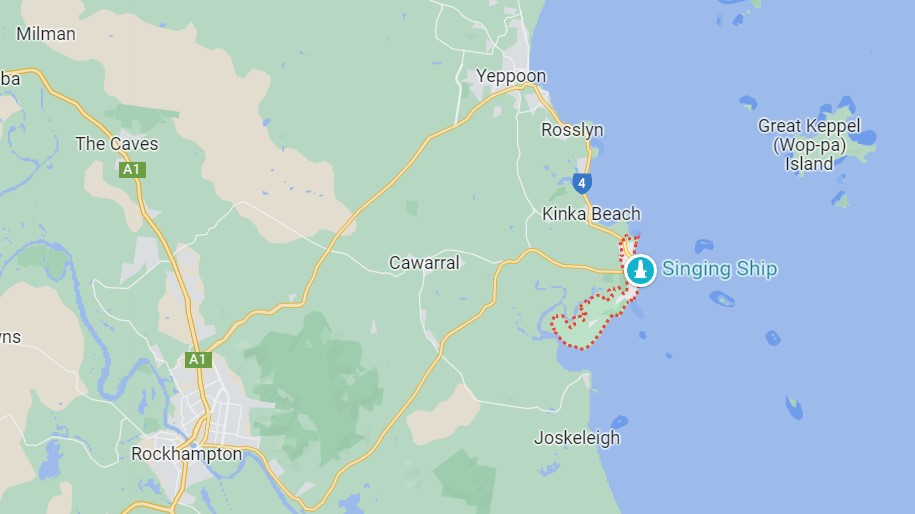
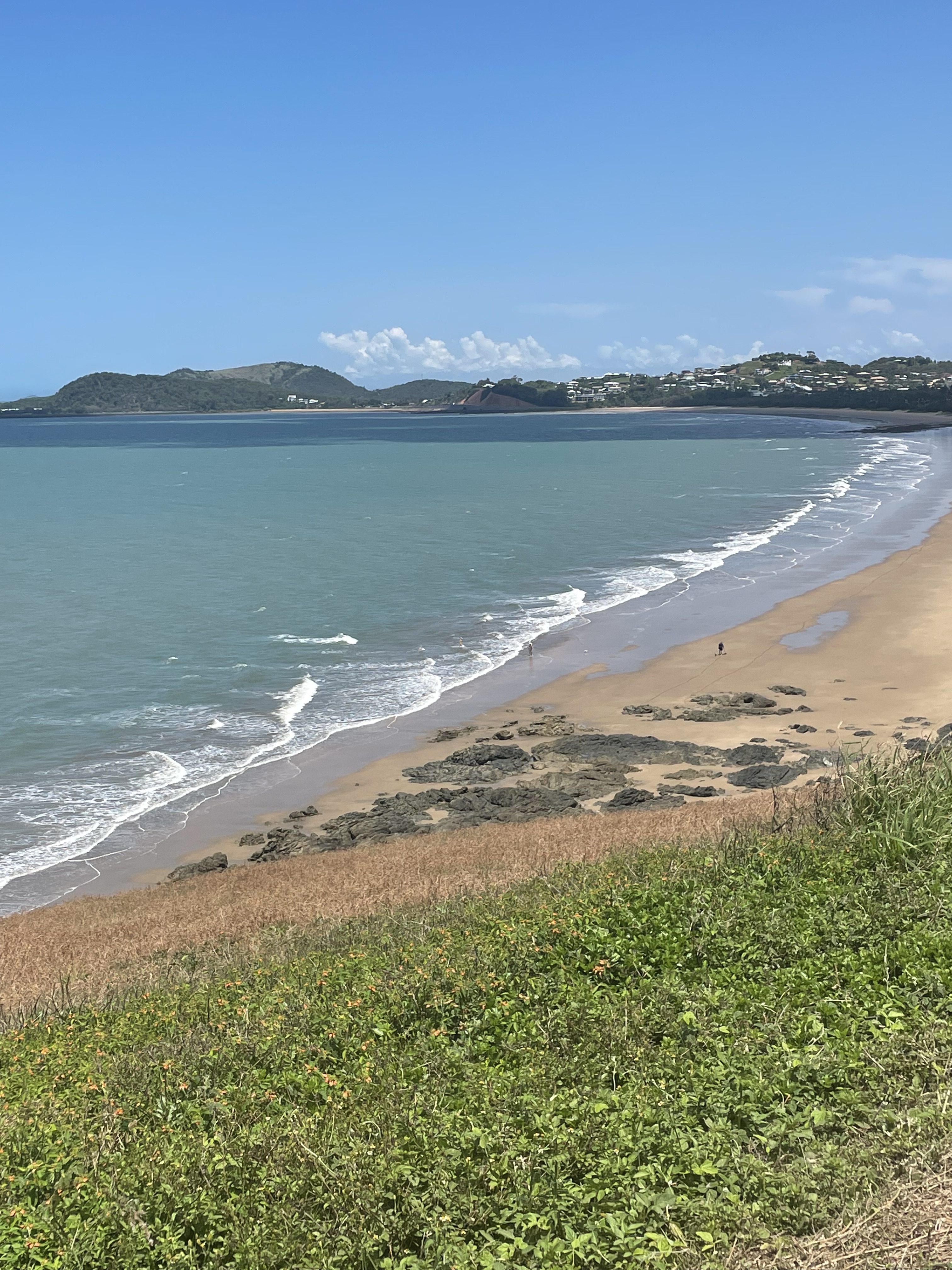
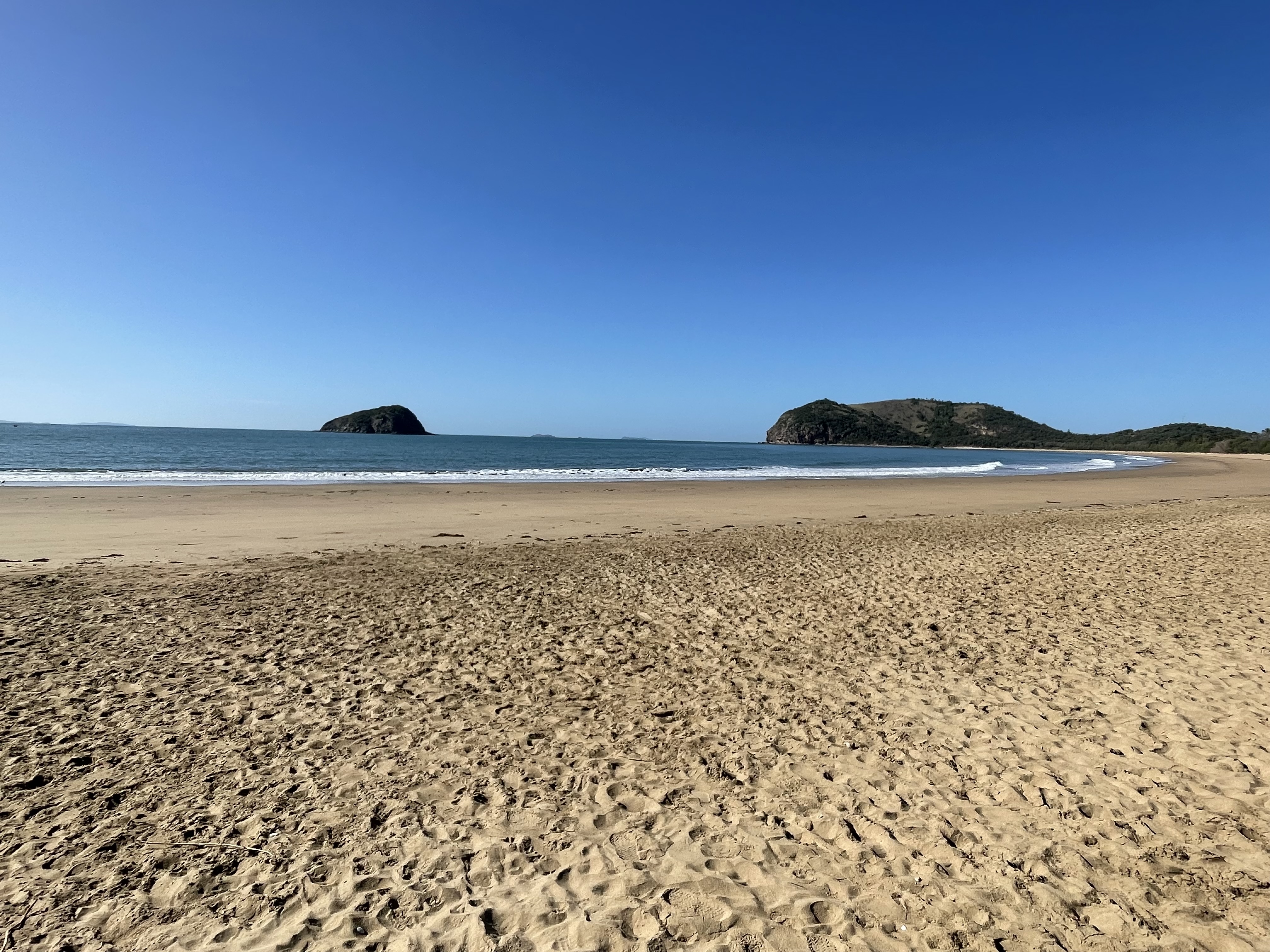
Lets get some context here because most people have never heard of the place. Emu park is a small coastal community of around 2000 people in central Queensland, situated in the middle of what they call the Capricorn Coast. This is a 75km stretch of coastline taking in dozens of small towns and numerous islands. The closest big town is Rockhampton which is about 30 mins away (west) and Yeppoon is a short 15 min drive (north). Between Yeppoon and Emu Park is Rosslyn Bay which is the launching place for travellers heading over to Great Keppel Island.

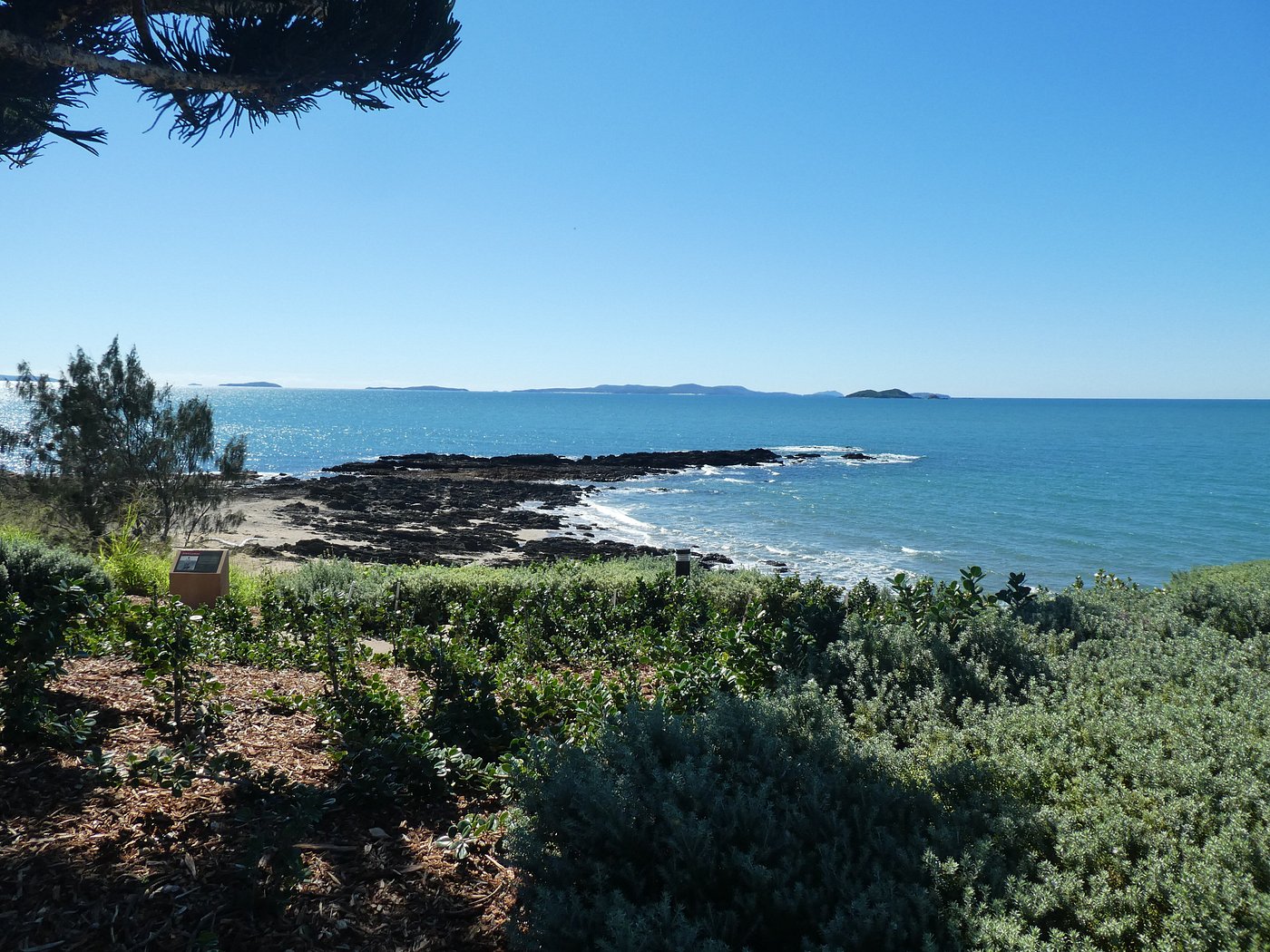
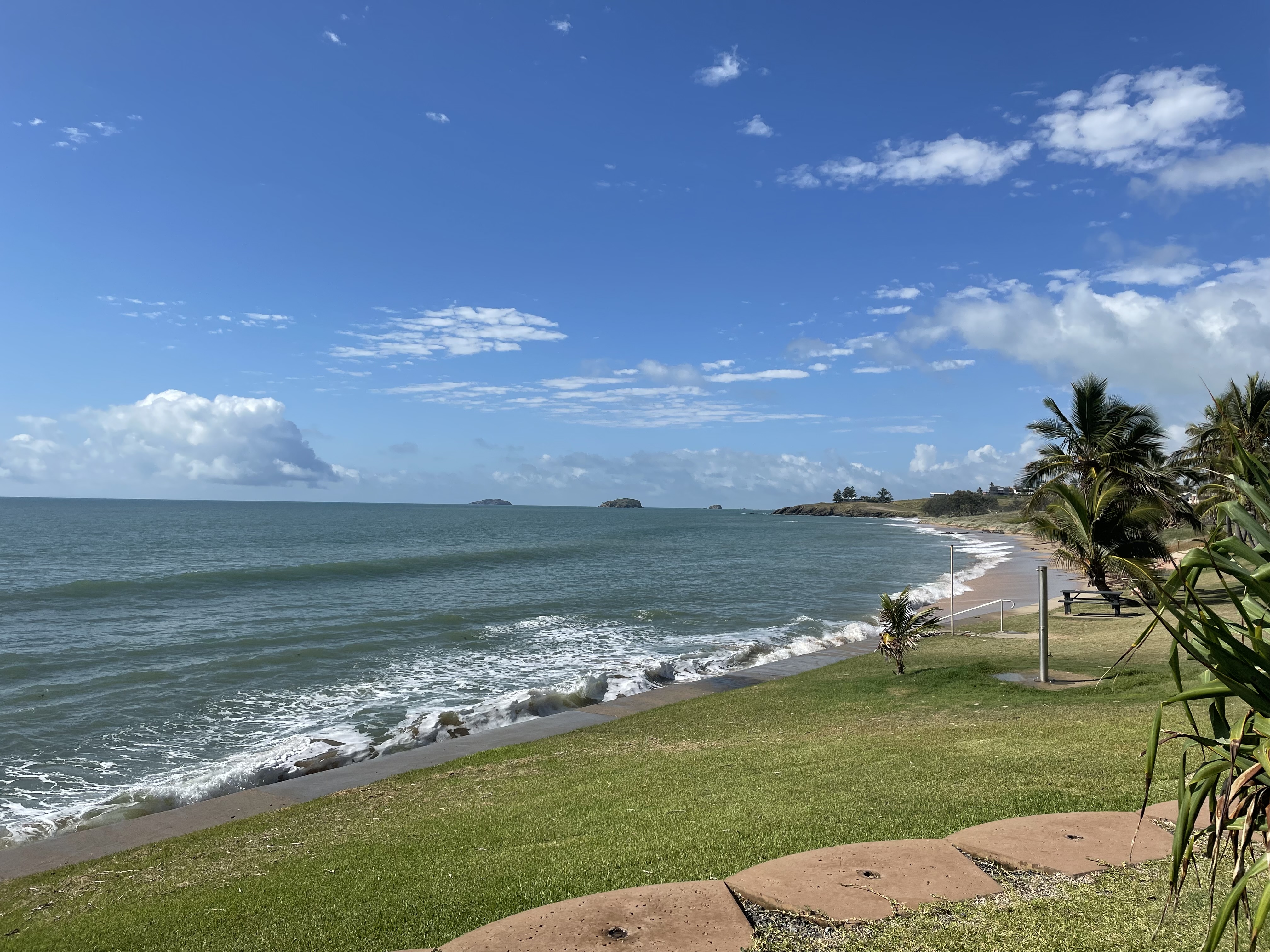
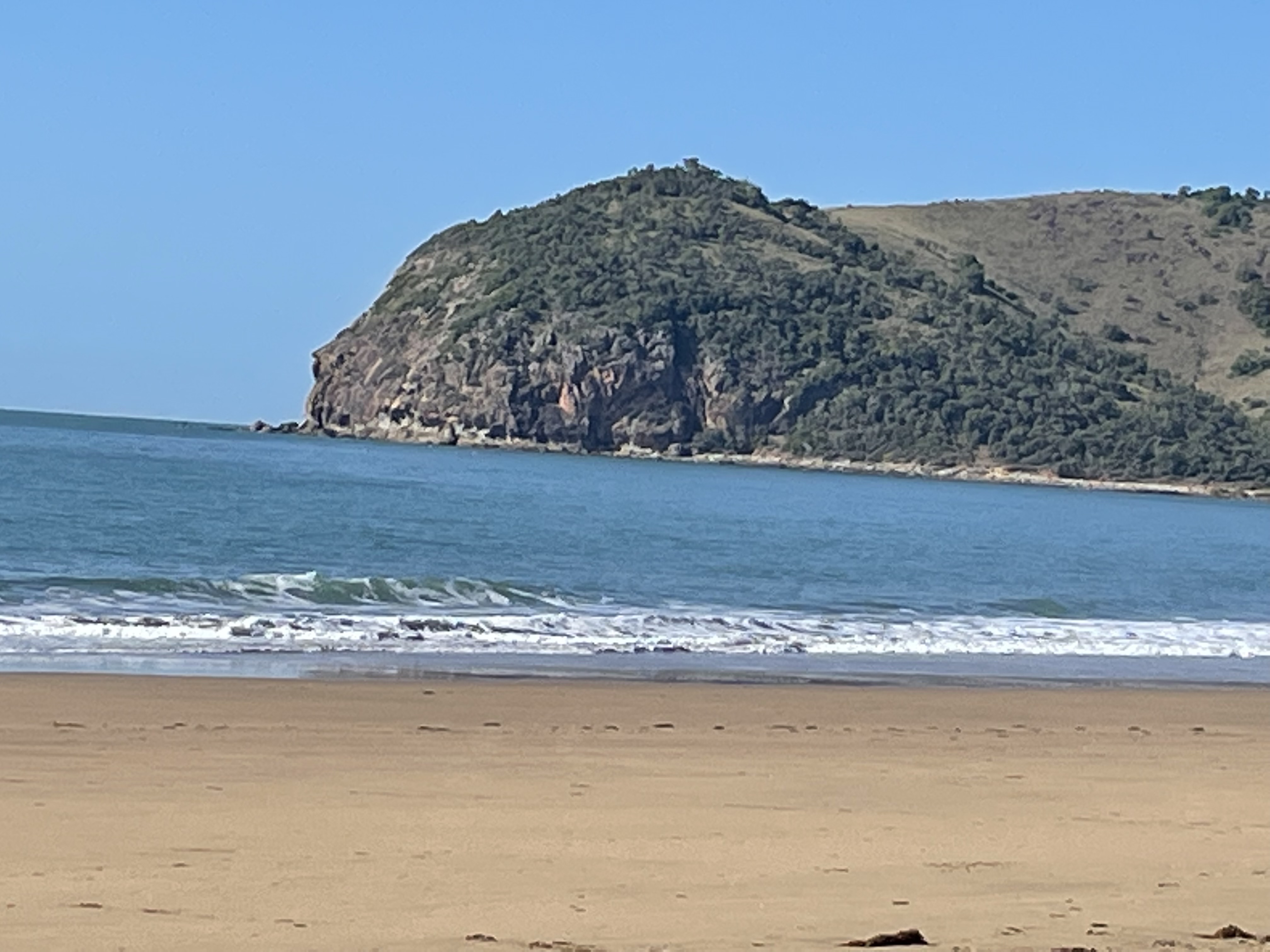
Context over…the place is stunning. The entire Capricorn coast is basically a series of long sweeping beaches and inlets, shallow blue water, with stunning views virtually everywhere you look. There are more caravan parks than you can poke a stick at (but they are also seriously popular) and holidaymakers regularly flood the place. If you are driving the coast road (heading south), virtually every corner will open you up to incredible coastal vistas overlooking the islands of the Capricorn Coast.

The town was originally established in the 1870’s when people from Rockhampton started setting up their holiday homes by the water. The current town itself is pretty small with most of the activity happening within a 2 block radius that revolves around the local grocery store (Drakes). That said, you can buy virtually anything you could want at the store and both the staff and service is efficient and friendly. Also in the main area is the post office, chemist, a couple of cafe’s and bakeries, a few hairdressers and real estates along with some specialty shops such as the butcher, hardware, clothing etc.

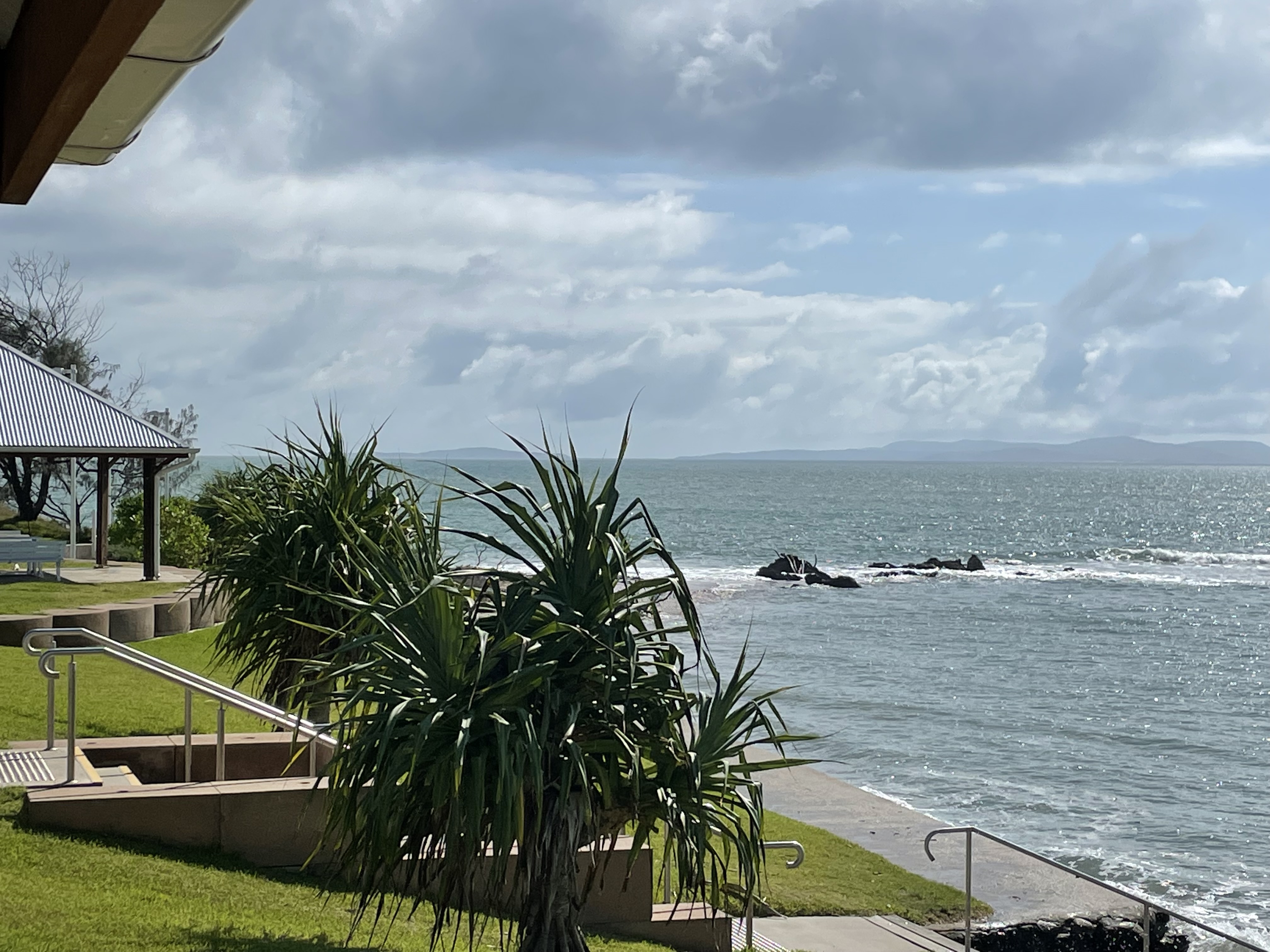
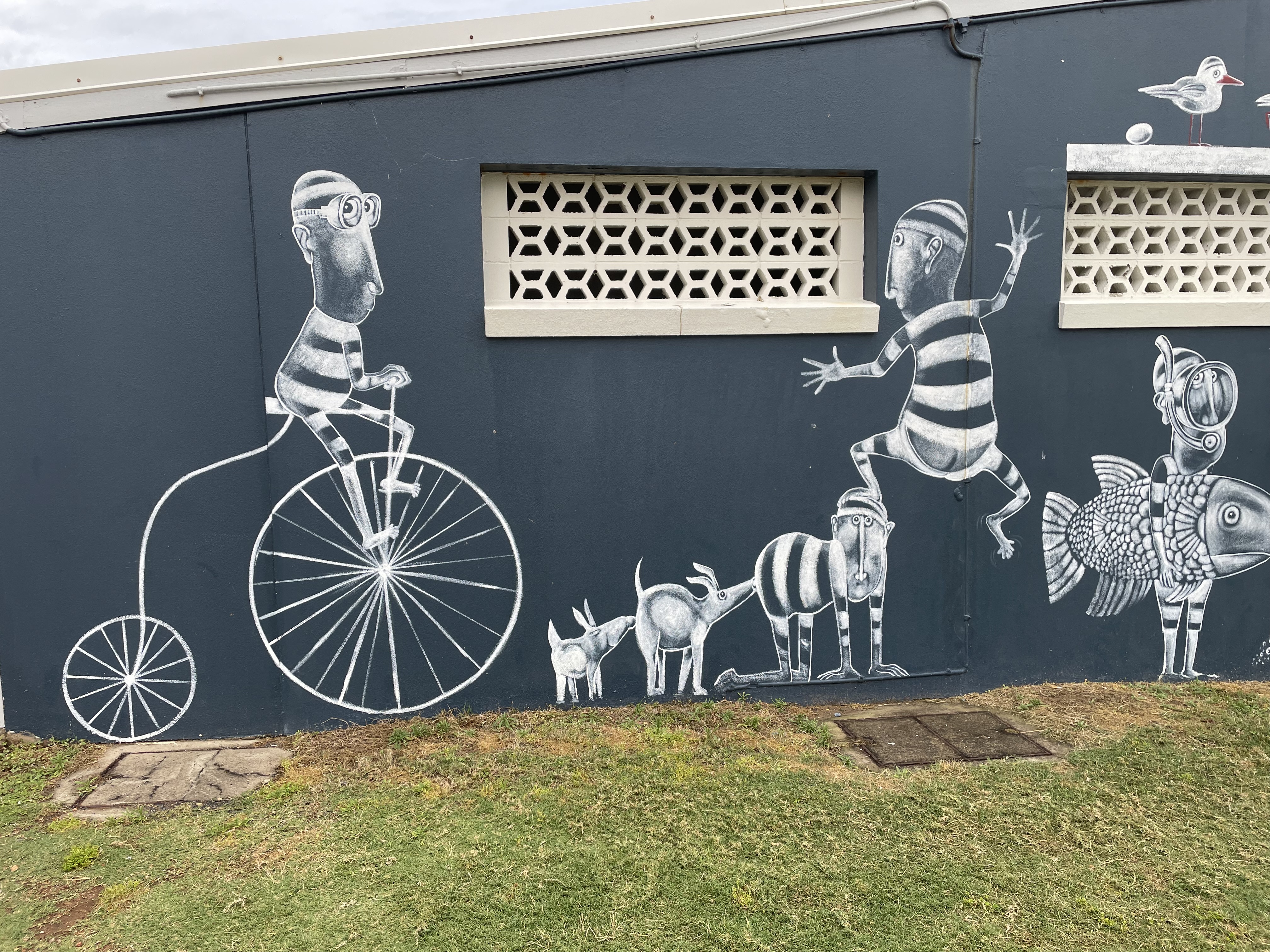
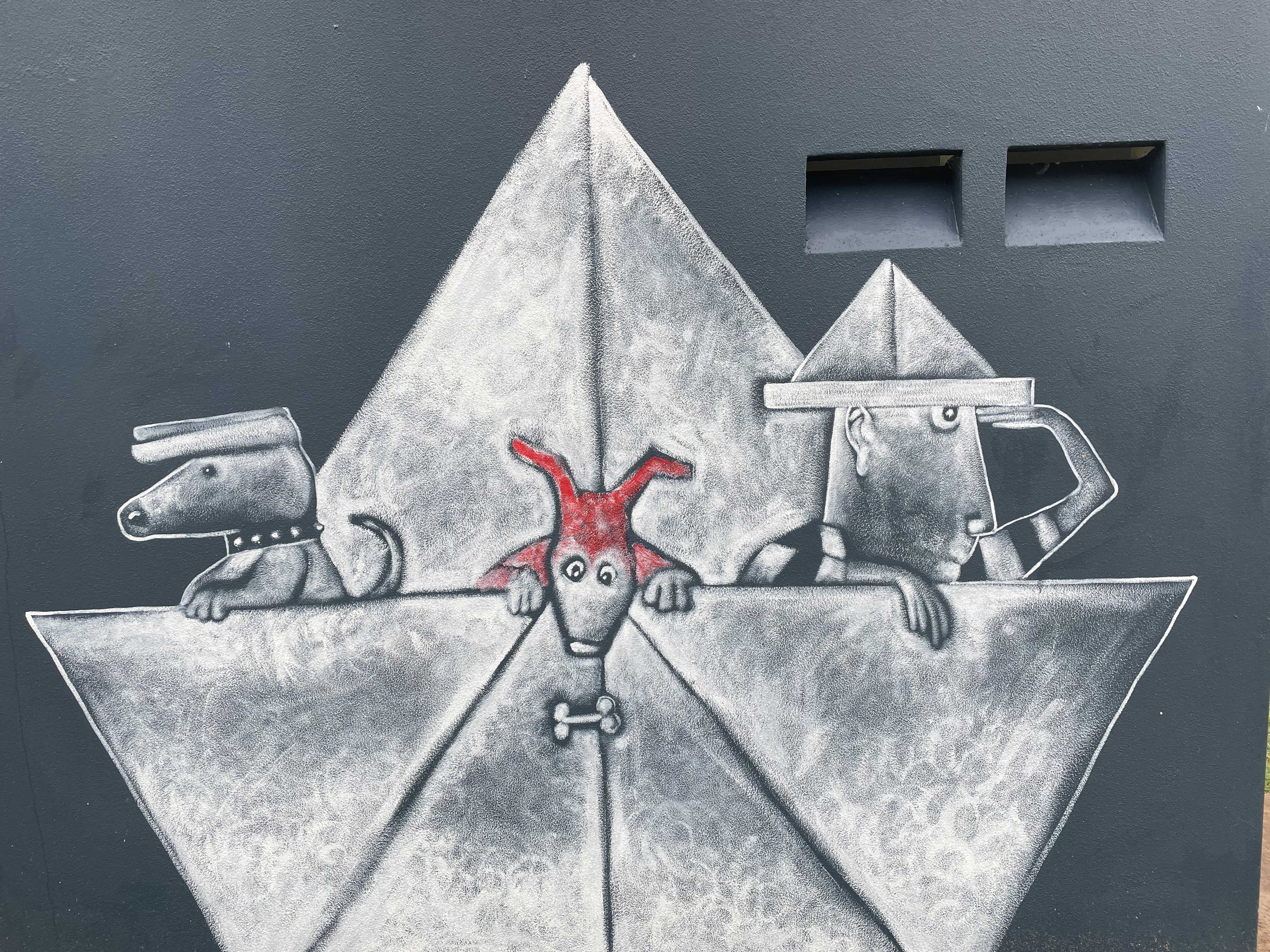
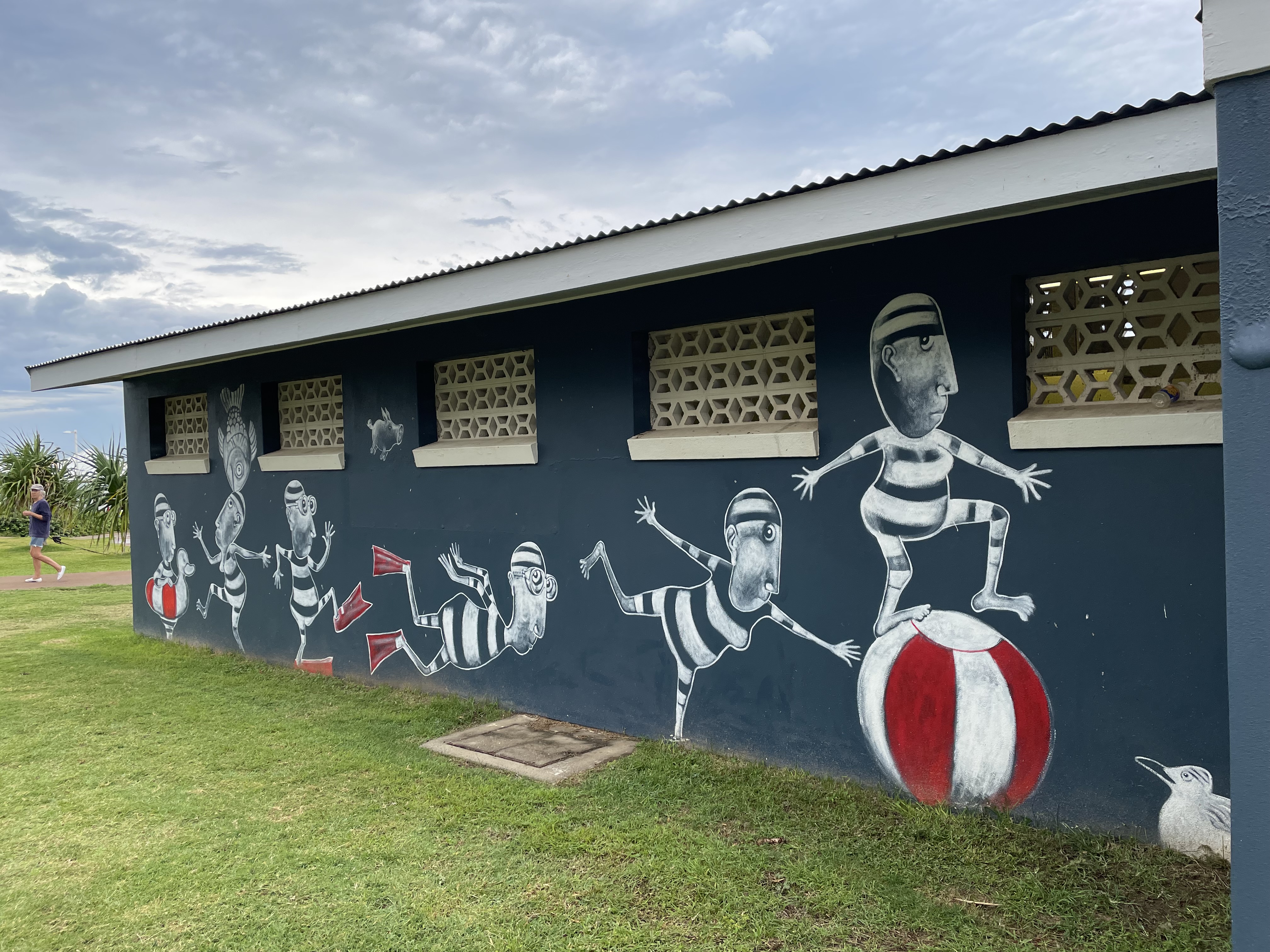
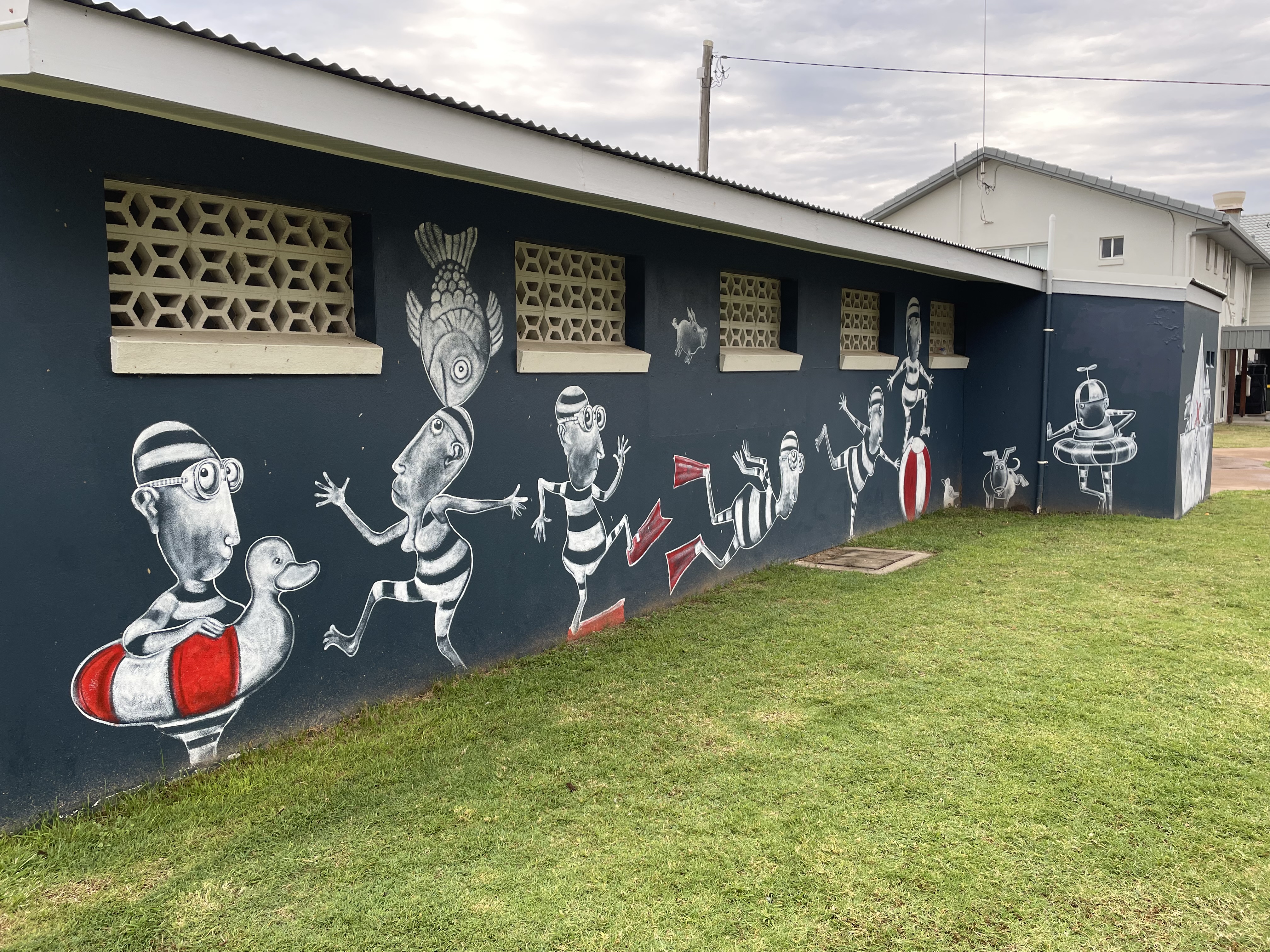
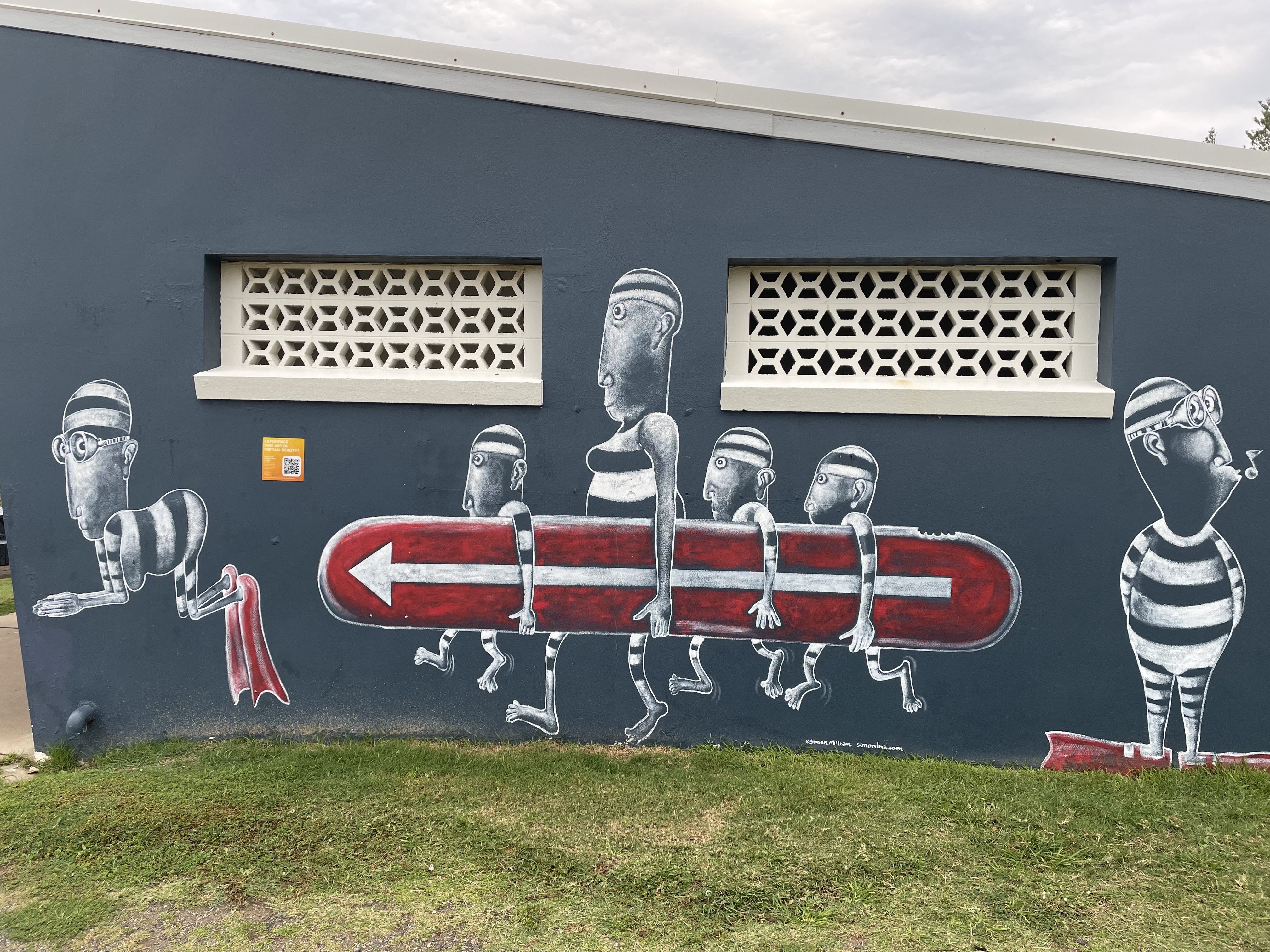
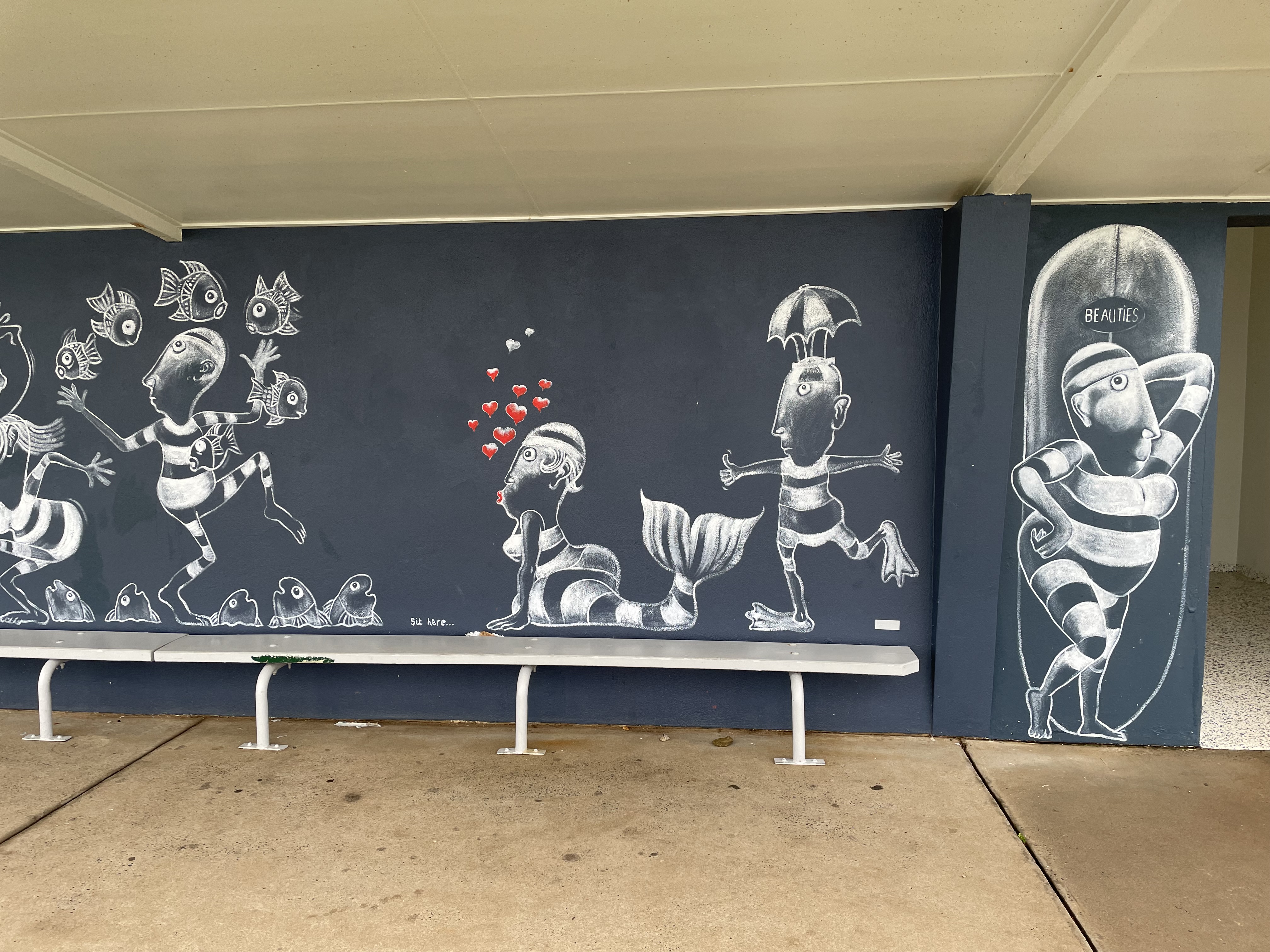
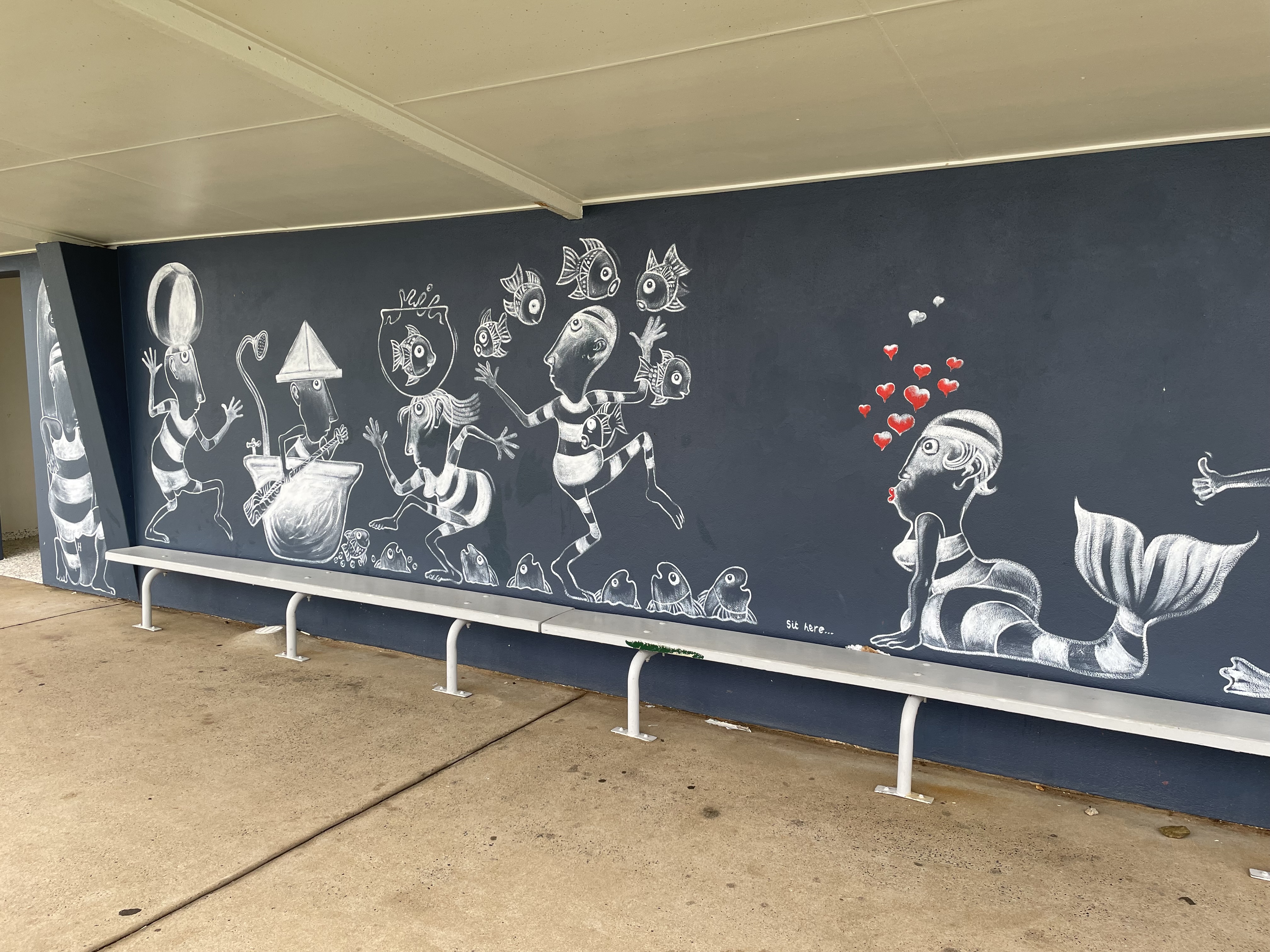
The remainder of the activities revolve around the park, beachside and foreshore. The first thing that you notice is the welcoming nature of the locality. The parks and open spaces are maintained meticulously. From the kid friendly parks, rides and attractions through to the more impressive and adult friendly Anzac Memorial the place is just pleasant to be. Even the toilet blocks at the local Surf Lifesaving Club have fun and entertaining murals adorning them.

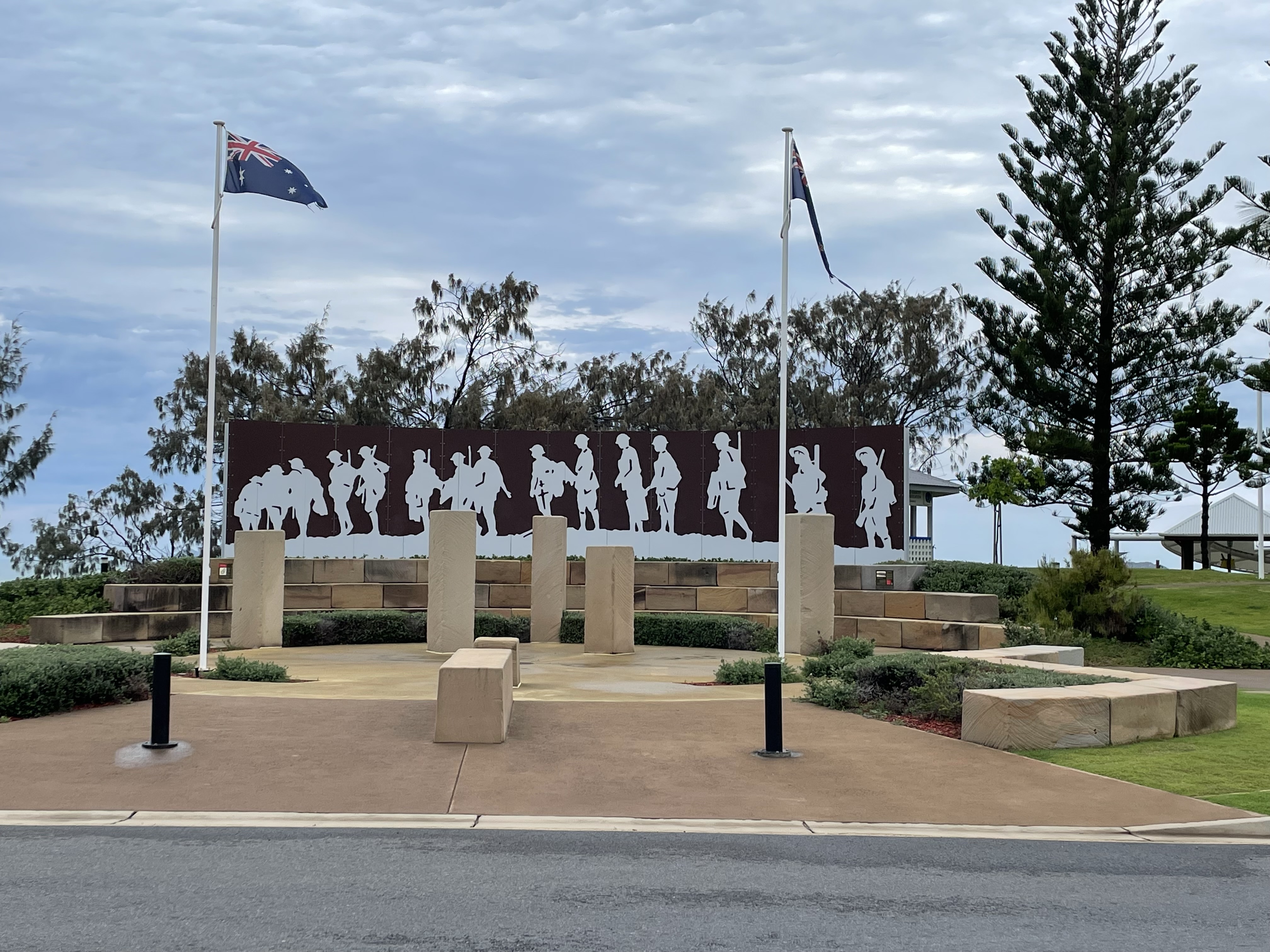
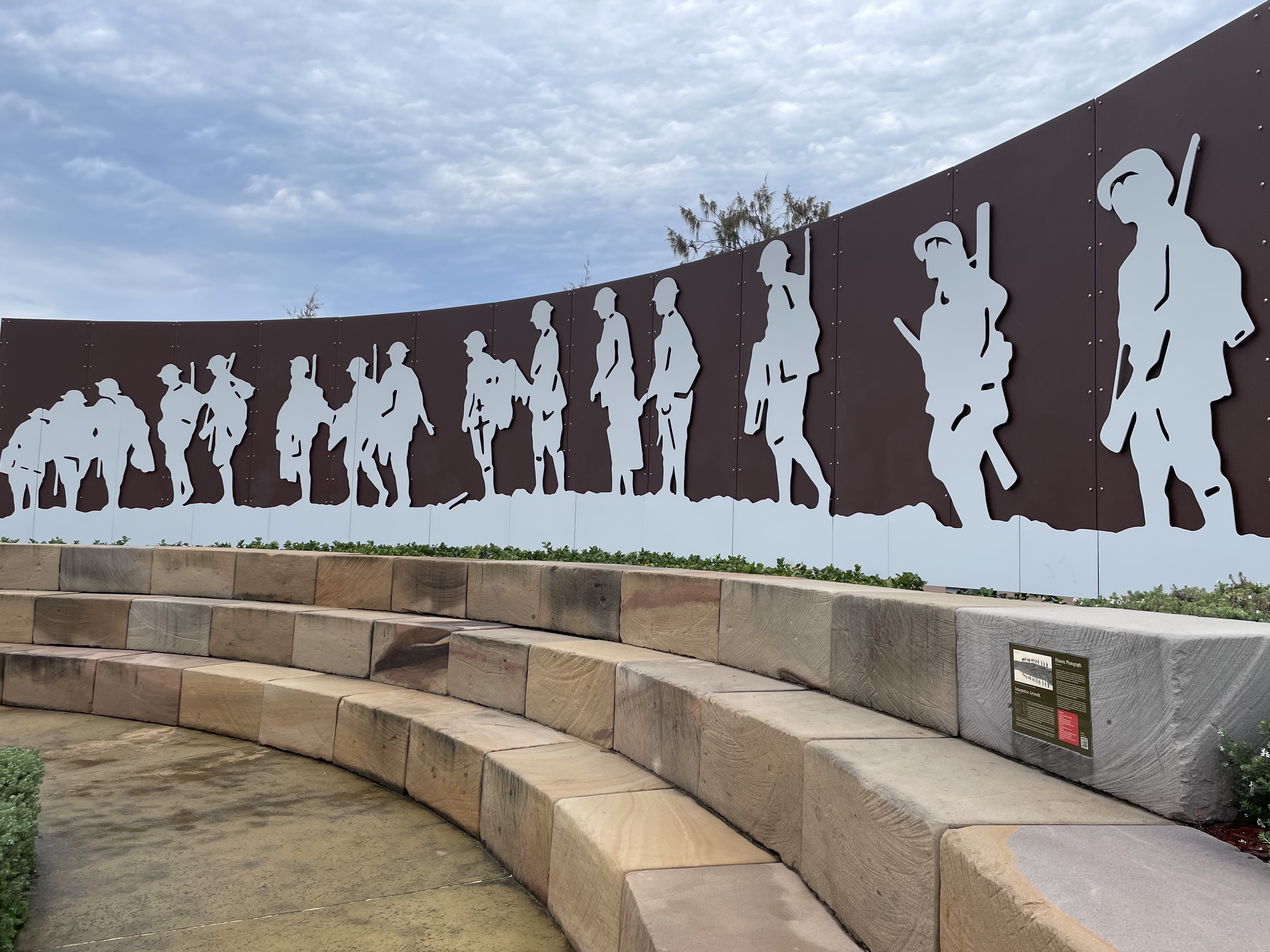
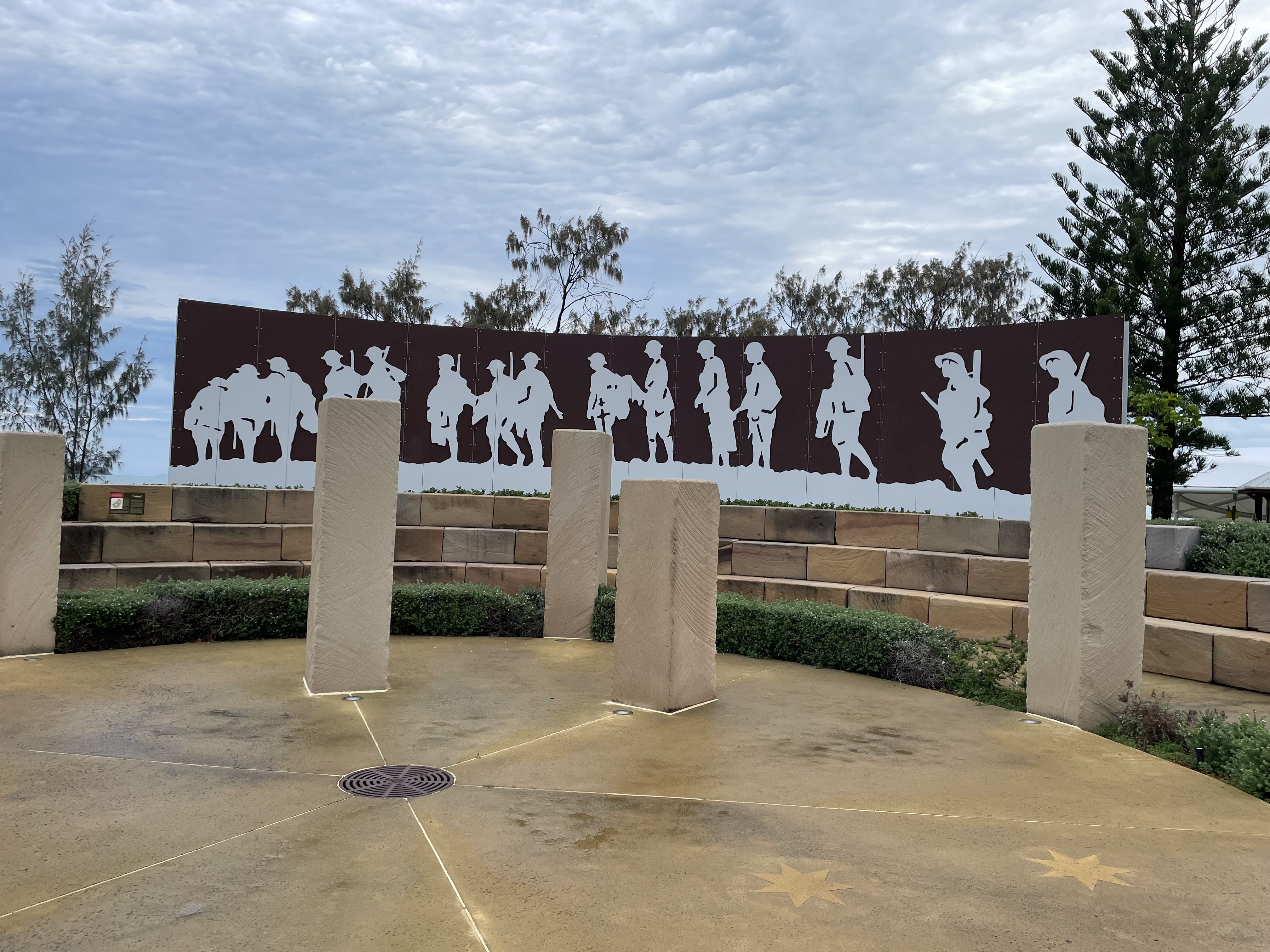
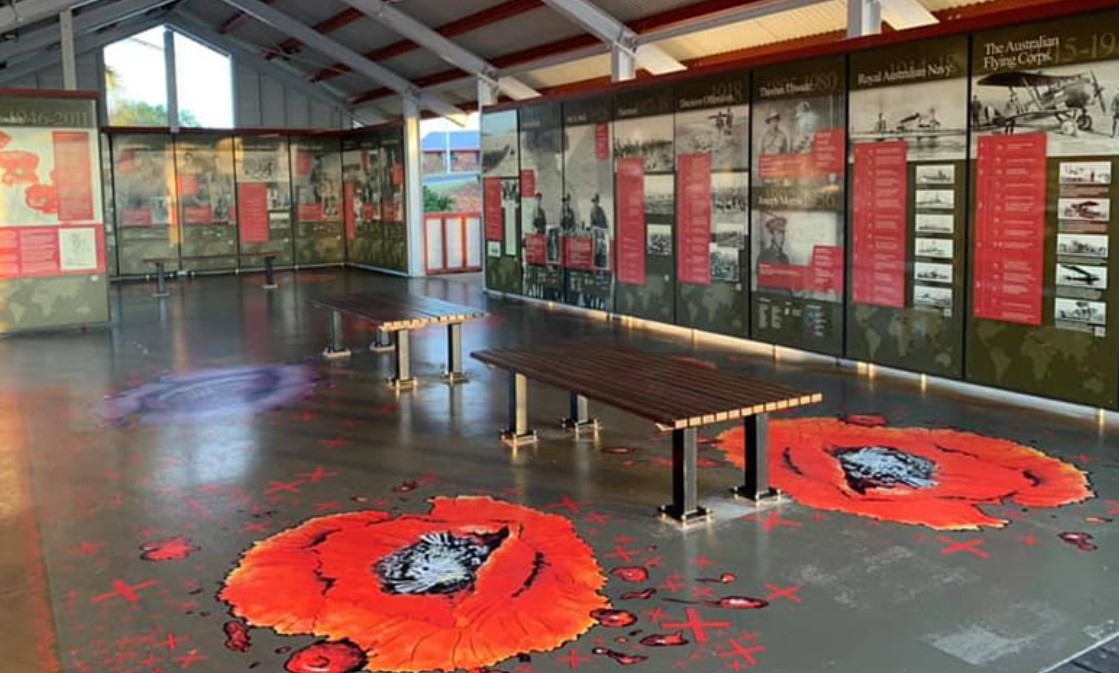
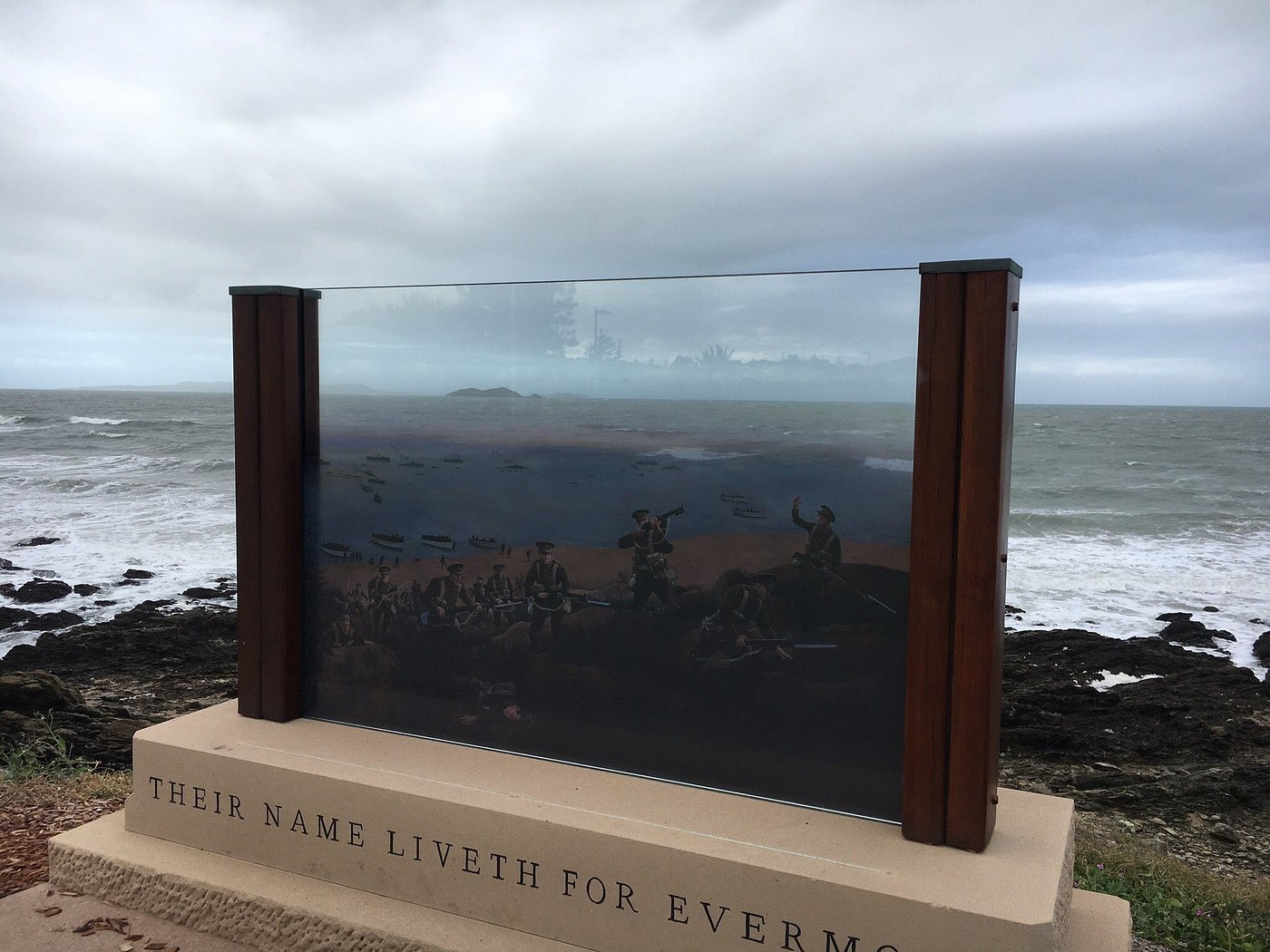
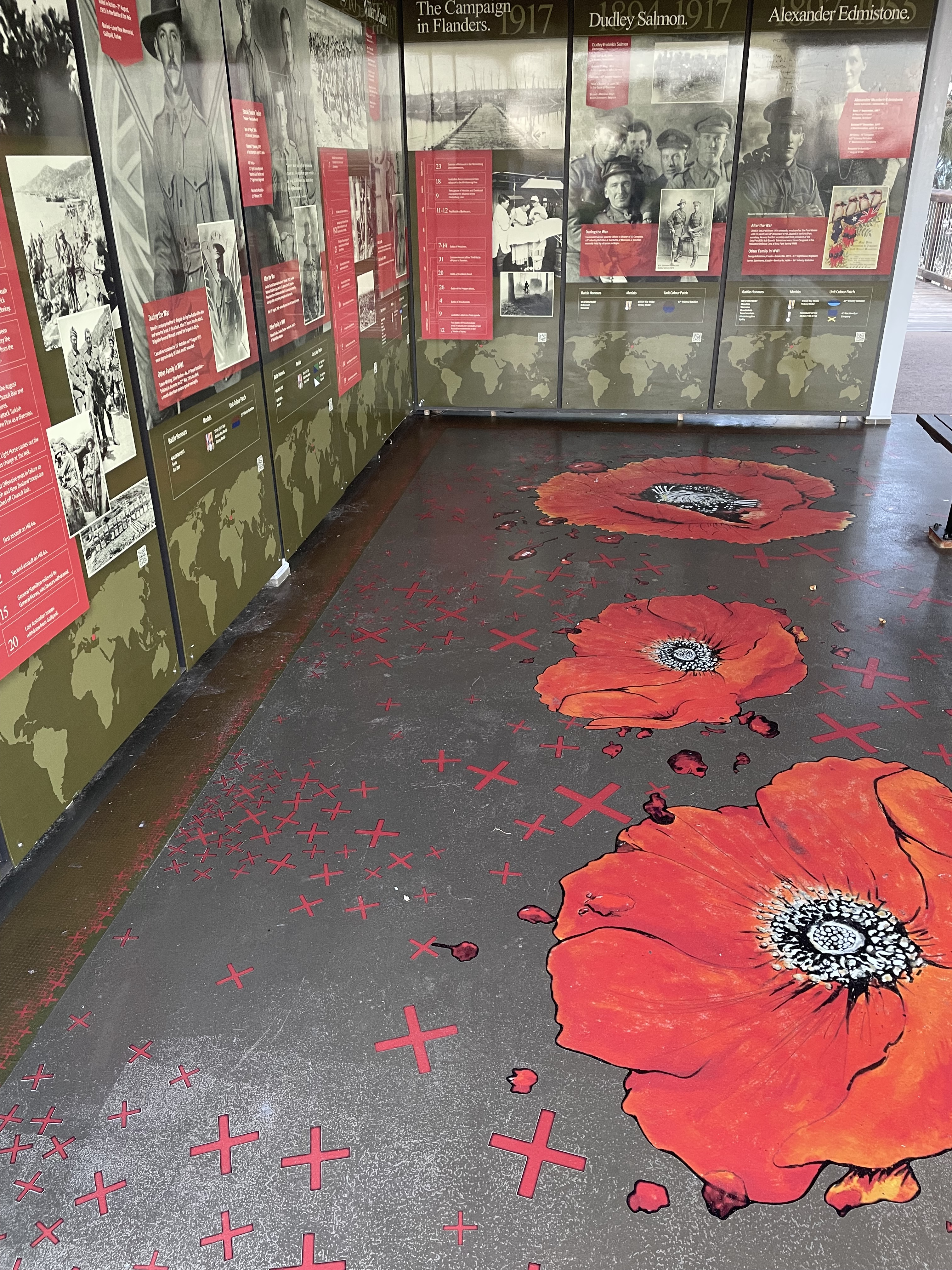
The Anzac Memorial was originally opened in 2015 to coincide with the Centenary of ANZAC and has continued to be built upon ever since. Memorial Court (pictured below) was the first part to come into existence with the Memorial walk and gatehouse to follow shortly thereafter. The Gatehouse provides a timeline of the major battles of World War I and focusses on the contributions made by a range of local veterans who were involved in WWI.

Memorial Court

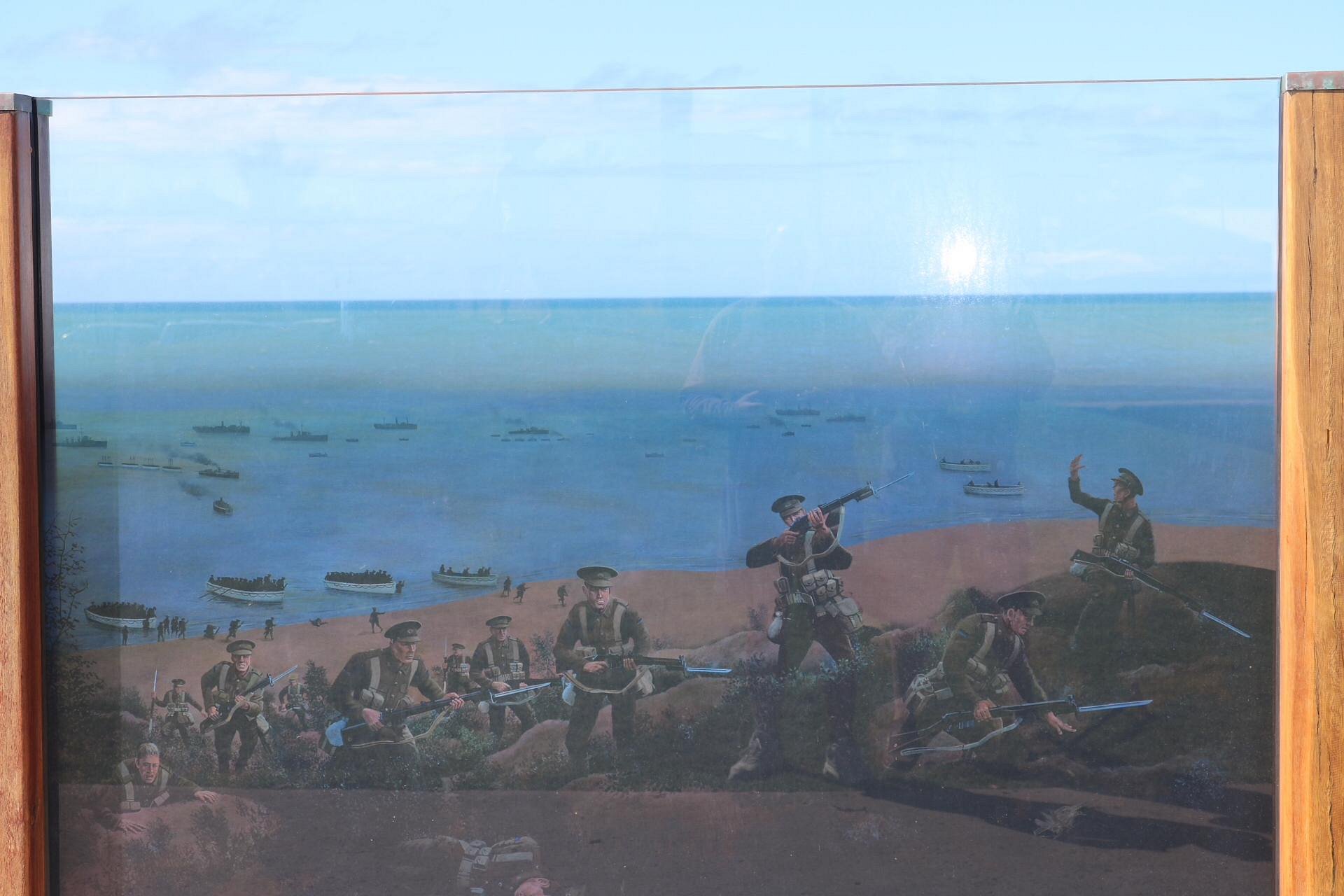
Queensland tourism tells me that the walkway was “intended as an emotional reflective experience that provides a timeline of WW1’s many major battles of war”. The walk itself starts at the Memorial Court and follows the coastline passing a range of sandstone blocks holding pictographs that highlight various aspects of WWI. There is a glass memorial that depicts the Australian soldiers landing at Gallipoli. The idea is to be there at dawn and line up the horizon to get a sense of the landing. From here you keep meandering up the hill to the Gatehouse which contains storyboards and pictures of locals.

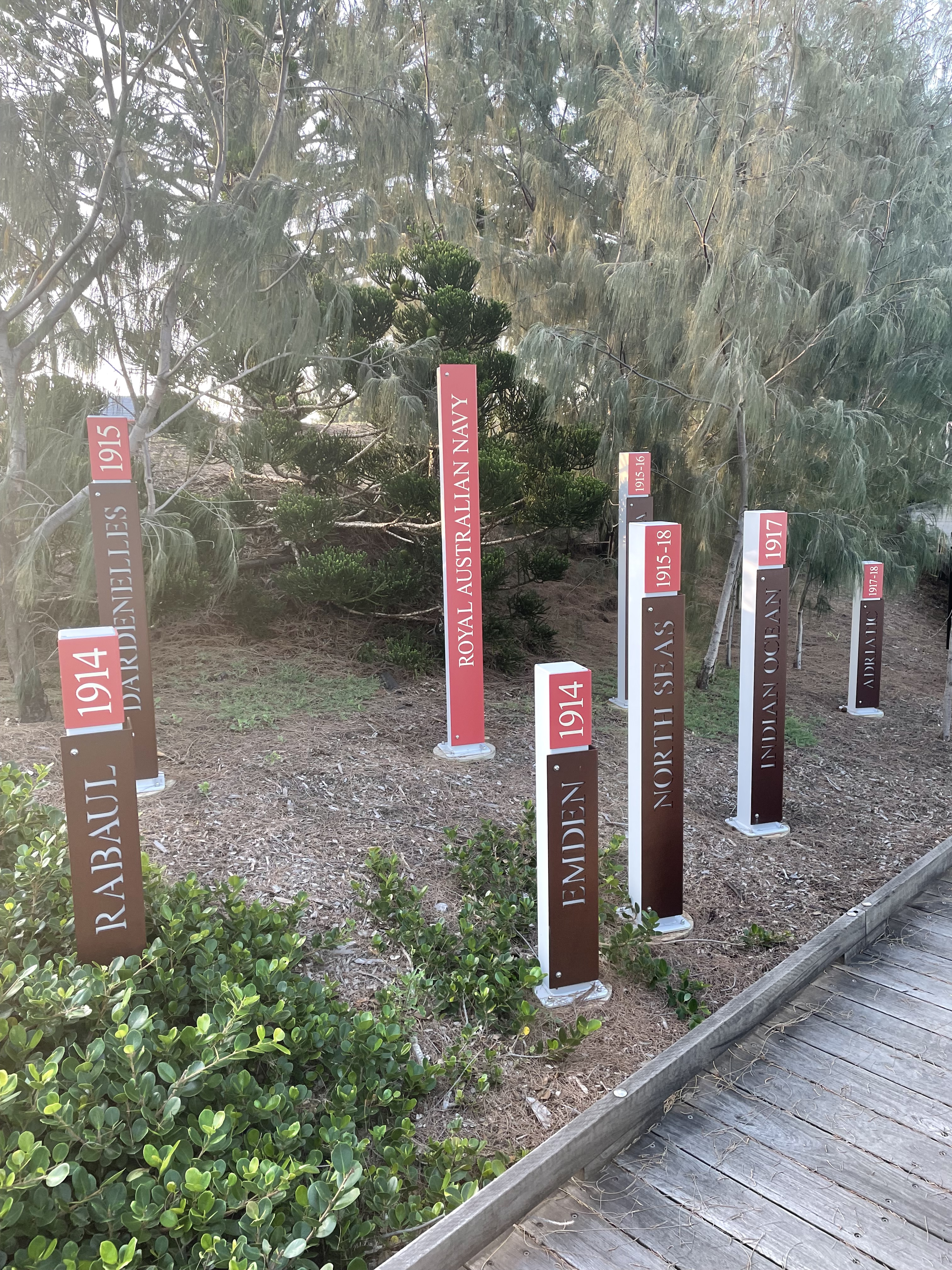
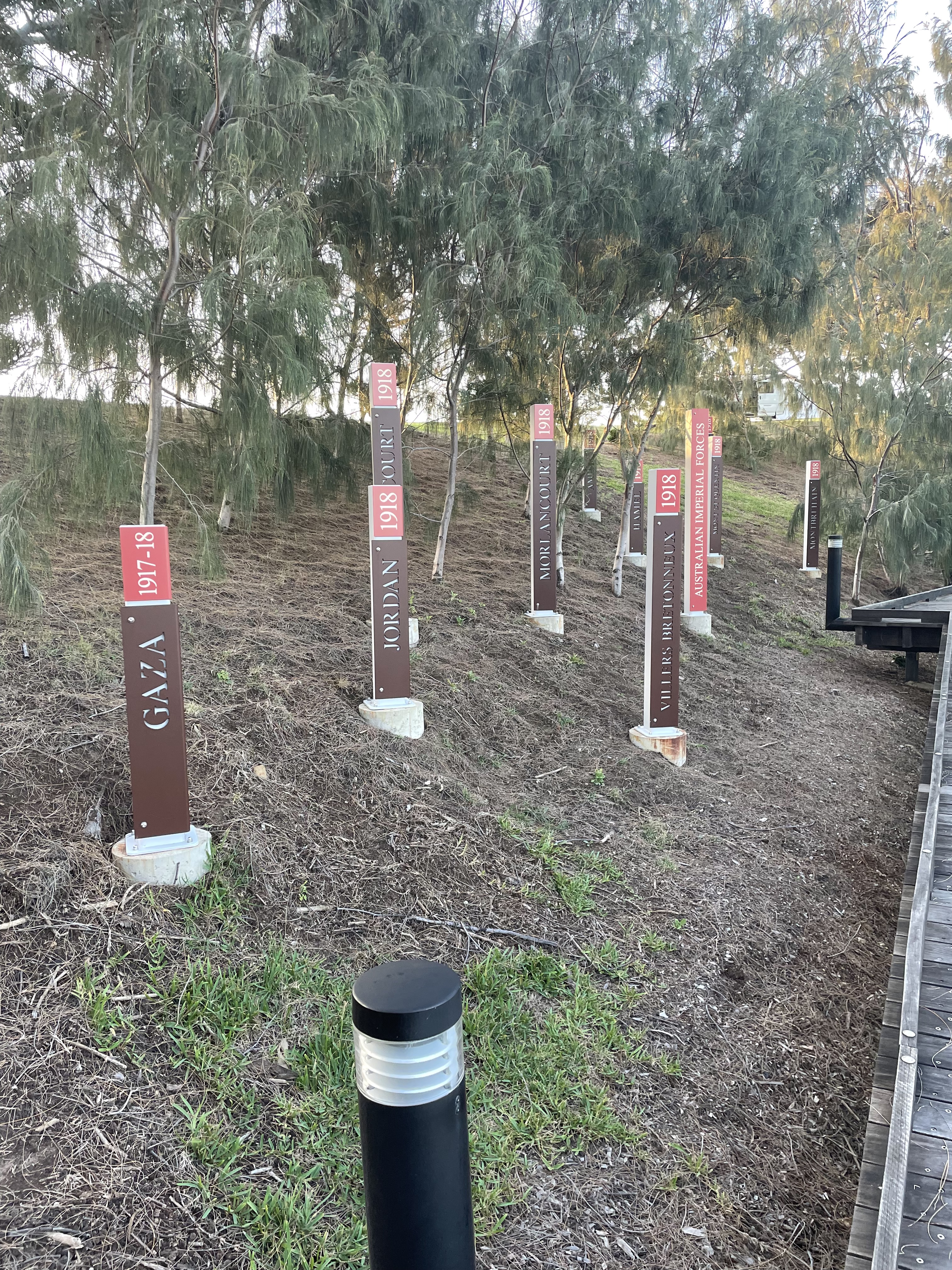
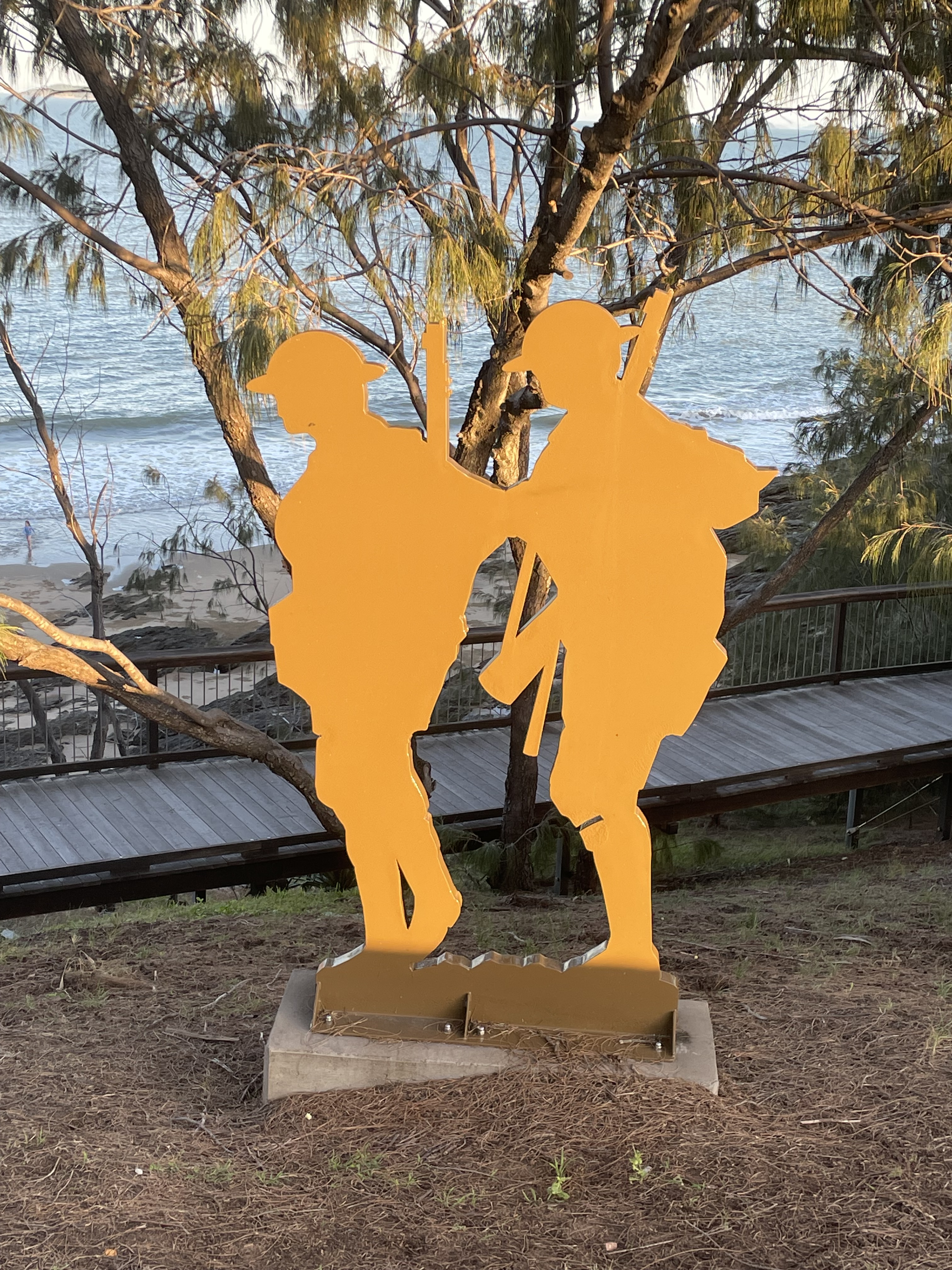
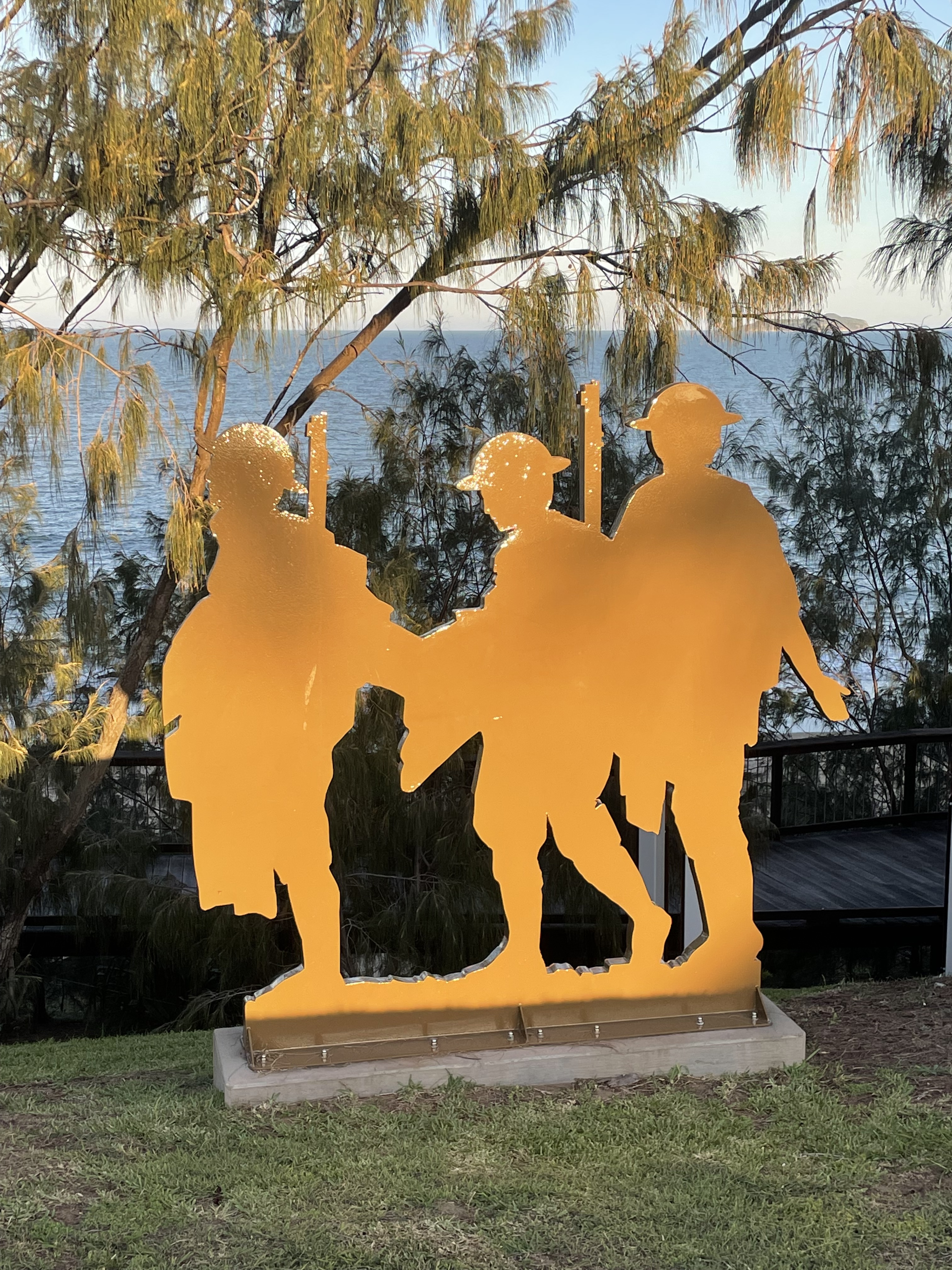
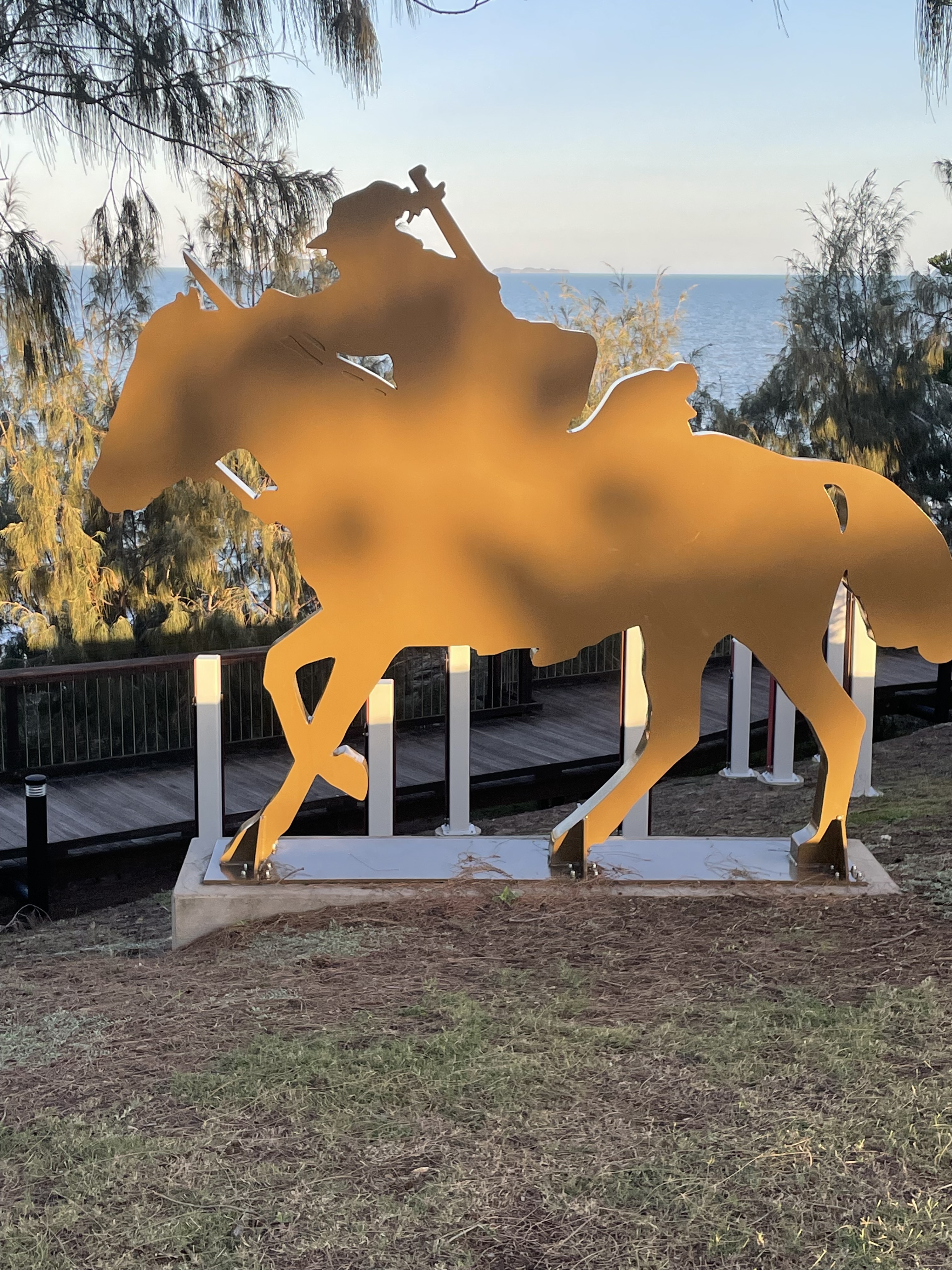
From the gatehouse a wooden boardwalk takes you past a series of battle markers that depict the various campaigns of WWI and some silhouettes, pausing at a lookout overlooking the islands of the Capricorn Coast. From here the walkway continues up the hill culminating at the Singing Ship. This whole walk is only around 400 meters and has been brilliantly done.

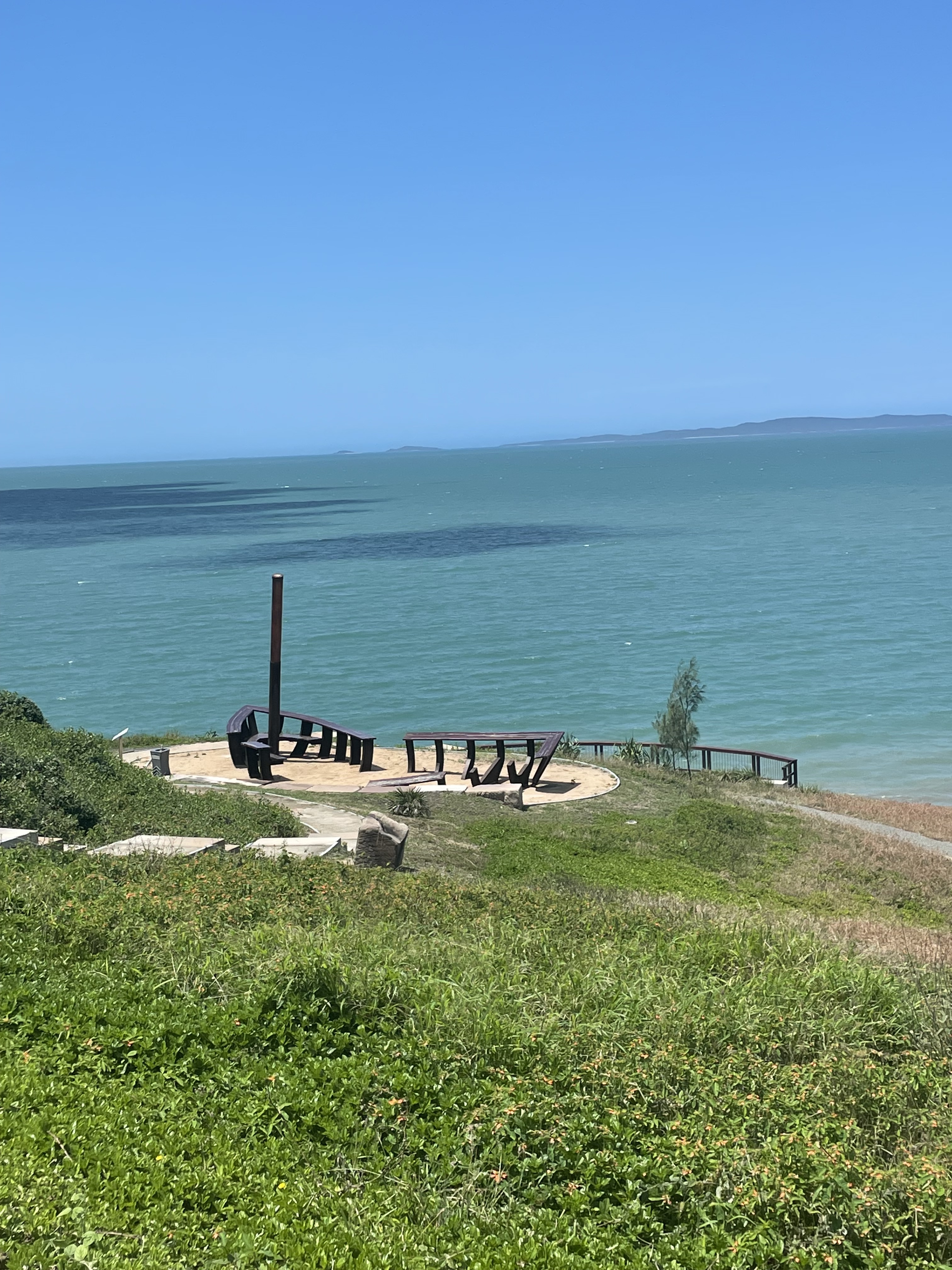
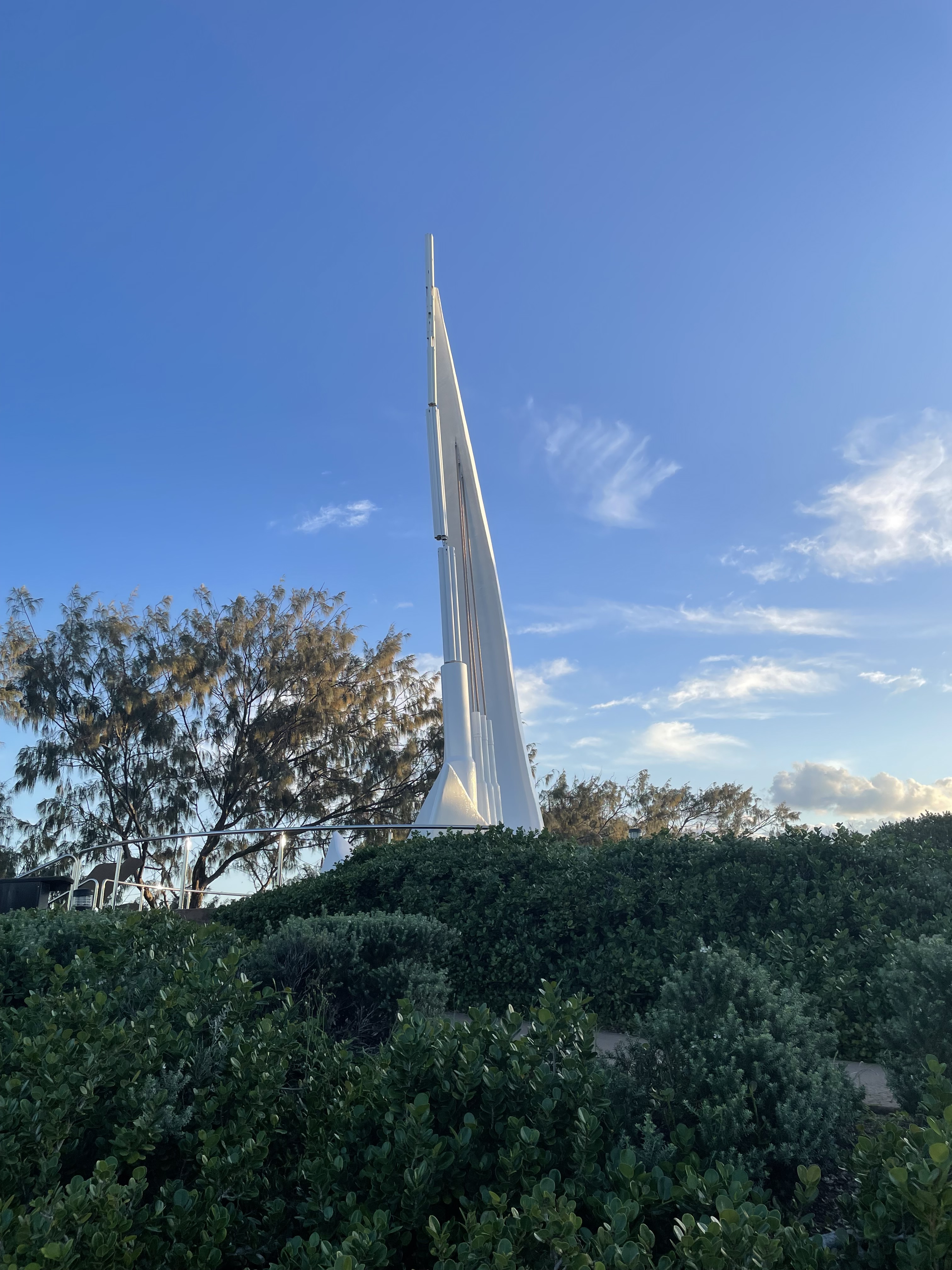
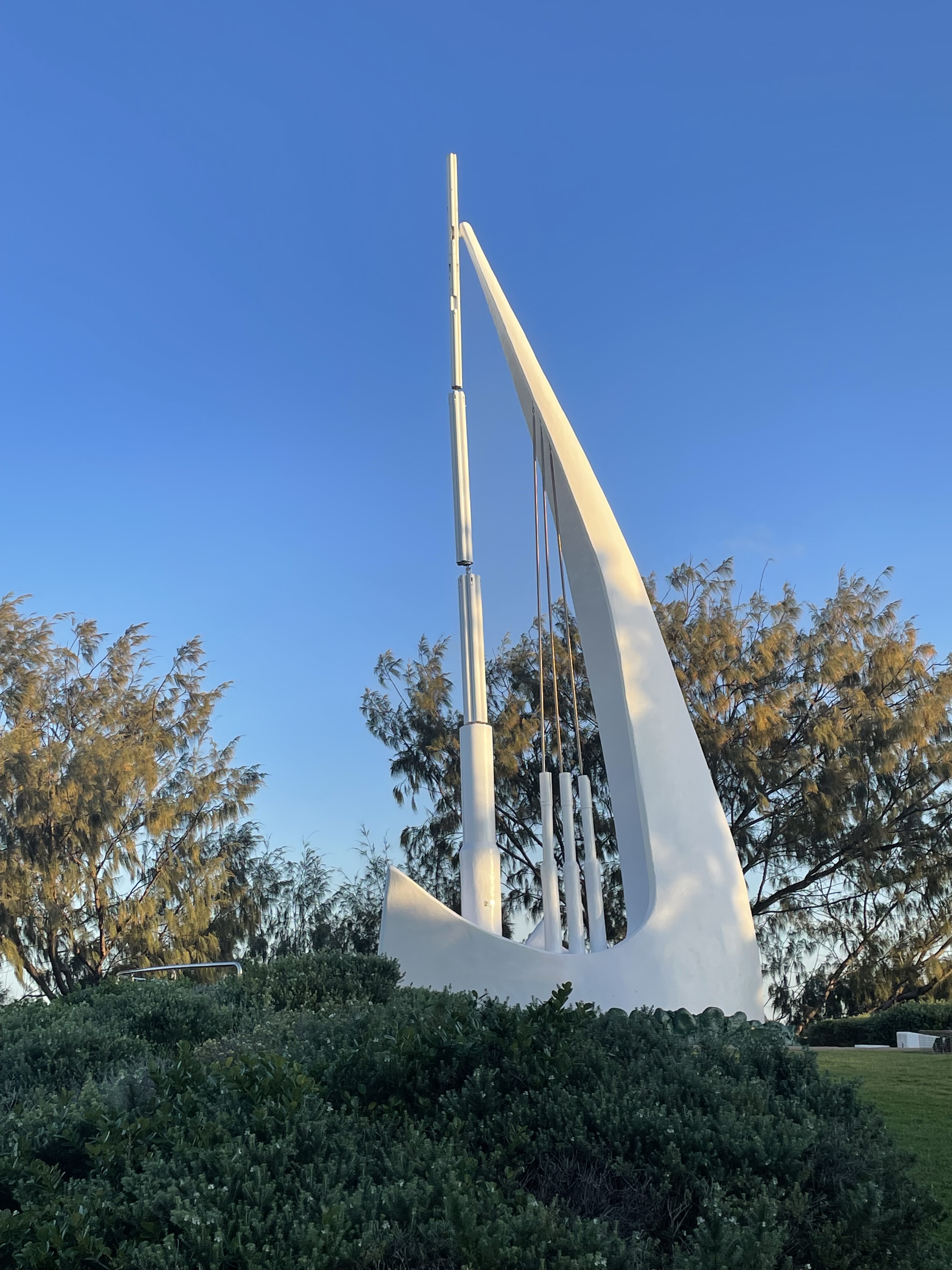
The Singing Ship is a monument that was established to commemorate the historical explorations of Captain James Cook, who discovered this bay in May 1770. It was designed to represent the mast, sail and rigging of the Endeavour. Concealed organ pipes within the sculpture pick up the sea breeze, creating music, hence the name.

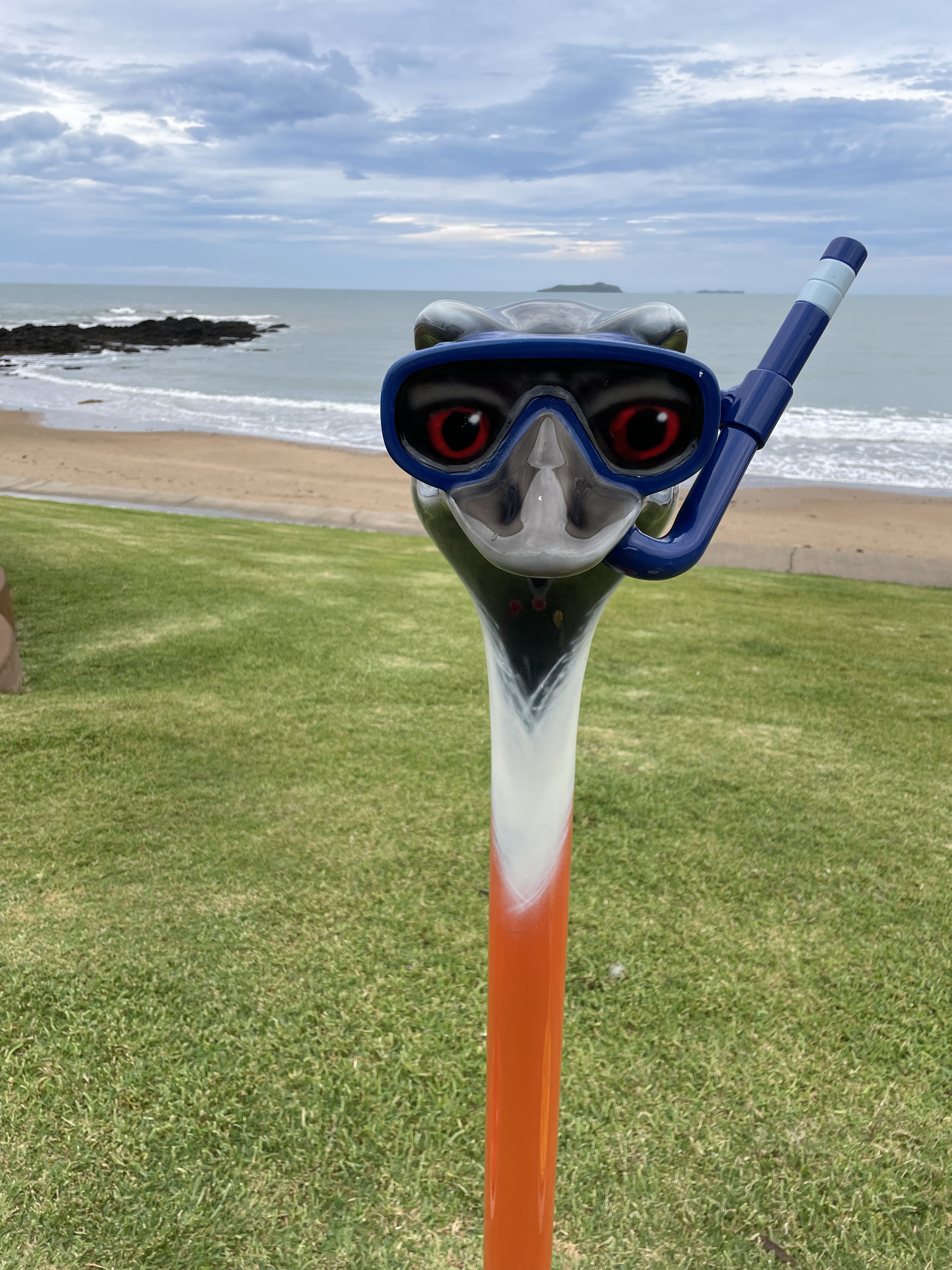
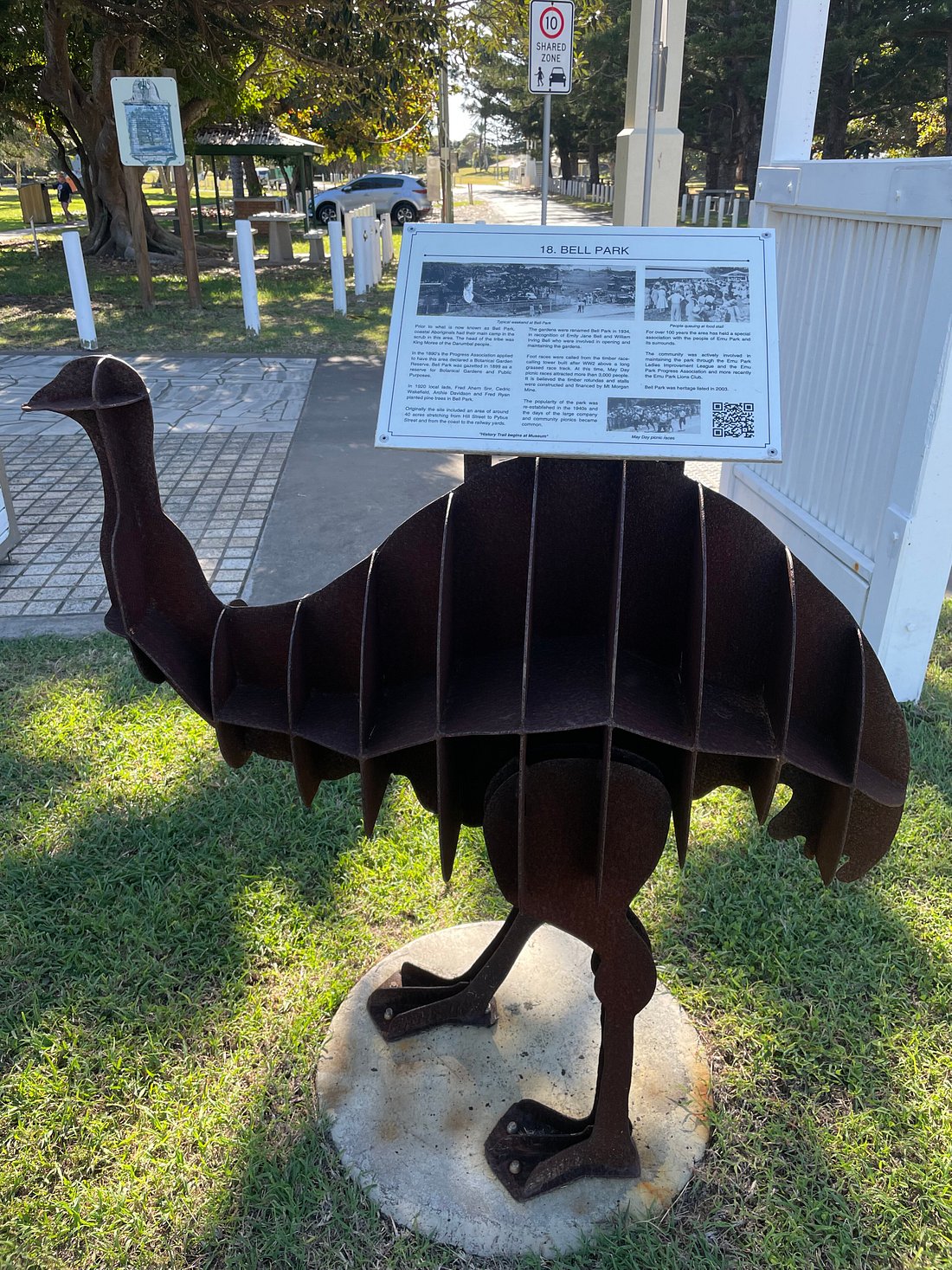
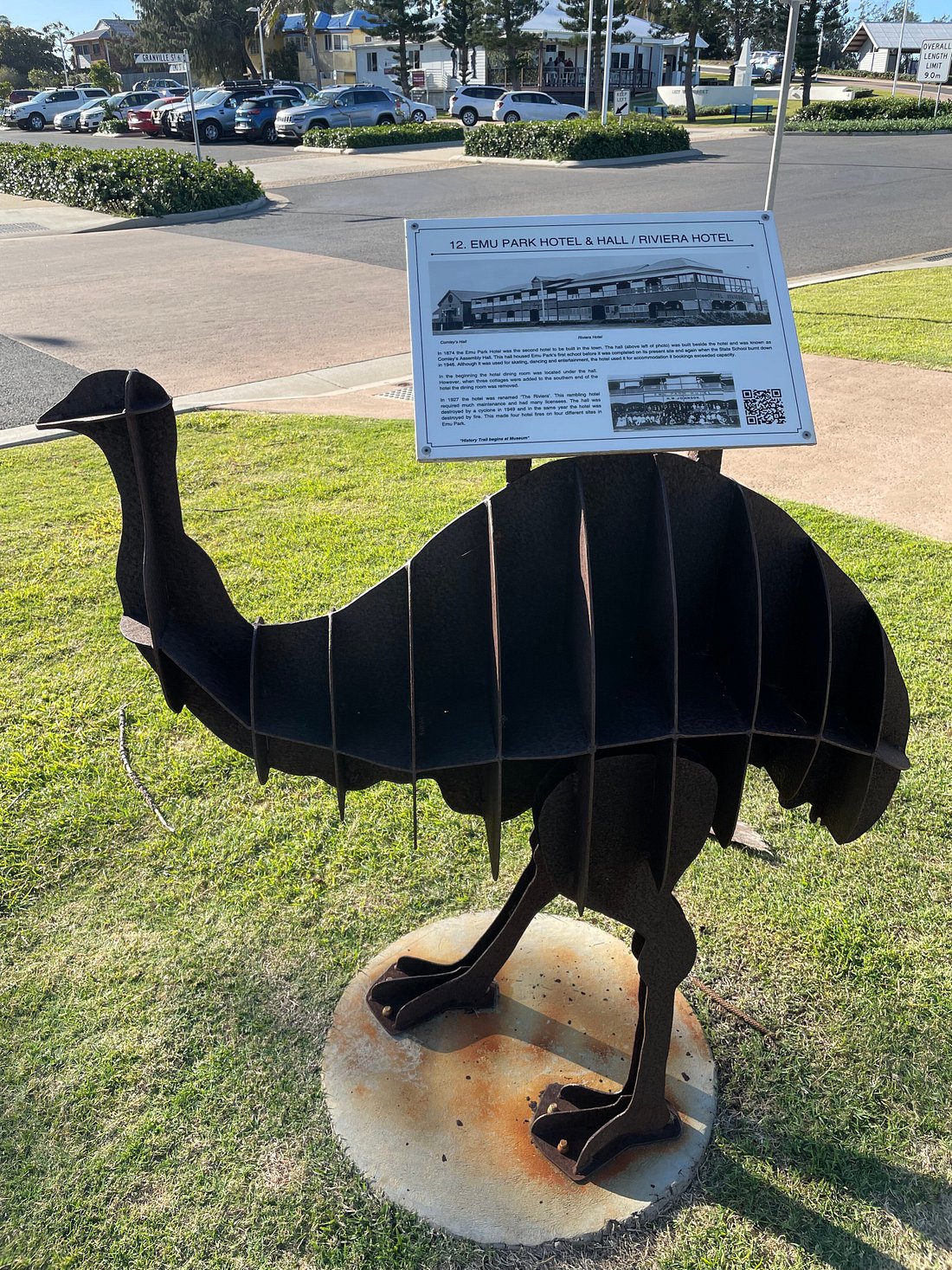
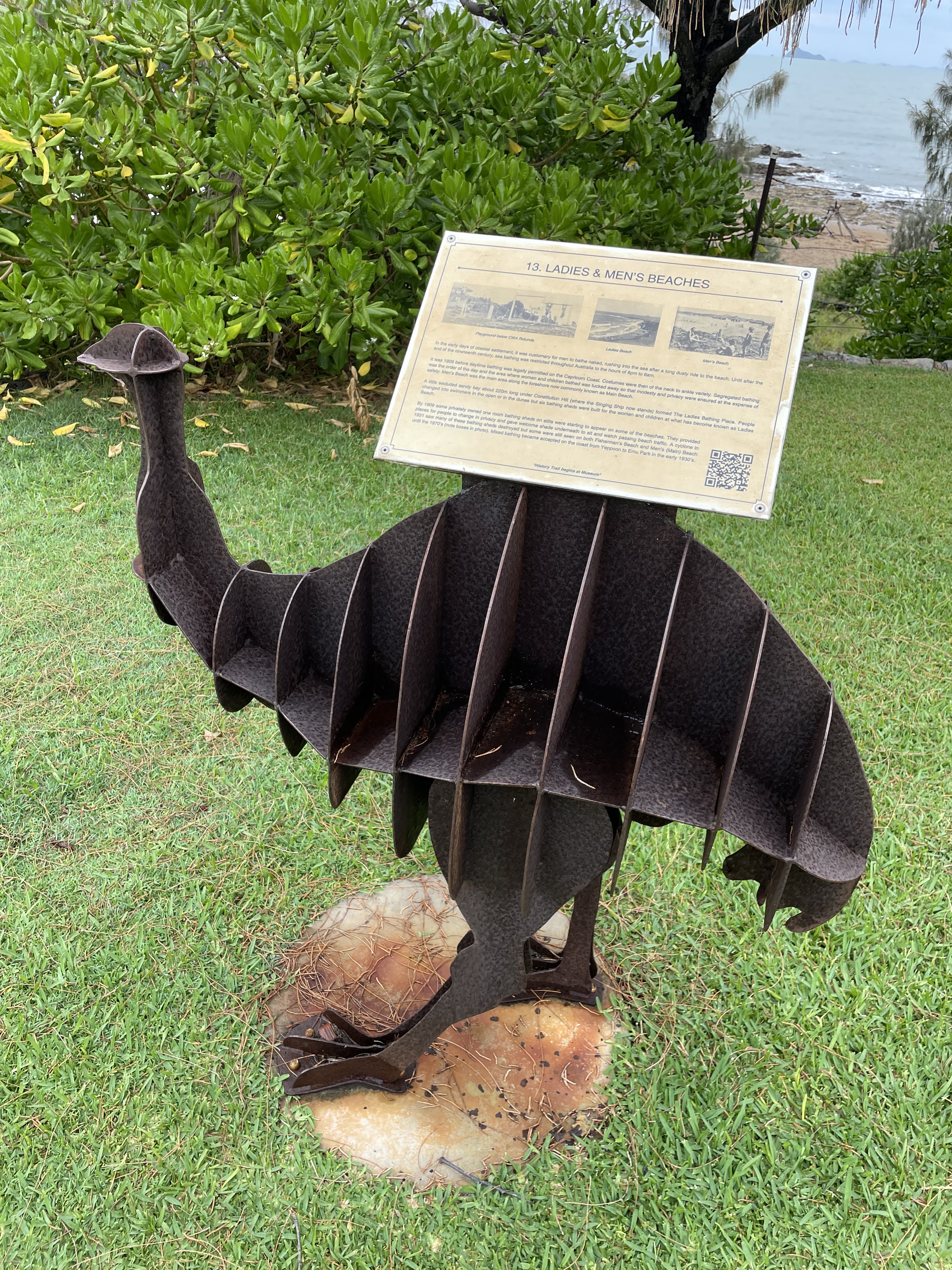
In addition to the ANZAC Memorial walk there is also the Emu Park Historical trail which walks you around the town and highlights and describes the historical nature of things. The signs even have QR codes on them to help with the experience. But possibly the best bit is the fact that the signs are made from iron emu sculptures.

Well that covers off on the touristy elements of the town but doesn’t touch upon the reason why we were thinking of changing our plans on the best place for retirement…the people. Admittedly we worked hard to meet and get to know as many people as we could as we were due to be here for a while. But almost without exception we were welcomed everywhere we went. My first move was to join the local footy tipping comp at the pub. Within weeks I had a wide range of people who knew me and we were chatting away. From here, Jill joined the bowls club (for meals…not bowling) and it took us a while but we worked out when the RSL was open and then we both joined in up there. Almost immediately we were welcomed at all places and by virtually all people.

If you are ever looking for a place to visit and kick back then this may be the place for you.

Cienfuegos, Trinidad and Varadero

Cienfuegos


Jill has two great loves in life…trains and chicken buses. On our last major foray travelling she could not go past a good train ride and when they aren’t available, enter the chicken bus. You have all seen the movies, dodgy little buses with some overly rural looking woman holding a live chicken (caged or uncaged). Well this is Jill’s idea of fun.

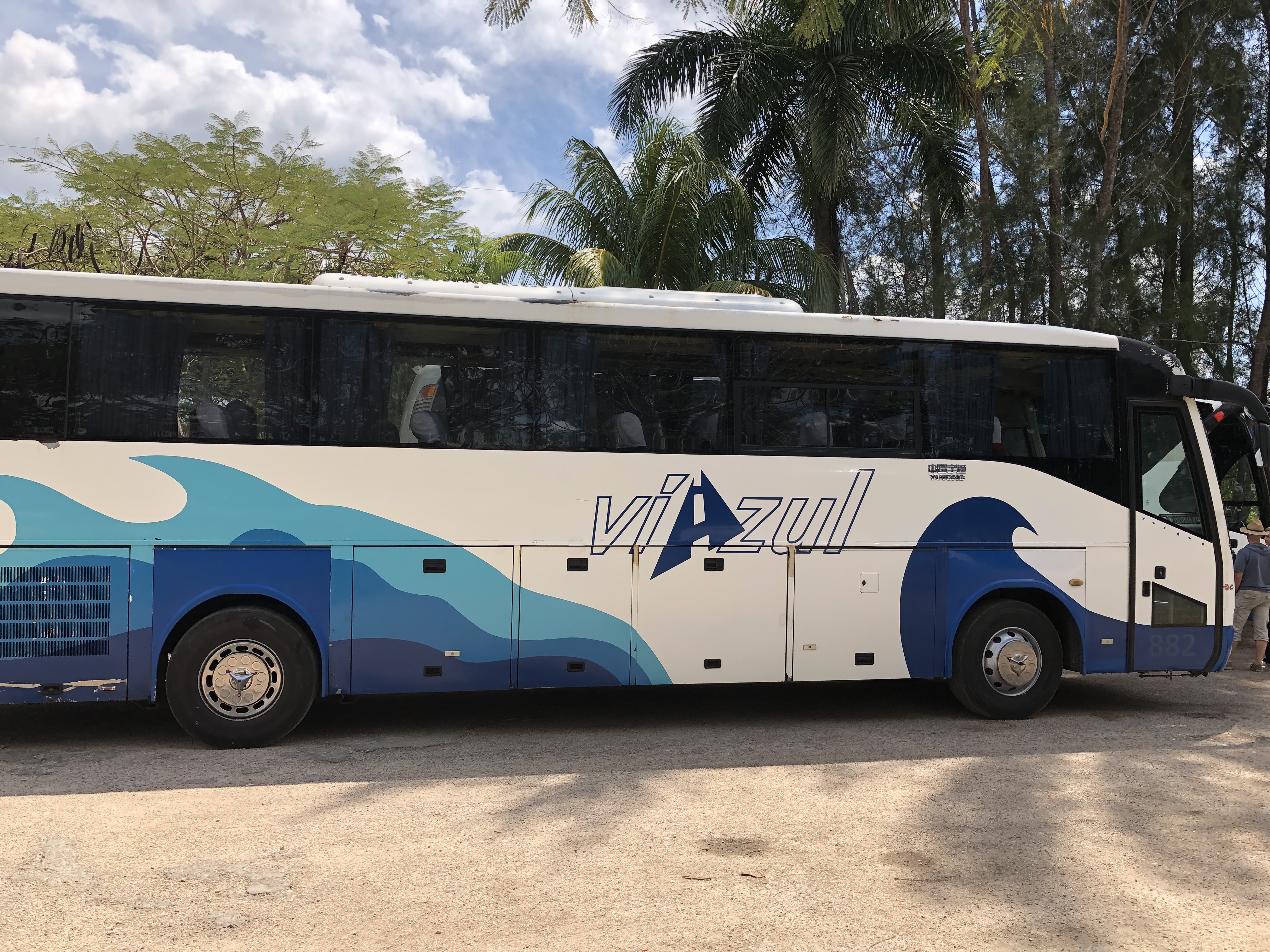
So for our 250 km journey from Havana to Cienfuegos, this was her choice. We hopped a cab to the bus station for me to be pleased that there was not a chicken anywhere in sight. In fact the long distance bus fleet was more modern than anything else on the road. We sat in a comfortable, air conditioned coach doing around 100km/h, on a well maintained 2-3 lane road almost the whole way. And when we got off that we got on a standard dual carriageway, in good repair, that ran through beautiful farmland. Later on, it ran parallel to the ocean throwing up some of the most stunning shades of blue imaginable. Playa Larga and Playa Giron were two of the stops along the way…while this may mean very little to most of you, Playa Giron is better known as the “Bay of Pigs”, where the Kennedy administration tried to invade and overthrow Cuba.

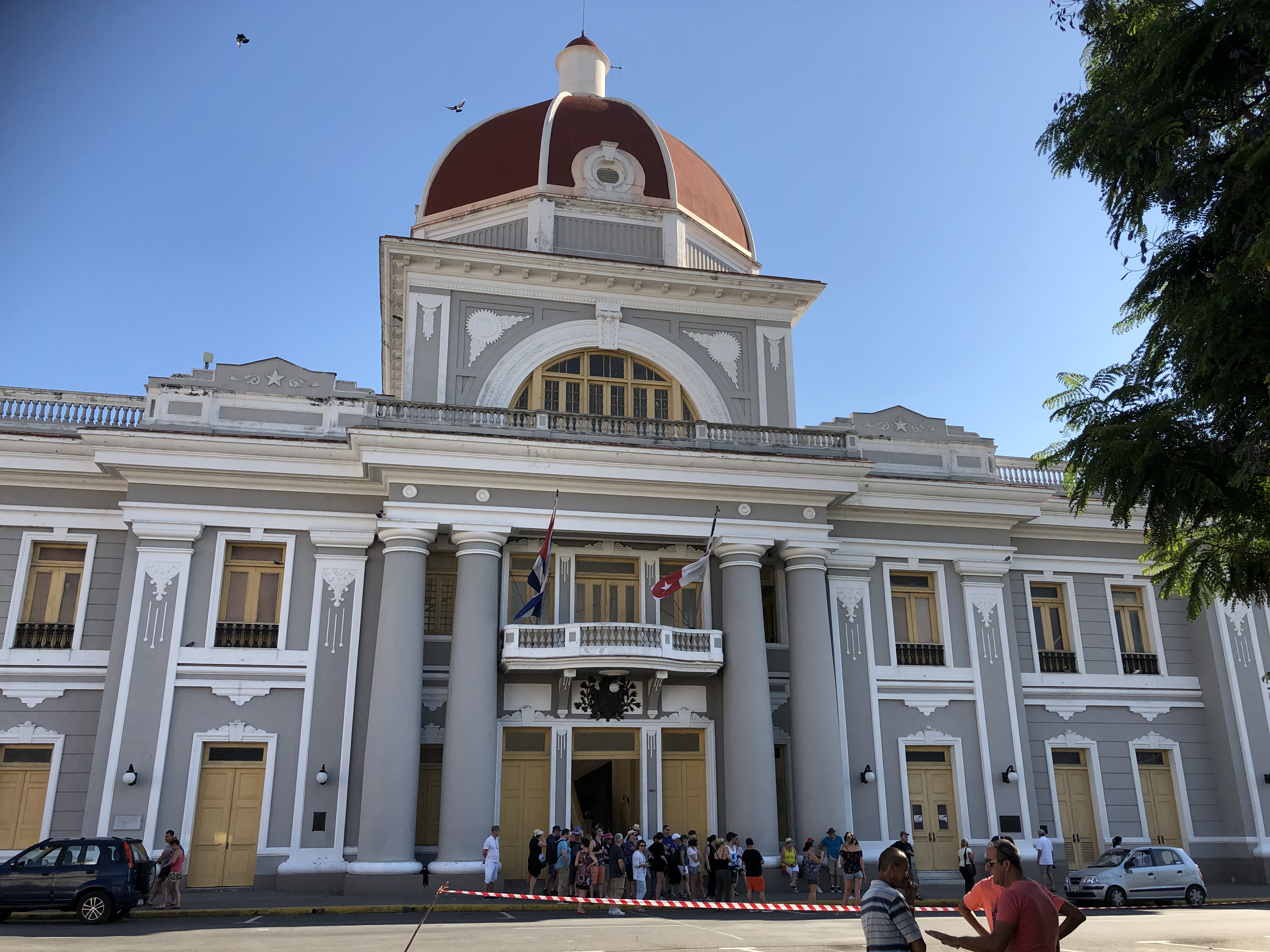
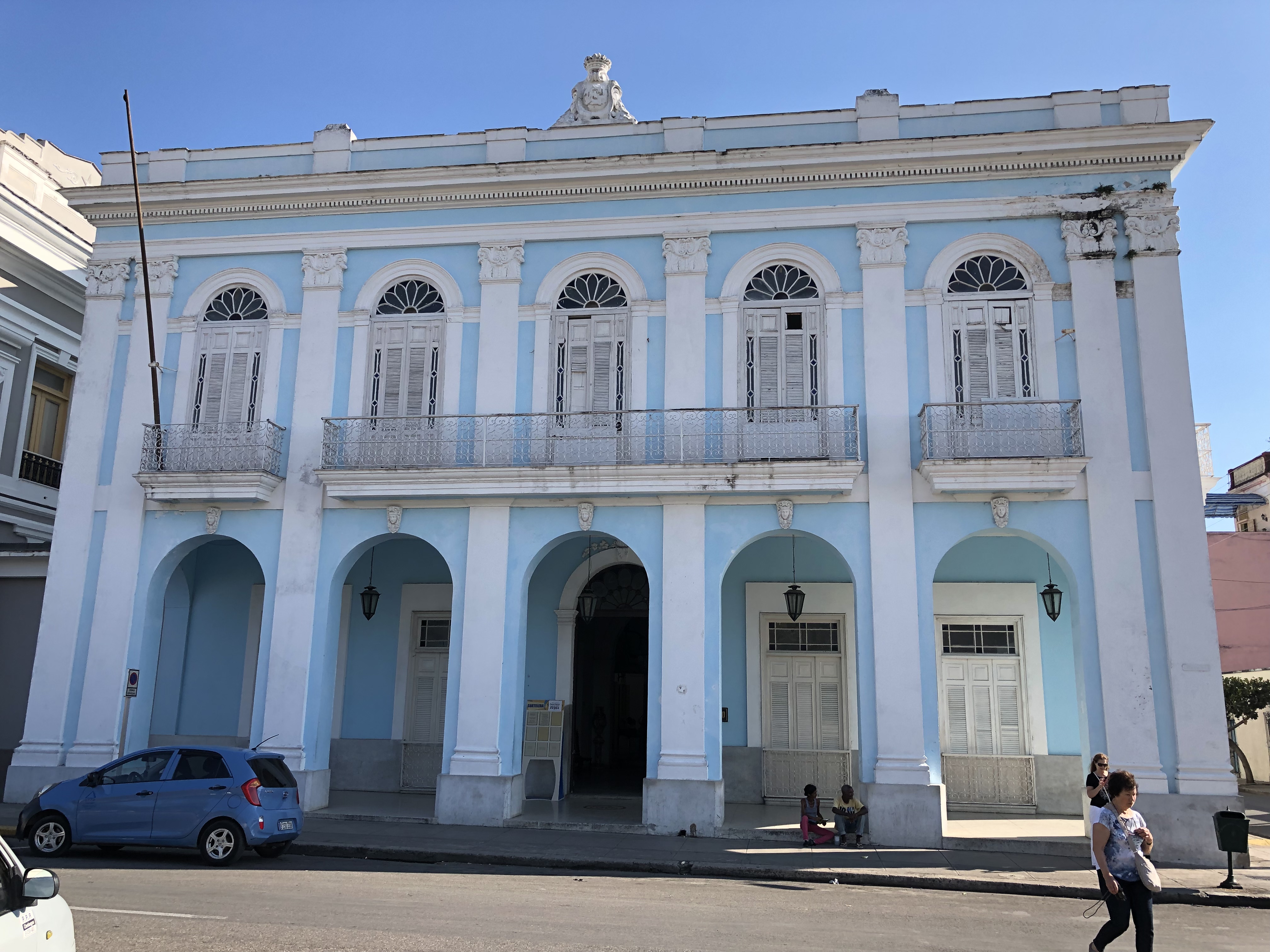
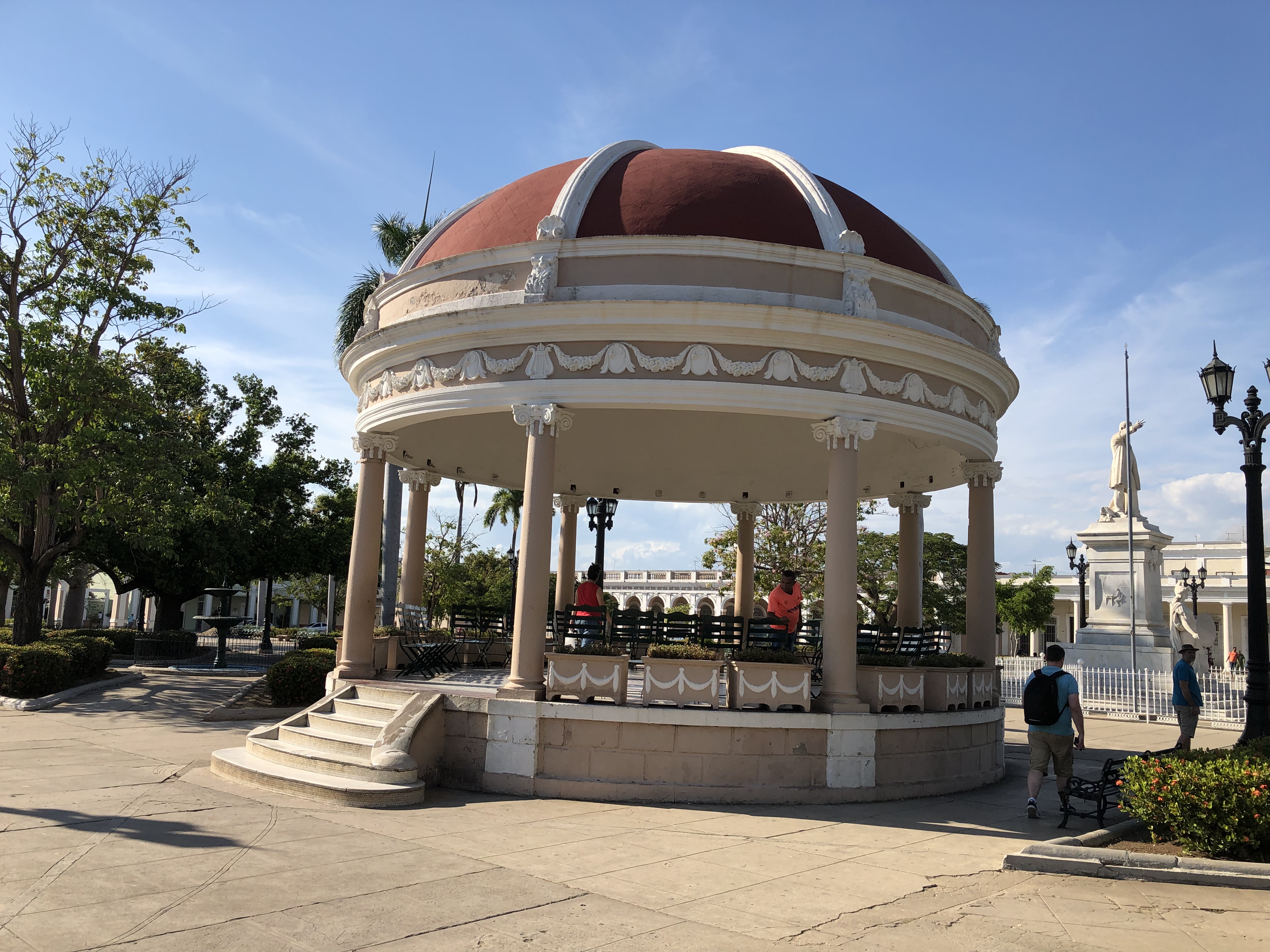
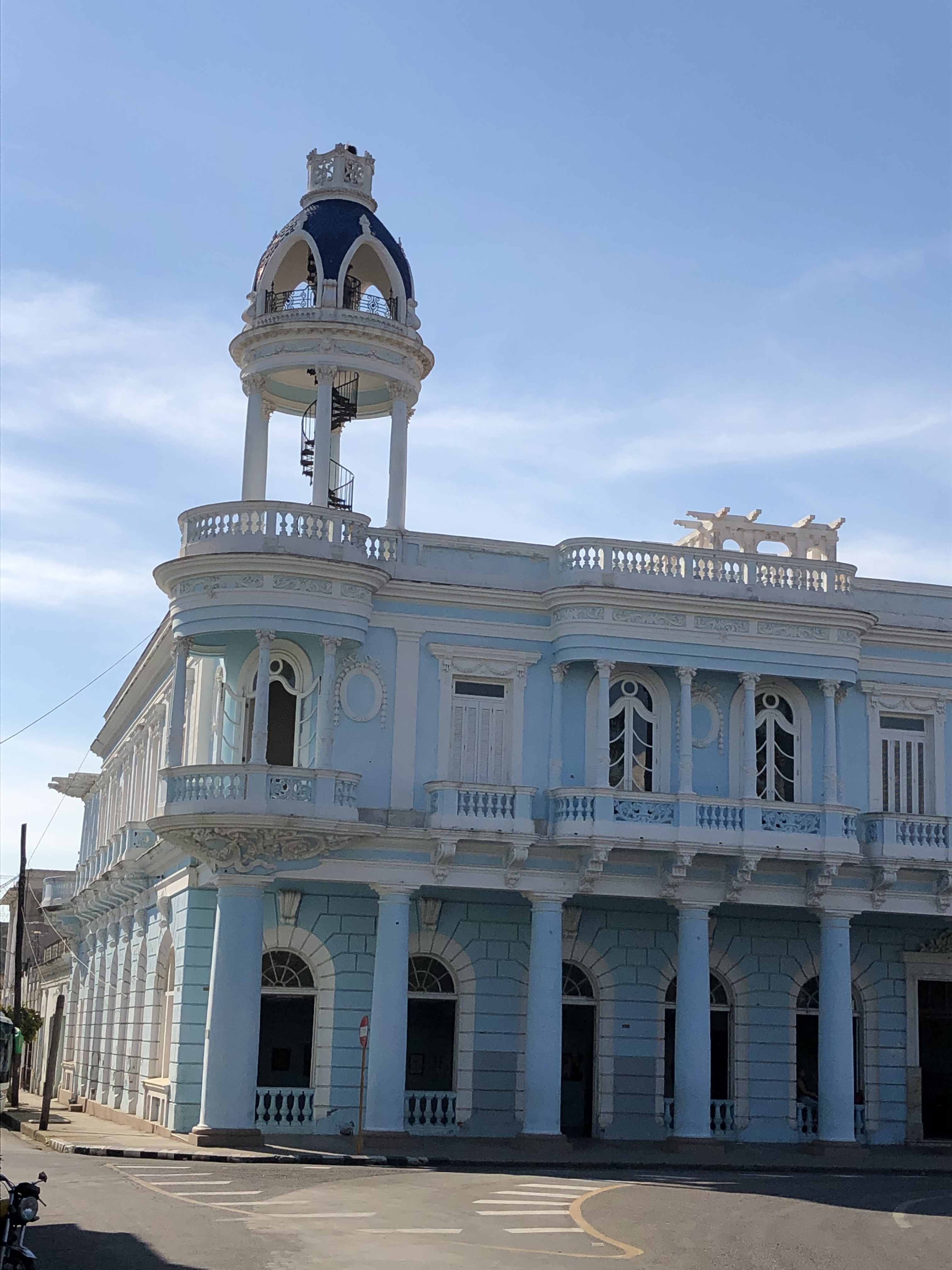
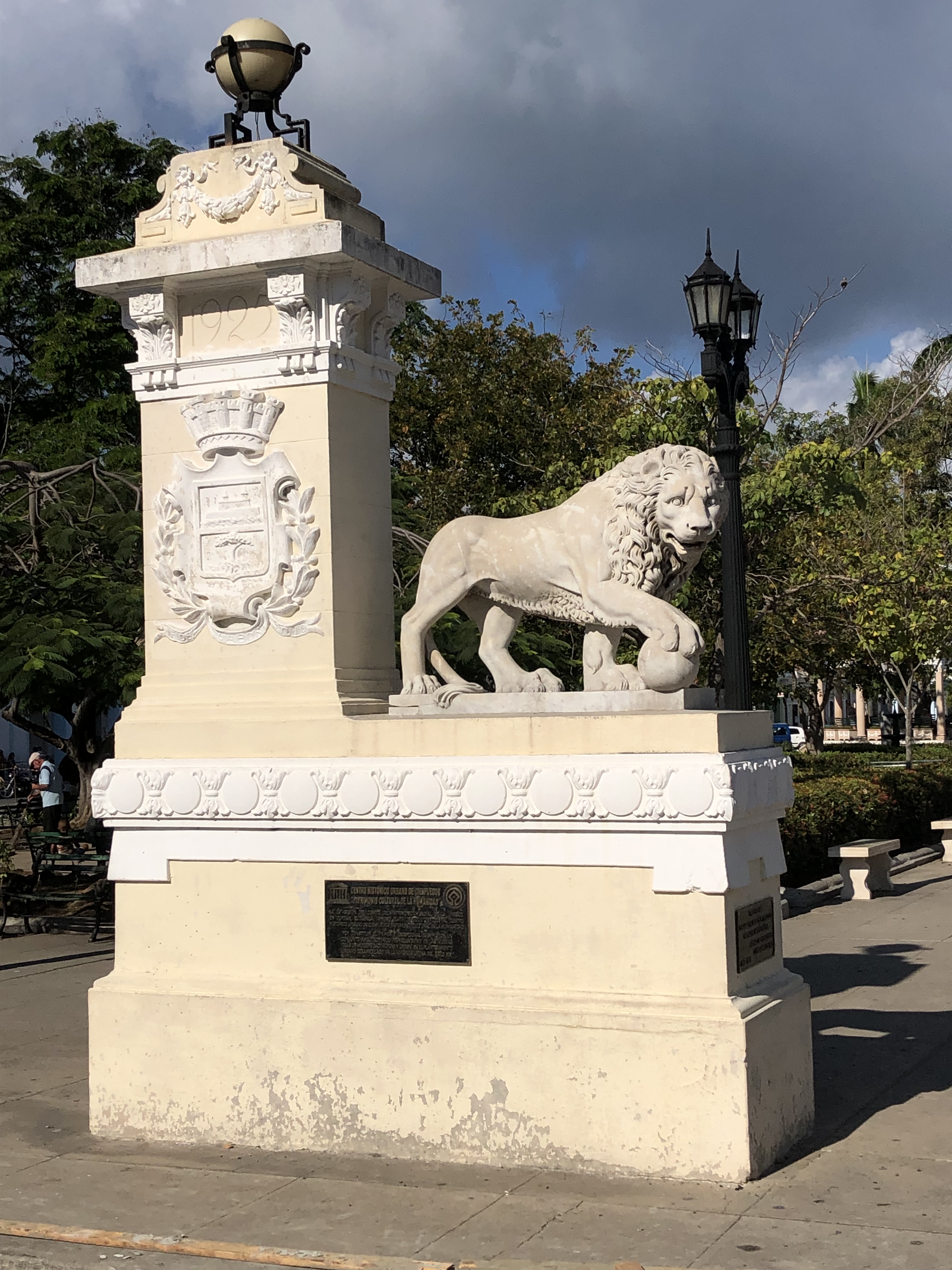
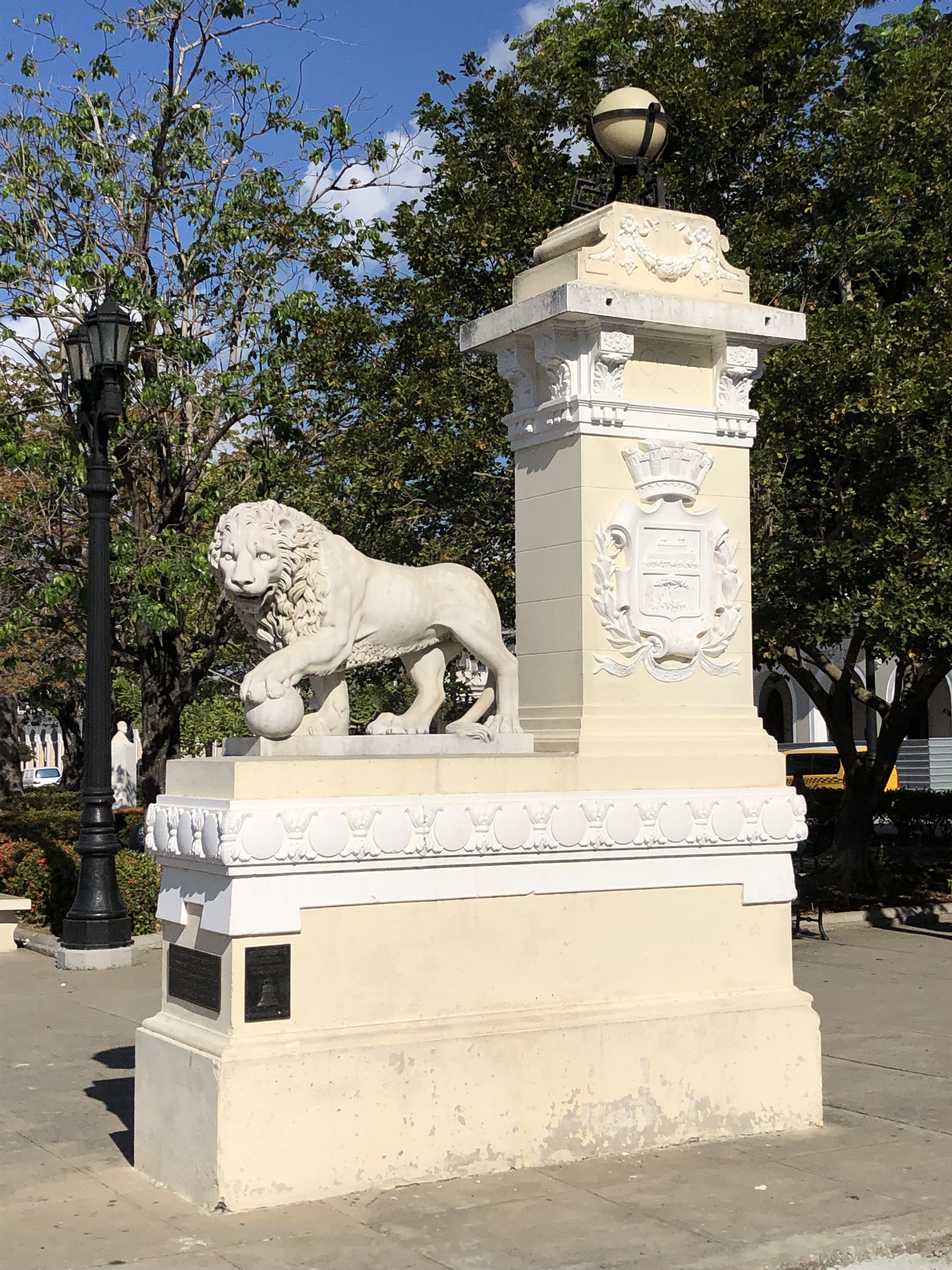
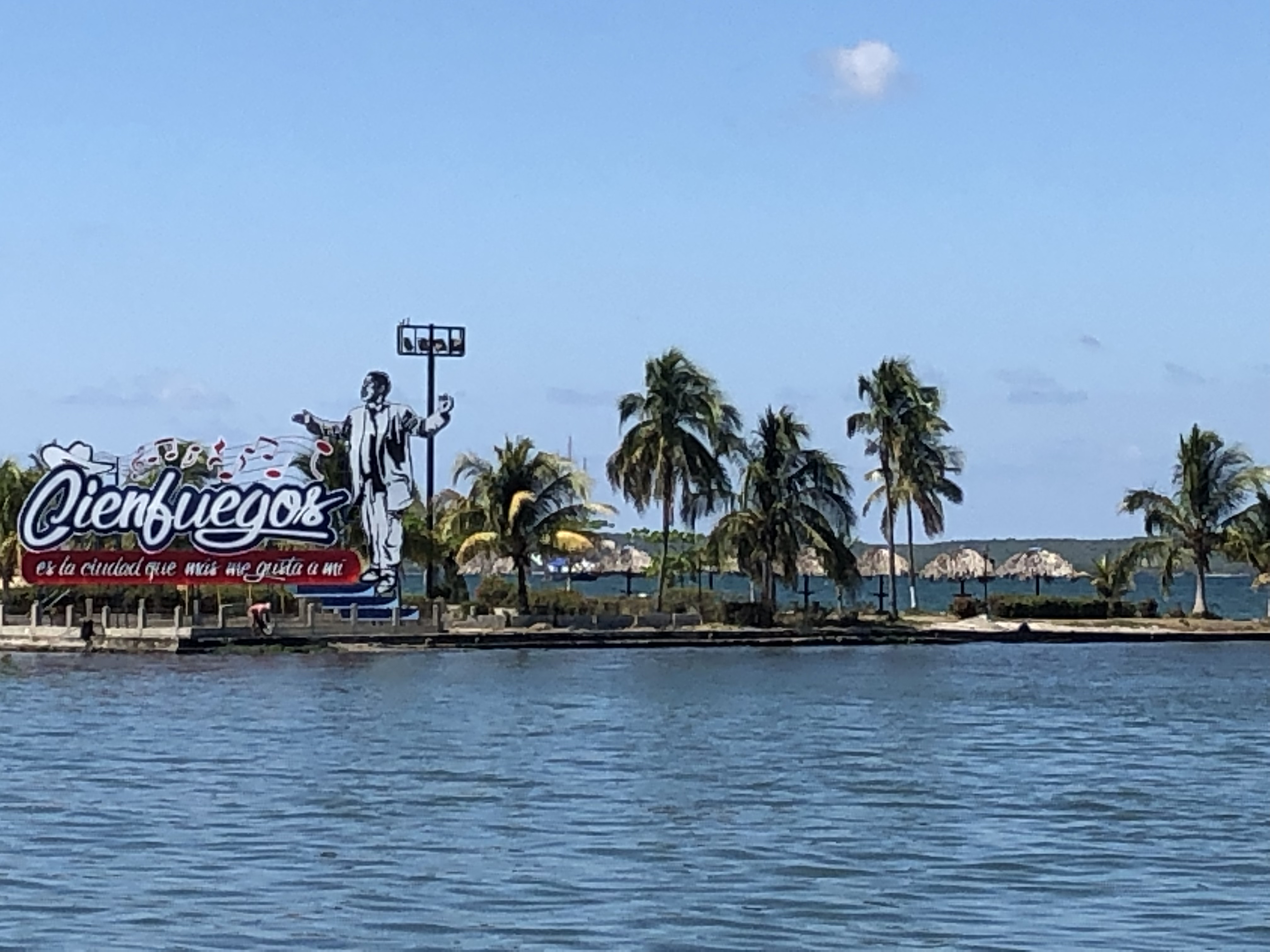
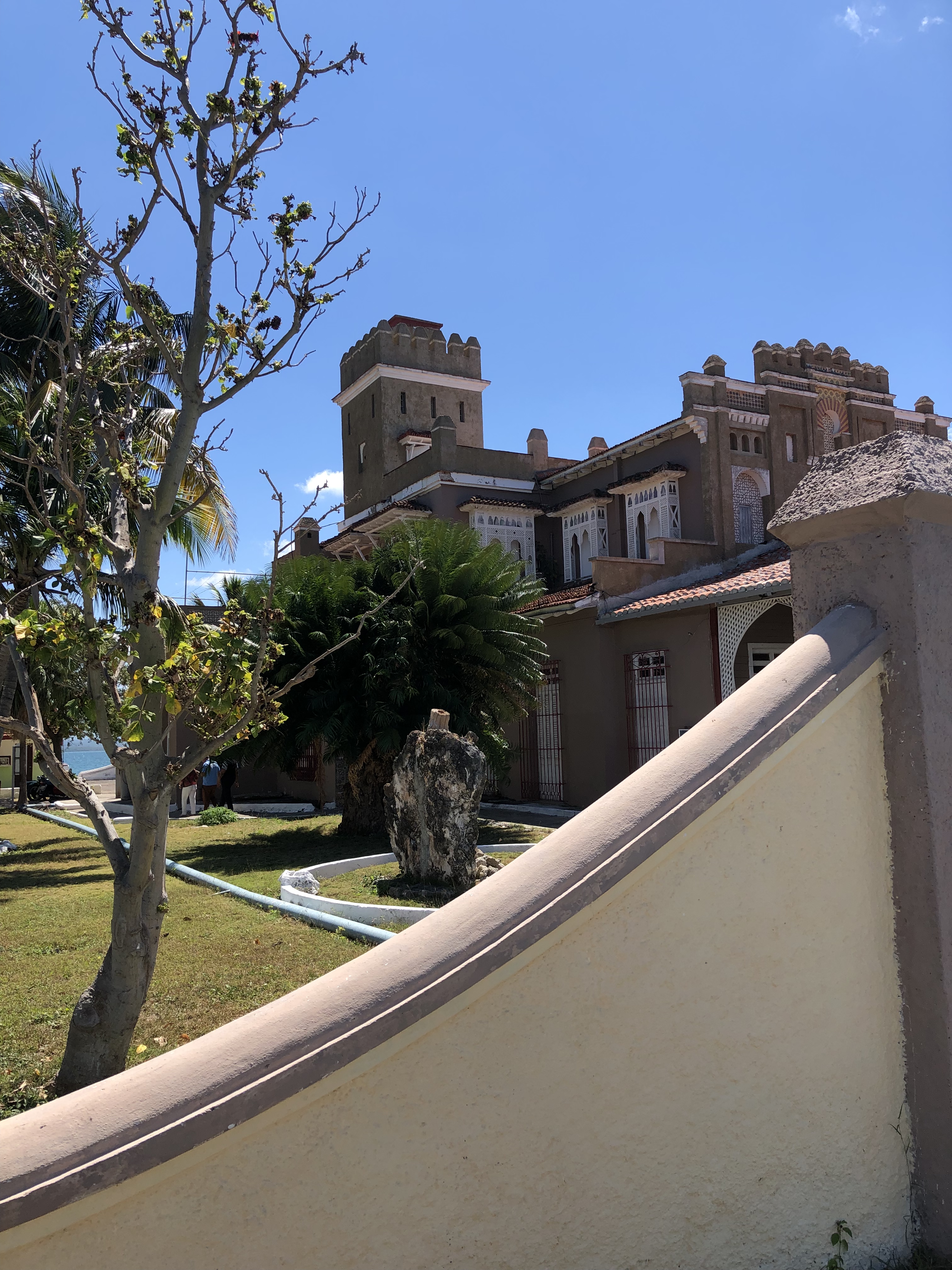
img_2214After a relaxing and pleasant journey we arrived in Cienfuegos mid afternoon and checked into the best of the home stays available (Bella Perla Marina) got the grand tour and headed out for our usual exploratory walk. As it happens, 2 hours is enough time to see all of the sights of Cienfuegos. We saw the town hall, theatre, cathedral (de la purisima concepcion), museum and a mock version of the Arch de Triomphe (Arco de triunfo).


What would we do with the next 36 hrs.

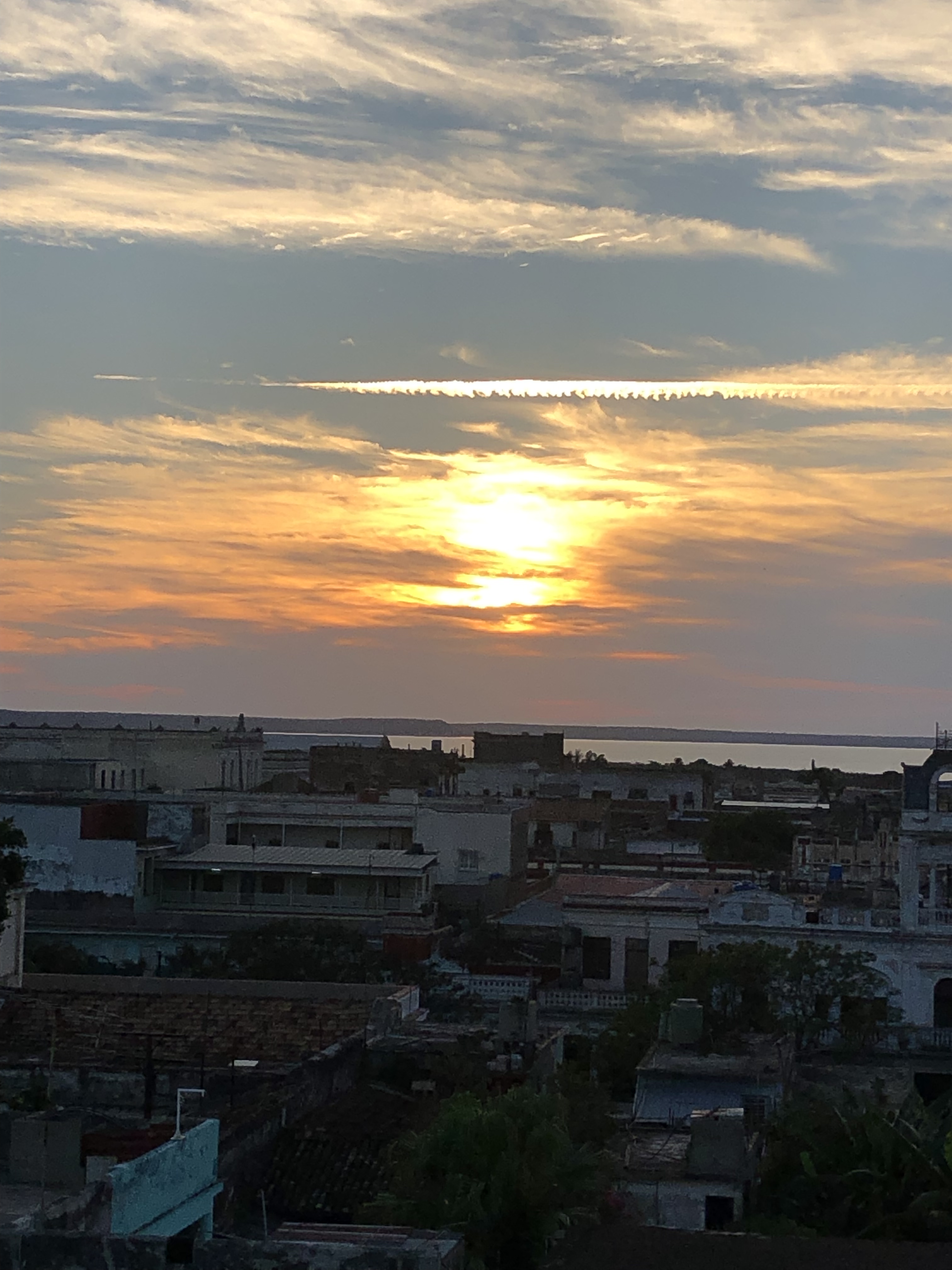
We headed back to the guesthouse for a fantastic meal and one hell of a sunset from the rooftop garden and viewing platform.

img_2225

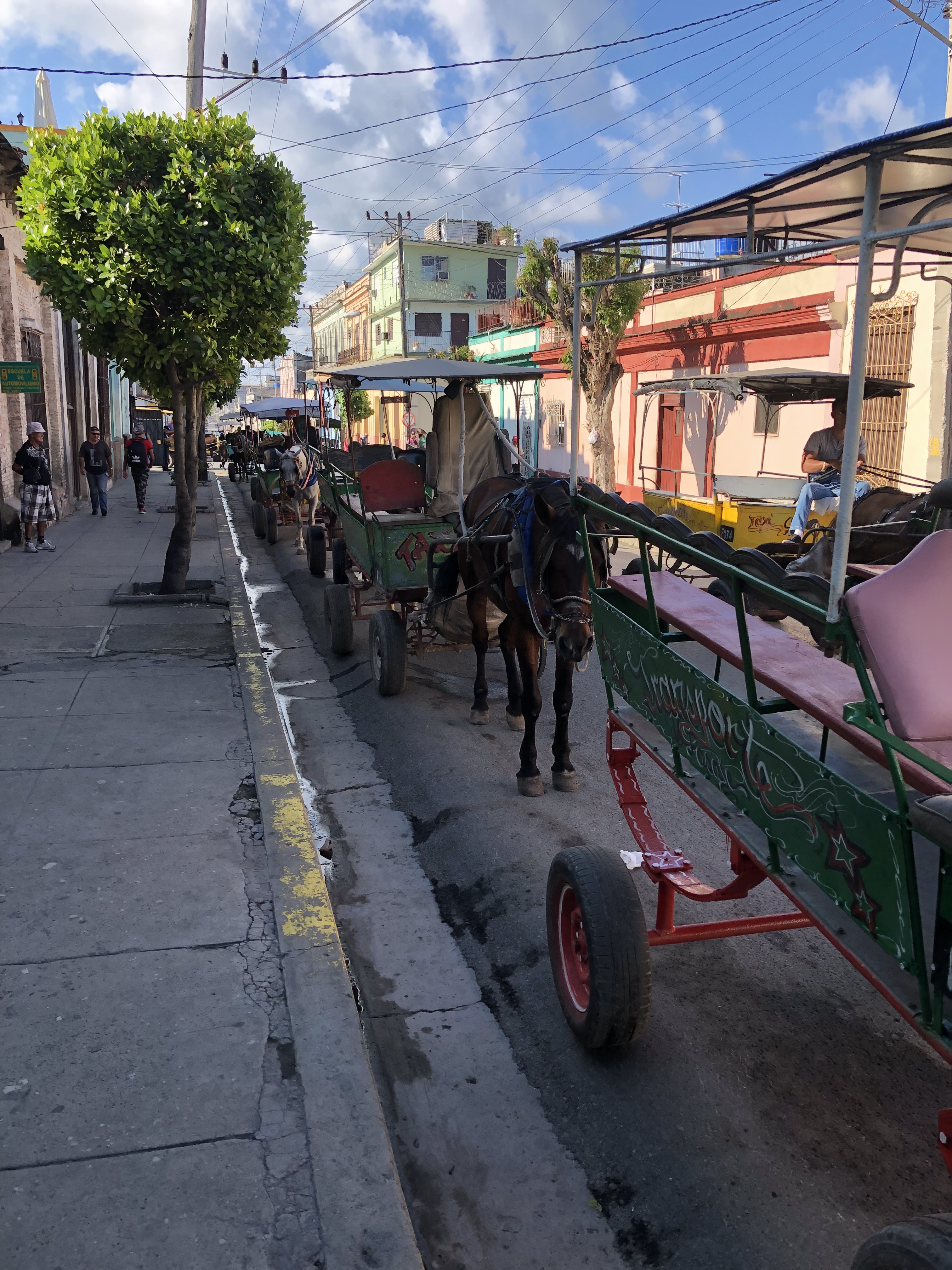
The vehicle fleet in Cienfuegos was quite different from that in Havana. The big flashy convertibles were non existent, but had been replaced with much better maintained versions of the Havana “B” fleet. Still lots of 1950’s vehicles but not as big and not as ostentatious. But the main type of taxi was the horse and cart and it seemed like around the corner from our joint was the local cab rank.


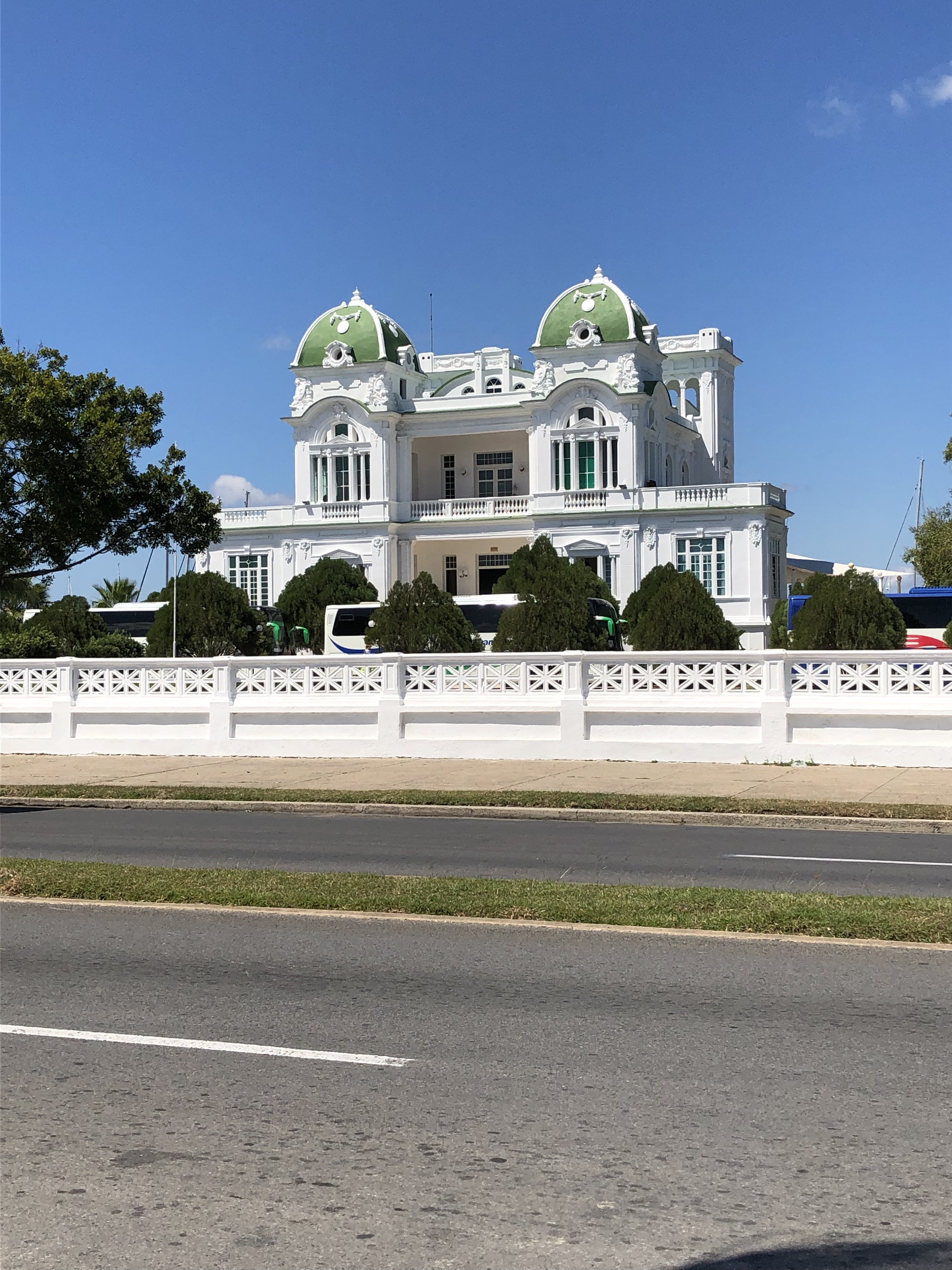
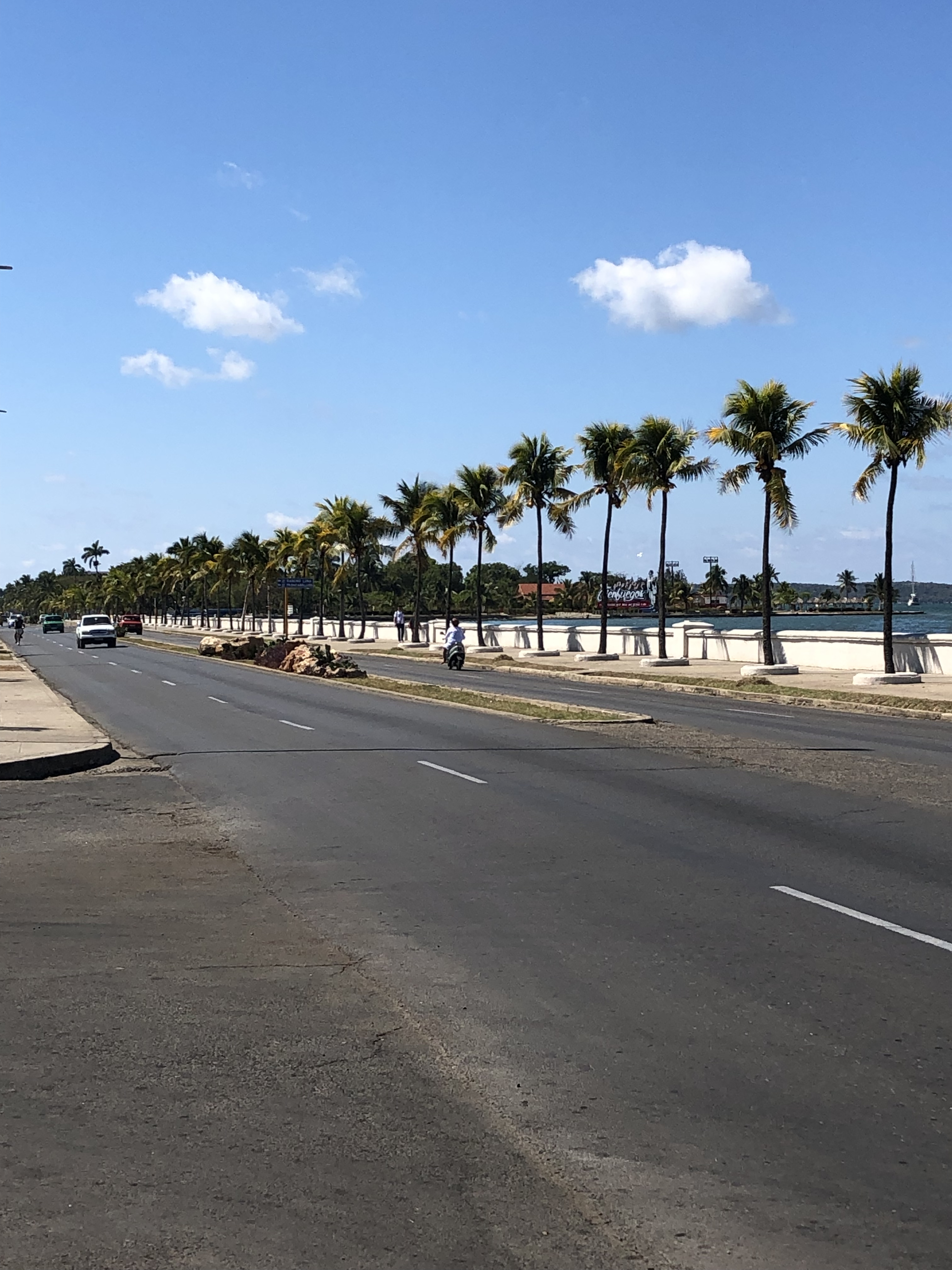
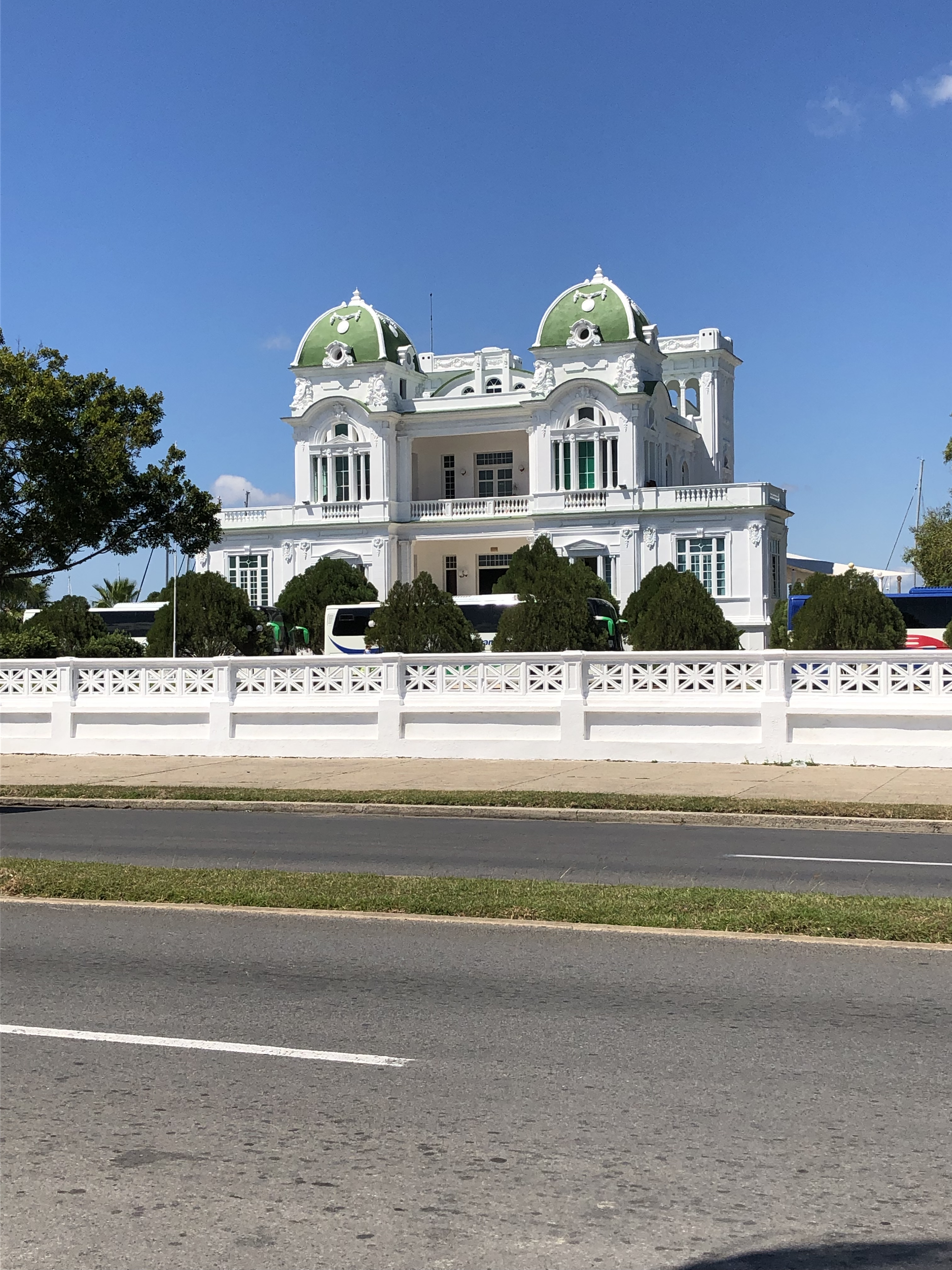
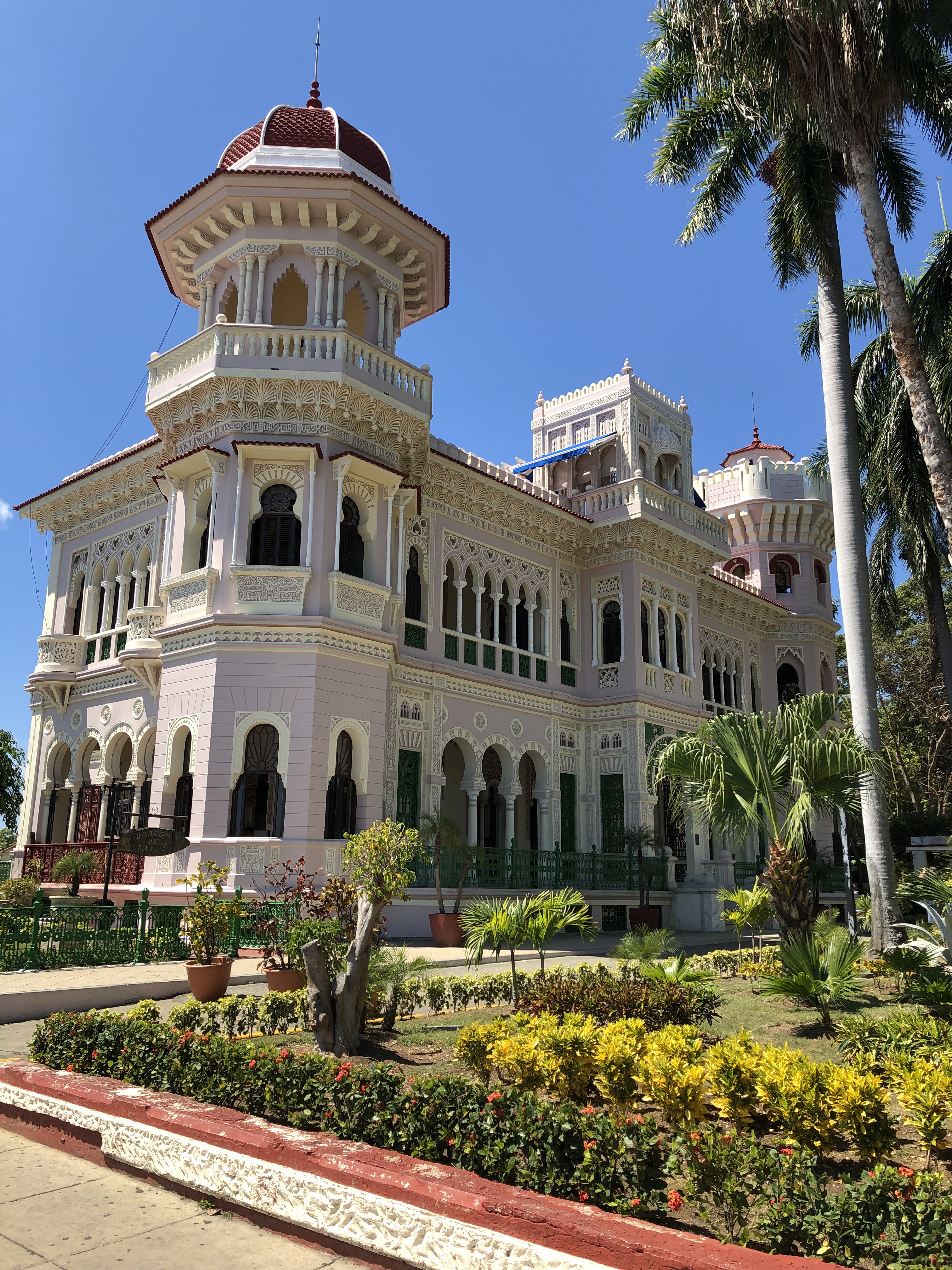
Day 2 of Cienfuegos saw us wandering along the malecon to the ritzy resort end of town. This part of the world is the home of 1960’s architecture and some of the homes are seriously cool, and immaculately maintained. We checked out the yacht club and some of the flashy hotels before catching a pedicab ride back to an expensive seafood restaurant and a lobster lunch (total bill under $40). Another great meal that night at the guest house and prepare for the next chicken bus.

      img_2238 

Trinidad

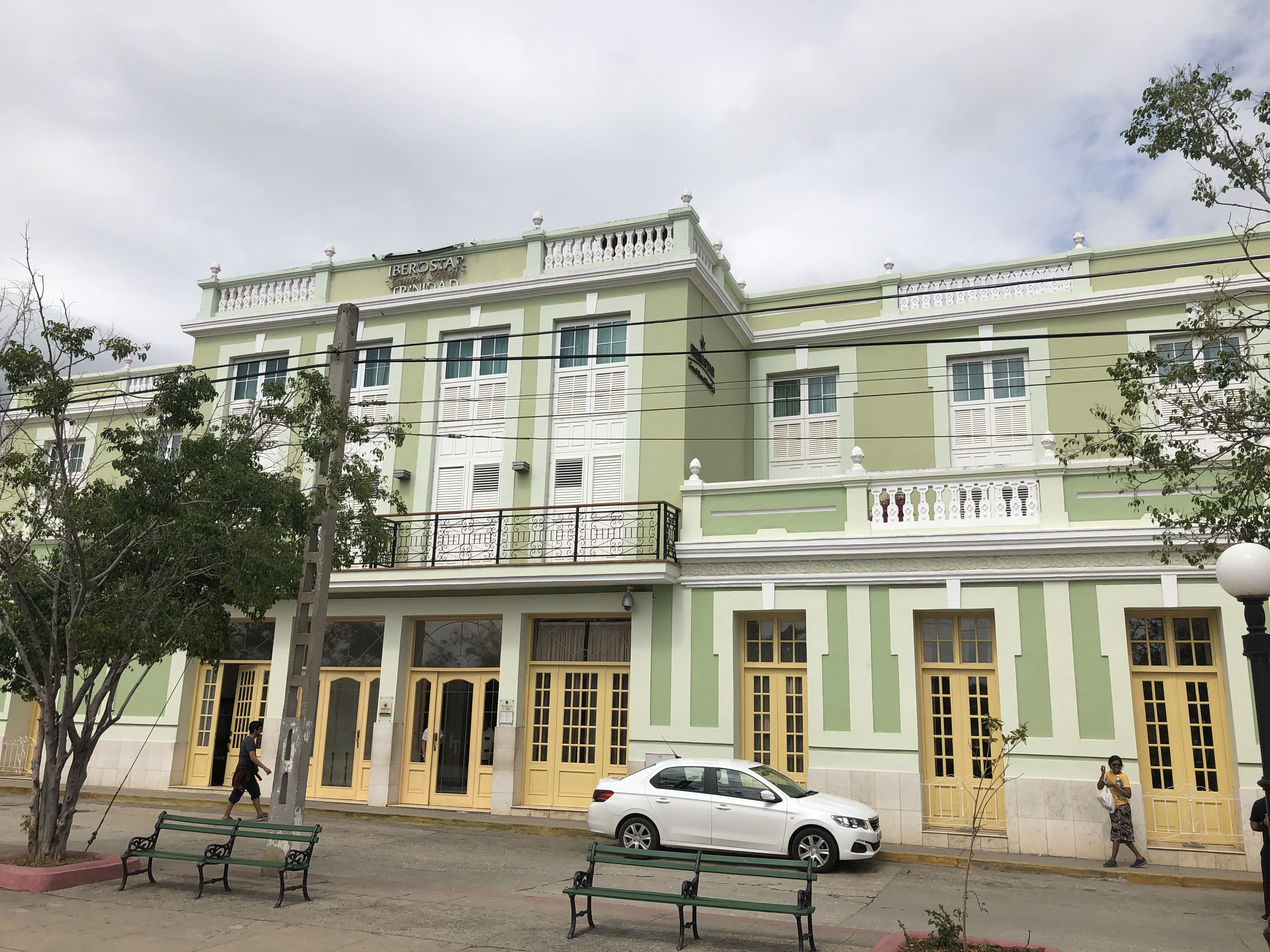
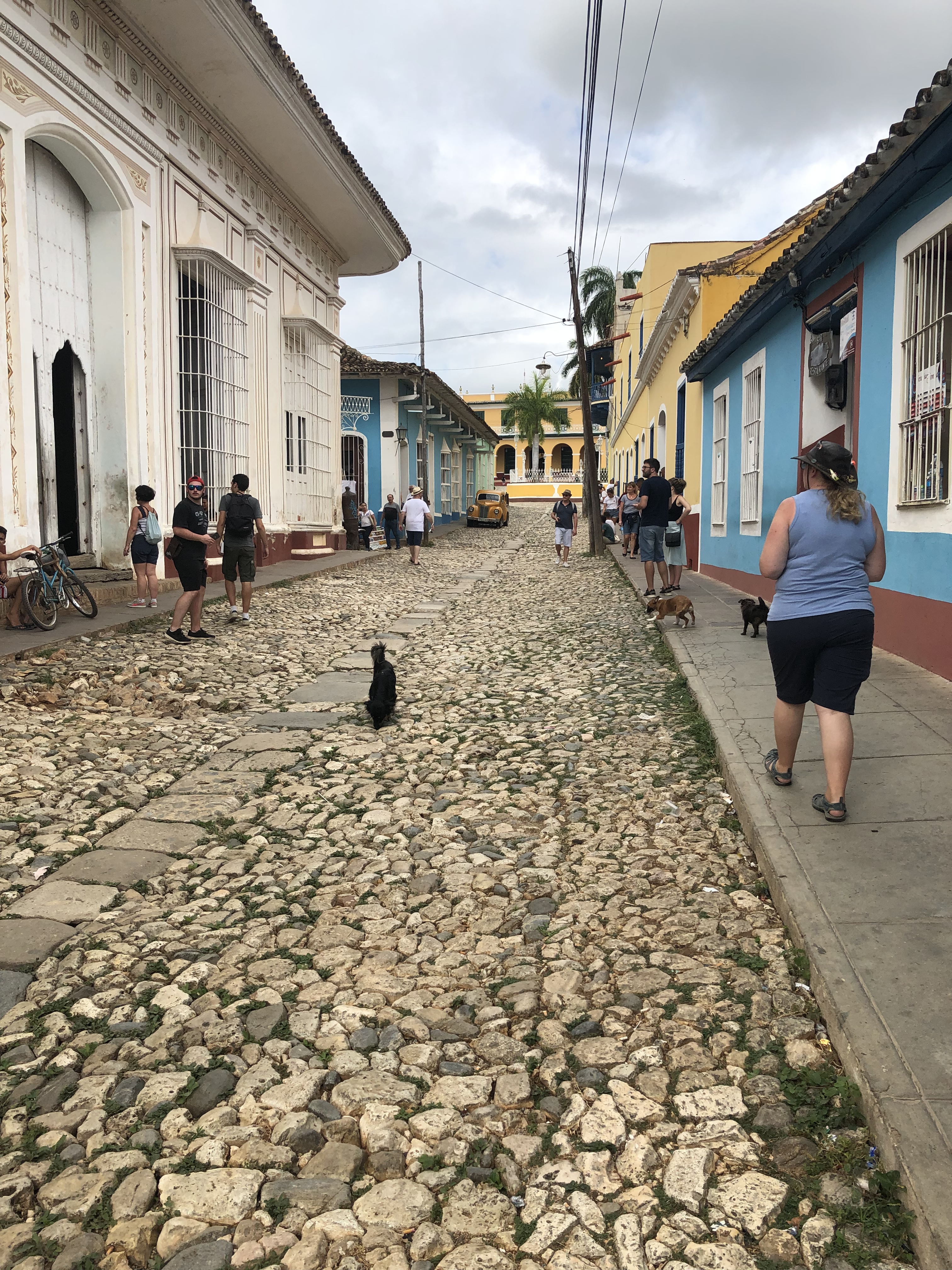
After a short 2 hr, chicken free, bus ride we arrived at the hilly town of Trinidad. Cobblestone streets meant that I had to use my bag as an actual backpack for the 4th time since owning it. Usually I can just use the wheelie bag option, but cobblestones make that a no go. So after trying to remember what happens when you unzip the straps, we did the 850 meter walk up and down hills lugging our packs on our backs. We were staying at yet another guest house (casa particular) and despite the $20 a night price tag, it was by far the best one we stayed in the whole time in Cuba.

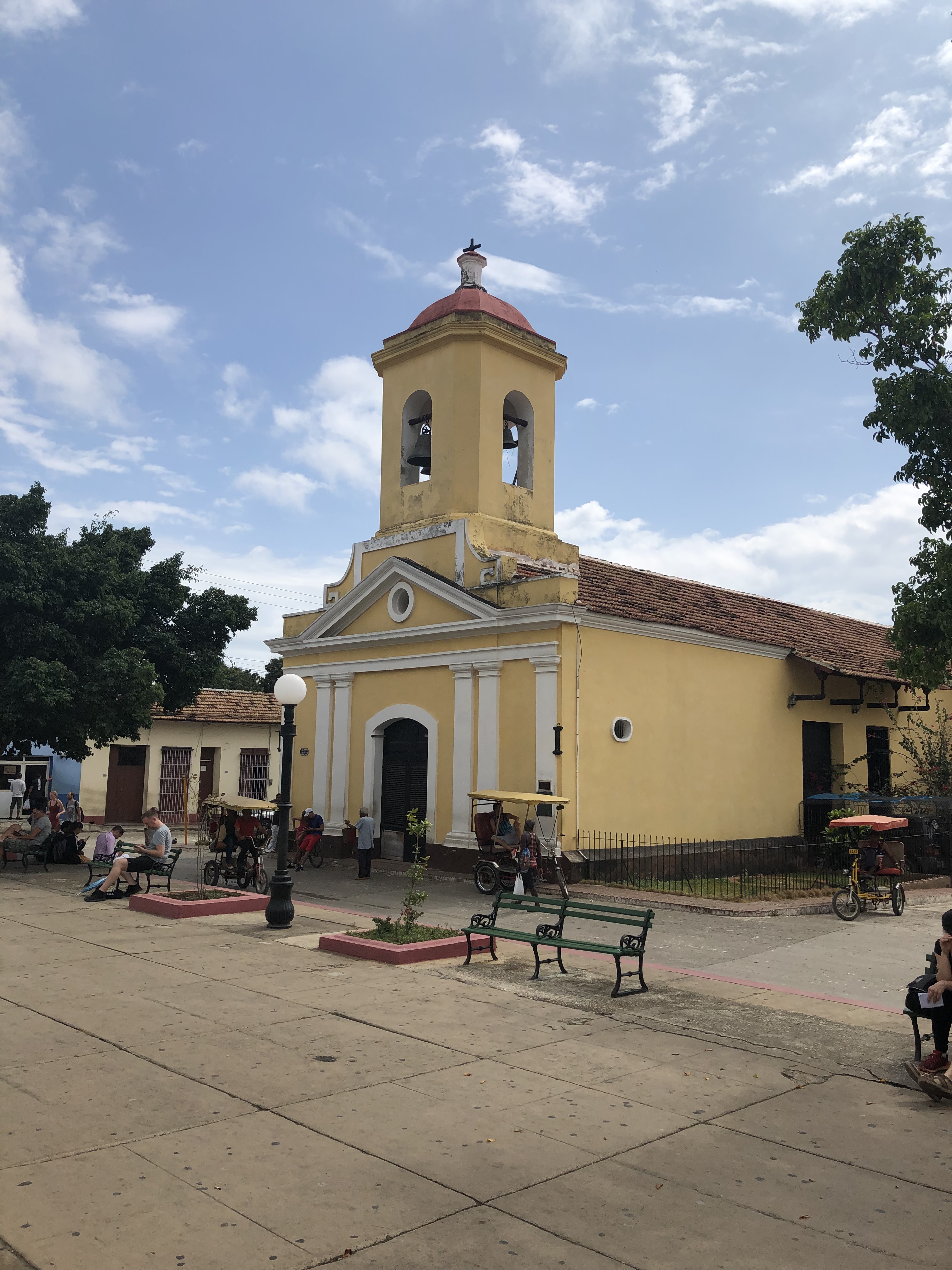
Trinidad is another of those see it in 2 hrs kind of towns. So after a cold shower, did I mention that it is hot and humid in the tropics, we did the schlep. Once again we hit all of the sights early: the museum (x2), cathedral, church, Plaza Santa Ana. And settled in to some Cuban music and drinks on the steps of plaza Mayor.

img_2258 img_2257 img_2259    

That is until a tropical downpour started. And it poured, for about an hour and a half it teemed. So we had cervezas and mojitos with a French couple until it finished.

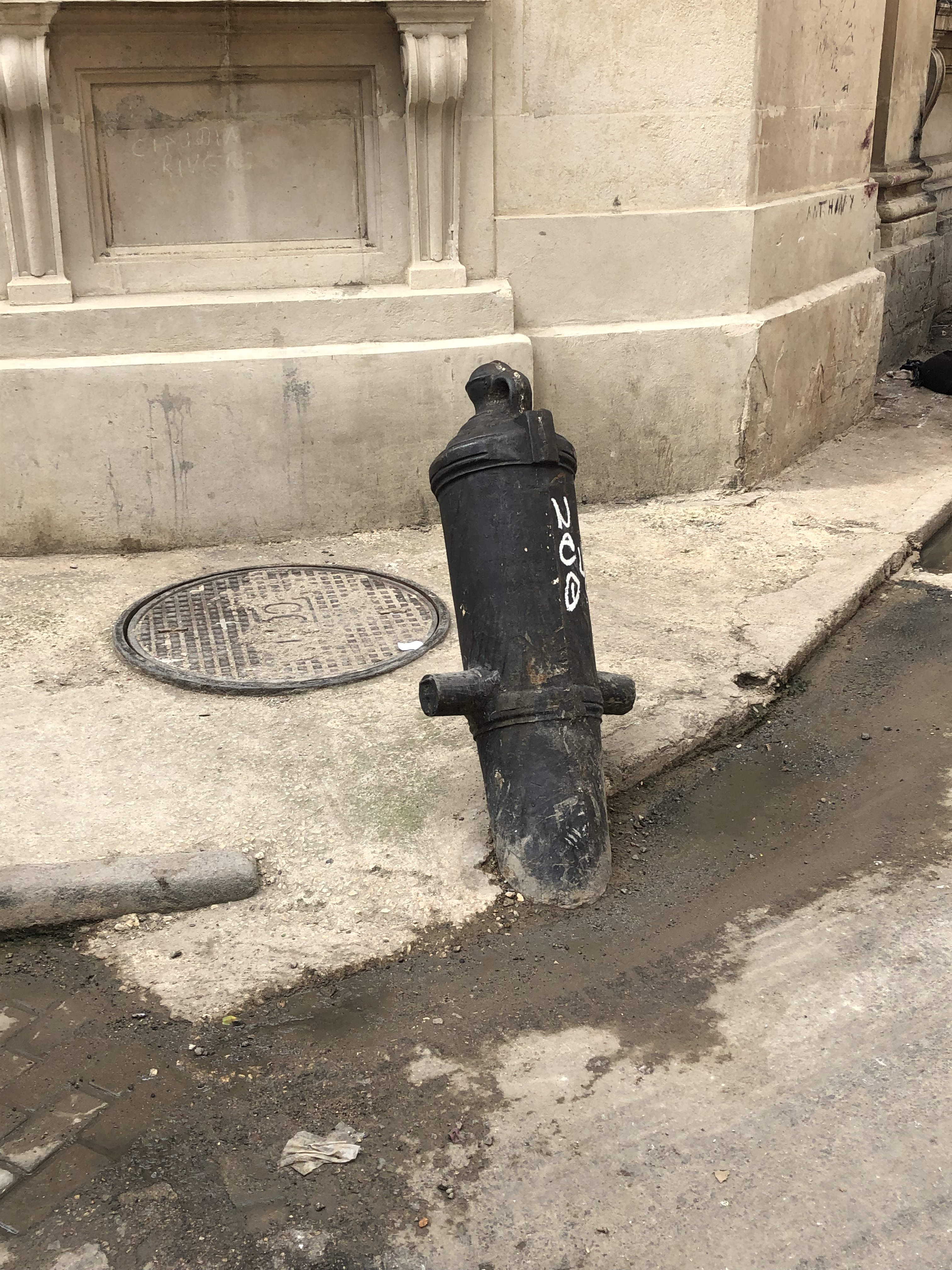
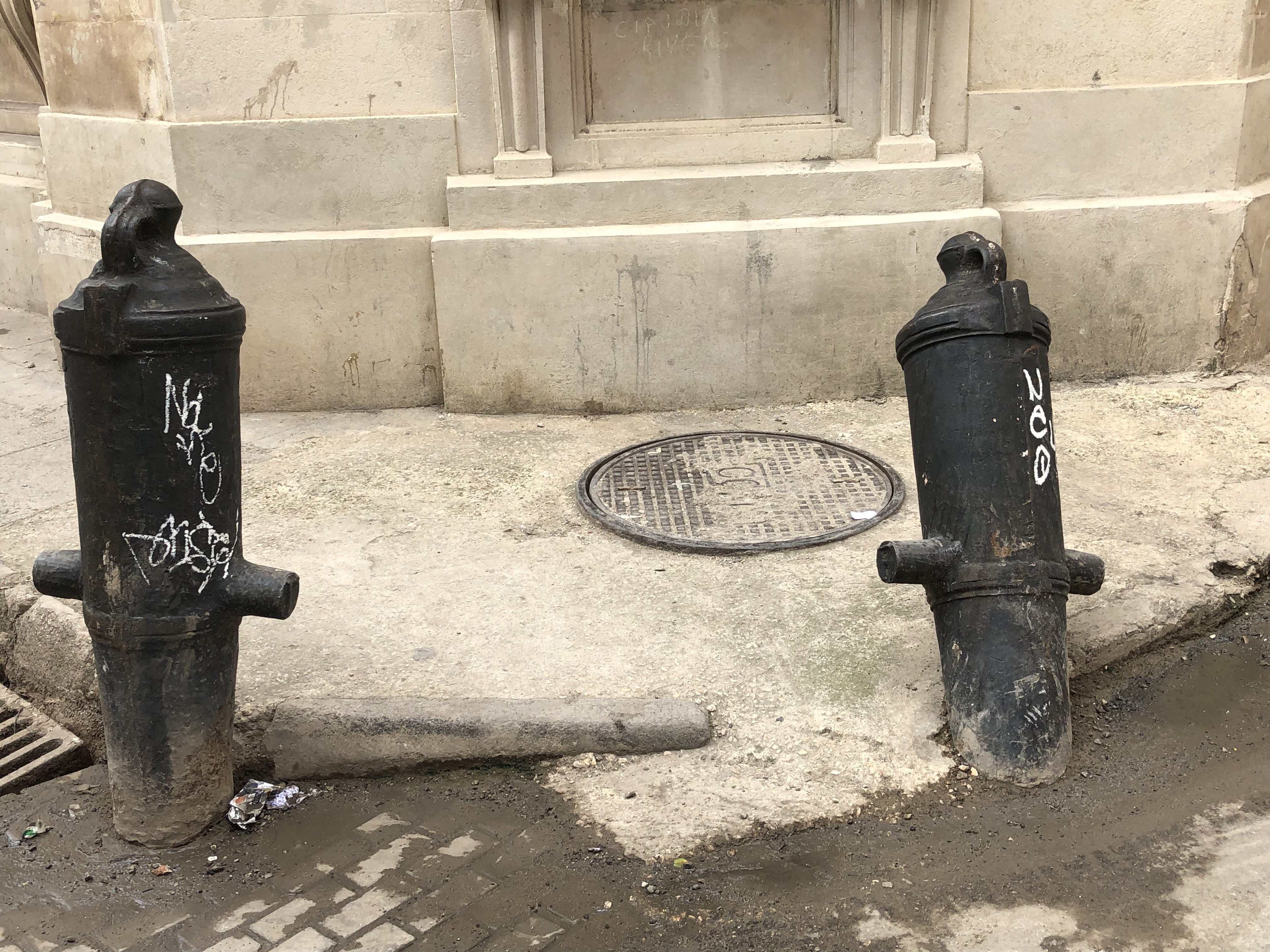
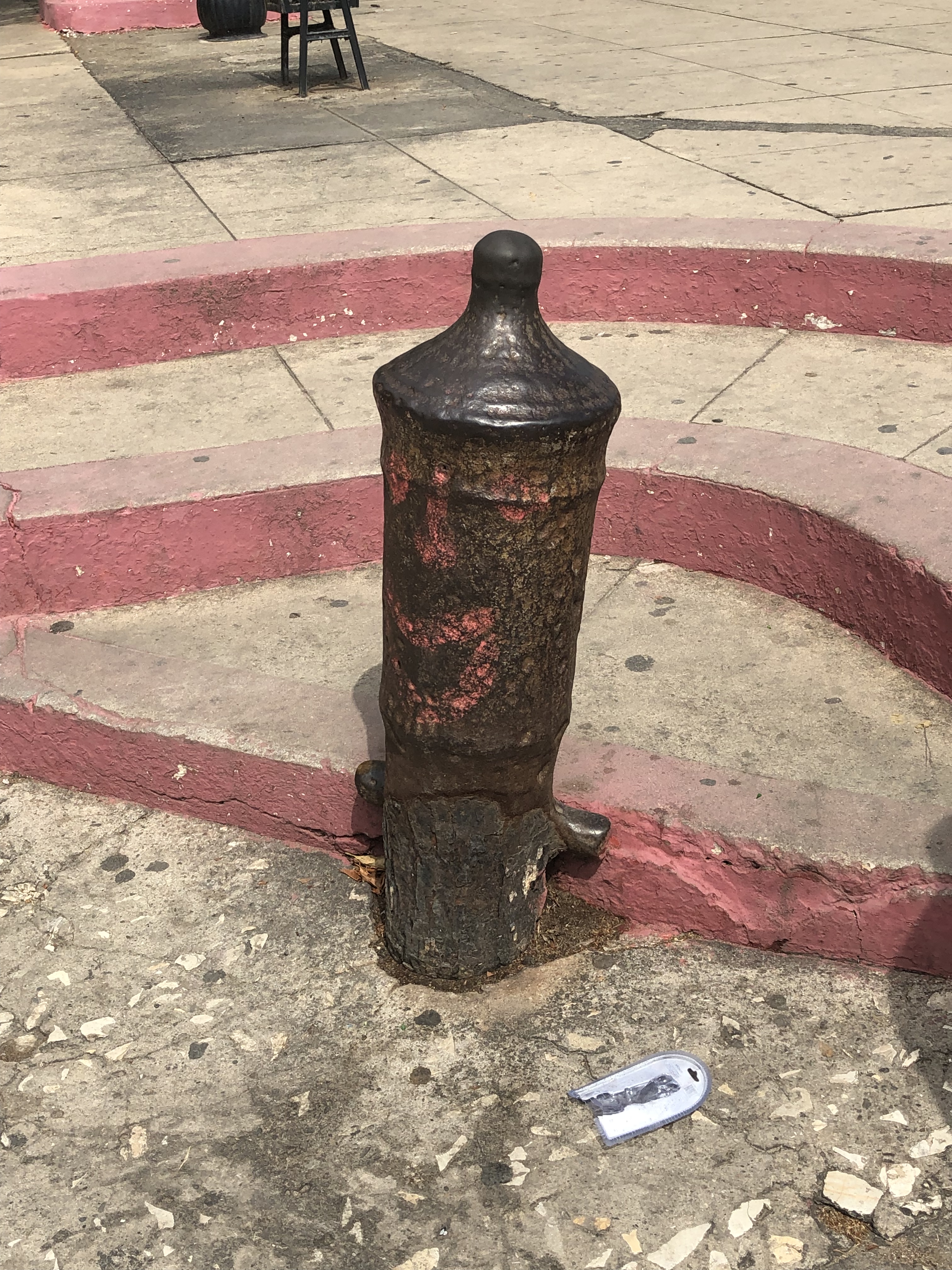
An interesting sideline that we came across in Havana and now again in Trinidad was the use of old cannons as bollards in the street. I guess with the Spanish and pirate heritage of the region, there were no shortages of cannons either laying about or contained within sunken vessels near the shore. Many of these have been salvaged, repurposed and buried to block traffic into pedestrian areas. It is nothing massively noteworthy but adds to the charm of the place.


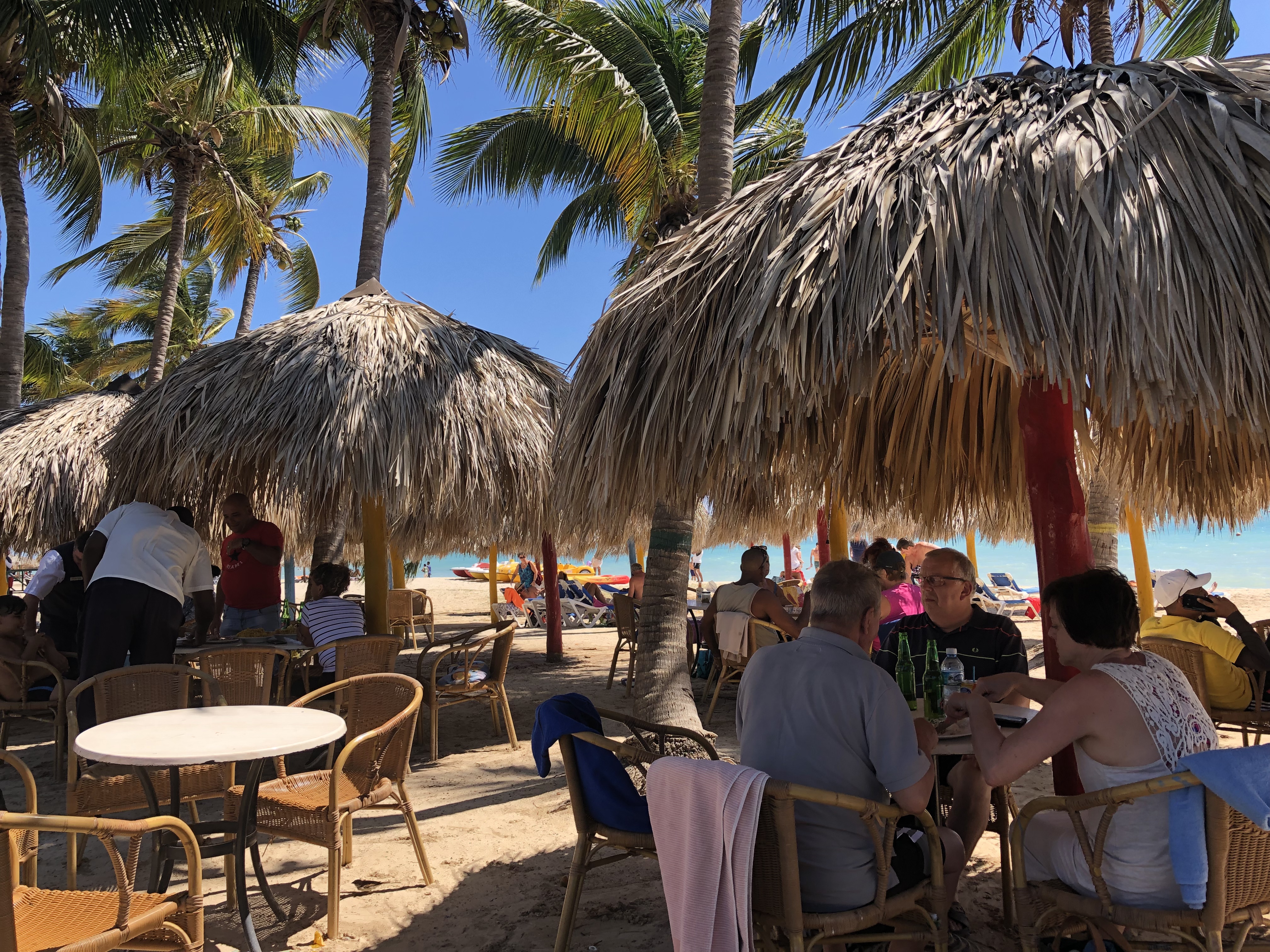
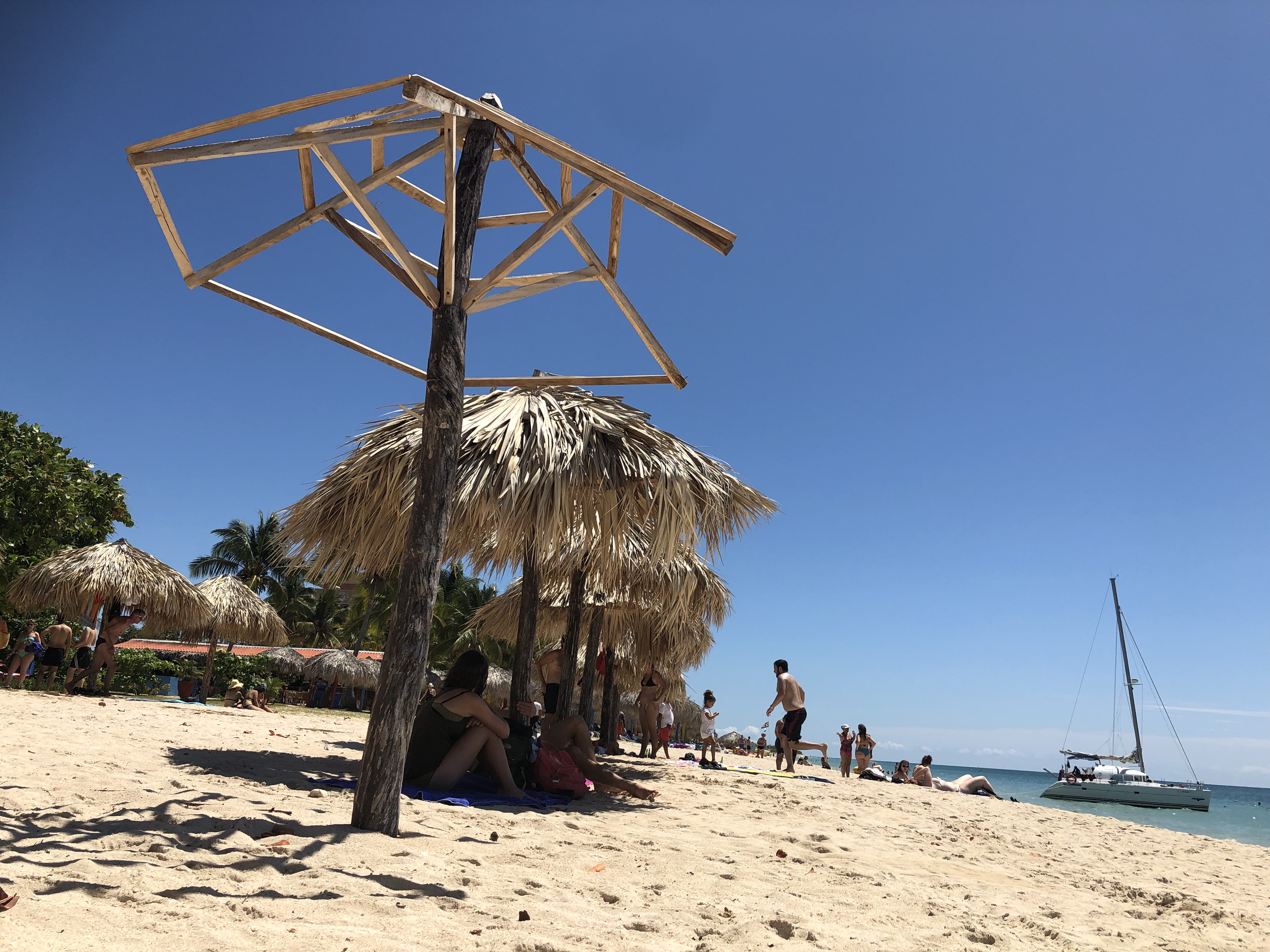
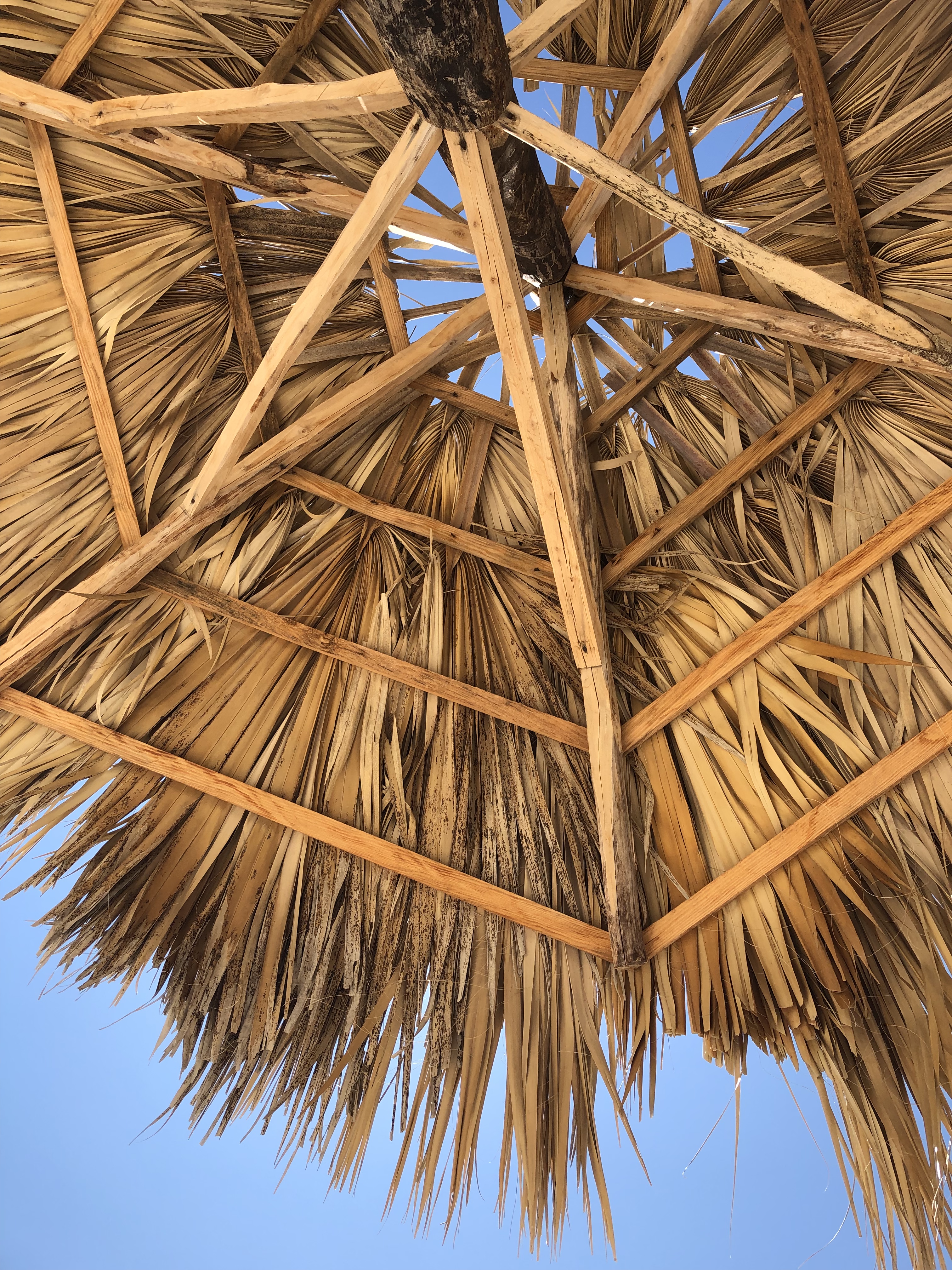
Fourteen kilometres down the road from Trinidad is Playa Ancon one of the best beaches in the country. So on day 2 we hopped a cab and spent 4 hours lazing on pristine white sand underneath palm frond umbrellas. I lolled about in the water while Jill worked on her Canberra tan.


You wouldn’t believe it…I got sunburnt…I haven’t been sunburnt in decades. Something about the tropical sun, breeze and water got me. I got red as a beetroot on my chest and a bit on my back. It is a shame it is about a week early otherwise I could have blamed it on the “April Sun in Cuba”.

Another early start for a 6 1/2 hour bus ride to one of the few beaches in the country reportedly better than Playa Ancon.

Varadero

Varadero is little more than a resort town, so very little in the way of tourist sights. No cool looking buildings, just rows of modern resorts, bars, trinket shops and restaurants. What the resorts do offer are all inclusive packages and many of them offer child free experiences. So for people like us who do not enjoy noisy rugrats messing up your holiday bliss, this could have been for you. But in reality it just a town full of drunk eurotrash.

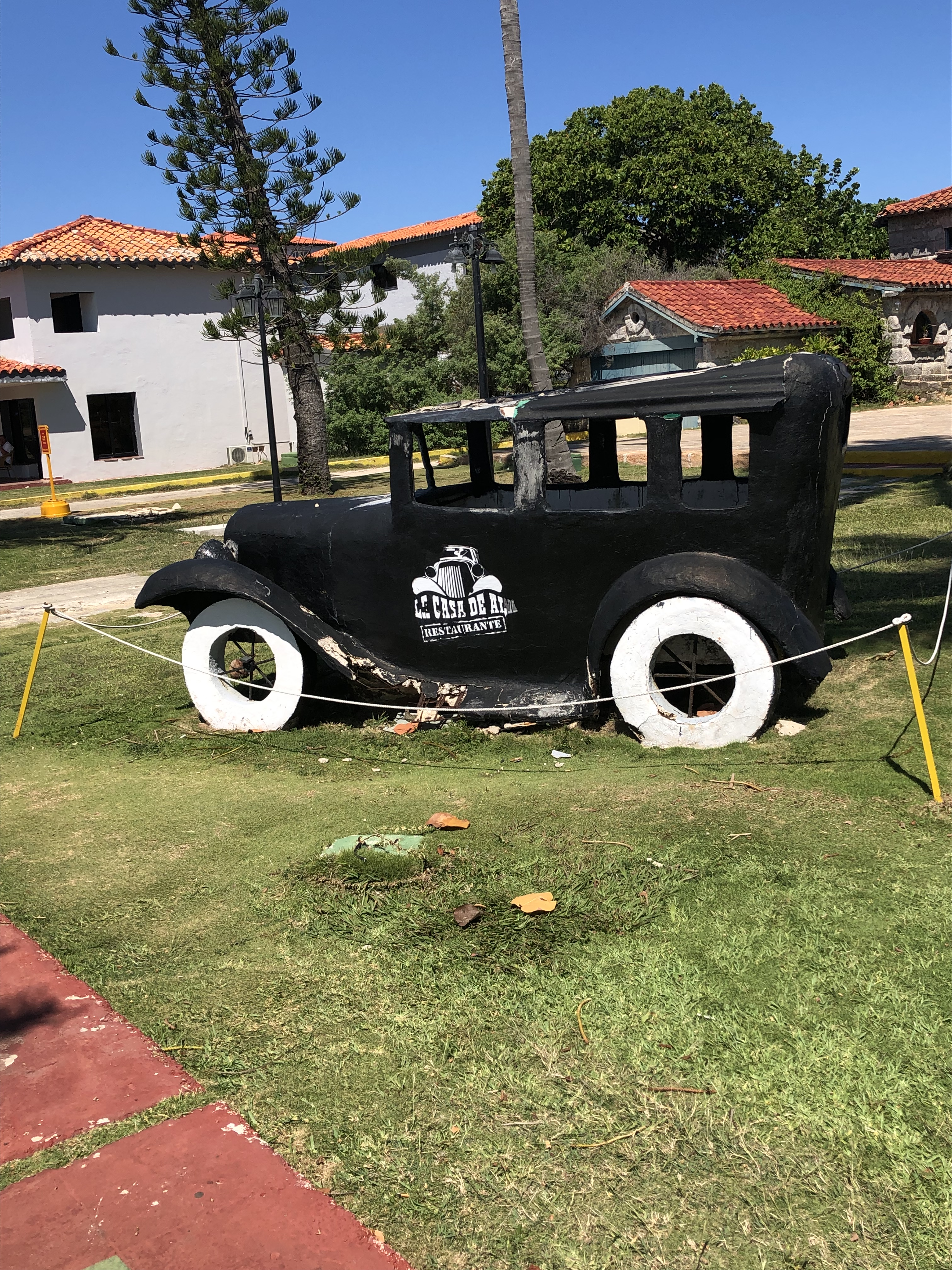
An interesting note that we learned was that Al Capone had a mansion here right on the ocean front. Of course it has now been turned into a guest house and restaurant.


The fact that most of the resorts offer all inclusive packages means that all of their food and drink is included. As such, there is very little need for them to leave. Which means that competition at the local restaurants is fierce. This we thought would be great news for us as we were not doing the package thing. But it was anything but, the restaurants tended to be more specialist or boutique. The prices were through the roof (by Cuba standards), the food was below par and according to Jill the mojitos were weak.

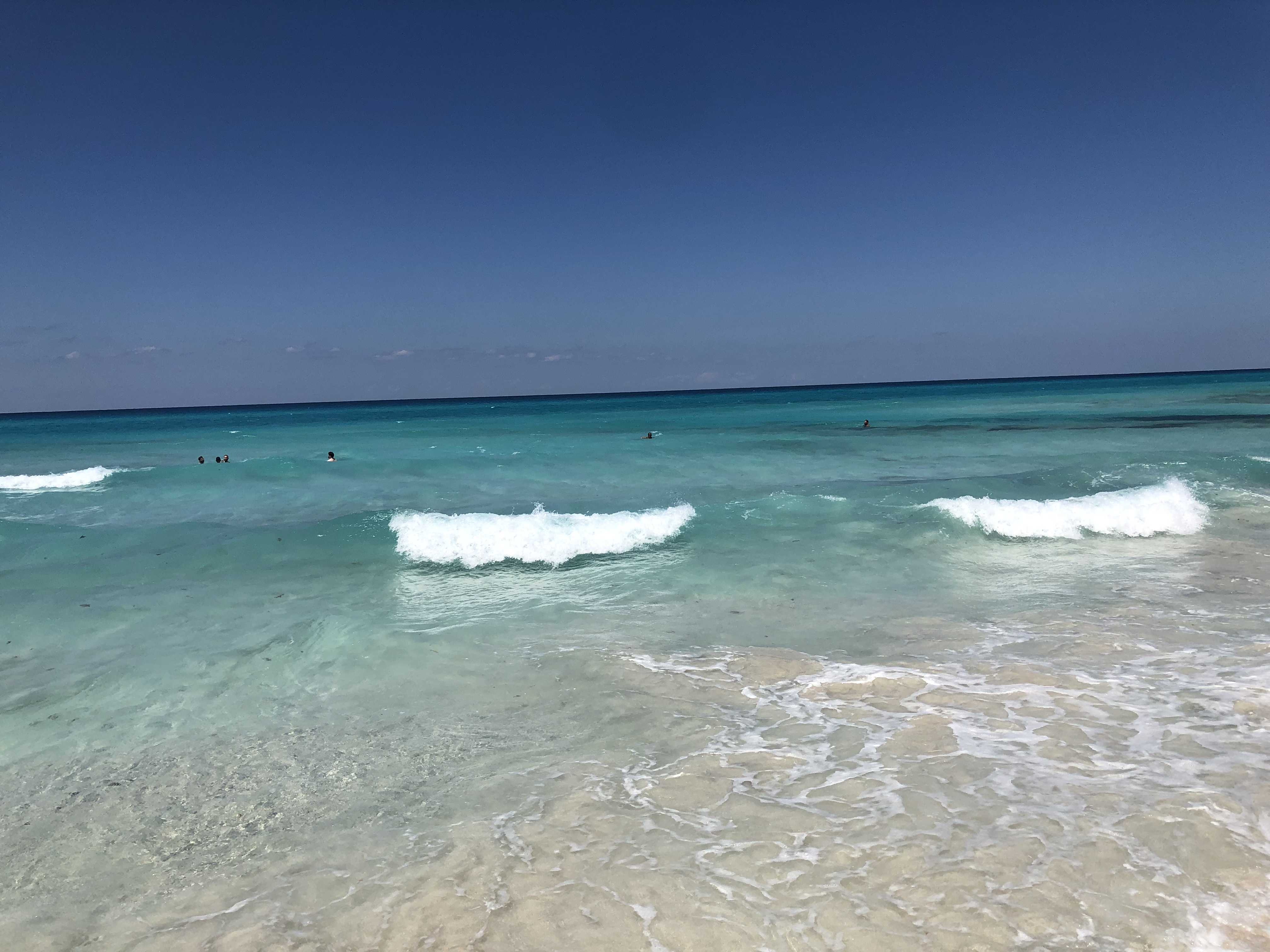
Don’t get me wrong, the beach was nice (if a little too much seaweed by Australian standards). You could get an ok meal cheaply. And Varadero could be considered a good holiday by some… just not us.

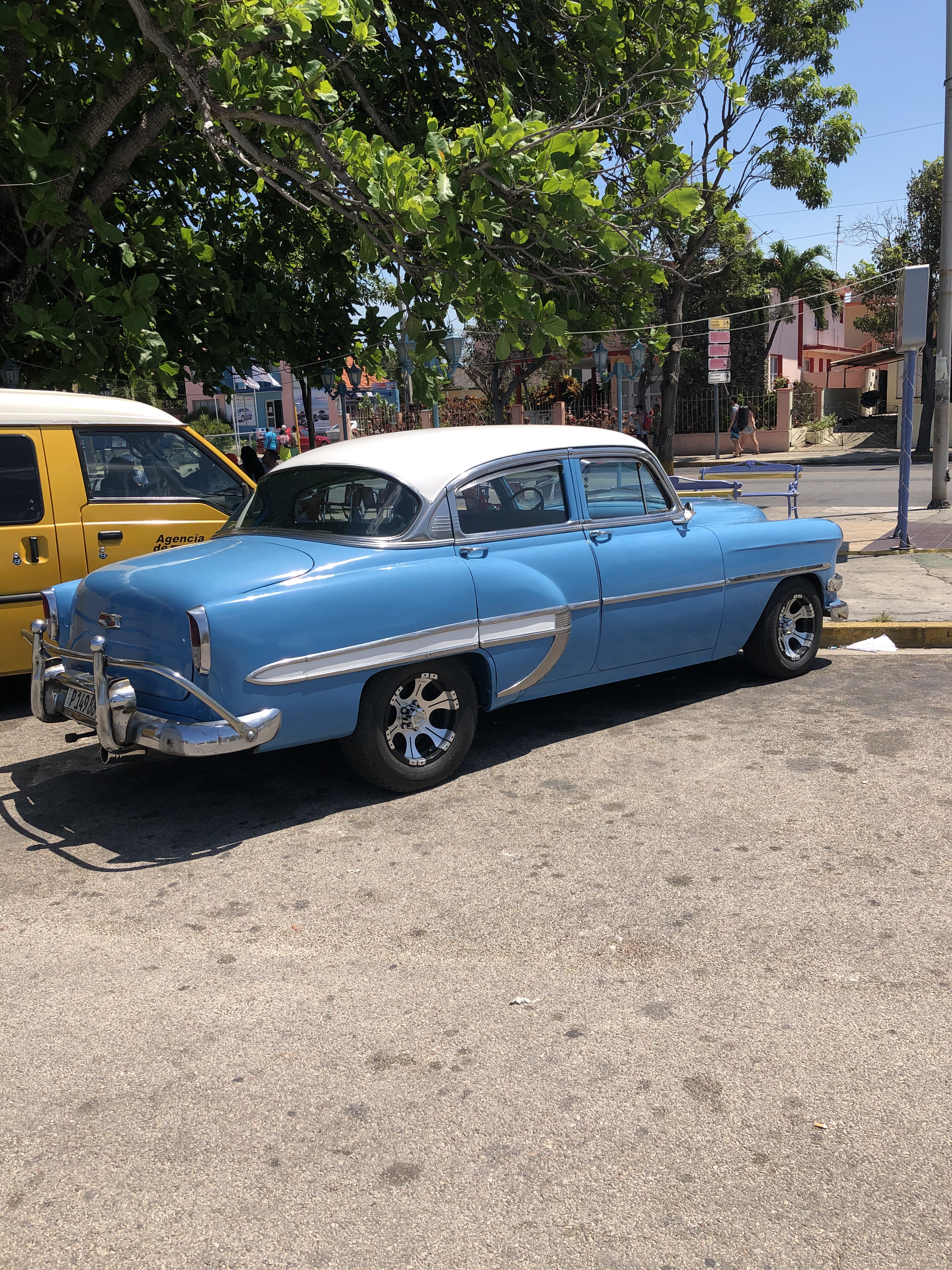
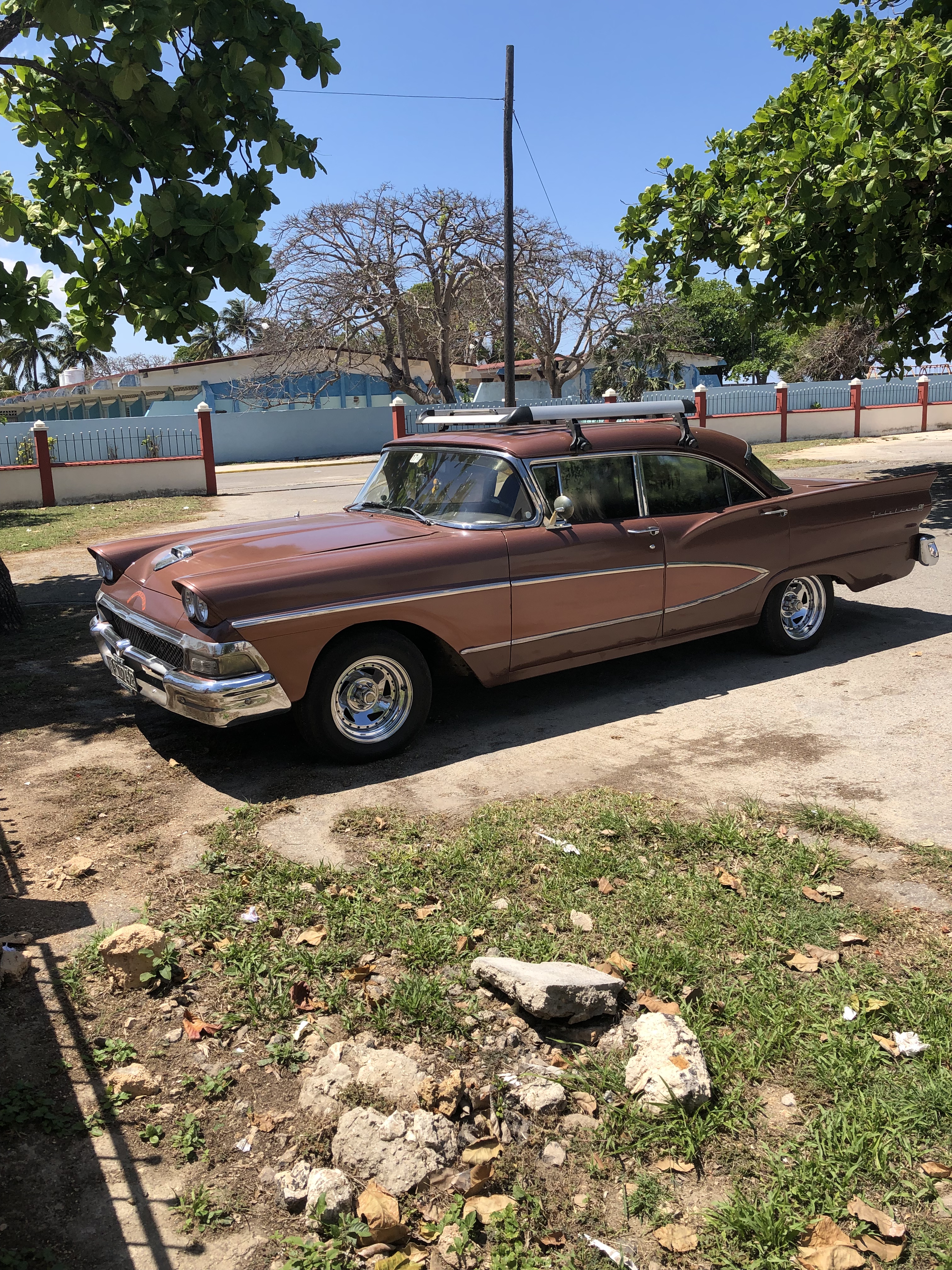
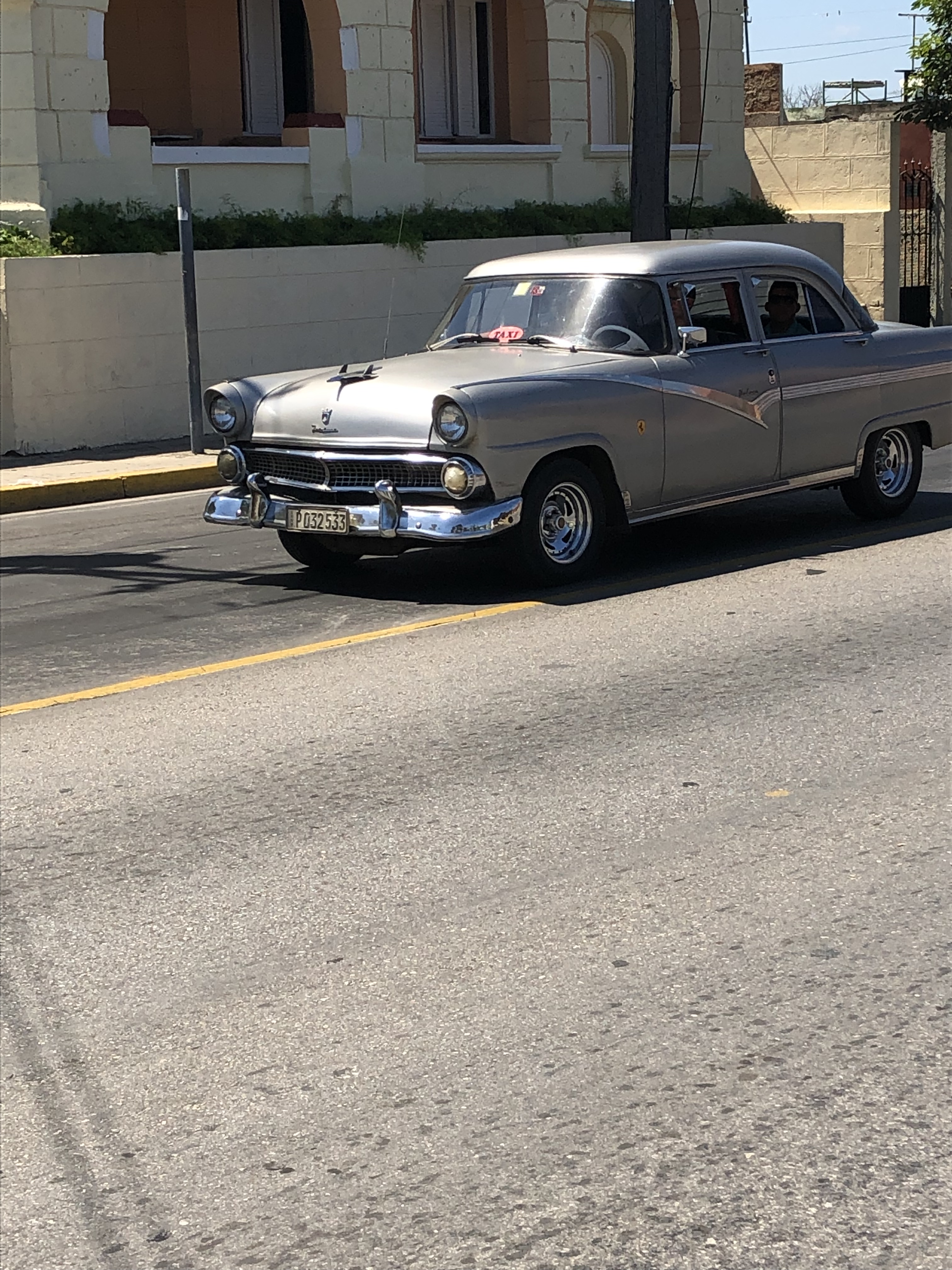
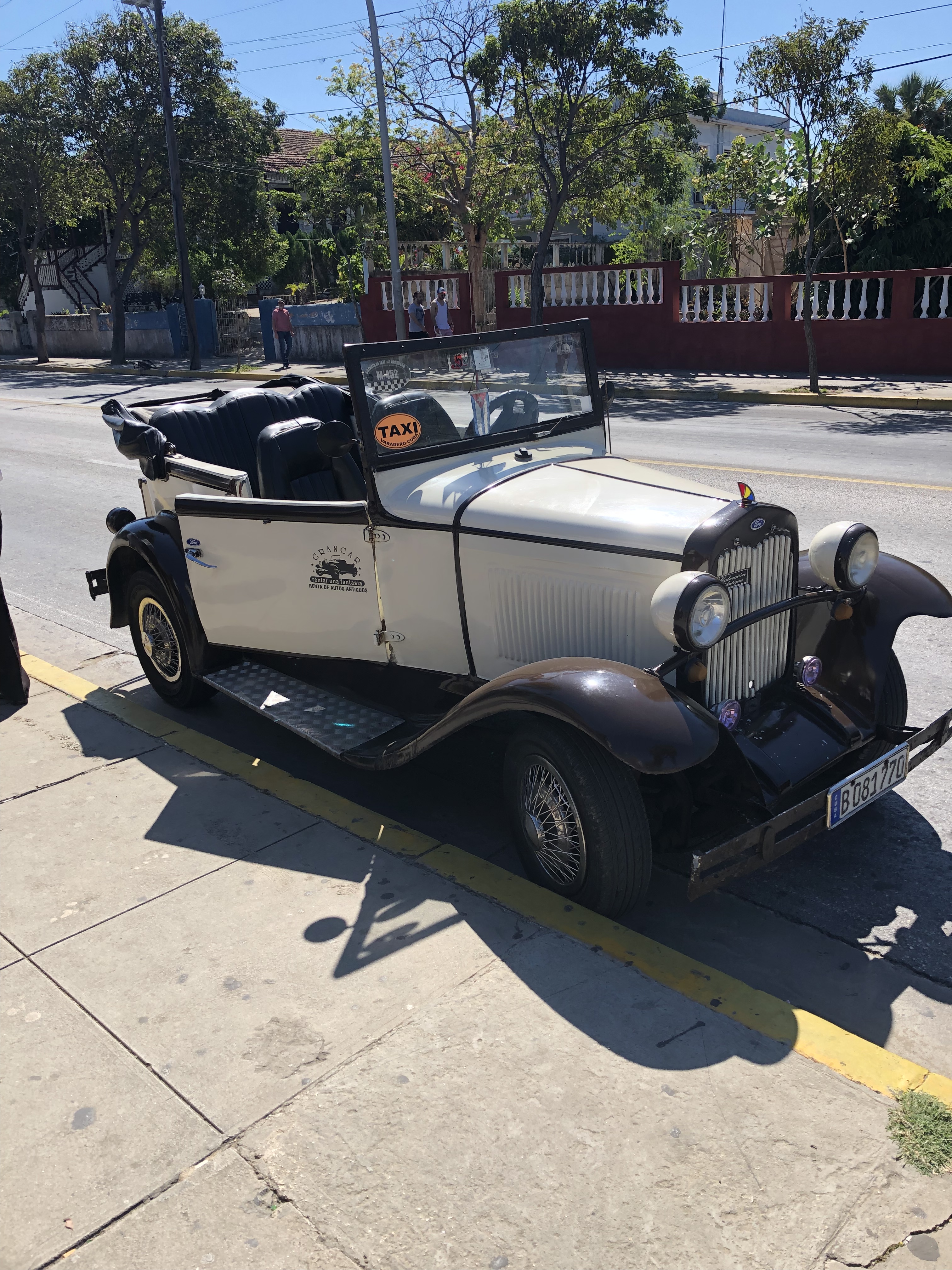
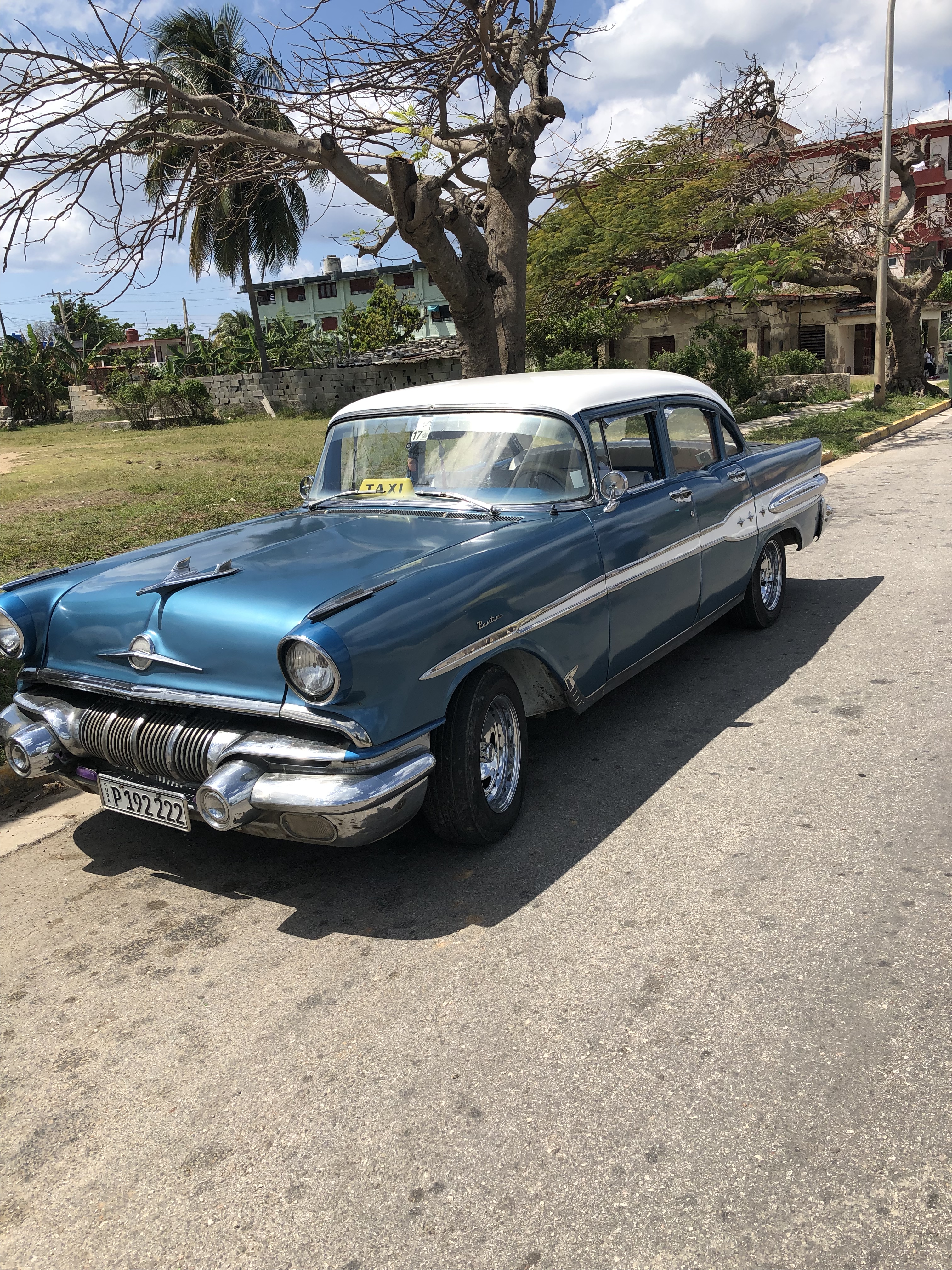
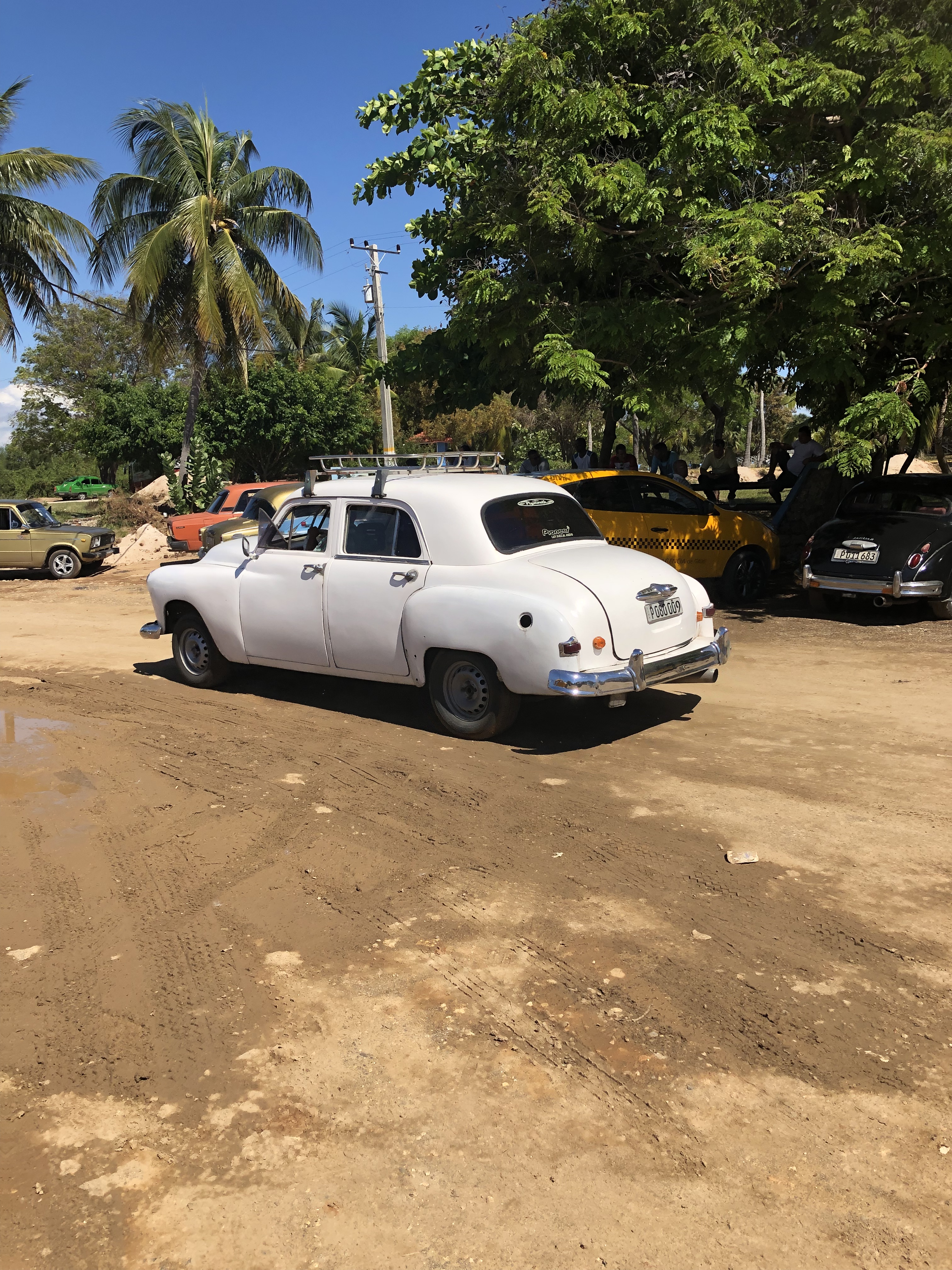
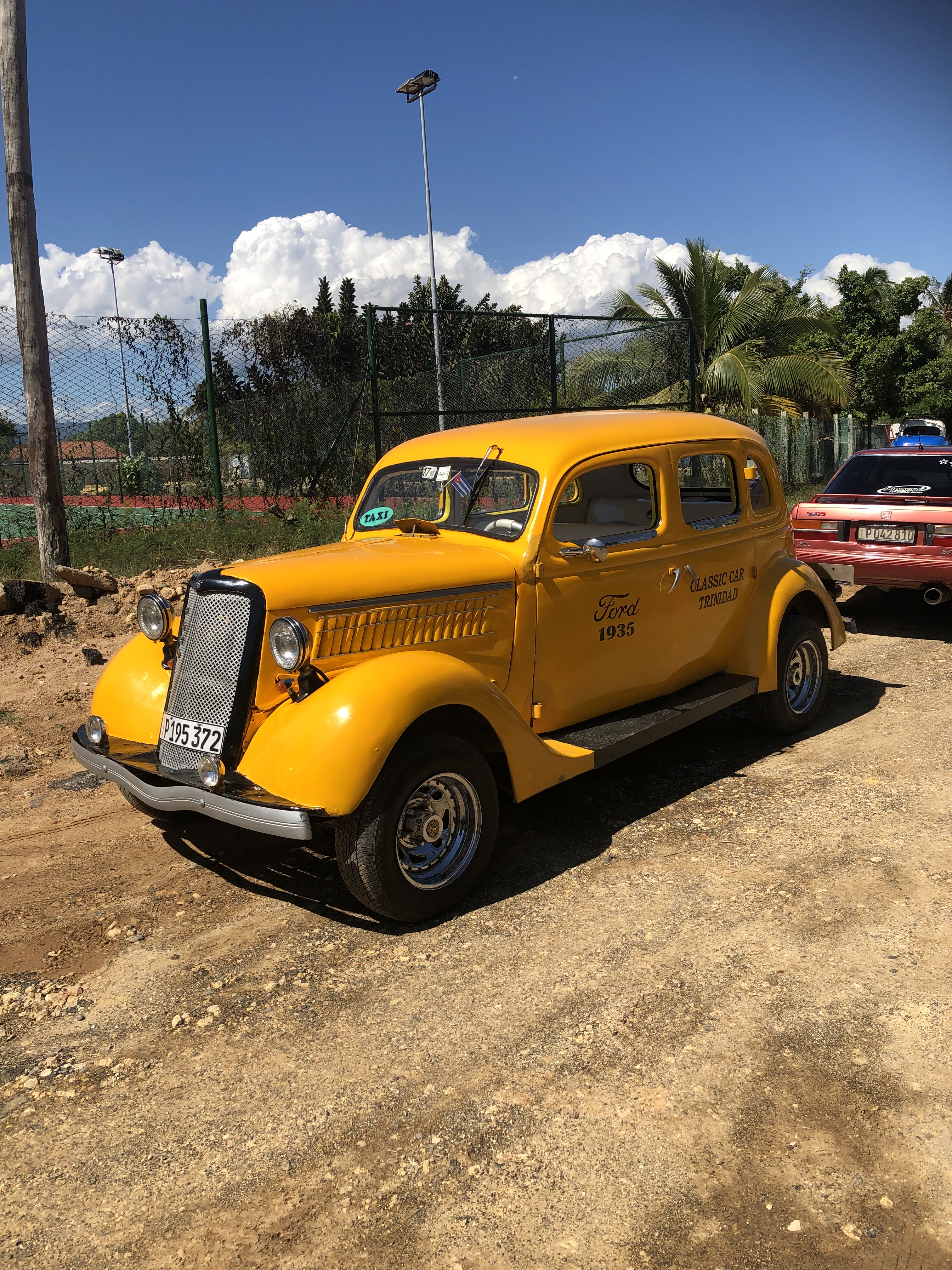
But as with all of Cuba, the classic cars were everywhere. We got a 1957 Plymouth as our standard cab from the bus station. We wandered the street to see gangs of drunken package tourists, clinging to their refillable booze jugs or kegs, being generally loud and obnoxious. And I am sunburnt, here I am an Aussie surrounded by Europeans and I am the one glowing red. I feel like I should hand back my Australian card…poor form.

In short Varadero was hellish, but it was insightful as an example of everything that we would never want to do on a holiday.

Cuba an overview

On the whole I loved Cuba and am so glad I got to experience it before the tourist hoards turned it into every other largely homogenous island nation. But it is an island of contradictions. Many of the things that give it its charm are also detractors to its effective operation.

Rubbish collection is a major issue in Cuba with many corners occupied by stinking, messy skip type bins awaiting removal. Dogs infest the streets during the day, rifling through the uncollected rubbish bins. Cats cannot be seen during daylight hours but come out in force at night and (yep you guessed it) raid the uncollected rubbish bins. This means that very little of the rubbish remains inside the original receptacle but rather is scattered in the vicinity. And when it does get collected, only that which remained in the bin gets removed, leaving piles of filth and stink on many corners.

The lack of internet was annoying but less of an issue than I thought it would be. The adoption of the French attitude to smoking (including at meal tables) was more of an issue than I thought it would be. But the people are wonderful. There is virtually no crime, no drugs, no guns just sunshine and sea breezes.

Propaganda (anti US) remains high to this day. Billboards are filled with images of Fidel Castro or Che Guevara and words like viva la revolution are commonplace, especially in the country areas.

And of course there are the cars…


Cuba

Havana

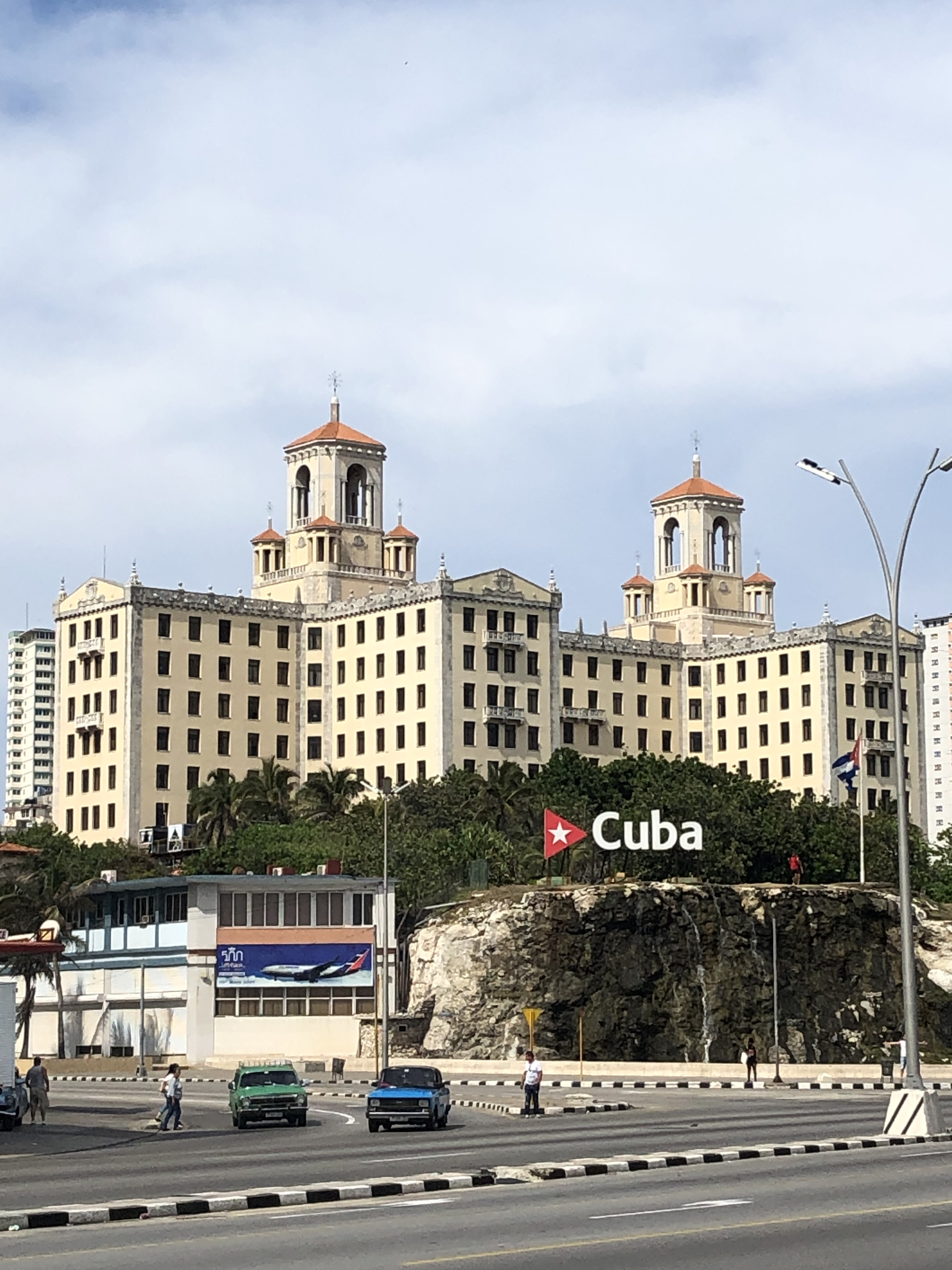
After less than a day…this place is everything that I had hoped it would be…I love it. You get an idea in your head of what a place will be like and are usually disappointed…but not here.

We arrived late afternoon and had an absolute nightmare at the airport trying to get our money changed over. They have unmanned money changing machines…not ATMs but rather you scan your passport place in euros and retrieve the local equivalents… and there are only 4 of them…this doesn’t work very well when you cannot get the local currency (the CUC) elsewhere and you have 3 plane loads of people trying to get cash…simultaneously.

It is probably timely to mention that Cuba has two currencies that operate in parallel. The one that tourists use is the CUC which is worth the same as a $US. But if you try and swap a $US for it, it will attract a 10% surcharge. Euros and Canadian $ are the currencies of choice and they attract no surcharge. The second currency is the CUP which is used by the locals and is the equivalent of about 4 cents. So one CUC will buy you 26.3 CUP. Obviously, this adds a degree of difficulty to getting change.

So back to the airport, we stood in line and waited…something that we are learning is also a very Cuban thing to do. We got to our accommodation to find that they were full so we would stay 2 doors down at the neighbour’s place…Cuba does not do much in the way of traditional hotels or hostels, it is more like a home stay, where you rent a room in someone’s home…it was all good and we finally met up with our intended host the next morning.

Our accommodation was in the middle of everything but nowhere near anything…we were relatively equidistant between Old Havana, New Havana and Chinatown…but still quite a walk from most things. On night one, after the airport, money and housing debacle, we headed out for a walk and a meal. We got to the water and wandered along the esplanade (Malecon) seemingly not having passed by any restaurants. Either this was wrong, we were unlucky or we just had yet to pick up on the rhythms of the place. Having eventually found a place for dinner and eating well (if expensively by Cuban standards) we called it a night.

For $5 a head the little home stays offer breakfast, and ours was no different. So our first full day in town started with fresh fruit, fruit juice, coffee, fresh rolls, egg, ham, cheese and a great chat with Charlie another houseguest (Canadian). We then got about the rest of our day. This started with a walk towards old town and the checking out of all of the old buildings.

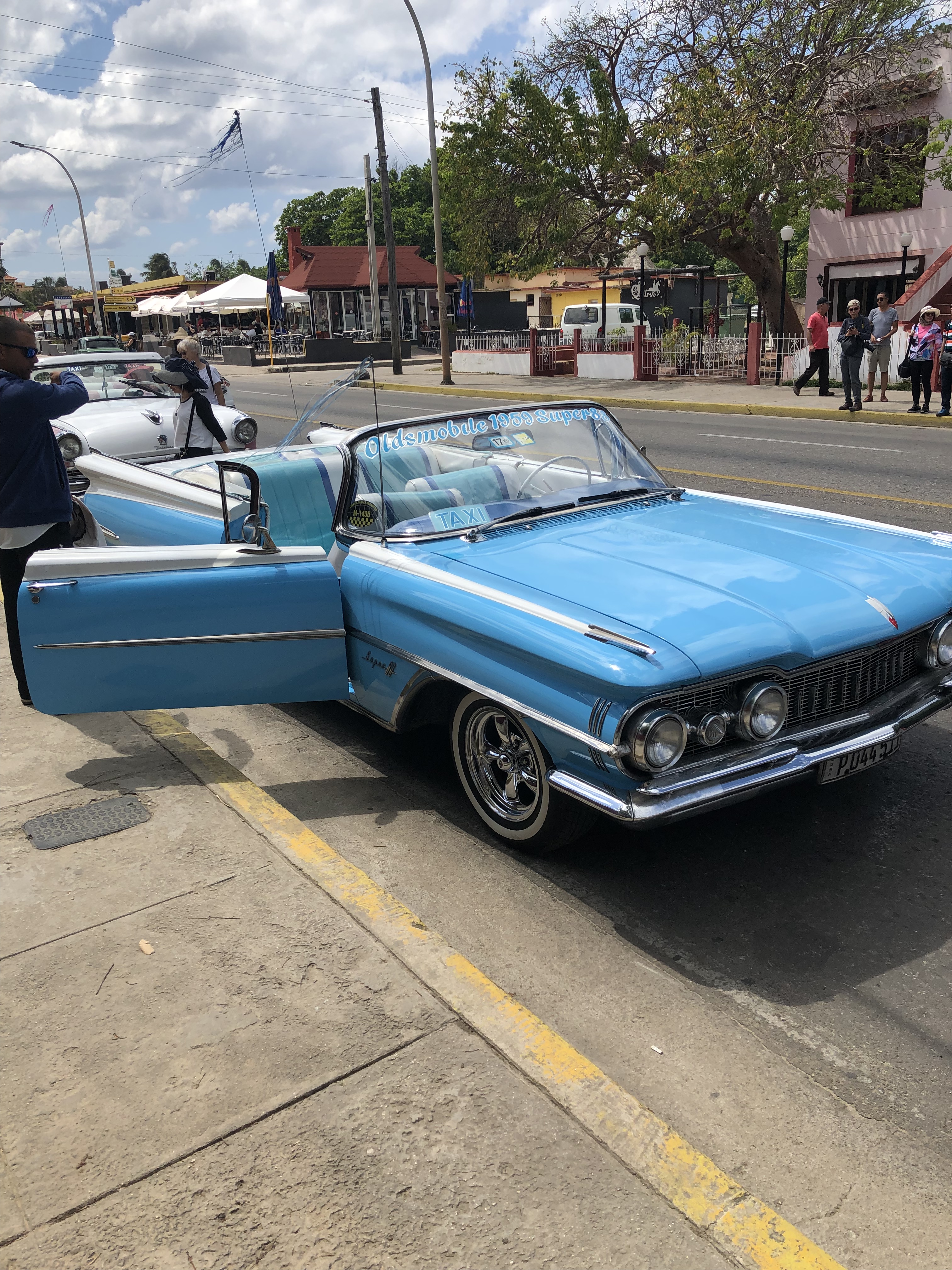
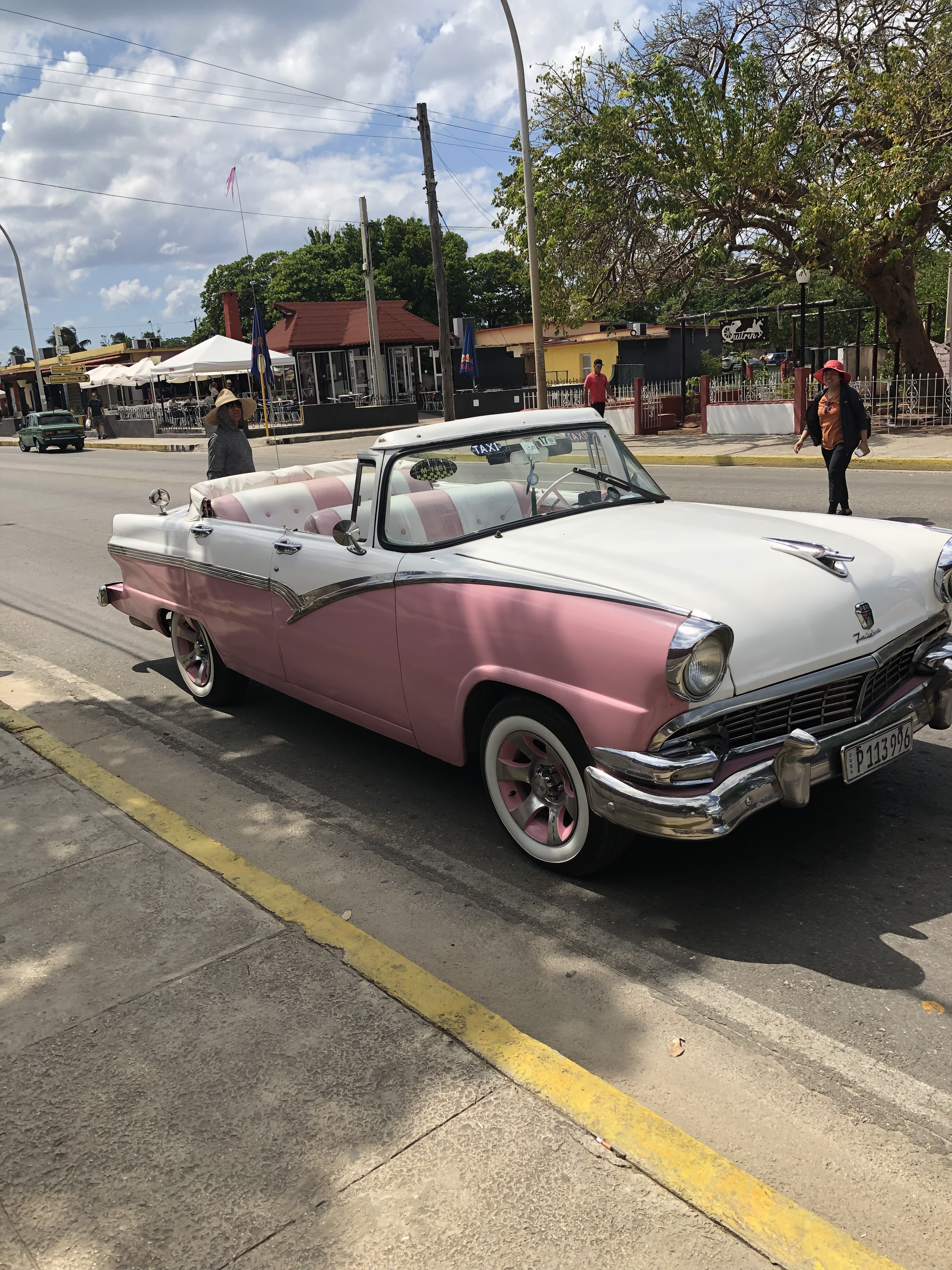
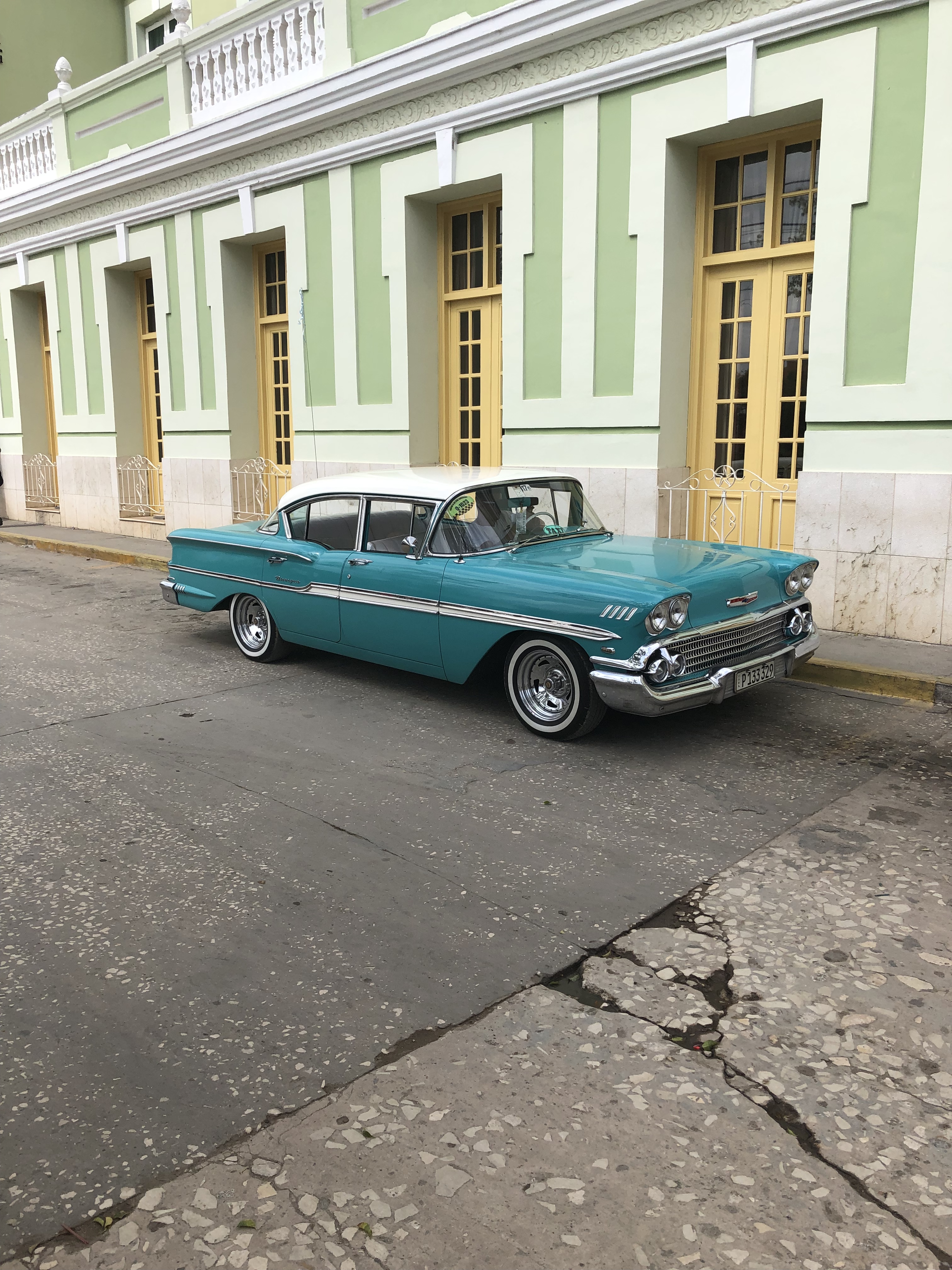
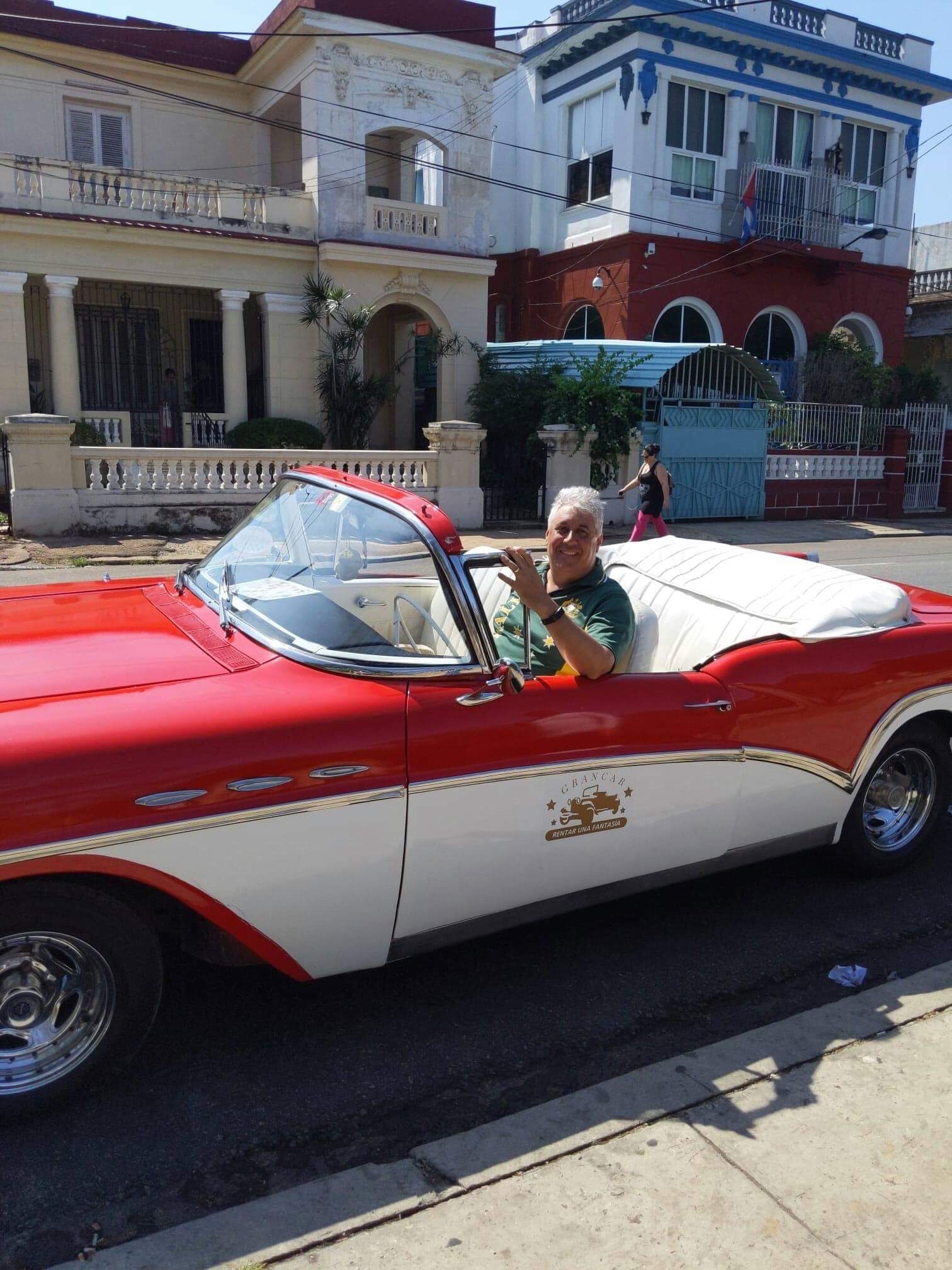
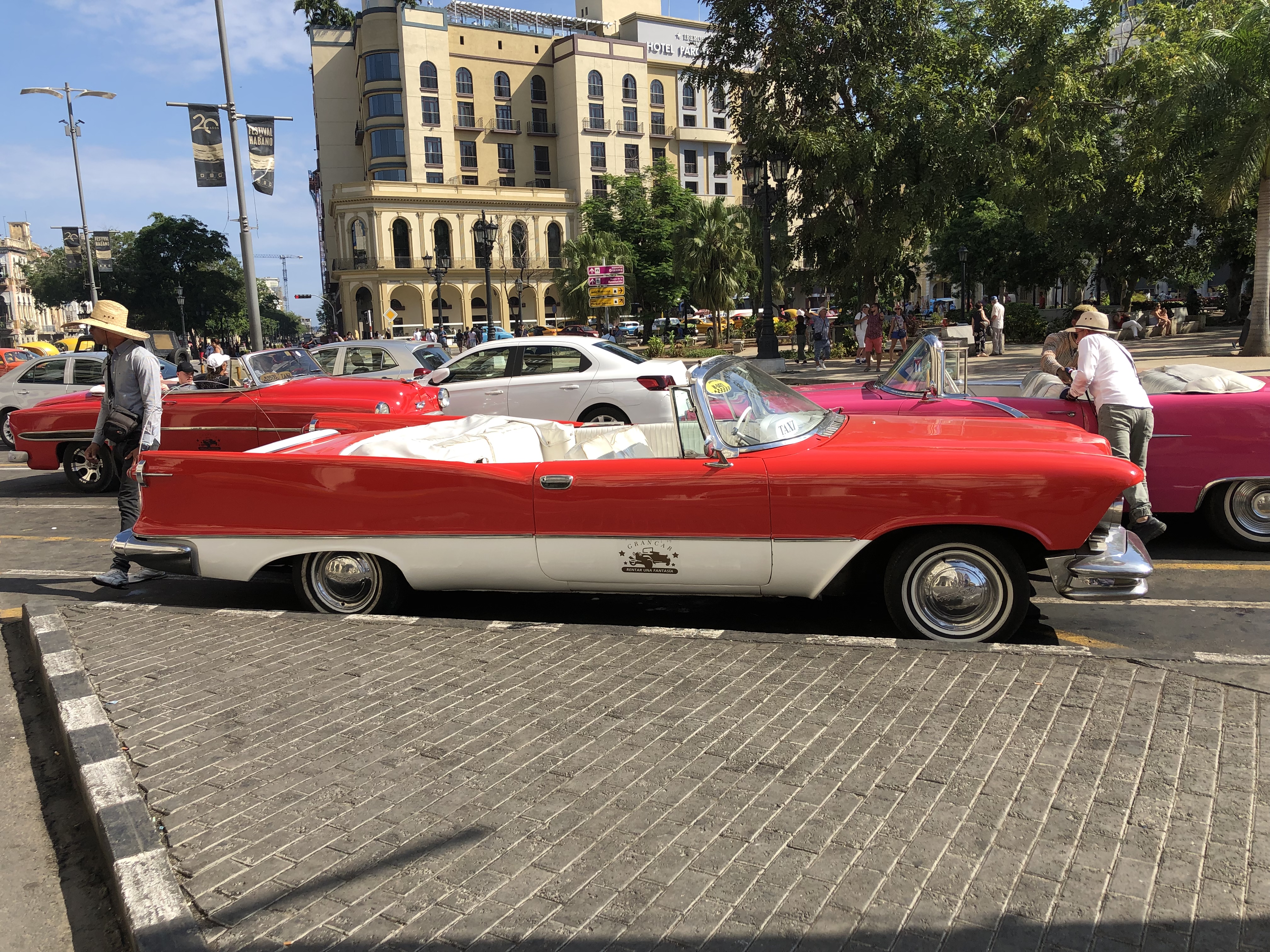
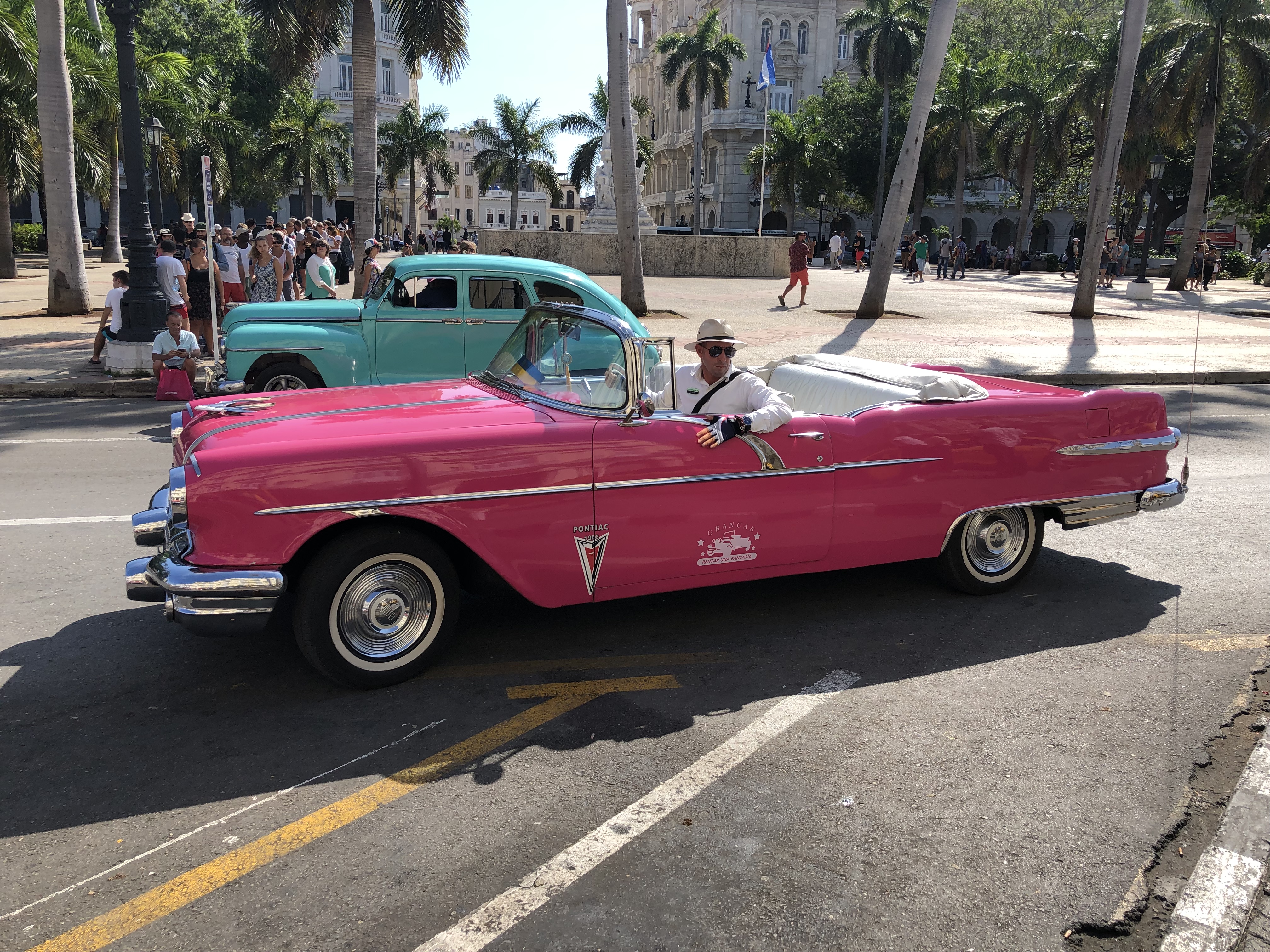
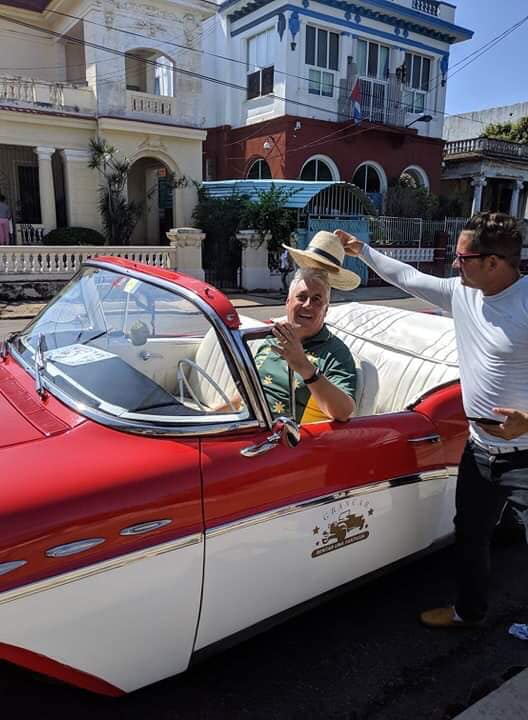
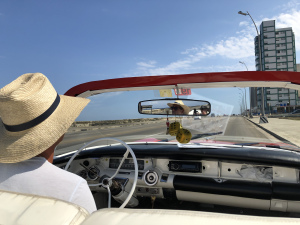
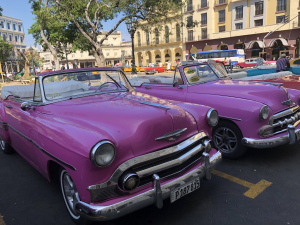
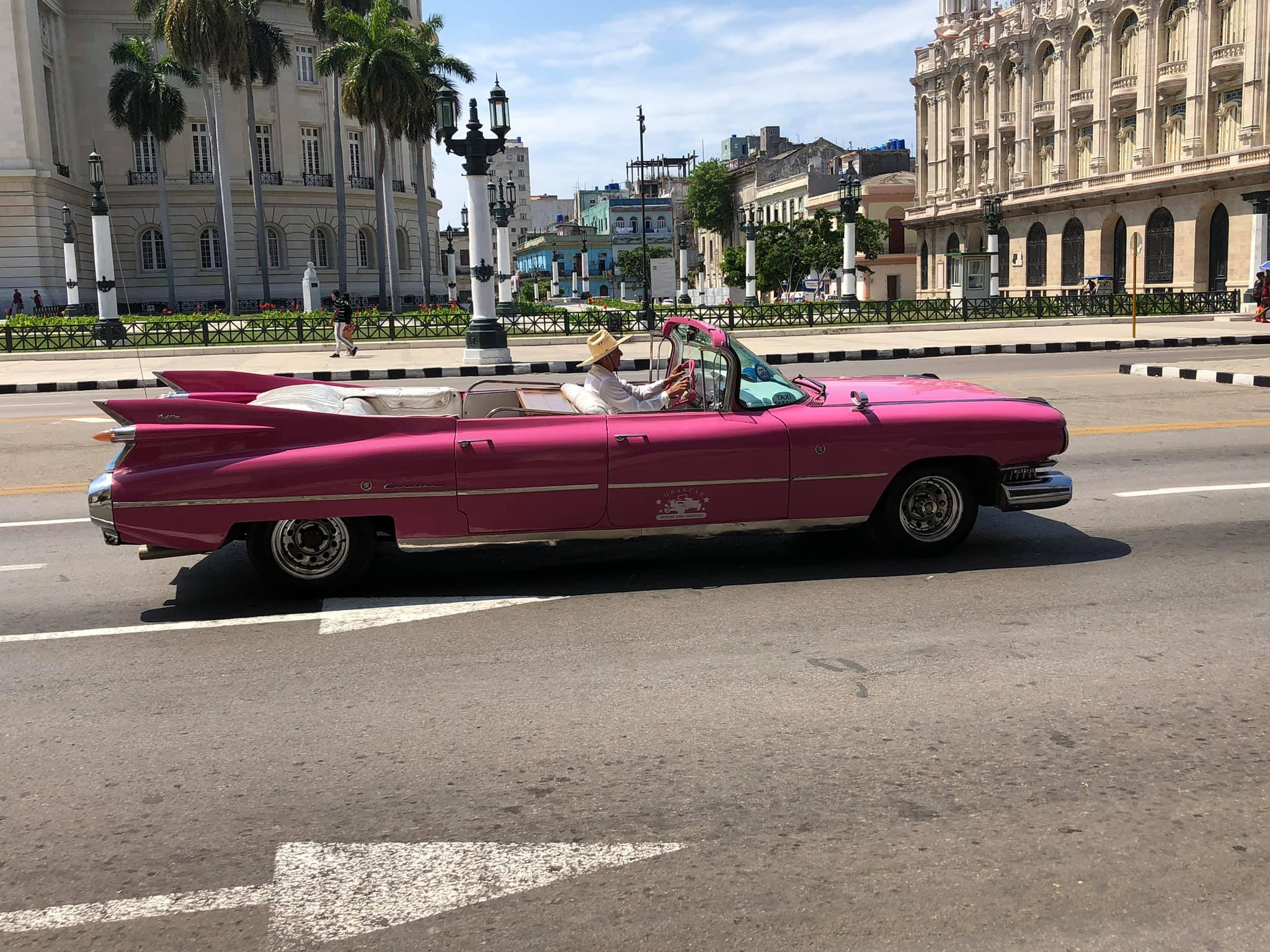
And here the real Cuba kicked in in true style. After bartering a bit (from 80 down to 40) we hopped into our huge 1950’s yank tank for a one hour tour of Havana. While this is incredibly touristy and stereotypical, it was exactly the experience that I had wanted. We sat in the back of our huge red and white convertible (Jill wanted pink but the guy with the pink one wouldn’t barter with me), being chauffeured by a dude wearing a Panama hat, while Cuban music blared through the stereo. I managed to get the dude to let me stage a photo with me in the drivers seat (he even put his Panama hat on me briefly).

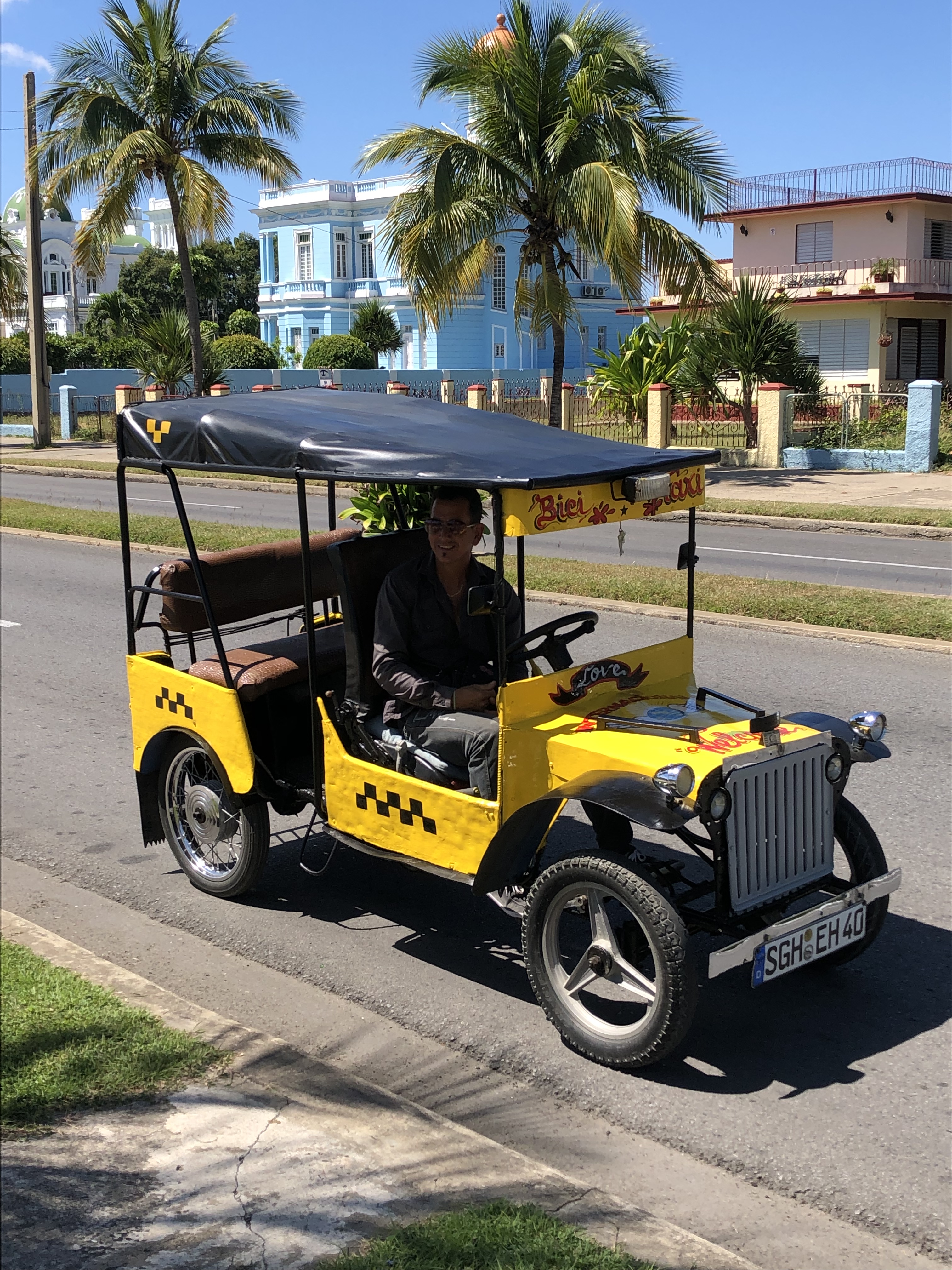
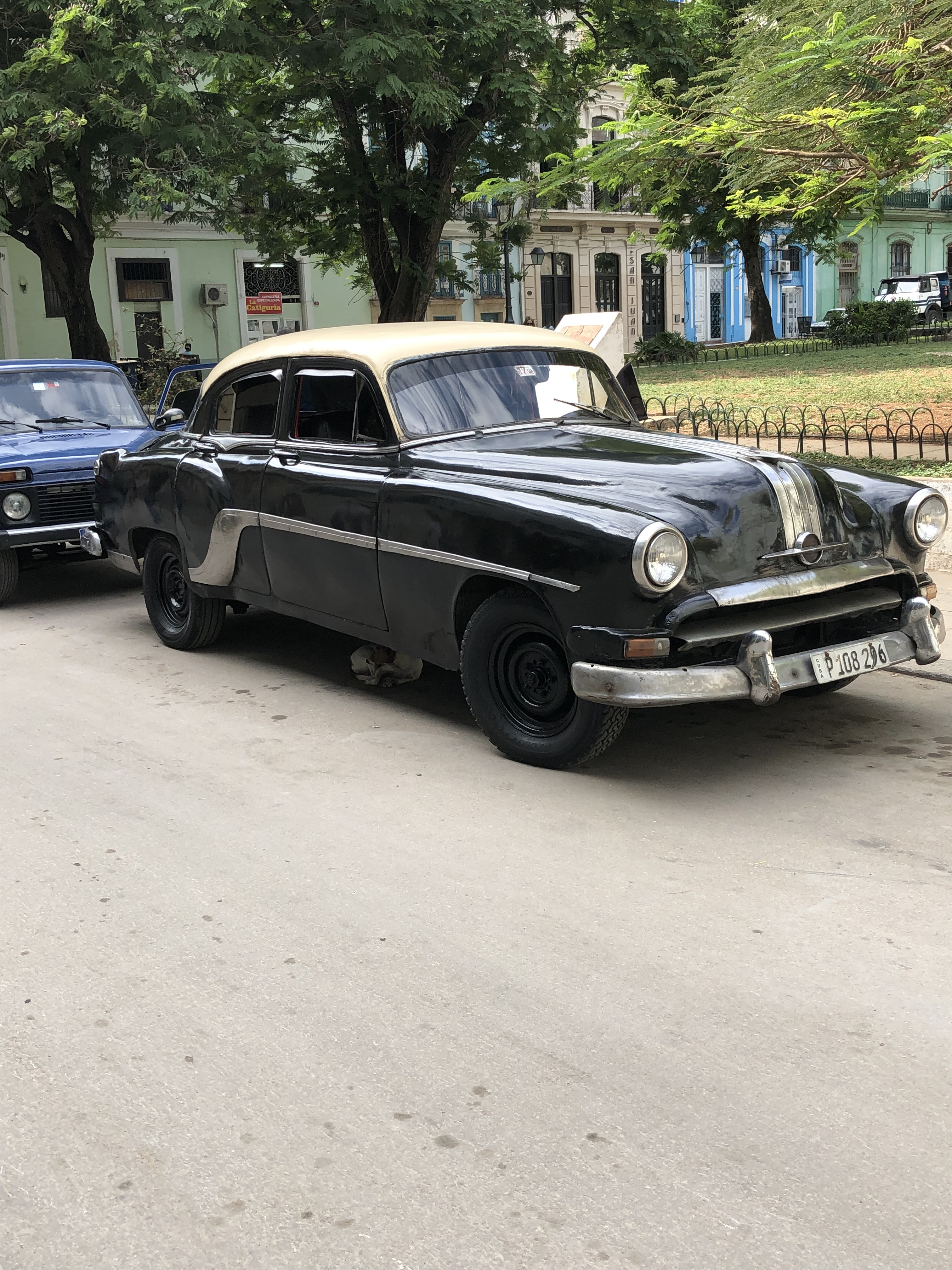
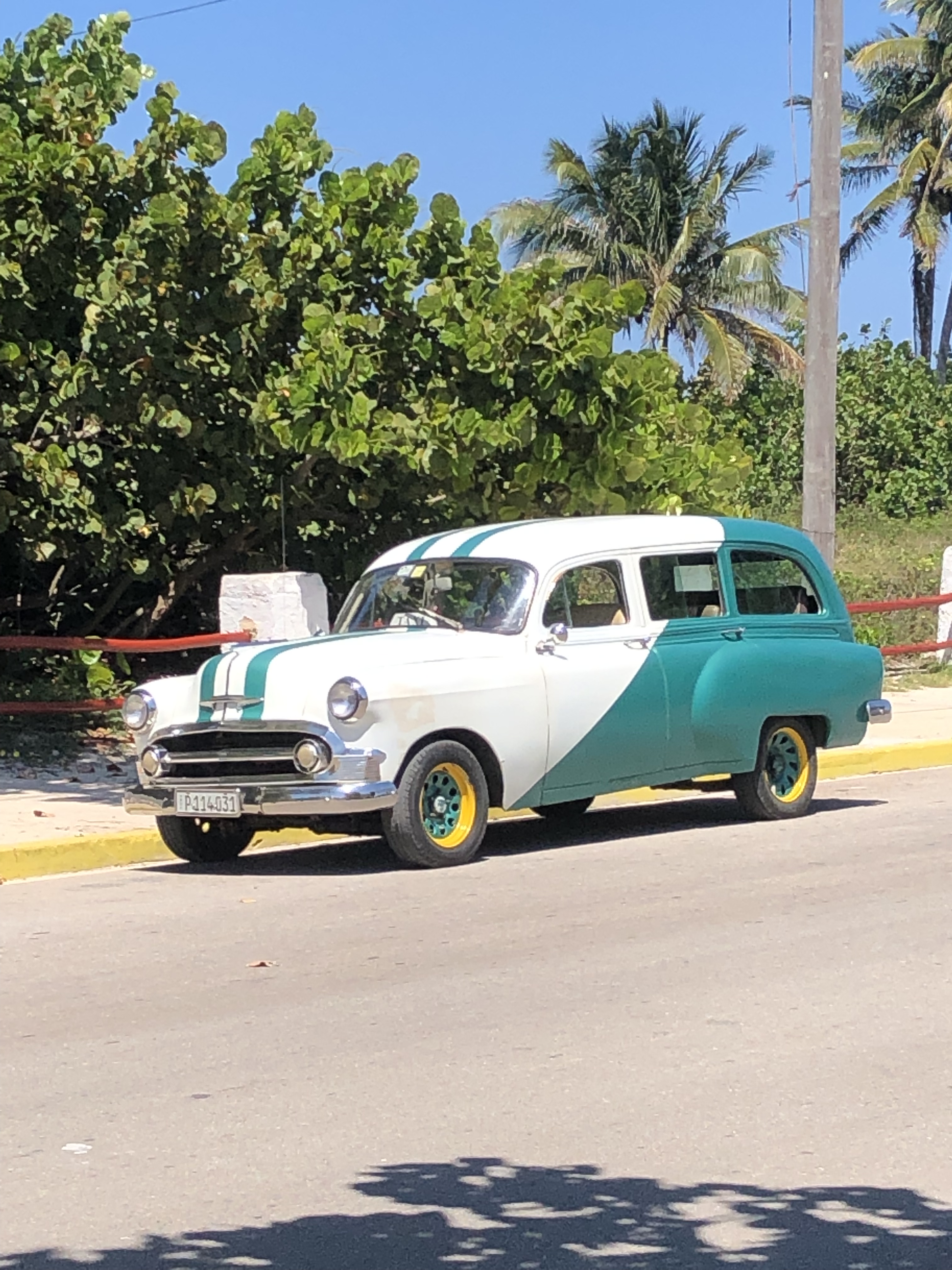
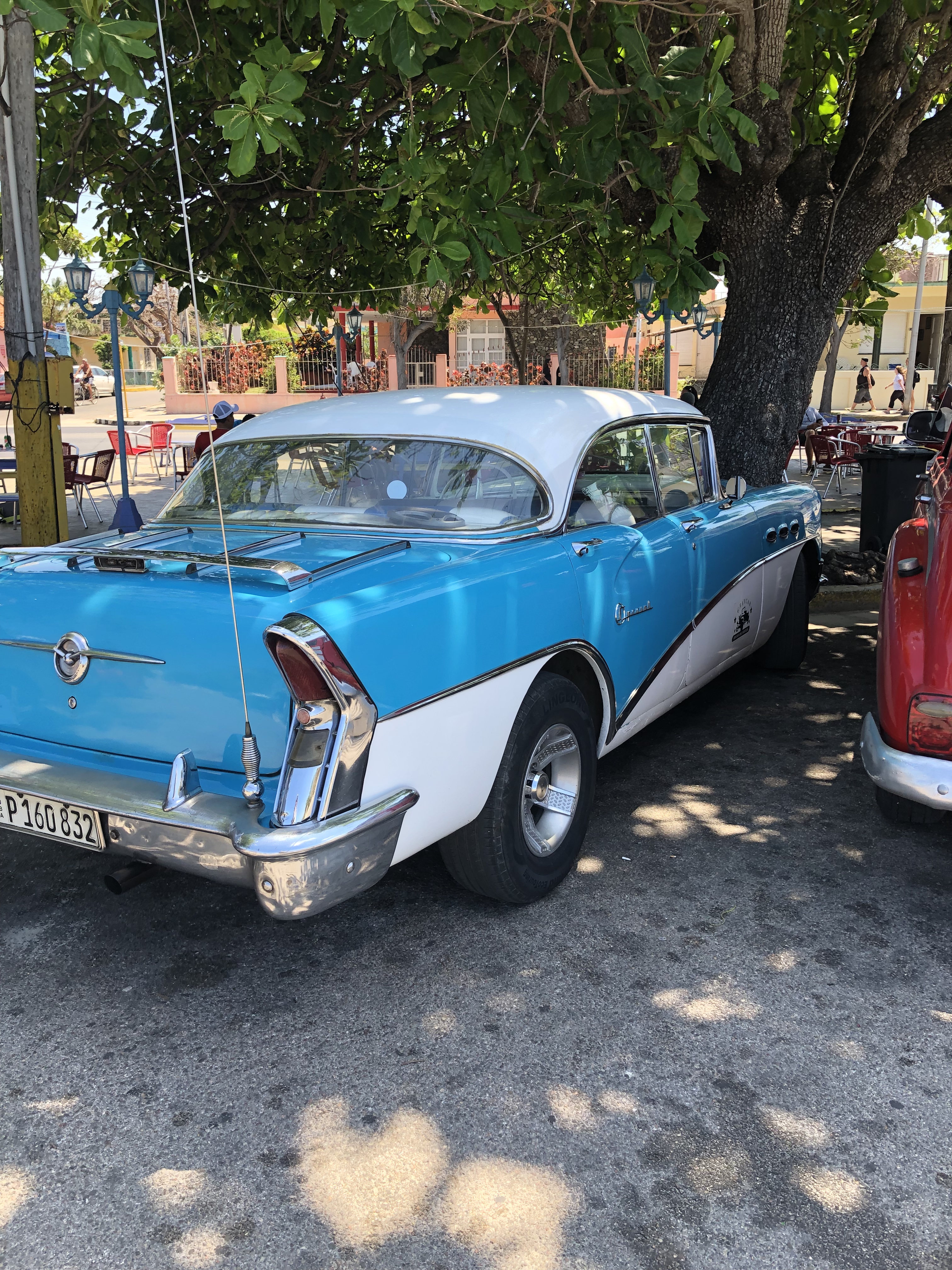
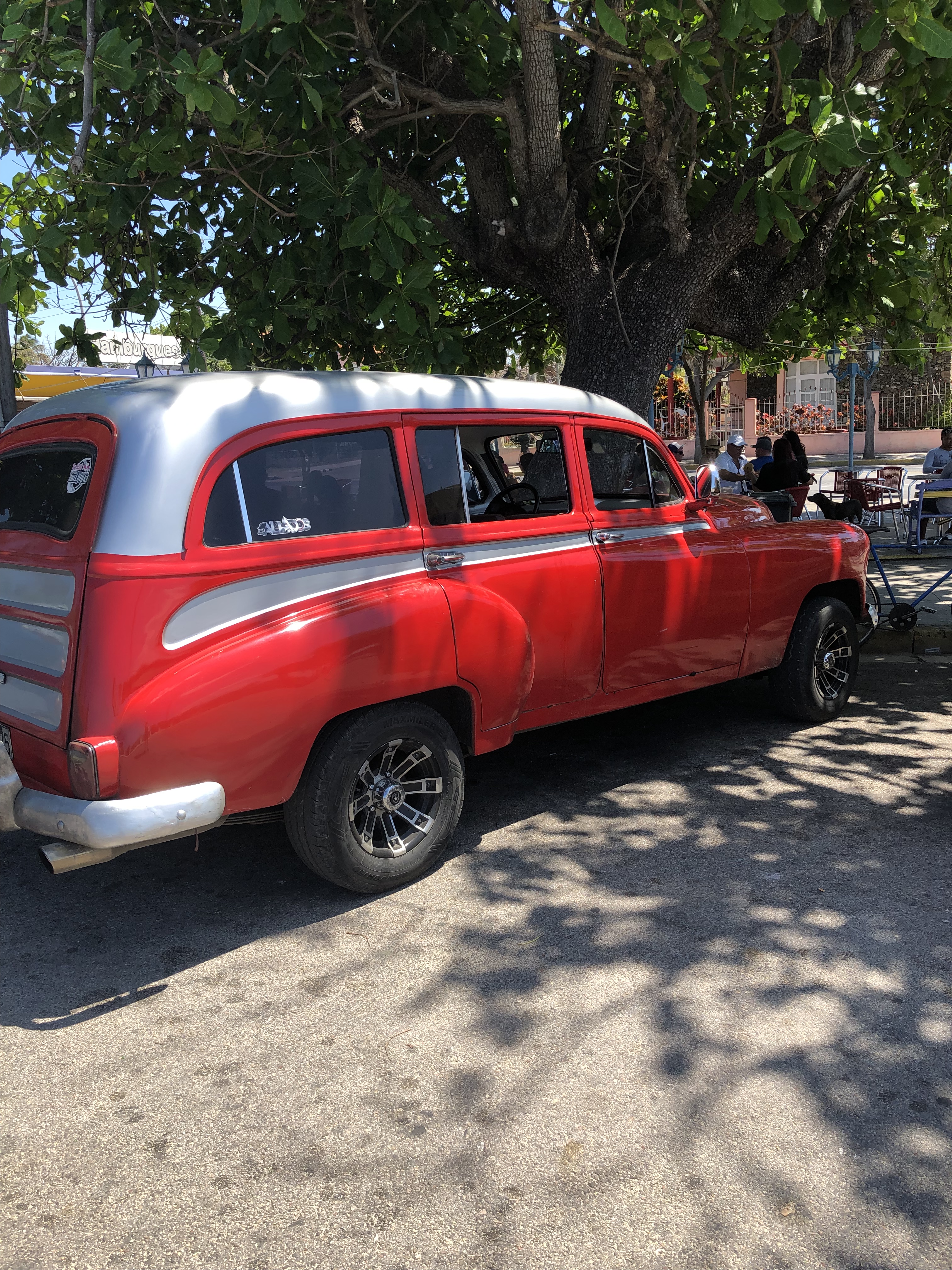
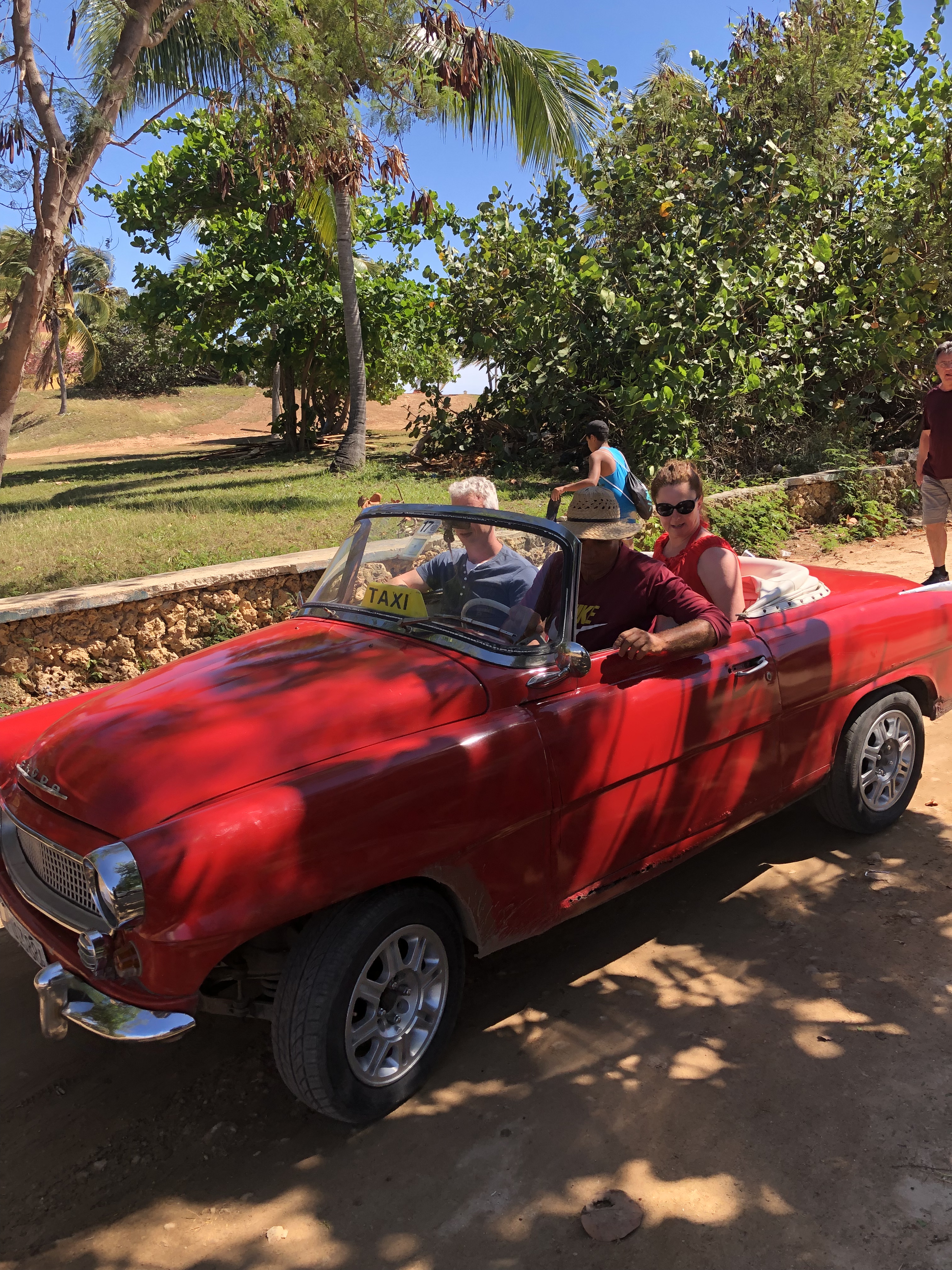
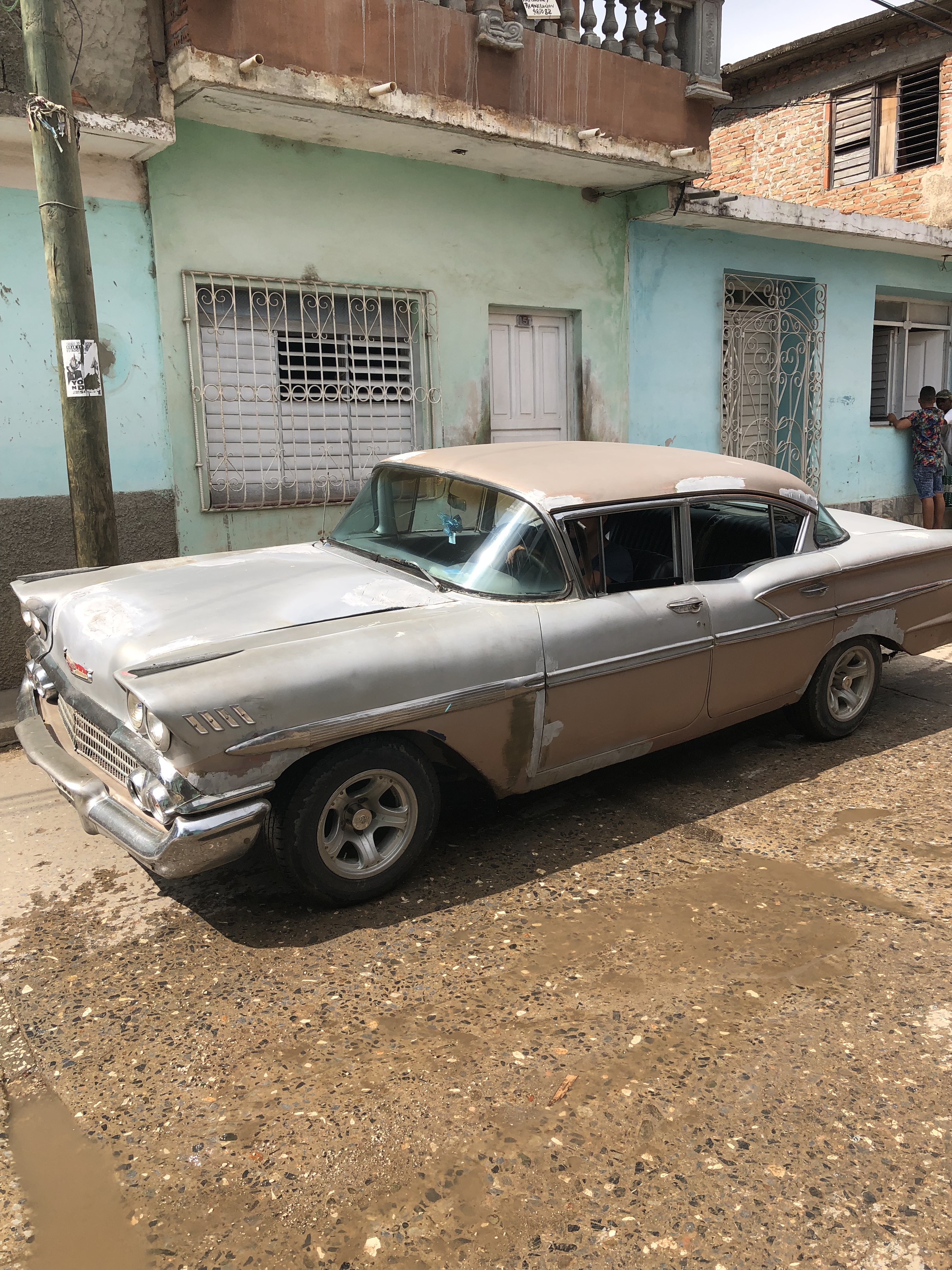
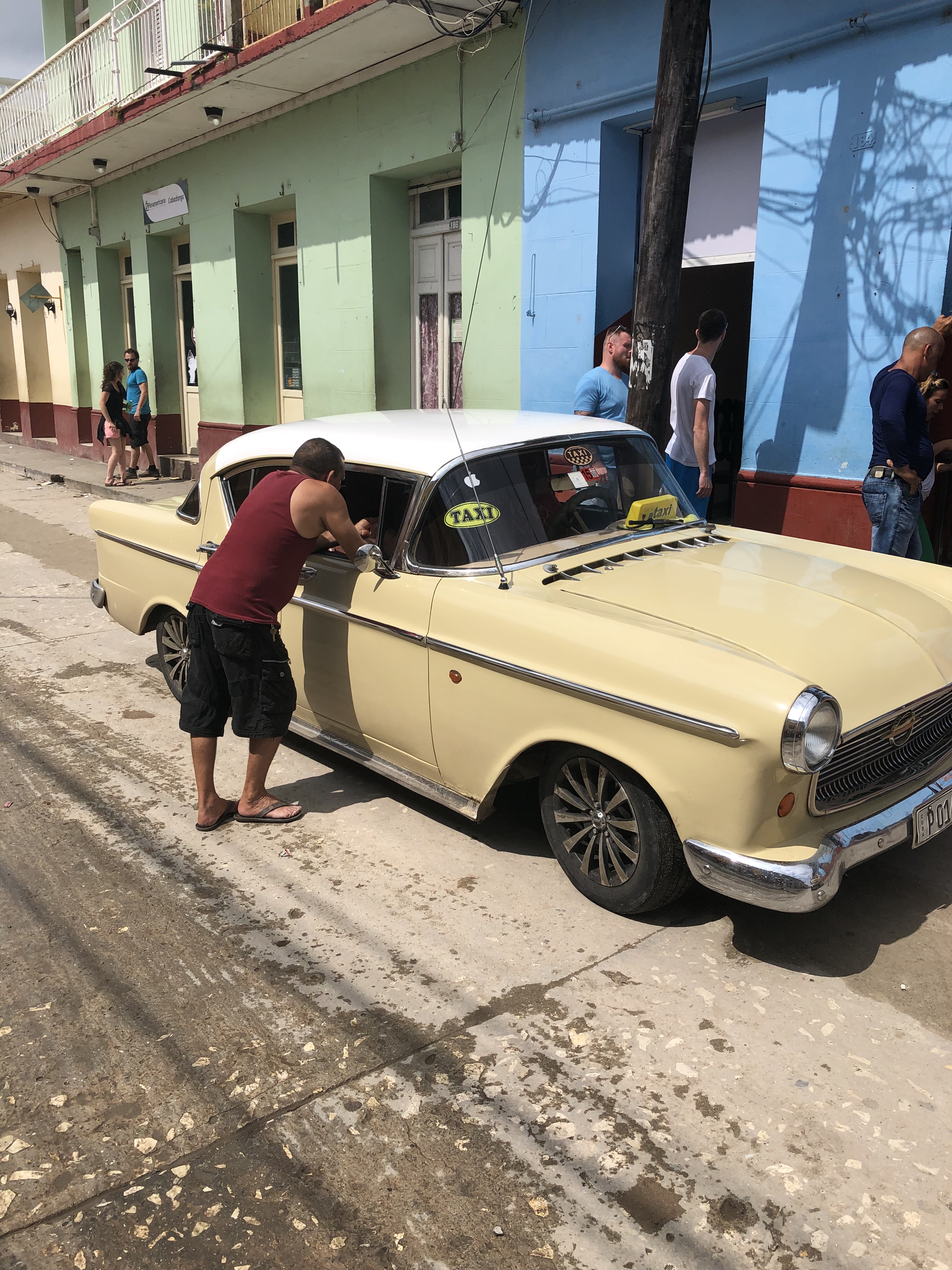
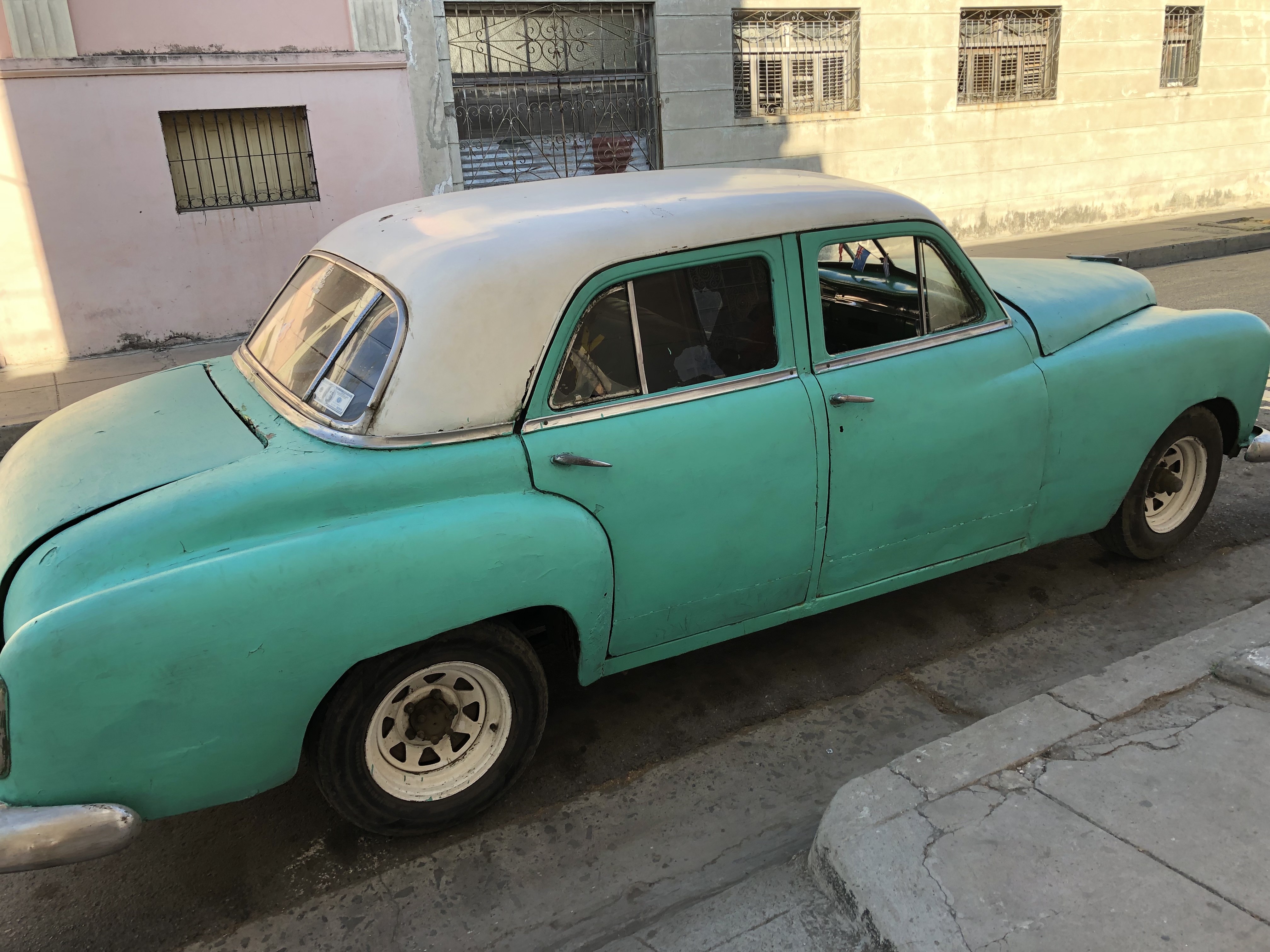
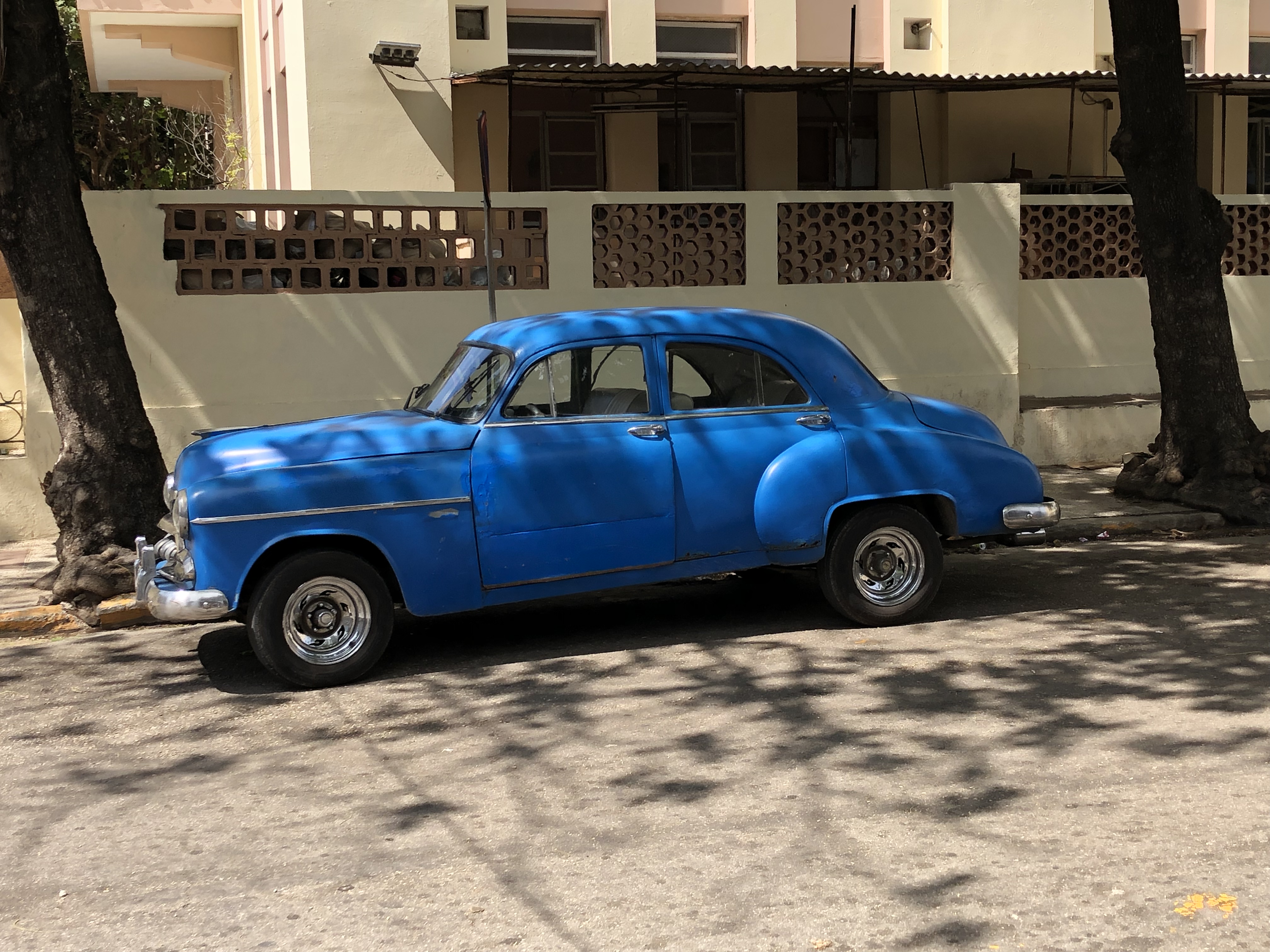
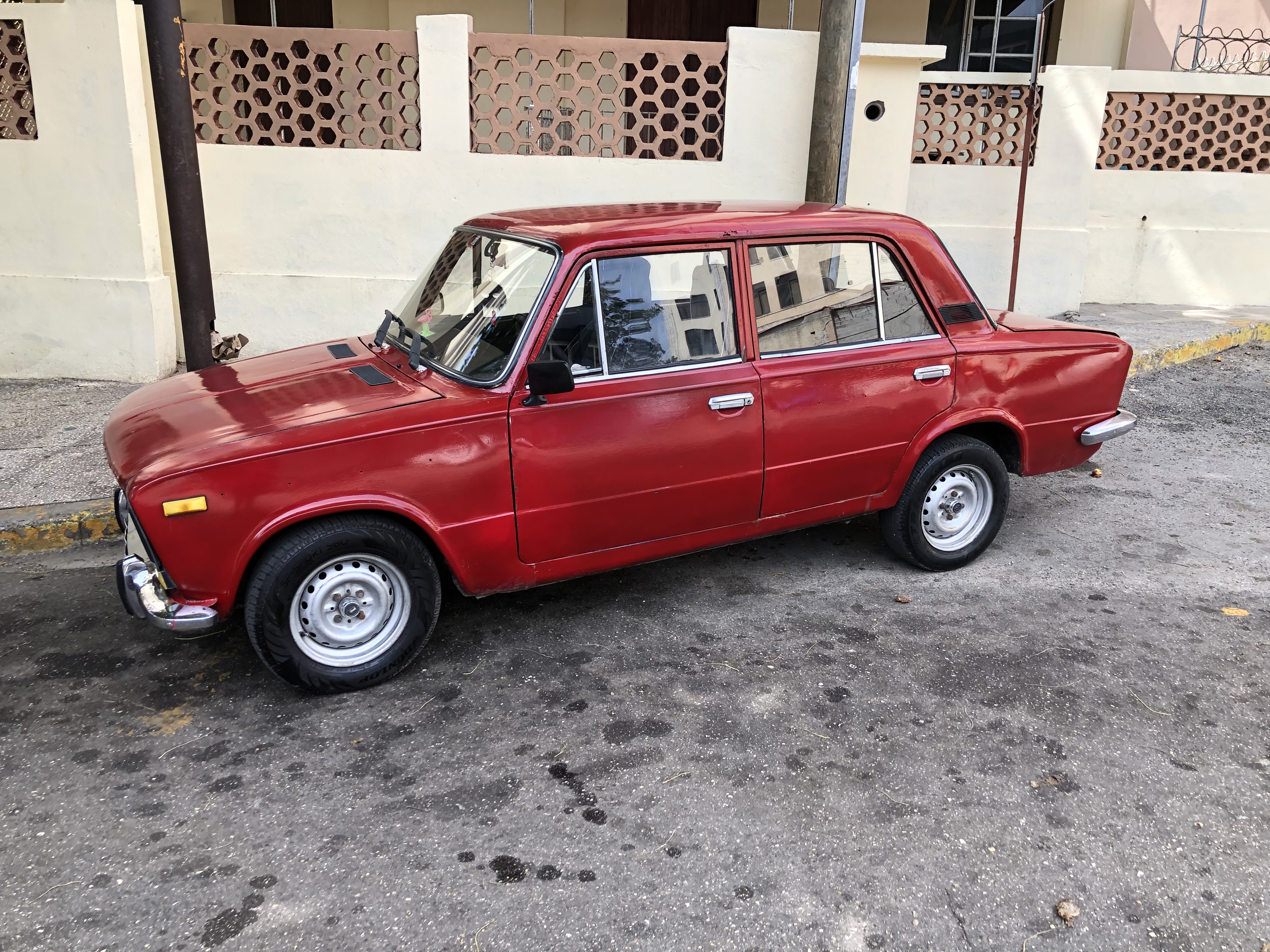
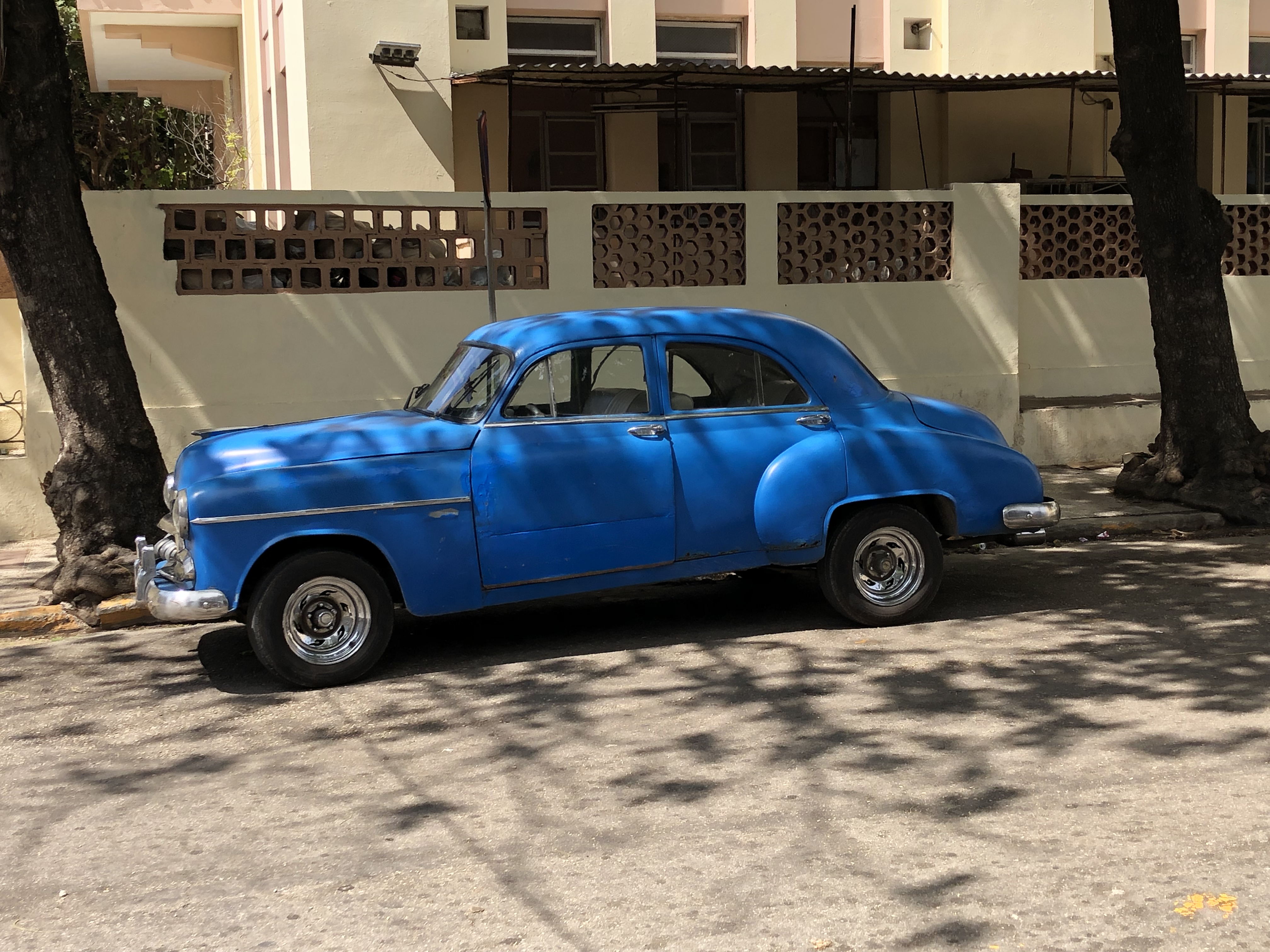
So it is probably time to talk about cars in Cuba. For the most part they are all pieces of shit. The most common vehicle that you will see is the Russian made Lada. They are ugly, loud, smoky, smelly and quite frankly it is mid blowing that they are still even running. The next is the classic yank tanks…the majority of these are clapped out, poorly maintained, bashed up, beaten and in sad need of either TLC or scrapping. Then there is the convertible tourist fleet that are shiny and pretty for us tourist types. And finally there is a combination of little taxi (type) options…these range from pedicabs, horse drawn carts, old motorbikes (with or without sidecars) and the freaky bubble looking tuk tuks.

So we cruised the streets (either in our car or just walking about) while we took in the sights, sounds and smells of Cuba. For the most part it was enchanting. The people of Cuba seemingly want for nothing, but at the same time they have very little. Education and healthcare is free. Food ration books ensure that everyone has enough of a broad range of food groups, but very few extras or luxuries. The system works but the wants of consumerism are pervasive.

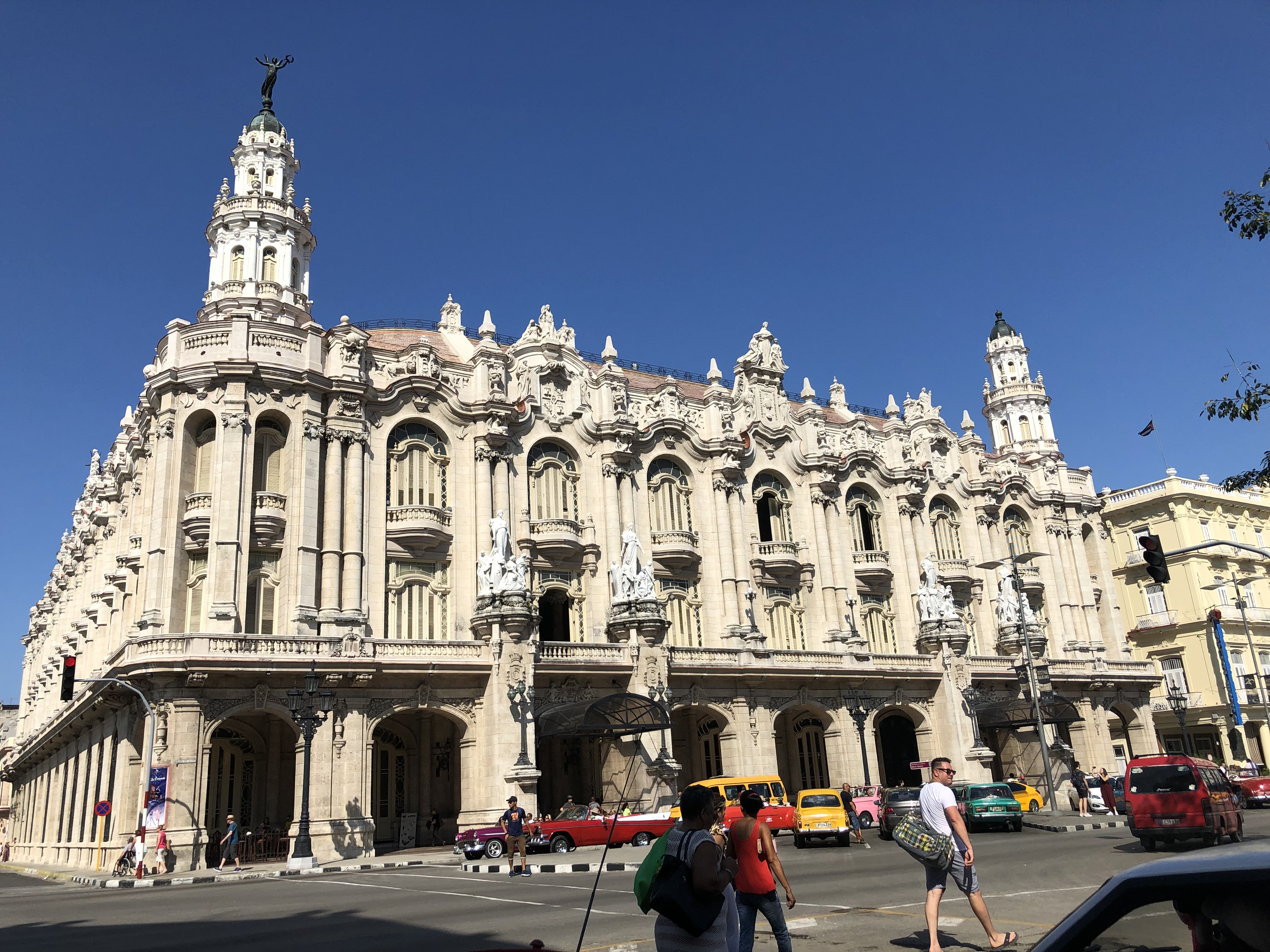
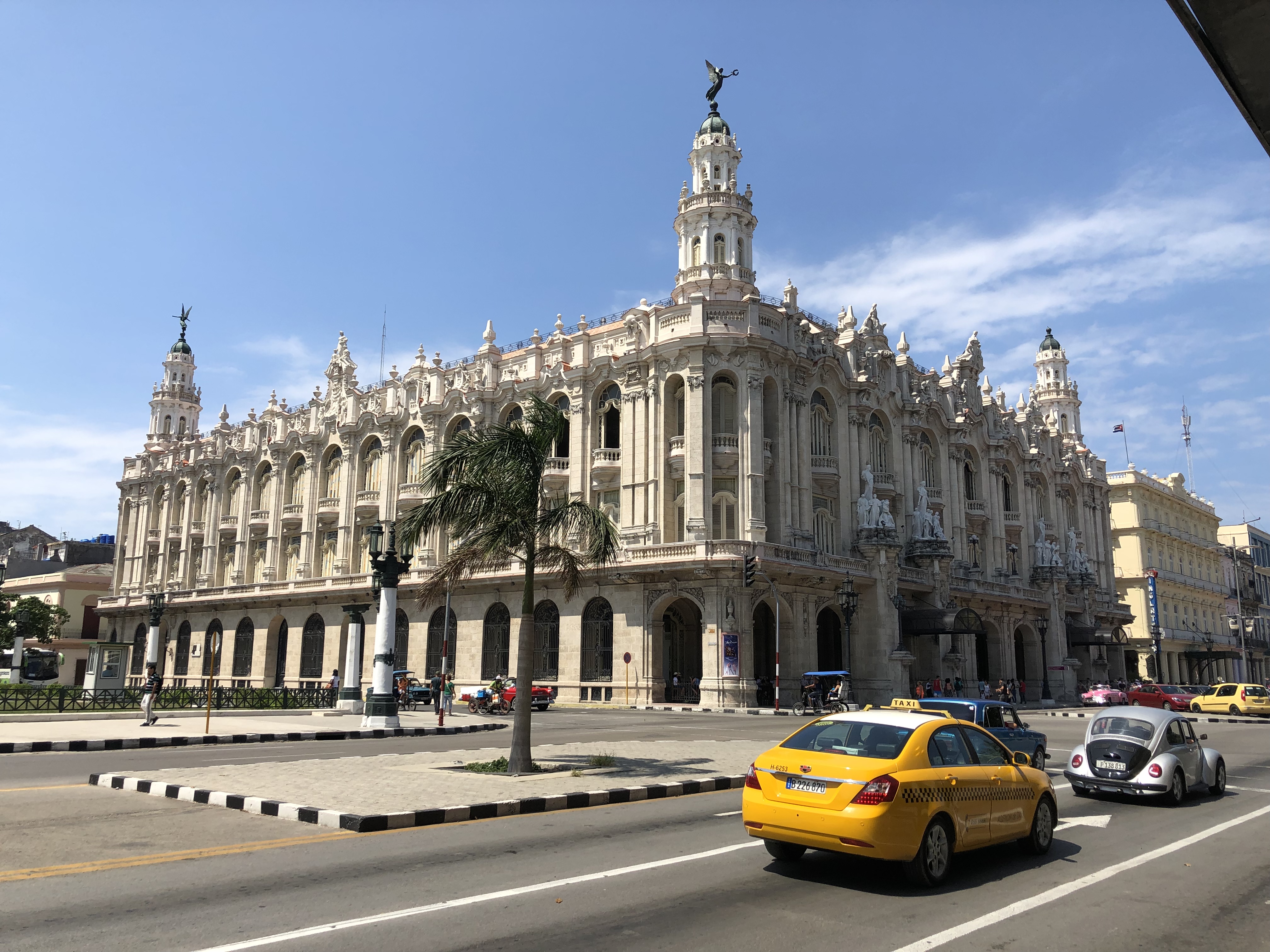
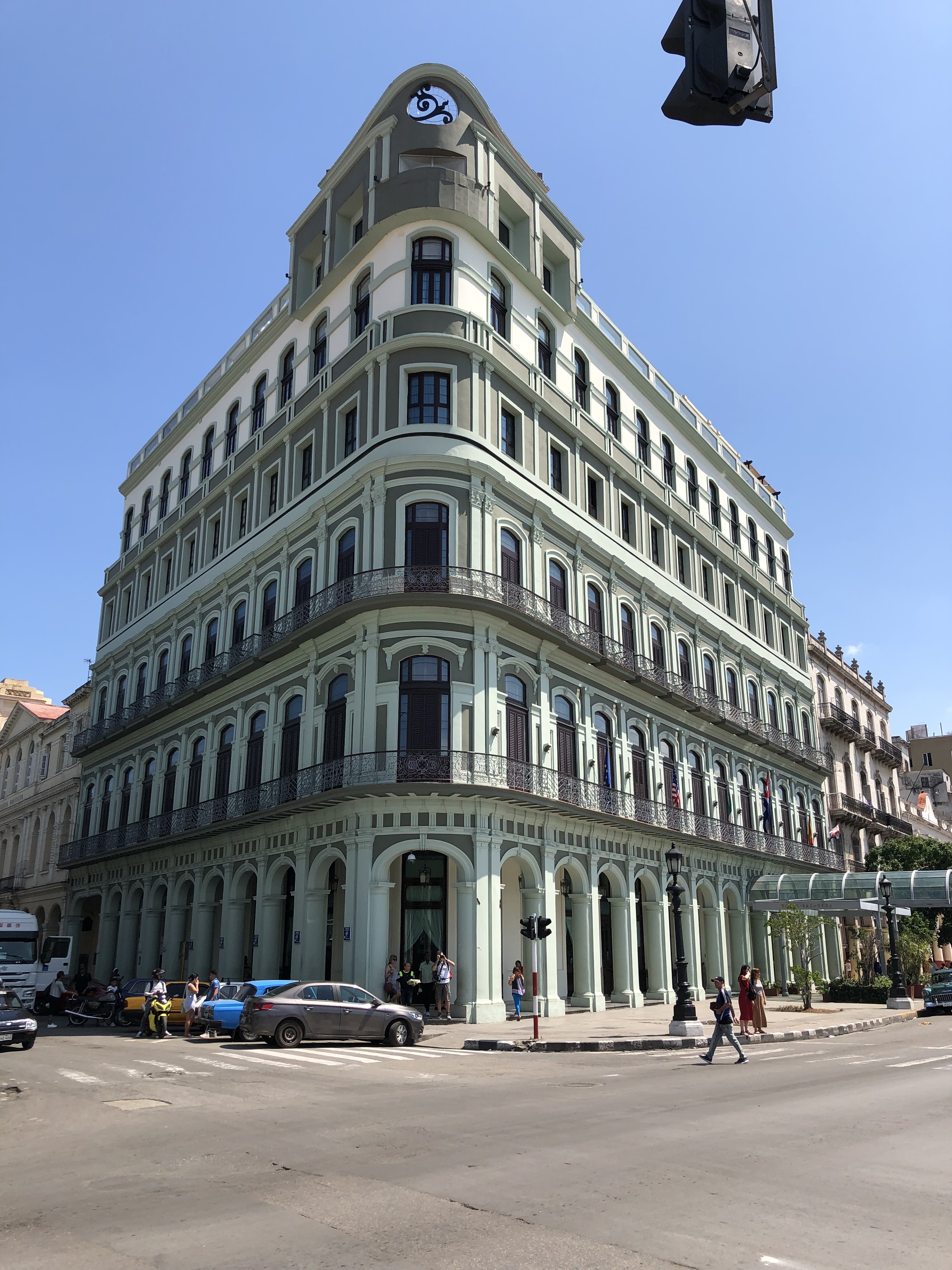
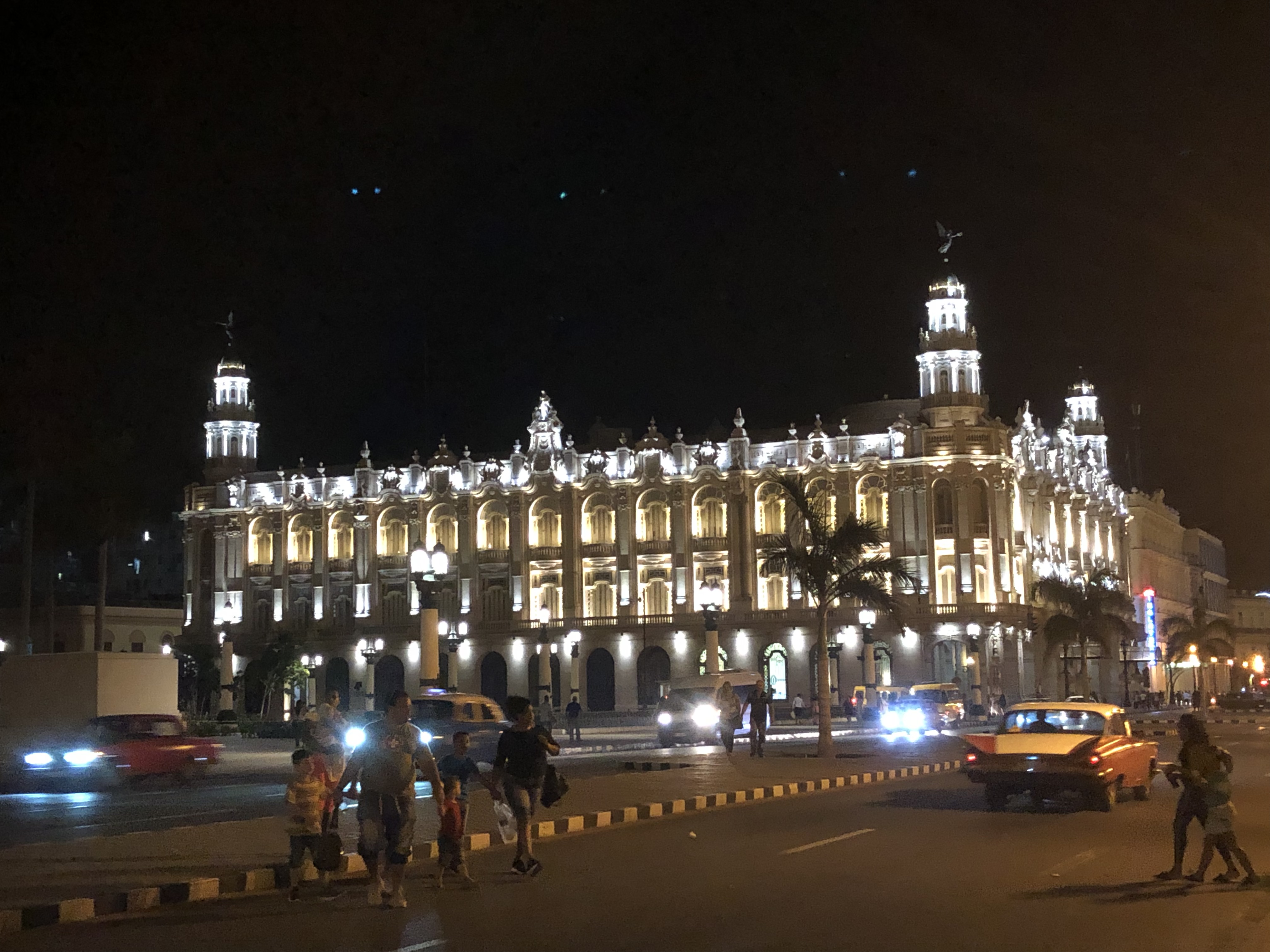
Some of the buildings around Havana are stunning. But for every beautiful building, there is about 20 in a state of disrepair. Added to this are the hidden gems, a virtual oasis enclosed behind a nondescript door on a dodgy looking street. I have never been in any city in the world where I have felt so safe or secure. Crime is virtually non existent and everyone is smiling, happy and willing to greet you with a grin and an “hola”.

On our last night in Havana we headed down to plaza Vieja where we stopped in to ‘La Vitrola’ and we had some small bar snacks, beverages and live Cuban music. I have entirely fallen in love with the jamon croquettes, while Jill cannot seem to be able to say no to a $3.50 mojito complete with a sugar cane swizzle stick. Add to this some bruschetta, cheese balls and fried chorizo and ice cold cerveza (beer) and life is good.

Oh and guess what… Cuba has a $3 bill.

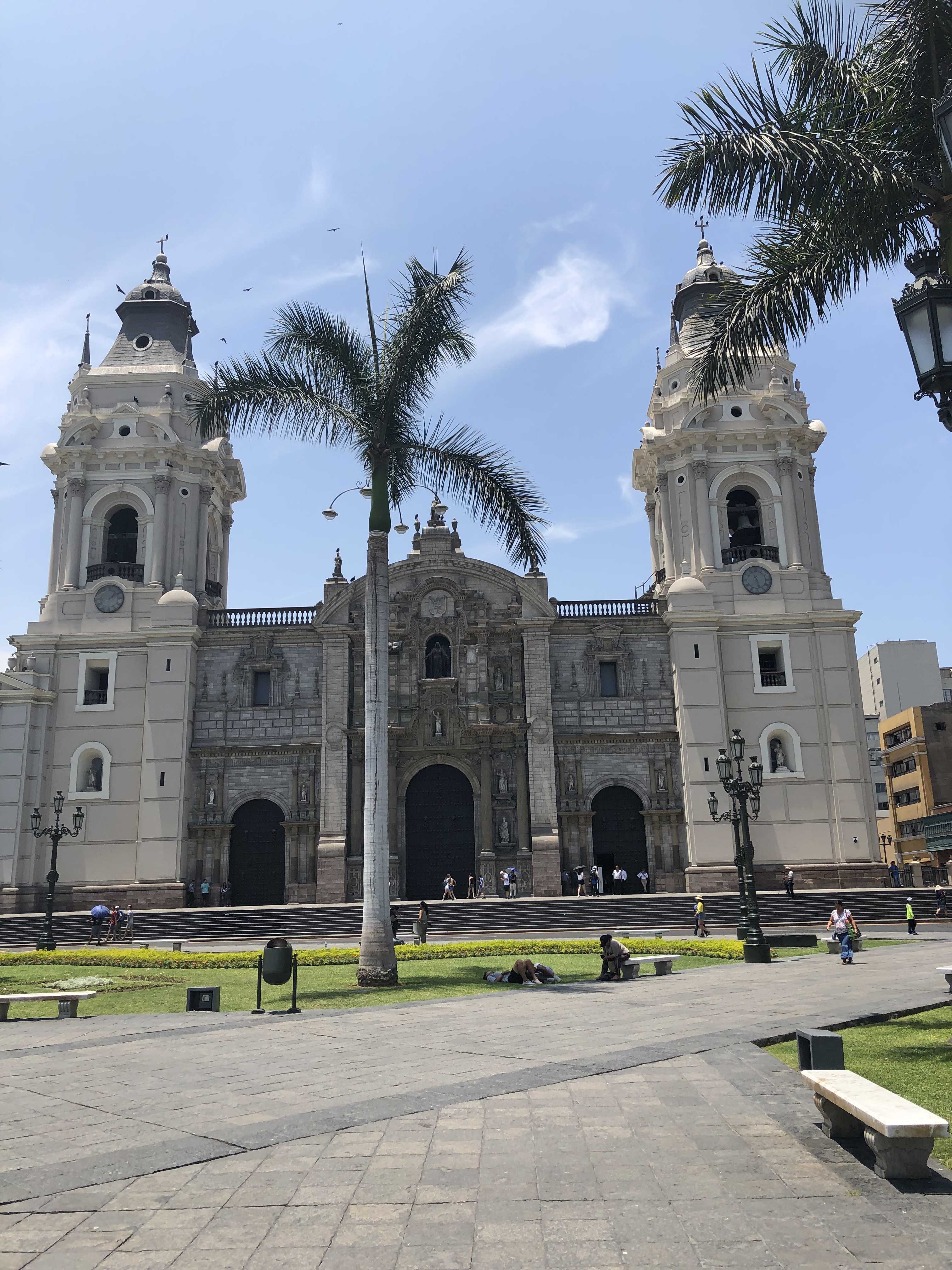
Lima, Peru.

Well if first impressions count…I am going to hate this place.

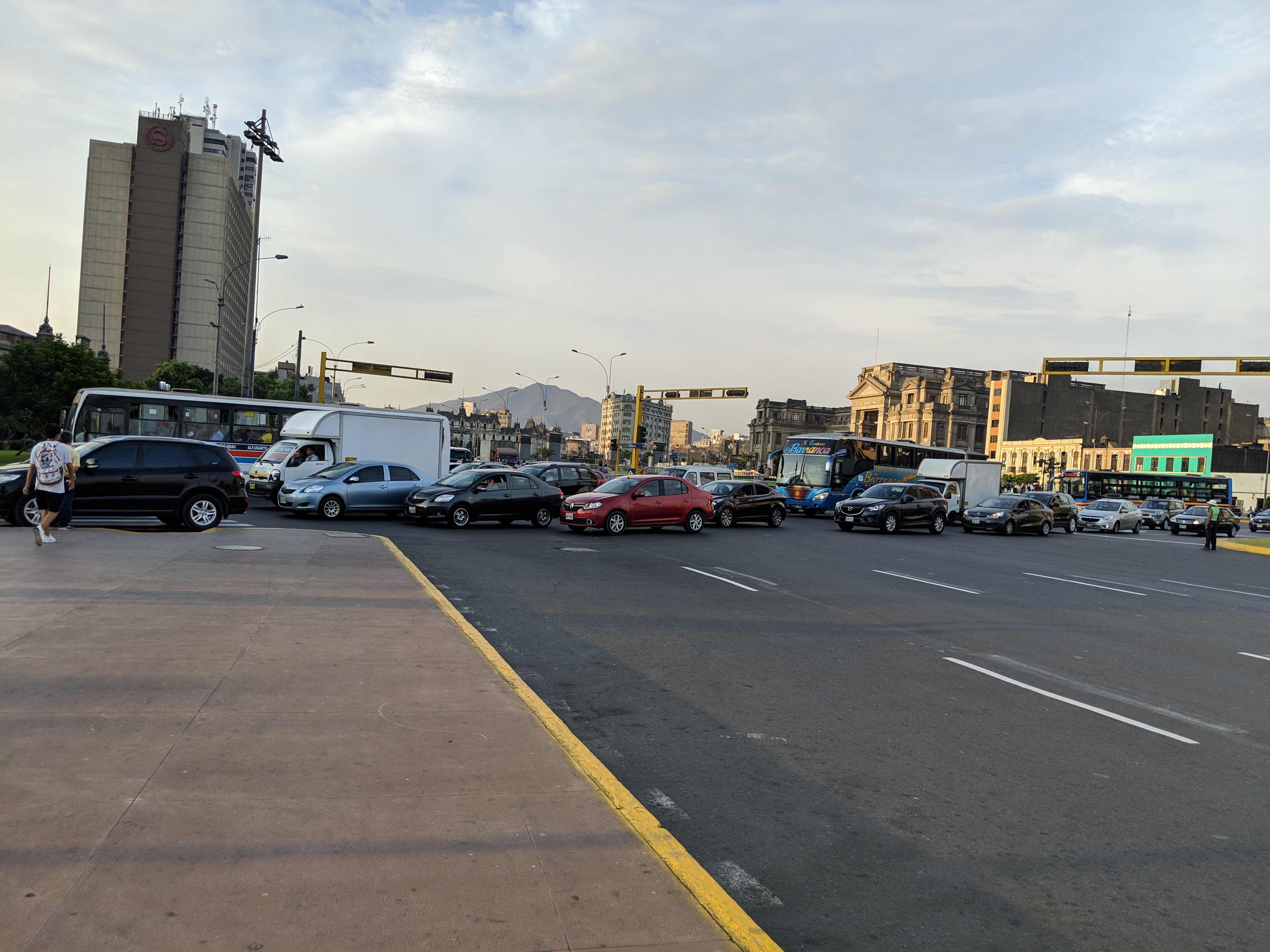
The traffic was horrendous. And this coming from two people who spent so much time in Asia. I have not seen traffic so bad in a very long time. The volume of cars was high, the honking and beeping was constant and the fact that lane markings were not even considered made this place a hellhole…and that was just getting from the airport. We turned right from the left hand lane, across 3 normal but 5 actual lanes of traffic, at speed. It was certainly a white knuckle ride and we both decided that perhaps it was better if we just didn’t look.

IMG_20190311_175525

But everyone I spoke to told me I would love Lima…so lets see…

After a nap (early morning flights and another 2hr time zone change) we headed out for a late afternoon stroll and a bite. While the traffic remained devilish there was some semblance of order to it…but not enough to trust. We wandered along the park in front of our hotel towards the centre of town

img_2041 img_2032 MVIMG_20190311_180059 IMG_20190311_180151

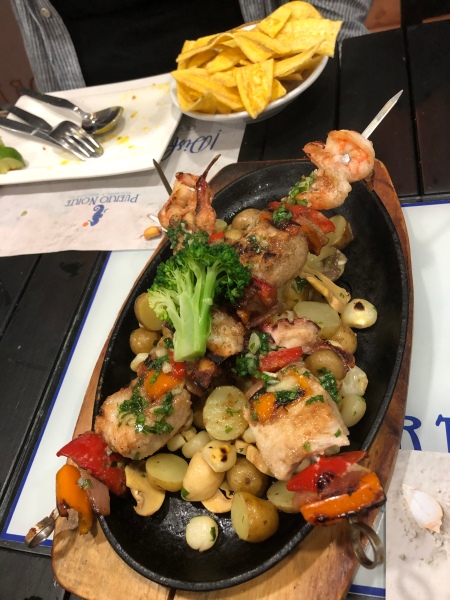
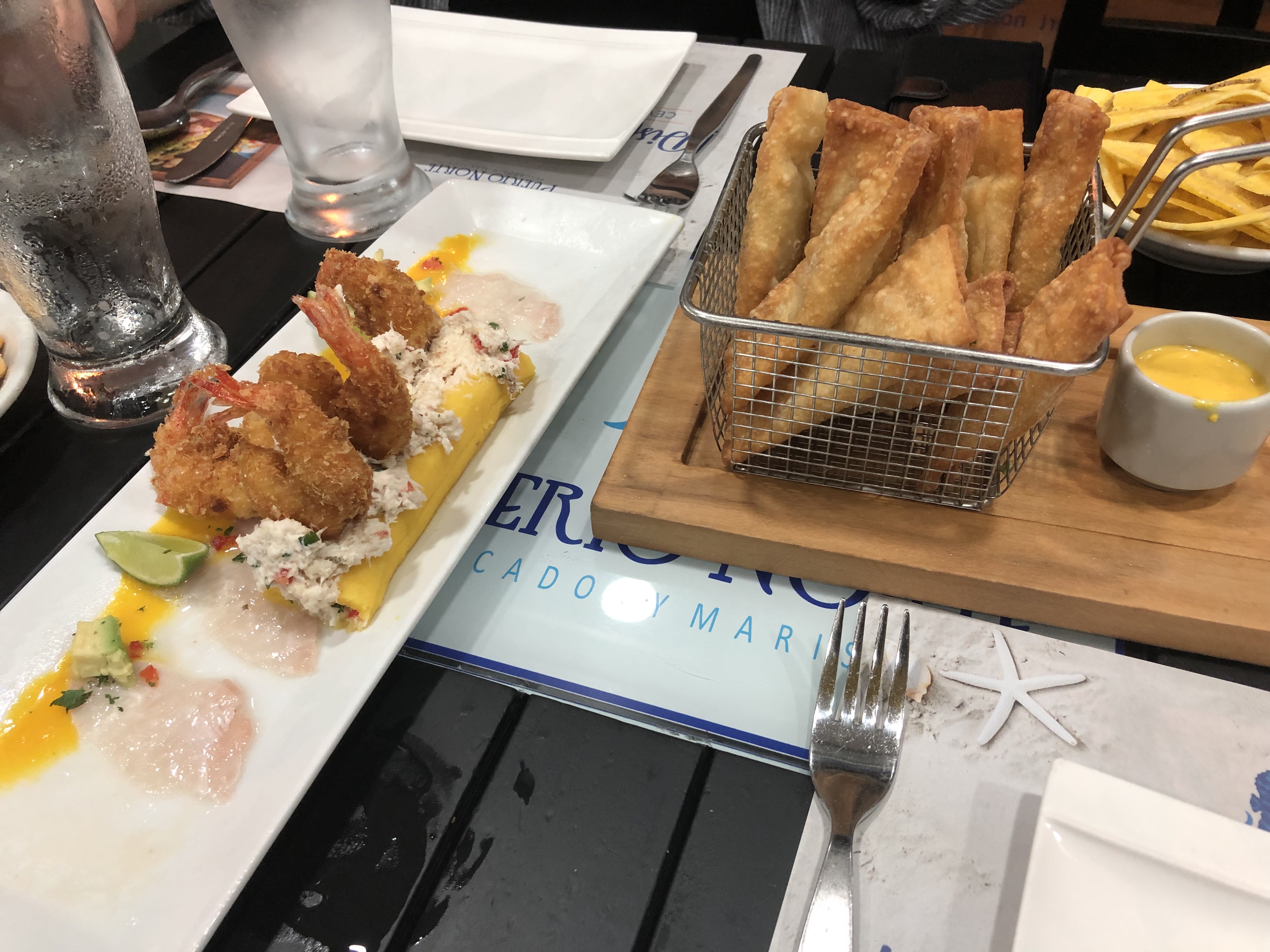
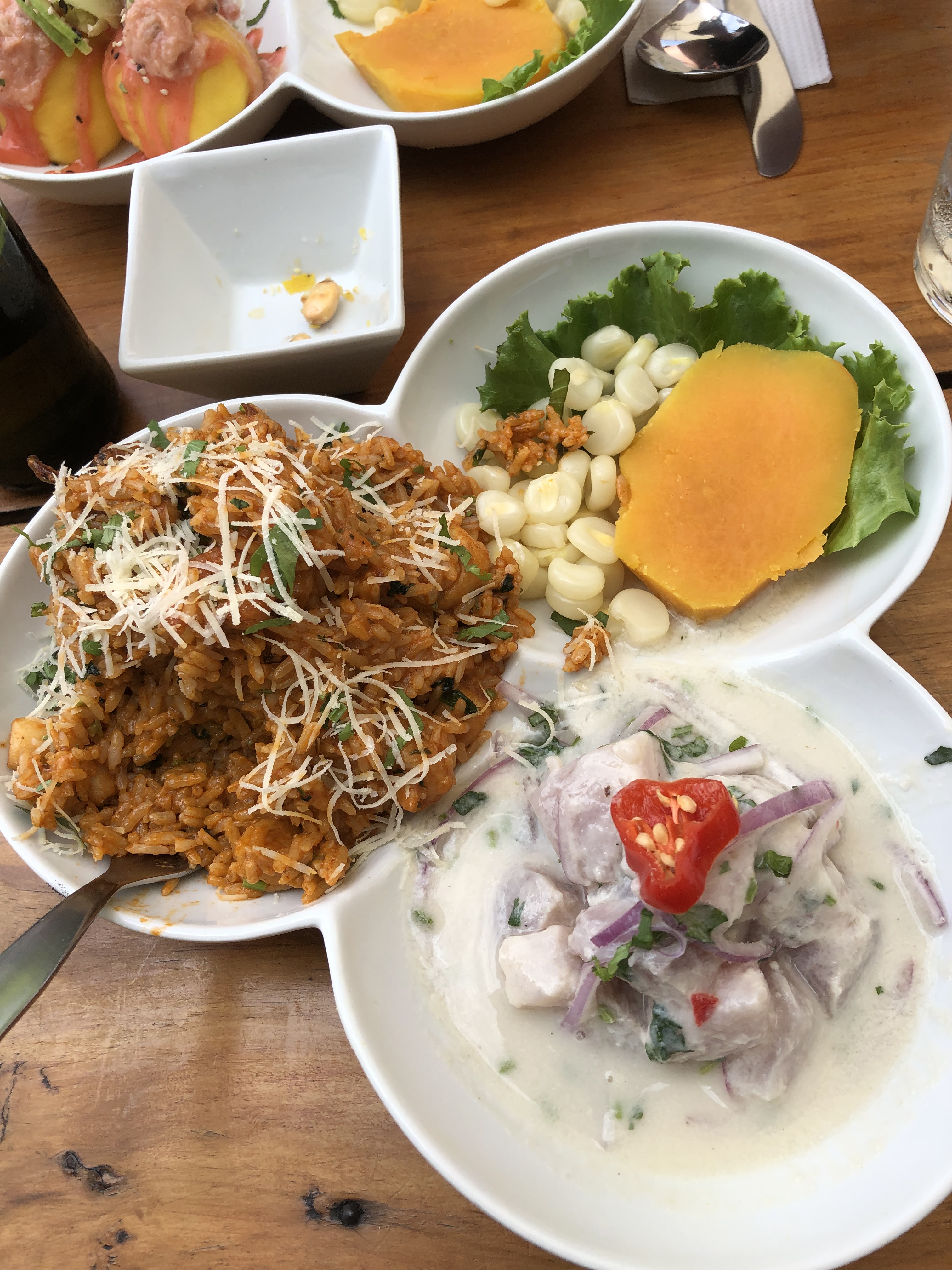
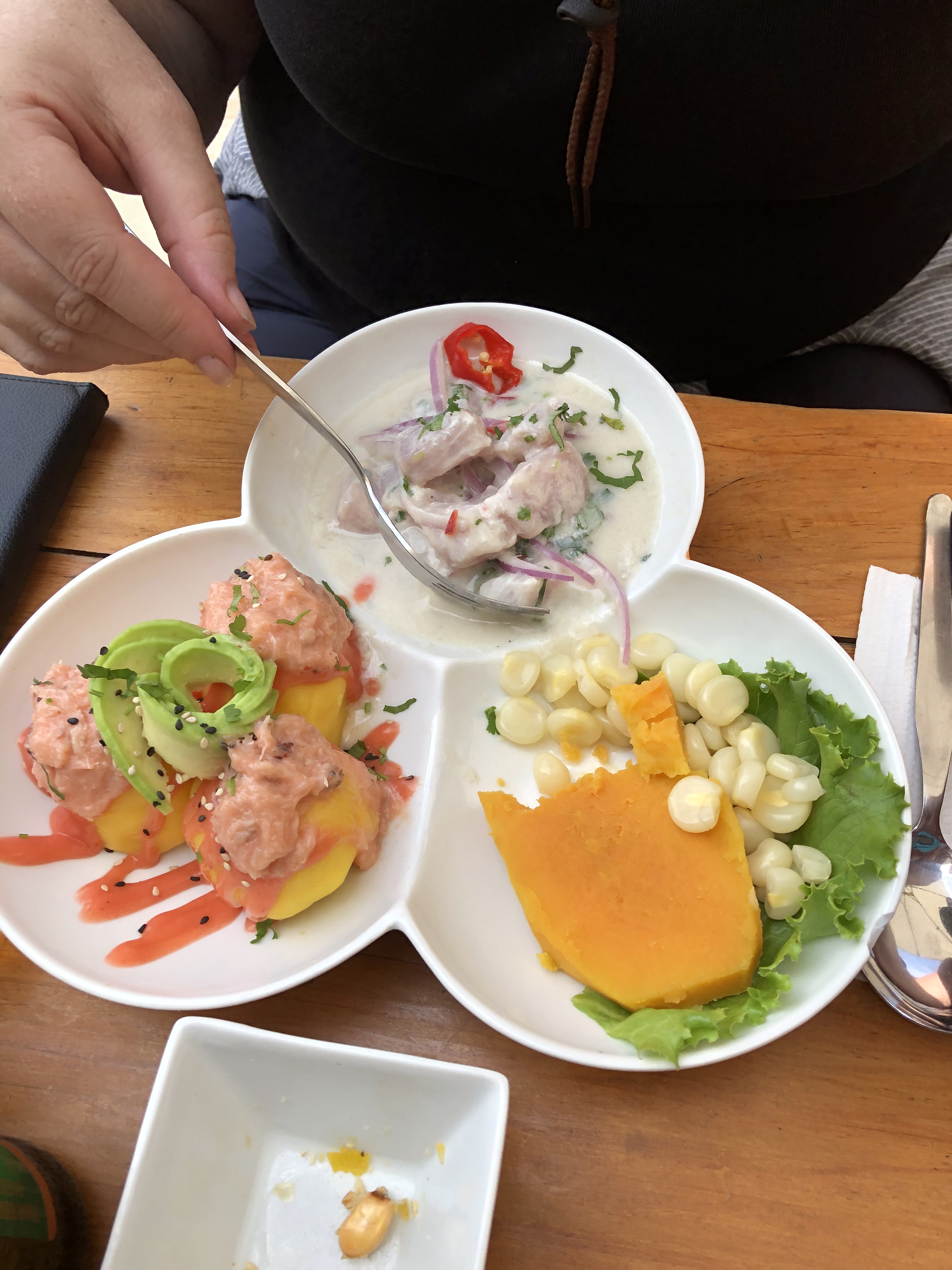
We came across a seafood restaurant that we had seen during our “what is nearby” searching that has become commonplace when we hit a new city…so we gave it a try. And wow…we picked well. The early bit was just basically bar snacks, corn kernels (concha) plantain chips and a mayo and a salsa type dip. All incredibly salty but perfect for ordering more cerveza (beer).

Then came the entrees…mine was (tequenos) a South American version of a wonton, usually made with cheese but this one replaced the cheese with crab, deep fried with an incredible dipping sauce…but despite this, Jill was the clear winner…she got some Panko covered prawns that were set on a tube of polenta, slathered in crab meat, with a sauce that I cannot describe and of course the obligatory cerviche (this one did not have “ass weed” (coriander/cilantro) on it). Then came two seafood skewers set on a bed of tiny potatoes and mushrooms. All this for under $40.

I may like this place after all…

img_2043 img_2046 img_2044

The next day we set off on the walking tour from the hotel. It was atrocious…the guide basically said “hello friends, follow me” and began to walk past everything that looks interesting (without a word)… about 2 kilometres later in the main square he handed us off to another guide and was never seen again. Despite his indifference, the city sights were good and my opinion of Lima softened once again.

img_2073 img_2071 img_2069 img_2067 img_2066 img_2065 img_2064 img_2054 img_2057 IMG_20190313_114055 img_2051 IMG_20190313_102606 IMG_20190313_102447_1

The piece that I really want to do is the street food. I have heard so much about it and have coveted it as I walked past it, but am yet to dip my toe in the water. Hopefully, today will be the day. The key they tell me to Peruvian street food is that it must be 3B

  • Bueno (good)
  • Bonito (beautiful)
  • Barato (cheap)

I did, as it happens, get to try some street food from two of the many carts around but was mainly foiled by my wife who NEEDED to sit down to eat like a civilised person. And after one of the generous servings (generally with change from a $20) the need to eat any more is both unnecessary and virtually impossible.

Alright…I really quite like this place…

So today became a day all about culture. We went to two museums the National Museum of the Archaeology, Anthropology, and History of Peru and the Larco Museum. They were both excellent and we got a real sense of the history dating back around 12,000 years.

The Larco Museum was another level altogether. The first impression is stunning. It is housed in an 18th century vice-royal building that is covered in bougainvillea that are old and amazing. It is a private museum and was 3 times the price of the first one so we were highly skeptical. But we paid and entered. The intro was a 10 minute video and then the walk began. What immediately strikes you is the absolute quality of the pieces, they are virtually pristine. As you finish the tour through the actual display there is another room off to the side…this is the overflow. It is massive. A virtual warehouse of pre-Colombian artifacts that is seemingly endless. There was enough high quality pieces in the overflow area to stock another 10 museums. It is no wonder that the pieces on display were of such high quality, with such a massive range to choose from.

IMG_20190313_130604 IMG_20190313_134200 IMG_20190313_134210_1 IMG_20190313_134936

On our last day in Lima we finally bit the bullet and headed to Miraflores. It is the main tourist neighbourhood in town, that is described in the tourist blurbs as an upmarket suburb having a western feel. It is clean, safe, beautiful and is full of shops, restaurants and ritzy cafes…all those things that we try to actively avoid.

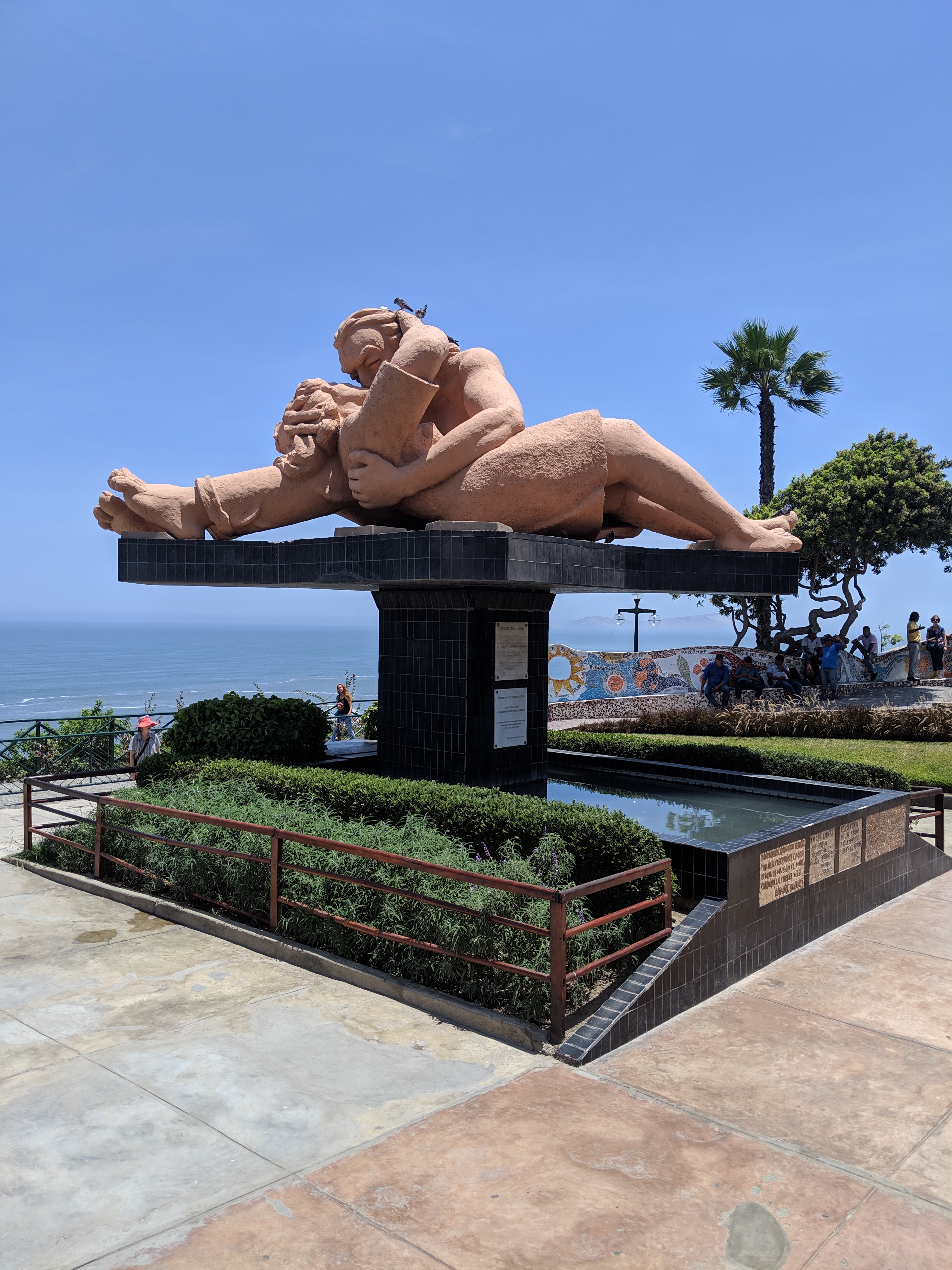
It has the ‘Malecon’ a 6 mile clifftop boardwalk starting at the marina and following the Pacific coastline. It hosts one of the world’s best paragliding spots as people launch themselves off the cliffs and for $US50 you can get strapped to one of the and launch yourself too…we did not do that.

IMG_20190314_125049 IMG_20190314_122729 IMG_20190314_122339 IMG_20190314_122231_1

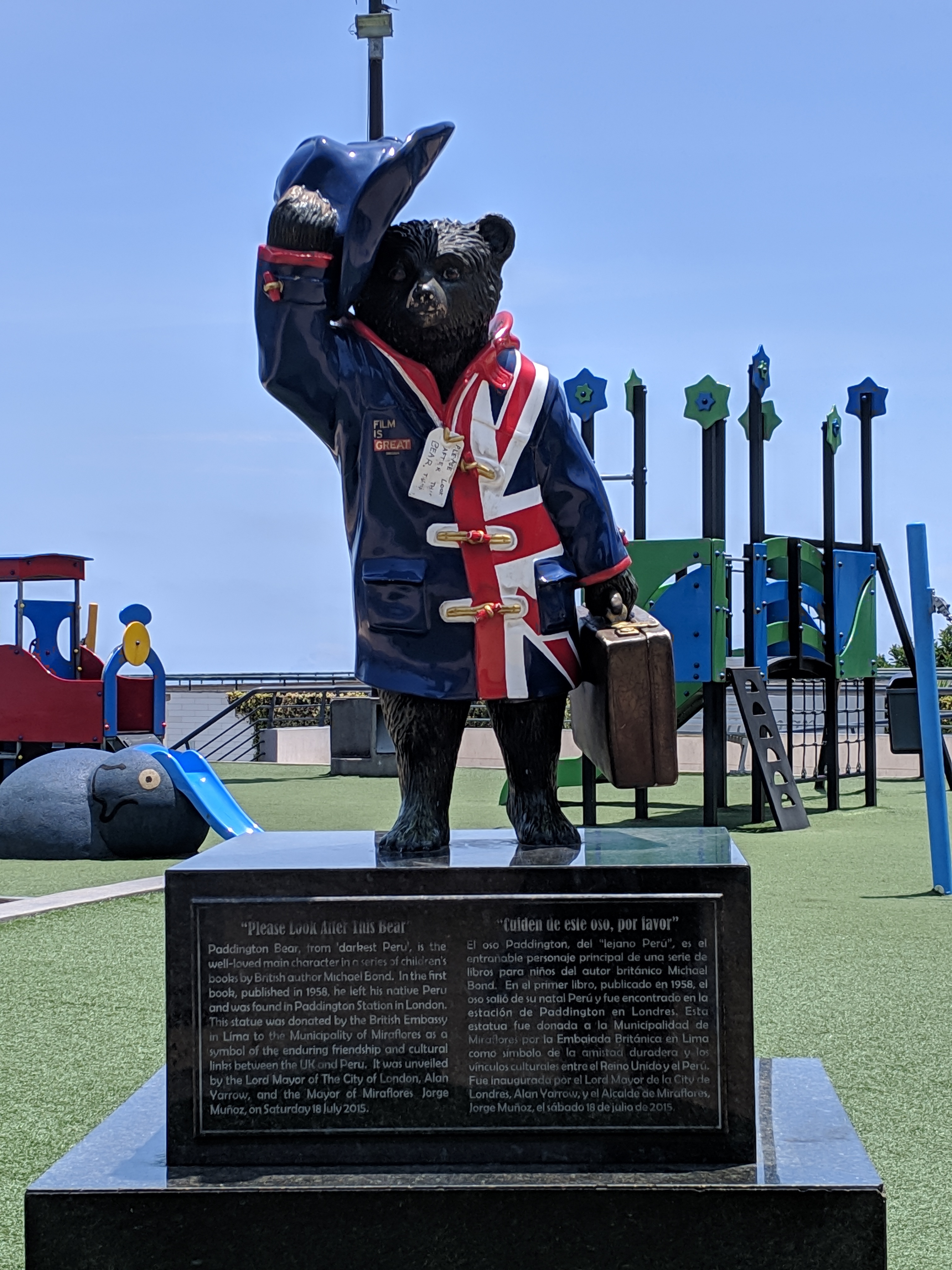
Miraflores was everything that it promised to be…it was just not for us. It was an expat enclave in the heart of Peru. All the usual chain stores and the culinary delights of McDonalds, KFC and Subway washed down by a Starbucks. And all of this for 4-5 times what you would pay in any other neighbourhood. It was pretty and the boardwalk was nice. but we were both so glad that we stayed in the centre of town rather than out here on the coast. On the up side, we did get to see the Pacific ocean from the other side. PS our side is bluer and cleaner. The one thing that surprised us was the sight of a Paddington Bear statue on the top of the cliffs at Miraflores. When you went to the plaque it said from deepest darkest Peru…and it all fell into place.

      IMG_20190314_124415

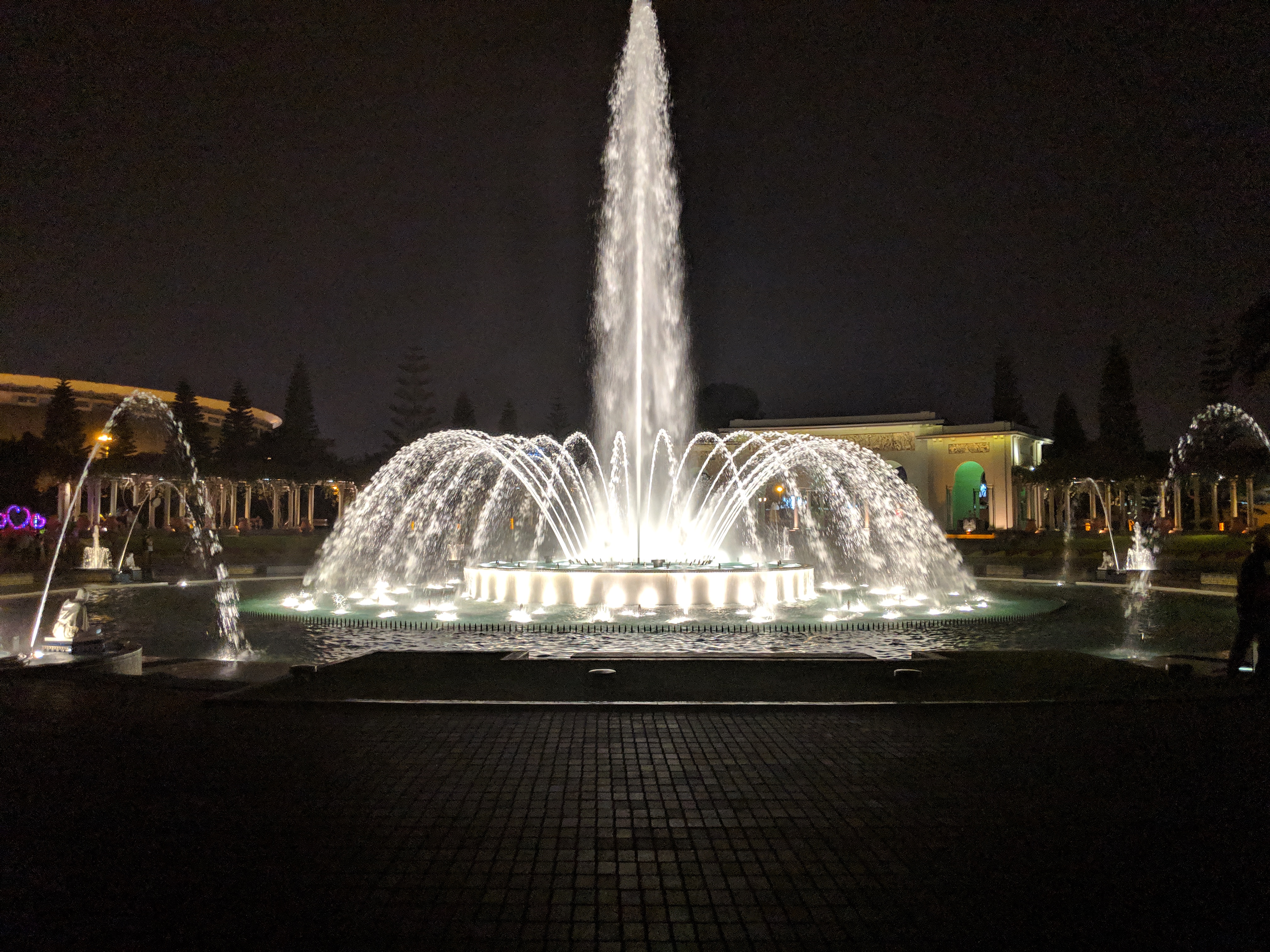
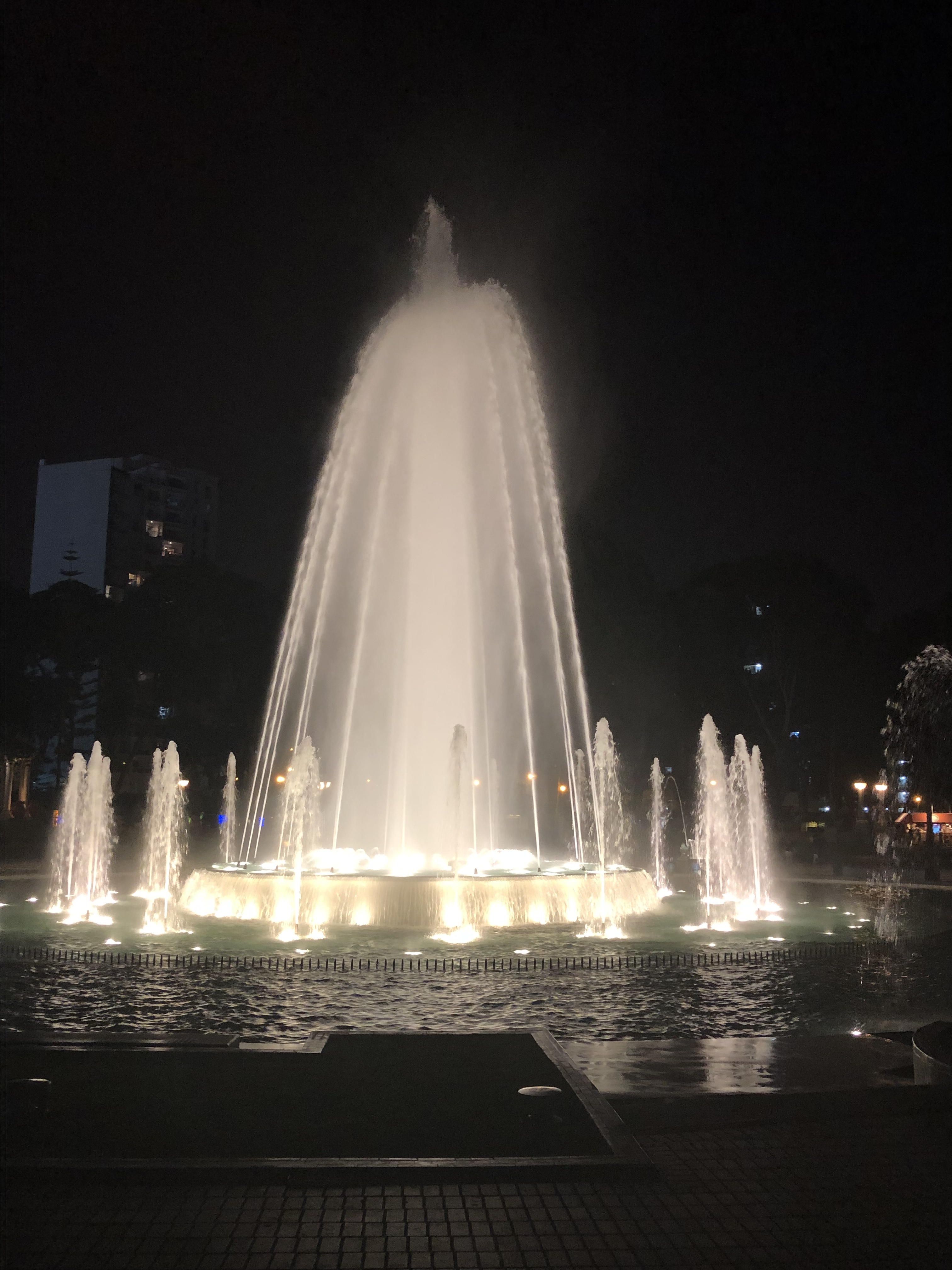
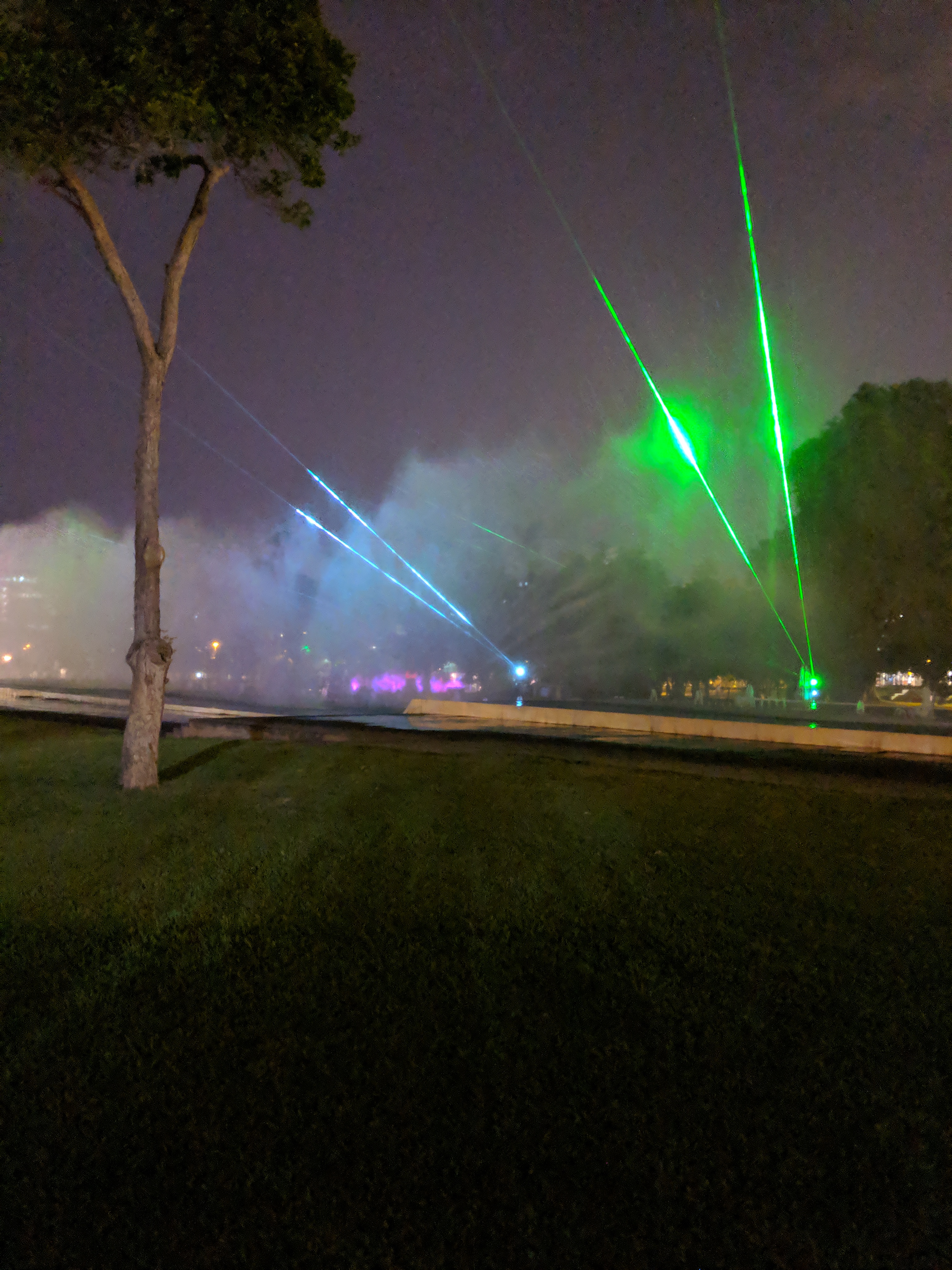
The final thing that we did on our last night was head across the road to the Circuito Magico Del Agua or the water fountain park. It is a light, laser and fountain show that runs almost every night and is quite the sight to see.

IMG_20190314_190740 IMG_20190314_191008 IMG_20190314_191036 img_2115 img_2109 img_2117 IMG_20190314_191755

[wpvideo aIh8Tw23 ]

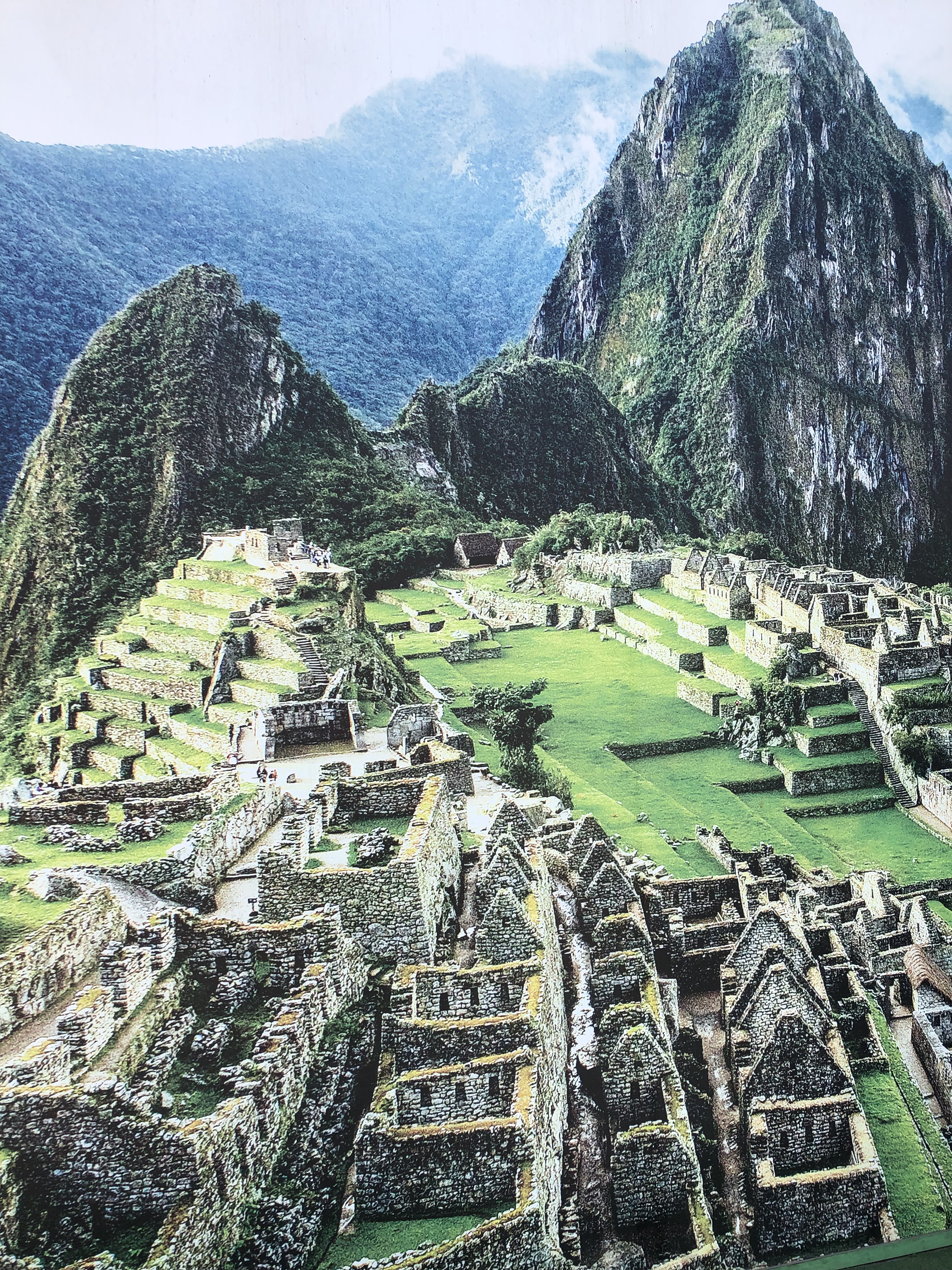
And because this was only a teaser trip to see if we should comeback we missed the main reason that most people come to Peru…thankfully…Miraflores has big photographic murals on the walls so you can cheat and pretend that you went.

img_2097  img_2098  img_2100

Santiago, Chile

Well we left Sydney at around noon, flew sleeplessly for the next 12 hours to arrive in Chile a bit after noon on the day we left… in notional terms we left at 11:10am to arrive at 12:20 the same day. In actual terms… long haul flights seem tougher now than they did when we were younger.

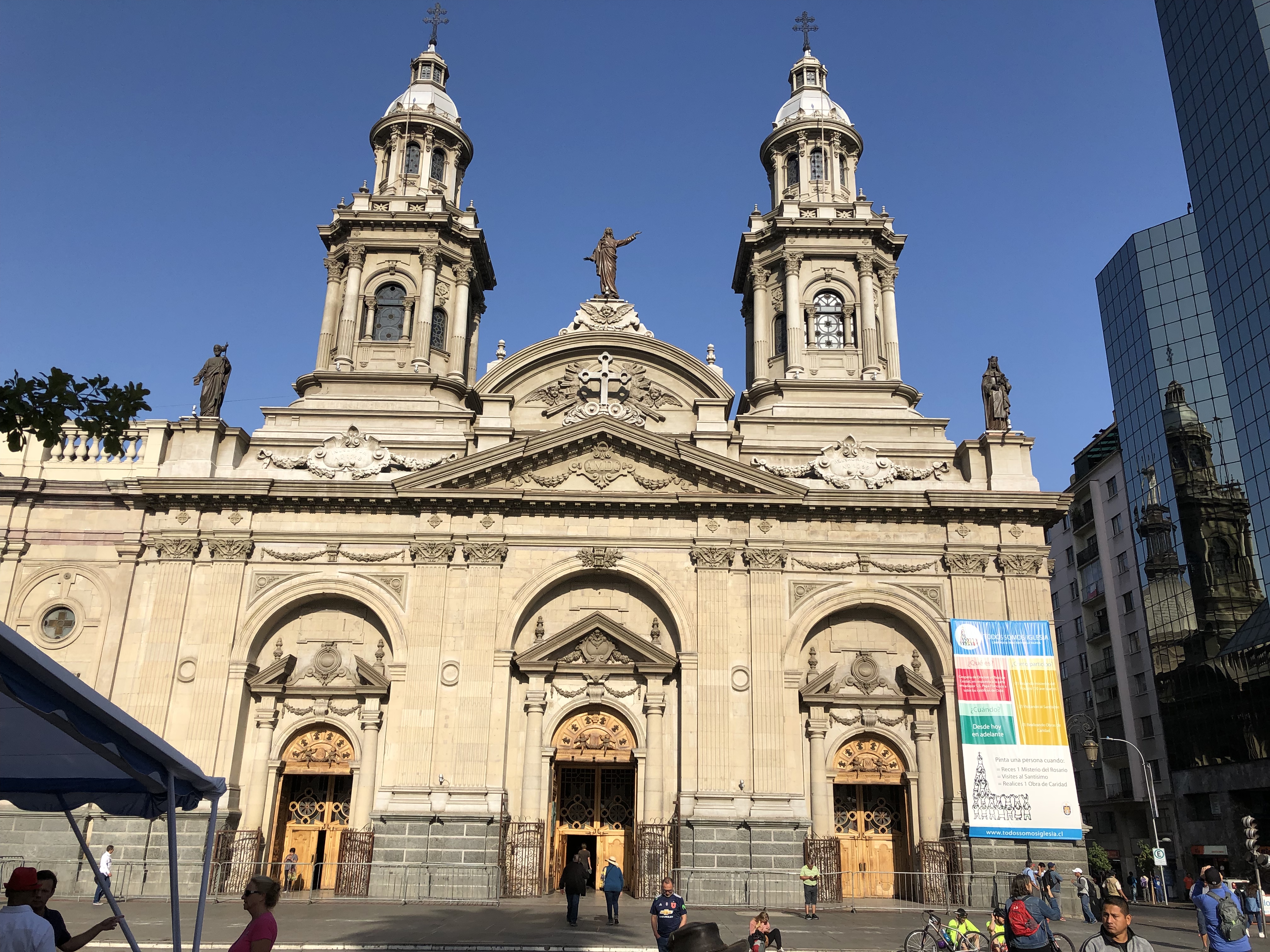
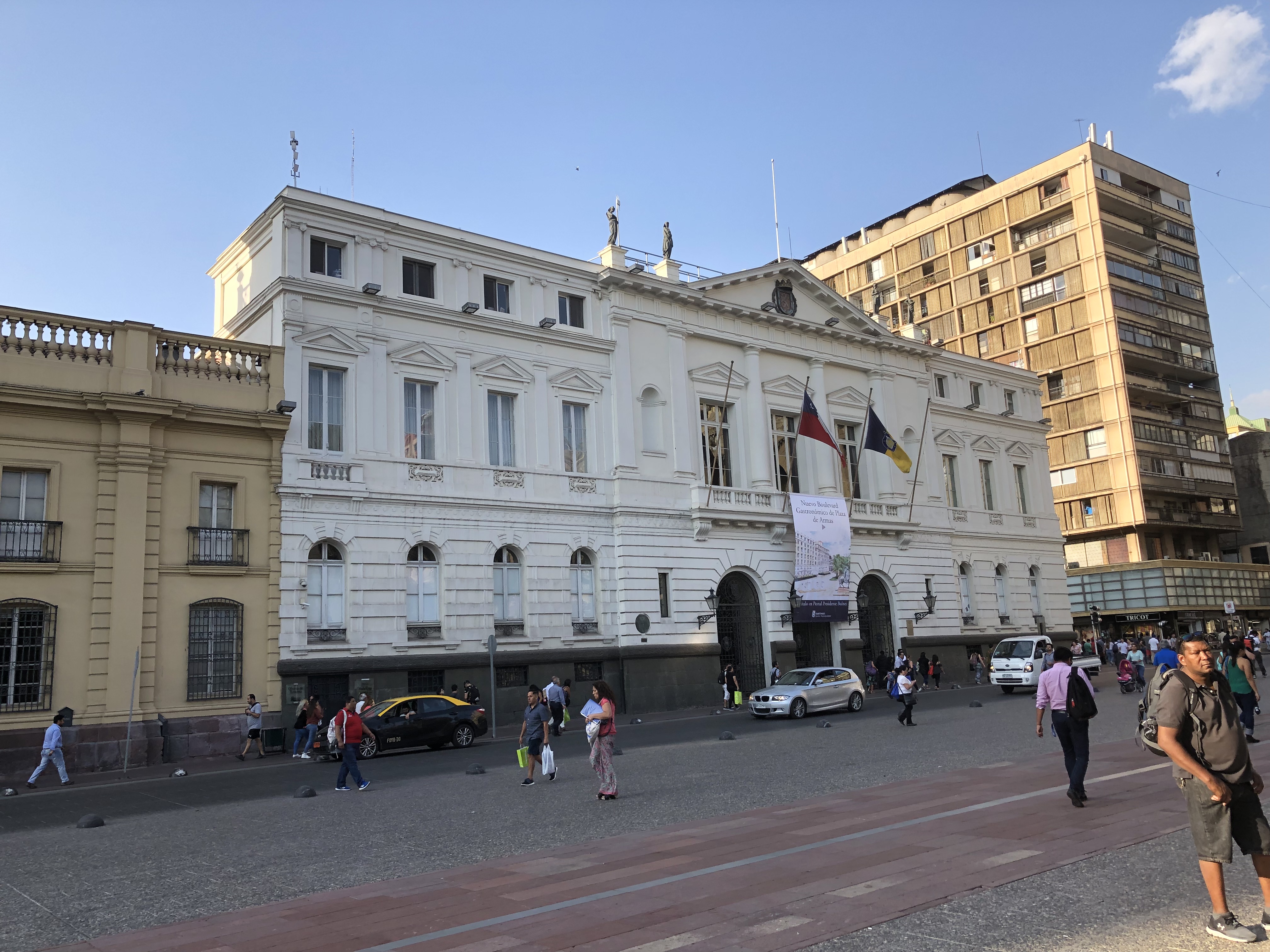
Being both sleep deprived, and in a Spanish country we were happy to have the siesta…so we asked the dude at the hotel who replied “we don’t have that custom here”…well we did…so we crashed for a couple of hours to try and cope with no sleep and a 14 hour time difference. Upon waking we headed along the road to reach Plaza de Armas…this is in essence a large square surrounded by some absolutely stunning buildings.

The town hall, the tourist office (now a museum), and the the post office lined the northern edge of the plaza. As you pan to the left the cathedral (of Santiago de Compostela) is a major feature before the square blurs into shops, cafes and restaurants.

Possibly the most stunning thing for us was the fact that the park was actually used…in fact it was packed at all times of the day. Coming from Australia there are many parks and green spaces but for the most part they are empty. Not in Chile…as we wandered around the city every park bench was full, and the lawns were also crowded. There were preachers, artists, activists, couples, people watchers and dogs…lots of dogs.


IMG_20190310_125204

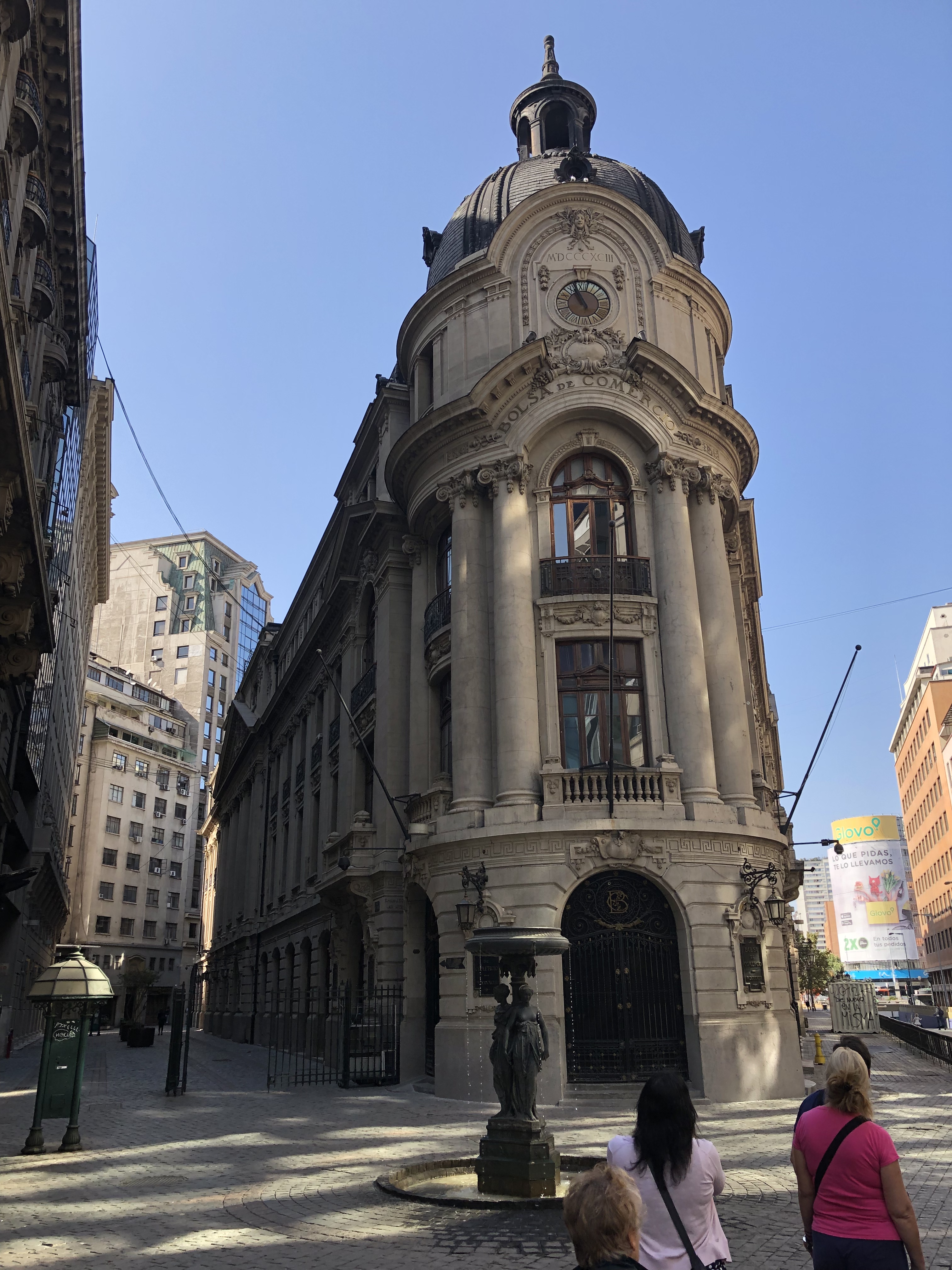
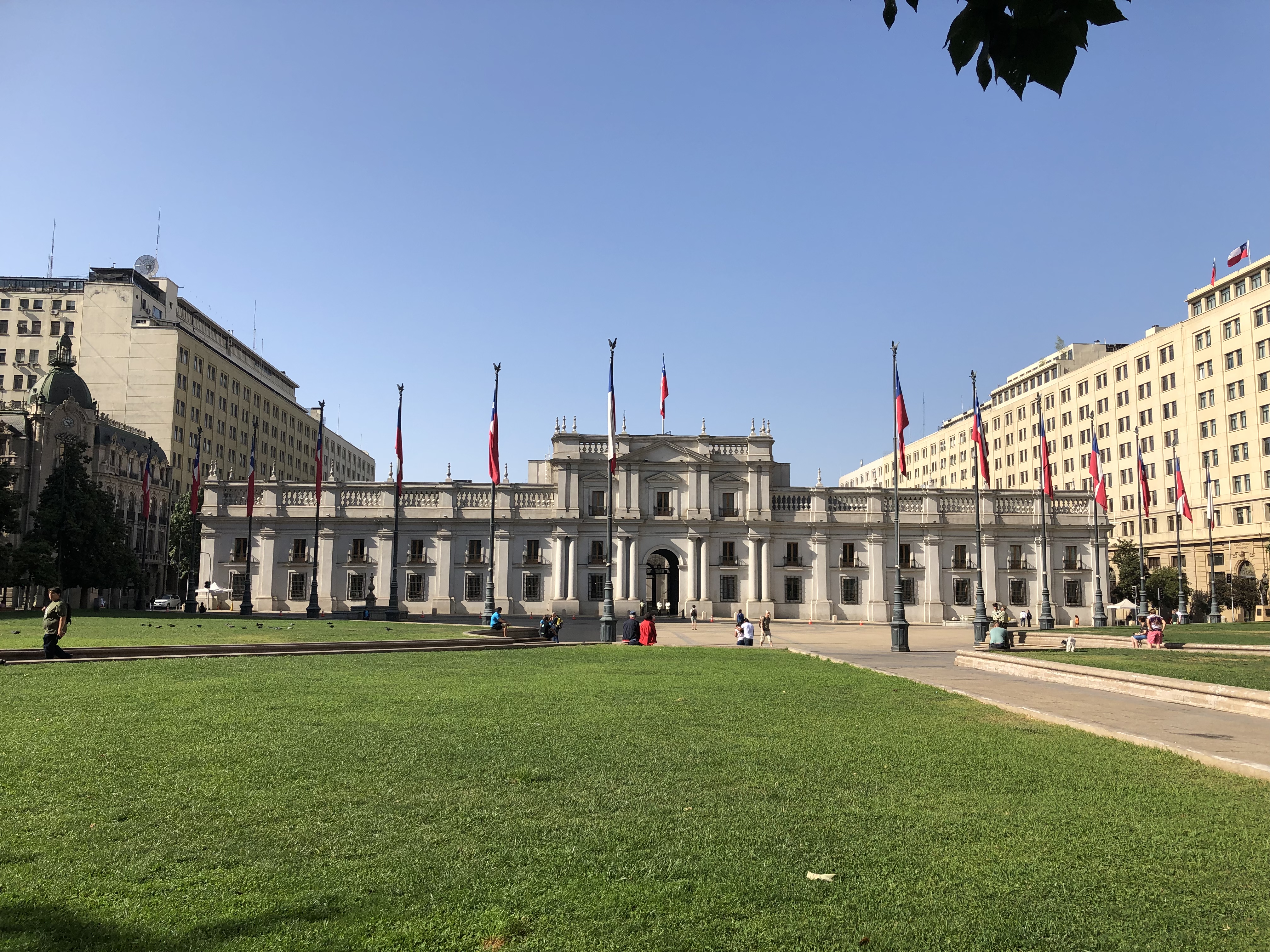
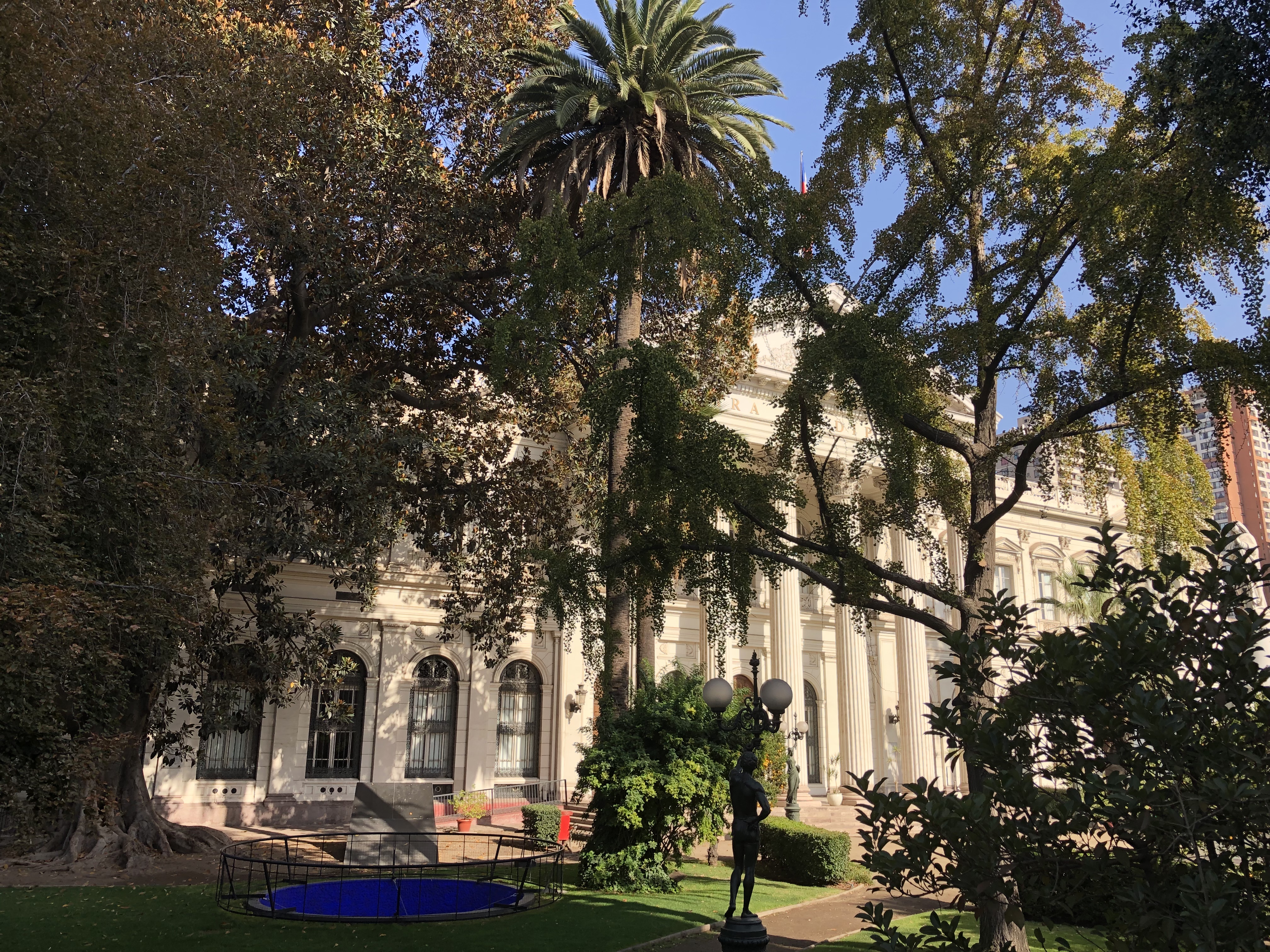
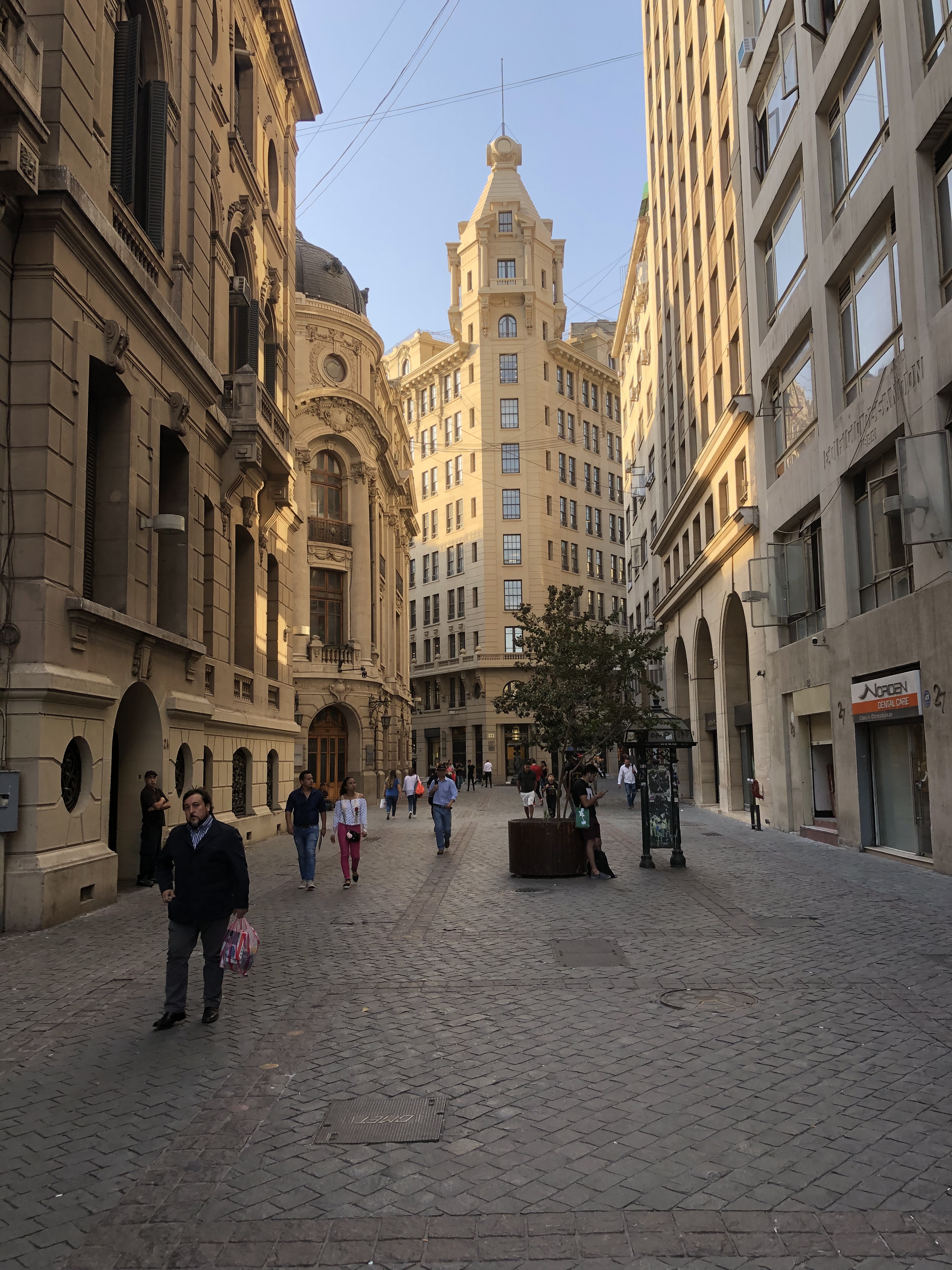
We took the “tip only” walking tour a few days later and got the history behind these and many more local sights of the city.  The walking tour saw us adding the High court, Pre-Colombian Museum, Congress (former), Presidential palace (which was once the mint and now bears the title La Moneda), the stock exchange / financial district and the opera house.

img_1975 MVIMG_20190309_125629_1 MVIMG_20190309_123216 IMG_20190310_132358_1 IMG_20190310_132212

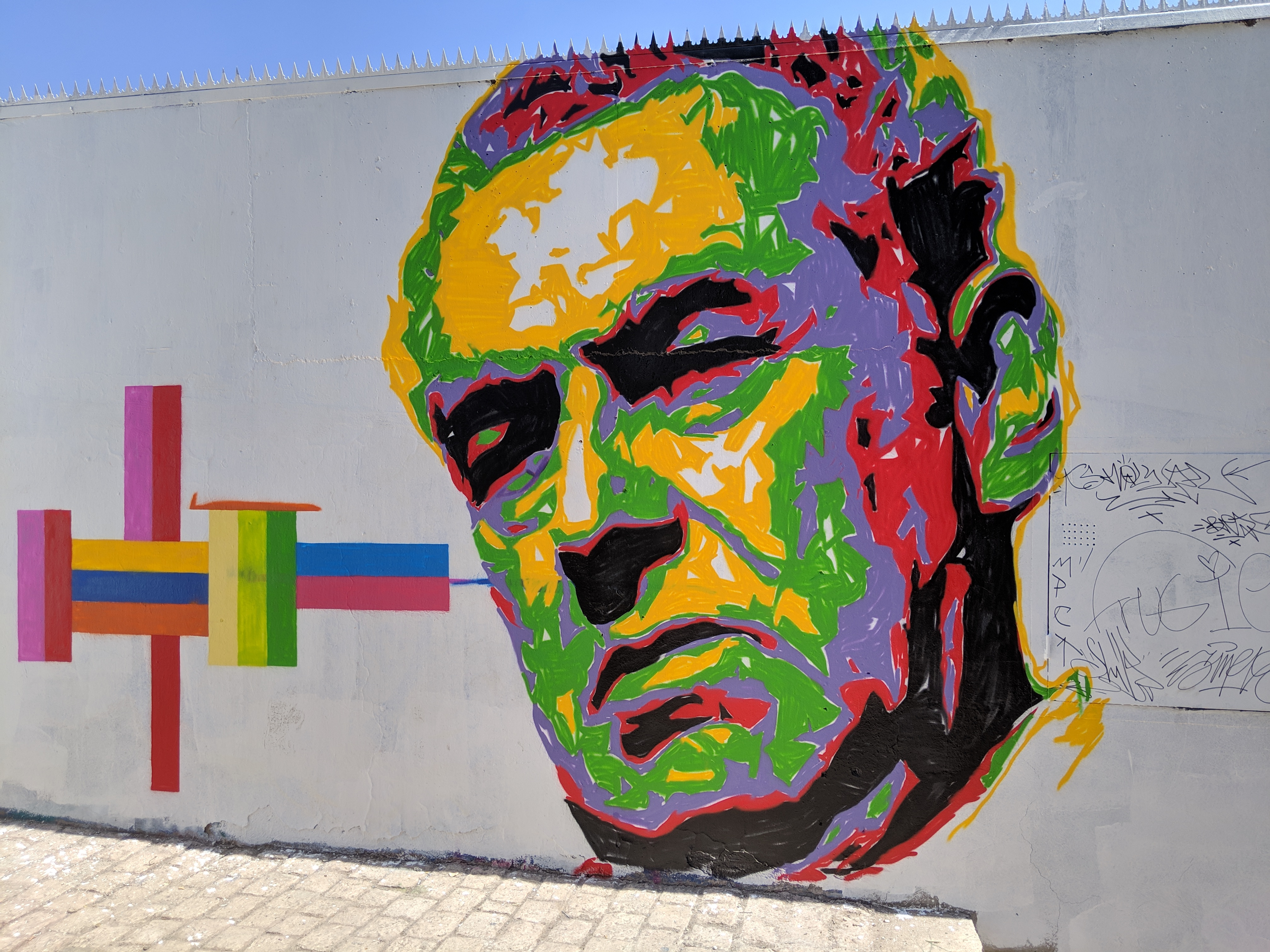
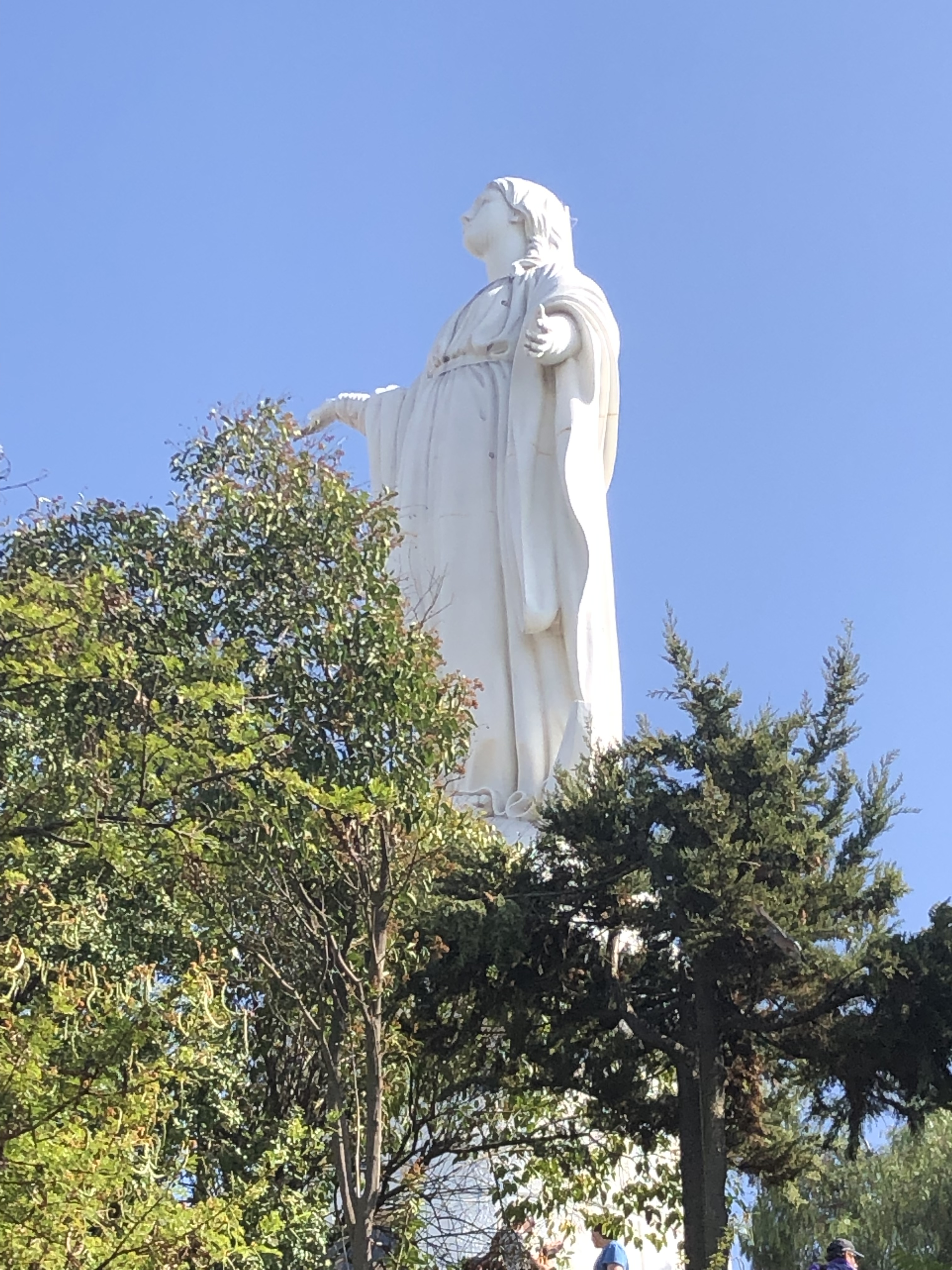
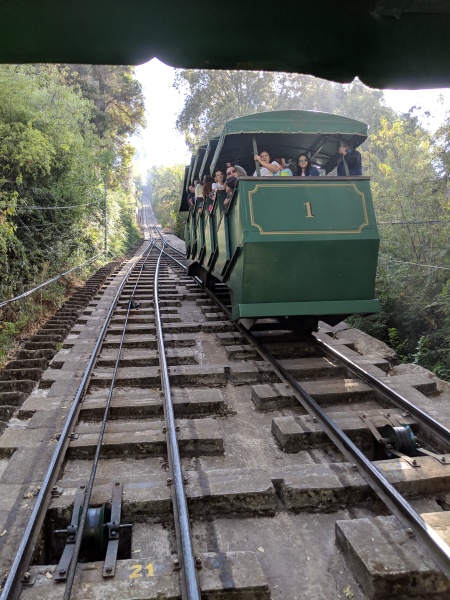
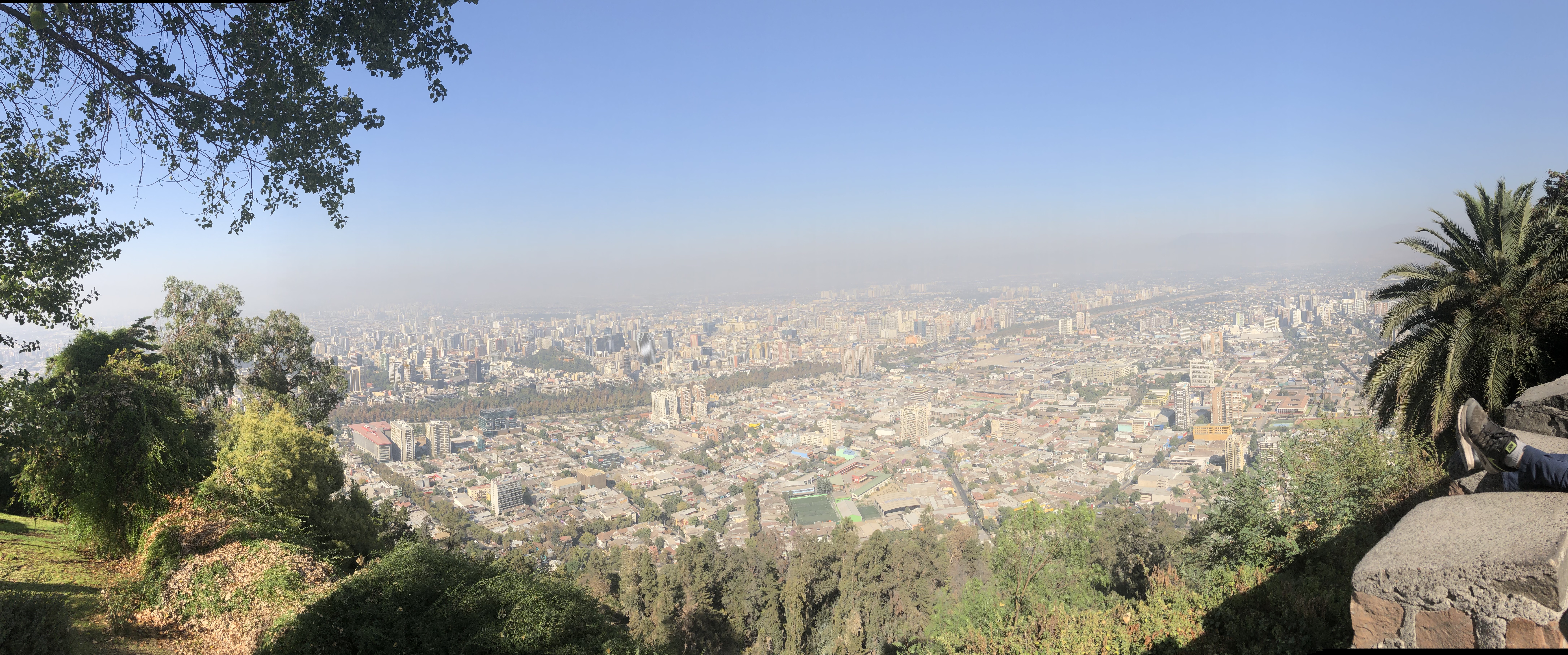
On day two we did the walk across the river to Barrio Bellavista, the bohemian quarter of the city. It is packed with bars, nightclubs and restaurants and the streets are adorned with street art and murals of all shapes and sizes. But we were here to visit San Cristóbal Hill. This is the hill that rises around 300m (984 ft) above the city and is the site a 22 meter statue of the Virgin Mary and the place to get almost panoramic views of the city as it lays nestled among the Andean Mountain Range.

IMG_20190309_112935 MVIMG_20190309_124600_1

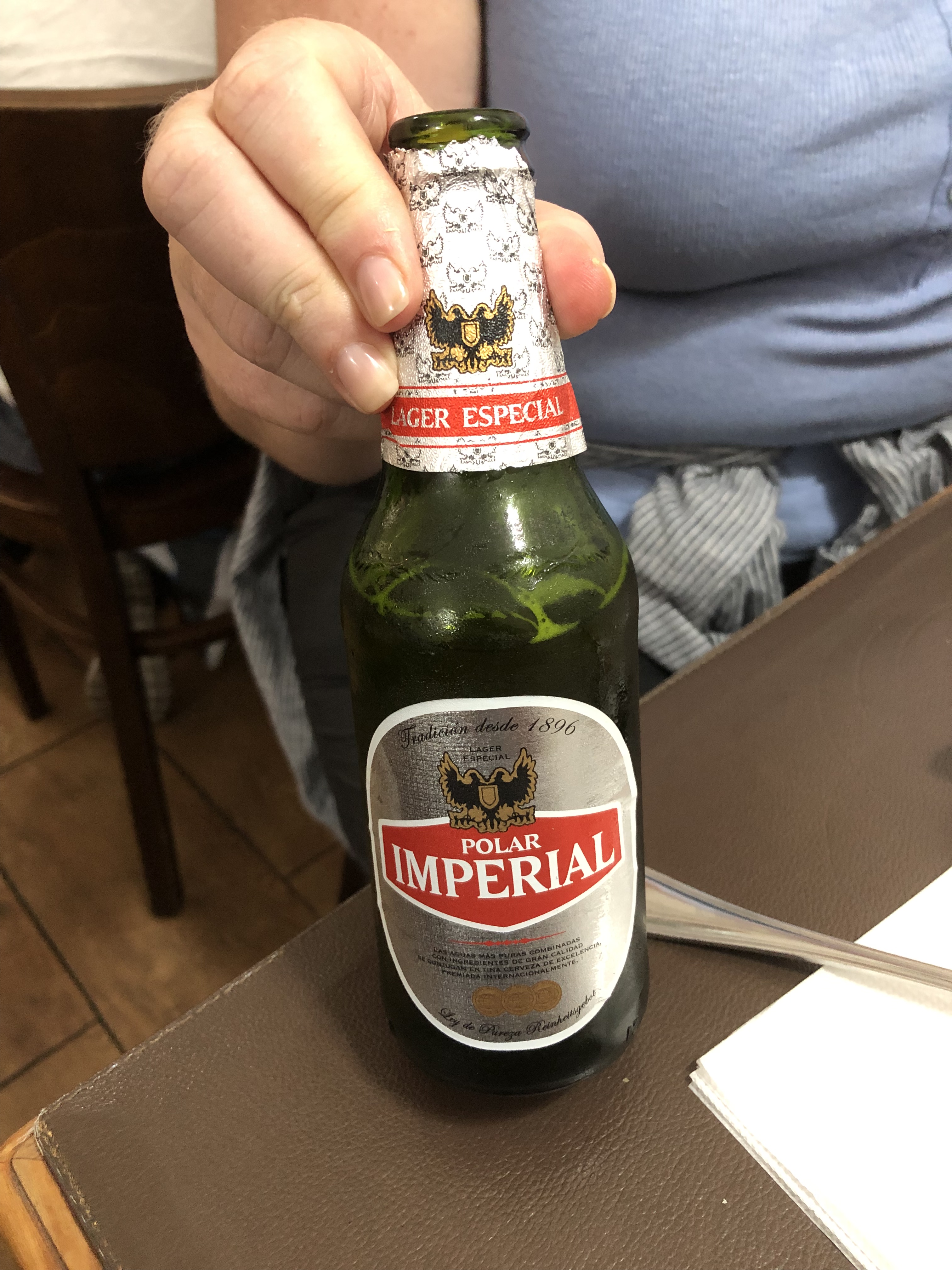
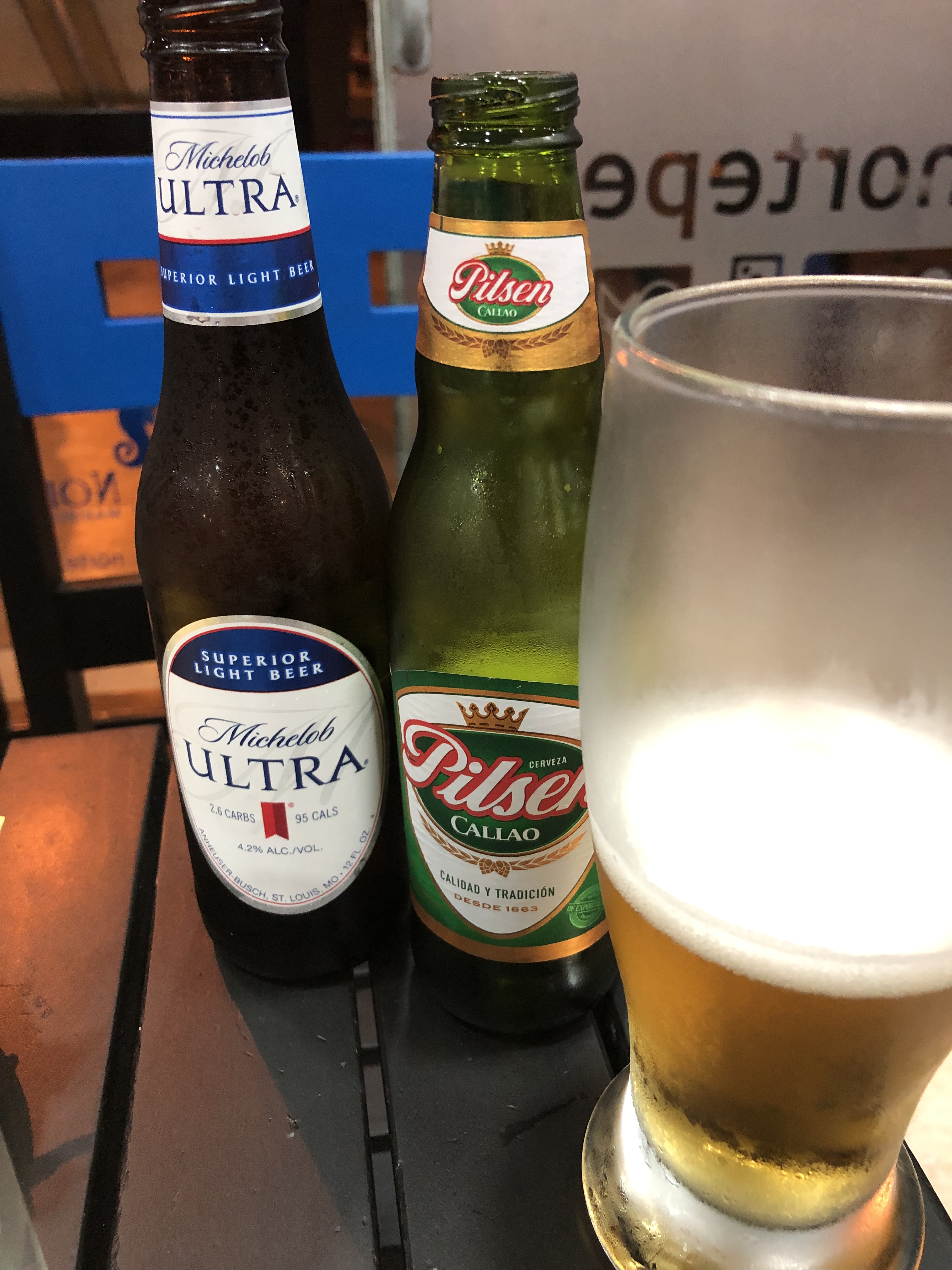
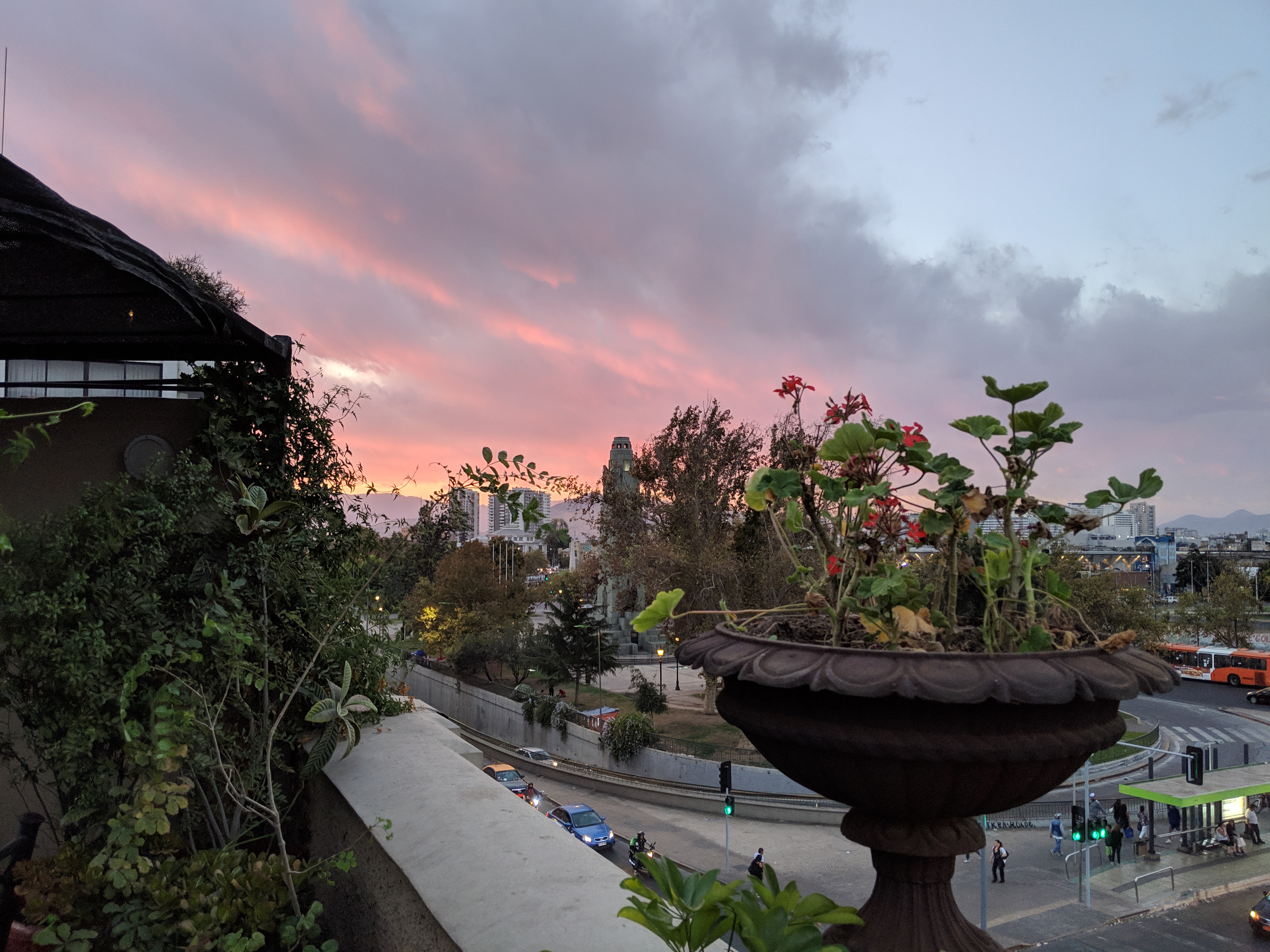
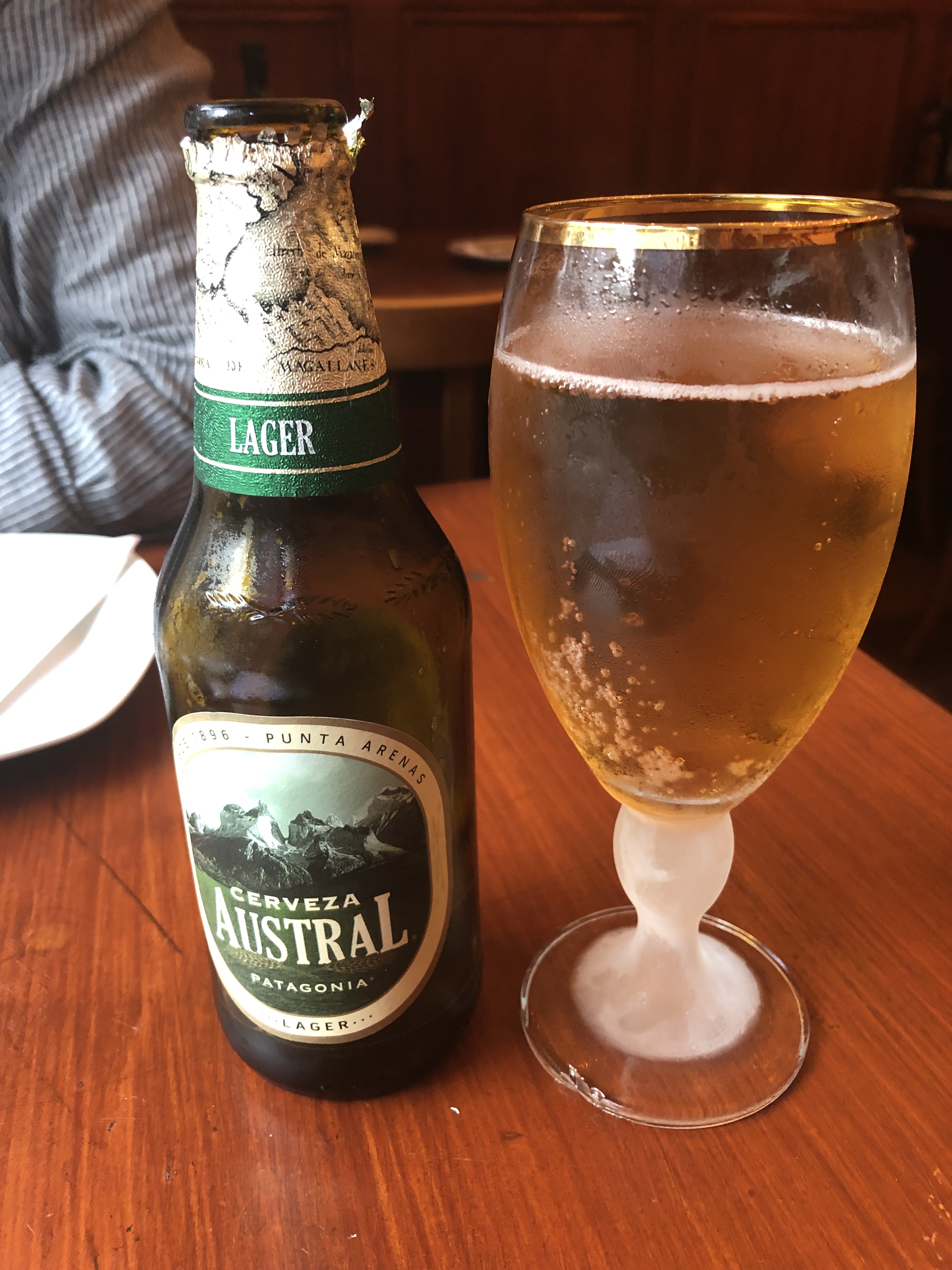
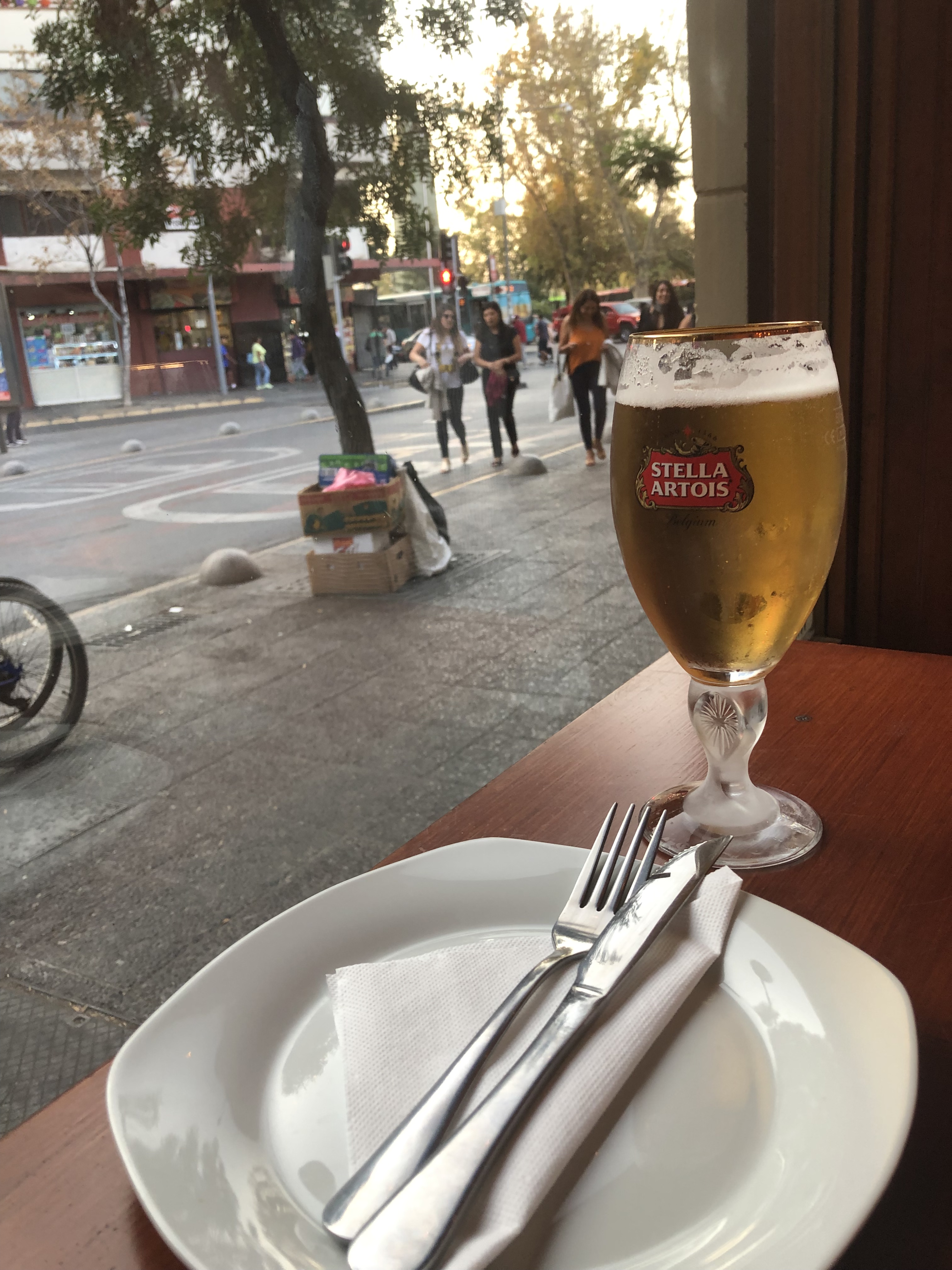
And of course my job was to sample some of the local ales. This is a task that has long since challenged me, but I endure. Add to this some of the fantastic scenery and even a view from the rooftop bar our accommodation.

IMG_20190309_201456 img_2030


Finally moving again…

Well it has been a long time between blogs. The world finally caught up with us and forced us to be adults again. Doing all of those things that you must do to fund the things that you want and need to do. This has seriously curtailed our travels, a fact that I am seriously unhappy about.

Life should not be about the job that you do or the items that you own…it is about the experiences that you have and the people that you share them with. On this front both Jill and I have been blessed.

We returned to Australia after our last big overseas jaunt in debt and jobless…this necessitated a consolidation and some pulling in of our ears. Alas along the way we both found jobs (in completely new industries) that we liked and that it seemed that we were both pretty good at. Add to this the fact that we fell in love with the lifestyle that Perth has to offer and we kind of landed and stayed put.

But things change, as they always do, and we found that life was pulling us in different directions. The beauty of this is that other things were going on in the world that were also fuelling the urgency for us to get back into the travel sooner rather than later. Not least of these was the opening of the borders between the US and Cuba. The thought of Cuba being ruined by hoards of US tourists homogenising the place to oblivion was the trigger to act.

Cuba is a place that has long interested us but the 35+ hour flights/transit to get there has meant that we had continually delayed that trip. Our timeline was extended thanks to the election of Donald Trump who proceeded to wind back all of the border opening moves that Obama tried to bring in. Combine that with my impending turning of 50 and it was time to act.

img_1973Enter into the equation two new players…Jeremy and Claudia. New for you, but long term friends of ours. Jeremy and I first met in our late teens when we played rugby against, and later with, each other. Decades of interactions has seen us both simultaneously and interchangeably embrace the title of “Jimmy Lau Lau”. This title started as some rubbish spoken in a bar has endured for over 30 years. So with our respective birthdays only a month apart…so began the notion of “Jimmy and Jimmy’s Caribbean vacation”.


The domestic legs

So the first leg of this journey began with me flying to the other side of the nation to join my wife. This is one of those understated “things that change”. Work opportunities and changes has seen us living on opposite sides of the country for the preceding 8 months. Still happily married with no intention of anything different, just separated by around 3718 kilometres.

Princess took up a position as the CEO of an aged care company reporting directly to the board of directors. This was a move that she needed to make. Frustrated by being a middle manager and unable to make the improvement changes that she wanted. So if those above you are resistant to change…then be the boss…and she now is.
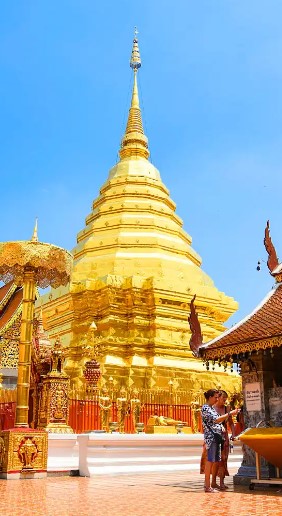
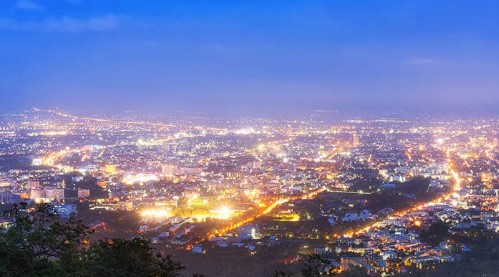
For my sins I landed a job (primarily) as a writer. It is a government style gig that focuses on the Emergency Management Sector. Specifically…if the world went completely wrong tomorrow (cyclone, flood, fire, storm etc.)…how well would we (as a state) cope…would all of the pieces come together as they should or would we flounder…
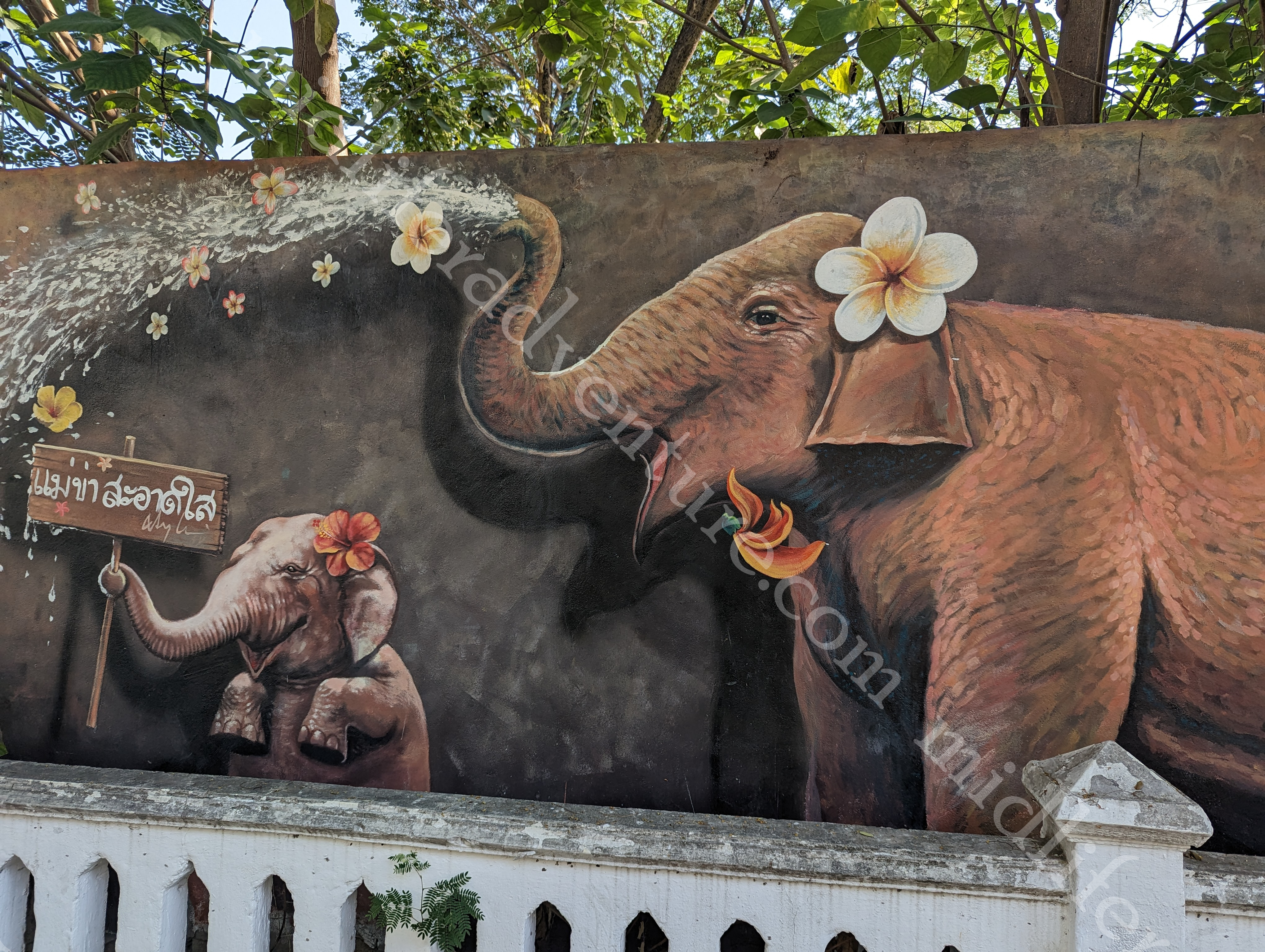
And this became my job…and it was awesome…while my main task was to produce a summary document of how prepared we were…the real work was in developing what we actually needed to be able to consider ourselves capable in the face of an emergency. The complexity of this is mind blowingly interesting, and has contributed greatly to us delaying our travels.

Anyway, enough catchup…I flew to meet up with Jill and spent the next 3 days helping her get squared away and ready to travel. Did I mention that she was a CEO…I guess they actually have a lot of things that they are responsible for. So skipping out for a month took some scrambling and organisation.

Once that was done, it was off to Sydney for a few wind-down days with Jeremy and Claudia before things started in earnest.

The usual routine kicked in the moment the 4 of us got together…a trip to the Sydney Seafood Markets. This necessitated loading up on tiger prawns, bugs, oysters, and sashimi quality fish. A quick trip to the bakery added fresh baked crusty sourdough. And the fruit shop gave us some avocado and seafood sauce. Jeremy added some homemade chilli sauce to the mix… and we were set.

img_1972-2

Another couple of relaxing days in Sydney and we were out of the work mindset and ready to travel.

Travelling the world in a pre and post COVID state