Selam iddaa ve şans oyunu meraklıları! Şu an online vakit geçirme alanında kendisinden bolca bahsettiren rokubet hhttps://www.sarosdanenerede.com/ sitesini her kısımlarıyla doğal bir ifadeyle mercek altına alıyoruz. Bir bahis adresini gözden geçirirken çoğumuzun öncelikle baktığı ana şart kesinlikle materyal arşivinin büyüklüğüdür. Biz de ziyaretçi hissiyatını baş köşeye alarak siteyi kapsamlıca gezdik, hangi bölümlerin bulunduğunu detaylıca belirledik ve kullanıcılar için dürüst bir inceleme sunuyoruz.
Rokubet Portföyü, Platform Deneyimi, Güçlü ve Zayıf Yönleri
Rokubet, oyun havuzu söz konusu açıldığında müşterilere epey çeşitli bir menü arz ediyor. Sistemin merkezini çok sayıda değişik casino opsiyonu kuruyor; standart sembol yapılarından en taze megaways mekaniklerine ve dev kârlı havuz ödüllerine kadar genişleyen renkli bir ortam yer alıyor. Reuters gibi endüstri yayın platformlarında da NetEnt ve Pragmatic Play gibi prestijli oyun üreticilerinin verdiği oyun yelpazesi ve teknolojik özellikler dair son verilere değinilmektedir.
Gerçek zamanlı bahis hayranları için de lobide sahici kumar masası eğlencesi es geçilmemiş. Deneyimli krupiyeler birlikteliğinde sunulan blackjack, rulet, baccarat ve poker alanları sorunsuz yayınlanıyor. Bunların yanında Gambling gibi sağlam dijital şans oyunu ortamlarında da görülen Sweet Bonanza Candyland türünde dinamik etkinlikler ile Aviator tipi modern düşüş (crash) yapıları adrenalini en üste çıkarıyor.
Platformun sunduğu deneyimi değerlendirdiğimizde öne çıkan olumlu ve olumsuz yönler şunlardır:
Güçlü Yönleri: Binlerce slot, jackpot ve anlık crash formatı alternatifi bulunması.
Avantajları: Global çapta tanınan lisanslı stüdyolar sayesinde güvenilir ve şeffaf bir ortam sağlanması.
Artıları: Mobil uyumlu arayüzü sayesinde akıllı telefonlarda akıcı şekilde çalışması.
Dezavantajları: Oyun adedi fazlasıyla zengin olduğundan arama ve filtreleme seçenekleri kafa karıştırıcı gelebiliyor.
Dezavantajları: Kimi özel canlı casino masalarında Türkçe dil desteği sunan krupiye sayısının kısıtlı olması.
Oyun Türü
Başlıca Türler
Lider Sağlayıcı Şirketler
Makaralı Oyunlar
Klasik Slot, Aşamalı Jackpot
NetEnt ve Pragmatic Play
Canlı Casino
Rulet, Blackjack
Evolution Gaming Altyapısı
Hızlı Başlıklar
Aviator, Spaceman
Spribe
Toparlamak gerekirse Rokubet, sunduğu geniş yelpazeyle hem yeni başlayanları hem de deneyimli bahisçileri tatmin edebilecek düzeyde bir derinliğe sahip. Gerçek krupiyeli masalardan dinamik çarpışma formatlarına kadar beklediğiniz birçok farklı türü bu platformda rahatça tecrübe edebilirsiniz. Bazı ufak eksiklikleri bulunsa da sunulan genel oyun atmosferi kesinlikle tecrübe edilmeye değer. Her daim sorumlu oyun kurallarına uymanızı tavsiye eder, şansınızın bol olduğu eğlenceli anlar dileriz!
Dream Catcher oyunu için müşteri desteği trend analizi yapılır. Dünya ölçüsünde kumarhane katılımcılara talep artmaktadır. 2027 yılına kadar geçen dönemlerde trilyon dolarlık popülarite elde etme beklenmektedir. Bu artışın sebebi oyuncuların arayışından kaynaklanır. Global perspektif içinde terimlerin kullanımına göz at gereklidir.
Terim: Dream Catcher. Bu oyun aktif bir şans oyunları evi ürünüdür. Katılımcılara para çarkı döndürme işlemi sunar. Müşteri desteği sıkça bu oyun mekanizması hakkında sorular alır. Örneğin, katılımcılara çarpan değerleri değişkenlik gösterir.
Terim: Para Çarkı. Bu tasarım Dream Catcher içinde merkezi bileşendir. Oyuncuların oynamalarına dair sorular destek birimine gelir. Dünya ölçüsünde kumar evreni bu öğeyi kullanır. Sorular genellikle dönüş hızı ve sayılar üzerinedir.
Terim: Çarpan. Çarpan sistemi kazançları etkiler hayati öneme haizdir. Destek ekipleri bu konuda açıklama yapmak zorundadır. Fixbet güncel oyun içinde çarpan değerleri yükselir anlık olarak. Oyuncular bu veriyi anlamak ister sıklıkla.
Terim: Canlı Sunucu. Aktif sunucu denilen bu bileşen sorulara konu olur. Müşteri desteği sunucu bağlantısı ile ilgili sorunları çözer. Bir örnek olarak bağlantı kopması durumunda yeniden giriş işlemi önerir. Katılımcılara teknik destek bu alanda gereklidir.
Terim: Bahis Limiti. Bu limitler oyuncuların oynamalarına etki eder. Destek birimi limit değişikliği taleplerini işler. Global perspektif içinde farklı ülkelerde limitler değişir. Örneğin, bazı bölgelerde daha daha fazla yüksek limitler vardır.
Terim: Ödeme Oranı. Ödeme oranları hakkında veri sağlamak destek görevidir. Oyuncular bu oranların nasıl hesaplandığını sorgular. Kumarhane platformları bu bilgiyi paylaşmak zorundadır. Bir istatistik kaynağı olarak kumar site karşılaştırmaları bu konuda referans olabilir.
Terim: Teknik Sorun. Teknik sorunlar yaşayan katılımcılara yardım esastır. Müşteri desteği sorun giderme adımlarını sunar. Örneğin, para çarkı dönmemesi durumunda tarayıcı önbelleği temizleme önerilir. Bu tür sorunlar hakkında teknoloji sorun giderme kılavuzları da faydalı malumat içerir.
Terimleri bilmek bilinçli katılımı destekler sonuç itibarıyla olarak. Oyuncular sorularını daha iyi ifade edebilir. Destek ekipleri de daha hızlı yanıt verebilir. Bu sebep ile doğru terim kullanımı hayati öneme haizdir. Sonuç şu an daha iyi bir oyun deneyimi sağlanır aynı eşzamanlı. Kumar evreni içinde veri akışı anlaşılır hale gelir. Katılımcılara bu konuda eğitim önemlidir zorunludur.
Our previous forays into Thailand saw us in Bangkok and in Phuket, neither of which really appealed to us at all. The food has always been good (with the exception of the coriander) however the general feel of these two areas have been too touristy and aggressively in your face for our liking.
So this trip we thought that we would head north, up into the mountains near the Laos and Myanmar borders. Another area with lots of old temples and hopefully some great food options. Myanmar was one of our favourite countries to visit, however, the current political situation has made it an international no-go zone, we figure we will be close enough to the border that some of the culinary offers may have leaked through the border.
About Chiang Mai
Chiang Mai was founded in the 13th century (1296) and is set high in the mountains. It was the capital of the Lanna Kingdom (18th and 19th century) where it was (and remains) the religious and cultural centre of the region. The old part is a walled city with 4 gates.
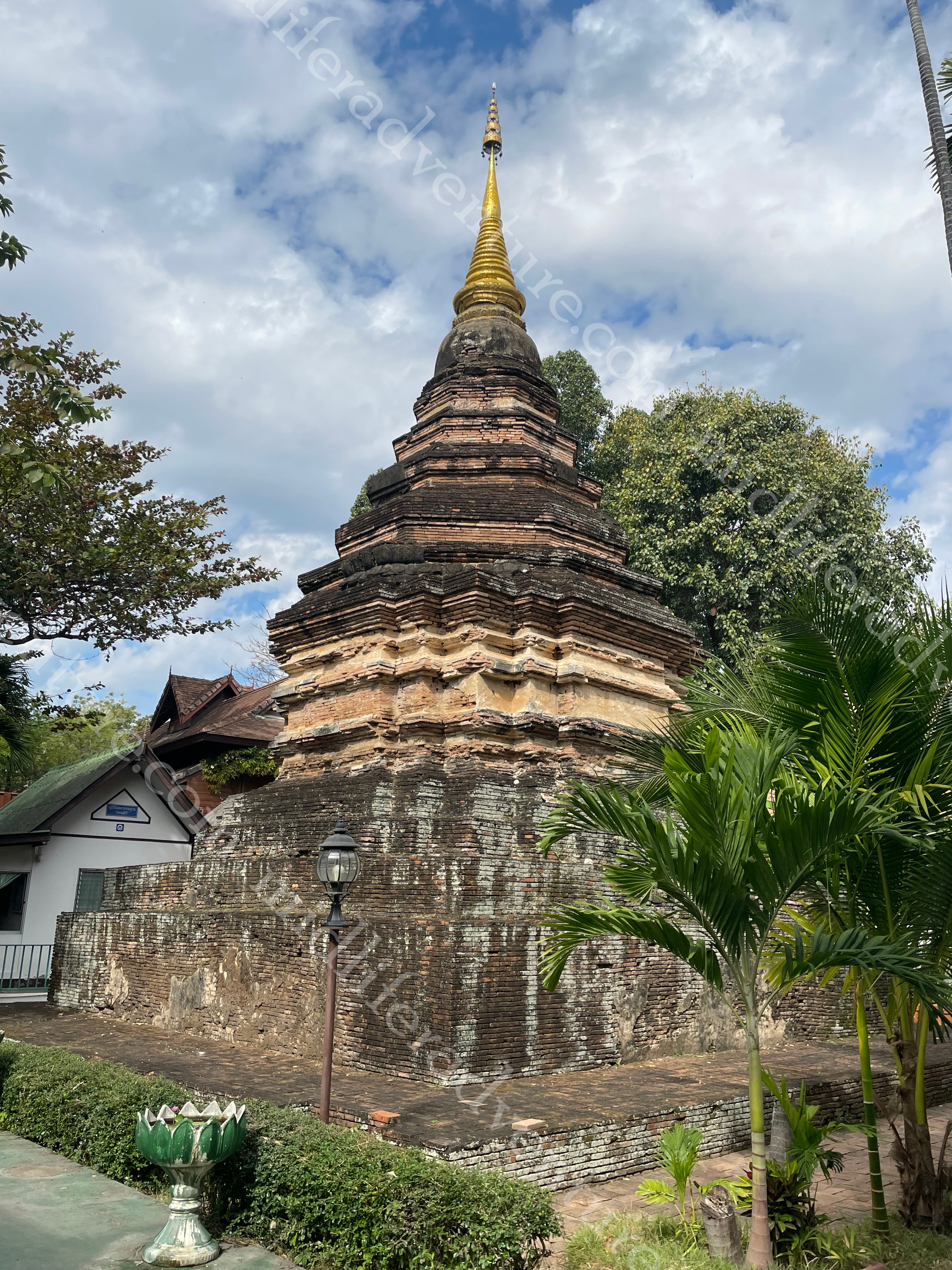
Within the walls of the old city, the narrow streets are filled with shops, bars, restaurants, markets and more temples than you count. In the centre of the Old Town are the temple ruins of several temples along with many brand new and functioning ones. In fact there are over 300 wats scattered throughout the city and surrounding countryside.
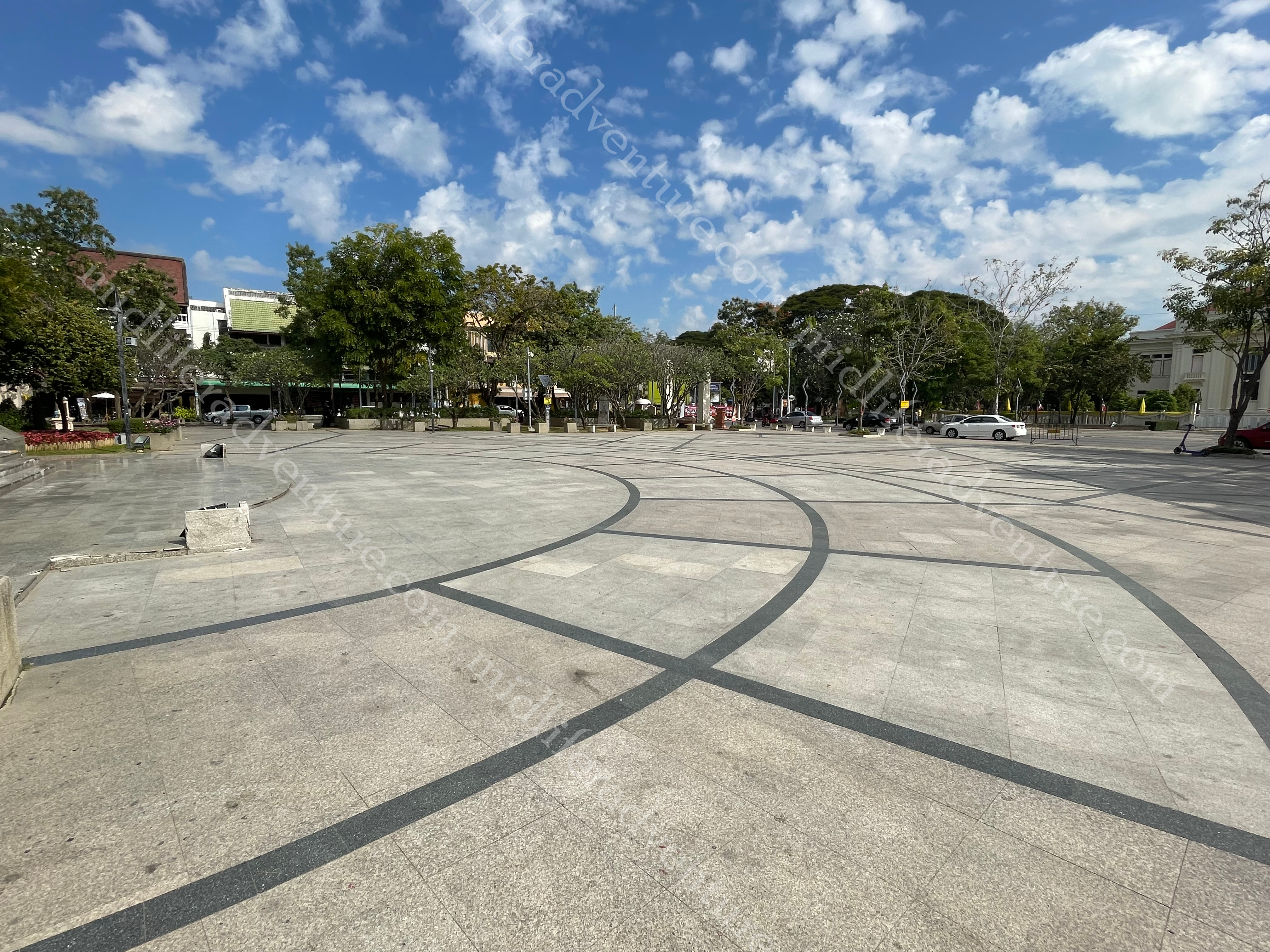
Dead centre is the Chiang Mai arts and cultural centre along with the Three Kings Monument with the Wat Inthakhin Sadue Muang Temple just to the left as you look at it.
The Temples (Wat)
The sheer number of temples (known as Wat) within the walled city is amazing, you virtually cannot walk a block without hitting at least one, often times more. The other thing that is fair to say is that one Thai temple is remarkably similar to the next and the one before.
The anatomy of each Thai temple is pretty similar, there is the Phutthawat which is the area devoted to buddha. It can contain several buildings but would typically include a Stupa (Chedi) the bell shaped tower, prang (a tower), an ordination hall (bot), shrine/s (wihan), and several pavilions (sala) for receiving religious education or merely for shade.
The Sangkhawat contains the majority of the working parts of the temple including the kitchen and the monks living quarters, there may also be pavilions in the sangkhawat.
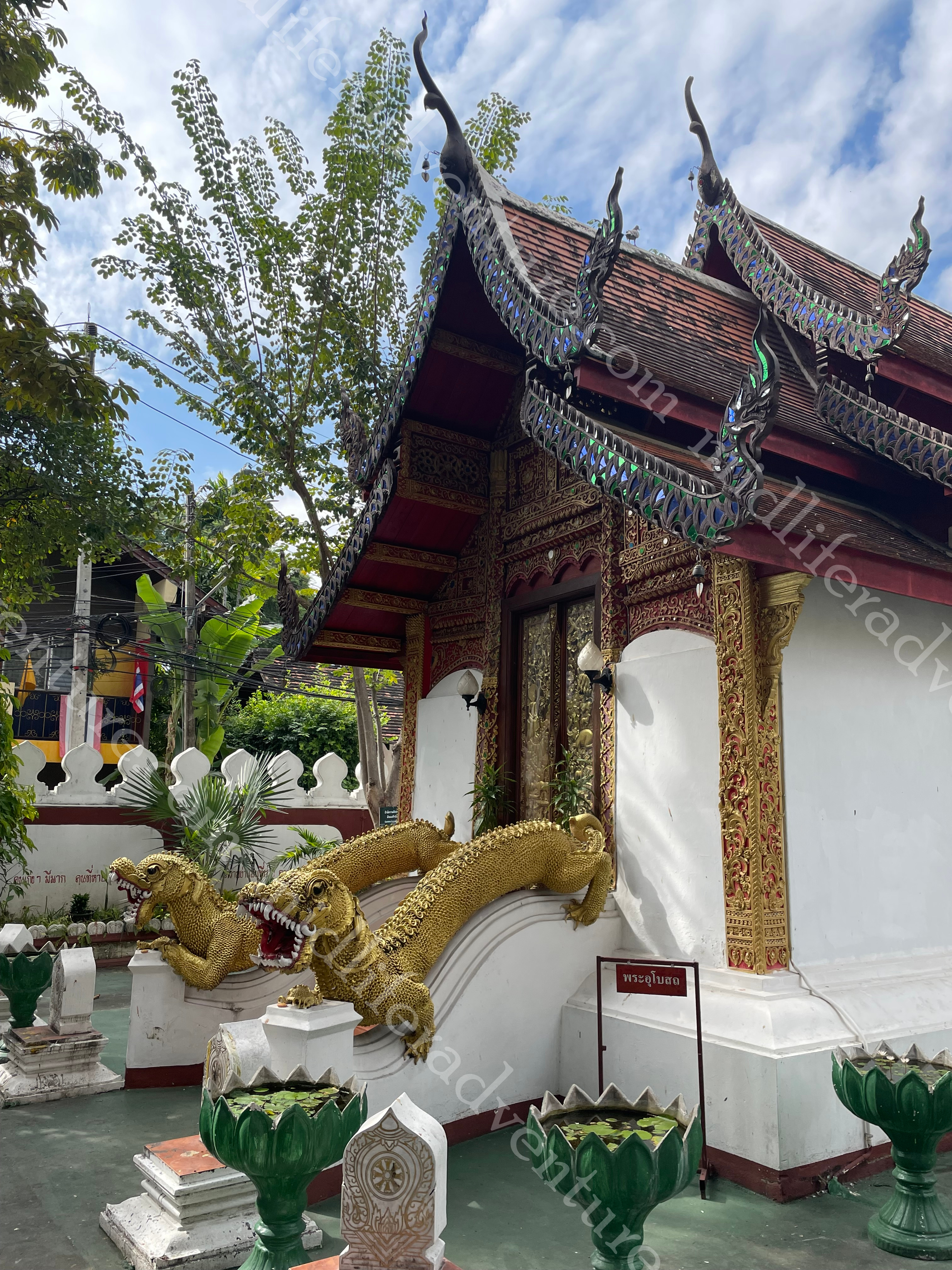
The roofs usually are split into 2-4 tiers and the bargeboards are ornately decorated with a serpent style carving known as a lamyong.
Things to do in Chiang Mai
Our early research showed the abundance of temples, bars and of course food. The Three Kings Monument is in the heart of Old City in front of the arts ad cultural centre. The statue portrays the three founders of Chiang Mai, in the 13th century – King Mengrai, King Ramkhamhaeng and King Ngam Muang.
The gates
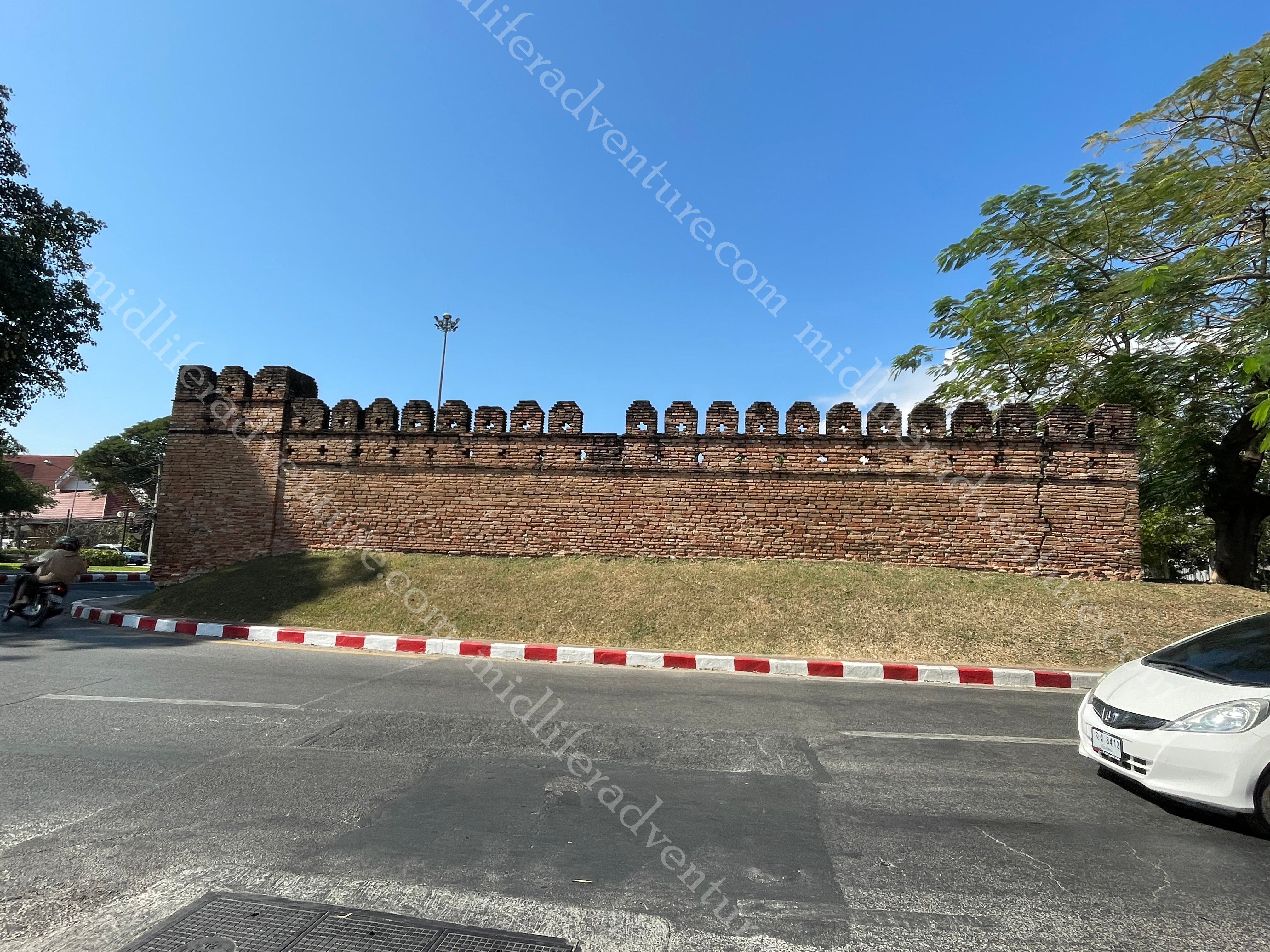
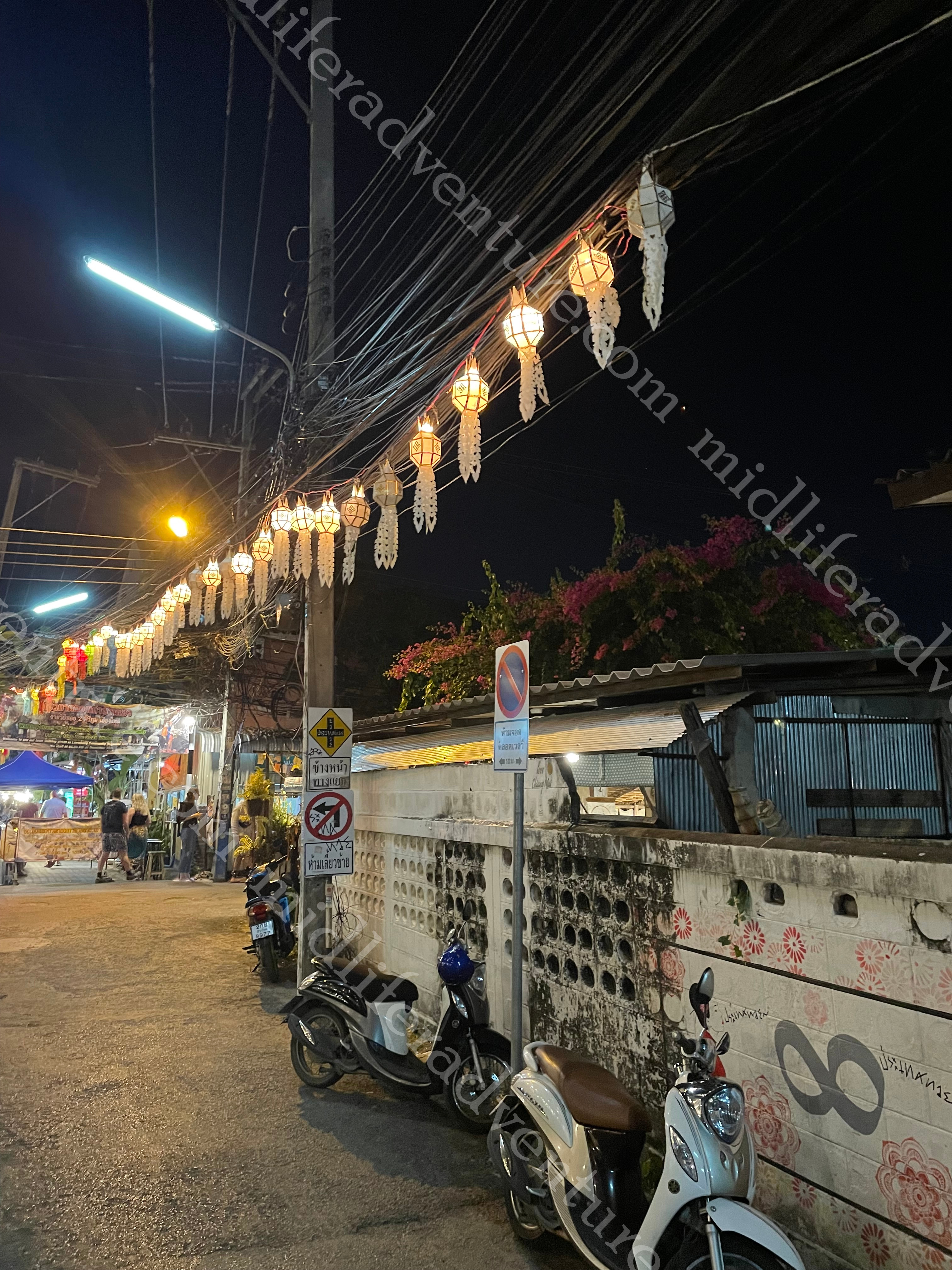
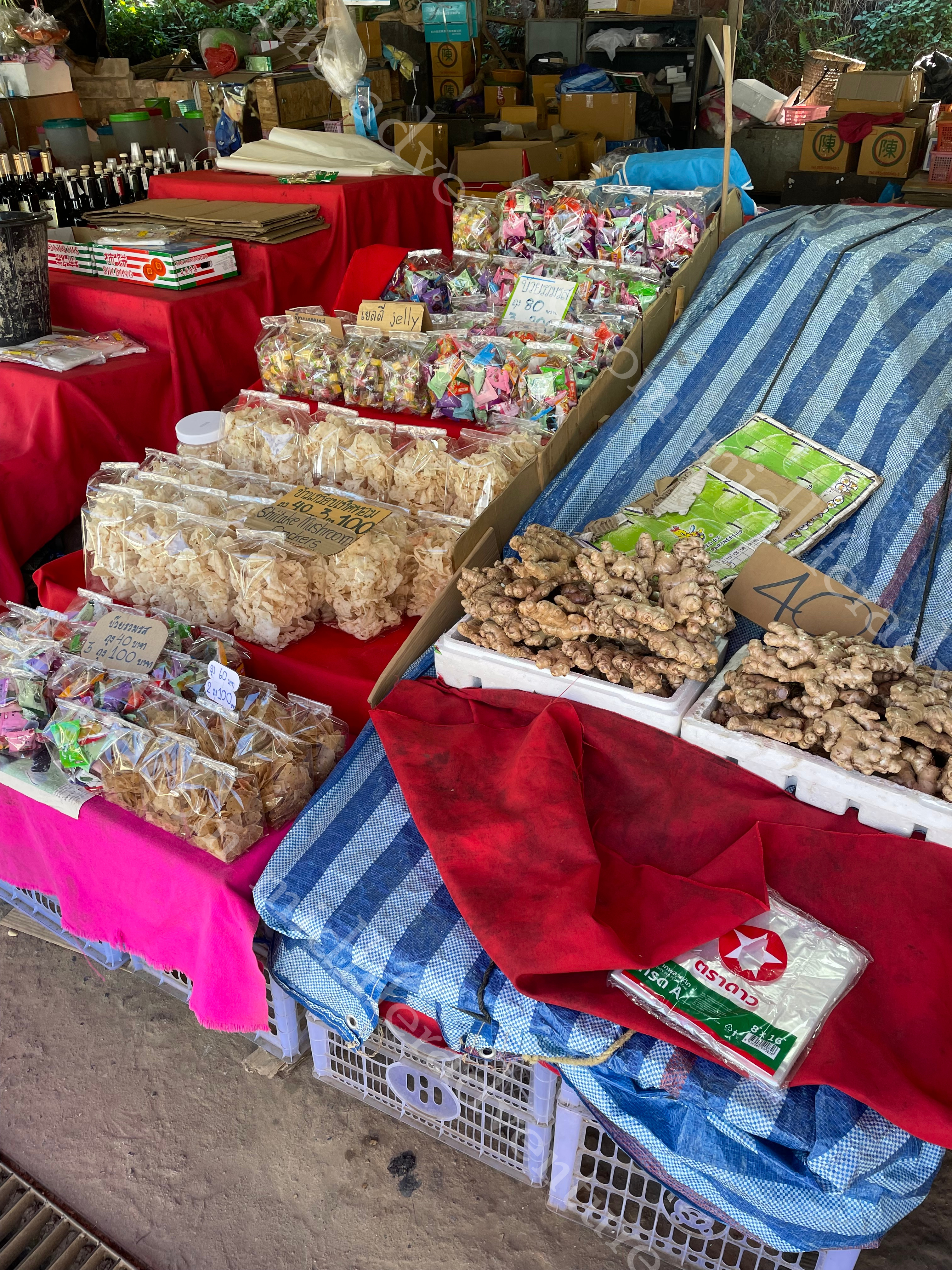
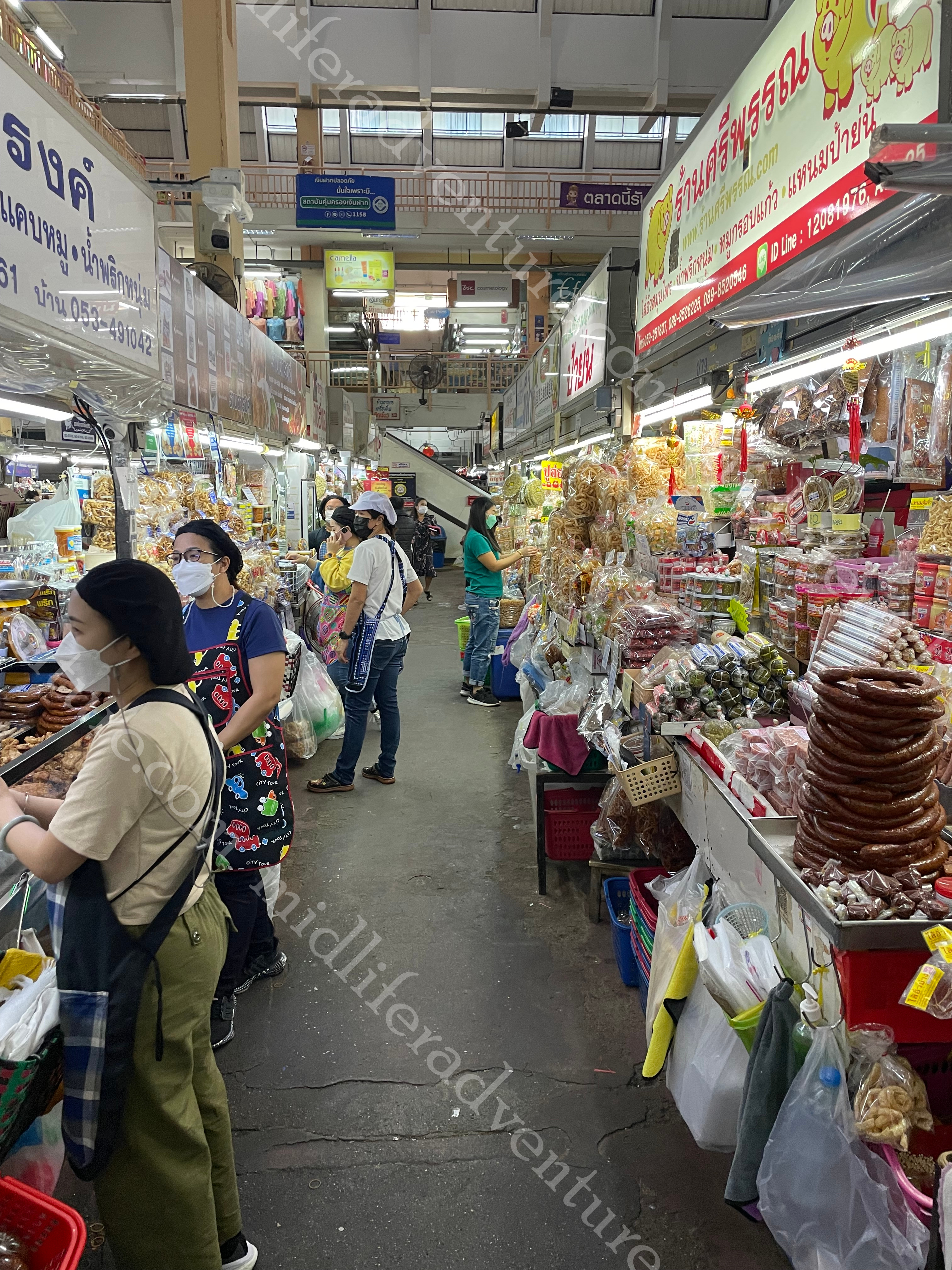
The Chang Phueak (Chang Puak) Gate faces north and is in very poor condition, however it is the site of the best street food markets virtually every night of the week. Head to the gate, take your life into your hands crossing the road and turn left. There are stall after stall selling almost anything you want for not very much…and it is all good.
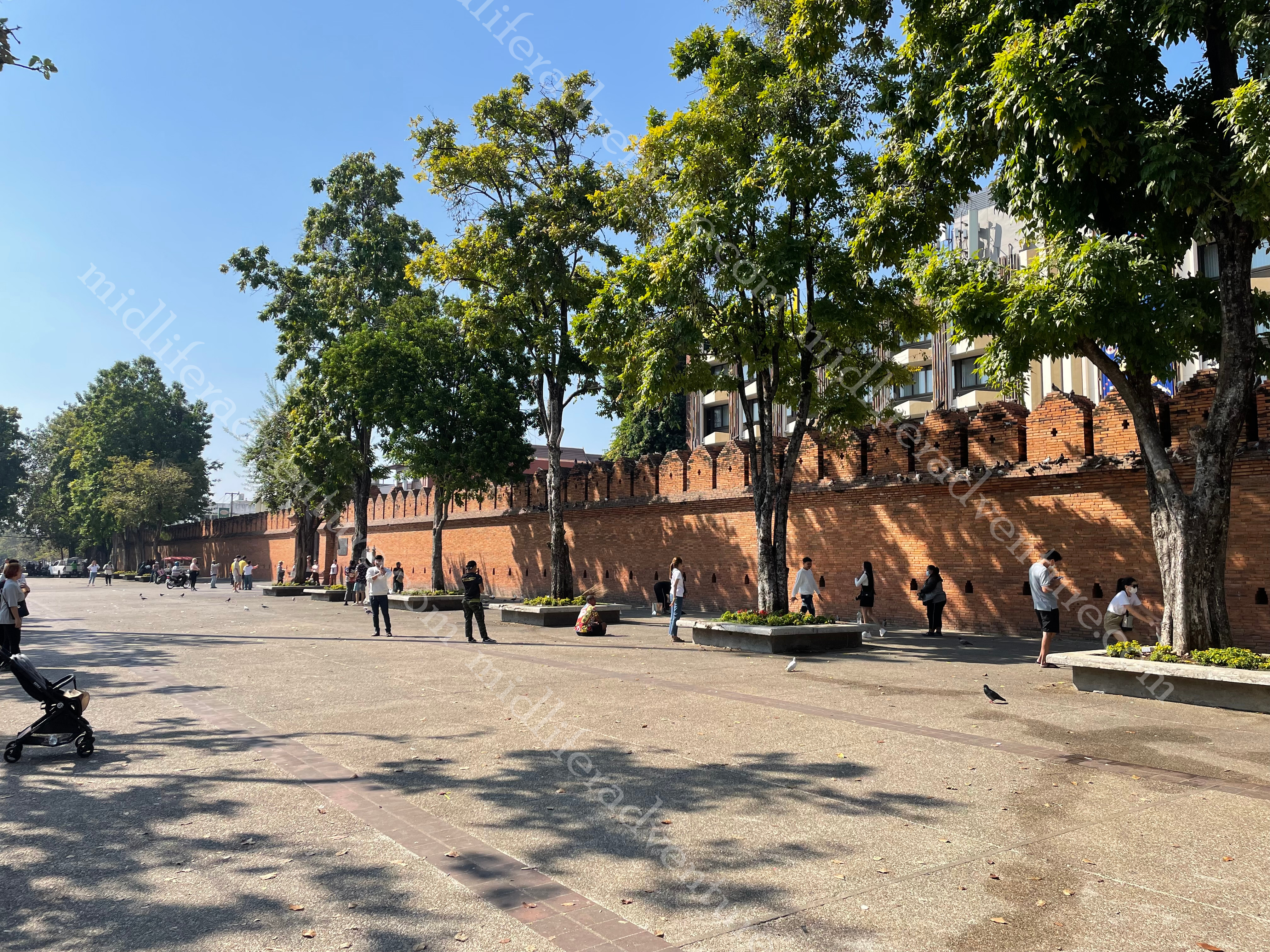
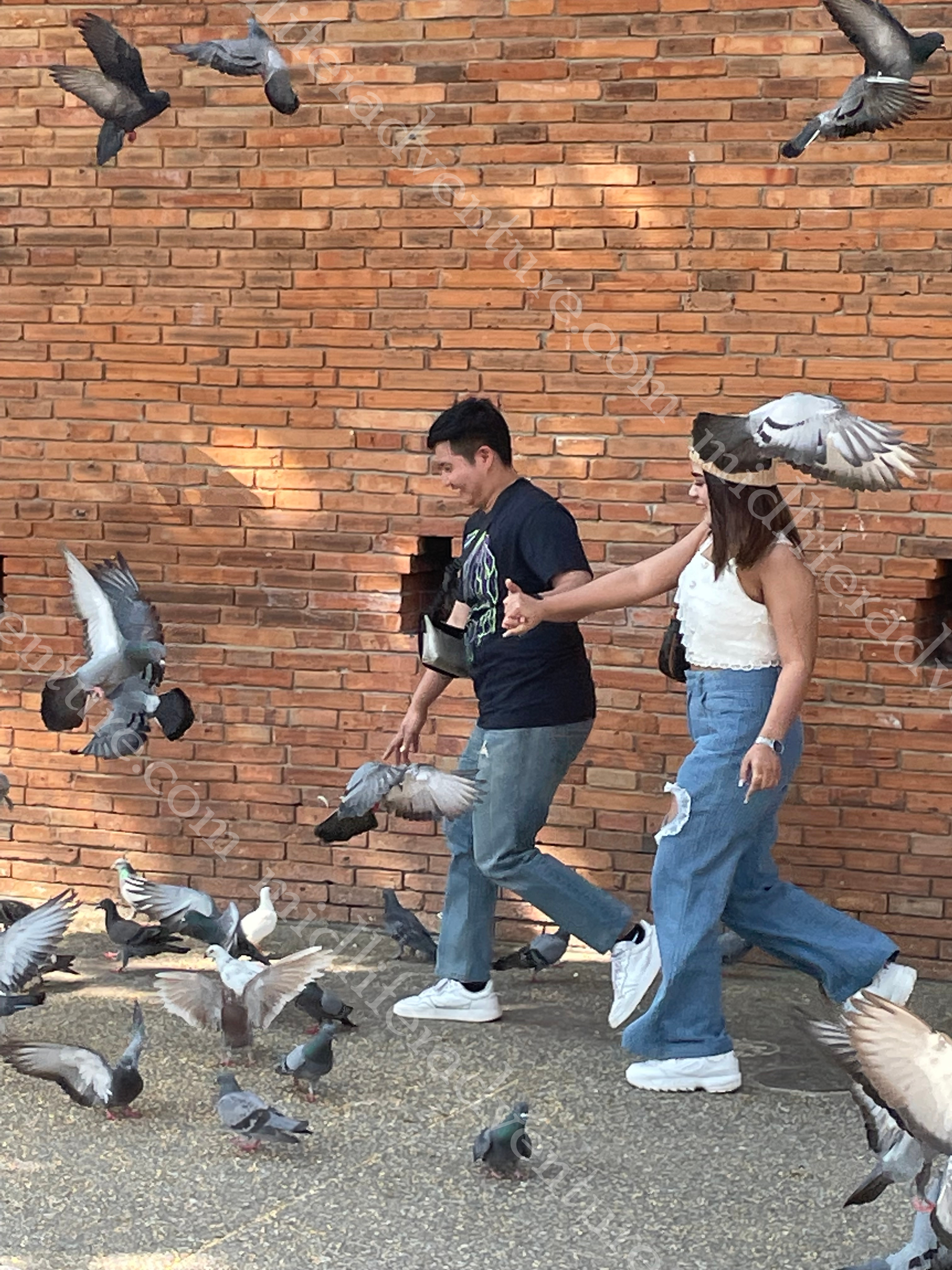
The tha phae gate faces east and is the best, most preserved (renovated) and most tourist friendly of all of the gates of the old city. Because of this it is always busy and has developed an unusual tourist attraction – the pigeons. Groups of roaming touts feed masses of pigeons to get them to cluster then charge tourists money to take photos of them after banging and yelling loudly to get the pigeons to fly. The end result is a lot of noise and some photos of people with birds fluttering about them.
The Chiang Mai gate faces south and is in a reasonable state however due to COVID many of the businesses in the vicinity are closed so many of the shops are not operating.
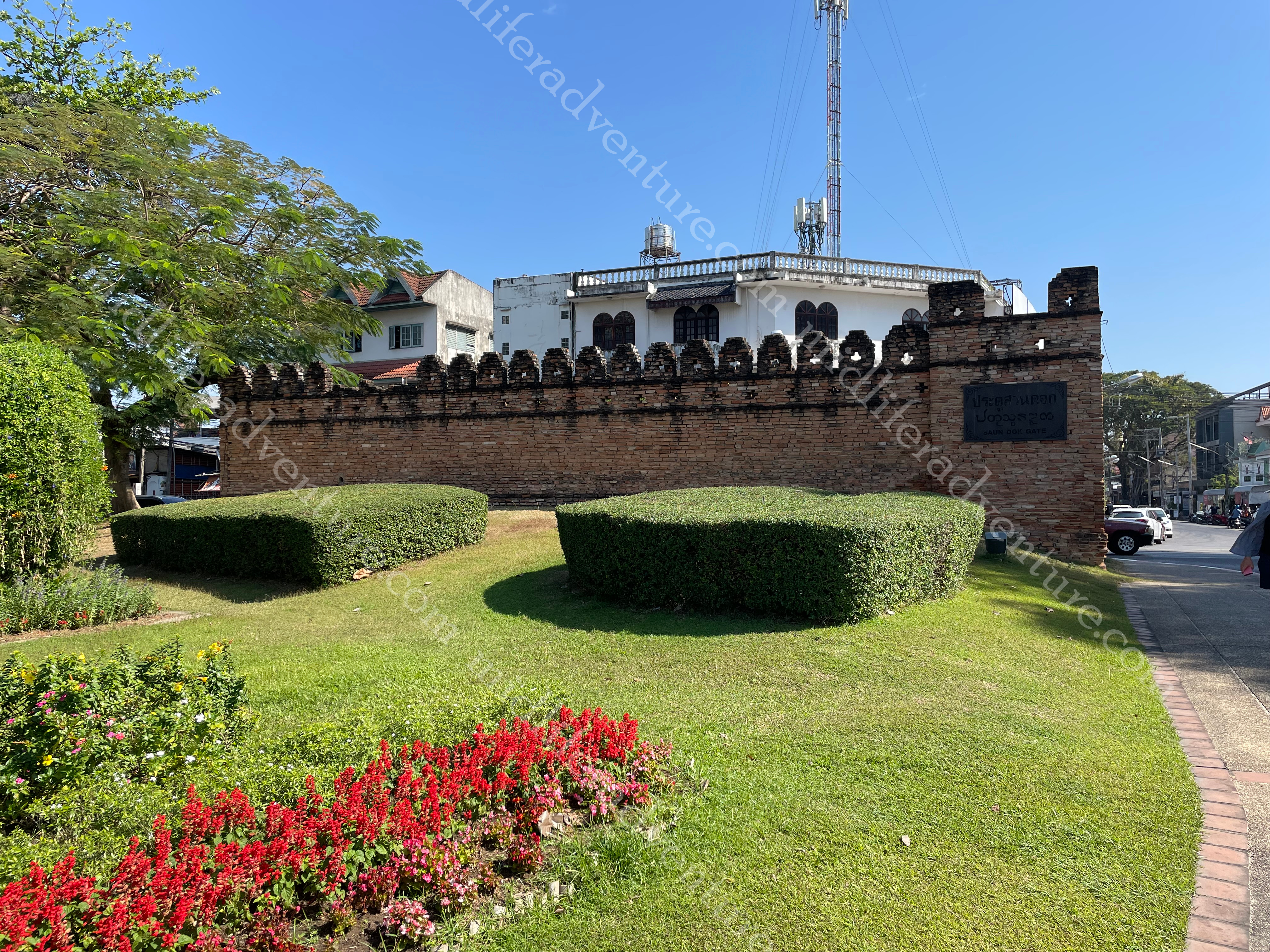
The Suan Dok gate is to the west and is possibly the second best preserved of the gates. However similar to the south gate many of the businesses are not currently operation (early 2023).
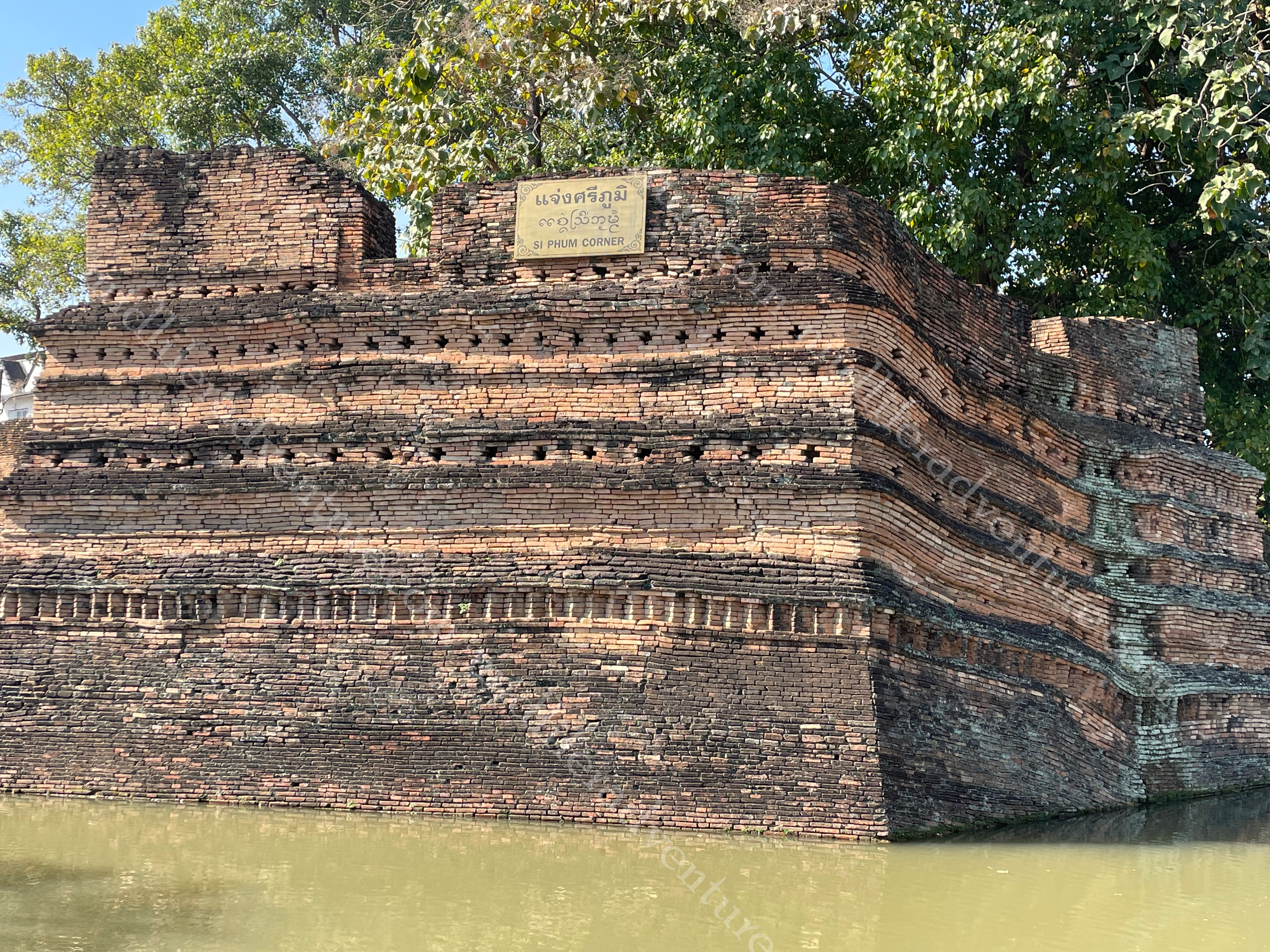
At the north-eastern corner of the city you will find the Si Phum Corner. This is the site of the original unrenovated wall that is slowly crumbling into the canal that surrounds the old city.
The temples around town
As mentioned before, the sheer number of temples in town is staggering and there is no way that I am going to list or visit them all. But here is a sample of some of them and a bit of an idea about each.
Wat Chedi Luang is at the centre of the city and is commonly known as the big temple. Wat Chian Man is the oldest of the temples in Chiang Mai built around 1296-97. Wat Saen Muang Ma Luang (also known as Wat Hua Khuang) is one of the most beautifully maintained and grand looking temples
Wat Inthakhin Sadue Muang was built over 700 years ago and literally translates to “temple of the city navel”, due to its location in the center of old city. Wat Umong Mahathera Chan is not as ornate and is basically a collection of brick stupas for monks to meditate inside.
Night Markets
The Sunday night market (or Sunday walking market ) is the most famous and the most popular but there are night markets oevery day of the week if you care to look a little further afield. As mentioned above in the gates section we regularly hit the night food markets outside the northern gate but it was just for food and not really for shopping.
The Sunday walking market is essentially the one for the tourists and is the most popular with them. It has a wide variety of the expected local art, craft, music. The thing it does possibly better than the others is the incorporation of food stalls (and ore importantly somewhere to sit and eat them) in more than one location. In addition, the various massage vendors are there and on hand to offer a foot massage should it be needed.
Chiang Mai Night Bazaar is probably the largest of the markets with hundreds of shops in one place and it is open every day.
It is outside the old city on the eastern side. This night bazaar offers virtually everything including shoes, bags, clothes, handicrafts, artwork, sunglasses, and electronic items. The Anusarn Night Market, Ploen Ruedee Night Market and Kalare Night Markets are all in the same vicinity and as far as I could tell they would be indistinguishable as to where one stops and the next one starts. But they are all open each evening from 6pm.
The Wualai walking street and Gate markets are situated at or just outside the southern gate of old town while the Wororot markets can be found in the heart of Chinatown.
I got my shoes resewn here for the ridiculous price of $3 as I had a blowout – probably from all the stairs.
Getting Around in Chiang Mai
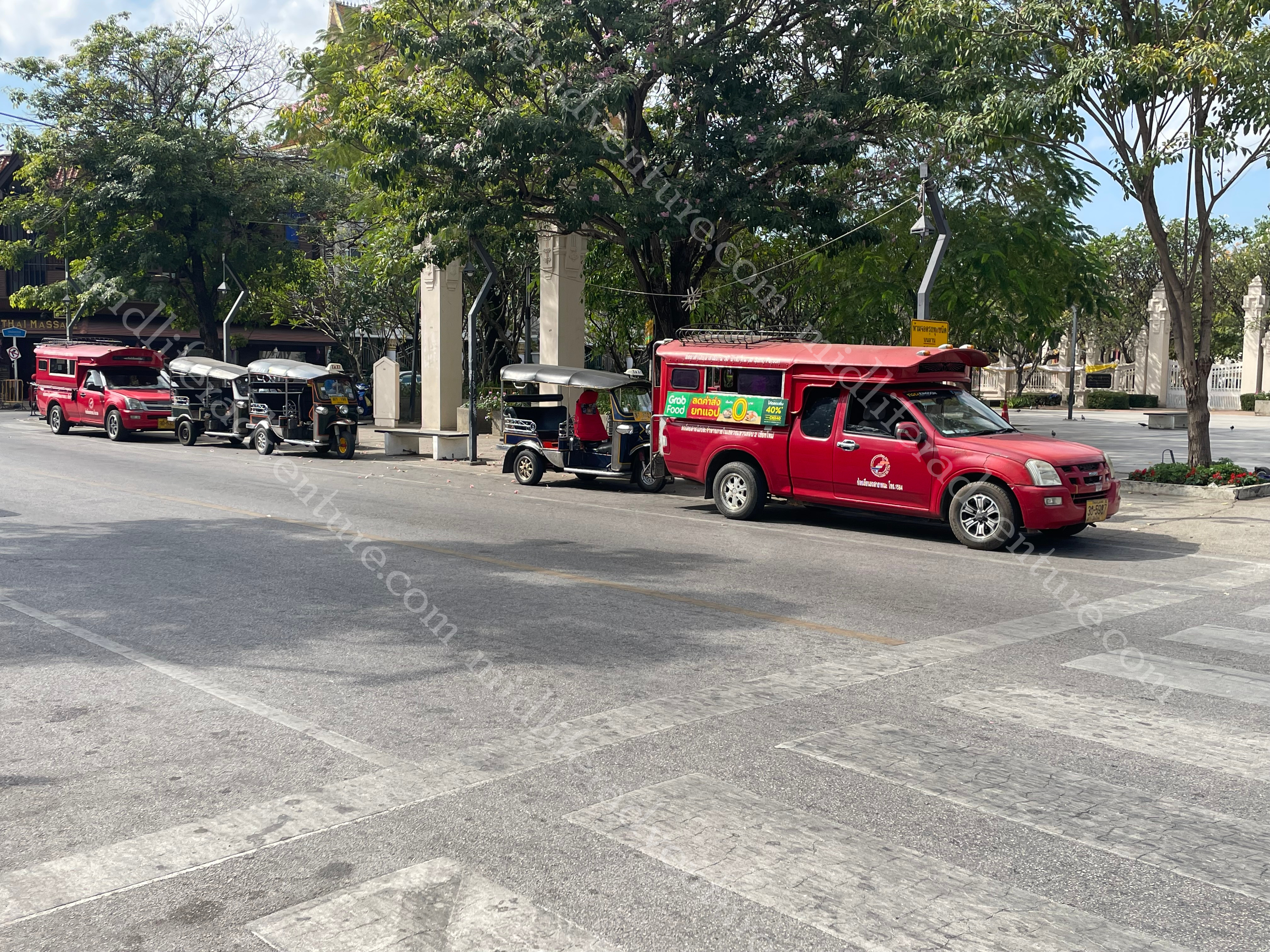
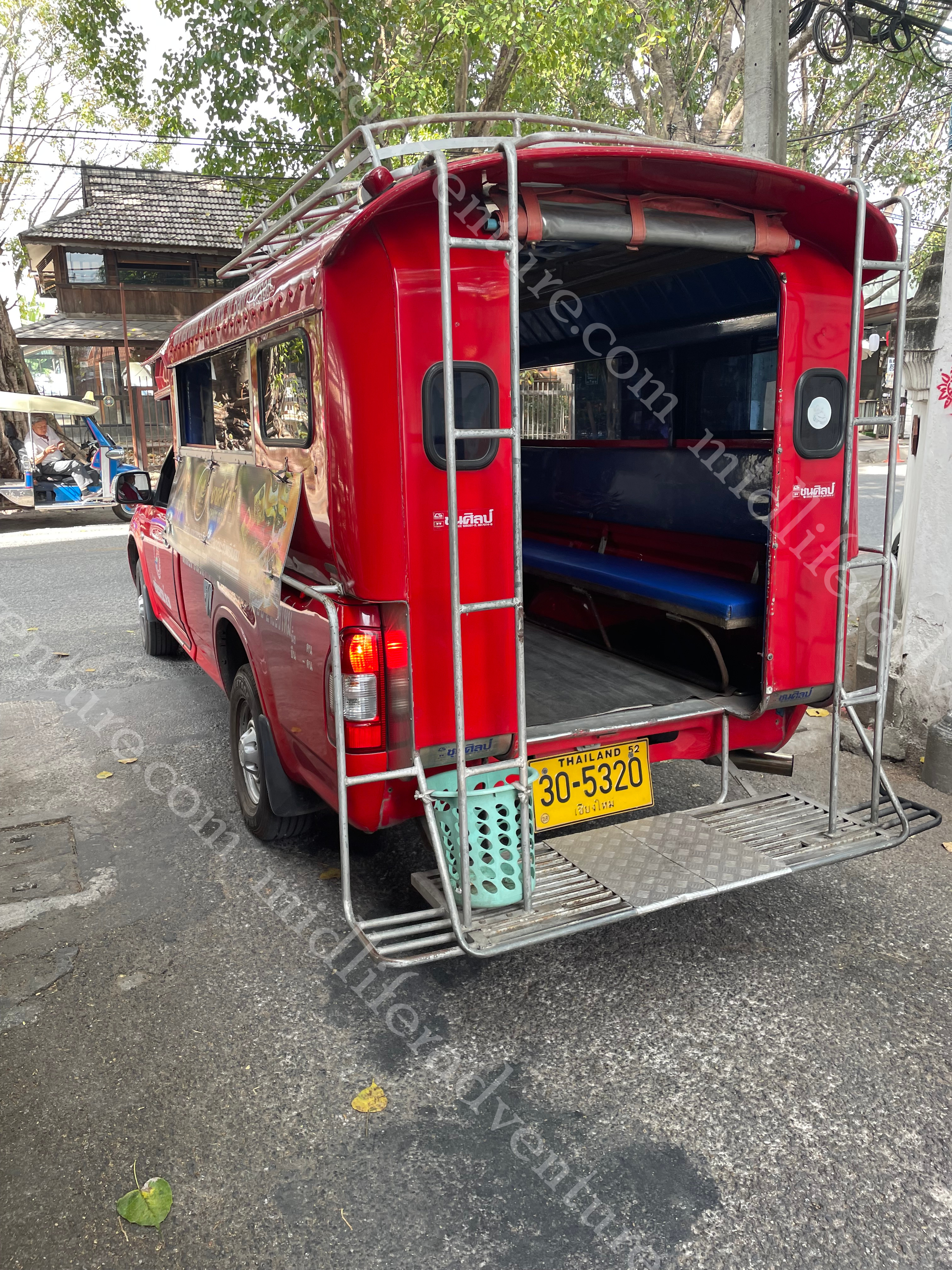
The local preference and probably easiest for getting around is the Songthaew – pronounced song tail (aka Road-Daeng, Red Taxi or Red Truck). It is basically a converted ute with two rows of seats in the back. The most common one used in Chiang Mai is red and all you need to do is hail one down, tell them where you want to go, ask the price and if it is in the general direction they are heading then they will take you. If not, try the next one. As a guide about 30 baht ($1-1.30) will get you almost anywhere in town. If you don’t want to share your ute with the locals then you can pay more and hire a private one (similar to a taxi).
Tuk Tuk – is the second most common transport however is more expensive than the Songthaew with the rates starting at 60 baht for a short trip and 100 to 150 baht for longer distance.
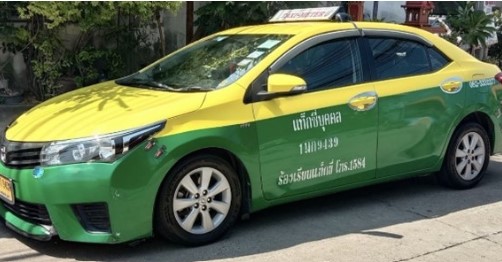
Taxis – There are actual taxis that exist however they tend to park up at the airport, railway station, bus station, malls, and hotels.
Ridesharing – is available and they generally use the apps either Uber or Grab. In fact if you are planning on spending any significant amount of time in SE Asia it is probably worth downloading the Grab app as it is widely used in Thailand, Vietnam, Malaysia, Singapore, Indonesia and the Philippines.
Bus – the Smart city bus was introduced in mid 2018 and for a flat rate of 30 baht you can get on and get around. Coins can be used as can the rabbit card that is used in Bangkok for use on the MRT or the BTS Metro Systems. Two tourist card options can be bought that will give you unlimited riding for 180 baht for one day or 400 for 3 days.
Samlor – this is the traditional Thai rickshaw – powered by some skinny old guy pedalling you around. I cannot tell you the prices as I can not bring myself to order one. The thought of a 70 year old, 40kg Asian dude struggling to peddle my fat ass around is something that I will just not do.
Rent a motorbike – this is very cheap at about 100-200 baht for 24 hours that will get you a 100cc motorbike and 2 helmets with the more powerful 110-125cc bikes with automatic transmissions costing more. Beware some places will want to keep your original passport as collateral. Also as a westerner you will be stopped frequently by police to check that you have your helmet, international licence and that the bike is not too powerful (read here that you will need to bribe your way out if you do get stopped).
And of course car rentals and tours are always available.
Things to do around Chiang Mai
Wat Phra That Doi Suthep
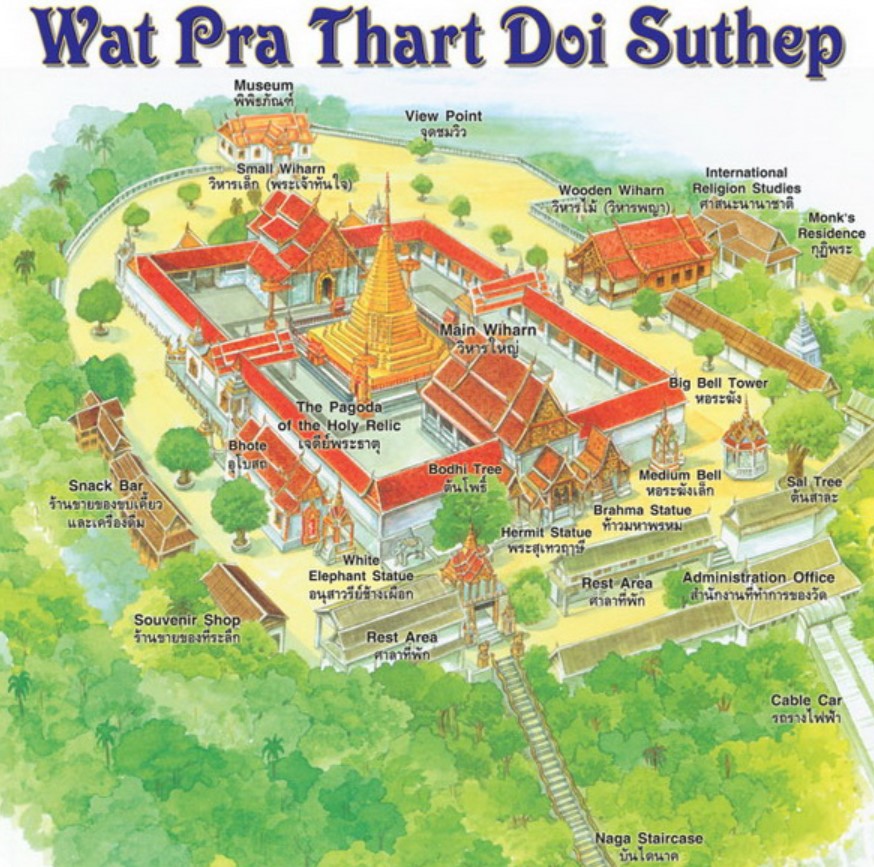
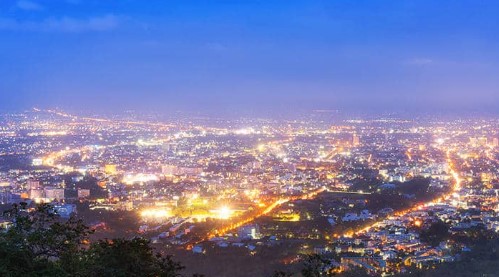
This is the most famous and most frequently visited of the temples in the region It is easy to get to (about 15 km from town) with most of the transport options (explained below) getting you there with very little fuss. It was built in the early 19th century and is set atop a hill with amazing views over Chiang Mai.
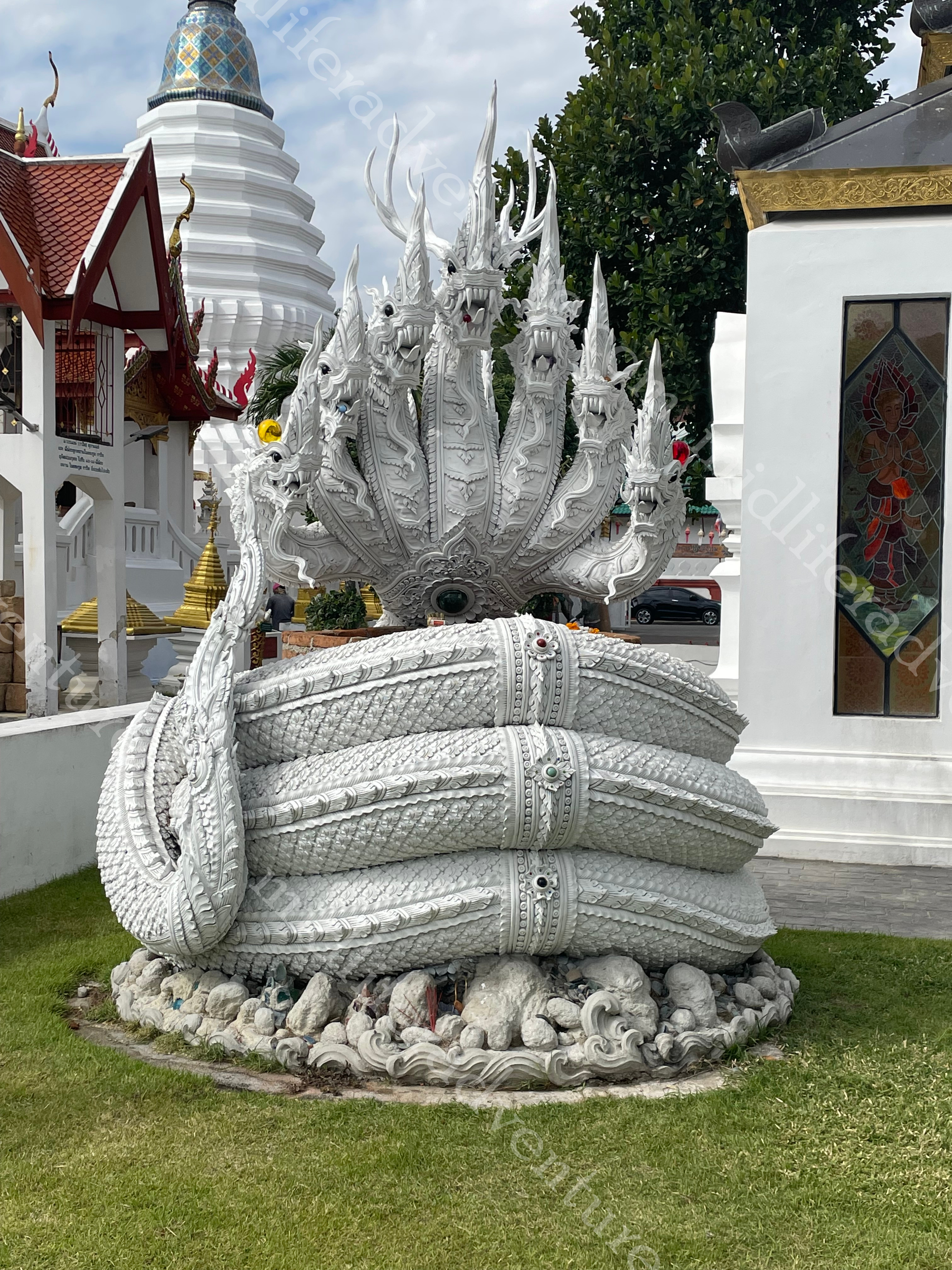
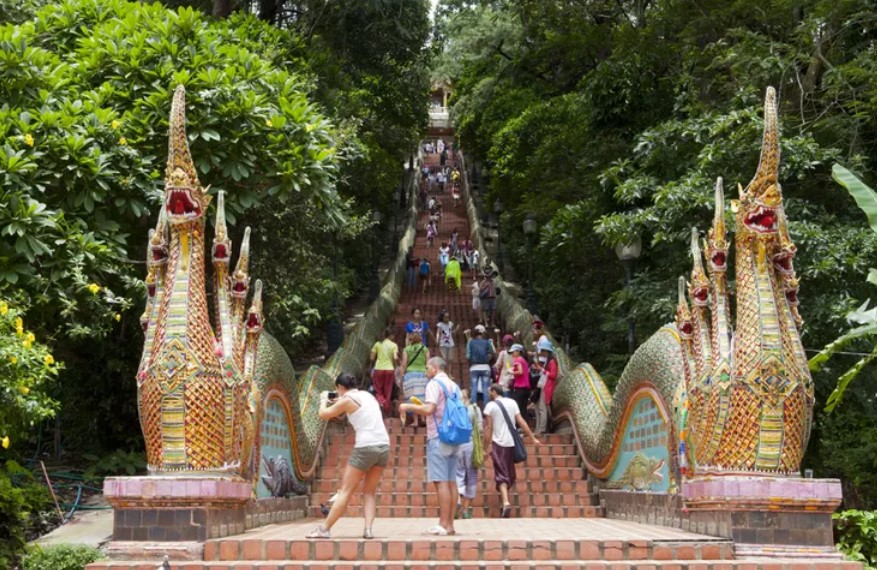
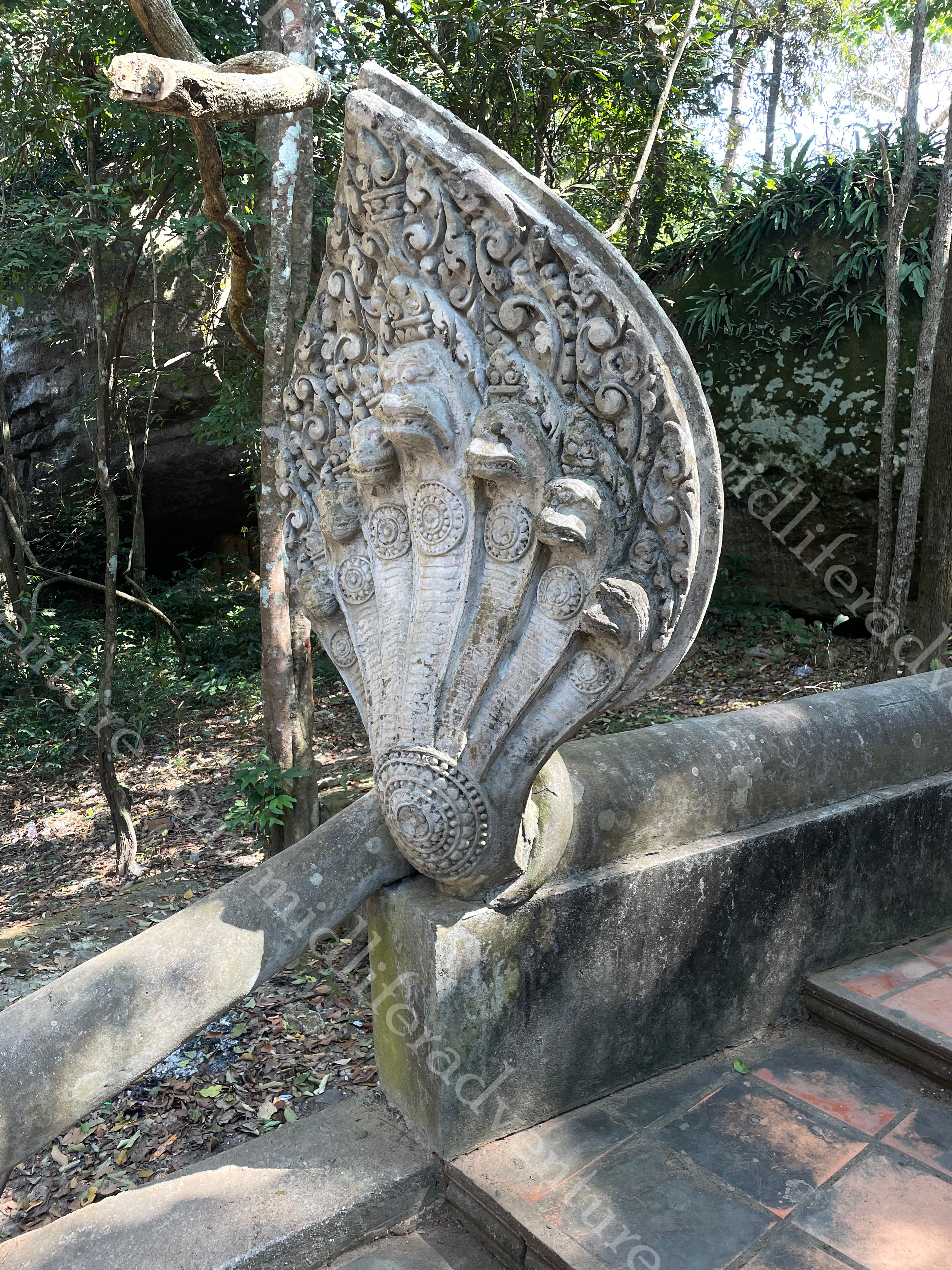
Upon arrival you are met with the usual tourist stalls before you find the stairs (306 of the buggers) to the temple. The stairs are lined by the seven-headed serpent statues (naga) – there is a funicular if you really are not up to the stairs.
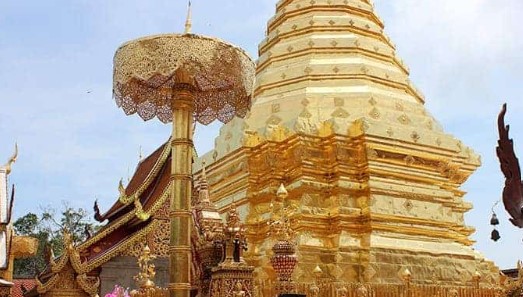
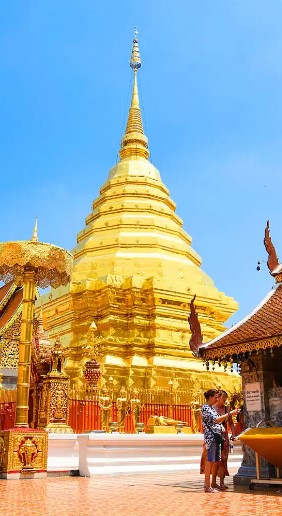
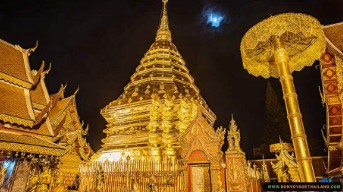
Once you have made it up the hill you will find the temple where a golden pagoda sits that is said to contain a bone from buddha’s shoulder. On the terrace you will find a statue of the white elephant that allegedly carried the bone to the temple. As usual for this sort of place you will also find the obligatory shrines and monuments. For those willing to pay the money there is also a night tour available.
If you are willing to pay a little more and take a private trip, there is a night tour available.
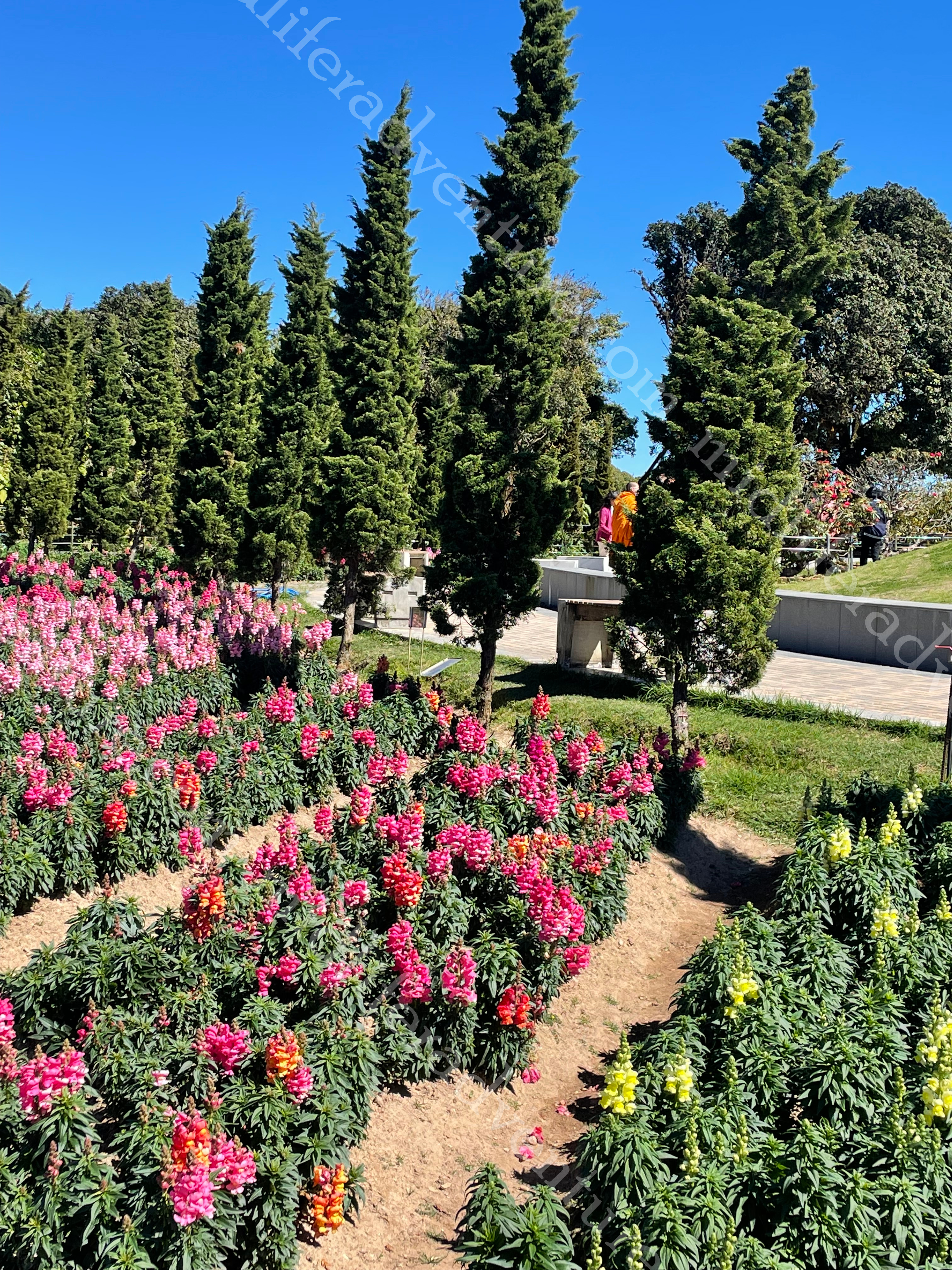
Bhubing Rajanives Palace was built in 1961 as the king’s residence when he came to stay in Chiang Mai. It is about 22 kms from old town on Buak Ha Mountain. The gardens are perfectly manicured with extensive plantings that would send a gardening nut into fits of rapture. From my side…it was very pretty.
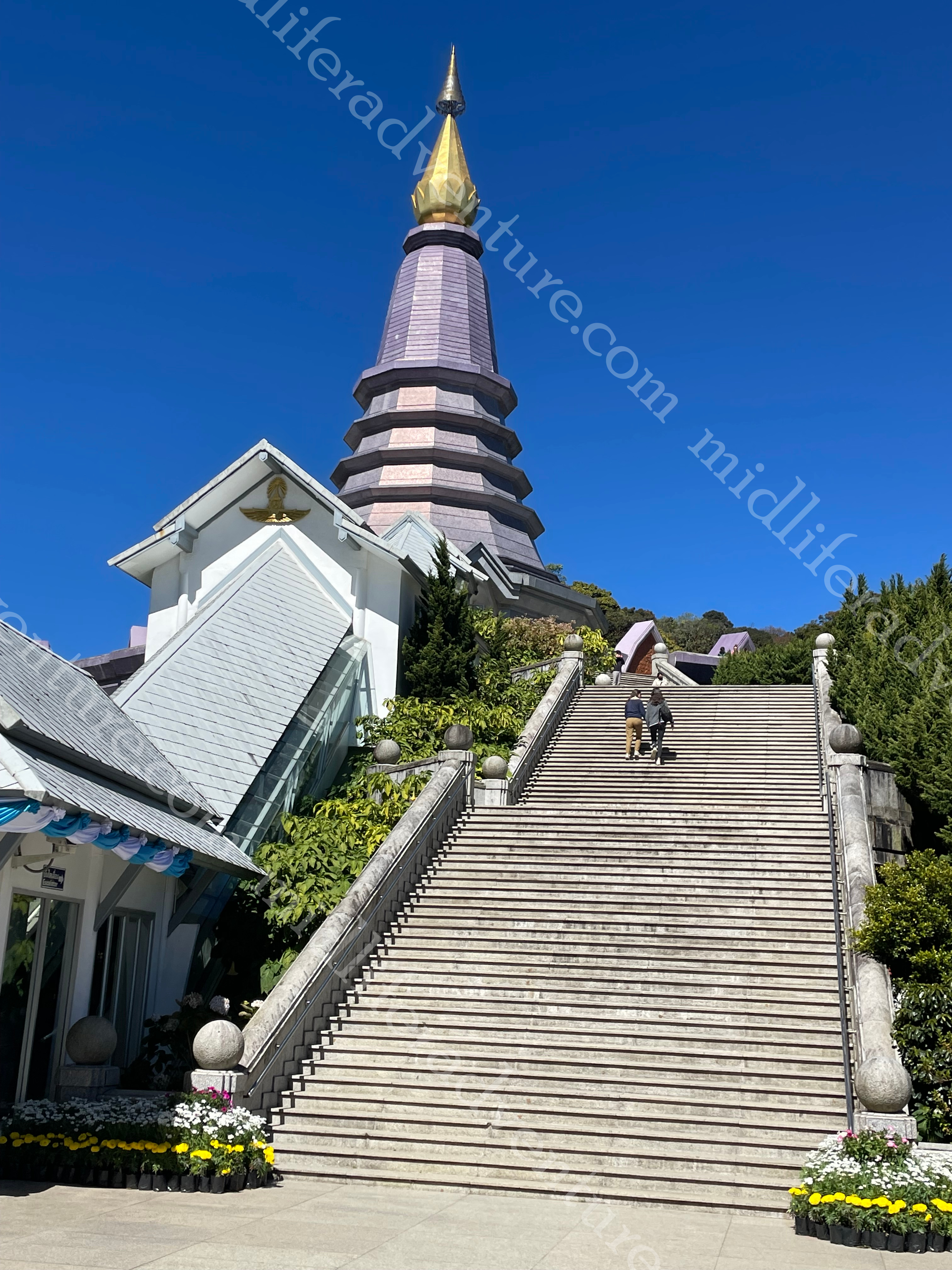
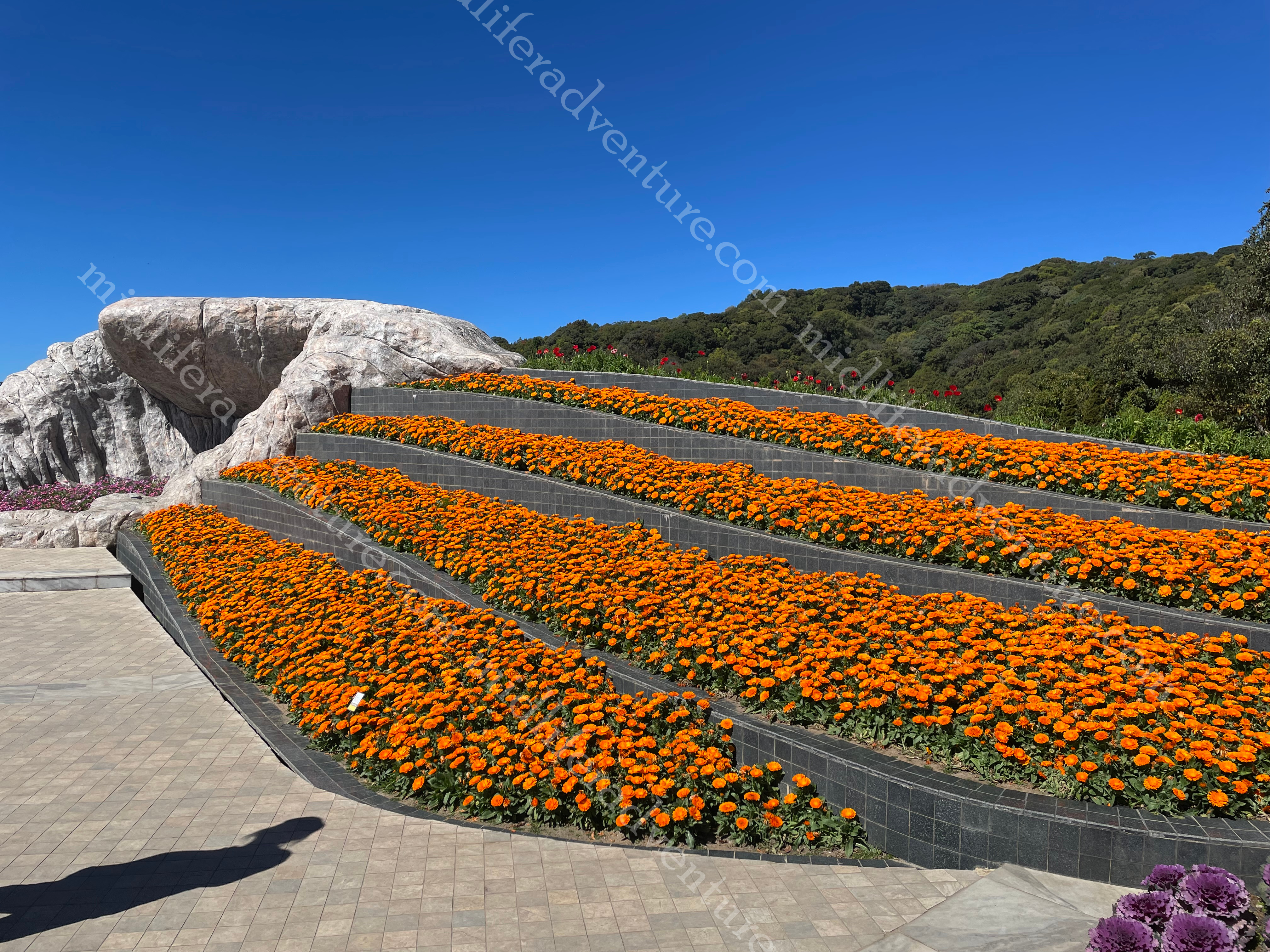
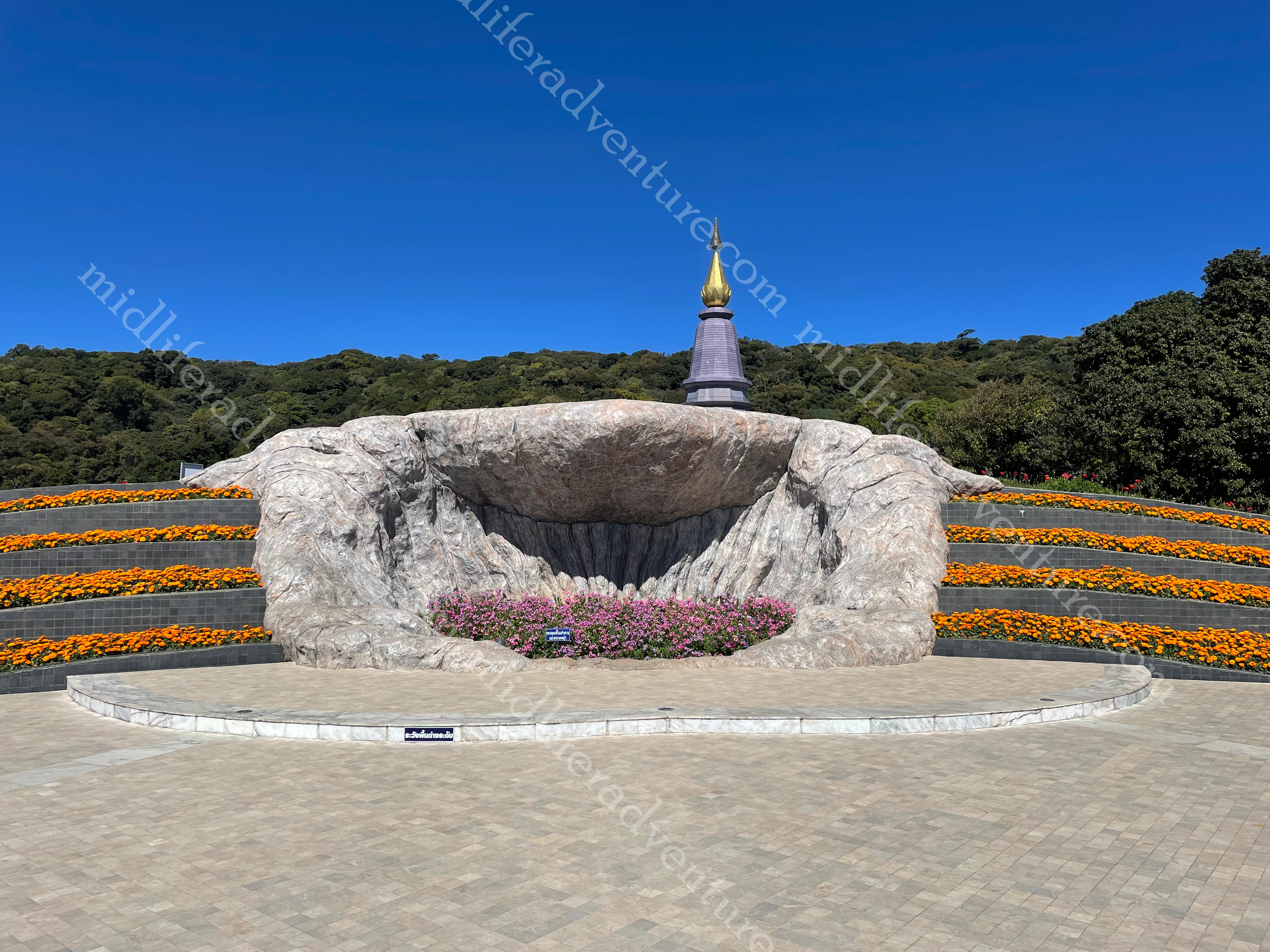
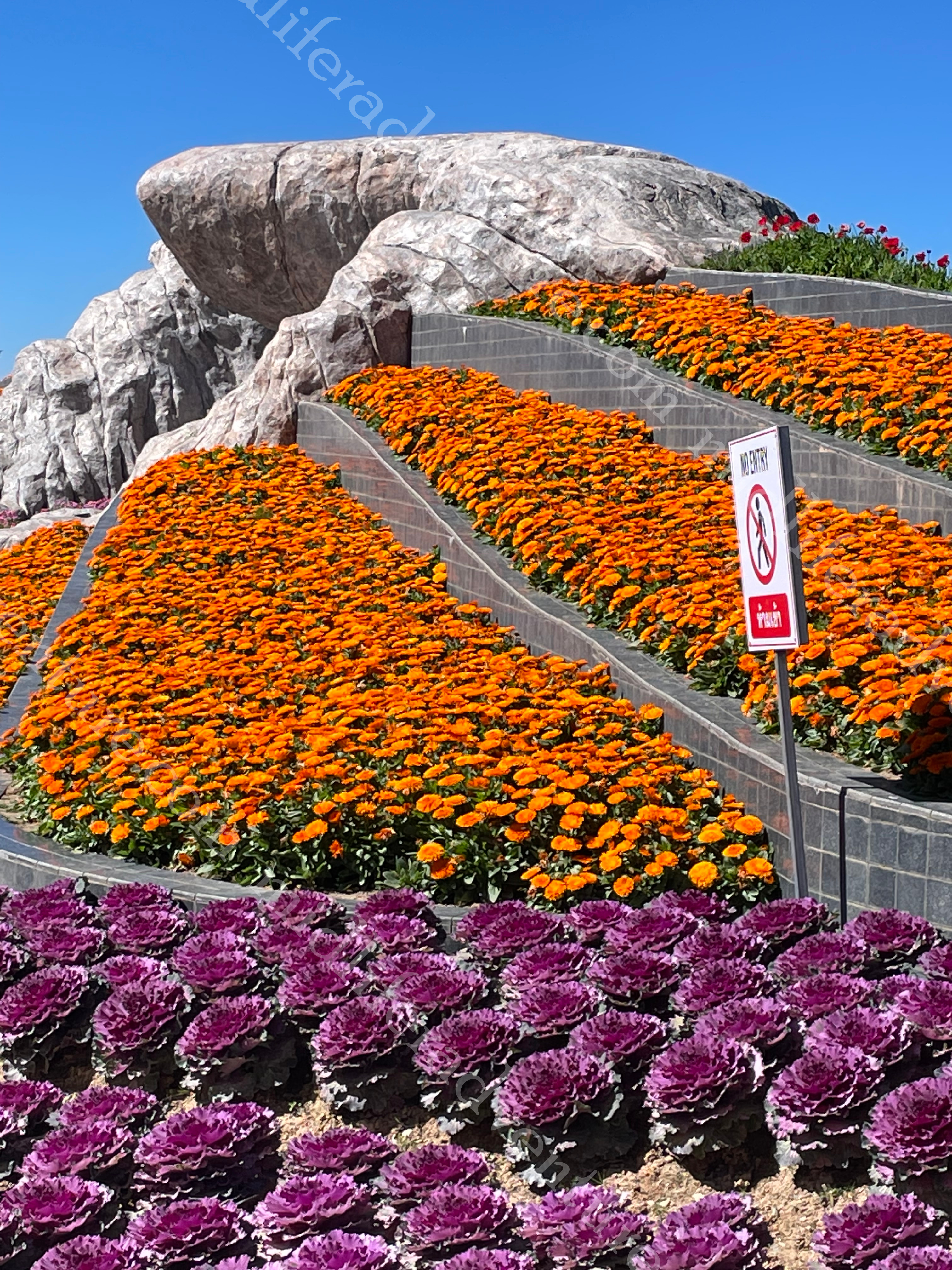
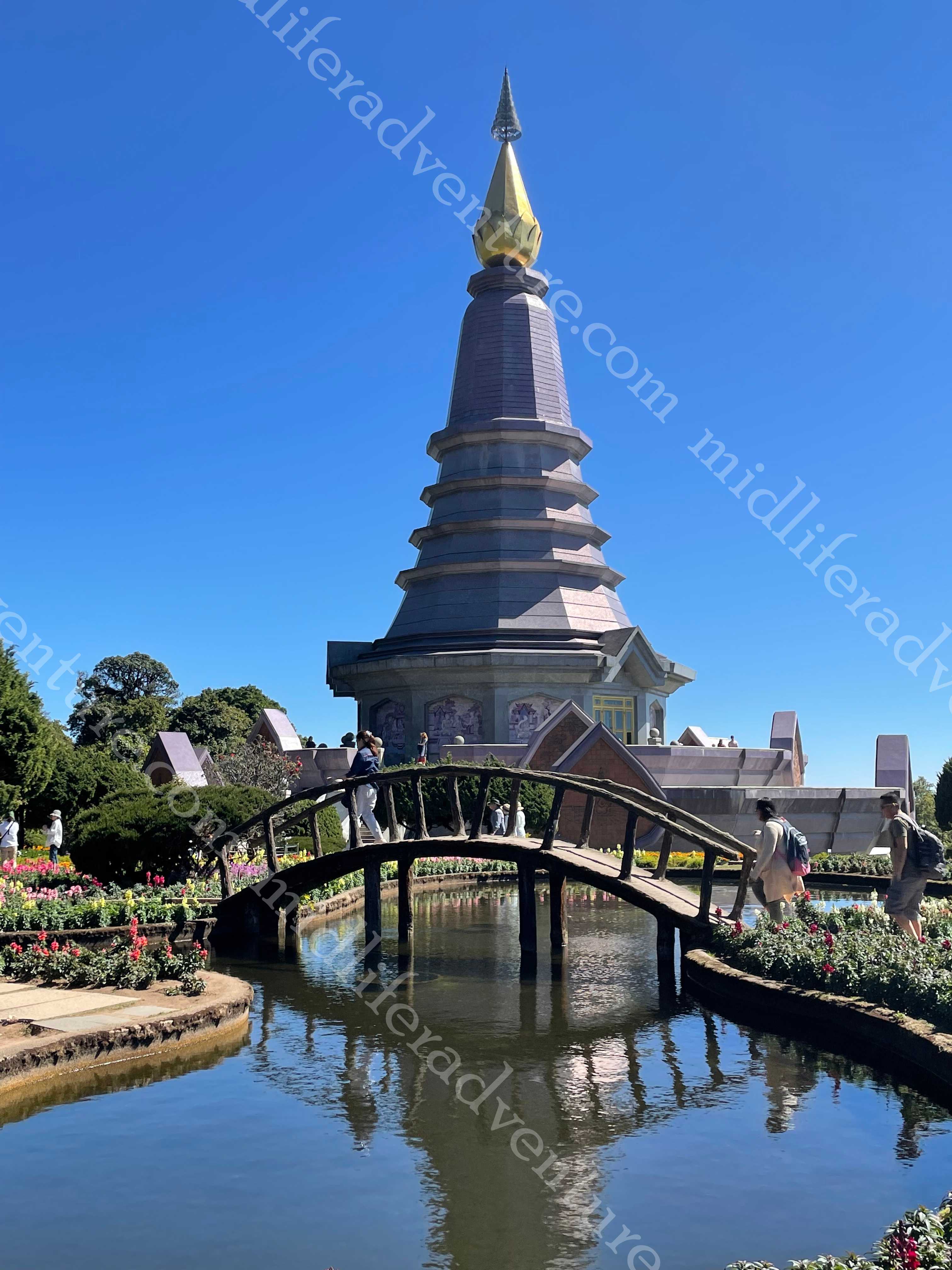
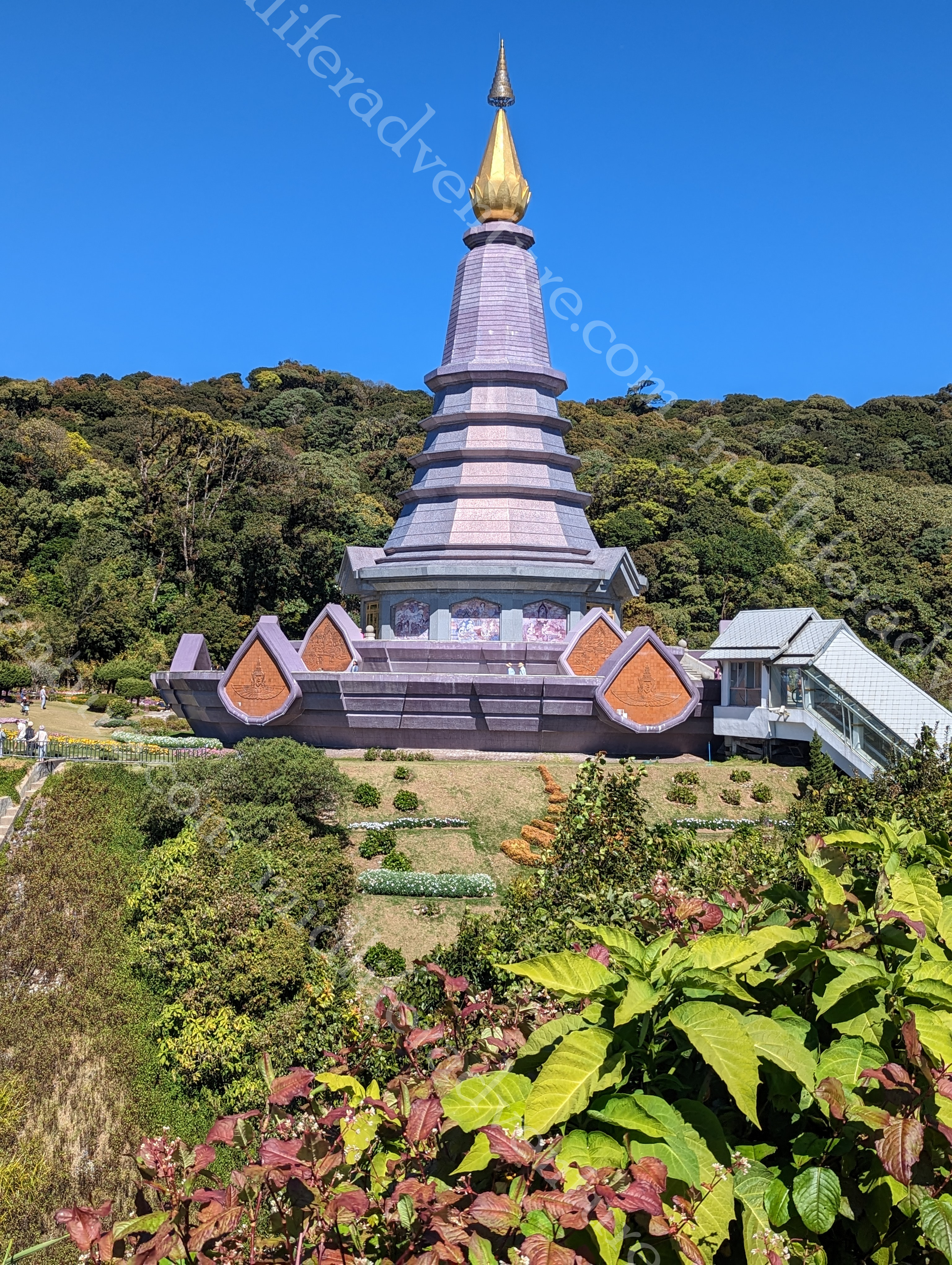
Doi Inthanon National Park is the highest point of Thailand and home of the beautiful King and Queen pagodas. There are tours heading here all the time and many of them will include some of the items listed below as well. This is a truly stunning spot and well worth the visit. While there are a ton of stairs to get to the Pagodas they have thoughtfully considered us old buggers and put an escalator (up only) to the top of each side…very civilised.
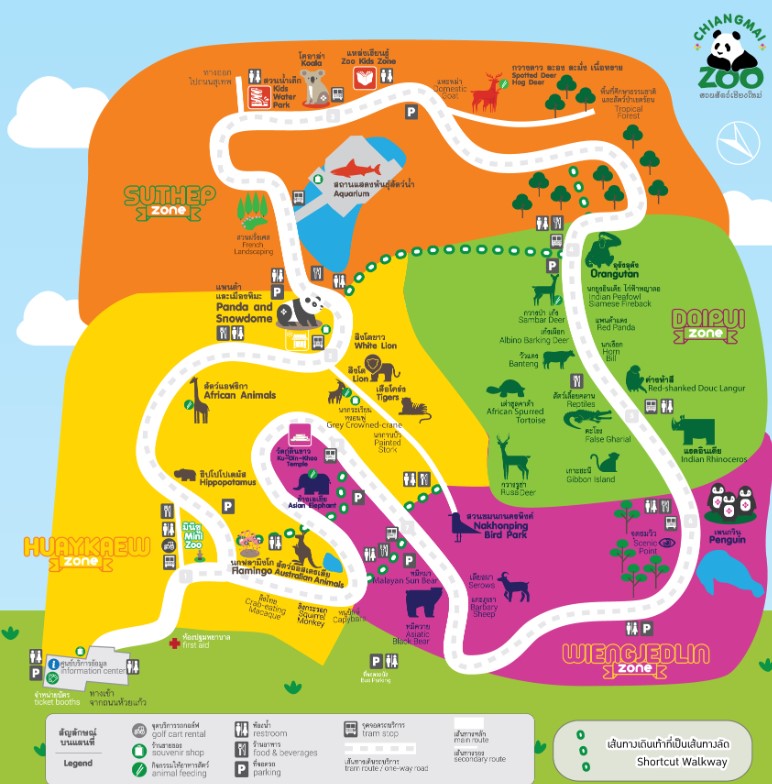
Chiang Mai Zoo and aquarium is a is a 200-acre zoo with over 400 species of animals that includes a 133m aquatic tunnel and they have a night safari. Oh Claudia, if you are reading along…they have pandas.
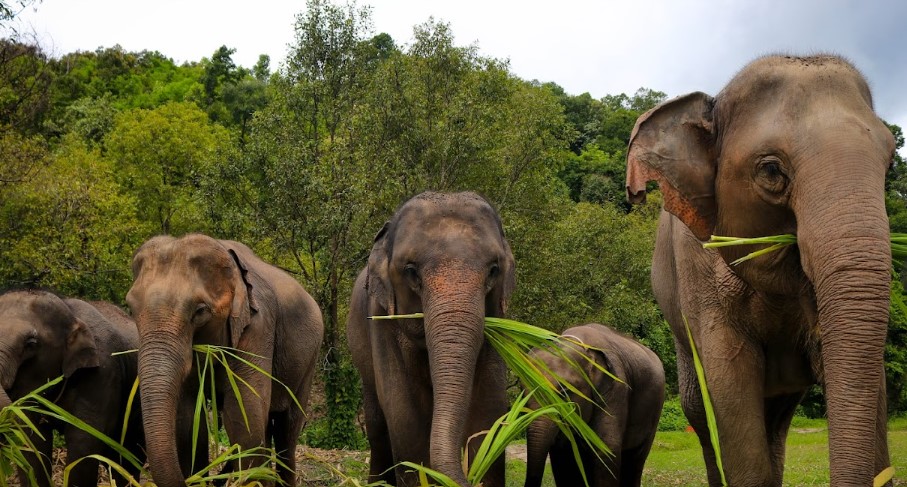
Elephant Sanctuary – The Meaklang Elephant Sky Camp is reported to be an ethical Elephant Sanctuary where the elephants are taken care of very well. The ads recommend that you bring spare clothes and a towel for if you join in to the elephant bathing.
As we have done numerous elephant sanctuaries in Sri Lanka and Laos we chose to skip this but those we met spoke highly of the experience.
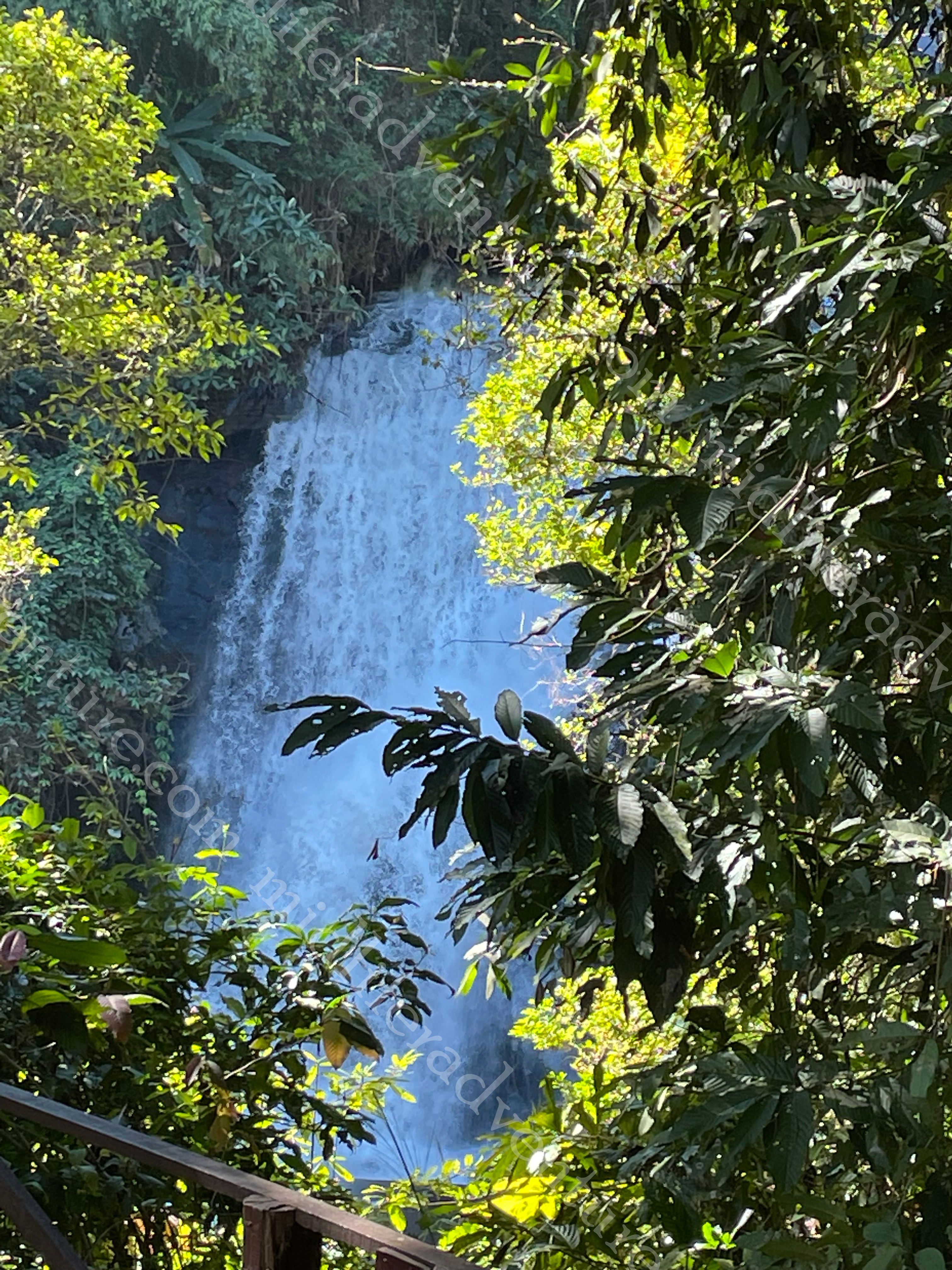
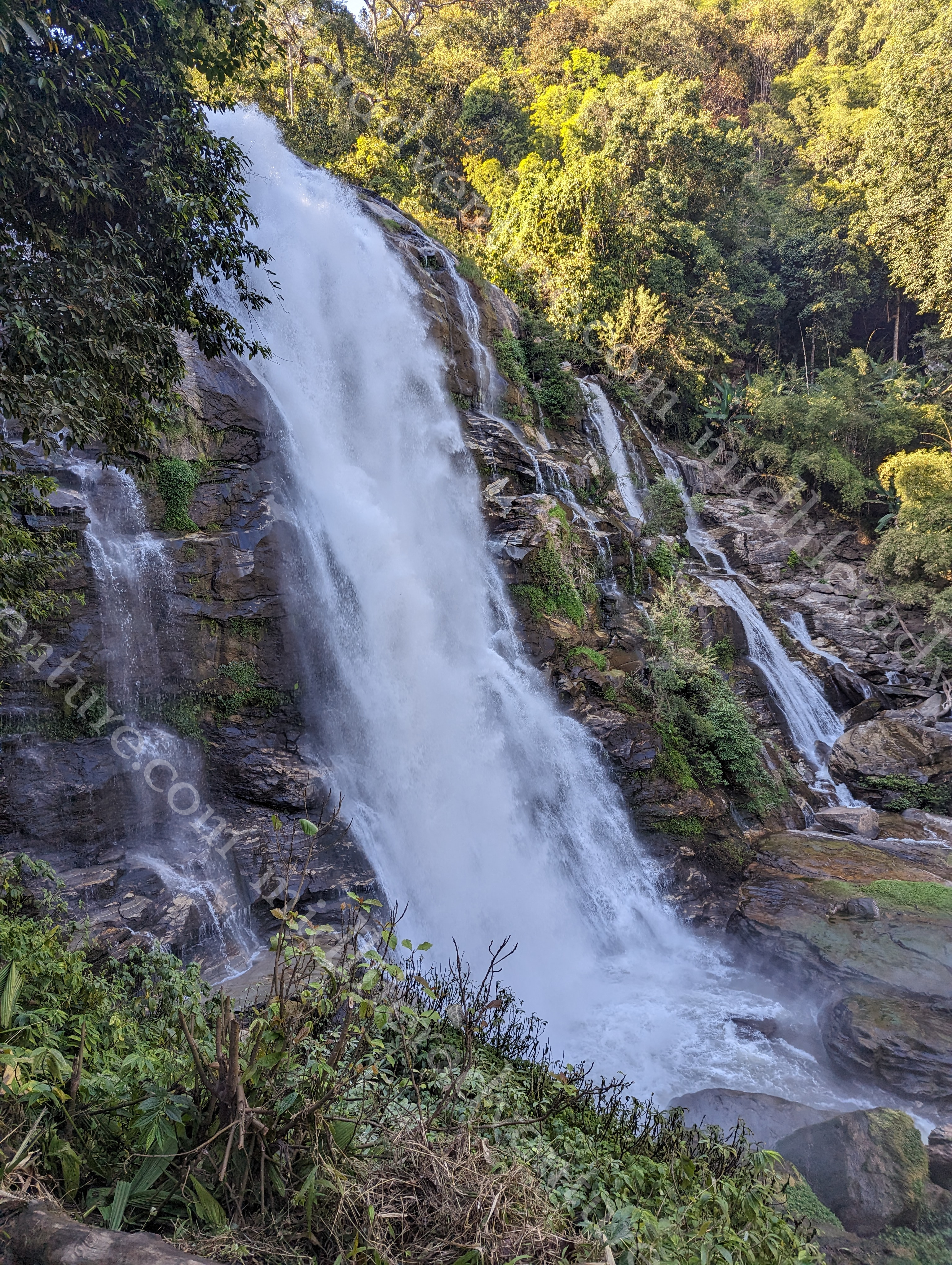
Wachirathan Falls is one of the largest and most beautiful waterfalls in the country at over 80 meters tall the waterfall creates a mist that feeds the surrounding vegetation. Sirithan Waterfall is a stunning 50-meter cascade, fed by the Mae Klan River. Paths all around this one gives you many angles and photo opportunities.
Chiang Mai Street Art
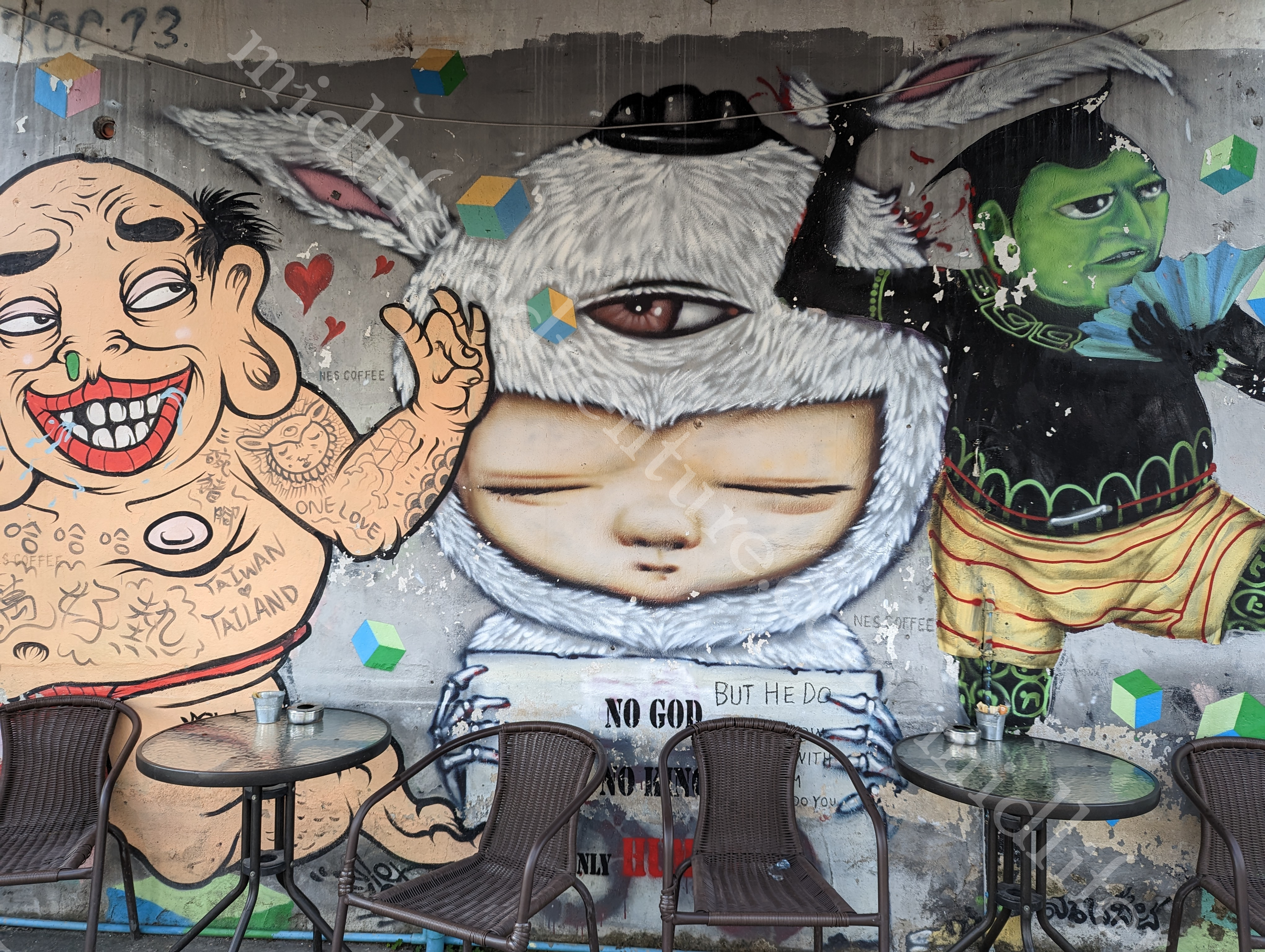
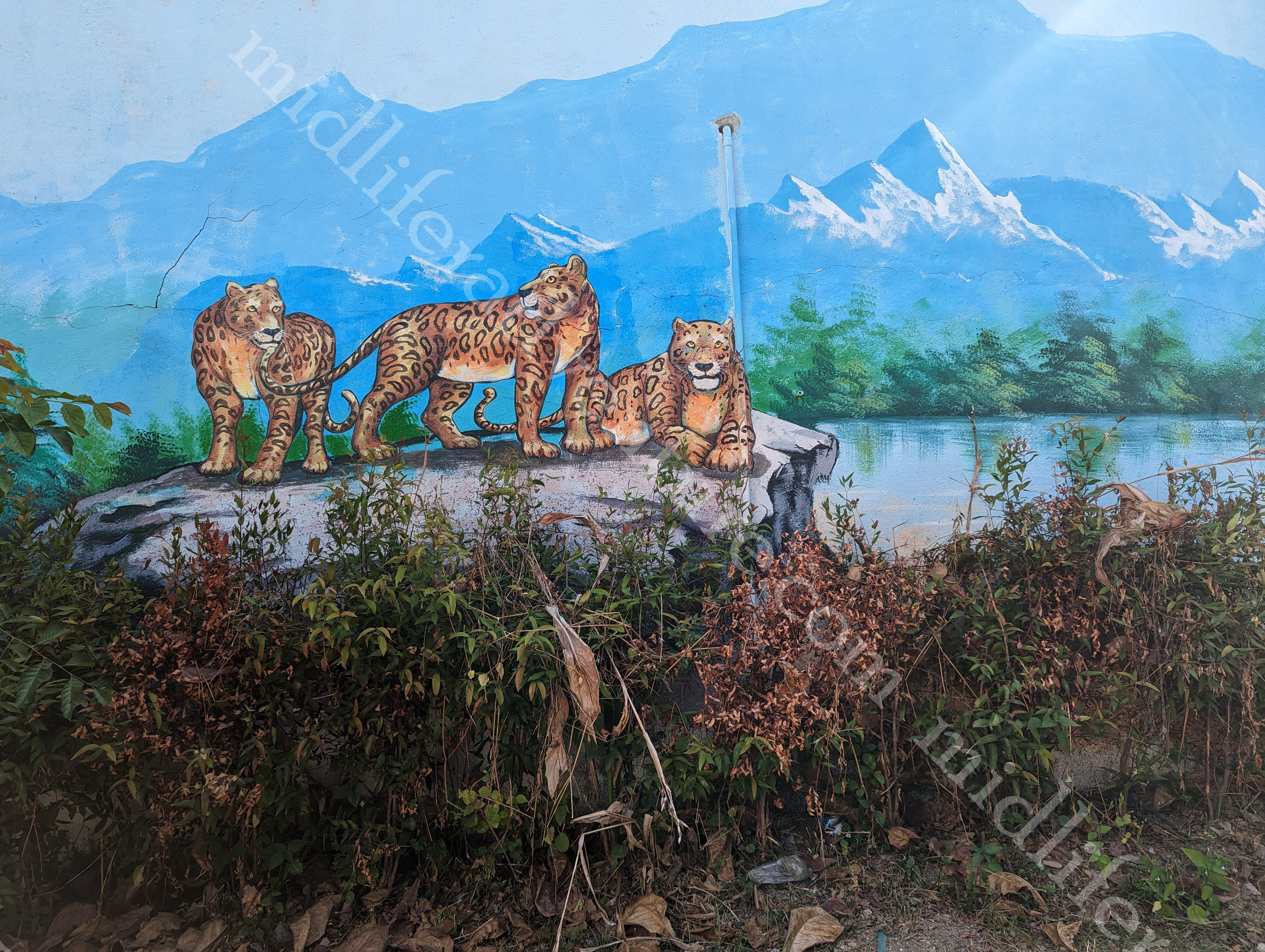
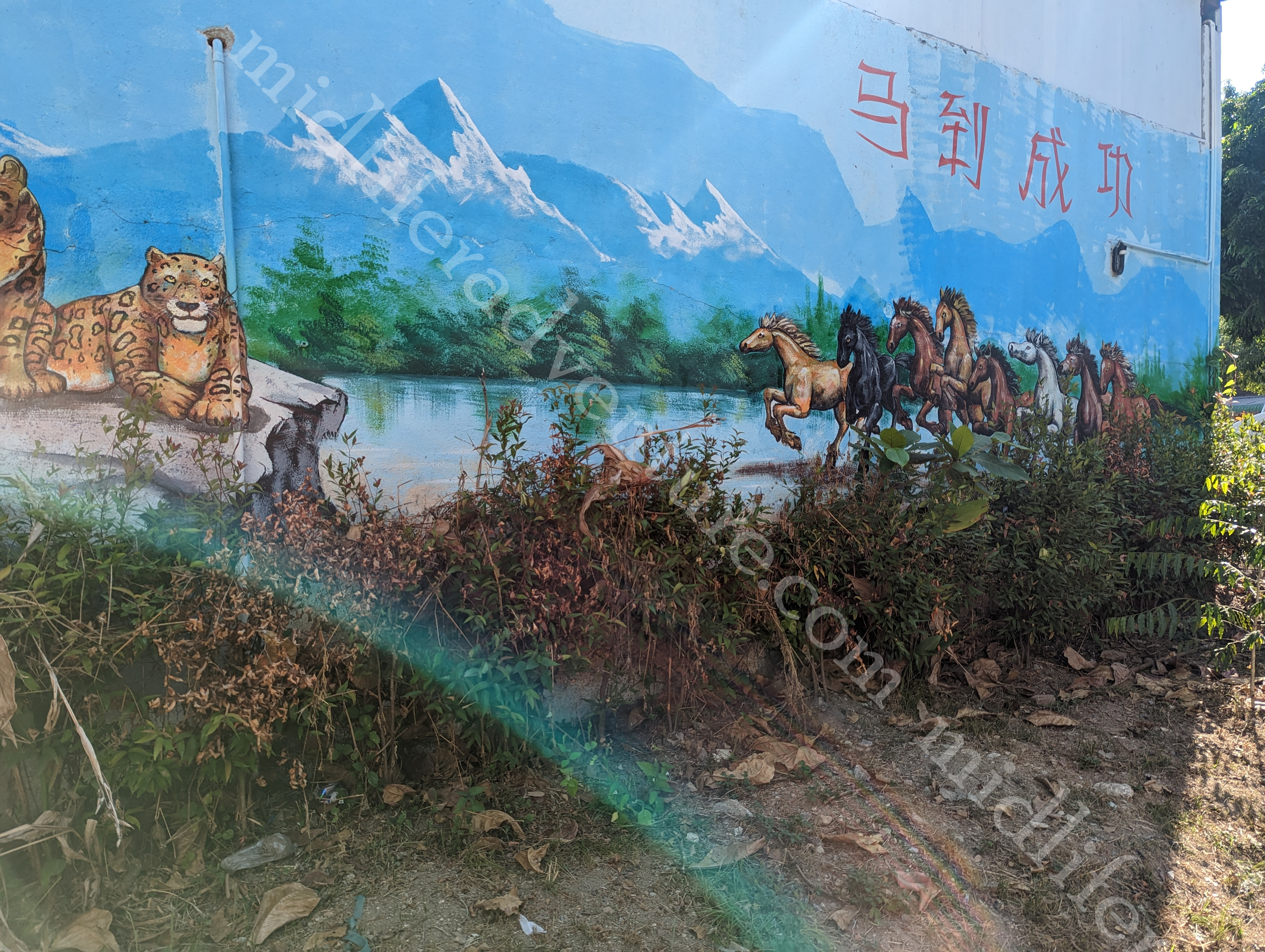
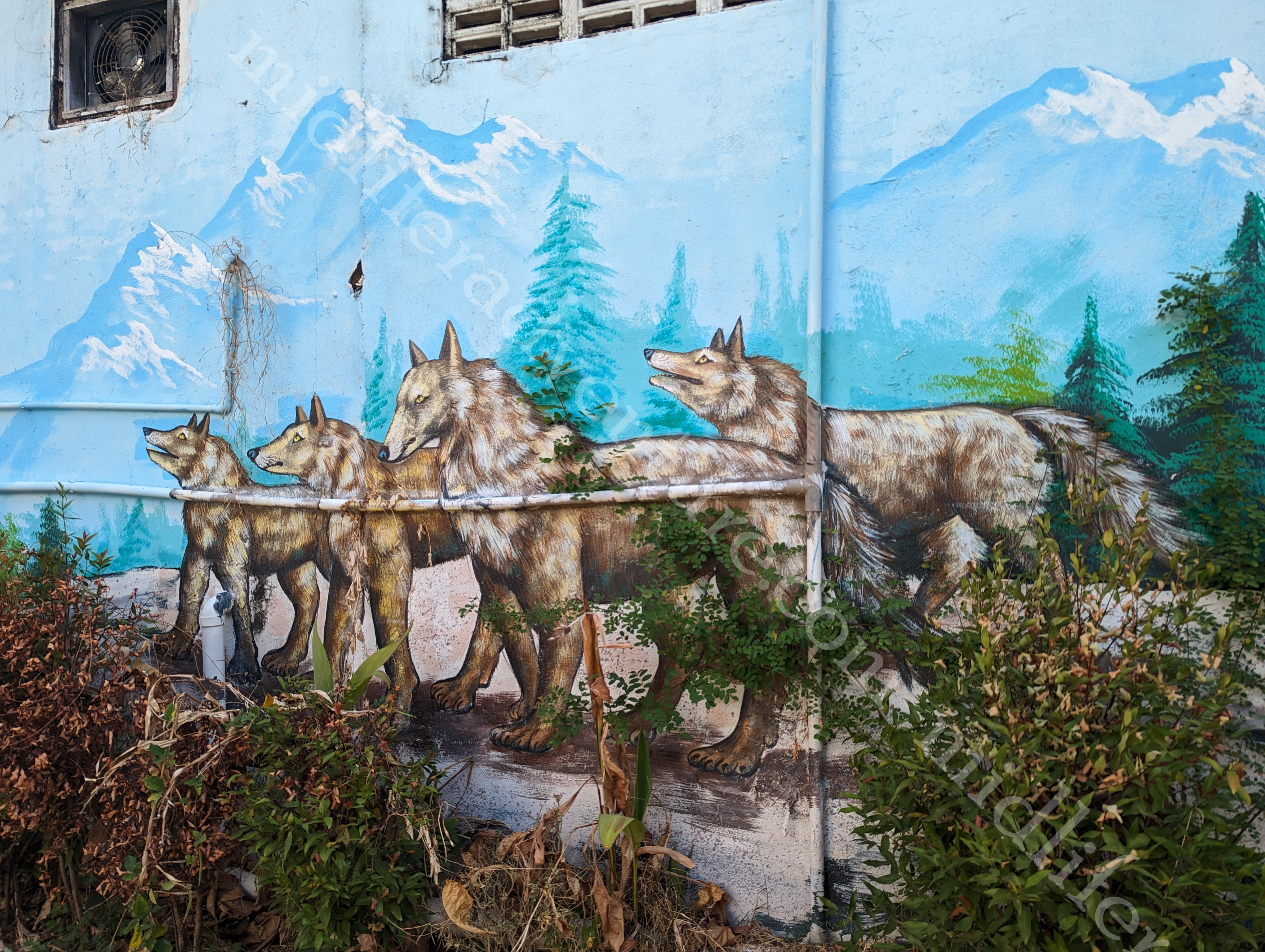
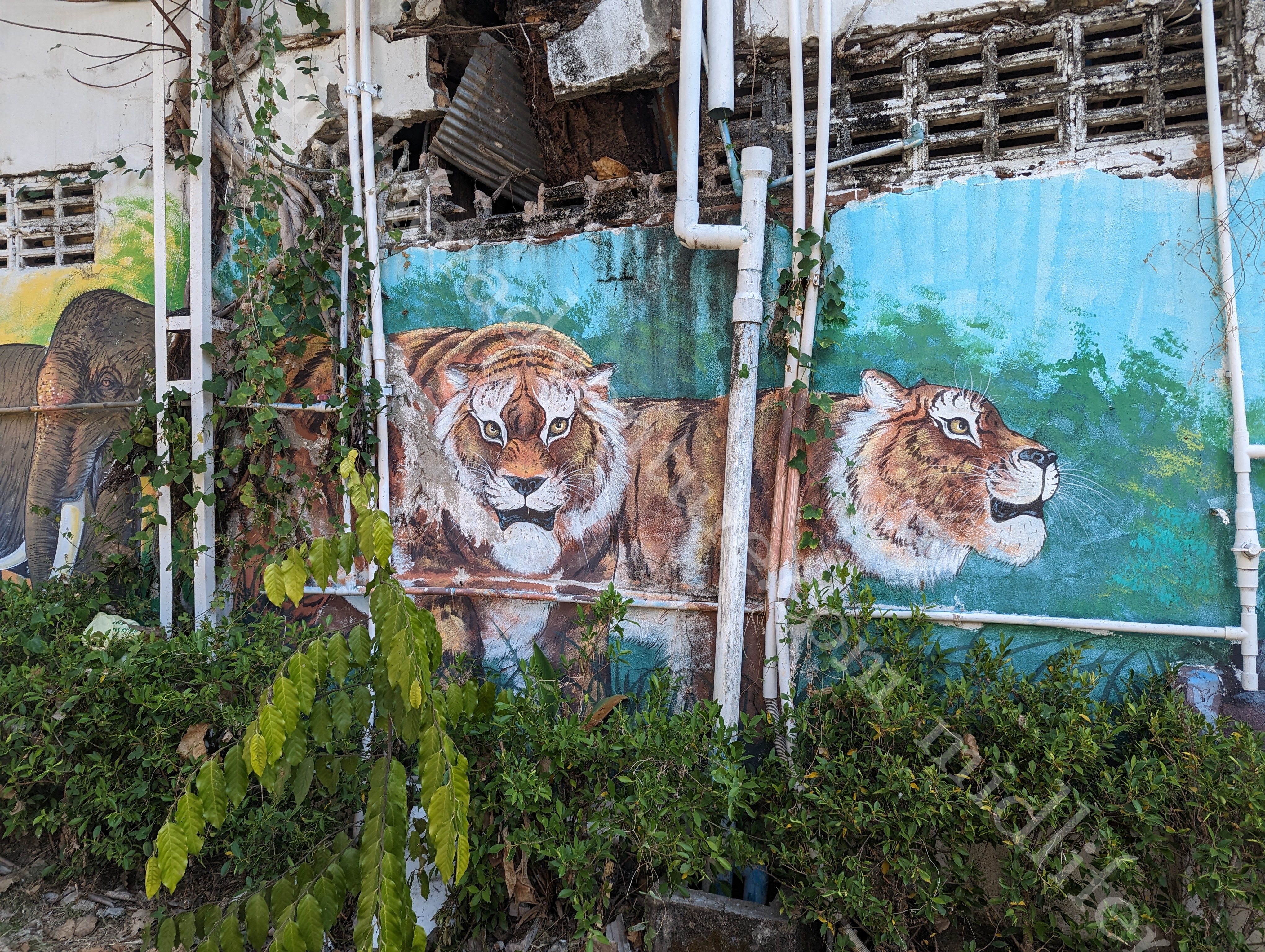
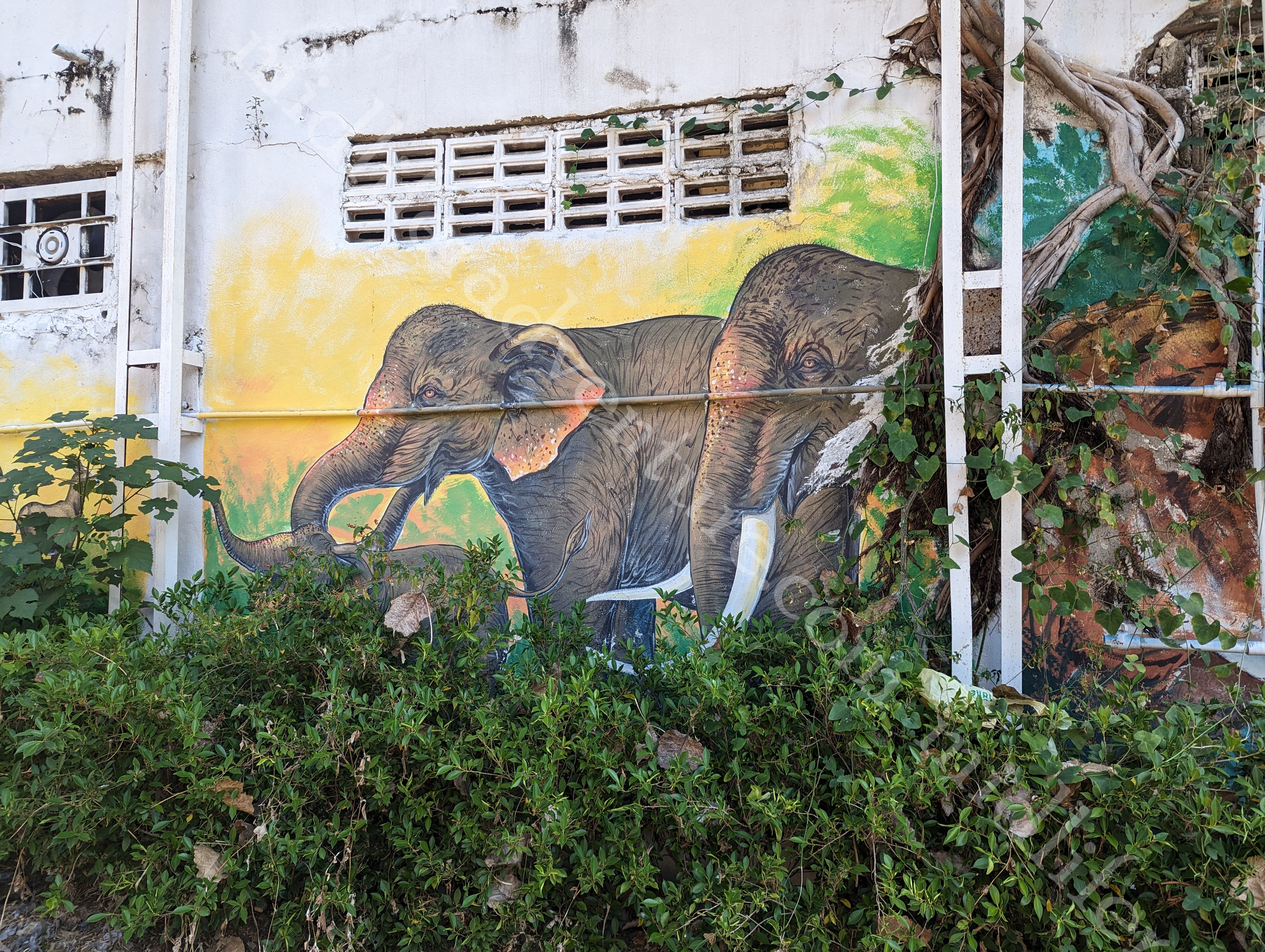
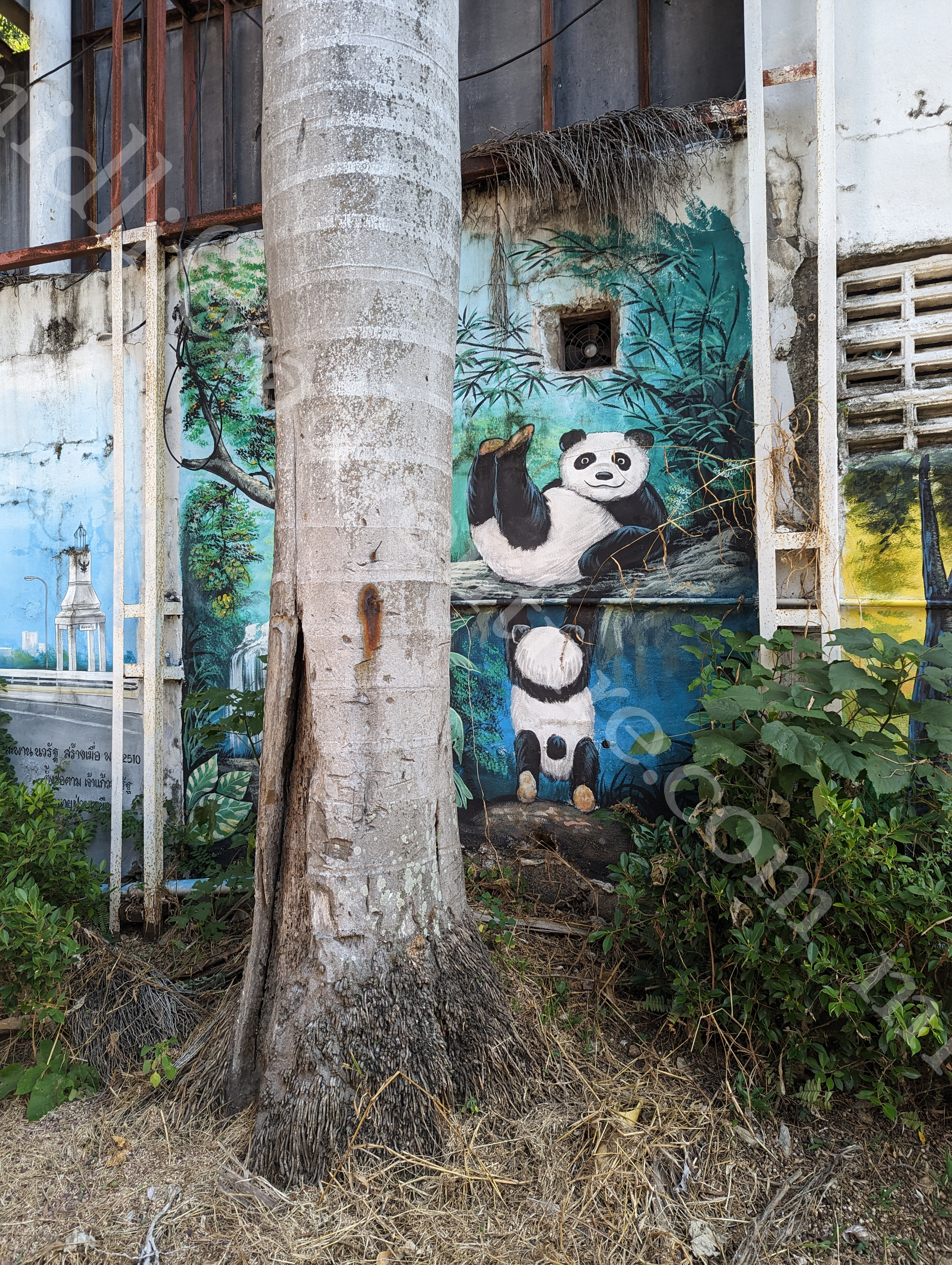
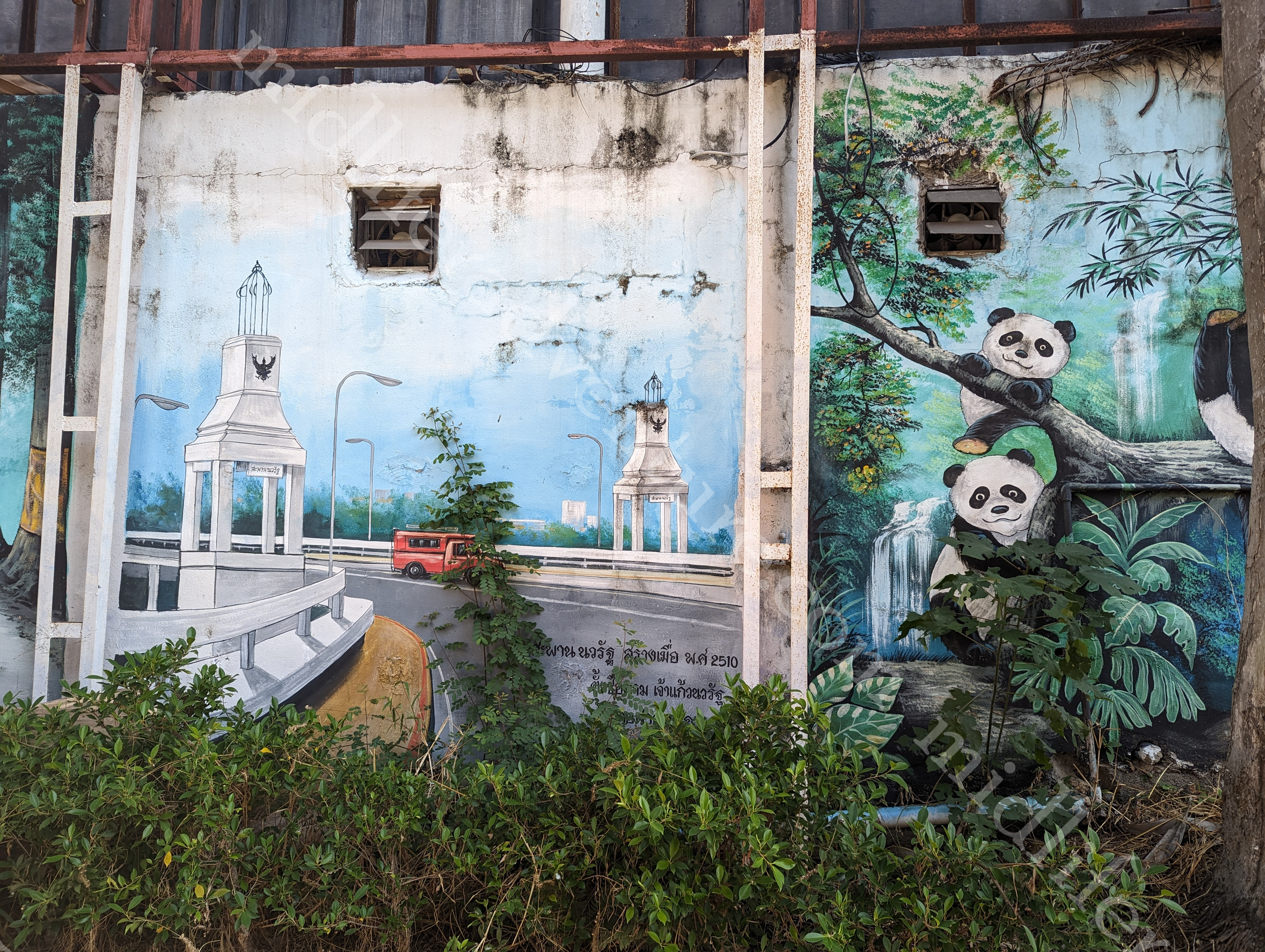
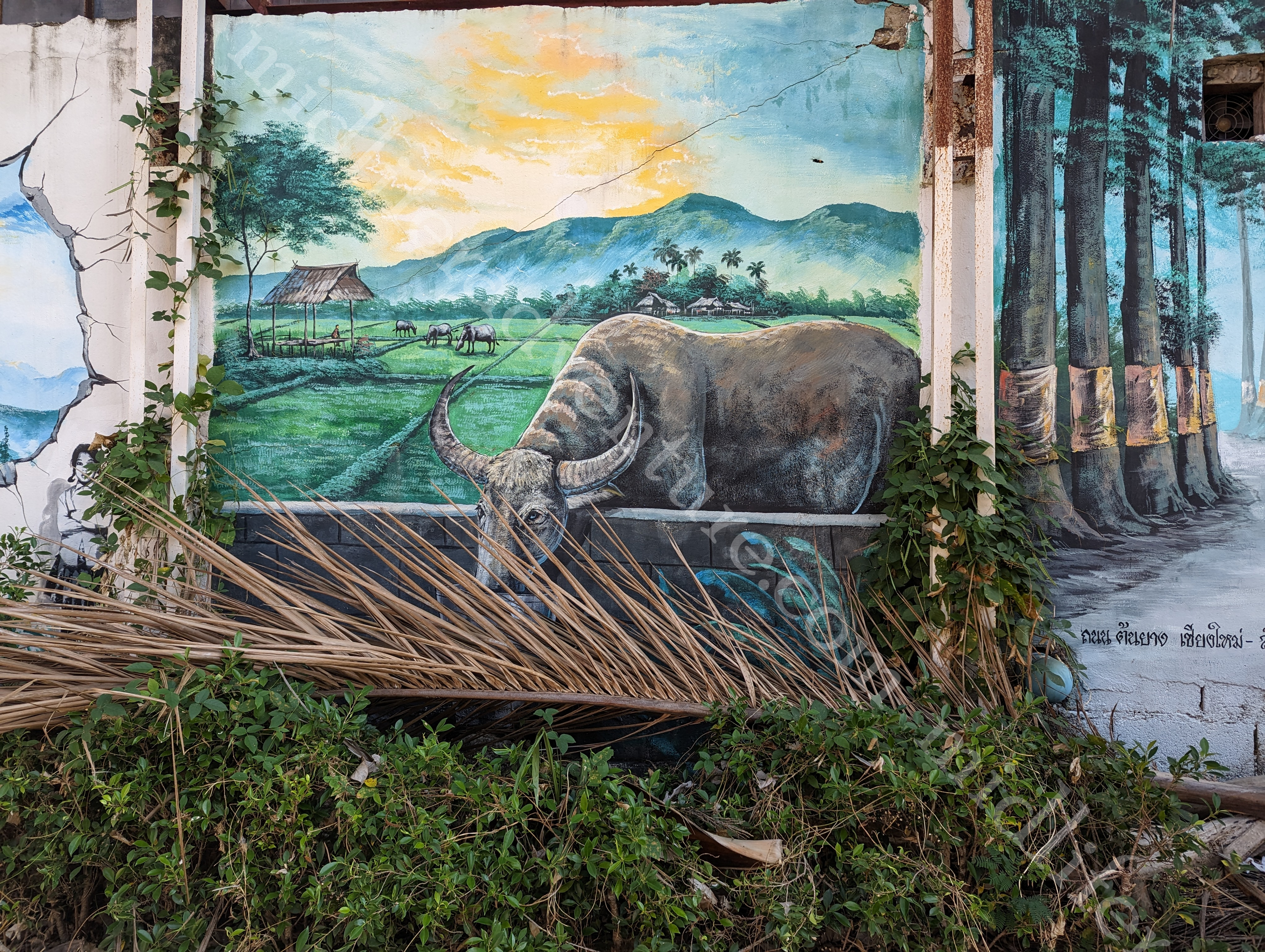
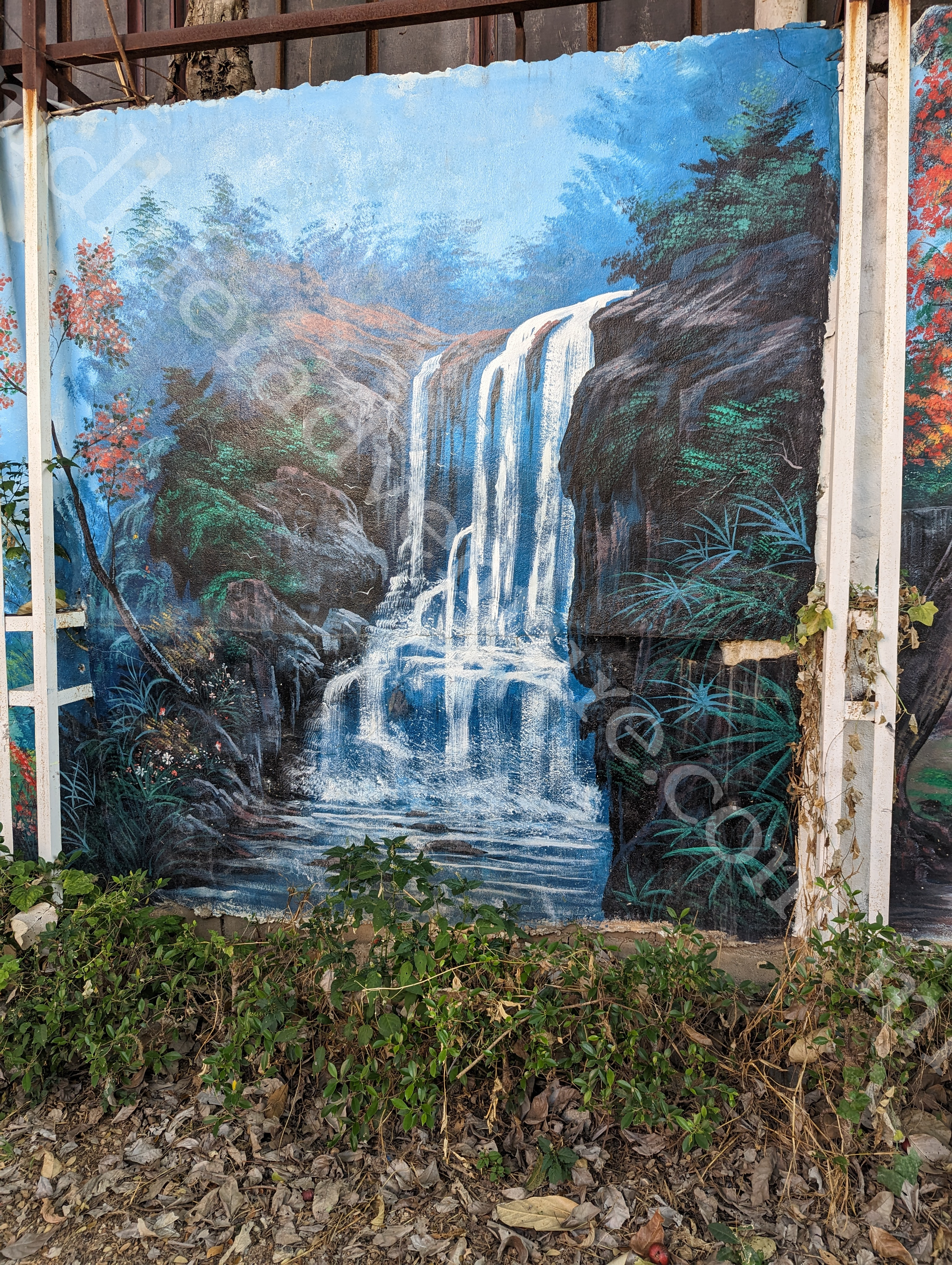
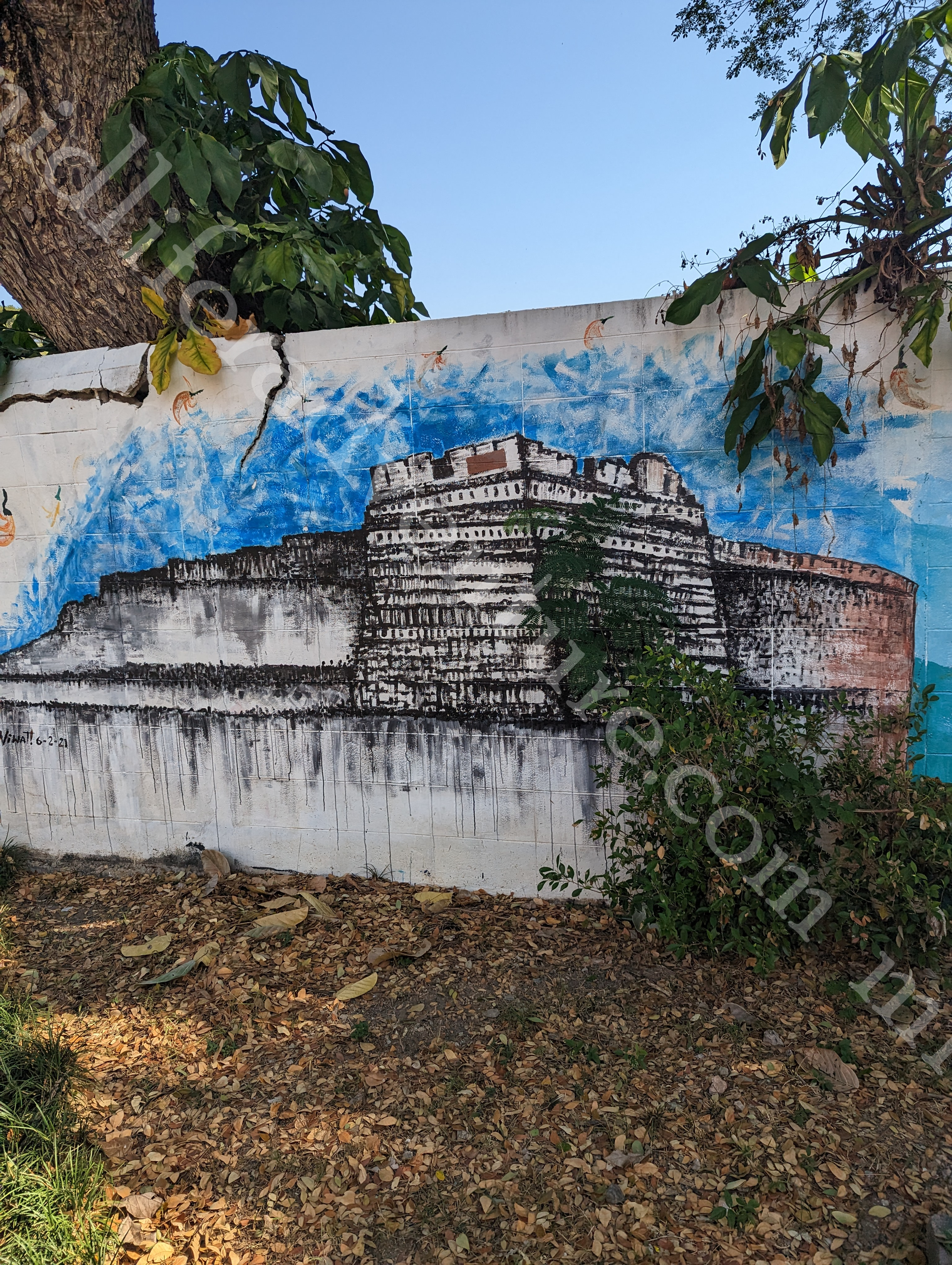
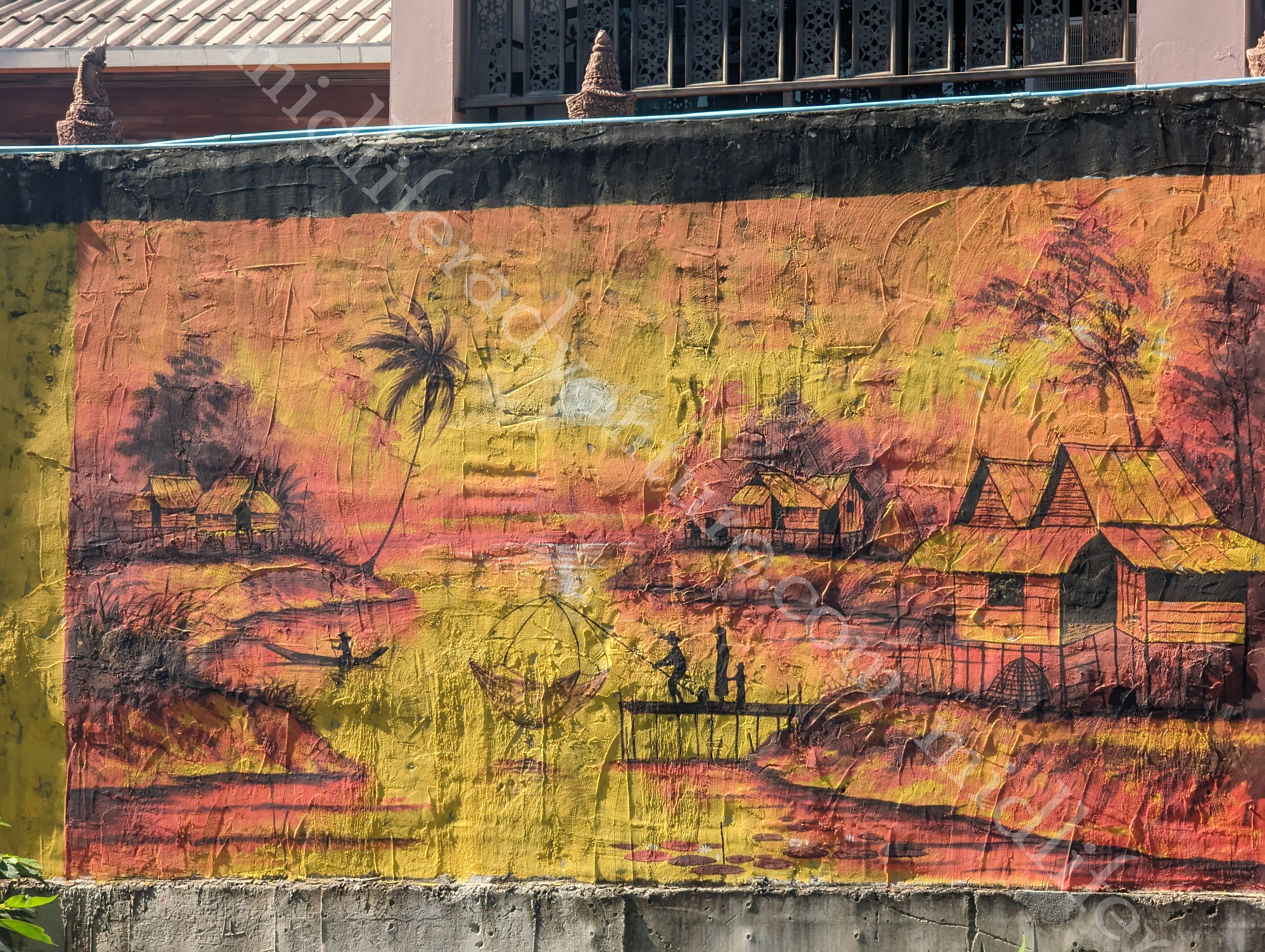
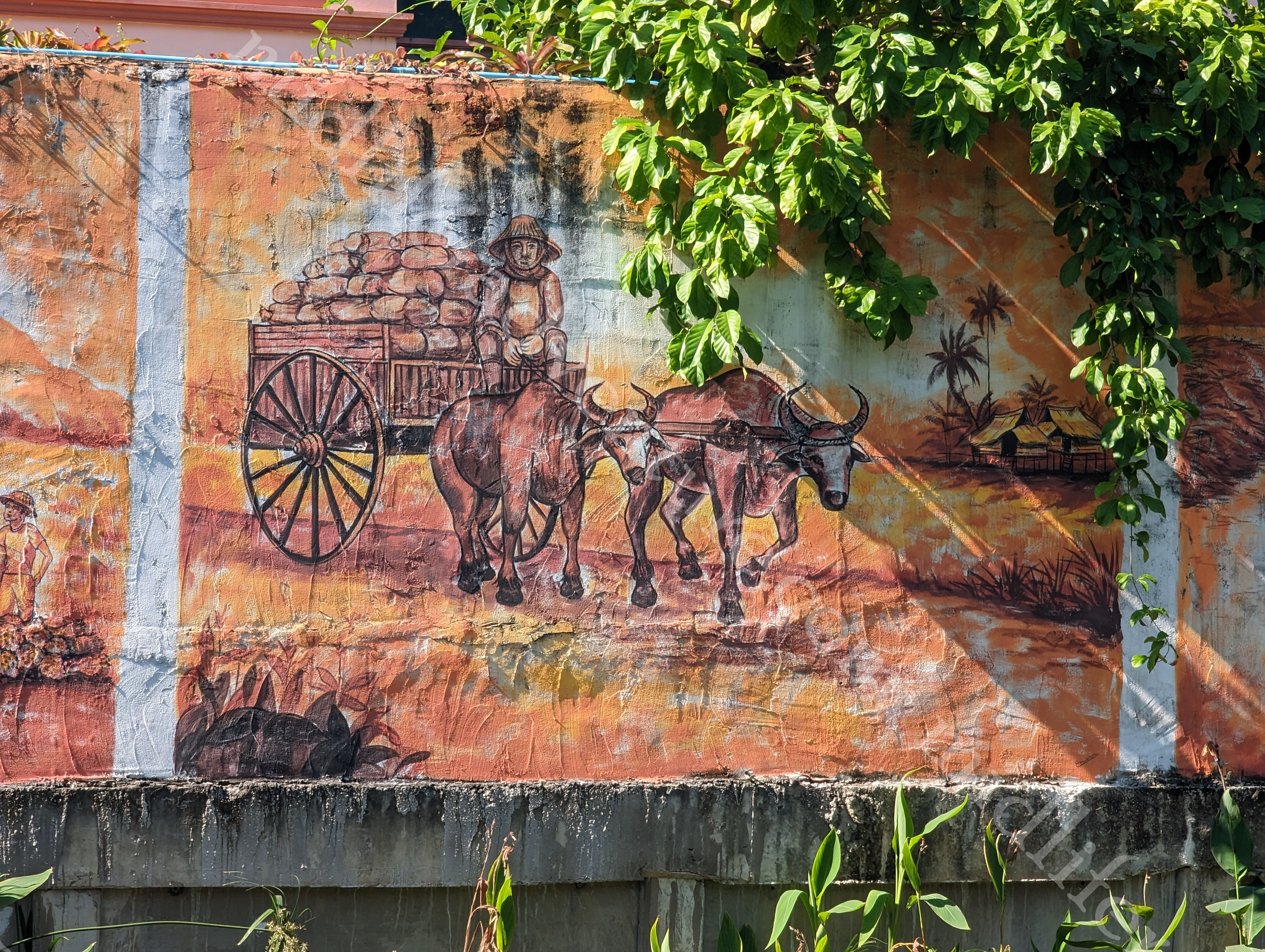
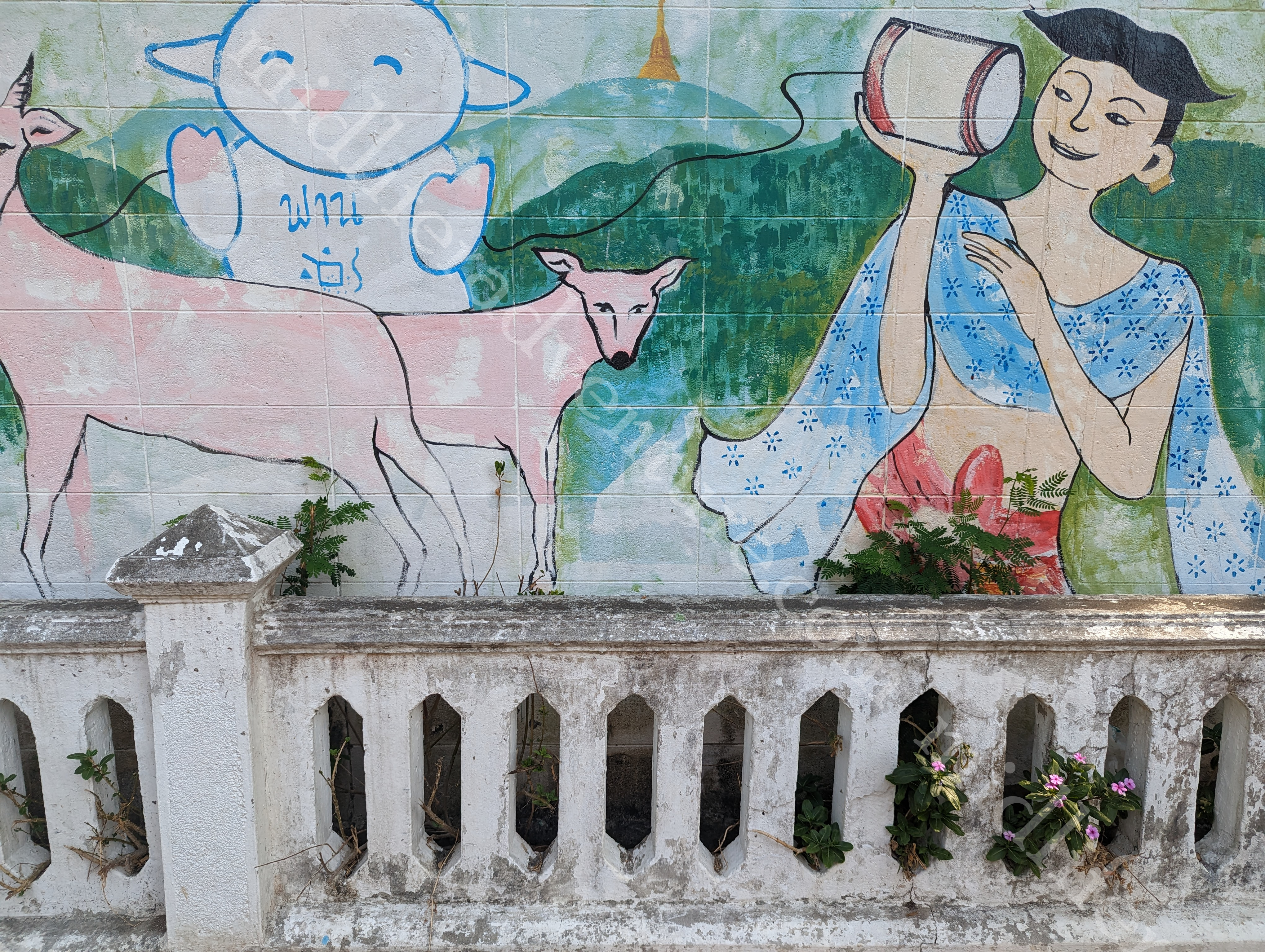
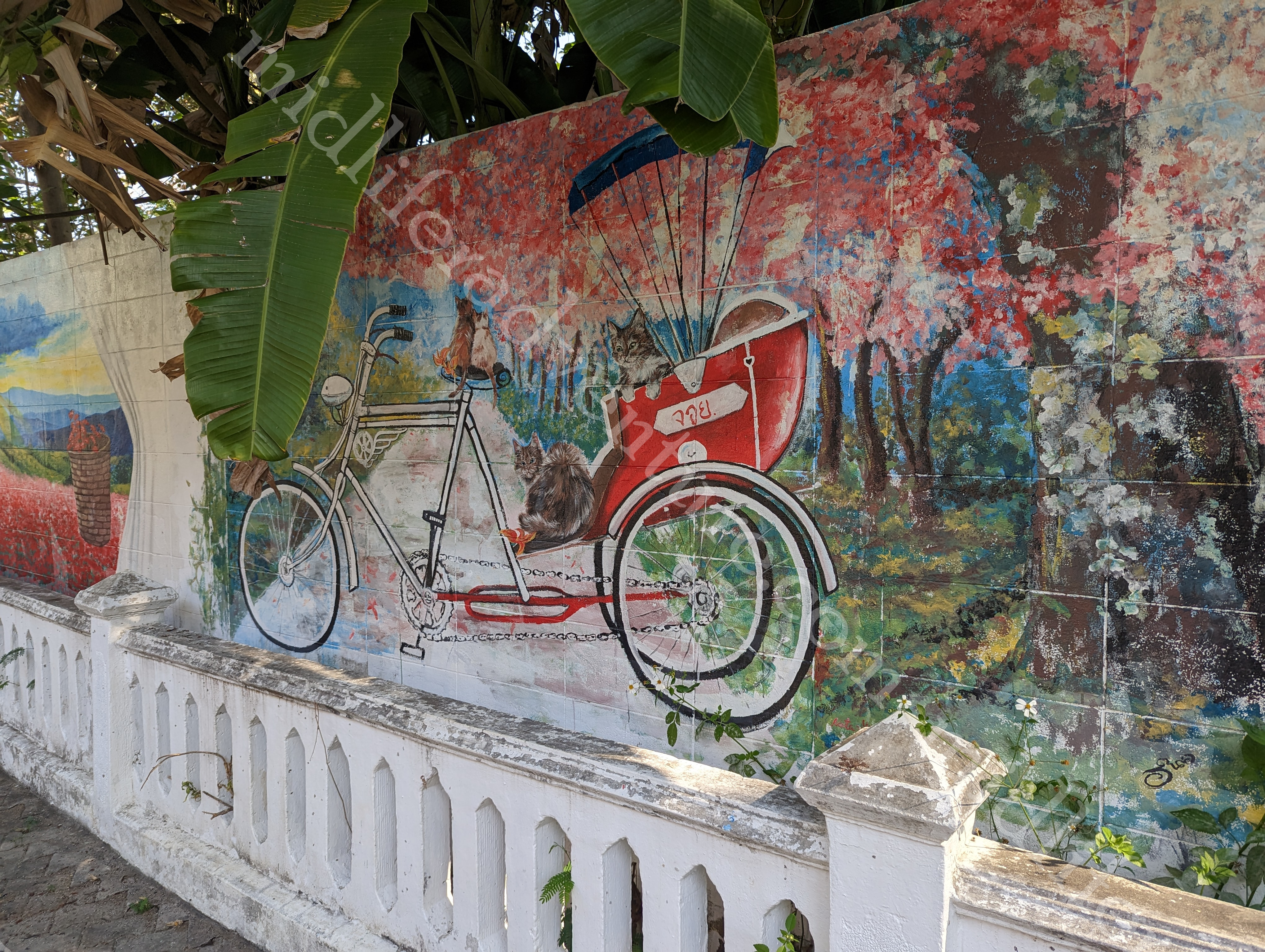
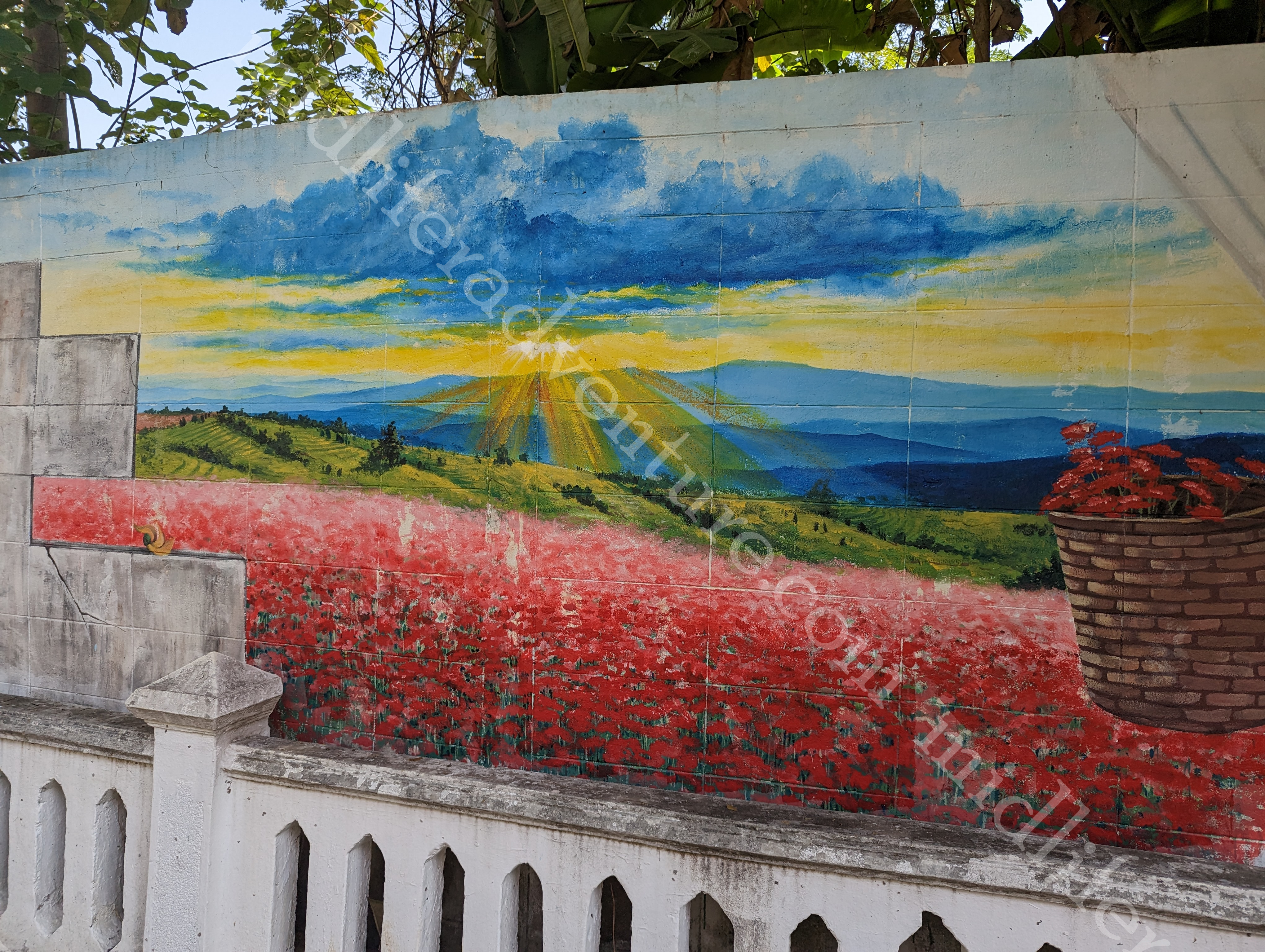
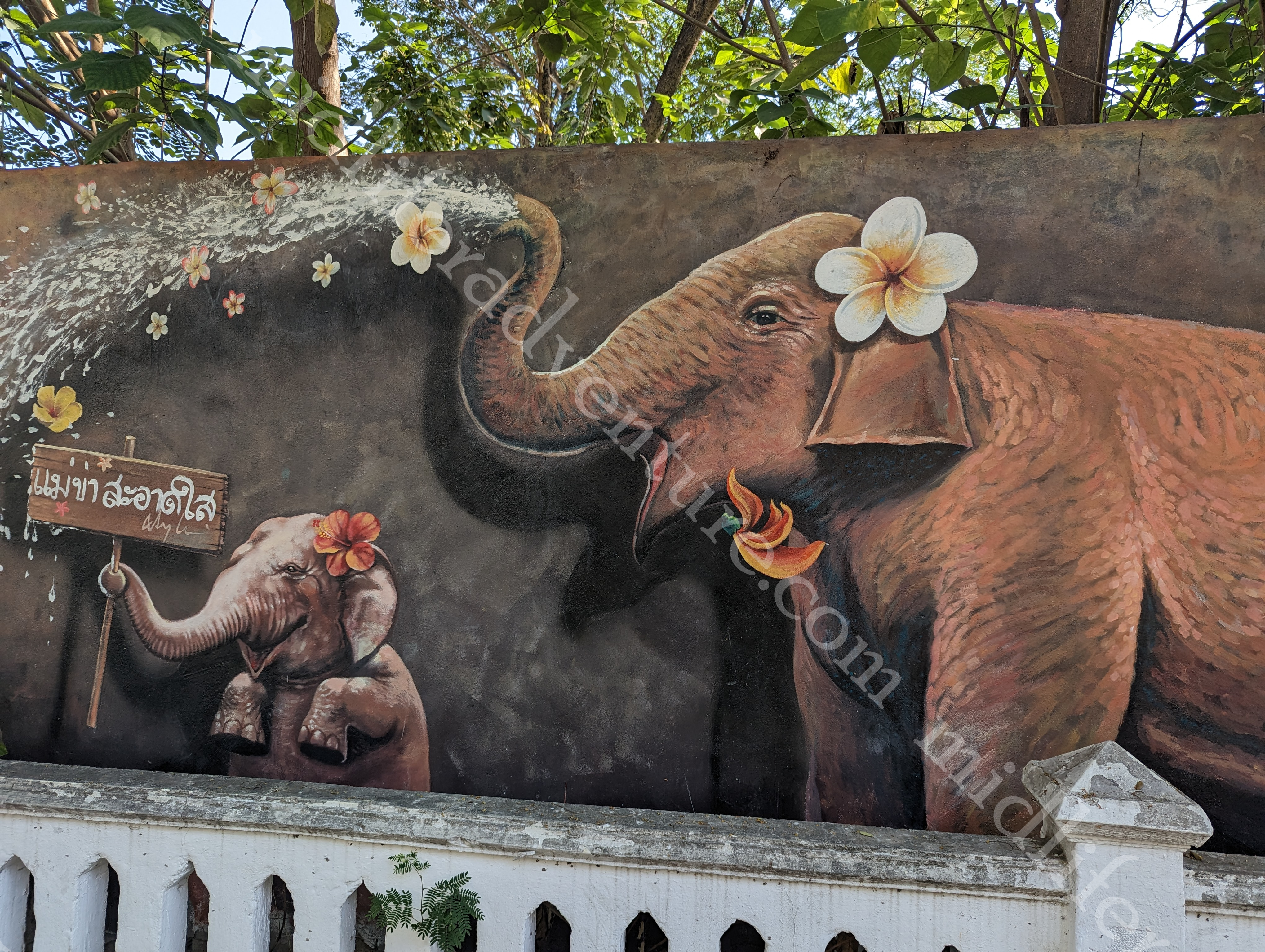
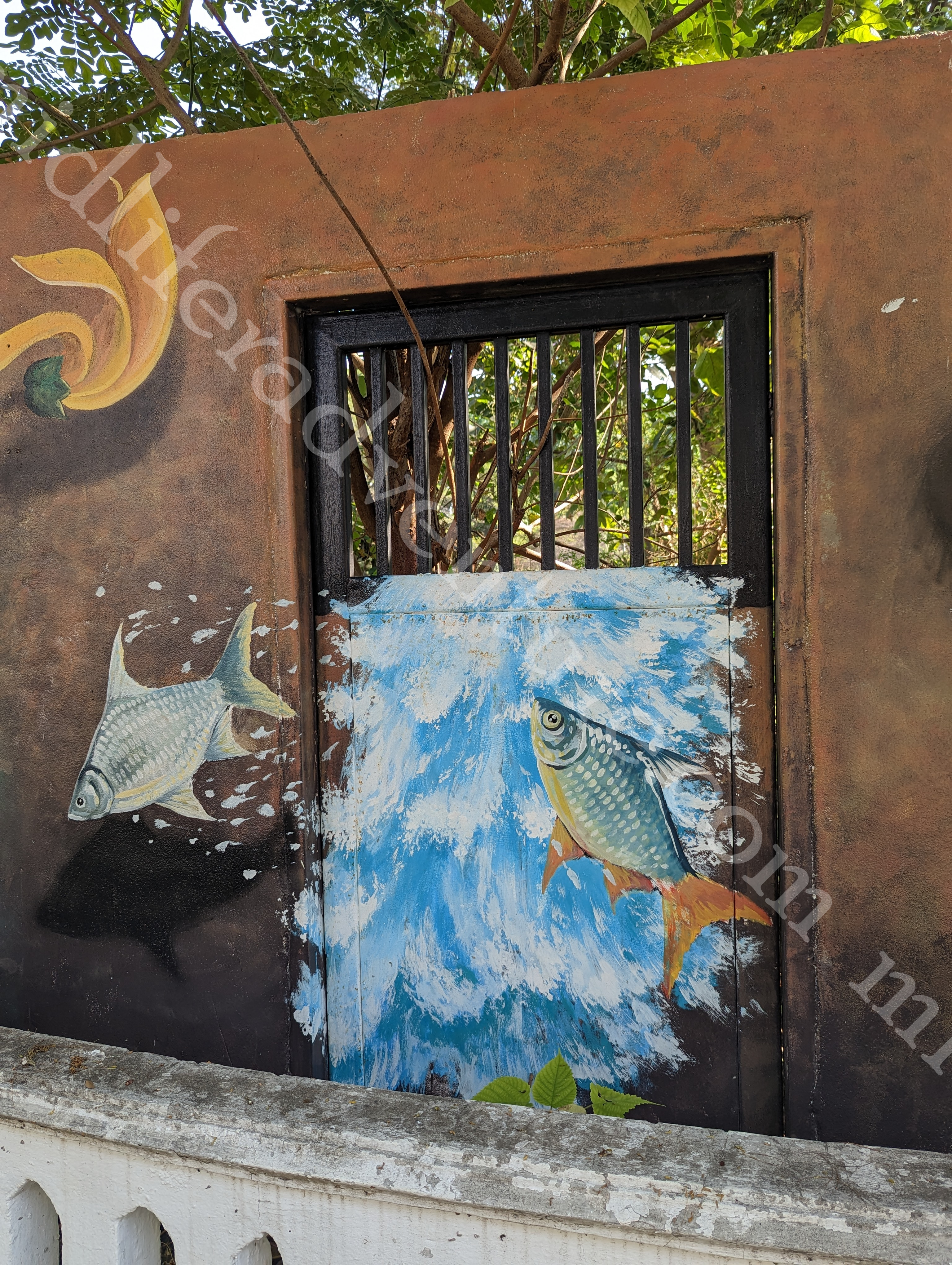
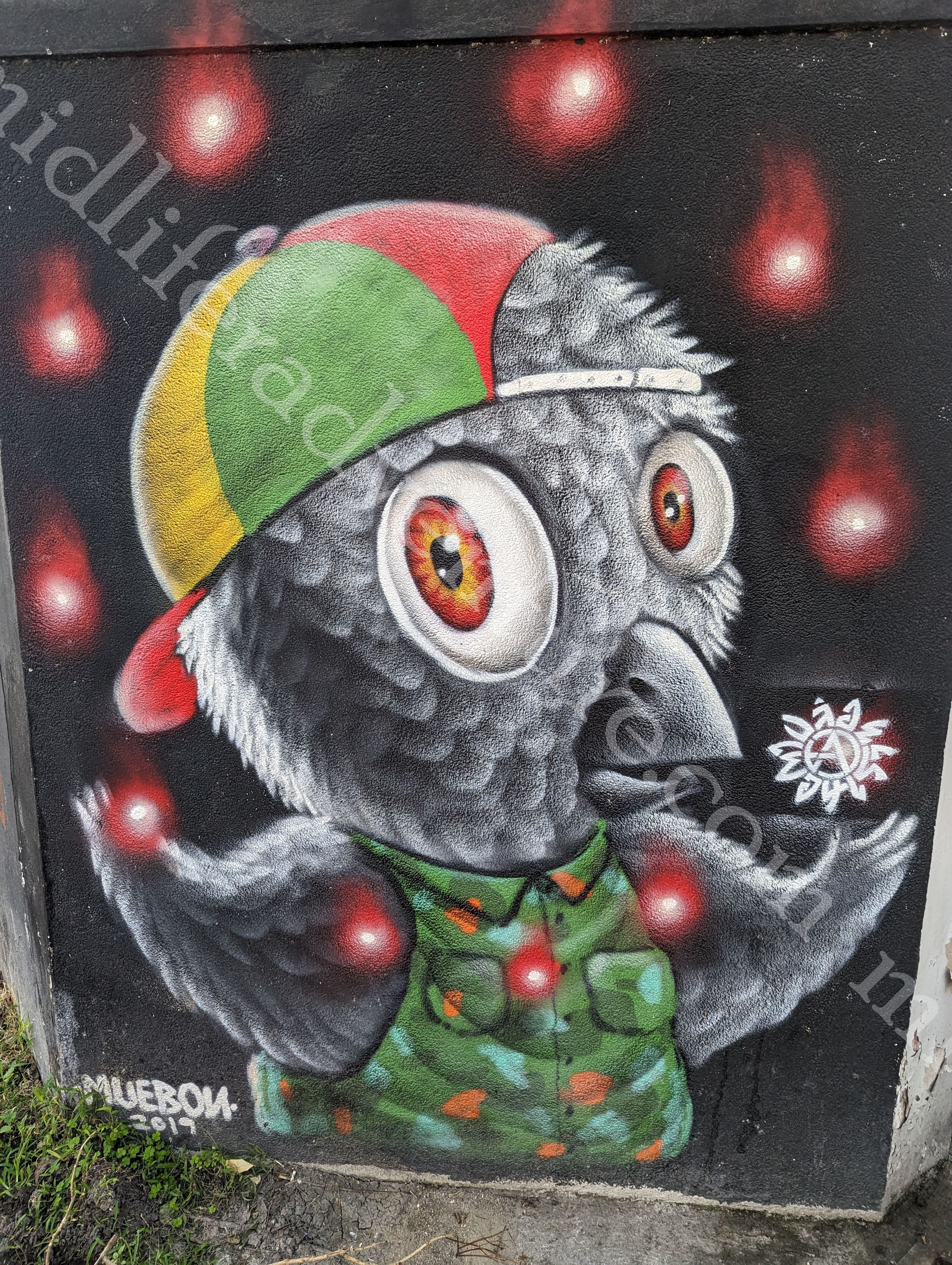
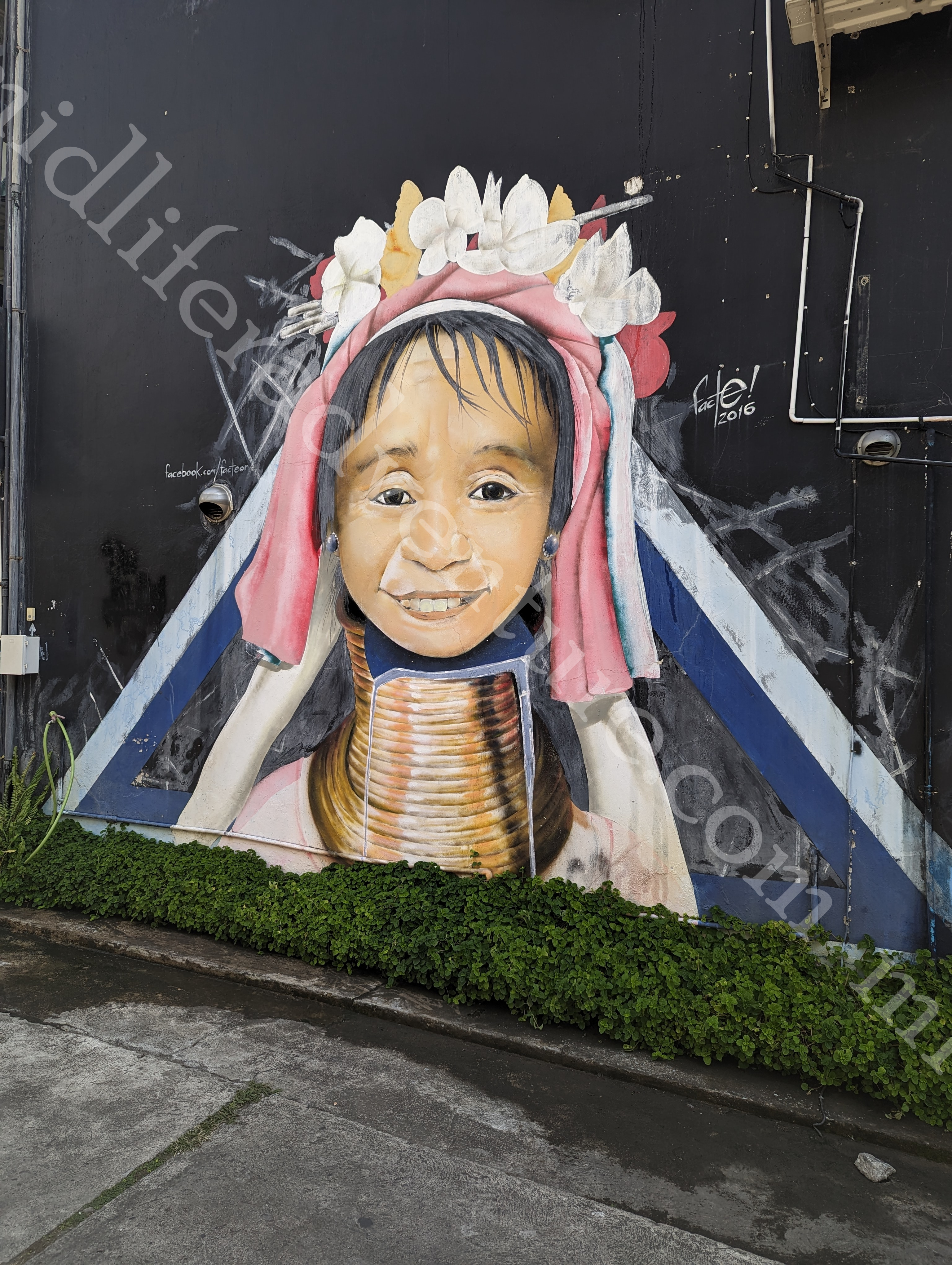
Similar to Penang, Chiang Mai has a thriving street art scene that has not been advertised and is rarely written about. So much so that we didn’t even know to look but Jill kept stopping and taking photos of these amazing scenes or funky pictures. The same sort of thing exists in Penang but somebody has put it together as a tourist attraction as a sort of hide and seek for the artworks.
The same thing could easily be done here. I am certain that we have missed a heap of these and a google images search assures us that we have, and we saw others but parked cars ruined photos. The bottom line is that if you care to look there are amazing artworks often hidden down tiny alleys or side streets and if you are willing to roam patience is required to find these hidden gems.
Long story short – here is a business opportunity for anyone willing to make a map and add it to the tourist agenda. A complete list of the artworks and a treasure map of where to find them would keep people amused for hours and would add greatly to the local tourism scene and things to do list.
Weed-Cannabis
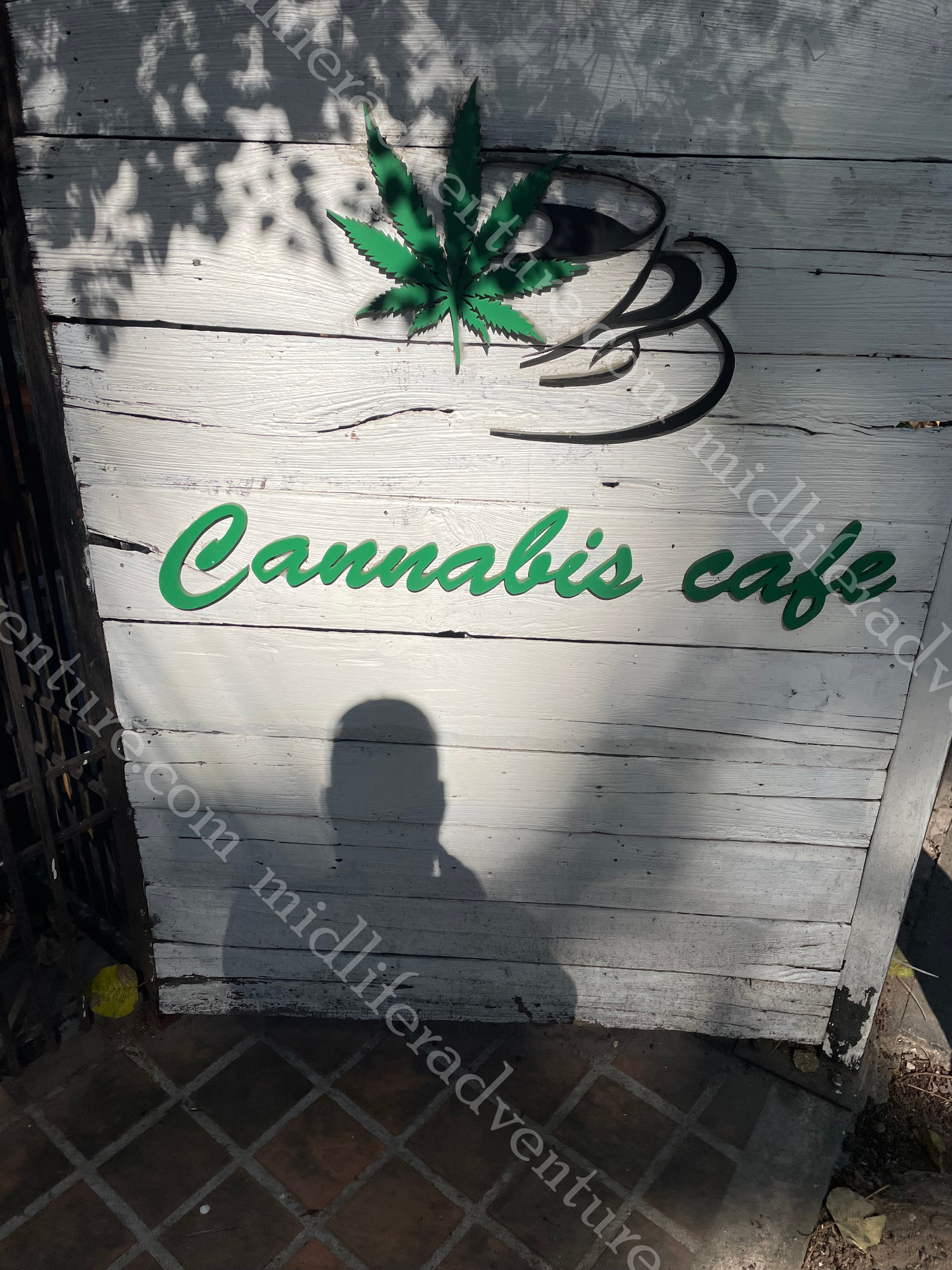
This bit surprised me a little given all that we Aussies have heard about Thailand’s tolerance of drugs – or lack thereof. Cannabis can be bought simply and easily almost everywhere through old town and beyond. The smoking of weed is totally legal at home or in private places but not in public.
WARNING – Fines for smoking weed in public are about $1000-1200 Australian and 3 months imprisonment.
This was either unknown to the backpackers or they just didn’t care as it didn’t seem to stop them smoking away as they walked down many of the streets and alleys late at night.
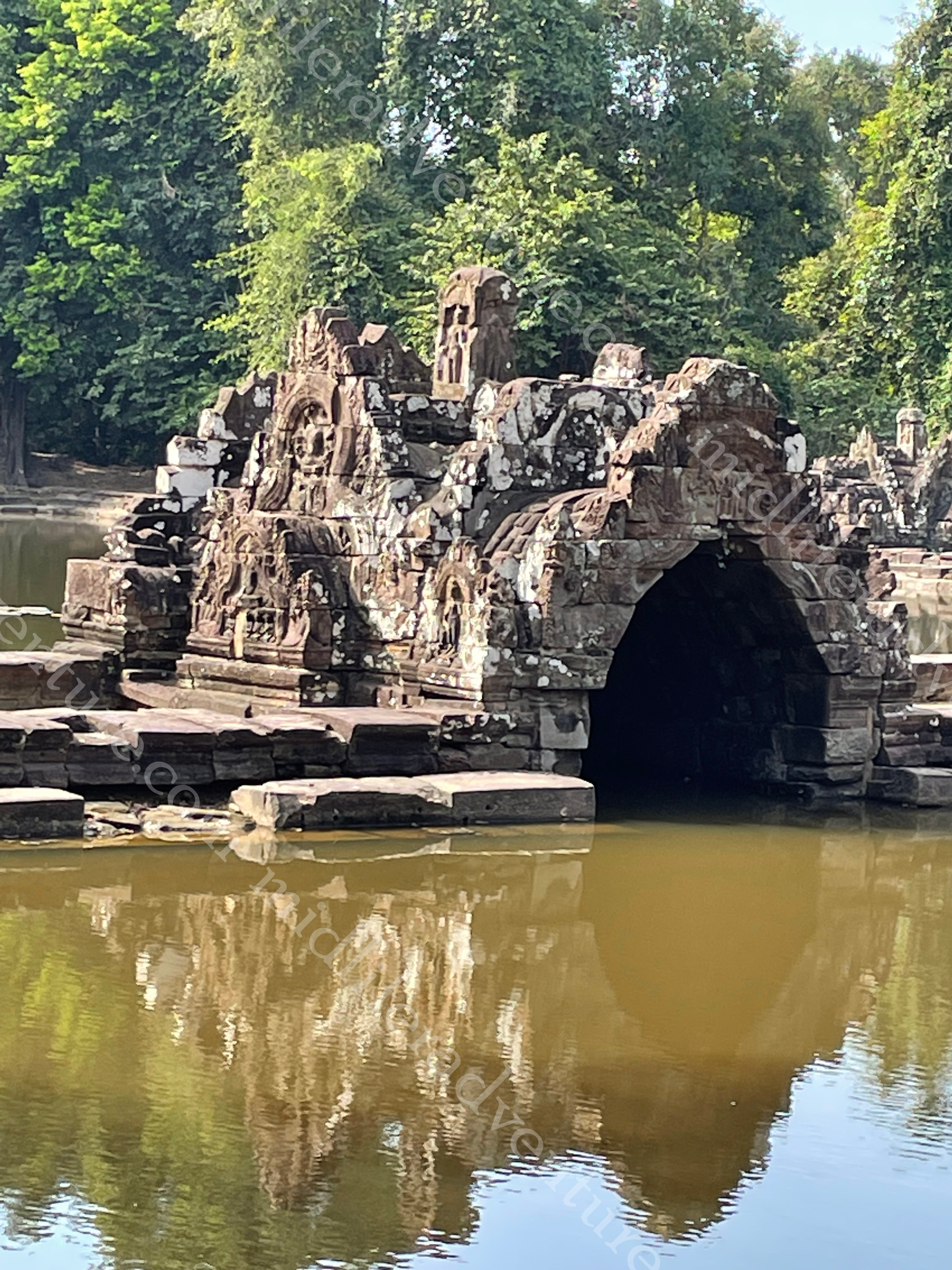
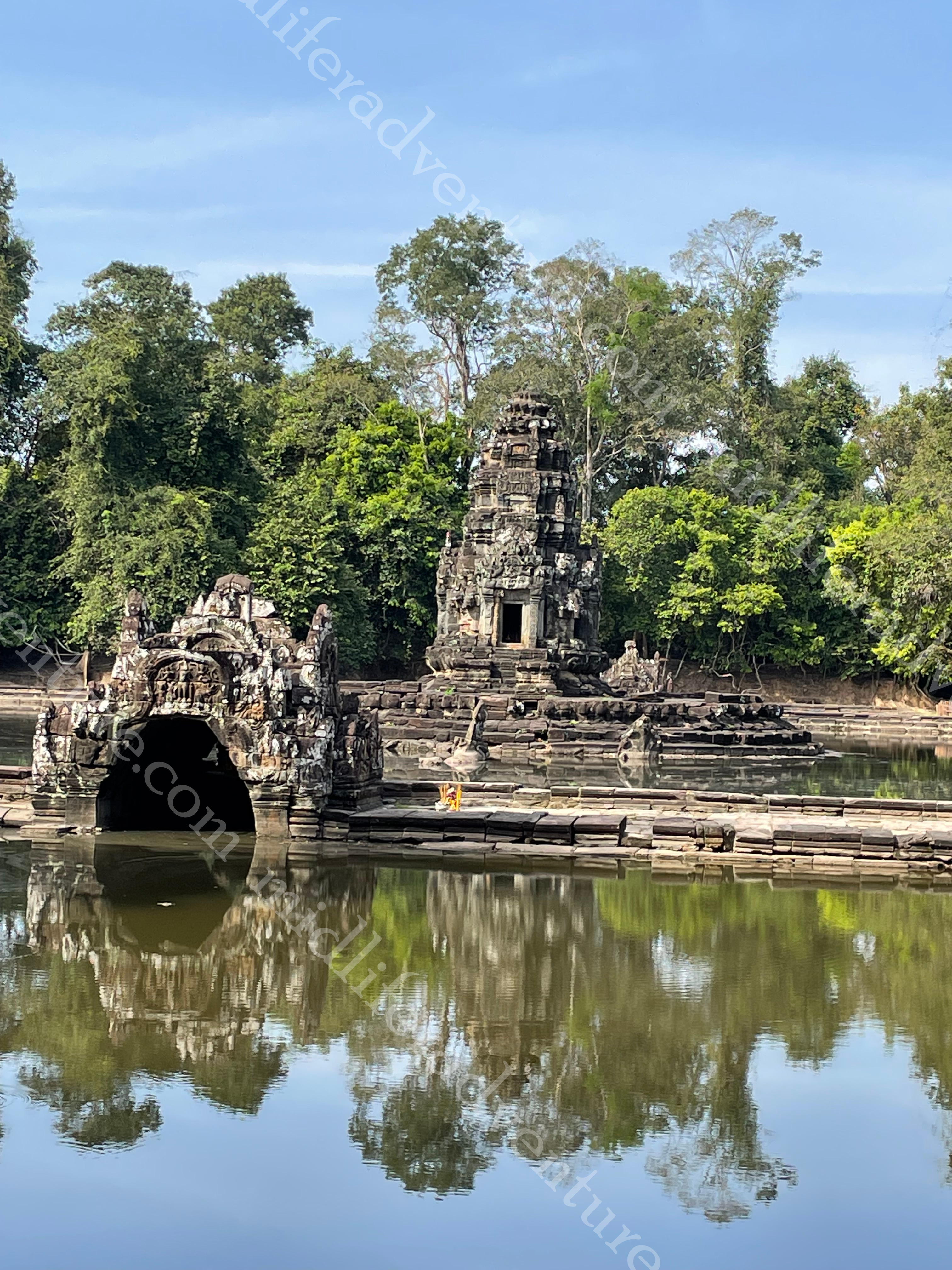
Well after several years of having our wings clipped, we finally got ourselves offshore again. The first major port of call was somewhere that we knew well and had enjoyed – Cambodia. More accurately Siem Reap. Our first foray here was back in November 2013 with a subsequent visit with the boys a year later in November 2014. The place and people are lovely, it is cheap and the food is great. A good way to ease ourselves back into the world of global nomadding again.
Khmer Empire
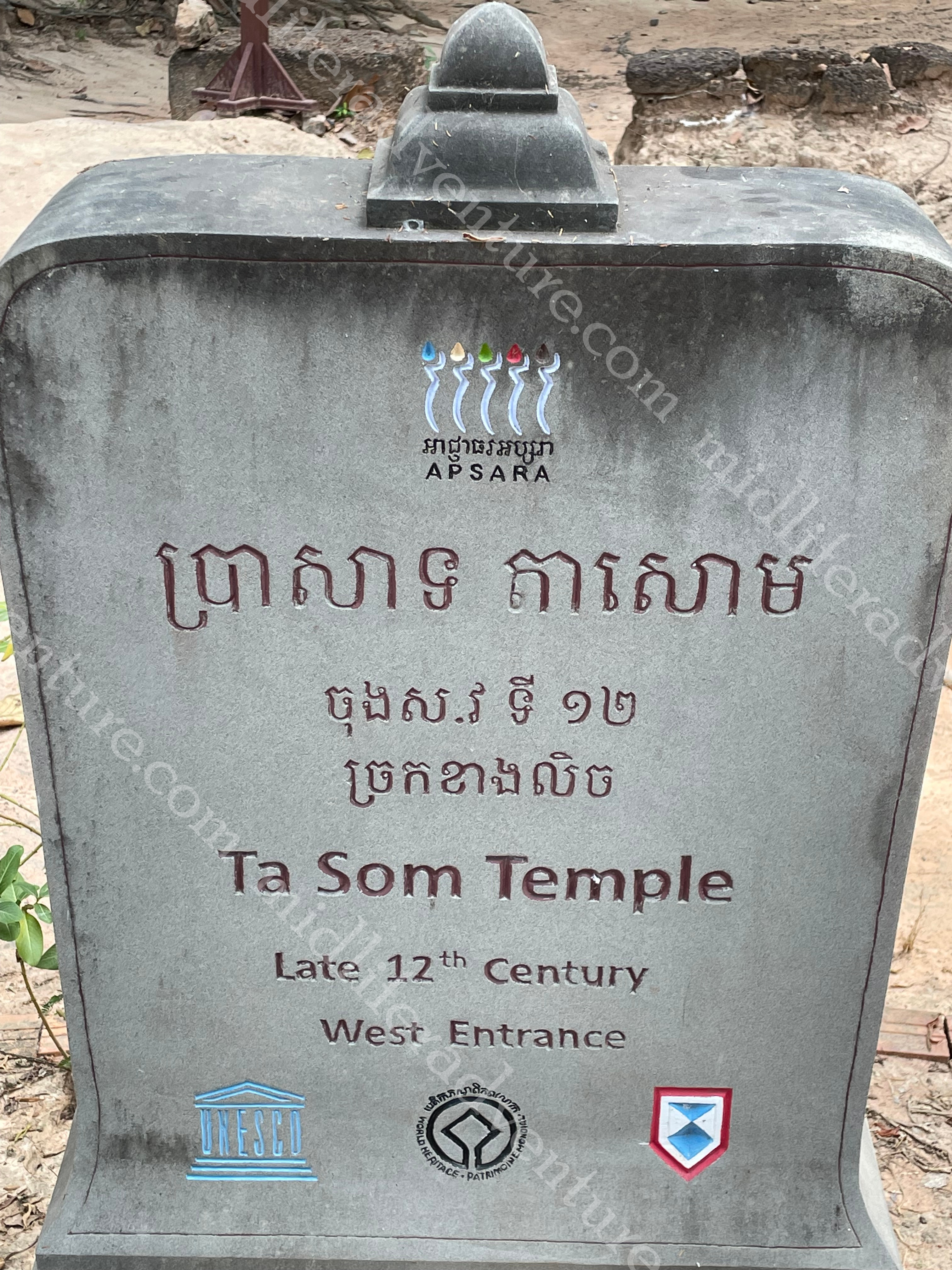
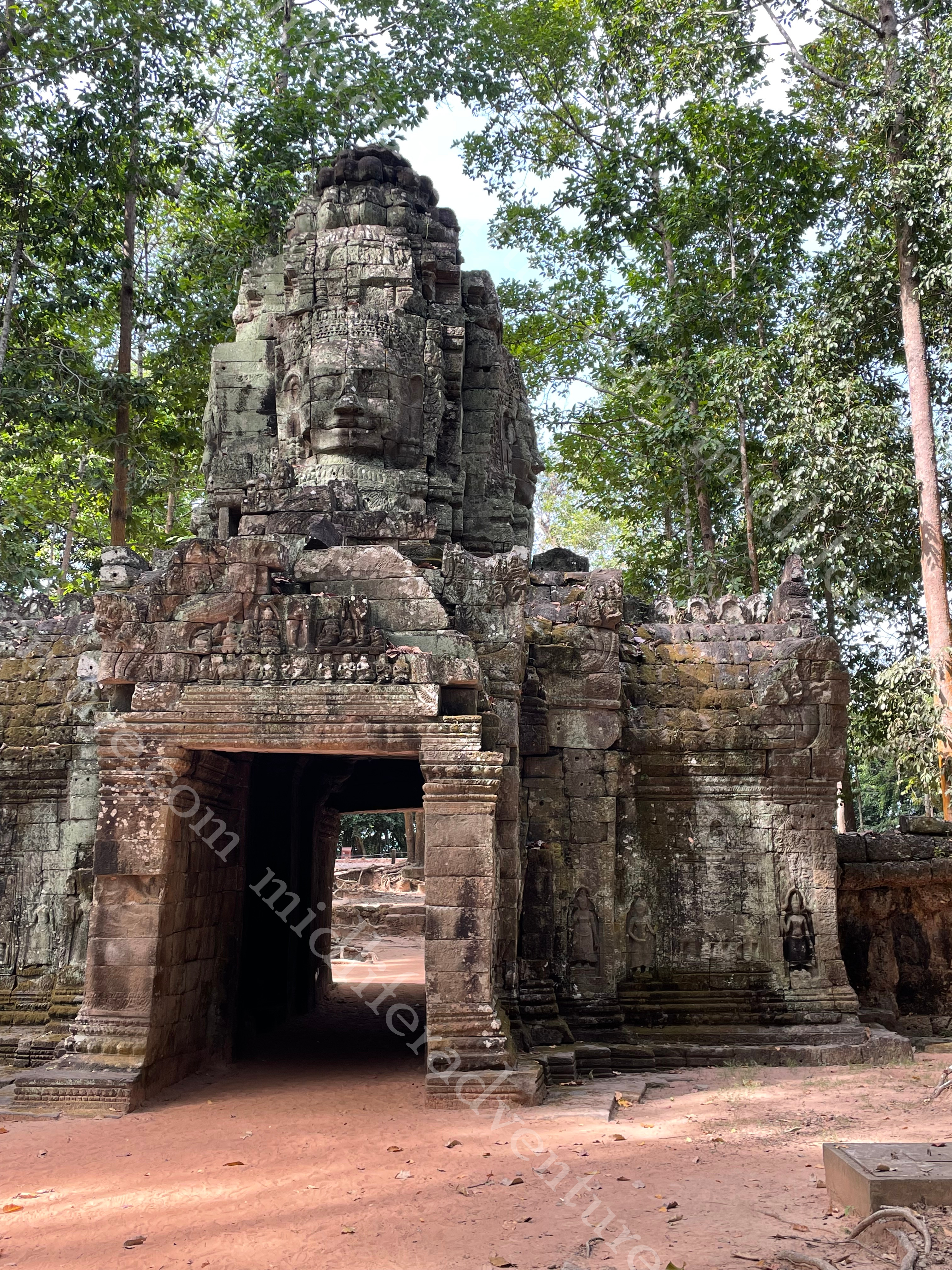
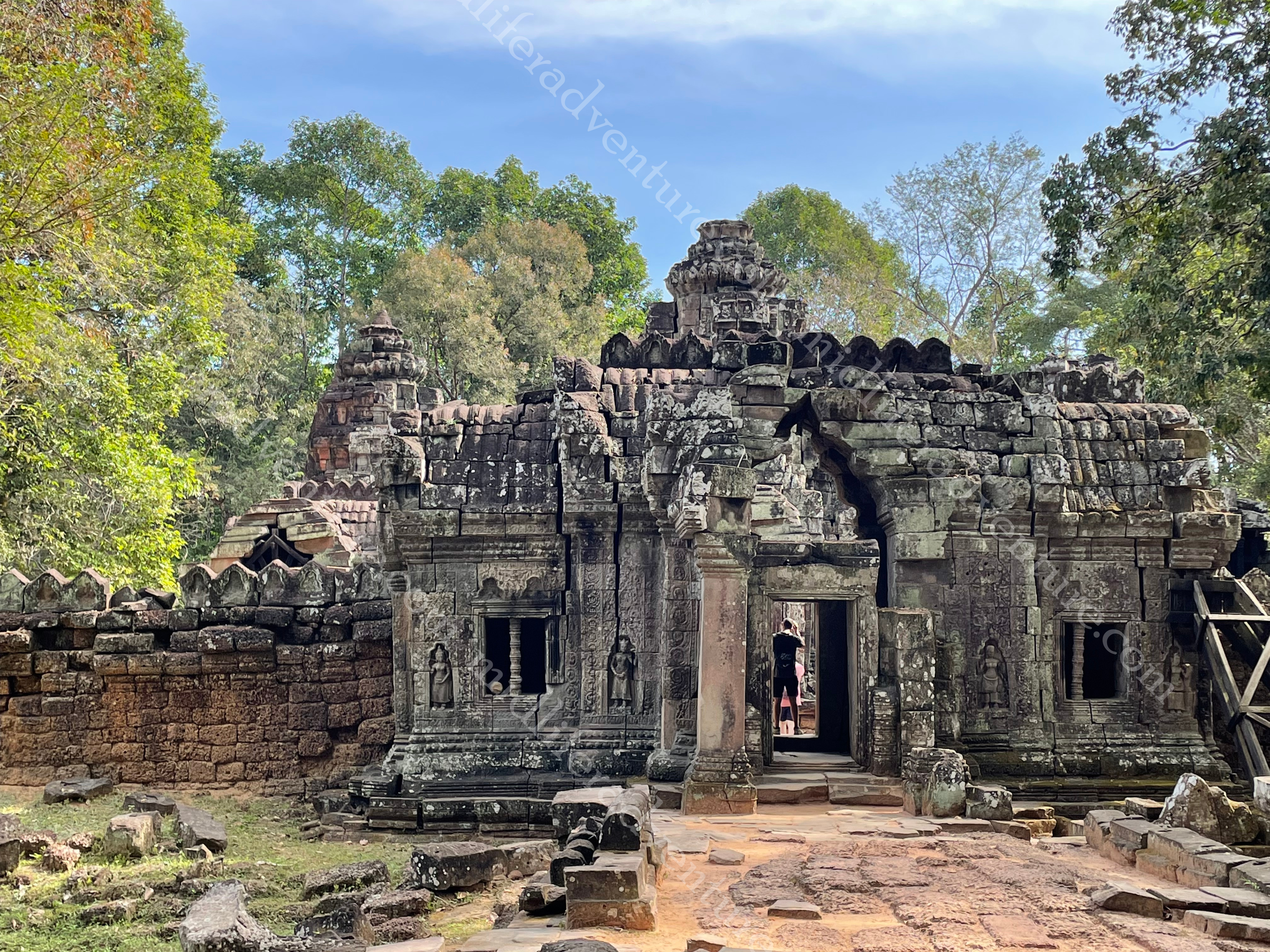
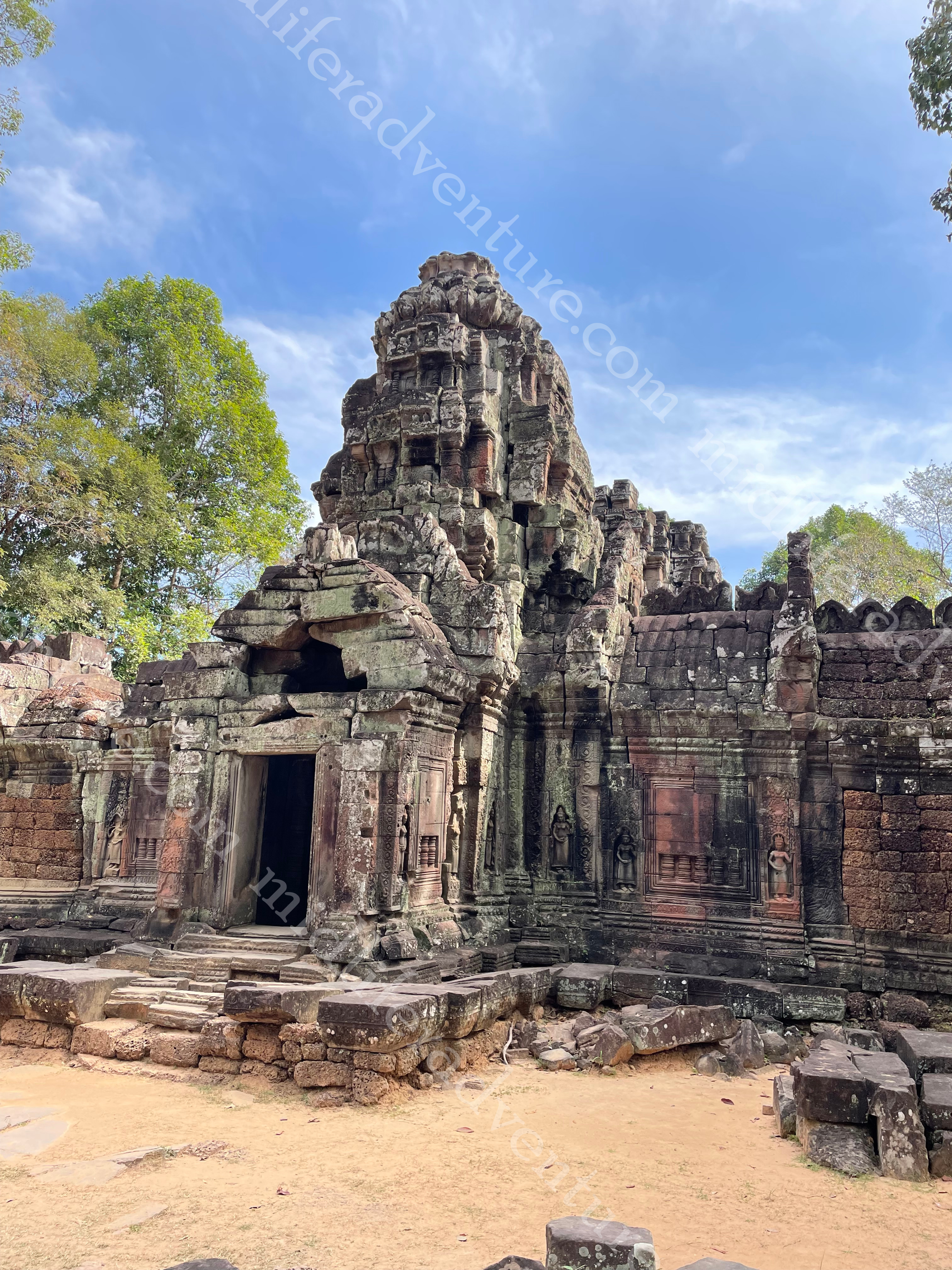
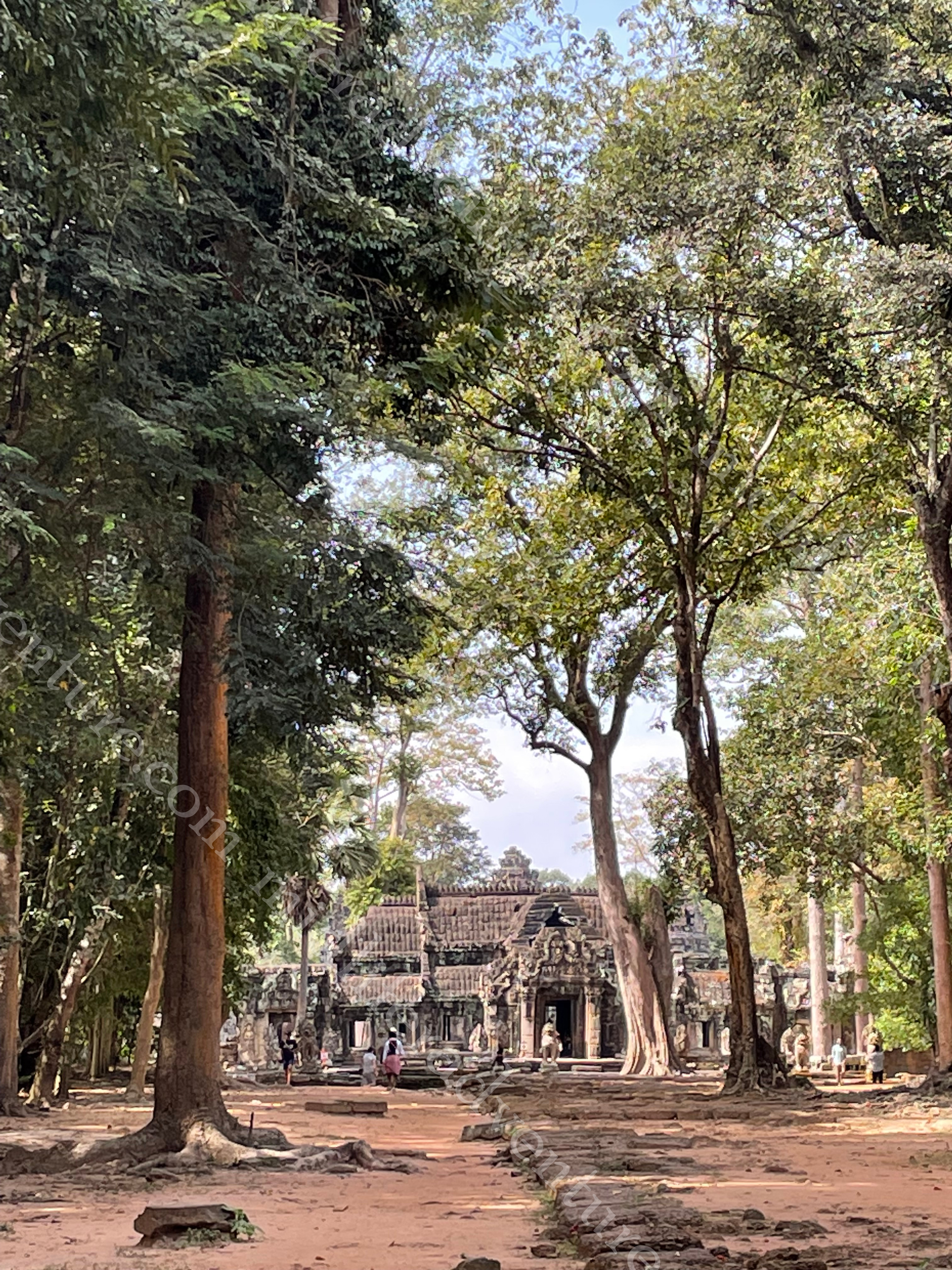
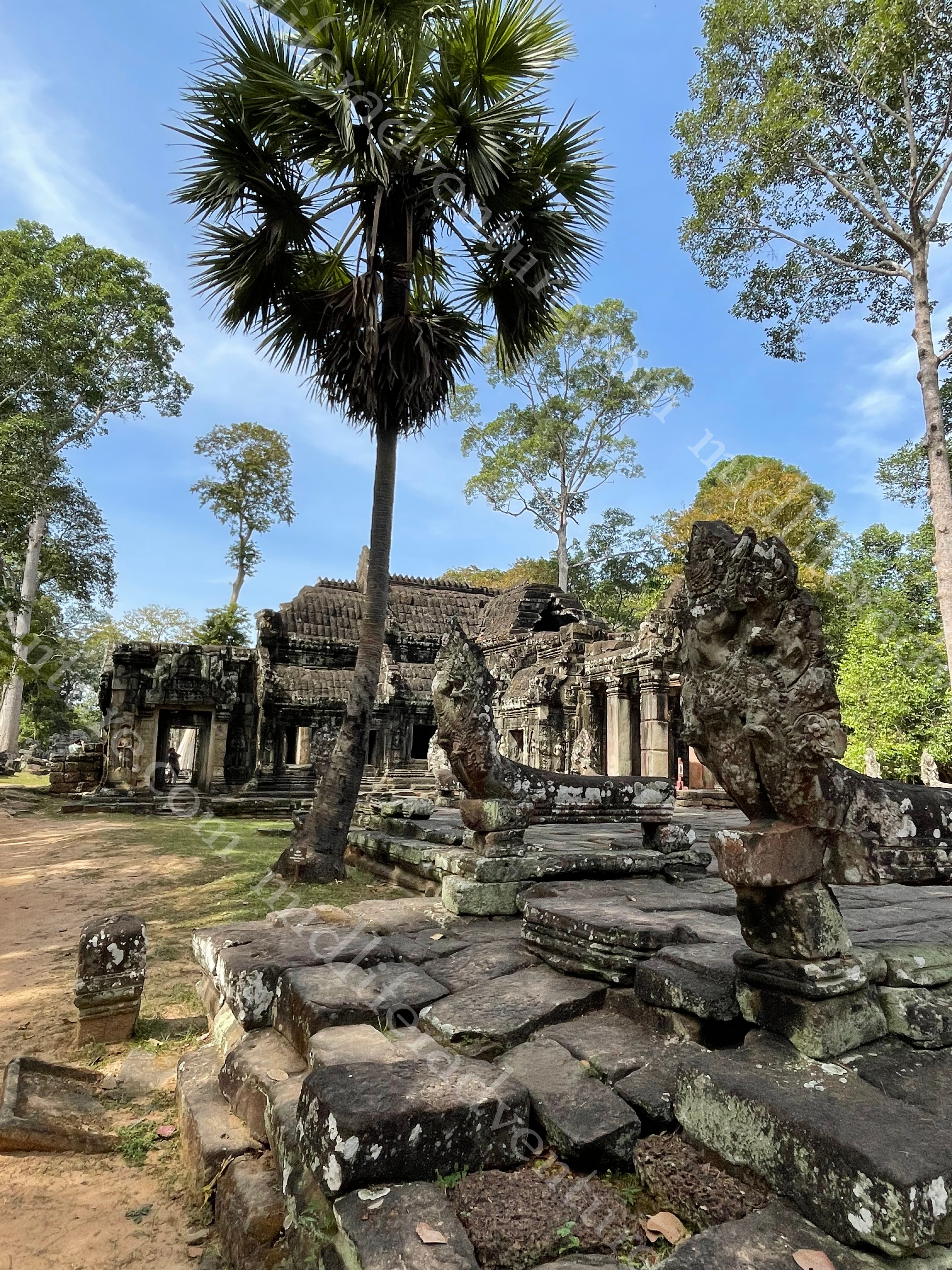
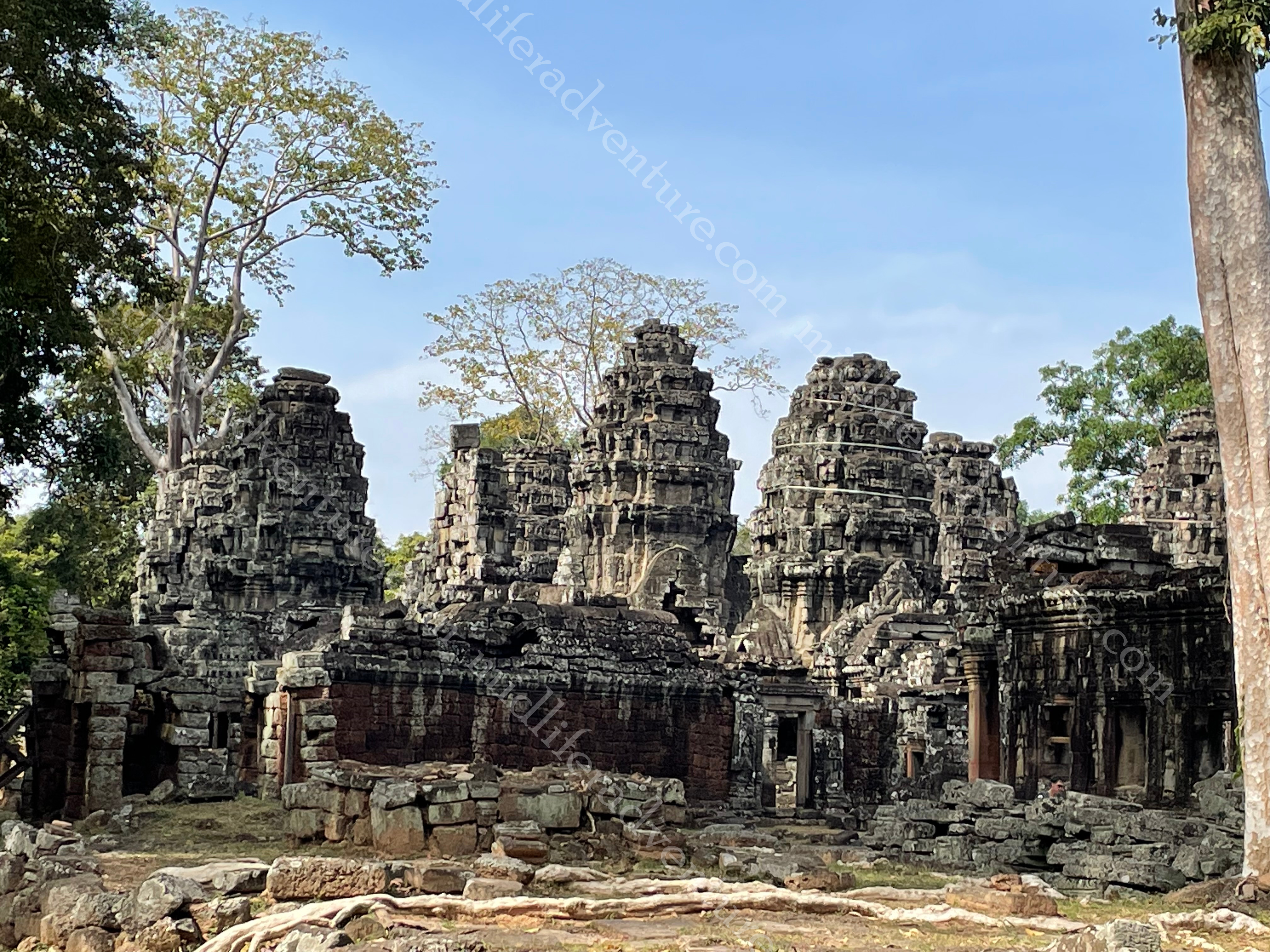
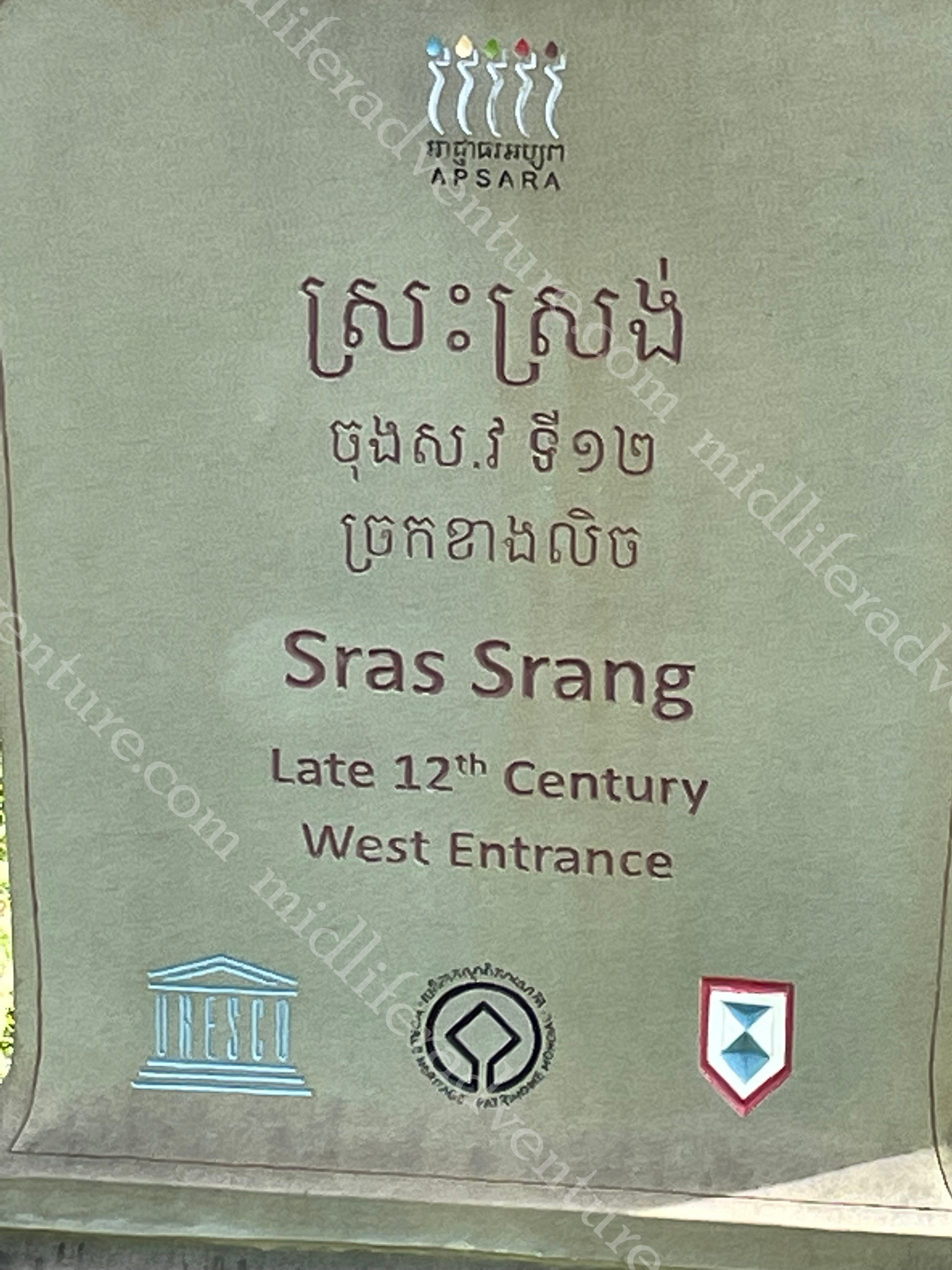
Before we get too carried away lets get some of the basics down to provide some context about what is going on here. Between the 9th and the 15th century Khmer or Ankorian Empire existed within SE Asia and at its peak was said to be larger than the Eastern Roman Empire (Byzantine) which existed around the same time. Kicking off in the early 800’s the empire the grew to be one of the largest going and satellite images show that at its peak it was the most extensive pre-industrial urban complex in the world. Long story short, there are about 50 Buddhist and Hindu temples dating back to the 8th-12th century in the vicinity of Siem Reap. Many of the structures have collapsed or been swallowed by the jungle but the structures that remain and the carvings in place make the are a must see and listed by UNESCO.
Touring the temples
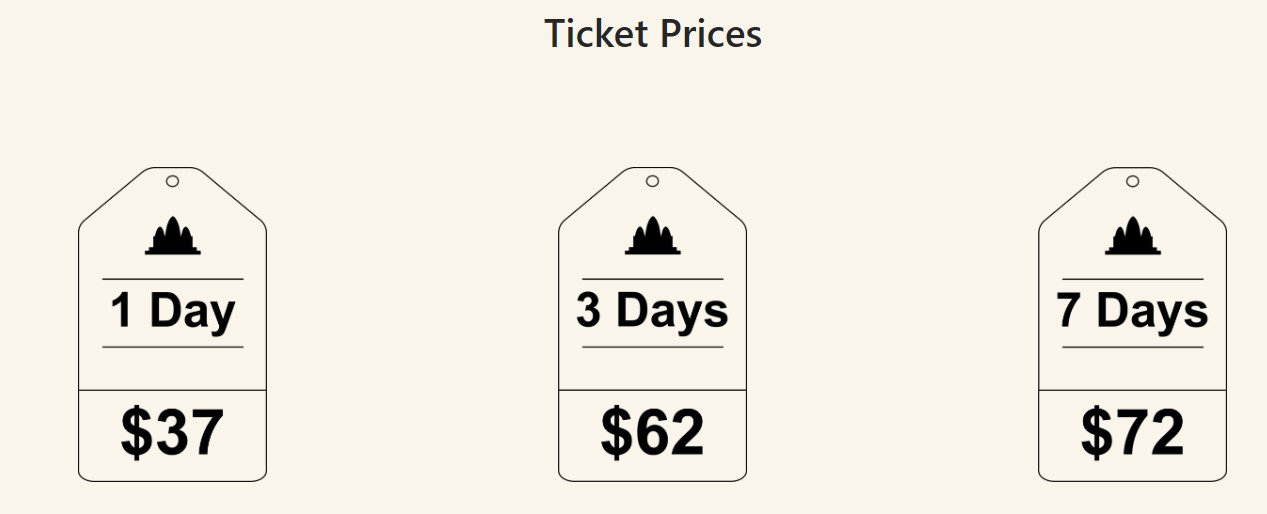
Step One – buy your ticket. The prices are in USD and they range as seen on the right (prices correct as at Nov 2023). Note that these tickets are for the main temples etc and they do not give you access to all things. If for example you wanted to go to the Kulen Waterfalls then another ticket would be required.
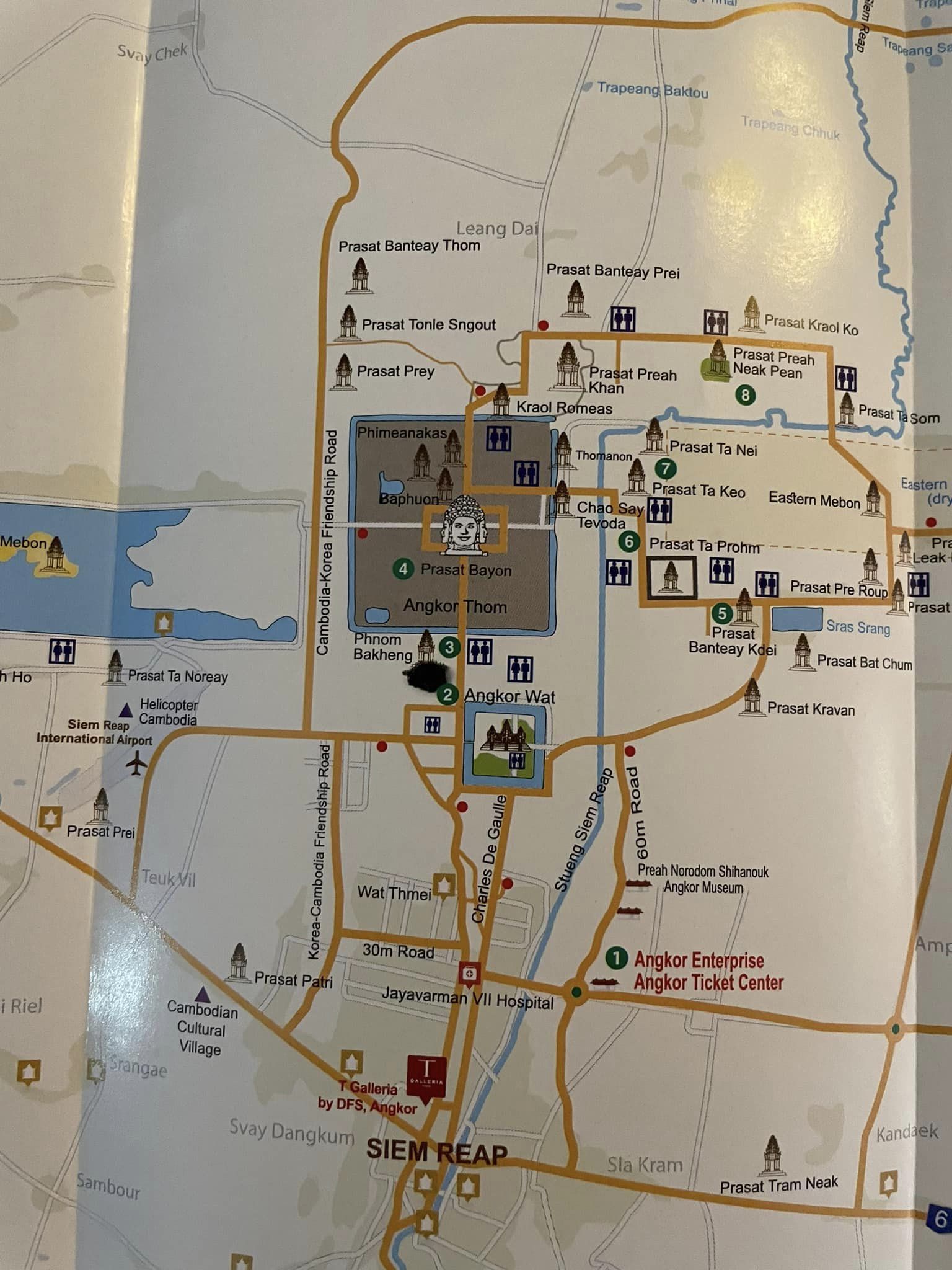
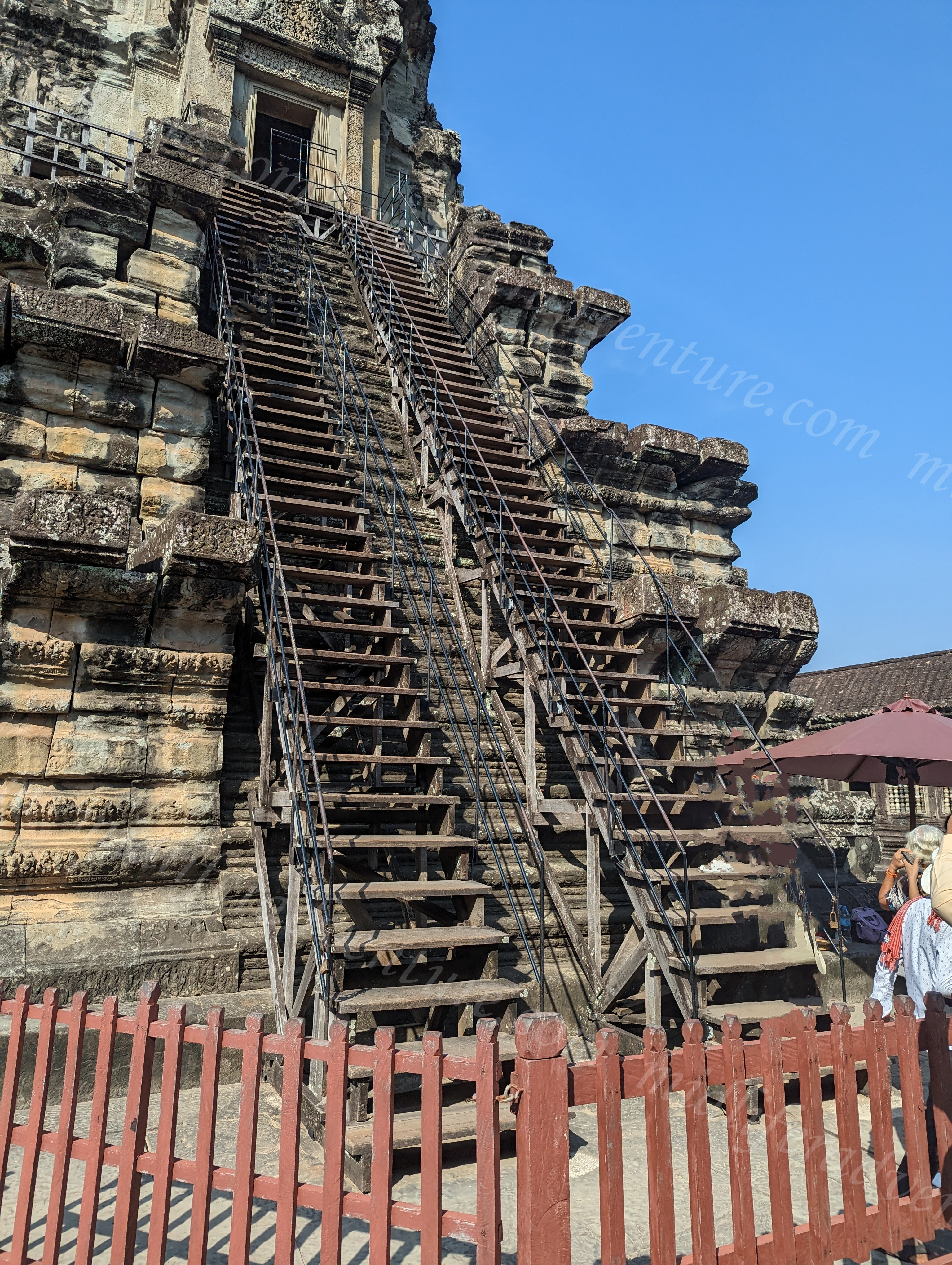
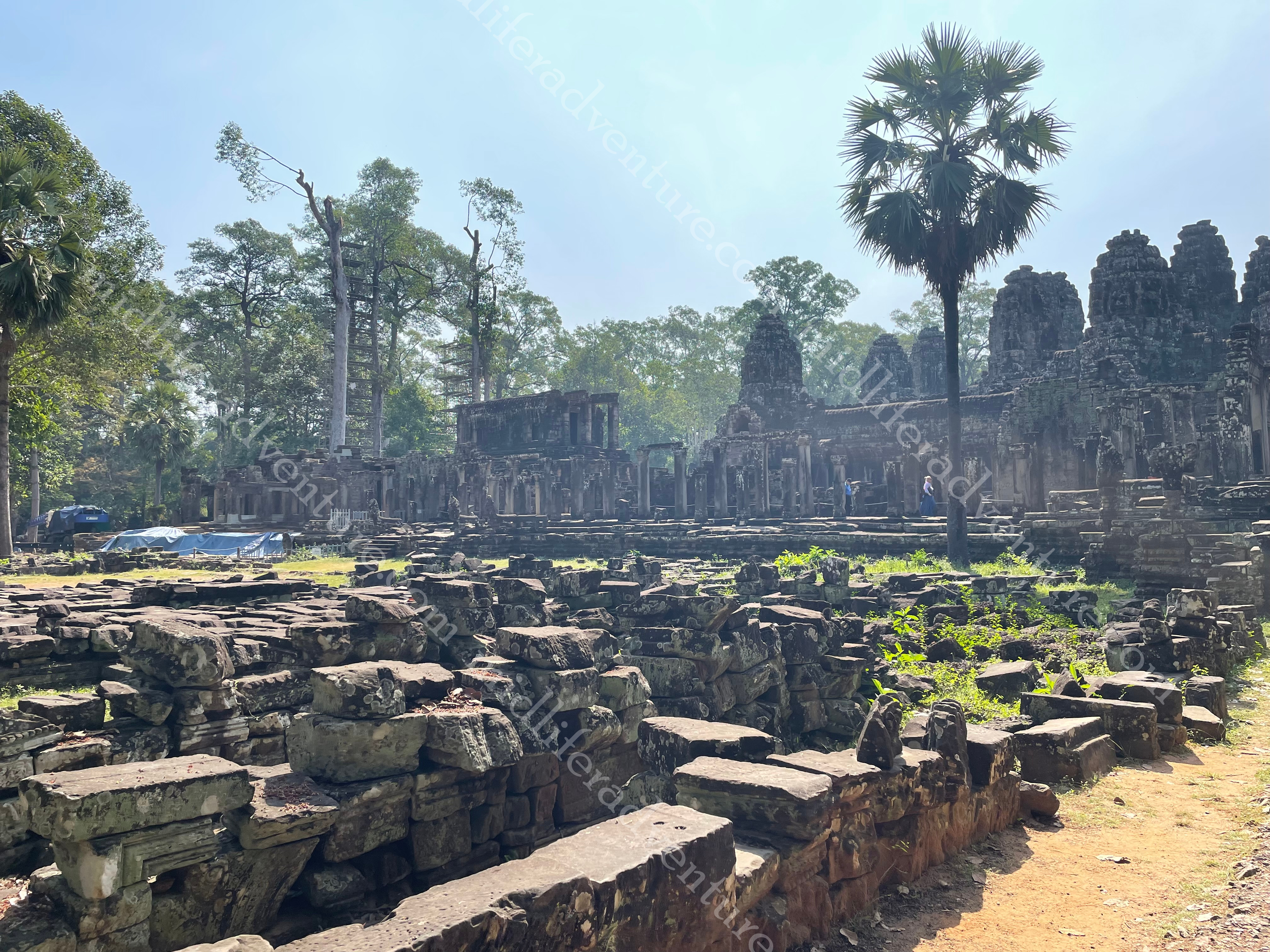
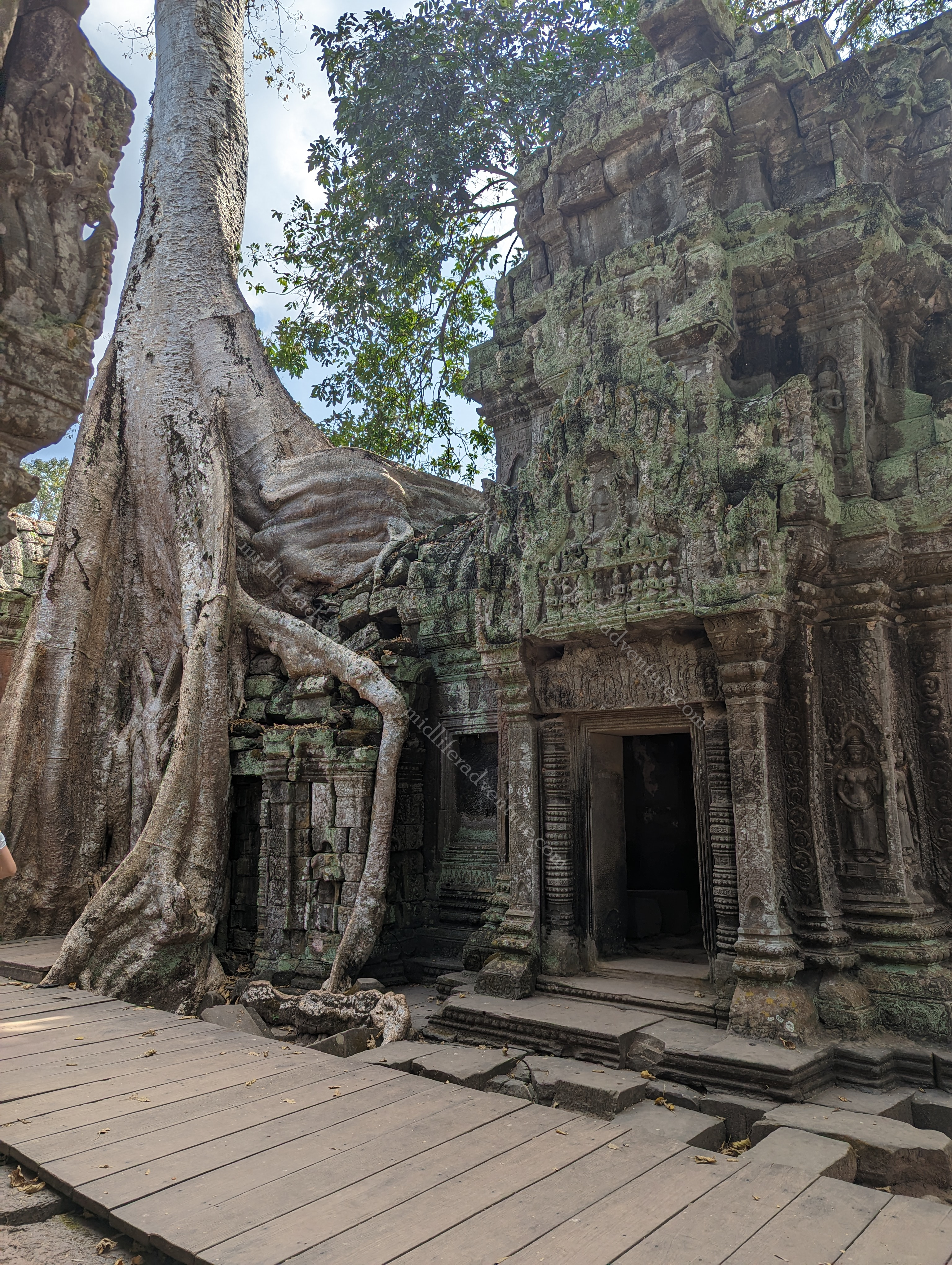
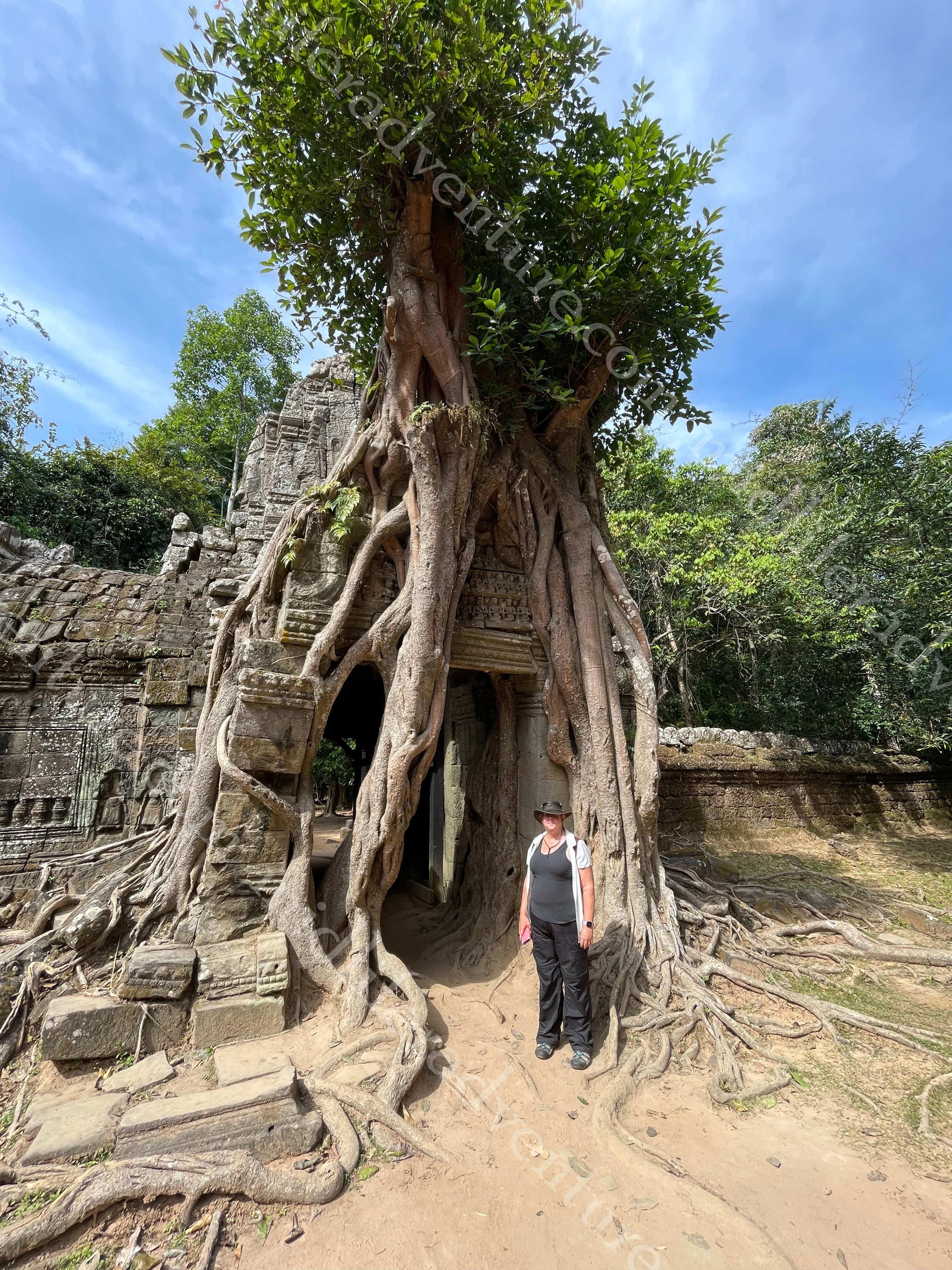
There is an inner loop (ie the ones close to town) and an outer loop of temples that can be done. The inner loop takes in the big ticket items of Angkor Watt, Angkor Thom, the Bayon temple and Ta Prohm Temple (which became famous in the tomb raider movie and game with its image of the tree growing out of the wall). The inner loop can be easily done in a day but does involve a lot of walking and a lot of stairs. The outer loop takes in the temples requiring a little more driving and are generally a little less impressive or less well preserved. These too can be done in a day but there is more tuk tuk time and fewer stairs. From here there are the far away temples. These are considerably further from town and individual negotiations would need to take place on both price and type of vehicle required.
What to wear when visiting the temples
Dress is simple. You are off to visit temples and holy sites so dress accordingly. This means that your legs and shoulders should be covered for the period when you are inside the temples. For such a simple concept this still continues to confuse the majority of the women that attend these sites. The innate need for short skirts and strappy tops is obvious…so too is the absolute requirement to show as much skin in your influencing photos and videos. However, the inability to throw an overshirt or the ubiquitous elephant pants on for the few minutes you are in a temple seems too impossible a task to muster. And guys the world will be able to survive for the few minutes it takes while you put away the gun show – especially those northern European (glow in the dark) biceps.
How to get to Siem Reap temples
You you can hire virtually any type of transport that you want to take you around and through the temples. You can have a bus all to yourself if you really like. There are private cars, motorcycles, bicycles and tuk tuks. If you take the private air-conditioned car or bus, you will find that the short distances between temples means that you have arrived at the next temple before the air conditioning has had a chance to kick in.
You can ride a bicycle, but that would mean that you would have to ride a bicycle. Motorcycles mean that you are either on the back of a local’s bike or that you have hired your own and would need to know your way around the various temples.
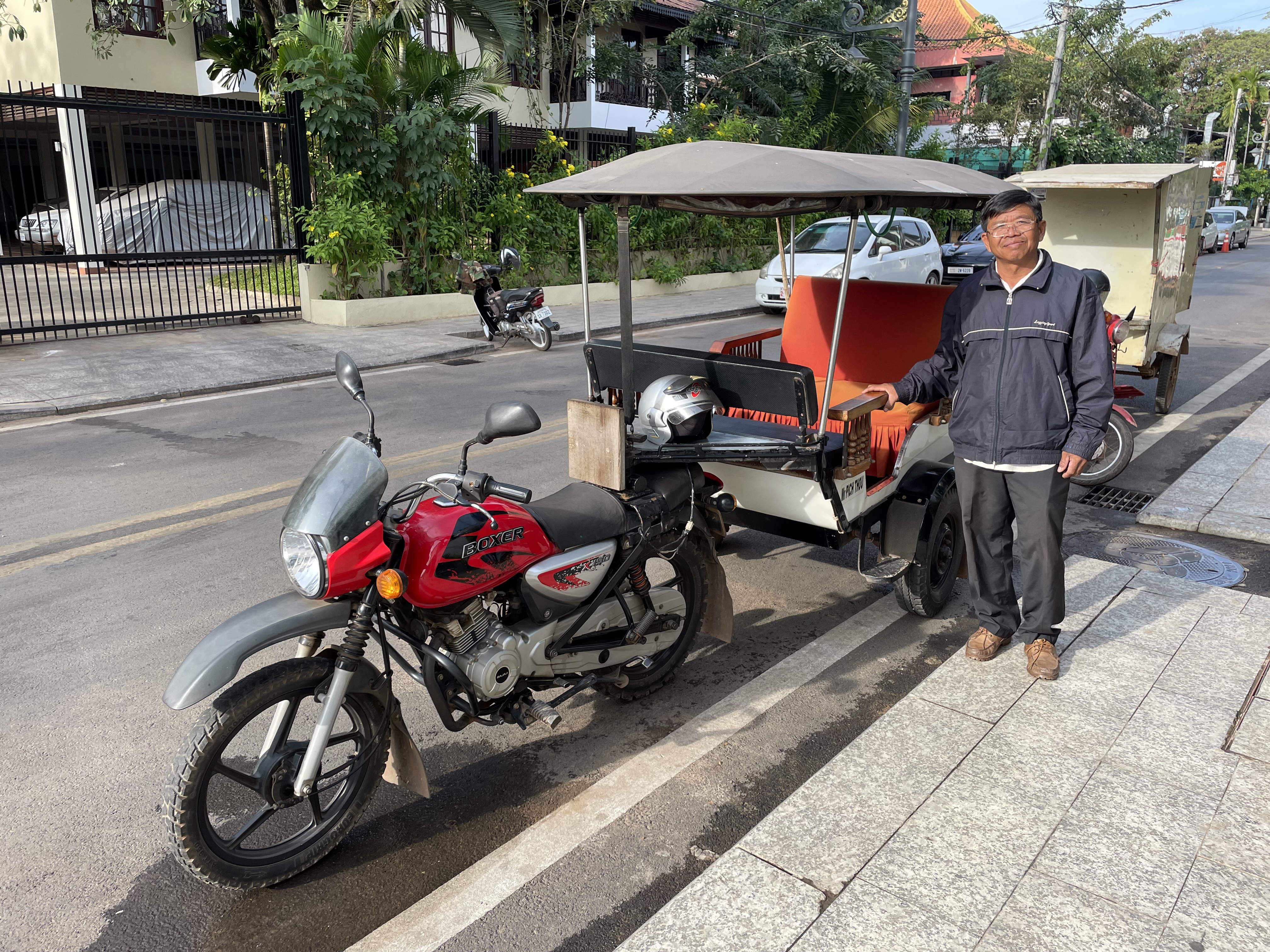
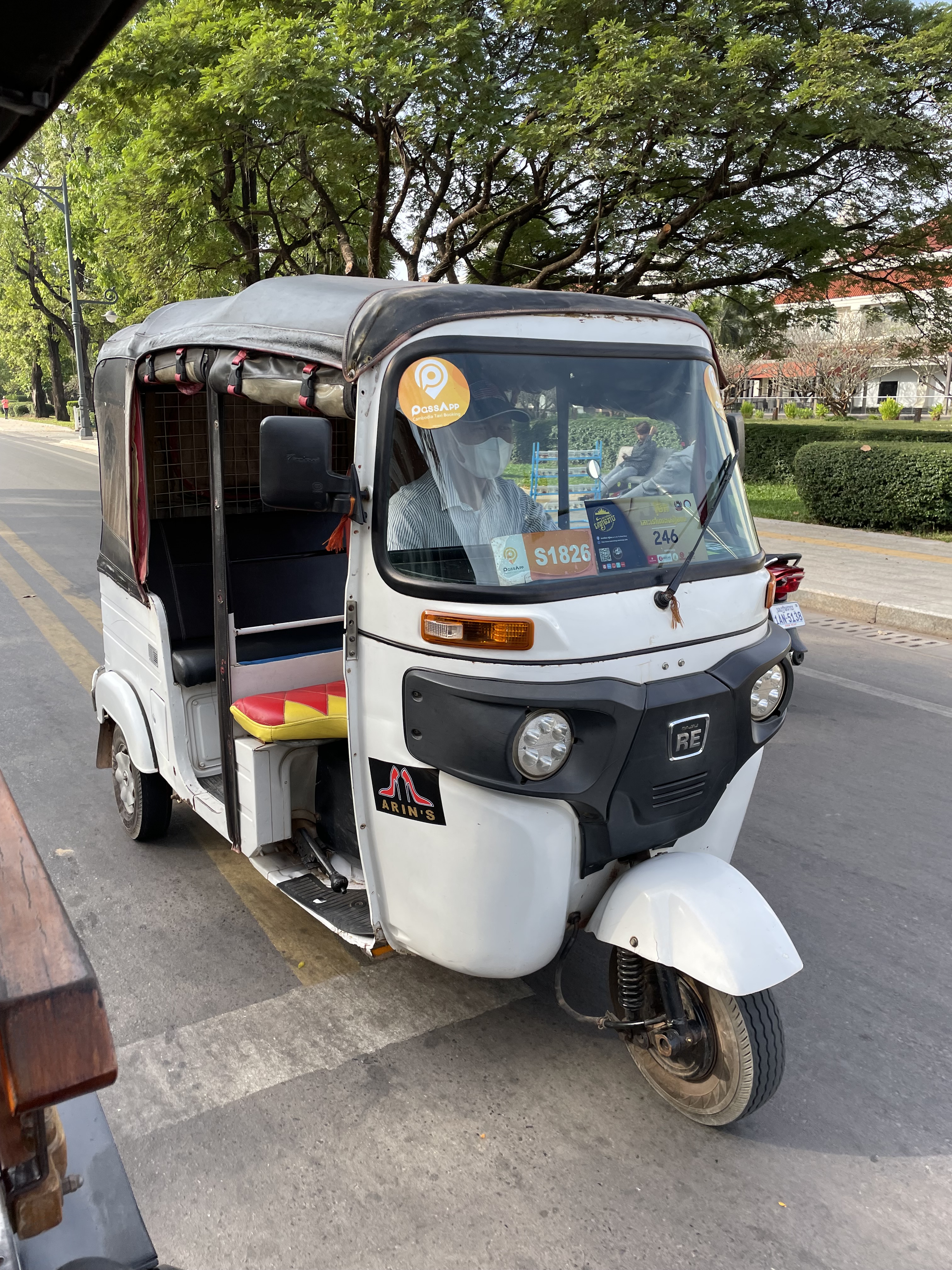
Tip Number One: Take a tuk tuk. The tuk tuk is cheap, easy and has great air flow, especially if you choose one of the more open types rather than the more enclosed versions. This means that you are cooling down immediately after having hiked up and down the temples, rather that sweltering looking for relief. We had the one on the left (below) driven by the lovely Mr Thou and it was fantastic.
Angkor Wat
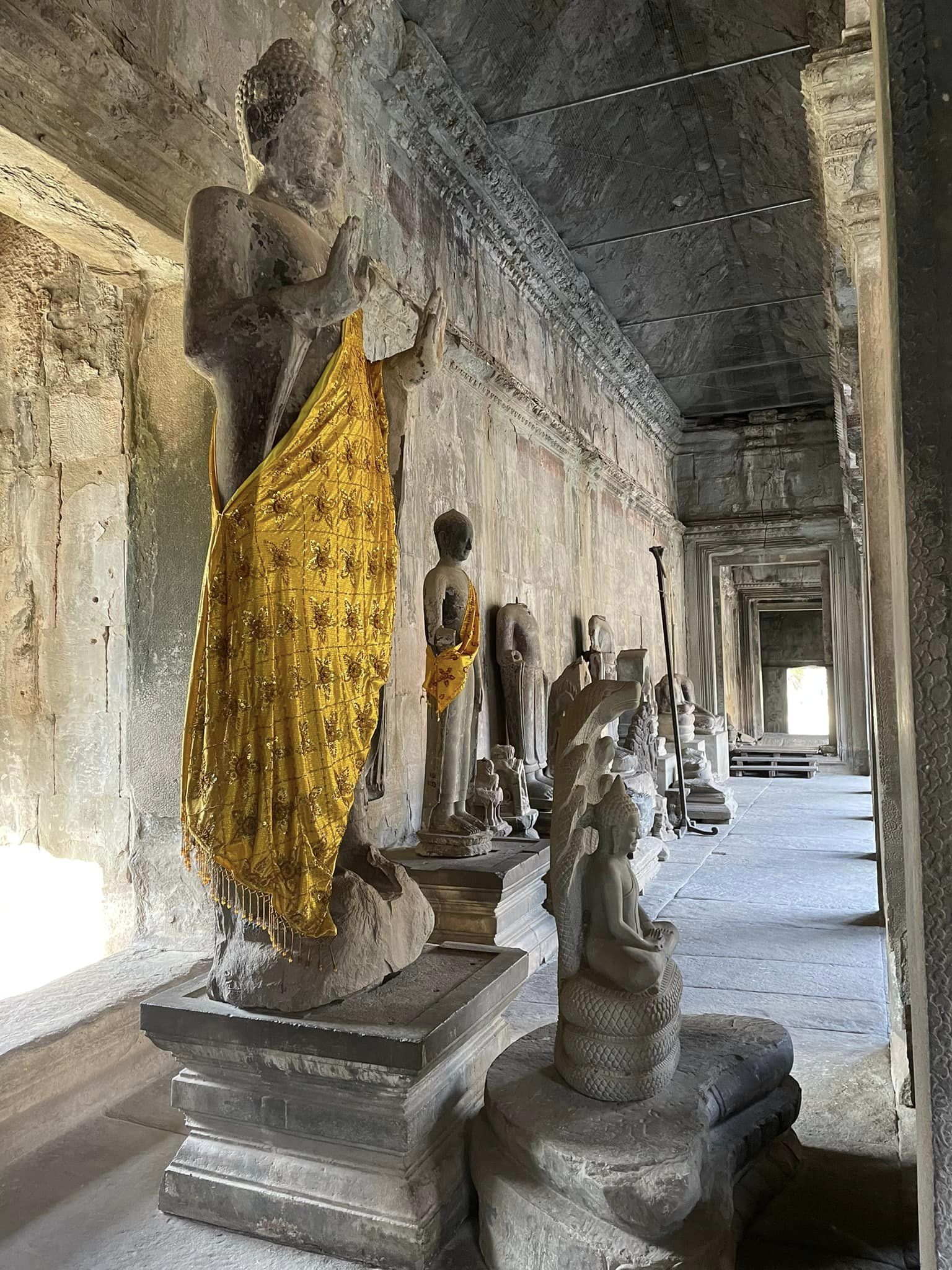
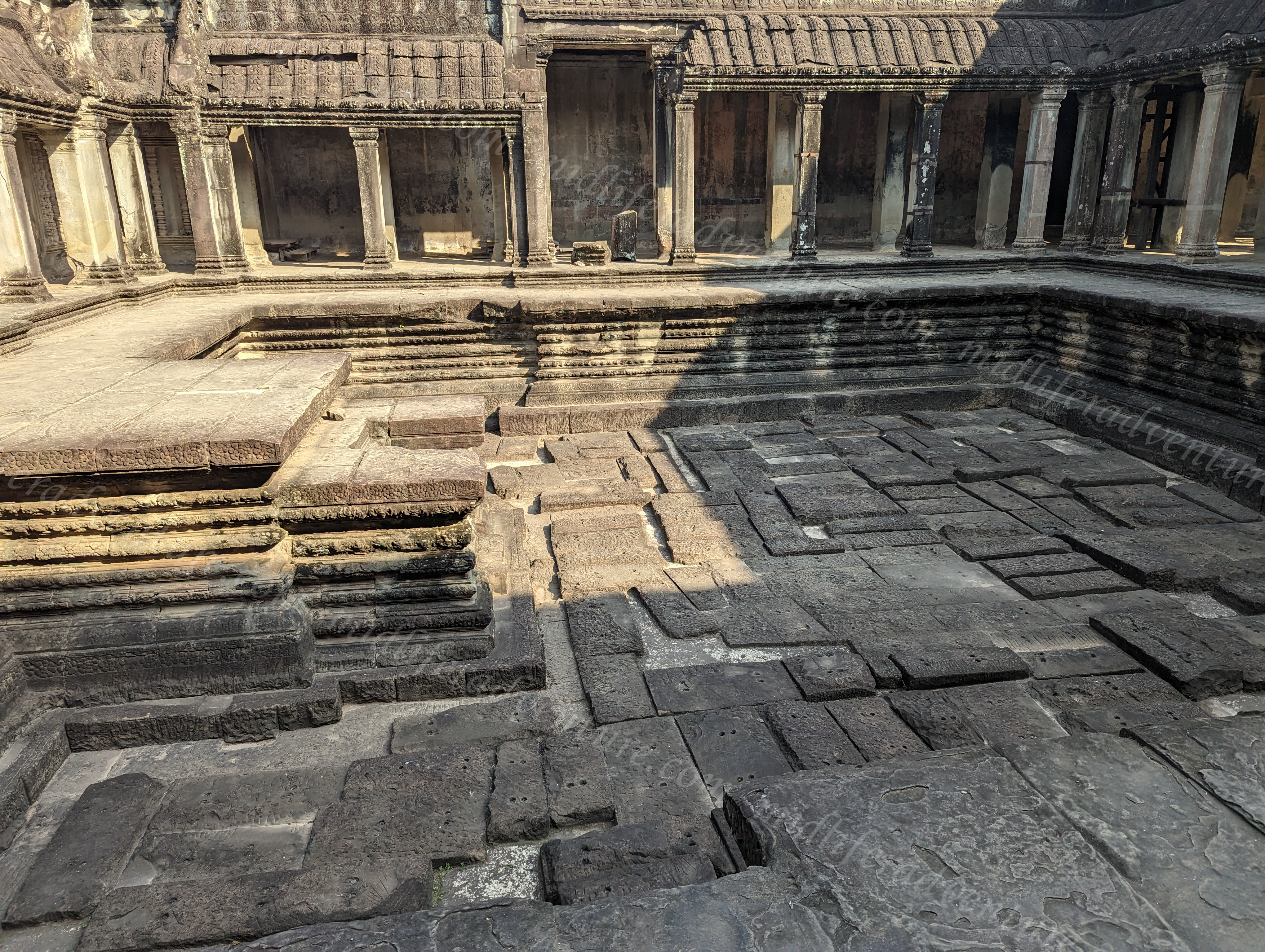
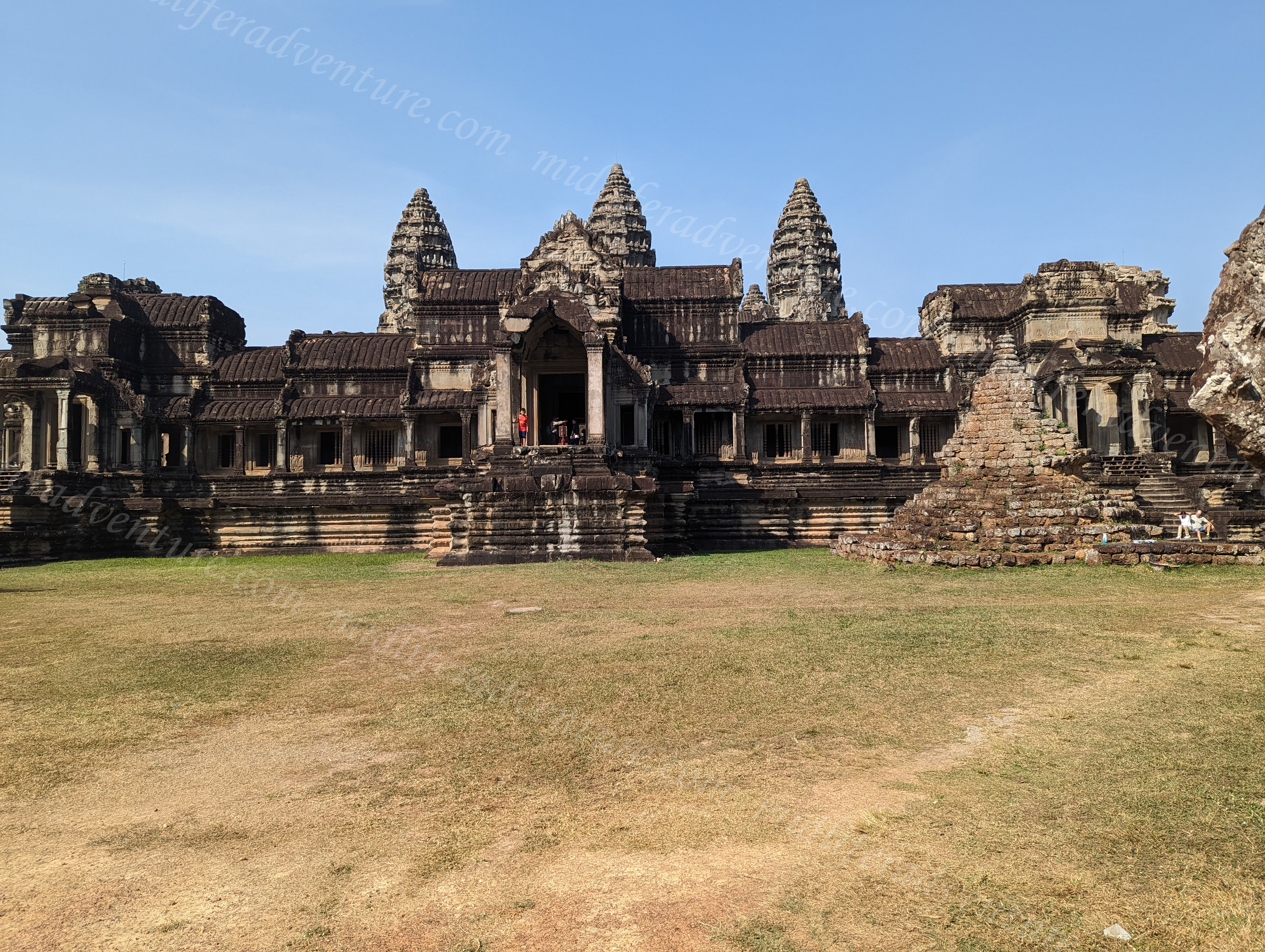
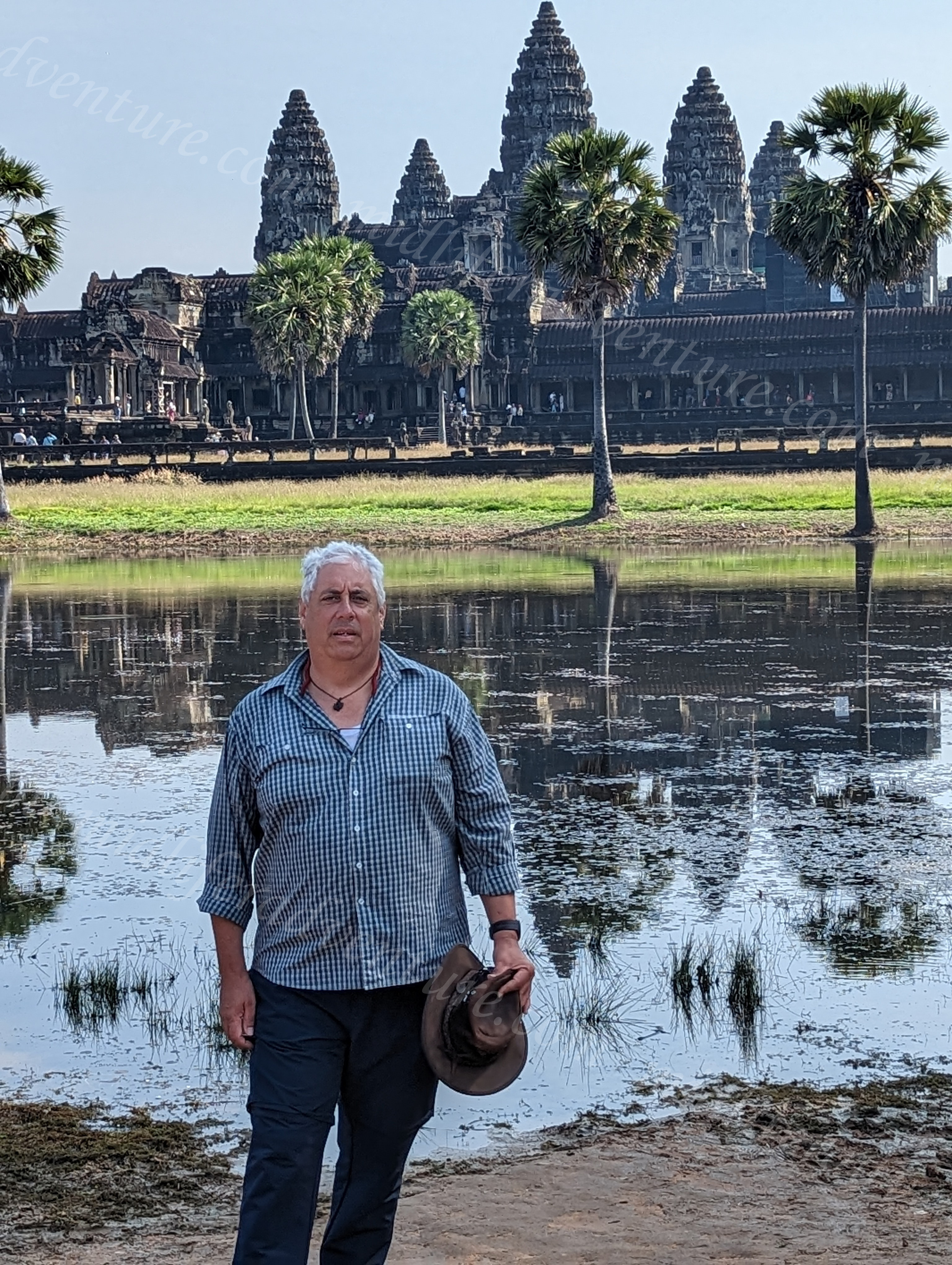
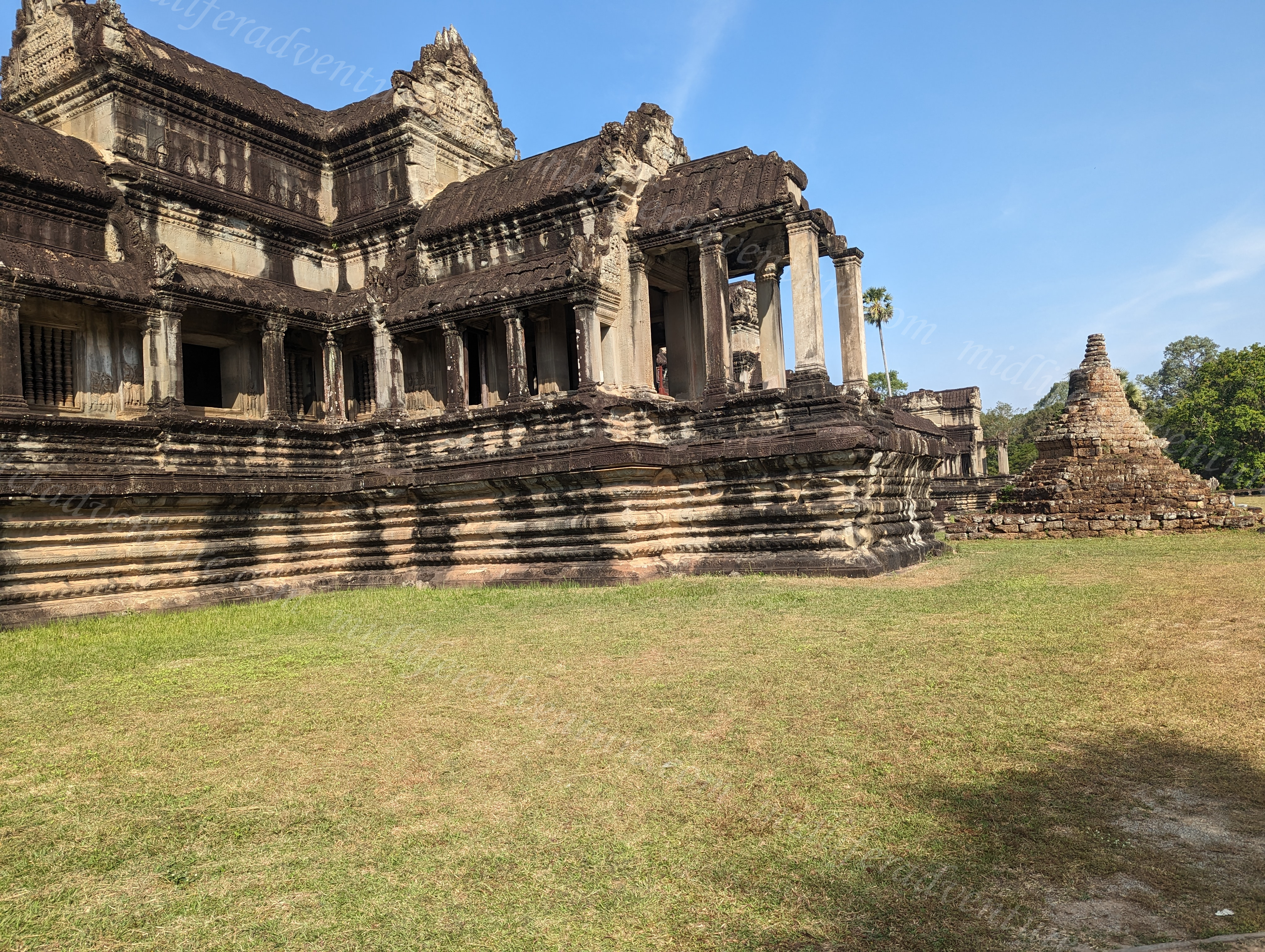
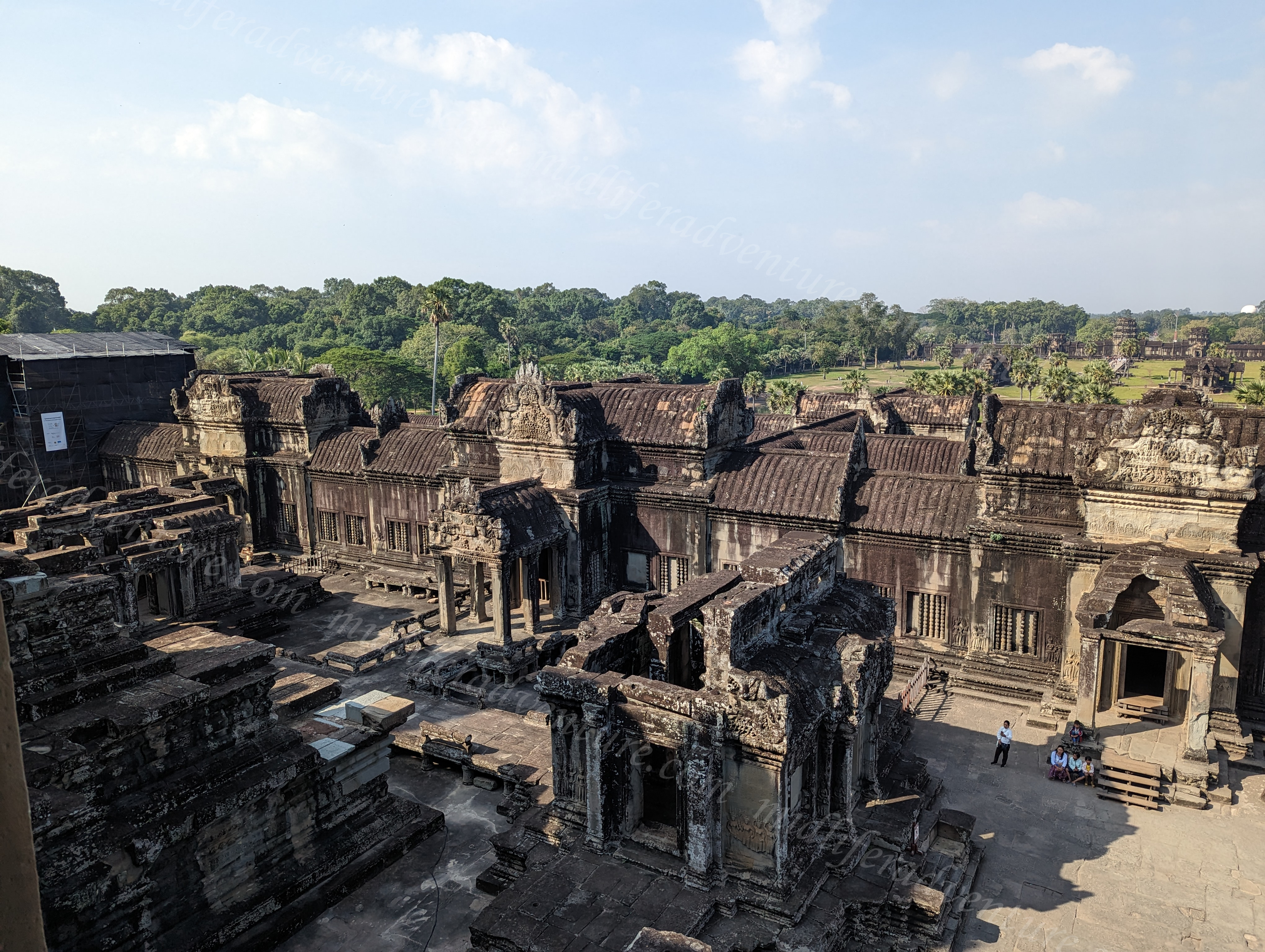
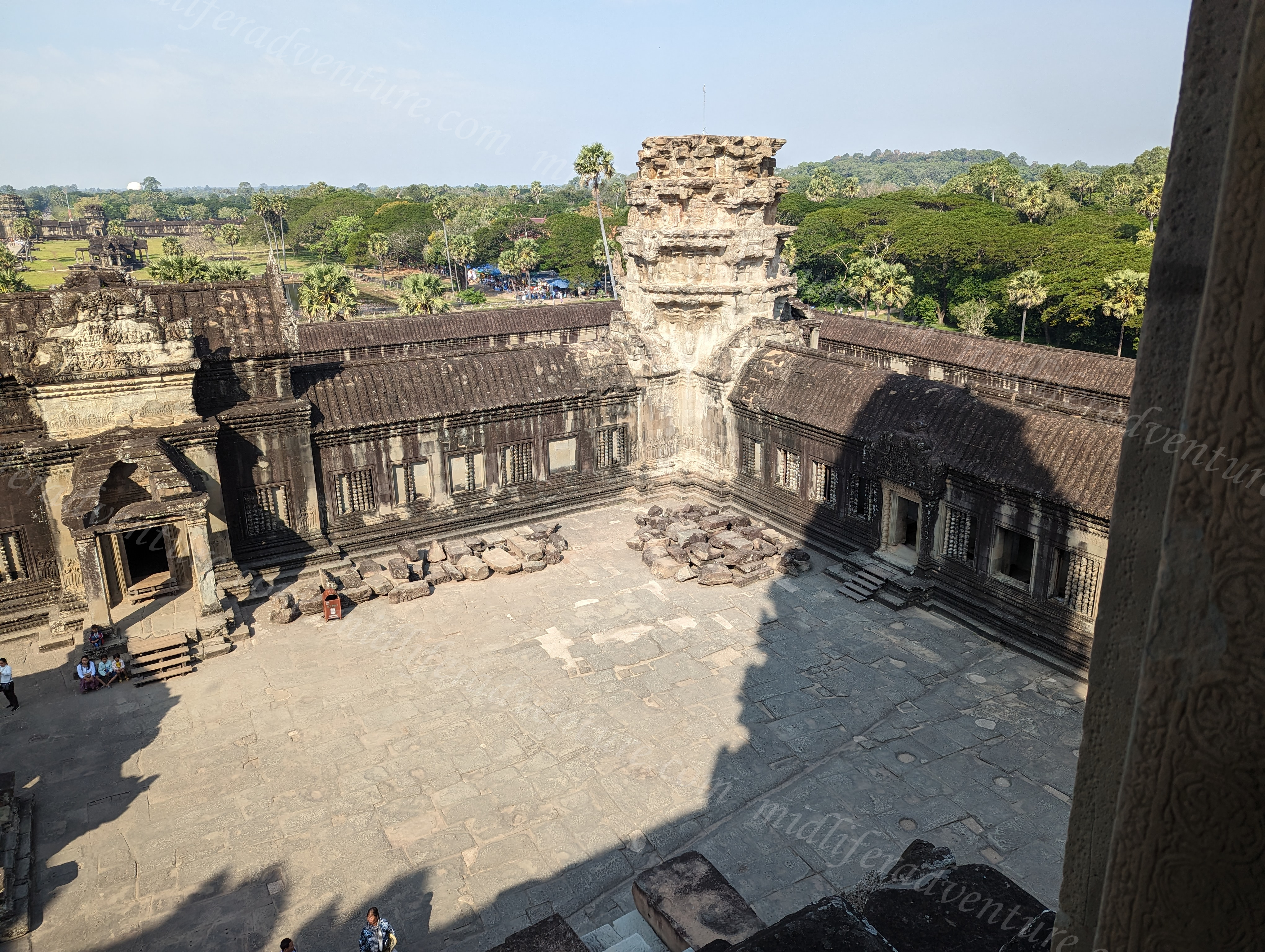
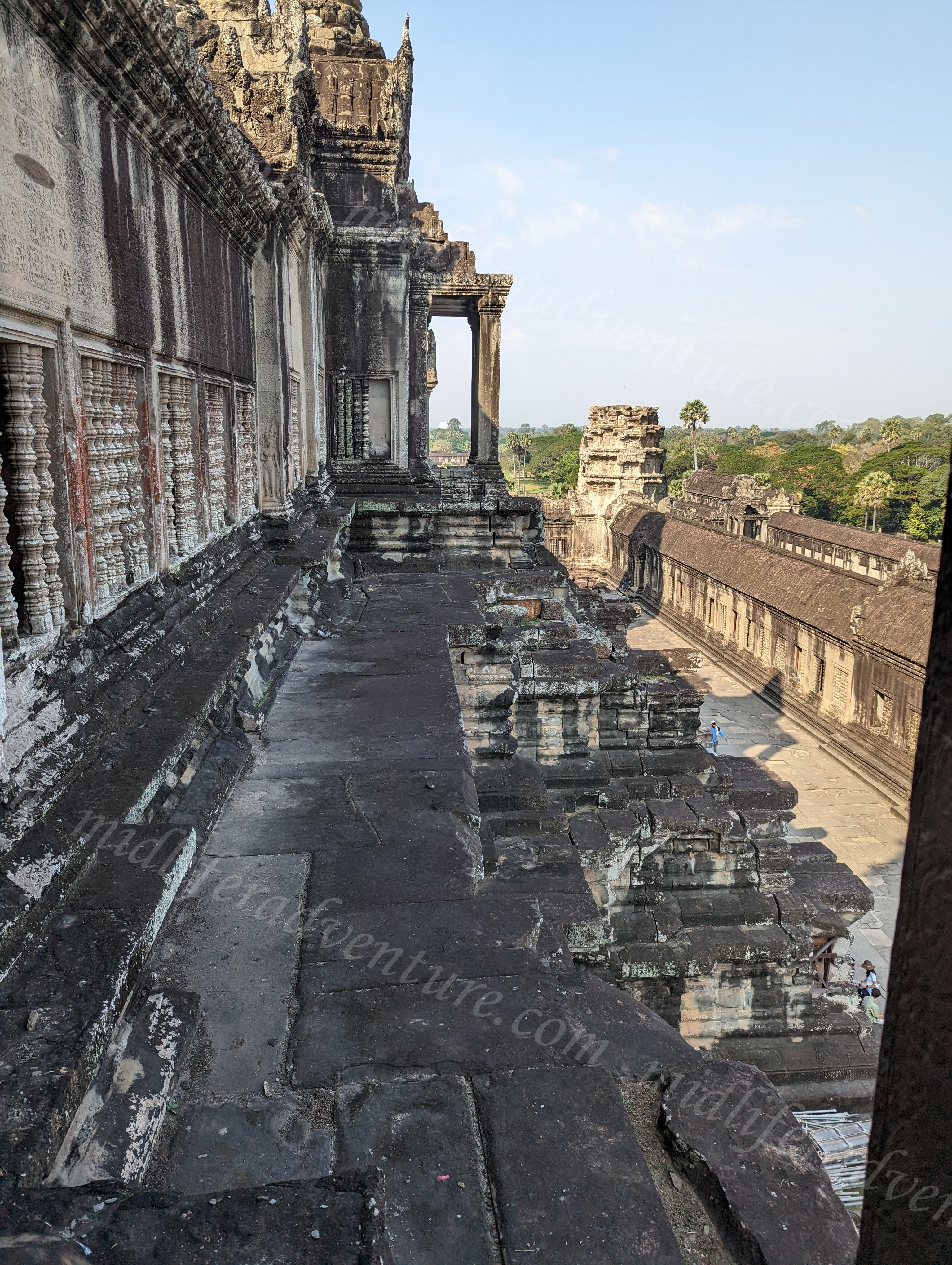
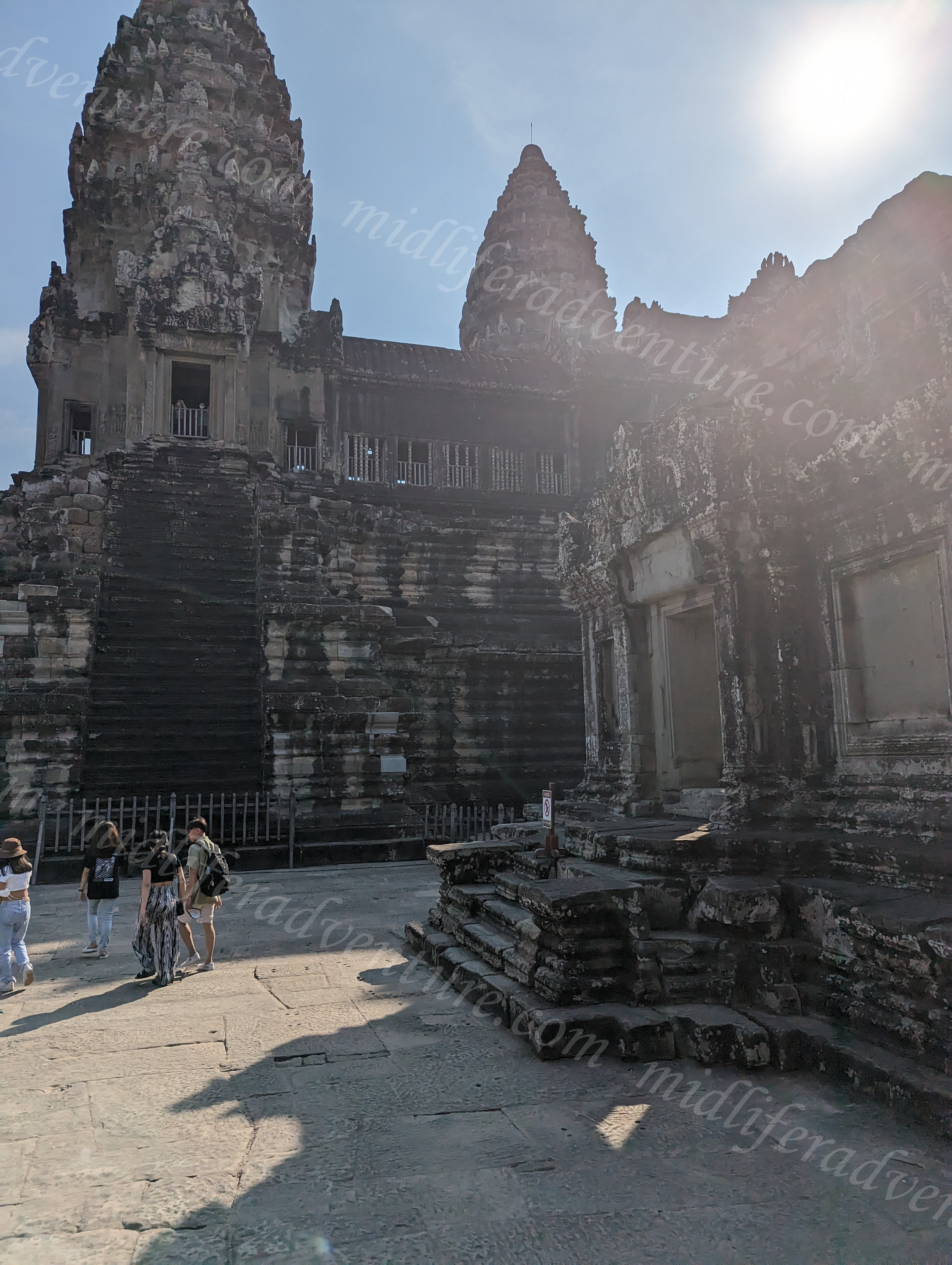
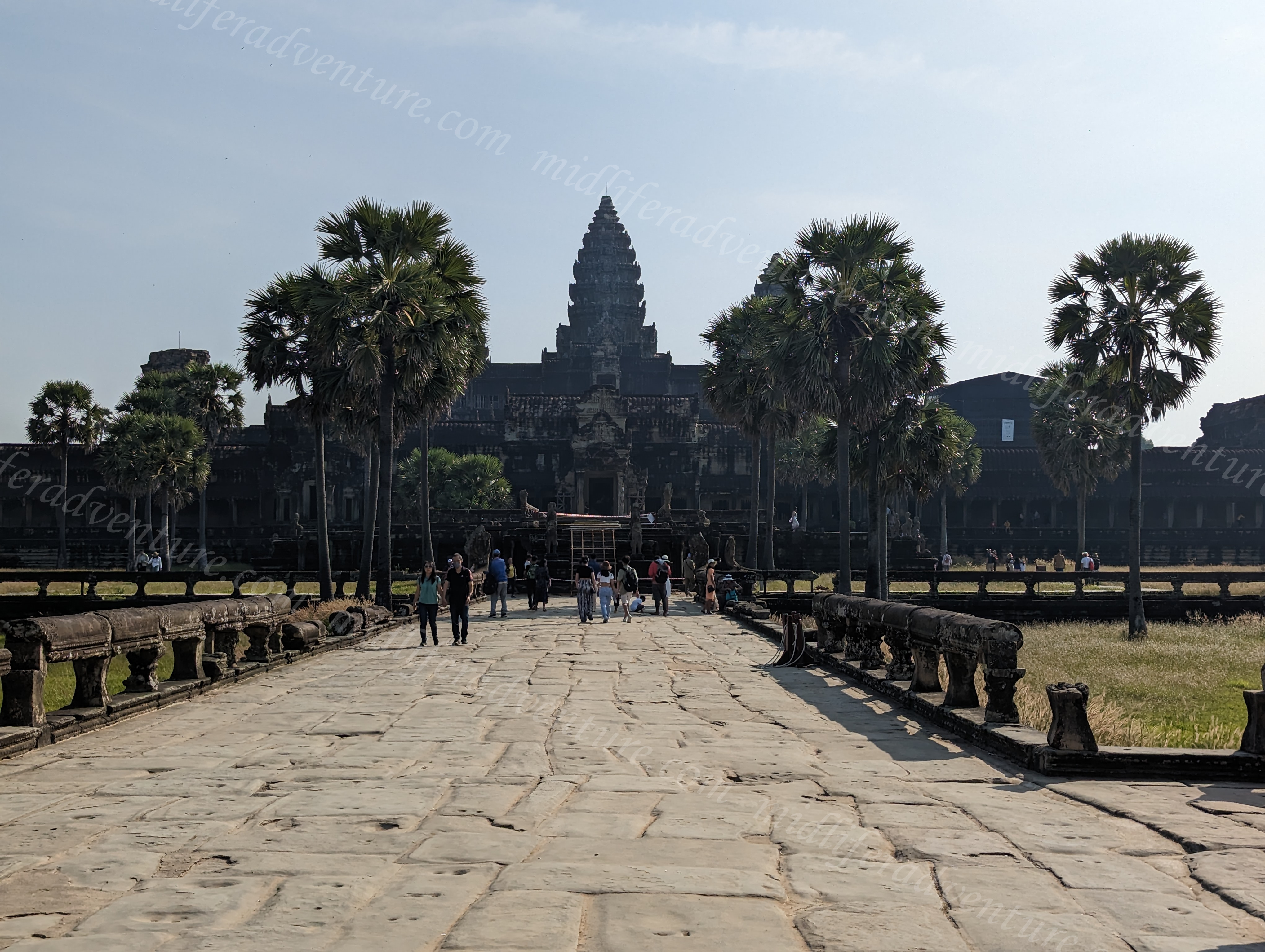
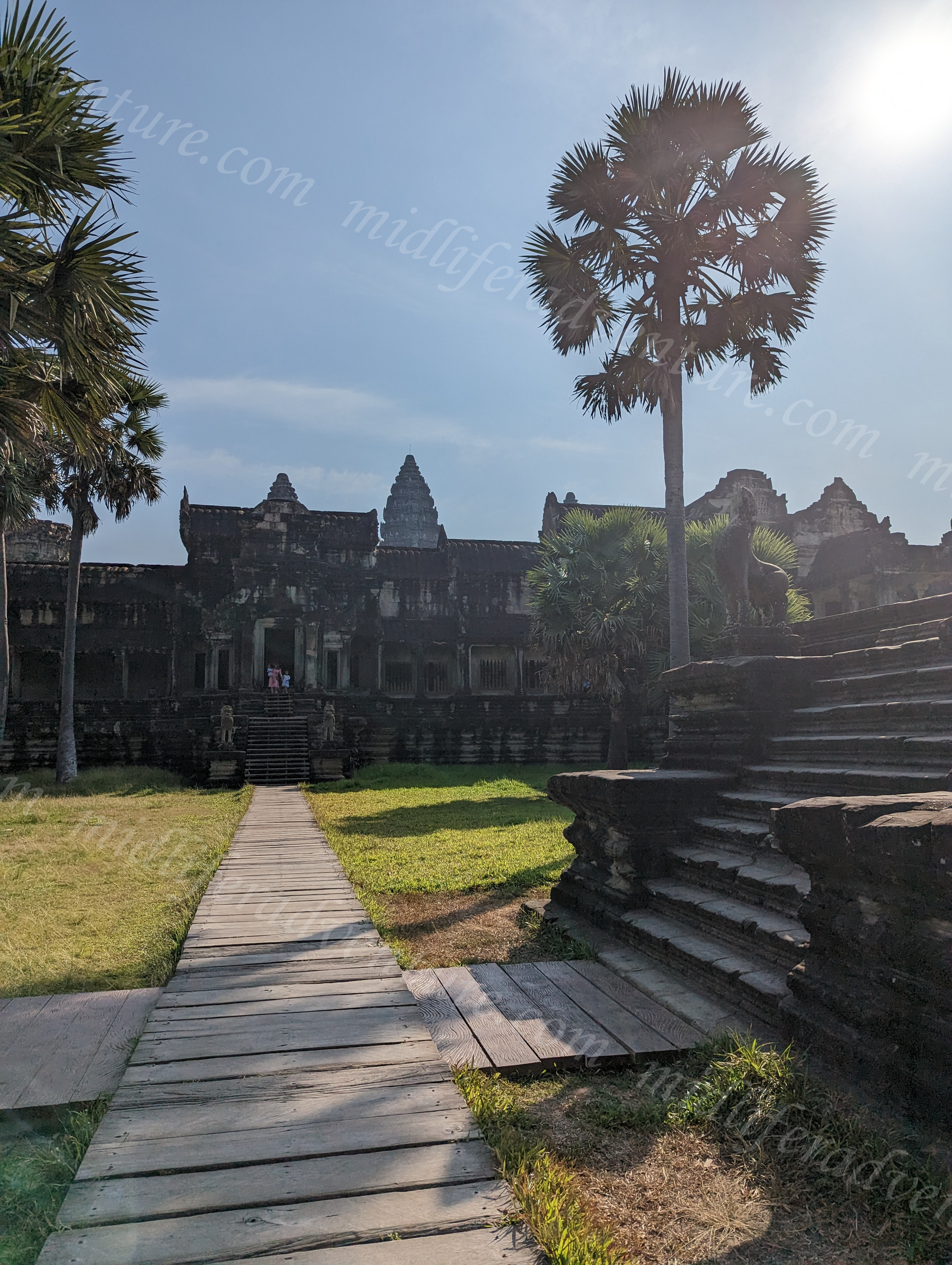
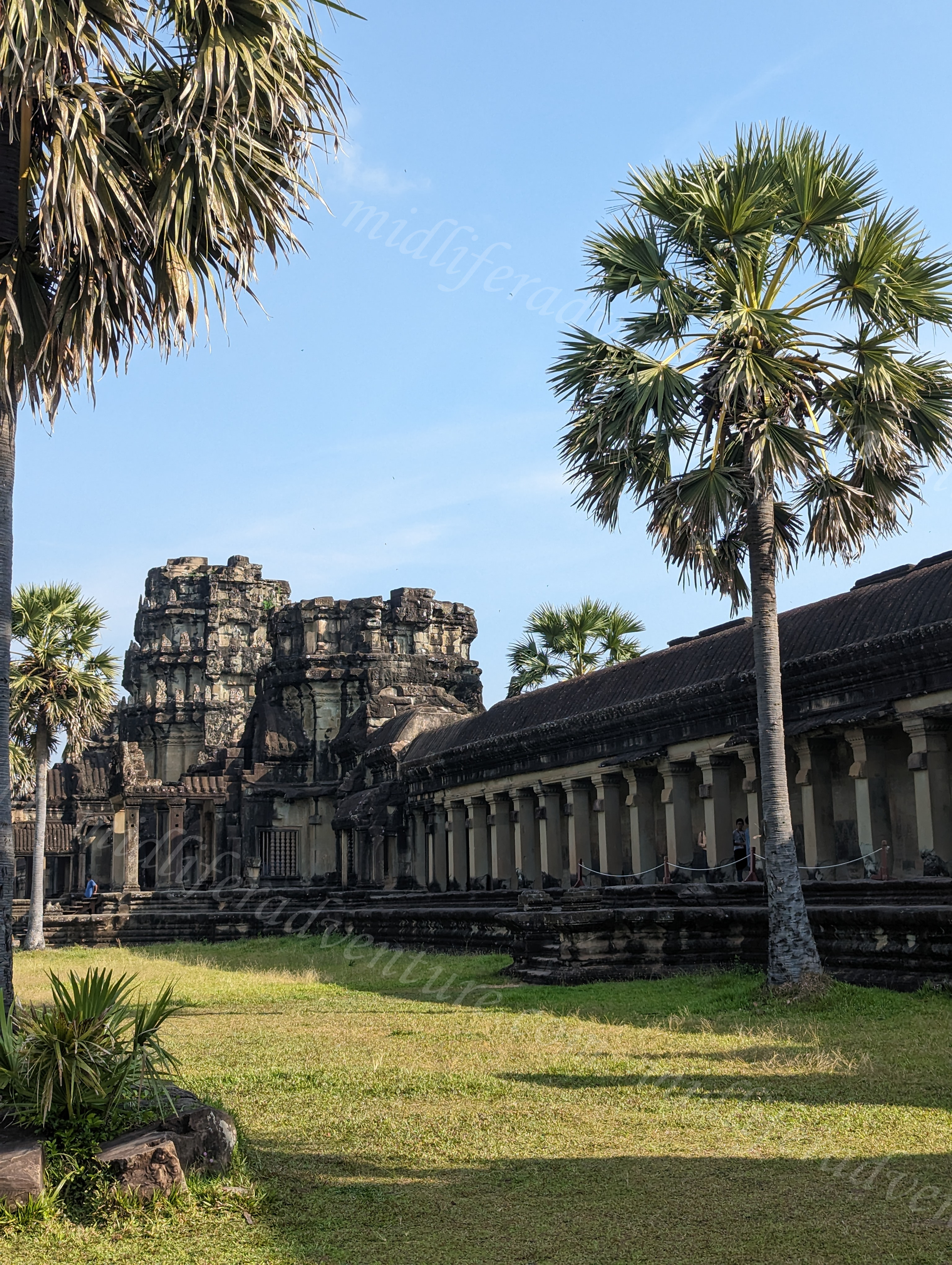
Angkor Wat is clearly the most famous of the temples and is the main attraction for the region. It was built in the 12th century to worship the Lord Vishnu (a Hindu deity) and allegedly served as the funerary temple for the bloke who commissioned it, King Suryavarman II. It is set on 402 acres and surrounded by a 5km moat which contains an outer wall of 3.6 kilometres. Once inside there are three rectangular galleries and the main building. At the centre of the temple stands the five towers (that google tells me is called a quincunx – not a word that typically lives in my vocabulary but hey lets go with it).
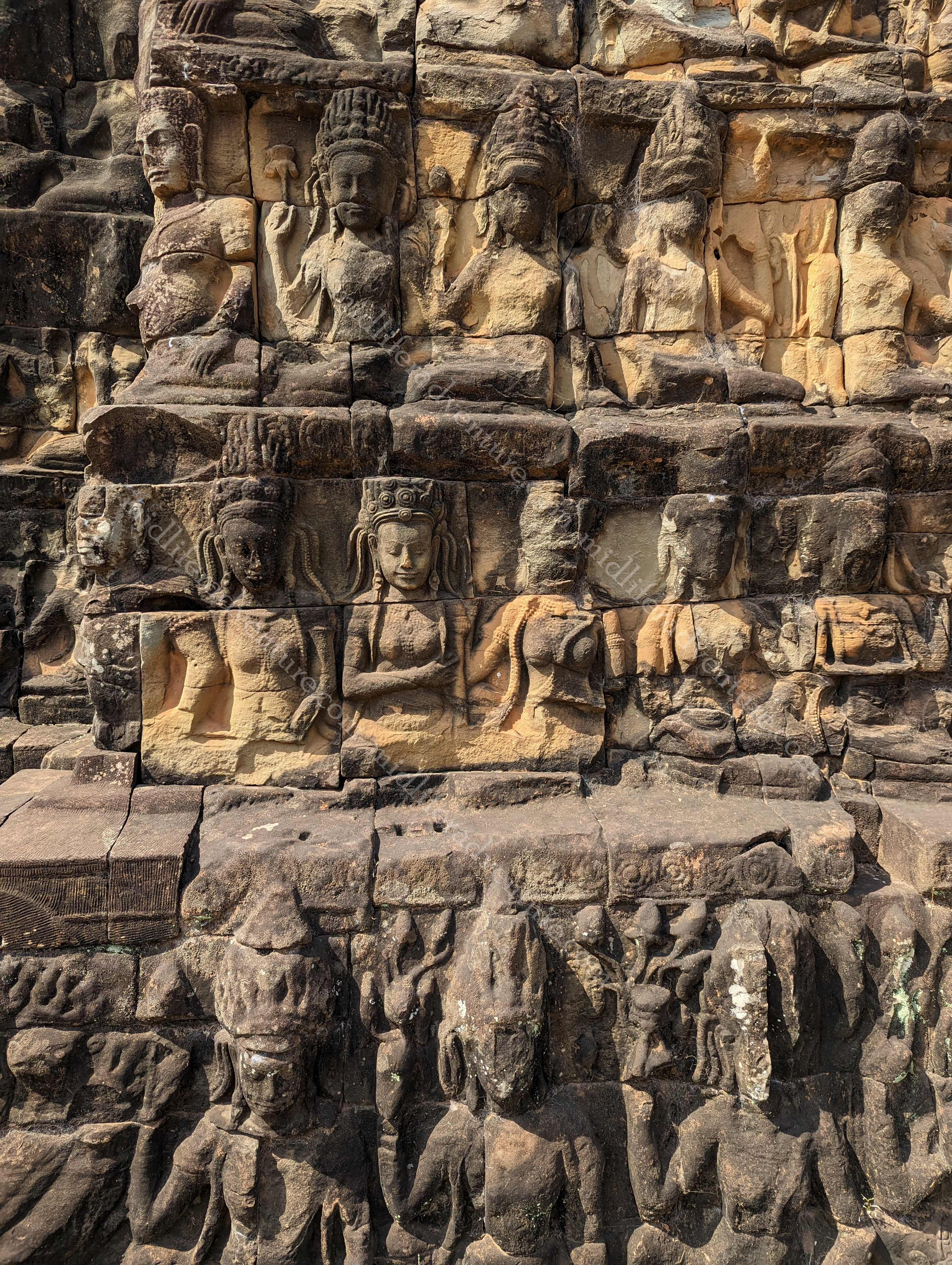
The five lotus towers are 65 metres tall and are decorated with around 2,000 stone carvings of Apsaras (celestial dancers). In all reality, virtually all of Angkor Wat’s surfaces are carved. There are kilometres of carvings that include battle scenes, fictional animals and all sorts of other things that give credence to the legend of the day.
Angkor Thom
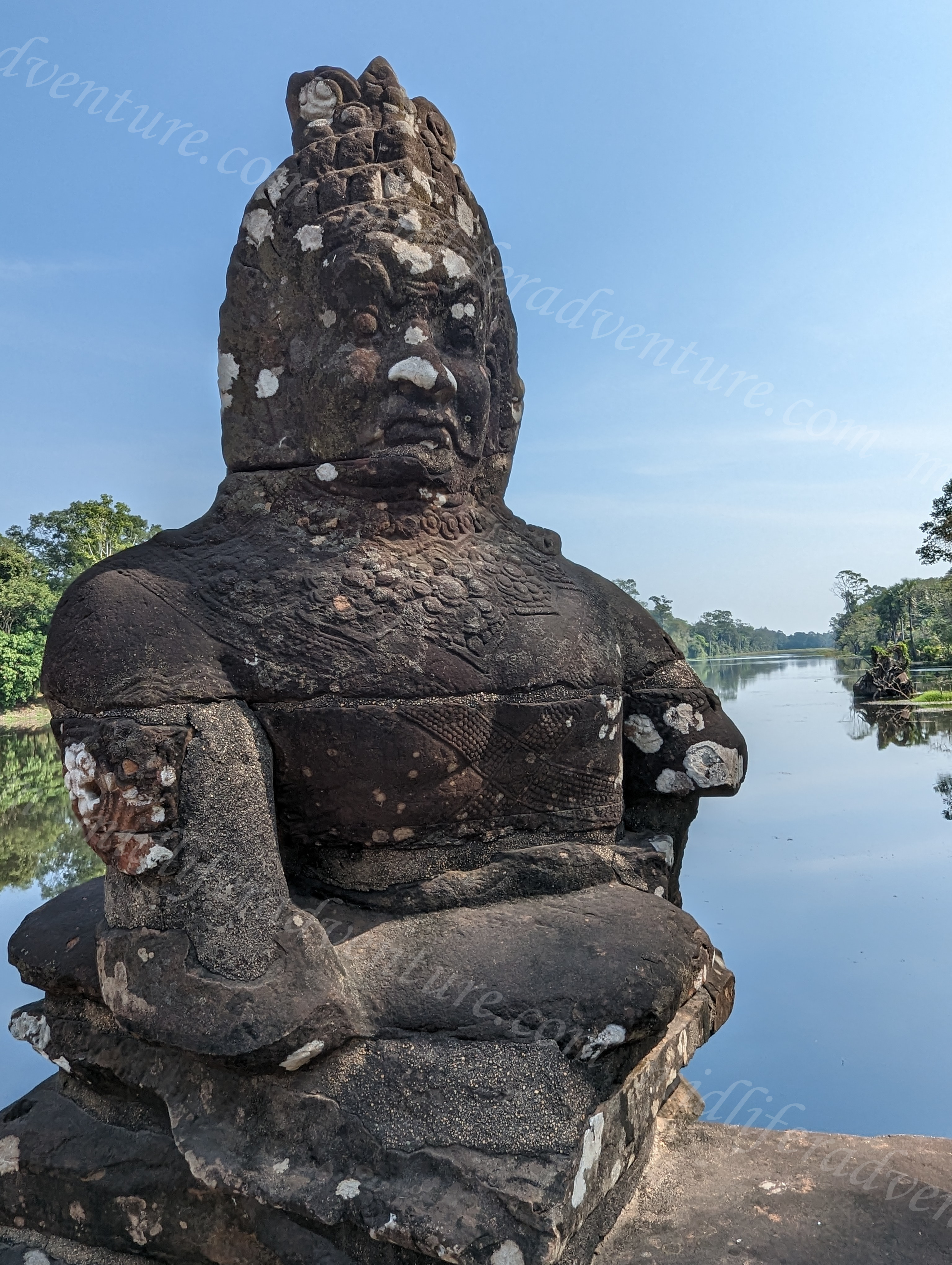
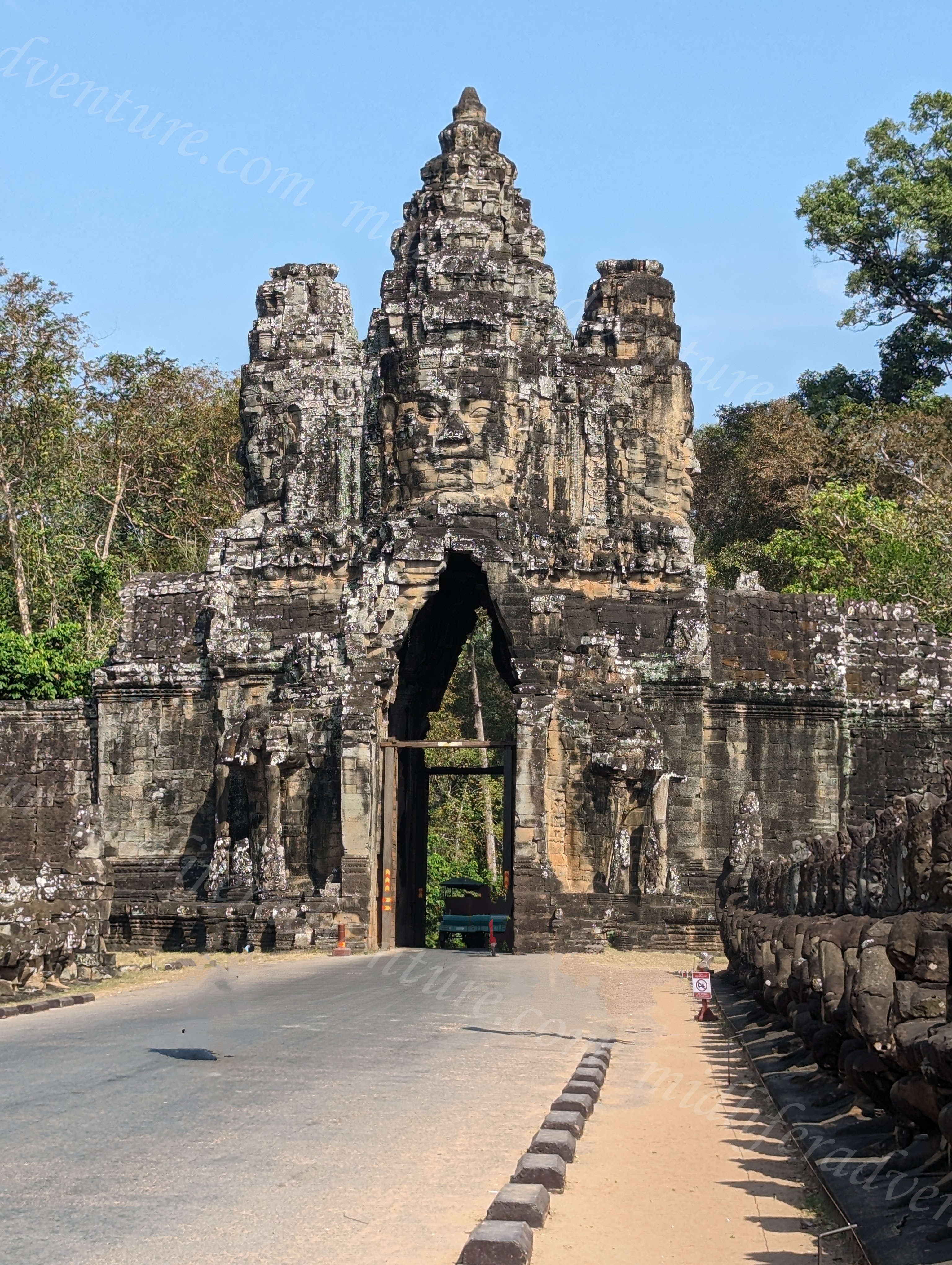
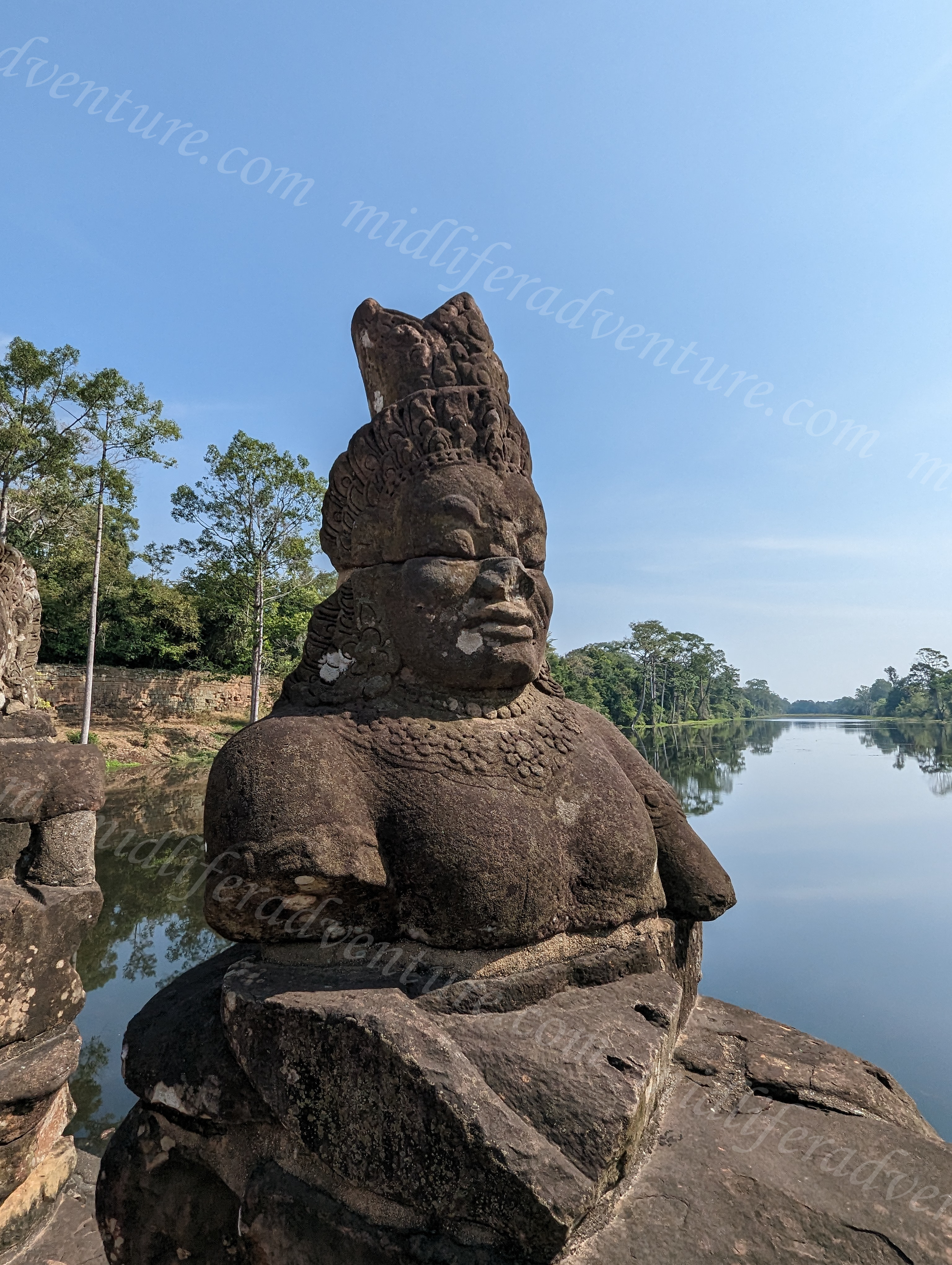
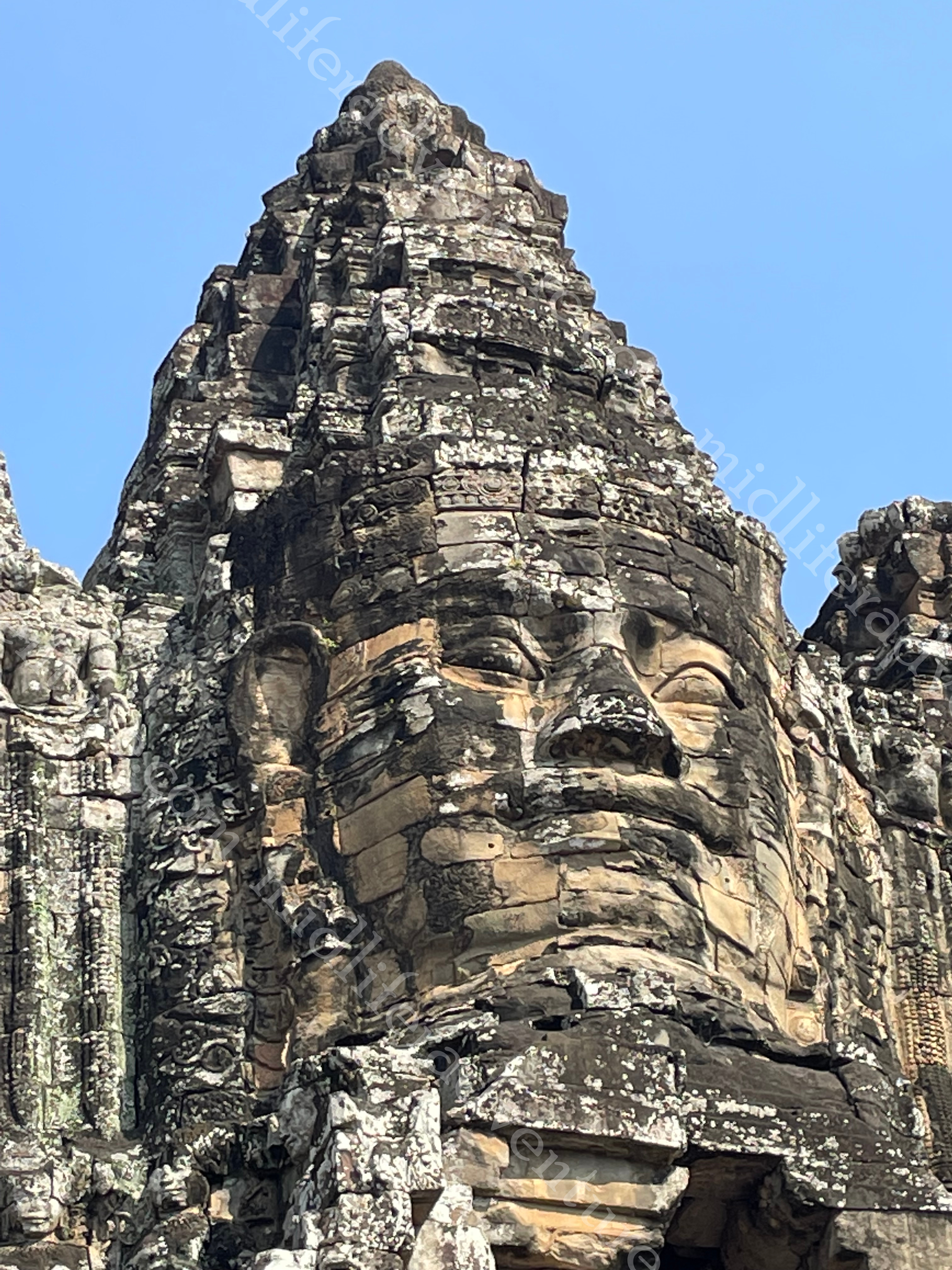
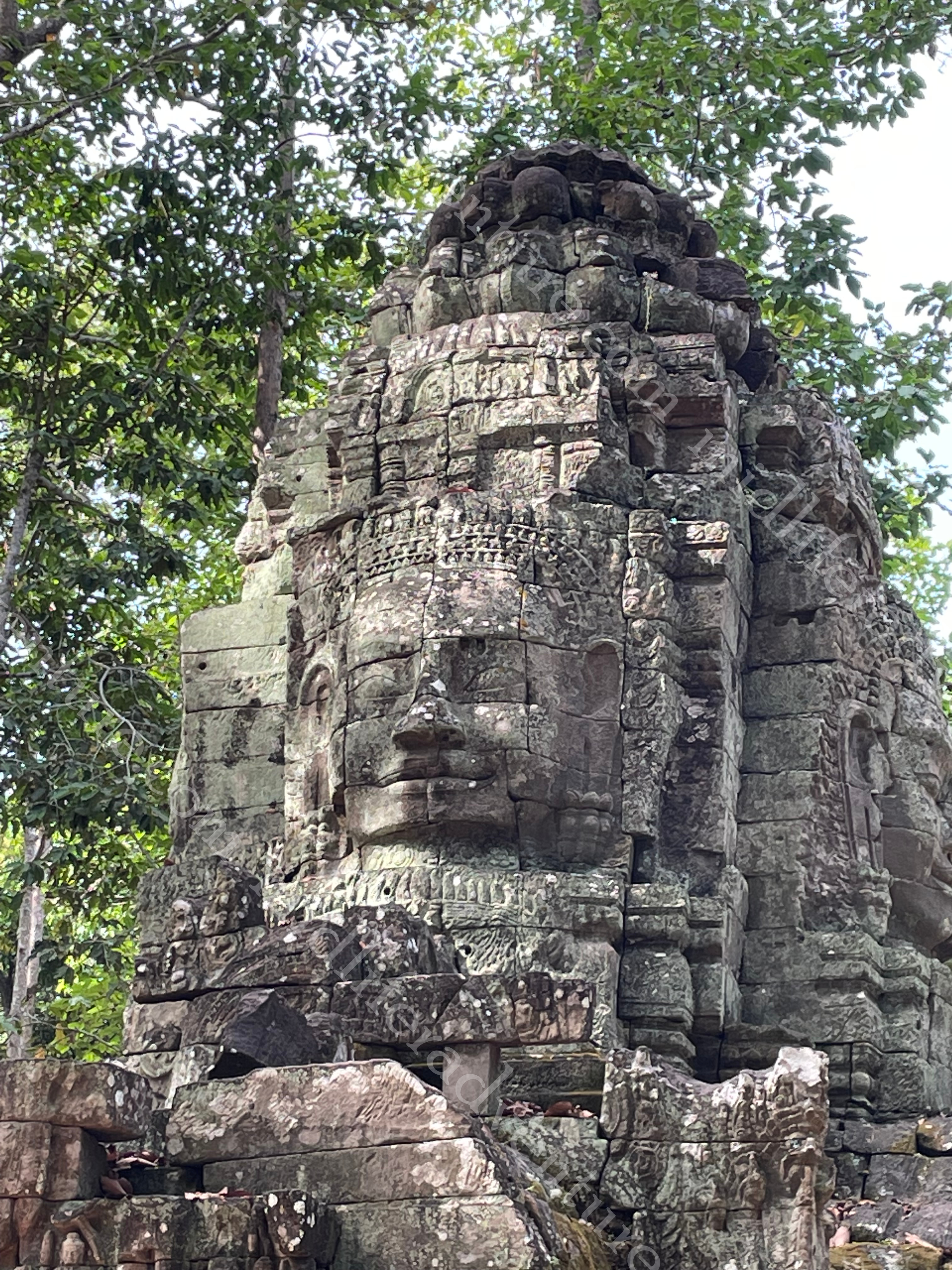
Once you leave Angkor Wat you (typically) head across for a bit to Angkor Thom or Big Angkor. It is the largest site in the Angkor Archaeological Park and contains a number of smaller temples and archaeological sites. Our first stop was the south gate (one of five 20-metre-tall gates that surround Angkor Thom). The gates have intricate stone carvings of elephants and the 4-faced Bodhisattva Avalokiteshvara, while the bridges leading up to the gates are lined with carvings of devas (gods) on the left and asuras (demons) on the right. Both the gods and the demons appear to be playing tug of war on a snake (Naga). You tend to come through the south gate as the vandals have stolen the heads off many of the statues on the other gates so they are considerably less impressive.
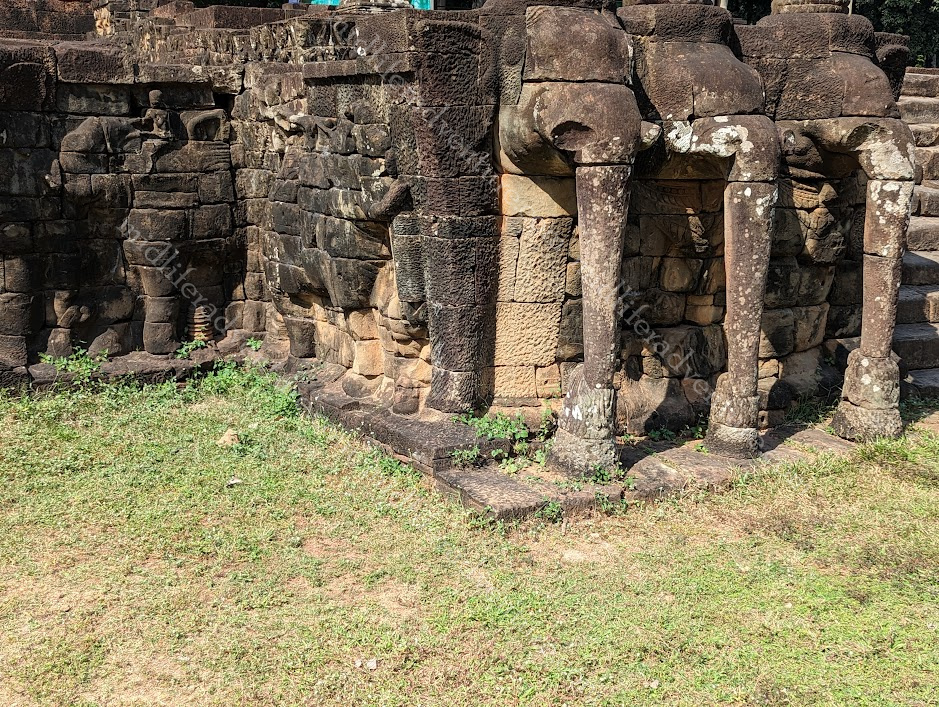
There are 8 metre high walls and a moat surrounding Angkor Thom. The faces on the entrance gates were added later than the original gates and they reflect the faces that can be found on the Bayon Temple (also contained within the walls of Angkor Thom). Within Angkor Thom is a range of smaller temples that include Baphuon, Phimeanakas, Prasat Suor Prat and many others however these have and are falling into great disrepair. Notably you will see the terrace of the Elephants and the terrace of the leper king that are prominent and are both currently undergoing considerable preservation and restoration works.
Bayon Temple
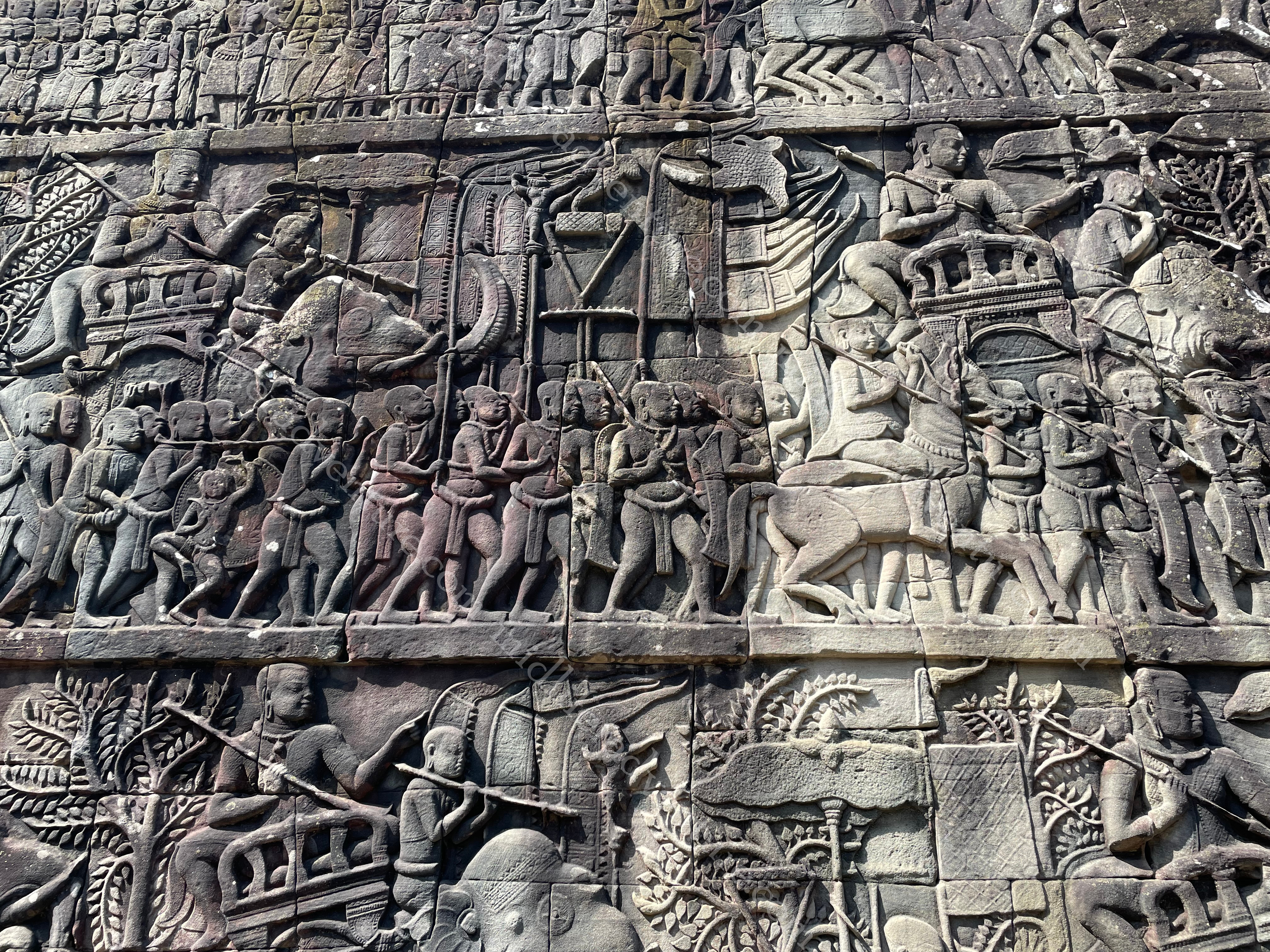
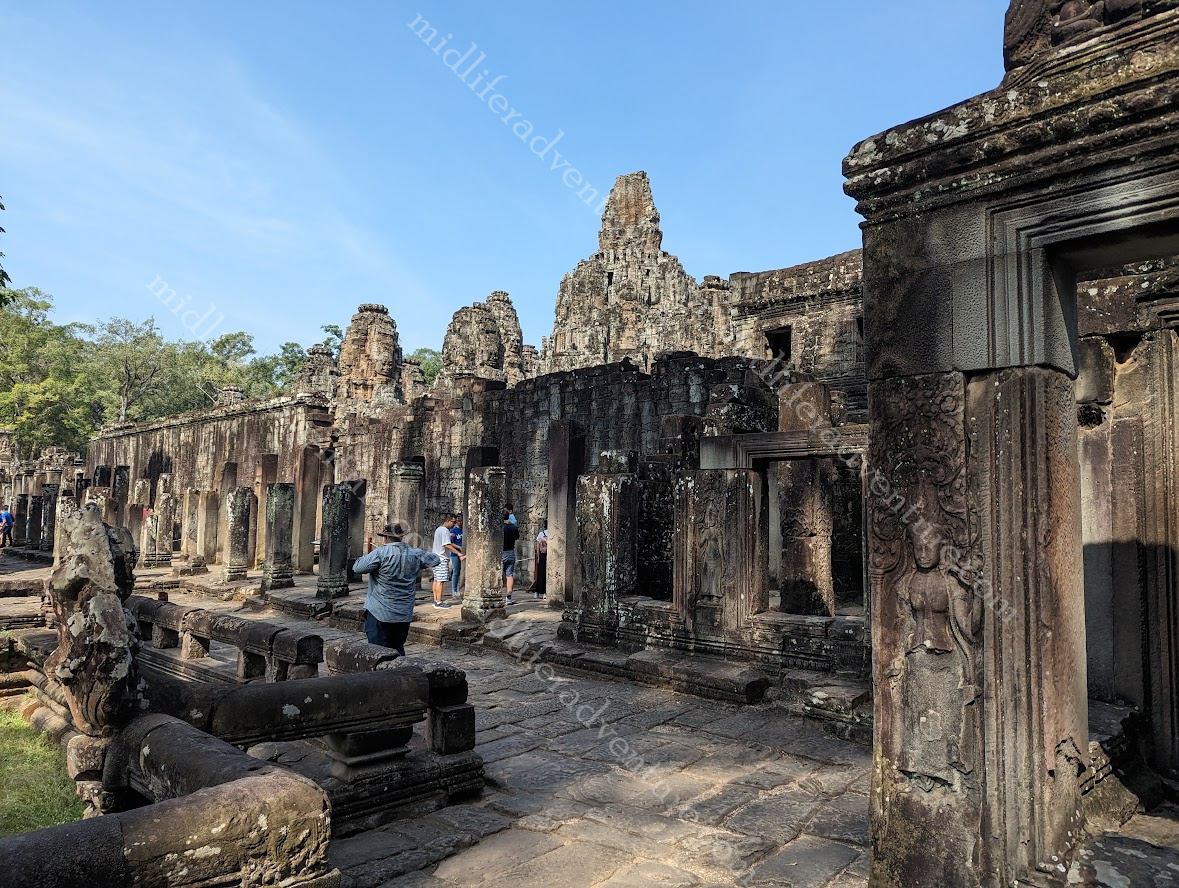
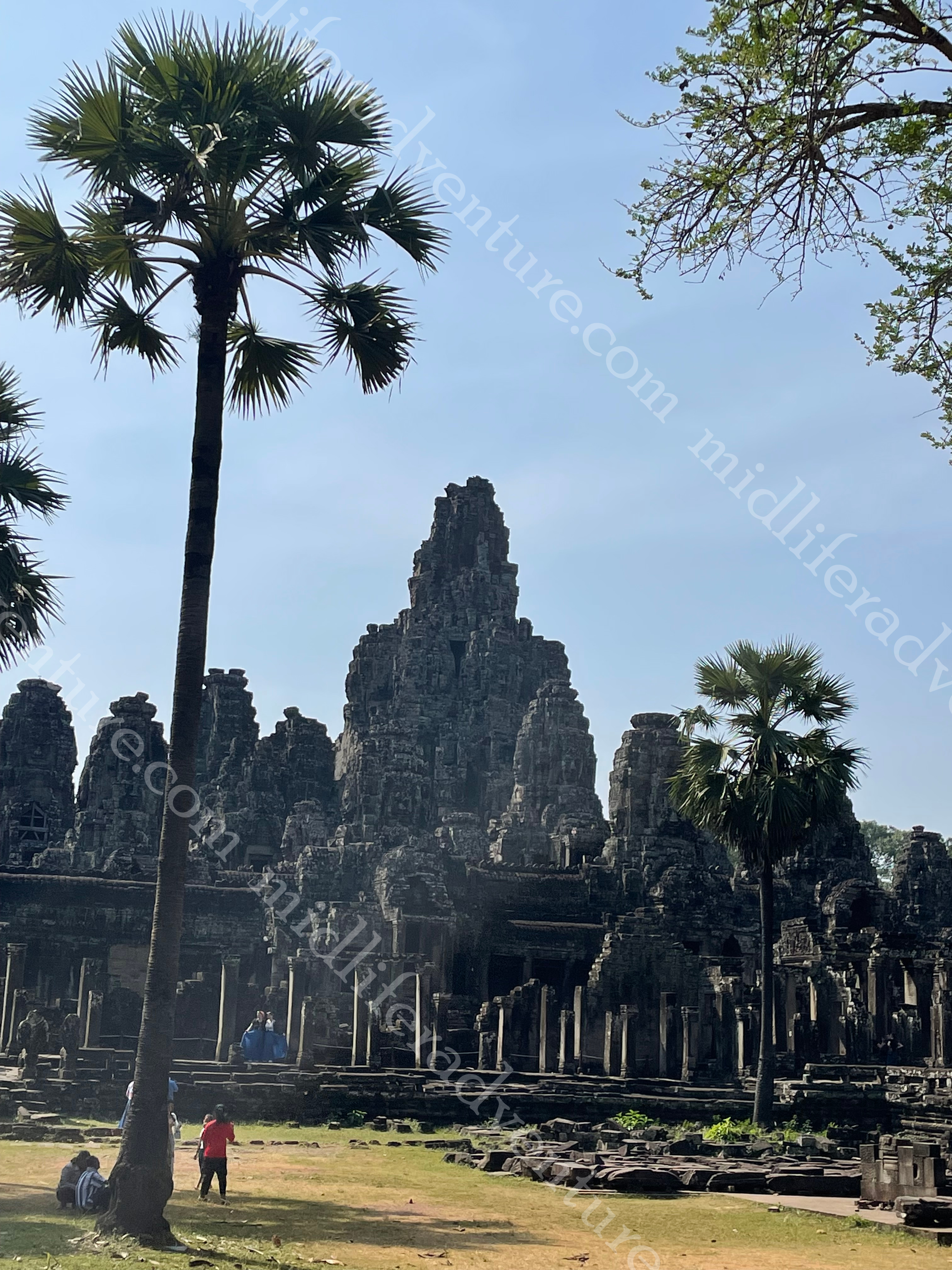
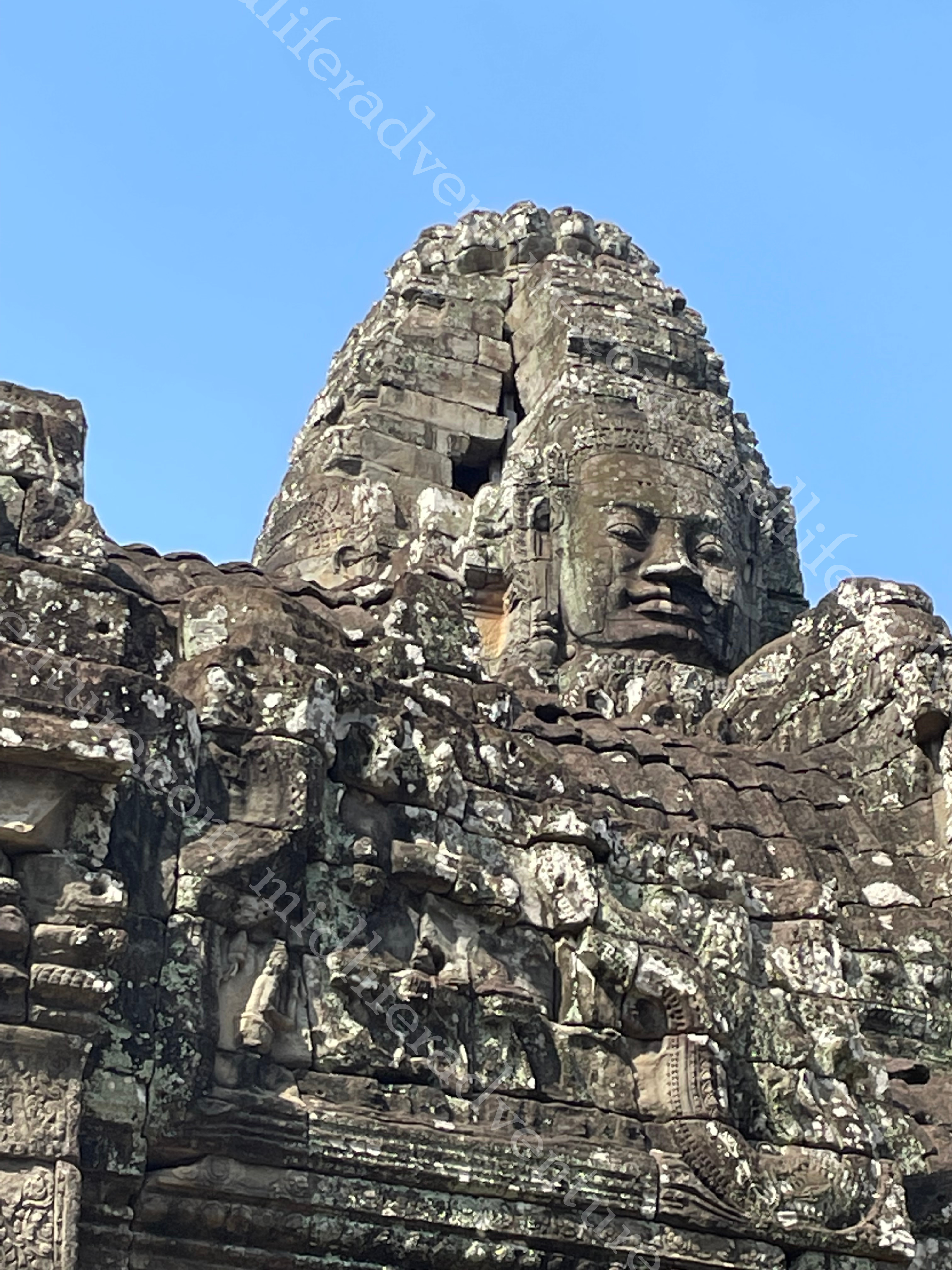
The Bayon Temple is probably the second most recognisable after Angkor Watt as it features approximately 50 stone towers with intricately carved faces. The blurb tells me that the faces are the 4 faces of Bodhisattva Avalokiteshvara (not really sure what that means but hey, I can go with that too). Bayon is in the midst of Angkor Thom and it too was built in the late 12th century. Each of the stone carvings of faces are 4 metres high and oriented toward the 4 cardinal points. It is surrounded by long walls that have some seriously intricate carvings of battlefields, markets, and religious rituals.
Ta Prohm
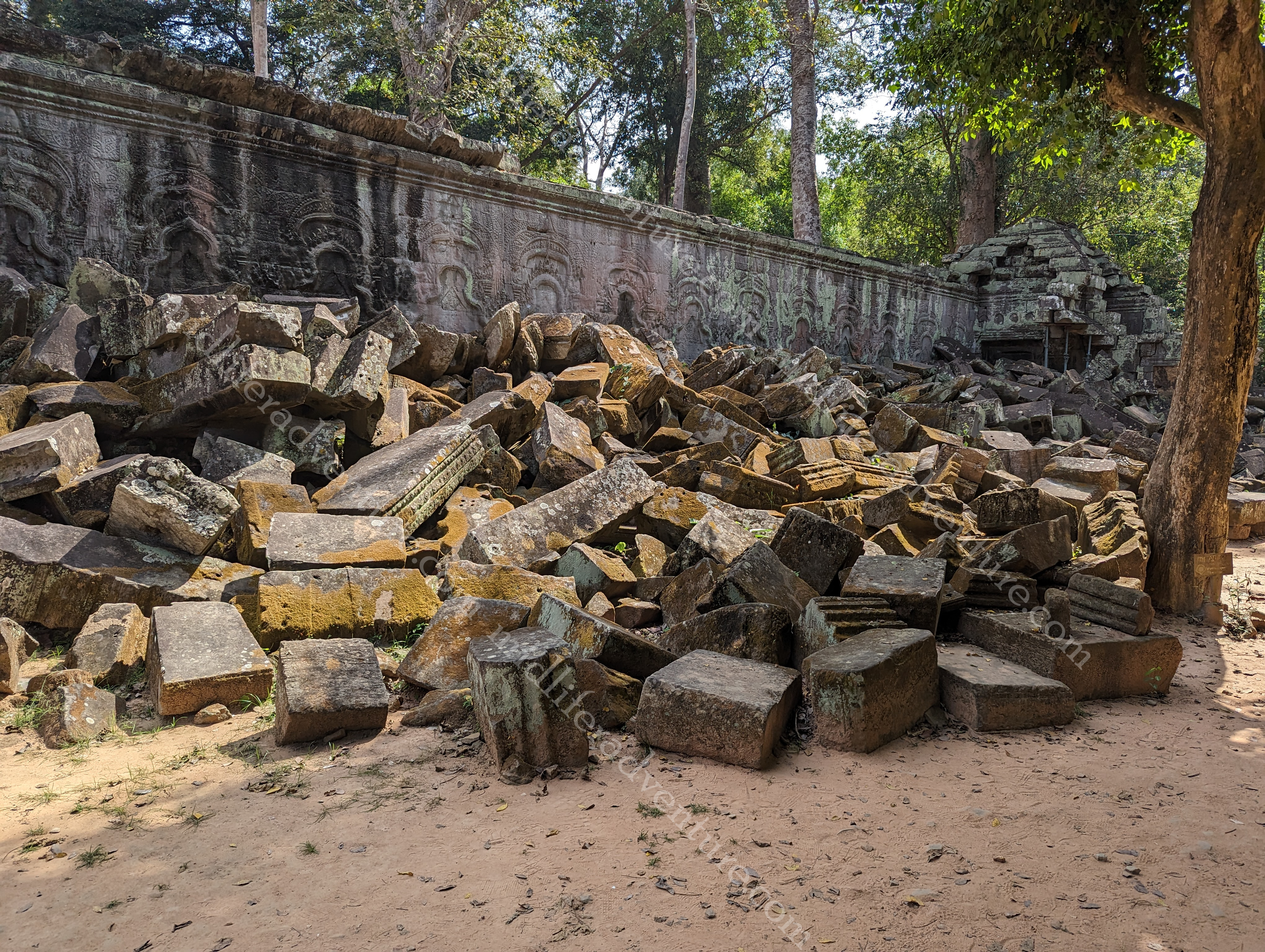
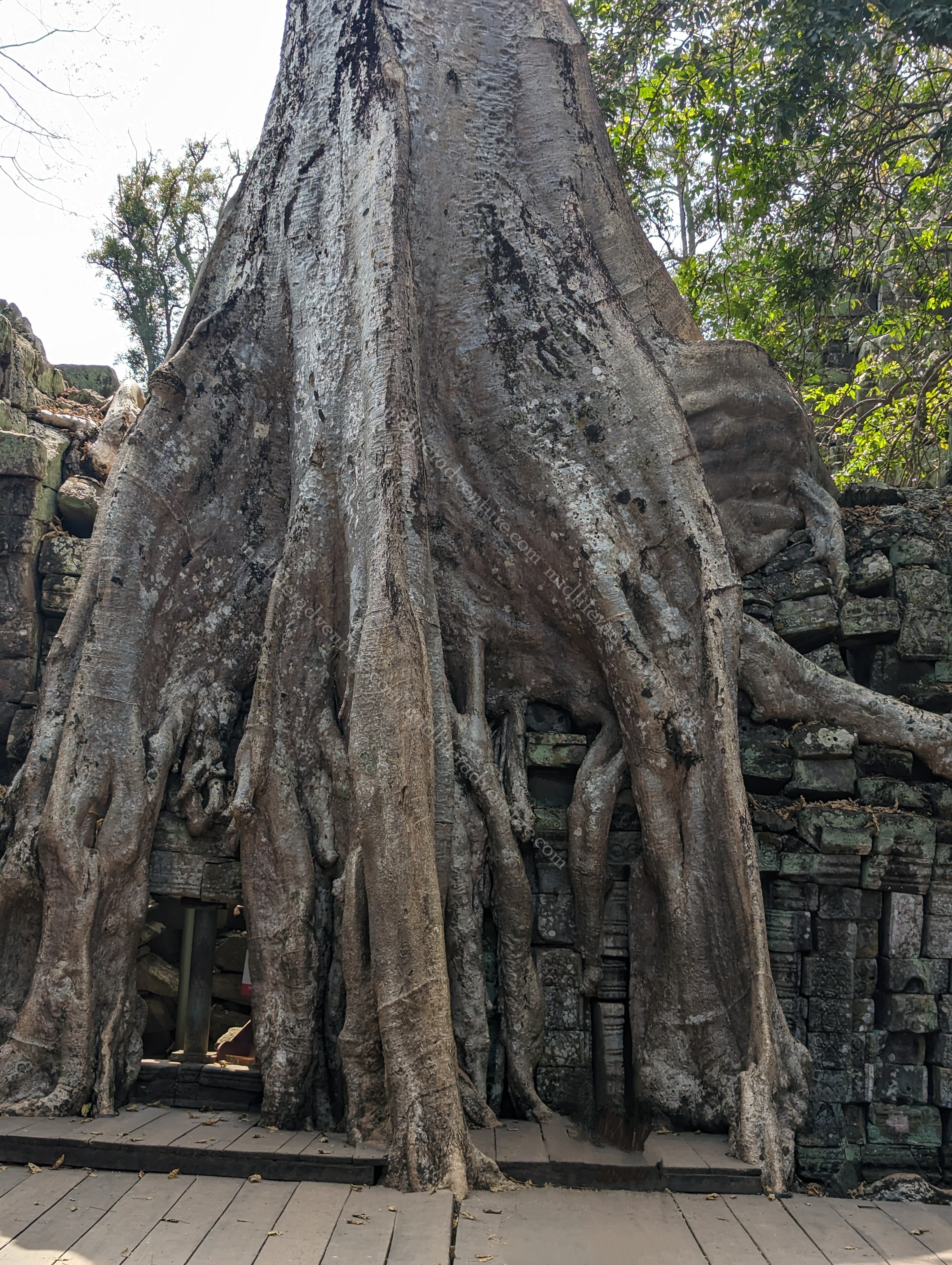
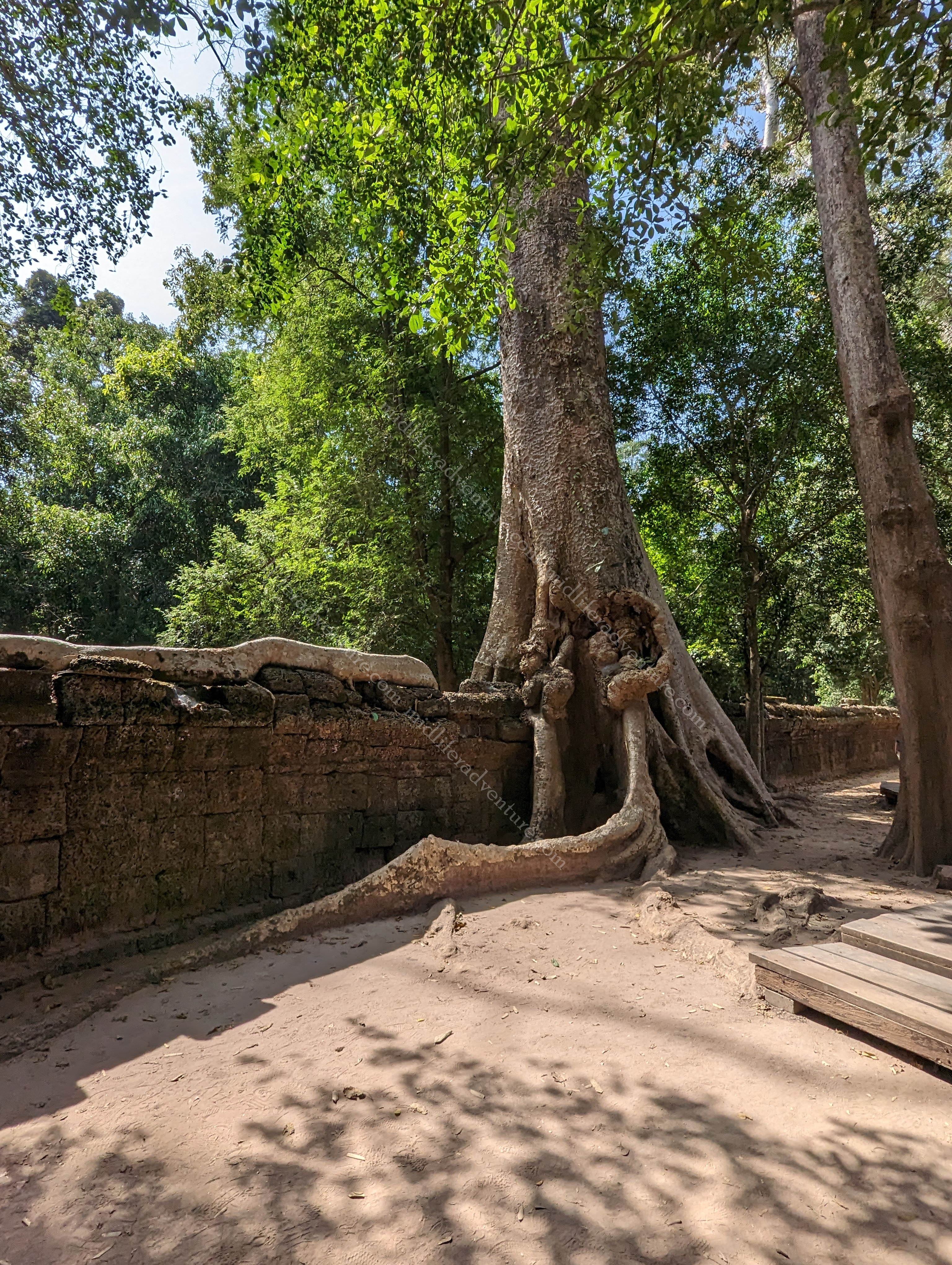
Ta Prohm is the famous a Tomb Raider temple. Very large trees with impressive roots have grown out of, through and amid the various walls and roofs of the temple.
The other temples
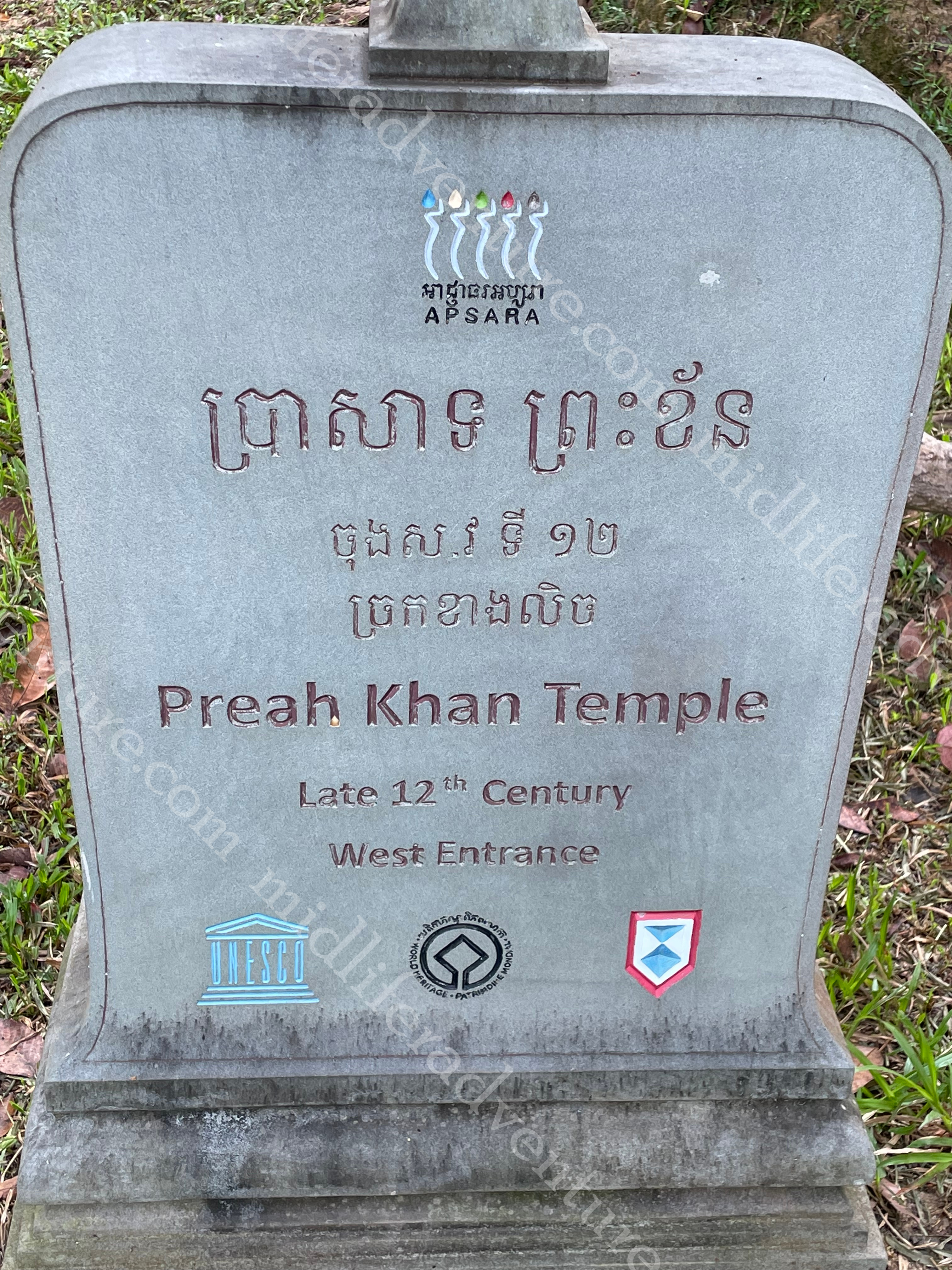
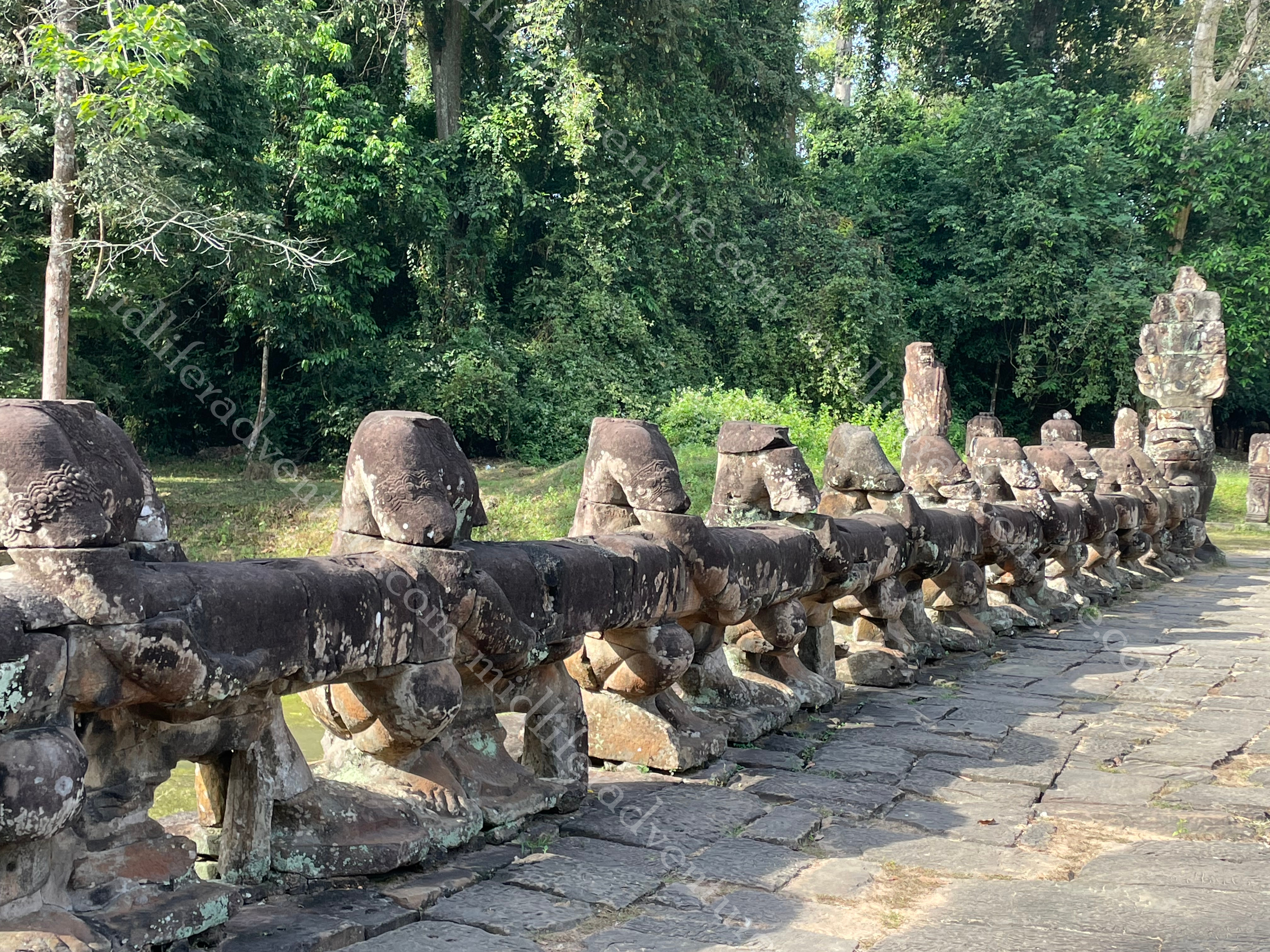
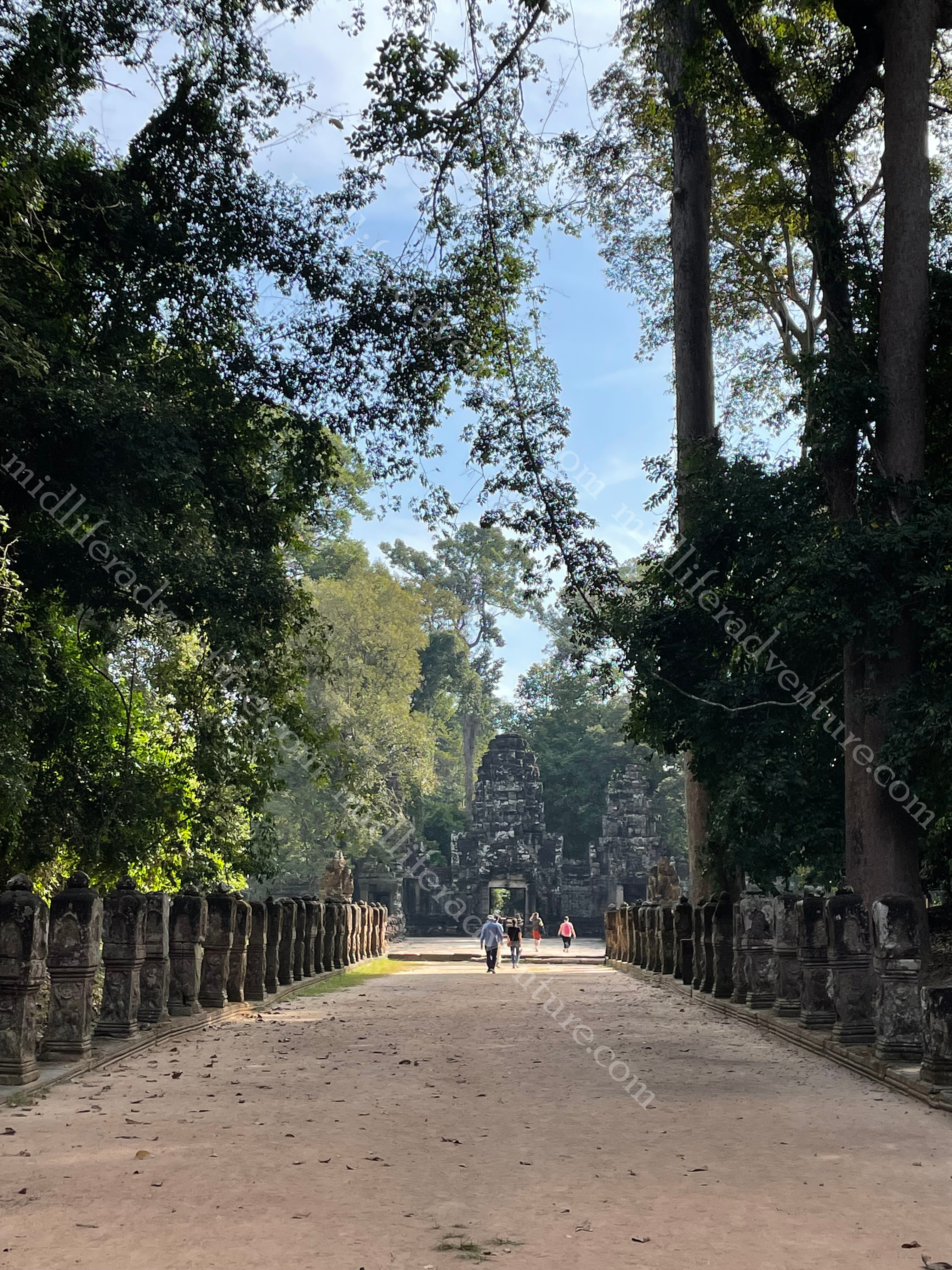
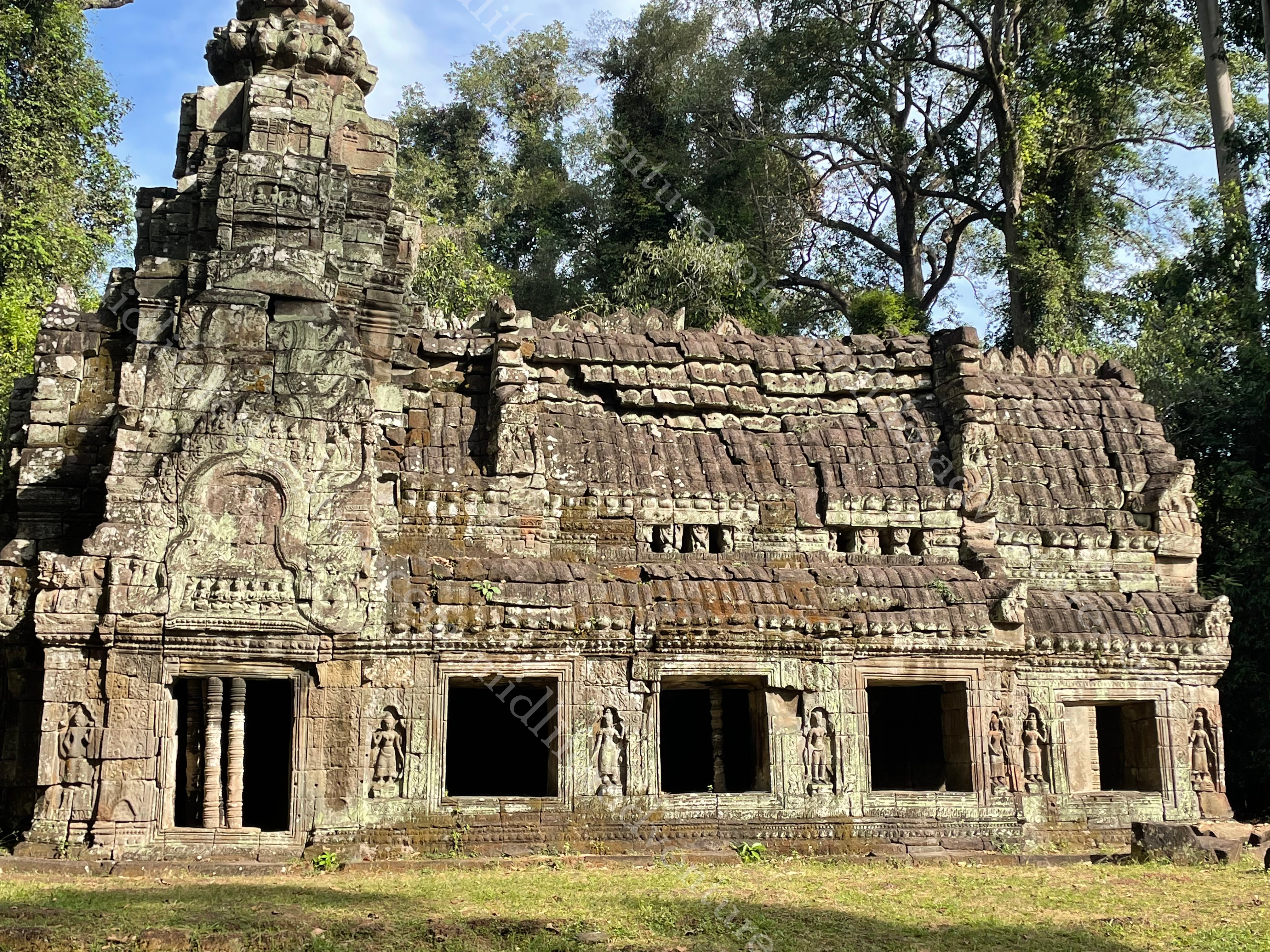
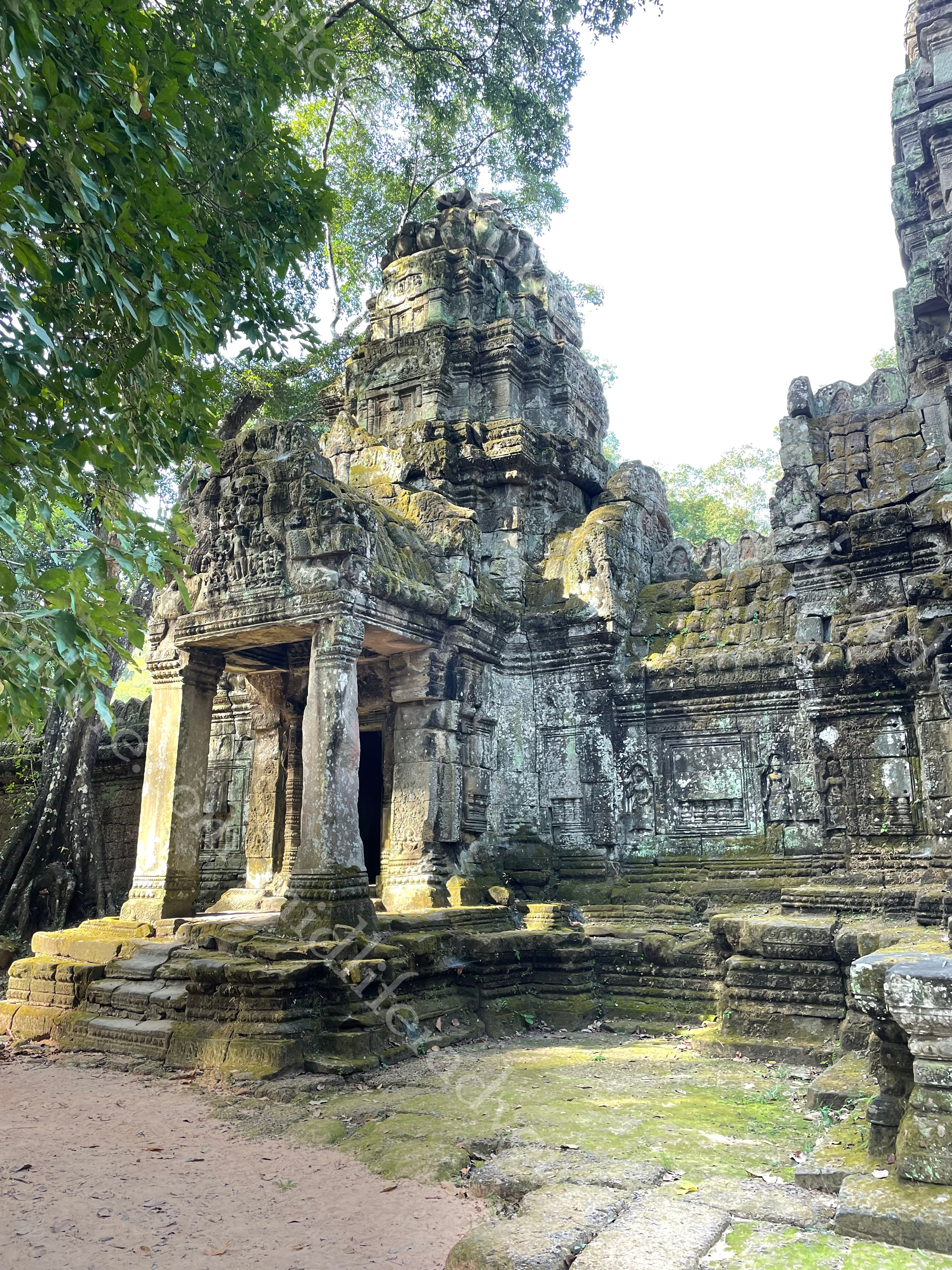
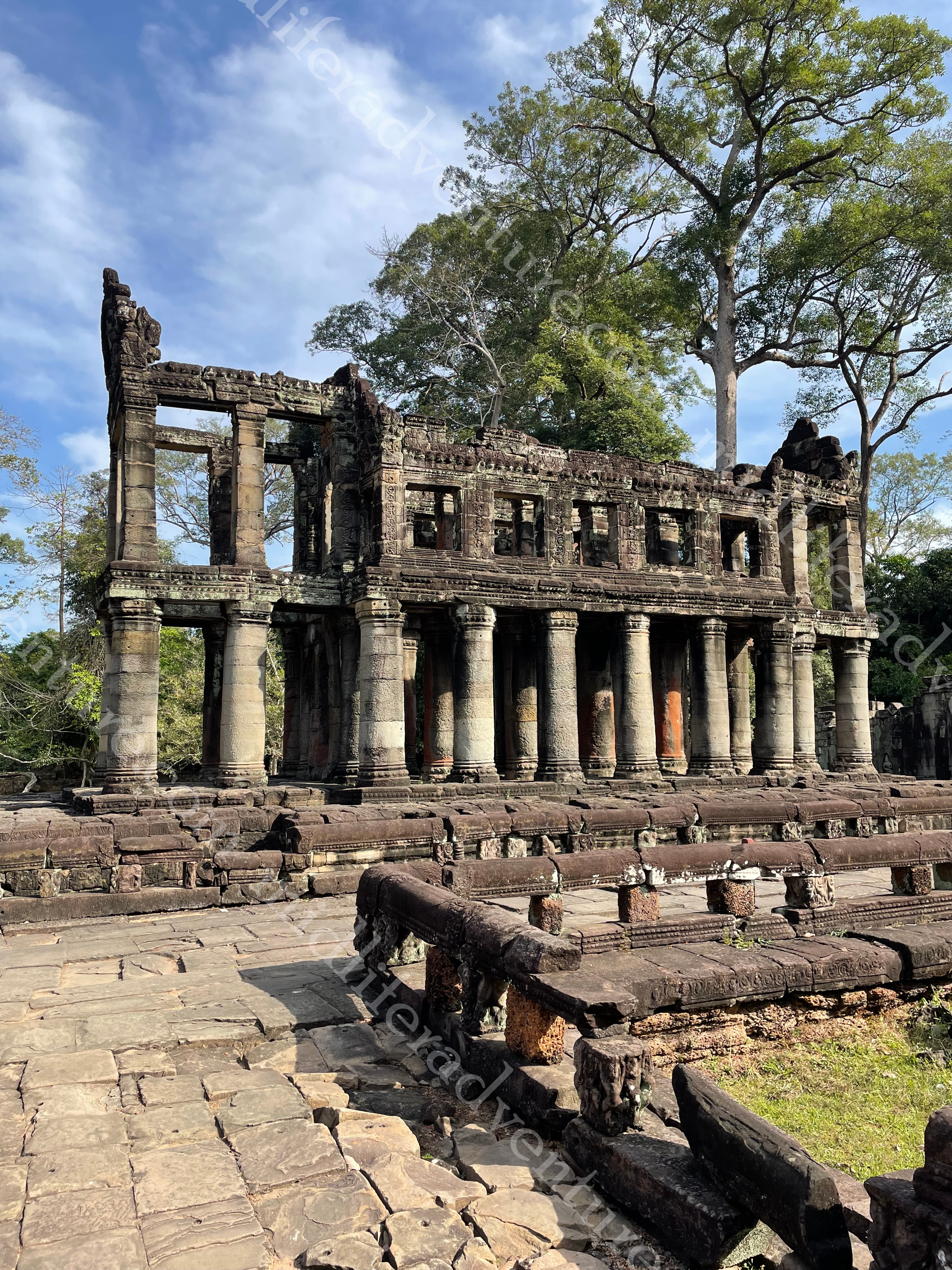
Needless to say, there are 50 of them. They are too numerous to mention and they are in varying states of disrepair but here are a few of the more common ones to look out for. The Preah Khan (Sacred Sword) temple complex is notable as it is surrounded by a moat and the roads are lined with sculptures on the way to the temple. The Roluos group of temples is about 13 km east of Siem Reap and was the original head of the Khmer empire from the 9th century before being taken over by the main ones in the 12th century. Thought to be the first capital the group of temples include Bakong (largest temple in the Roluos Group), Lolei, Preah Ko (temple of the cow) and the smaller Prasat Prei Monti.
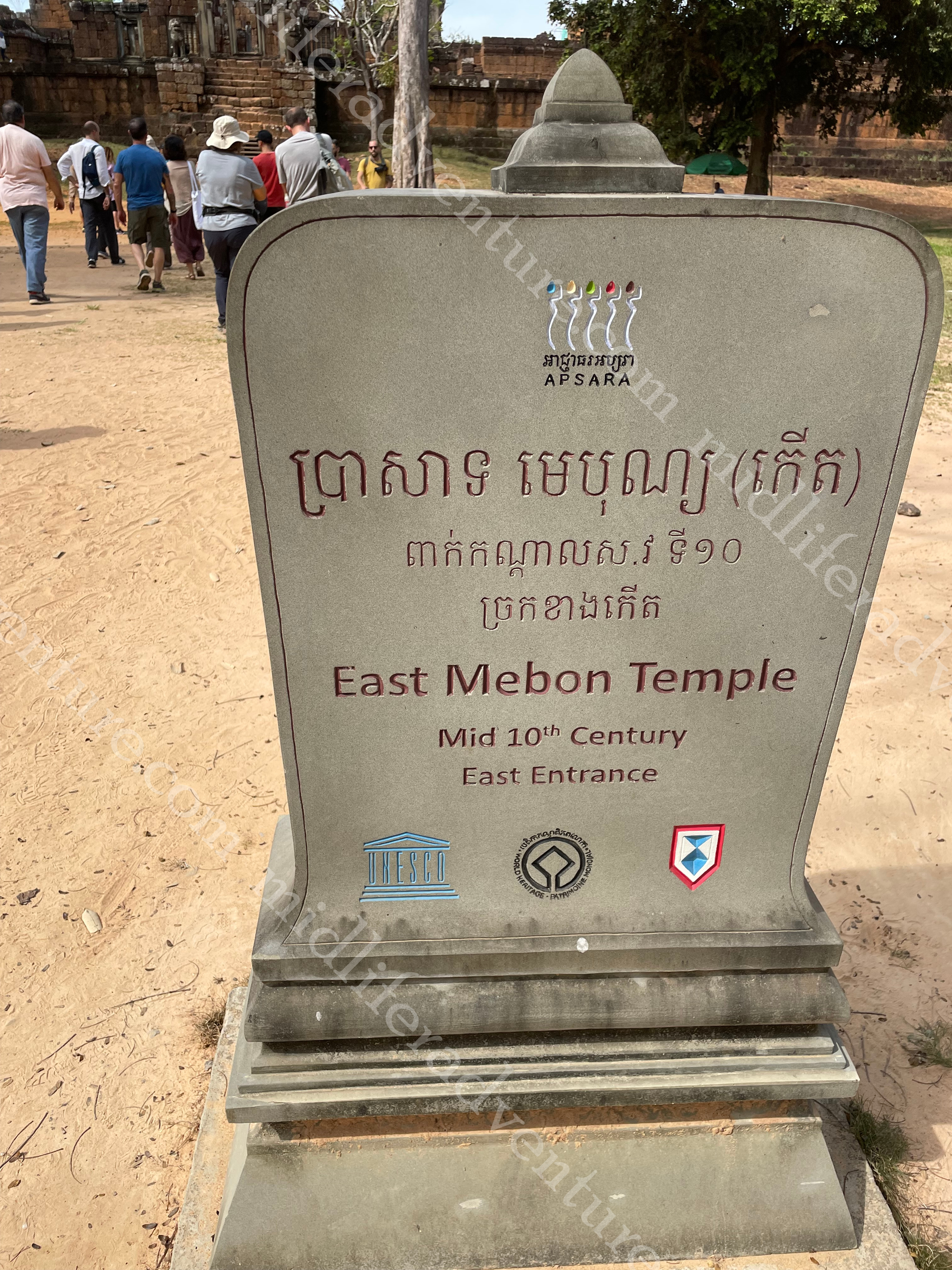
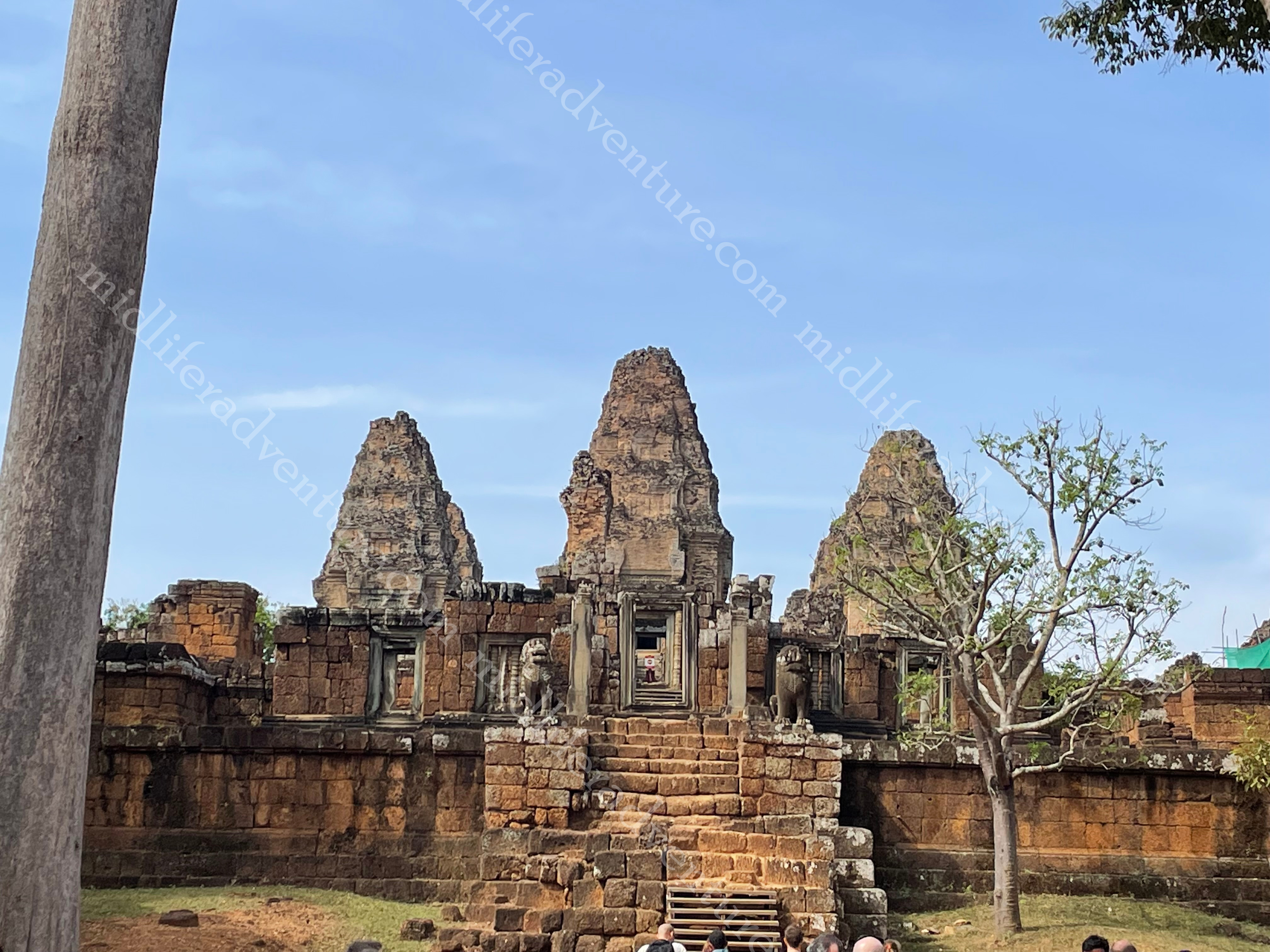
Ba Phuon (newly restored and reopened), Phnom Bakheng (sunset hill), Prasat Banteay Srey (citadel of women), Koh Ker (about 90 minutes away with around a dozen temples dating around the10th century), Baksei Chamkrong (Temple pyramid near the South Gate of Angkor Thom).
Kulen National Park
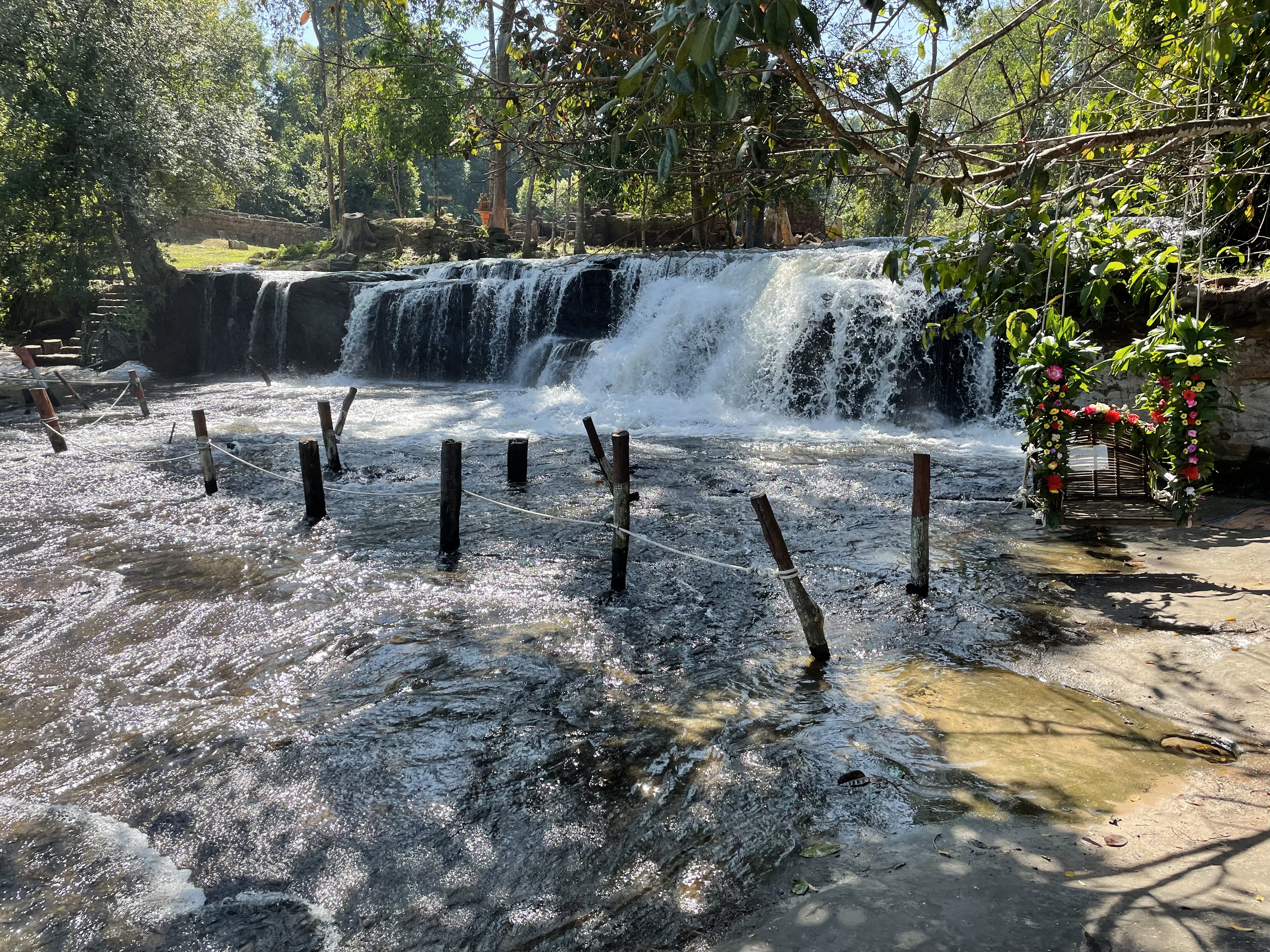
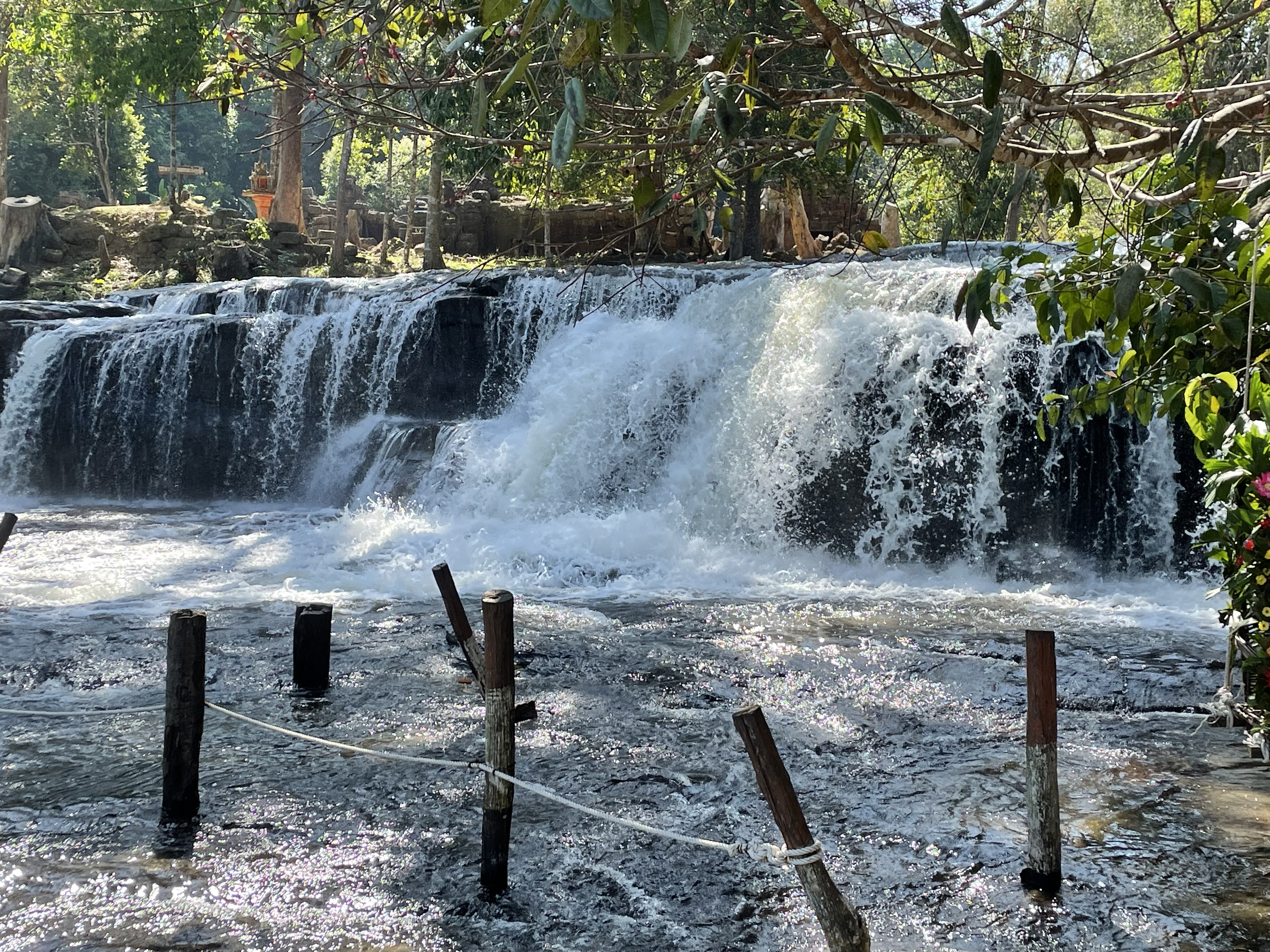
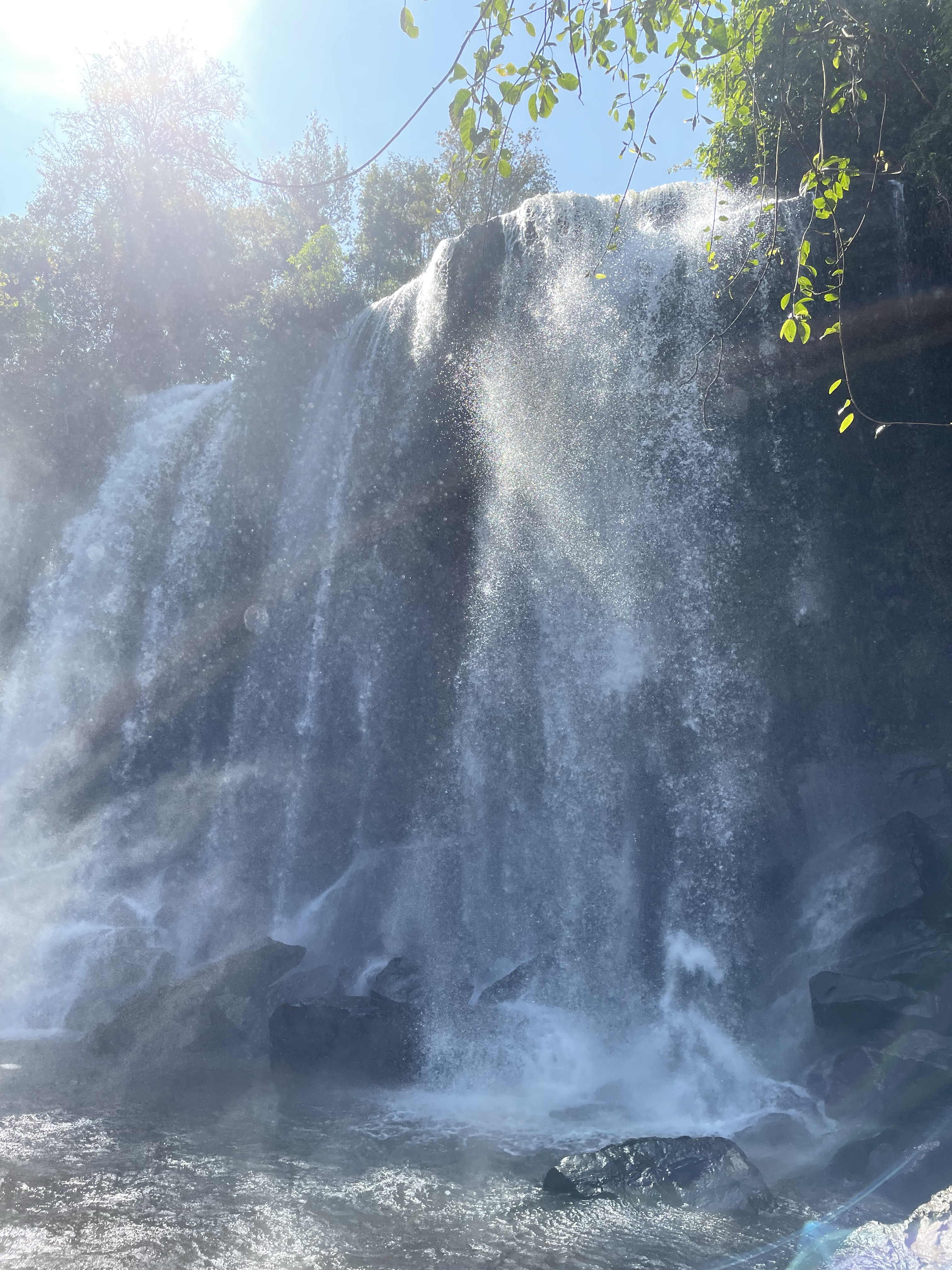
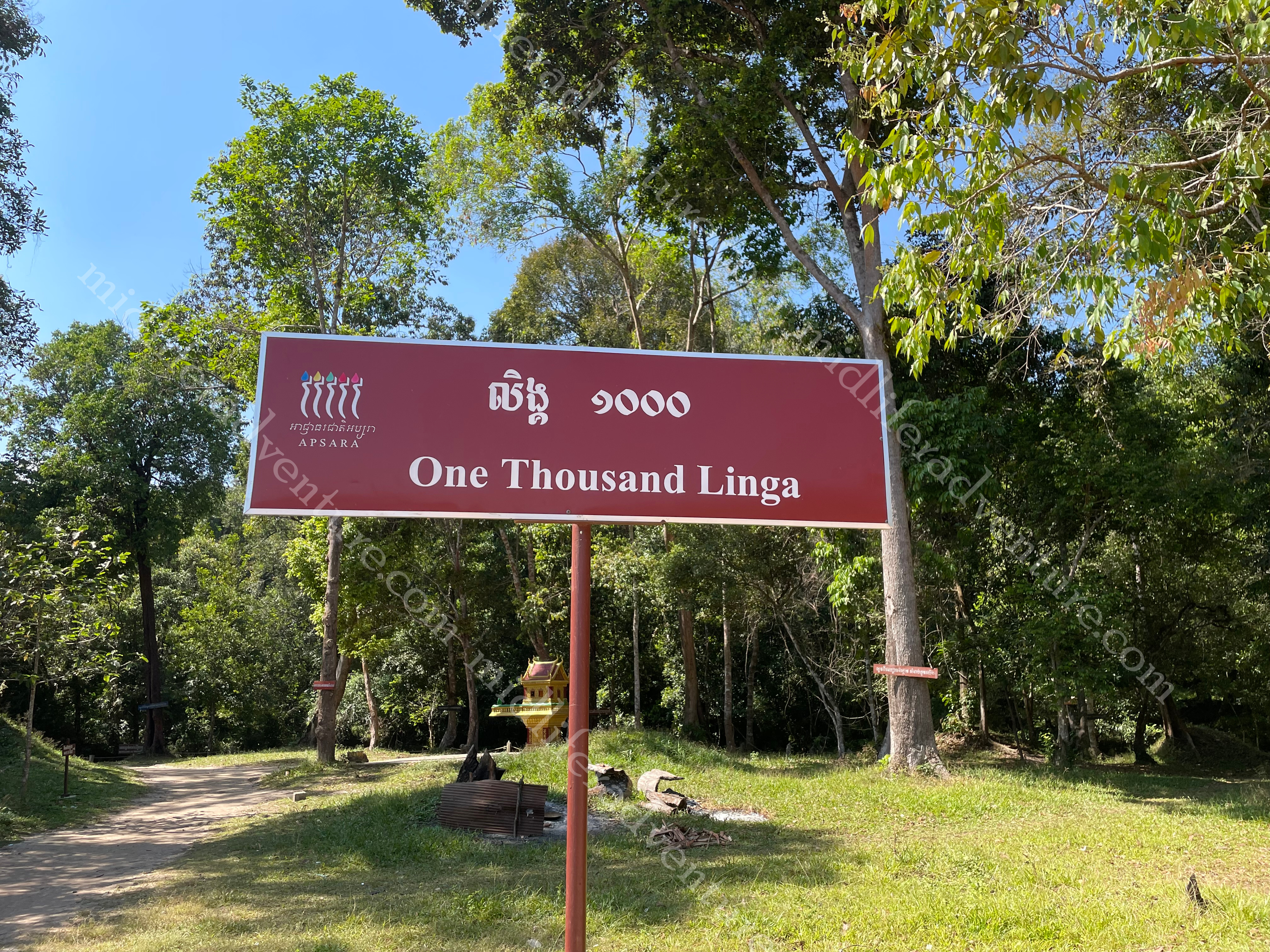
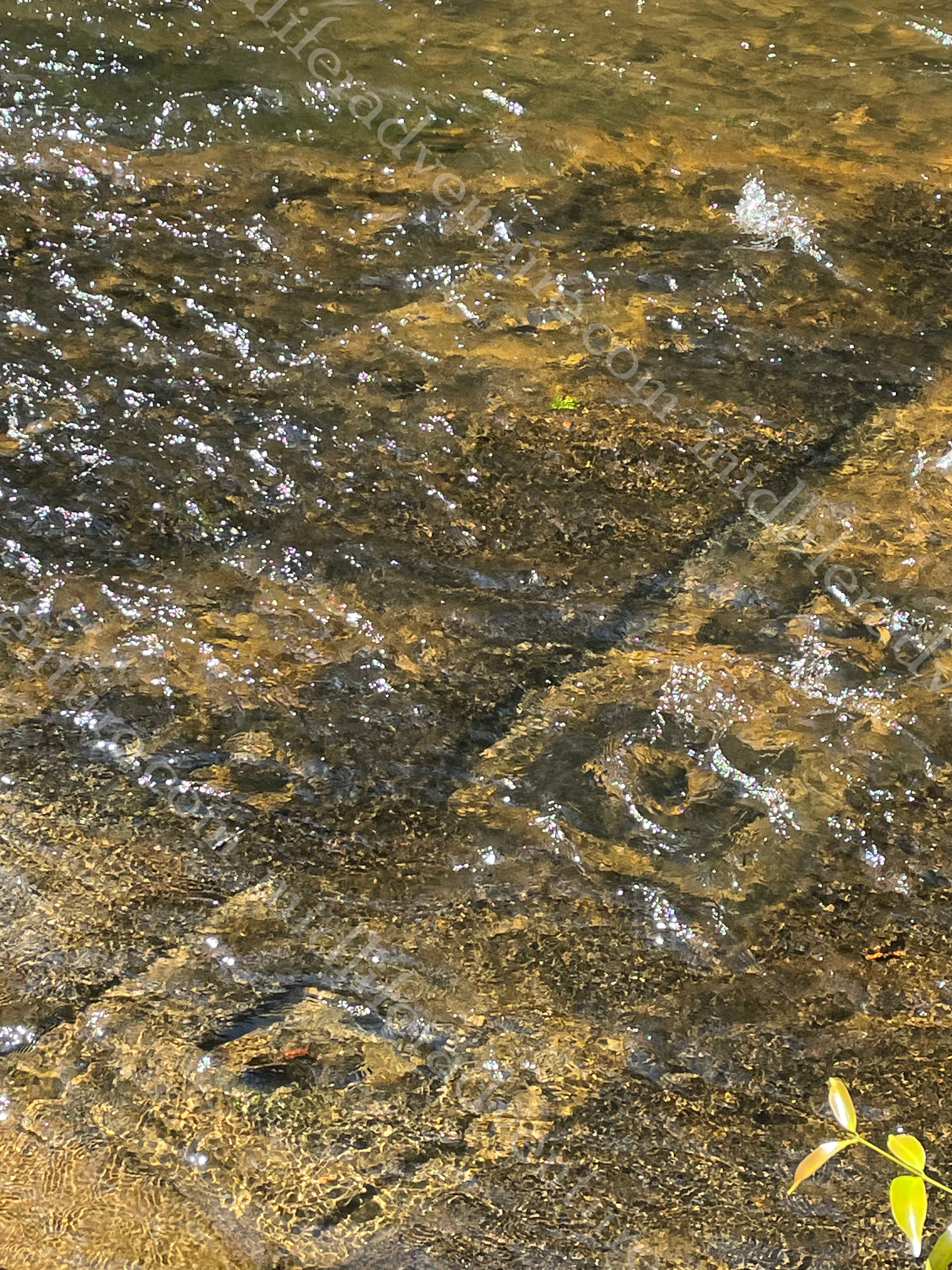
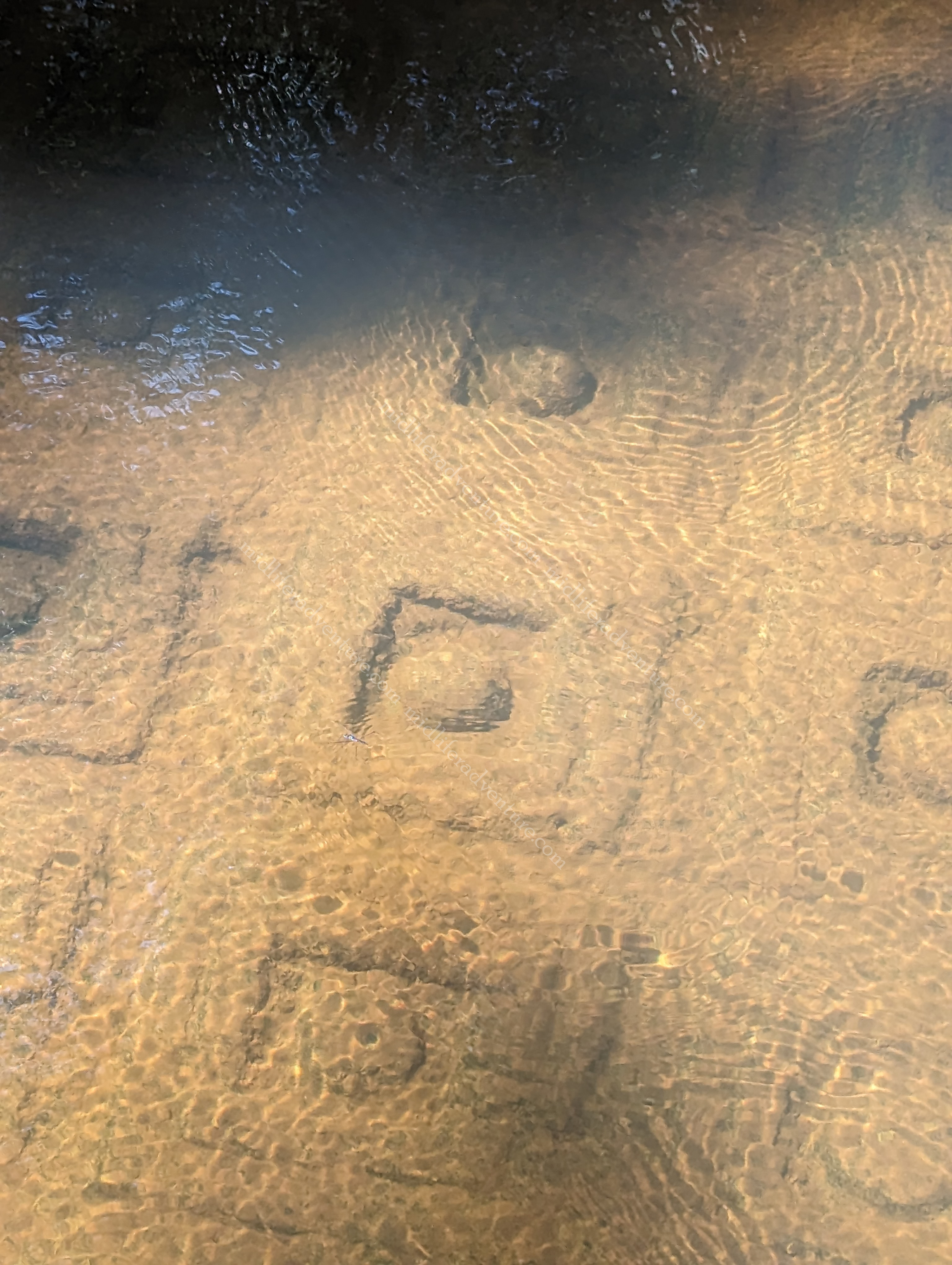
Phnom Kulen (Mountain of the Lychees) is a national park around 40 kilometers outside of Siem Reap. While it is not that far, the state of the roads make it a 90-120 minute trip and it must be done in a car or even a 4WD in the rainy season. It is said that Phnom Kulen is the birthplace of the Khmer empire and was even the site where King Jayavarman II declared independence (around the 9th century). Much of the stone used in the temples of Siem Reap was mined here and transported to the temples. But today it is the site of a couple of really nice waterfalls, a reclining buddha and the river of 1000 lingas (phallic symbol of the Hindu god Shiva – so I am going for the river of 1000 dicks).
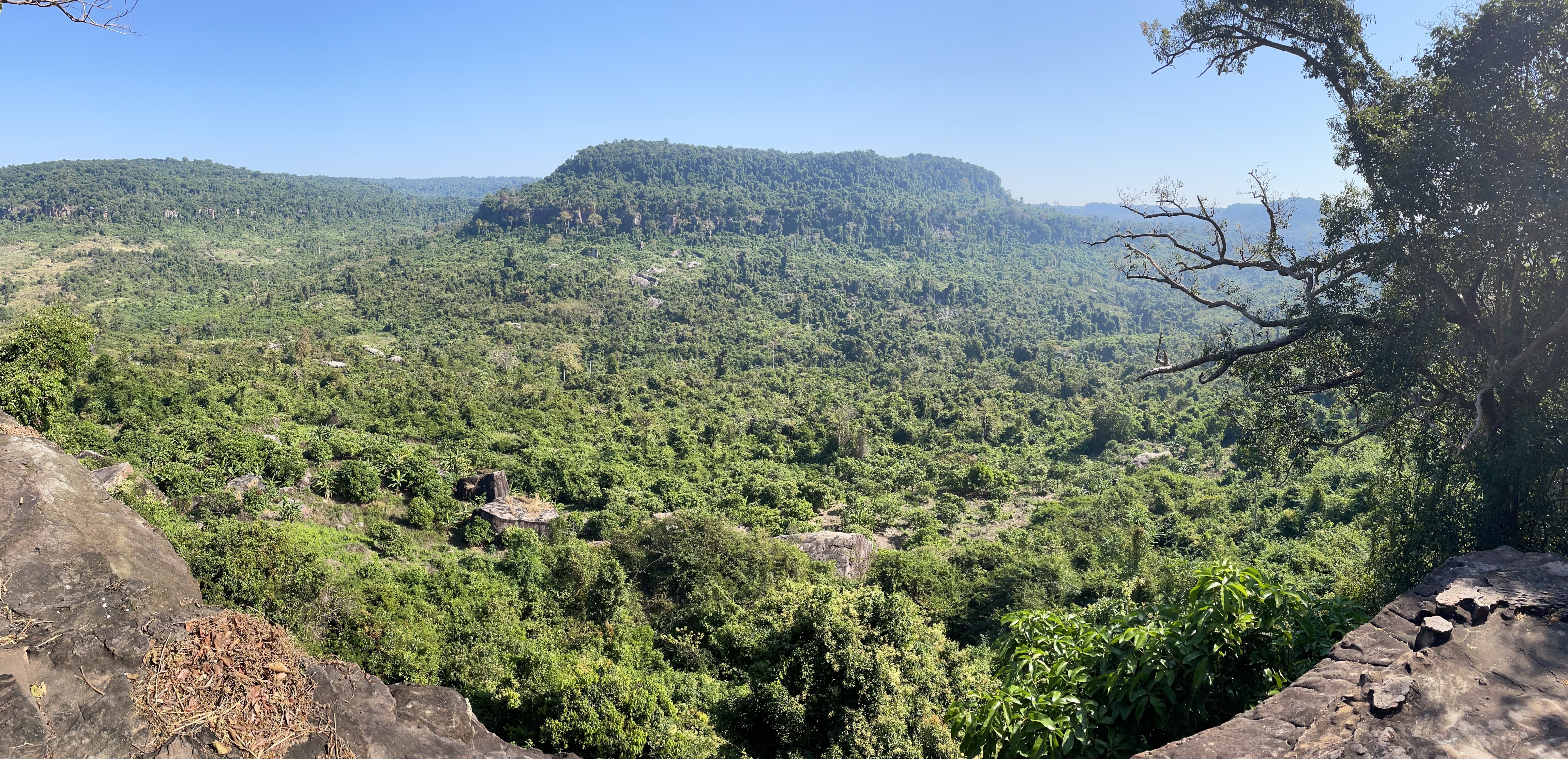
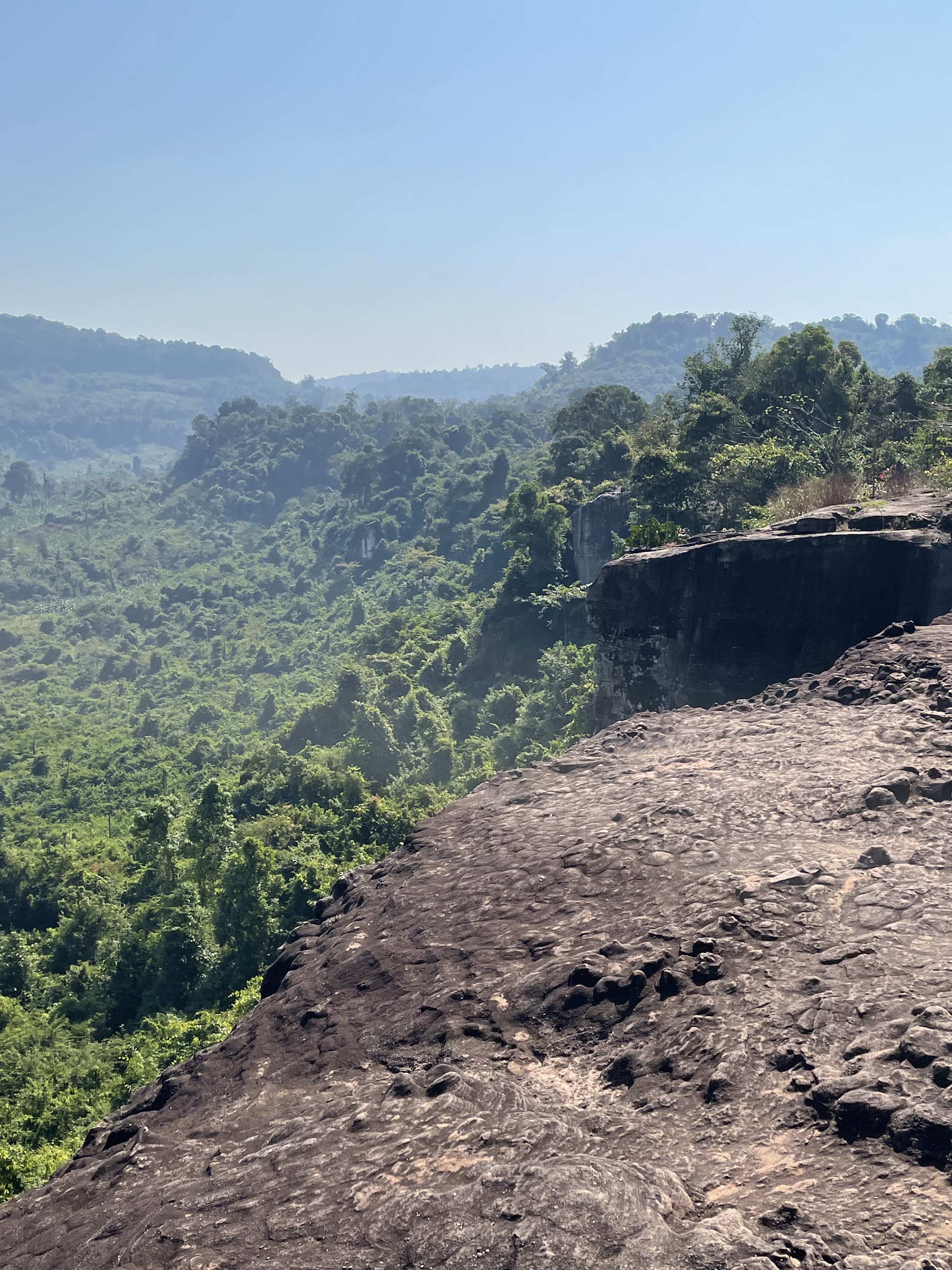
The first thing to note is that the temple ticket that you have does not count for this area…so you have to pay for another one. We ended up travelling around 40 km out of town, we spent 3 times the price on transport to that paid for seeing the temples. In hindsight I don’t think it was worth it. The waterfalls were lovely and there was a nice outlook spot that we stopped at on the way that provided a different kind of view of the area. The buddha had seen better days but was still ok and the River of 1000 dicks was at best disappointing. If you have plenty of time then sure go ahead but on a limited time this one could be skipped.
Cambodia during covid
The Cambodian ticket site has some pretty amazing stats on exactly what the COVID pandemic did to tourism in the region. Prior to the pandemic the temples of Angkor were receiving 2.6 million visitors per year and generating nearly $5 billion in revenues. These revenues were employing people and paying for the renovations, restoration and upkeep of the various temples. However border closures and travel restrictions dropped visitor numbers down to about 300,000 and knocked Cambodia’s income from tourism down to just $184 million last year.,
It is clear that money was expended on the roads as these have been upgraded well and some of the major temples still saw some of the renovation and renewal budget. But some of the lesser temples (especially within Angkor Thom) have paid a significant price for the drop off in available funds. Recent months have seen a significant upturn and within 2 months there is expected to be easing of the Chinese travel restrictions that may see numbers and dollars flying back in.
It asks not just whether approval checkpoints exist but whether they’re designed so reviewers can actually make decisions rather than reflexively approve. As an implementation practice, retain the agent identity, task scope, commit, checks, and approval record. AI code review can investigate architectural fit and requirements using available context, then present findings for verification.
AI-generated code enters through many tools and IDEs, so a program built around one assistant misses the rest, and shadow AI usage slips past controls entirely. AI code governance works by embedding controls into the development lifecycle, so oversight happens as code is written and merged, catching problems before they ship. Follow the coding-agent policy implementation guide to turn the framework into repository settings. It handles the routine layer of https://event-miami24.com/software-development-for-energy-and-utility-asset-management.html review so senior engineers can spend their attention on decisions that actually require human judgment. CI checks and audit records provide evidence for that system; they do not cover the whole standard. Named owners, documented decisions, and review evidence can contribute to a team’s implementation.
The controls exist to protect that judgment and direct it where it counts. Developers feel governance as faster reviews and fewer surprises, while the audit trail builds itself in the background. Findings arrive with evidence and reasoning, and reading every line becomes the exception reserved for the changes where judgment genuinely matters. Standards get enforced by an automated first reviewer instead of a checklist, so most changes flow through without a human gatekeeper. Code review is one control inside governance rather than the whole of it.
Use the request changes workflow with repository protection to configure blocking behavior; retain deterministic tests and human approvals. CodeRabbit teams can add custom pre-merge checks with explicit criteria and inspect the evidence behind each result. https://pagemakers.net/the-benefits-of-outsourcing-for-small-businesses/ Configure required checks and approvals on the protected branch, and restrict bypass actors. Conftest evaluates structured configuration with policy rules. An agent that can open PRs across 200 repos but can’t touch infrastructure configs or push to protected branches is a governed agent. Without centralized governance, every team’s agent setup is its own policy island.
Centralized governance, applied through shared rules in CI and a consistent review layer on every PR, is what collapses those policy islands into a single enforceable standard
Use dedicated secret scanners, linters, and tests for the code properties they cover, and require human review for decisions needing product or architectural context.
The four risks above all collapse to the same gap, which is the absence of an enforcement layer that runs at the speed agents ship code.
Runtime enforcement sits between the agent and the systems it can touch, evaluating each file operation, API call, or shell command against this tiered policy before it executes.
Extend GitLab Duo Agent Platform into your business systems
Written instructions help communicate standards; reviewers and executable checks must still verify the output. Coding agents replicate the patterns they see in the codebase, including the inconsistent or suboptimal ones. Infrastructure changes need a separate authorization boundary. Each risk maps to a specific governance control that, if missing, lets the problem compound at the speed agents generate code. Without those limits enforced at runtime, the gap between policy and practice is exactly where the risks below take root.
A practical framework to implement
For authentication, infrastructure, and migration changes, the designated owner reviews test results and a rollback plan before authorizing release. For repository setup and a worked policy example, use AI governance for coding agents. See where AI tools generate code, correlate commits with risk signals, and maintain visibility across your AI software supply chain.
It’s also distinct from application security (AppSec), which catches vulnerability patterns in code that already exists. Inside the SDLC, that means governing coding agents that write PRs, modify configs, and ship code into production. The PR can still propose the change, but an infrastructure owner must review the plan and authorize the deployment through the release workflow. Its development credentials should prevent applying that policy.
AI-generated code introduces new risks around security vulnerabilities, licensing compliance, and architectural drift. A framework for establishing quality, security, and compliance checks to manage the risks of AI-assisted development without sacrificing velocity. This guide provides actionable steps to implement scanning, create audit trails, and define approval workflows.
Superblocks: best for governing AI-generated apps
Gain visibility into AI-generated code, correlate risk at commit, and govern AI-assisted development — so organizations can adopt AI coding with confidence. Introducing Citizen AI — AI literacy training for every employee, not just developers. How do I avoid creating governance that kills developer velocity?
How does AI code governance work?
It requires continuous measurement and improvement based on real-world data. Define clear rules for when human approval is required. Establishing governance for AI-generated code requires moving beyond traditional code review. Crucially, log all AI actions and model versions used to generate code, creating a digital provenance trail. Automate initial scans to catch common issues, routing only high-risk or anomalous outputs for human review. The goal is to create a Human-in-the-Loop (HITL) Governance System that provides oversight without becoming a bottleneck for developers.
Highlight elevated risk patterns and provide governance insights aligned with secure coding policies. Identify unsanctioned AI tools operating outside approved governance policies. Gain visibility into which AI tools contribute code — creating a verifiable AI SBOM. It connects AI usage visibility, risk intelligence, and developer capability insights across the software development lifecycle.
How AI code governance relates to neighboring practices
This policy becomes the foundation for all automated governance checks and team training, ensuring consistency and reducing risk from the outset. An AI code policy is a living document that defines the acceptable use, quality standards, and security requirements for all AI-assisted development. This document sets the rules of the road, aligning your team on quality, security, and compliance before a single line of code is generated. Establishing a formal policy is the critical first step in governing AI-generated code.
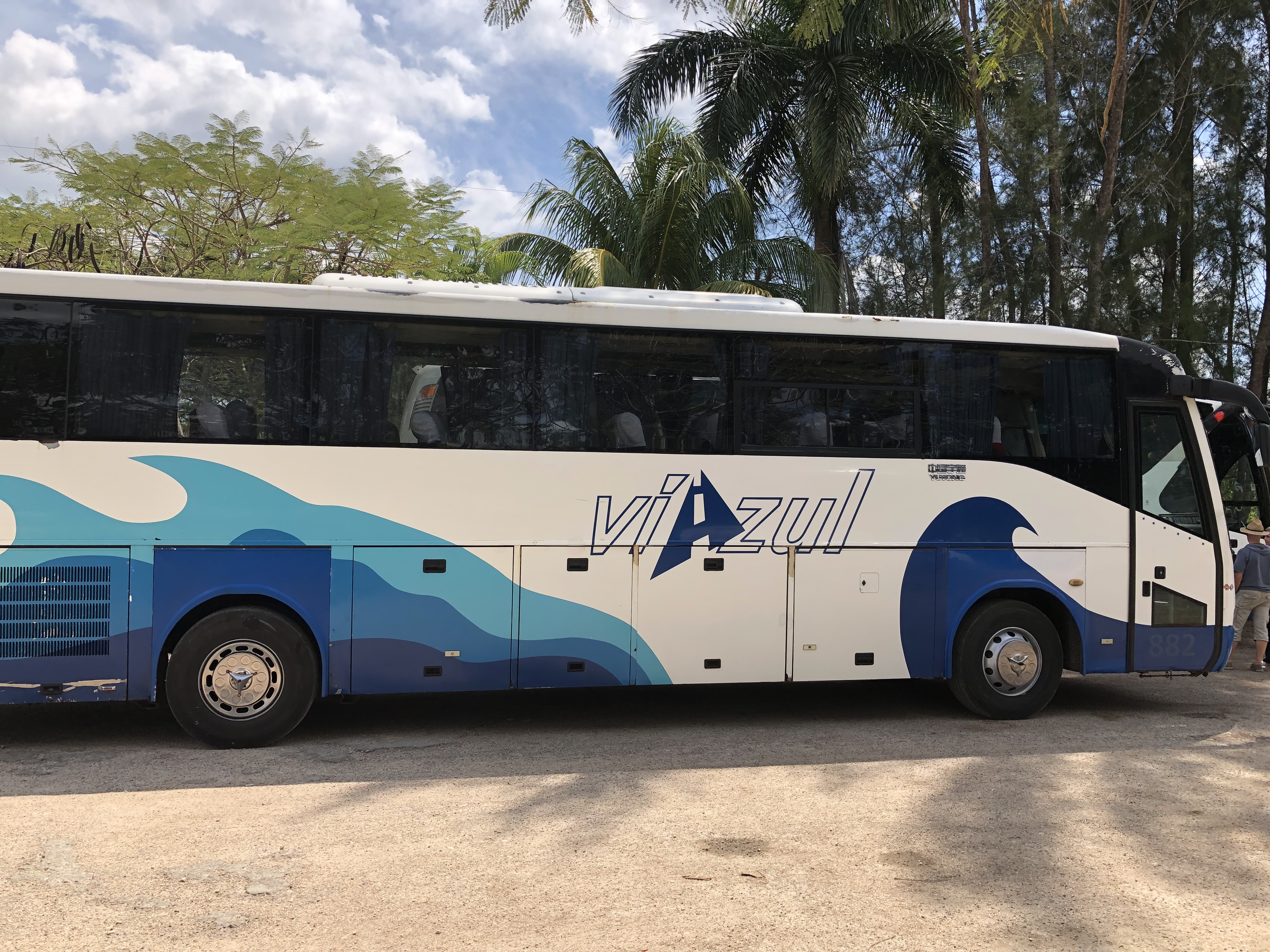
Jill has two great loves in life…trains and chicken buses. On our last major foray travelling she could not go past a good train ride and when they aren’t available, enter the chicken bus. You have all seen the movies, dodgy little buses with some overly rural looking woman holding a live chicken (caged or uncaged). Well this is Jill’s idea of fun.
So for our 250 km journey from Havana to Cienfuegos, this was her choice. We hopped a cab to the bus station for me to be pleased that there was not a chicken anywhere in sight. In fact the long distance bus fleet was more modern than anything else on the road. We sat in a comfortable, air conditioned coach doing around 100km/h, on a well maintained 2-3 lane road almost the whole way. And when we got off that we got on a standard dual carriageway, in good repair, that ran through beautiful farmland. Later on, it ran parallel to the ocean throwing up some of the most stunning shades of blue imaginable. Playa Larga and Playa Giron were two of the stops along the way…while this may mean very little to most of you, Playa Giron is better known as the “Bay of Pigs”, where the Kennedy administration tried to invade and overthrow Cuba.
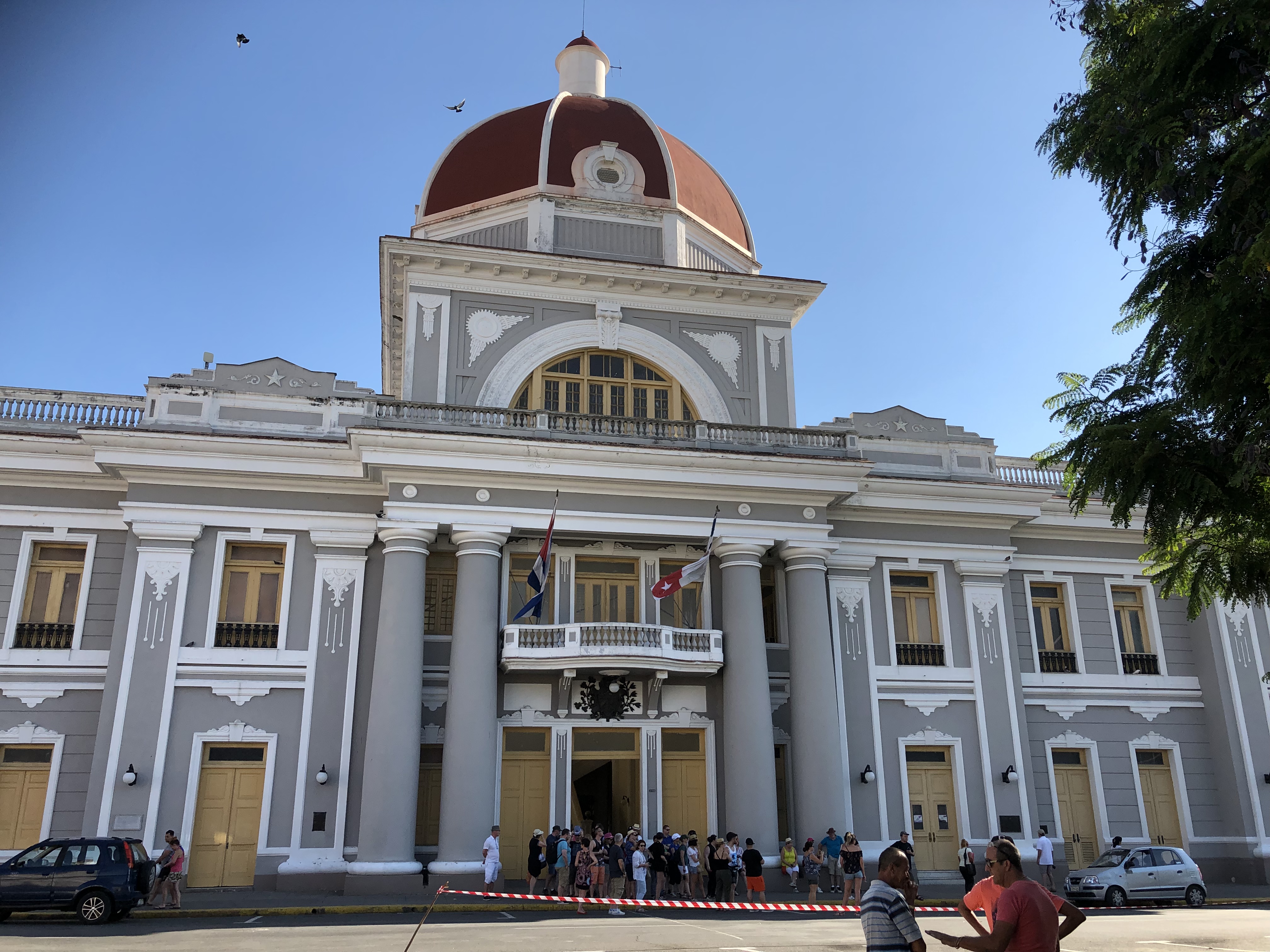
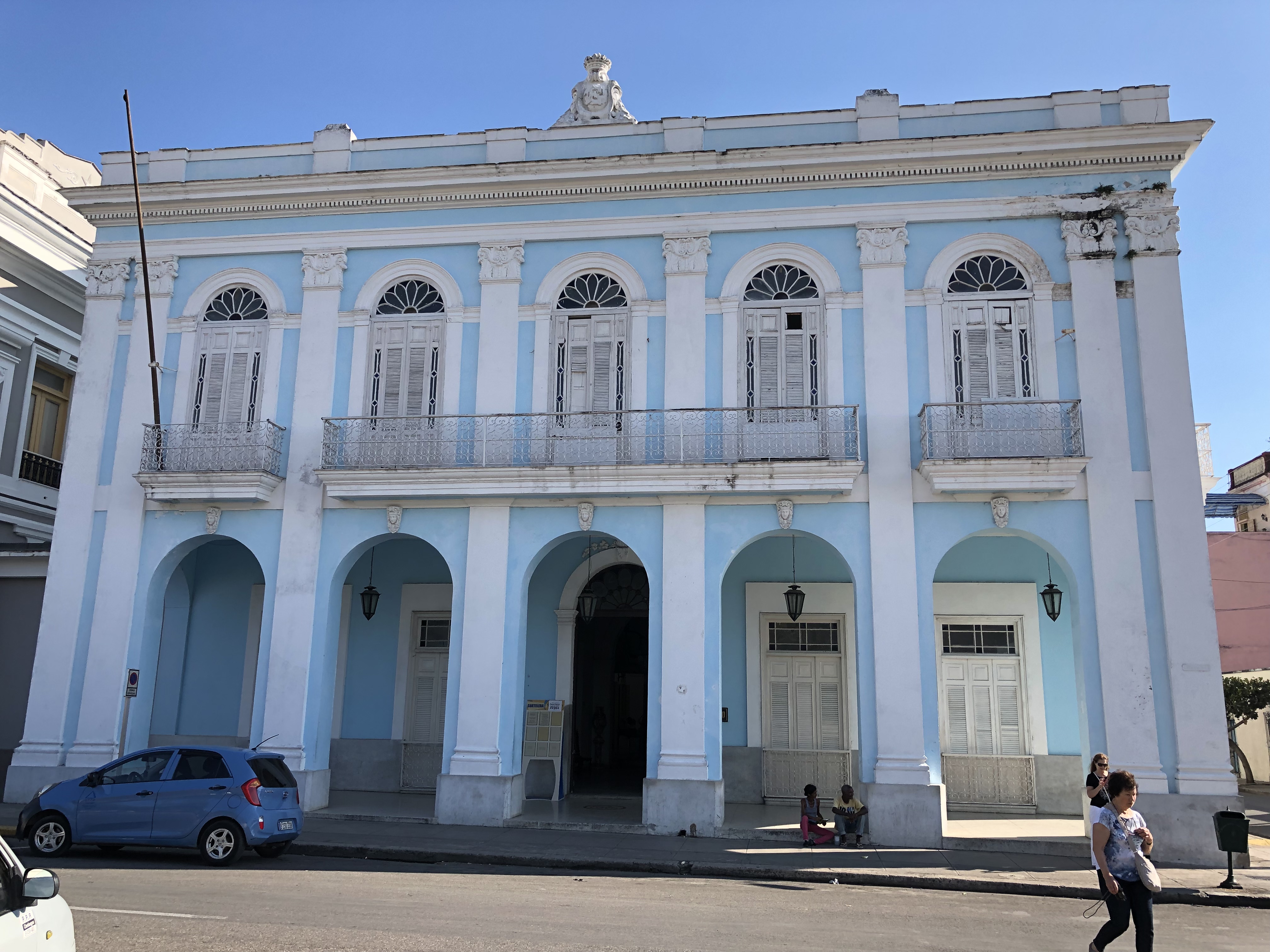
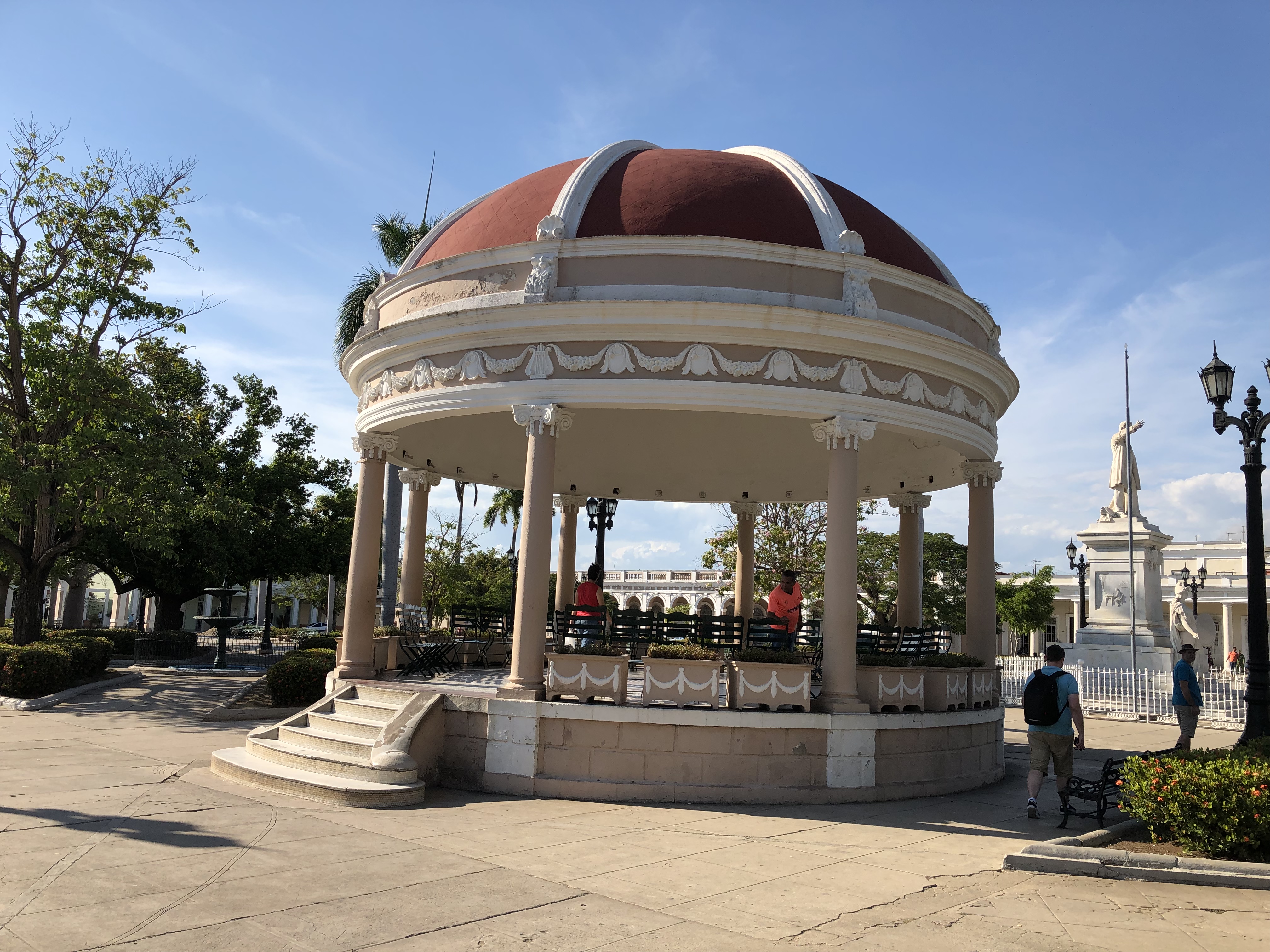
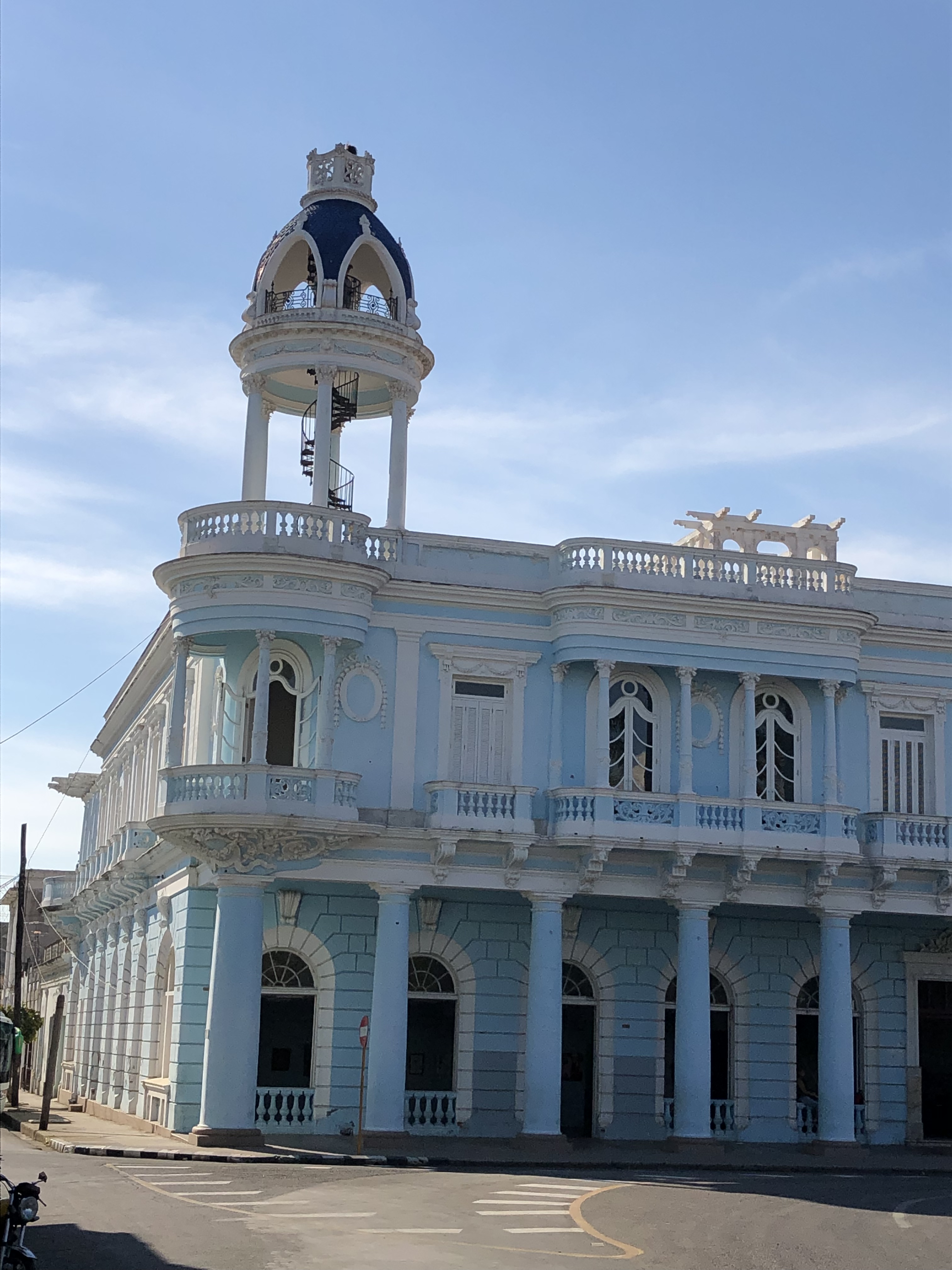
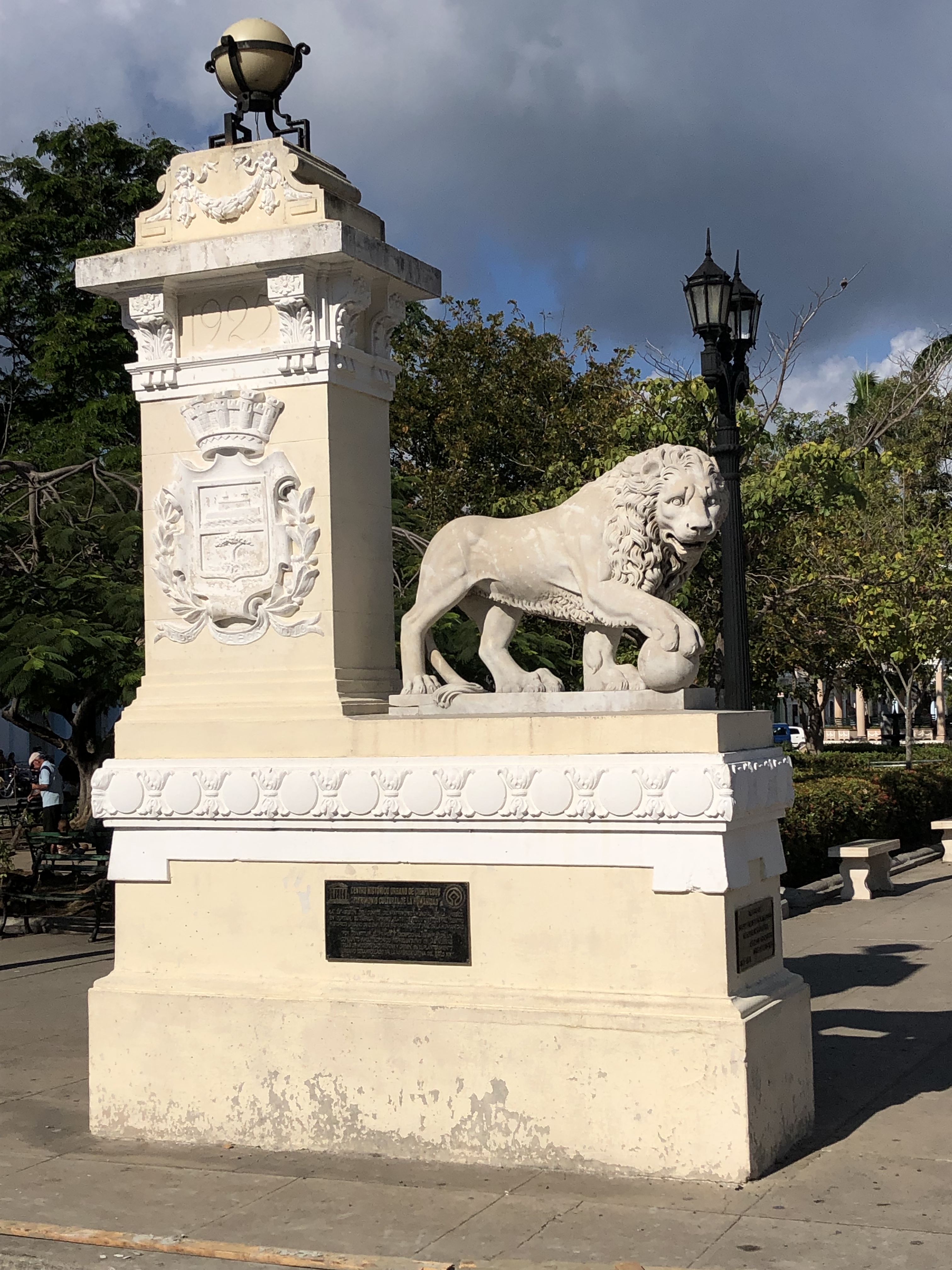
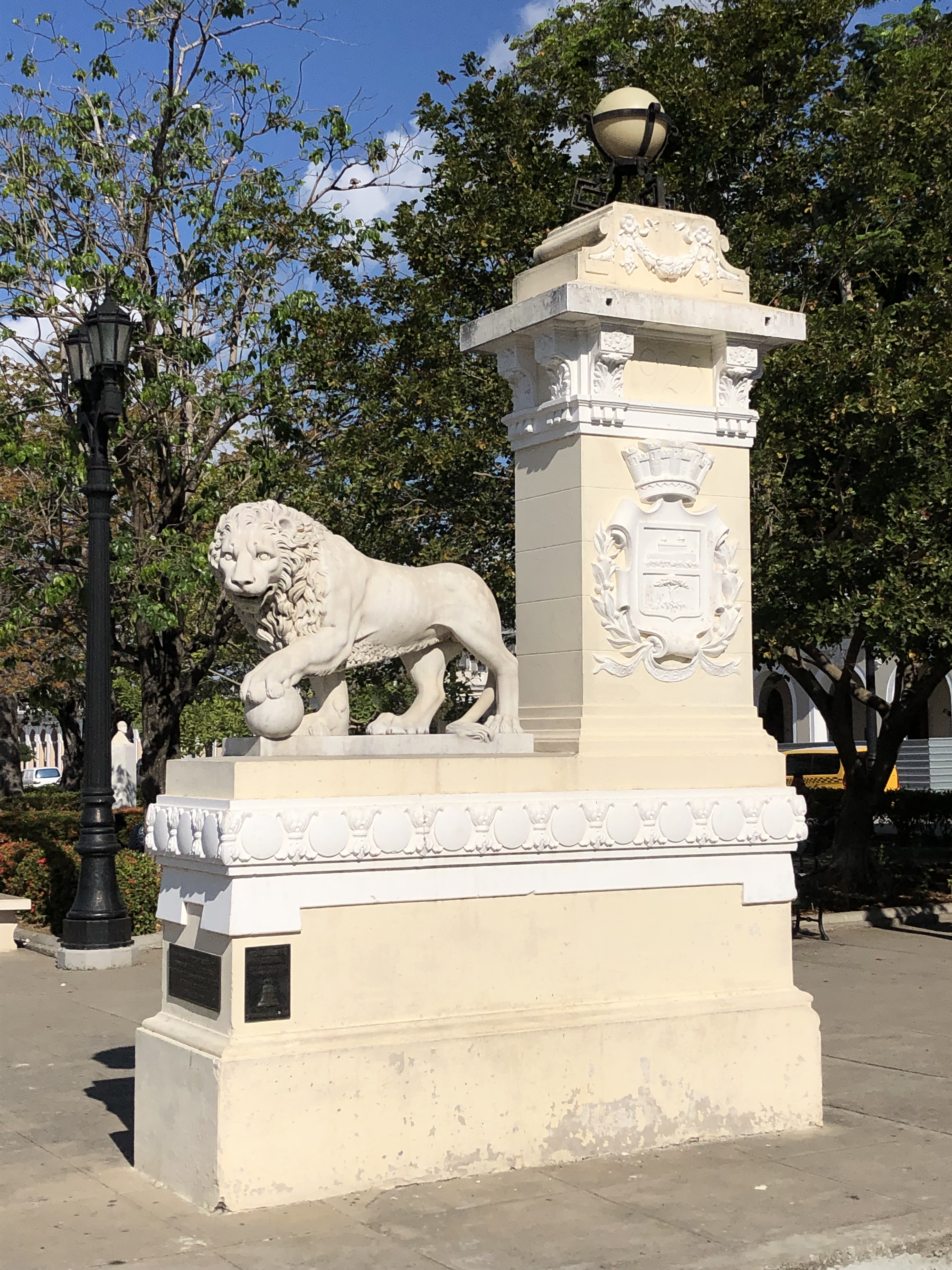
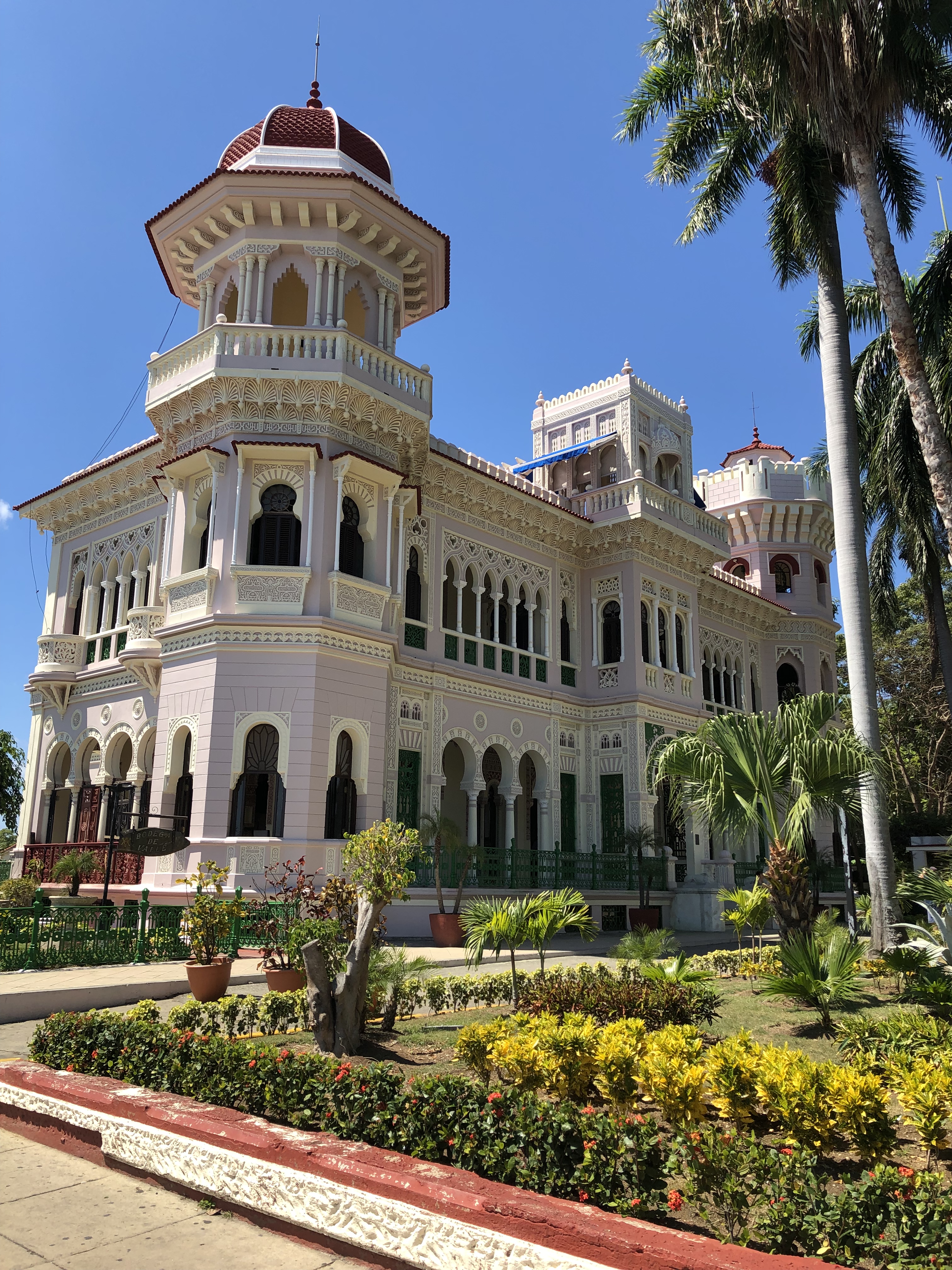
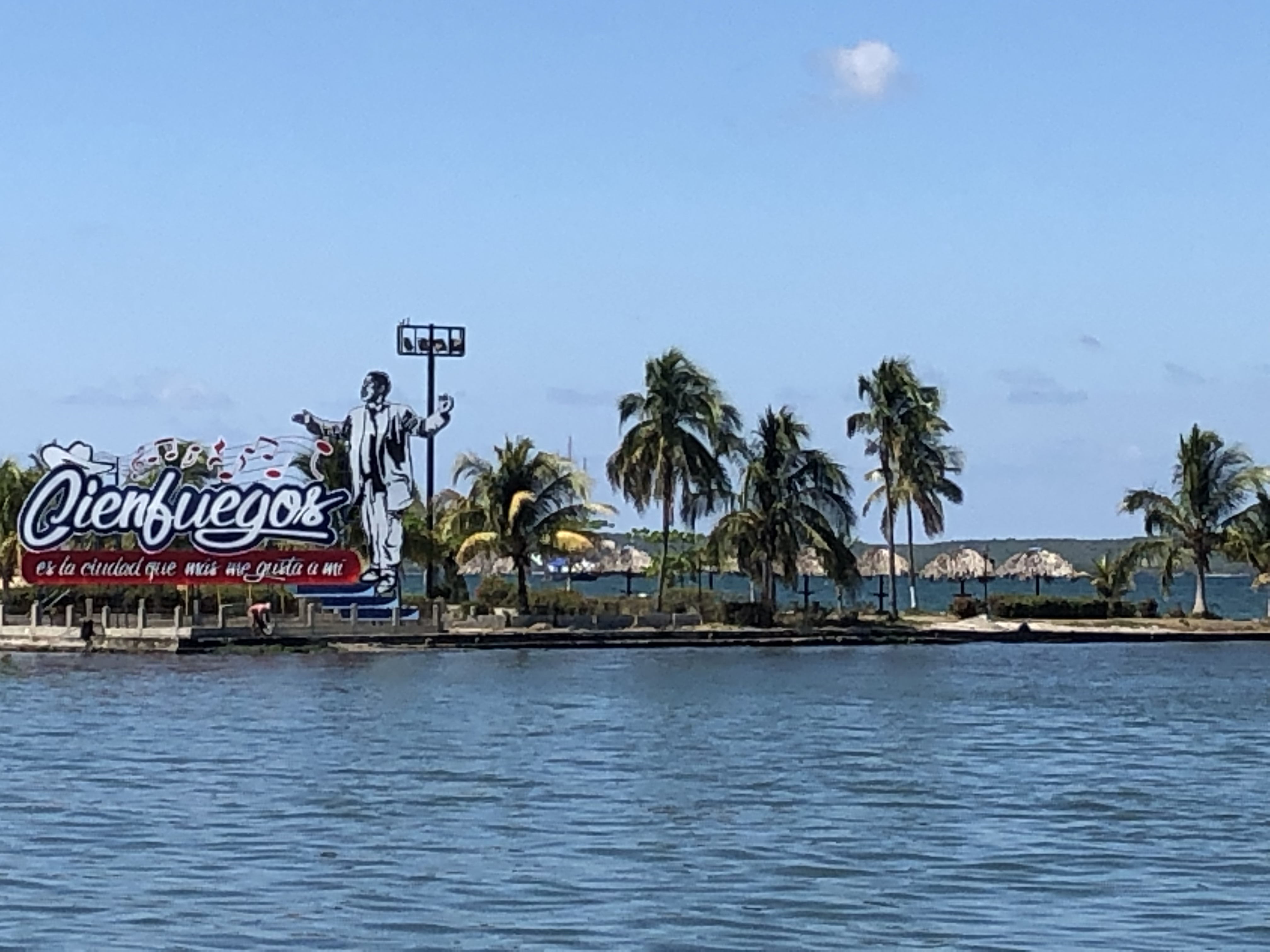
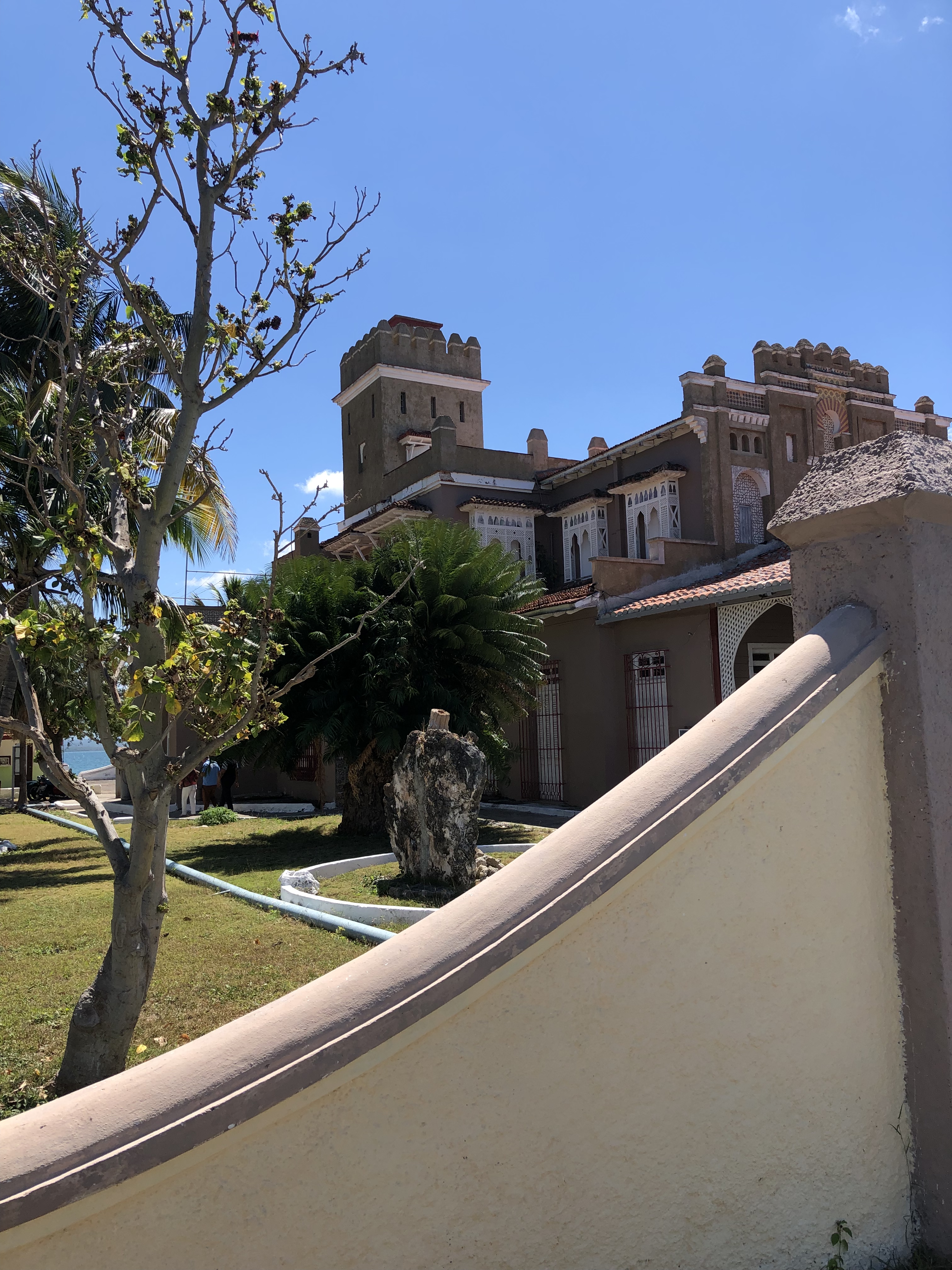
After a relaxing and pleasant journey we arrived in Cienfuegos mid afternoon and checked into the best of the home stays available (Bella Perla Marina) got the grand tour and headed out for our usual exploratory walk. As it happens, 2 hours is enough time to see all of the sights of Cienfuegos. We saw the town hall, theatre, cathedral (de la purisima concepcion), museum and a mock version of the Arch de Triomphe (Arco de triunfo).
What would we do with the next 36 hrs.
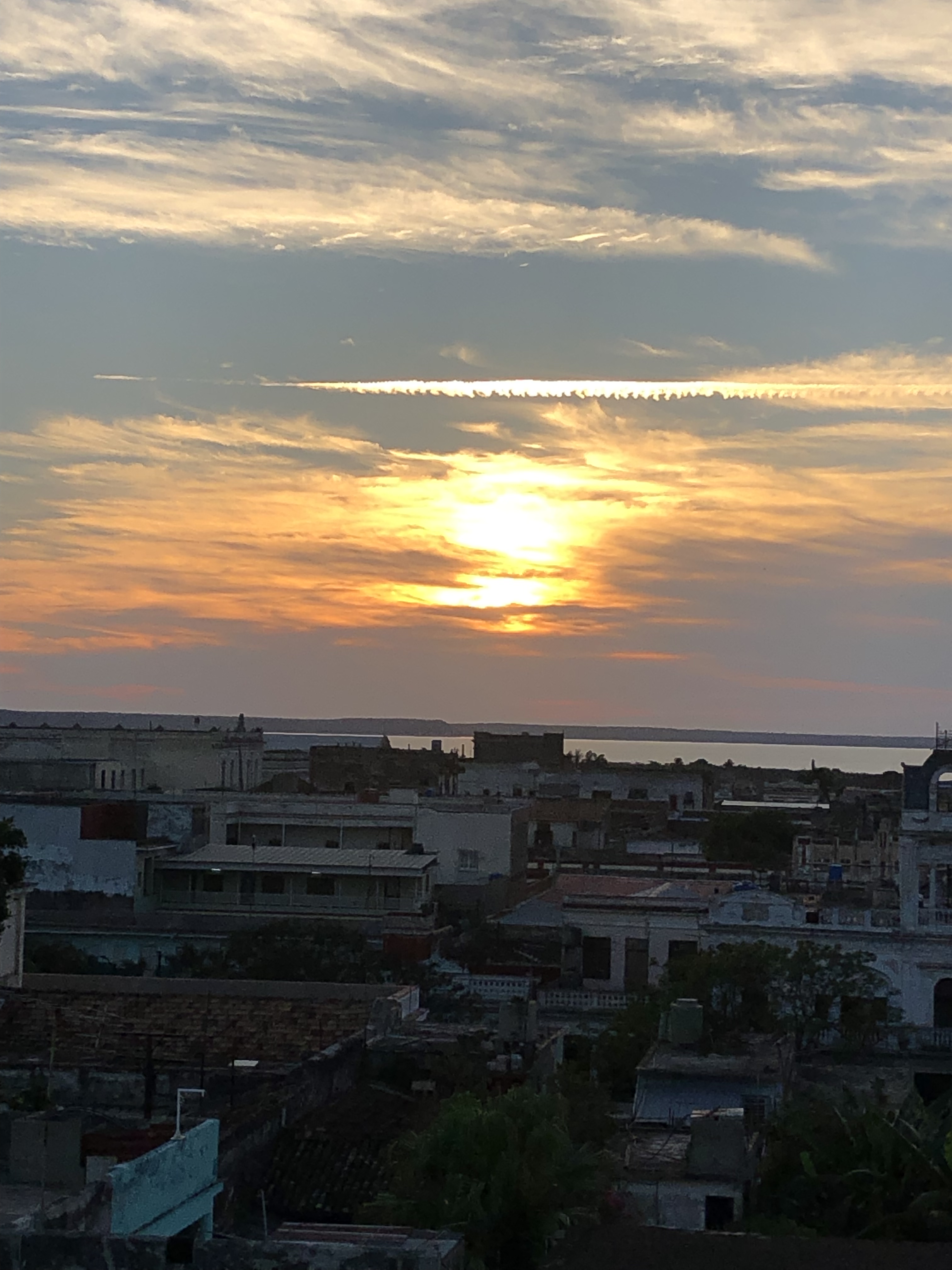
We headed back to the guesthouse for a fantastic meal and one hell of a sunset from the rooftop garden and viewing platform.
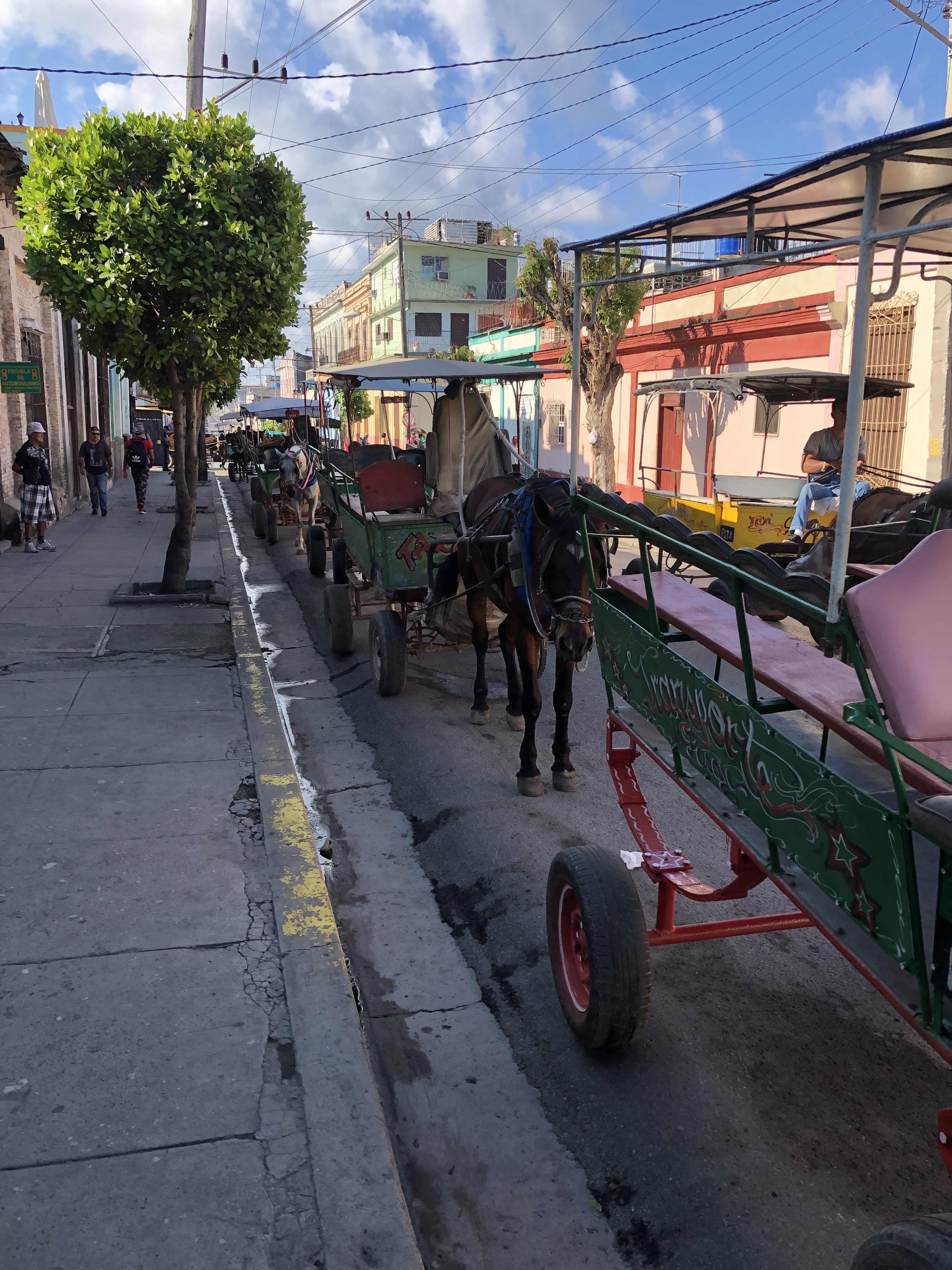
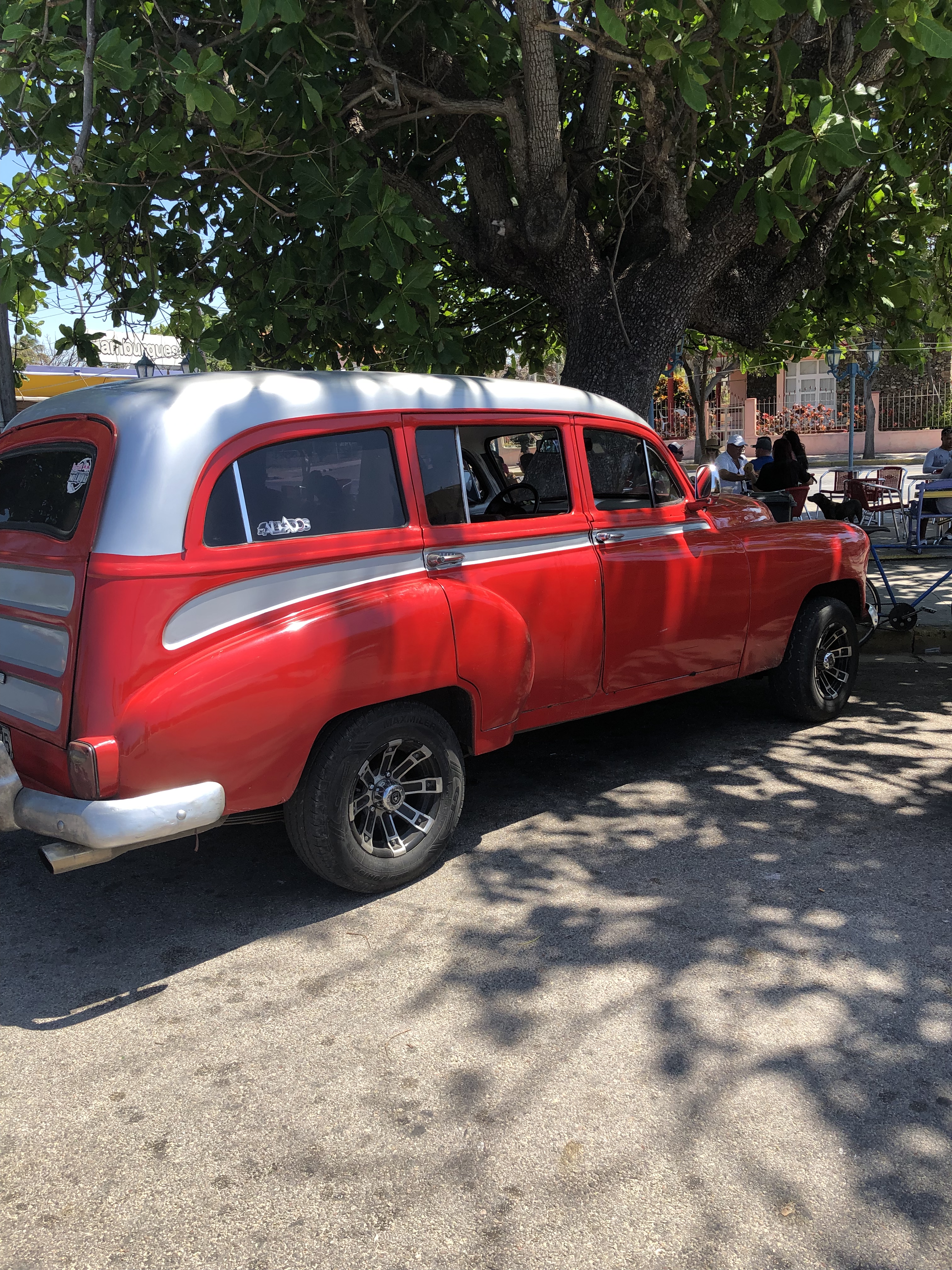
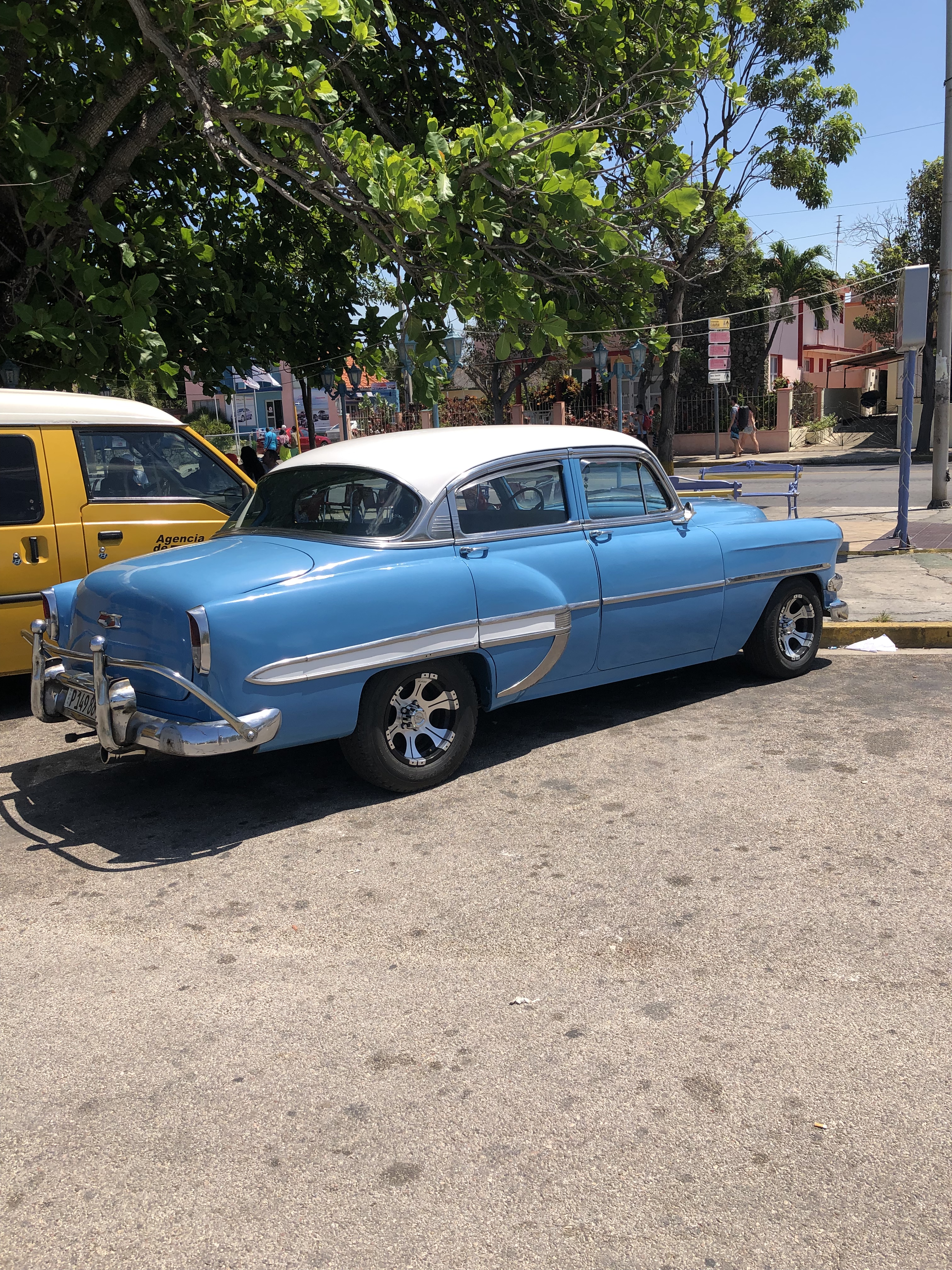
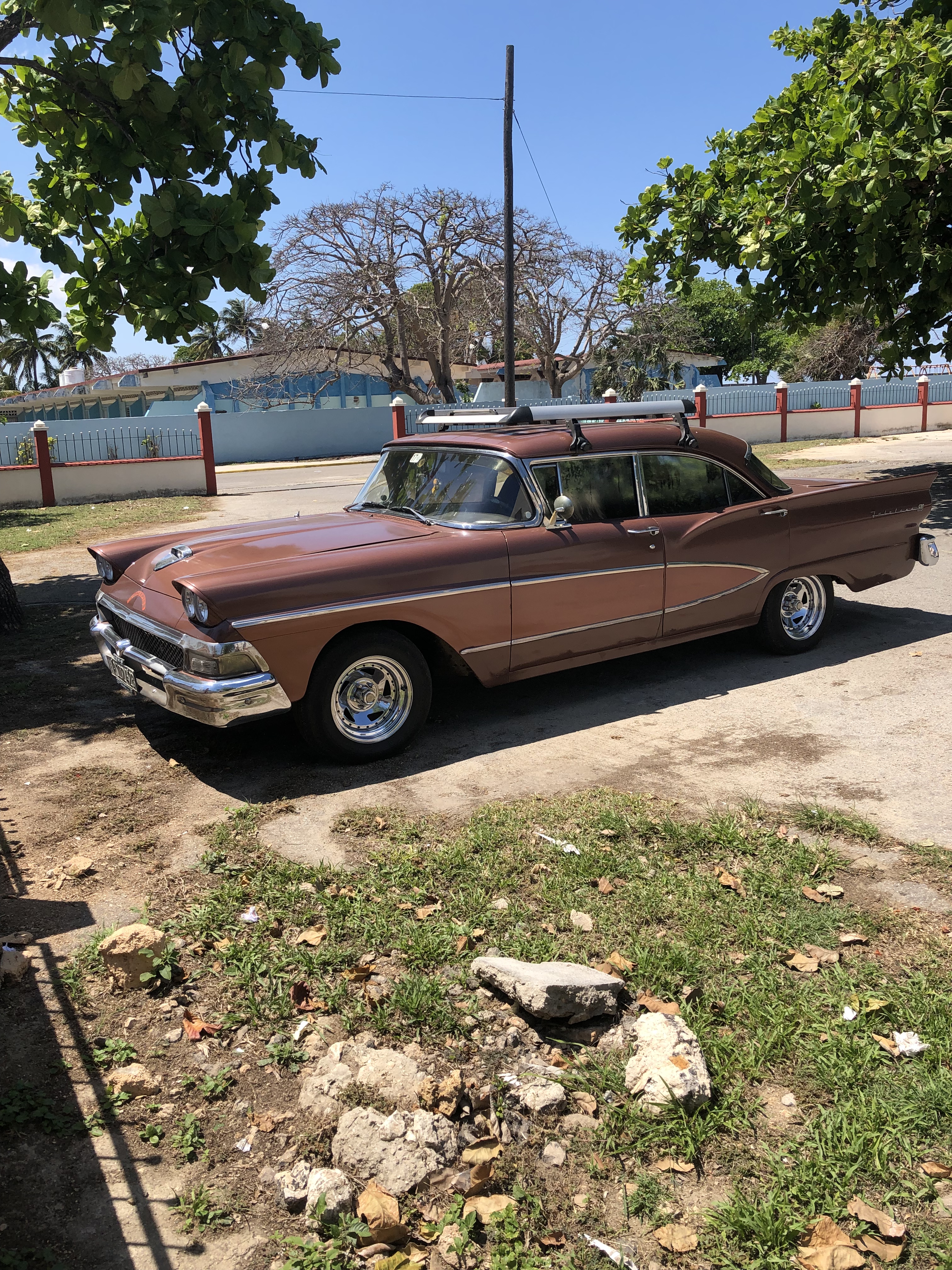
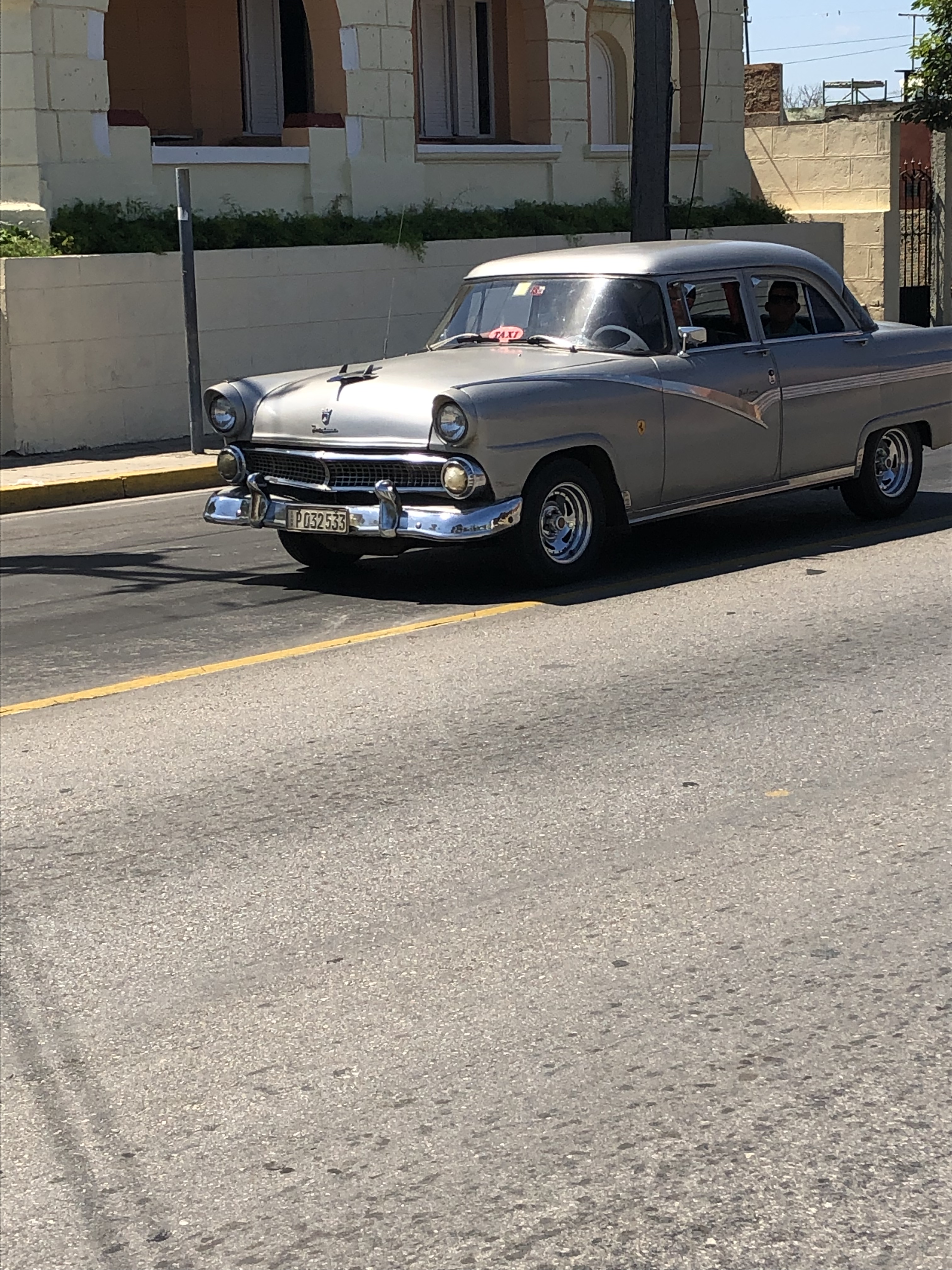
The vehicle fleet in Cienfuegos was quite different from that in Havana. The big flashy convertibles were non existent, but had been replaced with much better maintained versions of the Havana “B” fleet. Still lots of 1950’s vehicles but not as big and not as ostentatious. But the main type of taxi was the horse and cart and it seemed like around the corner from our joint was the local cab rank.
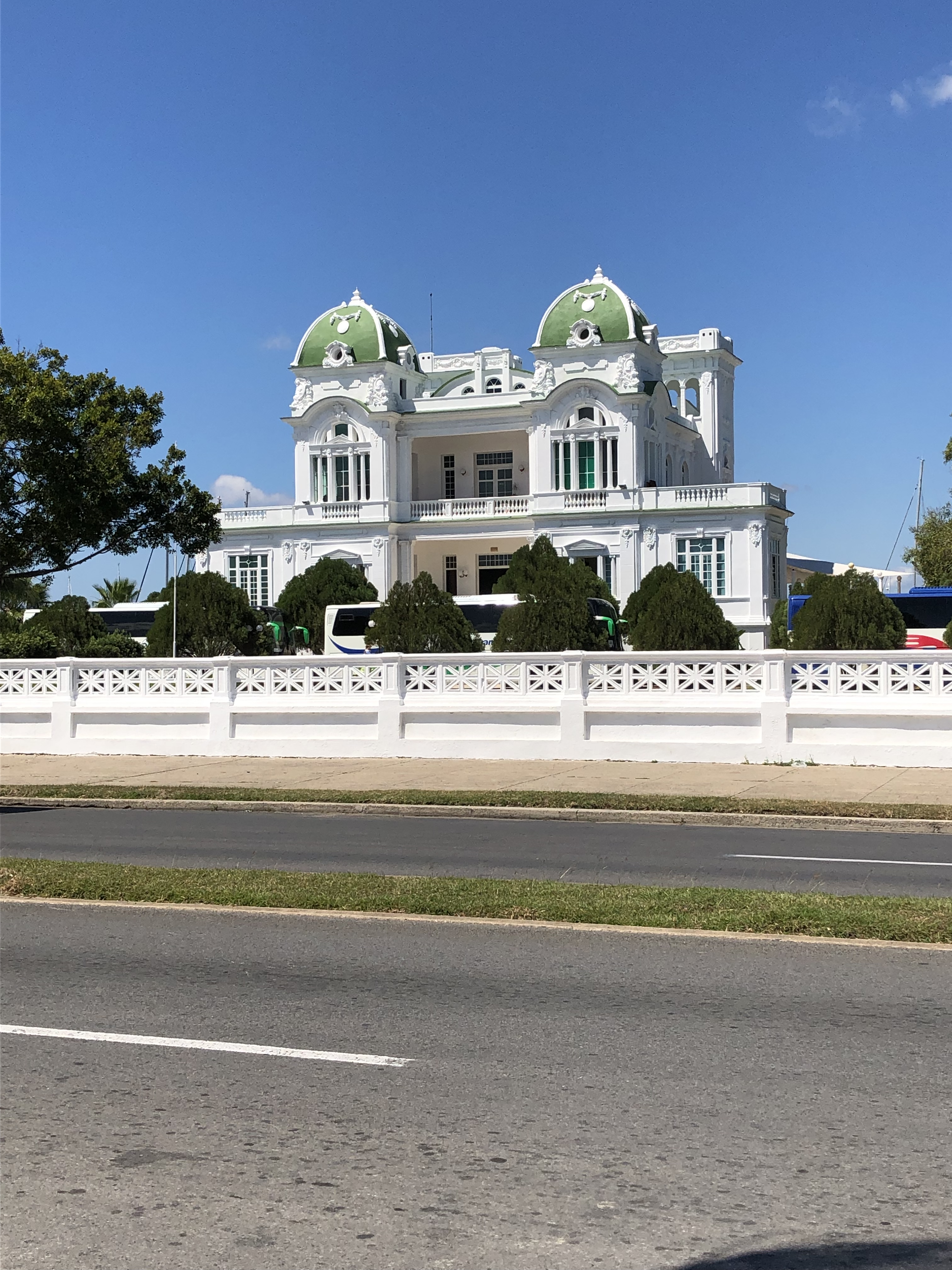
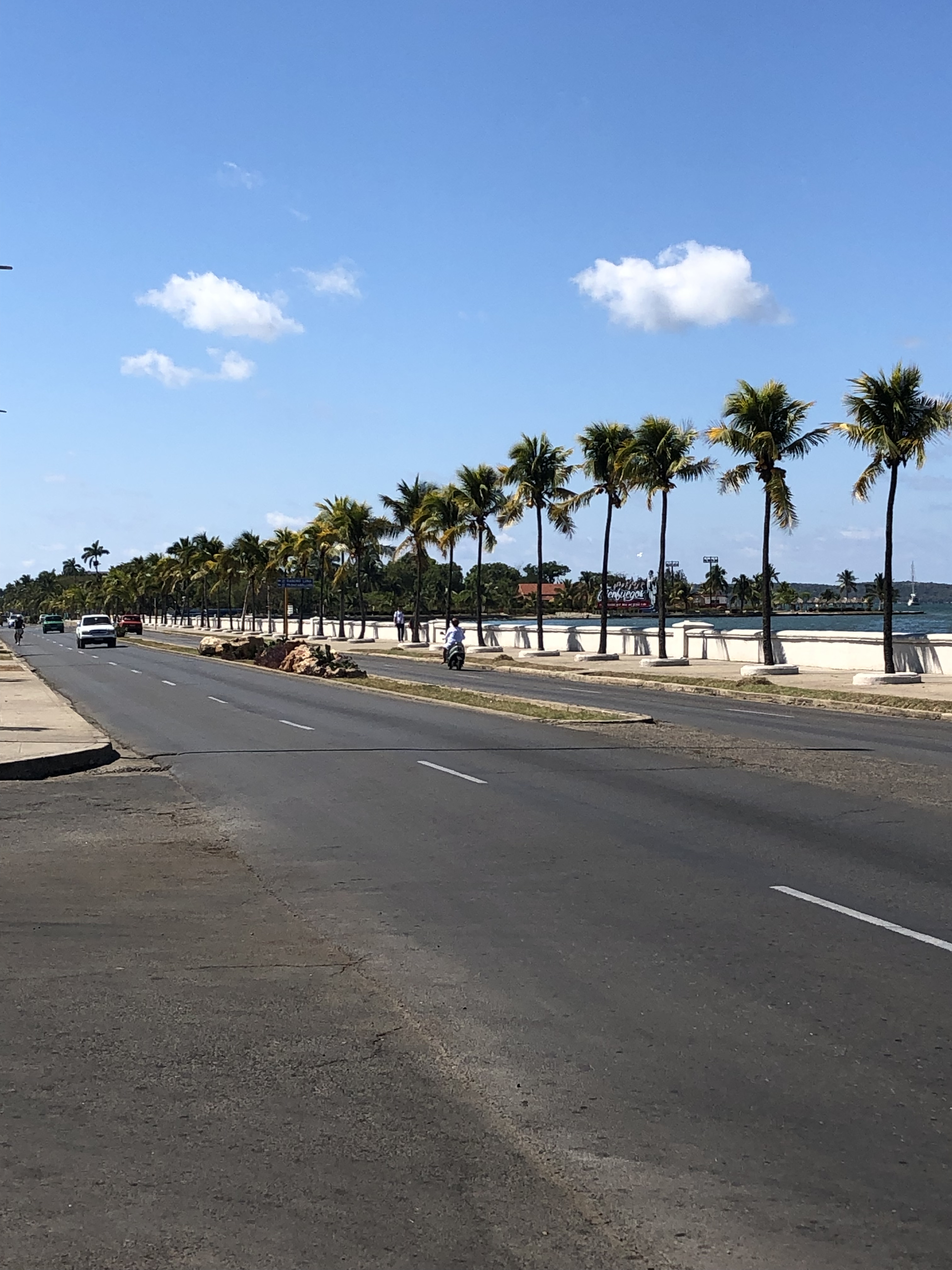
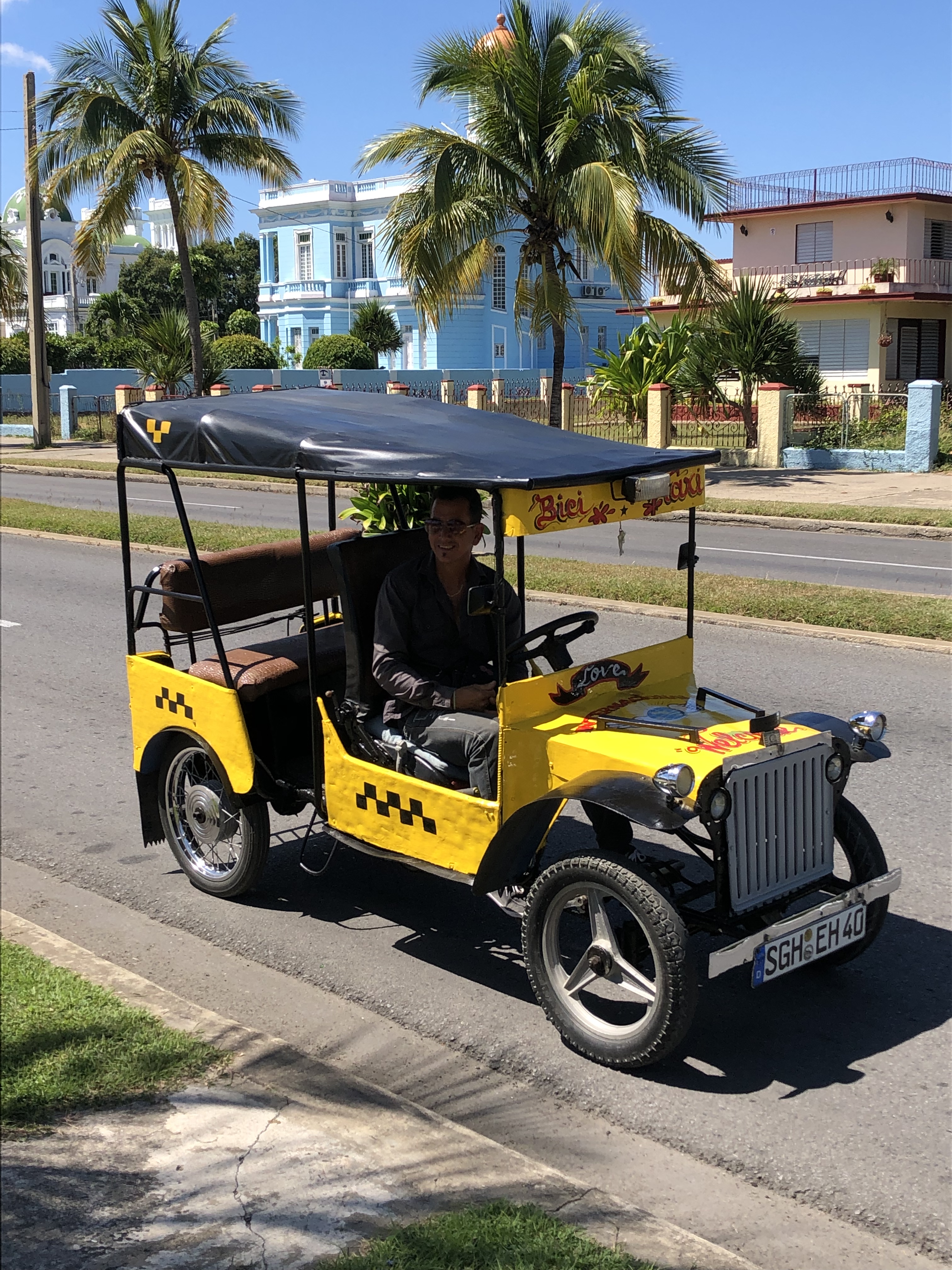
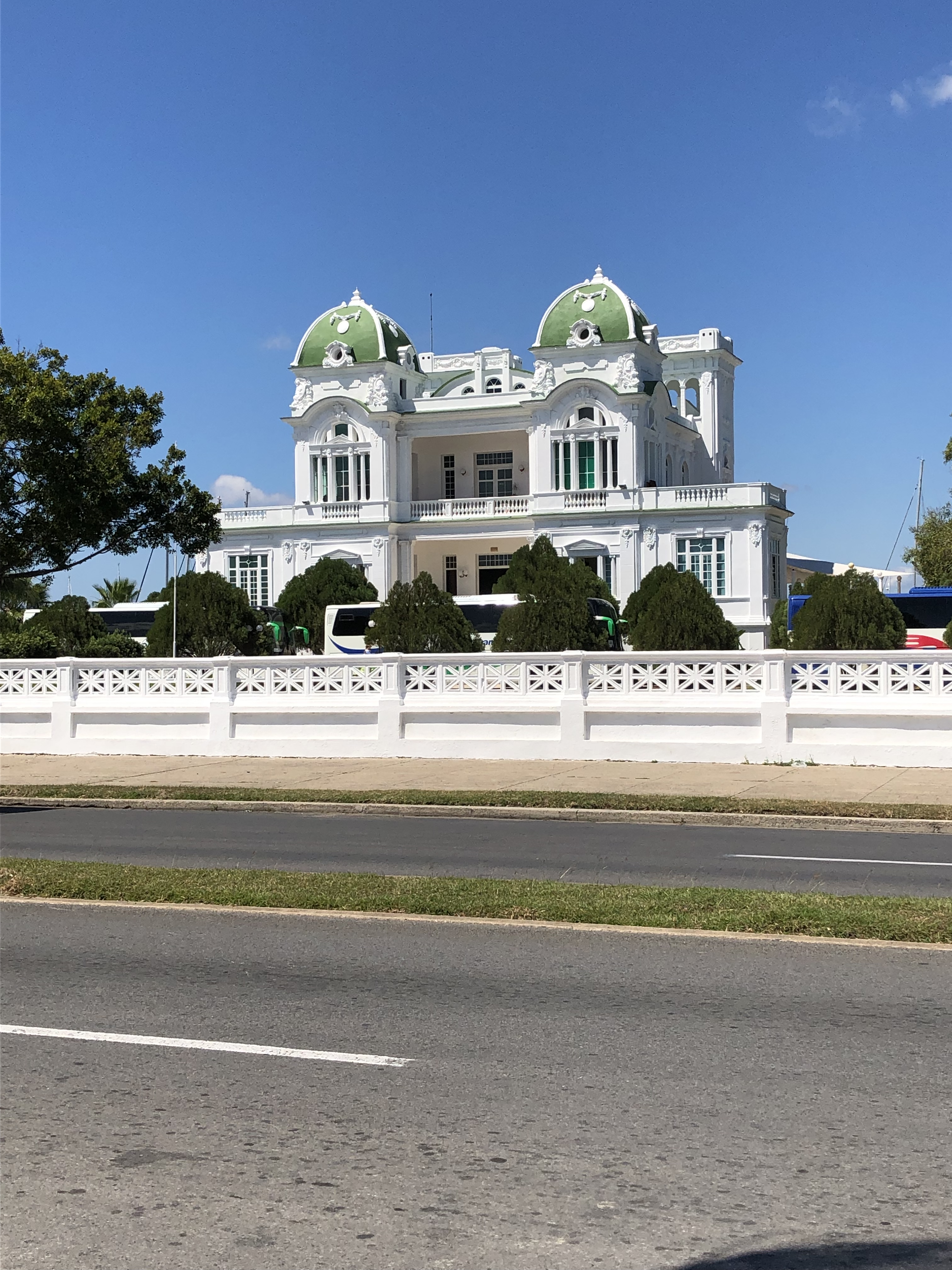
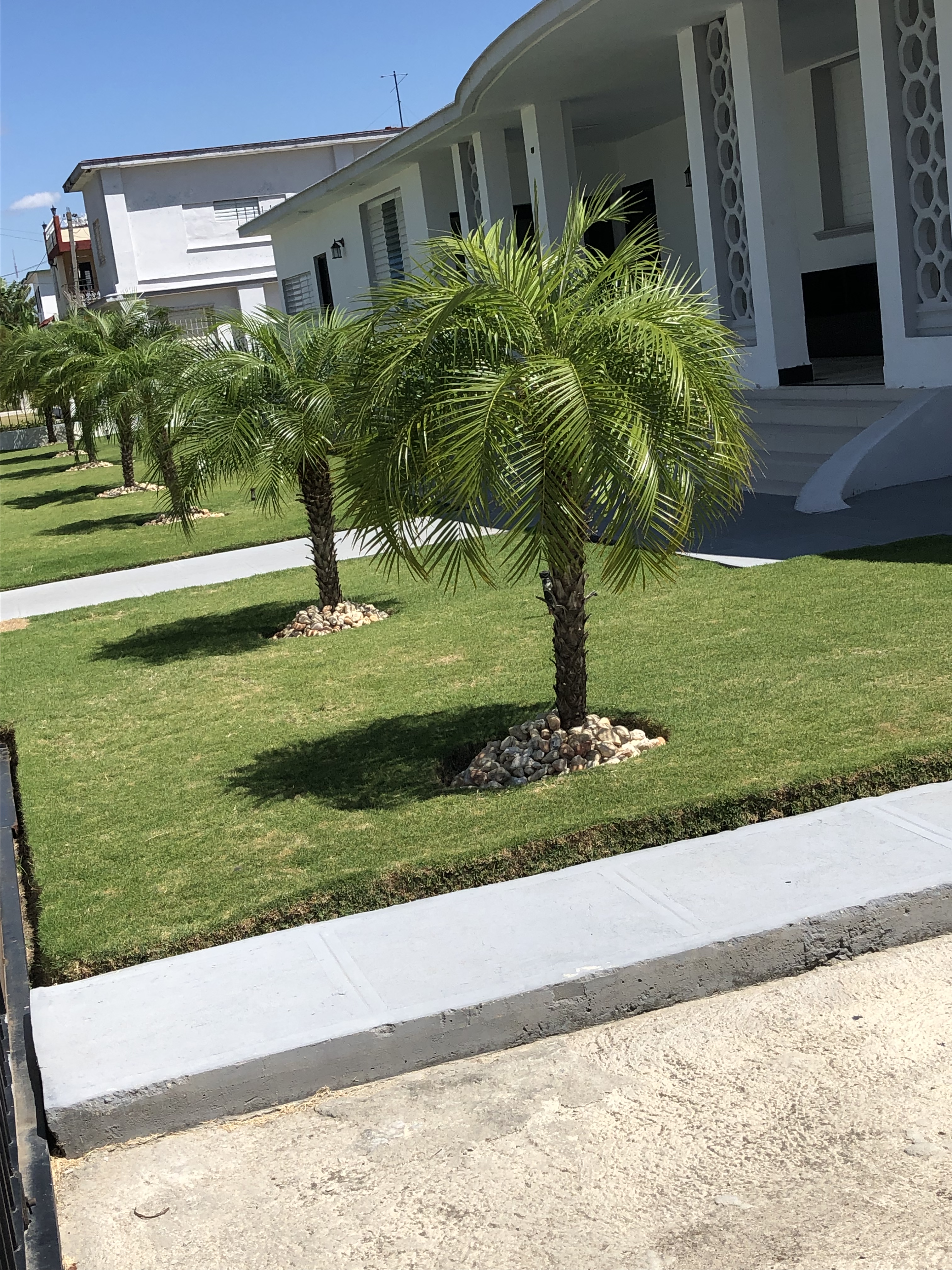
Day 2 of Cienfuegos saw us wandering along the malecon to the ritzy resort end of town. This part of the world is the home of 1960’s architecture and some of the homes are seriously cool, and immaculately maintained. We checked out the yacht club and some of the flashy hotels before catching a pedicab ride back to an expensive seafood restaurant and a lobster lunch (total bill under $40). Another great meal that night at the guest house and prepare for the next chicken bus.
Trinidad
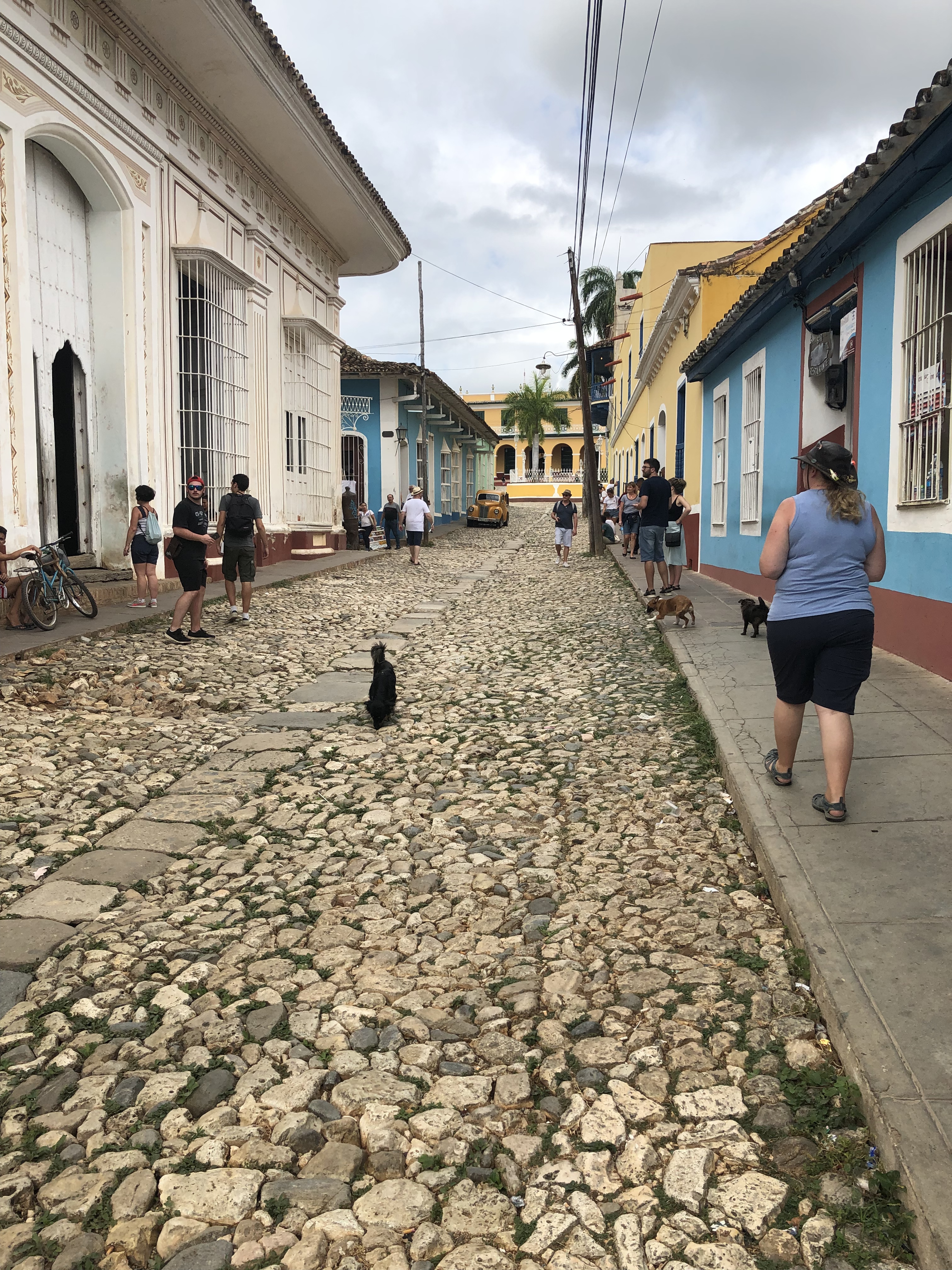
After a short 2 hr, chicken free, bus ride we arrived at the hilly town of Trinidad. Cobblestone streets meant that I had to use my bag as an actual backpack for the 4th time since owning it. Usually I can just use the wheelie bag option, but cobblestones make that a no go. So after trying to remember what happens when you unzip the straps, we did the 850 meter walk up and down hills lugging our packs on our backs. We were staying at yet another guest house (casa particular) and despite the $20 a night price tag, it was by far the best one we stayed in the whole time in Cuba.
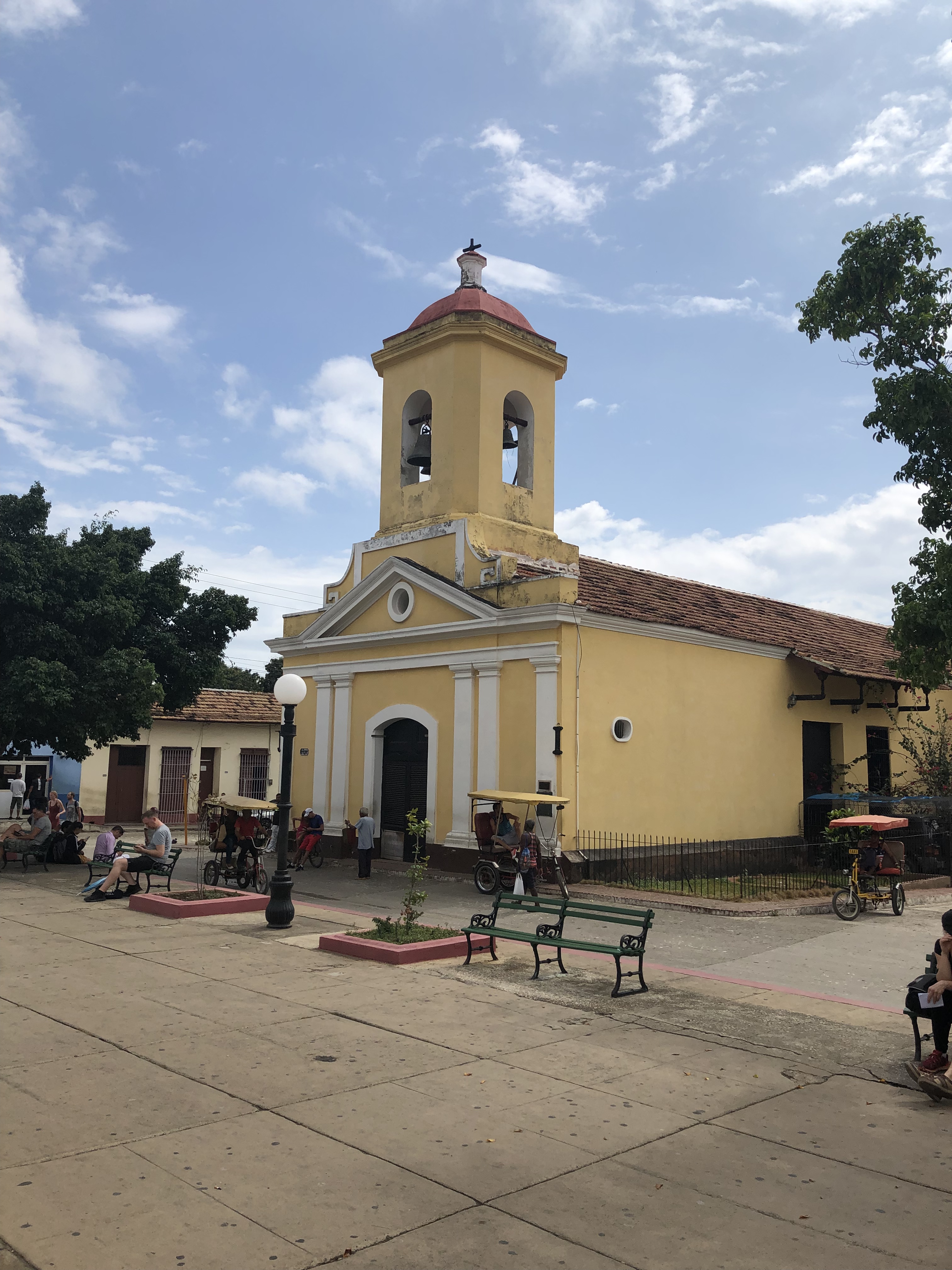
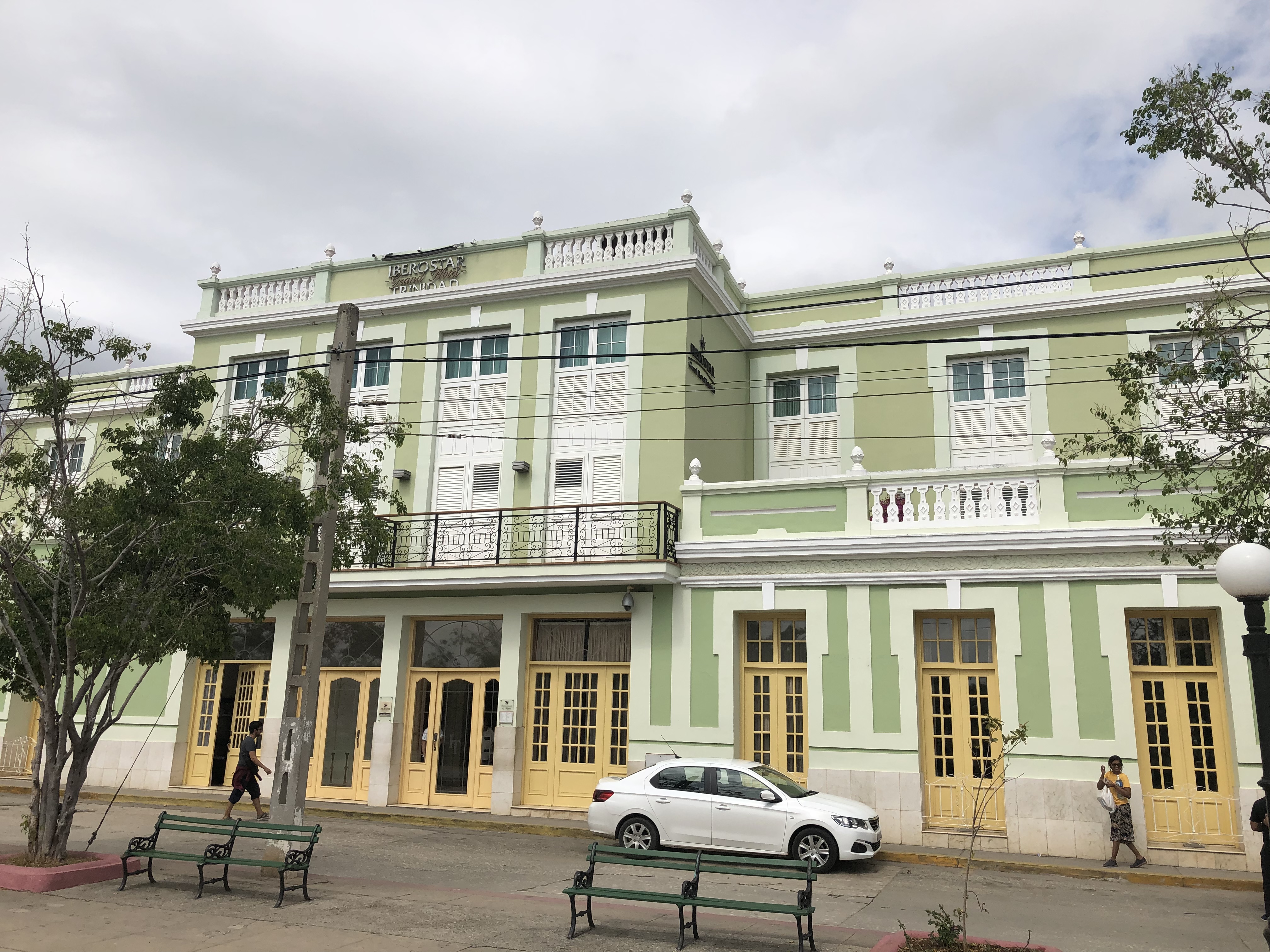
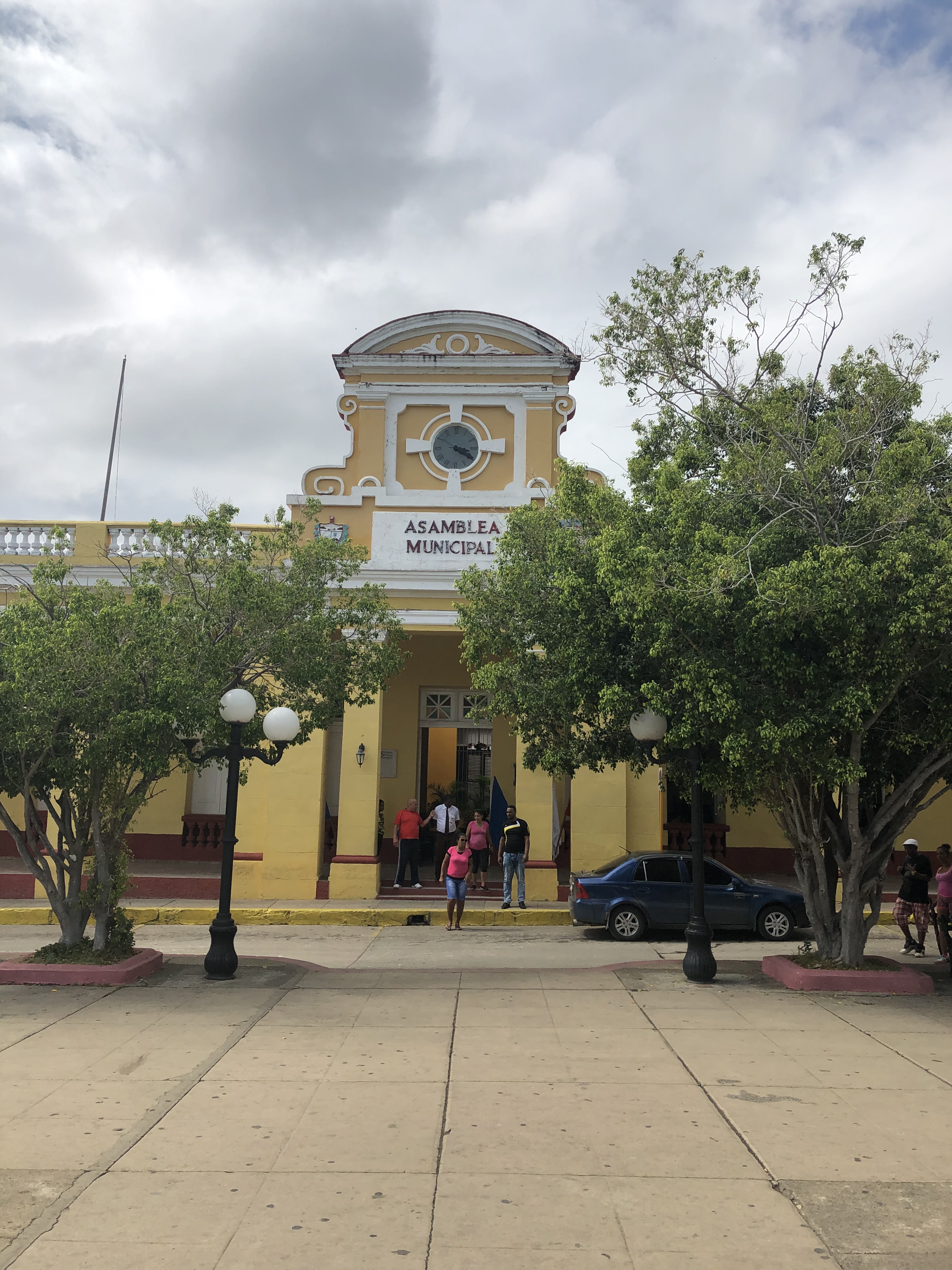
Trinidad is another of those see it in 2 hrs kind of towns. So after a cold shower, did I mention that it is hot and humid in the tropics, we did the schlep. Once again we hit all of the sights early: the museum (x2), cathedral, church, Plaza Santa Ana. And settled in to some Cuban music and drinks on the steps of plaza Mayor.
That is until a tropical downpour started. And it poured, for about an hour and a half it teemed. So we had cervezas and mojitos with a French couple until it finished.
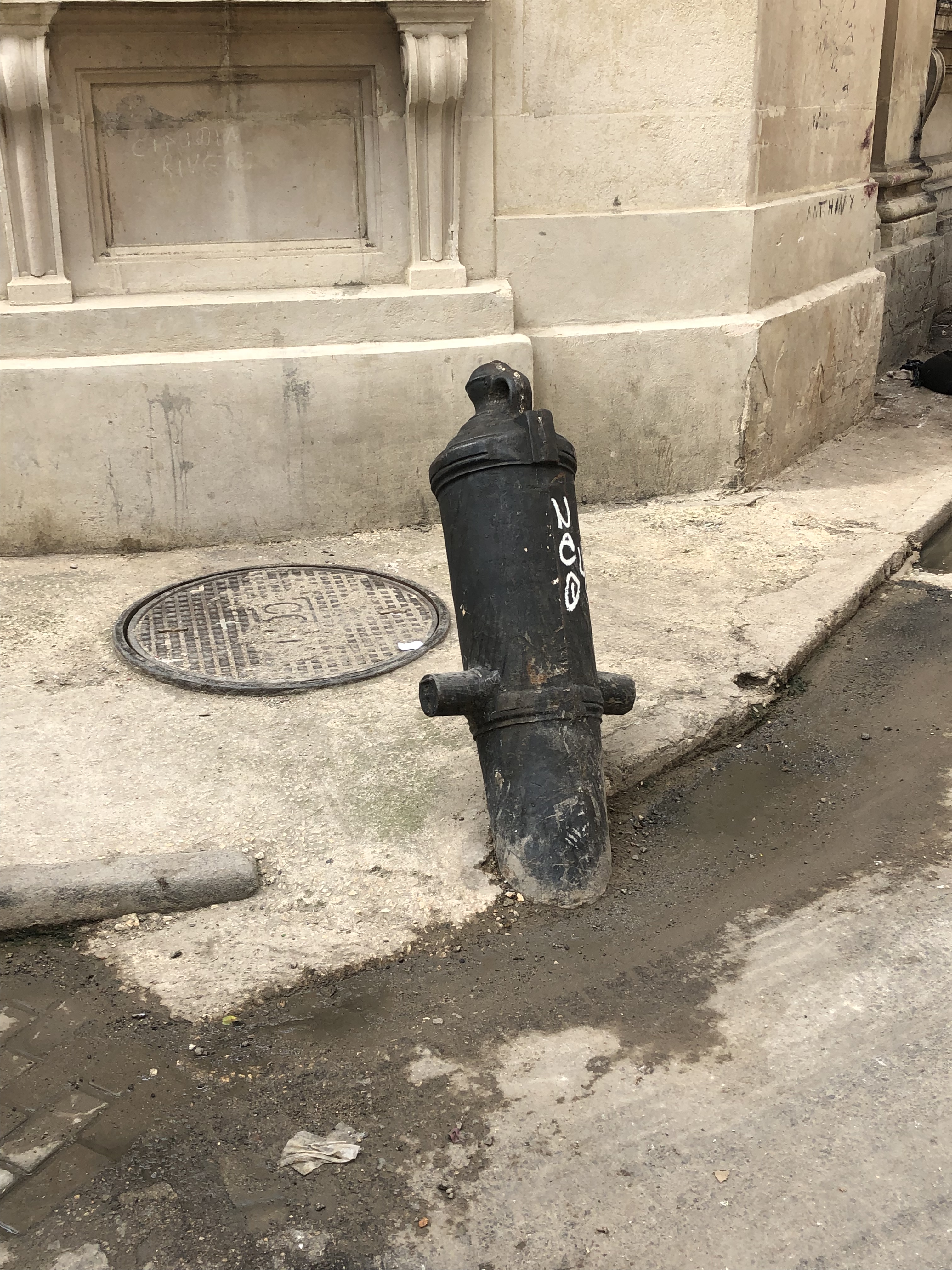
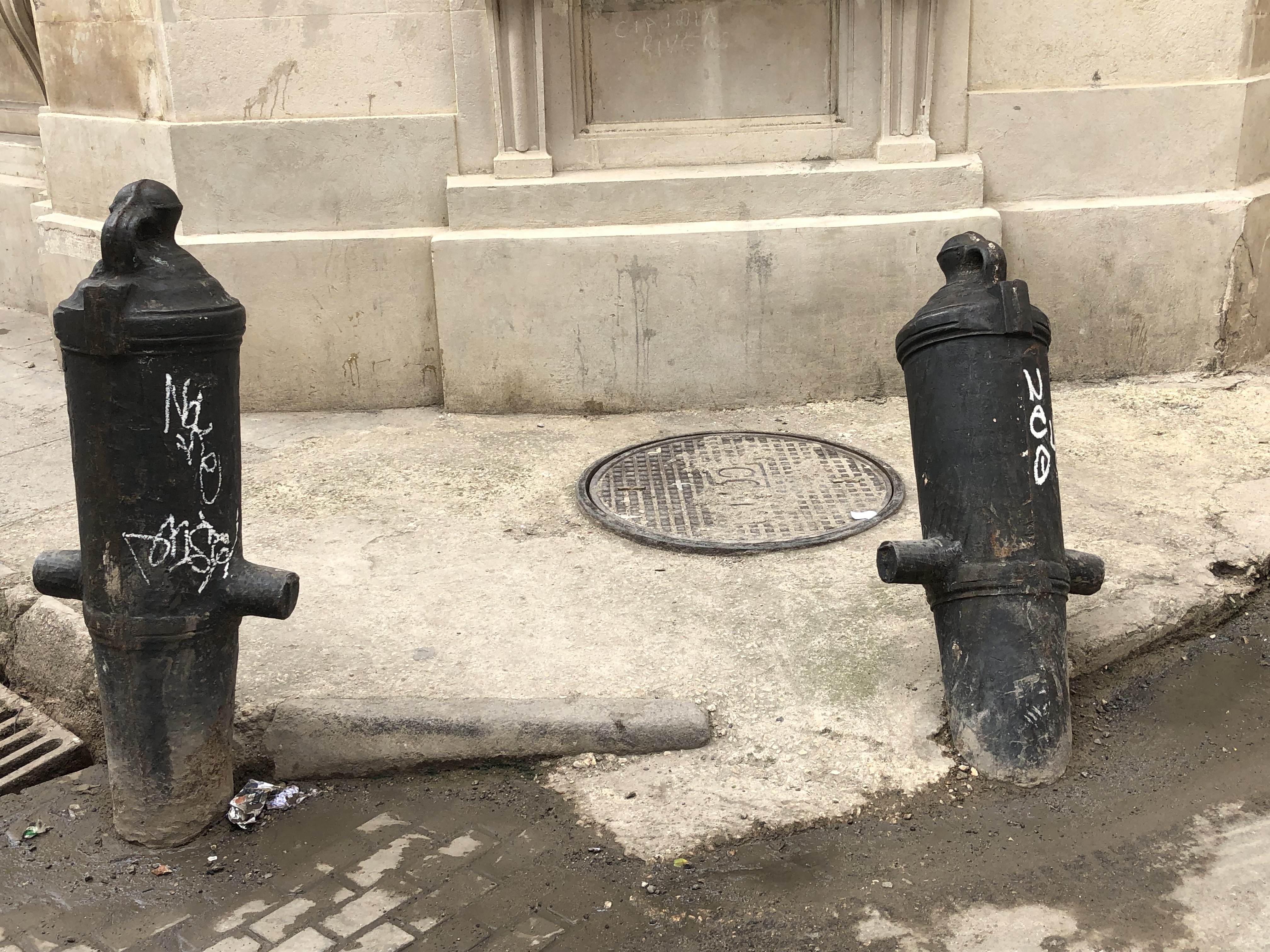
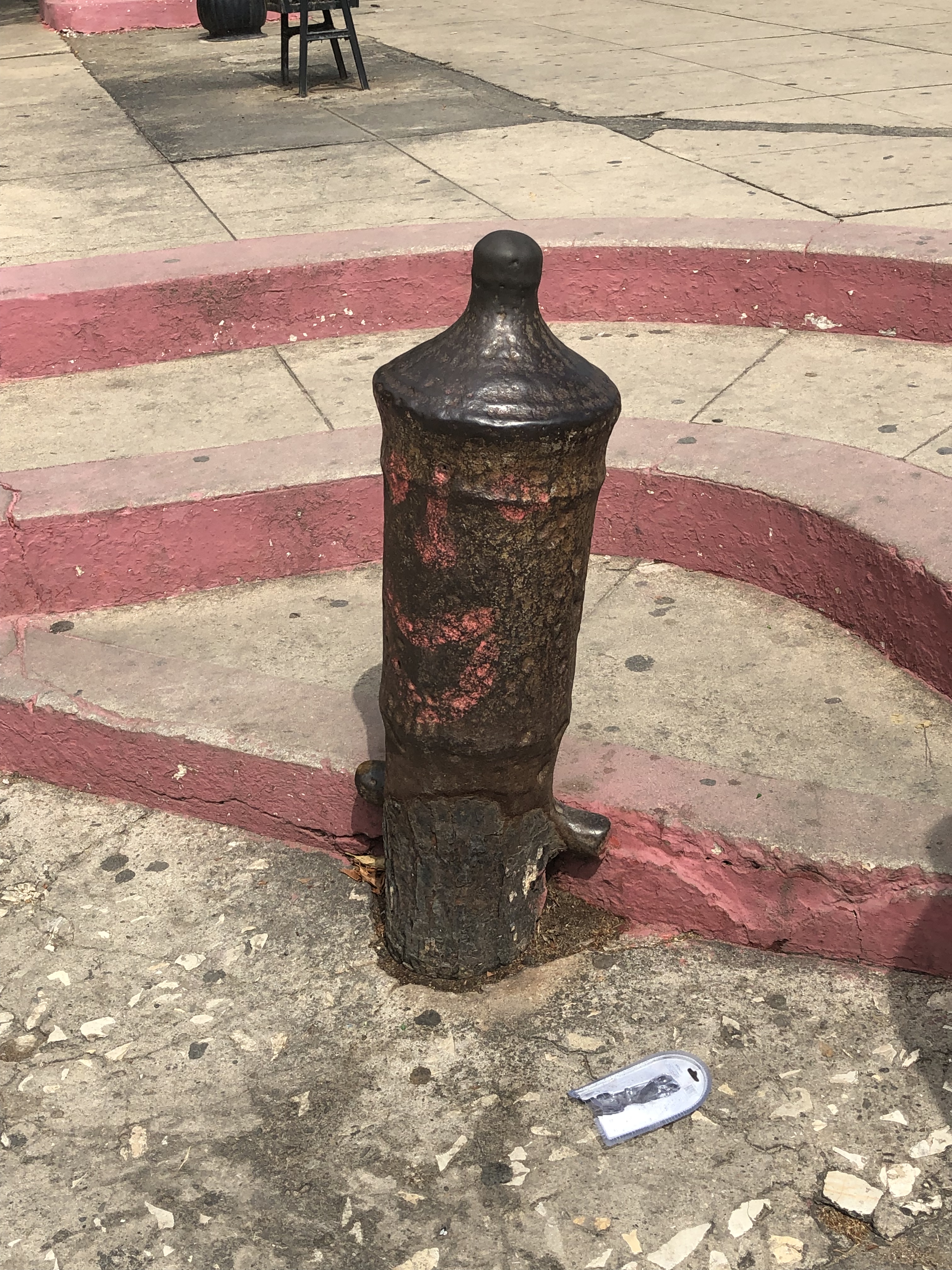
An interesting sideline that we came across in Havana and now again in Trinidad was the use of old cannons as bollards in the street. I guess with the Spanish and pirate heritage of the region, there were no shortages of cannons either laying about or contained within sunken vessels near the shore. Many of these have been salvaged, repurposed and buried to block traffic into pedestrian areas. It is nothing massively noteworthy but adds to the charm of the place.
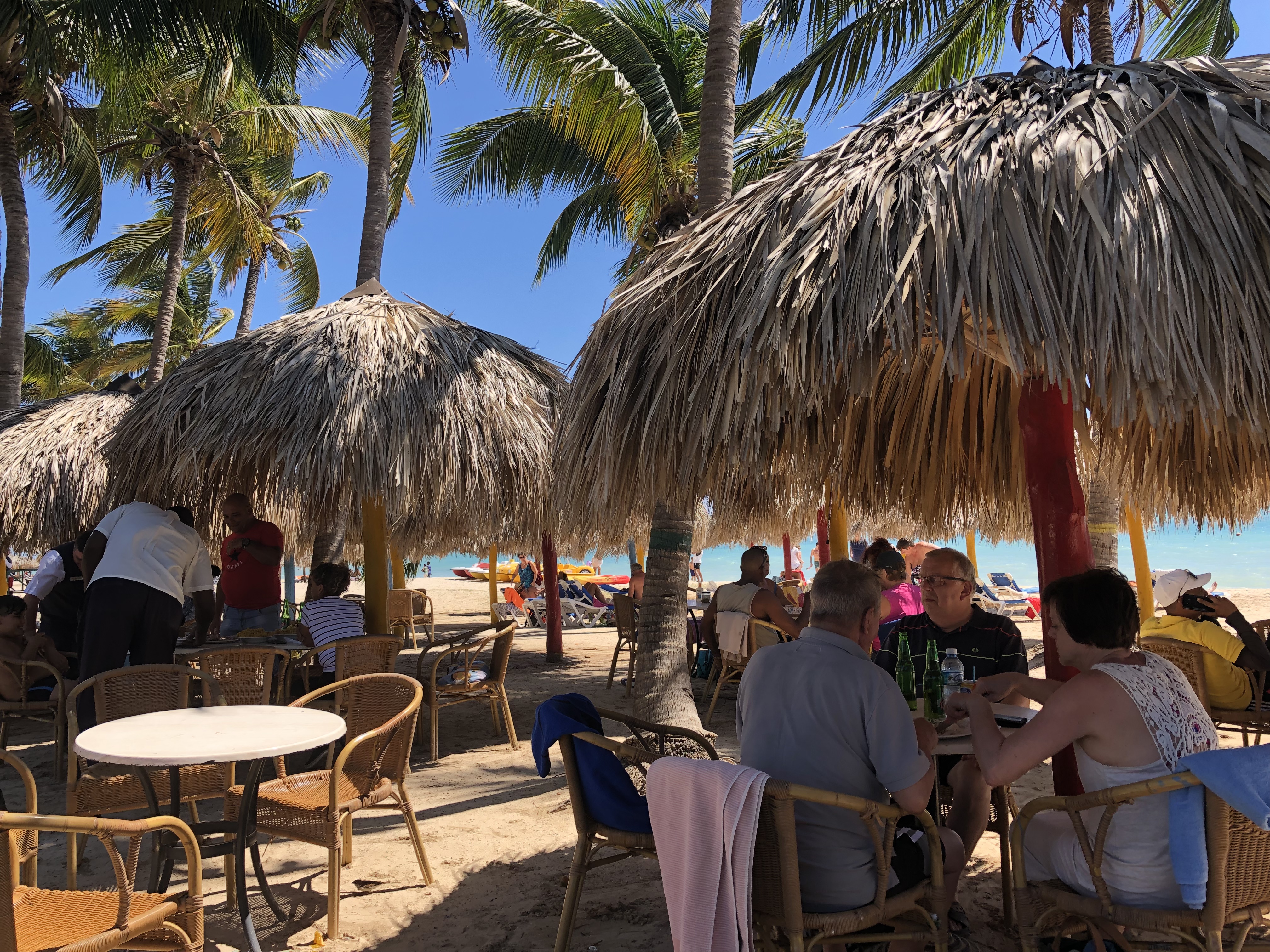
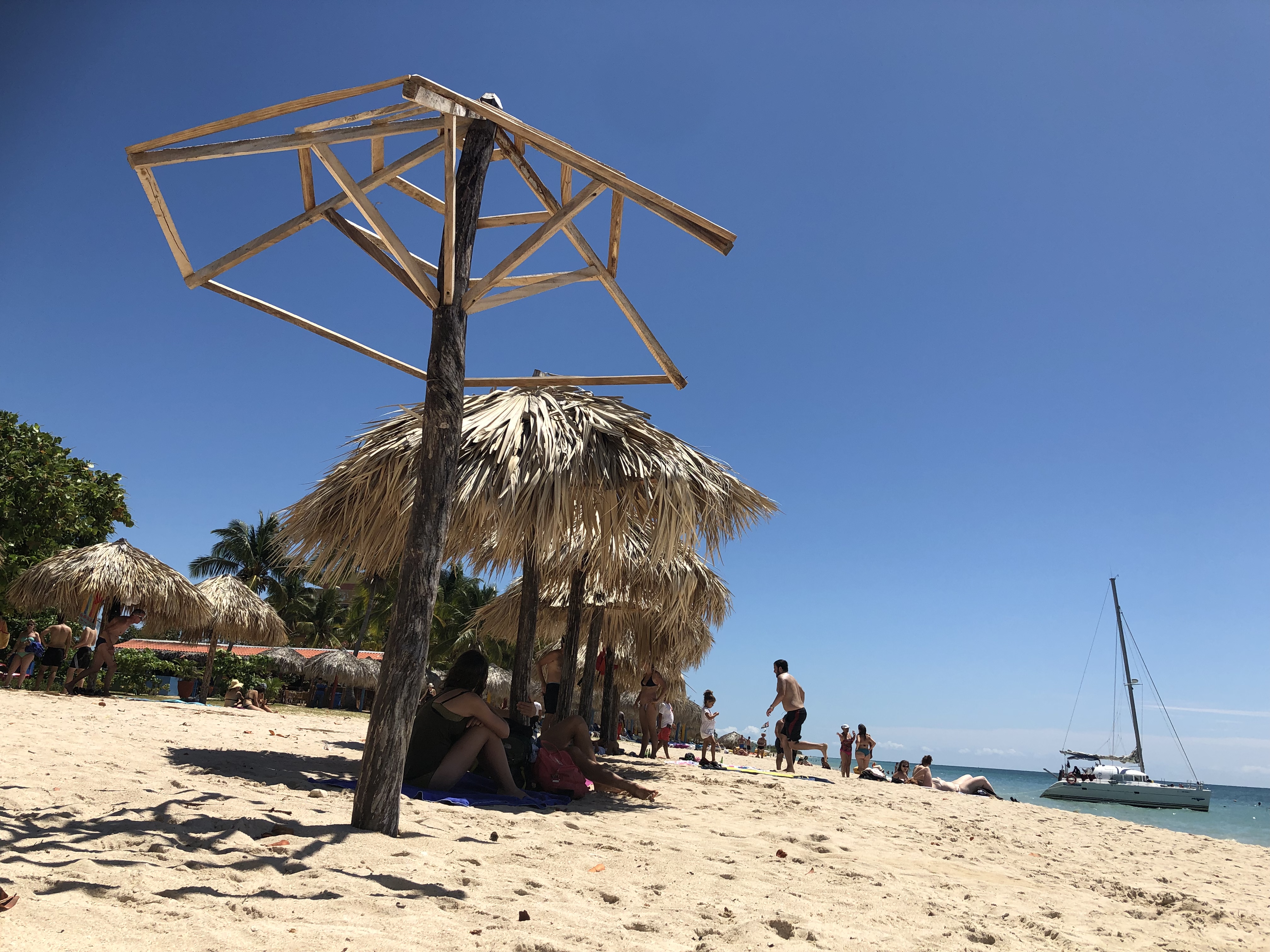
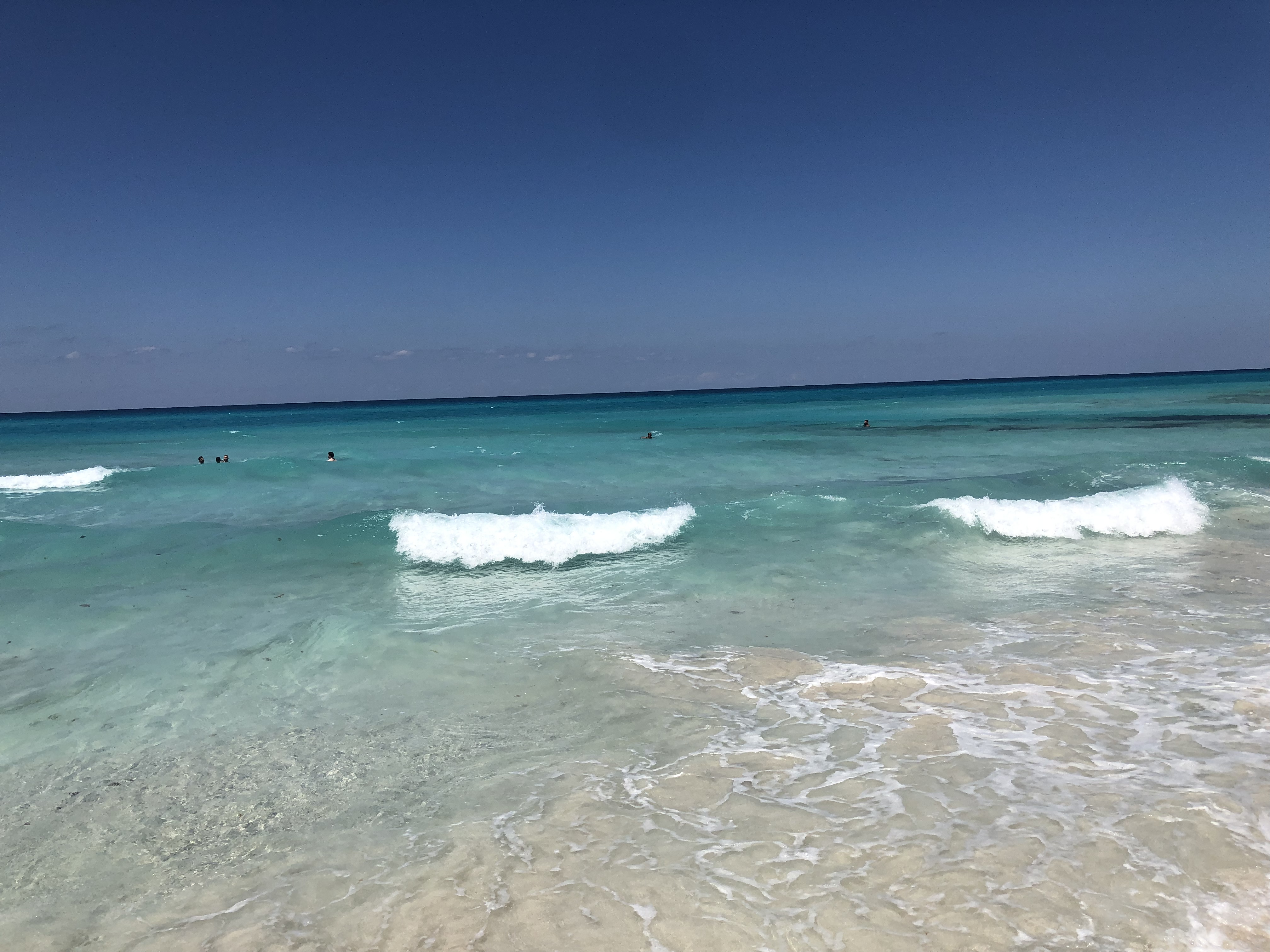
Fourteen kilometres down the road from Trinidad is Playa Ancon one of the best beaches in the country. So on day 2 we hopped a cab and spent 4 hours lazing on pristine white sand underneath palm frond umbrellas. I lolled about in the water while Jill worked on her Canberra tan.
You wouldn’t believe it…I got sunburnt…I haven’t been sunburnt in decades. Something about the tropical sun, breeze and water got me. I got red as a beetroot on my chest and a bit on my back. It is a shame it is about a week early otherwise I could have blamed it on the “April Sun in Cuba”.
Another early start for a 6 1/2 hour bus ride to one of the few beaches in the country reportedly better than Playa Ancon.
Varadero
Varadero is little more than a resort town, so very little in the way of tourist sights. No cool looking buildings, just rows of modern resorts, bars, trinket shops and restaurants. What the resorts do offer are all inclusive packages and many of them offer child free experiences. So for people like us who do not enjoy noisy rugrats messing up your holiday bliss, this could have been for you. But in reality it just a town full of drunk eurotrash.
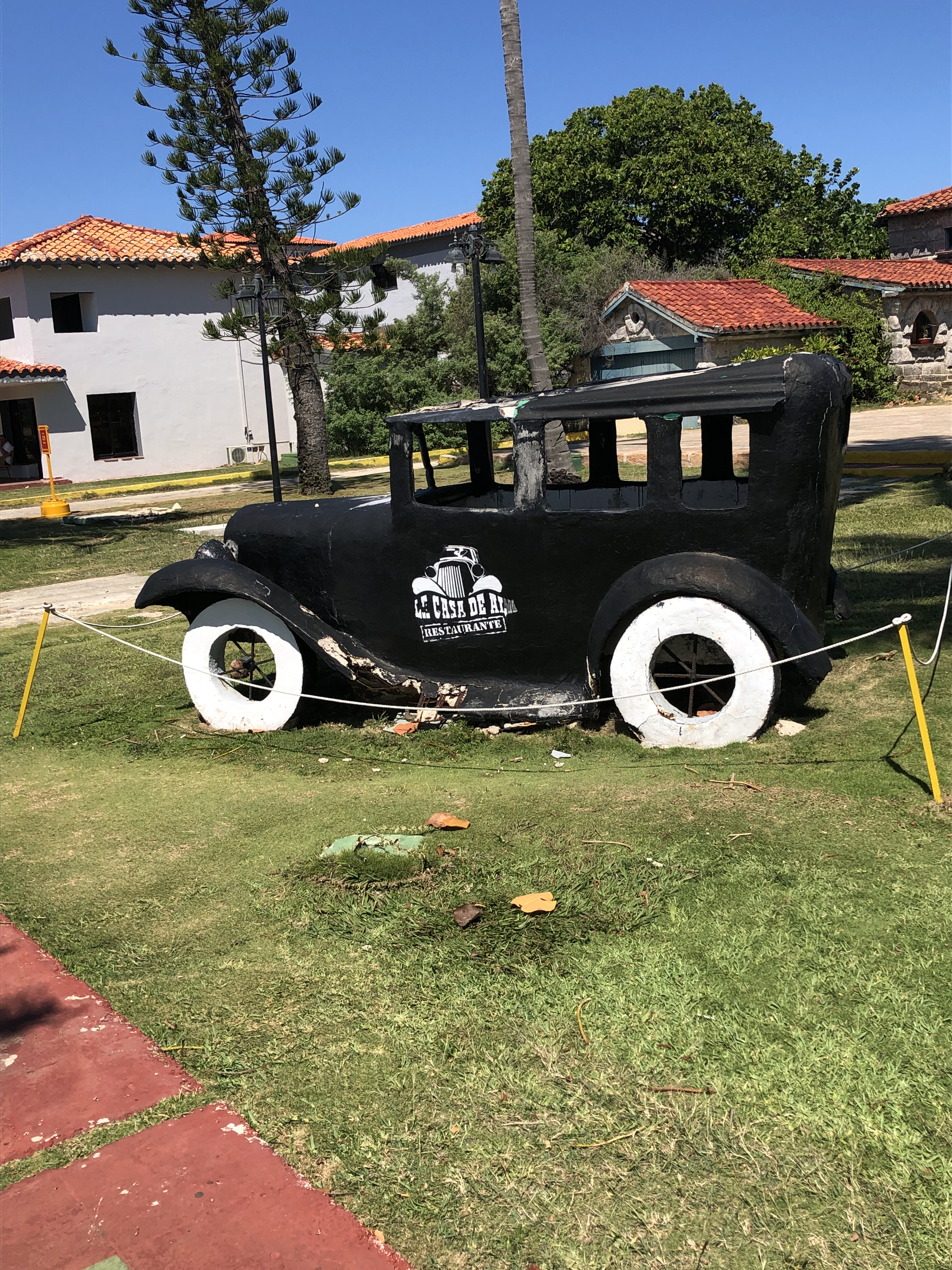
An interesting note that we learned was that Al Capone had a mansion here right on the ocean front. Of course it has now been turned into a guest house and restaurant.
The fact that most of the resorts offer all inclusive packages means that all of their food and drink is included. As such, there is very little need for them to leave. Which means that competition at the local restaurants is fierce. This we thought would be great news for us as we were not doing the package thing. But it was anything but, the restaurants tended to be more specialist or boutique. The prices were through the roof (by Cuba standards), the food was below par and according to Jill the mojitos were weak.
Don’t get me wrong, the beach was nice (if a little too much seaweed by Australian standards). You could get an ok meal cheaply. And Varadero could be considered a good holiday by some… just not us.
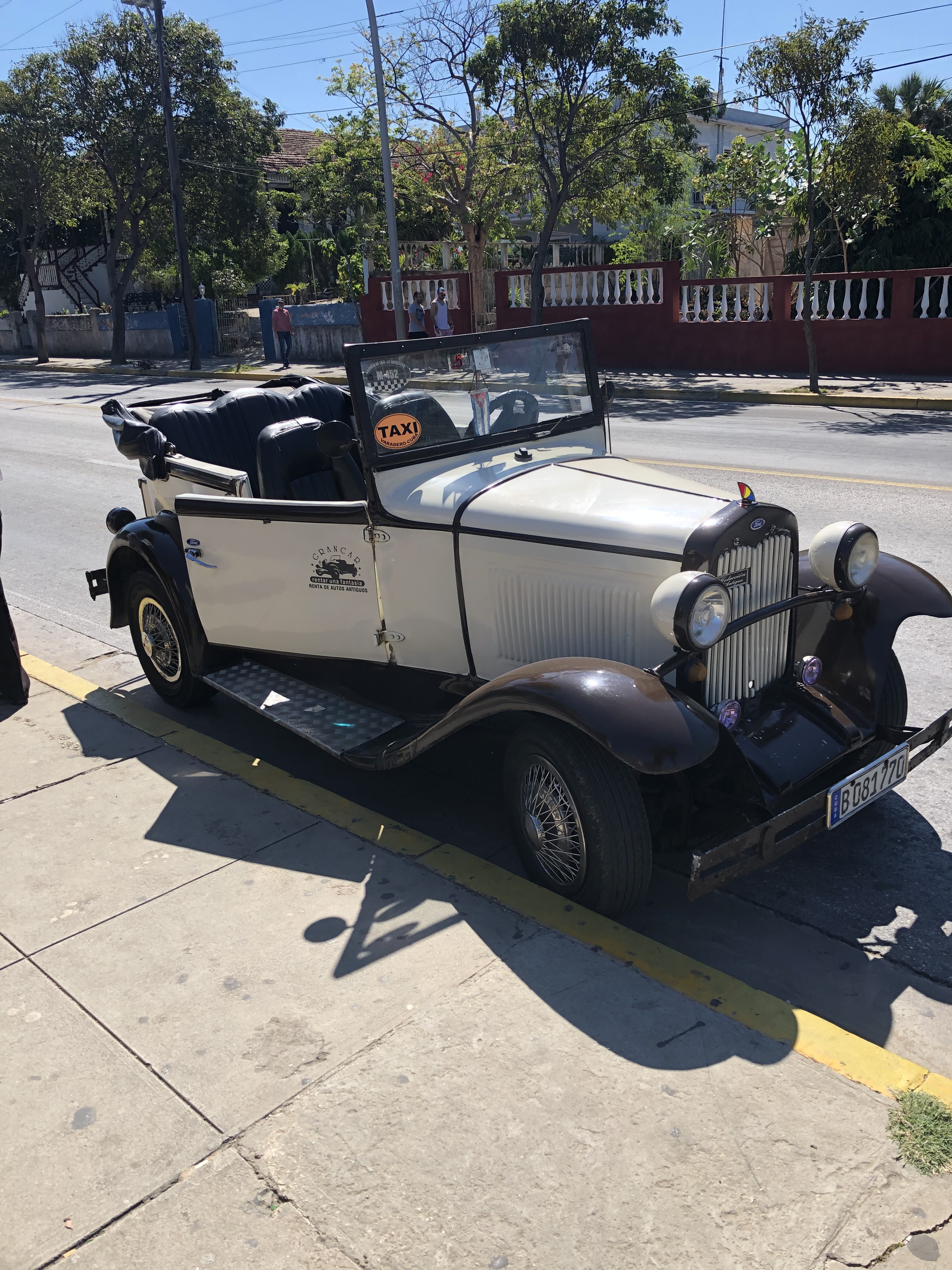
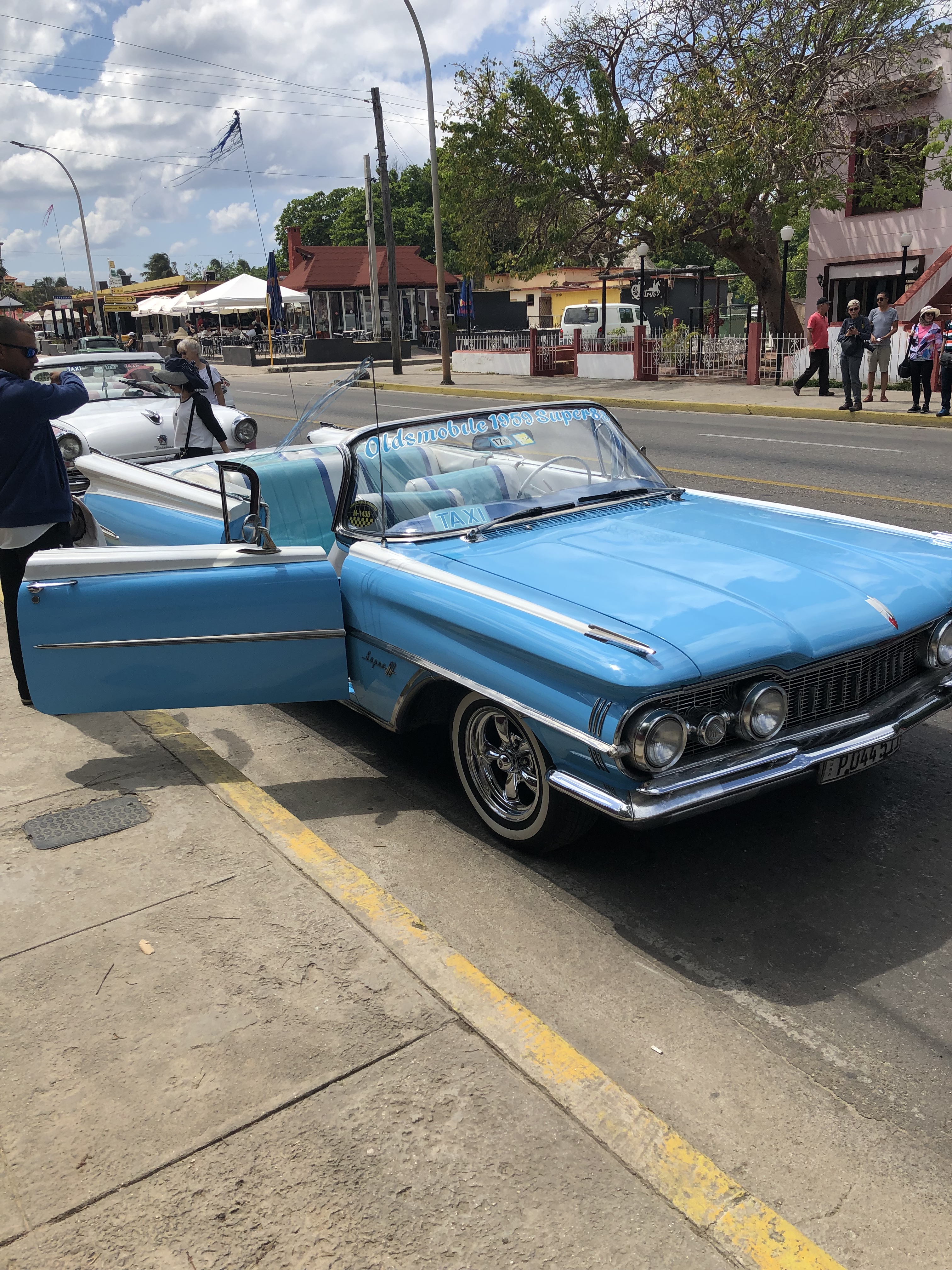
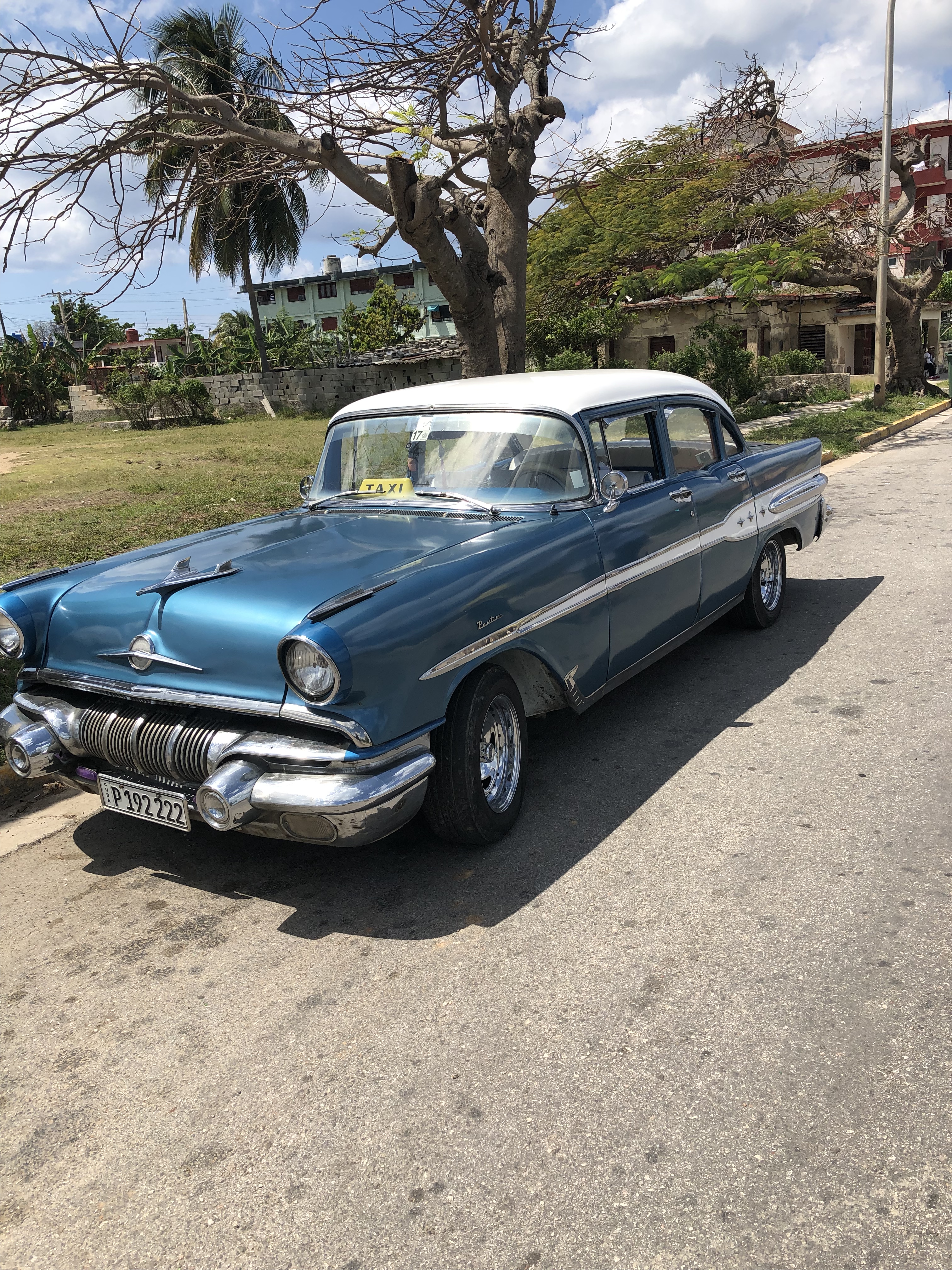
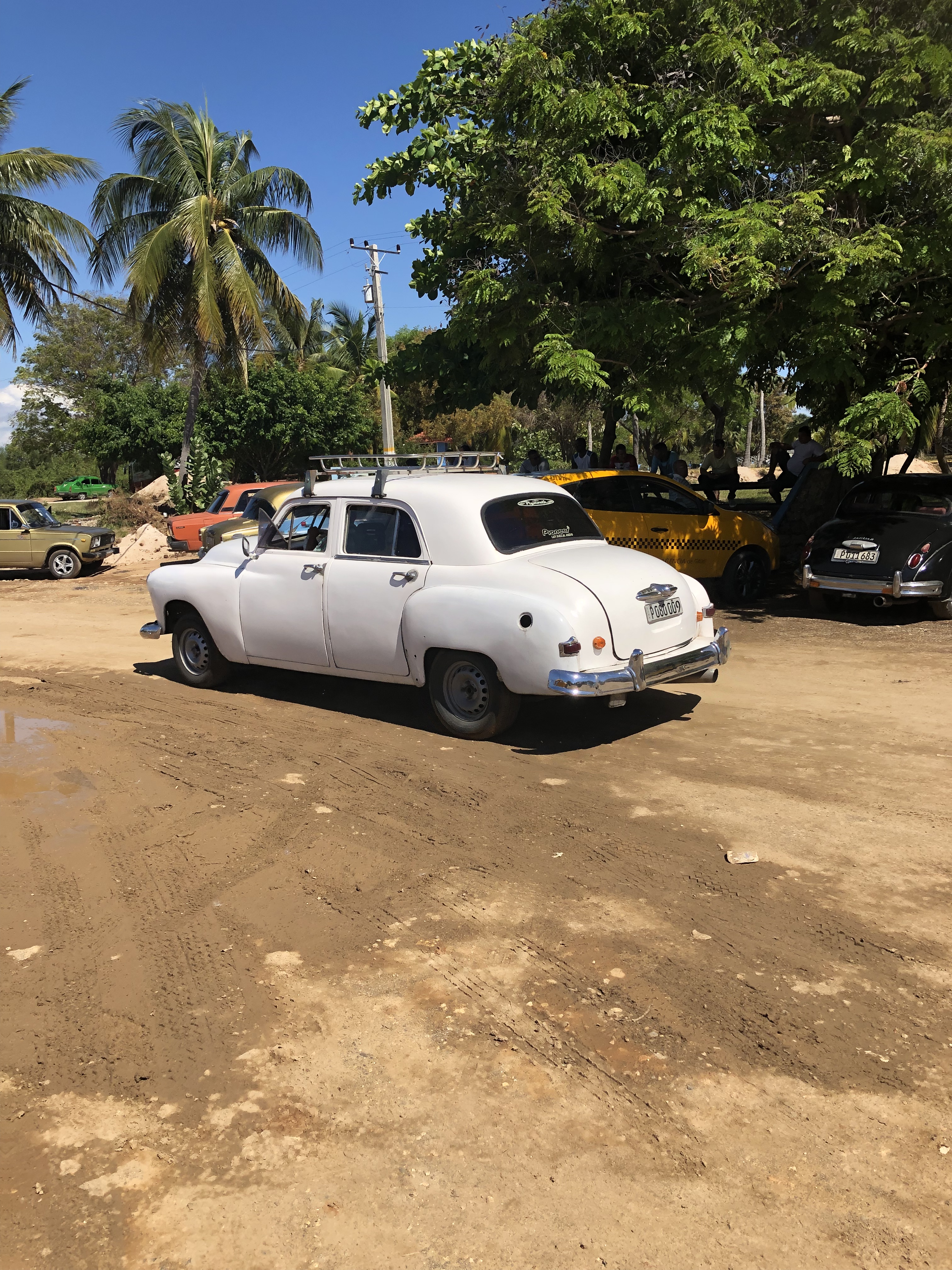
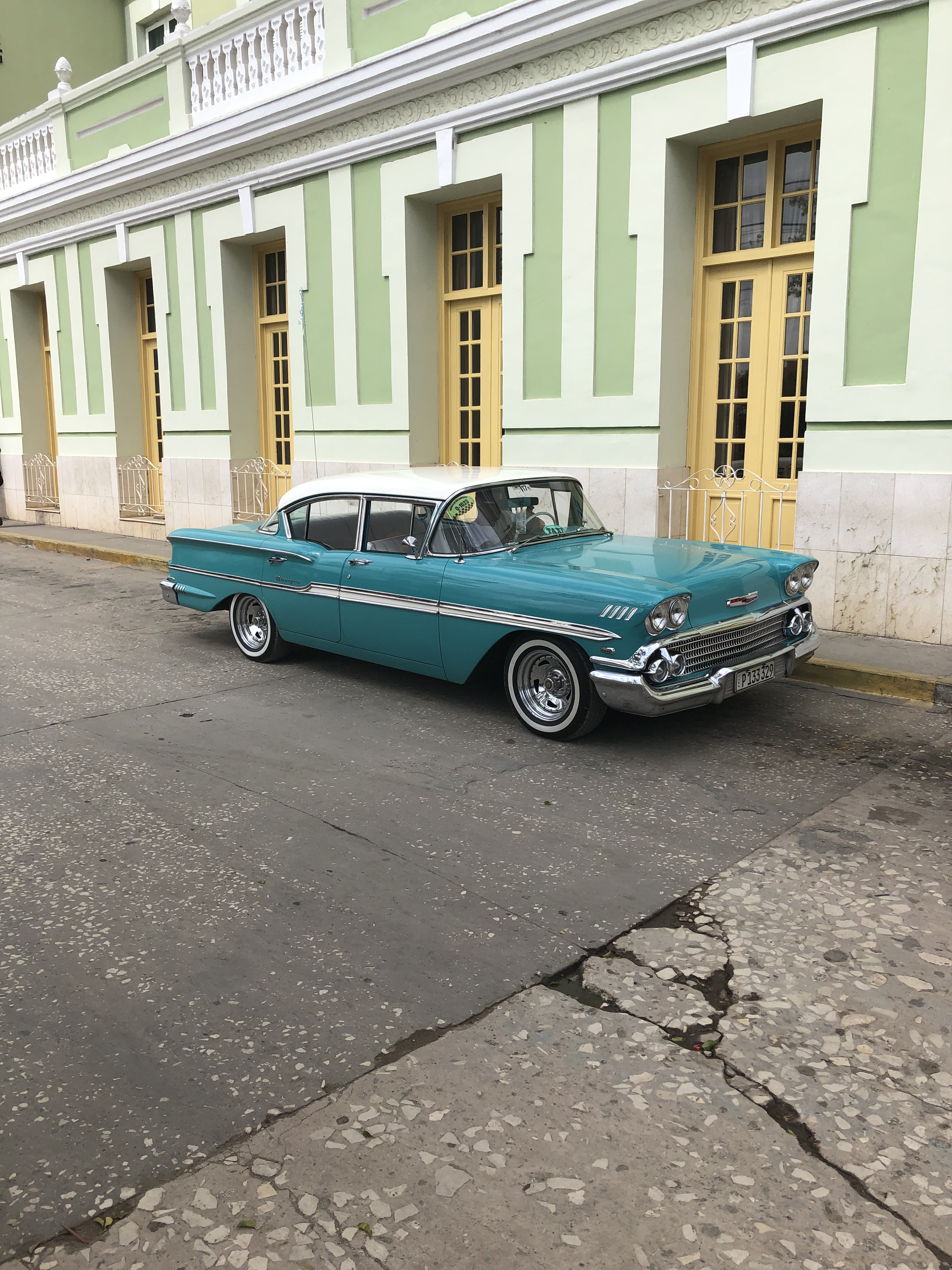
But as with all of Cuba, the classic cars were everywhere. We got a 1957 Plymouth as our standard cab from the bus station. We wandered the street to see gangs of drunken package tourists, clinging to their refillable booze jugs or kegs, being generally loud and obnoxious. And I am sunburnt, here I am an Aussie surrounded by Europeans and I am the one glowing red. I feel like I should hand back my Australian card…poor form.
In short Varadero was hellish, but it was insightful as an example of everything that we would never want to do on a holiday.
Cuba an overview
On the whole I loved Cuba and am so glad I got to experience it before the tourist hoards turned it into every other largely homogenous island nation. But it is an island of contradictions. Many of the things that give it its charm are also detractors to its effective operation.
Rubbish collection is a major issue in Cuba with many corners occupied by stinking, messy skip type bins awaiting removal. Dogs infest the streets during the day, rifling through the uncollected rubbish bins. Cats cannot be seen during daylight hours but come out in force at night and (yep you guessed it) raid the uncollected rubbish bins. This means that very little of the rubbish remains inside the original receptacle but rather is scattered in the vicinity. And when it does get collected, only that which remained in the bin gets removed, leaving piles of filth and stink on many corners.
The lack of internet was annoying but less of an issue than I thought it would be. The adoption of the French attitude to smoking (including at meal tables) was more of an issue than I thought it would be. But the people are wonderful. There is virtually no crime, no drugs, no guns just sunshine and sea breezes.
Propaganda (anti US) remains high to this day. Billboards are filled with images of Fidel Castro or Che Guevara and words like viva la revolution are commonplace, especially in the country areas.
After less than a day…this place is everything that I had hoped it would be…I love it. You get an idea in your head of what a place will be like and are usually disappointed…but not here.
We arrived late afternoon and had an absolute nightmare at the airport trying to get our money changed over. They have unmanned money changing machines…not ATMs but rather you scan your passport place in euros and retrieve the local equivalents… and there are only 4 of them…this doesn’t work very well when you cannot get the local currency (the CUC) elsewhere and you have 3 plane loads of people trying to get cash…simultaneously.
It is probably timely to mention that Cuba has two currencies that operate in parallel. The one that tourists use is the CUC which is worth the same as a $US. But if you try and swap a $US for it, it will attract a 10% surcharge. Euros and Canadian $ are the currencies of choice and they attract no surcharge. The second currency is the CUP which is used by the locals and is the equivalent of about 4 cents. So one CUC will buy you 26.3 CUP. Obviously, this adds a degree of difficulty to getting change.
So back to the airport, we stood in line and waited…something that we are learning is also a very Cuban thing to do. We got to our accommodation to find that they were full so we would stay 2 doors down at the neighbour’s place…Cuba does not do much in the way of traditional hotels or hostels, it is more like a home stay, where you rent a room in someone’s home…it was all good and we finally met up with our intended host the next morning.
Our accommodation was in the middle of everything but nowhere near anything…we were relatively equidistant between Old Havana, New Havana and Chinatown…but still quite a walk from most things. On night one, after the airport, money and housing debacle, we headed out for a walk and a meal. We got to the water and wandered along the esplanade (Malecon) seemingly not having passed by any restaurants. Either this was wrong, we were unlucky or we just had yet to pick up on the rhythms of the place. Having eventually found a place for dinner and eating well (if expensively by Cuban standards) we called it a night.
For $5 a head the little home stays offer breakfast, and ours was no different. So our first full day in town started with fresh fruit, fruit juice, coffee, fresh rolls, egg, ham, cheese and a great chat with Charlie another houseguest (Canadian). We then got about the rest of our day. This started with a walk towards old town and the checking out of all of the old buildings.
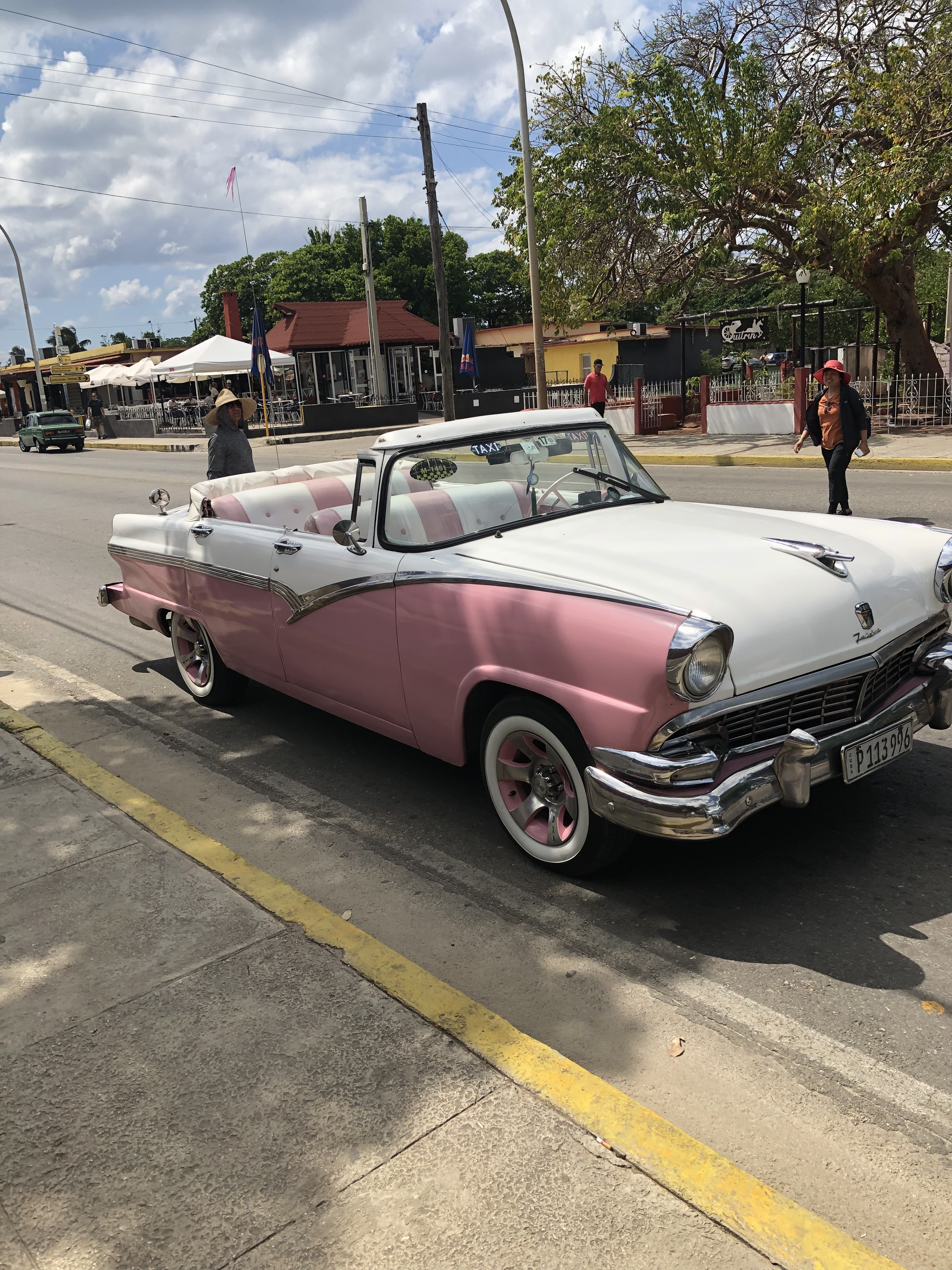
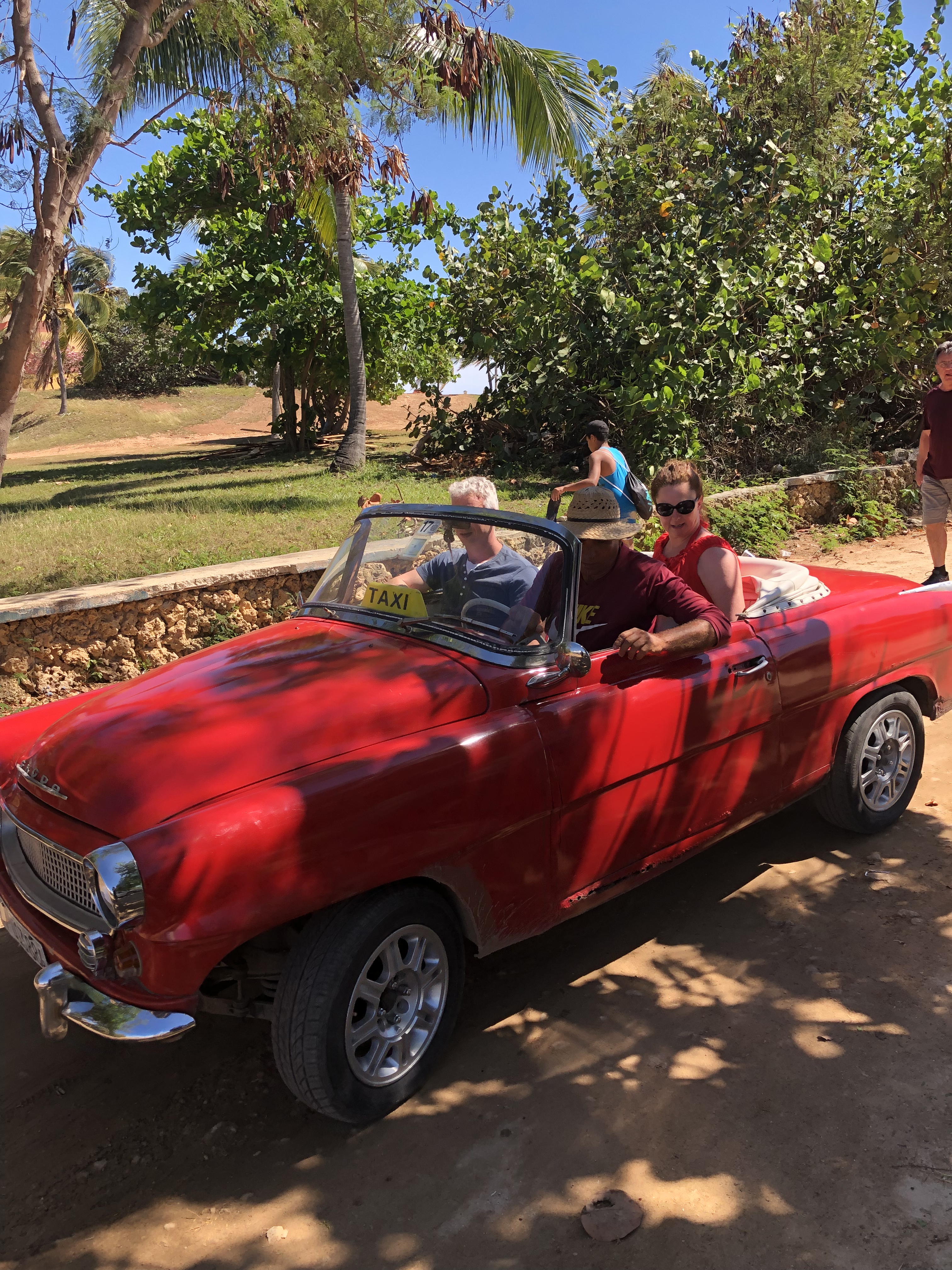
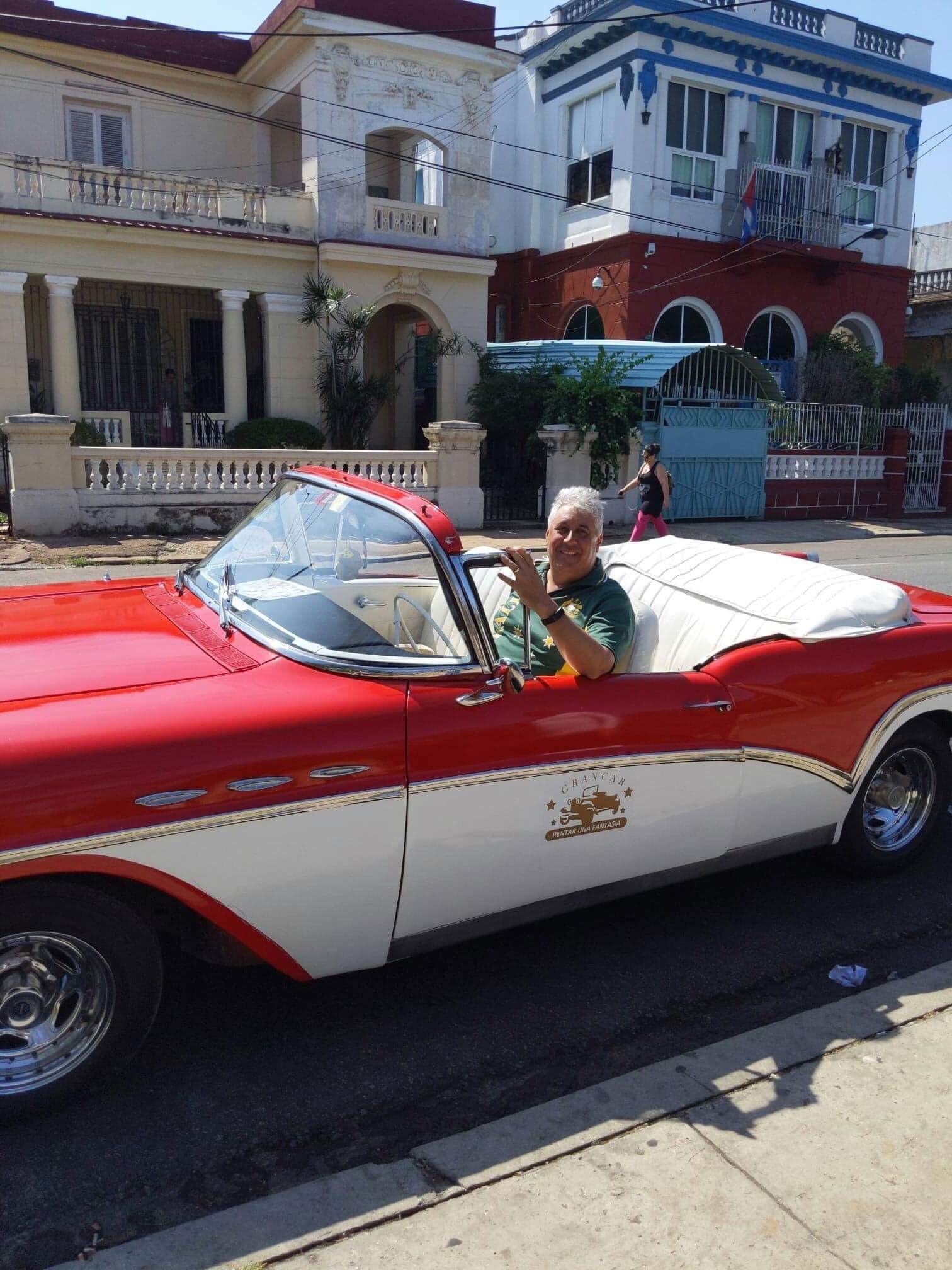
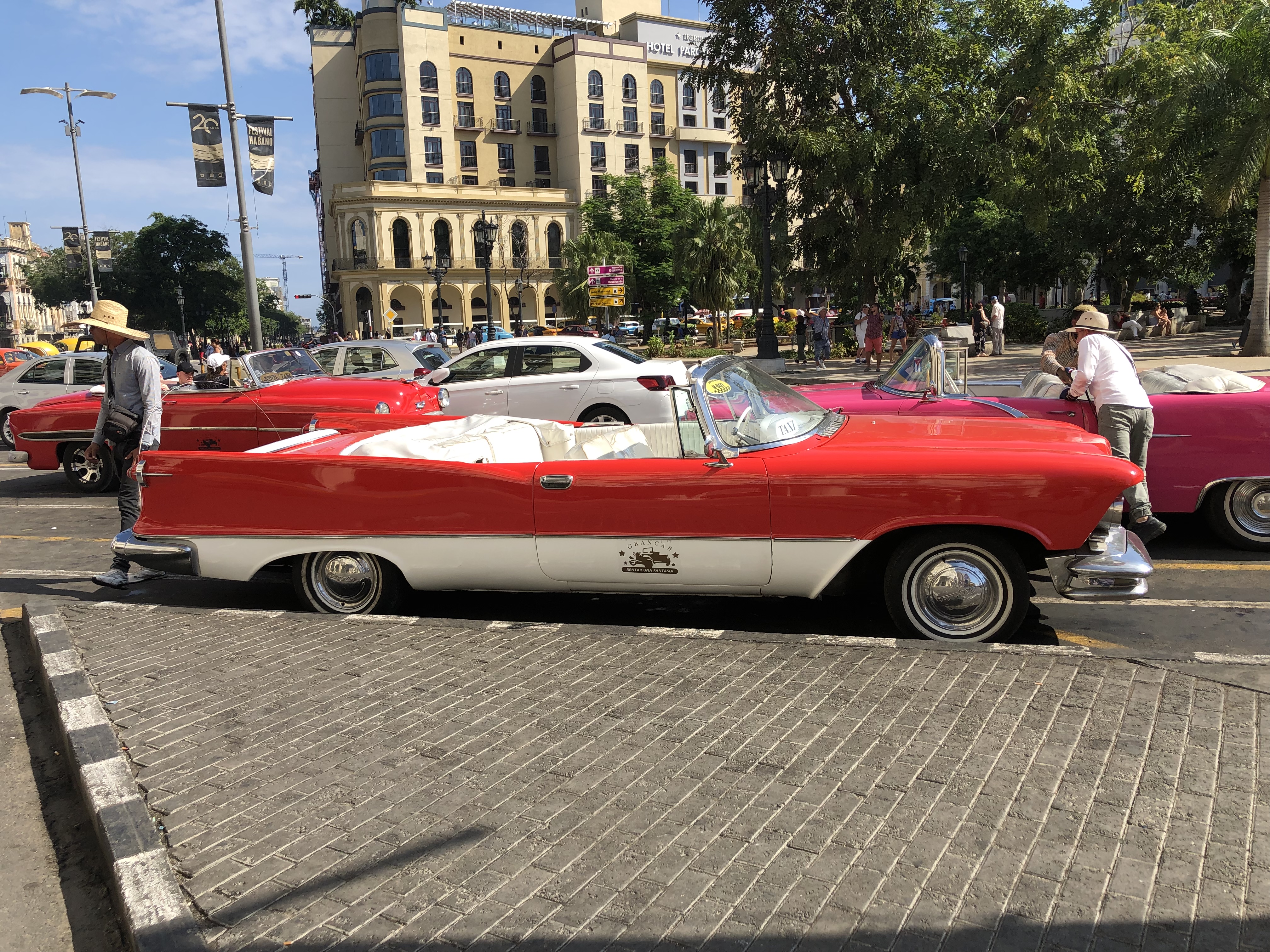
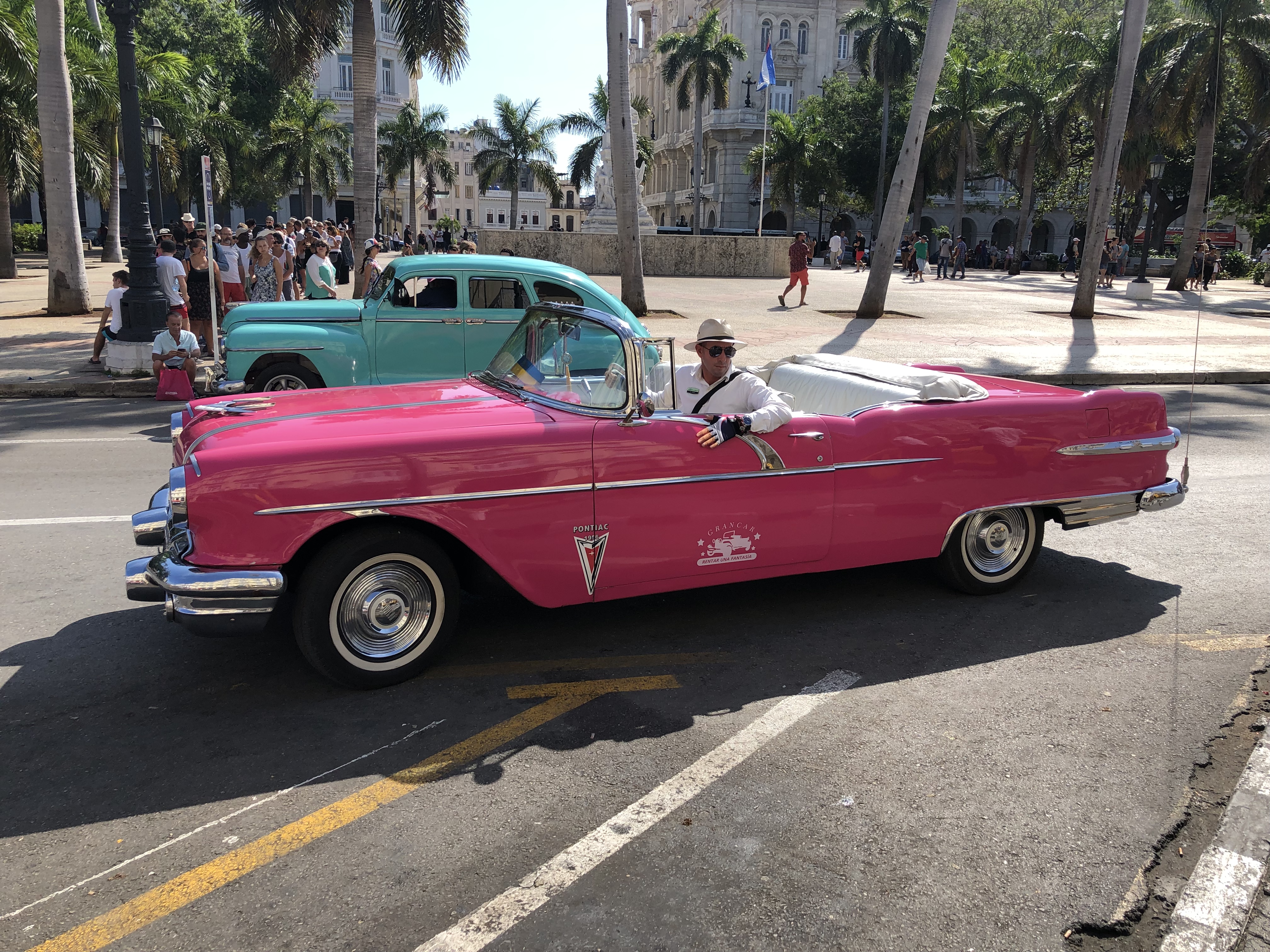
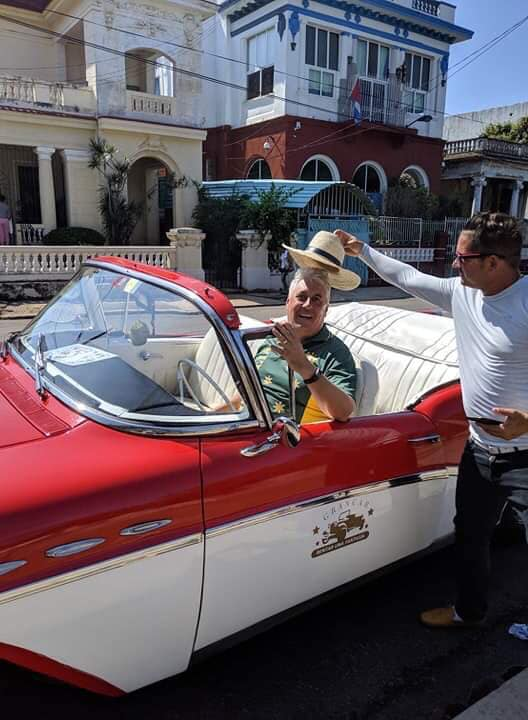
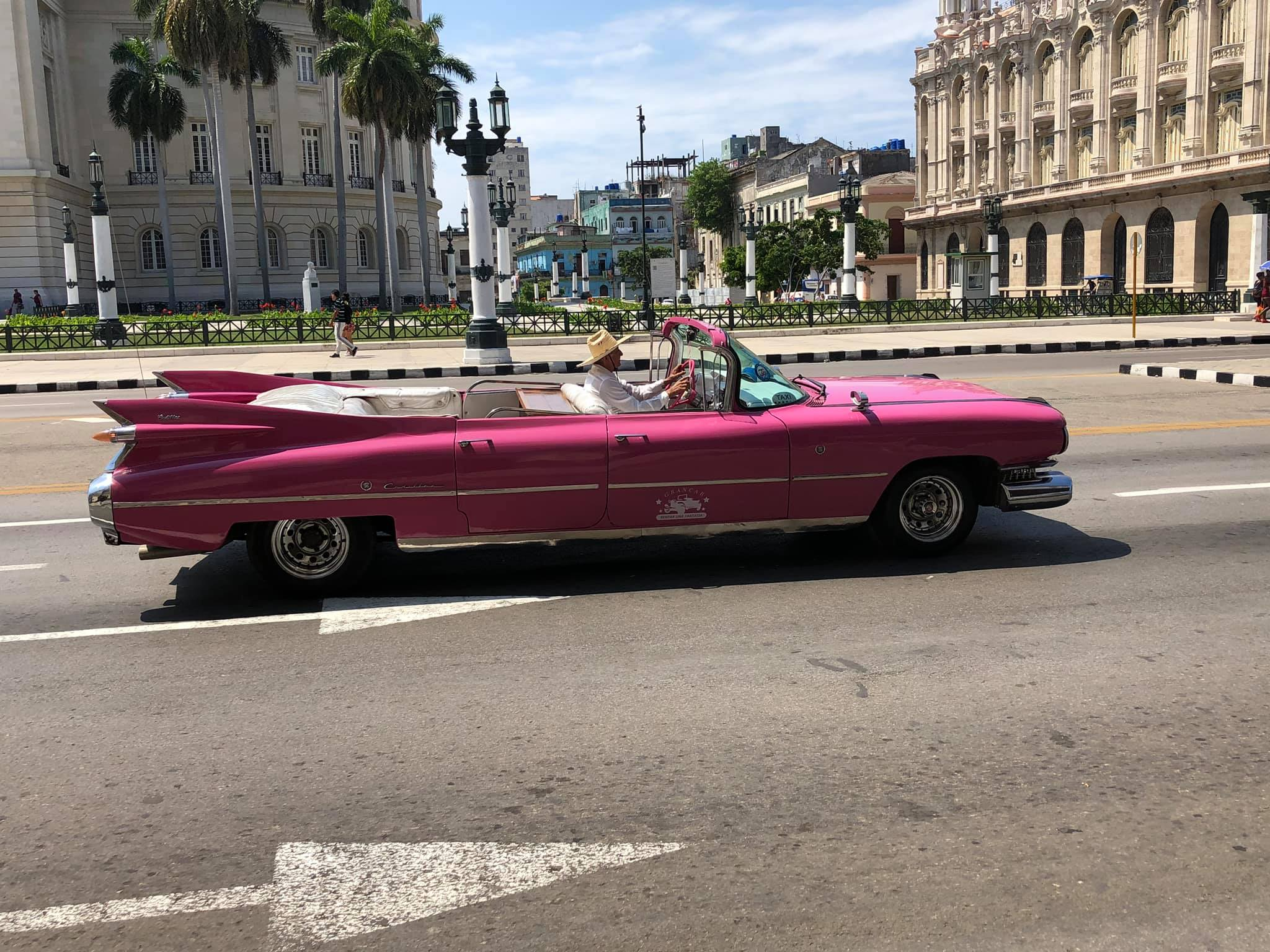
And here the real Cuba kicked in in true style. After bartering a bit (from 80 down to 40) we hopped into our huge 1950’s yank tank for a one hour tour of Havana. While this is incredibly touristy and stereotypical, it was exactly the experience that I had wanted. We sat in the back of our huge red and white convertible (Jill wanted pink but the guy with the pink one wouldn’t barter with me), being chauffeured by a dude wearing a Panama hat, while Cuban music blared through the stereo. I managed to get the dude to let me stage a photo with me in the drivers seat (he even put his Panama hat on me briefly).
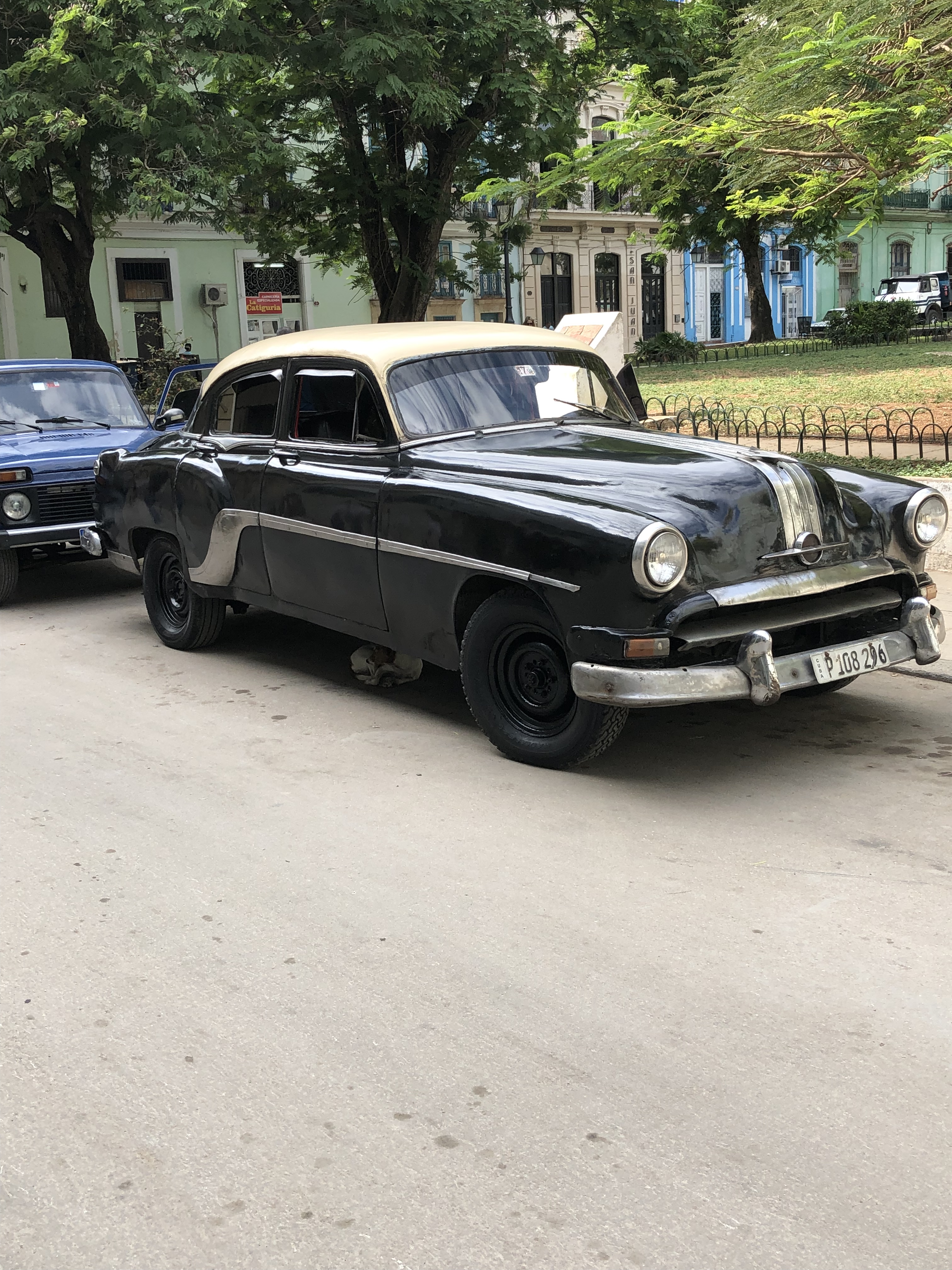
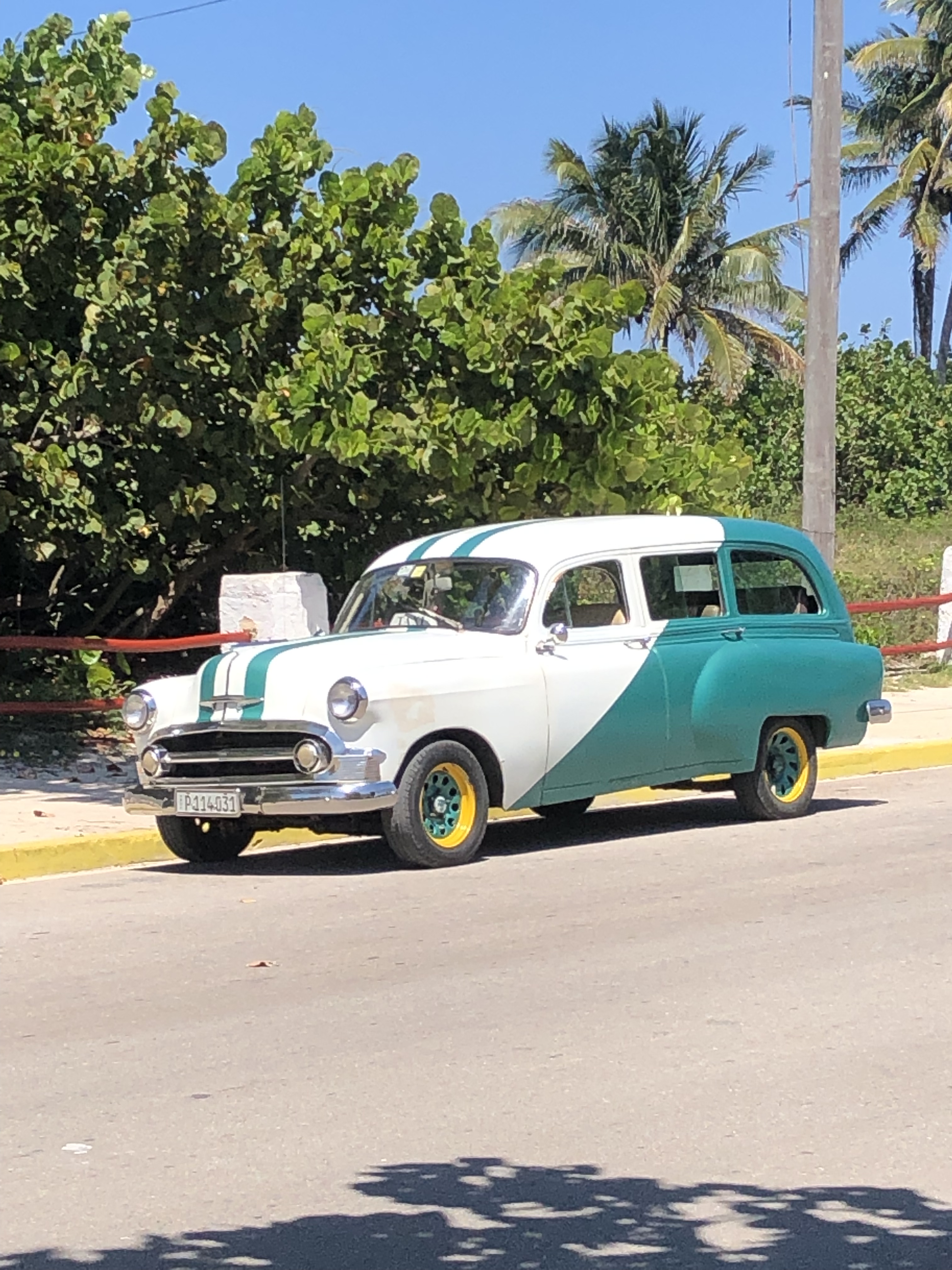
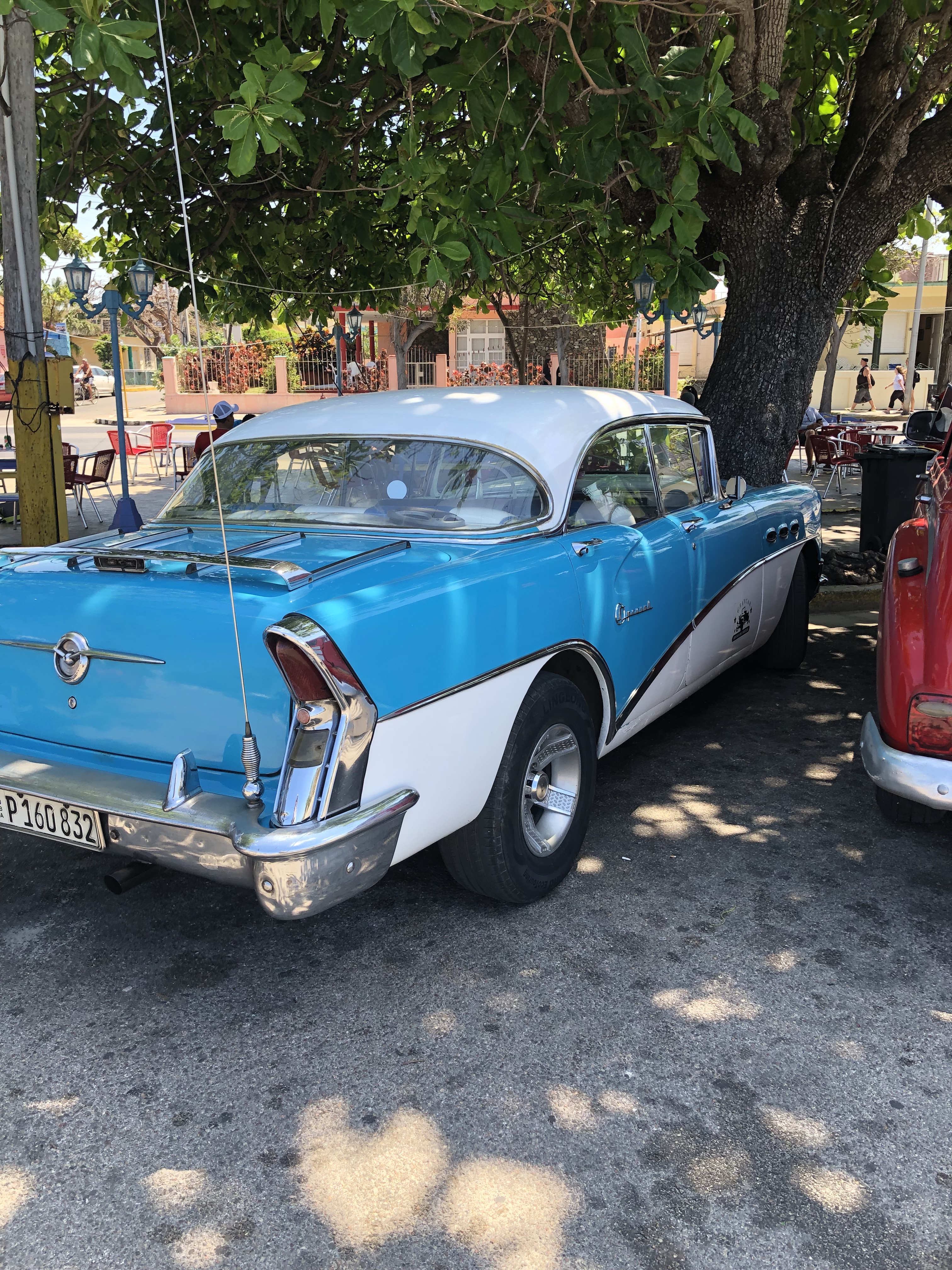
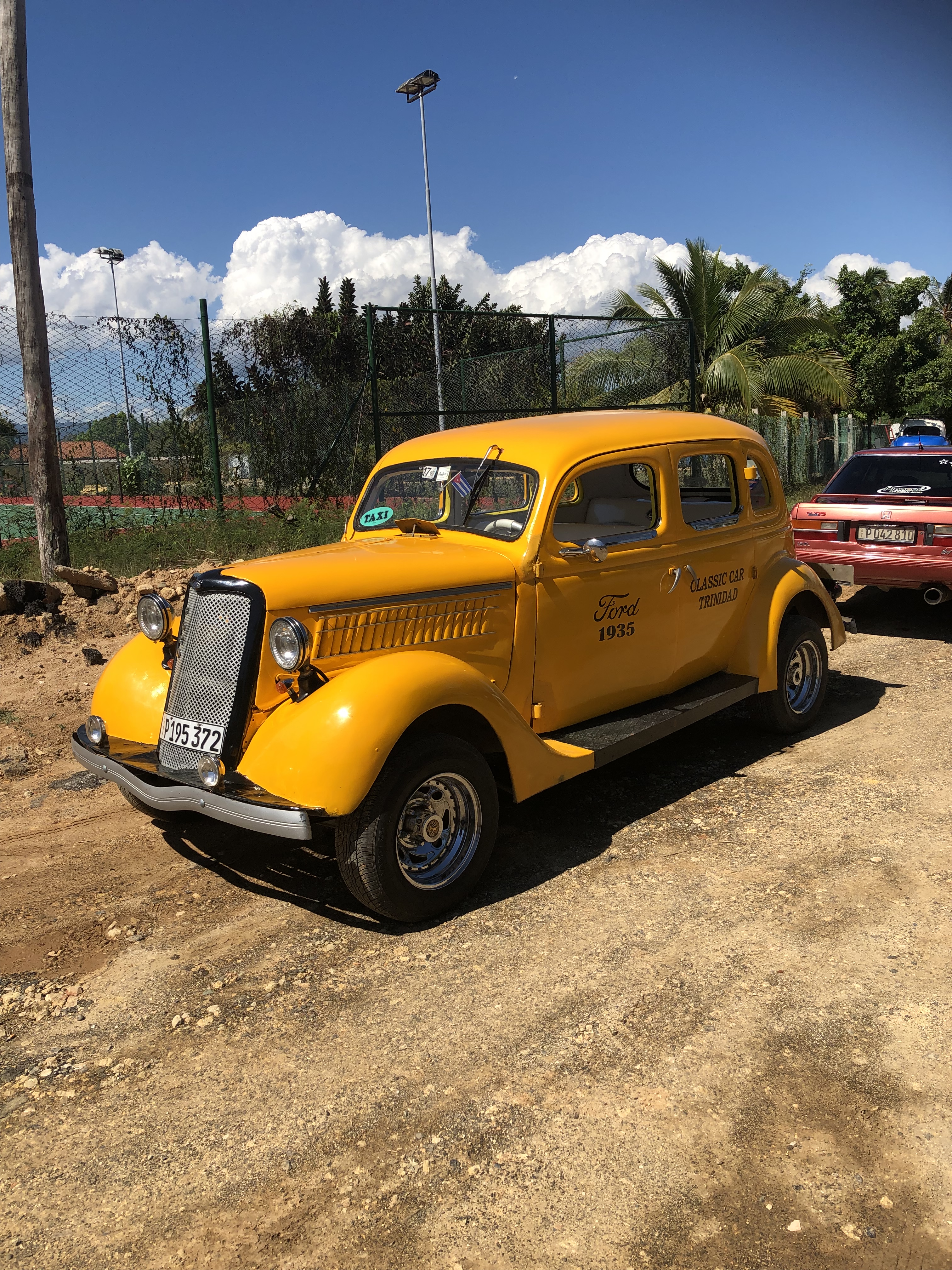
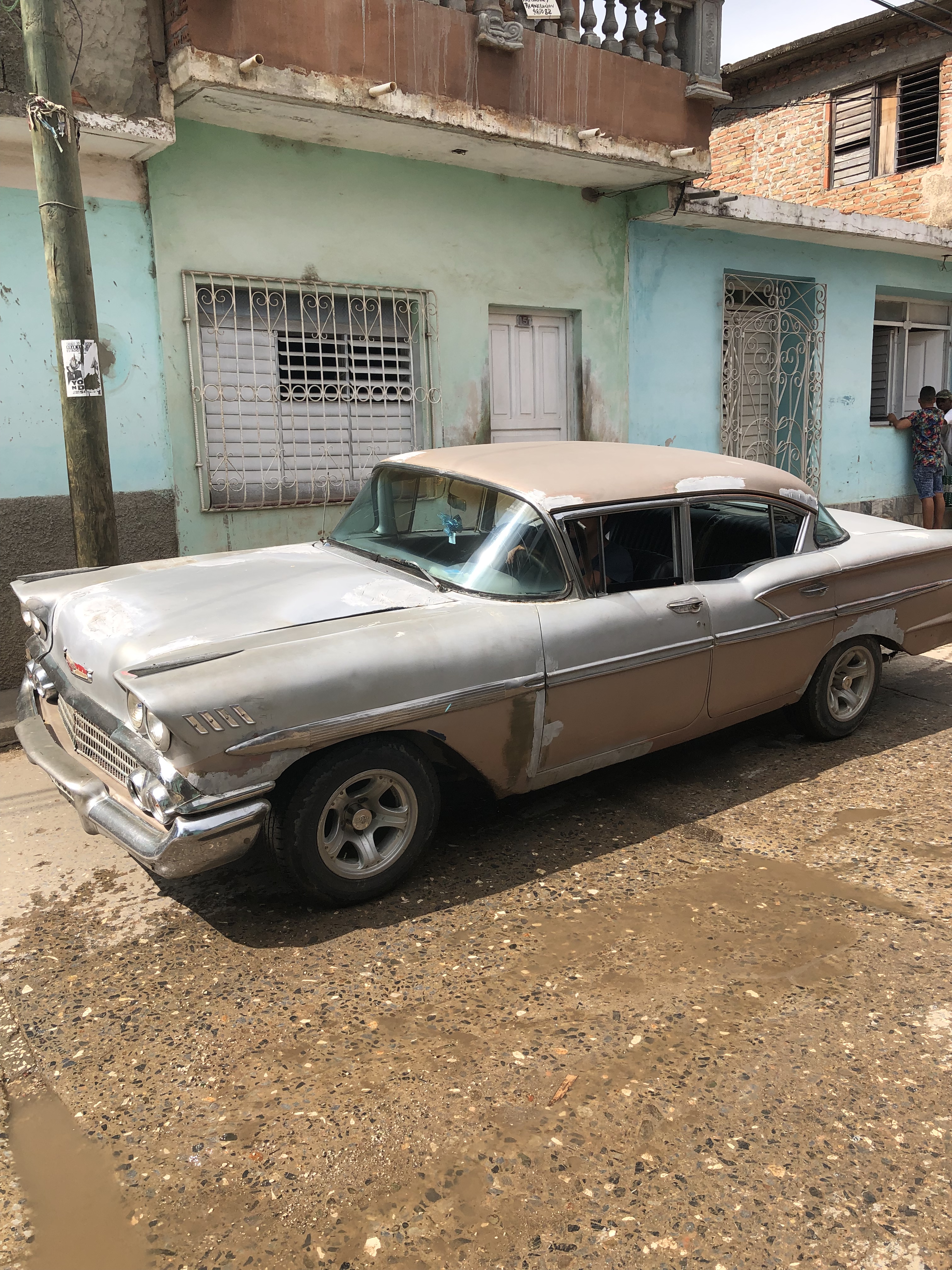
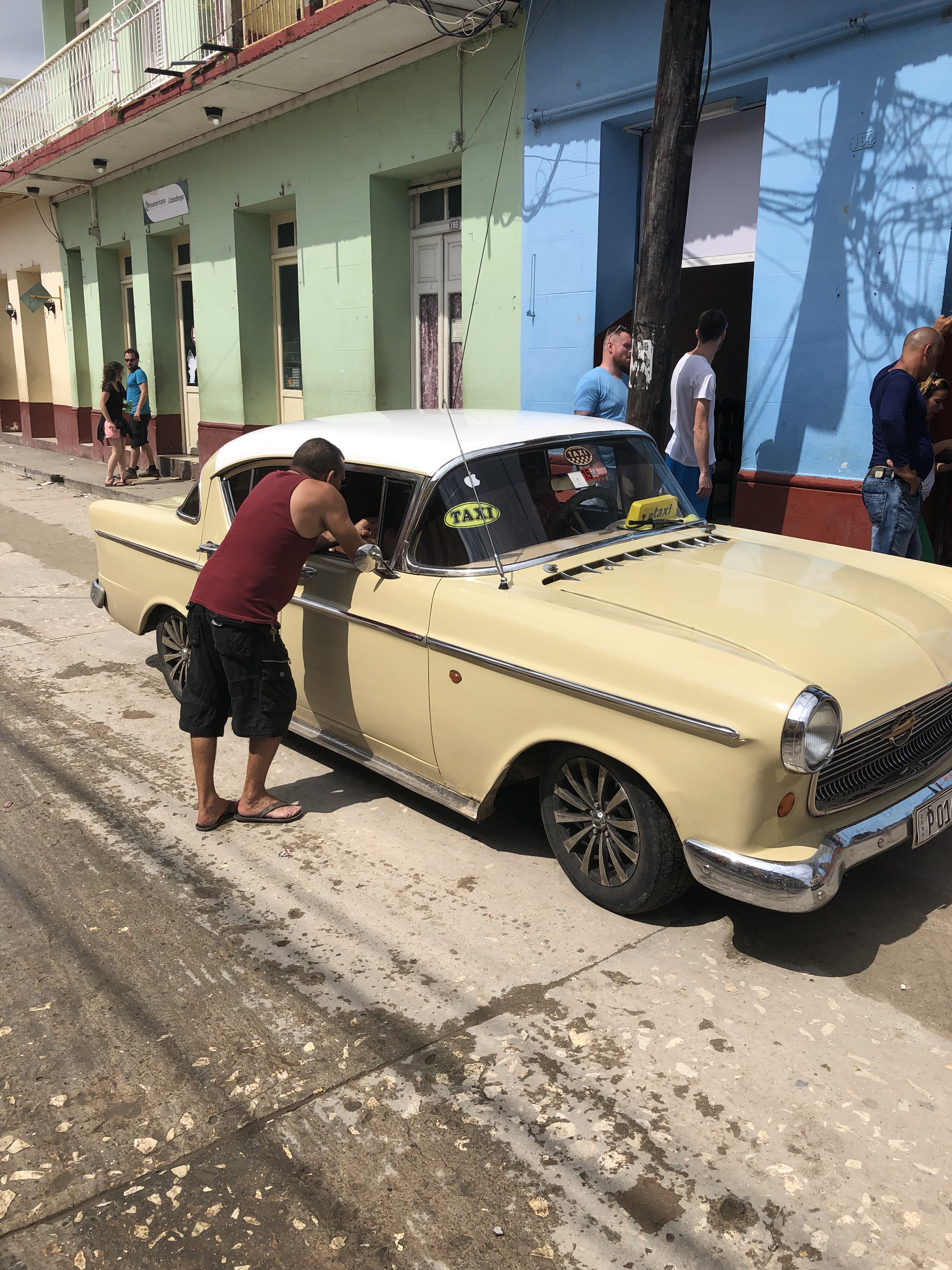
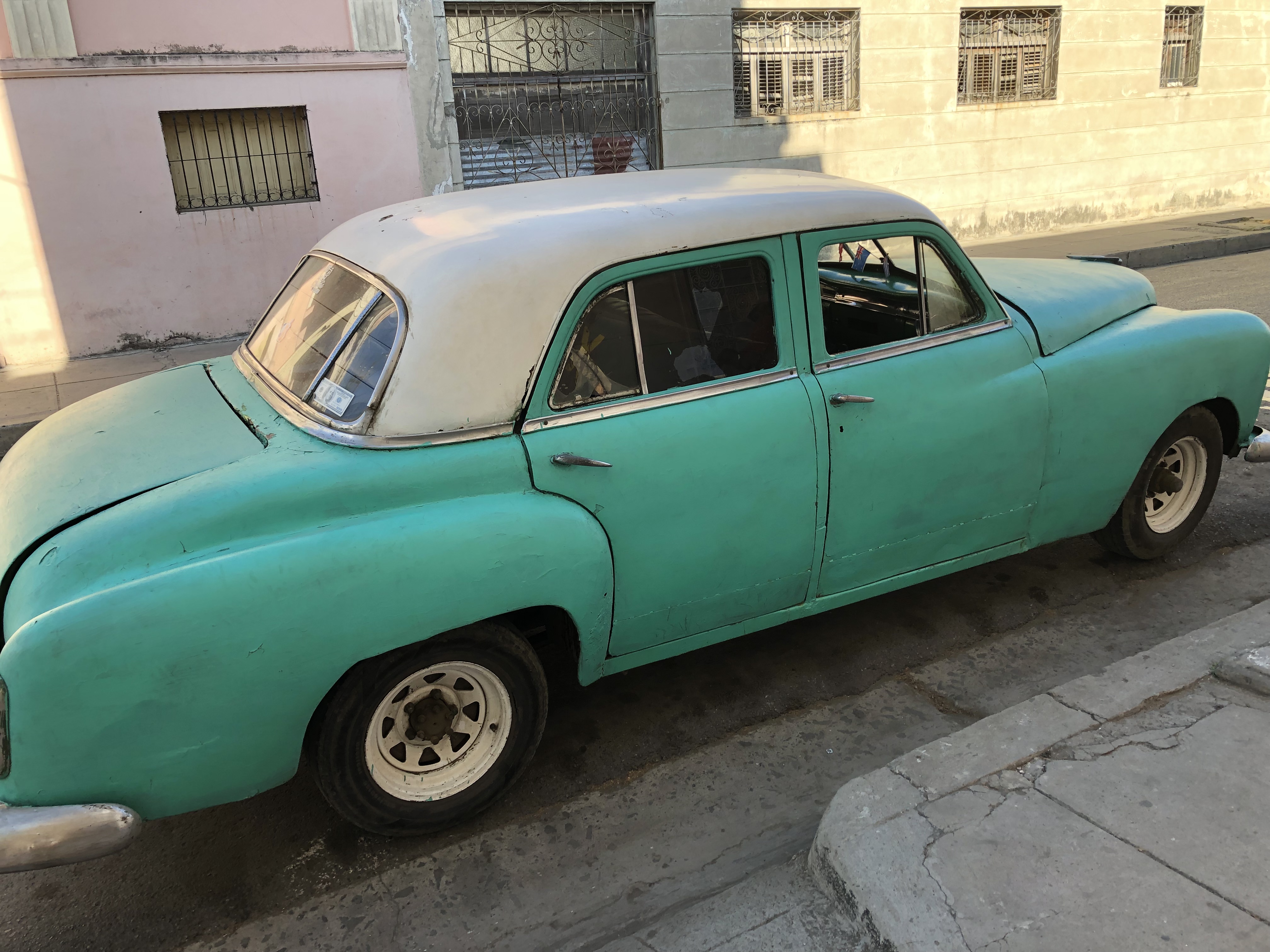
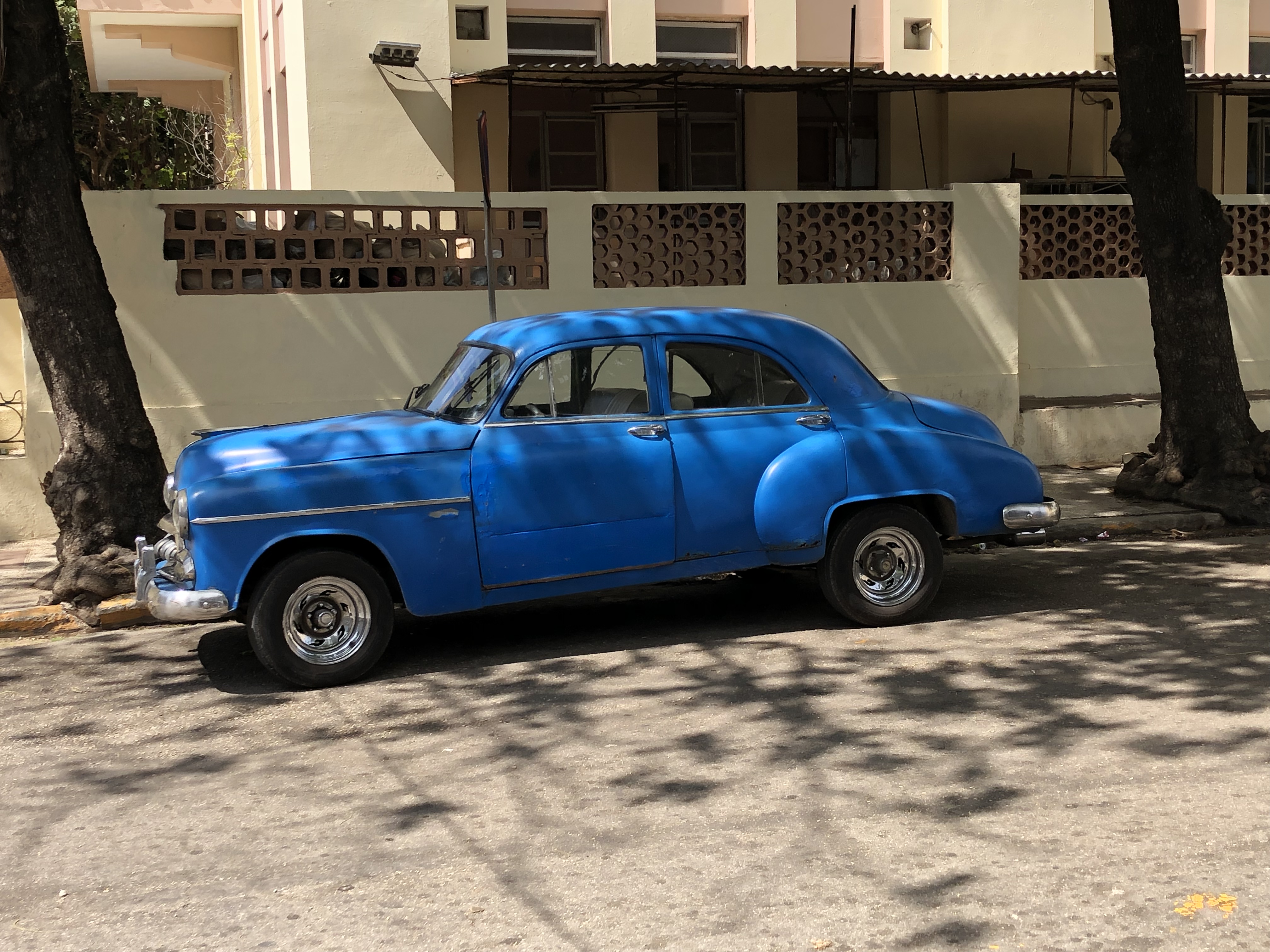
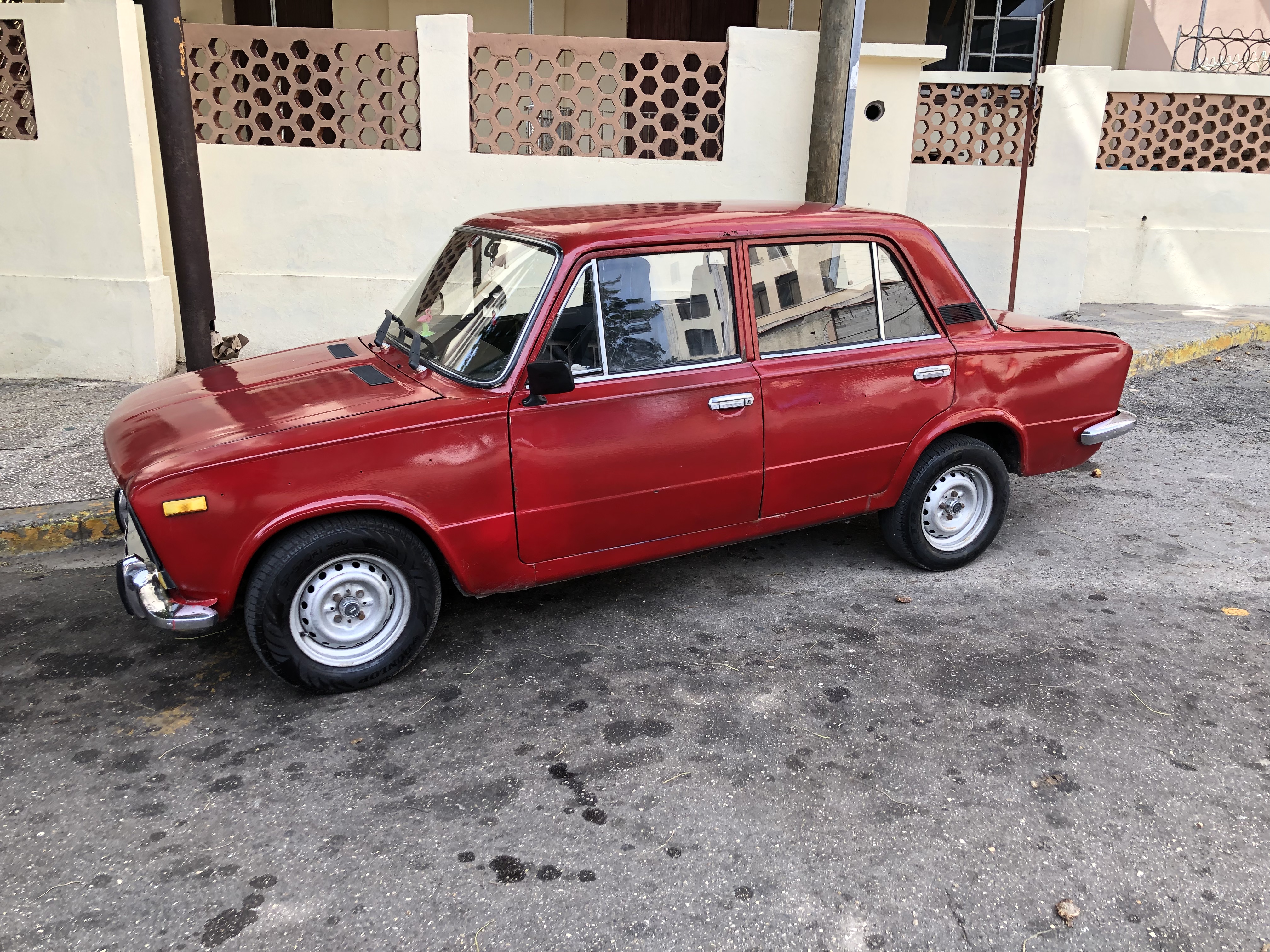
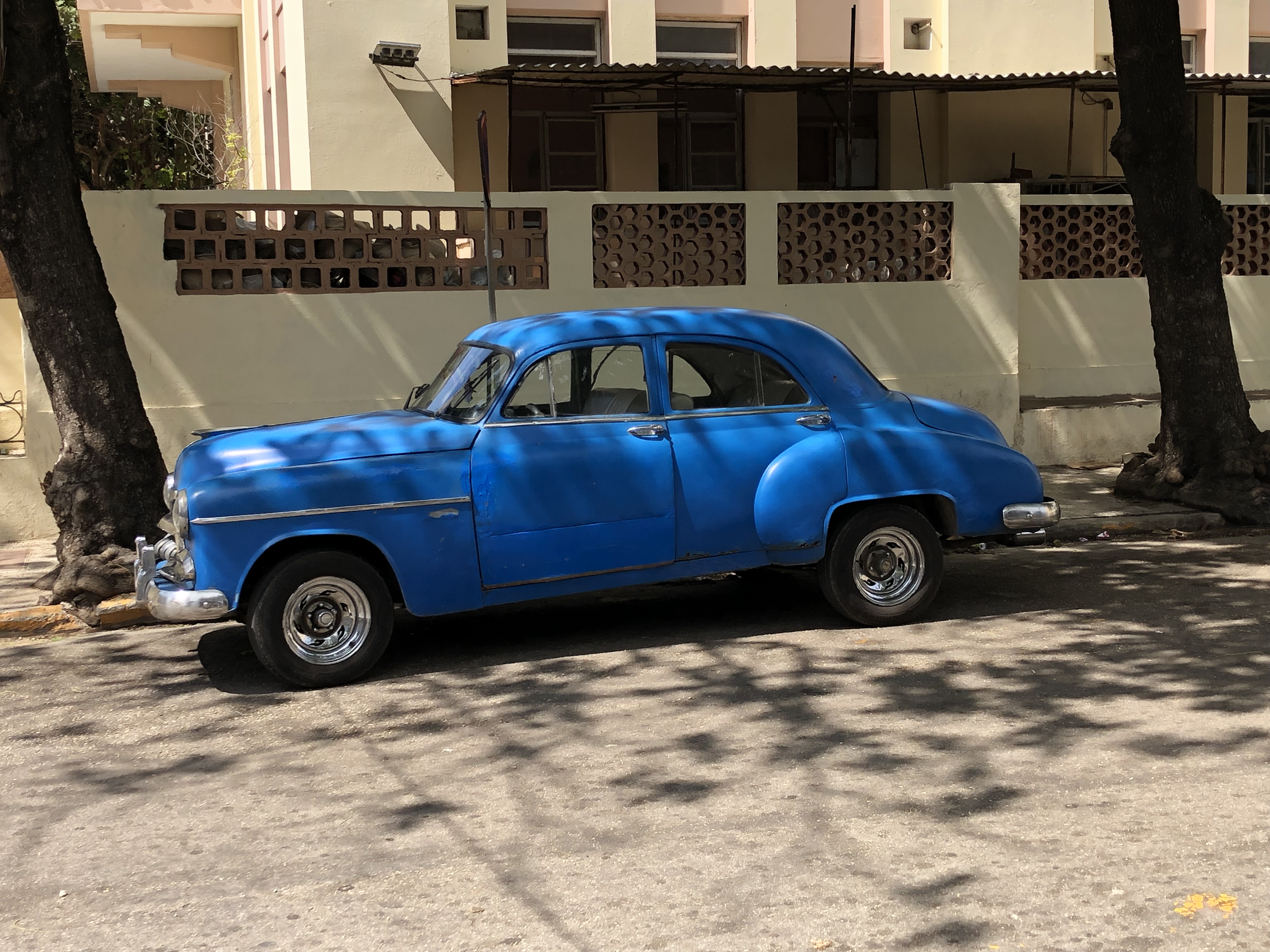
So it is probably time to talk about cars in Cuba. For the most part they are all pieces of shit. The most common vehicle that you will see is the Russian made Lada. They are ugly, loud, smoky, smelly and quite frankly it is mid blowing that they are still even running. The next is the classic yank tanks…the majority of these are clapped out, poorly maintained, bashed up, beaten and in sad need of either TLC or scrapping. Then there is the convertible tourist fleet that are shiny and pretty for us tourist types. And finally there is a combination of little taxi (type) options…these range from pedicabs, horse drawn carts, old motorbikes (with or without sidecars) and the freaky bubble looking tuk tuks.
So we cruised the streets (either in our car or just walking about) while we took in the sights, sounds and smells of Cuba. For the most part it was enchanting. The people of Cuba seemingly want for nothing, but at the same time they have very little. Education and healthcare is free. Food ration books ensure that everyone has enough of a broad range of food groups, but very few extras or luxuries. The system works but the wants of consumerism are pervasive.
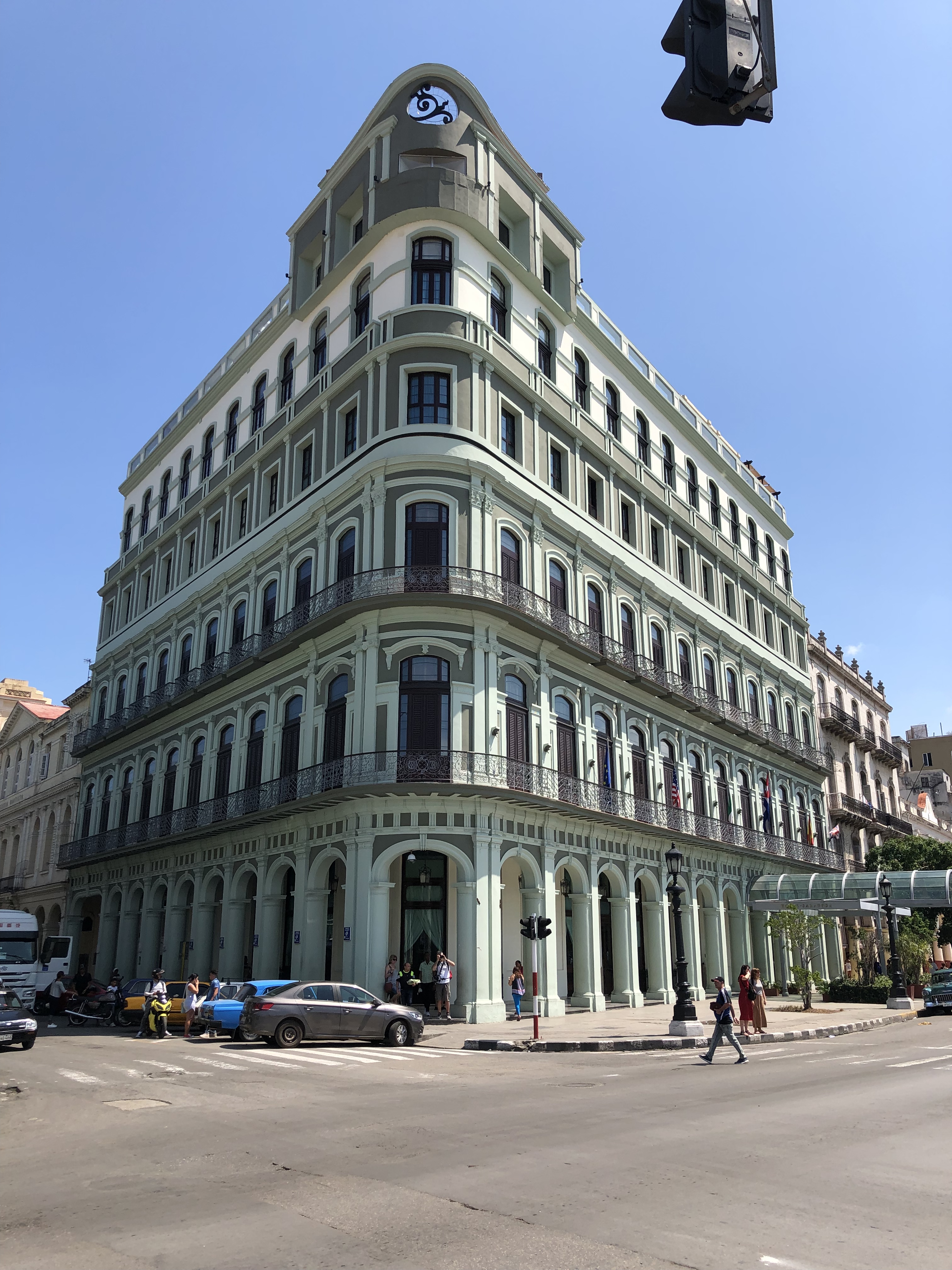
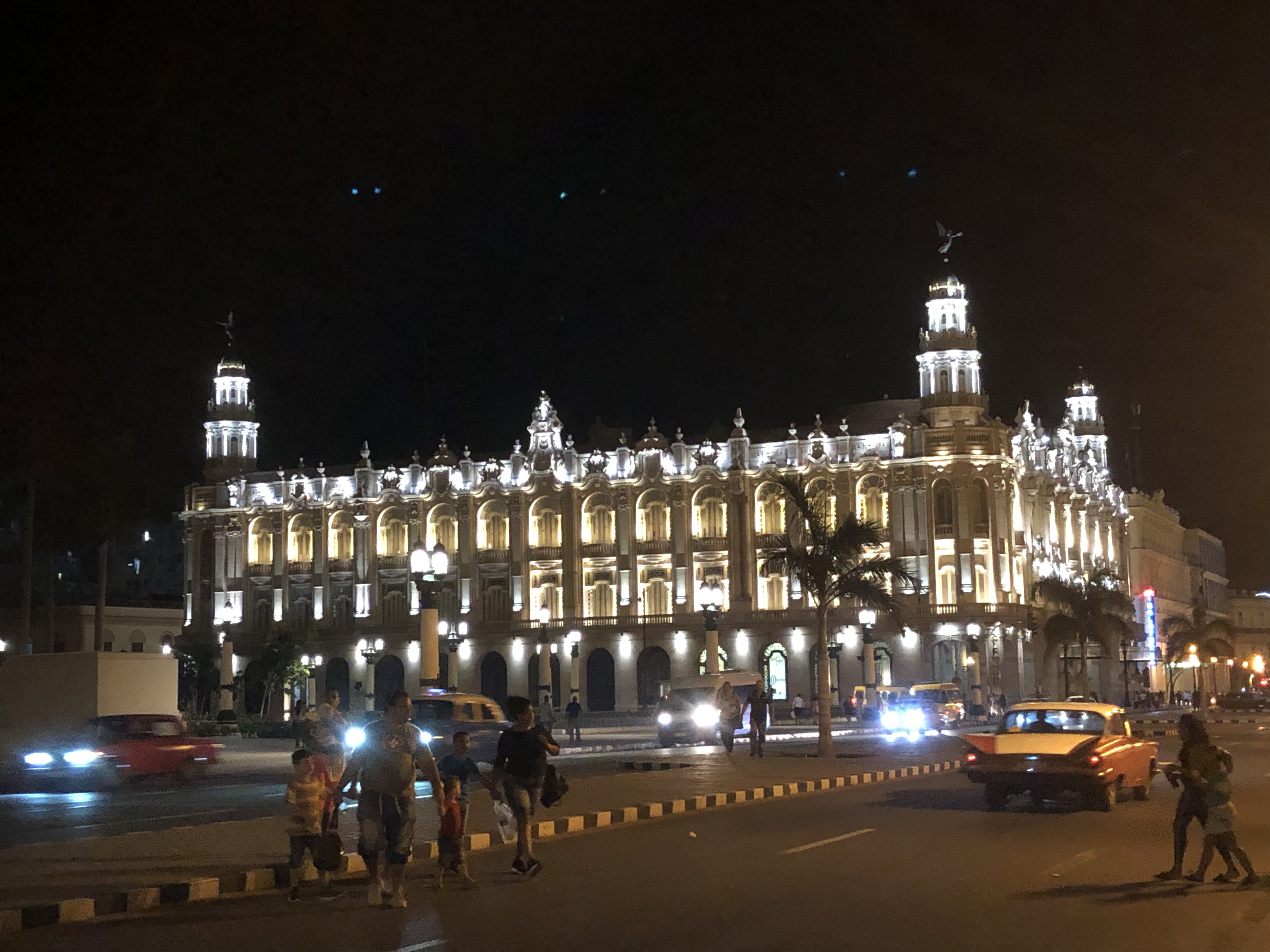
Some of the buildings around Havana are stunning. But for every beautiful building, there is about 20 in a state of disrepair. Added to this are the hidden gems, a virtual oasis enclosed behind a nondescript door on a dodgy looking street. I have never been in any city in the world where I have felt so safe or secure. Crime is virtually non existent and everyone is smiling, happy and willing to greet you with a grin and an “hola”.
On our last night in Havana we headed down to plaza Vieja where we stopped in to ‘La Vitrola’ and we had some small bar snacks, beverages and live Cuban music. I have entirely fallen in love with the jamon croquettes, while Jill cannot seem to be able to say no to a $3.50 mojito complete with a sugar cane swizzle stick. Add to this some bruschetta, cheese balls and fried chorizo and ice cold cerveza (beer) and life is good.
Well if first impressions count…I am going to hate this place.
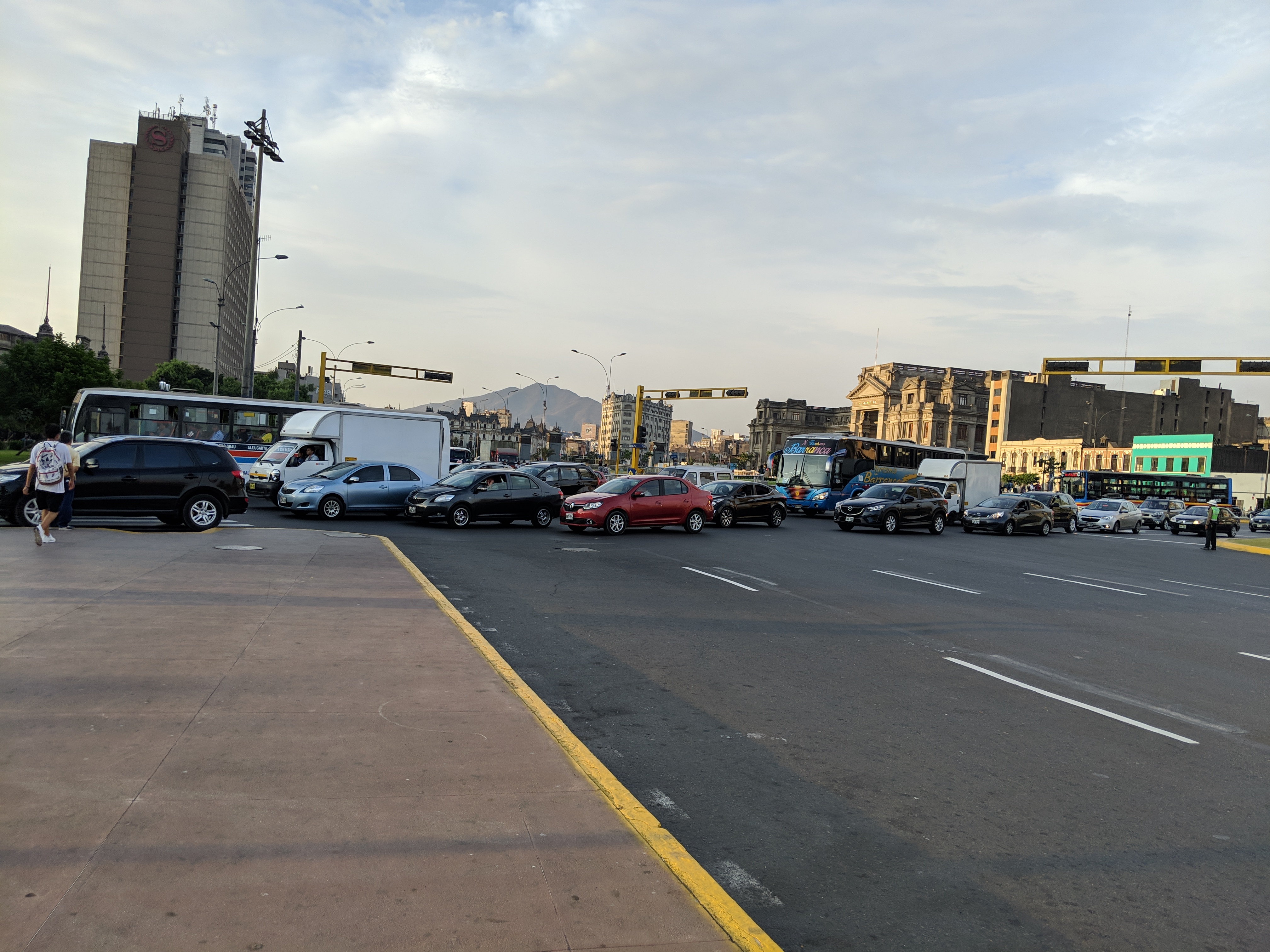
The traffic was horrendous. And this coming from two people who spent so much time in Asia. I have not seen traffic so bad in a very long time. The volume of cars was high, the honking and beeping was constant and the fact that lane markings were not even considered made this place a hellhole…and that was just getting from the airport. We turned right from the left hand lane, across 3 normal but 5 actual lanes of traffic, at speed. It was certainly a white knuckle ride and we both decided that perhaps it was better if we just didn’t look.
But everyone I spoke to told me I would love Lima…so lets see…
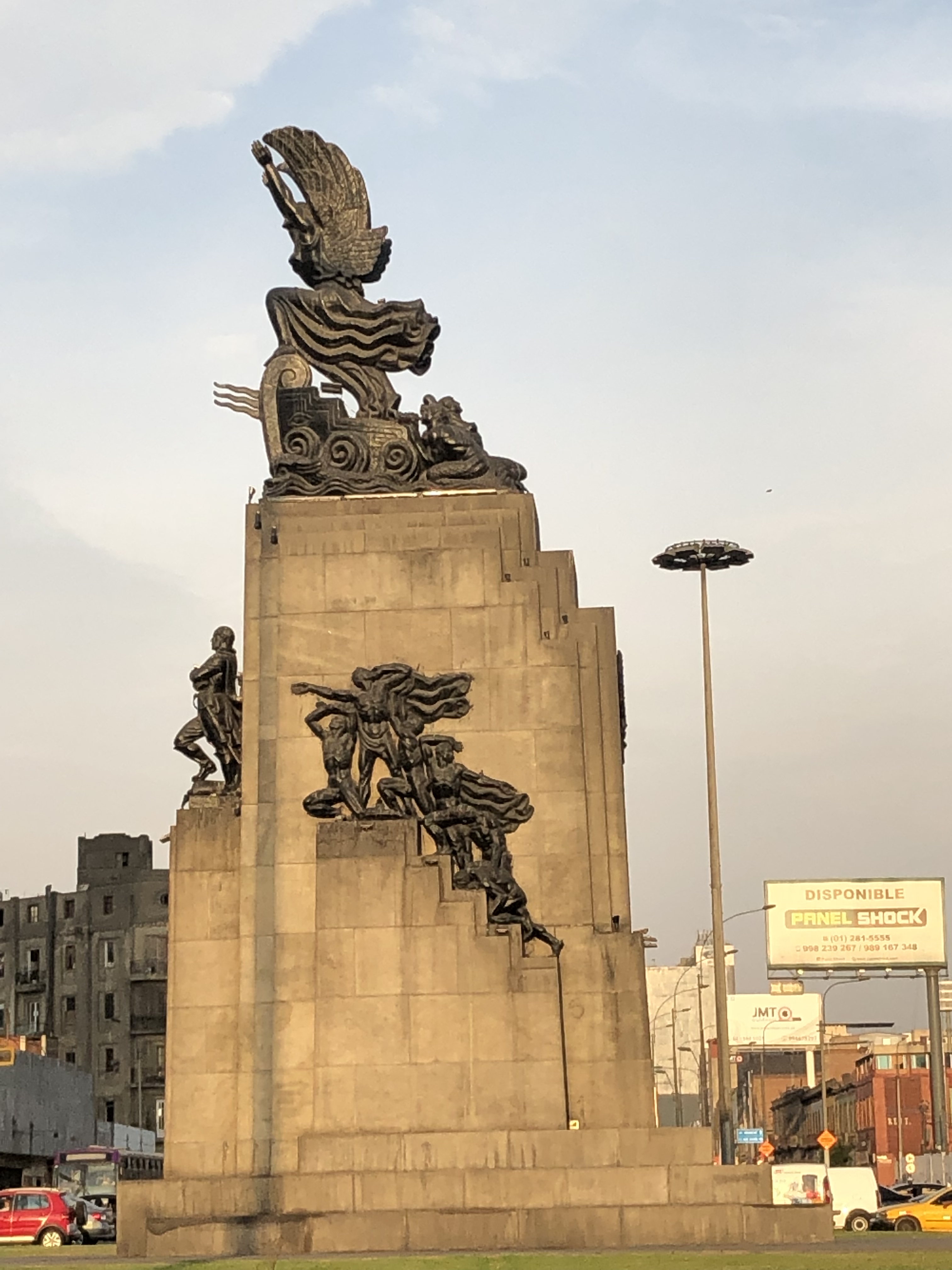
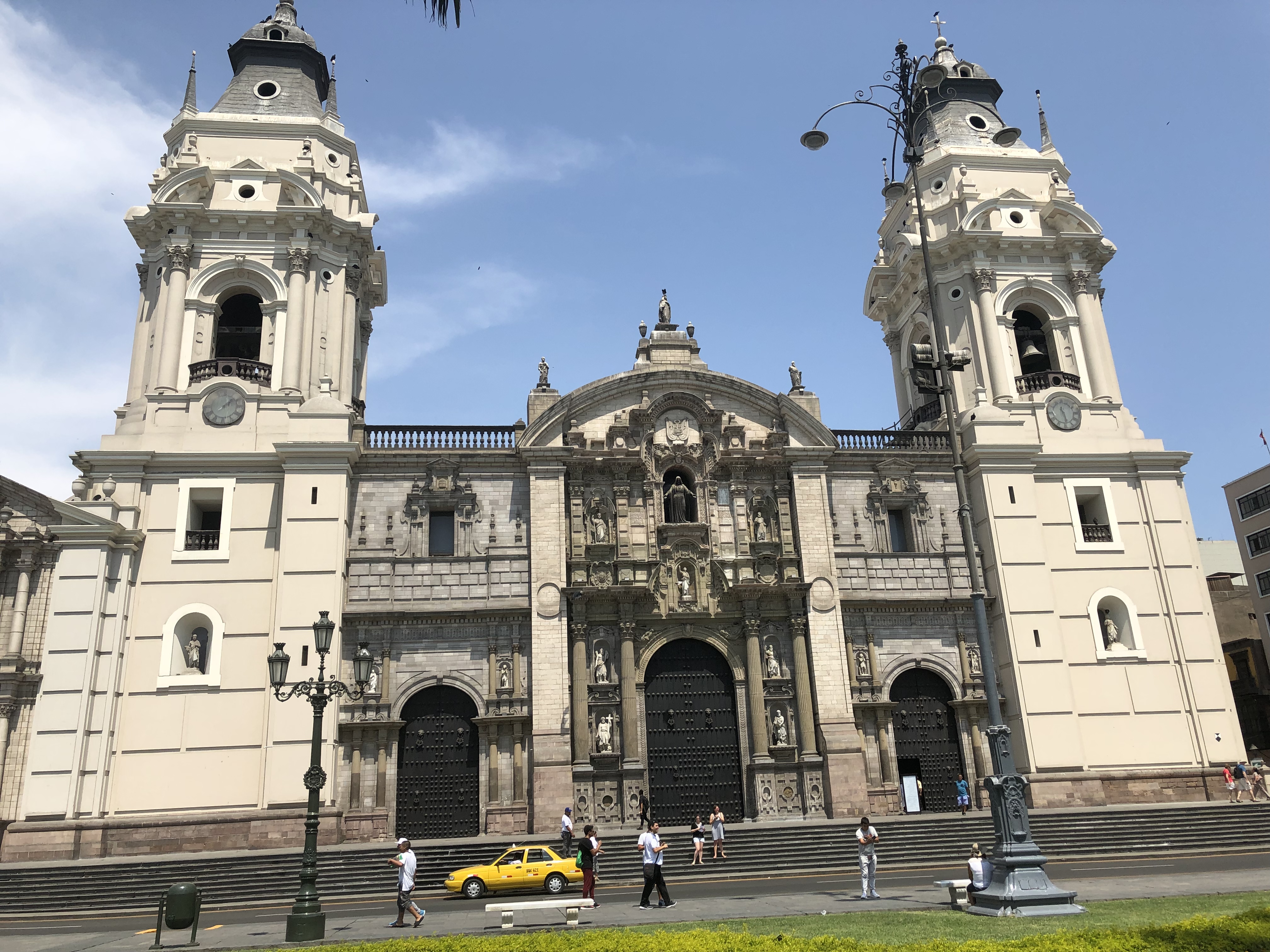
After a nap (early morning flights and another 2hr time zone change) we headed out for a late afternoon stroll and a bite. While the traffic remained devilish there was some semblance of order to it…but not enough to trust. We wandered along the park in front of our hotel towards the centre of town
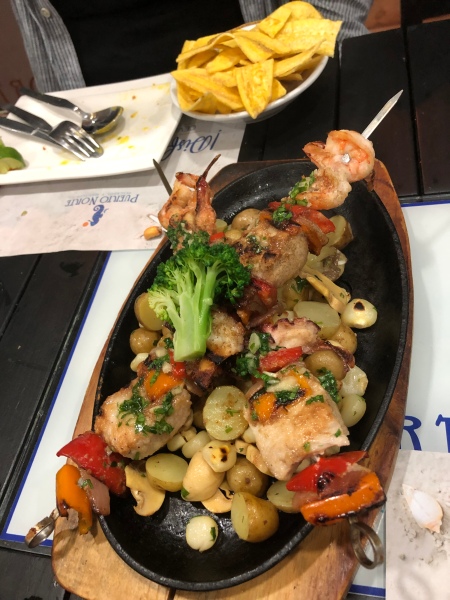
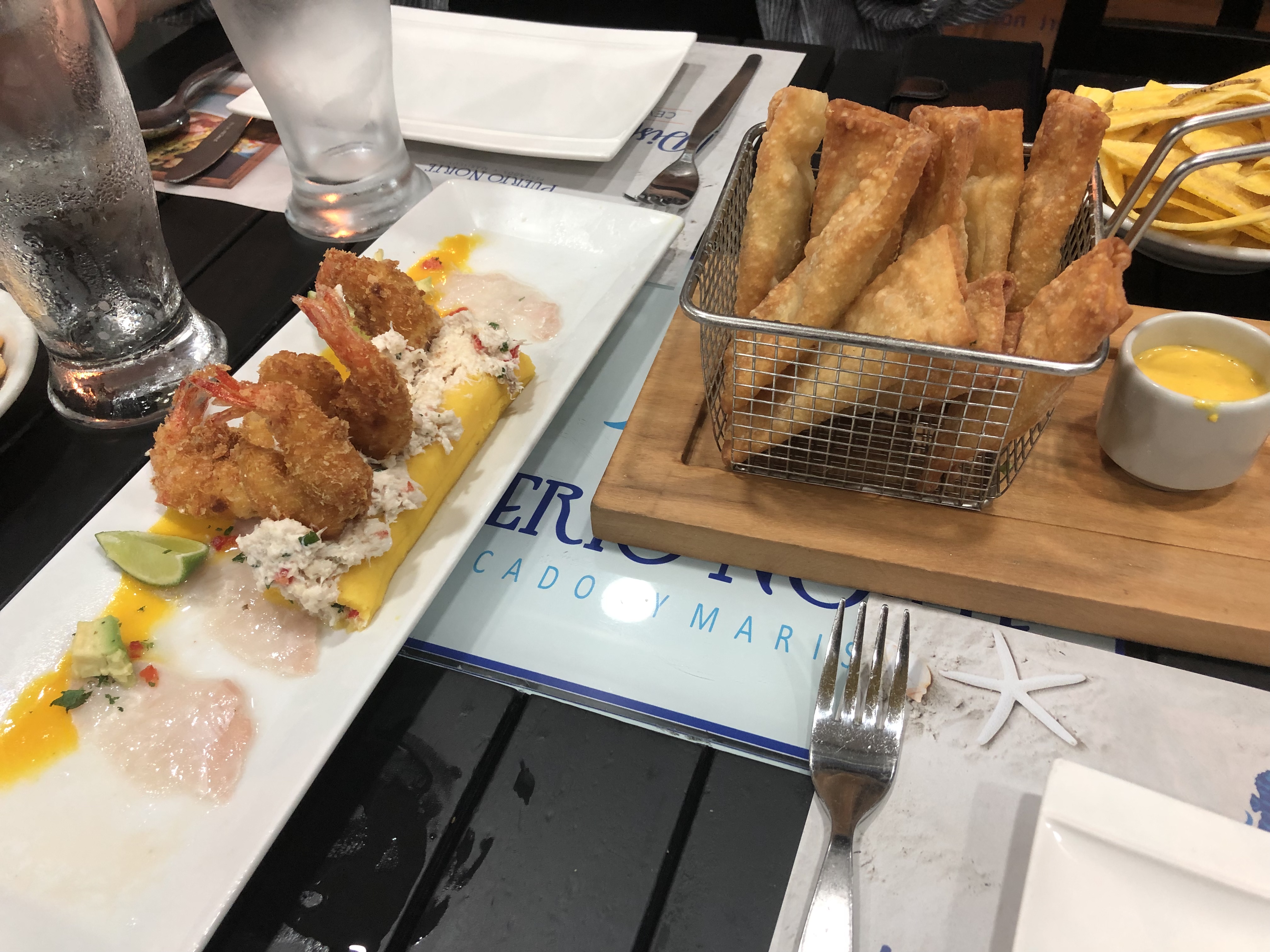
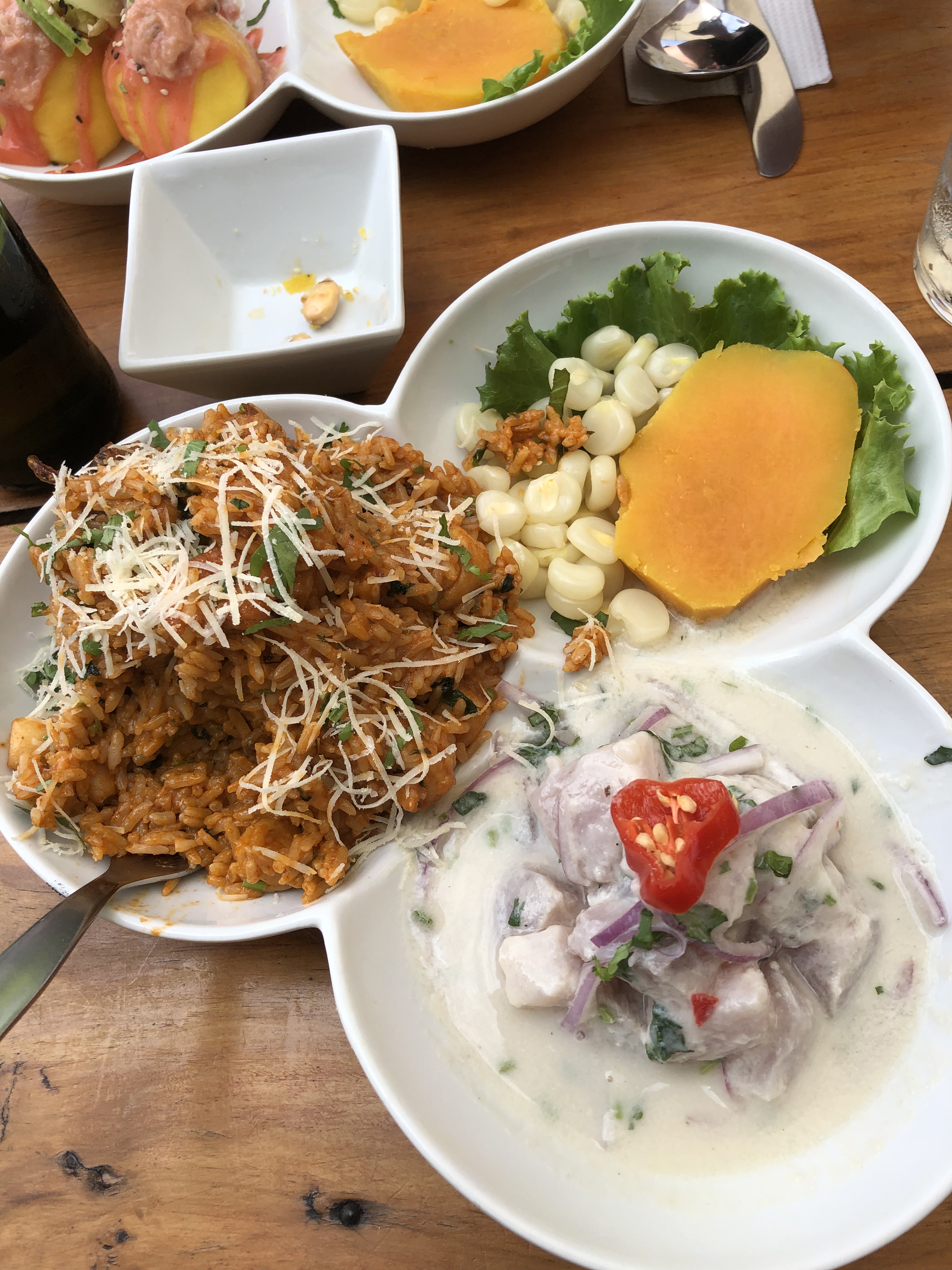
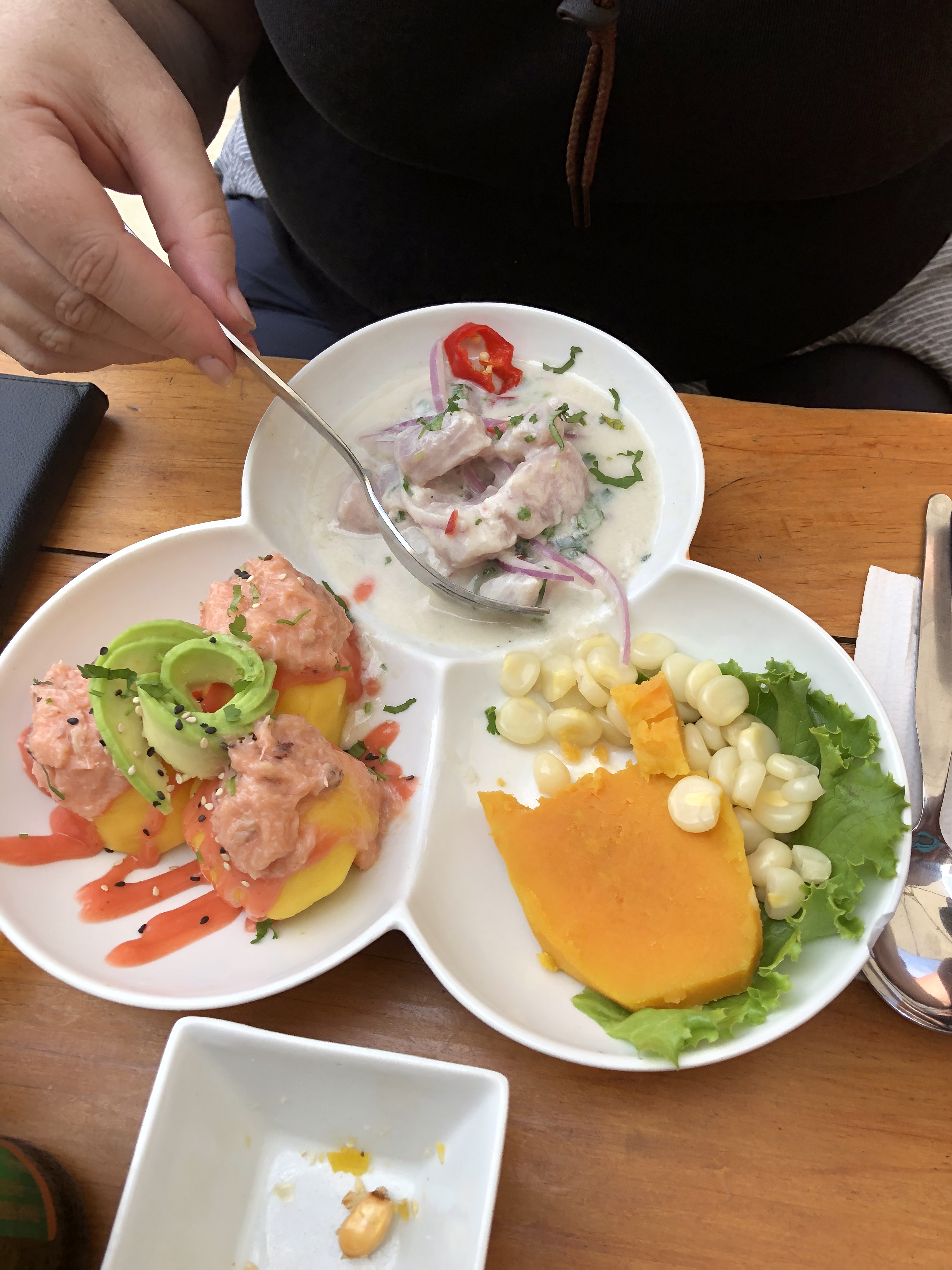
We came across a seafood restaurant that we had seen during our “what is nearby” searching that has become commonplace when we hit a new city…so we gave it a try. And wow…we picked well. The early bit was just basically bar snacks, corn kernels (concha) plantain chips and a mayo and a salsa type dip. All incredibly salty but perfect for ordering more cerveza (beer).
Then came the entrees…mine was (tequenos) a South American version of a wonton, usually made with cheese but this one replaced the cheese with crab, deep fried with an incredible dipping sauce…but despite this, Jill was the clear winner…she got some Panko covered prawns that were set on a tube of polenta, slathered in crab meat, with a sauce that I cannot describe and of course the obligatory cerviche (this one did not have “ass weed” (coriander/cilantro) on it). Then came two seafood skewers set on a bed of tiny potatoes and mushrooms. All this for under $40.
I may like this place after all…
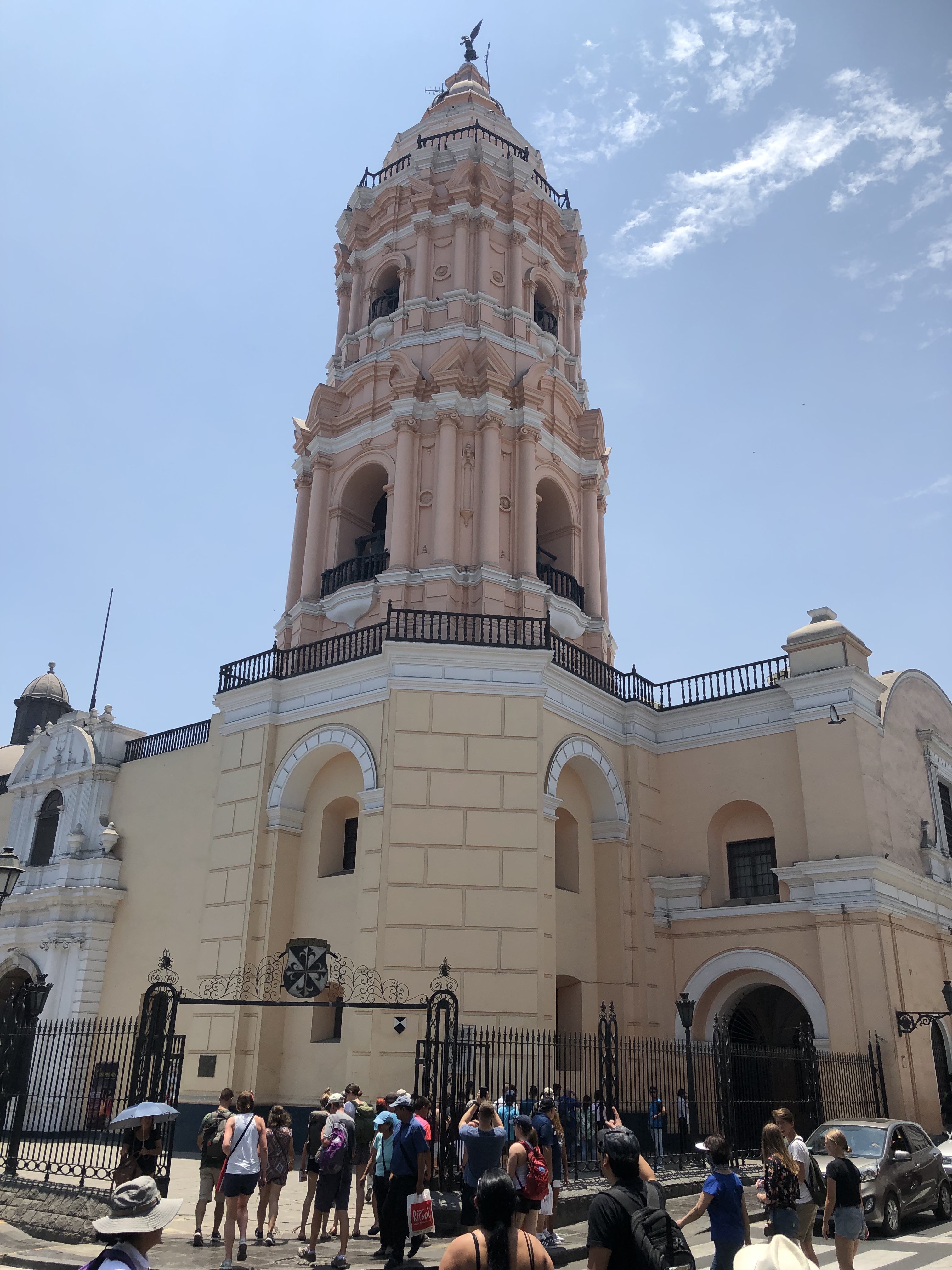
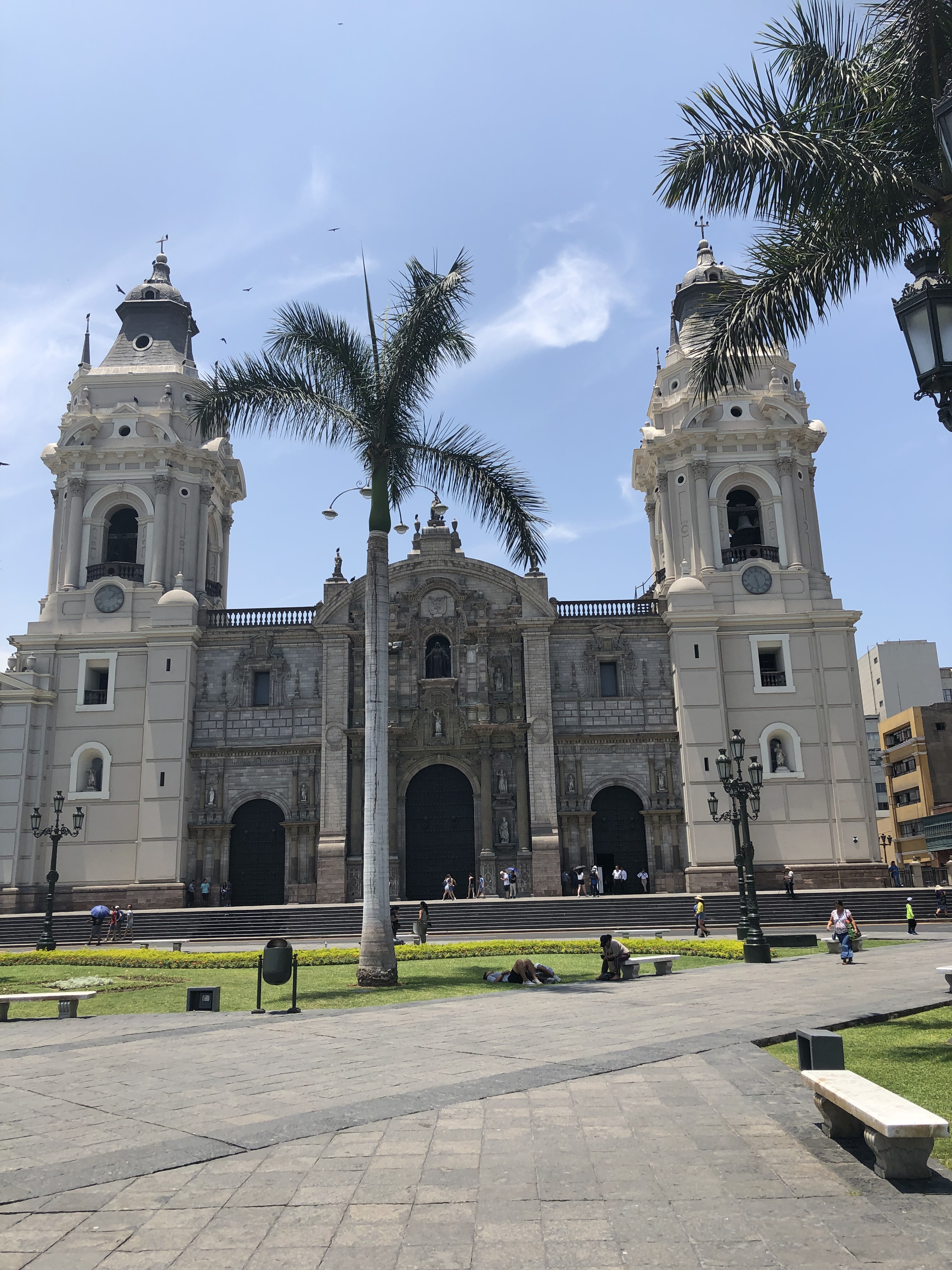
The next day we set off on the walking tour from the hotel. It was atrocious…the guide basically said “hello friends, follow me” and began to walk past everything that looks interesting (without a word)… about 2 kilometres later in the main square he handed us off to another guide and was never seen again. Despite his indifference, the city sights were good and my opinion of Lima softened once again.
The piece that I really want to do is the street food. I have heard so much about it and have coveted it as I walked past it, but am yet to dip my toe in the water. Hopefully, today will be the day. The key they tell me to Peruvian street food is that it must be 3B
Bueno (good)
Bonito (beautiful)
Barato (cheap)
I did, as it happens, get to try some street food from two of the many carts around but was mainly foiled by my wife who NEEDED to sit down to eat like a civilised person. And after one of the generous servings (generally with change from a $20) the need to eat any more is both unnecessary and virtually impossible.
Alright…I really quite like this place…
So today became a day all about culture. We went to two museums the National Museum of the Archaeology, Anthropology, and History of Peru and the Larco Museum. They were both excellent and we got a real sense of the history dating back around 12,000 years.
The Larco Museum was another level altogether. The first impression is stunning. It is housed in an 18th century vice-royal building that is covered in bougainvillea that are old and amazing. It is a private museum and was 3 times the price of the first one so we were highly skeptical. But we paid and entered. The intro was a 10 minute video and then the walk began. What immediately strikes you is the absolute quality of the pieces, they are virtually pristine. As you finish the tour through the actual display there is another room off to the side…this is the overflow. It is massive. A virtual warehouse of pre-Colombian artifacts that is seemingly endless. There was enough high quality pieces in the overflow area to stock another 10 museums. It is no wonder that the pieces on display were of such high quality, with such a massive range to choose from.
On our last day in Lima we finally bit the bullet and headed to Miraflores. It is the main tourist neighbourhood in town, that is described in the tourist blurbs as an upmarket suburb having a western feel. It is clean, safe, beautiful and is full of shops, restaurants and ritzy cafes…all those things that we try to actively avoid.
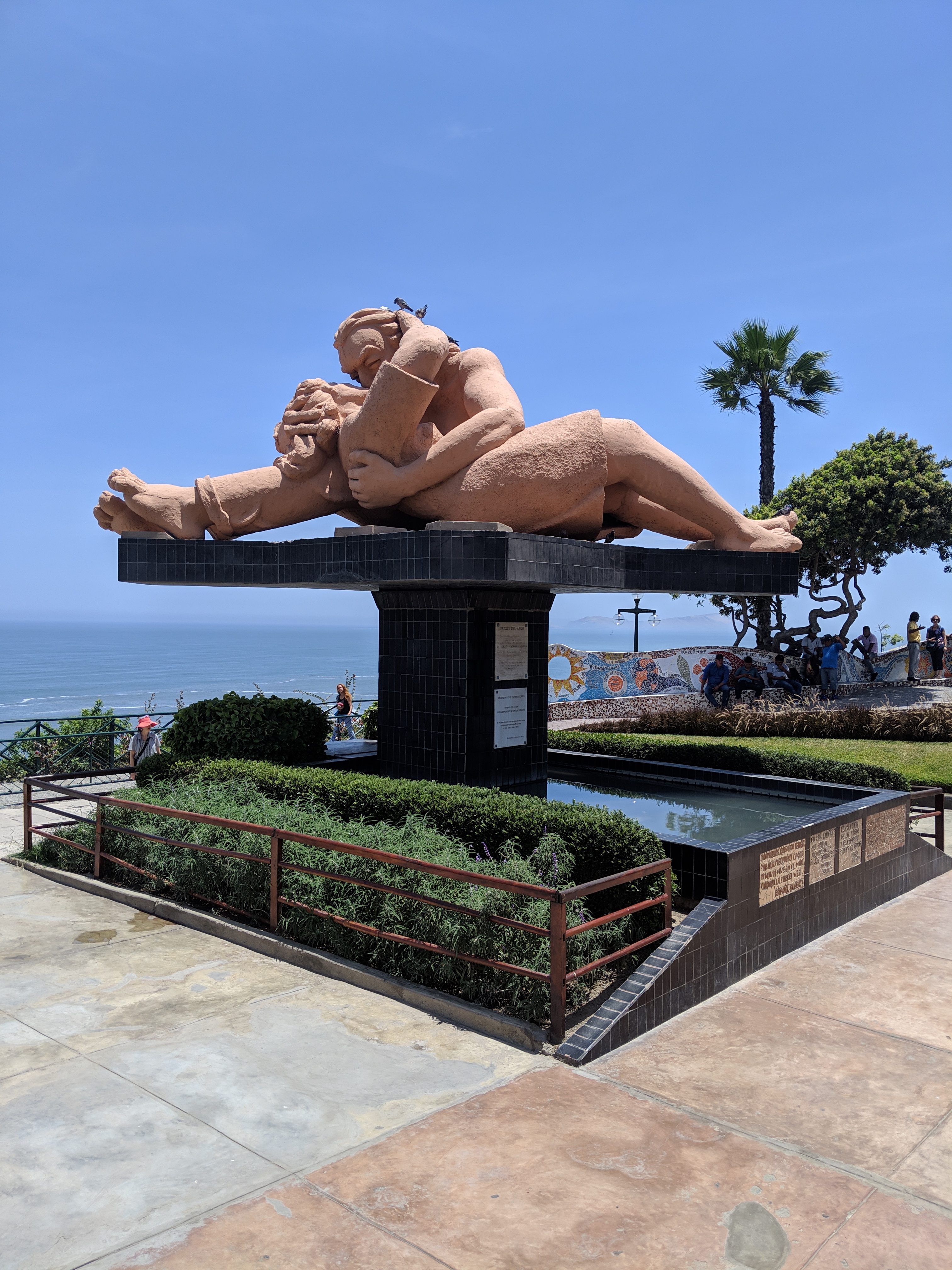
It has the ‘Malecon’ a 6 mile clifftop boardwalk starting at the marina and following the Pacific coastline. It hosts one of the world’s best paragliding spots as people launch themselves off the cliffs and for $US50 you can get strapped to one of the and launch yourself too…we did not do that.
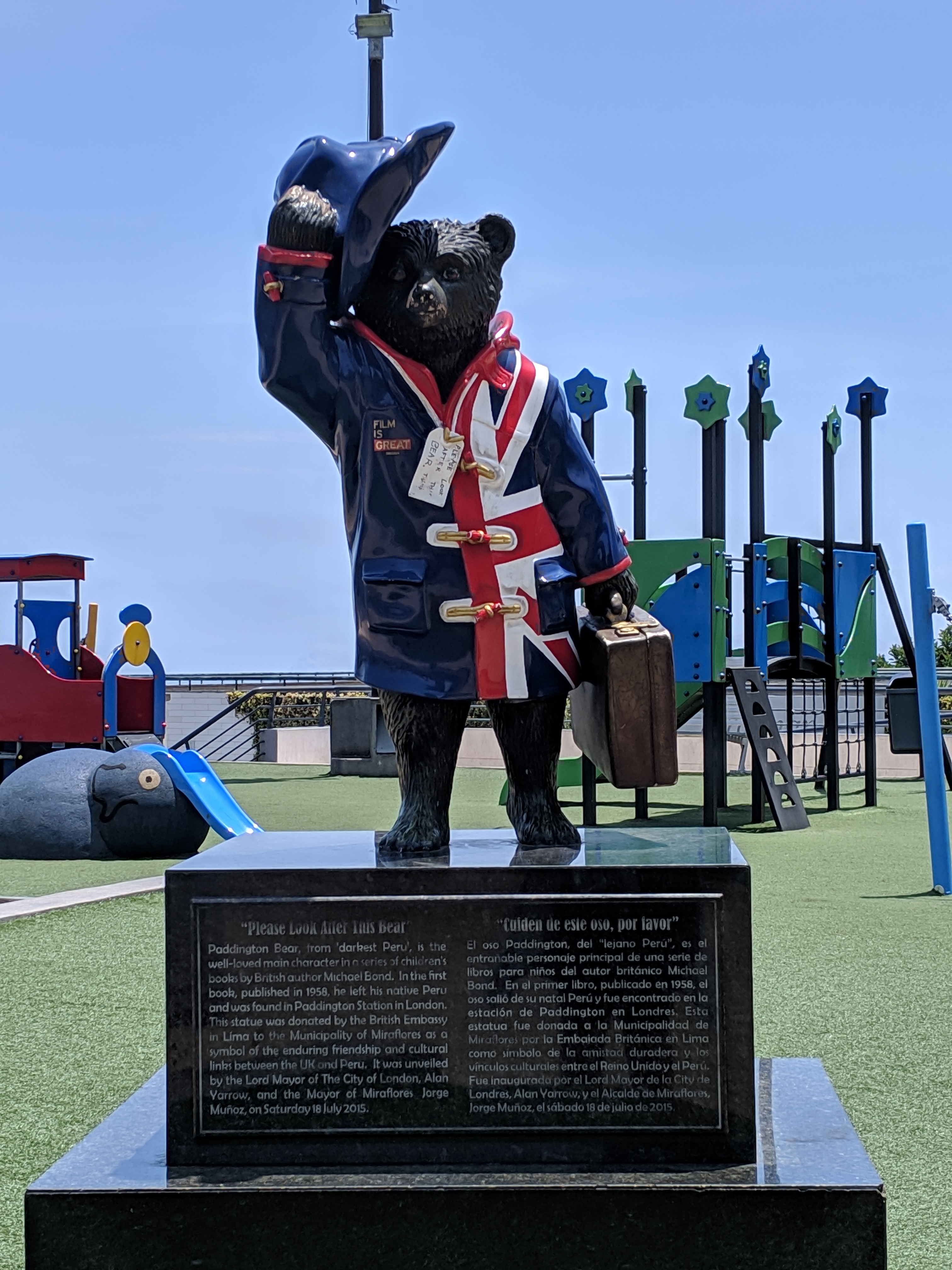
Miraflores was everything that it promised to be…it was just not for us. It was an expat enclave in the heart of Peru. All the usual chain stores and the culinary delights of McDonalds, KFC and Subway washed down by a Starbucks. And all of this for 4-5 times what you would pay in any other neighbourhood. It was pretty and the boardwalk was nice. but we were both so glad that we stayed in the centre of town rather than out here on the coast. On the up side, we did get to see the Pacific ocean from the other side. PS our side is bluer and cleaner. The one thing that surprised us was the sight of a Paddington Bear statue on the top of the cliffs at Miraflores. When you went to the plaque it said from deepest darkest Peru…and it all fell into place.
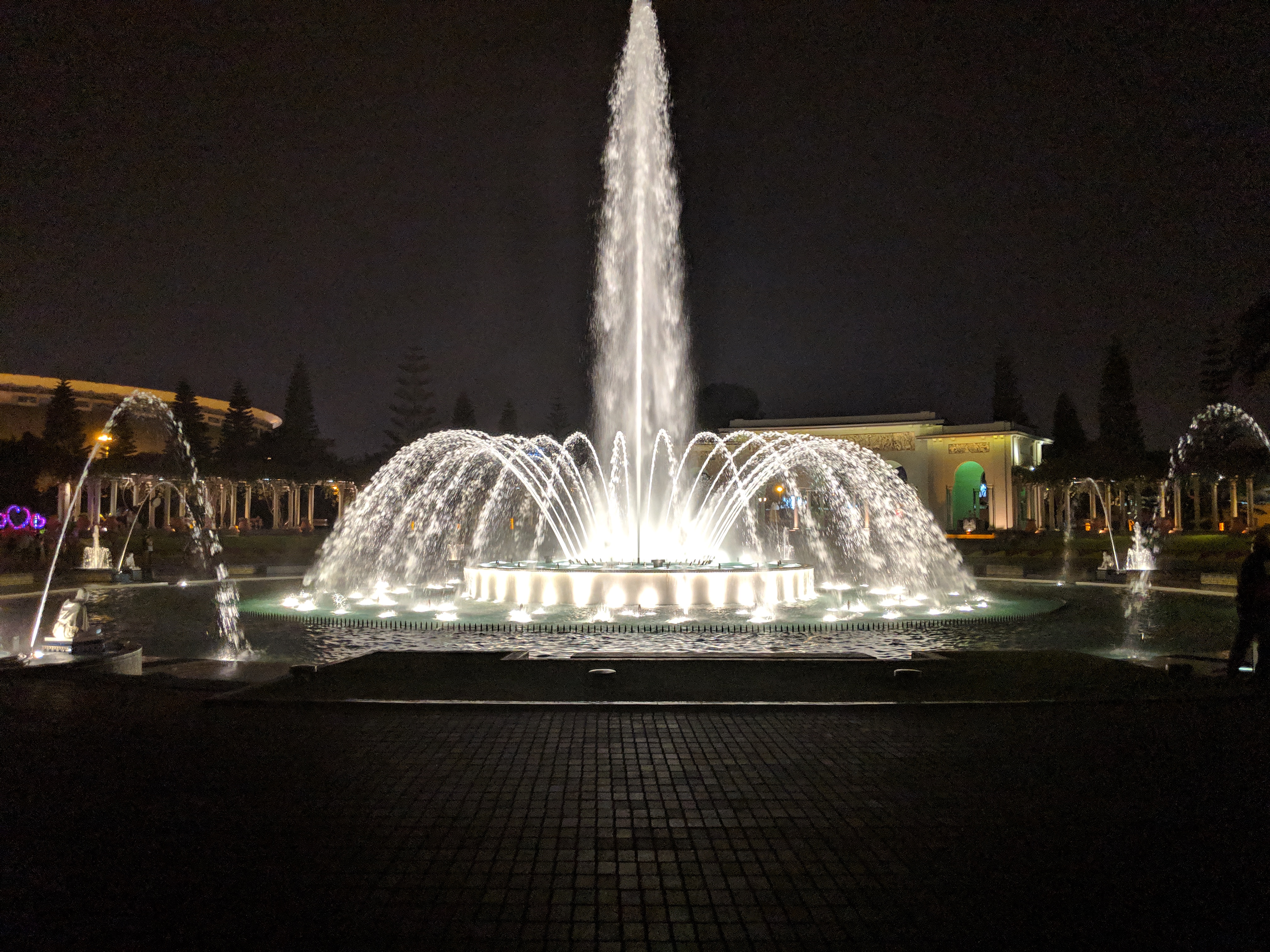
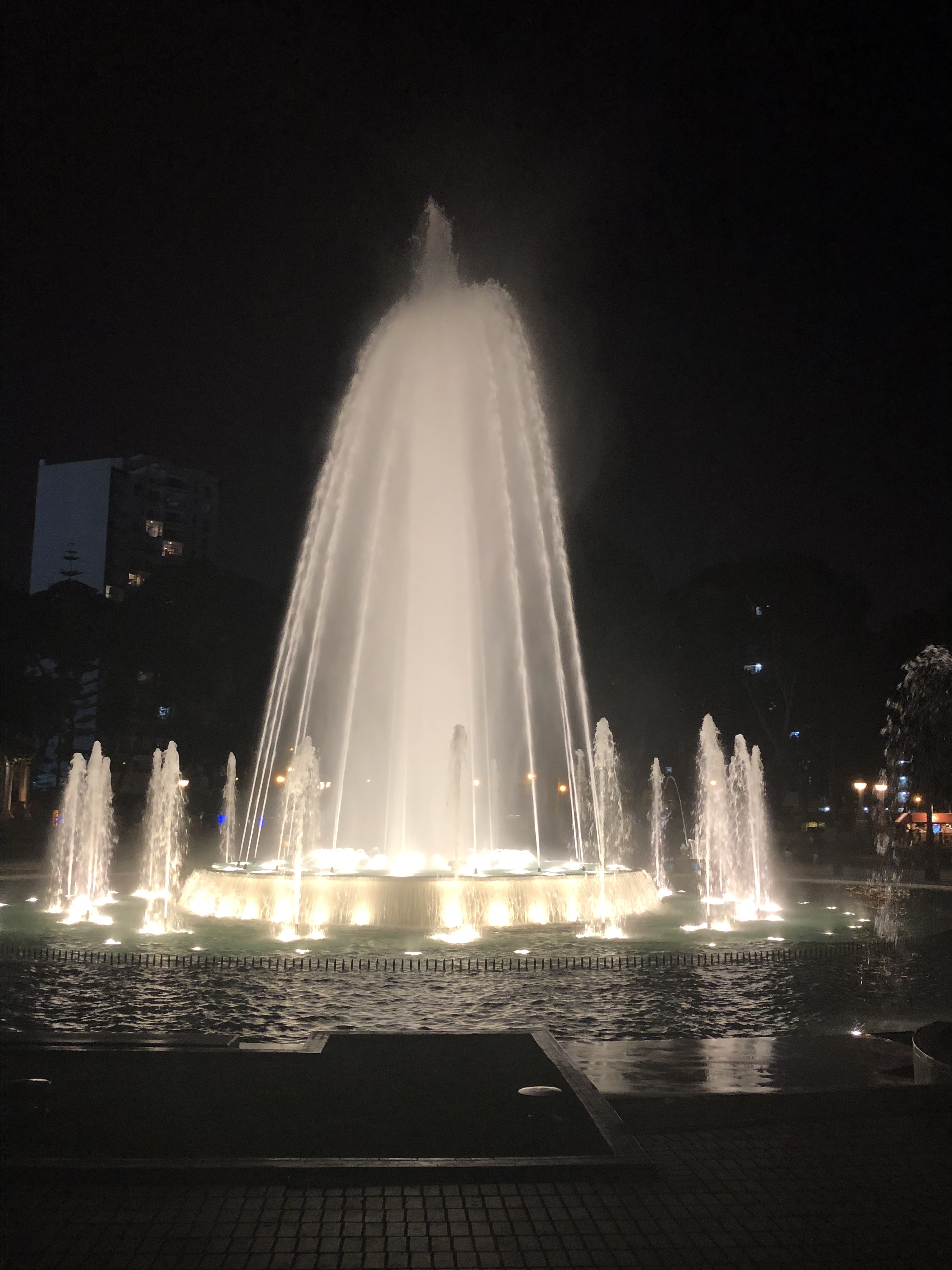
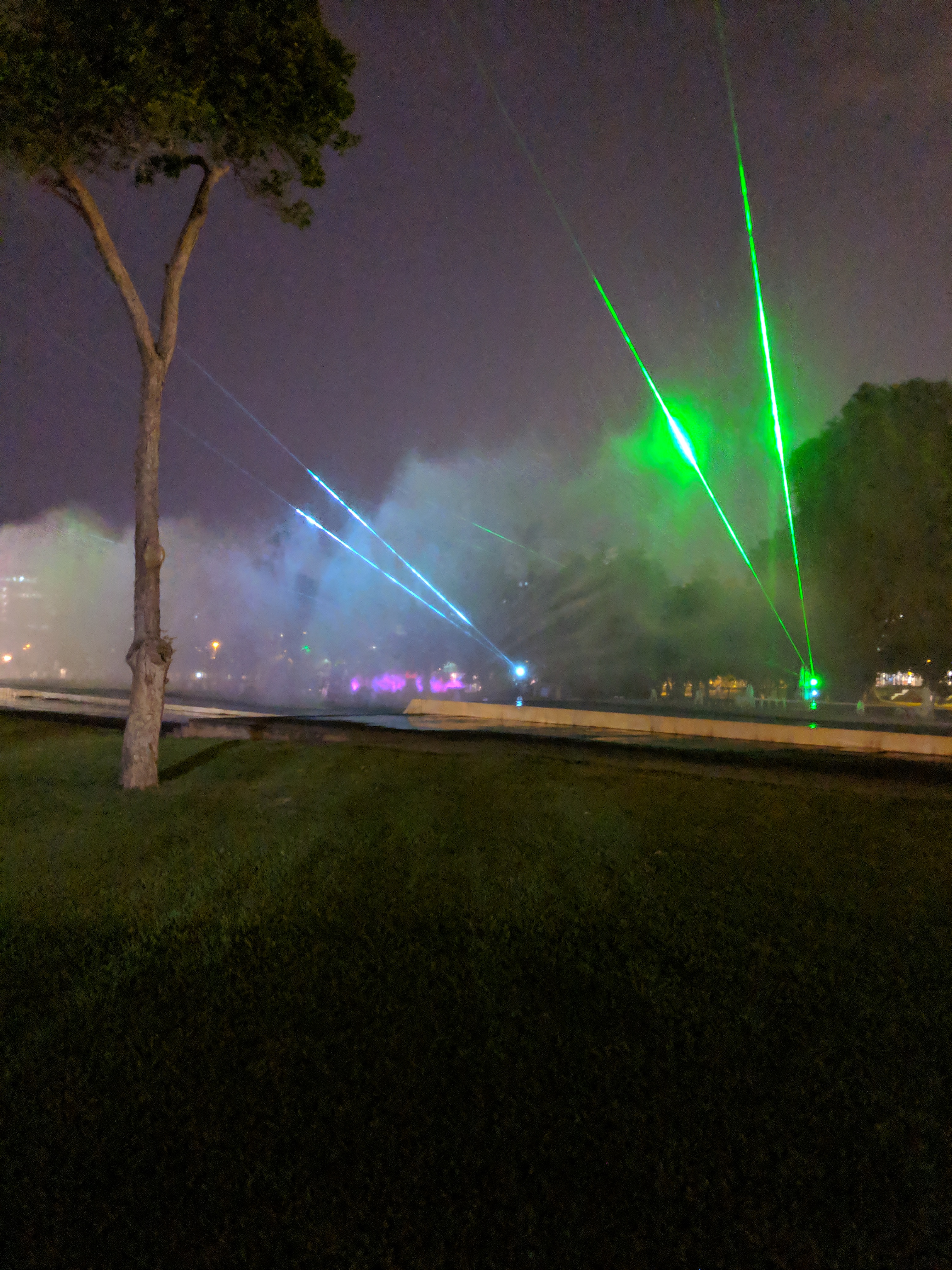
The final thing that we did on our last night was head across the road to the Circuito Magico Del Agua or the water fountain park. It is a light, laser and fountain show that runs almost every night and is quite the sight to see.
[wpvideo aIh8Tw23 ]
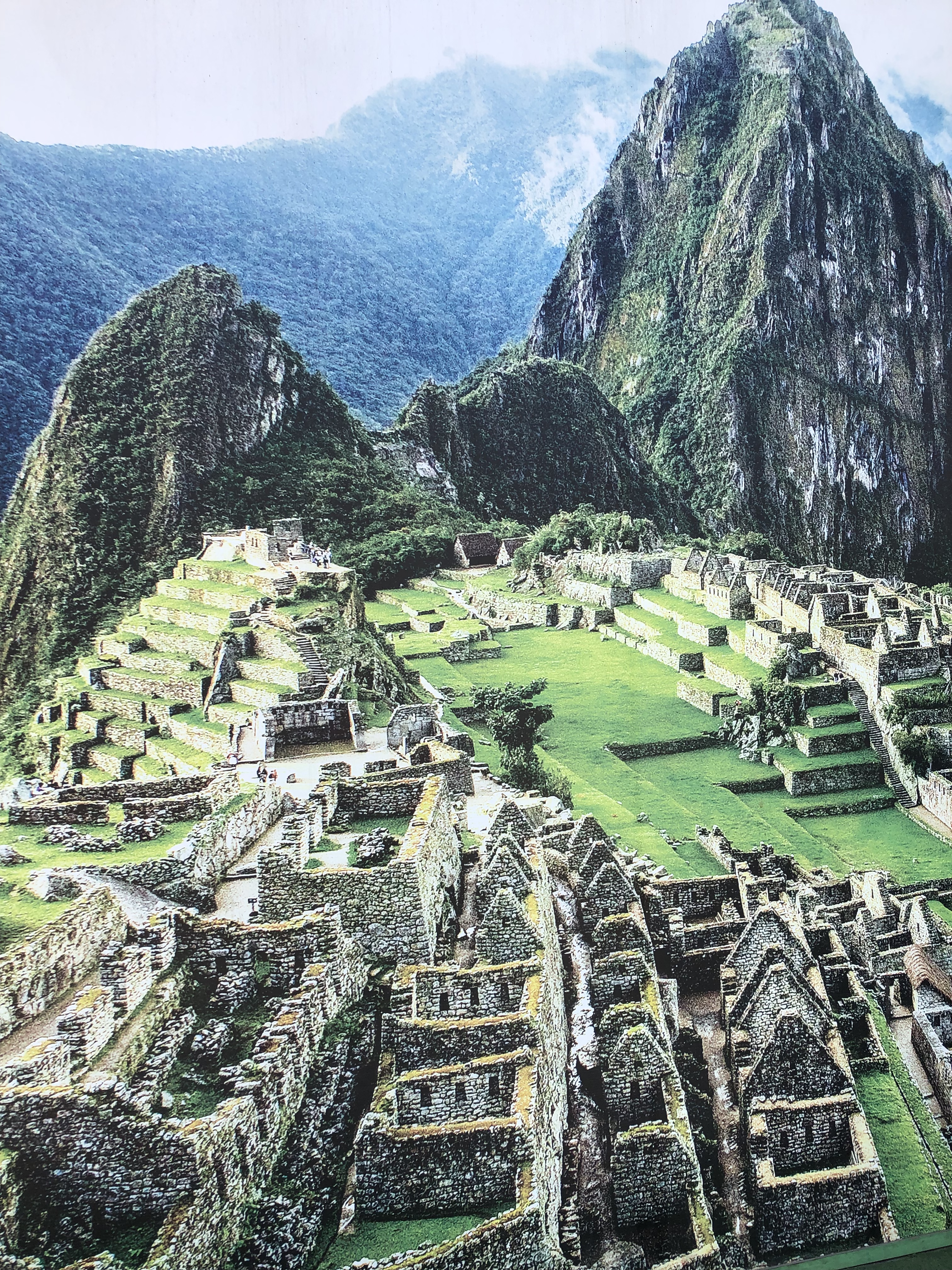
And because this was only a teaser trip to see if we should comeback we missed the main reason that most people come to Peru…thankfully…Miraflores has big photographic murals on the walls so you can cheat and pretend that you went.
Well we left Sydney at around noon, flew sleeplessly for the next 12 hours to arrive in Chile a bit after noon on the day we left… in notional terms we left at 11:10am to arrive at 12:20 the same day. In actual terms… long haul flights seem tougher now than they did when we were younger.
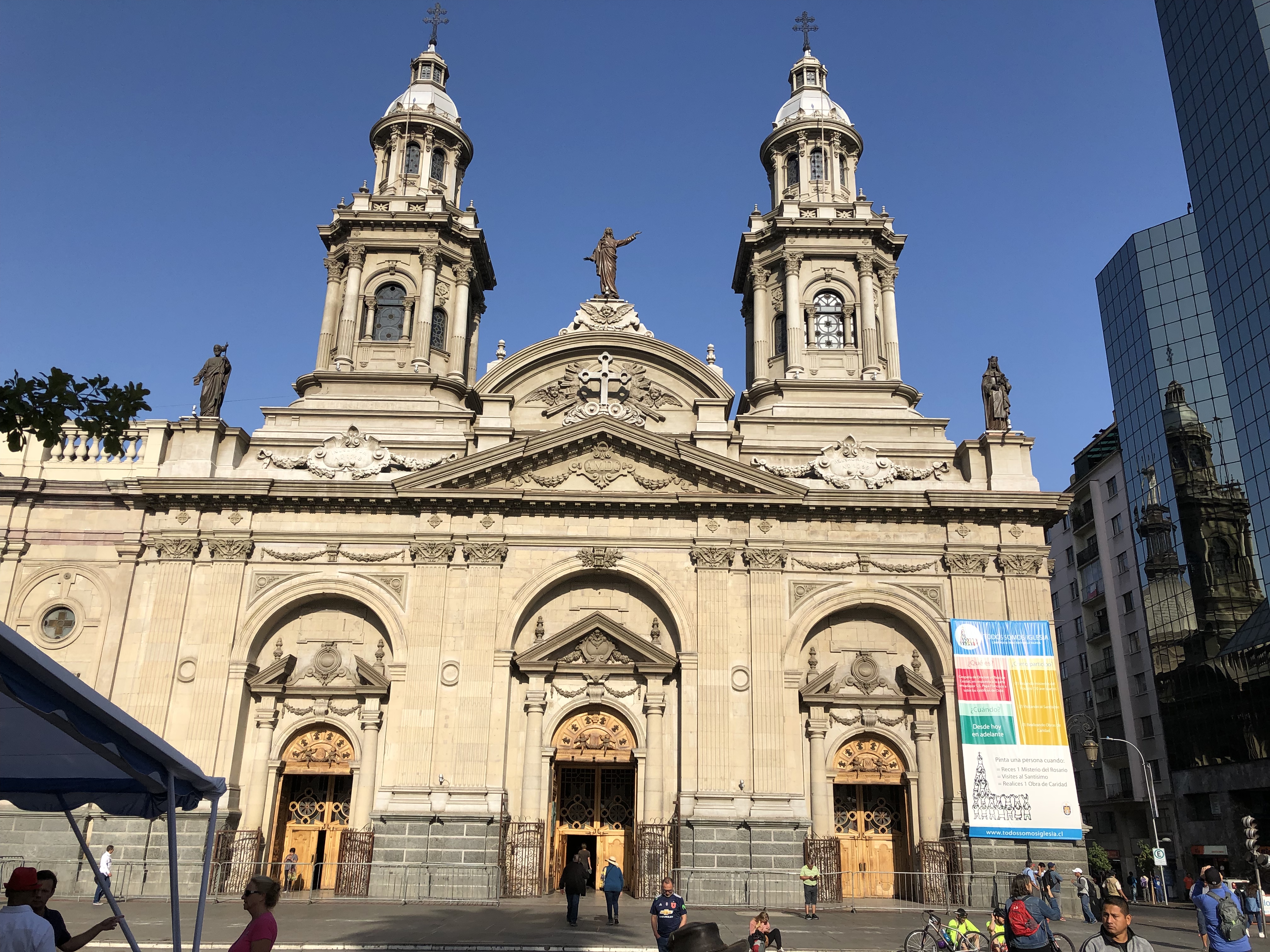
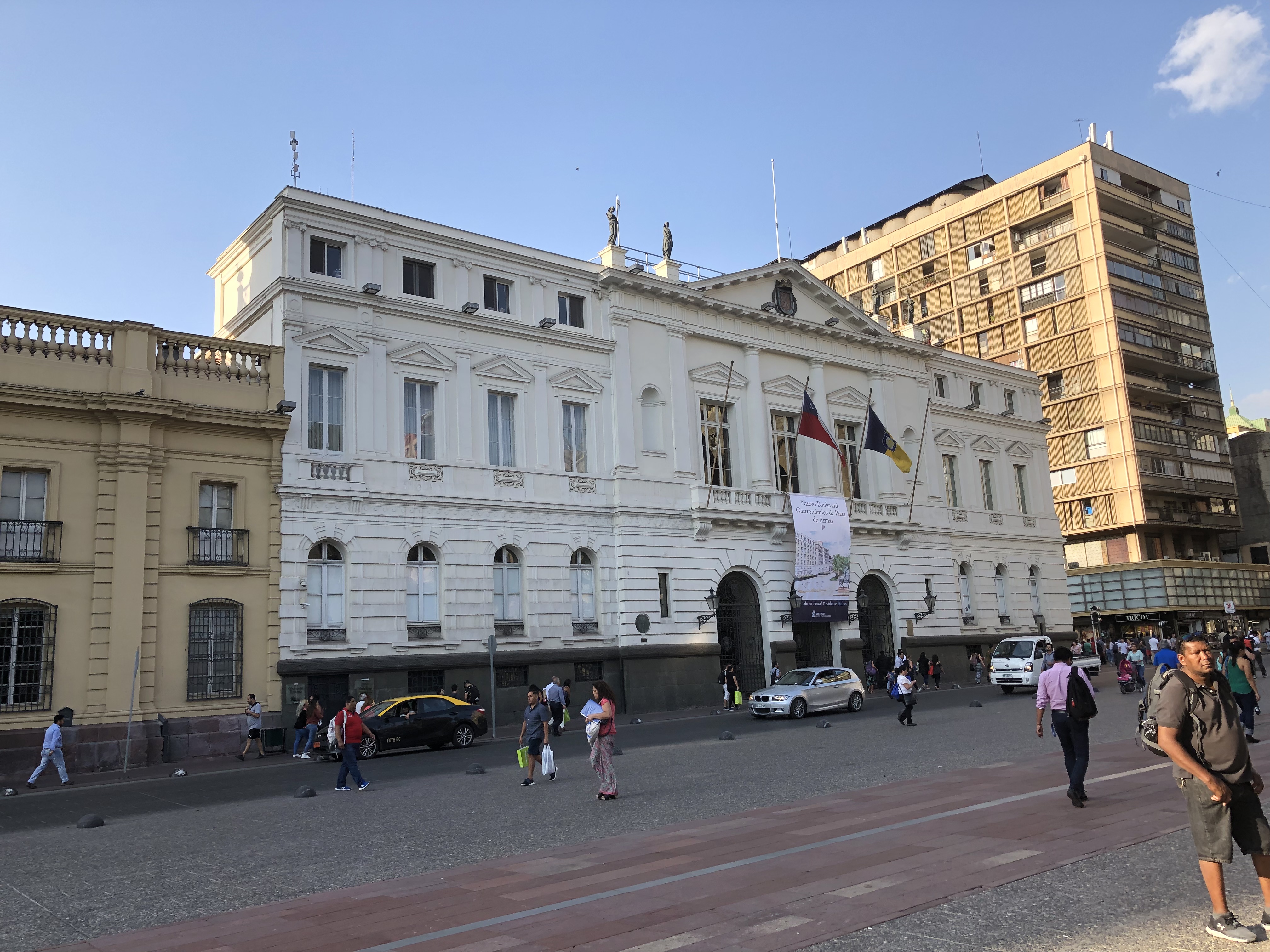
Being both sleep deprived, and in a Spanish country we were happy to have the siesta…so we asked the dude at the hotel who replied “we don’t have that custom here”…well we did…so we crashed for a couple of hours to try and cope with no sleep and a 14 hour time difference. Upon waking we headed along the road to reach Plaza de Armas…this is in essence a large square surrounded by some absolutely stunning buildings.
The town hall, the tourist office (now a museum), and the the post office lined the northern edge of the plaza. As you pan to the left the cathedral (of Santiago de Compostela) is a major feature before the square blurs into shops, cafes and restaurants.
Possibly the most stunning thing for us was the fact that the park was actually used…in fact it was packed at all times of the day. Coming from Australia there are many parks and green spaces but for the most part they are empty. Not in Chile…as we wandered around the city every park bench was full, and the lawns were also crowded. There were preachers, artists, activists, couples, people watchers and dogs…lots of dogs.
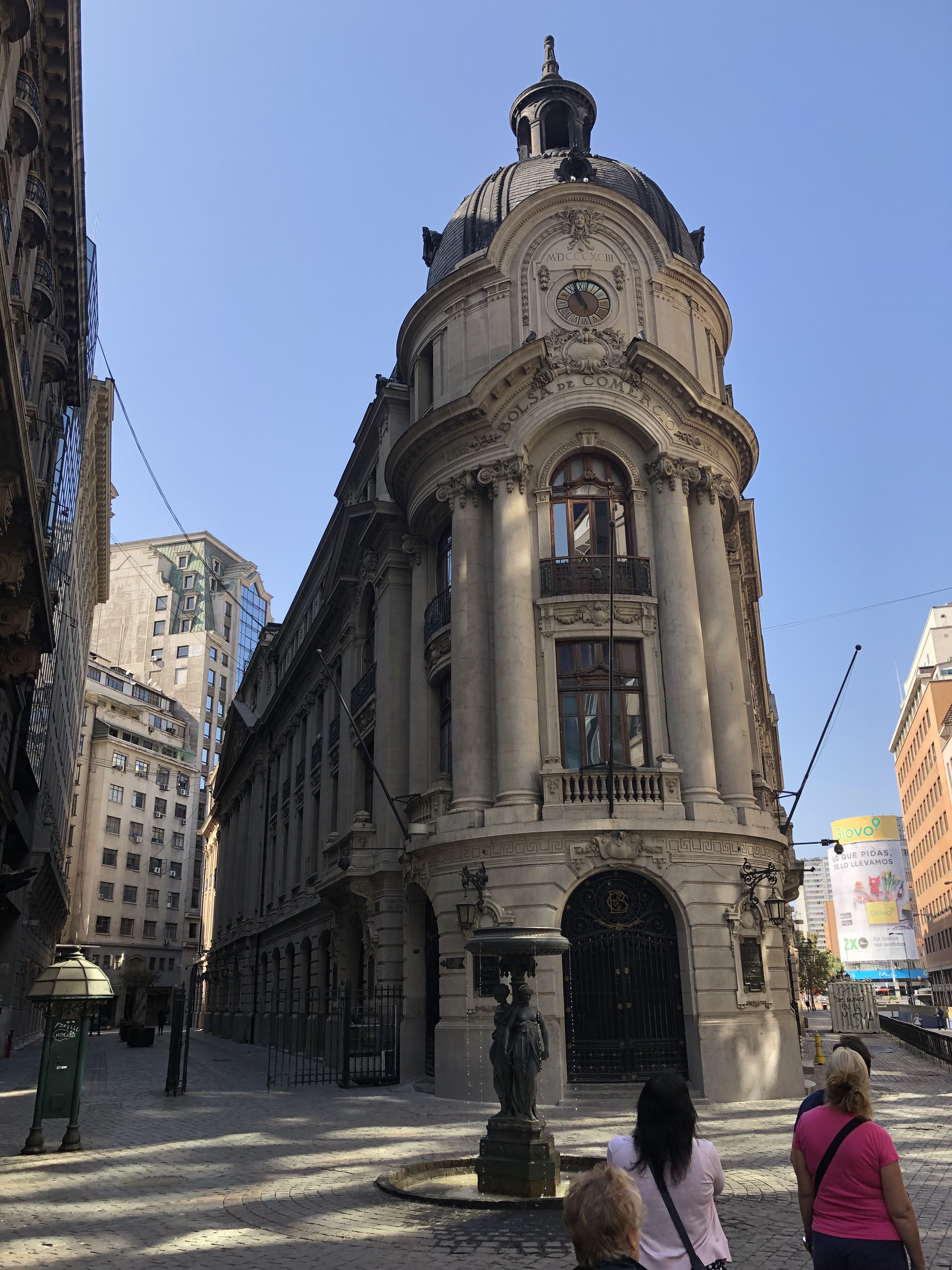
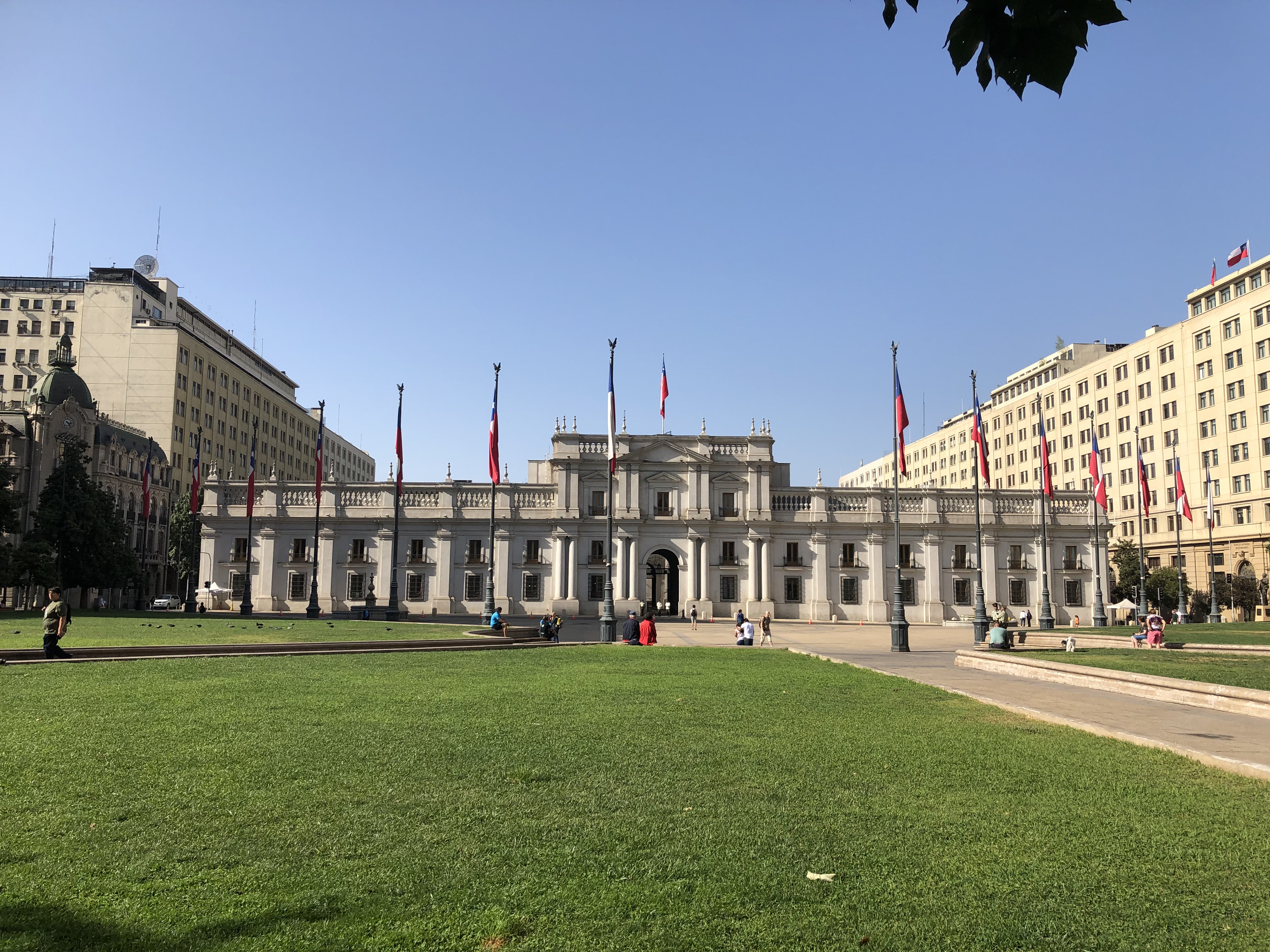
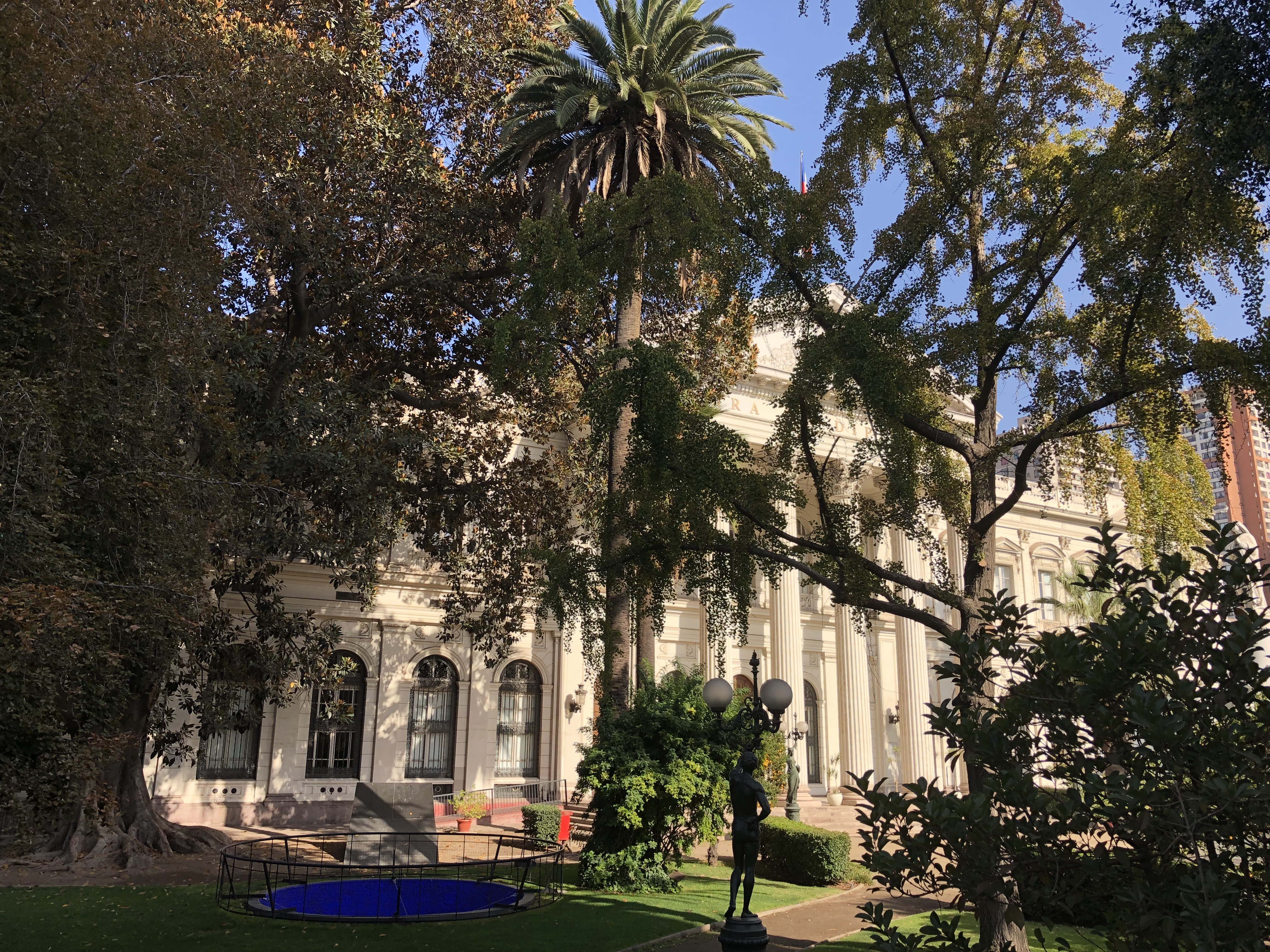
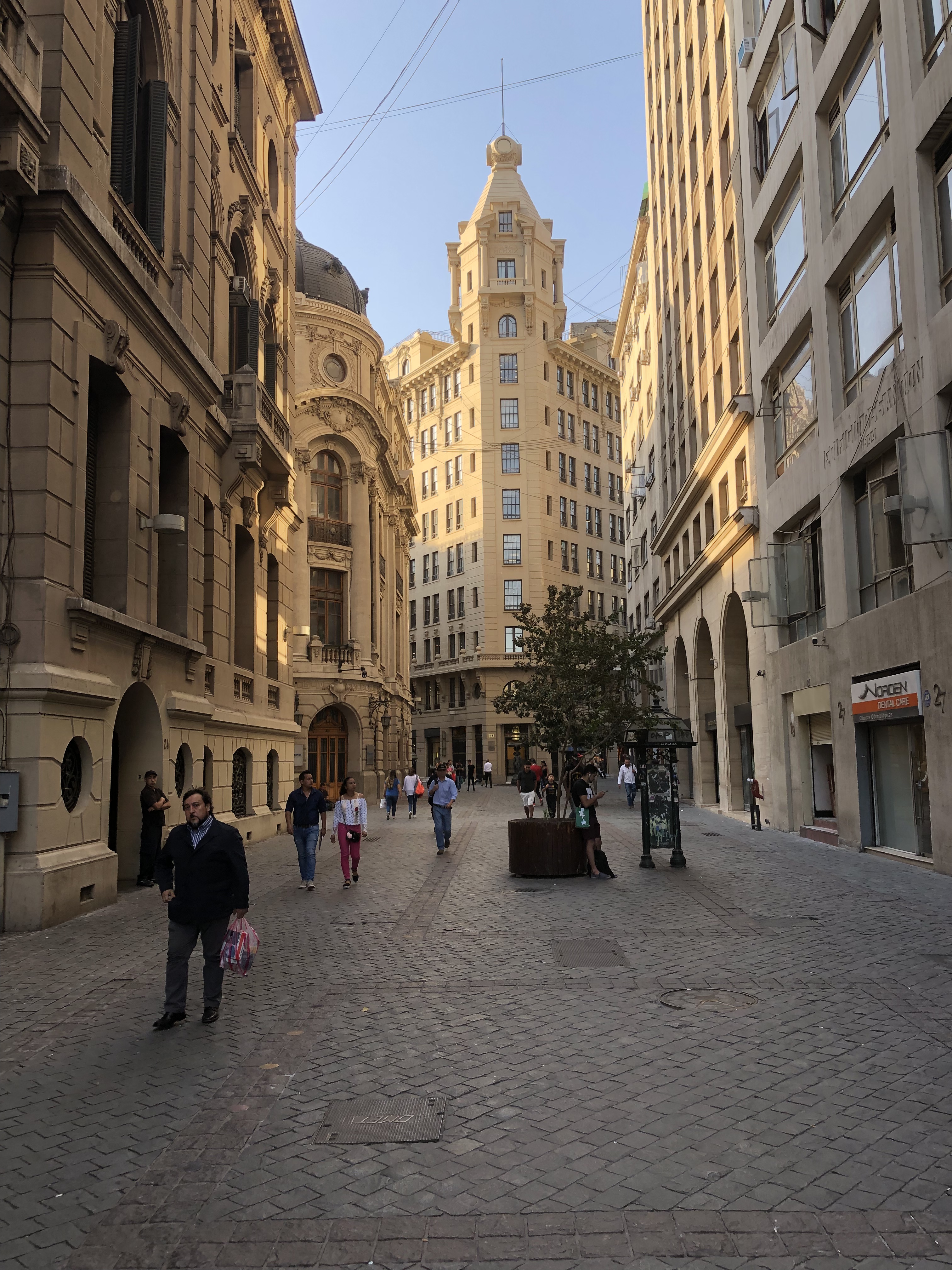
We took the “tip only” walking tour a few days later and got the history behind these and many more local sights of the city. The walking tour saw us adding the High court, Pre-Colombian Museum, Congress (former), Presidential palace (which was once the mint and now bears the title La Moneda), the stock exchange / financial district and the opera house.
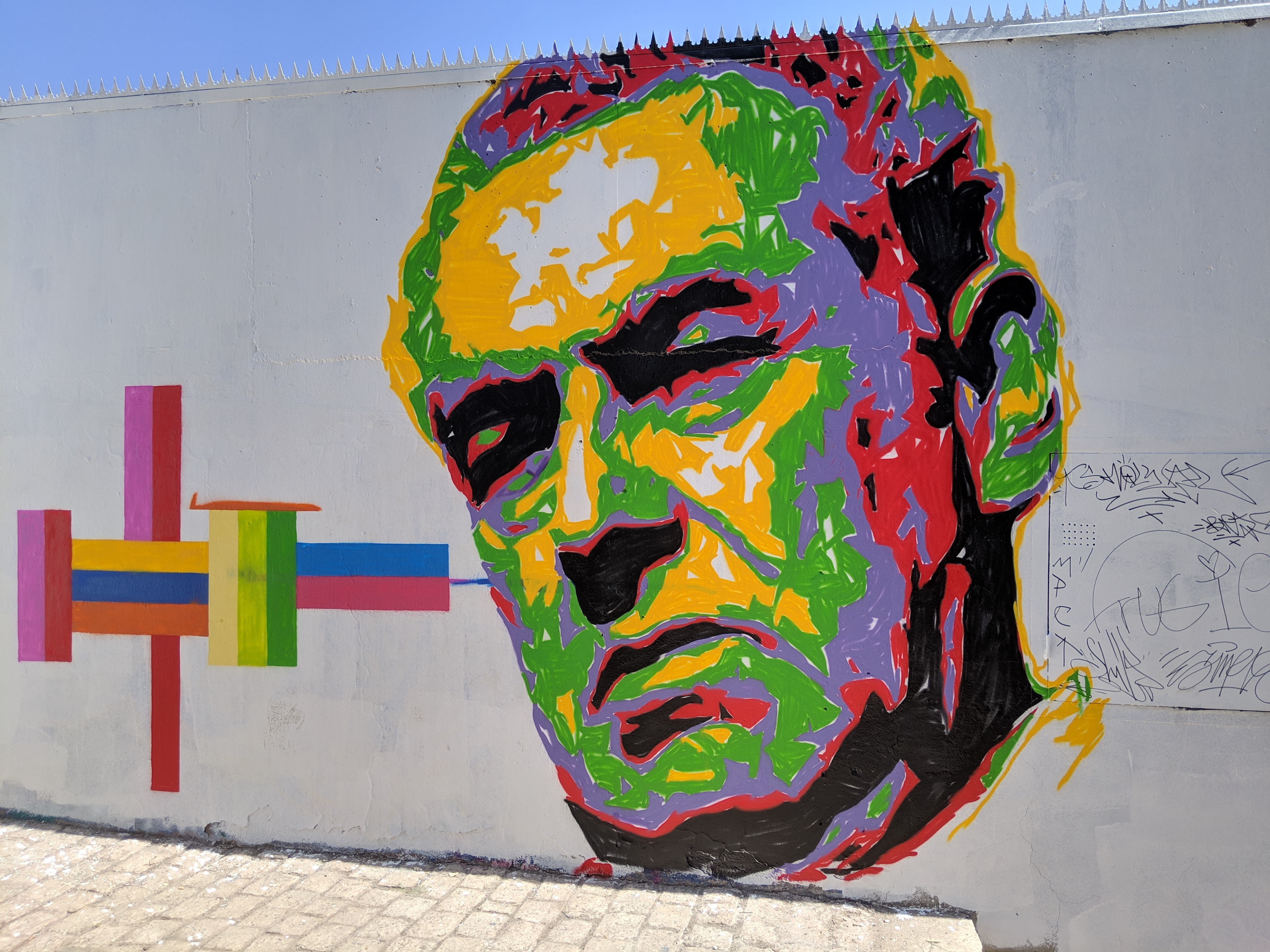
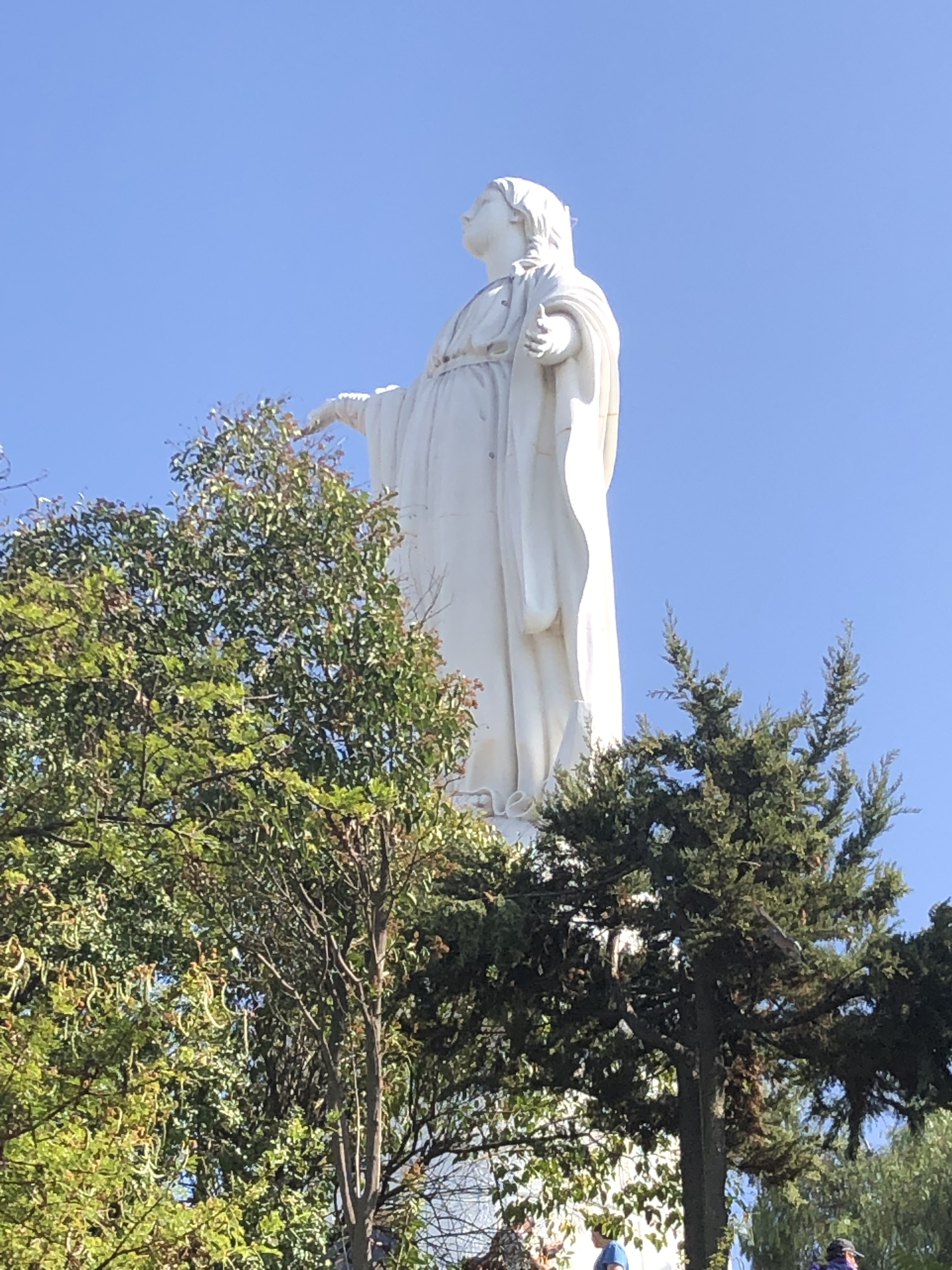
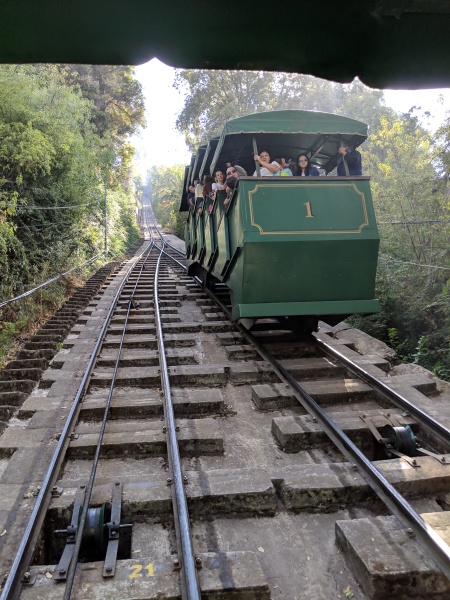
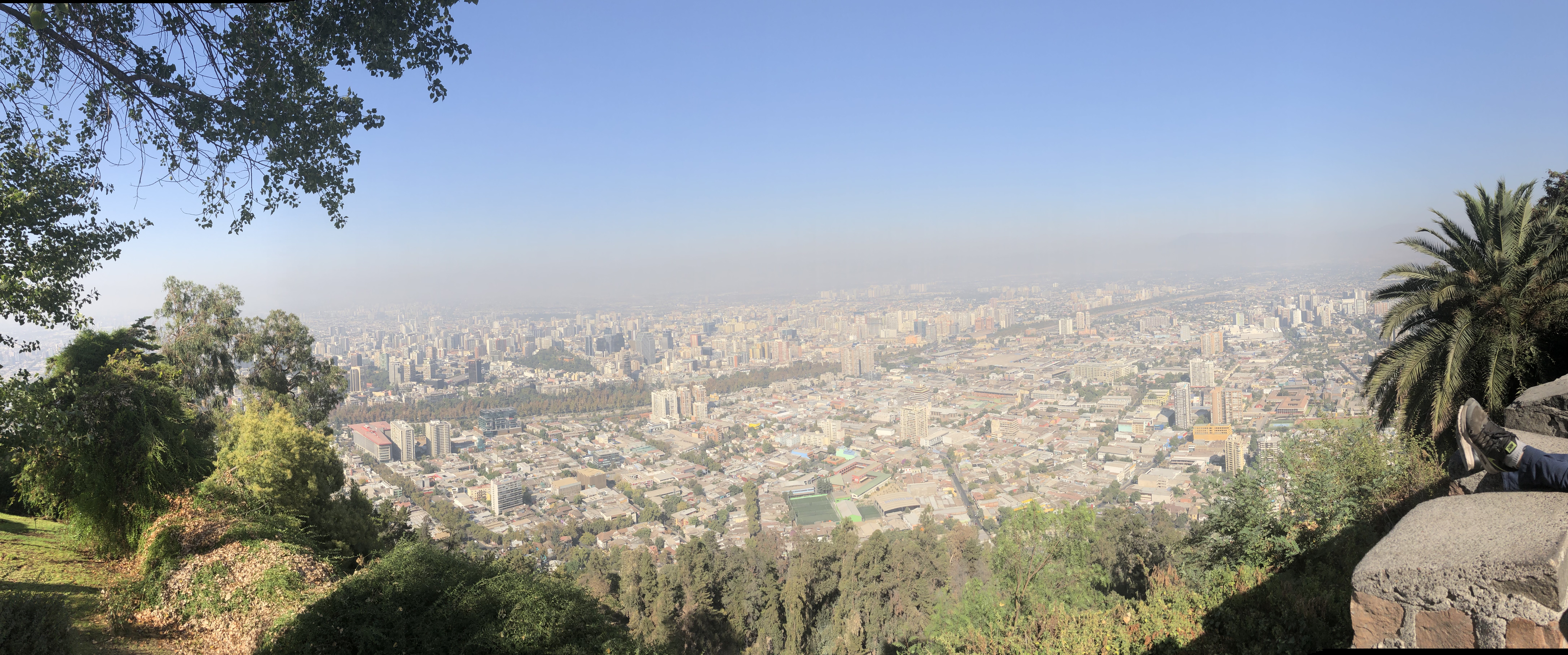
On day two we did the walk across the river to Barrio Bellavista, the bohemian quarter of the city. It is packed with bars, nightclubs and restaurants and the streets are adorned with street art and murals of all shapes and sizes. But we were here to visit San Cristóbal Hill. This is the hill that rises around 300m (984 ft) above the city and is the site a 22 meter statue of the Virgin Mary and the place to get almost panoramic views of the city as it lays nestled among the Andean Mountain Range.
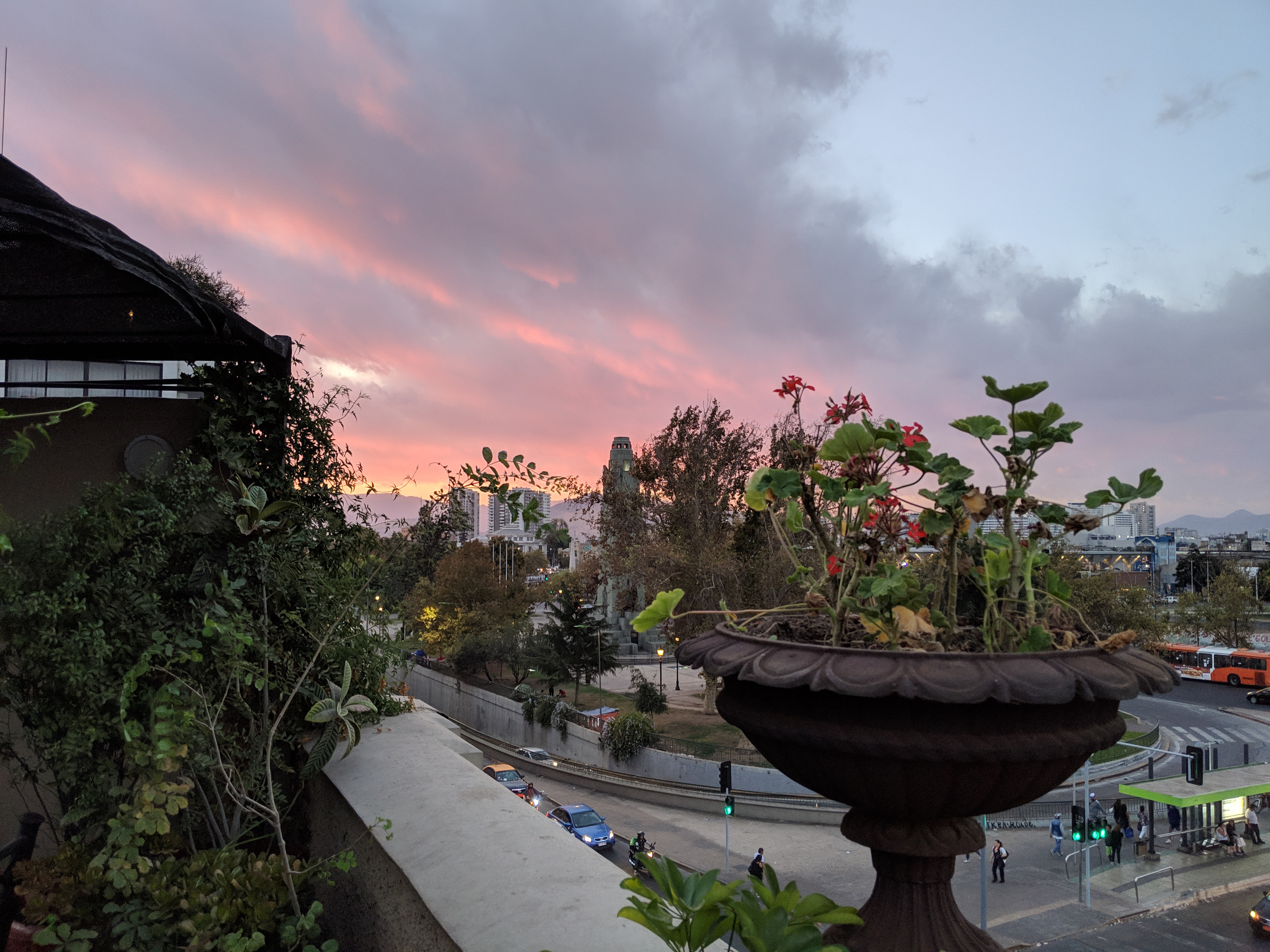
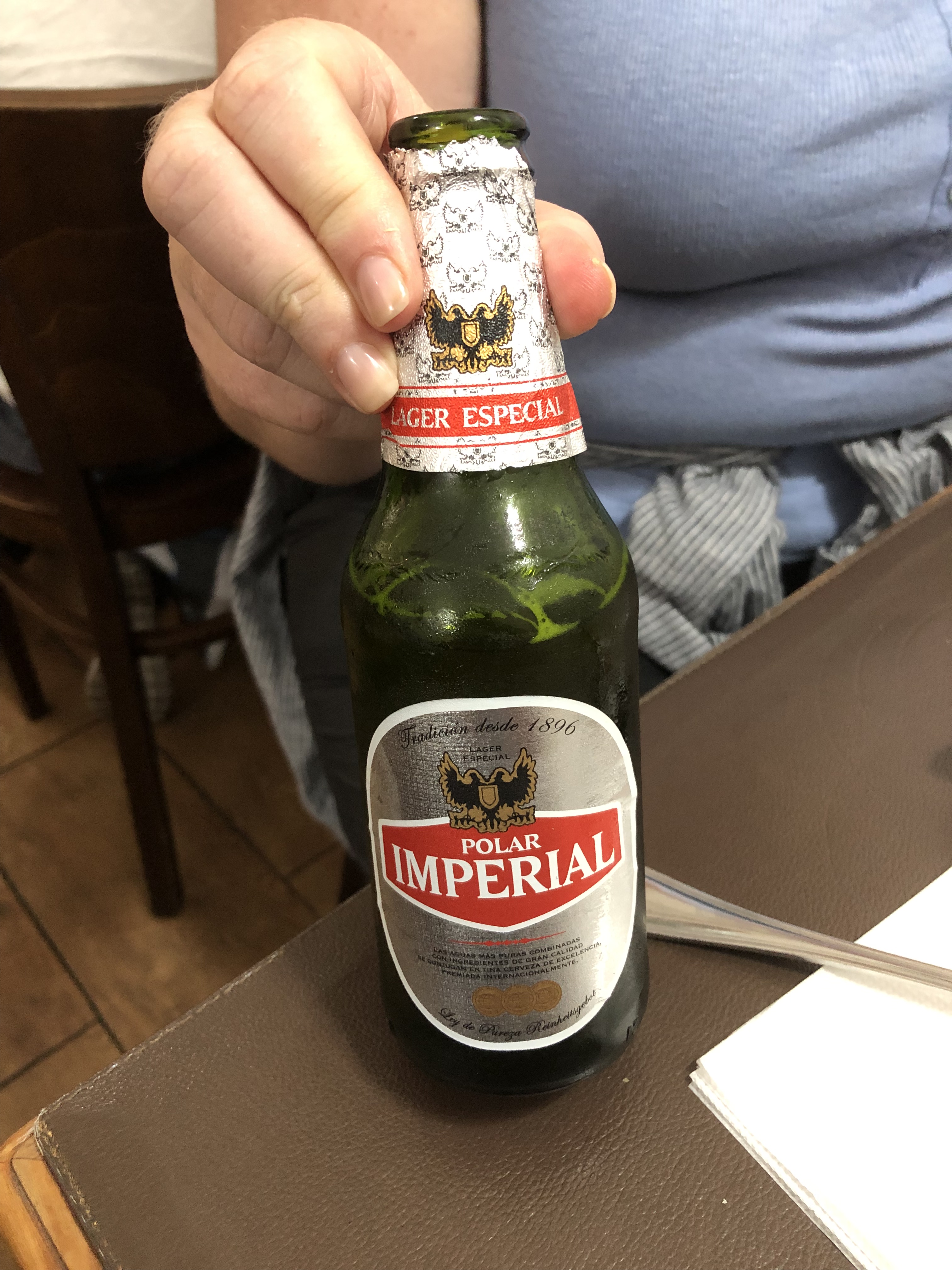
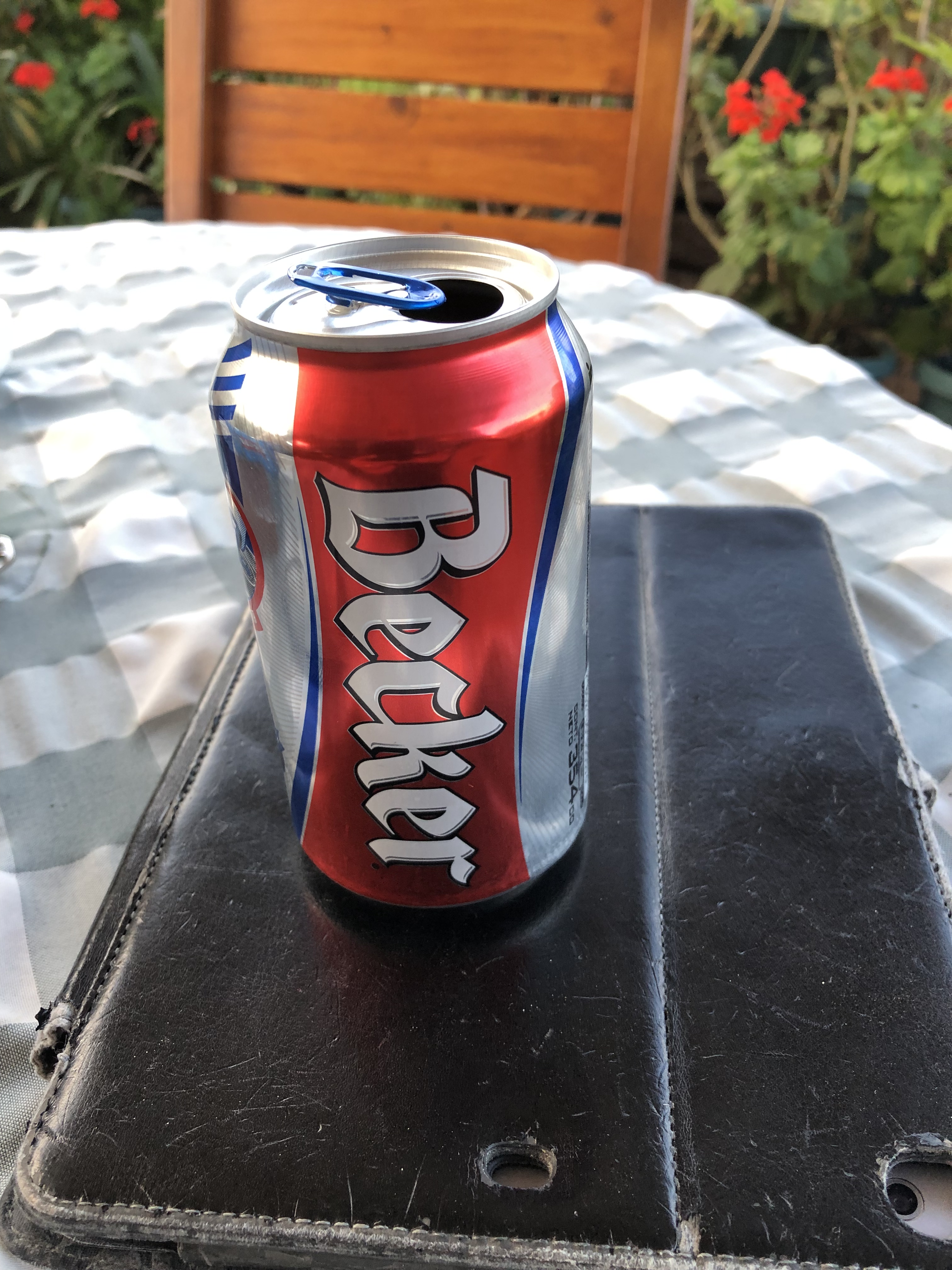
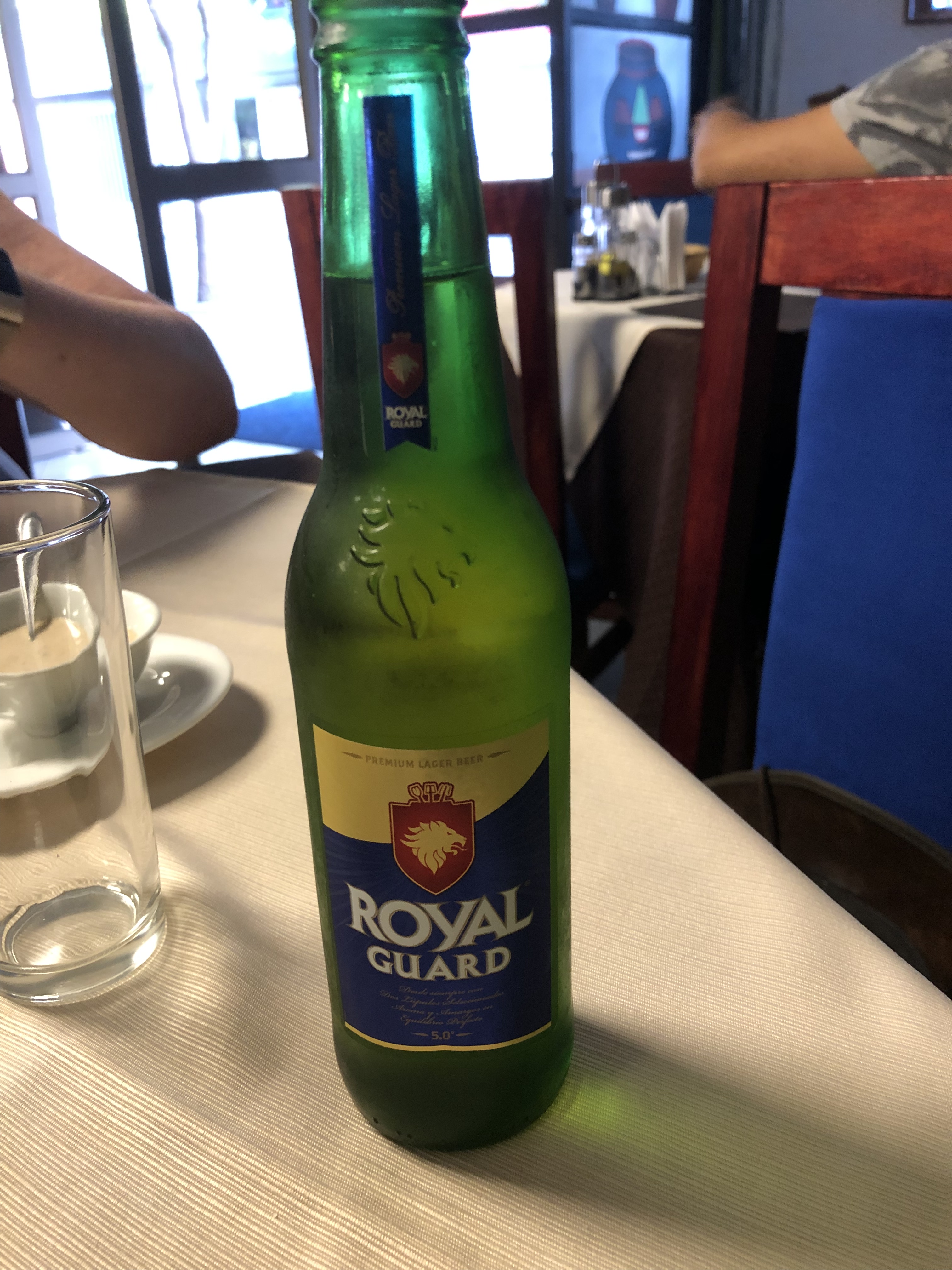
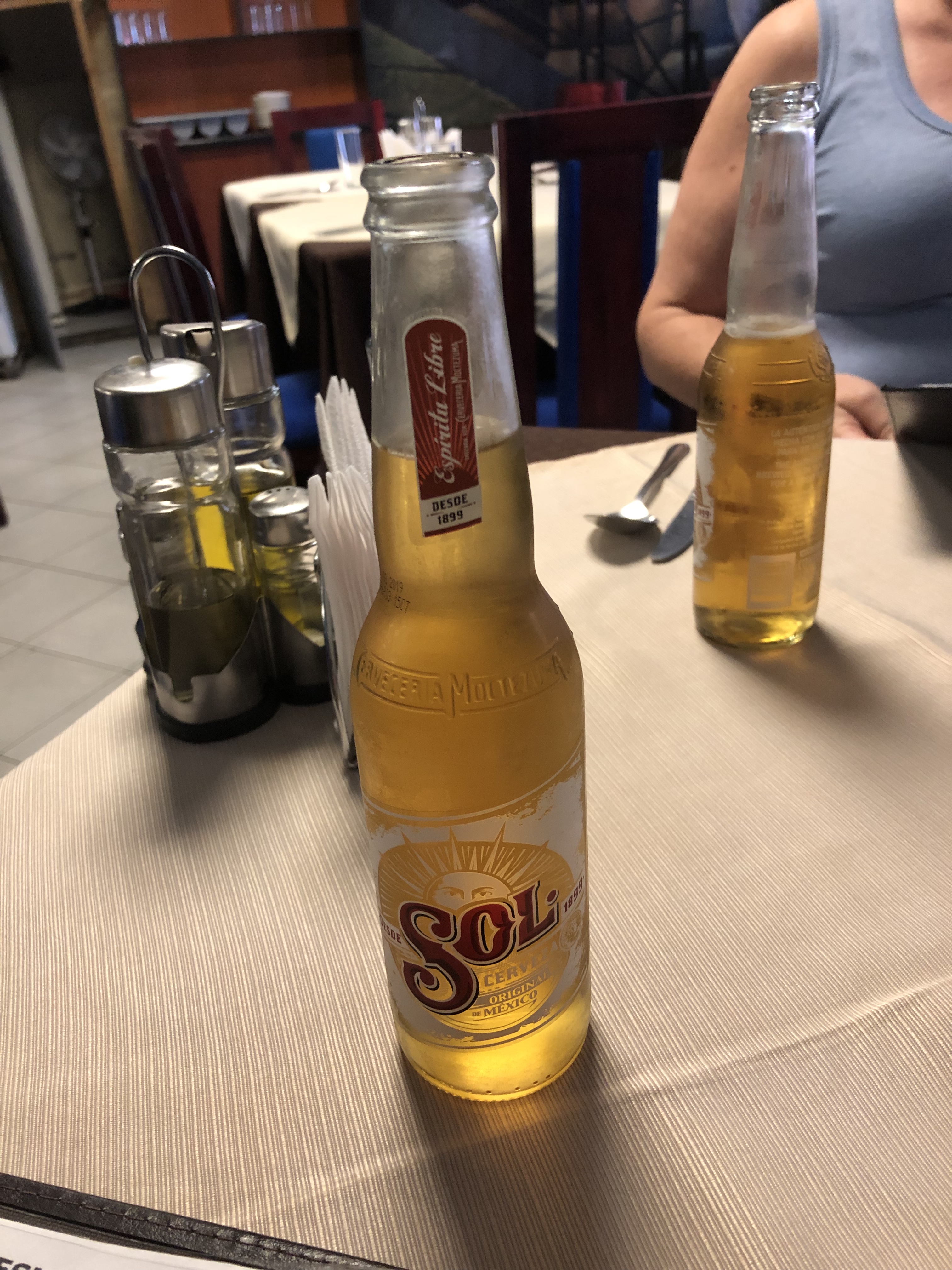
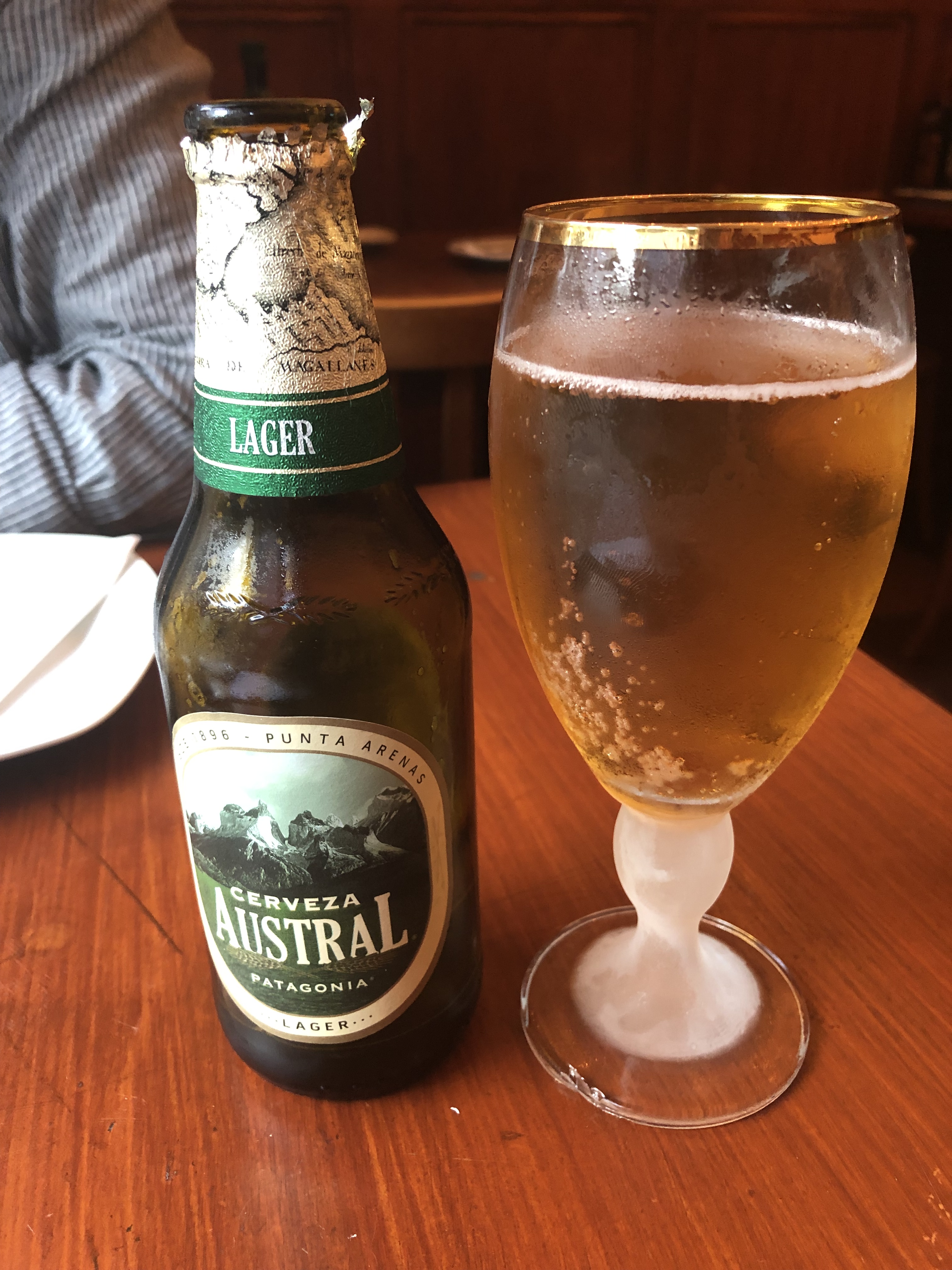
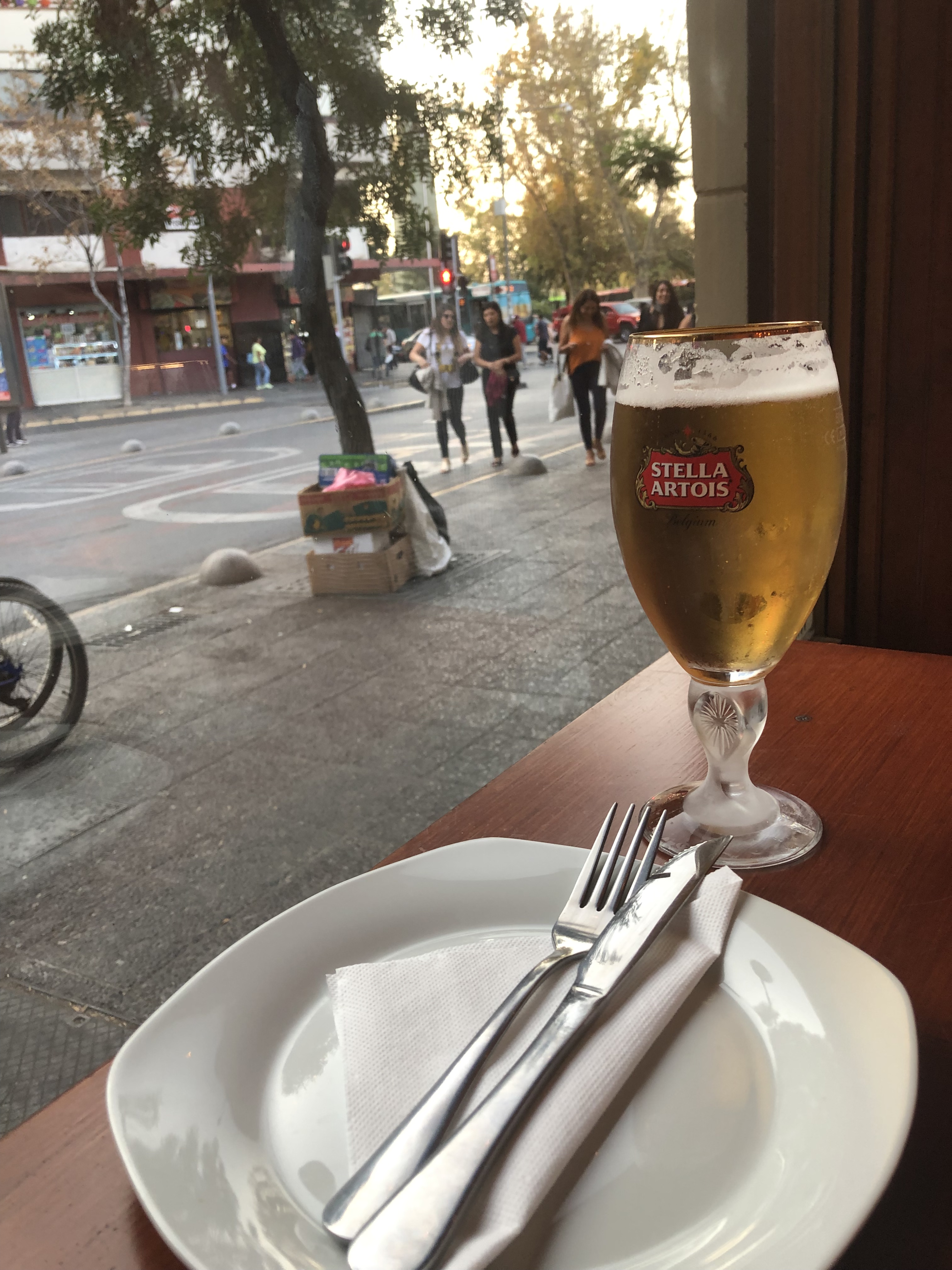
And of course my job was to sample some of the local ales. This is a task that has long since challenged me, but I endure. Add to this some of the fantastic scenery and even a view from the rooftop bar our accommodation.
Travelling the world in a pre and post COVID state